
The trick to this is not only to give [the people] a fake history. Every tinpot dictator does that. The trick is to give them a fake history starting in kindergarten, that is painted in primary hues and comic-book complexity. There are good guys (the oligarchs who would design society to be more fair) and bad guys (usually capitalists and greedy, they want to “exploit” everyone, which only works if you believe in fixed pie economics and that everyone gets a share at birth, an economic idea so stupid you have to be indoctrinated from birth to believe it.) And everything is explained by “laws” and top down action. Though this history talks about mass movements, and “the people” they don’t actually take THE PEOPLE into account, not with any depth and complexity. The people in this narrative, the entire culture, in fact, is moldable, like butter to the sculpting knife of the powerful.
Societies don’t work that way. Culture doesn’t work that way. In fact culture is so persistent, so stubborn, it leads people to think it’s genetic. (It’s not. A baby taken at birth to another culture will not behave as his culture of origin.) It changes, sure, through invasions and take overs, but so slowly that bits of older cultures and ideas stay embedded in the new culture. It has been noted that the communist rulers of Russia partook a good bit of the Tsarist regime, because the culture of the people was the same and that came through. (They just dialed up the atrocities and lowered the functionality because their ideology was dysfunctional. They blame their failure on Russia itself, but considering how communism does around the world, I’ll say to the extent countries survive it’s because of the underlying culture.)
Sarah Hoyt, “A Generation With No Past”, According to Hoyt, 2017-10-19.
November 24, 2019
QotD: The persistence of culture
November 23, 2019
QotD: Populism and democracy
I was not so precocious: it took me twenty more years to sort out what I might mean by the word “Tory.” But the view itself began in Hobbesian fear, that day, with my discovery that “the people” stink. They are mindless animals, and put some wrath in them, they will lose their bashfulness. And of course, not only in West Pakistan; for gradually one makes the further discovery that “the people are the people are the people” everywhere. They need to be tamed, cautioned, repressed, sometimes caged. My response to misty-eyed rhetoric for “democracy” is unfavourable. “Populism” is, in my sight, unambiguously evil — even when its cause be, for the moment, just. Given more time, and the inevitable failure to achieve immediate goals, the cause itself will turn rancid.
David Warren, “Crowds & powers”, Essays in Idleness, 2016-11-08.
November 22, 2019
QotD: Politicians, like scorpions, cannot change their nature
Don Boudreaux, “Dogs Bark!”, Café Hayek, 2017-11-02.
November 21, 2019
QotD: Honour
Honor has got a bad rep lately. It’s been dragged through the mud, and its garments are draggled. Association of its names with such egregious ideas as “honor killings” has done it no good.
It’s particularly unjust since honor killings are more shame-killings. I grew up in a culture that still shows a lot of Arab influence, (well, they were there almost as long as the Romans, you know?) and I almost understand honor killings – if I squint and look sideways. I was, after all, raised in a village (so like Miss Marple I’ve seen all there is to see of human wickedness.) Of course Portuguese – at least civilized ones – don’t honor-kill their daughters. But we had a case in the village where a father shaved his daughter’s head because she was talking to a strange boy. And even with my family’s rather odd behavior, since we were all readers and a fair number of us engaged in creative work, I came across that “how could you talk to him when you were alone in the house? What will people think? You have shamed us all.” I came across it more than once, because I have trouble wrapping my mind across the nonsensical. And to me – particularly when this started, when I was about eight – seeing a little friend who happened to be a boy was no different from seeing a little friend who happened to be a girl.
But the overwrought minds of village spinsters and old women looked at this the way “enlightened” militant “feminists” do. Like the one who accused my nine year old of sexual harassment for touching a girl’s behind while trying to get her attention. (He didn’t fondle her. He reached through a crowd and poked her, to ask if she wanted to play a space exploration game.) If you’re a male you have lust and evil on your mind, and any woman allowing you near has lost her virtue. (They must live MUCH more interesting lives than I do.)
Anyway, honor viewed that way is more what the public thinks of you and what you allow the public to know. You can lose your honor through all sorts of stupid things that have nothing to do with what is in your heart and mind. You can be “disgraced” the way a regency maiden was disgraced because she tripped in public and fell across a gentleman, and didn’t immediately faint or whatever. (Well, at least in regency romances. I believe true society had more leniency. I mean, even in the village, even with my eccentric behavior and the fact I wore shorts outside the house – oh, the humanity! – only half the people considered me a slut.)
Sarah Hoyt, “An Affair of Honor a blast from the past from April 24 2012”, According to Hoyt, 2017-10-11.
November 20, 2019
QotD: Theorizing an American police state
Kevin D. Williamson, “O’Rourke’s America”, National Review, 2019-10-16.
November 19, 2019
QotD: [Trump | Obama | Bush | Clinton] Derangement Syndrome
Arthur Chrenkoff, “Denying the sky is blue because Orange Man Bad”, The Daily Chrenk, 2019-10-18.
November 18, 2019
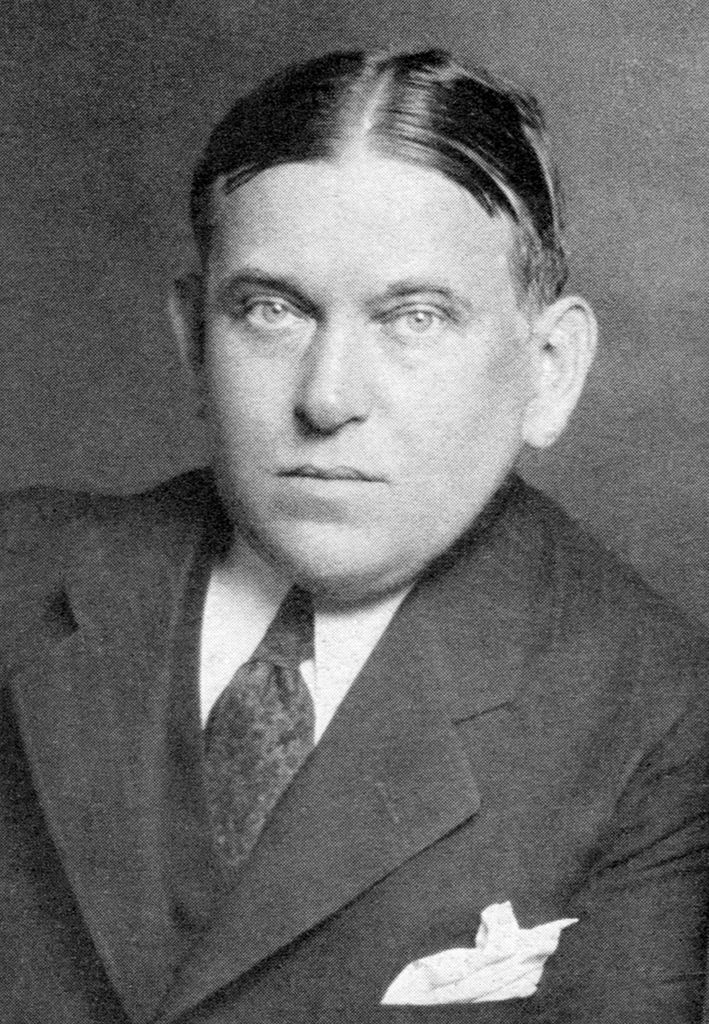
QotD: H.L. Mencken on “moral crusades”
H.L. Mencken in 1928.
Photo by Ben Pinchot for Theatre Magazine, August 1928.
The loud, preposterous moral crusades that so endlessly rock the republic – against the rum demon, against Sunday baseball, against Sunday moving-pictures, against dancing, against fornication, against the cigarette, against all things sinful and charming – these astounding Methodist jehads offer fat clinical material to the student of mobocracy. In the long run, nearly all of them must succeed, for the mob is eternally virtuous, and the only thing necessary to get it in favor of some new and super-oppressive law is to convince it that that law will be distasteful to the minority that it envies and hates.H.L. Mencken, “Moral Indignation”, Damn! A book of calumny, 1918.
November 17, 2019
QotD: Socialist beliefs about “capitalism”
- Wealth is either fixed in amount, or, while it might be destroyed or diminished by certain human activities (such as war), if wealth grows this growth occurs largely independently of human ideas, choices, actions, and institutions;
- trade and commerce, therefore, are largely zero-sum – that is, each exchange situation pits a party who will win against one who will lose;
- trade and commerce, in turn, involve activities are thus, at best, suspect; trade and commerce too often reward greediness and duplicity while penalizing generosity and honesty;
- the “distribution” of wealth – whether conceived as financial flows or assets, or as access to real goods and services – is determined largely by power;
- prices set on markets are largely arbitrary; prices seldom play any role beyond determining how much one party “wins” from trade and how much the other party “loses.”
- each of a handful of large groups of people, mostly as conceptualized by intellectuals with no understanding of economics, has its own “interests” – interests that are shared by all members of the group and that are at odds with the interests of other groups; for example, “labor” has interests that are are shared by all workers and that are at odds with the interests of “employers”;
- while the state can be captured by ill-intentioned people, the state – especially under unlimited majoritarian rule – is also the only possible savior of the powerless against the predations and frauds of the powerful;
- absent vigorous state intervention, ordinary people – people whose main asset is the value of their own labor – lack both the power to get their fair share of society’s wealth and the intelligence or self-discipline to use wisely whatever share of wealth they do manage to secure;
- social progress is achieved by the powerless grabbing power under the leadership of men and women of singular vision, intelligence, and courage; “the People” will be led to the Promised Land – can be led to the Promised Land – only if they faithfully follow their caring messiahs;
- those who argue in favor of free markets are either soulless mercenary cronies for the powerful propertied class or they are ideologically blinded dupes for this class; no intelligent and decent person could possibly deny the enormous benefits available to “the People” when the state is empowered to work on their behalf against the propertied few.
Don Boudreaux, “Some Links”, Café Hayek, 2017-10-08.
November 16, 2019
QotD: Millennials as barbarians invading our civilization
Every nation believes its own customs and habits are the best, Herodotus said, and you would have to be nuts to dismiss those prejudices as though they were somehow objectively wrong. (I grant that this is a free translation, but he said it, and it is one of the intellectual breakthroughs with which we associate the Greeks.) As with nations, so it is with generations. The formative experiences, inherited expectations, and learned fears of somebody born in 1985 are hardly less different from mine than a foreigner’s would be.
If I say that my attitude toward millennials is that they are barbarians, I am asking for trouble, but I must insist on being understood: it is only that they are persons whose habits, prejudices, and values are foreign, formed by a different set of events and influences — not that they are inferior. In the right mood I can even be persuaded that their actual knowledge is simply of a qualitatively different character, rather than simply being more meagre because they have lived less long.
Colby Cosh, “‘Millennial’ gets used as an insult. But millennials aren’t actually inferior”, National Post, 2017-10-25.
November 15, 2019
QotD: Understanding trade policy
Now let Jones secure Jackson’s approval for his actions. Jackson expresses his approval not only of Jones obstructing your freedom to buy across-town tomatoes, Jackson also approves of Jones taking some of your money directly to help Jones pay for the employment, arming, and dressing up in fancy costumes of a street gang who will do the actual dirty work of caging or killing you if you refuse to abide by the tomato-buying terms that Jones imposes on you.
When you object to the injustice of Jones’s actions, he reminds you that you had a vote in this matter. But being outvoted 2 to 1, this majority outcome, by some mystical process, transforms Jones’s pure and simple thuggery into perfectly acceptable – even noble – “trade policy” the violation of which would make you the anti-social criminal.
Further, Jones, to his delight, discovers that Jackson has been hard at work on a treatise that details the many dangers of allowing you to buy your tomatoes without obstruction from across town. Jackson’s treatise even has empirical data on the number of tomatoes and labor hours that would no longer be grown and and worked on your Elm St. block if you are left free to buy your tomatoes unobstructed. Combined with criticisms of “simple-minded” defenses of free trade and with explanations that tomatoes grown across town are sold at unfairly low prices, Jackson’s treatise rids Jones of the few qualms that Jones’s threats of violence against you caused him to suffer from time to time
Thus is “trade policy.”
Don Boudreaux, “Quotation of the Day…”, Café Hayek, 2017-10-23.
November 14, 2019
QotD: Memory
Eric Hoffer, “Thoughts of Eric Hoffer”, New York Times Magazine, 1971-04-25.
November 13, 2019
QotD: Western culture’s mortal wound
None of those attempts were as total or as successful as the 20th century ones, due to several things. The first was that nations hadn’t had their spirits broken as thoroughly as WWI broke them, so people weren’t willing to lend credence to things spouted from on high with that much eagerness, and things leaked through. HOWEVER the most important thing that the twentieth century had in hand to try to remake culture was this: public education, mass media, mass news reporting.
Did it succeed? No. The only result of trying to mold human beings into the utopian version of the man who would live happily under communism was 100 million graves, and a Europe that is dying of senescence and lack of reproduction.
However it succeeded brilliantly in not only separating, now, I suppose two or three generations from their roots, but also convincing them that they are superior to their actual learned ancestors, and somehow, yet, the product of the worst civilization of human history.
Western culture is dying of WWI partly because the “cure” imposed by state education apparatus, corrupted by Soviet agitprop and continued by “intellectuals” who know nothing except that they’re superior to everyone else, more enlightened, kinder, and that they should design society and the world to “improve” it.
Sarah Hoyt, “A Generation With No Past”, According to Hoyt, 2017-10-19.
November 12, 2019
QotD: The crimes of the Righteous
Later, with time, I learned that although all men are capable of good and evil, the worst among them are those who, when they commit evil, do so by shielding themselves in the authority of others, in their subordination, or in the excuse of following orders. And even worse are those who believe they are justified by their God. Because in the secret dungeons of Toledo, nearly at the cost of my life, I learned that there is nothing more despicable or more dangerous than the malevolent individual who goes to sleep every night with a clear conscience. That is true evil. Especially when paired with ignorance, superstition, stupidity, or power, all of which often travel together.
And worst of all is the person who acts as exegete of The Word — whether it be from the Talmud, the Bible, the Koran, or any other book already written or yet to come. I am not fond of giving advice — no one can pound opinions into another’s head — but here is a piece that costs you nothing: Never trust a man who reads only one book.
Arturo Pérez-Reverte, Purity of Blood, 1997.
November 11, 2019
QotD: The British army from WW1 to the end of the Cold War
Rapid demobilisation followed, followed by regeneration in the 1920s and 30s to become the most mechanised army in the world by 1939, comprising some 224,000 regulars. It is often forgotten that the British army of 1940 had many more tanks and vehicles than the German Army – history is not kind to the losers. The army in WW2 grew to a citizen force of roughly 3.5 million men, before shrinking post war.
The continuation of National Service, the war in Korea and the end of empire saw the army stay at roughly 330,000 soldiers for much of the 1950s, causing significant damage to the national economy due to the cost and lack of manpower for rebuilding. By 1957 the army estimated that its regular strength was roughly 80,000 personnel (only a quarter of the whole force), many of whom were tied up training two-year National Servicemen. A major factor in the 1957 Sandys Defence White Paper was the need to reduce manpower costs and free people up for other economically important tasks.
The Sandys Review led to a reduction to 165,000 troops most of whom were focused on either colonial policing actions (it is often forgotten that in the early 1960s there were over 100,000 UK service personnel in the Far East) or deployed in Germany as part of the British Army of the Rhine (BAOR). The withdrawal from empire saw the army shrink to a strength of approximately 150,000 by the 1980s, where its role was primarily to provide a corps of four divisions in Germany in the event of general war, supported by mobilisation units from the UK which would provide further divisions to augment BAOR and conduct home defence roles.
The end of the Cold War saw the first deployment of a divisional-sized force, with an armoured division sent to the Gulf in 1990 for Operation Desert Storm. This happened just as the Options for Change review cut BAOR and reduced the army to approximately 120,000. Further deployments to Bosnia and Kosovo in the 1990s followed by the deployment of an armoured division to Iraq in 2003. Operations in Iraq and Afghanistan from 2003-2014 saw the army struggle to sustain itself on two fronts without heavy support from the RN and RAF providing extra manpower and resources.
The 2010 SDSR initially preserved the army at just under 100,000 personnel, although later reviews cut this down to 82,000 regulars supported by a target of approximately 30,000 reservists working in a far more integrated manner. Today the army is struggling to sustain itself at 82,000, with recent manpower figures showing a total of roughly 78,000 troops.
Sir Humphrey, “How Do You Solve a Problem Like a Deployable Division?”, Thin Pinstriped Line, 2017-08-06.
November 10, 2019
QotD: Dunning-Kruger Club
A friend mentioned that it was ignorant bro stuff like this that was causing him to seek out other hobbies, to which I ruefully commented that every hobby has its equivalent; guns and shooting aren’t unique.
And then someone else dropped the bomb:
“[Name Redacted], if you don’t recognize this behavior in other hobbies, it’s because you’re the one doing it.”
Ouch.
But the First Rule of Dunning-Kruger Club is “You don’t know that you’re in Dunning-Kruger Club.”
Tamara “Tam Slick” Keel, “The First Rule of Dunning-Kruger Club…”, View from the porch, 2019-09-30.


