Quotulatiousness

June 12, 2023

It’s an insult to Chuck Barris and The Gong Show to compare it to the Justin Trudeau Show

In the weekly dispatch from The Line, the editors defend the honour of the original Gong Show and say that it’s not fair or right to compare that relatively staid and dignified TV show to the Canadian government’s performance art on the foreign interference file:
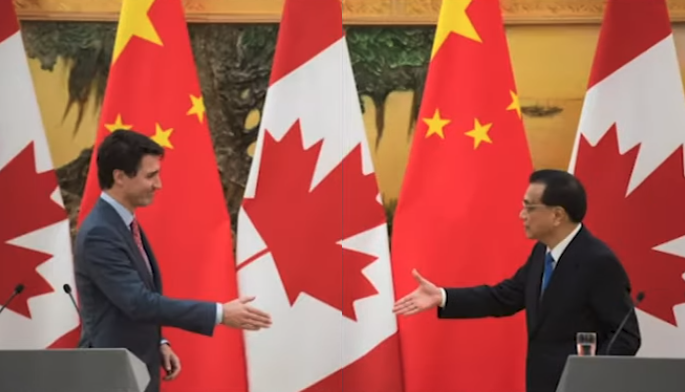
When the news broke late Friday afternoon that David Johnston was resigning from his position as special rapporteur on Chinese interference, the general reaction across the chattering class was a variable admixture of amusement and scorn. There’s probably a German word for it, but the security and intelligence expert Wesley Wark captured the tone of it with the headline on his Substack post, which said, simply: “Gong Show“.

We’re somewhat inclined to concur with Wark, except the three-ring train wreck that has marked Johnston’s time as Justin Trudeau’s moral merkin has been so disastrous that we think apologies are due to Chuck Barris, in light of the relative sobriety of his famous game show.

Reporters at the Globe and Mail and Global News started breaking stories about Chinese interference in Canadian elections a few months back, based largely on leaks from inside the Canadian intelligence apparatus. Almost immediately it was clear that the Liberals had a major problem on their hands, one that was going to require levels of transparency, good judgment and political even-handedness that this government has manifestly failed to achieve during its almost eight years in power.

Yet when Trudeau announced that he was going to appoint an “eminent Canadian” as “special rapporteur” to do an investigation and report back to the government with recommendations for how it should tackle the issue, we gave a collective groan here at The Line. Given the endless similar tasking of retired Supremes passim, it was clear that the pool from which Trudeau was going to fish his eminent personage was very shallow, and pretty well-drained. Indeed, at least one of us here was willing to bet large sums that it would be David Johnston.

What do we make of all this? Here’s the situation as we see it, in bullet form for brevity’s sake:

  • Johnston should never have been offered the position of special rapporteur
  • Having been offered the job of special rapporteur, Johnston should never have accepted it

And that is basically it. But given that Trudeau had the poor judgment to ask him, and Johnston had the poor judgment to accept, we think everything that has happened since was pretty much inevitable. We couldn’t have guessed at all the details of how this would have played out, especially the delicious elements beginning with the decision to hire Navigator to provide strategic advice (to manage what, exactly?), the revelation that Navigator had also provided strategic advice to Han Dong (who, recall, Johnston more or less exonerated), the firing of Navigator and the involvement of Don Guy and Brian Topp … this is really just gongs piled upon gongs piled upon gongs.

But the overall trajectory of Johnston’s time as special rapporteur? If you had told us ahead of time that this was more or less how things would go, we wouldn’t have been much surprised. Why? Because we live in Canada. And this is how Canada’s governing class behaves. It is a small, incestuous, highly conflicted and enormously self-satisfied group of people that is so isolated from the rest of the country they don’t even realize how isolated they are.

Honestly. What in heaven’s name gave Trudeau the idea that it would be smart to ask a former governor general to help launder his government’s reputation? And why on Earth did Johnston think it was a good idea to accept? Forget the Navigator stuff, this turkey was never going to fly. Johnston’s report was not accepted as the wise counsel of a wise man; instead it was seen as a partisan favour by a conflicted confidant. Sure, Johnston was subject to some pretty unfair attacks from the opposition, but what did he think was going to happen? Has he paid any attention over the last decade? But pride is a form of stubborness, and even after parliament voted for him to go, Johnston insisted he would stay on to finish his work. Until, on Friday afternoon, he decided he would not.

We’re not going to speculate about why Johnston finally pulled the chute. We’d like to think that the former GG in him thought it best to obey the will of the House of Commons. We rather hope it had nothing to do with some pointed (and unanswered) questions put to Johnston’s office by the Globe and Mail, asking whether Navigator had been given a heads-up on Johnston’s conclusions on the Dong file.

Maybe it doesn’t matter. As Paul Wells put it in a recent column, Trudeau sought to “outsource his credibility by subcontracting his judgment,” where credibility was supposed to flow from Johnston to Trudeau. Instead, and we would say, inevitably, the flow went in the opposite direction. If the prime minister had any credibility to lead the country on this issue, he wouldn’t need a special rapporteur in the first place. The fact that Trudeau felt the need to appoint one is a tacit admission that he knows he doesn’t have the trust of the people.

And that is the real problem here. The Johnston saga has ended where it was always going to, with a once-honorable man’s reputation in tatters and the problem he was brought in to address still unresolved. David Johnston has resigned, as he must have. In our view, that’s one resignation too few.


June 11, 2023

QotD: The revolt against “meritocracy”

Filed under: Education, Media, Politics, Quotations, USA — Tags: , , , , — Nicholas @ 01:00

As with almost every one of these crusades the left goes on, it ain’t what they’re saying it is. And those of us on the right(ish) who think that it’s all part of a master plan to destroy society so the great communist utopia appears automagically aren’t precisely right. I mean, most people on the left would welcome collapse, because, yes, they believe a communist matriarchy is ONLY waiting for the “oppressors” who create capitalism and patriarchy to vanish (oblivious to the fact that “capitalism” is trading, which seems to be a natural condition of the human monkey and not eradicable by any regime real or imaginary; and that “patriarchy” doesn’t exist in the west.) But that’s not the point, because they don’t think they’re bringing about collapse. They think they’re fighting injustice.

When we say “merit” and “meritocracy” they think we’re using “code words” to say “white males”. There are reasons for this, besides the fact that the left is heavily into Manichaean thought systems that go something like: identify problem — find a person who MIGHT be responsible for/benefits from the system as it exists — assume that if that person were removed, the problem would be gone. See, French Revolution.

The initial confusion on the left arises from the fact that they might never, in fact, have witnessed meritocracy in their dealings or those of people around them.

This is because, as part of the long march, and to secure absolute control of all fields and institutions, the left has a mythology (the Manichaean thing again) that anyone who disagrees with them is evil. And of course, you don’t hire evil people.

The problem with that type of hiring is that you’re NOT hiring the best. And most people know they’re not the best. And hire someone less bright than they are. This in four generations takes you to the level of management/operation that takes monarchies twenty generations of inbreeding to achieve.

Right now, in everything but the hard sciences and STEM (and they’ve gotten into some of those, and can’t always be routed around.) the people in power would consider pouring piss out of a boot with the instructions written on the sole a feat of unachievable genius.

Most of them are so vacuous they don’t even know they’re incompetent. Or, like Michelle Obama in her essay on why everyone was mean to her at Harvard, they assume everyone else is just as incompetent.

The reason they get hired, stay hired and continue to get push/accolades/power is that they have the “right picture in head” by which you should understand “the left picture in head”. They view the world exactly as they were taught to view it by their Marxist teachers and professors. Reality is Manichean, and if there is any issue at all, you find the person who might be causing it (hint, usually you find the person who is a heretic to the left, even if in a minor thing) and you attack that person. If the person is not immediately obvious, you look for deviationism or examples of hidden thought crime.

It’s appalling, and in a society with no protection for the individual, it fills mass graves, but it is the way their minds — for lack of a better term — operate. They’ve been trained to operate that way. Not to look at human nature, or the conditions in the world, or even the limits of engineering and materials (what’s holding us back on batteries, for instance. They prefer to think oil executives, personally, are holding back the all-electric solar cars we should already have.) No. “Find the culprit” “Eliminate him/her” “Everything is beautiful in the garden”. Seen in this light, the Green Nude Heel makes “perfect sense”. And is a genius work in scope. Which is why she got all upset at criticism and thought that it only meant people wanted her to find all the little subculprits and work out all the details of the pogroms necessary to make it work. Not getting that people were saying “Not in this world, not with these humans, not in this REALITY”.

Sarah Hoyt, “Just Deserts”, According to Hoyt, 2019-06-06.

June 10, 2023

Remember the Freedom Convoy of 2022?

The media worked very hard to demonize the grassroots protests that coalesced into the Canadian Freedom Convoy in early 2022, and they’ve continued to push the notion that either the movement was an utter failure or that it was a maple-flavoured January 6 “insurrection” righteously suppressed by our beloved Dear Leader and his stormtroops. Someone using the handle “Kulak” wants to remind you that the convoy wasn’t a failure and in fact was the catalyst for great changes both in Canada and around the world:

A screenshot from a YouTube video showing the protest in front of Parliament in Ottawa on 30 January, 2022.
Photo via Wikimedia Commons.

I keep encountering this misconception from people who don’t follow Canadian politics …

That somehow the Trucker convoy was defeated.

The Freedom Convoy was the most wildly immediately successful protest in Canadian history, maybe WORLD history.

People remember Trudeau’s crackdown, old ladies having their skulls cracked with batons, Disabled indigenous grandmothers trampled by police horses, Bank accounts frozen and public employees investigated for mere donations …

And there’s a big reason people remember this … It was dramatic, and the media and the regime certainly wanted you to think resistance was futile …

What people don’t remember is what happened in the immediate aftermath: The government caved on absolutely everything within a week for the most important things, and then a month or so for the rest.

First off there was the massive political shift that happened as the convoy was occurring:

Jason Kenny, the pro-lockdown Premiere of Alberta (Canada’s most conservative province) was forced to announce his resignation, and Alberta immediately lifted all its lockdown impositions.

Erin O’Toole the pro-lockdown leader of the Conservative Party was likewise forced to resign, his temporary replacement Candice Bergen (not to be mistaken with the actress) being a longtime rival opposed to lockdowns, and his main rival who replaced her after intra-party elections was Pierre Poilievre, the politician after Maxime Bernier who was quickest to embrace the Truckers and their cry for freedom.

As the convoy was ongoing Trudeau invoked the Emergencies Act (the Act which replaced the War Measures Act for invoking Martial Law) … Now these grant the government almost unlimited powers, famously the War Measures Act was invoked by Trudeau’s Father to detain Quebeckers and raid hundreds of homes without warrants during the FLQ separatist crisis of 1972 … the catch is that while the follow on Emergencies Act can be invoked by a Prime Minister Parliament has to sign off on the act’s continued use within one week.

Well skulls were cracked, accounts frozen, and as the week passed things came down to the deadline … On the very last night … Trudeau managed to get sign-off (without the Conservative opposition) from the House of Commons, but it had to go to the Upper House, the Canadian Senate.

NOW. The Canadian Senate is a shameful institution.

It’s like the British House of Lords but without the nobility.

A Senate seat is a lifetime appointment, by the Prime Minister … and that’s it. Little to no review, no democratic input, and this is supposed to be equivalent or superior to our elected House of Commons …

Naturally the go-to use of the Senate is as a spoils system for cronies. Do some shameful favour for a Prime Minister, raise a lot of money for the party, be politically connected to a provincial gov the PM wants to buy off … get a Senate seat.

One of the longest-standing political agreements in Canada is how badly the Senate needs to be abolished … but can’t be because Quebec is nominally overrepresented in the Senate, and abolishing it would cause a constitutional crisis.

H/T to Donna Laframboise for the link.

QotD: The word “objectively”

Filed under: Britain, History, Politics, Quotations — Tags: , , , , , — Nicholas @ 01:00

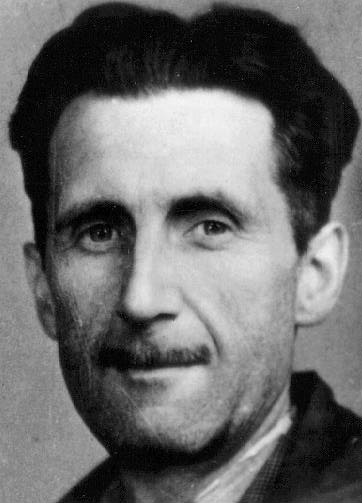
Orwell’s press card portrait, 1943

For years past I have been an industrious collector of pamphlets, and a fairly steady reader of political literature of all kinds. […] When I look through my collection of pamphlets — Conservative, Communist, Catholic, Trotskyist, Pacifist, Anarchist or what-have-you — it seems to me that almost all of them have the same mental atmosphere, though the points of emphasis vary. Nobody is searching for the truth, everybody is putting forward a “case” with complete disregard for fairness or accuracy, and the most plainly obvious facts can be ignored by those who don’t want to see them. The same propaganda tricks are to be found almost everywhere. It would take many pages of this paper merely to classify them, but here I draw attention to one very widespread controversial habit — disregard of an opponent’s motives. The key-word here is “objectively”.

We are told that it is only people’s objective actions that matter, and their subjective feelings are of no importance. Thus pacifists, by obstructing the war effort, are “objectively” aiding the Nazis; and therefore the fact that they may be personally hostile to Fascism is irrelevant. I have been guilty of saying this myself more than once. The same argument is applied to Trotskyism. Trotskyists are often credited, at any rate by Communists, with being active and conscious agents of Hitler; but when you point out the many and obvious reasons why this is unlikely to be true, the “objectively” line of talk is brought forward again. To criticize the Soviet Union helps Hitler: therefore “Trotskyism is Fascism”. And when this has been established, the accusation of conscious treachery is usually repeated.

This is not only dishonest; it also carries a severe penalty with it. If you disregard people’s motives, it becomes much harder to foresee their actions. For there are occasions when even the most misguided person can see the results of what he is doing. Here is a crude but quite possible illustration. A pacifist is working in some job which gives him access to important military information, and is approached by a German secret agent. In those circumstances his subjective feelings do make a difference. If he is subjectively pro-Nazi he will sell his country, and if he isn’t, he won’t. And situations essentially similar though less dramatic are constantly arising.

In my opinion a few pacifists are inwardly pro-Nazi, and extremist left-wing parties will inevitably contain Fascist spies. The important thing is to discover which individuals are honest and which are not, and the usual blanket accusation merely makes this more difficult. The atmosphere of hatred in which controversy is conducted blinds people to considerations of this kind. To admit that an opponent might be both honest and intelligent is felt to be intolerable. It is more immediately satisfying to shout that he is a fool or a scoundrel, or both, than to find out what he is really like. It is this habit of mind, among other things, that has made political prediction in our time so remarkably unsuccessful.

George Orwell, “As I Please”, Tribune, 1944-12-08.

June 9, 2023

Putting an end to “stakeholder” capitalism

The Streetwise Professor explains what “stakeholder capitalism” is and why it needs to be staked through the heart to save western economies:

A graphic from Wikipedia showing typical internal and external stakeholders.

At its root, stakeholder capitalism represents a rejection – and usually an explicit one – of shareholder wealth maximization as the sole objective and duty of a corporation’s management. Instead, managers are empowered and encouraged to pursue a variety of agendas that do not promote and are usually inimical to maximizing value to shareholders. These agendas are usually broadly social in nature intended to benefit various non-shareholder groups, some of which may be very narrow (transsexuals) or others which may be all encompassing (all inhabitants of planet earth, human and non-human).

This system, such as it is, founders on two very fundamental problems: the Knowledge Problem and Agency problems.

The Knowledge Problem is that no single agent possesses the information required to achieve any goal – even if universally accepted. For example, even if reducing the risk of global temperature increases was broadly agreed upon as a goal, the information required to determine how to do so efficiently is vast as to be unknowable. What are the benefits of a reduction in global temperature by X degrees? The whole panic about global warming stems from its alleged impact on every aspect of life on earth – who can possibly understand anything so complex? And there are trade-offs: reducing temperature involves cost. The cost varies by the mix of measures adopted – the number of components of the mix is also vast, and evaluating costs is again beyond the capabilities of any human, no matter how smart, how informed, and how lavishly equipped with computational power. (Daron Acemoğlu, take heed).

[…]

Agency problems exist when due to information asymmetries or other considerations, agents may act in their own interests and to the detriment of the interests of their principals. In a simple example, the owner of a QuickieMart may not be able to monitor whether his late-shift employee is sufficiently diligent in preventing shoplifting, or exerts appropriate effort in cleaning the restrooms and so on. In the corporate world, the agency problem is one of incentives. The executives of a corporation with myriad shareholders may have considerable freedom to pursue their own interests using the shareholders’ money because any individual shareholder has little incentive to monitor and police the manager: other shareholders benefit from, and thus can free ride on, any individual’s efforts. So managers can, and often do, get away with extravagant waste of the resources owned by others placed in their control.

This agency problem is one of the costs of public corporations with diffuse ownership: this form of organization survives because the benefits of diversification (i.e., better allocation of risk) outweigh these costs. But agency costs exist, and increasing the scope of managerial discretion to, say, saving the world or achieving social justice inevitably increases these costs: with such increased scope, executives have more ways to waste shareholder wealth – and may even get rewarded for it through, say, glowing publicity and other non-pecuniary rewards (like ego gratification – “Look! I’m saving the world! Aren’t I wonderful?”)

H/T to Tim Worstall for the link.

QotD: The Fundamental Paradox of Internet Liberalism

Filed under: Humour, Media, Politics, Quotations, USA — Tags: , , , — Nicholas @ 01:00

  • If you were smart enough to understand what I’m saying, you’d be a liberal, too
  • You aren’t smart enough to understand it, because you’re not a liberal
  • And yet here I am, arguing with you anyway.

So who, exactly, is the dumb one?

Severian, “Alienation II”, Rotten Chestnuts, 2020-10-30.

June 5, 2023

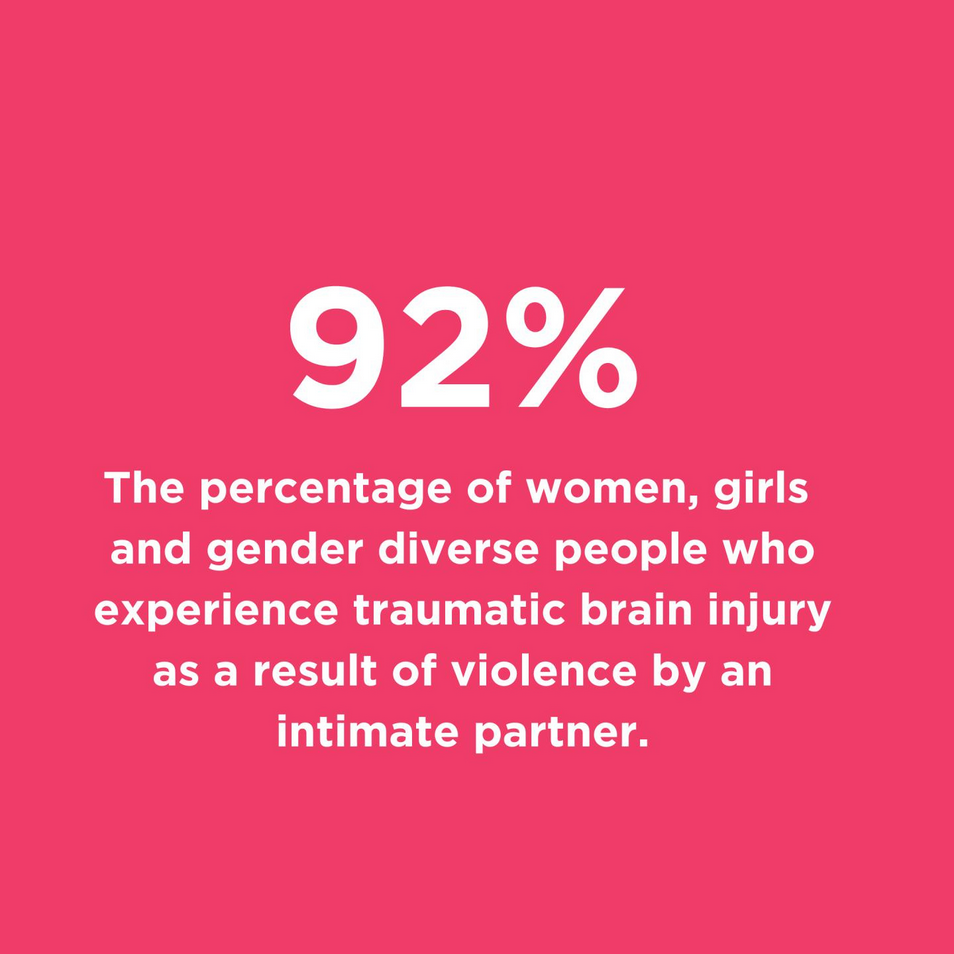
Claim: 92% of Canadian women will suffer traumatic brain injury from an intimate partner

Filed under: Cancon, Health, Media, Politics, Sports — Tags: , , , , , , — Nicholas @ 05:00

Did that headline grab your attention? Certainly the graphic from which it was drawn grabbed my attention. But, as Janice Fiamengo explains, it’s a vast exaggeration in pursuit of a political goal:

    Linden called on men and boys to educate themselves on violence and to call out one another for perpetrating or dismissing abusive behavior of any kind.

It’s not hard to understand why National Hockey League personality Trevor Linden, former captain of the Vancouver Canucks, has lent his star power to a YWCA campaign about women’s injuries from domestic violence. Hockey players have long been targets of feminist accusation for their association with a sport that allegedly promotes misogyny, racism, and violence against women. Even a beloved icon of the sport must continually strive to prove how much he despises his fellow men.

In this case, the campaign of vilification targets the purported frequency with which female victims of intimate partner violence (IPV) experience traumatic brain injury, and demands “increased support for diagnosis and treatment”. To do so, the campaign asserts some of the most dramatic numbers I’ve ever seen.

No stranger to concussions, Linden is said in a CBC report to have been “stunned” to learn that female victims are injured at a much higher rate than professional hockey players. “For every concussion incurred by an NHL player,” the report states, “approximately 7,000 women and girls in Canada are concussed because of intimate partner and domestic violence, according to a new estimate from YWCA Metro Vancouver and researchers at the University of British Columbia.”

Linden’s shock is understandable. We’ve all seen the hits meted out to professional hockey players. The thought of thousands upon thousands of Canadian women every year being treated in like manner — and suffering the consequences in traumatic brain injury (TBI) — is disturbing even to those of us who have learned to be skeptical of feminist research and inflammatory reports by Canada’s state-funded news agency.

The key paragraph in the story that justifies the staggering numbers tells us that

That sounds as if more than 3 in 10 women and girls in Canada (92% of 4 in 10) will at some point in their lives suffer brain injury from battering.

The statement might just qualify as the most outstanding exaggeration of violence against women ever made by a feminist organization. The good news for women and girls in Canada — and the bad news for the ever-declining credibility of feminist advocates and reporters — is that the numbers being promoted are flat-out false. They’re false even if we take note of the operative word “approximately” in the above statement. They’re false even if we accept the extraordinarily elastic definition of violence employed by the feminists who work for Statistics Canada. And they’re false even if we accept that a small study of black female victims of extreme violence can be generalized to all girls and women in Canada.

The numbers are false, ultimately, because the literature review from which the 92% number was extracted does not actually claim that 92 per cent of all IPV victims experience brain injury. A fundamental misreading and misrepresentation of data is at the heart of the campaign’s extraordinary claim.

Let’s trace, as much as possible, how the numbers have been manipulated and fudged. At the center of the hoopla is a report from Statistics Canada (“Intimate partner violence in Canada, 2018: An overview”) based on a large survey conducted by online questionnaire and telephone interview. This government-funded survey sought to measure the experience and frequency of intimate-partner violence as reported by victims — both men and women — over the previous year and over the lifetime of each victim. The sample size was large (43,296) but the response rate was low, at 43.1% overall in the Canadian provinces. (It is worth noting that response rates lower than 60% are considered by some researchers to produce unreliable and invalid results.)

June 4, 2023

“[T]he unspoken truth about the English and protesting. Reader, we are crap at it.”

Filed under: Britain, Environment, Media, Politics — Tags: , , , — Nicholas @ 05:00

William Atkinson has lost patience with the posh idiots who make up the useful idiot brigade of Just Stop Oil and other Extinction Rebellion spawn:

“Just Stop Oil Courtauld Gallery 30062022” by Just Stop Oil is licensed under CC BY-SA 4.0 .

I’m sorry, readers, but Just Stop Oil have gone too far this time.

I’ve previously been pretty sanguine about the eco-loonies. I don’t drive a car, a decent number of my friends are w*ke, and as I am trying to market myself as Britain’s first pro-climate change commentator – all that sparkling wine! – anything that raises the issue’s salience is a bonus. Coppers standing limply by glue-enthusiasts is fine by me.

That was until this morning. But the decision of these pound-shop Rainbow Warriors to hold up the England team on their way to Lord’s is indefensible. If Just Stop Oil really claim to care about the future of the planet, they should surely want to protect the most beautiful thing on it: the glorious, sainted game of Test cricket? Arrest them all, throw away the key, and apologise profusely to Ben Stokes.

What is even more surprising about this act of sporting vandalism is that one would usually expect cricket to be something of which Just Stop Oil and other protestors are quite fond. They are, after all, rather conservative. That is not just in a historic sense – nobody was more reactionary than the Luddites! – but because they are made up of exactly the sorts of people one would expect to vote Tory.

A University of Exeter study showed that supporters of Extinction Rebellion in 2019 were overwhelmingly middle-class, highly-educated women from the South of England. Some 85% had degrees, two-thirds identified as middle-class, a high proportion were self-employed, and three-quarters lived in southern England – a third from the West Country. Surely the Blue Wall personified?

Why have Deborah from Totnes and Agnes from Frome decided to start gluing themselves to motorways and mistaking Heinz for Dulux? Professor Clare Saunders, whose analysis I just quoted, said that because these people are “not natural protestors” or “natural law-breakers”, it must show they were “already persuaded by the rightness of the climate cause”. Unsurprisingly, I disagree.

Our over-proliferation of graduates in recent decades, combined with the increasing tendency of women to vote for left-wing parties, was naturally going to produce some form of radicalisation. But add in Brexit, the possibility of blocking some houses, and the opportunity to reclaim some form of lost youth, and suddenly giving it the gilet jaune seems like a nice day out.

In that lies the unspoken truth about the English and protesting. Reader, we are crap at it. The French shut down Paris, lose lives, and burn down municipal buildings in protest at a raise in the pension age, all we can manage are posh girls mucking around with soup, blue-haired Oxford undergrads sticking themselves to a floor, or railwayman who now openly admit a year of strikes has been pointless.

H/T to Johnathan Pearce for the link.

The peasant consumers are threatening to storm the ESG castle

Filed under: Business, Media, Politics, USA — Tags: , , , , , — Nicholas @ 03:00

Jon Militmore on the threat to the corporate world of ESG-guided action posed by mere “consumers” with their “choices”:

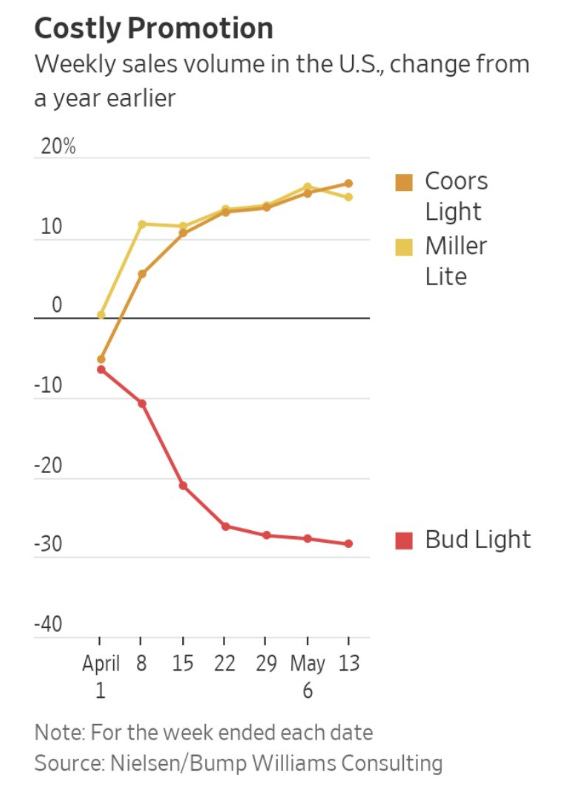
The Wall Street Journal ran a deep dive article last month exploring “how Bud Light blew it”, but it somehow missed the most important part of the story.

As most people already know, the world’s most popular light lager has seen a collapse in sales following a boycott prompted by a March Madness ad campaign featuring transgender influencer Dylan Mulvaney. The Journal‘s chart depicting the fall in Bud Light sales speaks for itself, and the company’s delayed and tepid response to the uproar only seemed to make matters worse.

This isn’t Anheuser-Busch’s first foray into controversial social issues.

The Journal‘s Jennifer Maloney points out that the company has been engaging in social equity-themed advertising for years, including a 2021 Michelob Ultra ad featuring transgender track star Cecé Telfer and a 2022 Bud Light Canada campaign for Pride Month displaying various pronouns.

What Maloney fails to mention in her article is why beer companies — not just Bud Light — are suddenly courting controversial social issues such as nonbinary gender, transgenderism, and third-wave feminism.

The answer is simple: The rise of environmental, social, and corporate governance as the dominant strain of “stakeholder capitalism” has incentivized corporations to curry favor with ESG rating firms, even if it means alienating their consumers.

Unlike traditional capitalism, which seeks to maximize profits by serving consumers, the ESG model seeks to “improve” capitalism by considering other stakeholders besides investors and consumers. Publicly traded corporations are graded on how well they achieve socially desirable metrics, such as combating climate change, advancing diversity and inclusion, and creating a more “equitable” society.

What was intended to be a kinder, gentler form of capitalism has morphed into a kind of economic fascism that places the arbitrary interests of a small cabal of people — asset managers, bureaucrats, global financiers — ahead of consumers.

As the Austrian economist Ludwig von Mises pointed out, consumers are the true bosses in a capitalist system. They ultimately decide what products are created and purchased, who becomes wealthy, and who becomes poor.

As the Bud Light fiasco shows, ESG places consumers in the back seat. The social equity campaigns are not designed to appeal to Bud Light consumers, but to the ESG rating agencies, which have the power to downgrade companies that fail to dance to their tune.

June 3, 2023

What are you going to believe? The official Narrative™ or your lyin’ eyes?

Filed under: Media, Politics, USA — Tags: , , , , , — Nicholas @ 05:00

Jeff Goldstein rounds up just a few incidents that gained media notoriety for their racist overtones, only to be quietly dropped and ignored once the truth came out:

A screenshot from a video showing Nick Sandmann confronted by activist Nathan Phillips at the steps of the Lincoln Memorial in Washington DC, 18 January, 2019.
Wikimedia Commons.

Covington Catholic High School’s Nick Sandmann never tried to stare down a phony Native American activist. Smugly or otherwise. And we all should have known it.

Morgan Bettinger never threatened to run over BLM protesters, nor did she make any of the supposedly racist remarks Zyahna Bryant claimed she did. Bryant — a “social justice” activist and Marxian race hustler — can perhaps be trusted to review a new Applebee’s dessert pie, but on all other subjects, the wise move would be to adopt a skeptical pose when engaging with her, if not simply dismiss out of hand anything spilling from her mouth save maybe a tasty fruit filling.

Michael Brown never said “hands up, don’t shoot!” Jacob Blake is not a hero or a civil rights icon — nor should be George Floyd or Trayvon Martin.

Christian Cooper did indeed threaten to take Amy Cooper’s dog. Justin Neely was a crazed homeless man and career criminal who absolutely threatened people on a subway train. Daniel Penny has never been a white supremacist.

Time and time again, the left creates its own mythology, then repeats it until the rest of us just kind of accept it as at least somewhat fairly described. And that’s a fatal mistake, both intellectually and practically.

Physician’s assistant Sarah Comrie, six-months pregnant and coming off of a twelve hour shift in Bellevue Hospital’s neonatal ward, never approached a group of five black teenagers, all of them males, and tried to steal a bike they’d rented — though the mental image of five black teenagers pressed ridiculously together groin to ass on a rented bike peddling down a New York City street on their way to, what? — church? A Hamilton matinée? — I have to admit amuses me enormously.

Similarly, the five male teens who laid claim to the bike never acted “admirably,” as yet another race hustler attempted to frame the interaction; in fact, during the 90-second viral video clip, the men can be seen and heard hectoring the pregnant woman, taunting her, cursing at her, putting hands on her several times, and intentionally creating a “Karen” narrative in real time. Nevertheless, we’re told that if we believe our own eyes — and identify thuggish behavior as belonging to those who act thuggishly, and with what it appears is thuggish relish — then what we’re doing is “using thug as a synonym for the n-word”.

— And yet, the person making that claim is naturally the one who is interested in drawing that connection — in a rhetorical maneuver that has become so trite and boring that I wish I could stop pointing it out: the gambit is meant to forestall any pushback on the preferred and implied racial narrative the grifters are hoping to shape and add to their civic mythologies, while also and simultaneously deterring people from honestly assessing what they’ve witnessed — however out of context and fraught that may be — for fear of being labeled “racist” and publicly scapegoated as a symbol for venal “whiteness” that is now central to the leftist’s “anti-racism” and CRT projects.

Kids, obesity, and the woke agenda

Filed under: Education, Food, Health, Media, Politics, USA — Tags: , , , , — Nicholas @ 04:00

Elizabeth Nickson isn’t a fan of the “healthy at any size” mantra, especially when it comes to kids:

If I were a kid today I’d be out scouting the neighborhood for a home school or church to take me in as long and teach me latin and math and give me a reading list as long as I didn’t have to have someone’s jiggly bits pushed in my face or be shown diagrams of sexual positions, and asked ceaselessly about my food intake, my BMI measured (25 states mandate this) and no doubt entirely invasive questions about my family and father and weird uncles and so on. It would be like living in a perpetual inquisition, danger everywhere, with no privacy in any area of one’s life, with every sentence and expression evaluated on whether I am being a good member of the inclusive collective and will step aside so someone less privileged can have a chance.

But I am not nine and therefore spared all that, but God in heaven I feel sorry for them. Schools have stepped up to take the place of the at-home mother who had a relationship with her kids strong enough so that their emotional needs were being met and they didn’t have to stuff food down their throats for a relief from the ceaseless pressure to conform, and severe emotional loneliness from the absence of a family system.

Instead of your mind, the dominant focus seems to be your body, and at the most vulnerable time in your life. I know they think they are raising good little socialist citizens, who are acutely aware of the struggles of the less fortunate, but add in the bullying of Middle School and little wonder 49% of kids are overweight or obese, and the rest stuffing their feelings 24/7. Great for the food pushers, sucks for the medical system.

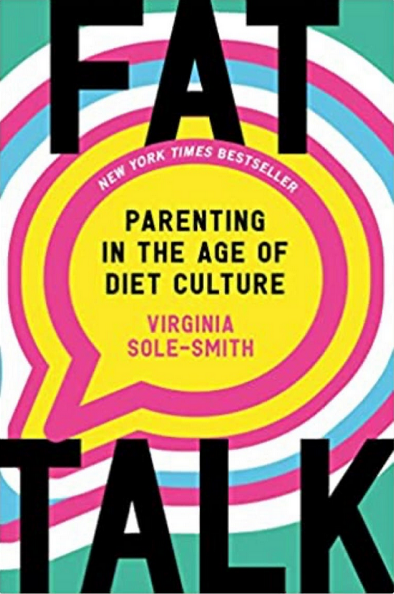
Virginia Sole-Smith who is the anointed high priestess of Fat Positivity Culture, has been pushing fat is AOK and in fact, possibly superior to thin-ness, which she never fails to excoriate, for the New York Times, Slate and Science and various other high-end publications for 20 years. Her latest book Fat Talk, which sits on the NYTimes bestseller list is about raising fat children, or not fat children, it’s kind of confusing. Ok, to be fat, but not obese, but you can’t put obese kids on a diet because that will make them fatter, and besides everyone is criticizing them and that has to stop.

Every leftie cliché is brought out of the barn and groomed within an inch of its life. White privilege, thin white privileged women, BIPOC exclusion, thin privilege in sport, entertainment, business, and so on, a system systematically prejudiced against fat people.

Basically, however, Sole-Smith is staking her ground and that is that “small fat”, which is how she defines herself, is normal and we should adjust our eyes to see pudgy tummies as “something to aim for” – as she states in her last chapter called “How to Have The Fat Talk”. We have to start “reclaiming (sic) fatness as a perfectly good way to have a body”.

June 2, 2023

A potential sign of resistance?

Filed under: Business, Health, Media, Politics, USA — Tags: , , , , — Nicholas @ 05:00

Severian on the odd phenomena of people who’ve begun to discover they didn’t need to accept the ever-more-woke products of the entertainment industry and, more recently, major retailers and brewers:

Bud Light’s latest brand ambassador, Dylan Mulvaney

The Third Law of SJW — “SJWs always double down” — is really going to get tested with these things [woke reboots/remakes of popular TV shows, movies, etc.], but we need to hope they keep the faith. We want them to double, triple, quadruple down. The material basis of Clown World is the assumption that people simply can’t live without iCrap. As I noted, lots of people did indeed seem to enjoy the Covid lockdowns, and they weren’t all aspiring Laptop Class leftoids, either. Lots of moms found out that they rather enjoyed spending time with their kids, rather than putting in an extra twenty hours a week down at the law firm. Lots of suburban dads found a new sense of accomplishment doing little projects around the house.

In other words, people found out that not only could they just “make do”, they actually kinda enjoyed “making do”. Lots of them went right back to their old ways the minute they could, of course, but not all of them … and now, #Woke Capital is basically doing the job for us. They’re daring us to not go to the movies, the same way Fox News is daring us to cut the cord entirely (they figure that hey, we get $x a month from the cable subscription fee regardless of whether anyone watches or not, so why not give in to our natural inclinations and become MSNBC Lite?).

They’re daring us to cut the cord, throw the Pocket Moloch in the nearest lake, and get what we need from local sources — including entertainment. And who knows what might happen if we start actually talking to our neighbors? If, as with the lockdowns, the guy who lives down the street ceases to be “the dude with the green Honda” and becomes Bob, a real person?

Challenge accepted, motherfuckers.

The idiocy of trying to portray political systems on a single spectrum

Filed under: Economics, Education, Government, History, Politics — Tags: , , , , , , — Nicholas @ 03:00

Lawrence W. Reed explains why trying to illustrate the similarities and differences of political systems using only a single axis conceals more than it reveals, especially for students:

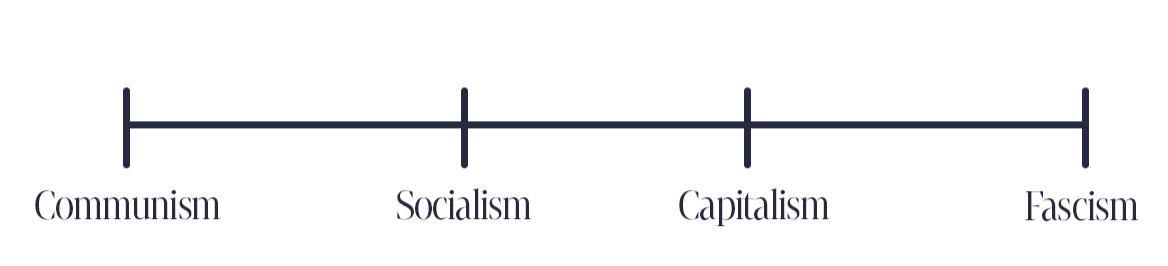
In classes on Government and Political Science, with few exceptions, students in both high school and college are taught that the so-called “political spectrum” (or “political/economic” spectrum) looks like this: Communism and Socialism reside on the Left, Capitalism and Fascism dwell on the Right. Various mixtures of those things lie somewhere in between:

This is not only false and misleading, it is also idiocy. Toss it into the trash bin and demand a refund from the teacher who presented it as fact, or as any kind of insightful educational tool.

At the very least, a spectrum that looks like that should raise some tough questions. Why should socialists and fascists be depicted as virtual opposites when they share so much in common — from their fundamental, intellectual principles to their methods of implementation? If a political spectrum is supposed to illustrate a range of relationships between the individual and the State, or the very size and scope of the State, then why are systems of Big State/Small Individuals present at both ends of it?

On any other topic, the two ends of a spectrum would depict opposites.

[…]

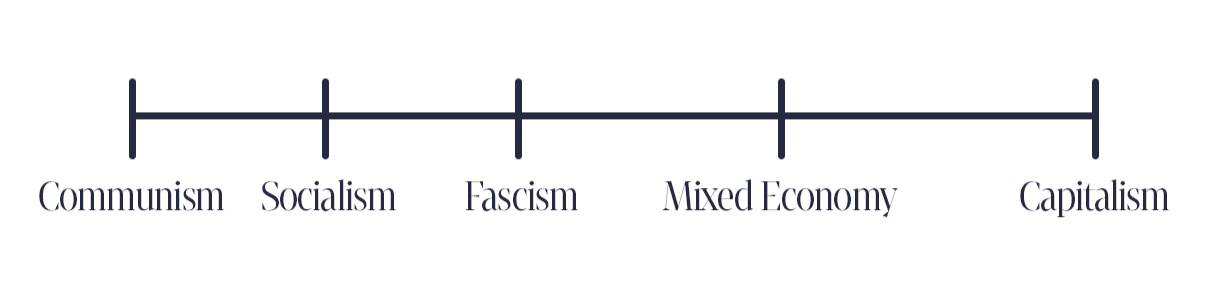
My contention is that if Communism, Socialism, Fascism and Capitalism all appear on the same range line, it is terribly misleading and utterly useless to place the first two on the left and the second two on the right. The placement that makes the most sense is this one:

The perspective represented in this sketch immediately arouses dispute because its implications are quite different from what students are typically taught. The inevitable objections include these three:

1. Communism and fascism cannot be close together because communists and fascists fought each other bitterly. Hitler attacked Stalin, for example!

    This objection is equivalent to claiming, “Al Capone and Bugs Moran hated and fought each other so they can’t both be considered gangsters”. Or, “Since Argentina and Brazil compete so fiercely in football, both teams cannot be composed of footballers”.

    Both communism and fascism demonstrate in actual practice an extremely low regard for the lives and rights of their subject peoples. Why should anyone expect their practitioners to be nice to each other, especially when they are rivals for territory and influence on the world stage?

    We should remember that Hitler and Stalin were allies before they were enemies. They secretly agreed to carve up Poland in August 1939, leading directly to World War II. The fact that Hitler turned on Stalin two years later is nothing more than proof of the proverb, “There’s no honor among thieves”. Thieves are still thieves even if they steal from each other.

2. Under communism as Karl Marx defined it, government “withers away”. So it cannot be aligned closely with socialism because socialism involves lots of government.

    Marx’s conception of communism is worse than purely hypothetical. It is sheer lunacy. The idea that the absolutist despots of the all-powerful “proletarian dictatorship” would one day simply walk away from power has no precedent to point to and no logic behind it. Even as a prophecy, it strains credulity to the breaking point.

    Communism in the sketch above appears where it does because in actual practice, it is just a little more radical than the worst socialism. It is the difference between the murderous, totalitarian Khmer Rouge of Cambodia and, say, the socialism of Castro’s Cuba.

3. Communism and Fascism are radically different because in focus, one is internationalist and the other is nationalist (as in Hitler’s “national socialism”).

    Big deal. Again, chocolate and vanilla are two different flavors of ice cream, but they’re both ice cream. Was it any consolation to the French or the Norwegians or the Poles that Hitler was a national socialist instead of an international socialist? Did it make any difference to the Ethiopians that Mussolini was an Italian nationalist instead of a Soviet internationalist?

Endless confusion persists in political analysis because of the false dichotomy the conventional spectrum (Sketch 1) suggests. People are taught to think that fascists Mussolini and Hitler were polar opposites of communists Lenin, Stalin, and Mao. In fact, however, they were all peas in the same collectivist pod. They all claimed to be socialists. They all sought to concentrate power in the State and to glorify the State. They all stomped on individuals who wanted nothing more than to pursue their own ambitions in peaceful commerce. They all denigrated private property, either by outright seizure or regulating it to serve the purposes of the State.

June 1, 2023

Banning Roger Waters would be playing his game

Filed under: Britain, Germany, Media, Politics — Tags: , , , — Nicholas @ 03:00

In Spiked, Daniel Ben-Ami explains why we should reject the arguments about banning Roger Waters, formerly the frontman for Pink Floyd, and lately a pretty out-there antisemite:

Screencapture from a YouTube video.

Pressure is mounting to ban Roger Waters from performing in Britain. The former Pink Floyd frontman and veteran anti-Israel activist stands accused of anti-Semitism. But whatever one makes of Waters’s antics, his performances should not be cancelled.

Waters is set to perform his first UK show tonight in Birmingham, with further concerts scheduled for Glasgow, London and Manchester. These are part of his controversial “This Is Not a Drill” tour, which began its European leg a few months ago. The show contains a number of controversial elements, such as Waters dressing up in a Nazi-style uniform and brandishing a gun, while Anne Frank’s name is projected above the stage. In past tours, he has floated an inflatable pig with a Star of David on it above the stage.

The Waters row came to a head earlier this month, when local authorities in Frankfurt attempted to ban his concert. The ban was successfully challenged by Waters in court and the concert went ahead, despite protests. Waters is now being investigated by the German police for wearing a Nazi-style uniform on stage at his Berlin gig (the display of Nazi symbols is illegal in Germany, except for educational or artistic purposes). According to Waters, he donned the uniform not to endorse Nazism, but in order to make a “scathing critique” of it.

Jewish community organisations in the UK have condemned Waters, with some calling for him to be censored. The Board of Deputies of British Jews has argued that his concerts are probably better described as political rallies. The National Jewish Assembly has called on the UK government to condemn Waters. The Campaign Against Antisemitism, a volunteer-led charity, has not only launched a petition to stop venues hosting him – it has also written to cinema chains demanding they cancel film screenings of his concerts.

[…]

There are also more practical reasons to challenge these attempts to cancel Waters. The campaign against him, first in Germany and now in Britain, has allowed Waters to present himself as a free-speech martyr. To some, this will lend credence to his dubious claim that he is the victim of shadowy, covert forces determined to silence his advocacy for the oppressed.

Besides, banning displays of anti-Semitism does not make the problem go away. On the contrary, it only encourages anti-Semitism to take on more disguised forms. This often includes the demonisation of Israel or of Zionism, rather than Jews as such. Even those who do genuinely hate Jews will rarely admit to it openly. Instead, they typically use coded language, which is harder to challenge and confront.

By all means, protest outside Waters’s concerts and challenge his outrageous antics. But the attempts to ban his concerts are an affront to freedom. And they will do nothing to help the struggle against anti-Semitism. Roger Waters must have the right to perform.

May 31, 2023

The War Against The Patriarchy, updated

Filed under: Economics, Education, Government, Health, Law, Media, Politics — Tags: , , , , , , — Nicholas @ 05:00

Janice Fiamengo responds to a recent Joel Kotkin op-ed in the National Post discussing the “war of the sexes” and the long, long string of victories chalked up by the “weaker sex”:

    The war between the sexes has ended, and rather than a co-operative future that could benefit all, it has turned out to be more like a lopsided win for the female side.

So begins Joel Kotkin’s National Post op/ed “Women have won the ‘war between the sexes’, but at what cost?” It is a welcome but disappointing analysis that starts with a show of defiance and ends in quiet desperation. Of course, it’s good to find anyone in a major newspaper willing to cast a less-than-adulatory eye on “The Future [that] is Female” or to write sympathetically about men, and Kotkin, a prolific author on cities and technocracy, proves his good faith on the strength of that opening statement alone. Aside from the wishful thinking of believing feminism to be winding down (was #MeToo a prelude to ceasefire?) or ever having envisioned a co-operative future (he should take a look at Kate Millett’s incendiary “Theory of Sexual Politics“), Kotkin is to be commended for daring to name as a war the decades of post-1960s activism, in which all the decisive victories have been claimed by feminists against men.

Kotkin, however, isn’t able to continue in the take-no-prisoners style he chose for his opening salvo. He is prevented, either by his own prudence, his lack of deep knowledge, or the paper’s editorial insistence, from targeting feminist ideology and policies in the rest of the article. In fact, the article doesn’t name a single piece of debilitating feminist legislation or even make one reference to the many expressions of anti-male contempt that are now deeply embedded in our public culture. The result is a curiously disembodied discussion in which serious social problems linked to male decline are pointed to without any attempt made to say exactly how they came about or how they might be reversed.

The crux of the problem,” Kotkin tells us to start off, “lies in the fact that as women rise, men seem to be falling.” Here we see him start to draw back from the attack, as if afraid to say what he really thinks. His phrasing makes male decline sound like a natural phenomenon, an illustration of the primordial principle of Yin and Yang. Or perhaps it is simply that men, with their allegedly fragile egos and hegemonic masculinity, haven’t been able to compete against all that female ability, once dammed up by the patriarchy, now finally being let loose on the world (though always with calls for more to be done to assist women).

[…]

Kotkin refers to men “left behind” in the economy, but he keeps mum about the decades of affirmative action in higher education and hiring (detailed by Paul Nathanson and Katherine Young in Legalizing Misandry, pp. 81-124) as well as draconian sexual harassment legislation that have made work life unrewarding and often punitive for men.

He stresses the loss of sexual amity and of willingness to marry, but avoids discussing the nightmare of family law that has made marriage or even cohabitation perilous for many men.

The sins of omission do not end there. Perhaps working on the assumption — not without basis — that any discussion of social problems will need to focus on women at least as much as on men, Kotkin proceeds to backtrack on his earlier claim about women’s victory in the sex war, outlining instead a downbeat portrait of women’s troubles. Citing research by Jonathan Haidt, he tells us that adolescent girls have been severely affected by depression and self-harm, that many young women, without reliable men to support them, have had to fend for themselves in a difficult economic climate, and that single mothers, left with few options, are unable to offer stability to their children. It looks as if the decline of men mentioned early in the article has mainly hurt women and their children.

What Kotkin neglects to mention — surely deliberately — is that adolescent boys commit suicide at 4 X the rate of girls, resolving their depression decisively enough that Haidt seems not to have felt the need to account for them; that women are the ones who choose divorce in approximately 70% of cases; and that divorced fathers are too often denied a real role in their children’s lives while being burdened past endurance by exorbitant support payments. In other words, for every sad woman held up for our concern, there is a plurality of equally sad men rendered invisible in the conventional reporting. The staggering statistics on male suicide provide a stark illustration of Kotkin’s initial contention about the casualties of the sex war — yet he leaves these aside, choosing instead to voice the now-obligatory concern about the trans threat to women’s sports.

Perhaps most importantly, Kotkin suggests through his word choice that the data he cites are simply “trends”, occurrences that came about through economic and demographic factors independent of the sex war initially evoked. But they aren’t. They flow directly from a feminist vision in which the family — explicitly understood by feminist leaders to be a source of abuse and oppression — must be transformed and women liberated from reliance on the fathers of their children. Under this vision, a more just and equitable world will be ushered in by women’s superior leadership once they are freed from their unpaid labor in the home and the many sexist barriers that hold them back. That freedom must be aided, according to conventional wisdom, through abundant contraception, unfettered abortion, collectivized child care, no-fault divorce, programs and propaganda to urge men to do more housework, and non-stop encouragement to women — in movies, sit-coms, advertising, articles, and government equity programs — to give up on their men.

« Newer PostsOlder Posts »

Powered by WordPress