People on the side of The People always ended up disappointed in any case. They found that The People tended not to be grateful or appreciative or forward-thinking or obedient. The People tended to be small-minded and conservative and not very clever and were even distrustful of cleverness. And so the children of the revolution were faced with the age-old problem: it wasn’t that you had the wrong kind of government, which was obvious, but that you had the wrong kind of people.
As soon as you saw people as things to be measured, they didn’t measure up. What would run through the streets soon enough wouldn’t be a revolution or a riot. It’d be people who were frightened and panicking. It was what happened when the machinery of city life faltered, the wheels stopped turning, and all the little rules broke down. And when that happened, humans were worse than sheep. Sheep just ran; they didn’t try to bite the sheep next to them.
Terry Pratchett, Night Watch, 2002.
November 29, 2023
QotD: The children of the revolution
November 28, 2023
Pierre Trudeau and Canada’s choice to become an international featherweight in the 1970s
In The Line, Jen Gerson endures a foreign policy speech from Mélanie Joly that takes her on a weird journey through some of Canada’s earlier foreign policy headscratchers … usually leading back to Justin Trudeau’s late father:

A Toronto Sun editorial cartoon by Andy Donato during Pierre Trudeau’s efforts to pass the Canadian Charter of Rights and Freedoms. You can certainly see where Justin Trudeau learned his approach to human rights.
If I saw a statue of P.E.T. on the roof of a foreign affairs building that looked like it were competing for a 10th place spot in the Eurovision tourney, I don’t know how I’d feel: embarrassed, touched, certainly too polite to say anything honest. I probably wouldn’t be so struck with awe by the sight that I’d be keen to shoehorn the anecdote into a major policy speech in front of the Economic Club.
And yet.
Joly’s speech was striking in that it could be divided into two distinct parts: The first half was a cogent and clear-eyed examination of the state of play of the world, one that acknowledged a fundamental shift in the assumptions that underpin the global order. Nothing one couldn’t glean from the Economist, but grounded nonetheless. The global order is shifting, the stakes have increased, and the world is going to be marked by growing unpredictability.
“Now more than ever, soft and hard power are important,” Joly noted, correctly, ignoring the fact that Canada increasingly has neither, and doesn’t seem to be doing much about that.
And this brings us to the second half of the speech, which was an attempt to spell out the way Canada will navigate this shift, by situating itself as both a Western ally and an honest broker: we are to defend our national interests and our values, while also engaging with entities and countries whose values and interests radically diverge from our own. “We cannot afford to close ourselves off from those with whom we do not agree,” Joly said. “I am a door opener, not a door closer.”
This was clearly intended to be analogous to the elder Trudeau’s historic policy of seeking cooperation with non-aligned countries — countries that declined to join either the Communist or the Western blocs throughout the Cold War.
[…]
If our closest allies treat us like ginger step-children as a result of our own obliviousness and uselessness, our platitude-spewing ruling class is going to seek closer relationships in darker places: in economic ties with China, and in finding international prestige via small and middling regional powers or blocs whose values and interests are, by necessity or choice, far more malleable than our own.
These cute turns of phrase are a matter of domestic salesmanship only. “Pragmatic diplomacy” is a thick lacquer on darker arts.
Which brings us back to Macedonia, again. Or North Macedonia, if you’re a stickler.
Before it declared independence in 1991, Macedonia was a republic within the Socialist Federal Republic of Yugoslavia. During much of Trudeau Sr.’s time, Yugoslavia was led by Josip Tito, a Communist revolutionary who broke with Stalin and spearheaded a movement of non-aligned countries, along with the leaders of India, Egypt, Ghana, and Indonesia. Tito was one of several despotic and authoritarian leaders with whom Trudeau Sr. sought to ingratiate himself to navigate the global order.
P.E.T.’s most ardent supporters maintain a benevolent amnesia about just how radical Trudeau Sr. was relative not only to modern standards, but to world leaders at the time.
During the 1968 election, Trudeau promised to undertake a sweeping review of Canada’s foreign affairs, including taking “a hard look” at NATO, and addressing China’s exclusion from the international community.
In 1969, America elected Richard Nixon a bombastic, controversial, and corrupt president who forced Canada examine the depth of its special relationship with its southern neighbour. At the time, this was termed “Nixon shock.” And it could only have furthered Trudeau Sr.’s skepticism of American hegemony.
It was in this environment of extraordinary uncertainty, and shifting global assumptions and alliances, that Trudeau Sr. called for a new approach to Canadian foreign policy. He wanted a Canada that saw itself as a Pacific power, more aligned to Asia (and China). Trudeau also wanted stronger relationships with Western Europe and Latin America, to serve as countervailing forces to American influence.
Geert Wilders
Mark Steyn on the suddenly fascinating-to-American-media Dutch politician Geert Wilders, with whom he has had a long association:

Geert Wilders, leader of the Dutch Party for Freedom (PVV).
Photo by Wouter Engler via Wikimedia Commons.
Times are bad, and the respectable chaps are explicit about their eagerness to make them more so — more mass immigration, more green bollocks, more “digital identity”, more “variants” and more “public health”, more mutilation and sterilisation of your middle-schoolers …
This last week I’ve received a bazillion queries demanding to know what I make of Geert Wilders. It’s true that a lot of commentary on his victory is close to witless: in America, he is apparently “the Dutch Trump” — because they’re both, er, blond. As David Reaboi pointed out on Twitter, Wilders has been a thorn in the side of the Dutch state since the days when “Trump was donating to Democrats”. In 2005, when The Donald was still sufficiently “respectable” that Hillary Clinton attended his wedding, Wilders had already been expelled from his party for objecting to Turkish membership of the European Union.
So he’s been at this a long time – and yours truly goes back a long way with him. He did me the great honour of inviting me to write the introduction to his book, Marked for Death, which is a cracking read — not just my bit, but his parts too: Geert writes way better in English than most anglo politicians do. (We have a few copies at the SteynOnline bookstore, and I’ll even sign it for you: the perfect Christmas gift for the “far right” members of your family.)
But here’s the most relevant aspect of how Wilders was ahead of the game. I try not to let my own twelve years in the dank septic tank of Washington pseudo-justice get to me, but, as you know, for me the only salient point about this US election season is that the multitudes of prosecutors and judges of the American state are willing to torture the plain meaning of the nation’s laws in order to get Trump convicted of … something, anything, as long as it gets him banged up in gaol for the rest of his days.
This is the central fact of our increasingly post-democratic age: the criminalisation of political opposition. If you’re in European-style multi-party systems, they’ll deny you bank accounts and seize your kids’ iPads, and if necessary find twenty coppers to jump you in the street. But, if you’re in America’s bloody awful frozen two-party system, the leader of Party A will unleash the resources of the world’s most lavishly funded Deep State on the leader of Party B and persuade anyone around him to cop a plea on crimes they didn’t commit — mainly because those crimes don’t actually exist.
In that sense, rather than Geert being the Dutch Trump, Trump is the American Geert. Until Biden came along, no other settled western democracy had been as zealous as the Netherlands in prosecuting opposition politicians for their policy platforms.
November 27, 2023
“A law for which no enforcement mechanism exists is not a law. It is a LARP or a declaration of feeling”
Kulak takes on politics and violence:

“Death and Life constrasted … or, an Essay on Man” by Robert Dighton, 1784.
British Museum number 1935,0522.3.55.
The power of any law comes from the fact that armed men stand ready to commit an escalating series of violence against those who do not comply. And even the lightest touch, subtlest “Nudge” laws gain their power via subtly manipulating the circumstances in which violence by state is already applied. (When you fill out the tax form you must fill out or be dragged to prison, this new law will let you fill in a box to receive $200 back if you have a dog … whom the IRS would shoot before taking you to prison if you had not surrendered the money to them in the first place)
To say someone has political power whether a voter, an activist, or a politician … is to say they can effect political outcomes such that they can make violence more or less likely to be exercised against someone.
If your political activism and activity is not connected to any mechanism to commit violence, whether through the states agents, or through an illegal organization … you are not a political actor. You are a “citizen”, “voter”, “activist”, “politician” in the same way the madman at the asylum is “Napoleon”, you may play-act with the symbols of power … but you do not interact with it.
All Political Discussion Terminates in Violence
All discussions of politics is inevitably, and CAN ONLY BE, a conspiracy to commit violence, whether legally through the state, illegally through some form of direct action or “terrorism”, or Stochastically through some impact on the culture or wider discussion which will make the prior two more likely or effect their nature.
If your supposedly political speaking’s have no connection to state or non-state “policy” Ie. Violence … then they are not political. You are engaged in fantasy at best, grovelling at worst.
This is why so many in the safety brigade and regime are not incorrect when they call the political speech of their opponents “Dangerous” or a form of “violence” all political speech is necessarily, by the nature of being political, directed to altering the atmosphere, calculus, mechanisms, and willing committal of state and non-state violence.
.
None of this should be shocking
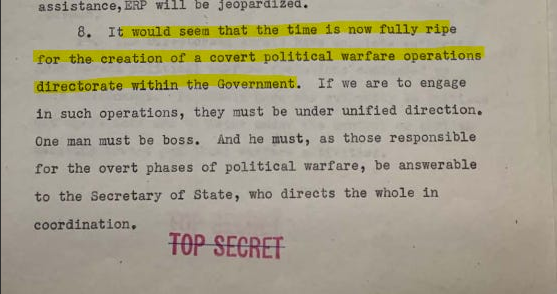
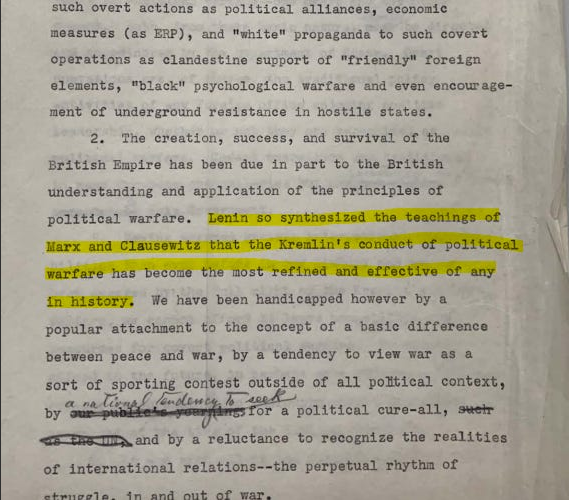
Clausewitz observed “War is politics by other means”
Vladimir Lenin observed the inverse: “Politics is warfare by other means”
In both they merely restated Hobbes: The state of nature is a state of war and peace is merely an artifice mutually consented to by all sides under a sovereign … which can be unilaterally terminated at will by any party, and rationally must be terminated in any one of a thousand circumstances.
That Rights and Liberties are “Given by God” is a euphemism for the violence and threat implicit in the claims of free men.
The founders saying their rights were “endowed by God”, was no different than Carolus Rex declaring he was “Chosen by Heaven” … It was a euphemism and a flex that their violence and dominance of fate had left them masters of their domain, and that they’d meet any challenge with as much violence as a crusader or Inquisitor would visit upon a heretic challenger.
November 25, 2023
“Three or more reporters, arranged in a scrum … are dumber together than any of them alone”
I’m not a fan of the legacy media, although I’ve met good folks who worked or still work in the field, and the modern incarnation of the media has become so much more transparently a PR team for the big progressive wet dreams of bigger and bigger government and more and more centralized control over peoples’ lives. I’ve never met Paul Wells, but he’s respected by some of the media people I’ve met and generally has interesting things to say, perhaps more so that he’s his own boss and publishes on Substack these days:
One reason I don’t like to play along with subscribers who assume this newsletter is a running critique of “the mainstream media” is that I know too many journalists. The best ones are wonderful and most are fine. Most are better at some part of the craft than I am. They don’t hesitate to make that fourth or fifth call, they’re forever willing to butt their heads against the surreal access-to-information regime, they understand interest rates, whatever. They often (not always!) admit errors publicly, which gives the occasional schoolyard bully a chance to make fun of them for doing what bullies never do. Many have an appropriately tragic sense of what it means to work in an industry that has been collapsing for 20 years.
But as a robust rule, reporters don’t mass well. Three or more reporters, arranged in a scrum — the term of art for an impromptu news conference that the newsmaker can leave at any moment — are dumber together than any of them alone. I caught glimpses of this early on. The first time I ever had to scrum a prominent politician at an important moment, I couldn’t believe how bad most of my more experienced colleagues’ questions were. My National Post column and my first book often featured satirical descriptions of scrum dynamics. But it really got bad when Stephen Harper was prime minister.
Harper was a master at generating dumb scrums. The ingredients for a dumb scrum are (1) pre-existing mutual animosity between newsmaker and reporters; (2) a tight limit on time or the number of permitted questions; (3) a few minutes before the scrum to allow the reporters to work on ways to maximize their advantage. This last is not essential but it’s a tremendous catalyst of dumbness, because reporters who are trying to select the best questions always ask worse questions.
If 10 reporters know they will only have time for two to four questions, their responses become predictable. They will need to “get him” (the newsmaker) on “the story of the day”. That is, they need to collect audio and video clips of the newsmaker talking about a dramatic event that happened within the last several hours. That’s because broadcast has room for fewer words than print does, so broadcast’s needs are more rigid. It’s simply pointless to urge colleagues before a scrum to get the newsmaker reminiscing about his youth, or to drag up some disagreement from 2019 that might be newly relevant, or to debate the fine points of trade law. The questions that work in scrums are of the “Aren’t you …” or “Didn’t you …” kind.
Unfortunately, such questions are child’s play to defuse. A junior staffer can tell her cabinet minister what to expect in a scrum, and in 70 guesses over a month she might be wrong three times. Scrum questions are always narrow and pointed, even though every reporter learned early that it’s their very narrowness that makes such questions easy to dodge. “Aren’t you siding with the convoy protesters when you …?” “Not at all. I’m calling for basic fairness.”
Often, the goal in a scrum is to record the newsmaker confessing to a terrible error, ideally a complete moral breakdown. Sometimes it’s not even personal, although the aforementioned pre-existing mutual animosity definitely helps. It’s just that it would be fantastic radio if the newsmaker did collapse in an audibly self-incriminating heap. This too is an easy bullet to dodge. Once I know you are trying to get me to confess my soulless incompetence, all I have to do is talk about anything else, and I win.
Dumb scrum dynamics are hard to avoid. They’re the product of simple physics — there is no time for a thoughtful exchange — mixed with collegial generosity. Reporters with more complex ambitions have to take one for the team, so the clip people can get their clip. None of the rules I have described is set in stone. In 2015 I spent several days covering Stephen Harper’s last campaign, and my colleagues let me simply ask my questions without telling them what I’d ask. But I had to do it in rotation, which meant I got two questions in a week. Meanwhile most of them worked together to concoct questions he could see coming from a mile away.
QotD: Political language mirrors the ritualized nature of political life
Elected officials speak in a language that’s unique to their status group. If you’ve ever tried to attend a city council or school board meeting, you’ve watched them open with the onanistic portion of the thing, handing out certificates and doing grip-and-grins. “Bob, I just want to echo your wonderful comments about this amazing program.” They see themselves first, then others of their class, then they go blind. The first duty of a public official is to take a lot of selfies.
In a crisis, they recite. We’ve all watched them do this. “This is not who we are.” “Let me be clear: Hate has no home here.” You know what they’re going to say before they say it, and you know the tone before you hear it. The current mayor of Los Angeles is very fond of “our message has been very clear” and “we’re going to link arms and stand together”, so you’re not surprised to hear her respond to a question with something like, “Well, Maria, thank you for that great question. Our message has been very clear: We’re going to link arms and stand together.” Listening to elected officials speak is qualitatively different than listening to people speak. They perform the ritual behaviours of their status group.
[…]
They become debilitated by a lifetime of ritual language. If a staffer hasn’t told them to look somber and say “I’m sorry for your loss”, they don’t know how. It isn’t a line they’ve been equipped with for the event. Hey man your kids burned to death I almost lost my Corvette once, man. All kiddin’ aside, man!
[…]
They aren’t people anymore. They can’t talk like people. They don’t have normal human affect. What’s particularly interesting is that this learned inability to read human cues is recent and narrow. Bill Clinton, as much a politician as anyone who has ever lived, had a well-known ability to see people and signal his empathy, or at least to do a brilliant job of faking it. Similarly, Donald Trump is obviously very very fond of Donald Trump, who is amazing, trust me, everybody says so, but he has a normal human ability to spontaneously bullshit with the normals. Elite disconnection isn’t inevitable.
The broken personal thing behind all the broken institutional things is a loss of basic human connection and behavior. It’s a learned disconnection, and they can’t hide it.
Chris Bray, “The Mask Becomes Your Face”, Tell Me How This Ends, 2023-08-22.
November 23, 2023
November 22, 2023
QotD: American universities, “sportsball”, and wealthy alumni
It is, or at least used to be, a truth universally acknowledged, that the Athletic Department was the only bastion of sanity left in higher “education”. I love watching Marxists squirm, so the start of football season was always my favorite time back in my professin’ days. Every year, the doofus Marxoid faculty would write their annual complaint about sportsball — “not germane to the purpose of a university”; “takes away too many resources from academics”; “toxic masculinity” and so forth — and every year, the President and Board of Trustees would tell the eggheads to go pound sand.
NOT, I hasten to add, because the Prez and the Trustees (hereafter: The Administration) were some kind of normal folks. Oh God no — quite the opposite, in fact. No open conservative has been hired to any position in academia for the past thirty, forty years; to make it into the ranks of The Administration, you have to be #woker than #woke. Rather, it was because The Administration were among the few mortals privy to the college’s balance sheet. Seriously, those things are more closely guarded than our nuclear launch codes … but The Administration sees them, and draws the only possible conclusion: Without sportsball, the whole university system is toast.
But alas for the bottom line, Intersectionality is a jealous god, and xzhey will have none before xzhem. The Administration knows — they must know, they can’t not know — that all the stuff that makes big league college football go comes from “boosters”, i.e. rich idiots with way more money than sense, and their corporations. But since The Administration is full of even dumber Marxists than the faculty — yeah yeah, I know, I didn’t think it was possible either — they’ve apparently decided to assume, in true Leftist style, that since the money has always just kinda, you know, been there, it will continue to, you know, somehow, someway, continue to be there.
I mean, what are those rich oilmen from Texas gonna do, not watch football?
Severian, “Ludicrous Speed Update: The NCAA”, Rotten Chestnuts, 2021-04-14.
November 21, 2023
“I couldn’t believe I was sitting in a court room where the prosecution discussed the interpretation of Bible verses”
In First Things, Sean Nelson recounts the trials of Päivi Räsänen, a Finnish parliamentarian who has been through several years of legal tribulation for expressing her religious views publicly:
“Blessed is the man who perseveres in the trial,” declares the Epistle of James. Finnish Member of Parliament Päivi Räsänen should count herself doubly blessed this week. She has now persevered through two trials over more than four years of legal troubles brought on merely for expressing her Christian faith. Following both trials, she has not only been acquitted, but also has been a shining example of a modern Christian life fearlessly lived.
On Tuesday, a Finnish Court of Appeal unanimously found MP Räsänen not guilty under Finland’s “hate speech” laws. If the decision stands — there is still a possibility of appeal to Finland’s Supreme Court — it will represent a bulwark for Christians and all people of good will wishing to live out their faith and contribute to social conversations over contentious issues.
Räsänen’s legal saga began on June 17, 2019. On that day, she tweeted a criticism of her church’s participation in a Helsinki Pride parade. She also included a picture of verses from her home Bible. Her case has come to be known as the “Bible Trial”.
Because she is a long-serving member of Parliament and a former Minister of the Interior, her tweet drew the ire of Finnish officials. While an initial police investigation found nothing criminal in her tweet — even writing that sounds absurd — the prosecutor’s office re-opened the matter to comb through her entire history of public utterances. The Helsinki prosecutor came back with an allegedly offensive pamphlet published in 2004 and a live radio interview from 2019. Räsänen was then charged with three counts of “hate speech” under a criminal code provision originally related to war crimes.
During her first trial in January 2022, the Helsinki prosecutor probed Räsänen with theological questions. Was it really possible to separate sin from the sinner, and condemn the former while loving the latter? Basic Christian belief rests on the distinction, as Räsänen explained, but the prosecutor was not convinced. Räsänen reflected at the time, “I couldn’t believe I was sitting in a court room where the prosecution discussed the interpretation of Bible verses”.
In March 2022, the trial court delivered a resounding victory for Räsänen, unanimously finding her not guilty. “It is not for the district court to interpret biblical concepts,” it said.
Javier Gerardo Milei, President-elect of Argentina
On the current evidence, Argentina has finally decided to turn away from both communism and Peronism to try something radically different in the person of newly elected Javier Gerardo Milei, variously described (disapprovingly) in the English-language press as “far right”, “extreme right”, “Trump-like”, and most alarmingly, “libertarian”. Here’s what Wikipedia had to say about him (before the edit wars get serious on his page):
Javier Gerardo Milei (/miˈleɪ/ mee-LAY, Spanish pronunciation: [xaˈβjeɾ xeˈɾaɾðo miˈlej]; born 22 October 1970) is an Argentine politician, economist, and author who is the President-elect of Argentina.[1] Before rising to political prominence, Milei initially gained notability as an economist, as the author of multiple books on economics and politics, and for his distinct political philosophy.
As an economist, Milei is a vocal proponent of the Austrian School. He has critiqued the fiscal policies of various Argentine administrations and he advocates for reduced government spending. As a university professor, he has taught courses in macroeconomics, economic growth, microeconomics, and mathematics for economists.[2] He is also the author of numerous books and has hosted radio programs, including Demoliendo mitos and Cátedra libre. In 2021, he entered politics and was elected as a national deputy representing the City of Buenos Aires for La Libertad Avanza. During his tenure, he limited his legislative activities to voting, focusing instead on critiquing what he describes as Argentina’s political elite and its propensity for high government spending. Milei has pledged not to raise taxes and has donated his national deputy salary through a monthly raffle. He was a presidential candidate in the upcoming 2023 general election,[3] with Victoria Villarruel as his vice-presidential running mate.[4] He advanced to the run-off of the presidential election, in which he faced Sergio Massa.[5] On 19 November 2023, he won the run-off election with 56% of the vote to Massa’s 44% to become President-elect.[6]
David Warren certainly seems to like the cut of Milei’s jib:
Mr Milei not only swept the “youth” vote, but he did that while declaring: “Killing children is not a human right!” He mocked an accumulation of political corrections, while dropping a few more “flinch bombs” worthy of the XVIIth-century bishops who evangelized that country.
The outgoing president, another tedious Peronist like our pope, shared the old presidential palace with decorative plants. Carlos, my correspondent, claims that he could make Justin Trudeau look intelligent. If true, this would be an extraordinary accomplishment. He also leaves an amazing national debt, hyperinflation, energy shortages, &c.
Mr Milei seems to have won as Mr Trump once did in the United States: by not flinching. A point may be reached in national decline when even the young will pitch out the Peronistas. Godspeed to them, when they reach this point.
Nevertheless, one must continue to despise politics. Carlos echoes Borges: “No matter how bad an Argentine government is, the next will be worse”.
The Buenos Aires Times, quoted by Brian Peckford:
Milei promised to return Argentina, one of the richest countries in the world a century ago, to its former glory, after decades of stagnation, mostly under the populist Peronist coalition – big on welfare and government spending.
The president-elect vowed “a limited government, respect for private property and free trade. The model of decadence has come to an end. There is no way back.”
Milei offered special thanks to former president Mauricio Macri and failed opposition presidential candidate Patricia Bullrich, who threw their support behind him after defeat in the first round and helped bring over their voters to his force.
He also thanked scrutineers from his party and those from the opposition PRO party that had worked to protect and count votes at polling stations.
Milei ended his speech with his traditional trademark rallying call: “Viva la libertad carajo!” (“fucking long live freedom”).
News of the libertarian’s victory prompted wild scenes from supporters on the streets of Buenos Aires. The area around the Hotel Libertador, his traditional bunker for election night, was swamped by revellers celebrating his win.
It’s often said that socialists will dismiss any failures by socialist governments by declaring that it wasn’t “real socialism”. This is equally true for other political and philosophical beliefs:
November 20, 2023
The latest scam – Natural Asset Companies (NACs)
Elizabeth Nickson on the US Securities and Exchange Commission’s plan to magic up some new ways to “financialize” national parks and other federally regulated places for the benefit of the hyper-wealthy and well-connected:

Soon to be a financially performing asset of BlackRock?
Grand Canyon of the Yellowstone, 21 June 2021. Photo by Grastel via Wikimedia Commons.
Delayed but not stopped, the U.S. government is planning a rule that allows for America’s protected lands, including parks and wildlife refuges, to be listed on the N.Y. Stock Exchange. Natural Asset Companies (NACs) will be owned, managed, and traded by companies like BlackRock, Vanguard, and even China.
The deadline was Friday, but earlier this week, the deadline was postponed until January. This is the usual criminal feint from the environmental movement and the administrative state. People are complaining? Let’s put it off till they go back to sleep. Then we will steal their birthright late at night, in precisely the manner we have stolen everything else.
[…]
The entire universe envies the lush interior of the U.S. Increasingly empty, it is filled with a cornucopia of minerals, fiber, food, waters, extraordinarily fertile soil as well as well-ordered, educated, mostly docile people. Worth in the quadrillions, if one could monetize and trade it, financialize it, the way the market has financialized the future labor of Americans, well, it would be like golden coins raining from the sky.
On October 4th, the Securities and Exchange Commission filed a proposed rule to create Natural Asset Companies (NACs). A twenty-one day comment period was allowed, which is half the minimum number of days generally required and when they postponed passing the rule, they did not extend the comment period. “Nope, shut up,” they said.
NACs will allow BlackRock, Bill Gates, and possibly even China to hold the ecosystem rights to the land, water, air, and natural processes of the properties enrolled in NACs. Each NAC will hold “management authority” over the land. When we are issued carbon allowances, owners of said lands will be able to claim tax deductions and will be able to sell carbon allowances to businesses, families and townships. In the simplest of terms, that’s where the money will be made. WE peons will be renting air from the richest people on earth.
The following are eligible for NACs: National Parks, National Wildlife Refuges, Wilderness Areas, Areas of Critical Environmental Concern, Conservation Areas on Private and Federal Lands, Endangered Species Critical Habitat, and the Conservation Reserve Program. Lest you think that any conserved land is conserved in your name, the largest Conservation organization in the U.S., is called The Nature Conservancy, or TNC, which, while being a 501(c)3, also holds six billion dollars of land on its books. Those lands have been taken using your money via donations and government grants, and transferred to the Nature Conservancy, which can do with those lands what it wills.
If this rule passes, America’s conserved lands and parks will move onto the balance sheets of the richest people in the world. Management of those lands will be decided by them and their operations, to say the least, will be opaque.
μολὼν λαβέ, buddy.
The Fact-Checkers found the phrase “kill switch” isn’t in the bill, “proving” it false
Jon Miltimore has yet another example of “fact-checkers” carrying water for politicians to obscure actual facts when they’re politically inconvenient:
In November 2021, former US Representative from Georgia Bob Barr wrote a little-noticed political column claiming that buried inside President Joe Biden’s $1 trillion bipartisan infrastructure legislation was a dangerous provision that would go into effect in five years.
“Marketed to Congress as a benign tool to help prevent drunk driving, the measure will mandate that automobile manufacturers build into every car what amounts to a ‘vehicle kill switch'”, wrote Barr, who was the Libertarian Party’s nominee for president in 2008.
Like most Americans, I had never heard of this alleged “kill switch” until a few days ago when Representative Thomas Massie, a libertarian-leaning Republican, proposed to strip the mandate’s funding.
“The right to travel is fundamental, but the government has mandated a kill-switch in new vehicles sold after 2026,” said Massie. “The kill-switch will monitor driver performance and disable cars based on the information gathered.”
Nineteen Republicans joined all but one Democrat in opposing Massie’s amendment, which failed.
True or False?
The claim that the feds would mandate that every new motor vehicle include technology that could disable the vehicle seemed ludicrous. So I started Googling.
To my relief, I saw several fact-checkers at legacy institutions had determined the “kill switch” mandate was not true.
“Our rating: False,” said USA Today.
“ASSESSMENT: False,” said the Associated Press.
“We rate it Mostly False,” concluded PolitiFact.
(Snopes, a reliably left-leaning fact check group, was a little less conclusive, saying the claim was a “mixture” of true and false.)
Unfortunately, my relief evaporated once I looked at the bill itself.
Sec. 24220 of the law explicitly states: “[T]o ensure the prevention of alcohol-impaired driving fatalities, advanced drunk and impaired driving prevention technology must be standard equipment in all new passenger motor vehicles.”
The legislation then goes on to define the technology as a computer system that can “passively monitor the performance of a driver of a motor vehicle” and can “prevent or limit motor vehicle operation if an impairment is detected” (emphasis added).
How the system will make this determination is unclear, as is the government’s potential role in apprehending suspected drunk drivers (more on that later).
But the law’s language could not be more clear: New motor vehicles must have a computer system to “monitor” drivers, and the system must be able to prevent vehicle operation if it detects impairment.
“[W]hen low status people express the truth, it sometimes becomes high status to lie”
Rob Henderson explains some of the reasons smart people can believe dumb ideas:
Many have discovered an argument hack. They don’t need to argue that something is false. They just need to show that it’s associated with low status. The converse is also true: You don’t need to argue that something is true. You just need to show that it’s associated with high status. And when low status people express the truth, it sometimes becomes high status to lie.
In the 1980s, the psychologists Richard E. Petty and John T. Cacioppo developed the “Elaboration Likelihood Model” to describe how persuasion works. “Elaboration” here means the extent to which a person carefully thinks about the information. When people’s motivation and ability to engage in careful thinking is present, the “elaboration likelihood” is high. This means people are likely to pay attention to the relevant information and draw conclusions based on the merits of the arguments or the message. When elaboration likelihood is high, a person is willing to expend their cognitive resources to update their views.
Two paths to persuasion
The idea is that there are two paths, or two “routes”, to persuading others. The first type, termed the “central” route, comes from careful and thoughtful consideration of the messages we hear. When the central route is engaged, we actively evaluate the information presented, and try to discern whether or not it’s true.
When the “peripheral” route is engaged, we pay more attention to cues apart from the actual information or content or the message. For example, we might evaluate someone’s argument based on how attractive they are or where they were educated, without considering the actual merits of their message.
When we accept a message through the peripheral route, we tend to be more passive than when we accept a message through the central route. Unfortunately, the peripheral route is more prevalent because we are exposed to an increasingly large amount of information.
The renowned psychologists Susan Fiske and Shelley Taylor have characterized humans as “cognitive misers”. They write, “People are limited in their capacity to process information, so they take shortcuts whenever they can”.
We are lazy creatures who try to expend as little mental energy as possible.
And people are typically less motivated to scrutinize a message if the source is considered to be an expert. We interpret the message through the peripheral route.
This is one reason why media outlets often appoint experts who mirror their political values. These experts lend credibility to the views the outlet espouses. Interestingly, though, expertise appears to influence persuasion only if the individual is identified as an expert before they communicate their message. Research has found that when a person is told the source is an expert after listening to the message, this new information does not increase the person’s likelihood of believing the message.
It works the other way, too. If a person is told that a source is not an expert before the message, the person tends to be more skeptical of the message. If told the source is not an expert after the message, this has no effect on a person’s likelihood of believing the message.
This suggests that knowing a source is an expert reduces our motivation to engage in central processing. We let our guards down.
As motivation and/or ability to process arguments is decreased, peripheral cues become more important for persuasion. Which might not bode well.
However, when we update our beliefs by weighing the actual merits of an argument (central route), our updated beliefs tend to endure and are more robust against counter-persuasion, compared to when we update our beliefs through peripheral processing. If we come to believe something through careful and thoughtful consideration, that belief is more resilient to change.
This means we can be more easily manipulated through the peripheral route. If we are convinced of something via the peripheral route, a manipulator will be more successful at using the peripheral route once again to alter our initial belief.
November 19, 2023
“This was a law despised by almost everybody who hasn’t personally had intimate relations with an old-growth tree or an orca”
Colby Cosh meditates on the unexpectedly sensible decision by a Federal Court judge, striking down the Feral government’s virtue-signal-made-law on single-use plastic items:

“Single use plastic objects on pink background” by wuestenigel is licensed under CC BY 2.0 .
On Thursday a Federal Court judge, the Hon. Angela Furlanetto, startled the Dominion by essentially sweeping aside the Liberal government’s ban on a short list of single-use plastic items, including grocery bags, cutlery, takeout containers and drinking straws. This was a law despised by almost everybody who hasn’t personally had intimate relations with an old-growth tree or an orca. We all now live in a world where we accumulate large numbers of cloth grocery bags and eat takeout meals off of wooden disposable cutlery in the name of the environment; meanwhile, we no longer accumulate the “single-use” grocery bags that us skinflints used to hoard and reuse before consigning them harmlessly to a landfill.
All right, maybe it’s a stupid law that does more environmental harm than good. Federal governments are allowed to make those! But Justice Furlanetto, asked for judicial review by Alberta and Saskatchewan and a coalition of petrochemical processors, concluded that the actual rule was “both unreasonable and unconstitutional”.
Her judgment is a thorny 200-paragraph monster, but the innermost logic of it is simple. The federal Environmental Protection Act allows Ottawa to ban or restrict “toxic” substances that might enter the environment. In 2021 the Liberals made a cabinet order essentially saying “These here single-use plastic items are hereunto declared to be toxic. Abracadabra!” No one can show that these items are actually poisonous in the ordinary sense, and the listed items weren’t condemned as substances, i.e., for their chemical content or composition. The reasoning of the government was that if an Arctic lynx might choke on the ring from a six-pack of Labatt Blue, that kinda sorta makes the plastic in the ring “toxic”, and justifies the federal government in the use of its criminal-law power.
I don’t know if anyone at the cabinet table anticipated how this argument would fare under a “reasonableness” analysis with lawyers for two provinces, plus Dow Chemical and Imperial Oil, among others, on the opposite side. But the government almost certainly faced a piece of extra bad luck in having the case go before Justice Furlanetto, a jurist with hard-science credentials that include a master’s degree in biochemistry. She did not like the slippery game being played with the concept of “toxicity”, not one bit.
In her judgment she observes that the explicitly stated rationale for the plastics ban was that “all plastic manufactured items have the potential to become plastic pollution”. Justice Furlanetto found this reasoning to be puzzlingly ass-backward. “The basic principle of toxicity for chemicals is that all chemical substances have the potential to be toxic,” she writes. “However, for a chemical substance to be toxic it must be administered to an organism or enter the environment at a rate (or dose) that causes a high enough concentration to trigger a harmful effect. In this instance, the reverse logic appears to be applied: all PMI are identified as toxic because they are made of plastic and because all plastic is deemed to have the potential to become plastic pollution.”