Quotulatiousness

December 11, 2022

Apparently building a new coal mine ranks as a “crime against humanity”

Filed under: Britain, Environment, Media, Politics — Tags: , , — Nicholas @ 05:00

Brendan O’Neill in Spiked on the latest peak in climate hysteria (although it’s tough to bet against hysterics finding an even higher peak to climb):
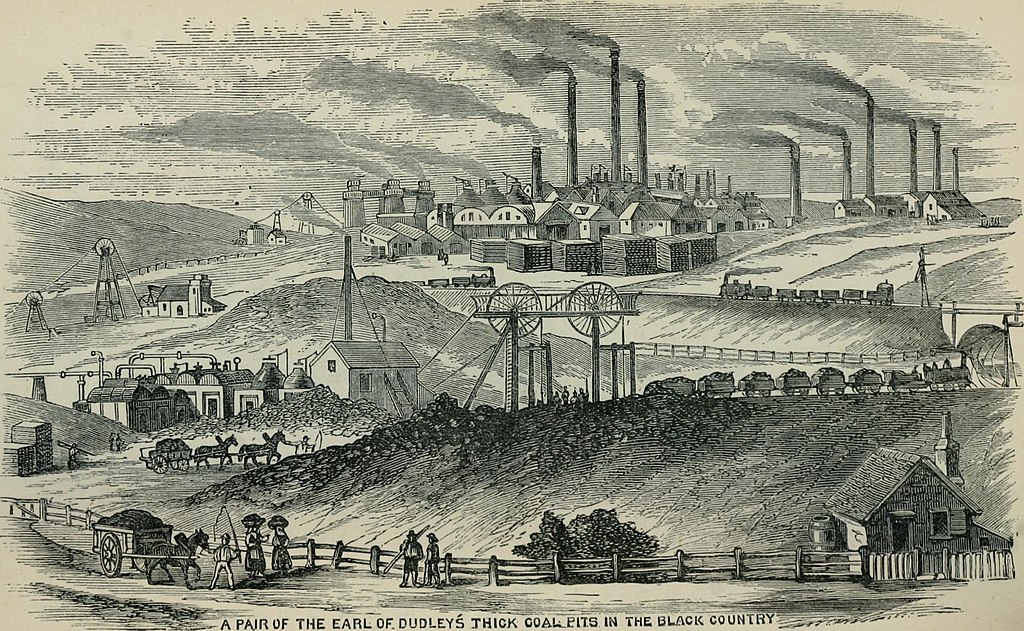
An image of coal pits in the Black Country from Griffiths’ Guide to the iron trade of Great Britain, 1873.
Image digitized by the Robarts Library of the University of Toronto via Wikimedia Commons.

The madness of the greens is peaking. This week a leading eco-politician in the UK, Caroline Lucas of the Green Party, referred to the building of a new coalmine as a “crime against humanity”. Take that in. Once upon a time it was mass murder, extermination, enslavement and the forced deportation of a people that were considered crimes against humanity. Now the building of a mine in Cumbria in north-west England that will create 500 new jobs and produce 2.8million tonnes of coal a year is referred to in such terms. Perhaps the coalmine bosses should be packed off to The Hague. Maybe the men who’ll dig the coal should be forced alongside the likes of ISIS to account for their genocidal behaviour.

We cannot let Ms Lucas’s crazed comments just slide by. We need to reflect on how we arrived at a situation where a mainstream politician, one feted by the media establishment, can liken digging for coal to crimes of extermination. It was in the Guardian – where else? – that Ms Lucas made her feverish claims. On Wednesday, when the government gave the go-ahead to the Cumbria mine, the first new coalmine in Britain for 30 years, Lucas wrote that the whole thing is “truly terrible”. This “climate-busting, backward-looking coalmine” is nothing short of a “climate crime against humanity”, she said.

It isn’t though, is it? Sorry to be pedantic but it is not a crime to extract coal from the earth. If it were, the leaders of China – where they produce 13million tonnes of coal a day, rather putting into perspective the Cumbria mine’s 2.8million tonnes a year – would be languishing in the clink. I look forward to Ms Lucas performing a citizen’s arrest on Xi Jinping. It certainly is not a crime against humanity. That term entered popular usage during the Nuremberg trials of the Nazis. It refers to an act of evil of such enormity that it can be seen as an assault on all of humankind. Earth to Ms Lucas: extracting coal to make steel – what the Cumbria coal will mostly be used for – is not an affront to humankind. I’ll tell you what is an affront, though: speaking about the burning of coal in the same language that is used to refer to the burning of human beings. That, Caroline, is despicable.

The overwrought apocalypticism of the likes of Ms Lucas does two bad things. First, it demonises in the most hysterical fashion perfectly normal and in fact good endeavours. The Cumbria coalmine will create hundreds of well-paid jobs. It will increase the independence and dignity of working-class families in Cumbria. It will help to reduce the UK’s reliance on coal imports. These are positives. They should be celebrated. Of course to Ms Lucas and other middle-class greens, that local communities in Cumbria have welcomed the coalmine only shows that they’re “nostalgic” for the past and that they’ve been “seduced” by a plan that will actually make them “suffer”. Patronising much? The Cumbrian working classes who can’t wait to start mining are a paragon of reason in comparison with the Guardianistas madly sobbing about coal being a crime against humanity.

Winter of Discontent 2, non-electric boogaloo?

Filed under: Britain, History, Politics — Tags: , , , — Nicholas @ 03:00

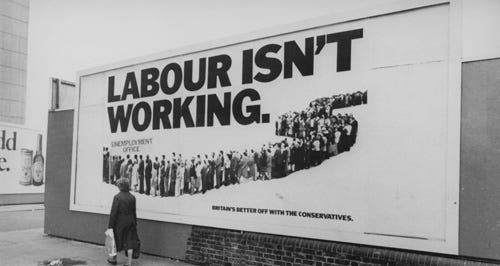
Matt Goodwin sets the stage for Britain’s potential re-run of the “Winter of Discontent”. By chance, I happened to be in England for a few weeks smack-dab in the middle of the worst of that winter, so although I was not following the news at the time, the physical and emotional state of the country struck me very deeply. There certainly are strong similarities between late 1970s Britain and post-pandemic Britain:

Conservative Party election poster, 1979.

Britain is entering a Winter of Discontent. If you are in the country and plan to take a train, a bus, a flight, a driving test, travel on the highway, send a letter, have a beer, go to school or university, need an ambulance to take you to hospital, need a nurse to look after you while you are in hospital or want to buy a coffin in case things do not go so well while you are in hospital then there is more than a good chance you will be caught up in a wave of strikes that are sweeping across the country.

More than one million working days are about to be lost due to strike action, the largest number since 1989. This is nowhere near the twelve million days that were lost in the original Winter of Discontent, in 1978-9, or the 126 million days lost during the general strike in 1926. But it is more than enough to cause yet another problem for Rishi Sunak and the faltering Conservative Party he is struggling to turn around.

As I pointed out in the Sunday Times last week, while Sunak has stabilised his party it remains deeply unpopular in the country. Even before this winter, voters blame the Tories far more than global events for Britain’s deteriorating economy. One legacy of Partygate and the disastrous experiment with Trussonomics is that Sunak has inherited a party that is now seen by much of the electorate as untrustworthy, serving its own interests, in the hands of a narrow elite and out of touch. Today, not even one in ten voters think the Conservatives “care about ordinary people”.

What options does Sunak have? While he and his team will be tempted to recycle the Thatcher playbook from the original Winter of Discontent, blaming the unions for the strikes and trying to appeal to national unity, this time things are more complicated. For a start, large numbers of voters actually support the strikes, which reduces Sunak’s room for manoeuvre. Second, this time it is the Conservatives not Labour who are in power, and are being blamed just as much as the unions for the unfolding chaos. Every train that is missed, every flight that is cancelled, every hospital patient that is not looked after will entrench the party’s negative image. And, third, as I said during an after dinner talk to clients of a major law firm this week, irrespective of what happens in the weeks ahead research on the impact of major strikes tells a consistent story: they hurt incumbent governments, lowering their support at the next election.

In fact, this might explain why the Rishi recovery already appears to be running out of steam. As I pointed out on Twitter this week, since taking over Sunak has certainly managed to increase his party’s average share of the vote from 23 to 27 per cent while Labour’s average lead in the polls has dropped from thirty to twenty points. And when voters are asked who would make the “best prime minister”, Sunak is much closer to Starmer, trailing him by only 5-points, than Liz Truss ever was, who trailed him by 29-points. But the Conservatives remain a long, long way behind. Just how far behind was underlined by a by-election in Chester this week which saw the party’s vote crash by sixteen points. The last time this happened at a by-election in a Labour-held seat was in the 1990s, shortly before the Blair asteroid almost rendered the Tories extinct.

At a deeper level, however, this winter also looks set to entrench a much deeper mood among the British people which will also undermine the government. The strikes, the chaos, the mounting sense of crisis are all feeding a palpable feeling among voters that nothing really works in Britain anymore, that contrary to the populist mantra of the last decade nobody is in control.

QotD: Democracy

Filed under: Football, Media, Politics, Quotations — Tags: , , , , , , — Nicholas @ 01:00

… “democracy” seems to generate a unique kind of idiocy. This too is no unique insight — William F. Buckley meant the same thing when he said he’d rather be ruled by the first 2000 names in the Boston phone book than by the faculty of Harvard — but like all obvious things about human nature it’s lethally easy to forget. A politician in a “democracy” is an unholy mix of circus performer and whore. Somehow convinced that the audience’s applause comes from its appreciation of her own superior virtue, not rude biology, she slips further and further into narcissism, never bothering to wonder why, if the house is packed to the rafters every night, she’s still sleeping three to a room while the circus owner has a mansion and rides around in a limo.

Democracy’s founding fictions reinforce this. It’s easy to see yourself as the People’s Tribune, I imagine, if you just look at the numbers. All those people voted for you, which confirms how wonderful you are!

A better analogy is the professional sports team. Lots of people wear the team apparel of the Los Angeles Chargers. You can find lots of online forums passionately devoted to them. Lots of L.A.-area bars are festooned with Chargers’ stuff. The bobbleheads at ESPN talk about the Chargers several times a day. And yet, come game time, the Chargers only get about 32,000 fans at the stadium. Those are the actual voters — the rest is just social media noise. And it’s worse than that, actually. We all know that the vast majority of people who picked up a Chargers’ shirt because it was in the clearance bin, or ordered a drink at a bar with Chargers’ memorabilia on the shelf, would never bother to attend a game. So even people who think of themselves as “Democrats” or “Republicans” barely bother to vote, much less follow “their” team in office. Even the groups that get pandered to the most — old people, veterans, union goofs — don’t turn out in proportionate numbers.

Come election day, the People’s Tribunes are decided by old cranks on loan from the home, a few office drones on their lunch break with nothing better to do, and homeless people lured in with a promise of a short dog and some change.

But since no one without a vast, yawning chasm in her soul would ever submit herself to the indignities of “democracy” in the first place, these newly “elected” fools hie themselves to Washington, where the money boys feed their self-delusion. They read about themselves in the newspapers, see their names on internal party polls, and since none of their “constituents” could pick them out of a police lineup, they learn that the only way to keep the applause coming is by doing what the newspapers and the money boys say.

Severian, “Impeachment Thoughts”, Rotten Chestnuts, 2019-12-19.

December 10, 2022

“Notes from the administration of a private social media company: ‘Weekly sync with FBI/DHS/DNI'”

Filed under: Law, Media, Politics, USA — Tags: , , , , , — Nicholas @ 05:00

Chris Bray on the tendency of people in a group to “go along to get along” with the group consensus:

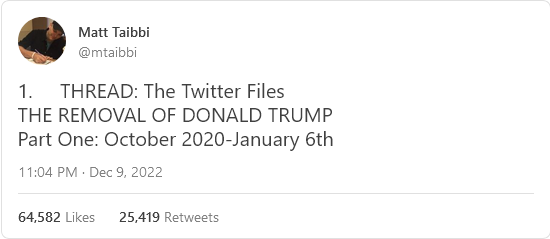
Elon Musk has gone from letting us in on some very interesting things to holy shit somebody just dropped a bomb, with a little help from Matt Taibbi:

Especially:

Notes from the administration of a private social media company: “Weekly sync with FBI/DHS/DNI“. Re: election security, they say, in a discussion about killing a story that harmed one political party and helped the other political party.

This isn’t left and right, anymore — if you regard yourself as a liberal, a progressive, a Democrat, or any other related identity, surely you agree that the national security state shouldn’t be intervening in our political discourse, even though in this instance the person who was harmed was Donald Trump. Surely this is something we can all agree on, across lines of identity and party politics. Right?

“We blocked the NYP story”, of course, means that they blocked the story from the New York Post about Hunter Biden’s laptop, wide public awareness of which could have changed the outcome of the election. So the alphabet-soup agencies were shaping the public discourse around partisan politics during the run-up to an election, at least sometimes telling private social media companies what posts and accounts they wanted limited, silenced, and removed. And Twitter was glad to comply. (See Taibbi’s complete thread for more.) Federal agencies intervened in our politics, for what the available evidence strongly suggests to have been partisan ends.

I suspect the statement “could have changed the outcome of the election” is overstated. From everything I’ve read, the election results were “fortified” enough to survive any amount of unwelcome fact leaking through to the voters. I mean, really: who would want to live in a country where the unwashed voters might have a say in what went on with the government?

December 8, 2022

Orwell wrote about the dangers of letting well-worn phrases do most of your writing for you back in 1946 – it’s still valid today

Filed under: Health, Media, Politics, USA — Tags: , , , , — Nicholas @ 05:00

I posted a short paragraph from Orwell’s brilliant “Politics and the English Language” essay as a QotD entry earlier this year:

A scrupulous writer, in every sentence that he writes, will ask himself at least four questions, thus: What am I trying to say? What words will express it? What image or idiom will make it clearer? Is this image fresh enough to have an effect? And he will probably ask himself two more: Could I put it more shortly? Have I said anything that is avoidably ugly? But you are not obliged to go to all this trouble. You can shirk it by simply throwing your mind open and letting the ready-made phrases come crowding in. They will construct your sentences for you — even think your thoughts for you, to a certain extent — and at need they will perform the important service of partially concealing your meaning even from yourself.

As Chris Bray shows, things are, if possible, even worse today than in Orwell’s day:

We do not advance. The dominion of the ready-made phrase doesn’t provide a path for advancement. It provides a locked language for a long stalemate that edges into steady decline.

(Stella Morabito covers this ground in a new book, The Weaponization of Loneliness: How Tyrants Stoke Our Fear of Isolation to Silence, Divide, and Conquer, excerpted here in a short package of tremendously useful ideas about the way we shape ourselves to the prevailing discourse to avoid the feeling of isolation.)

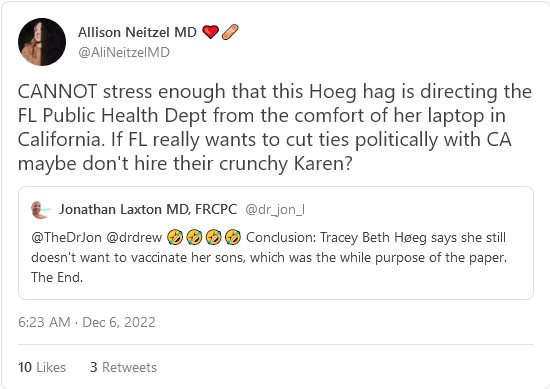
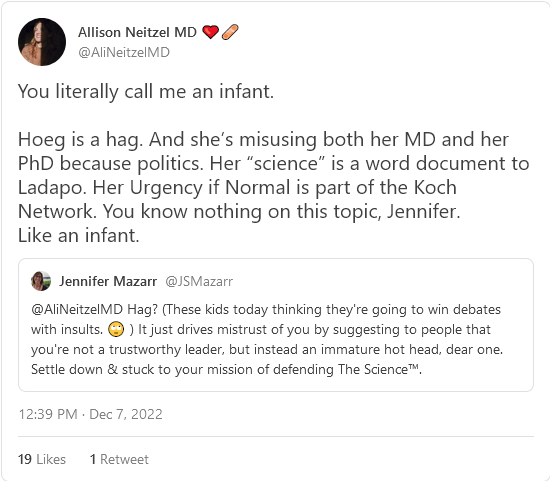
So Tracy Beth Høeg graduated from medical school in 2006, and later completed a PhD in epidemiology, then a medical residency. She does medical research and treats patients; you can go to her clinic and get medical help. Another person who went to medical school but then decided not to complete a residency or treat patients or publish peer-reviewed research casually dismisses her as “this Hoeg hag”.

In the dominion of the ready-made phrase, the many prevailing and easily grasped terms of social disapprobation provide comfort. The well-known denunciatory words and phrases give credentialed but unaccomplished people who live with social panic and status anxiety a way to elevate themselves by standing on someone else. That fucking hag, that anti-vaxxer bitch! Something something Koch Brothers something something! This ritual use of social denunciation as a status signal is precisely the dynamic Milan Kundera described in a series of novels about the social practices of late communist societies. The grab bag of social ruin trigger terms is easy for mediocre minds, which are empowered by the ability to shit on people for status without having to do much work.

It’s a psychological wall: white nationalism Fox News anti-vaxxers Koch brothers! You can be important and powerful without doing anything, by performing the degradation of someone who has — using the useful shortcut of the ready-made phrases. You don’t have to do or be; you can signal and display. Status is a performance of familiar words directed at the usual and useful targets. It’s lazy, it’s mindless, and it gets a good number of people through their days. Imagine being the 34,567th public intellectual to slam a Covid vaccine critic on Twitter. So fresh! So brave!

Meta (the artist formerly known as Facebook) moves to clamp down on political discussions in the workplace

Filed under: Business, Media, Politics, USA — Tags: , , , , , — Nicholas @ 03:00

Tom Knighton on an uncharacteristic corporate move by the artist formerly known as Facebook:

My favourite reaction to Facebook rebranding as “Meta”.

It seems there are certain words employees aren’t really supposed to bring up in the workplace.

    Meta (formerly Facebook) has reportedly told its employees not to discuss sensitive issues like abortion, gun control, pending legislation and vaccine efficacy at workplace.

    According to a report in Fortune, citing a leaked internal memo, Meta has banned employees from discussing “very disruptive” topics, including abortion, gun rights, and vaccines as part of new “community engagement expectations”.

    “As Mark mentioned recently, we need to make a number of cultural shifts to help us deliver against our priorities,” read the company memo.

    “We’re doing this to ensure that internal discussions remain respectful, productive, and allow us to focus. This comes with the trade-off that we’ll no longer allow for every type of expression at work, but we think this is the right thing to do for the long-term health of our internal community,” it added.

Unfortunately for Meta, employees hammered them on the fact that they could talk about Black Lives Matter, immigration, and trans rights.

Now, they’re not really wrong to call out the hypocrisy, but this sounds like just a first move, and it’s a step in the right direction.

What would have been a better move is simply prohibiting discussing politics with your coworkers unless it directly pertains to your job. For example, if you are responsible for content moderation and a new bill will impact how you conduct that moderation, that’s one thing.

But topics ranging from Black Lives Matter to gun control are all contentious issues, and while Meta might have allowed that discussion in the past, they probably won’t indefinitely.

This is interesting to me, in part because we’ve seen the woke in the technology sector essentially bully employers into following along with the left’s agenda. Yet when they tried that with Netflix, the streaming giant basically told them to suck it up.

That was in May, but it may have triggered companies to realize that they didn’t have to play the woke game.

Last week, in the weekly wrap-up, I included this story about how Disney’s returning CEO Bob Iger is trying to have the company step back from the political ledge. Iger is far from a conservative, mind you, but he’s come to realize that his personal political agenda isn’t going to sell.

Granted, he started them along that path, but he’s recognized it’s not a great road to go down.

Now, we have Meta that may be venturing on a similar path to Netflix, setting the stage for what’s appropriate and what isn’t.

QotD: Politicians’ public displays of sorrow

Filed under: Media, Politics, Quotations — Tags: , , , — Nicholas @ 01:00

… our own politicians are increasingly given to hyperbole over the emotional impact upon them of accidents or disasters. They think that extravagant displays of emotion are required of them, and perhaps they are right. Any leader who doesn’t rush immediately to the scene of a disaster and utter heartfelt platitudes is regarded as a monster of coldheartedness who will lose the next election. We have forgotten that empty vessels make the most noise and demand not so much our pound of flesh as our flow of tears and outpouring of cliché.

Theodore Dalrymple, “Tears of a Tyrant”, Taki’s Magazine, 2018-04-28.

December 7, 2022

The media: they hate you, they really hate you

Filed under: Cancon, Media, Politics — Tags: , , , — Nicholas @ 03:00

In a follow-up to yesterday’s post at Thank You Truckers!, Donna Laframboise provides more details on one of the individual cases highlighted by Douglas Murray in the Munk Debates last week:

Collectively, those examples demonstrate three things: Egregious journalistic bias. A frightening inability to empathize with the working class. And a bizarre eagerness to slander and dismiss fellow human beings.

Because the examples cited by Murray are vile, I didn’t amplify them. But those of you who watched the three-minute clip heard about them. On further reflection, therefore, I’m going to highlight one of them. Simply to make the point that Murray wasn’t exaggerating. When he used the words rancid and corrupt to describe our current media environment, he was wholly on target. Here’s a small portion of Murray’s remarks, including some third party profanity:

    You had a Toronto Star columnist saying, quote (sorry for the language), it’s a homegrown hate farm that was then jet-fuelled by an American right-funded rat-fucking operation

Yup, that was a real tweet from Bruce Arthur, who earns his living as a sports writer, currently for the Toronto Star. Below is his full reply to comments made by another Canadian journalist, Jeet Heer, who writes for The Nation, a far-left US publication:

I worked with both these gentlemen 20 years ago, in the earliest days of the National Post. It was a large newsroom. I didn’t get to know either of them.

The day after they catapulted these deluded, venomous tweets into the world, I arrived in Ottawa. I spent a week there, taking photos and actually talking to people. The Freedom Convoy protesters I met were supremely decent human beings. Since then, I’ve formally interviewed many of them. I’ve learned about their lives, their triumphs, their troubles, their sorrow.

My conclusion? If I were stranded on a desert island — or if a nuclear bomb detonated anywhere near me — I’d be sticking close to folks like these. People who know how to fix things, how to build things, and how to get things done. People sufficiently concerned about right and wrong to put themselves at risk. People of faith, many of them, who show us religion at its finest — a stable, calming force. A source of courage, strength, and big picture perspective.

Those who protested in Ottawa were human beings, not saints. That’s true of every large gathering. But overwhelmingly, they were decent, salt-of-the-earth people.

Even the members of the Canadian media still trying to be more even-handed in their coverage felt obligated to go looking for the red-hatted Trump supporters, the “hard men”, and the potential trouble-makers to the point that those relatively few people seemed disproportionally represented in the published articles. Of course, all of them spent a lot of time and effort desperately searching for more idiots like that paid government agent who’d briefly been able to get on-camera waving his Nazi flag …

QotD: Career path from recent B.A. to being “an expert” on national TV

Filed under: Bureaucracy, Government, Media, Politics, Quotations, USA — Tags: , , — Nicholas @ 01:00

The Z Man has had lots of fun bagging on “The Institute for the Study of War”. These are the guys peddling the truly bizarre Ukraine fantasies. Take a look at their masthead (with the awesome domain name “understandingwar.org”) and you’ll see a whole bunch of people who have never fired a shot in anger, but are either big league Media goons (Bill Kristol), disgraced politicians (Joe Liberman!), woke capital grifters, and of course at least one fucking Kagan, warming up in the bullpen until the next “change” of “administration”, when she’ll rotate into her patrimony at the State Department.

Just for giggles, I clicked on the bio of the cutest contributor — called, hilariously, “analysts and associates” — a woman girl persyn named Karolina Hird. Here’s her official bio, in full:

    Karolina is a Russia Researcher on the Russia/Ukraine portfolio at ISW. She graduated from George Washington University in December of 2021 with a B.A. in International Affairs and a concentration in Security Studies. Karolina’s undergraduate research examined aspects of international law and Eastern European security with a special focus on the rise of Polish populism. She has also conducted research pertaining to Russian objectives and geopolitical strategies on NATO’s Southern periphery.

Did everyone catch that? A Bachelor’s Degree. In December 2021. This gal is all of nine months out of college.
I’ve read my share of undergraduate research. Some of it is decent. There are some undergrads I’d trust to hit the archives for limited purposes. But there are no 21 year old kids on this earth whose judgments I’d trust, because I’ve taught a LOT of college kids, and y’all …

But of course she’s not doing anything policy-related. You know how this kid’s career trajectory will go: A few years at ISW, in which she’ll start appearing as a guest on the “news” as a “Ukrainian affairs expert” — and you can tell she’s an expert, because she’s an “analyst” at the “Institute for the Study of War”. Once her looks start going, she’ll move over to a staff job for some politician, then off to a think tank, then maybe a run for office in her own right, then back to the Media as a “senior analyst”. I’d wager many crisp stacks of Crispus Attucks that this lady couldn’t tell the difference between a MiG-31 and a Mazda Miata, but we’re a year or two away from putting her on national TV as an “expert” on war and peace.

How do you stop that kind of thing? How would you even start?

Severian, “Slipping the Leash”, Founding Questions, 2022-08-27.

December 6, 2022

The outcome of the latest Munk Debates

Filed under: Cancon, Media, Politics — Tags: , , , , , , , — Nicholas @ 03:00

Donna Laframboise summarizes what happened last week in the Munk Debates as Matt Taibbi and Douglas Murray spoke in favour of the proposition “Be it resolved, don’t trust mainstream media” while Malcolm Gladwell and Michelle Goldberg argued against:

Last week, an old fashioned public debate took place here in Canada. The topic:

Be it resolved, don’t trust mainstream media.

Journalists Douglas Murray (UK) and Matt Taibbi (US) argued the pro/agree side.

Journalists Malcolm Gladwell (Canada) and Michelle Goldberg (US) argued the con/disagree side.

The event was sponsored by Munk Debates, which has been holding these events since 2008. Before the debate commences, audience members vote. Two hours later, they vote again.

On this occasion, the opinion swing was dramatic. The “don’t trust” side grew by 39% — apparently the largest swing ever in a Munk debate. At the beginning, slightly less than half of the in-house audience held this opinion (48%). Afterward, it was two-thirds (67%).

(When two-thirds of a population agrees on anything, you’re in supermajority territory — a number large enough to change constitutions.)

Here’s the key point: the winning side of the debate placed great emphasis on the scandalous manner in which Canada’s mainstream media covered the Freedom Convoy. Residing as he does in Britain, Douglas Murray had no trouble cutting through the nonsense. In the 3-minute video clip at the top of this post, he says our Prime Minister started by calling protesters names, and ended by invoking the Emergencies Act. Here’s what he says next:

    At such a time, what would the mainstream media do? It would question it. It would question it. The Canadian mainstream media did not.

    The Canadian mainstream media acted as an Amen chorus of the Canadian government. I will give you a couple of examples, but ladies and gentlemen I could go on for hours with examples of this. You had a CBC host describing the Freedom Convoy as a quote feral mob

    Why is this so rancid? Utterly, utterly rancid and corrupt. Because in this country, your media, your mainstream media is funded by the government. A totally corrupted system.

December 5, 2022

“… when confronted, our self-proclaimed warriors against fake news and misinformation are just lying about what they’re doing”

Filed under: Cancon, Government, Law, Media, Politics, Weapons — Tags: , , , , — Nicholas @ 05:00

From the free-to-cheapskates excerpt from this weekend’s dispatch from The Line:

A typical haul of weapons confiscated by Toronto Police Services in 2012. Most of these guns are in the “restricted” or “prohibited” category of Canadian firearms and would not be available for legal purchase by anyone who had not gone through a rigorous RCMP background check and passed multiple training courses. Almost certainly none of them came from a legal owner.

We hate this as much as you do, but we must discuss guns with you again. We think the Liberals have screwed up, and we aren’t sure yet they realize it. (But they’re probably clueing in.)

You know why we’re suspicious? The Liberals are extremely good at marketing. A depressing amount of the time, it’s all they’ve got. They can take the smallest morsel of accomplishment and make it the centrepiece of a coordinated nation-wide grassroots mobilization campaign and fundraising drive. They have memes and other social shareables ready to go. Cabinet ministers release cringe videos captured by staffers who probably realize, in the very moment of their filming, that they’ve wasted their God-given potential on … this. 

Outcomes? The hell with those. Let’s talk about those inputs, baby! In both official languages. 

But this time? When the Liberals have actually embarked on what would be the most significant overhaul of our firearms laws in a generation? Not only have they not said boo. They’re going out of their way to deny that they’ve done anything. Or, when confronted, our self-proclaimed warriors against fake news and misinformation are just lying about what they’re doing.

So either they don’t know what they’re doing (very possible), regret what they’ve done (also very possible) or it’s a confused mix of both (our working theory).

But let us explain. And forgive us, but things will get a bit technical. (We’ll keep it as simple as possible, but guns are complicated.) 

Canadian firearms policy has generally tried to classify firearms by their technical specifications. Three broad categories were created by the major reforms of the 1990s. “Prohibited” firearms essentially were machine guns, automatic assault rifles of the kind used by modern militaries, and easily concealed short-barrelled handguns; prohibited licences were issued in the 1990s to a relatively small number of individuals who already owned such firearms and their immediate descendants (to cover family heirlooms), but prohibited firearms otherwise are not available to the public. “Non-restricted” firearms were the very common rifles and shotguns suited (and frequently used) for hunting or target shooting sports, and require the least onerous level of licensing (but still, you do need a licence that involves background checks and vetting). In the middle we had “restricted” firearms — mostly handguns — that require a special licence beyond the normal licence, requiring extra training and conditions. 

These broad categories do not always reflect the reality of how the laws actually shaped up. The prohibited and restricted categories were often stretched by meddling politicians to apply more broadly than they ought to have, so that politicians (mainly Liberals) could claim to be “tough on guns” in particular instances. But these three categories have been generally stable for a generation, and functioned well, more or less. Perfectly? No. But our gun-control laws worked for the public at large, which is why violent gun crime by licensed individuals is rare despite a relatively high rate of firearms ownership in Canada.

You wouldn’t think it given all the political controversy, but Canadian gun control has been a fundamentally successful public-policy program, for decades. The very real problem we have with gun violence in this country is overwhelmingly committed with illegal guns smuggled in from the United States, and fall outside the scope of our gun-control system, which works well doing what it is supposed to do: licensing lawful gun owners, regulating the legal uses of guns and regulating, as well, the lawful hunting and shooting sports industry. 

For all its success as public policy, though, the system didn’t work for the Liberals politically. So they decided to get cute. And that’s where their problems began.

Edmund Burke

Filed under: Britain, History, India, Politics, USA — Tags: , , , , — Nicholas @ 03:00

At Samizdata, Niall Kilmartin republishes part of a much older post out as background on Edmund Burke (who I haven’t yet read):

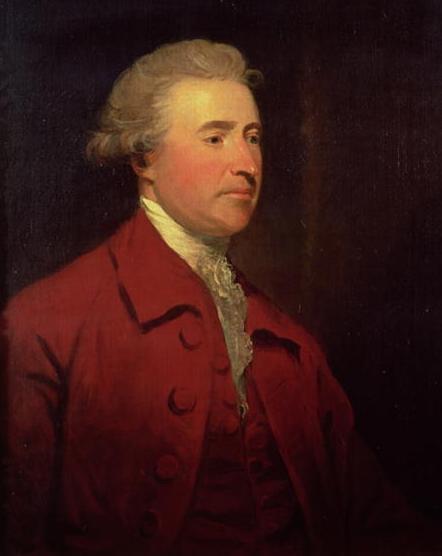
Portrait of Edmund Burke (1729-1797), circa 1770-1780 after a painting of 1774 by James Northcote.
Original in the Royal Albert Museum & Art Gallery via Wikimedia Commons.

When I first started reading Edmund Burke, it was for the political wisdom his writings contained. Only many years later did I start to benefit from noticing that the Burke we know – the man proved a prophet by events and with an impressive legacy – differed from the Burke that the man himself knew: the man who was a lifelong target of slander; the one who, on each major issue of his life, gained only rare and partial victories after years or decades of seeing events tragically unfold as he had vainly foretold. Looking back, we see the man revered by both parties as the model of a statesman and thinker in the following century, the hero of Sir Winston Churchill in the century after. But Burke lived his life looking forwards:

  • On America, an initial victory (repeal of the Stamp Act) was followed by over 15 years in the political wilderness and then by the second-best of US independence. (Burke was the very first member of parliament to say that Britain must recognise US independence, but his preferred solution when the crisis first arose in the mid-1760s was to preserve – by rarely using – a prerogative power of the British parliament that could one day be useful for such things as opposing slavery.)
  • He vastly improved the lot of the inhabitants of India, but in Britain the first result of trying was massive electoral defeat, and his chosen means after that – the impeachment of Warren Hastings – took him 14 years of exhausting effort and ended in acquittal. Indians were much better off, but back in England the acquittal felt like failure.
  • Three decades of seeking to improve the lot of Irish Catholics, latterly with successes, ended in the sudden disaster of Earl Fitzwilliam’s recall and the approach of the 1798 rebellion which he foresaw would fail (and had to hope would fail).
  • The French revolutionaries’ conquest of England never looked so likely as at the time of his death in 1797. It was the equivalent of dying in September 1940 or November 1941.

It’s not surprising that late in his life he commented that the ill success of his efforts might seem to justify changing his opinions. But he added that, “Until I gain other lights than those I have“, he would have to go on being true to his understanding.

Burke was several times defeated politically – sometimes as a direct result of being honest – and later (usually much later) resurged simply because his opponents, through refusing to believe his warnings, walked into water over their heads and drowned, doing a lot of irreversible damage in the process. Even when this happened, he was not quickly respected. By the time it became really hard to avoid noticing that the French revolution was as unpleasant as Burke had predicted, all the enlightened people knew he was a longstanding prejudiced enemy of it, so “he loses credit for his foresight because he acted on it”, as Harvey Mansfield put it. (Similarly, whenever ugly effects of modern politics become impossible to ignore, people like us get no credit from those to whom their occurrence is unexpected because we were against them “anyway”.)

Lastly, I offer this Burke quote to guide you when people treat their success in stealing something from you (an election, for example) as evidence of their right to do so:

    “The conduct of a losing party never appears right: at least, it never can possess the only infallible criterion of wisdom to vulgar judgments – success.”

December 1, 2022

Crisis? Which crisis?

In The Line, Matt Gurney makes the case that was NATO (and western governments in general) needs is something called “deliverology”:

I couldn’t have asked for a more topical example of exactly what I’m talking about here: the lull between realization and reaction. There were no problems with “expectations” at the top of the federal government in February [during the Freedom Convoy 2022 protests]. Everyone in a position of authority was seized with the urgency of the situation and the need for rapid action. There wasn’t any denial, doubt or incomprehension, which are the usual enemies when I write about our expectations being a problem. 

February was an example of a different issue: realizing there was a crisis but not really knowing what to do about it, or whose job it was to do it, and wasting a lot of precious time trying to figure it all out. When days and even hours count, governments can’t spend weeks or months figuring out what to do. But that’s what happened during the convoys, and during COVID, and other incidents I could rattle off. Does anyone think it won’t happen again next time, whatever that threat may be?

And some version of that concern came up over and over in Halifax [at the Halifax International Security Forum]. And not just among Canadians. The world is changing very quickly and even when we recognize a problem, we aren’t moving fast enough to keep up. So on top of our expectations, we’ve got another challenge: response times. They’re just too damned long.

I hope the readers will forgive me for being a little vague in this next section; some of the conversations I’m thinking of here were in off-the-record sessions. Rather than trying to splice together any specific quote or anecdote, I’ll just wrap it all up under the theme of “There are things we should be doing now that we weren’t, and things we should have been doing a long time ago that we only started on way too late.”

An obvious example? The rush to get Europe off of Russian fossil fuels and on to either locally generated renewables or energy imports from allies and friendly nations. (If only there was a “business case” for Canada doing more. Sigh.) Another fascinating example that came up was air defences. Two decades of post-Cold-War-style thinking among the allies has led to widespread neglect among the NATO countries of air-defence weapons. Why bother? The Taliban didn’t have an air force, right? 

Most countries have fighter jets and inventories of air-to-air missiles suitable for their planes. However, across the alliance, there are very few ground-based air-defence systems suited to shooting down not just attacking aircraft, but incoming cruise missiles and drones. 

Drones pose a particular challenge. They fly slow and low and are highly manoeuvrable, plus they are so cheap that they can be a true asymmetrical weapon: you’ll go broke real quick firing million-dollar missiles at a drone that costs your enemy $50,000 or so. And your enemy may send a few hundred at once in a swarm that simply overwhelms your defences. It’s not that drones are unbeatable. The opposite is true: drones are easily destroyed, if you have the right defences available. 

We don’t, though. Oops.

The NATO powers actually had a preview of this element of the ongoing war between Ukraine and Russia during the 2020 conflict between Azerbaijan and Armenia, where drones were used to devastating effect. Every military affairs watcher I know sat up a bit straighter after watching what the Azeris did to Armenia, with shocking speed. Swarms of drones first killed Armenia’s air defences and then went to work on Armenian ground forces. The U.S. and NATO allies have been studying that conflict, and considering how to adapt our own strategies, for both offence and defence. But right now, nine months into the Ukraine war and two years after the conflict in the Caucasus, there still aren’t enough NATO systems available even for our own needs, let alone to share with Ukraine. Russia keeps hammering away at critical Ukrainian civilian infrastructure and the Ukrainians keep begging for help, but we have nothing to send. To be clear, a few systems have been sent to Ukraine, which include not just the weapons but the radars and computers necessary to detect and engage targets. But they can only be delivered as fast as they can be built. There is no real production pipeline here, and certainly no pre-stocked inventories in NATO armouries. 

November 30, 2022

James Gillray

Filed under: Books, Britain, History, Media, Politics — Tags: , , , , , — Nicholas @ 03:00

In The Critic, James Stephens Curl reviews a new biography of the cartoonist and satirist James Gillray (1756-1815), who took great delight in skewering the political leaders of the day and pretty much any other target he fancied from before the French Revolution through the Napoleonic wars:

During the 1780s Gillray emerged as a caricaturist, despite the fact that this was regarded as a dangerous activity, rendering an artist more feared than esteemed, and frequently landing practitioners into trouble with the law. Gillray began to excel in invention, parody, satire, fantasy, burlesque, and even occasional forays into pornography. His targets were the great and good, not excepting royalty. But his vision is often dark, his wit frequently cruel and even shockingly bawdy: some of his own contemporaries found his work repellent. He went for politicians: the Whigs Charles James Fox (1749-1806), Edmund Burke (1729-97), and Richard Brinsley Butler Sheridan (1751-1816) on the one hand, and William Pitt (1759-1806) on the other. Fox was a devious demagogue (“Black Charlie” to Gillray); Burke a bespectacled Jesuit; and Sheridan a red-nosed sot. But Gillray reserved much of his venom for “Pitt the Bottomless”, “an excrescence … a fungus … a toadstool on a dunghill”, and frequently alluded to a lack of masculinity in the statesman, who preferred to company of young men to any intimacies with women, although the caricaturist’s attitude softened to some extent as the wars with the French went on.

As the son of a soldier who had been partly disabled fighting the French, Gillray’s depictions of the excesses of the Revolution were ferocious: one, A Representation of the horrid Barbarities practised upon the Nuns by the Fish-women, on breaking into the Nunneries in France (1792), was intended as a warning to “the FAIR SEX of GREAT BRITAIN” as to what might befall them if the nation succumbed to revolutionary blandishments. The drawing featured many roseate bottoms that had been energetically birched by the fishwives. He also found much to lampoon in his depictions of the Corsican upstart, Napoléon.

[…]

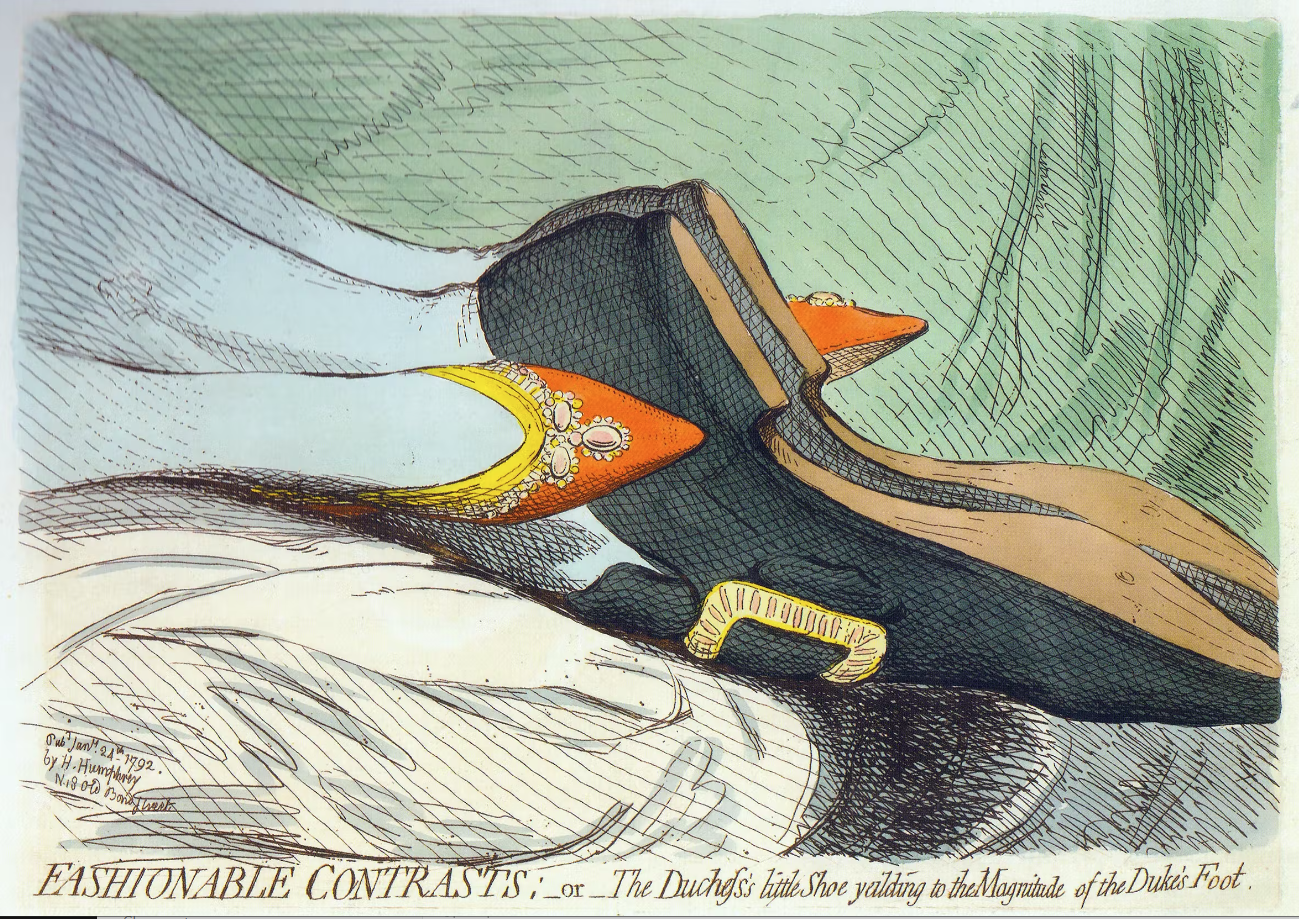
Some of Gillray’s works would pass most people by today, thanks to the much-trumpeted “world-class edication” which is nothing of the sort: one of my own favourites is his FASHIONABLE CONTRASTS;—or—The Duchefs’s little Shoe yeilding to the Magnitude of the Duke’s Foot (1792), which refers to the remarkably small hooves of Princess Frederica Charlotte Ulrica Catherina of Prussia (1767-1820), who married Frederick, Duke of York and Albany (1763-1827) in 1791: their supposed marital consummation is suggested by Gillray’s slightly indelicate rendering, in which the Duke’s very large footwear dwarfs the delicate slippers of the Duchess.

“In 1791 and 1792, there was no one who received more attention in the British press than Frederica Charlotte, the oldest daughter of the King of Prussia, whose marriage to the second (and favorite) son of King George and Queen Charlotte, Prince Frederick, the Duke of York set off a media frenzy that can only be compared to that of Princess Diana in our own day.”
Description from james-gillray.org/fashionable.html

All that said, this is a fine book, beautifully and pithily written, scholarly, well-observed, and superbly illustrated, much in colour. However, it is a very large tome (290 x 248 mm), and extremely heavy, so can only be read with comfort on a table or lectern. The captions give the bare minimum of information, and it would have been far better to have had extended descriptive captions under each illustration, rather than having to root about in the text, mellifluous though that undoubtedly is.

What is perhaps the most important aspect of the book is to reveal Gillray’s significance as a propagandist in time of war, for the images he produced concerning the excesses of what had occurred in France helped to stiffen national resolve to resist the revolutionaries and defeat them and their successor, Napoléon, whose own model for a new Europe was in itself profoundly revolutionary. What he would have made of the present gang of British politicians must remain agreeable speculation.

November 29, 2022

In a dangerous and insecure world, the EU appears to feel that the greatest enemy is on the other side of the Atlantic

Filed under: Europe, France, Germany, Media, Politics, USA — Tags: , , , , — Nicholas @ 05:00

CDR Salamander on how the EU’s movers and shakers (i.e., mostly not democratically elected leaders) seem to have decided that their one true enemy is the United States:

If you are an American who lived on the European Continent, specifically Western Europe, you’re very familiar with an exceptionally sharp strain of anti-Americanism that resides in a significant percentage of their ruling elite – an adult version of the middle school mean girls. Though present in all nations to one degree to another, it is especially acute in Germany and France for slightly different reasons but are all working towards the same goal; degrade American influence in Europe.

The best way for this political and corporate anti-Americanism to find a lever of power is through the the trans-national and anti-democratic modern iteration of the European Union – made even more problematic with the departure of Great Britain who once played a balancing role between the Continental powers as she has for centuries.

Why primarily France and Germany? To start with, this is part of the sibling rivalry between the children of Charlemagne for primacy in Europe that has churned Europe over the last thousand years. The Anglo-Saxons on both sides of the Atlantic kept getting in the way of their return to the struggle.

Their armies under various blood-soaked leaders moved across Iberia to Moscow and back for centuries in order to be THE driver of power in influence on the continent. The European Union, once the “trade association” nose was in the tent, is now seen – fairly – as a mechanism to centralize power so The Smartest People in the Room™ no longer have pesky minor powers and – Buddha forgive – voters getting in their way. Without checks, power only seeks more power for itself. The morphing of the EU is just the latest example.

Not unlike their American counterparts who would like the USA to extract itself from foreign entanglements (NB: as I have written through the years, I am sympathetic/supportive of these efforts), many of the strongest proponents of the EU just want the USA to go home.

The Europeans, while benefiting from the WWII/Cold War leftover presence of the USA, want it to end and the influence that comes with it. If any opportunity to push back against the USA appears, they have their talking points ready to dirty up the reputation and standing of the USA. If that can be done while blaming Eurocrat failures on the USA as well, even better.

You know the Americans, citizens of that mongrel nation whose gene pool is full of religious zealots, failed revolutionaries, slaves, economic refugees, grasping second sons, criminals, and their descendants – spoiled with a continent overflowing with food, water, minerals, forests and open land they don’t even appreciate.

Loud. Fat. Pushy. Americans.

The usual snarled insults cobbled together by smug people who get much of their opinions of the USA by reading The Washington Post or The New York Times. “I know America, I read your newspapers.” That is right after, “I’ve been to America. I spent a week in DC/NYC/Boston/Chicago. I studied a semester at Brown.”

[…]

The smaller European nations don’t trust France and Germany all that much, for good historical reasons. Most of the Europeans in the “new territories” in the east like the USA. They see the Americans as a more reliable guarantee of safety from hostile powers in the East, having a few centuries of experience of the Western European Frankish tribes carving them up for fun and profit – irrespective of local desires. Collectively these nations are not that large in GDP or population – not much more than Italy (for now), but that’s OK. They have the correct geography.

If we shape this relationship correctly, we don’t have to permanently garrison this part of Europe. Poland is already establishing a new paradigm of proper levels of security investment. Once NATO’s eastern front calms down a bit, we can rotate through forces for exercises and training. Perhaps even create some combined training and logistics bases ready to scale up in case of trouble in Mordor. A template we should have put in place in Western Europe decades ago.

Reward positive behavior and let the French and Germans continue their millennium-length struggle – peaceful this time – in the west; keep them frothing in Brussels and Strasbourg while the forward-looking nations try to set up the next thousand years of Western progress in a positive direction.

Perhaps.

« Newer PostsOlder Posts »

Powered by WordPress