
The navy maintained by the emperors might seem inadequate to their greatness; but it was fully sufficient for every useful purpose of government. The ambition of the Romans was confined to the land; nor was that warlike people ever actuated by the enterprising spirit which had prompted the navigators of Tyre, of Carthage, and even of Marseilles, to enlarge the bounds of the world, and to explore the most remote coasts of the ocean. To the Romans the ocean remained an object of terror rather than of curiosity; the whole extent of the Mediterranean, after the destruction of Carthage, and the extirpation of the pirates, was included within their provinces. The policy of the emperors was directed only to preserve the peaceful dominion of that sea, and to protect the commerce of their subjects. With these moderate views, Augustus stationed two permanent fleets in the most convenient ports of Italy, the one at Ravenna, on the Adriatic, the other at Misenum, in the Bay of Naples. Experience seems at length to have convinced the ancients, that as soon as their galleys exceeded two, or at the most three ranks of oars, they were suited rather for vain pomp than for real service. Augustus himself, in the victory of Actium, had seen the superiority of his own light frigates (they were called Liburnians) over the lofty but unwieldy castles of his rival. Of these Liburnians he composed the two fleets of Ravenna and Misenum, destined to command, the one the eastern, the other the western division of the Mediterranean; and to each of the squadrons he attached a body of several thousand marines. Besides these two ports, which may be considered as the principal seats of the Roman navy, a very considerable force was stationed at Frejus, on the coast of Provence, and the Euxine was guarded by forty ships, and three thousand soldiers. To all these we add the fleet which preserved the communication between Gaul and Britain, and a great number of vessels constantly maintained on the Rhine and Danube, to harass the country, or to intercept the passage of the barbarians. If we review this general state of the Imperial forces; of the cavalry as well as infantry; of the legions, the auxiliaries, the guards, and the navy; the most liberal computation will not allow us to fix the entire establishment by sea and by land at more than four hundred and fifty thousand men: a military power, which, however formidable it may seem, was equalled by a monarch of the last century, whose kingdom was confined within a single province of the Roman empire.
Edward Gibbon, “Chapter I: The Extent Of The Empire In The Age Of The Antonines — Part III”, History of the Decline and Fall of the Roman Empire, 1782.
November 10, 2015
QotD: The Imperial Roman navy
November 8, 2015
The Legend of the Desk & the Far Ends of the Trenches I OUT OF THE TRENCHES
Published on 7 Nov 2015
Indy sits in the chair of wisdom again to answer your questions. And this time, we’re talking about the legend behind our desk and how the far ends of the trenches looked like. Don’t forget to ask us more questions.
November 7, 2015
DND briefings to the new minister
It would be fascinating to find out if the Department of National Defence briefing to incoming minister Harjit Sajjan are quite as blatantly PR-focussed as the documents provided to former minister Jason Kenney when he took over the portfolio in February:
A new Liberal defence minister will inherit a self-conscious department that seems more than a little concerned about how it’s perceived by the public.
When Jason Kenney took over as national defence minister in February 2015, he was briefed with a thicker stack of papers about public opinion and media operations than about the North Atlantic Treaty Organization, the North American Aerospace Defense Command, Operation Reassurance and Operation Impact combined.
Embassy obtained the transition books for Mr. Kenney through an access to information request. Similar documents may be provided to a new minister when prime minister-designate Justin Trudeau names his Cabinet Nov. 4.
In a book about “Key Strategic Issues,” about 70 pages long, there are 17 pages worth of public opinion and media analysis, complete with graphs tracking Canadians’ perceptions of the department over years of polling data.
Conversely, only two pages of the document appear to be entirely devoted to Operation Reassurance in Central and Eastern Europe, two pages to Operation Impact in Iraq and Syria, four to NATO and two to NORAD.
[…]
Another transition book, titled “Who We Are and How We Work,” provided a broader departmental overview to the new minister of national defence.
Just shy of 70 pages, it includes information about ongoing Canadian Armed Forces operations, including all international engagements. It also gave the incoming minister a handy guide to key department officials, complete with photos and biographies.
A brief on strategic decision-making acknowledges that a prime minister or defence minister can make unilateral decisions on defence policy.
Cabinet does not need to sit together as a whole for major decisions to be made, the document explains.
“In some cases, a deployment decision will be made by a cabinet committee and, in others by the prime minister, or by the minister of national defence alone, or in conjunction with the minister of foreign affairs,” the transition book states.
H/T to MILNEWS.ca for the link.
November 6, 2015
The Third Battle of the Isonzo – French Despair On The Western Front I THE GREAT WAR Week 67
Published on 5 Nov 2015
For the third time the Italians had tried to conquer the Austrian positions at the Isonzo front and for the third time they had failed. And like the other defeats before, the Third Battle of the Isonzo came with an extreme amount of casualties due to the difficult terrain in the Alps. At the same time, Lord Kitchener visits the front in Gallipoli and realises that evacuation is the only logical decision to make. On the Western Front, the French had suffered well over 200.000 casualties during the autumn offensives at Artois and in the Champagne.
Canada’s new Minister of National Defence
In the National Post, Adrian Humphreys provides a look at the new defence minister in Justin Trudeau’s cabinet:
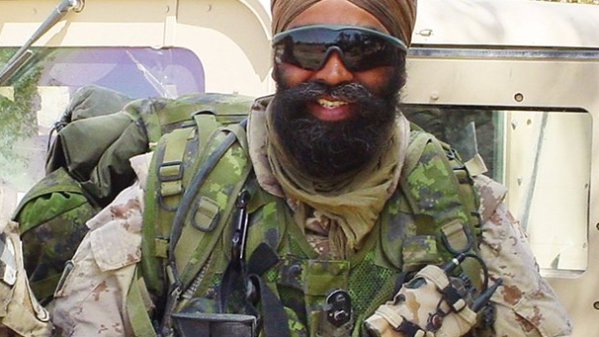
Many defence ministers pose for photos with military hardware, but few pull off the true badass combat stance as well as Harjit Singh Sajjan — draped in flak jacket and camouflage, gripping an assault rifle on an actual battlefield.
Sajjan was, until recently, a decorated Lieutenant-Colonel in the Armed Forces, the first Sikh Canadian to command an army regiment.
“Command breaks down barriers because no one looks at what you look like when the bullets are flying,” he said in 2011. “Having to carry your, you know, wounded soldiers off the battlefield, not just wounded, but the ones that have been killed and place them into a helicopter, nothing prepares you for that.”
Sajjan, sworn in Wednesday as Canada’s new Minister of National Defence, was, in military lingo, “a trigger puller.”
He was deployed to Bosnia-Herzegovina and three times to Afghanistan, for which he was awarded one of the military’s highest recognitions, the Order of Military Merit, for reducing the Taliban’s influence in Kandahar Province.
“He has a taste for the reality of war and that’s very, very important,” said David Bercuson, director of the Centre for Military, Security and Strategic Studies at the University of Calgary.
“He will have seen the aftermath of the effect of war on some of our men and women, which is a major issue with veteran’s affairs,” said Bercuson.
[…]
He served as a reservist, and was deployed with the Canadian peacekeeping forces to Bosnia in 1996.
In 2006 he served in Afghanistan, playing a key intelligence advisory role to Brig.-Gen David Fraser in the successful Operation Medusa offensive against the Taliban. He returned to Afghanistan in 2009 and 2011.
Rising to the rank of reserve lieutenant-colonel, he was named commander of the B.C. Regiment (Duke of Connaught’s Own), in 2012.
I’m pleased that Trudeau managed to find someone to fill this cabinet post who has actual military experience in the field (as opposed to a former general or admiral). I hope he can fight his political corner to get the Canadian Forces the updated equipment they so desperately need, even if the F-35 is not going to be part of the package (Trudeau explicitly promised to drop the F-35 purchase during the election).
The evolution of the Royal Navy’s ship designs
This post is a nice summary of the Royal Navy’s frigates, destroyers, and cruisers from the Second World War through to the present day:
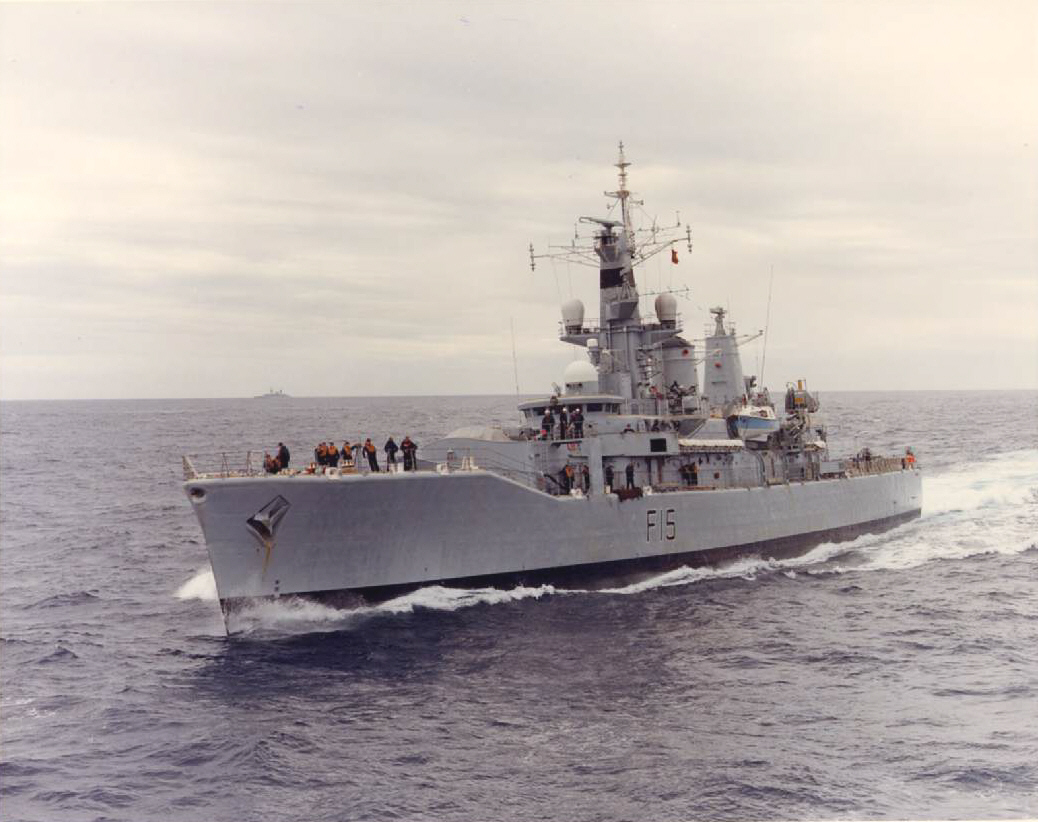
Before the Second World War the RN was predominantly a “cruiser navy”, holding down a range of global deployments with its 15 heavy and 41 light cruisers. These ships had endurance and combat power at the core of their designs, each could operate alone for extended periods, effectively defend itself in most circumstances and demonstrate the interest or resolve of the government in a particular region. The ensuing World War and the Cold War radically changed the type of warships the RN needed. Instead of cruisers built for endurance and complex warfighting the navy built a profusion of smaller frigates and destroyers, mainly to guard convoys and fight submarines close to the UK and in the North Atlantic. To carry out these tasks the navy could make do with smaller, cheaper, ships with relatively shorter legs and far less ability to act independently in high threat environments. Trade-offs like these were made in order to ensure the navy got enough escorts to protect the convoys which would be vital to Britain’s survival in the event of a war; and to hunt the Soviet ballistic missile submarines that threatened NATO. These were ships designed to act as part of a military system that would defeat the threat posed by hostile submarines. This system also included land based aircraft, anti submarine helicopters, aircraft and helicopter carriers and the enormous US/NATO SOSUS fixed sonar array. The Leander class is probably the most famous example of these sort of light frigates, operated by the RN into the early 1990s. When the immediate and pressing threat from submarines operating in the North Atlantic, be they German or Soviet, ceased to exist so the naval forces the UK had constructed to defeat them also fell by the wayside. These ships were, broadly speaking, a product of their time and a deviation from the much older structure that had served the RN well for centuries. This structure consisted of a core “battle fleet”, made up of capital ships; mainly there to act as a deterrent, supported by powerful forward deployed cruisers that conducted most of the day to day activity.
HMS Euryalus, one of 26 Leander Class frigates built for the RN
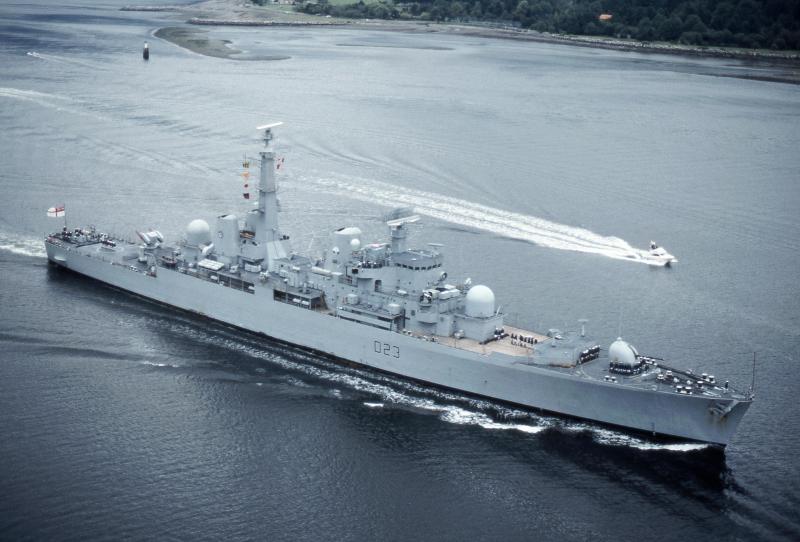
By modern standards almost all of the cheap and numerous frigates and destroyers of the past, even the excellent Leanders, would be classed as lightly armed corvettes. The simple fact was that these cheap and numerous ships sacrificed a lot of capability in order to achieve the affordability necessary to build them in numbers. They were still recognisable as frigates built in the convoy escort mold. Similarly the Type 42 anti-aircraft warfare destroyers, in service from the mid-1970s, were also a design that compromised range and armament for numbers. At only 3500 tonnes the Batch 1 Type 42s were clearly a very light and economical design. When compared with their American counterparts, the 8000 tonne Spruance class, it’s clear that these ships sacrificed range and armament for economy and numbers. Both the Leanders and the Type 42s are recognisable as frigates and destroyers, light warships designed to act in groups and alongside other warships, auxiliaries and aircraft to be effective in combat. The closest the RN came to “cruiser” designs during the Cold War were the eight County Class missile destroyers commissioned in the early 1960s and HMS Bristol, the sole survivor of the pre-1968 carrier escort programme. While these destroyer classes were cruiser-like in some aspects, they carried a far more comprehensive armament and had a greater range (in terms of fuel) than their contemporaries, they lacked the self-sustainment ability, protection, survivability and range of “true” cruisers. While Bristol was initially labelled a light cruiser by Jane’s, the Royal Navy always saw her for what she was: an oversize missile destroyer with the similar limitations to the navy’s other destroyers.
HMS Bristol, the closest the RN came to a new cruiser during the Cold War
With the later Type 22 and 23 frigates the RN moved to fewer, more individually capable, platforms. This change was partly necessitated by the introduction of a new generation of bigger towed array sonars which required larger ships to operate effectively. Despite their greatly improved self defence ability, achieved by fitting the Sea Wolf point defence missile system, these ships were still designed to be expendable escorts and lacked the endurance of cruisers. That said, these two classes signalled the start of the navy’s shift from a fleet of numerous, small and cheap escorts to fewer, larger ships capable of independent operations in a high threat environment.
November 5, 2015
Korea: Admiral Yi – I: Keep Beating the Drum – Extra History
Published on 26 Sep 2015
Admiral Yi Sun-sin of Korea began his legendary career with a series of disasters. Fate (and corrupt officials) conspired against him to have him repeatedly knocked down from the success he had earned, often because his insistence on strict military codes and refusal to ignore corruption made enemies of his fellow officers. Even when his superior had him tortured and blamed after a loss to the Jurchen raiders from the north, Yi persevered. Stripped of his rank and now reduced to a common enlisted man, Yi nevertheless served Korea with distinction. Meanwhile his childhood friend, Ryu Seong-ryong, had risen to become the prime minister of Korea. Ryu recognized the threat of war from Japan looming on the horizon, so when Yi asked to retire in 1588, Ryu convinced him to stay.
November 4, 2015
The XM-25 “Punisher” isn’t dead yet
Five years back, there were interesting reports about a prototype weapon that seemed to have an inside edge for getting into the hands of front-line troops in Afghanistan for specific bunker-busting and similar missions. Then it went silent. Recently, Strategy Page says it may be back in the running:
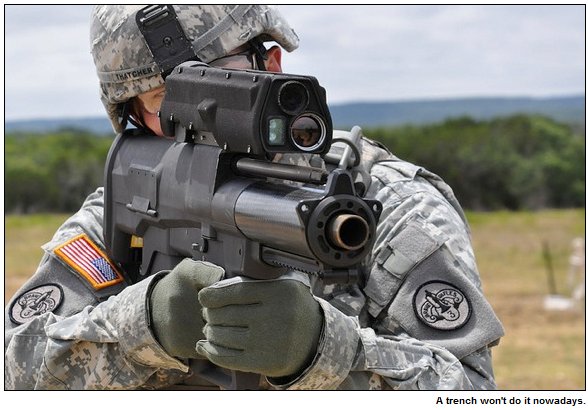
Two years after having its budget sharply cut in 2013 the U.S. Army XM25 grenade launcher is back on track and is now expected to enter service by 2017. It’s been a long road from concept to acceptance and mass production. The army began working on this type of weapon back in the 1990s as the OICW (Objective Individual Combat Weapon) and that mutated into the XM25 (the “X” in XM25 designates a system that is still in development). Since then the similar South Korean K11 and Chinese ZH05 have appeared. The XM25 is the only one of three to have been tested extensively in combat but because of a misfire during a demonstration, budget cuts and some troops finding there were not really that many situations calling for the XM25, the system was thought to be cancelled (development funding was eliminated) in 2013. But the army managed to keep the project on life support. That was mainly because a lot of troops who got to use it in combat liked it a lot and even gave it a nickname; “punisher.”
The initial spectacular success and popularity of the XM25 grenade launchers in Afghanistan led the army to request that the weapon enter regular service as the M25 in 2014. But Congress, looking for ways to reduce military spending in 2013 cut all money for the M25. The army never gave up and managed to scrounge enough cash to build 1,100 of them. Currently the XM25 cost $35,000 each with the 25mm ammo going for $55 per round. Initially SOCOM (Special Operations Command) had some XM25s and some enthusiastic users but in 2013, with few American troops in combat there is not a lot of demand for a weapon like this. The resumption of counter-terrorism efforts in the Middle East and Afghanistan changed that led to more support for reviving the project.
When the first evaluation models of the XM25 arrived in Afghanistan in 2011 the weapon soon became much sought after by infantry troops. There were never more than a few dozen XM25s in Afghanistan and limited supplies of ammunition. Despite that the weapon quickly developed a formidable reputation. The Special Forces had priority on the weapon because it is very useful for special operations missions. The army planned to buy enough so that they could issue one per infantry squad. There are 27 squads in an infantry battalion.
Sometimes the US Navy isn’t subtle
At the RCN News site, a recent press release from the US Navy expresses just a bit more than most civilian readers will get:
U.S. and Canadian naval units began a Task Group Exercise (TGEX) off the coast of Southern California, Oct. 20.
Participating units from the Royal Canadian Navy include Canadian Fleet Pacific, Halifax-class frigates HMCS Calgary (FFH 335) and HMCS Vancouver (FFH 331), and Victoria-class ASW target HMCS Chicoutimi (SSK 879).
Emphasis mine.
November 3, 2015
J.R.R. Tolkien – The Father of Lord of The Rings I WHO DID WHAT IN WORLD WAR 1?
Published on 2 Nov 2015
John Ronald Reuel Tolkien (JRR Tolkien) served on the Western Front of World War 1. It is believed that his experiences of the horrors war were a direct inspiration for his Lord of the Rings books. The struggle between good and evil and the price for victory are strong motives in his work. Find out which other similarities there are between the Lord of the Rings and the First World War.
November 2, 2015
The National Air Force Museum of Canada
Elizabeth and I spent the weekend in the Bay of Quinte area, visiting Prince Edward County, Belleville, and Trenton. While we were in Trenton, we stopped in at the National Air Force Museum of Canada. While the Sea King may not be in the collection yet (at least, not in the collection visible to the public), many other Canadian Armed Forces aircraft are, including the prize of the museum, the Handley Page Halifax heavy bomber:
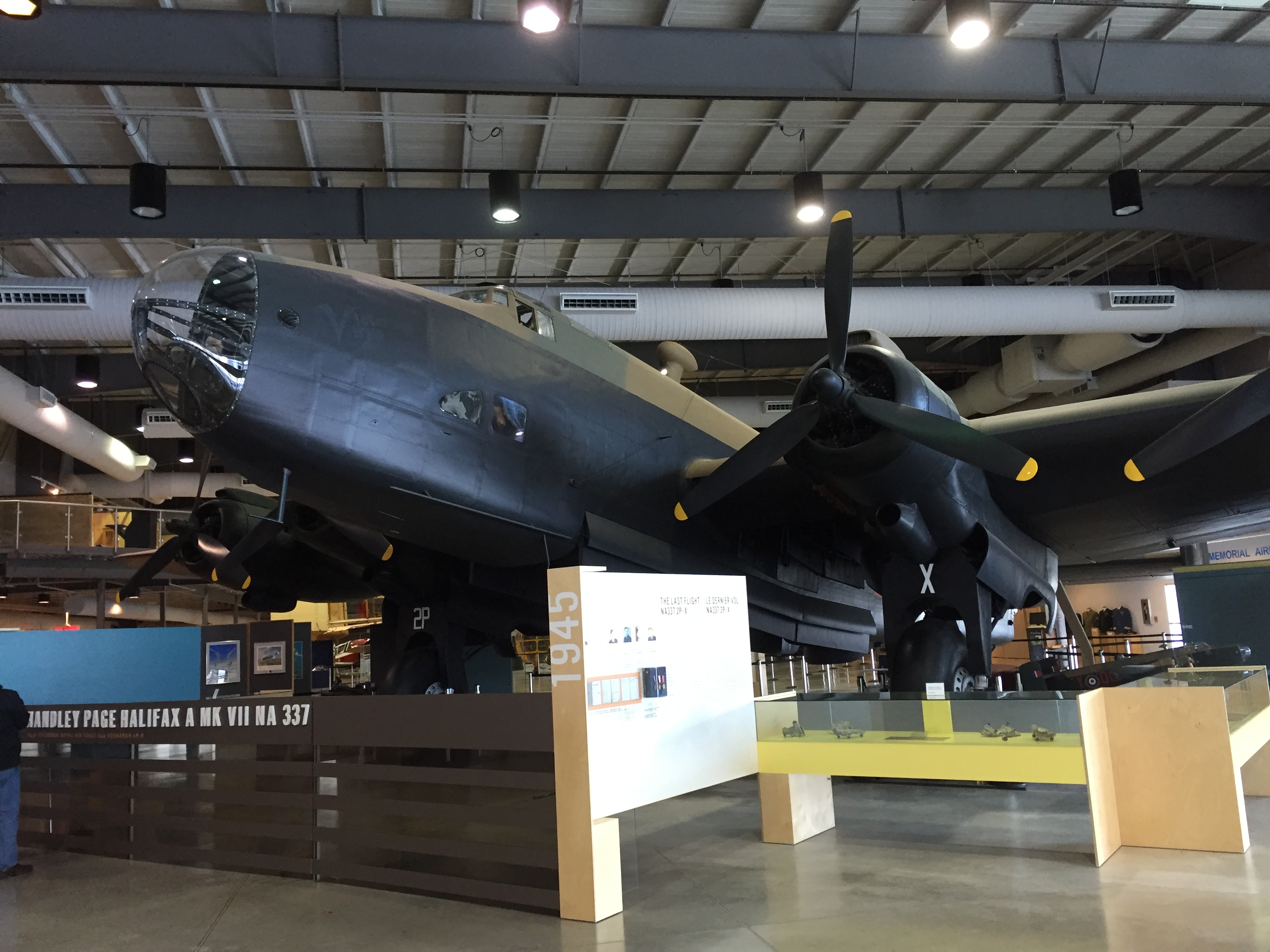
It’s a big enough aircraft that it’s hard to do it justice in a photograph.
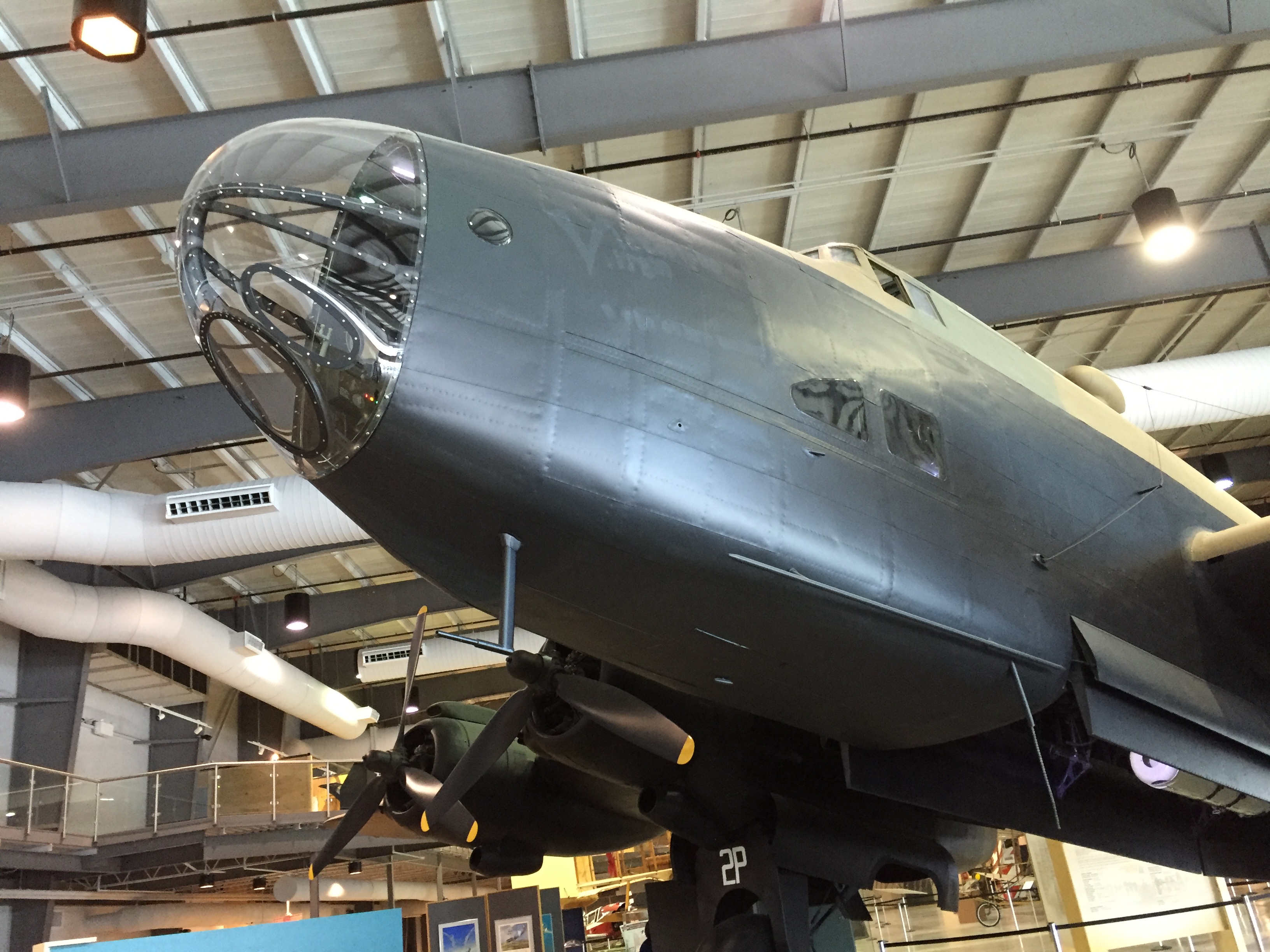
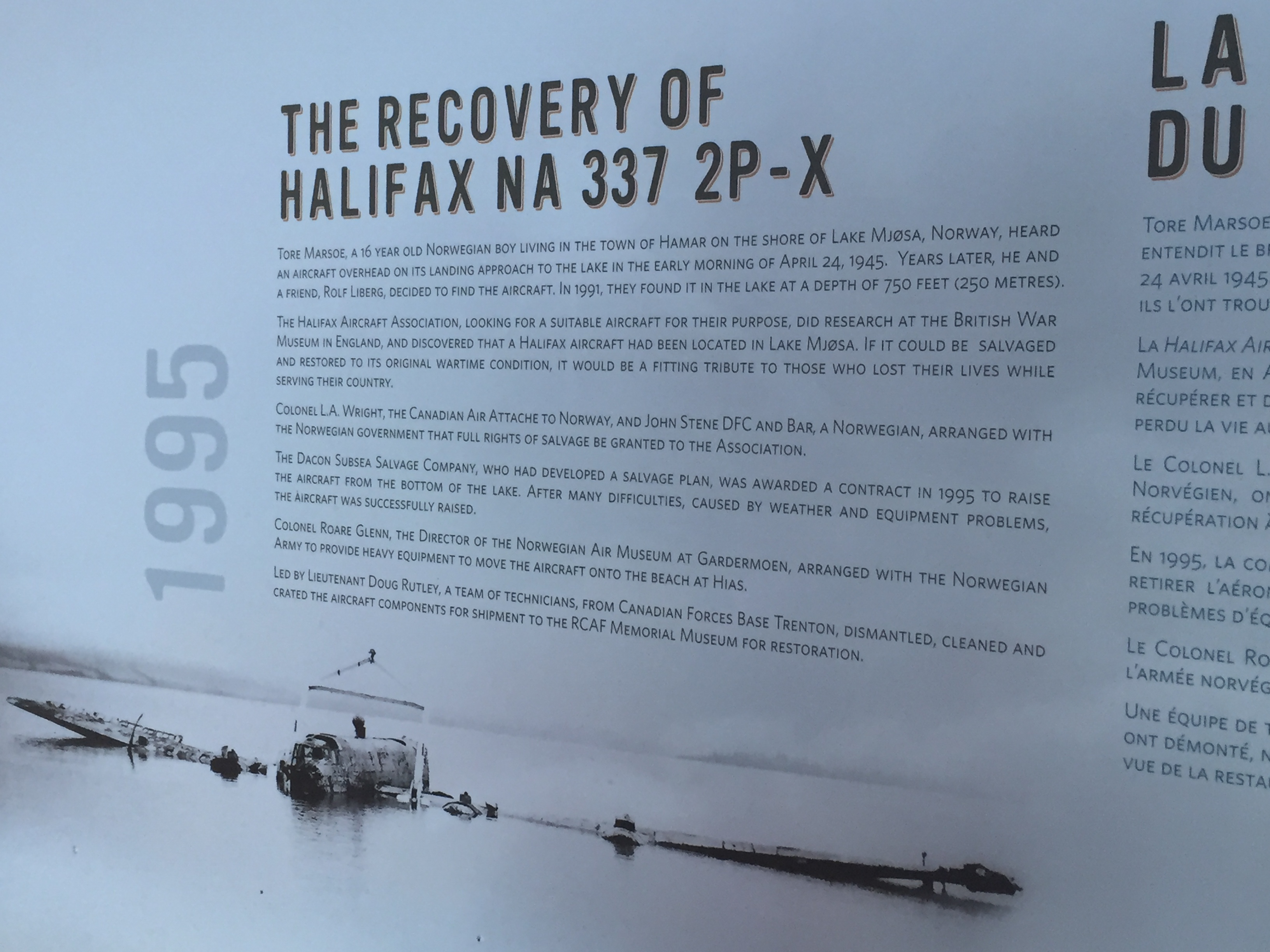
This particular restored aircraft was shot down late in the war on a mission to deliver supplies to Norwegian resistance fighters and later recovered from a Norwegian lake.
Other aircraft in the collection include a replica of the Silver Dart, the first powered aircraft to fly in Canada (February 23, 1909), a replica of the Burgess-Dunne floatplane, the first aircraft purchased for the Canadian military (September, 1914), a CF-86 Sabre, a CF-100 Canuck, a CF-5 Freedom Fighter, a CF-104 Starfighter, a CF-101 Voodoo, a CF-18 Hornet, a CP-107 Argus, a CC-130 Hercules, and a CP-102 Tracker among other aircraft.
The Top 10 Moustaches of World War 1 I THE GREAT WAR Top List
Published on 28 Oct 2015
Grow your own World War 1 moustache and send a picture to us on Facebook, Twitter or Instagram using the hashtag #TGWmovember. We will collect the best for an upcoming OUT OF THE TRENCHES.
November is the month of the year to celebrate moustaches and beards in all forms and fashions. To celebrate the start of #movember we made a new top list ranking the beards of World War 1.
QotD: The Imperial Roman army
Such were the arts of war, by which the Roman emperors defended their extensive conquests, and preserved a military spirit, at a time when every other virtue was oppressed by luxury and despotism. If, in the consideration of their armies, we pass from their discipline to their numbers, we shall not find it easy to define them with any tolerable accuracy. We may compute, however, that the legion, which was itself a body of six thousand eight hundred and thirty-one Romans, might, with its attendant auxiliaries, amount to about twelve thousand five hundred men. The peace establishment of Hadrian and his successors was composed of no less than thirty of these formidable brigades; and most probably formed a standing force of three hundred and seventy-five thousand men. Instead of being confined within the walls of fortified cities, which the Romans considered as the refuge of weakness or pusillanimity, the legions were encamped on the banks of the great rivers, and along the frontiers of the barbarians. As their stations, for the most part, remained fixed and permanent, we may venture to describe the distribution of the troops. Three legions were sufficient for Britain. The principal strength lay upon the Rhine and Danube, and consisted of sixteen legions, in the following proportions: two in the Lower, and three in the Upper Germany; one in Rhaetia, one in Noricum, four in Pannonia, three in Maesia, and two in Dacia. The defence of the Euphrates was intrusted to eight legions, six of whom were planted in Syria, and the other two in Cappadocia. With regard to Egypt, Africa, and Spain, as they were far removed from any important scene of war, a single legion maintained the domestic tranquillity of each of those great provinces. Even Italy was not left destitute of a military force. Above twenty thousand chosen soldiers, distinguished by the titles of City Cohorts and Praetorian Guards, watched over the safety of the monarch and the capital. As the authors of almost every revolution that distracted the empire, the Praetorians will, very soon, and very loudly, demand our attention; but, in their arms and institutions, we cannot find any circumstance which discriminated them from the legions, unless it were a more splendid appearance, and a less rigid discipline.
Edward Gibbon, “Chapter I: The Extent Of The Empire In The Age Of The Antonines — Part III”, History of the Decline and Fall of the Roman Empire, 1782.
October 30, 2015
Russia Stems The Tide – Winter Is Coming I THE GREAT WAR Week 66
Published on 29 Oct 2015
After the Great Retreat during the summer, the Russians are finally able to fight back the Germans at Dvinsk. With a new type of trench warfare, they are able to render August von Mackensen’s artillery useless and only take on small numbers of Germans at the same time. The German army is successful in Serbia though and so the situation for the Serbs looks grim. Meanwhile Benito Mussolini writes in his diary that the worst enemy is not Austria-Hungary, but lice. All of the soldiers and generals know one thing: Winter is coming.
October 27, 2015
Recap 3: August – October 1915 – Global Escalation I THE GREAT WAR – Summary
Published on 26 Oct 2015
Every three months we publish recap episodes that summarises the events of the First World War 100 years ago. In late summer and autumn 1915 the Russians were still on their Great Retreat on the Eastern Front. The Western Front was suffering from the Fokker Scourge and erupted with the Battle of Loos and a new Champagne offensive. At the same time, Gallipoli was still in dire straits and on the Isonzo Front, Luigi Cardona could still not gain any territory against Austria-Hungary.


