Quotulatiousness

January 3, 2011

Healthy skepticism about study results

Filed under: Bureaucracy, Media, Science — Tags: , , , , — Nicholas @ 13:30

John Allen Paulos provides some useful mental tools to use when presented with unlikely published findings from various studies:

Ioannidis examined the evidence in 45 well-publicized health studies from major journals appearing between 1990 and 2003. His conclusion: the results of more than one third of these studies were flatly contradicted or significantly weakened by later work.

The same general idea is discussed in “The Truth Wears Off,” an article by Jonah Lehrer that appeared last month in the New Yorker magazine. Lehrer termed the phenomenon the “decline effect,” by which he meant the tendency for replication of scientific results to fail — that is, for the evidence supporting scientific results to seemingly weaken over time, disappear altogether, or even suggest opposite conclusions.

[. . .]

One reason for some of the instances of the decline effect is provided by regression to the mean, the tendency for an extreme value of a random quantity dependent on many variables to be followed by a value closer to the average or mean.

[. . .]

This phenomenon leads to nonsense when people attribute the regression to the mean as the result of something real, rather than to the natural behavior of any randomly varying quantity.

[. . .]

In some instances, another factor contributing to the decline effect is sample size. It’s become common knowledge that polls that survey large groups of people have a smaller margin of error than those that canvass a small number. Not just a poll, but any experiment or measurement that examines a large number of test subjects will have a smaller margin of error than one having fewer subjects.

Not surprisingly, results of experiments and studies with small samples often appear in the literature, and these results frequently suggest that the observed effects are quite large — at one end or the other of the large margin of error. When researchers attempt to demonstrate the effect on a larger sample of subjects, the margin of error is smaller and so the effect size seems to shrink or decline.

[. . .]

Publication bias is, no doubt, also part of the reason for the decline effect. That is to say that seemingly significant experimental results will be published much more readily than those that suggest no experimental effect or only a small one. People, including journal editors, naturally prefer papers announcing or at least suggesting a dramatic breakthrough to those saying, in effect, “Ehh, nothing much here.”

The availability error, the tendency to be unduly influenced by results that, for one reason or another, are more psychologically available to us, is another factor. Results that are especially striking or counterintuitive or consistent with experimenters’ pet theories also more likely will result in publication.

January 2, 2011

Dave Barry’s 2010 review

Filed under: Government, History, Humour, Media, Politics — Tags: , , — Nicholas @ 13:53

Who better than Dave Barry to recount to us the manifold miseries we endured and depths of despair we plumbed:

Let’s put things into perspective: 2010 was not the worst year ever. There have been MUCH worse years. For example, toward the end of the Cretaceous Period, Earth was struck by an asteroid that wiped out about 75 percent of all of the species on the planet. Can we honestly say that we had a worse year than those species did? Yes, we can, because they were not exposed to “Jersey Shore.”

So on second thought we see that this was, in fact, the worst year ever. The perfect symbol for the awfulness of 2010 was the BP oil spill, which oozed up from the depths and spread, totally out of control, like some kind of hideous uncontrollable metaphor. (Or “Jersey Shore.”) The scariest thing about the spill was, nobody in charge seemed to know what to do about it. Time and again, top political leaders personally flew down to the Gulf of Mexico to look at the situation firsthand and hold press availabilities. And yet somehow, despite these efforts, the oil continued to leak. This forced us to face the disturbing truth that even top policy thinkers with postgraduate degrees from Harvard University — Harvard University! — could not stop it.

The leak was eventually plugged by non-policy people using machinery of some kind. But by then our faith in our leaders had been shaken, especially because they also seemed to have no idea of what to do about this pesky recession. Congress tried every remedy it knows, ranging all the way from borrowing money from China and spending it on government programs, to borrowing MORE money from China and spending it on government programs. But in the end, all of this stimulus created few actual jobs, and most of those were in the field of tar-ball collecting.

January 1, 2011

QotD: The end of nerd subculture

Filed under: History, Media, Quotations — Tags: , — Nicholas @ 17:14

That was the year the final issue of Watchmen came out, in October. After that, it seemed like everything that was part of my otaku world was out in the open and up for grabs, if only out of context. I wasn’t seeing the hard line between “nerds” and “normals” anymore. It was the last year that a T-shirt or music preference or pastime (Dungeons & Dragons had long since lost its dangerous, Satanic, suicide-inducing street cred) could set you apart from the surface dwellers. Pretty soon, being the only person who was into something didn’t make you outcast; it made you ahead of the curve and someone people were quicker to befriend than shun. Ironically, surface dwellers began repurposing the symbols and phrases and tokens of the erstwhile outcast underground.

Fast-forward to now: Boba Fett’s helmet emblazoned on sleeveless T-shirts worn by gym douches hefting dumbbells. The Glee kids performing the songs from The Rocky Horror Picture Show. And Toad the Wet Sprocket, a band that took its name from a Monty Python riff, joining the permanent soundtrack of a night out at Bennigan’s. Our below-the-topsoil passions have been rudely dug up and displayed in the noonday sun. The Lord of the Rings used to be ours and only ours simply because of the sheer goddamn thickness of the books. Twenty years later, the entire cast and crew would be trooping onstage at the Oscars to collect their statuettes, and replicas of the One Ring would be sold as bling.

The topsoil has been scraped away, forever, in 2010. In fact, it’s been dug up, thrown into the air, and allowed to rain down and coat everyone in a thin gray-brown mist called the Internet. Everyone considers themselves otaku about something — whether it’s the mythology of Lost or the minor intrigues of Top Chef. American Idol inspires — if not in depth, at least in length and passion — the same number of conversations as does The Wire. There are no more hidden thought-palaces — they’re easily accessed websites, or Facebook pages with thousands of fans. And I’m not going to bore you with the step-by-step specifics of how it happened. In the timeline of the upheaval, part of the graph should be interrupted by the words the Internet. And now here we are.

Patton Oswalt, “Wake Up, Geek Culture. Time to Die”, Wired, 2010-12-27

December 28, 2010

The French Foreign Legion in film and in history

Filed under: Books, Europe, France, Germany, Media, Military — Tags: , , , — Nicholas @ 00:01

Peter Shawn Taylor explains how what was once the second most popular “adventure movie” themes has become all but invisible today:

The French Foreign Legion, steeped as it is in romance and adventure, had an entirely prosaic birth. It was a supply-side army.

In 1830, France’s reputation for continual political upheaval made it a magnet for Europe’s wandering class. Political agitators, disenfranchised liberals, left-wing revolutionaries and outright criminals from every country flocked to Paris. Such an agglomeration of potential trouble-makers proved unsettling for the newly reinstalled French monarchy.

At the same time France had recently conquered Algeria, rather by accident. (It’s a long story involving Napoleon Bonaparte’s unpaid grain debt, a flyswatter to the face of a French diplomat and the Gallic need to avenge even the slightest insult.) Maintaining the colony, however, was proving perilous for regular French troops.

The genius of the French Foreign Legion was that it solved both problems.

Refugees, criminals and agitators were pressed into a special unit of the French military created exclusively for foreigners. To make this urban renewal process as efficient as possible, no questions were asked as to the background of the recruits. And because French law prevented mercenary troops from serving on French soil, these soldiers were immediately shipped off to Algeria. Out of sight, out of mind.

After the “cowboys and indians” movies, Legion movies were the next most common adventure movie in early Hollywood. They faded from Hollywood’s radar even faster than the French empire did in the real world.

I remember reading a book about the Legion in French Indochina in the late 1940s and early 1950s (The Devil’s Guard by George Robert Elford), but I assumed it was largely fictionalized. Checking the Wikipedia entry, I see I wasn’t alone in suspecting it to be less than fully factual:

[. . .] published in 1971, is the story of a former German Waffen-SS officer’s string of near-constant combat that begins on World War II’s eastern front and continues into the book’s focus — the First Indochina War, as an officer in the French Foreign Legion. The book is presented by the author as nonfiction but considered to be untrue by military historians, and usually sold as fiction. In 2006 the online bookstore AbeBooks reported that it was among the 10 novels most frequently sold to American soldiers in Iraq (the only war fiction in the top 10, in fact).

December 27, 2010

Bargain of the year on classical music

Filed under: Media — Tags: — Nicholas @ 00:01

By way of Gerard Vanderleun, here’s perhaps the biggest bargain in classical music I’ve ever seen (iTunes store link):

That’s 316 classical music tracks. As one of the comments said “That’s pretty much ‘buy one album’, get 30 free.”

December 25, 2010

Merry Christmas!

Filed under: Books, Media, Randomness — Tags: , — Nicholas @ 11:10

Among my gifts this year, I received the H.L. Mencken collection Prejudices, so I’ve got lots to read over the next few days.

I also received the “Yes, Minister” and “Yes, Prime Minister” DVD collections, although getting a chance to play them will probably not come up for a few days, given how many other DVDs were exchanged as gifts this year.

I hope your Christmas (if you celebrate it) was equally happy.

Now, turn off your browser and go enjoy yourself offline!

December 22, 2010

QotD: A Christmas Carol

Filed under: Books, Humour, Media, Quotations — Tags: — Nicholas @ 08:52

It’s Christmas time, and that means it’s time to enjoy A Christmas Carol, Charles Dickens’ melancholy tale of a productive businessman who gets worked over by three meddling supernatural social workers one Christmas Eve, transforming him into a simpering socialist.

It’s almost as sad as Star Wars, really.

Douglas Kern, “A TCS Christmas Carol”

December 20, 2010

Once again, correlation is not causation

Filed under: Britain, Media, Science — Tags: , , — Nicholas @ 12:50

An excellent example of what statistical analysis can and cannot show:

Do mobile phone towers make people more likely to procreate? Could it be possible that mobile phone radiation somehow aids fertilisation, or maybe there’s just something romantic about a mobile phone transmitter mast protruding from the landscape?

These questions are our natural response to learning that variation in the number of mobile phone masts across the country exactly matches variation in the number of live births. For every extra mobile phone mast in an area, there are 17.6 more babies born above the national average.

This was discovered by taking the publicly available data on the number of mobile phone masts in each county across the United Kingdom and then matching it against the live birth data for the same counties. When a regression line is calculated it has a “correlation coefficient” (a measure of how good the match is) of 98.1 out of 100. To be “statistically significant” a pattern in a dataset needs to be less than 5% likely to be found in random data (known as a “p-value”), and the masts-births correlation only has a 0.00003% probability of occurring by chance.

Part of the problem is that our brains have evolved to detect patterns and relationships — even when they’re not really there:

Mobile phone masts, however, have absolutely no bearing on the number of births. There is no causal link between the masts and the births despite the strong correlation. Both the number of mobile phone transmitters and the number of live births are linked to a third, independent factor: the local population size. As the population of an area goes up, so do both the number of mobile phone users and the number people giving birth.

The problem is that our first instinct is to assume that a correlation means that one factor is causing the other. While this does not cause a problem when using pattern-spotting as an evolved survival tool, it does cause severe problems when assessing possible health scares based on a recently uncovered correlation. For the majority of cases, correlation does not indicate the presence of causality.

H/T to Maggie Koerth-Baker for the link.

December 16, 2010

Japan tries to restrict adult-oriented manga

Filed under: Economics, Japan, Media — Tags: , , , , — Nicholas @ 09:51

Having solved all other problems, the Japanese government is now attempting to impose stricter controls on the thriving Manga book industry:

A battle has erupted between the normally placid manga community and Tokyo’s conservative governor over a new law that heavily restricts sales in the city of manga comic books with what the ordinance calls “extreme” depictions of sex.

The brouhaha has become so big that even Prime Minister Naoto Kan is attempting to bridge the divide between the industry, producer of one of Japan’s most cherished cultural exports, and Tokyo’s metropolitan government. A group of manga artists and publishers has said it will boycott Tokyo’s massive International Anime Fair in March.

That threat could hobble sales of the country’s beloved comic books. As Japan’s economic star continues to be eclipsed by China, cultural exports remain one of Japan’s few globally robust sectors.

Of course, there’s more to the story than the headlines indicate, as not all manga produced finds markets overseas:

The vast majority of manga in Japan aren’t pornographic, with internationally known titles such as “Dragon Ball,” “Naruto” and “Sailor Moon” attracting global readers of all ages.

But what sets Japan apart from much of the West is that here it is considered socially acceptable to read manga depicting sexually explicit acts. It is common to sit next to a suit-wearing Japanese commuter who is nonchalantly paging through cartoon sex scenes. Pornographic magazines with women dressed as Japanese schoolgirls on the cover are available at convenience stores around Tokyo, without anything obscuring the cover.

The only concession is that such publications are labeled “adult-only” and sealed shut, preventing browsers from peeking inside.

December 15, 2010

This is a sign of a slow news week

Filed under: Cancon, Media, Religion — Tags: , , , — Nicholas @ 12:54

When the National Post carries a story about someone purloining one of the wise men figures from a church in Brooklin:

Durham Region police reported that the 6′ x 3′ plywood cutout of one of the Three Wise Men was stolen in the early morning hours Dec. 12, and the church had said they would like it returned.

“It’s a bit of an insult,” said Brooklin United Church council chair Rick Barnes.

Mr. Barnes said the thieves were caught on camera, and said they appeared to be “a bunch of kids goofing around and having fun.” The wooden cut-out, which was fastened to a metal post and then attached to the larger constructed scene, would be hard to remove quickly, he said.

“It didn’t take all night but it took them a considerable effort to get it removed,” he said.

Mr. Barnes said that although Brooklin United doesn’t plan to make a big deal out of the incident, it is unfortunate for the church, who have limited resources to begin with.

Brooklin is kind of a quiet place . . . but even here, this isn’t really a big story. Why the National Post bothered to report on it, I can’t begin to imagine.

December 14, 2010

Christopher Hitchens on the real Henry Kissinger

Filed under: History, Media, Politics, USA — Tags: , , , , — Nicholas @ 09:14

I must admit that I never understood the adulation Henry Kissinger has attracted. I started paying attention to politics in the early 1970s, and Kissinger was one of the main players on the world political stage at that point. His connection to the deeply repugnant Richard Nixon should have been enough to keep him out of the limelight after his boss was forced out of the presidency. Yet he somehow managed not only to stay in the public eye, but to increase his popularity.

Christopher Hitchens thinks that the latest revelations from that era will finally bring Kissinger the odium he so richly deserves:

Henry Kissinger should have the door shut in his face by every decent person and should be shamed, ostracized and excluded. No more dinners in his honour; no more respectful audiences for his absurdly overpriced public appearances; no more smirking photographs with hostesses and celebrities; no more soliciting of his worthless opinions by sycophantic editors and producers. One could have demanded this at almost any time during the years since his role as the only unindicted conspirator in the Nixon/Watergate gang, and since the exposure of his war crimes and crimes against humanity in Indochina, Chile, Argentina, Cyprus, East Timor and several other places. But the latest revelations from the Nixon Library might perhaps turn the scale at last.

Chatting eagerly with his famously racist and foul-mouthed boss in March 1973, following an appeal from Golda Meir to press Moscow to allow the emigration of Soviet Jewry, Kissinger is heard on the tapes to say:

“The emigration of Jews from the Soviet Union is not an objective of American foreign policy. And if they put Jews into gas chambers in the Soviet Union, it is not an American concern. Maybe a humanitarian concern.”

(One has to love that uneasy afterthought….)

In the past, Kissinger has defended his role as enabler to Nixon’s psychopathic bigotry, saying that he acted as a restraining influence on his boss by playing along and making soothing remarks. This can now go straight into the lavatory pan, along with his other hysterical lies. Obsessed as he was with the Jews, Nixon never came close to saying that he’d be indifferent to a replay of Auschwitz. For this, Kissinger deserves sole recognition.

It’s hard to know how to classify this observation in the taxonomy of obscenity. Should it be counted as tactical Holocaust pre-denial? That would be too mild. It’s actually a bit more like advance permission for another Holocaust. Which is why I wonder how long the official spokesmen of American Jewry are going to keep so quiet. Nothing remotely as revolting as this was ever uttered by Jesse Jackson or even Mel Gibson, to name only two famous targets of the wrath of the Anti-Defamation League. Where is the outrage? Is Kissinger — normally beseeched for comments on subjects about which he knows little or nothing — going to be able to sit out requests from the media that he clarify this statement? Does he get to keep his op-ed perch in reputable newspapers with nothing said? Will the publishers of his mendacious and purloined memoirs continue to give him expensive lunches as if nothing has happened?

December 10, 2010

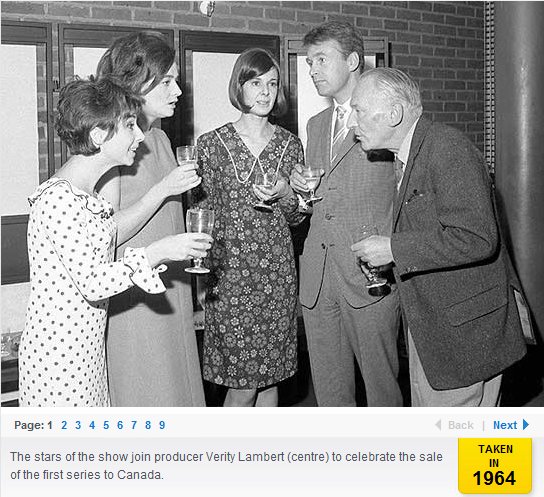
The people behind the original Doctor Who

Filed under: Britain, History, Media — Tags: , , — Nicholas @ 08:08

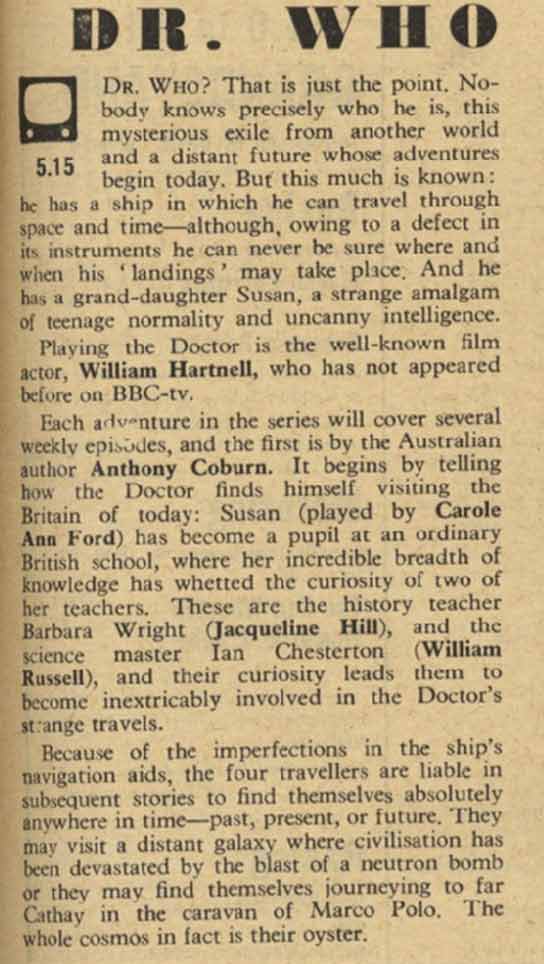
A photo set on the BBC Archive shows some of the folks who made the original Doctor Who series:

Also from BBC Archives, the Radio Times review of the first episode:

Also of interest, the original notes on creating a BBC science fiction series.

December 9, 2010

Bruce Schneier on the WikiLeaks situation

Filed under: Bureaucracy, Media, USA — Tags: , , , , — Nicholas @ 07:48

Bruce Schneier has some useful observations about the ongoing WikiLeaks document release:

4. This has little to do with WikiLeaks. WikiLeaks is just a website. The real story is that “least trusted person” who decided to violate his security clearance and make these cables public. In the 1970s he would have mailed them to a newspaper. Today he uses WikiLeaks. Tomorrow he will have his choice of a dozen similar websites. If WikiLeaks didn’t exist, he could have put them up on BitTorrent.

5. I think the government is learning what the music and movie industries were forced to learn years ago: it’s easy to copy and distribute digital files. That’s what’s different between the 1970s and today. Amassing and releasing that many documents was hard in the paper and photocopier era; it’s trivial in the Internet era. And just as the music and movie industries are going to have to change their business models for the Internet era, governments are going to have to change their secrecy models. I don’t know what those new models will be, but they will be different.

Preview of The Guild: Vork

Filed under: Gaming, Media — Tags: , , , — Nicholas @ 00:54

Guild fans will be interested to see the first five pages of the The Guild: Vork at PopCandy:

As you may know, I’m a huge fan of The Guild, the funny, imaginative, geeky, gleeful and addictive web series created by Felicia Day. If you’ve seen one episode, chances are you’ve seen them all. (And bonus: The talented Wil Wheaton added some spark to the last two seasons.)

It makes sense that The Guild would branch out to comics, since much of its audience probably consists of comic-book fans. On Dec. 22 Dark Horse will issue The Guild: Vork, a story written by Day and Jeff Lewis (the actor who plays Vork in the series).

I offered you a preview of the Guild covers a few months ago. Now hold your breath, because I have the first six pages of Vork right here

December 8, 2010

Repost: “What was I doing when I heard . . .”

Filed under: History, Media — Tags: , , — Nicholas @ 09:01

Another year, another opportunity for some people to indulge in over-the-top, mawkish, ostentatious grief for someone the vast majority never actually met:

A post up at American Digest recounts what Gerard was doing when he heard that John Lennon had been shot. It’s a good posting: go read it.

What I was doing was a lot less interesting and profound: I was driving from Mississauga to Montreal that morning, and all I could get on the AM radio in the truck was endless playings of “Imagine” and other Lennon tunes I didn’t like to start with. To make it worse, I was going to be spending two weeks in Montreal (I don’t speak French), hanging off the side of an apartment building (I’m really not good with heights), learning how to install a master-antenna TV system. I certainly had enough worries of my own to occupy my thoughts.

I was born in 1960. By the time I started paying attention to popular music, the Beatles were about as current to me as the Monkees (and, truth to tell, I kinda preferred the latter, if only for the TV show reruns). John Lennon was some bearded weirdo with a whacky wife and they both spouted the sort of rhetoric that left me feeling that they really didn’t like the west at all. I was sorry that he was dead, but the wholesale public mourning struck me as being just plain over-the-top.

In retrospect, it was rather like the outpouring of public grief when Princess Diana got herself killed: unseemly, inappropriate, lavishly exhibitionistic displays of emotion. Perhaps I’m just not very sympathetic, at heart, but all it seemed to lack was ululations and slashing of cheeks to be a true primitive, tribal ceremony. I didn’t have the stones to say “Grow up” out loud, but that was what I thought then.

Originally posted on 8 December, 2004.

« Newer PostsOlder Posts »

Powered by WordPress