Quotulatiousness

July 5, 2021

General George H. Thomas (1816-1870)

Filed under: History, Military, USA — Tags: , , , — Nicholas @ 03:00

One of the references for the latest Atun-Shei Films “Checkmate Lincolnites!” video was an older article in the Smithsonian Magazine outlining the career of one of the best — yet least known — Union generals in the American Civil War:
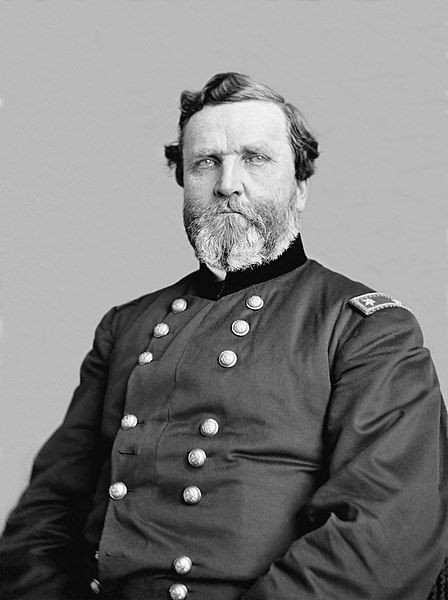
George Henry Thomas (July 31, 1816 – March 28, 1870), the “Rock of Chickamauga”, was a career U.S. Army officer and a Union general during the American Civil War, one of the principal commanders in the Western Theatre.
Image from the Library of Congress Prints and Photographs Division via Wikimedia Commons.

… for Thomas, every battlefield success seemed to stir controversy or the jealousy of ambitious rivals. Unlike other noted generals, he had no home-state politicians to lobby on his behalf in Washington. Ulysses S. Grant, for example, was championed by Illinois congressman Elihu Washburne, and Sherman by his brother, Ohio senator John Sherman. For Thomas, every step upward depended solely on his performance in the field.

In one of the war’s first skirmishes, he led a brigade in the Shenandoah Valley that bested Confederates under Stonewall Jackson. When the dashing Rebel J.E.B. Stuart heard that Thomas was commanding Union cavalry, he wrote to his wife that “I would like to hang him as a traitor to his native state.” Even after that, there was lingering doubt among some Unionists, including Lincoln. Unlike Grant, Sherman, George McClellan and some other ranking Union officers who had broken their military service with years as civilians, Thomas had been a soldier since the day he entered West Point. Yet when his name came up for promotion, the president, restrained by Northern radicals and surrounded in the Federal bureaucracy by Southerners, said, “let the Virginian wait.” But Sherman among others vouched for Thomas, and soon the Virginian was elevated to brigadier general and ordered to organize troops away from Virginia, beyond the Appalachians.

[…]

As Thomas rose, he proved to his men that his addiction to detail and his insistence on preparation saved lives and won battles. His generalship behind the front, before the battle, was generations ahead of his peers. He organized a professional headquarters that made other generals’ staff work seem haphazard. His mess and hospital services, his maps and his scouting network were all models of efficiency; he was never surprised as Grant had been at Shiloh. He anticipated modern warfare with his emphasis on logistics, rapidly repairing his railroad supply lines and teaching his soldiers that a battle could turn on the broken linchpin of a cannon. He demanded by-the-book discipline, but taught it by example. He made no ringing pronouncements to the press. His troops came to understand his fatherly concern for their welfare, and when they met the enemy they had faith in his orders.

In late summer, Rosecrans moved against the Rebel stronghold of Chattanooga, a crucial gateway between the eastern and western theaters of war. Confederate general Bragg pulled out of the town onto the dominating nearby mountains, waiting for Maj. Gen. James Longstreet to bring reinforcements from Virginia. When they came, Bragg threw everything into an assault on Union lines along Chickamauga Creek, just inside Georgia. Thomas’ corps was dug in on the Union left. On the second day of furious fighting, a misunderstood order opened a wide gap on his right. Longstreet’s Rebels crashed through; with the always aggressive John Bell Hood’s division leading, they bent the Union line into a horseshoe.

Rosecrans, certain the battle was lost, retreated into Chattanooga with five other generals and thousands of blue-uniformed soldiers. But Thomas inspired his men to stand fast, and only their determined resistance saved his army from destruction. They held all that afternoon against repeated Confederate assaults, withdrawing into Chattanooga after nightfall. It was the greatest of all battles in the West, and since that day, Thomas has been known to history as the Rock of Chickamauga.

[…]

On December 15, Thomas, unaware that Grant intended to fire him, roared out of his works against Hood. In two days his troops crushed the Rebel army. His infantry, including two brigades of U.S. Colored Troops, smashed into Hood’s troops while the Union cavalry, dismounted with its fast-firing Spencers, curled around and behind the Rebel left. Almost a century later, historian Bruce Catton summed up the battle in two words: “Everything worked.”

Thomas “comes down in history…as the great defensive fighter, the man who could never be driven away but who was not much on the offensive. That may be a correct appraisal,” wrote Catton, an admirer and biographer of Grant. “Yet it may also be worth making note that just twice in all the war was a major Confederate army driven away from a prepared position in complete rout — at Chattanooga and at Nashville. Each time the blow that finally routed it was launched by Thomas.”

Nashville was the only engagement in which one army virtually annihilated another. Thomas B. Buell, a student of Civil War generalship, wrote that in Tennessee, Thomas performed the war’s “unsurpassed masterpiece of theater command and control….So modern in concept, so sweeping in scope, it would become a model for strategic maneuver in 20th-century warfare.” After it, there was no more large-scale fighting west of the Blue Ridge.


Browning M2HB .50 BMG at the Range

Filed under: History, Military, USA, Weapons, WW1, WW2 — Tags: , , , — Nicholas @ 02:00

Forgotten Weapons
Published 26 Dec 2020

http://www.patreon.com/ForgottenWeapons​

https://www.floatplane.com/channel/Fo…​

Cool Forgotten Weapons merch! http://shop.bbtv.com/collections/forg…​

The Browning M2 heavy machine gun is one of the longest serving firearms in US military service, and still going strong. Let’s take this one out to the range and find out why!

Contact:
Forgotten Weapons
6281 N. Oracle #36270​
Tucson, AZ 85740

QotD: Robert Walpole, the first Prime Minister

Filed under: Britain, Government, History, Quotations — Tags: , , , , — Nicholas @ 01:00

This month marks exactly 300 years since the Whig statesman Robert Walpole officially became our first prime minister. Not only was the country squire and landowner the first politician to occupy 10 Downing Street, he has also served the longest time at the top: an unbroken 20-year reign dubbed the “Robinocracy”.

Most historians rate Walpole as one of our more successful prime ministers: he stabilised the nation’s finances, saw off Jacobite sedition, and kept the country out of foreign wars, proudly boasting: “There are 50,000 slain in Europe this year and not one Englishman.” But inevitably, there was a downside to Walpole: he was charged by his enemies with corruption.

In fact, considering the spectacular eighteenth-century standards of sleaze, Walpole was — to borrow a phrase coined by Tony Blair — “a pretty straight kind of guy”. True, he spent six months in the Tower of London accused by his political foes of all sorts of malpractice; but he was eventually cleared. True, too, that he built a magnificent mansion, Houghton Hall, in his native Norfolk — but he had legitimately made a fortune in the South Sea Bubble financial crash that ruined so many others (by buying shares when they were low and selling them when they were high). Nevertheless, Walpole was not above sailing close to the wind of propriety, cynically remarking: “Every man has his price.”

Nigel Jones, “Scandal, corruption and collusion: 300 years of British prime ministers”, The Critic, 2021-04-03.

July 4, 2021

Fall Blau Begins, Stalin Caught off Guard Again – 149 – WW2 – July 3, 1942

World War Two
Published 3 Jul 2021

It’s that time of the year again — the time when the Axis Powers drive deep into the Soviet Union. Fall Blau is the name of this year’s huge offensive, and it begins this week, making great gains from the very beginning, but the Axis Powers are also making big gains this week in North Africa, taking Mersa Matruh and pushing to within 100 km of Alexandria. Can nothing stop them?
(more…)

Ma Deuce: The Venerable Browning M2 .50 Caliber HMG

Filed under: History, Military, USA, Weapons, WW1, WW2 — Tags: , , , , — Nicholas @ 02:00

Forgotten Weapons
Published 25 Dec 2020

http://www.patreon.com/ForgottenWeapons​

https://www.floatplane.com/channel/Fo…​

Cool Forgotten Weapons merch! http://shop.bbtv.com/collections/forg…​

The M2 Browning machine gun was first conceived in 1918, as a request by General John Pershing of the AEF for a large-caliber anti-aircraft and antitank machine gun. John Browning scaled his M1917 water-cooled .30 caliber design up to .50 caliber, and the first prototypes were test fired in November of 1918. Impetus behind the project faltered after the Armistice, but Colt continued to develop the gun during the 1920s and 1930s. It was first adopted in 1922 by the US Coastal Artillery as an anti-aircraft gun, but significant manufacture would not come until World War Two. By this time, the gun’s main role had shifted, from antitank to being an aircraft armament, and some 2 million were made during World War Two, primarily as aircraft guns.

The M2 remains in service today, highlighting the brilliance and longevity of John Browning’s designs.

Contact:
Forgotten Weapons
6281 N. Oracle #36270​
Tucson, AZ 85740

July 3, 2021

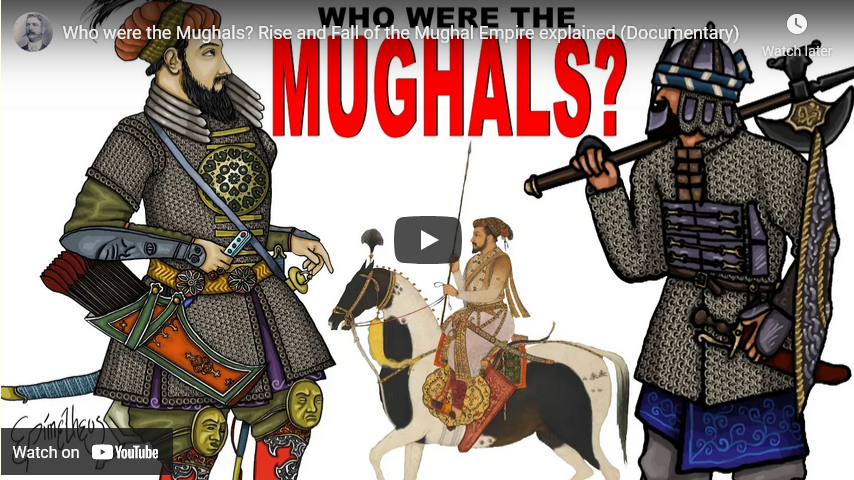
Who were the Mughals? Rise and Fall of the Mughal Empire explained

Filed under: Britain, History, India, Military, Religion — Tags: , , , , , — Nicholas @ 04:00

Epimetheus
Published 20 Oct 2019

Who were the Mughals? Rise and Fall of the Mughal Empire explained (Documentary)

The Mughal empire’s history from Babur to the fall in 1857.

This video and others like it are sponsored by my Patrons over on patreon.
https://www.patreon.com/Epimetheus1776

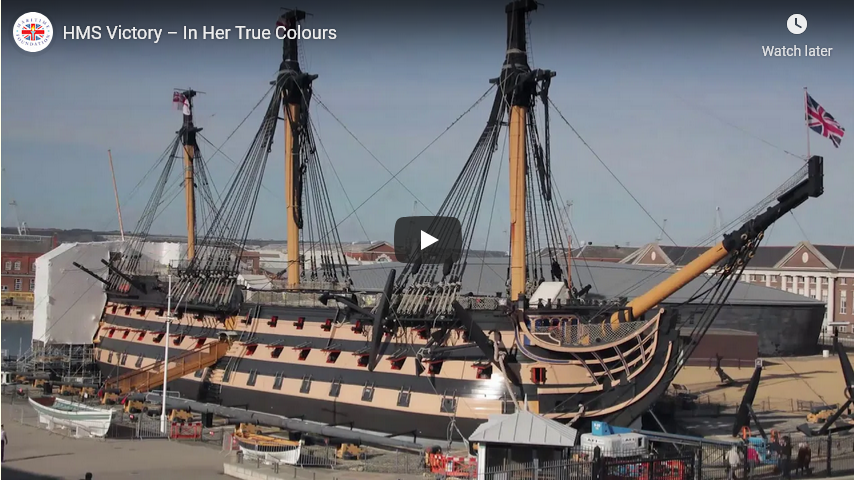
HMS Victory – In Her True Colours

Filed under: Britain, History, Military, Science — Tags: , , — Nicholas @ 02:00

Maritime Foundation
Published 25 Oct 2015

HMS Victory – In Her True Colours

Painting HMS Victory – Repainted in the true colours Nelson would have known.

Produced by Maritime Films UK (www.maritimefilmsuk.tv) for the National Museum of the Royal Navy.

July 2, 2021

Japan’s Institutionalization of Rape – WAH 037 – June 1942, Pt. 2

Filed under: Britain, Germany, History, India, Japan, Military, WW2 — Tags: , , , , , , , , — Nicholas @ 04:00

World War Two
Published 1 Jul 2021

During the occupation of South-East Asia, Japan builds a large system of institutionalised rape to “keep their soldiers happy”. Meanwhile, Allied refugees from Burma find a safe haven in India, but for some, hardship continues.
(more…)

Britain’s “agricultural revolution”

Filed under: Britain, Economics, History, Technology — Tags: , , , — Nicholas @ 03:00

In the latest Age of Invention newsletter, Anton Howes wonders about the almost-forgotten revolution that pre-dated the much better known Industrial Revolution:

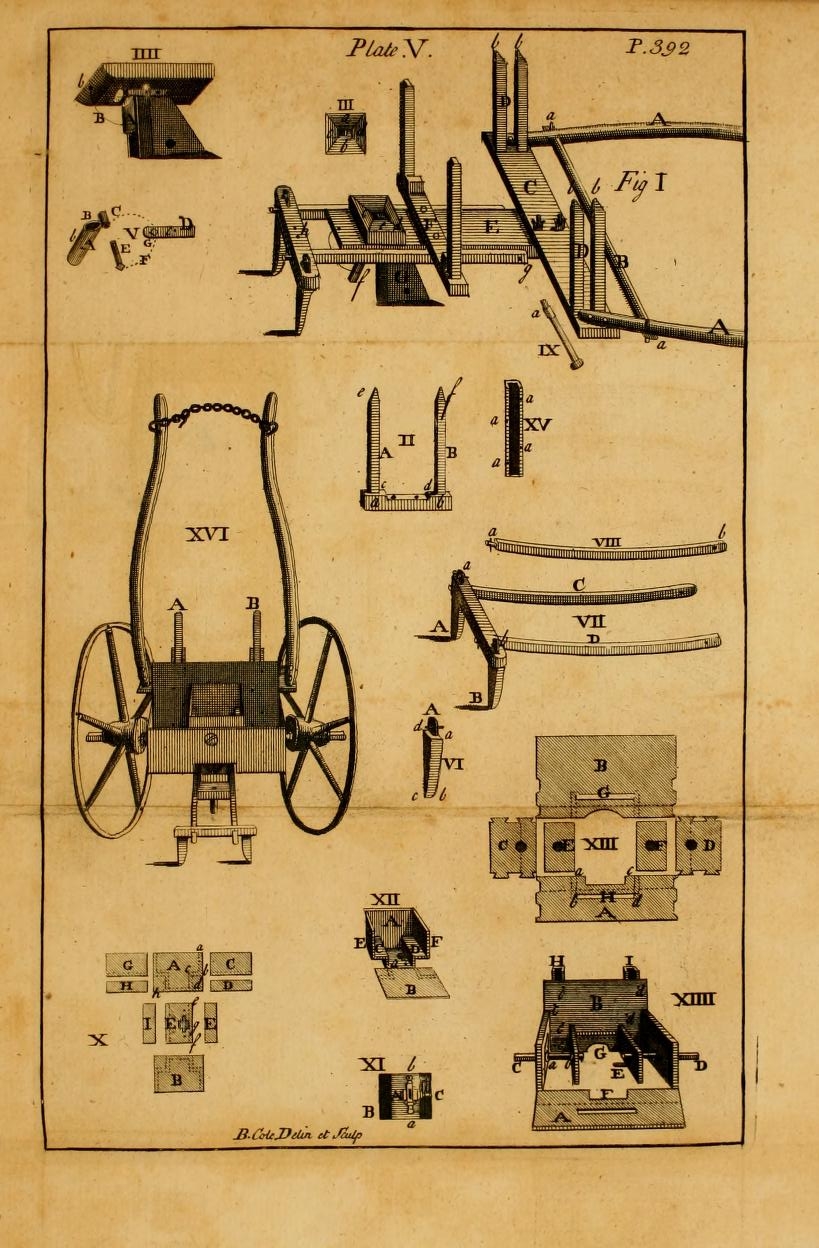
Illustration of a seed drill from Horse-hoeing husbandry, 4th edition by Jethro Tull, 1762 (original work 1731).
Wikimedia Commons.

Whatever happened to “the Agricultural Revolution” of seventeenth and eighteenth-century Britain? In recent years I’ve hardly seen the term used at all, and the last major book on the subject was seemingly published twenty-five years ago. It has become almost totally eclipsed by its more famous sibling “the Industrial Revolution”, with its vivid associations of cotton, coal, and exponential hockey-stick graphs.

Yet for all that popularity, nearly every book investigating the causes of modern economic growth complains about the use of The Industrial Revolution. Even one of the pioneers of economic history, T. S. Ashton, who actually wrote the book The Industrial Revolution, complained on the very second page about the term’s inaccuracy. Much like “Holy Roman Empire”, there’s an error in every word. It involved too many series of changes to really be a The, was about so much more than just industry, and was too gradual a process to properly call a revolution. Yet Ashton had to concede that the term had “become so firmly embedded in common speech that it would be pedantic to offer a substitute.” And this was in 1948. In the intervening three quarters of a century, the term has become all the more difficult to dislodge.

I am, like everyone else, guilty of perpetuating the term Industrial Revolution. It’s a useful shorthand for people to at least get a rough idea of what I’m talking about, for me to then refine. Best to start with what people know, or at least what they think they know, and go from there. You may think of the Industrial Revolution as being about cotton, coal, and steam, but the period also saw major developments in every other industry, from agriculture to watch-making, and everything in-between. And so on. My preferred terms, like “acceleration of innovation”, always require at least a paragraph or two of explanation first.

With the term Agricultural Revolution, however, there’s just no need to reference it. Nobody really talks about it, or has anything more than a very vague conception of what it may mean. At best, people recall a few things from decades-old textbooks: names like “Turnip” Townshend or Jethro Tull, and perhaps a smattering of jargon like selective breeding, crop rotation, or enclosures. Even these are widely misunderstood. See last week’s post, for patrons, on how we get almost everything about the enclosure movement wrong. As for the Agricultural Revolution’s timing, who knows? When, over the course of the sixteenth, seventeenth, eighteenth, and maybe even nineteenth centuries is it supposed to have occurred? With the Industrial Revolution, there’s at least a “classic” period of 1760-1830, with a few decades of leeway. That is of course up for debate, and I’m especially keen on pushing it back much earlier, but it’s at least a half-decent starting point. With the Agricultural Revolution, there’s just no baseline at all. The experts themselves can’t agree.

For all that the term Agricultural Revolution has lost its salience, however, early modern changes to the productivity of agriculture were perhaps the most important of all. The ability to support a much larger population is itself a major economic achievement. For all that we obsess over historical measures of GDP per person, we often forget the much earlier and extraordinary increase in just the sheer number of people. In the early seventeenth century England’s population not only recovered to its pre-Black Death peak of about 5 million, but then from 1700 onwards it began to exceed it. By 1800, after just another century, the population of Britain had doubled to 10 million. And this in a period throughout which the country was a net exporter of grain.

July 1, 2021

Woodrow Wilson, Isolationism, and the Birth of the Charleston | B2W:ZEITGEIST! I E.20 Harvest 1923

Filed under: History, Media, USA — Tags: , , , , , , , — Nicholas @ 04:00

TimeGhost History
Published 30 Jun 2021

Wilson won the Nobel Peace Prize for crafting the League of Nations at Versailles, but even he couldn’t bring America out of its isolationism. This season he pours out his disappointment in his first-ever radio address. Optimism still reigns in the world of popular culture though, this season the Charleston is born.
(more…)

Unique Ross Experimental A2 Pistol Prototype

Filed under: Cancon, History, Military, USA, Weapons — Tags: , , , , — Nicholas @ 02:00

Forgotten Weapons
Published 13 Mar 2017

This is a very rare Ross automatic pistol, patented in 1903 by Charles Ross, of the Ross Rifle Company in Quebec. It is a short recoil, toggle locked design, made for the .45 Ross proprietary cartridge (although efforts were made, unsuccessfully, to make a .45 ACP version for the US 1907 pistol trials).

http://www.patreon.com/ForgottenWeapons​

Cool Forgotten Weapons merch! http://shop.bbtv.com/collections/forg…​

If you enjoy Forgotten Weapons, check out its sister channel, InRangeTV! http://www.youtube.com/InRangeTVShow

June 30, 2021

The Red Orchestra – The Nazi-Soviet Spy Dance – WW2 – Spies & Ties 04

Filed under: Europe, Germany, History, Military, Russia, WW2 — Tags: , , , , — Nicholas @ 04:00

World War Two
Published 29 Jun 2021

An extensive network of spies and radio operators are gathering intelligence and sending it to Moscow from Western Europe. They are a colourful group of people who go by the name of Die Rote Kapelle, or Red Orchestra.
(more…)

Tank Chats #113 | Ferret Scout Car | The Tank Museum

Filed under: Britain, History, Military, Weapons — Tags: , , — Nicholas @ 02:00

The Tank Museum
Published 11 Dec 2020

Tank museum Historian David Fletcher discusses the Ferret Armoured Car, also commonly known as the Ferret Scout Car. Built between 1952 and 1972 by Daimler, the Ferret was pressed into service in a reconnaissance role and saw service with the British Army, RAF and multiple commonwealth countries throughout its service life.
(more…)

QotD: The Yorkist pretenders

Filed under: Britain, History, Humour, Quotations — Tags: , , , , — Nicholas @ 01:00

English History has always been subject to Waves of Pretenders. These have usually come in small waves of about two — an Old Pretender and a Young Pretender, their object being to sow dissension in the realm, and if possible to contuse the Royal issue by pretending to be heirs to the throne.

Two Pretenders who now arose were Lambert Simnel and Perkin Warbeck, and they succeeded in confusing the issue absolutely by being so similar that some historians suggest they were really the same person (i.e. the Earl of Warbeck).

Lambert Simnel (the Young Pretender) was really (probably) himself, but cleverly pretended to be the Earl of Warbeck. Henry VII therefore ordered him to be led through the streets of London to prove that he really was.

Perkin Warbeck (the Older and more confusing Pretender) insisted that he was himself, thus causing complete dissension till Henry VII had him led through the streets of London to prove that he was really Lambert Simnel.

The punishment of these memorable Pretenders was justly similar, since Perkin Warmnel was compelled to become a blot on the King’s skitchen, while Perbeck was made an escullion. Wimneck, however, subsequently began pretending again. This time he pretended that he had been smothered in early youth and buried under a stair-rod while pretending to be one of the Little Princes in the Tower. In order to prove that he had not been murdered before, Henry was reluctantly compelled to have him really executed.

Even after his execution many people believed that he was only pretending to have been beheaded, while others declared that it was not Warmneck at all but Lamkin, and that Permnel had been dead all the time really, like Queen Anne.

W.C. Sellar & R.J. Yeatman, 1066 And All That, 1930.

June 29, 2021

History Summarized: Rise of Islam

Filed under: History, Humour, Middle East, Religion — Tags: , , , , — Nicholas @ 02:00

Overly Sarcastic Productions
Published 16 Nov 2016

Note to viewers: This video contains images of the *Blue Mosque* in Istanbul, which is Not the Hagia Sophia. The Hagia Sophia was a church, later converted into a mosque, but the Blue Mosque, which, to be fair, looks fairly similar to the Hagia Sophia, is a totally different building, and was built by the Ottomans.

HE LIVES! … by at least a few medical metrics. Blue went on a huge training montage for the entirety of Autumn and is back to talk about the history of Islam!

If you have any questions about anything in the video and would like to learn more, leave them in the comments and I’ll do my best to answer!

MERCH LINKS:
Shirts – https://overlysarcasticproducts.threa…​
All the other stuff – http://www.cafepress.com/OverlySarcas…

Follow us on Twitter @OSPYouTube!

« Newer PostsOlder Posts »

Powered by WordPress