
The Japanese Nakajima B5N “Kate” (235mph, 1 x 7.7mmm mg, 1760lbs torpedo or bombs, 1,075 mile range) torpedo bomber had been introduced in 1941, and was the mainstay of the early years of the wartime Japanese carrier operations. It had good range, was reliable, and had a good payload. But it still lacked armour or self-sealing fuel tanks. As a result it was desperately vulnerable to daytime operations against reasonable fighter opposition.
Almost exactly the same could be said for the American Douglas Dauntless dive bomber (255mph, 2 x 0.5 and 2 x 0.3 mg, 1,200lbs bombs, 1,115 mile range). Arrived at the same time, same strengths, similar weaknesses. Like all American aircraft it could absorb considerably more damage than any Japanese plane, but like all daylight attack aircraft, its top speed made it a sitting duck against organized fighter defenses. The greatest success of the Dauntless was at Midway, where the sacrificial run of the TBD Devastator torpedo bombers fortuitously arrived just far enough in advance to pull the entire Japanese fighter cover away and allow the Dauntlesses exactly the sort of unopposed attacks that the theoretically inferior Japanese “Val” dive bombers had enjoyed at Ceylon and Coral Sea. The increased success of the Dauntless later in the war was in direct parallel to the increased ability of American fighters to clear a path. By the time of the sinking of the Yamato in 1945, Dauntless formations always had almost completely unopposed runs. (Perhaps that is why it continued in operation when every other contemporary aircraft had been replaced?)
Nigel Davies, “Comparing naval aircraft of World War II”, rethinking history, 2010-12-20.
June 29, 2021
QotD: Carrier dive bombers in the early Pacific war
June 28, 2021
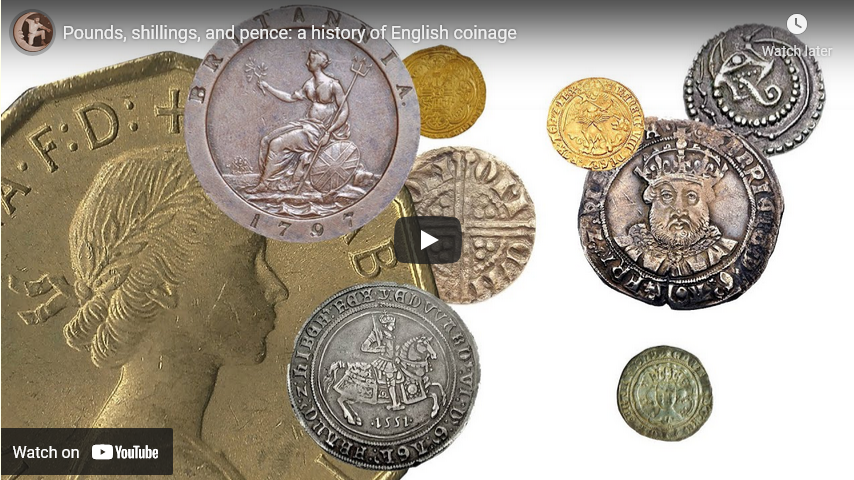
Pounds, shillings, and pence: a history of English coinage
Lindybeige
Published 18 Dec 2020I talk for a bit the history of English coinage, and the problems of maintaining a good currency. Once or twice I might stray off topic, but I end with an explanation of why the system worked so well.
Picture credits:
40 librae weight
Martinvl, CC BY-SA 3.0 https://creativecommons.org/licenses/…, via Wikimedia CommonsSceat K series, and others
By Classical Numismatic Group, Inc. http://www.cngcoins.com, CC BY-SA 3.0, https://commons.wikimedia.org/w/index…William I penny, and Charles II crown
The Portable Antiquities Scheme/ The Trustees of the British Museum, CC BY-SA 2.0 https://creativecommons.org/licenses/…, via Wikimedia CommonsBust of Charlemagne
By Beckstet – Own work, CC BY-SA 3.0, https://commons.wikimedia.org/w/index…Edward VI crown
By CNG – http://www.cngcoins.com/Coin.aspx?Coi…, CC BY-SA 3.0, https://commons.wikimedia.org/w/index…Charles II guinea
Gregory Edmund, CC BY-SA 4.0 https://creativecommons.org/licenses/…, via Wikimedia CommonsSupport me on Patreon: https://www.patreon.com/Lindybeige
Buy the music – the music played at the end of my videos is now available here: https://lindybeige.bandcamp.com/track…
Buy tat (merch):
https://outloudmerch.com/collections/…Lindybeige: a channel of archaeology, ancient and medieval warfare, rants, swing dance, travelogues, evolution, and whatever else occurs to me to make.
▼ Follow me…
Twitter: https://twitter.com/Lindybeige I may have some drivel to contribute to the Twittersphere, plus you get notice of uploads.
My website:
http://www.LloydianAspects.co.uk
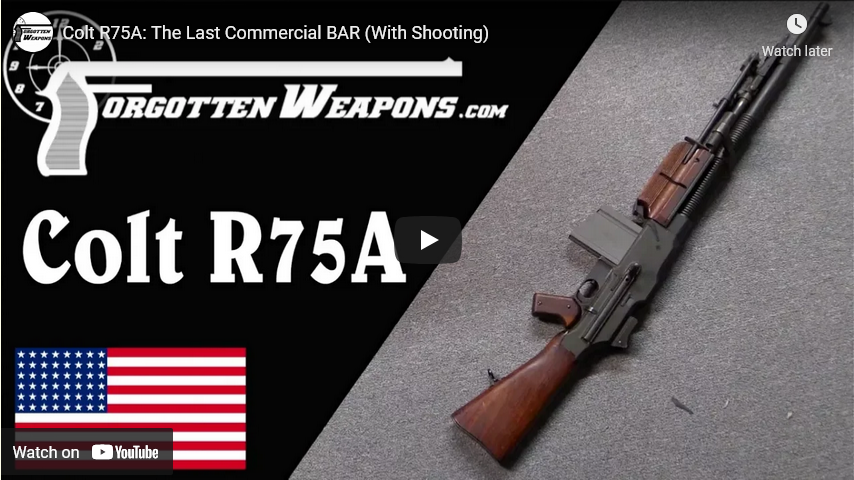
Colt R75A: The Last Commercial BAR (With Shooting)
Forgotten Weapons
Published 2 Mar 2018The R75A was the last version of Colt’s commercial BAR, with 832 made between August and December of 1942 for the Netherlands Purchasing Commission. It was a derivative of the commercial R75 BAR, with a pistol grip, magazine well cover, and ejection port cover. The R75A added on a folding bipod and a detachable barrel functionality, albeit not of the most elegant sort. To remove the barrel, one first used the lever under the muzzle to detach the gas block from the barrel by sliding it rearwards. Then a tool or cartridge tip was used to pry open the barrel locking lever at the front of the receiver, which then allowed the barrel to be rotated about 60 degrees to unlock its interrupted threads and remove it.
http://www.patreon.com/ForgottenWeapons
Cool Forgotten Weapons merch! http://shop.bbtv.com/collections/forg…
If you enjoy Forgotten Weapons, check out its sister channel, InRangeTV! http://www.youtube.com/InRangeTVShow
June 27, 2021
Fall Blau Starts … or Does it? – WW2 – 148 – June 27, 1942
World War Two
Published 26 Jun 2021Fall Blau, the huge Axis summer offensive in the Soviet Union, is supposed to being this, but is postponed to next. The smaller Operation Fridericus II does begin though, and what does Josef Stalin make of that and the intelligence he’s received? Meanwhile in North Africa, after the fall of Tobruk, the British 8th Army gets a leadership change, but Erwin Rommel is still on the move eastward into Egypt. Where will the Allies try to hold him? Half the world away, the Allies begin to establish a base at Milne Bay, New Guinea. It’s a start, a small one, but a start.
(more…)
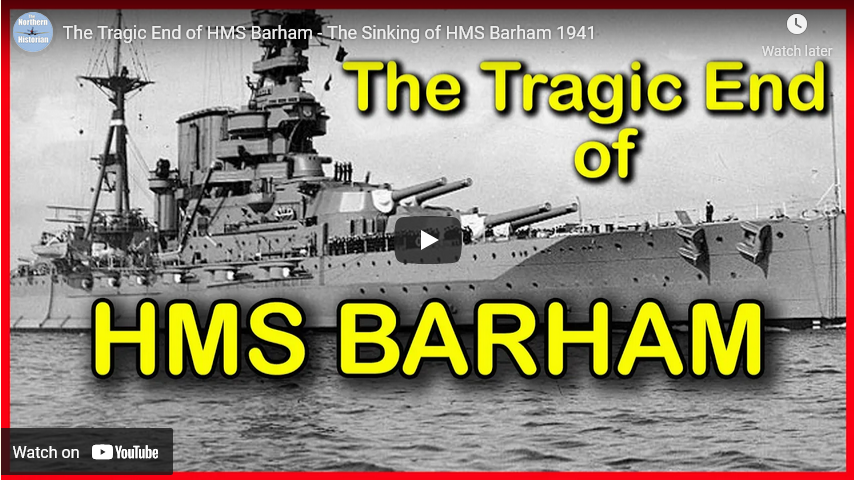
The Tragic End of HMS Barham – 25 November, 1941
The Northern Historian
Published 5 Mar 2021On the 25th of November 1941, the Royal Navy’s 1st Battle Squadron consisting of HMS Queen Elizabeth, HMS Valiant and HMS Barham along with eight destroyers were on a hunt in the central Mediterranean looking for Italian convoys.
Also on the hunt was a German U-Boat and their paths were on a collision course. A collision that would send HMS Barham to the floor of the Mediterranean Sea along with over 800 of her crew.HMS Barham had begun her service with the Royal Navy during World War 1 and played a role during the Battle of Jutland.
Following World War 1, HMS Barham had several refits and operated in the Atlantic Fleet and the Mediterranean Fleet during the inter-war years.
During World War 2, HMS Barham took part in the the Battle of Dakar before taking part in escort convoys in the Mediterranean.
In November of 1941, during an escort mission, HMS Barham was attacked by U Boat U-331 under the command of Hans-Diedrich von Tiesenhausen.
The attack caused a huge explosion in her magazine and rapidly sank, killing over 800 men.
QotD: Being right at the wrong time
There was never a good time, for example, to be anti-communist. Those who early warned of the dangers of bolshevism were regarded as lacking in compassion for the suffering of the masses under tsarism, as well as lacking the necessary imagination to “build” a better world. Then came the phase of denial of the crimes of communism, when to base one’s anti-communism on such phenomena as organised famine and the murder of millions was regarded as the malicious acceptance of ideologically-inspired lies and calumnies. When finally the catastrophic failure of communism could no longer be disguised, and all the supposed lies were acknowledged to have been true, to be anti-communist became tasteless in a different way: it was harping on pointlessly about what everyone had always known to be the case. The only good anti-communist was a mute anti-communist.
Anthony Daniels, “Authoritarianism in Cement and Steel”, Quadrant, 2018-11-04.
June 26, 2021
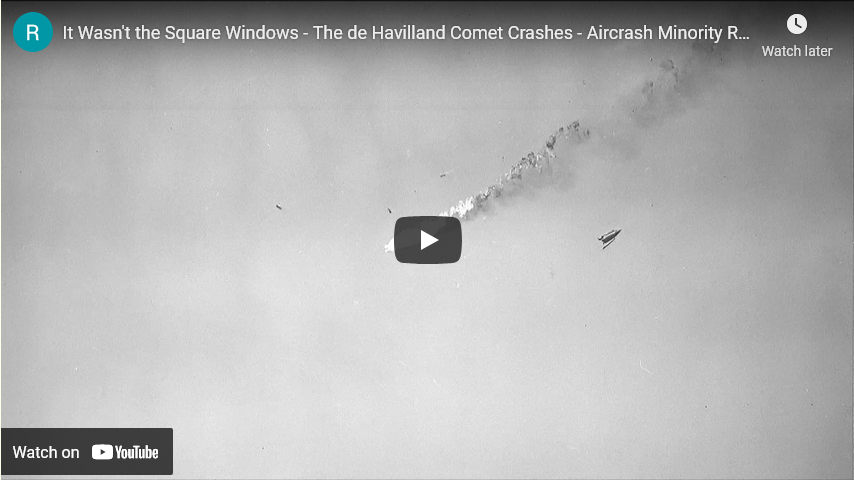
It Wasn’t the Square Windows – The de Havilland Comet Crashes – Aircrash Minority Report
Robert DuHamel
Published 13 Aug 2019You’ve heard about it. You’ve read about it. You’ve watched the television documentaries. The de Havilland Comet. Two mysterious crashes in the Mediterranean near Rome. 56 people dead. The planes exploded in mid-air when their pressure cabins ruptured at the corners of the square windows. A hard lesson learned about pressurized airliners, square windows, and metal fatigue. But you haven’t heard the whole story. Find out what really happened in this first video in the series Aircrash Minority Report.
Thumbnail: a Convair XF2Y-1 Sea Dart breaking up after exceeding the stress limit of the airframe. The crashes of the de Havilland Comets would look similar.
References:
FAA Lessons Learned: de Havilland DH-106 Comet: https://lessonslearned.faa.gov/ll_mai…
Failure-Analysis-Case-Studies-II – David R. H. Jones: https://vietnamwcm.files.wordpress.co…
QotD: Surfing the waves of resentment as a political career
This is to the great advantage of political entrepreneurs who surf resentment as surfers ride waves in Hawaii; and such resentment, the most damaging of all emotions, can easily become a self-reinforcing loop. It is not that past oppression or crime should be forgotten, much less denied, but that past achievements and change for the better must also be recognised, lest oppression and crime come to occupy minds entirely and distort decisions.
It is the same with injustice. It is important to oppose injustice, but just as important not to see it everywhere. To ascribe everything that you think undesirable to injustice may blind you to its real causes.
Theodore Dalrymple, “History and Self-Perpetuating Resentment”, The Iconoclast, 2021-03-20.
June 25, 2021
The Birth of the Manhattan Project – WW2 Special
World War Two
Published 24 Jun 2021When nuclear fission was discovered, scientists theorized it could be used in an atomic bomb. Thus, the American Army sets up one of the biggest research projects in history: The Manhattan Project.
(more…)
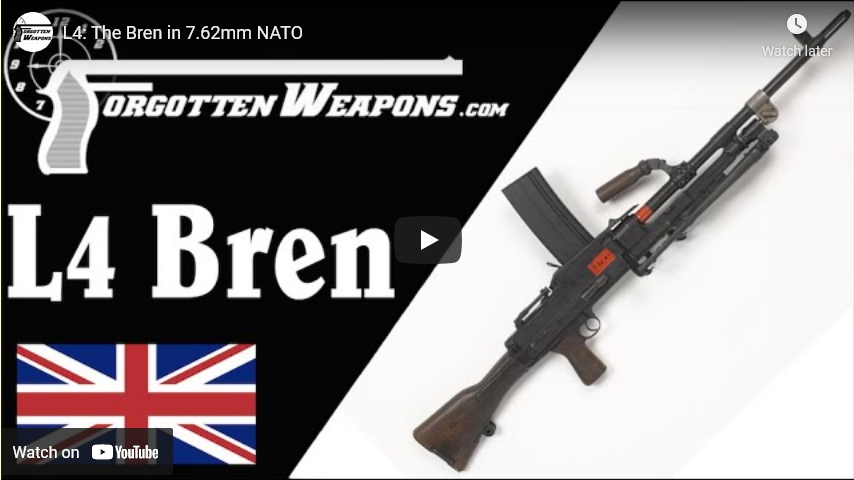
L4: The Bren in 7.62mm NATO
Forgotten Weapons
Published 10 Mar 2021http://www.patreon.com/ForgottenWeapons
https://www.floatplane.com/channel/Fo…
Cool Forgotten Weapons merch! http://shop.bbtv.com/collections/forg…
When the British military transitioned from the .303 British cartridge to 7.62mm NATO in the 1950s, it replaced the Enfield rifles with the new L1A1 SLR (the FAL) but retained the Bren gun as a support weapon. The Bren was updated to use 7.62mm, in a process more complicated than most people would think. Ultimately, only a few thousand L4 series Brens were made, as they were rather quickly supplanted by the FN MAG as a belt-fed support weapon.
The four different patterns of L4 are:
L4A1 – the initial pattern, without magazine supports
L4A2 – the Bren MkIII in 7.62mm with magazine supports
L4A3 – the Bren MkII in 7.62mm with magazine supports
L4A4 – the A2 and A3 patterns with chrome-lined barrelsContact:
Forgotten Weapons
6281 N. Oracle 36270
Tucson, AZ 85740
June 24, 2021
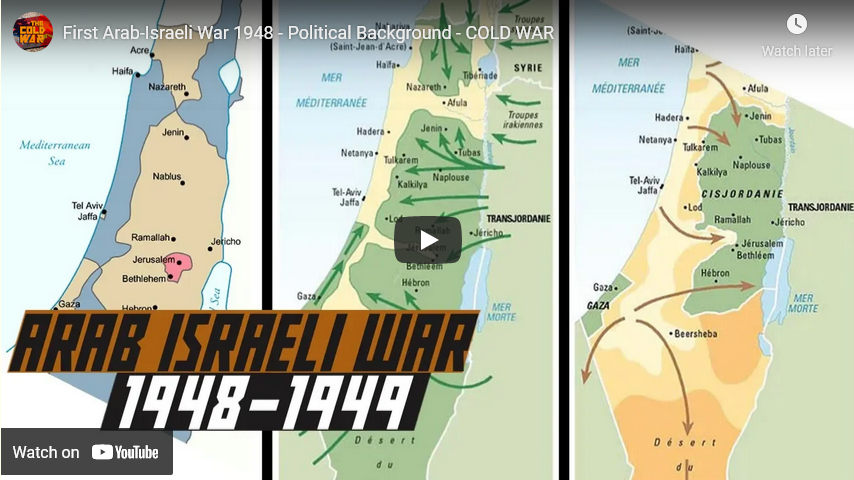
First Arab-Israeli War 1948 – Political Background – COLD WAR
The Cold War
Published 31 Aug 2019Our series on the history of the Cold War period continues with a documentary explaining the political background of the First Arab-Israeli War of 1948.
To learn about the military events of this conflict, go to the Kings and Generals channel
Consider supporting us on Patreon: https://www.patreon.com/thecoldwar
The Founder | Based on a True Story
The Cynical Historian
Published 27 Jul 2017This one is a contender for best historical film of 2016. The Founder is an amazing movie about the beginning of the McDonald’s food chain. Seriously, more films should take cues from this.
————————————————————
references:
http://www.historyvshollywood.com/ree…http://time.com/money/4602541/the-fou…
http://content.time.com/time/magazine…
https://www.bustle.com/p/how-accurate…
https://www.washingtonpost.com/entert…
https://www.theatlantic.com/entertain…
https://www.nytimes.com/2016/05/20/bu…
http://www.abc.net.au/news/2016-11-24…
http://www.cbsnews.com/news/the-real-…
https://en.wikipedia.org/wiki/Ray_Kroc
https://en.wikipedia.org/wiki/Richard…
————————————————————
contribute to my Patreon:
https://www.patreon.com/CynicalHistorianLET’S CONNECT:
https://twitter.com/Cynical_History
————————————————————
Wiki:
The Founder is a 2016 American biographical drama film directed by John Lee Hancock and written by Robert Siegel. The film stars Michael Keaton as businessman Ray Kroc, and portrays the story of his creation of the McDonald’s fast food chain. Nick Offerman and John Carroll Lynch co-star as McDonald’s founders Richard and Maurice McDonald.The film premiered at Arclight Hollywood on December 7, 2016 and was released in the United States on January 20, 2017, by The Weinstein Company. It grossed $23 million worldwide and received generally positive reviews from critics, with praise for Keaton’s performance.
————————————————————
Hashtags: #History #TheFounder #McDonalds #Review #BasedOnATrueStory #RayKroc

QotD: The fantasy world of Canadian geopolitical posturing
Yet for all the reflexive anti-Americanism that has been the meat and mead of Canadian nationalism, Canada’s leadership class has usually been pretty good about understanding who is in charge. Over the course of the 20th century, from the Ogdensburg agreement of 1940 and the post-war establishment of NORAD to the Free Trade Agreement of 1988, we cemented that reality with a defence and economic alliance.
Paradoxically, what this continental defence and economic security arrangement has given us is the opportunity to let our internationalist pretensions run wild. One of the weirdest things about Canada is the extent to which we like to frame our place in the world in a-geographic terms. We imagine that we are as threatened as anyone by the mix of post-Cold War failed states, opportunistic terrorism, regional authoritarianism, and humanitarian disasters. By the same token, we like to presume that we are as well-positioned as any other country to do something about all of this.
As the dean of Canadian defence policy Kim Nossal points out in a recent paper, this a-geographic security fantasy is reflected in the official defence reviews that Canadian governments have released since the 1990s. Or take, for example, the 2017 Liberal policy statement, entitled Strong, Secure, Engaged, which rejects the idea that Canada’s privileged geographic location mitigates these global threats for us. As Nossal concludes, when you look at how Canadian governments actually talk about our security situation, you get little sense that, thanks to the Americans, Canada occupies “one of the safest spaces in contemporary global politics.”
You can see the logical leaps, then.
Once you’ve convinced yourself that Canada’s security is disconnected from the geographical imperative of the American security guarantee, it’s only a few steps to the conclusion that who we choose as our global strategic partner is actually a meaningful choice. And if it is true, as China’s president Xi Jinping has claimed, that the East is on the rise and the West is in decline, then why not throw your lot in with the new big dog on the block?
Andrew Potter, “Hedging our bets with China was a mistake”, The Line, 2021-03-23.
June 23, 2021
The RAF and Luftwaffe Bombers of Western Europe – WW2 Special
World War Two
PUblished 22 Jun 2021What aircraft are being sent out by commanders like Hermann Göring and Arthur Harris to blitz and firebomb enemy cities? Watch the video to learn the specs of the Handley Page Halifax, Avro Lancaster, Junkers Ju-88, Dornier Do-17, Dornier Do-217, and Heinkel He-111 as they fly in their respective 1,000 Bomber Raids and Baedeker Blitz.
(more…)
Tank Chats #112 | Churchill Mk I and II | The Tank Museum
The Tank Museum
Published 4 Dec 2020Tank Museum Historian David Fletcher discusses the British Second World War Churchill Mark I, the very first Churchill, as well as its successor, the Mark II. This chat also covers the development of the A20 prototype and how this became the production Mark I variant. The Churchill displayed is actually a Mark II made to look like a Mark I, and is the oldest surviving Churchill in the UK.
(more…)


