Quotulatiousness

May 1, 2026

Spain joins the awkward squad

Filed under: Europe, Government, Media, Politics, Russia — Tags: , , , , , , — Nicholas @ 03:00

At The Conservative Woman, Bepi Pezzulli outlines a few ways that the Spanish government is moving in quite different directions than their NATO allies and fellow EU members:

Torre del Oro (Tower of Gold) – Calle Almirante Lobo, Seville – Spanish flag” by ell brown is licensed under CC BY-SA 2.0 .

Spain’s Prime Minister Pedro Sánchez wants the privileges of alliance without the duties of one. Madrid remains in Nato, hosts critical American military infrastructure, and speaks the language of Atlantic solidarity – but only when convenient. On the central strategic questions of the age – Russia, Israel, and the wider Western posture in the Mediterranean – it increasingly behaves like a spoiler. What is troubling is that Spain is not merely posturing: it is rewriting its entire conception of statecraft, treating alliance as a shield, hostility as leverage, and strategic ambiguity as a governing doctrine.

When Washington needed alignment, Sánchez offered obstruction. When Israel faced existential war, Madrid offered moral lectures. When the West sought energy discipline against Moscow, Spain found room for Russian gas. All while preserving the old imperial obsession with Gibraltar and extracting advantages from London over the Rock.

Spain has discovered the pleasures of consequence-free hostility. That needs to end.

Anti-Americanism with diplomatic immunity

Sánchez has carefully cultivated the old European left’s anti-American reflexes: Nato when subsidised, moral neutrality when sacrifice is required. His government publicly resisted support for American military operations linked to Iran escalation and signalled clear reluctance to facilitate use of Spanish bases such as Rota and Morón for operations that might implicate Madrid politically. The message was unmistakable: American security guarantees are welcome but strategic co-operation is negotiable. The rhetoric matched the policy. “No to war” was not merely a slogan for domestic consumption. Sánchez is deliberately positioning Spain as the righteous dissenter against Washington’s harder strategic line.

At the same time, Spain maintained substantial imports of Russian gas well into the European sanctions era. While pipeline politics consumed Brussels, Madrid benefited from a convenient moral distinction: condemning Moscow loudly while continuing commercial accommodation where useful. The formal sanctions architecture left open some loopholes, and Spain was happy to live inside them.

An ally that profits from ambiguity while others bear the strategic burden is not an ally in the full sense. As US War Secretary Pete Hegseth noted, “An alliance cannot be ironclad if in reality or perception it is seen as one-sided”.

From criticism of Israel to open diplomatic hostility

On Israel, Sánchez has moved beyond criticism into active diplomatic confrontation. Recognition of Palestine was presented as humanitarian principle. In practice, it rewarded maximalism at the worst possible moment. Madrid helped transform October 7 from a terrorist massacre demanding strategic clarity into another European seminar on Israeli restraint. Spain became one of the loudest governmental amplifiers of the anti-Zionist campaign in Western Europe. Ministers normalised rhetoric that blurred the distinction between criticism of Israeli policy and systematic delegitimisation of the Jewish state itself. Arms restrictions followed. Then diplomatic actions. Symbolism became policy.

Gibraltar: Madrid’s imperial nostalgia

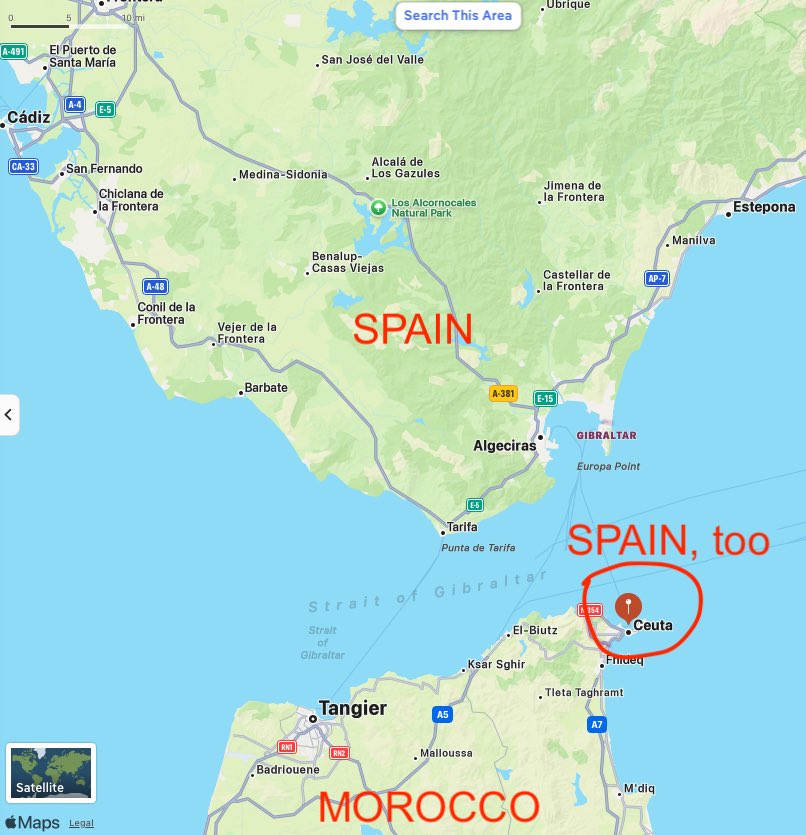
Spain’s sanctimony would be easier to tolerate if it were not paired with its own colonial fixation. For decades, Madrid has pursued sovereignty claims over Gibraltar with theological persistence. Brexit offered a fresh opening. With Brussels behind it, Spain extracted a remarkably favourable negotiating posture over the future relationship of the Rock with both the European Union and the United Kingdom. London, in the hands of the most Europhile government in recent history, conceded far more than many British voters imagined when they heard the word “sovereignty”. Spain never abandoned the long game. It simply learned to play it through institutions until a weaker opponent appeared. Madrid insists Gibraltar is unfinished history. Fair enough: is it not time then to conclude the same about Ceuta and Melilla?

QotD: Socialism

Filed under: Economics, Government, Quotations — Tags: , — Nicholas @ 01:00

The prime fact of human nature which the wise statesman must take into account is that men will exert themselves for their own benefit, or for that of their families, regarded as an extension of themselves, as they will exert themselves for no one else; and, in particular, men are not prepared to work for the state or for any other collectivity as they will work for themselves or for their families … If it is made impossible for him to advance himself or his family by his exertions, the average man will cease to exert himself. No motive comparable in its effects … has yet been known in the history of the human race … Because socialism expects the average man to exert himself for the state as he would for himself, … the socialist is doomed to disappointment when he comes to put his ideas into practice.

Ivor Thomas, The Socialist Tragedy, 1951.

April 29, 2026

Carney elbows out Canadian veterans to support an American company

Filed under: Business, Cancon, Government, Military, USA — Tags: , , — Nicholas @ 03:00

On his Substack, Brian Lilley points out another glaring inconsistency between Prime Minister Mark Carney’s rah-rah pro-Canadian rhetoric and his anti-Canadian actions:

This story should outrage everyone, regardless of political stripe.

But considering the positions taken by progressive Liberals in this country concerning Donald Trump, it should really outrage them. Sadly, like with Trudeau or whichever politician people seem to support these days, Carney’s backers won’t see the error of his ways.

When I was a young army cadet, the first person I would see checking into the James Street Armouries in Hamilton — now known as the John Weir Foote Armoury after a ceremony I was part of in 1990 — well, the first person I would see would be the Commissionaire. Back in the mid-80s these were mostly people who were veterans of the Korean War or our peacekeeping missions who were now charged with providing security at federal buildings.

Founded in 1925 to give meaningful employment to veterans of the First World War, the Corps of Commissionaires has been providing security services at federal buildings, and others, for just over 100 years. Since shortly after the Second World War, the Commissionaires have had a special relationship with the federal government when it comes to providing security.

Just recently, the Carney government — the Elbows Up and Canada Strong folks — ended the arrangement that gave the Commissionaires first right of refusal on security at federal department buildings. They ended the agreement with the not-for-profit organization that is still the biggest employer of veterans in the country at the behest of a global company scooping up security contracts from the Trump admin including ICE detention centres like Alligator Alcatraz.

You can love Trump or hate him but don’t tell me you are Elbows Up, that we are experiencing a rupture, that the old relationship is over, that being close to the Americans is dangerous and then do this.

I detailed it all in my latest column for the Toronto Sun including who was behind this, how it went down, and why it is outrageous.

From the Commissionaires website:

The Canadian Corps of Commissionaires was eventually founded in 1925, specifically to employ Canadian veterans of the First World War. We were initially established in Montreal, then Toronto and Vancouver, to look after these men and women and provide them with transitional and permanent jobs, primarily in the security field. The Right Honourable John Buchan, Governor General of Canada, became the Corps’ first patron in 1937. Viceregal patronage has been an 81-year tradition since then.

In the early years, we mostly provided guarding services for government institutions. From 1925 to 1948, Commissionaires expanded throughout Canada.

In 1950, with the opening of the St. John’s, Newfoundland division, Commissionaires was operating services from coast to coast.

By 1982, Commissionaires exceeded 10,000 employees.

April 28, 2026

Is the Secret Service fit for purpose?

Filed under: Government, Media, Politics, USA — Tags: , , , , — Nicholas @ 04:00

I haven’t been following the latest attempt to assassinate the President, but Mark Steyn apparently has been (even though he’s touring Ukraine at the moment):

By contrast Washington is ever more like Churchill’s riddle wrapped in a mystery inside an enigma. My conscience is clear. Almost two years ago, it was perfectly obvious to anyone who examined the facts on the ground in Butler, Pennsylvania that the United States Secret Service had an institutionalised level of incompetence and/or malevolence that was assisting those many persons anxious to kill Trump to do so. Even as mere incompetence, it is murderously so: Corey Comperatore is dead, and everyone in Butler and DC who enabled his death still has a job.

So immediately afterwards I stated the obvious:

Instead, the 47th President promoted the chap in charge in Butler that day to head of the entire Secret Service: one Sean Curran. And, on Saturday night, Mr Curran allowed the same thing that happened at Butler to happen all over again. On the incompetence front, look again at the would-be assassin breaching security with his brilliant cunning plan, requiring months of painstaking training and preparation and attention to detail, of simply running through the checkpoint:

The chaps at Kharkiv railway station are more alert than those guys. Yet setting aside the under-performance of the individual agents — close enough for government work, it seems — this ingenious manoeuvre became a critical issue mainly because, exactly as at Butler, the Secret Service had taken the decision to shrink the perimeter of the “secure zone”. In Islamabad the other day, the Pakistanis were hopeful that Vance and the Iranians would be jetting in for another round of face-to-face negotiations. So they took the precaution of ordering all the other guests out of the designated hotel: the Tehran delegation, in particular, is concerned that Netanyahu will off them while they’re in town by having Mr Moshe Wetwork check in to the junior suite on the fifth floor.

No such worries at the grisly Washington Hilton — even though half the country would be cheering on Mr Wetwork. On ABC TV, Jimmy Kimmel threw a Thursday-night “alternative” White House Correspondents Dinner at which he saluted the First Lady:

    You have the glow of an expectant widow.

I have never knowingly watched Jimmy Kimmel or Jimmy Fallon or Jimmy Colbert, whichever is which. But I’m old enough to remember when Johnny Carson in 1981 told Nancy Reagan and indeed when Steve Allen in 1901 told Ida McKinley that they had the glow of expectant widows.

Oh, wait, no. Neither Johnny nor Steve did that. Because, back in 1981 and 1901, America still had sufficient of what the late Roger Scruton called the “pre-political we” to recognise that assassination fantasies are not helpful to a functioning polity.

Alas, the role that in other western nations has to be outsourced to Muslim rape gangs and low-IQ child-stabbers and sundry novelty demographics is in America performed by showbiz bigshots, NPR ladies d’un certain âge, and pajama boys with a quarter mil in college debt.

That, however, is a given. What ought not to be a given is that the Secret Service is on their side. At Butler, Mr Curran and his colleagues shrunk the perimeter so that it excluded an easily accessible roof with a clear line to Trump’s head. At the Washington Hilton, Mr Curran and his colleagues shrunk the perimeter to the event room and its immediate approach. In the usual tedious “manifesto”, the would-be killer nevertheless noted that the security was so “insanely” bad they must be “pranking” him:

    What the hell is the Secret Service doing..?

    Like, I expected security cameras at every bend, bugged hotel rooms, armed agents every 10 feet, metal detectors out the wazoo.

    What I got (who knows, maybe they’re pranking me!) is nothing.

    No damn security.

    Not in transport.

    Not in the hotel.

    Not in the event.

    Like, the one thing that I immediately noticed walking into the hotel is the sense of arrogance. I walk in with multiple weapons and not a single person there considers the possibility that I could be a threat.

    The security at the event is all outside, focused on protestors and current arrivals, because apparently no one thought about what happens if someone checks in the day before.

    Like, this level of incompetence is insane, and I very sincerely hope it’s corrected by the time this country gets actually competent leadership again.

    Like, if I was an Iranian agent, instead of an American citizen, I could have brought a damn Ma Deuce in here and no one would have noticed shit.

    Actually insane.

So, once he’d run through the security line, he was able to get into the same men’s room that the entire cabinet had to use. Had RFK or Pete Hegseth felt the urge before settling in for a night of long speeches, the headlines this weekend would have been very different. Half the presidential line of succession was in there. That’s what the geopolitical types call, if you remember, a “decapitation strategy”. Except you don’t need a bunker buster, just some California doofus willing to take a run at the checkpoint — and bingo, whoever the Secretary of the Interior is winds up like some z-list ayatollah.

On a lighter note, Daniel Jupp imagines what Trump-haters might be thinking in the wake of another progressive would-be assassin’s attempt:

MAINSTREAM media and politicians throughout the Western world who insist on calling Trump a fascist, a dictator, a threat to democracy, and literally Hitler, declared a three-hour moratorium on insulting him before they raced to try to escape any responsibility.

“Our thoughts and prayers go out to President Trump and his family while we write an article claiming the assassin is a Republican and it’s actually Trump’s fault”, announced the BBC. “Our viewers should be reassured that we ARE doctoring footage.”

“Violence has no place in politics when it fails”, Ed Davey, leader of Britain’s Liberal Democrats intoned.

Religious leaders condemned the rise of populism and white supremacy that fuels such attacks.

“We must have unity, Christian compassion even for those who don’t deserve it, and come together in kindness. He who lives by the sword dies by the sword at some point”, Pope Leo wisely reflected.

“Where is this violence coming from?” wailed the Associated Press. The news agency issued a statement reminding people that assassinations should be attempted only in settings where misses, ricochets and other deaths could not possibly include any of their journalists. “A Correspondents’ Dinner is simply not the place for this sort of thing.”

April 27, 2026

Abstract Expressionism “… wasn’t even real art … just a psyop”

Filed under: Government, History, Media, USA — Tags: , , , , , , , — Nicholas @ 04:00

When I first got married, we had several friends in the Toronto arts community, and while I enjoyed their company, for the most part I heartily disliked their art. Everything seemed to be consciously designed to be unpleasant to look at: jagged, rusty metallic edges, weird proportions, bilious colour choices, and so on. I was assured more than once that this was what “art” was meant to be: if it didn’t evince a strong reaction, it wasn’t doing its job. On Substack, Celina discusses the claim that modern art was actually a psyop sponsored by, inter alia the CIA:

Abstract Expressionism is arguably the most famous American art movement of the 20th century.

There’s a 95% chance you’ve seen a painting by Jackson Pollock, Willem de Kooning, or Mark Rothko, even if you didn’t know their names.

And if you’ve spent any time online, you’ve probably heard the rumours:

They were funded by the CIA.
It was all propaganda.
It wasn’t even real art … just a psyop.

That sounds absurd.

Except … there is a large, large grain of truth behind it.

Jackson Pollock, Number 1A, 1948, The Museum of Modern Art, New York, NY, USA.

Manufacturing Consent

After the First World War, the journalist Walter Lippmann helped pioneer the view that the control of information and, more importantly, the control of public response, had become essential to the stability of modern democracy. This was especially true in moments when the state required certain reactions from the public, as it did during wartime. Lippmann, who famously popularised the phrase “the manufacture of consent“, argued that representative government could no longer function without the deliberate use of mass communication in the supposed service of the public good:

    That the manufacture of consent is capable of great refinements, no one, I think, denies. The creation of consent is a very old act, which was supposed to have died out with the appearance of democracy, but it has not died out. It has, in fact, improved enormously in technique, because it is now based on analysis rather than on rule of thumb. And so, as a result of psychological research, coupled with the modern means of communication, the practice of democracy has turned a corner. A revolution is taking place, infinitely more significant than any shifting of economic power.1

Lippmann’s ideas about the “manufacture of consent” would not remain theoretical for long. After the Second World War, they were tested on an unprecedented scale by the American establishment.

Poets, philosophers, critics, and intellectuals became participants in it. They were recruited, funded, and mobilised to form the cultural front line of a struggle against the Soviet Union. But this was not a conventional war. There were no trenches, no battlefields, no declarations.

Instead, it was a war of ideas, fought in publishing houses, universities, art galleries, and across the airwaves. At the centre of this effort stood the Congress for Cultural Freedom.

And its story reveals just how far a democracy was willing to go in shaping what its citizens and the world would come to believe.


  1. Lippmann, W. (1922). Public opinion. Harcourt, Brace and Company.

April 26, 2026

South Korea’s switch from an exporting heavyweight to a cultural juggernaut

Filed under: Asia, Economics, Government, Media — Tags: , , , , — Nicholas @ 03:00

In the latest SHuSH newsletter, Kenneth Whyte looks at the importance of a South Korean government report to changing the structure of the South Korean economy and making the country far more visible culturally on the world stage:

South Korea, in the latter half of the twentieth century, was building its economy almost entirely by exporting manufactured goods, everything from home electronics to ships to automobiles. That changed, as the story goes, when the country’s Presidential Advisory Board on Science and Technology released a report on digital technology in May 1994. It noted that a single Hollywood film, Jurassic Park, with its computer-generated dinosaurs, generated the same amount of foreign sales as 1.5 million Hyundai cars. The darling of Korean industry, Hyundai was exporting 640,000 cars a year in 1994. So one film was worth more than two years of heavy industrial production requiring enormous plant, equipment, capital investment.

The report stunned Koreans — “literally sent shock waves across the country”, writes Doobo Shim, a Seoul-based professor of media and communication. At the time, culture and entertainment were viewed as ephemeral and unlikely to contribute to Korea’s core mission of “improving the material conditions of the people”. The country decided it needed to change its game in order to thrive in the twenty-first century economy.

It wasn’t a straight line from the Presidential Advisory Report to Parasite, Squid Game, BTS, Blackpink, and Han Kang’s Nobel prize, but it’s straighter than you might think. Seoul is now a top-five world cultural center, and arguably top two if we’re talking pop culture and anything that appeals to under-thirties. How it happened tells us a great deal about Canada’s relative failure to develop home-grown cultural and entertainment industries.

The Presidential Advisory Board report alone did not alter Korea’s strategy. The country was starting from way behind. First came democratic reforms and media deregulation. That birthed new commercial TV channels and a variety of independent publications. Now with an independent (from government) domestic media sector, Korea tried to protect it by limiting the amount of foreign cultural product in its market. That didn’t work. In 1993, 90 of the top 100 video rentals in the country were from Hollywood; only five were domestic. Sound familiar, Canada?

Protection wasn’t going to work, anyway. Another factor at play was the Uruguay Round, an international accord negotiated between 1986-1994 that decisively liberalized the global economy, forcing all 123 signatory countries to open their markets for a vast range of goods and services, including communications services and entertainment product. It was clear to Korea that efforts to protect heritage and culture by shutting out the world had no future. It needed to upgrade its efforts in the cultural sphere if it wanted to avoid being swamped by content from multinational companies, and not just American ones. Satellite television services out of Japan and Hong Kong were already making inroads in Korea.

Another thing: Korea had noticed that Japan, its nearest rival in the home electronics sector, was making investments in content. Sony had bought Columbia pictures and CBS records. It was the nineties, the age of synergy, or vertical integration. Companies making devices — video players, portable music players — also wanted to own what played on them. Korean firms such as Samsung and Daewoo, makers of TVs and VCRs, felt a need to be vertically integrated, too.

So the Presidential Advisory Report landed on fertile ground. Korean businesses felt an imperative to pay attention to content. The Korean government felt itself under siege from foreign cultural and entertainment product. “Gone are the days”, said one expert interviewed in the newspaper Dong-A Ilbo, “when the government could appeal to the people to watch only Korean programs out of patriotism”.

All that notwithstanding, the report mostly resonated because it presented culture as an opportunity. It asked Koreans to recognize the potential of arts and entertainment to improve the material conditions of the people. Instead of resisting the emerging global marketplace, the power of multinational corporations and platforms, and the free movement of talent, it needed to master this new system, compete commercially, and take Korean culture to the world.

April 25, 2026

Can a genuine Canadian launch capability grow from a sketchy concrete pad in Nova Scotia?

Filed under: Cancon, Government, Space — Tags: , , — Nicholas @ 05:00

Along with many others, I was boggled to hear this week that the Canadian government was spending $20 million per year to lease a “launch facility” — photos show a pretty rudimentary concrete pad surrounded by gravel and not much else — which the Ukraine-connected lessor itself is leasing from the Nova Scotia for $13,500 per year. John Carter is somewhat more optimistic than I am that there’s a path from the dubious patch of land to a real maple-flavoured space program:

Guysborough, Nova Scotia, site of the MLS “spaceport”
Image from Google Maps.

It would be a gross exaggeration to say that Canada doesn’t have a space program. The launch of the Alouette 1 satellite in 1962 made Canada the fourth country to place an object into orbit around the Earth. Astronaut Marc Garneau nearly became the leader of Canada’s Liberal Party in 2012 (yes, we could have had an astronaut prime minister … Canadians voted for a nepo baby instead); astronaut Chris Hadfield is a minor celebrity in Canada; Jeremy Hansen became the first Canadian to visit the Moon a few weeks ago. Various iterations of the Canadarm have been fixtures of Space Shuttle missions and the International Space Station for decades. However, Canada does not yet have its own, native launch capability. The Canadian Space Agency acts as an appendage of NASA, with Canadian astronauts and satellites hitching rides on American rockets.

The announcement that the Canadian government is taking steps to develop a Canadian launch capacity has roused me from my uneasy slumber of the last several weeks, and I have awakened in a cranky mood. Several aspects of this story have annoyed me, both those relating to the government’s execution, and those emerging from the reaction from influencers whose justified skepticism of Ottawa’s intentions is intersecting with their poor understanding of space in a fashion that is leading them to beclown themselves.

The story that got everyone’s attention was a two hundred million dollar lease Ottawa signed with Maritime Launch Services for a spaceport in Nova Scotia, Canada’s largest Atlantic province, covering ten years of operations at twenty million dollars per year. The spaceport is, at the moment, essentially just a concrete pad at the end a gravel road, with no other apparent infrastructure.

The “spaceport”
Image from Postcards from Barsoom

There are several genuine reasons for serious concern with this, which have been detailed by a Nova Scotian NIMBY who’s been annoyed by MLS for several years now. MLS is a Ukrainian-American company whose original business model was to design, manufacture, and launch the Ukrainian-built Cyclone 4M, which it has never successfully done. To be fair, this effort was interrupted by the Ukrainian war, which for obvious reasons redirected Ukrainian rocketry to military production. However, it’s also worth emphasizing that MLS is an offshoot of the Ukrainian Space Agency, which is every bit as corrupt as you’d expect. The Ukrainian Space Agency has been mired in several expensive scandals over the years; one of them resulted in the theft of $10 million from Export Development Canada.

A former Liberal Party premier, Stephen McNeil, sits on MLS’s advisory board, which could be quite natural and could also be an indication of bog-standard conflict of interest.

The company’s finances are rather suspicious. It has posted operating losses of several million dollars a year, with the exception of 2025 when it lost $47 million1; revenue in 2025 was less than $15,000, and in 2024 it was zero. The incredible 2025 cash burn was apparently due to MLS acquiring Spaceport Canada. The company’s normal losses seem to be mostly due to executive compensation for its small roster of employees: the CEO and CFO between them rake in about a million dollars. This is despite the company not apparently actually have done anything yet. Other expenses include paying the Ukrainians for technical documentation for a launch vehicle MLS had already abandoned, and debt service on funding advanced by investors.

In 2024, MLS abandoned the scheme to launch Ukrainian rockets and pivoted to an “airport model”, the idea being that they would make money by charging launch service providers for the use of their spaceport. In 2025 there were precisely two launches from MLS’s concrete pad. Both of them were suborbital. One of them was a student-designed rocket from Toronto’s York University.

Even more absurdly, MLS’s concrete pad is on Crown land, which the company rents from Nova Scotia for $13,500 a year. This then looks like Ottawa renting its own land for $20 million a year.

In yet another suspicious-looking move, one of MLS’s chief financiers, Sasha Jacob, sold millions of shares immediately after the deal was announced and the stock price 10x’d; he then exercised stock options to replenish his position at below-market rates, thereby maintaining interest in the company while pocketing a couple million dollars.

All of this looks a whole lot like one more public-private partnership grift in which press releases and public relations materials project a hologram of visionary development, while the funds disappear into a complex web of regulatory compliance, stock buybacks, environmental impact studies, and executive salaries, without anything ever actually being built. This is a scam in which Canada’s Laurentian elites have learned to excel. It turns out that it is much easier, and far more profitable, to get paid for something you’re pretending to do instead of actually doing it; when the inevitable questions get asked, you simply throw up your hands and complain of unexpected engineering difficulties, tortuous regulatory pathways, or other factors beyond your control. None of the people involved – not government ministers, not government bureaucrats, not their private-sector partners – care one bit whether any given project succeeds, because they get paid by the taxpayer and the debt taken out in the taxpayer’s name regardless of outcomes. It is my working assumption that there is nothing more to this supposed space program than this. We are governed by theatre kids dancing to the tune of the Music Man, and none of them know anything about doing anything real.

“… as the review of USMCA approaches. Dairy is once again at the center of the storm”

Filed under: Business, Cancon, Food, Government, Politics, USA — Tags: , , — Nicholas @ 03:00

Dr. Sylvain Charlebois on the strong hints the US government has been dropping that Canada’s stance on our restrictive dairy cartel — euphemistically referred to as “supply management” — is going to be a key negotiating point in the upcoming USMCA trade negotiations:

The warning came quietly, but it was unmistakable. According to a Reuters report carried by The Western Producer, U.S. Trade Representative Jamieson Greer made it clear: Canada’s dairy dispute will be resolved one of two ways, through negotiation or through enforcement.

That is not diplomatic nuance. That is a choice.

And it comes at a delicate moment, as the review of USMCA approaches. Dairy is once again at the center of the storm. It always is. Canada’s supply management system, long defended domestically, continues to frustrate U.S. officials over limited market access. As reported by Reuters, tensions remain high around how Canada administers its tariff-rate quotas.

None of this is new. What is new is the tone.

Recent commentary out of the United States, including sharp criticisms aimed at Mark Carney, reflects a growing impatience. Some of it is political theatre. But some of it signals something more consequential, a willingness to move from negotiation to enforcement if progress stalls.

In food trade, that shift matters.

Canada’s agri-food economy is deeply integrated with the United States. This is not a casual trading relationship. It is structural. Supply chains cross the border multiple times before products reach consumers. Roughly three-quarters of Canadian agri-food exports still head south. You do not casually antagonize the market that anchors your value chain.

The critique coming from voices like Brian Switzer, however undiplomatic, boils down to a familiar expectation. Canada should act like a predictable partner. Not subordinate, but steady. When that perception erodes, the consequences are rarely immediate. They emerge later, in tighter border controls, procurement shifts, or dispute panels.

And eventually, in prices.

April 23, 2026

The SPLC in the news

Filed under: Government, Law, Media, Politics, USA — Tags: , , , , , — Nicholas @ 05:00

The Southern Poverty Law Centre (SPLC) is in the news this week for unusual reasons — not SPLC lawyers levelling accusations against individuals, elected officials, or corporate leaders, but the SPLC itself being hit with very serious charges from the US DoJ:

For nearly a decade, the 2017 “Unite the Right” rally in Charlottesville has been portrayed as a defining moral crisis of the Trump era. Across the media and in political speeches, Charlottesville became shorthand for “Trump-era” hate. In his 2019 campaign launch, Joe Biden called Charlottesville “a defining moment for this nation”, describing how “Klansmen and white supremacists and neo-Nazis” marched bearing “the fangs of racism”.1

He condemned President Trump’s “very fine people on both sides” comment. In Biden’s words, the president’s equivocation “assigned a moral equivalence between those spreading hate and those with the courage to stand against it”, and thus signalled a threat “unlike any I had ever seen in my lifetime”.2 Polling at the time showed the public broadly agreed, nearly 60% of voters said Trump had “encouraged” white supremacists by his response, and a majority disapproved of how he handled Charlottesville.3 In short, Democrats and sympathetic media used Charlottesville as a concrete proof-point that Trump had unleashed a racial crisis, and that the country was in “a battle for the soul of this nation”.4 This narrative was presented earnestly by them: far-right violence in Charlottesville would be a national wake-up call about racial hatred that, in their telling, demanded urgent political action.

The Indictment: SPLC Charged

Last week, a new development has upended that narrative. On April 21, 2026, the Department of Justice announced that an Alabama grand jury returned an 11-count indictment against the Southern Poverty Law Center (SPLC), the prominent civil-rights nonprofit best known for its “hate group” lists, charging it with wire fraud, bank fraud, and conspiracy to commit money laundering.5 The indictment alleges that from 2014 to 2023 the SPLC secretly funnelled more than $3 million in donated funds to individuals in violent extremist groups.6 For example, DOJ spokesmen say SPLC paid large sums to figures associated with the Ku Klux Klan, the neo-Nazi National Socialist Movement, the Aryan Nations and others. Crucially, prosecutors claim SPLC used covert methods: it opened bank accounts in the names of “fictitious entities” (with names like “Center Investigative Agency”, “Fox Photography”, and “Rare Books Warehouse”) to disguise payments to its paid informants. By routing donations through these shell accounts, SPLC allegedly hid the true destination of the funds. In effect, donors were told their money was helping to “dismantle” hate groups, but a portion of it was instead being diverted back to the leaders and organisers of those very groups, all while SPLC publicly denounced them.7

The indictment lays out telling examples. One SPLC “field source” reportedly received over $1 million between 2014 and 2023 while affiliated with the neo-Nazi National Alliance.8 Another informant was actually in the inner online circle that planned the Charlottesville rally itself: prosecutors say he “made racist postings” in that chat group and even “helped coordinate transportation” to the August 2017 march, all while being paid by SPLC.9 The DOJ press release quotes FBI Director Kash Patel, who bluntly said SPLC “lied to their donors, vowing to dismantle violent extremist groups” while “paying the leaders of these very extremist groups”.10 Acting Attorney General Todd Blanche similarly charged that “the SPLC is manufacturing extremism to justify its existence”, using donor money not to combat but to “stoke racial hatred”.11 DOJ officials argue that, if proven, SPLC’s actions amounted to an elaborate fraud: donors were intentionally misled, and false statements were made to banks to conceal the program. In sum, the indictment portrays SPLC as doing “the exact opposite” of its claimed mission, funding racial hate rather than fighting it. All of these details are, of course, allegations. The legal question at this stage is whether prosecutors can prove intent to defraud, but the charges alone lay bare a startling claim: that an organisation central to defining and fighting extremism may have been materially involved with it.


  1. https://www.washingtonpost.com/politics/2019/04/25/joe-biden-charlottesville-defines-trump-presidency/
  2. Ibid
  3. Ibid
  4. https://www.jta.org/2019/04/25/politics/biden-makes-trumps-charlottesville-reaction-the-center-of-his-campaign-launch/
  5. https://www.justice.gov/opa/pr/federal-grand-jury-charges-southern-poverty-law-center-wire-fraud-false-statements-and/
  6. https://www.northcountrypublicradio.org/news/npr/g-s1-118275/southern-poverty-law-center-indicted-on-federal-fraud-charges/
  7. https://abcnews.com/US/southern-poverty-law-center-facing-justice-department-probe/story/
  8. https://www.wunc.org/2026-04-21/southern-poverty-law-center-indicted-on-federal-fraud-charges/
  9. Ibid
  10. https://www.justice.gov/opa/pr/federal-grand-jury-charges-southern-poverty-law-center-wire-fraud-false-statements-and/
  11. https://abcnews.com/US/southern-poverty-law-center-facing-justice-department-probe/story/

On a lighter note, The Babylon Bee asks you to donate to the SPLC today to support a needy racist in your community.

They put out propaganda because it works

Filed under: Britain, Cancon, Government, History, WW1, WW2 — Tags: , , — Nicholas @ 04:00

I often find myself commenting on social media posts that the Canadian government’s direct subsidies to most of the mainstream media in Canada has created one of the most effective propaganda machines since 1930s Germany. “eLbOwS uP!” They keep doing it because it clearly is working fantastically well on a large enough share of Canadian voters that the polls (which may or may not be biased) keep touting that Dear Leader Carney and the Natural Governing Party are ever more popular. And most of the people consuming the propaganda message have their preferences re-inforced and the cycle starts again.

At Cracking Defence, Matthew Palmer discusses wartime propaganda during the 20th century, emphasizing that it’s the use to which it is put rather than the mechanism itself that has a moral value:

Propaganda is an absolute favourite subject of mine — probably not surprising considering that one of my roles in the military was psychological operations.1 Despite its very negative connotations thanks to the work of interwar writers like Frederick Ponsonby,2 propaganda really should be seen as a neutral term, perhaps best defined as “the deliberate attempt to persuade people to think and behave in a desired way”.3 Nor does it need to be state-driven; propaganda can come be generated from below as much as being driven top-down from the state or elites.

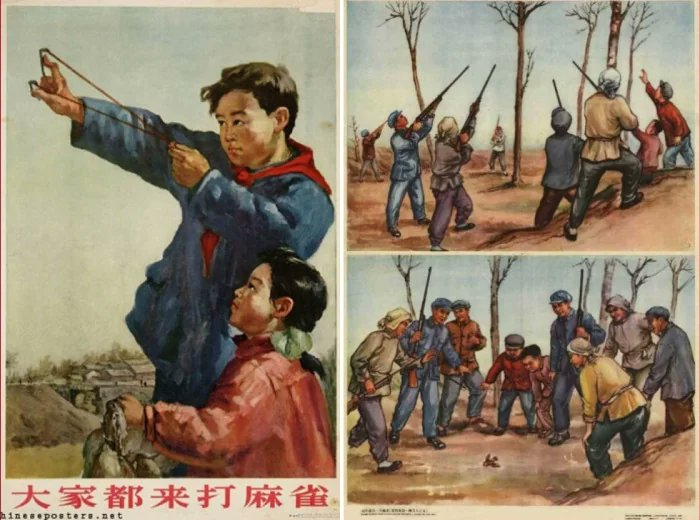
Some of the best propaganda comes out of wartime, and the First and Second World Wars were absolute goldmines. I also have a particular weakness for propaganda drawn up in early modernist and art deco styles, for which the first half of the 20th century was the high watermark. As such, here are a few of my all-time favourites for your delectation.4


Women of Britain Say — Go!

Women of Britain Say ‘Go!’
Copyright: © IWM. Original Source: http://www.iwm.org.uk/collections/item/object/14592

A true classic that has reverbrated through the ages. Despite First World War propaganda having the reputation of being crudely jingoistic, much of it was in fact consciously aware of the pain and sacrifice being endured by the warring population, and did not try to hide it. This one acknowledges the sacrifice undertaken by the women and children left behind, while the background reminds the viewer of the green and pleasant land of ‘old England’ that they are fighting for.

[…]


Canadiens, Suivez l’Exemple de Dollard des Ormeaux

Canadiens, Suivez l’Exemple de Dollard des Ormeaux [Canadians, Follow the Example of Dollard des Ormeaux] a depiction of Adam Dollard resisting an attack by Iroquois tribesmen. Dollard’s dead comrades lie at his feet.
Copyright: © IWM. Original Source: http://www.iwm.org.uk/collections/item/object/31027

I find this one intriguing, not because I think it is actually a brilliant poster but for what it tells you about historical context and how propaganda was often tailored explicitly for local sensibilities. While Canadian support for the Allies in the First World War was generally fierce, the major exception was Quebec, which saw relatively poor levels of recruitment for overseas service. As such, propaganda aimed at Quebecois often tapped deeply into local traditions, in this case the (extremely dodgy!) myth of Adam Dollard, venerated in the period as a Catholic martyr who died defending Quebec from native Iroquois.5

[…]


Together

Image courtesy of the IWM.

One can of course criticise the imperialism inherent in this poster, but I think it still works exceptionally well as a bold call for unity between the different nations of the British Empire. It shows how British propagandists took pains to highlight the Second World War as a global conflict against fascism.


  1. A job which, if I do say so myself, I was pretty bloody good at.
  2. Ponsonby wrote Falsehood in Wartime in which ironically he basically made up stories about British propagandists in a book supposedly about manufactured atrocity propaganda!
  3. Phillip Taylor, Munitions of the mind: A history of propaganda (Manchester University Press, 2013).
  4. I’m only going to present Allied propaganda. Because, frankly, fuck fascism.
  5. The story of Dollard is mostly myth, and he was more likely an idiot fur-trapper who got himself killed through stupidity.

April 20, 2026

Airline deregulation in the 1970s

Filed under: Bureaucracy, Business, Government, History, USA — Tags: , , , — Nicholas @ 03:00

The end result — democratizing air travel and enabling far more people to economically travel long distances — also meant that air travel became far more casual (people no longer dressed “properly” for flights) and economy flights began to more closely resemble long-distance buses, but overall it was a win:

The Airline Deregulation Act of 1978 stands as one of the most spectacular vindications of free market principles in modern American history. Before deregulation, the Civil Aeronautics Board controlled every aspect of commercial aviation: routes, schedules, and most critically, prices. Flying remained a luxury reserved for the wealthy elite, with fares artificially inflated by regulatory capture and government-sanctioned cartels.

Within a decade of deregulation, average airfares plummeted by 50% in real terms. The number of passengers more than doubled from 250 million in 1978 to over 500 million by 1990. New airlines like Southwest and JetBlue emerged with innovative business models that prioritized efficiency over bureaucratic compliance. Routes previously deemed “unprofitable” by government planners suddenly thrived under competitive pressure.

The regulatory regime had created exactly what free-market theory predicts: artificial scarcity, price distortions, and a complete disconnection from consumer preferences. Airlines competed on amenities instead of price because the CAB fixed fares at monopoly levels. They served cocktails and full meals while ordinary Americans couldn’t afford tickets. The moment government stepped aside, entrepreneurs discovered countless ways to serve previously ignored market segments.

Critics warned that deregulation would compromise safety and create chaos. Instead, aviation safety improved dramatically as airlines faced real liability for accidents and insurance companies imposed rigorous standards. Competition forced operational excellence in ways bureaucratic oversight never could. Hub-and-spoke networks emerged organically, maximizing efficiency without central planning.

The contrast couldn’t be starker: decades of stagnation under regulatory control versus explosive innovation and democratization under market freedom.

Yet the same politicians who celebrate affordable air travel continue strangling other industries with identical regulatory schemes.

April 19, 2026

QotD: The (only?) man who didn’t fear Margaret Thatcher

Filed under: Britain, Government, Politics, Quotations — Tags: , , — Nicholas @ 01:00

The late John Hoskyns, head of Margaret Thatcher’s policy unit from 1979-1982, was the last person on earth to be afraid of the Iron Lady. In the summer of 1981, he sent her a memo entitled “Your political survival”, which addressed her in terms other men would have flinched from. “You lack management competence,” he wrote, tearing into her style of leadership. “You break every rule of good man-management … you bully your weaker colleagues … You criticise colleagues in front of each other … You give little praise or credit, and you are too ready to blame others when things go wrong.”

Thatcher reacted with cold fury, but Hoskyns was unabashed. Another story tells of his arriving for a meeting with the PM only to be intercepted by Ian Gow, her personal secretary. “Our girl is tired,” said Gow, trying to bar his path. “I’m tired too,” muttered Hoskyns. “It goes with the bloody job. I’m going in.”

Such irreverence to the “Great She-Elephant”, “She who must be obeyed”, “Attila the Hen” is rare enough, but this isn’t the main thing to remember Hoskyns for. Far more interesting – and relevant to now – is the work he did with fellow conservative Norman Strauss in the mid-1970s to diagnose the exact sources of Britain’s economic malaise, and come up with clear policies about how the country could haul itself out of it.

Robin Ashenden, “Thatcher’s ‘Wiring Diagram’ and why we need it once again”, The Critic, 2020-08-25.

April 18, 2026

Australia’s age verification scheme – a great success!

Every time a politician gets up on hind legs to propose yet another brilliant scheme to ensure little Jaden and little Daenerys don’t access adult content on the internet, I remind myself that it’s going to be pitting the tech know-how of people who need help opening child-proof caps against the youngsters they get to open the child-proof caps for them. In other words, it’s not going to work out quite how the politicians expect:

“Kid-notebook-computer-learns-159533” by LuidmilaKot is marked with CC0 1.0 .

Among the great many bogeymen of the current moment is social media, which stands accused of making young people anxious and unhappy. Whatever the merits of those charges — and they’re debatable — politicians have predictably tried to address concerns by applying the blunt instrument of coercive law to kids’ online activities rather than simply let parents help their children make better choices. The experience in Australia now shows the subjects of the law have, once again, proven cleverer than law enforcers.

[…]

“There are significant questions about the effectiveness of Australia’s social media ban”, reports the U.K.’s Molly Rose Foundation, which supports internet restrictions, of the results of a poll of Australian young people. “Three fifths (61%) of 12–15 year-olds who previously held accounts on restricted platforms continue to have access to one or more active accounts.”

The group adds that “70% of children still using restricted sites say that it was ‘easy’ to circumvent the ban. In most cases, social media platforms have failed to detect or seek to remove under 16s accounts.”

Importantly, officials agree that young people subject to the law are actively evading its impact. In a compliance update published last month, Australia’s eSafety Commissioner, which enforces the ban, conceded that “a substantial proportion of Australian children under the age of 16 continue to retain accounts, create new accounts, or pass platforms’ age assurance systems”.

Like the Molly Rose Foundation, Australian regulators note that noncompliance is not just a concern for the small platforms with limited exposure in Australia which were expected to become refuges for Australian teens seeking online connections. They also point to large, established companies including Facebook, Instagram, Snapchat, TikTok, and YouTube.

In the majority of cases, according to both reports, young people ignoring the law have not yet been asked to verify their age. But, according to the Molly Rose Foundation, “around a quarter of children still using each restricted platform had been successfully able to get around an age check on a pre-existing account”. Some changed their claimed age, others had older friends and relatives set up accounts for them, and still others gamed technology intended to estimate their age by their appearance.

April 17, 2026

Canada joining the EU is a terrible idea

Filed under: Bureaucracy, Cancon, Economics, Europe, Government, Media, Politics — Tags: , , , , — Nicholas @ 03:00

On the social media site formerly known as Twitter, Dean Allison explains a few of the reasons Canada should not be attempting to join the European Union, despite Prime Minister Carney’s obvious love for the idea:

One of the dumbest ideas floating around right now: Canada joining the European Union.

This isn’t a trade deal. This is a surrender.

You don’t “partner” with the EU. You hand power to unelected technocrats in Brussels who dictate policy across 27 countries.

Let’s be clear what that means for Canada:

  • You lose control of monetary policy. Goodbye independent Bank of Canada.
  • Your federal budget gets reviewed and constrained by foreign bureaucrats.
  • Regulations get imposed from overseas with zero accountability to Canadians.

And if you think Ottawa is slow now, wait until every decision requires EU-level consensus. Nothing gets done without layers of approvals, committees, and political trade-offs across continents.

Then there’s censorship.

The EU is aggressively regulating online speech, platforms, and content. Handing them influence over Canada means more control over what you see, say, and share.

This isn’t sovereignty. It’s outsourcing it.

As Brian Lilley points out, we’d be giving up more control than in any U.S. trade deal.

Rejecting becoming the 51st state of the U.S. only to become the 28th state of Europe isn’t strategy, it’s pure stupidity!

And Canadians will pay the price.

April 16, 2026

The EU has managed to revive smuggling as a viable career

Filed under: Bureaucracy, Europe, Government, Law — Tags: , , , , — Nicholas @ 04:00

We’ve all read reports on how bold and forward-focussed the European Union is, but do we give them equal credit for their diligent efforts to revive dying industries?

Title page of a book covering the trial of seven smugglers for the murder of two revenue officers. In the preface the author says “I do assure the Public that I took down the facts in writing from the mouths of the witnesses, that I frequently conversed with the prisoners, both before and after condemnation; by which I had an opportunity of procuring those letters which are herein after inserted, and other intelligence of some secret transactions among them, which were never communicated to any other person.”
W.J. Smith, Smuggling and Smugglers in Sussex, 1749, via Wikimedia Commons.

In late March, European Union (E.U.) officials announced they had taken down a five-country cigarette-smuggling operation and seized over 40 tons of tobacco products. The ambitious network reportedly transshipped the cigarettes far and wide to obscure their sources and destinations, while also hiding them in hidden compartments built into cargo containers. Why would smugglers go through such effort to move perfectly legal products, and why would the authorities care? In Europe, as in the United States, the answer is the same: sky-high taxes.

Smuggled Smokes in Hidden Compartments

In announcing its efforts against the smuggling network operating in Italy, France, Poland, Switzerland, and the U.K., the European Public Prosecutor’s Office, which worked with international law enforcement agencies as well as police in all five countries, noted the smugglers used “maritime and commercial routes designed to evade customs inspections”, passed shipments “through Georgia, Kenya, the Netherlands and Turkey, in order to hide the true origin of the illicit goods”, and that “false bottoms were used as hidden compartments built into containers to conceal the tobacco”.

At the conclusion of the investigation, “enforcement activities were carried out at the Port of Genoa, leading to the seizure of close to 41 tonnes of manufactured cigarettes, with an estimated loss of customs duties, excise duties and VAT exceeding €10 million”.

Absolutely nothing motivates government officials like the extraction of taxes from the public. And lots of tax money is at stake when it comes to cigarettes.

Taxes Make Up Most of the Price of Cigarettes

This month, the Tax Foundation, which has a branch in Brussels, reported that “cigarette smokers in the European Union pay far more in excise taxes than they do for the cigarettes themselves”. Report authors Jacob Macumber-Rosin and Adam Hoffer wrote that excise taxes in the E.U., which are intended to deter smoking as much as to raise revenue, start at the equivalent of $2.11 per pack and that the “total excise duty is at least 60 percent of the national weighted average retail price”. Value-added taxes are tallied after excise duties are levied.

“The highest tax in the EU is levied in Ireland at €10.71 ($12.58) per pack of 20 cigarettes, followed by France at €8.09 ($9.51) and the Netherlands at €7.77 ($9.13)”, they added.

« Newer PostsOlder Posts »

Powered by WordPress