
Published on 15 Apr 2015
The fourth in a series of short films about some of the vehicles in our collection presented by The Tank Museum’s historian David Fletcher MBE.
Alongside their work for the British armed forces Vickers-Armstrongs produced military equipment for foreign buyers. Their earliest commercial tank designs failed to sell but in 1928 they produced a masterpiece. Known as the 6-ton or ‘six-tonner’, it was a remarkable design, with a rear-mounted, air-cooled engine driving to a gearbox and track sprockets at the front of the tank. There were two main variants; some tanks were supplied with two machine-gun turrets (Type A) while others carried a larger single turret (Type B) like our exhibit.
Following trials the British Army turned it down but the tank was a major export success. It sold all around the world, from South America to Japan and was even studied by the United States Army. It was built under licence in Russia (see our T-26 exhibit) and influenced tank design in many other countries. Our exhibit is displayed in the fancy camouflage style adopted by Vickers for their commercial offerings; it is seen at a mythical army equipment exhibition some time in the thirties.
Shortly before World War II Vickers built a new version, powered by a Rolls-Royce engine (the Mark F) but this failed to sell. Subsequent to this the government of Siam (Thailand) placed a repeat order but specified the original Armstrong-Siddeley engine. These were completed closer to the Mark F design but few, if any, reached their destination. With the outbreak of war the British Government impounded all commercial tanks still in the factories and the remaining stock of six-tonners, of which this is one, were used by British forces for training.
April 4, 2017
Tank Chats #4 Vickers Armstrongs Type E
April 3, 2017
William Shatner | Battle of Vimy Ridge #Vimy100 #LestWeForget #VimyRidge
Published on 31 Mar 2017
To commemorate the 100th anniversary of Battle of Vimy Ridge, Legion Magazine, Canada’s Ultimate Story and William Shatner tell the story of this important First World War battle. Our victory at Vimy was a defining event for Canada. On the 100th anniversary, we revisit the Canadian triumph over the German army and explore why the battle has come to signify the birth of our nation. We ask you to share with #Vimy100 #LestWeForget or #VimyRidge
Directed by Adam Tindal
Written by Don Gillmor
Graphics & Animation by Julia Paddick
Produced by Jason Duprau, Jennifer McGill, Eric Harris
Executive Producer: Jennifer Morse
Recorded by William Harp, Media City Sound, LASpecial thank you to Library and Archives Canada
Copyright Canvet Publications Ltd. 2017
April 2, 2017
Visiting the Meuse-Argonne American Cemetery I THE GREAT WAR Special
Published on 1 Apr 2017
Meuse-Argonne App (iOS): http://bit.ly/CemeteryApp
Meuse-Argonne App (Android): http://bit.ly/MeuseArgonne
Meuse-Argonne American Cemetery Facebook Page: http://bit.ly/MeuseArgonneFBDuring our trip to France we visited the Meuse-Argonne American Cemetery and Monument in Romagne. The cemetery contains the largest number of American military dead in Europe and was already dedicated when the war was still raging in Europe.
Yes, Prime Minister – The need to know
Published on 23 Sep 2014
Scene from season 2, episode 8.
April 1, 2017
Hello Angry Losers
Published on 31 Mar 2017
A Word To The Patronising Minority
South Korean Thunder for Finland
Last month, Strategy Page reported on a recent deal for Finland to purchase a number of K-9 “Thunder” 155mm self-propelled guns from South Korea:

South Korean K-9 Thunder 155mm self-propelled gun (via Wikimedia)
Finland has ordered 48 South Korean K-9 “Thunder” 155 mm self-propelled howitzers for about $3.3 million each. This price includes training, spare parts, maintenance and howitzer modernization to Finland standards (installation of Finnish made communication equipment and battle management system). The contract also includes an option for additional K-9s. Deliveries begin by the end of 2017 and all 48 vehicles should arrive to Finland till 2024. Nearby Estonia will now be able to get valuable advice from Finland to determine if Estonia should go forward with a similar purchase of twelve K-9s.
In 2016 the Finns began negotiating the K-9 purchase terms with South Korea because the Finns had determined that the K-9 was the least expensive option to obtain modern self-propelled howitzers that could be easily handled by the conscripts Finland still depends on for most of their military manpower. By the end of 2016 the Finns had confirmed this with field trials of the K-9 which as expected, performed better than competitors.
K-9 is a South Korean designed and manufactured self-propelled howitzer which was developed as a replacement for the K55 (license variant of M109). K-9 is a 48 ton self-propelled howitzer operated by a crew of five and using a NATO standard 155mm gun which can take out targets 40 kilometers away. Development of the K-9 began in 1989 and mass production began in 1999.
Catherine the Great – Lies – Extra History
Published on 11 Mar 2017
Catherine the Great ruled for many years – too many for a six episode show to cover completely. James talks about the mistakes we made and the stories we left out!
March 31, 2017
Lenin Takes The Train – First Battle of Gaza I THE GREAT WAR Week 140
Published on 30 Mar 2017
When the Russian government promises to continue the war and support the Entente with another offensive, the Germans are allowing Vladimir Ilyich Ulyanov aka Lenin to board a train from his exile in Switzerland to Russia. The British Army once again underestimates the Ottoman Empire at the 1st Battle of Gaza and the Toplica Uprising ends.
Why Do Some English Speaking Countries Pronounce Z as “Zed” and Others as “Zee”?
Published on 19 Mar 2017
It’s not just the British that pronounce “z” as “zed”. The vast majority of the English speaking world does this. The primary exception, of course, is in the United States where “z” is pronounced “zee”.
March 30, 2017
How Germany’s Victories weakened the Japanese in World War 2
Published on 24 Mar 2017
This video gives you a short glimpse on how the war in Europe had a detrimental effect on the Japanese Economy.
Military History Visualized provides a series of short narrative and visual presentations like documentaries based on academic literature or sometimes primary sources. Videos are intended as introduction to military history, but also contain a lot of details for history buffs. Since the aim is to keep the episodes short and comprehensive some details are often cut.
QotD: “Scientific” forestry
Seeing Like A State is the book G.K. Chesterton would have written if he had gone into economic history instead of literature. Since he didn’t, James Scott had to write it a century later. The wait was worth it.
Scott starts with the story of “scientific forestry” in 18th century Prussia. Enlightenment rationalists noticed that peasants were just cutting down whatever trees happened to grow in the forests, like a chump. They came up with a better idea: clear all the forests and replace them by planting identical copies of Norway spruce (the highest-lumber-yield-per-unit-time tree) in an evenly-spaced rectangular grid. Then you could just walk in with an axe one day and chop down like a zillion trees an hour and have more timber than you could possibly ever want.
This went poorly. The impoverished ecosystem couldn’t support the game animals and medicinal herbs that sustained the surrounding peasant villages, and they suffered an economic collapse. The endless rows of identical trees were a perfect breeding ground for plant diseases and forest fires. And the complex ecological processes that sustained the soil stopped working, so after a generation the Norway spruces grew stunted and malnourished. Yet for some reason, everyone involved got promoted, and “scientific forestry” spread across Europe and the world.
And this pattern repeats with suspicious regularity across history, not just in biological systems but also in social ones.
Scott Alexander, “Book Review: Seeing Like a State”, Slate Star Codex, 2017-03-16.
March 28, 2017
The next Scottish referendum
Brendan O’Neill says that despite the common assertion that those in favour of Brexit can’t object to Scottish independence, the people who supported Brexit have a strong case to argue against Scotland splitting away from the United Kingdom:
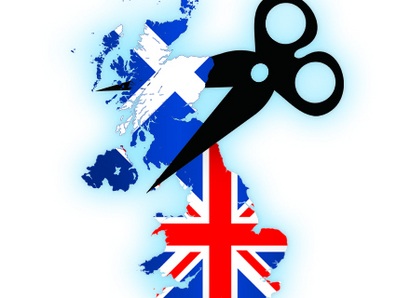
The argument is that if you backed Brexit, then you haven’t got a leg to stand on when it comes to opposing Nicola Sturgeon’s latest stab at Scottish independence. They’re the same thing, innit? ‘No one involved in Brexit, or who supported Brexit, can make any argument against Scottish independence except emotional ones’, says a writer for the Spectator.
Actually, the opposite is the case. Brexiteers are precisely the right people to put the case against Scottish independence. Because the argument against Scottish independence is the same as the argument for Brexit. Namely that people should not shy away from democracy, with all the debate and disagreement and difficulties it involves, but rather should embrace it. That instead of hiding from our responsibility to engage in national public life, or handing that responsibility over to ‘expert’ external bodies who will do decision-making on our behalf, we should accept this responsibility, and cherish it. Where Brexit represented a brave reclaiming of the institution of democracy, Scottish independence is driven by a sense of exhaustion with it, and by a rather elitist urge to opt out of it.
To many observers, Brexit and Sturgeon’s campaign for Scottish independence are the same thing: attempts to rupture longstanding unions. (Very longstanding in the case of the UK: 310 years. Not so much in the case of the EU: 24 years.) But the bigger, more important question is surely why these unions are being called into question.
[…]
For leftists in particular, many of whom threw their lot in with the idea of Scots independence during the Indy Ref of 2014, Scottish independence is attractive precisely to the extent that it allows them to circumvent what they see as the backward, Tory-esque thinking of a majority of Brits, especially English people. They, and also many in the SNP, fantasise that Scotland is a progressive, socialist-at-heart nation, and these fine instincts are being stymied by the votes and attitudes of dumb English people. Solution? Cut yourself off. Avoid even having to have the argument with the ignorant masses, never mind having to win it, by creating your own siphoned-off pseudo-independent nation in which you’ll always get your own way.
As one left commentator said during Indy Ref, the left’s flirtation with Scottish nationalism is driven in part by its irritation at ‘the sheer scale of the defeats suffered by the left’. One radical writer described Scottish nationalism as a ‘potential escape mechanism’ for leftists north of the border tired of living under governments in Westminster elected by the low-information right-wing hordes south of Hadrian’s Wall. And that’s what ‘independence’ is for Sturgeon and Co, too: an ‘escape mechanism’, a means of fleeing from the consequences of democracy into your own aloof, agreeable statelet.
This is why this independence movement seems to have so little to do with actual independence, as confirmed by the SNP’s desire to break from Westminster only to wrap itself in the interfering arms of the oligarchy in Brussels: because modern Scottish nationalism isn’t about independence at all. Except, perhaps, independence from the masses. From the British throng. From democracy. From a demos that has proven so disappointing to always-angry Scottish nationalists and to British leftists who see an independent Scotland, shorn of the millions who currently make up British democracy, as an opportunity to create the state-socialist utopia that they know a majority of Brits would find unappetising.
David Fletcher’s Tank Chats #3 Medium Tank MkII* (Vickers Medium)
Published on 20 Mar 2015
The third in a series of short films about some of the vehicles in our collection presented by The Tank Museum’s historian David Fletcher MBE.
In 1923 Vickers Ltd. of Sheffield and Newcastle, started to manufacture tanks for the British Army. They were the first representatives of a new generation of tanks, designed to fight on the move and restore mobility to the battlefield.
As designed the Medium tanks had a 3 pounder gun in the turret; a Vickers machine-gun in each side of the hull and Hotchkiss light machine-guns in the turret. These last were later eliminated in favour of a single Vickers machine-gun, mounted alongside the main gun and described as co-axial, since it elevates on the same axis as the main gun. This modification altered the design from Mark II to Mark II*. Using these tanks the Royal Tank Corps established standards of gunnery which, in their day, were never equalled.
QotD: The rise of political correctness in the UK
The philosophy of political correctness is now firmly entrenched over here, too, and at its core is a refusal to look the truth squarely in the face, unpalatable as it may be.
Political correctness is about denial, usually in the weasel circumlocutory jargon which distorts and evades and seldom stands up to honest analysis.
It comes in many guises, some of them so effective that the PC can be difficult to detect. The silly euphemisms, apparently harmless, but forever dripping to wear away common sense — the naivete of the phrase “a caring force for the future” on Remembrance poppy trays, which suggests that the army is some kind of peace corps, when in fact its true function is killing.
The continual attempt to soften and sanitise the harsh realities of life in the name of liberalism, in an effort to suppress truths unwelcome to the PC mind; the social engineering which plays down Christianity, demanding equal status for alien religions.
The selective distortions of history, so beloved by New Labour, denigrating Britain’s past with such propaganda as hopelessly unbalanced accounts of the slave trade, laying all the blame on the white races, but carefully censoring the truth that not a slave could have come out of Africa without the active assistance of black slavers, and that the trade was only finally suppressed by the Royal Navy virtually single-handed.
In schools, the waging of war against examinations as “elitist” exercises which will undermine the confidence of those who fail — what an intelligent way to prepare children for real life in which competition and failure are inevitable, since both are what life, if not liberal lunacy, is about.
PC also demands that “stress”, which used to be coped with by less sensitive generations, should now be compensated by huge cash payments lavished on griping incompetents who can’t do their jobs, and on policemen and firemen “traumatised” by the normal hazards of work which their predecessors took for granted.
Furthermore, it makes grieving part of the national culture, as it was on such a nauseating scale when large areas were carpeted in rotting vegetation in “mourning” for the Princess of Wales; and it insists that anyone suffering ordinary hardship should be regarded as a “victim” — and, of course, be paid for it.
That PC should have become acceptable in Britain is a glaring symptom of the country’s decline.
George MacDonald Fraser, “The last testament of Flashman’s creator: How Britain has destroyed itself”, Daily Mail, 2008-01-05.
March 27, 2017
Catherine the Great – VI: Succession – Extra History
Published on 4 Mar 2017
The optimism that marked Catherine the Great’s early years turned on its head. She oversaw the partition and final dissolution of the Polish-Lithuanian Commonwealth. She also alienated her son in the same way her own mother once did, leaving him ill-equipped to succeed her.


