
World War Two
Published 15 Dec 2022The United Nations Allies has some success bombing the Nazi German Reich, but it comes at a heavy price. In the village Kalavryta in Greece, the Wehrmacht massacre hundreds of men and boys.
(more…)
December 17, 2022
The RAF’s Worst Day of the War – War Against Humanity 091
Comments Off on The RAF’s Worst Day of the War – War Against Humanity 091
QotD: The female murderer
Each volume of Notable British Trials came with a lengthy introduction by its editor, many of whom were distinguished writers — for example, William Roughead, the originator of the true-crime genre and much admired by Henry James; or F. Tennyson Jesse, the poet’s great-niece, a good novelist and author of a wonderful study of murderers, Murder and Its Motives, which remains in use. She wrote with cool irony about the worst crime in the criminal code; she says, for instance, of some women murderers:
The woman who murders her husband has nearly always ceased to think of him as such, and cannot really believe that he ever stood in that relationship towards her. It is only a tiresome insistence on the part of the law that makes her drastic step necessary. She loves another man who is her husband “in the sight of God”, and it is to her both unreasonable and indecent that the first man should be obstructing her path.
Jesse writes things that I think would nowadays call down upon her all the anathemata of which right-thinking intellectuals are capable. In describing the trial of a Mrs. Carew, who poisoned her husband in order to join her illicit lover, Jesse says:
Her counsel made a point that did not succeed in weighing the scales in her favour … but which shows him to have been a man of some penetration in the matter of female psychology. He said: “It must be borne in mind that a woman never thinks it wrong for a man to be in love with her”, and when he said that he said something profoundly true. A woman may think it shows a lack of pride, utter shamelessness, complete lack of all decent feeling for another woman to be in love with her husband, but she will always feel convinced that it is a sign of something nice and perspicacious in a man for him to be in love with her.
This was written in 1924. Subsequently, it seems to me, male psychology has — in this regard, anyway — become feminized; what once applied specially to women now applies equally to men.
Theodore Dalrymple, “A Quiet Evening’s Reading: Notable British Trials is as complete an inventory of human depravity as has ever been assembled”, City Journal, 2018-06-24.
Comments Off on QotD: The female murderer
December 16, 2022
Coming of the Sea Peoples: Part 1 – Prelude
seangabb
Published 1 May 2021The Late Bronze Age is a story of collapse. From New Kingdom Egypt to Hittite Anatolia, from the Assyrian Empire to Babylonia and Mycenaean Greece, the coming of the Sea Peoples is a terror that threatens the end of all things. Between April and July 2021, Sean Gabb explored this collapse with his students. Here is one of his lectures. All student contributions have been removed.
More by Sean Gabb on the Ancient World: https://www.classicstuition.co.uk/
Learn Latin or Greek or both with him: https://www.udemy.com/user/sean-gabb/
His historical novels (under the pen name “Richard Blake”): https://www.amazon.co.uk/Richard-Blak…

Comments Off on Coming of the Sea Peoples: Part 1 – Prelude
Tank Chat #161 Samaritan and Sultan | The Tank Museum
The Tank Museum
Published 19 Aug 2022Do you know why the Museum’s Samaritan has a red cross painted on it? Join Historian David Fletcher and discover this and more for the latest Tank Chat on Samaritan and Sultan.
(more…)
Comments Off on Tank Chat #161 Samaritan and Sultan | The Tank Museum
December 15, 2022
Christmas in the WWI Trenches – Xmas Rations
Tasting History with Max Miller
Published 13 Dec 2022
Comments Off on Christmas in the WWI Trenches – Xmas Rations
“Intense staring” aka the “Toxic Male Gaze” on the London Underground
Jennie Cummings-Knight on a recent publicity campaign to discourage male passengers on the London Underground from “intense staring”:
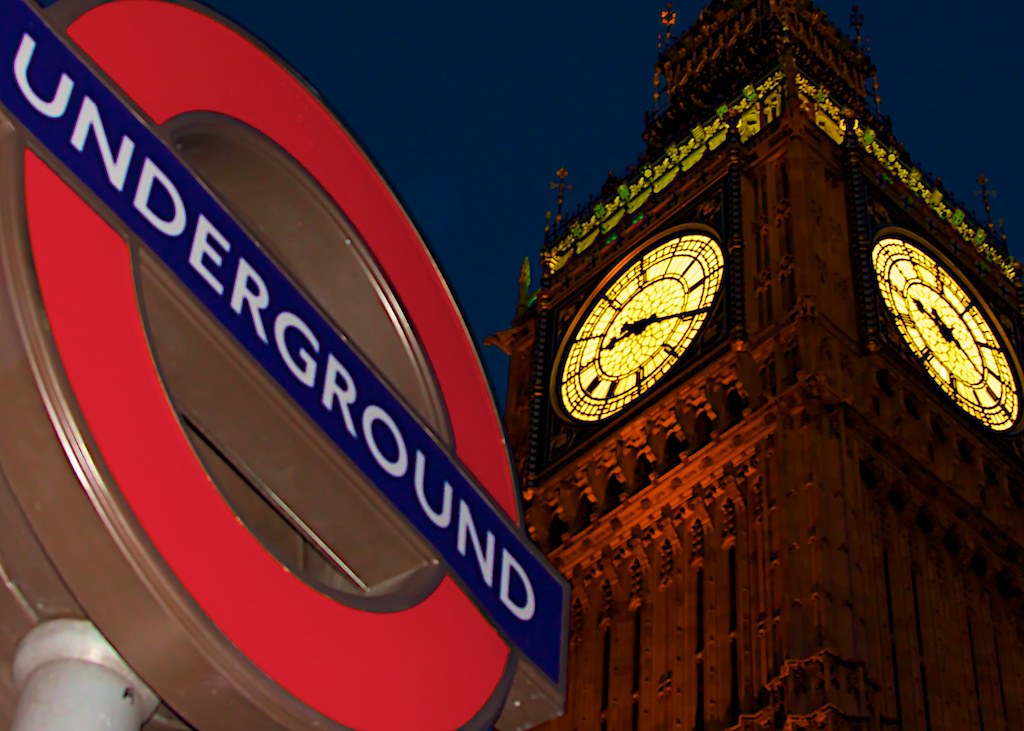
“London underground” by @Doug88888 is licensed under CC BY-NC-SA 2.0 


 .
.
… there might be reasons that a man stares intensely without sexual intent. For example, he could have autism and not really understand his behaviour might be considered as “staring”. Or he might be short sighted, or daydreaming about his holiday. Moreover, London Transport trains are used by people of all kinds from all over the world, including ordinary people from countries where staring is not seen as threatening e.g. in Spain. Indeed people in the UK are relatively comfortable with eye-contact, though those from outside London might not be aware that in the confined spaces of the London Underground “tube” trains, people tend to be unusually sensitive to eye contact. Although London Transport’s idea may be well intentioned, it doesn’t seem to take these individual and cultural differences into account. Perhaps its main effect will be to make women excessively worried about being stared at, and make men excessively worried about being jailed for accidentally looking at a woman in the “wrong” way.
But there are many layers to this issue. Speaking as a woman, I am always fascinated by the double standards exhibited by women with respect to male behaviour. We are only interested in being looked at by men if we find the said man or men to be attractive to us. This means that we can be potentially offended by the gaze of any man who falls into the following short list:
- Men we don’t know
- Men who we don’t find attractive
- Men who we feel are “punching above their weight” with regard to giving us their attention in this way
At the same time, the curious paradox is that, in spite of our assertions that we don’t need male attention (see the Toy Story 4 Bo Beep character, developed by feminist writers) and that we want to be taken seriously as we pursue our careers, we still take a lot of trouble to look attractive to men. This behaviour can start very young and persist into later adulthood. Teenage girls growing up in the 2000s are still hitching up their skirt waistbands as they come out of school on an afternoon. Teenage girls clubbing at the weekend still dress as provocatively as possible (if the ones I see on late night trains on a regular basis are anything to go by). Why dress in this way if we don’t want to be looked at?
I would suggest that the need to be seen by the male is deeply wired in the subconscious of most women. Sadly, girls as young as 9 years old are worrying about the shape of their intimate private parts. The fact is that women are having more cosmetic procedures than ever before in order to look the most attractive that they can. Men are having more cosmetic procedures too, but not to the same degree. Women who are only attracted to women seem, in my experience, to be less concerned with their physical attractiveness per se and more concerned with dressing in a way that fits in with lesbian group culture.
If we truly believe that we are liberated females, how is it that we are still so obsessed with having the perfect body/and or face? Where does this female need “to be seen” come from? On one level, what they do not realise is that they are looking for “ideal shapes” imagined at least in part, by the porn industry. On another level, if we look at evolutionary history, we see that male and female roles are rooted in survival behaviours appropriate to a hunter/gatherer society, and to the safe nurturing of children. The men were the hunters looking out for prey, and women were tied closer to the homestead because of child rearing. The more inward “yin” role for women, arising from their nurturing role and the physicality of the growth of the baby inside the woman’s body, followed by the nourishment in the early months from her body for the baby, has resulted in women being especially responsive to touch.
Men on the other hand, tend to be more visually aroused, and have an inborn, primeval need to look outwards (the outward thrusting nature of “yang”) which includes looking at the female. In the same way, the need to look around the field when hunting results in looking at whatever is in their peripheral vision. It is simply not possible for a man to stop looking at women unless he goes against this instinctive behaviour and keeps his eyes to the ground. If he does this, he may then also miss other visual cues which give him important information about dangers around and in front of him.
Comments Off on “Intense staring” aka the “Toxic Male Gaze” on the London Underground
Kraut Space Magic: the H&K G11
Forgotten Weapons
Published 25 Dec 2018I have been waiting for a long time to have a chance to make this video — the Heckler & Koch G11! Specifically, a G11K2, the final version approved for use by the West German Bundeswehr, before being cancelled for political and economic reasons.
The G11 was a combined effort by H&K and Dynamit Nobel to produce a new rifle for the German military with truly new technology. The core of the system was the use of a caseless cartridge developed in the late 60s and early 70s by Dynamit Nobel, which then allowed H&K to design a magnificently complex action which could fire three rounds in a hyper-fast (~2000 rpm) burst and have all three bullets leave the barrel before the weapon moved in recoil.
Remarkably, the idea went through enough development to pass German trials and actually be accepted for service in the late 1980s (after a funding shutdown when it proved incapable of winning NATO cartridge selection trials a decade earlier). However, the reunification with East Germany presented a reduced strategic threat, a new surplus of East German combat rifles (AK74s), and a huge new economic burden to the combined nations and this led to the cancellation of the program. The US Advanced Combat Rifle program gave the G11 one last grasp at a future, but it was not deemed a sufficient improvement in practical use over the M16 platform to justify a replacement of all US weapons in service.
The G11 lives on, however, as an icon of German engineering prowess often referred to as “Kraut Space Magic” (in an entirely complimentary take on the old pejorative). That it could be so complex and yet still run reliably in legitimate military trials is a tremendous feat by H&K’s design engineers, and yet one must consider that the Bundeswehr may just have dodged a bullet when it ended up not actually adopting the rifle.
Many thanks to H&K USA for giving me access to the G11 rifles in their Grey Room for this video!
(more…)
Comments Off on Kraut Space Magic: the H&K G11
December 14, 2022
The Polish Armed Forces in Exile
World War Two
Published 13 Dec 2022The Polish state was the first to fall in this war, yet across the globe Polish soldiers are fighting on land, air, and sea as part of the United Nations alliance. The story of the tens of thousands of men and women fighting for Polish liberation is equal parts hope and hardship as they battle the enemy and even sometimes their own allies.
(more…)
Comments Off on The Polish Armed Forces in Exile
December 13, 2022
Well, the modern Weimarites were getting overdue for another putsch…
Apparently, we just missed having a new German Reich last week, due to the lack of a few key ingredients, including mass support, weapons, good planning, and competent coup leaders … or maybe the German government just over-reacted to a non-existential threat:
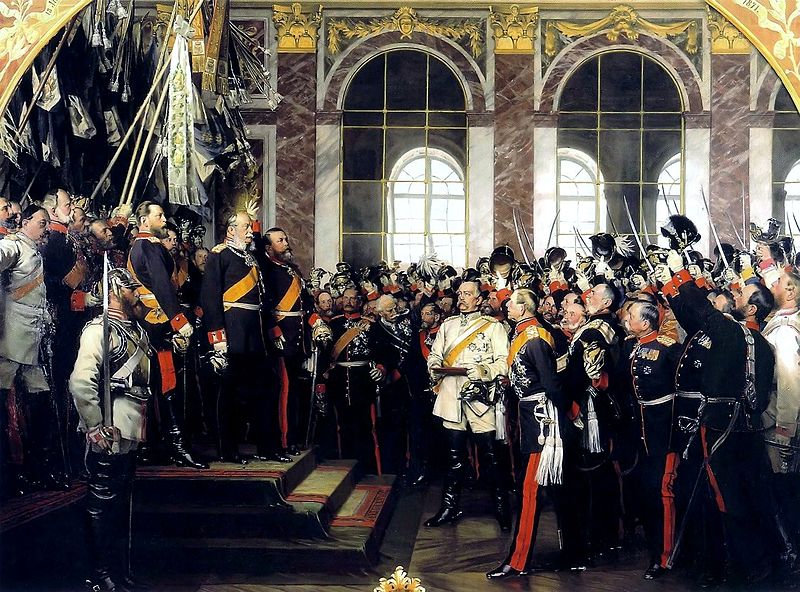
The proclamation of Prussian king Wilhelm I as German Emperor at Versailles, by Anton von Werner. The first two versions were destroyed in the Second World War. This version was commissioned by the Prussian royal family for chancellor Bismarck’s 70th birthday.
The German state oversaw one of its largest anti-terror operations in its modern history last week. Approximately 3,000 police officers arrested 54 suspects in raids carried out on Wednesday morning. Those arrested were members of the Reichsbürger – one of the oddest and most obnoxious movements to have emerged in Germany in recent years. It is alleged that those arrested were conspiring to overthrow the state and install a shadow government headed by an obscure German nobleman.
German chancellor Olaf Scholz was clearly pleased with himself after the raid. He hailed it as an example of Germany’s “defensive democracy” (wehrhafte Demokratie) in action. This refers to the modern German state’s willingness to curtail certain democratic freedoms to protect itself from the far right.
The Reichsbürger are deeply reactionary, anti-democratic and conspiratorial. They claim that the old German Reich, which collapsed at the end of the First World War, was never legally abolished and that modern-day Germany is therefore an illegal construct. They believe Germany’s democracy is a sham, which conceals a secret deep state pulling the strings behind the scenes. In its place, the Reichsbürger want to recreate the Germany of the late 19th century, which includes reinstalling a Kaiser as ruler.
The fact that such a bizarre movement has been growing in size – from around 19,000 supporters in 2019 to an alleged 23,000 in 2022, according to the police – shows us that something is clearly going wrong in Germany. The Reichsbürger have not been growing in a political vacuum. Indeed, they have grown partly as a response to the German government’s authoritarian handling of the Covid pandemic. The Reichsbürger’s black, white and red flags (the colour of the flag of the old pre-1918 German Reich) could often be seen at anti-lockdown demonstrations. This made it all too easy for the pro-lockdown lobby to present any opposition to Covid restrictions as the product of far-right conspiracy theorists.
The Reichsbürger have also been violent at times. During a raid on a Reichsbürger building in 2016, three police officers were injured and one was killed. Earlier this year, one member ran over and seriously injured a policeman with his car. They also have members with military skills. Some of those arrested last week were former German soldiers, including a member of an elite military unit (the KSK).
Yet it is important not to exaggerate the threat the Reichsbürger pose to the German state. Which is what the government deliberately seems to be doing. Interior minister Nancy Faeser spoke of the alleged plotters as a “terrorist threat”, despite the fact those arrested looked more like confused pensioners than hardened insurgents. Indeed, the alleged head of the conspiracy, a 71-year-old member of a largely unknown former noble family, is called “Prince Reuss” (or Prince Henry XIII). A relative of the prince told reporters that, while the “prince” does have nutty ideas and is bitter about his loss of social status, it is hard to imagine him as the ringleader of a conspiracy. At the time of writing, there is also no trace of the huge cache of military hardware that was alleged to be somewhere on the prince’s estate – although some swords, rifles and crossbows have been found.
Comments Off on Well, the modern Weimarites were getting overdue for another putsch…
Egypt’s postwar Nazi military advisors
In The Critic, James Barr reviews a book on the roles of former Nazi military and political figures in the Egyptian forces, Nazis on the Nile: The German Military Advisers in Egypt 1949-1967 by Vyvyan Kinross:

One of the paradoxes of the early postwar era is that, after Germany’s defeat, the Nazis were vilified at the same time that their expertise was sought after by both Cold War superpowers. Germans played key roles in both sides’ space programmes. Less infamous is the part they also went on to play in the Egyptian rocket programme, one of the subjects in this fascinating and disturbing book.
After suffering a humiliating defeat in the war that followed the establishment of Israel, the Egyptians wanted revenge. As the British had refused to help them — despite maintaining a deeply unpopular and large presence astride the Suez Canal — Egypt’s sybaritic King Farouq turned to his enemy’s enemy instead. In 1949 he commissioned an Afrika Korps general, Artur Schmitt, to review the Egyptian army.
Having checked in to a Cairo hotel under the name “Herr Goldstein”, Schmitt inspected Egyptian units and went on to Syria to survey Israel from the Golan Heights. The Egyptians’ failure to combine tanks, artillery and infantry effectively, he decided, explained their “inability to take advantage of the early stages of fighting to wipe the State of Israel off the map”.
Schmitt’s forthright conclusions were unwelcome, and he did not stay long. But some younger Egyptian army officers shared his views and, after they had overthrown Farouq in 1952, they picked up where the king had left off. Within days they offered Fritz Voss, the former head of the Skoda arms factory in Pilsen, the job of masterminding the retraining of the army and the establishment of a military industrial base that could produce jet aircraft and missiles.
Voss in turn invited old contacts to join him, including Wilhelm Beisner, an SS officer who had been part of Einsatzkommando Egypt, which would have spearheaded the Holocaust in Palestine had Rommel won at El Alamein. The Germans found Egyptian working conditions challenging. “Here one has to act much more slowly than in Prussia,” complained a German instructor who found “Oriental sloppiness” irritating. Of forty tanks lined up for a parade to celebrate the first anniversary of the coup, just twelve made it past the junta’s rostrum.
The author, Vyvyan Kinross, is a consultant by profession. He has advised Arab governments and clearly understands the fundamental problems. “The battle” for the Germans, he writes, “was always to reconcile finance, resourcing and the expertise required to execute a sophisticated manufacturing process with the challenging conditions and logistics that prevailed in a country that was late to industrialise and financially underpowered.”
Comments Off on Egypt’s postwar Nazi military advisors
QotD: Postwar Germany
Theodore Dalrymple, “The Specters Haunting Dresden”, City Journal, 2005-01.
Comments Off on QotD: Postwar Germany
December 12, 2022
The British Empire(s)
At Spiked, James Heartfield discusses the changing attitudes toward British imperial history:

Renewed interest in the history of the British Empire has generated a great amount of fascinating research and reflection. Over the past decade or more, there have been many books written about the empire – popular, academic, polemical and picaresque. There has been Akala’s Natives, William Dalrymple’s The Anarchy, Shashi Tharoor’s Inglorious Empire and Caroline Elkins’ Legacy of Violence, to name just a few.
Today’s approach to the British Empire is invariably critical – often stridently so. It marks a change to the attitude widely held half a century ago, when books on the empire tended to be elegiac farewells, like Paul Scott’s novel, The Jewel in the Crown, or Jan Morris’s Pax Britannica. Today’s critical approach to the empire is certainly a far cry from that which prevailed for a brief moment around the time that Margaret Thatcher was taking back the Falkland Islands. Back then, there was even an attempt at the moral rehabilitation of the empire.
[…]
But there are downsides to the self-excoriating criticism of Britain’s past. Often this approach to history turns into a debilitating exercise in self-loathing, an act of guilt-mongering. Many others have pointed out the limitations of this kind of morbid raking over the coals. But what is just as worrying is that the more we posture over Britain’s colonial past, the less we seem to understand it.
The moralistic framework in which we teach and discuss colonial history reduces our understanding to a single note of complaint. Hence, many historians today now write as if they have to make a case against the empire. This is just kicking at an open door. The empire has very few champions today. And the great British public is certainly not nostalgic for its return, despite some commentators arguing otherwise. Indeed, an ever growing majority think that the empire was a bad thing.
There is another problem with this approach to Britain’s colonial past. It situates readers outside of history. It encourages them to adopt a moralistic rather than historical approach to colonialism. They can do little more than judge the empire as evil. And in doing so, it flattens out the different periods of the colonial project into one long uniform timeline of subjugation. Collapsing distinct periods and stages together leads to a great confusion. For instance, in many accounts, there appears to be little difference between 18th-century British colonialism, which was dominated by slave trading, and the British colonialism of the late 19th century, which was marked by anti-slavery. It is important not to reduce the long history of the empire to a single motivating cause, be it the “English genius” of earlier celebratory accounts or today’s contention that it was all driven by “white supremacy”.
I seek to address these problems in my new book, Britain’s Empires: A History, 1600-2020. There I draw out the differences between the distinctive stages of Britain’s colonial history.
To do this, it is necessary to step back from moral judgement, which foregrounds our attitudes today, in order to try to understand what motivated people back then. That often means looking at a society’s changing social and economic organisation. Britain’s Empires is a history of the empire that holds on to a sense of historical change, and tries to understand the interrelation of its component parts.
The distinct eras of British colonialism are: the Old Colonialism (1600 to 1776); the Empire of Free Trade (1776-1870); the New Colonialism (1870-1945); and the period of decolonisation during the Cold War era (1946-1989). Britain’s Empires ends with an account of the “humanitarian imperialism” of the 1990s up until the present day. This periodisation aims to reflect the objective moments of transition.
Comments Off on The British Empire(s)
Before the High Power was the FN Grand Rendement
Forgotten Weapons
Published 8 Aug 2022The Browning High Power story begins with a French 1921 request for a new military pistol. FN engineer Dieudonné Saive developed a double stack, single feed magazine and John Browning adapted a Browning 1903 pistol to use it, and this was sent to France for consideration. This pistol worked well enough, but the French trials board requested changes … and they would continue requesting changes and more trials for the next decade.
By 1931, FN felt that the current iteration of the pistol — while still not meeting all the French requirements — was good enough to stand on its own as a service pistol for the Belgian Army and other clients. They named it the “Grand Rendement” (High Efficiency) and began marketing it. The Belgian Army showed a definite interest, and bought 1,000 pistols for field trials, based on the prototype example we have in today’s video. These would become the Grande Puissance, aka the High Power.
For more details on this and other FN Browning pistols, I highly recommend Anthony Vanderlinden’s FN Browning Pistols, soon to be released in its third edition:
Comments Off on Before the High Power was the FN Grand Rendement
QotD: Oversensitivity is not constrained by the mere passage of time
It seems a reader of the Mercury ran across a brief news item about the suicide of a 16-year-old girl in its pages, and was horrified at the sensational, detailed nature of the report. The story described Dorothy Balchin as being “of a reserved and morbid disposition” and described the romantic disappointment — a beau’s emigration to Australia — that preceded her suicide. The newspaper noted that a photograph of her boyfriend was found immediately below her hanged body, and even printed the text of two notes she left. In other words, the news copy broke every rule that newspapers now normally observe in mentioning suicide.
But of course no one had thought of any of those rules in the year 1912.
Which is when the story had appeared in the Mercury.
Which didn’t stop some reader from complaining to the paper in the year 2019.
Colby Cosh, “Want a newspaper job? Dream of making films? Be careful what you wish for”, National Post, 2019-05-09.
Comments Off on QotD: Oversensitivity is not constrained by the mere passage of time
December 11, 2022
Apparently building a new coal mine ranks as a “crime against humanity”
Brendan O’Neill in Spiked on the latest peak in climate hysteria (although it’s tough to bet against hysterics finding an even higher peak to climb):
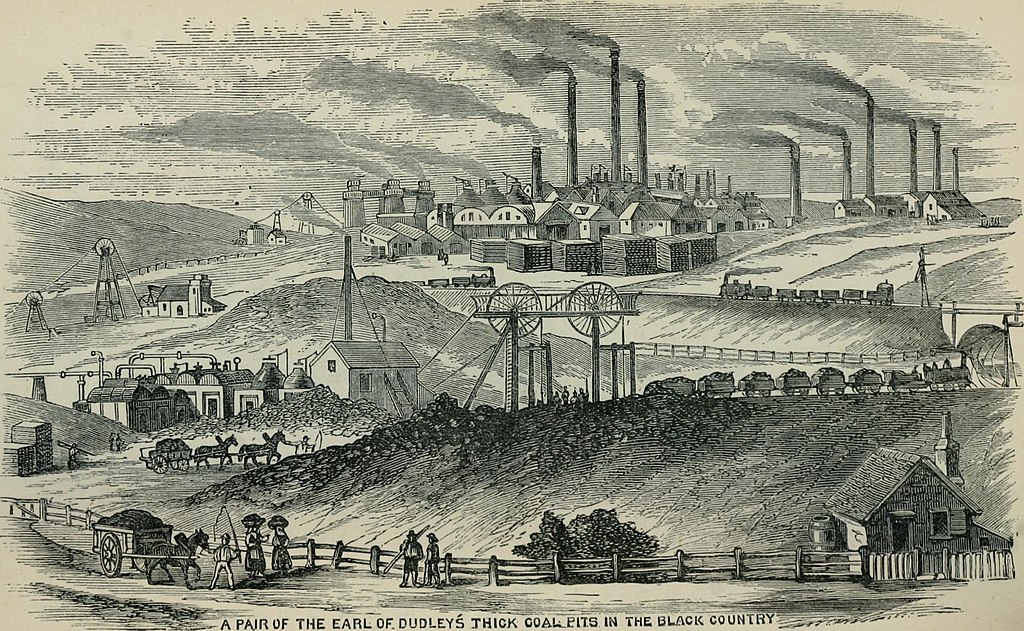
An image of coal pits in the Black Country from Griffiths’ Guide to the iron trade of Great Britain, 1873.
Image digitized by the Robarts Library of the University of Toronto via Wikimedia Commons.
The madness of the greens is peaking. This week a leading eco-politician in the UK, Caroline Lucas of the Green Party, referred to the building of a new coalmine as a “crime against humanity”. Take that in. Once upon a time it was mass murder, extermination, enslavement and the forced deportation of a people that were considered crimes against humanity. Now the building of a mine in Cumbria in north-west England that will create 500 new jobs and produce 2.8million tonnes of coal a year is referred to in such terms. Perhaps the coalmine bosses should be packed off to The Hague. Maybe the men who’ll dig the coal should be forced alongside the likes of ISIS to account for their genocidal behaviour.
We cannot let Ms Lucas’s crazed comments just slide by. We need to reflect on how we arrived at a situation where a mainstream politician, one feted by the media establishment, can liken digging for coal to crimes of extermination. It was in the Guardian – where else? – that Ms Lucas made her feverish claims. On Wednesday, when the government gave the go-ahead to the Cumbria mine, the first new coalmine in Britain for 30 years, Lucas wrote that the whole thing is “truly terrible”. This “climate-busting, backward-looking coalmine” is nothing short of a “climate crime against humanity”, she said.
It isn’t though, is it? Sorry to be pedantic but it is not a crime to extract coal from the earth. If it were, the leaders of China – where they produce 13million tonnes of coal a day, rather putting into perspective the Cumbria mine’s 2.8million tonnes a year – would be languishing in the clink. I look forward to Ms Lucas performing a citizen’s arrest on Xi Jinping. It certainly is not a crime against humanity. That term entered popular usage during the Nuremberg trials of the Nazis. It refers to an act of evil of such enormity that it can be seen as an assault on all of humankind. Earth to Ms Lucas: extracting coal to make steel – what the Cumbria coal will mostly be used for – is not an affront to humankind. I’ll tell you what is an affront, though: speaking about the burning of coal in the same language that is used to refer to the burning of human beings. That, Caroline, is despicable.
The overwrought apocalypticism of the likes of Ms Lucas does two bad things. First, it demonises in the most hysterical fashion perfectly normal and in fact good endeavours. The Cumbria coalmine will create hundreds of well-paid jobs. It will increase the independence and dignity of working-class families in Cumbria. It will help to reduce the UK’s reliance on coal imports. These are positives. They should be celebrated. Of course to Ms Lucas and other middle-class greens, that local communities in Cumbria have welcomed the coalmine only shows that they’re “nostalgic” for the past and that they’ve been “seduced” by a plan that will actually make them “suffer”. Patronising much? The Cumbrian working classes who can’t wait to start mining are a paragon of reason in comparison with the Guardianistas madly sobbing about coal being a crime against humanity.
Comments Off on Apparently building a new coal mine ranks as a “crime against humanity”


