
Well, perhaps you say, that is a bit simplistic; what if we go on a strategic defensive – adopting a strategy of attrition? Note we are fairly far now from the idea that the easy solution to trench warfare was “don’t attack”, but this is the first time we reach what appears on its face to be a workable strategy: accept that this is a pure war of attrition and thus attempt to win the attrition.
And here is where I, the frustrated historian, let out the primal cry: “They did that! Those ‘idiot’ generals you were bashing on a moment ago did exactly this thing, they did it in 1916 and it didn’t work.”
As Robert Doughty (op. cit.) notes quite effectively, after the desperate search in 1915 for ways either around the trench stalemate or through it (either way trying to restore a war of maneuver), Joseph Joffre, French chief of the army staff, settled on a strategic plan coordinating British, Italian, French and Russian actions designed around a strategy of “rupture” by which what was meant was that if all of the allies focused on attrition in each of their various theaters, eventually one theater would break for lack of resources (that’s the rupture). He was pretty damn explicit about this, writing about the war as a “struggle of attrition” in May, 1915 and setting a plan of action in December of 1915 to “do everything they can to attrit the adversary”.
Joffre’s plan did not go perfectly (the German offensive at Verdun upset the time-tables) but it did, in fact mean lower French losses in 1916 than in 1915 or 1914 and more severe German losses. Meanwhile, the German commander, Erich von Falkenhayn would at least subsequently claim to have been trying to do the same thing: achieve favorable casualty ratios in a war of attrition, with his set piece being the Battle of Verdun, designed to draw the French into bloody and useless repeated counter-attacks on ground that favored the Germans (there remains a lot of argument and uncertainty as to if that attritional strategy was the original plan, or merely Falkenhayn’s excuse for the failure to achieve meaningful strategic objectives at Verdun). In the end, the Verdun strategy, if that was the strategy, failed because while the Germans could get their favorable ratio on the attack, it slipped away from them in the inevitable French counter-attacks.
But as Clausewitz reminds us (drink!) will – both political and popular – is a factor in war too (indeed, it is one of the factors as part of the Clausewitzian trinity!). Both Joffre and Falkenhayn had to an extent seen that the war was going to run until one side ran out of soldiers and material and aimed to win that long, gruelling war; for which they were both promptly fired! The solution to the war which said that all one needed to do was sacrifice a few more million soldiers and wait 2, or perhaps 3 or maybe even 4 more years for the enemy to run out first was unacceptable to either the political leaders or the public. 1917 came around and both sides entrusted the war to generals who claimed to be able to produce victories faster than that: to Robert Nivelle and Erich Ludendorff, with their plans of bold offensives.
And to be clear, from a pure perspective of “how do we win the war” that political calculation is not entirely wrong. Going to the public, asking them to send their sons to fight, to endure more rationing, more shortages, more long casualty lists with the explanation that you had no plans to win the war beyond running Germany out of sons slightly faster than you ran France out of sons would have led to the collapse of public morale (and subsequent defeat). Telling your army that would hardly be good for their morale either (the French army would mutiny in 1917 in any event). Remember that in each battle, casualties were high on both sides so there was no avoiding that adopting an attrition strategy towards the enemy meant also accepting that same attrition on your own troops.
And, as we’ve discussed endlessly, morale matters in war! “Wait for the British blockade to win the war by starving millions of central Europeans to death” was probably, in a cold calculus, the best strategy (after the true winning strategy of “don’t have a World War I”), but it was also, from a political perspective, an unworkable one. And a strategy which is the best except for being politically unworkable is not the best because generals must operate in the real world, not in a war game where they may cheerfully disregard questions of will. In short, both sides attempted a strategy of pure attrition on the Western Front and in both cases, the strategy exhausted political will years before it could have borne fruit.
And so none of these easy solutions work; in most cases (except for “recruit a lost Greek demi-god”) they were actually tried and failed either due to the dynamics (or perhaps, more truthfully, the statics) of trench warfare or because they proved impossible implement from a morale-and-politics perspective, violating the fundamental human need to see an end to the war that didn’t involve getting nearly everyone killed first.
Bret Devereaux, “Collections: No Man’s Land, Part I: The Trench Stalemate”, A Collection of Unmitigated Pedantry, 2021-09-17.
July 24, 2024
QotD: The “strategic defensive” approach to the attrition battles of WW1
July 23, 2024
Claim – “Everybody wants Gaza’s gas”
Tim Worstall explains why the popular idea that it’s demand for the natural gas reserves that sit under Palestine that is driving much of the situation in the Middle East is utter codswallop:

“Oil Platform in the Santa Barbara Channel, California” by Ken Lund is licensed under CC BY-SA 2.0 

 .
.
So we’ve a big thing about how all this fighting in Gaza is really about fossil fuels. @JamesMelville seems to think it’s true:
“Everybody wants Gaza’s gas.”
Oil and gas reserves – that’s the real proxy war in the Middle East.
This video provides a really succinct summary of the situation.
This “really succinct” summary includes the idea that the invasion of Iraq was all about access to that country’s oil. Which is very silly indeed. Before the war people paid Iraq for the oil. During the war people paid Iraq for the oil. After the war people are paying Iraq for the oil. The war hasn’t changed Iraq’s oil price — the global oil price has changed it, but not the war — and so the effect of the war upon access to Iraq’s oil has been, well, it’s been zero.
No, it’s not possible to then go off and say that Iraq wouldn’t sell to Americans and that’s why or anything like that. The US didn’t buy much Middle East oil anyway — mainly West African instead. But more than that, this is idiocy about how commodity markets work.
This is something we can test with a more recent example. So, there are sanctions on Russian oil these days over Ukraine. Western Europe, the US, doesn’t buy Russian oil. Russia is still exporting about what it used to. Because it’s a commodity, oil is.
What’s happening is that the Russian oil that used to come to Europe now goes to — say — India. And the Far East, or Middle East, whatever, oil that used to go to India now comes to Europe (the US is now a net exporter itself). Because that’s what happens with commodities. The very name, commodity, means they are substitutable. So, if one particular source cannot sell to one particular user then there’s a bit of a reshuffle. The same oil gets produced, the same oil gets consumed, it’s just the consumption has been moved around a bit and is now by different people. The net effect of sanctions on Russian oil has been, more or less, to increase the profits of those who run oil tankers. Ho Hum.
We’re also treated to the revelation that the US wants everyone to use liquefied natural gas because the US is the big exporter of LNG (well, it’s one). Therefore the US insists that Israel must develop the LNG fields off Gaza. Which is insane. If you’re an exporter you don’t want to start insisting on the start up of your own competition. The US demanding that the LNG not be produced at all would make logical sense but that’s not how conspirazoid ignorance works, is it? It has to be both a conspiracy and also a ludicrous one.
And a third claim. That this natural gas off Gaza is really worth $500 billion. That’s half a trillion dollars. We’ve looked at this value of gas off Gaza claim before and it’s tittery. $4 billion (that’s four billion, not five hundred billion) might be a reasonable claim and that’s just not enough to go to war over.
Why Most “Ancient” Buildings are Fakes
toldinstone
Published Apr 12, 2024Almost every ancient monument has been at least partially reconstructed, for a wide range of reasons …
Chapters:
0:00 Introduction
1:06 The Forum and Colosseum
2:27 The Ara Pacis
3:24 Early restorations
4:37 Mondly
5:47 Roman forts and baths
6:42 Knossos
7:23 The Stoa of Attalus
8:59 The Acropolis
10:05 When to restore?
(more…)
July 22, 2024
“Dissident Christianity”
While I don’t have a god in this fight, I find much to agree with Fortissax here as he responds to another writer’s commentary on modern western Christianity in an essay he titles “Spiteful Mutant Christians“:
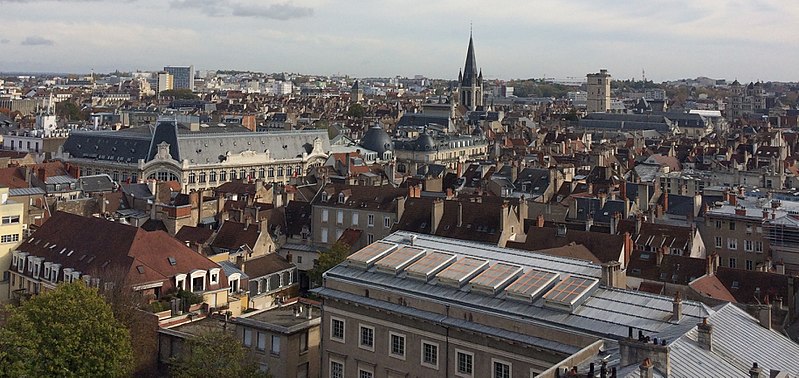
Dijon viewed from Saint-Bénigne Cathedral with the Palace of the States of Burgundy, the Notre-Dame and Saint-Michel churches, the Saint-Nicolas tower, the former Saint-Bénigne abbey palace (ENSA), The Lafayette galleries, the old department stores at Le Pauvre Diable and la Ménagère.
Photo by Twibo2 via Wikimedia Commons (caption translated by Google Translate).
Admittedly, I’m not a fan of the majority of Christians on the right, particularly traditionalists on Substack. Before I open a salvo on them, I will say many of them are educated, well-written, and well-spoken. Many of them are respectable, as far as I know, often fathers of many children, who aspire to virtue. This is certainly better than a great many. Many of them have been in this business far longer than I have. Many of them are intelligent and offhand I enjoy many of their general insights. Overall, I wish them no ill will.
However, I’m inclined to believe they’re mostly out-of-touch, often Generation X or elder Millennials who caught the last chopper out of Vietnam and fundamentally don’t understand the socioeconomic or cultural reality of younger Millennials or Generation Z. Who are colourblind by their narrow fraternal environment of American ruralite post-postmodern Christians who seldom interact with people outside of their pseudo-collapsitarian communities. I say “pseudo” because they’re not crazed Libertarian doomsday preppers building bunkers with a hand shovel in the backwoods of Montana, but I’ve observed that the Christian Traditionalist tendency is “Quietism”. From what I understand about Quietism, this is the Christian tendency to be pacifistic, avoid all confrontation, completely abandon North American cities, urban or civil life, and retreat to what is a romanticist fantasy of pastoral agrarian landscape of isolated God-fearing communities, have a pint, and wait for this to all blow over. They’re convinced of the moral, ethical and philosophical superiority of their rural life, an desperately wait for the day they can starve the city boys out.
On that note, the worst and most obnoxious of them are former city slickers or suburbanites who move to the countryside, but that’s an entirely different argument, and I’m getting sidetracked. Perhaps my biggest criticism of the Christians is that they are extremely presumptuous people in “this thing we call” the Dissident Right.
They piggyback off the remnant adherence and nominal identification to Christianity among the irreligious populace who, if they attend church at all, attend churches that are completely captured by the deistic DEI God of Equity. They pretend their super-ultra esoteric Pageau Hermetic Catholicism, Christ-is-King MAGA communist groyper Christian “nationalism”, or “based warrior priest” Eastern European war footage Orthodoxy is the norm. They pretend that the bumbling Christian faithful know or understand half of what they discuss on Telegram, X, or Substack, and this gives them a false sense of security and inevitability. They speak with a false confidence that, to outsiders, would appear that they’re truly in the know, that everyone is in fact Christian, and it’s only a matter of time before everyone else is. This is completely out of touch with reality. If you look at who is Christian and who isn’t, you start to see the brutal picture. For simplicity’s sake, we will focus on North America and Western Europe, with the dividing line being the old NATO boundaries. Let’s break down the facts:
In 2024, the following percentages of national populations identified as Christian
- Portugal: 84.8%
- Italy: 83.8%
- Denmark: 79%
- Norway: 76.7%
- United States: 65% (Pew Research Center)
- Belgium: 65%
- Canada: 53% (Pew Research Center)
- Spain: 67%
- Switzerland: 58.2%
- United Kingdom: 59%
- Germany: 57%
- Netherlands: 43%
- France: 63% (Pew Research Center)
On its face, you’d be inclined to believe that the majority of the Western world is Christian: God-fearing, church-going, has read and understands the Bible, and partakes in a community, correct? Wrong. The overwhelming majority of people who identify as Christian don’t go to church, and this is explained by baptisms at birth or early life inductions that never lead to anything. The real percentage of practising Christians is as follows, with Portugal hilariously being not even a quarter of what it claims, despite having the highest rate of identification.
In 2024, the following percentages of national populations regularly attending church.
- Portugal: 19% (Catholic News Agency)
- Austria: 14% (Catholic News Agency)
- Spain: 13.4% (Wikipedia)
- Italy: 20% (Catholic News Agency)
- Germany: 9% (Catholic News Agency)
- Netherlands: 7% (Catholic News Agency)
- Switzerland: 5% (Wikipedia) (BFS Administrations Website)
- France: 5% (Catholic News Agency)
- Belgium: 5% (Catholic News Agency)
- United Kingdom: 5% (Catholic News Agency)
- Canada: 5% (CareyNieuwhof.com)
- United States: 24% (weekly attendance) (ChurchTrac) (PRRI)
- Norway: 3% (Catholic News Agency)
- Sweden: 3% (Catholic News Agency)
- Denmark: 3% (Catholic News Agency)
I was technically baptized Catholic, specifically because it was believed that I’d have greater access to educational opportunities, and not out of any genuine piety. I was given a choice at 3 years old to go to my first communion or watch Power Rangers. I’ve never read the Bible, save for two versions of half the book of Romans before putting it down, incredibly unimpressed with Paul failing to sell me on Christianity. My family has been irreligious for four generations. My province of origin, Quebec, is the most secular part of North America, and I’m proud of it. I don’t believe we can sever the influence of Christianity completely, and I don’t think we should. It is an integral part of our heritage, and we need to respect it. You can’t claim to honour your ancestors, or even western history without honouring Christianity. I do however believe that secularism gave the West an opportunity for a clean enough slate to find the definitive, ongoing unraveling of Truth. I chose hero worship. No honest person would say this makes them a Christian.
The purpose of bringing up these statistics is to perform a reality check. Christians are not the majority. Not in the general population, and not in the Dissident Right. Christians do not have a monopoly on morality. Christians do not have a monopoly on Truth. Christians completely lack the social capital and popular consensus to instigate the social policies they want in accordance with their faith on a civilizational scale. I believe that part of the issue is that the discourse is civilization-wide, but most of the Christianity is coming from North America, specifically the United States of America, where it represents a small and dwindling political faction of a broader conservative movement. There is not going to be a Fifth Great Awakening — their latest awakening as Greene himself would admit, is Wokism. A deistic Christian heresy. The public is not going to kneel, convert to disparate, squabbling denominations of Christianity marching in lockstep with Regimevangelicalism.
Blue Checkmark Christianity™ has recently signaled a green light to the millions of Global South Catholic faithful that it’s okay to illegally migrate to and trespass in Europe. The Hierophant has ordered His faithful to abide.
The fact of the matter is that Dissident Christians are a minority of a minority — they’re the equivalent of Sikhs in India. One percent of the population, and yet one loud, obnoxious voice giving all the impression they’re a bigger majority than they are. Christians like Misanthrope are as barely relevant as the degenerate neopagans and their profligate made up religions with zero legitimacy or antiquity. Hiding their views from their pastors, priests and the rest who attend their churches. It is an absolute LARP to speak with the audacity and arrogance that they do to the great secular majority, and or other groups who are attempting to cultivate faith with sincerity. You’d think if their truth was so self-evident, they’d be winning a whole lot more people, and the West would be Christian, but no. They’re going out the same way Zoroastrianism did, and after that, Hellenism, the state religion of the Roman Empire. Weak men, wicked priests, irreligiosity, bureaucratization of the liturgy, heretical reinterpretation of the word. I could go on.
“Lovable loser” is not a good look for a political leader, even a British one
In The Critic, Andy Mayer points out that former British PM Rishi Sunak does not deserve the post facto praise he’s been getting from the media and should not be “rehabilitated” by them:
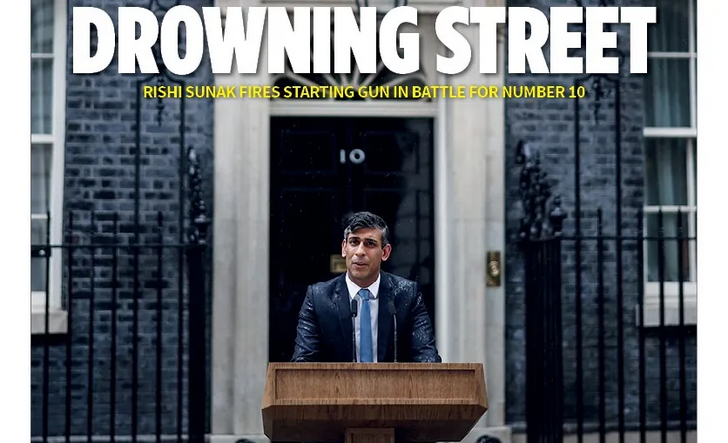
Rishi Sunak was a “wet” even before his farcical aquatic ceremony to kick off the 2024 general election.
We love a loser in Britain. From Eddie the Eagle to Gareth Southgate, our default reaction to a lack of success is warm appreciation. Parliament in that regard could not have been kinder to Rishi Sunak on his return as Leader of the Opposition. Never mind that the Conservative Party now looks more like the garrison of Rourke’s Drift than a campaign army. Never mind that the majority lies speared in the dust from their July 4th Isandlwana. Never mind that on the horizon General Farage is stirring the nativists for a future Bore War. The Lord Chelmsford of Prime Ministers marches on.
Less allegorically, Sunak, having made a couple of good speeches, is as one commentator put it “precisely the leader the Conservative Party needs right now”. On a personal level he is clearly a lovely guy, smart, capable, talented and has a very bright Clegg-like future ahead of him, whether in the valley or teaming up with Tony Blair to hawk AI to dictators. He is being feted by all the usual suspects who regard Parliament as a jolly club for centrist dads. Little thought however has been put into how this comes across to the poor bloody Tory infantry still pulling the bodies out of the metaphorical Buffalo River, wondering whether the inexperienced lieutenants rowing in the redoubts have what it takes to hold the line.
So let us be blunt, as a leader Sunak was hopeless. He had no coherent ideology or vision. He treated consensus building as an end in itself rather than as a means to an end. Even then he was better at building coalitions against rather than for him and was advised by people who used polls to tell them what to think, rather than as tools to move the public their way. He was neither a campaigner nor a political strategist.
As a result, he demonstrated cataclysmic judgement on the timing of the election. Whether this was through arrogance, naivety, or ignorance, he amplified the losses. He did so in the teeth of ample public commentary praising an assumed wise decision to delay until winter. Catching his own side by surprise, benefitting only morally vacuous apparatchiks boosting their betting accounts, and a far better prepared Opposition.
In office he was addicted to fad policies like generational bans, the Rwanda scheme, and the triple lock. He ducked hard choices on growth like building homes and cutting red tape, both things his deeply buried Thatcherite instincts should have told him were fights worth having. He was useless at implementation. Note, for example, the failure of his own borders policy or thinking through how to reform Ed Miliband’s ideological Net Zero architecture into something pragmatic.
He was right about one big thing — the importance of fiscal prudence and sound money. But he was also the Chancellor who undermined that prudence with wasteful lockdown splurges that destroyed growth and pushed the national debt over 100 per cent. He loved the sugar rush of popularity that came with being a spender in a crisis, but afterwards reformed nothing, preferring instead to raise taxes, generally by copying Labour’s madder talking points. For example, putting up corporation (company profits) tax to 25 per cent, freezing personal allowances, and hitting the North Sea with a 75 per cent “temporary” windfall tax, that has already outlasted the short period of high prices that inspired it. The latter has mortally wounded domestic investment, ripe for the Labour administration to finish it off. An error made despite his predecessor Osborne making exactly the same mistake with the same disastrous consequences only a few years earlier.
Chinese Type 50 PPSh: Founding “Gun City” in Manchuria
Forgotten Weapons
Published Apr 12, 2024One of the first new weapons adopted and used by the Chinese Peoples’ Liberation Army after the Communist victory in the Chinese civil war was the Type 50, a copy of the Soviet PPSh-41. The story of its manufacture begins at the Japanese-occupied Mukden Arsenal. It was briefly occupied by the Soviets in 1945 before coming under control of the CCP. It was a huge manufacturing complex at the time, making artillery, small arms, ammunition, and more. A Nationalist bombing raid in 1949 led to the production being distributed among three separate smaller facilities, and the small remote town of Bei’an was chosen to become the new small arms factory site.
The town became so heavily focused on weapons manufacture that it gained the nickname of “Gun City”. The factory was formally named #626, and given the cover name of Qinghua Tool Company. It initially began with production of the Type 38 Arisaka, Type 24 Mauser (the Chiang Kai Shek rifle), the M1 Carbine (a failed project), and the Type 50 copy of the PPSh. In the spring of 1951 in response to UN advances northward in Korea, production was ordered to scale up on the Type 50, to 7500-9000 per month. This took a couple of months to achieve, but in June 1951 the first large shipment of the guns left the factory, and by December 1953 a total of 358,000 had been made. At that point, production shifted to the Type 54, a copy of the PPS-43.
The Type 50 is a close copy of the Russian Shpagin, but differs in a couple of details. The Chinese used a rear aperture sight, and the sights were placed slightly farther forward than on Russian guns. They are also generally very well made — better than most Russia wartime examples.
For many more cool small arms stories, check out WWII After WWII:
https://wwiiafterwwii.wordpress.com
(more…)
July 21, 2024
“Since 2012, NATO has experienced a revival and a return to relevance that would make any washed up 80’s movie star turn green with envy”
Big Serge considers where NATO came from, where it is now, and where it might be going:
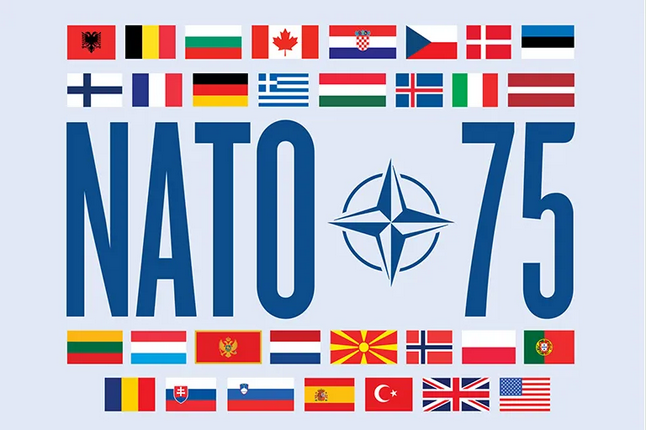
NATO, in its original conception, was designed to resolve a very particular security dilemma in Western Europe. In the immediate wake of World War Two, Western Europe — specifically Britain and France — had to consider how it might be possible to mount a defense against the colossal Soviet forces that were now conveniently forward deployed in Central Germany. The 1948 “Western Union Defense Organization” (WUDO), which included the aforementioned Anglo-French allies along with the Netherlands and Belgium, was created with an eye to this problem. With the rapid demobilization of American armies in Europe, however, it was obvious that this threadbare European alliance had dismal prospects in the unthinkable event of war with the Soviet Union. Field Marshal Bernard Montgomery, the supreme commander of WUDO forces, was asked what the Soviets would it would take for the Red Army to attack and push through all the way to the Atlantic, and famously replied: “Shoes”.
NATO, therefore, was an attempt to resolve the total strategic overmatch on the European continent through two expedients. The first of these, obviously was America’s membership, which brought both formal American security commitments as well as permanent American military deployments in Europe. The second strategic boost provided by NATO concerned Germany. Even after being ravaged by war and dismembered by the allied occupation, Western Germany remained the most populous and potentially powerful state in Western Europe. From the beginning, it was clear (particularly to the Americans and the British) that any sustainable strategy for deterring or fighting the Red Army would have to make use of German manpower — but this implied, axiomatically, that West Germany would have to be economically rehabilitated and rearmed. The prospect of *intentionally* rearming Germany was immensely upsetting to the French, for obvious reasons given the events of 1940-44. [NR: And 1914-18, and especially, 1870-71.]
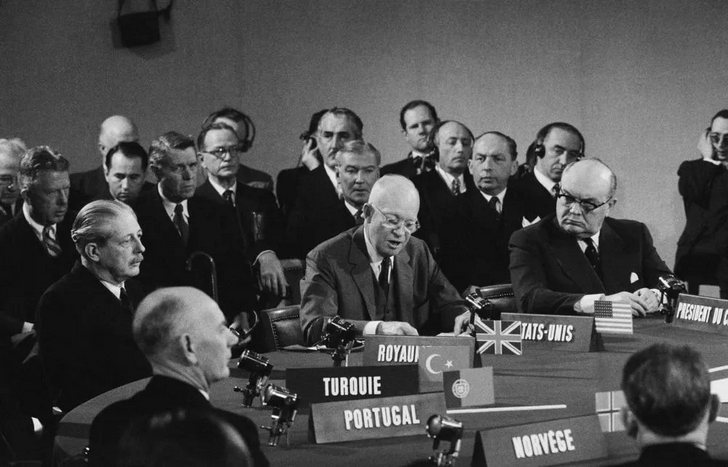
The first NATO summit conference
NATO thus solved two major obstacles to a sustainable and viable defense of Western Europe, in that it formally and permanently tied the United States into the European defense architecture, and it provided a mechanism to rearm West Germany without allowing for the possibility of a truly autonomous and revanchist German foreign policy.
In many ways, NATO can be seen as a total reversal of the Versailles system which had doomed Europe after the First World War by guaranteeing the Second. The interwar period saw the Anglo-French alliance pitted against an adversarial Germany without American assistance; NATO ensured American commitment to European defense and rehabilitated Germany into a valuable partner — providing the command architecture to rearm Germany and mobilize German resources without allowing Germany to conduct an independent foreign policy.
Thus, the popular formulation, coined by the first General Secretary of NATO, Lord Hastings Ismay, that NATO existed to “keep the Americans in, the Russians out, and the Germans down”. This statement, however, has frequently been misinterpreted. The idea of “keeping the Americans in” was not a plot by Washington to dominate the continent, but a contrivance by the Europeans to keep America engaged in their defense. As for “keeping the Germans down”, this is pithily stated but not entirely accurate — the entire point of adding West Germany to NATO was to allow it to rebuild and rearm in the interests of collective western defense. For the United States, NATO made sense as a way to mobilize European resources and calcify the “front” in Europe, in the context of a broader geopolitical struggle with the USSR.
This is what NATO was for. It was a mechanism for formalizing an American security commitment in Europe and mobilizing German resources to deter the USSR, and it worked — the frontline of the Cold War in Europe remained static up until the collapse of the Soviet Union due to the naïve and self-destructive political visions of one Mikhail Gorbachev.
But what is NATO for now? What purpose does it serve in the context of a broader American grand strategy? More to the point, does such a grand strategy exist, and is it coherent? These are questions worth asking.
The Atomic Age Begins! – WW2 – Week 308 – July 20, 1945
World War Two
Published 20 Jul 2024This week the Americans explode a nuclear bomb at the Trinity Test in New Mexico. The plan is to possibly use more such bombs against targets in Japan. US President Harry Truman is meanwhile in Germany for the Potsdam Conference with other Allied leaders to hammer out some details of the postwar global order. The active war continues, of course, in Burma, Borneo, the Philippines, and China, with the Japanese being defeated everywhere.
00:00 Intro
00:22 Recap
00:51 The Trinity Test
02:46 The Potsdam Conference Begins
04:09 Bretton Woods Agreement
05:38 The Active War Continues
09:39 Summary
11:00 Conclusion
(more…)
Britain’s Weird Vietnam War
Real Time History
Published Mar 15, 2024Fall 1945: the Second World War is over, but there is fresh fighting in Vietnam. Now, former enemies become allies as British-Indian troops, French Commandos, and surrendered Japanese soldiers join in a rag-tag alliance against Ho Chi Minh’s Communists in Saigon. The outcome will shape Vietnam’s future for decades to come, in Great Britain’s weird Vietnam War.
(more…)
July 18, 2024
An elite luxury belief – “Diversity Is Our Strength”
In a guest-post at Postcards from Barsoom, Spaceman Spiff lists some of the cargo cult notions that have captured the imagination of many “elites” in western nations, like “Diversity Is Our Strength“:

Multiculturalism is pursued in Western countries with a religious mania. It is difficult to imagine anything closer to a belief system for today’s upwardly mobile professional than advocating for diversity and inclusion.
Most of the world views ethnic and cultural mixing as a dangerous, civilization ending activity. A threat to be guarded against, not an opportunity to be embraced. This has been the conventional view throughout history in almost every society.
The modern Western formulation has challenged this. Mixing cultures, especially those hostile to assimilation, is not just to be tolerated but encouraged. Alien peoples must be sought out and imported to increase the ethnic and cultural mix. We must extend every courtesy to those fundamentally incompatible with us in customs and manners. The ultimate expression of this ambition is open borders, a concept viewed with deep hostility by almost all non-Western countries.
Whatever the origins of such policies, the implementers of these ideas are everywhere. They work in corporations, public sector bodies, and NGOs. We find them in Starbucks and Walmart. Diversity is everywhere even though it makes little sense as an end in itself.
How do we explain the enthusiasm with which middle managers and HR workers have embraced such a destructive idea, including its corporate version of job and education quotas?
Competency itself can be hard to find even in ideal conditions, so why hobble your chances like this? Why intentionally seek to create brittle heterogeneous environments that reduce productivity and increase strife?
The simple answer is that sophisticates don’t succumb to primitive notions like preferring their own. These are urges to be resisted, like hunger while dieting. Racism is old hat and any noticing of differences is racism. After all, our elites do not behave like this, so the goal is to be observably anti-racist, just like them.
Some look at our globalist elites and see them mixing with an international set. As they hobnob around the world they certainly socialize with foreigners. Indian elites, Arab elites, and Chinese elites all mix with their Western equivalents. We see them at events like Davos or the global climate change meetings. A multicoloured constellation of traitors from every country, all getting along with each other because they are nothing like their fellow countrymen, and everything like each other.
What the dullards in the corporate HR world miss is that this is not a celebration of diversity. Most of those elites are nearly identical. Many attended the same universities. All speak English, the international language. They have similar views, including contempt for their respective compatriots.
There is no diversity at the very top, just an elitist outlook most of them share, and contempt for the peasants who surround them. White, brown, or black, we all look the same from the cultural stratosphere. Cannon fodder for their Olympian ideas, but nothing more. The elite view of mass migration is indifference, not enthusiasm.
The street-level version takes the superficial aspects of this phenomenon and worships it as the end goal since the underlying homogeneity of the elites is largely absent. Their goal is not to seek out that which we have in common with others but the less sophisticated observation of what makes us different, what makes us more “diverse.”
The midrange talent in the West have therefore convinced themselves celebrating overt differences in the form of multiculturalism is modernity. It is the future promised by Star Trek and other communist dreams. Colour won’t matter, just like Martin Luther King promised, so long as we overlook the long predicted consequences of their dream, the lowered wages, the erosion of trust and the eventual polarization of competing groups within our own nations we once kept at bay with more considered immigration policies.
QotD: Culture in the late western Roman Empire
The first thing to remember, as we’ve already discussed, is that the population of the Roman Empire itself was hardly uniform. Rather the Roman empire as it violently expanded, had absorbed numerous peoples – Celtiberians, Iberians, Greeks, Gauls, Syrians, Egyptians, and on and on. Centuries of subsequent Roman rule had led to a process of cultural fusion, whereby those people began to think of themselves as Romani – Romans – as they both adopted previously Roman cultural elements and their Roman counterparts adopted provincial culture elements (like trousers!).
In particular, by the fifth century, the majority of these self-described Romani, including the overwhelming majority of elites, had already adopted a provincial religion: Christianity, which had in turn become the Roman religion and a core marker of Roman identity by the fifth century. Indeed, the word paganus, increasingly used in this period to refer to the remaining non-Christian population, had a root-meaning of something like “country bumpkin”, reflecting the degree to which for Roman elites and indeed many non-elites, the last fading vestiges of the old Greek and Roman religions were seen as out of touch. Of course Christianity itself came from the fringes of the Empire – a strange mystery cult from the troubled frontier province of Judaea in the Levant which had slowly grown until it had become the dominant religion of the empire, receiving official imperial favor and preference.
The arrival of the “barbarians” didn’t wipe away that fusion culture. With the exception of the Angles, Saxons and Jutes who eventually ended up in England, the new-comers almost uniformly learned the language of the Roman west – Latin – such that their descendants living in those lands, in a sense still speak it, in its modern forms: Spanish, French, Italian, Portuguese, etc. alongside more than a dozen local regional dialects. All are derived from Latin (and not, one might note, from the Germanic languages that the Goths, Vandals, Franks and so on would have been speaking when they crossed the Roman frontier).
They also adopted the Roman religion, Christianity. I suspect sometimes the popular imagination – especially the one that comes with those extraordinarily dumb “Christian dark age” graphs – is that when the “barbarians invade” the Romans were still chilling in their Greco-Roman temples, which the “barbarians” burned down. But quite to the contrary – the Romans were the ones shutting down the old pagan temples at the behest of the now Christian Roman emperors, who busied themselves building beautiful and marvelous churches (a point The Bright Ages makes very well in its first chapter).
The “barbarians” didn’t tear down those churches – they built more of them. There was some conflict here – many of the Germanic peoples who moved into the Roman Empire had been converted to Christianity before they did so (again, the Angles and Saxons are the exception here, converting after arrival), but many of them had been converted through a bishop, Ulfilias, from Constantinople who held to a branch of Christian belief called “Arianism” which was regarded as heretical by the Roman authorities. The “barbarians” were thus, at least initially, the wrong sort of Christian and this did cause friction in the fifth century, but by the end of the sixth century nearly all of these new kingdoms created in the wake of the collapse of Roman authority were not only Christian, but had converted to the officially accepted Roman “Chalcedonian” Christianity. We’ll come back later to the idea of the Church as an institution, but for now as a cultural marker, it was adopted by the “barbarians” with aplomb.
Artwork also sees the clear impact of cultural fusion. Often this transition is, I think, misunderstood by students whose knowledge of artwork essentially “skips” Late Antiquity, instead jumping directly from the veristic Roman artwork of the late republic and the idealizing artwork of the early empire directly to the heavily stylized artwork of Carolingian period and leads some to conclude that the fall of Rome made the artists “bad”. There are two problems: the decline here isn’t in quality and moreover the change didn’t happen with the fall of the Roman Empire but quite a bit earlier. […]
Late Roman artwork shows a clear shift into stylization, the representation of objects in a simplified, conventional way. You are likely familiar with many modern, highly developed stylized art forms; the example I use with my students is anime. Anime makes no effort at direct realism – the lines and shading of characters are intentionally simplified, but also bodies are intentionally drawn at the wrong proportions, with oversized faces and eyes and sometimes exaggerated facial expressions. That doesn’t mean it is bad art – all of that stylization is purposeful and requires considerable skill – the large faces, simple lines and big expressions allow animated characters to convey more emotion (at a minimum of animation budget).
Late Roman artwork moves the same way, shifting from efforts to portray individuals as real-to-life as possible (to the point where one can recognize early emperors by their facial features in sculpture, a task I had to be able to perform in some of my art-and-archaeology graduate courses) to efforts to portray an idealized version of a figure. No longer a specific emperor – though some identifying features might remain – but the idea of an emperor. Imperial bearing rendered into a person. That trend towards stylization continues into religious art in the early Middle Ages for the same reason: the figures – Jesus, Mary, saints, and so on – represent ideas as much as they do actual people and so they are drawn in a stylized way to serve as the pure expressions of their idealized nature. Not a person, but holiness, sainthood, charity, and so on.
And it really only takes a casual glance at the artwork I’ve been sprinkling through this section to see how early medieval artwork, even out through the Carolingians (c. 800 AD) owes a lot to late Roman artwork, but also builds on that artwork, particularly by bringing in artistic themes that seem to come from the new arrivals – the decorative twisting patterns and scroll-work which often display the considerable technical skill of an artist (seriously, try drawing some of that free-hand and you suddenly realize that graceful flowing lines in clear symmetrical patterns are actually really hard to render well).
All of the cultural fusion was effectively unavoidable. While we can’t know their population with any certainty, the “barbarians” migrating into the faltering western Empire who would eventually make up the ruling class of the new kingdoms emerging from its collapse seem fairly clearly to have been minorities in the lands they settled into (with the notable exception, again, of the Angles, Saxons and Jutes – as we’re going to see this pattern again and again, Britain has an unusual and rather more traumatic path through this period than much of the rest of Roman Europe). They were, to a significant degree, as Guy Halsall (op. cit.) notes, melting into a sea of Gallo-Romans, or Italo-Romans, or Ibero-Romans.
Even Bryan Ward-Perkins, one of the most vociferous members of the decline-and-fall camp, in his explosively titled The Fall of Rome and the End of Civilization (2005) – this is a book whose arguments we will come back to in some detail – is forced to concede that “even in Britain the incomers [sic] had not dispossessed everyone” of their land, but rather “the invaders entered the empire in groups that were small enough to leave plenty to share with the locals” (66-7). No vast replacement wave this, instead the new and old ended up side by side. Indeed, Odoacer, seizing control of Italy in 476, we are told, redistributed a third of the land; it’s unclear if this meant the land itself or the tax revenue on it, but in either case clearly the majority of the land remained in the hands of the locals which, by this point in the development of the Roman countryside, will have mostly meant in the hands of the local aristocracy.
Instead, as Ralph Mathisen documents in Roman aristocrats in barbarian Gaul: strategies for survival in an age of transition (1993), most of the old Roman aristocracy seems to have adapted to their changing rulers. As we’ll discuss next week, the vibrant local government of the early Roman empire had already substantially atrophied before the “barbarians” had even arrived, so for local notables who were rich but nevertheless lived below the sort of mega-wealth that could make one a player on the imperial stage, little real voice in government was lost when they traded a distant, unaccountable imperial government for a close-by, unaccountable “barbarian” one. Instead, as Mathisen notes, some of the Gallo-Roman elite retreat into their books and estates, while more are co-opted into the administration of these new breakaway kingdoms, who after all need literate administrators beyond what the “barbarians” can provide. Mathisen notes that in other cases, Gallo-Roman aristocrats with ambitions simply transferred those ambitions from the older imperial hierarchy to the newer ecclesiastical one; we’ll talk more about the church as an institution next week. Distinct in the fifth century, by the end of the sixth century in Gaul, the two aristocracies: the barbarian warrior-aristocracy and the Gallo-Roman civic aristocracy had melded into one, intermarried and sharing the same religion, values and culture.
In this sense there really is a very strong argument to be made that the “Romans” and indeed Roman culture never left Rome’s lost western provinces – the collapse of the political order did not bring with it the collapse of the Roman linguistic or cultural sphere, even if it did fragment it.
Bret Devereaux, “Collections: Rome: Decline and Fall? Part I: Words”, A Collection of Unmitigated Pedantry, 2022-01-14.
July 17, 2024
Americans Repeatedly Routed – The Korean War – Week 004 – July 16, 1950
The Korean War by Indy Neidell
Published 16 Jul 2024Elements of the US 24th Division, the only American one that’s arrived in force in Korea so far, take on the North Korean forces aiming for Taejon, but they are badly — and easily — defeated each time. In the center and the east coast it’s the ROK- the forces of the South — that are reorganizing and getting into position to try to stop the enemy. And Douglas MacArthur is officially appointed commander of all UN forces in Korea.
(more…)
Re:View – The First Punic War
Invicta
Published Apr 4, 2024A parody Re:View episode from @RedLetterMedia on the First Punic War! Mike and Rich react to watching the events of Rome and Carthage’s great wars for the first time.
This video was a work of love which pays homage to some of my favorite RLM quotes from the following episodes:
Best of the Worst: Hawk Jones, Winterbeast, and ROAR
Best of the Worst: Twin Dragon Encounter, American Rickshaw, and Infested
Half in the Bag Episode 43: The Hobbit: An Unexpected Journey
Half in the Bag Episode 63: The Hobbit: The Desolation of Smaug
Half in the Bag Episode 81: The Hobbit: The Battle of the Five Armies
Half in the Bag: Indiana Jones and the Dial of Destiny
Half in the Bag: Rogue One
Half in the Bag: The 70-Minute Rise of Skywalker Review
Star Trek Discovery (Pilot Episodes) – re:View
Star Trek Discovery Season 1 – re:View
Star Trek Discovery Season 2 – re:View
Star Trek: Galaxy – re:View
Star Trek: Picard Episodes 4 and 5 – re:View
Star Trek: Picard Episodes 6, 7 and 8 – re:View
Starship Troopers – re:View
The Good, The Bad and the Ugly – re:ViewTimestamps:
00:00 Intro
03:05 Backstory
08:13 Outbreak of War
10:53 War at Sea
13:45 Battle of Ecnomus
15:42 Invasion of Africa
17:31 Climax
20:35 Outro
(more…)
July 16, 2024
Britain’s Tories – “It is hard to think of any political Party that has so relentlessly thrown away its political mandate”
Lorenzo Warby considers a few of the early lessons that can be drawn from the British general election results:
I dislike the term “the deep state”. It mystifies what is much more straightforward, even bland: how metastasising bureaucracy is undermining the resilience of Western societies and their political systems.
The British Labour Party has won a massive Parliamentary majority in the House of Commons even though its total votes fell: from 10,269,051 in 2019 — 32.1% of total votes — to 9,704,655 in 2024 — 33.7% of total votes. Labour’s massive Parliamentary majority is not a product of enthusiasm for Labour, but the fracturing of the votes of its opponents.
The Scottish National Party (SNP) vote fell dramatically — from 1,242,380 votes in 2019 to 724,758 in 2024. This was largely a casualty of the SNP embracing the genderwoo of Transactivism. Outside some narrow urban enclaves, no one votes for “woke” but, given a genuine opportunity, folk will vote against it. As Scots have.
The Liberal Democrats did very well, as they have a regionally concentrated vote — which, this time, they targeted properly — and disgruntled (posh) Shire Tories will protest vote Lib-Dem. Clearly, lots did.
The Tories did so badly because their already low vote was further reduced by the Reform vote surge. The Reform vote represented voters punishing the Tories for their failure to do anything they had promised. As political scientist Matt Goodwin puts it:
They failed to control our borders.
They failed to lower legal immigration.
They failed to cut taxes and the size of the state.
They failed to take on woke, exposing our children to ideas with no basis in science.
And they failed to level-up the left behind regions.
It is hard to think of any political Party that has so relentlessly thrown away its political mandate.
So, an angry, unhappy electorate (rightfully) punished two governing Parties (Tories and SNP) and has given Labour a massive majority, with little enthusiasm — almost two-thirds of voters voted for someone else — on a relatively low turnout.
There is, however, a deeper institutional issue underlying these results. Why are voters so disgruntled? Why did the Tories fail so spectacularly?
The answer to these questions is a mixture of how institutions have evolved, the development of media culture, the Anywhere-Somewhere divide and technocratic delusions.
Technocratic delusion
The technocratic delusion is multi-layered. It holds that governing is a managerial input-output problem, government bureaucracy simply implements policy, and that politics is not a motivation and coordination problem.
None of these presumptions are true, so technocratic politics fails. It does not connect to voters and does not understand, or grapple with, the actual institutional landscape.
The technocratic delusion is a way for clever people to be spectacularly clueless. Not the only such mechanism in the modern world.
This Jet Age – Farnborough Airshow, 1953
spottydog4477
Published Dec 25, 2009


