Keep safe and stylish with a Red-And-Blue facemask from Volante Design, or DONATE to help students in public schools receive high-quality masks for free — https://bit.ly/2DwE9O7
August of 2020 marks the 75th anniversary of the end of the Second World War. So I wanted to make a video about that. That was a bad idea…
What do you get when a Classically-Minded historian ventures about 2,000 years outside of their comfort zone? A mess. A well-intentioned mess is what you get. BUT a mess that we can learn from! So join me as we dig into the aftermath of the Second World War to analyze the origins of the Cold War and the decolonization of European Empires.
SOURCES & Further Reading: The Cold War by Gaddis, The Wars of French Decolonization by Clayton, British decolonization, 1946-1997 by McIntyre, The Cold War’s Killing Fields by Chamberlin, The Cold War: A Very Short Introduction by McMahon, and “Crash Course European History [Parts 42-47]” by Green.
This video was edited by Sophia Ricciardi AKA “Indigo”. https://www.sophiakricci.com/
Our content is intended for teenage audiences and up.
Overly Sarcastic Productions
1 hour ago (edited)
Some clarifications:
North Africa did of course see conflict, the Pacific did get occupied — even the places that didn’t (eg: India) still paid for the war. Damn double-negatives.
That weird Romania-Hungary-Russia border is a holdover from WWII. The border lasted until 1946 and was changed in 1947. Later in the video you’ll see the more familiar borders.
Indonesia declared Independence in 1945 (Like Vietnam), but the Netherlands didn’t withdraw until 1949, hence my mention of ’49.
Comments Off on The Cold War & Decolonization — History Summarized
At the end of September 1939, Poland was burning. Trapped in an ever shrinking corridor between the Wehrmacht and the Red Army, the last remaining Polish forces were still holding out. Isolated, short of ammunition and supplies, and without hope for relief. The last Polish Army, the SGO Polesie, was making its way towards the Vistula, as it was cut off by German motorcycle troops. Determined to sell their lives dearly, the SGO Polesie dug in and prepared for a last stand.
Hosted by: Indy Neidell
Written by: Markus Linke and Indy Neidell
Directed by: Astrid Deinhard and Wieke Kapteijns
Produced by: Pär Sundström, Astrid Deinhard and Spartacus Olsson
Creative Producer: Joram Appel
Community Manager: Maria Kyhle
Executive Producers: Pär Sundström, Joakim Broden, Tomas Sunmo, Indy Neidell, Astrid Deinhard, and Spartacus Olsson
Post-Production Director: Wieke Kapteijns
Edited by: Karolina Dołęga
Sound Editing by: Marek Kaminski
Maps by: Eastory – https://www.youtube.com/c/eastory
Archive by: Reuters/Screenocean https://www.screenocean.com
Music by Sabaton.
Sources:
Paul Otto courtesy Glenn Jewison
University of Wisconsin-Milwaukee Libraries
Bundesarchiv
Imperial War Museums: HU106375
Museum of Warsaw
Narodowe Archiwum Cyfrowe
Centralne Archiwum Wojskowe
An OnLion Entertainment GmbH and Raging Beaver Publishing AB co-Production.
Sabaton History
2 days ago (edited)
Once again the time has come for the Polish people to show what they’re made of.
This time they’re facing a gargantuan two-headed monster of an enemy and are outnumbered many many times over.
They may not win, they may not even live to see another day — but The Polish will not give up without giving their all.
Spirit of Spartans
Death and glory
Soldiers of Poland
Second to none
So come, bring on all that you’ve got
Come hell, come high water — never stop!
With the help of Indy and the TimeGhost team you can learn more about the Soviet invasion of Poland and the last days of The Polish Defensive War in these two episodes of the “World War Two In Real Time” series:
“The Russians are Coming! – The Soviet Invasion of Poland” – WW2 – 004 – September 22, 1939 https://youtu.be/8vjBp-qyNVE
In China, and the Soviet Union, all sides are causing widespread death to the local civilians. The defending forces are scorching the earth and plundering their own civilians, the attacking armed forces of Japan and Germany are executing planned genocide and mass destruction.
Written and Hosted by: Spartacus Olsson
Director: Astrid Deinhard
Producers: Astrid Deinhard and Spartacus Olsson
Executive Producers: Astrid Deinhard, Indy Neidell, Spartacus Olsson, Bodo Rittenauer
Creative Producer: Joram Appel
Post-Production Director: Wieke Kapteijns
Research by: Spartacus Olsson and Joram Appel
Edited by: Mikołaj Cackowski
Sound design: Marek Kamiński
Map animations: Eastory (https://www.youtube.com/c/eastory)
Sources:
Eesti Kirjandusmuuseum KM EKLA, A-3:107
Yad Vashem 55AO6, 74FO7,
Consiliul National pentru Studierea Arhivelor Securitatii (CNSAS)
USHMM
IWM NA 15129, N 530
from the Noun Project: Skull by Muhamad Ulum
Picture of a victim of starvation during the siege of Leningrad, courtesy George Shuklin
Portrait of Nikolai Moskvin, courtesy goskatalog.ru
Soundtracks from the Epidemic Sound:
Johan Hynynen – “Dark Beginning”
Yi Nantiro – “Watchmen”
Yi Nantiro – “A Single Grain Of Rice”
Farell Wooten – “Blunt Object”
Reynard Seidel – “Deflection”
Andreas Jamsheree – “Guilty Shadows 4”
Philip Ayers – “Trapped in a Maze”
Skrya – “First Responders”
Philip Ayers – “Under the Dome”
A TimeGhost chronological documentary produced by OnLion Entertainment GmbH.
From the comments:
World War Two
3 hours ago (edited)
So here we are — it’s the end of July and the Nazi plan to ethnically cleanse Eastern Europe by genocide and forced migration is now in play, while the deliberate genocide of the Chinese has been in motion for more than three years. It’s easy to write off the massive death in both regions as collateral damage, the millions of PoWs that died as callous carelessness, the overall death toll as part of a desperate defense strategies. But that belies how planned, meticulous and specific both the genocides by Imperial Japan and by Nazi Germany were.
The sources detailing the execution and opposition to these plans in the Soviet Union are relatively easy to access. Already during the war the Allied intelligence services were intercepting most of the communication that outlined death tolls, policies, and events. After the war the comprehensive documentation by the Germans themselves was captured and compiled for the Nuremberg Trials. Although Russia under the current regime choose to obfuscate, and distort their side of the story, the decade after the collapse of the Soviet Union saw the release of enough classified material for us to know the big picture.
The sources on what happened in China are, on the other hand, harder to come by. Unlike Germany, Japan has not been forced to, and has been unwilling to reconcile with what their forefathers did. Historians unearthing these stories face massive opposition by interests that still try to maintain Japanese exceptionalism. In China, the Communist regime never collapsed, and continues to promote a propagandist historiography that distorts the events within a narrative of unilateral heroic struggle by the People’s Red Army against Imperialism. Therefore it’s all the more important that we try to see these events for what they were: a massive tragedy of human suffering caused by ideological chauvinism – there is nothing heroic here, only the sad reality of war, and the terror of hatred to the level of mass murder.
Comments Off on Generalplan Ost, the Nazi plan to kill the Slavs – War Against Humanity 015 – July 1941, Part 02
This is lot #3569 in the upcoming RIA Premier Auction. It was scheduled for April, but has been postponed — check their web site for upcoming Online Only auctions every month, though!
The lP08 (Lange pistole 08) was formally adopted in 1913 to replace the Reichsrevolver for the field artillery. These were the German light artillery troops, who were specifically given a pistol caliber carbine to provide maximum firepower in a very compact package. They were made by the Erfurt Arsenal in 1914, and by DWM throughout the war, with a total of about 180,000 made.
What is most interesting to me is the evolution of the use of the “artillery Luger” throughout the course of World War One. Starting as simply a compact weapon for artillery, it was quickly recognized by aviators as an ideal weapon for aircraft before the mass introduction of aerial machine guns. The stock allowed more accurate fire, and the semiautomatic operation minimized the handling movements required to fire. More substantially, it was adopted by the German Sturmtruppen for maximizing the striking power of small and flexible units. It is for these men that the 32-round drum magazine was developed in 1916. This represents one of the very few formal military uses of a pistol-caliber semiautomatic carbine, as it was superseded by the advent of the submachine gun in 1918.
A few small batches were made in the 1920s and 1930s, but it would not see significant use in World War Two – leaving it a weapon specifically iconic to the Great War.
Japan needs resources for its seemingly endless war in China, but where to look for them? And who might have a problem with it? Meanwhile in the Soviet Union, Hitler’s forces have been diverted from the Moscow Road, and are on the move in the north and the south.
Soundtracks from the Epidemic Sound:
Gunnar Johnsen – “Not Safe Yet”
Rannar Sillard – “Easy Target”
Johannes Bornlof – “Magnificent March 3”
Fabien Tell – “Break Free”
Brightarm Orchestra – “On the Edge of Change”
Wendel Scherer – “Growing Doubt”
Philip Ayers – “Under the Dome”
Philip Ayers – “Trapped in a Maze”
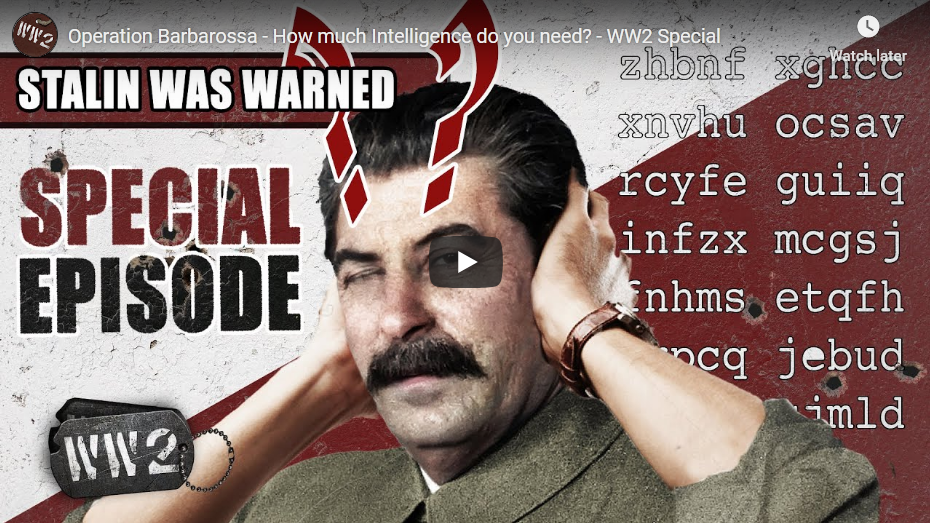
Josef Stalin was warned time and again from a variety of sources of the German plans for invading the Soviet Union, and yet, he did NOT heed those warnings.
Written and Hosted by: Indy Neidell
Director: Astrid Deinhard
Producers: Astrid Deinhard and Spartacus Olsson
Executive Producers: Astrid Deinhard, Indy Neidell, Spartacus Olsson, Bodo Rittenauer
Creative Producer: Joram Appel
Post-Production Director: Wieke Kapteijns
Research by: Indy Neidell
Edited by: Mikołaj Cackowski
Sound design: Marek Kamiński
Map animations: Eastory (https://www.youtube.com/c/eastory)
Sources:
Narodowe Archiwum Cyfrowe
Bundesarchiv
Archive of I.M. Bondarenko
Mil.ru
From the Noun Project: Letter by Mochammad Kafi
Soundtracks from the Epidemic Sound:
Johannes Bornlof – “Deviation In Time”
Max Anson – “Maze Heist”
Johannes Bornlof – “The Inspector 4”
Fabien Tell – “Last Point of Safe Return”
Jon Bjork – “For the Many”
Philip Ayers – “Trapped in a Maze”
Skrya – “First Responders”
Trabant 33 – “When in Bavaria”
Howard Harper-Barnes – “London”
Mythical Score Society – “Infinity Pool & Pool Tables”
The Fly Guy Five – “Cocktail Hour”
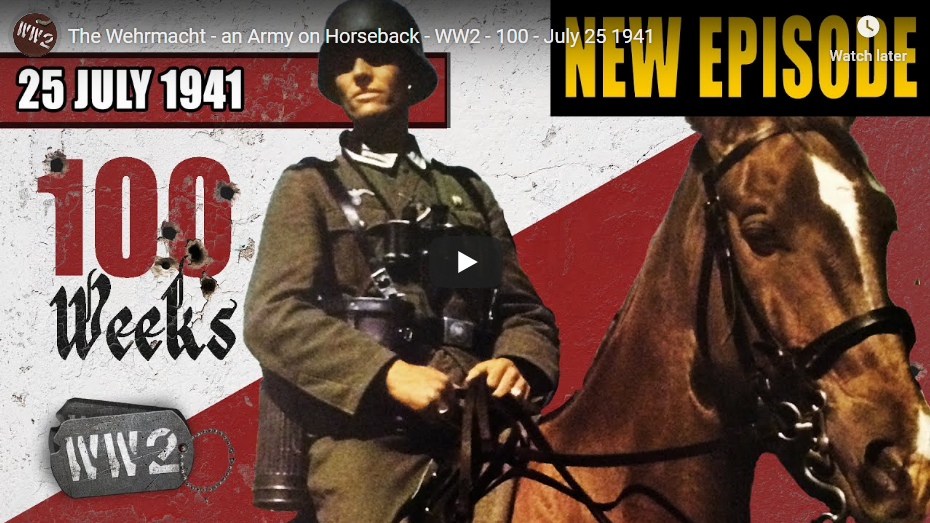
Although we may picture panzers when we think of the German Army in WW2, it was very much an army that relied on horses — especially in the east — for a large part of its supplies and logistics, and the horse situation on the Eastern Front has grown dire. Japan’s economic situation has also grown dire and they are now looking south for new sources of raw materials.
The Gewehr 1898 was the product of a decade of bolt action repeating rifle improvements by the Mauser company, and would be the standard German infantry rifle through both World Wars. Today we are looking at a pre-WWI example (1905 production) that shows all the features of what a German soldier would have taken to war in 1914.
Comments Off on Gewehr 98: The German WWI Standard Rifle
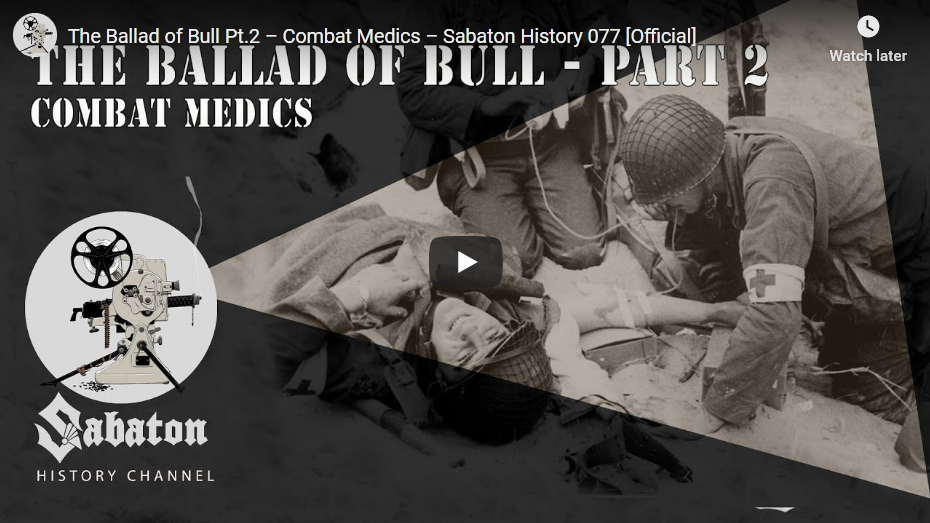
Sometimes war is killing, sometimes war is saving lives.
In the first episode we have seen Leslie “Bull” Allen become a hero, not through the death of his enemies, but by saving his comrades’ lives. And there were others like him. Soldiers and medics, whose first duty it was to preserve lives during war, even when it meant endangering their own safety. Here are three short stories of men and women, who served as medics at the front line of the Second World War, and became heroes to their country.
Hosted by: Indy Neidell
Written by: Markus Linke and Indy Neidell
Directed by: Astrid Deinhard and Wieke Kapteijns
Produced by: Pär Sundström, Astrid Deinhard and Spartacus Olsson
Creative Producer: Joram Appel
Community Manager: Maria Kyhle
Executive Producers: Pär Sundström, Joakim Broden, Tomas Sunmo, Indy Neidell, Astrid Deinhard, and Spartacus Olsson
Post-Production Director: Wieke Kapteijns
Edited by: Iryna Dulka
Sound Editing by: Marek Kaminski
Maps by: Eastory – https://www.youtube.com/c/eastory
Sources:
– Photos of Desmond Doss Courtesy of the Desmond Doss Council
– Frame vector created by milano83 – www.freepik.com
– Arkiv i Nordland
– P.Fisxo from Wikimedia
An OnLion Entertainment GmbH and Raging Beaver Publishing AB co-Production.
Sabaton History
2 days ago
The medical staff in war — combat medics, field surgeons and nurses, ambulance drivers and medevac crews — are often the unsung heroes of war, literally and figuratively.
That doesn’t mean that they don’t deserve to be remembered and their sacrifices honored. There are undoubtedly many instances of exceptional bravery among the medical staff of wars throughout history — for which they rightly should be praised. But they should also be remembered for their everyday work in trenches or field hospitals, in jungles and deserts, at sea or in mid-air. Treating a seemingly endless stream of incoming wounded, trying to give relief to those in pain, comfort to those in agony, and hope to to those who have lost theirs — day in and day out, for as long as the war will last.
If you missed part one of “The Ballad of Bull” you can see it right here.
Comments Off on “The Ballad of Bull” Pt.2 – Combat Medics – Sabaton History 077 [Official]
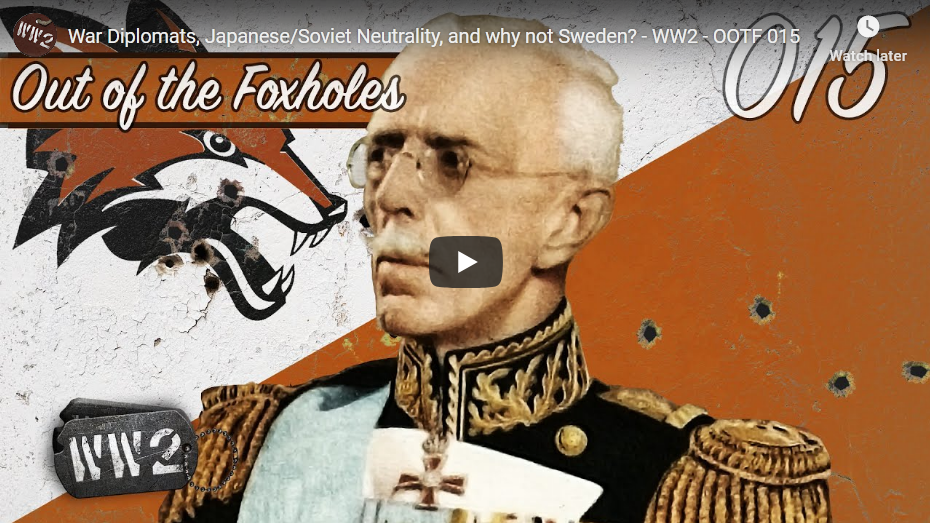
What happened to Allied ambassadors? And how did Hitler react to the Soviet-Japanese Neutrality Pact? And why didn’t he invade Sweden? Once again, Indy is in the Chair of Infinite Knowledge answering all your exciting questions about World War Two!
The planning for Barbarossa, the German invasion of the Soviet Union, took nearly a year and went through a variety of scenarios. The basic plan was finalized in December 1940, and that month General Friedrich Paulus ran a series of war games to test its feasibility. Today we’ll look at his conclusions.
Written and Hosted by: Indy Neidell
Director: Astrid Deinhard
Producers: Astrid Deinhard and Spartacus Olsson
Executive Producers: Astrid Deinhard, Indy Neidell, Spartacus Olsson, Bodo Rittenauer
Creative Producer: Joram Appel
Post-Production Director: Wieke Kapteijns
Research by: Indy Neidell
Edited by: Mikołaj Cackowski
Sound design: Marek Kamiński
Map animations: Mikołaj Cackowski, Eastory (https://www.youtube.com/c/eastory)
Sources:
Bundesarchiv
Narodowe Archiwum Cyfrowe
SA Kuva
from the Noun Project: Target by RITASYA, soldier by Wonmo Kang
Soundtracks from the Epidemic Sound:
Reynard Seidel – “Deflection”
Johannes Bornlof – “The Inspector 4”
Phoenix Tail – “At the Front”
Johannes Bornlof – “Deviation In Time”
Fabien Tell – “Last Point of Safe Return”
Johan Hynynen -” Dark Beginning”
Johannes Bornlof – “Death and Glory 3”
Rannar Sillard – “March Of The Brave 4”
For unlimited access to the world’s top documentaries and nonfiction series go to http://go.thoughtleaders.io/166892020… and use the promo code ‘historigraph‘ to get 30 days free access.
What did Spanish Republicans do during the Second World War? How would the Axis have divided Africa? And did Hitler plan to keep Mussolini around after the war? Find out as Indy and the Chair of Infinite Knowledge answer three more intriguing questions in this episode of Out of the Foxholes!
Hosted by: Indy Neidell
Written by: Rune Væver Hartvig
Director: Astrid Deinhard
Producers: Astrid Deinhard and Spartacus Olsson
Executive Producers: Astrid Deinhard, Indy Neidell, Spartacus Olsson, Bodo Rittenauer
Creative Producer: Joram Appel
Post-Production Director: Wieke Kapteijns
Research by: Rune Væver Hartvig
Edited by: Karolina Dołęga
Sound design: Marek Kamiński
Map animations: Karolina Dołęga
Visual Sources:
Bundesarchiv
US Holocaust Memorial Museums
Library of Congress Geography and Map Division
Nasjonalbiblioteket from Norway
Icons from The Noun Project by: Milinda Courey, Eucalyp, Luis Prado, Gan Khoon Lay, DonBLC, Pavel N and Rigo Peter
Music:
“Deviation In Time” – Johannes Bornlof
“Superior” – Silver Maple
“Underlying Truth” – Howard Harper-Barnes
As the German armed forces stretch further and further into the USSR, the Wehrmacht command doesn’t seem to agree where they are really going. In the Middle East, the Fascist French forces are delivered a hard blow as the Allied Syrian campaign comes to an end.