
Warships & Warriors
Published 10 Apr 2026When the United Kingdom’s Ministry of Defence faces a budget crisis, the rest of the world goes shopping. Welcome to Warships And Warriors! Today, we are exploring the global “Ghost Fleet” of the Royal Navy.
Through decades of cyclic Strategic Defence Reviews, the UK has repeatedly cut its fleet, selling off highly capable surface combatants, submarines, and massive amphibious assault ships decades before the end of their mechanical lifespans. In this video, we track down these decommissioned British warships to see how middle-power navies in South America, Eastern Europe, and Southeast Asia have transformed them.
From Brazil snapping up the Royal Navy’s amphibious heavyweights like HMS Ocean (now the Atlântico) and HMS Bulwark, to Chile bolting advanced missile systems onto ex-British Type 22 and Type 23 frigates, we uncover how foreign navies are gaining massive frontline capabilities at bargain prices. We also look at the strategic transfers of Upholder-class submarines to Canada, armed patrol vessels in Bangladesh, and the legally complex deployment of Sandown-class minehunters in the Black Sea.
0:00 – The Royal Navy Fire Sale
01:16 – Chapter 1: The Amphibious Heavyweights (Brazil)
04:31 – Chapter 2: The Frigates (Brazil, Chile & Romania)
07:16 – Chapter 3: The Submarines (Canada)
08:36 – Chapter 4: The Offshore Upgrades (Bangladesh & Philippines)
10:27 – Chapter 5: Clearing the Minefields (Lithuania, Greece, Ukraine & Estonia)
13:01 – Chapter 6: Mapping the Deep (Bangladesh)
13:48 – The Wrap-Up & The Tragic Fate of the Type 22 Batch 3
(more…)
August 11, 2026
How the Royal Navy’s budget cuts built foreign navies
August 10, 2026
Clarkson’s Farm (and seven subsidiary businesses)
While I don’t watch much TV outside the NFL season, I was certainly aware of Jeremy Clarkson’s post-Top Gear/post-The Grand Tour TV show, I only started actually watching it earlier this week. And that was only because of a glowing review from The Critical Drinker. I’ve been missing a really good show, but I’ve got four-and-a-half seasons to catch up on — I’m not a binge watcher, so that’s not going to happen immediately. On the social media site formerly known as Twitter, Sama Hoole points out just how tenuous a farming business can be in England nowadays and how many other businesses Clarkson has started on his farm to try to make it profitable:

Jeremy Clarkson of Clarkson’s Farm.
Jeremy Clarkson runs at least eight businesses off a thousand acres in Oxfordshire. Seven of them make money.
Count them. A farm shop. A pub. A lager brand. A bestselling book every autumn. A streaming series. A merchandise range. And now an app, built by Lisa Hogan, connecting the public to farms.
Then the eighth. Growing food.
Year one, working the ground flat out: £144. By year six, a £5,000 loss where £37,000 had been projected. This summer, two hundred of those acres grew nothing at all, because putting wheat in them was a guaranteed loss before the drill left the shed.
Every enterprise on that farm turns a profit except the farming.
The lager tells you why, and the chain of cause is on the record. Government subsidies were falling, so in 2021 he decided to brew beer from his own barley. That is the entire origin of Hawkstone. A decision taken in Whitehall turned an arable farmer into a brewer, and the beer worked.
Nothing about the grain changed. Barley sold as barley goes at whatever the buyer offers that morning. Barley in a bottle goes at the price the man who grew it decides.
That one difference is the whole business.
The pub is the same move in bricks. A derelict barn nobody had wanted since 2013, bought for reportedly under a million, now with a queue. On the menu a sausage from his own pigs costs 74p against 18p for the imported version, and he absorbs that gap on every plate. The farm shop, meanwhile, is legally barred from selling food produced more than sixteen miles away, and still cannot keep up with demand.
Now look at what the farming has behind it that yours does not. One of the best land agents in England. A farm manager who has worked that ground since he was a teenager. An agronomist. A production company covering the costs. A queue down the lane. A name that sells anything it is printed on.
It loses money anyway.
And this is the ordinary arrangement, not an eccentric one. Defra’s own figures say 72 percent of farms in England now take income from something that is not farming, and diversification accounts for 31 percent of total farm income. The government’s own Batters Review found nearly a third of British farms were loss-making outright in 2024.
Diddly Squat is simply the loudest version. The shop subsidises the field. The pub subsidises the field. The television subsidises the field.
A thousand acres of English farmland, and the one thing it cannot do is pay for itself by producing food.
Was Canada’s Victoria-class submarine deal a massive procurement failure?
Dominion Defence Review
Published 8 Aug 2026Plagued by chronic low availability while also being expensive to maintain, the purchase of used British submarines seems to be a good reminder that a low sticker price isn’t everything …
August 9, 2026
Hopefully the last word on “L’affaire Arday”
On her Substack, Helen Dale discusses the recently resigned Cambridge professor Jason Arday, the people who positioned him to fail, and what their motivations were in doing so:
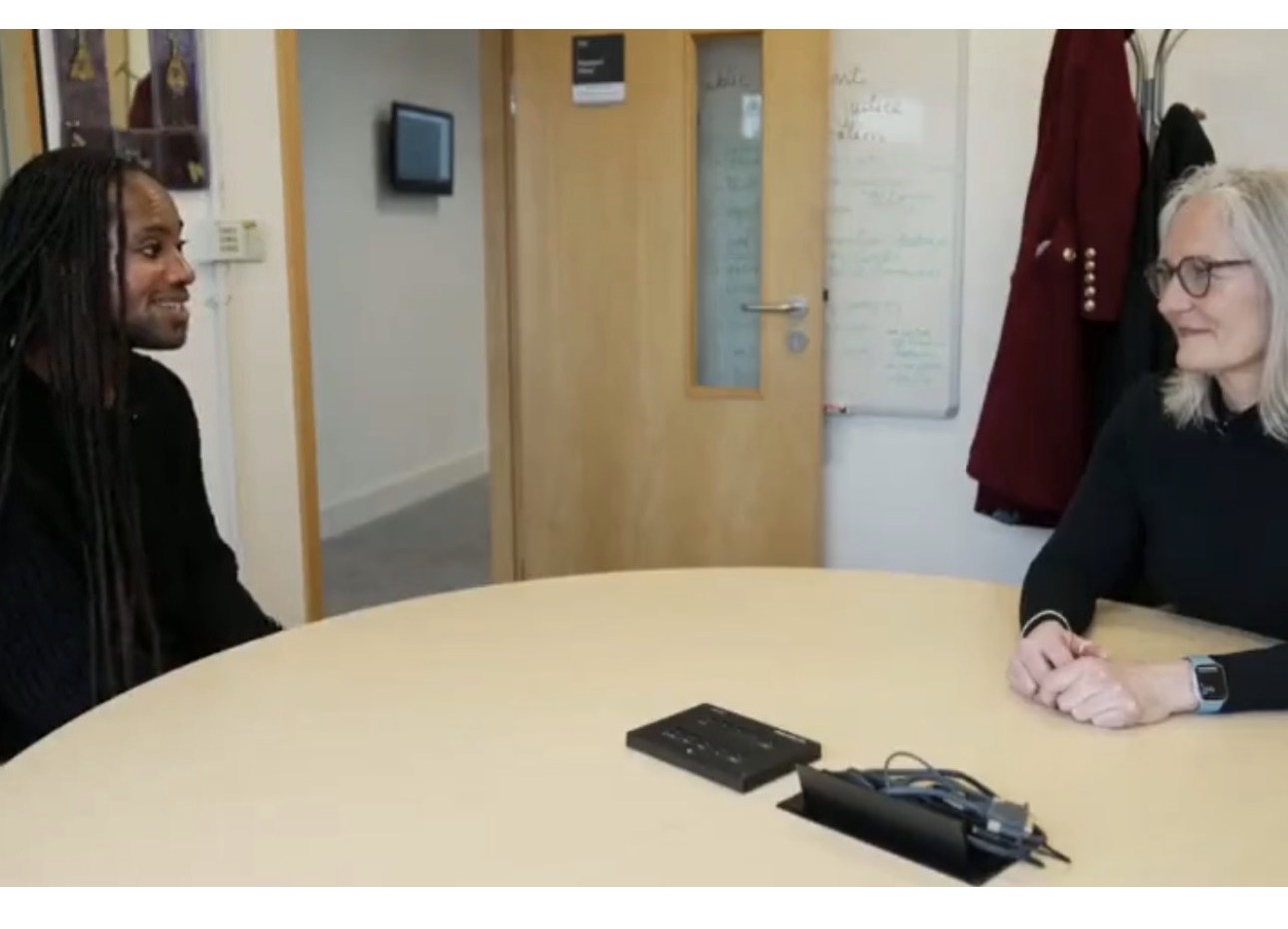
Arday’s arrival to take up his professorship at Cambridge was recorded by at least two BBC cameras. Here he is talking to Hilary Cremin, head of the Faculty of Education at Cambridge.
Sometimes both institutions and people pick up a firearm and blow both feet off.
Cambridge University has done so with its gross mismanagement of the Jason Arday affair.
Oceans of ink have been spilt already on this issue, so I’m not going to relitigate the main background. Instead, I want to make four observations, in no particular order.
1. Oh, the humanities (and social sciences)
The problems across these two large disciplinary areas long predate the idiotic wokery that got Jason Arday appointed to a professorial chair at Britain’s second oldest, second most famous university. Yes, wokery has made them worse, chiefly because the theoretical frameworks animating it — which Lorenzo Warby has written about both here and at his own place — deny the possibility of truth outside that of personal experience. This means people don’t just get their own opinions, they also get their own facts.
[…]
2. Nathan Cofnas is not racist
There are two distinct things going on in the background to the Arday appointment(s). The first is that he was appointed despite being a complete doofus and as dumb as a stump. The second is that while there probably are black candidates out there qualified to be a Cambridge professor, there won’t be many, and they are highly unlikely to be the descendants of slaves (from the Caribbean, the United States, or South America). They’re much more likely to be from a posh Nigerian background, and a particular Nigerian tribe (Igbo).
In the words of computer scientist Eric S. Raymond:
This is completely predictable to anyone who has spent 10 minutes reviewing the data on racial differences in mean IQ and knows what that implies for the right end of the bell curve.
The intersection set of people with predominantly sub-Saharan African ancestry with people sufficiently bright to deserve a university professorship is not empty, but it’s vanishingly small. The demand greatly exceeds the supply.
Which is why we’ve seen this movie many times before, and will again. They can’t help it. Corrupted academia would rather hire thousands of other incompetents than let go of its “anti-racism” to hire on merit alone.
The refusal to grapple with the black-white average IQ gap is astounding, and while the (mostly) white people responsible for appointing Arday look like absolute fools, the black intellectuals who refuse to accept an established fact look both truculent and dishonest. They don’t have to accept it’s genetic. They do have to accept that it’s real. As far as I’m aware, only one major black intellectual, Wilfred Reilly, accepts the existence of the gap (disclosure: I have been a guest on Wilfred’s podcast). If there are others, I would be delighted to know their names.
Two issues fall out of this. The first is that Nathan Cofnas is not racist for pointing it out. Facts are not racist. The second is that if people disagree with Cofnas’s secondary argument that the reason for the gap is primarily genetic, then yelling racist! at him does not prove him wrong. Evidence is what you need if you want to prove someone wrong, not moral abuse.
3. It’s the rule of law, Jim, but not as we know it
The idea that historically disadvantaged groups are entitled to extra civil rights — coupled with social preferment — over and above those held/enjoyed by people considered their oppressors is inimical to the rule of law, specifically the principle that people should not be punished for crimes they did not commit. We do not inherit criminality from our ancestors. This is in turn derived from the larger principle of treat like cases alike, which was first articulated in its modern form by the Roman jurist Ulpian.
Jason Arday got his job in large part because a lot of people — and especially humanities and social science academics — think it’s reasonable to punish whites (and sometimes East Asians) who have never wronged blacks by making it harder for them to get into university or gain employment. This punishment of whites/East Asians who have done no wrong is undertaken to compensate blacks who have not been wronged for wrongs committed by other white people against other black people in the past. This logic is the basis of all affirmative action schemes and preferential hiring regimes (provision for which exists — albeit in limited form — in the UK’s Equality Act 2010). It is also the logic of inherited vengeance.
[…]
4. Enter Carter-Ruck, or Journalism v. Law v. a bloke with a blog
It’s been widely — and accurately — reported that junior academic Nathan Cofnas broke the Jason Arday story on his personal blog. However, it shouldn’t have been his job to do. The same (or very similar) research had been done separately by both a retired academic (John Harris) and a journalist with Times Higher Education — an outlet dedicated to the tertiary education sector and owned, ultimately, by Rupert Murdoch. In response to both sets of revelations, either Cambridge or Arday or perhaps both in concert (this is unclear on the facts available to me) instructed Carter-Ruck, the most famous — and aggressive — specialist defamation law firm in the United Kingdom. Historically, Private Eye magazine (often a victim of their attention) referred to them as “Carter-Fuck” and, more recently, “Farter-Fuck”.
Despite the fact that the THE has libel insurance and Murdoch generally defends his publications, the magazine backed down. Jack Grove is the reporter who had his story spiked. I have it on good authority that several Cambridge academics — and perhaps people from other universities — then approached Cofnas with the material that they (and possibly the THE) had collated. Cofnas — being young & junior — is what lawyers call “a man of straw”. Suing him in defamation would benefit no-one, least of all Carter-Ruck. He published, scooping Jack Grove.
How To Launch the Apocalypse – Death of Democracy 27 – Q3 1939
World War Two and Spartacus Olsson
Published 8 Aug 2026This is Step 27 in the Death of Democracy: LAUNCH A WORLD WAR — the moment when the collapse of democracy, diplomacy, and collective security culminated in an attack that would engulf the world.
In July and August 1939, Adolf Hitler turned the destruction of German democracy into the instrument for launching a European war.
While Nazi Germany armed Danzig, mobilized reservists, prepared its U-boats, introduced civilian rationing, and manufactured stories of Polish aggression, Britain, France, Poland, the United States, and the Soviet Union made a final series of increasingly desperate attempts to prevent catastrophe.
At the center of the crisis was the failed effort to construct an Anglo-French-Soviet alliance against Nazi aggression. Negotiations foundered on delay, mutual suspicion, the Baltic states, and the Soviet demand for military passage through Poland. Stalin then chose an agreement with Hitler: the Molotov–Ribbentrop Pact and its secret protocol divided Eastern Europe into German and Soviet spheres of influence and prepared the way for the destruction of Poland.
Inside Germany, there was little repetition of the supposed national enthusiasm of August 1914. Nazi leaders and Wehrmacht commanders ranged from confidence and opportunism to anxiety and fatalism, while many ordinary Germans feared that Hitler had finally pushed Europe beyond the point of no return. Yet propaganda, repression, and six years of dictatorship had stripped the population of any effective means of preventing the war.
The next episode will conclude the series with an epilogue examining what the destruction of the Weimar Republic teaches us about defending democracy today.
August 8, 2026
Pointing the finger of blame accurately
The Librarian of Celaeno wants you to know that former professor Jason Arday did nothing wrong:
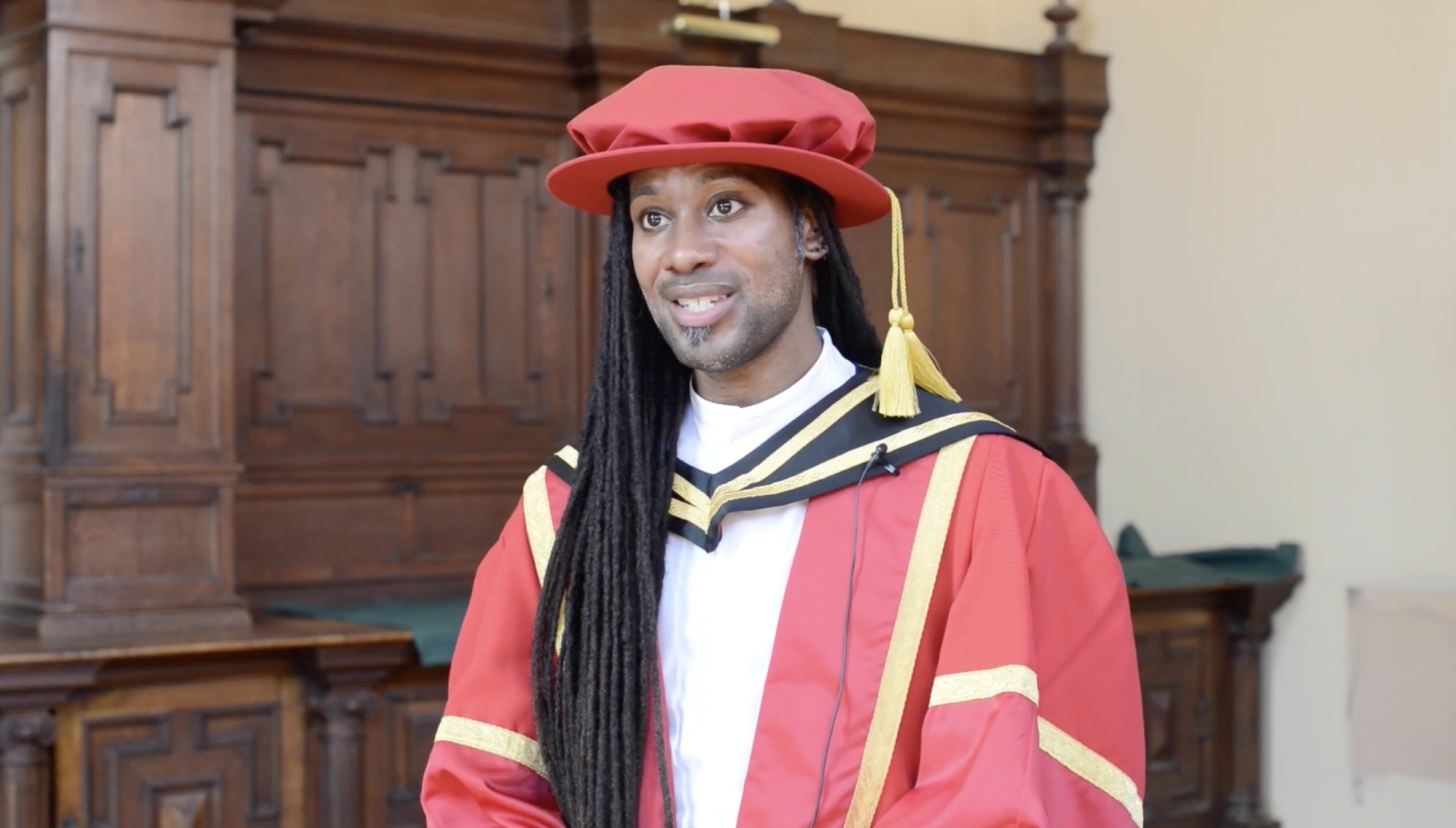
Former Cambridge professor Jason Arday
Image from Andrew Doyle
Once upon a time, an autistic black child was born. Usually, it takes several years to figure that out (the autism, not the blackness), but so autistically autistic was the infant Jason Arday that it was immediately apparent to everyone without there even needing to be any public record of it. Perhaps there is some lost evidence of him having a Reddit account as a toddler; one can speculate. Arday was unable to talk until age 11 and has been unable to stop talking ever since, which is fortunate since otherwise many of his unbelievable life accomplishments would now be unknown.
The range of setbacks he has overcome boggles the mind. Despite being illiterate until age 18, Arday not only graduated high school, but got into college, where he finally learned how to read good. This is even more incredible when you consider that the same year he discovered what the alphabet did he was beaten into epilepsy by random teens — he forgave them so thoroughly that any documentation of the incident is now gone from police records — and that some unspecified time before that he was in a car accident that left him in a waking coma for months. He studied so hard in college that he gave himself a brain tumor, which he evidently removed by himself in the mirror, since there is no evidence of a surgeon having done so. It may be that Arday has in fact learned to read several times in his life, but keeps getting that knowledge erased by semiannual episodes of CTE.
Even though he’d accumulated a substantial amount of what for a normal person would be crippling physical trauma over the course of his short time in the world, of the sort that would require medical interventions that would otherwise severely limit active life, Arday rapidly became one of the world’s most elite athletes. He participated in a ‘30 Marathons in 35 Days’ challenge, which was actually somewhat documented by an independent contemporary account, in the midst of which he suffered a hairline fracture in his fibula, which he seemingly just shrugged off to complete the remaining nine marathons. This was apparently the last time he ran slowly enough for anyone to witness, however, because his career as an ultramarathon runner who hyperGogginsed his way through 600 miles in six days passed entirely without notice by the few other people on Earth who could conceivably do that. He played semi-professional soccer, but was so good that he got bored with it and moved on before anyone could write his name down on a roster. Along the way, Arday became one of the best snooker players in Britain, with a skill level far beyond the need to participate in any public tournaments, other than the single amateur contest he entered but was too gracious to the other players to win.
He surmounted the intellectual challenges involved in becoming a PE teacher, and from there went on to earn a Ph.D as a black man, with his thesis largely consisting of arguing that it’s easier to do well in academia if you’re not closely supervised. It was so convincing a premise that his doctoral committee at Liverpool University evidently forewent actually reading the dissertation, perhaps also having concluded that his proximity to their whiteness had burdened him enough already. It was thus that Dr. Arday came into being, following a path blazed by Ibram X. Kendi as a bedredlocked black man writing about being black while being black blackly in a world basically controlled by the bad guys in Caddyshack.
On Substack Notes, Michael Southon also points the finger at the people who enabled Arday’s rise and attributed racist beliefs to anyone who asked questions:
Arday’s arrival to take up his professorship at Cambridge was recorded by at least two BBC cameras. Here he is talking to Hilary Cremin, head of the Faculty of Education at Cambridge.
Cambridge University was so proud of its choice of Jason Arday that they invited the BBC to film Hilary Cremin, the head of Cambridge University’s Faculty of Education, welcoming Arday to his new post. In the clip you can hear Cremin gushingly tell Arday:
We are so lucky to have you. You are the best in the world in terms of the research that you do.
Arday himself is incredulous and suggests that some people will see his appointment as “tokenistic”. In response, Cremin assures him he is “world class”.
The Telegraph reports that when Arday’s students complained that they weren’t being properly supervised, they were told they were being “racist”.
The truth is that Cambridge was desperate to appoint more people of colour. His alleged autism ticked another box on the identity politics agenda. The dreadlocks were icing on the cake.
Will this episode, which has been reported around the world, finally convince the establishment that DEI is a disastrous social policy that lowers standards and turns august institutions whose reputations are based on centuries of meritocracy into the laughing stock of the world?
I doubt it.
Also on Substack Notes, GenX Anecdotes finds the behaviour of Hilary Cremin to be emblematic of a kind of condescending attitude found most frequently among liberal white women:
We know the type.
And it does tend to be a woman.
They love nothing more than to put on that awful softy, patronising voice, as if talking to a small child.
I am reminded of that excrutiating clip of Hilary Cremin (Head of Cambridge University’s Faculty of Education) “You are the best in the world in terms of the research that you do“.
Really? “The best in the world”?
Like the bestest in the whole big wide world ever! 😂
I’m surprised she didn’t lean in and give him a pat on the head.
Wtf?
And that tone. 😭
It’s bad enough when they do it to kids.
I have posted about this “tone” before.
Near where I live there’s a Waitrose. The spiritual home of such a woman.
There used to be a Muslim woman wearing a hijab who would beg for money outside. I never gave her money because she seemed fake to me.
Always clean and well presented with the latest new iPhone (!), she would look up from her phone when she saw someone approaching, visibly completely change her facial expression, tilt her head to one side in a kind of puppy dog, “poor me” way, and put on a kind of fake whimpering “please help me!” and hold her hand out.
It was so obviously fake af!
One day I was waiting outside the shop for my daughter who had run in to get something.
As I waited, these two middle class, middle aged women stopped to talk to her.
They were both fawning over her, using that same softy patronising tone, falling over themselves to praise her. One of them said “you’re so beautiful and brave” and the other put her arm around her.
It was such a sychophantic display of patronising bullshit, I think I might have thrown up a little bit in my mouth.
This pathological sickly, performative fawning over their little pet minority groups, is something to behold!
And they were both being played.
This beggar wasn’t homeless. So obviously! You’d have to be a special kind of stupid to think so.
But they really are a special kind of stupid.
They just wanted to feel good about themselves. It’s all about their need to feel like they’re “good kind people”.
Then, no doubt make a FB post about it so all their other annoying cloying phoney friends can “coo” over how much they adore their little darling minority pets.
🤮
August 7, 2026
Blood Dawn by Hans van de Ven
On his Substack, Dr. Robert Lyman reviews a new book on the Second World War in Asia by Hans van de Ven:
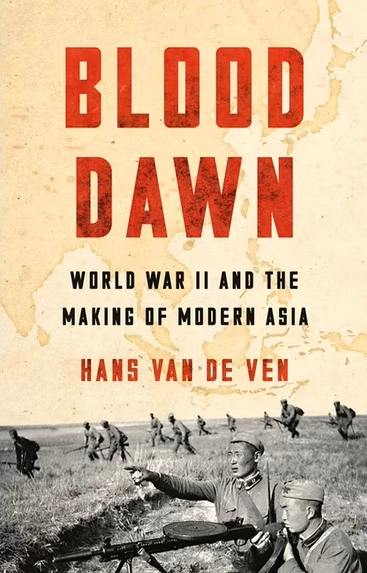
I really wanted to enjoy this book. The enthusiastic endorsements from Rana Mitter, Antony Beevor and Richard Overy raised my expectations considerably. Yet by page eight of Blood Dawn I felt as uncomfortable as the proverbial curate confronted with a rotten egg.
The author aims to provide a narrative that “contributes to a gradual shift in our understanding of the significance of World War II”. This is admirable. A more Asian-centred interpretation of the conflict is certainly needed, as the war is still too often viewed through a Eurocentric or North Atlantic lens. Historians such as Rana Mitter, Jonathan Fennell and Richard Overy have already helped redress this imbalance. It is unquestionably true that the conflict began with Japanese aggression in China as early as 1931 and that the war both began and ended in Asia.
The problem is that the book insists that the central dynamic of modern Asian history is a nationalist struggle to escape imperialism and colonialism. While both undeniably shaped Asia, it is a considerable stretch to explain the region’s political development primarily through resistance to empire. The author correctly notes that many Asian political movements saw the war as an opportunity to cast off colonial rule, but he greatly overstates their role in determining the war’s outcome.
Consequently, the analysis neglects the broader dynamics of power – local, regional and imperial – that shaped Asia before, during and after the war. The author assumes that modern Asia is the product of “Asian peoples’ continuing struggle to overcome the legacies of empire”. That seems reductive. A more convincing interpretation would describe modern Asia to be the result of a power-based confrontation among declining powers such as Britain, France and the Netherlands, a rising Japan, a developing China, and the emerging superpowers whose ideologies would shape postwar Asia: the United States and the Soviet Union. The war was principally caused by one rising empire, Japan, seeking to assert its dominance regionally and to replace existing empires.
As a result, some empires disappeared, others expanded, and many colonial territories gained independence as competing political elites seized opportunities created by wartime upheaval. Where those struggles could not be resolved peacefully, civil war followed. One may call this nationalism or self-determination, but it was power politics nonetheless.
In the postwar period, Asians were often less concerned with abolishing imperial legacies than with creating new centres of power controlled by local elites. Since 1945, Asia has been shaped by competing powers, some imperial in nature, such as China, the Soviet Union/Russia and the United States, and others nationalist and local.
A similar lack of nuance appears in the treatment of imperialism. British imperialism is lumped together with that of France and the Netherlands, with little appreciation for their differences. British involvement in 19th-century China is presented primarily as the cause of China’s problems rather than as part of a broader interaction with a declining and dysfunctional Qing polity. Imperialism was certainly influential, but so were domestic developments, including China’s internal sclerosis and Japan’s response to modernity, which produced its own imperial ambitions in China, Korea, Manchuria and the Pacific.
The author’s ideological predispositions are impossible to miss, and the book frequently descends into crude Anglophobia. We are told, for instance, that “British elites, who liked (and like) to think of themselves as natural and gifted rulers, found a new outlet for their yearning to govern India”. Such statements are simplistic, if not puerile. Similarly, discussing the collapse of the American-British-Dutch-Australia Command (ABDACOM) in 1942, the author remarks that “the Dutch were abandoned to their fate. Retreat is an underappreciated military skill, and the British were practiced masters of it, as they had shown at Dunkirk”. This is the sort of cheap point-scoring that would weaken an undergraduate essay, yet here it appears in a supposedly serious work of history.
The treatment of India is particularly problematic. The narrative focuses heavily on the Indian National Congress and consequently overlooks the diversity and complexity of the independence movement. There is little recognition that what Congress often described as British obstruction was, in part, a debate within Britain (especially the Conservative Party) about the form an independent India should take. The same debate also took place within Indian circles considering the subject.
During the 1920s and 1930s, the central political question in India was often not whether independence would occur but what form it would take and, crucially, who would benefit from it. The Quit India movement of 1942 followed the Cripps Mission, which had already offered India Dominion status after the war. Congress sought immediate separation, but many of its leaders privately supported the Allied war effort, believing correctly that victory would hasten independence. One could even argue that Congress’s greatest unintended achievement was not independence but the partition and communal violence that accompanied it. The book fails to engage adequately with these complexities.
Brexit plus ten
Mark Nayler looks at the state of Britain ten years after the historic vote to leave the European Union. He notes that there appears to be a bit of buyer’s remorse among those who voted to leave the EU, although I would note that the political leadership, both Conservative and Labour, almost all did their level best to sabotage any positive results (although the “Boriswave” of immigrants would have swamped even a substantial economic boom all by itself).

In the run-up to the UK’s referendum on EU membership in June 2016, extravagant claims were made by both the Remain and Leave campaigns. Leaving the EU, the so-called Remainers warned, would propel the UK into recession and mass unemployment. Brexiteers, as they were dubbed, countered with promises of enhanced sovereignty, tighter borders, and liberation from Brussels’s stifling bureaucracy. The latter won the Brexit vote (as it came to be known) by 52% to 48%. But just over a decade on from that historic decision — and six and a half years since the UK officially left the bloc — it’s less clear whether they also won the argument.
This is in large part because of geopolitical turmoil since the vote. Throughout the last decade, there has been a global pandemic, Russia has launched a full-scale invasion of Ukraine (which, in turn, caused an energy crisis across Europe), and Donald Trump has waged a series of tariff wars across the world. The difficulty of disentangling the effects of these events on the UK economy from those caused by Brexit is formidable. One analyst has even said that “we will never know precisely what the impacts of Brexit were”.
Overall, however, the sweeping transformations predicted by both Brexiteers and Remainers — positive in the former case, negative in the latter — have not occurred. The actual changes have been less dramatic, more gradual, and more mixed than either side forecast. One also has to factor in the UK’s lack of a stable leadership since the vote: when Labor’s Andy Burnham took over from Keir Starmer on July 20, he became the UK’s 7th prime minister in 10 years. This, perhaps, has so far prevented the theoretical autonomy now possessed by the UK from being fully realized. According to a poll conducted in June, 57% of Britons now believe that it was a mistake to leave the EU — meaning there are a lot of dissatisfied Brexiteers out there.
Remainers forecast economic ruin for the UK if it chose to leave the EU. According to the then-Chancellor of the Exchequer George Osborne, “A vote to leave would represent an immediate and profound shock to our economy [and] that shock would push our economy into a recession”. A recession failed to materialize, although the pound suffered its biggest-ever one-day drop on June 24, 2016, the day after the vote, falling 10% against the dollar and 7% against the euro (it still hasn’t returned to its pre-Brexit values against either currency, although Trump’s tariff wars and the pandemic are also factors here). That said, researchers broadly agree that Britain’s economy has contracted due to Brexit. According to a 2025 paper for the US National Bureau of Economic Research, UK GDP per capita is 6–8% lower than it would have been had the UK remained in the EU. Investment is down by 12–13%, employment by 3–4%, and productivity has been reduced by about 4%, according to its authors.
Immigration was a major theme of the Leave campaign. The UK Independence Party’s widely criticized poster showed a large group of Syrian refugees at the Croatia–Slovenia border in 2015, next to a massive slogan reading “Breaking Point” — and, underneath it, in smaller letters, “The EU has failed us all”. The center-right party was playing to concerns about a surge in migration over the decade and a half preceding the referendum, triggered by EU enlargements in 2004,when ten new countries joined, and in 2007. In 2000, migration to the UK from other EU countries stood at 6,000, but by 2015 it had risen to 330,000. In 2015 and 2016 alone, more than a million migrants arrived in Britain. According to a poll conducted on the day of the referendum, 33% of Leave voters said the main reason for their decision was a belief that leaving the EU “offered the best chance for the UK to regain control over immigration and its own borders”. It seems the poster had done its job.
The composition of Britain’s migrant population has changed radically since Brexit, with an increase in non-EU migration more than compensating for the reduction in arrivals from the EU. But immigration has not decreased. In fact, the UK has witnessed record levels of immigration over the last decade. In the year ending March 2023, just over three years after Britain’s withdrawal from the bloc, net migration peaked at 944,000.
August 6, 2026
More threads unravelling from Professor Jason Arday’s backstory
As I mentioned the other day when I first noted this fascinating tale, I don’t think I’d heard of Professor Jason Arday before this week, so pretty much any new facets of the story will be news to me. Here’s an extensive survey of what’s been revealed so far by Donna Louise Flowers:
Cambridge professor Jason Arday
Image from Andrew Doyle
Cambridge Knew in 2023
On 19 May 2023 Martyn Hammersley emailed Hilary Cremin, Head of the Faculty of Education, and Rhys Morgan, Head of Policy. He flagged substantial plagiarism in Arday’s 2018 paper, including quotes attributed to Arday’s own interview subjects that matched quotes from another researcher’s participants. (emails first reported by Nathan Cofnas and later confirmed in The Telegraph)
On 21 June 2023 Morgan replied that it was “not within our remit”. Cremin said Arday had the department’s full support.
That is three years of Cambridge knowing. Everything that followed sits on top of that decision.
In the BBC’s 2023 video marking his appointment, Cremin went further. She said: “We are so lucky to have you. You are the best in the world in terms of the research that you do.” (BBC video, 2023)
Eight months later, on 2 February 2024, Arday was appointed to ITV’s Cultural Advisory Council. Sixteen months after the concerns were raised, on 19–20 September 2024, he led sessions on equity, diversity and inclusion at the National Aspiring Vice Chancellor Development Programme at Bolton.
He was teaching the next generation of vice-chancellors while the questions about his own record remained unanswered by the institution that employed him.
[…]
The Claims, Laid Out Together
Here, in one place, is the full set of claims Jason Arday has made about his life:
- Diagnosed with autism and global developmental delay at the age of three.
- Non-verbal until the age of eleven.
- Unable to read or write until the age of eighteen.
- Four to five hours of speech therapy every day from the age of three.
- A mother with five degrees.
- A benign brain tumour removed a fortnight before his PhD viva, which wiped his memory of the entire thesis; he re-learned it and still passed.
- Two further brain tumours diagnosed after the PhD, later found to be benign.
- Deaf in one ear.
- Ran 30 marathons in 35 days, the last nine after sustaining a hairline fracture that made his leg swell to twice its normal size.
- Covered 300 miles in three days.
- Covered 600 miles in six days (later quietly amended in some citations to twelve days).
- Raised £5.5 million for more than 80 charities.
- Installed water points in South America and West Africa with WaterAid.
- Received a severed pig’s head at his parents’ home.
- Faced a knife-wielding masked man.
- Received bullets in the post, rape threats against his daughter, threats to make him “top himself”, and other forms of intimidation including corrosive substances and mutilated animals.
- Came through a professional football club’s academy system and later played semi-professionally.
- Was on the verge of turning professional at snooker.
- Awarded an MBE in 2017 and turned it down.
- Olympic Torch Bearer for London 2012.
- Appeared in the ITV documentary series Seven Up!
- Obtained a Masters degree in “psychodynamic practice” from Birkbeck and became a qualified counsellor.
- Held visiting professorships at the University of Glasgow and Ohio State University.
This is the origin story as it has been told. Almost none of it has been independently verified. Several of the most dramatic claims have been directly contradicted by the organisations or records that should corroborate them.
That is the real failure.
In the rush to be diverse, to be inclusive, to champion a Black, autistic, working-class success story who ticked every box, almost no one stopped to ask the simplest question of all: when you look at these claims as a totality, how plausible are they?
Each claim on its own might have been given the benefit of the doubt. Taken together they form a pattern that should have been obvious long before Carter-Ruck letters and police complaints were required to shut the questions down.
The institutions that elevated the legend spent years repeating it. When the contradictions began to surface they did not investigate. They defended. They edited the websites quietly. They called the scrutiny a vile campaign. They treated the act of checking as the real offence.
Jason Arday did not need to invent a modest success story. He invented a legend. And for years almost no one dared to ask whether any of it was real — because he is Black, and in the current climate that was supposed to be enough.
It was not enough. And it never should have been.
Update: Reportedly after Cambridge opened an investigation into the plagiarism allegations, Professor Arday has submitted his resignation.
Jason Arday, who was touted as the university’s youngest black professor, announced on Wednesday that he was resigning effective immediately from both the university and Jesus College. His resignation came just hours after Cambridge had said it opened an investigation into the allegations after “new information” came to light.
In a statement published by the Good Law Project, Arday said that the “relentless accusations” had taken a “profound toll” on him. He added that he has decided to resign for his “own wellbeing”.
“I have tried to continue because I believe deeply in the values of higher education, in rigorous scholarship, and in the transformative power of universities. I have tried because of my students, my colleagues and the countless people who have written to tell me that my journey gave them hope,” he wrote. “But there comes a point when the personal cost becomes too great. I have a family. I want to be present for them. I want to reclaim some peace, some privacy and some semblance of an ordinary life. I no longer wish to feel as though I am living under a constant spotlight, where every aspect of my life is subject to public examination and judgement.”
The next shoe was funny enough that I assumed it was from the Babylon Bee, but apparently is not parody:
Following Arday’s resignation letter, social media users claimed that the statement itself appeared to have been AI-generated. According to Panagran, the leading AI writing detection software, Arday’s resignation statement was deemed to be 100 percent AI-generated.
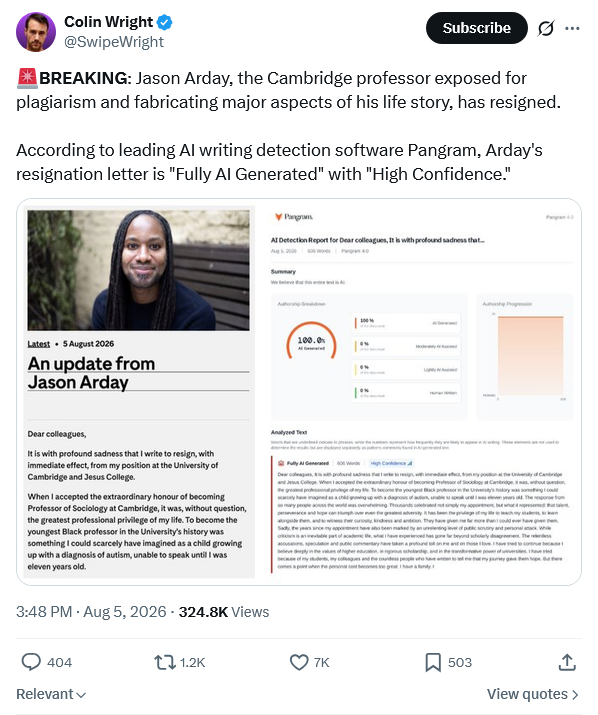
Frederick Alexander decrys the fools that bought Arday’s fantastic stories as nothing but the truth and moved mountains to get him advancement at all costs:
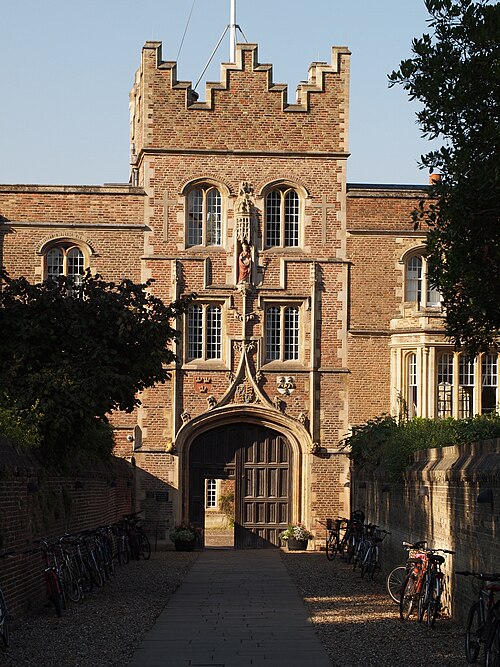
The main entrance of Jesus College, Cambridge from Jesus Lane.
Photo by Verbcatcher via Wikimedia Commons.
We may never know the full extent of Jason Arday’s talents. Perhaps he also sang the difficult half of Milli Vanilli, crossed the Atlantic on a lilo with a shattered pelvis, and designed the SpaceX rocket catcher in the margins of his PhD thesis. There is, in truth, no claim he could have made that the intellectual class would not have believed, provided it flattered their view of themselves as good and righteous people.
Did it not occur to him that someone might check? Confronted by the Guardian, Arday has since offered a defence that will live on his Wikipedia page forever despite the efforts of its editors: “To be honest with you, I thought you’d just believe me. Why would I lie?”
It’s probably the most honest thing he’s ever said. More importantly, it describes the workings of his career in the sort of plain language that the sociology department hadn’t quite trained out of him. He thought the Guardian class would believe him because he understood that they wanted to believe him. They were falling over themselves to grant legitimacy to anything he said simply because he was the one saying it. His story bore out their politics, advertised their virtue and bolstered their status. Scrutiny would only spoil the party.
Perhaps this explains why Arday’s writing also got a pass. Here, for instance, is Arday explaining … well, you figure it out.
As the researcher, textual units concerning the narratives and biographies were identified based on the criteria that the identified themes were fit for purpose in supporting the themes associated with the study.
You would get more sense from a gibberish generator. Academic writing is hell at the best of times, but sociology has mumbo-jumbo built in. Banalities disappear beneath layers of abstraction presumably in an effort to make them sound deep or insightful. Next to this, the plagiarism comes as a relief, another person’s sentences at least making the effort to mean something.
The writing should be disqualifying by itself, but it’s not like Arday tiptoed into the academy while nobody was looking. Cambridge signed him up in the manner of a Premier League football team landing the next Ronaldo, but on the strength of highlight reels that turned out to be AI-generated.
The remarkable thing is not merely that Arday appears to have invented stories about himself. Lots of people do that. I did it when I was nine, trying to convince people I was invisible. Nobody appointed me to a professorship at one of the country’s most prestigious universities. Or rather, formerly prestigious universities. Who can look at these institutions now and not see the wreckage of ideological capture?
They’re calling the fallout “a vile campaign” to undermine Arday’s credibility – of course they are. It’s a smear by “right-wing newspapers” intended to embarrass Arday and those who elevated him. Of course it is. But the embarrassment was born of their own vanity and gullibility. They demanded that everyone believe the story, then labelled anyone who checked it as morally suspect and worthy of a police investigation.
Nearly 15,000 people have signed an open letter declaring the allegations “entirely false”, even as the evidence points the other way. How long before they withdraw their names, reframe events and reposition themselves as the full truth comes to light? Soon they will talk solemnly about the importance of integrity, dissociate themselves entirely from Arday – yesterday a useful idiot, today a serious liability – and somehow still make it about race and right-wing bigotry. This stuff is hardcoded. The rest is just presentation.
The administrators who made the appointment will survive with a few bruises, scapegoating Arday until the media get bored of it. Then they’ll pick up where they left off, a little more careful next time – running the checks, scouring the next candidate’s PhD for plagiarism, testing every fantastical claim against reality, except where reality conflicts with ideology. Which is likely most of it.
QotD: John Nicholson, a Muslim saint who really hated India
John Nicholson really, really hated India. This was unfortunate for him in one sense, since he spent nearly his entire life after the age of sixteen there, until he died — violently — while still a young man. But in another sense, it really worked out for him, since it afforded him the opportunity to live out his dream, which was to abuse Indian people. Clearly, he was a complicated man.
[…]
[The First Anglo-Afghan War (1838-1842)] began with the British efforts to replace Afghan Emir Dost Muhammad with a more pliant leader, which in a pattern seen from the days of Alexander onward, involved an invasion, an attempt at a pacification, followed by a grim and growing awareness that the place is full of some of the most brutal and fractious people on Earth and is simply ungovernable, which terminates in a costly retreat, the country itself returning to its customary barbarism, efforts to change it having had all the effect of flinging an encyclopedia into a chimp enclosure. For the British, this meant early success, then an overwinter occupation in which their position deteriorated, then a mass uprising, whereupon they negotiated with the locals for a peaceful exit upon surrendering their arms. The retreating British were of course betrayed and massacred. One man made it out.
Nicholson, serving as an adjutant officer with a native regiment, had earlier been taken prisoner, and endured horrific conditions as such. He watched as his Hindu soldiers refused — to a man — to convert to Islam, and were executed one after the other. After having been released, he discovered that his younger brother Alexander had been murdered and mutilated by the Afghans while retreating with the rest of the army. The entire effort had been a great traumatic waste.
One might expect that Nicholson would hate the Afghans and perhaps revise upward his estimation of the brave Indian soldiers who had served under him. But while he did indeed revile the Pashtun tribesmen (“the most vicious and bloodthirsty race in existence”) he actually seems to have disliked them slightly less than the Hindus, perhaps on the grounds that no one that eager to kill Indians can be all bad. Indeed, he seems to have learned there some harsh lessons concerning what it would take to actually accomplish anything in the subcontinent, doctrines he would apply fastidiously and thoroughly. In many ways, he went a bit more native than he would have cared to admit.
After the war, Nicholson was promoted and given a series of administrative jobs, where he became well-acquainted with the chaotic political situation in the Punjab region. Mostly under the control of the Sikh Empire, the area had long been contested ground between that new faith and Islamic invasions from the Mughals to the southeast and the Afghans through the Khyber Pass to the west, not to mention restive Hindu Rajputs and Marathas to the south. The unstable (then and now) region of Kashmir lay to the north, and the whole of the region was plagued by innumerable bandits and warlords. The BEIC ruled through direct administration, client kings, and various alliances, the latter two of which its political officers (“politicals”) had to interact with on a regular basis. It was very much a situation out of George R. R. Martin’s fever dreams, constant betrayals, perversions of every kind, and even a Ramsey Bolton-esque Sikh despot who flayed men alive for amusement.
Nicholson was in charge of the Bannu area, where he rapidly made a name for himself as a local administrator. The whole of the Bannu was infested with bandits of all kinds, from jihadis to Hindu cultists to normal brigands, and the people lived in constant fear of their depredations. Nicholson had no real interest in bettering lives, but he had even less interest in allowing any Indian, anywhere, to challenge his authority. So he set about fixing the problem as only he could.
Nicholson arrested and executed scores of bandits, rapidly processing them through his very efficient court system. The idea of impartially dispensing justice without respect to person or affiliation was quite new to the area, but Nicholson made sure the locals adjusted quickly, tolerating not even the slightest hint of disrespect from anyone, no matter who he was. When a local Muslim leader casually spit on the ground in front of him, Nicholson made him kneel and lick it up. Anyone who failed to display prompt obedience to his commands he had flogged immediately, and was the bane of servants, who were often the causal recipients of hurled cups and dishes. He was a very hands-on leader, not the least hesitant to get them dirty in a quite literal sense. At one point, when his local police were unwilling to pursue a dangerous gang leader, Nicholson rode alone to the man’s village, approached him on the street, and killed him with his sword after the suspect failed to submit to arrest. Nicholson kept his severed head on his desk pour encourager les autres.
Interestingly, such draconian brutality seems to have actually made Nicholson popular. He was harsh, unyielding, and wholly indifferent to their culture, but that very indifference made him unassailable to anything but his sense of duty. He was unbribable, as the people of India had absolutely nothing he wanted, and his complete contempt for their social norms meant that Hindu, Muslim, or Sikh, Brahmin or outcast, Aryan or Dravidian, all got the exact same treatment, prompt and thorough. His mad fearlessness meant that he was similarly immune to threats. Criminals, whoever they were, received savage punishment, but the law-abiding were left in peace; Nicholson had no desire to “improve” them or their society like his contemporary Macaulay. In a real sense, for the first time, the diverse people of the area were free, under Nicholson’s rule, to live as they wished without the violent misery that had previously characterized the region. It was a multicultural success story, festooned with the occasional decapitated head.
This being India, the people expressed their feelings towards him in particular ways. A body of wild Pashtun raiders, admiring Nicholson’s capacity for ruthless violence and his grim charisma, attached themselves to him as a personal guard, fedaykin to his Muad’Dib, serving without pay and loyal only to him. In a theologically fecund area with a strong tradition of syncretism and cults of personality, Nicholson naturally became the object of worship for a group of fanatical devotees. He in turn naturally despised this, having his worshipers flogged as public nuisances, but this only served to increase their devotion to their inscrutable, violent deity. In some parts of India, the Cult of Nikal Seyn survived as a Shia devotional movement, with Nicholson cast as a Muslim saint bringing justice to a war torn land. The last member died in 2004.
Librarian of Celaeno, “The Man Who Hated India”, The Library of Celaeno, 2026-05-04.
August 5, 2026
I, Claudius (MCMLXXVI). Show Me The Way To Go Rome
Stam Fine
Published 3 Apr 2026Stam Fine Reviews looks at the landmark 1976 classic BBC series I, Claudius based on the books by Robert Graves. I, Claudius is a sprawling epic looking at four emperors, Augustus, Tiberius, Caligula, and Claudius. Claudius had a limp, stammered and facial tics but was a survivor when everyone else around him was murdered.
I, Claudius is an influential series, even in places you don’t expect it (The Sopranos, Dynasty, Succession).
Note: The Romans didn’t use the letter ‘U’ at the time unless you upgraded your subscription to Roman+. I do not presently subscribe to Roman+.
Stars Derek Jacobi, Sian Phillips, Brian Blessed, George Baker, Patrick Stewart, Ian Ogilvy, Simon MacCorkindale, Margaret Tyzack, Patrica Quinn, John Hurt, and many more.
0:00 Introduction
0:33 Veni, vidi, Google Translate usus sum.
1:15 Technical Difficulties.
1:34 I, Claudius Take Two.
4:09 Augustus and Livia
5:50 Claudius
8:05 Tiberius
10:55 Caligula
13:14 Emperor Claudius
16:00 From Book to BBC2
19:11 Cast
21:24 LegacyI, Claudius
I, Clavdivs
I Claudius
QotD: “This is why English spelling is a disaster”
And somewhere in that collision of accents and dialects, something shifted. Literally. The vowels started moving.
Between roughly 1400 and 1700 every single long vowel in the English language changed how it was pronounced. It’s called the Great Vowel Shift. Before it happened, English vowels worked the way vowels work in Italian or Spanish. The letters did what they looked like they should do. “Bite” was pronounced “beet”. “House” was pronounced “hoos”. “Name” was pronounced “nahm”. “Knight” was pronounced “k-nicht” with a guttural sound at the end like you were clearing your throat. English was phonetic. The spelling matched the sounds. It made SENSE.
And then it didn’t.
All the long vowels began migrating upward in the mouth. The tongue positions shifted higher and higher over the course of about 300 years. And the vowels that were already at the top had nowhere left to go so they broke apart into two sounds. “Ee” became “eye”. “Oo” became “ow”. A 300-year linguistic pileup that nobody voted on and nobody agreed to. It just happened. And it happened during the worst possible window of time.
William Caxton brought the printing press to England in 1476. One of the most important technological developments in the history of communication. And it arrived RIGHT IN THE MIDDLE of the Great Vowel Shift.
Caxton started standardizing English spelling based on how words sounded at that exact moment. Printers needed consistency. They needed to pick a spelling and commit. So they did. But the sounds kept changing after the spelling was already locked in. The vowels were still moving. The consonants were still dropping. And the printed page couldn’t keep up.
We had ONE CHANCE to get English spelling right and we fumbled it at the worst possible moment.
This is why English spelling is a disaster. It’s not random. It’s not lazy. It’s a snapshot of a language mid-transformation that got frozen in place by a new technology and was never corrected. Every word you have ever misspelled, every silent letter that made you feel stupid, every time you stared at “knight” and thought why is there a K in this. You used to pronounce that K. You used to pronounce that GH. Those sounds died 500 years ago and the letters are still standing there like gravestones. English spelling is full of ghosts.
That’s why “food” and “good” and “blood” are spelled almost identically but sound completely different. In Chaucer’s time around the 1390s they all rhymed. In Shakespeare’s time around the 1600s they still rhymed but with a different vowel. And then sometime after that they each went their own separate way and the spelling just stood there watching like it had given up entirely.
And HERE IS THE THING. Other languages went through similar vowel shifts. German had nearly identical changes happen to its long vowels around the same period. And German just updated its spelling. They adjusted the orthography to match the new pronunciation. Like reasonable people. English looked at the same problem and said no. We’re going to keep the old spelling. Everyone will simply have to deal with it. Every person who has ever stared at “though” and “through” and “thorough” and “thought” and wondered why four words that look almost identical are all pronounced differently? Collateral damage. Five hundred years of collateral damage and we just accepted it.
Ok so that’s the vowels. That’s the background. Now we get to the accents and this is where I lost my mind.
The single biggest difference between standard American English and standard British English today is something called rhoticity. This is a real linguistics term even though it sounds completely made up. Rhotic speakers pronounce the R sound in words like “hard” and “car”. Non-rhotic speakers drop it. “Hard” becomes “hahd”. “Car” becomes “cah”. That one feature is doing like 80 percent of the work when your brain hears someone speak and categorizes them as British or American.
Here’s what nobody told you.
In 1776 everybody was rhotic. Americans AND the British. Both sides of the Atlantic pronounced their Rs. The fancy non-rhotic accent that we now think of as THE British accent, the one you hear in your head when someone says “British accent”, the one every villain in every movie has? That accent did not exist yet. It developed in the late 18th and early 19th centuries when the upper classes in southern England started dropping their Rs as a prestige marker. A fashion statement. And then it spread downward through society and outward through the Empire.
The accent we associate with the British Empire is actually newer than the American Revolution.
I need to say that again because it didn’t land the first time I heard it either.
The accent that we think of as “British” is newer than the country that broke away from Britain. Americans didn’t lose the British accent. The British lost the British accent. Americans are the ones who kept it.
Emma, “The Plague That Broke English (And Why the Founding Fathers Didn’t Sound British)”, Past Life, Present Cleavage, 2026-04-03.
August 4, 2026
“Jason Arday’s improbable claims have turned him into a Walter Mitty for our times”
The Jason Arday affair has only just drifted into my view, but it seems utterly fascinating that a young man with such a … varied and colourful personal history … has risen to be the youngest black professor at Cambridge. His backstory is (probably) too perfectly aligned with progressive worldviews to be true:
Cambridge professor Jason Arday
Image from Andrew DoyleJason Arday’s improbable claims have turned him into a Walter Mitty for our times. As the youngest black person ever to be appointed a professor at the University of Cambridge, there are good reasons why those who have championed him are rushing to his defence. But with each passing day, new revelations of his slippery relationship with reality seem to be emerging.
As with many fabulists, it is difficult to know where the truth ends and the fiction begins. Some of Arday’s boasts are quite obviously false. For instance, nobody believes that he completed the last nine of thirty consecutive marathons with a fractured leg that had swollen “to twice its normal size”. Or that he appeared in the television series Seven Up! as a child, even though its participants were selected in 1963 and Arday was born two decades later.
Other claims might well be embellishments on kernels of reality. No doubt he has raised money for charity, but it seems highly unlikely that his vaunted sum of £5.5 million is accurate. We know that he played snooker, but his assertion that he did so professionally would carry more weight if someone on the circuit had heard of him. Few would dispute that Arday is a keen amateur athlete. But if his claim to have run six hundred miles in six days were true, that would place him among the world’s elite sportsmen.
Perhaps most serious of all are the accusations of plagiarism. Cambridge has been quick to dismiss the matter, stating that an investigation has already been conducted by Liverpool John Moores University, where Arday completed his PhD thesis, and no evidence of plagiarism was found. Many readers who have compared the relevant passages side by side have reached a different conclusion. Numerous examples have been collated by Nathan Cofnas and can be seen here.
The refusal of the authorities at Cambridge to investigate the allegations properly has naturally raised suspicions that Arday is being protected because he is the poster boy for DEI. If it is true that he was raised on a council estate, diagnosed with autism at the age of three, first spoke at the age of eleven, and learned to read and write at eighteen, then his success story is unparalleled. Yet plagiarism is an extremely grave matter for an academic, and the evidence is difficult to dismiss.
The failure to hold Arday to the same standards as anyone else is, of course, a soft form of racism …
On Substack Notes, Michael Southron says he’s getting a strong Jussie Smollet vibe from this story:
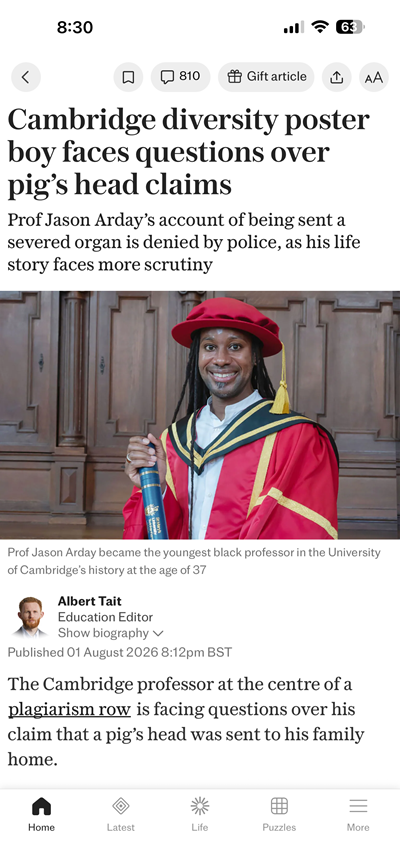
The Jason Arday affair is beginning to remind me of Jussie Smollett.
Not because we know that Arday fabricated anything. We don’t. But because of the strange self-protecting logic that surrounds allegations of racism.
Smollett’s story was initially believed because it fitted so perfectly with what many people already believed about America: a black, gay actor attacked by racist, homophobic Trump supporters. The allegation seemed almost to validate itself.
Something similar is happening with Arday.
He says a severed pig’s head was sent to his family home. Yet police can reportedly find no record of the investigation he described. The butcher he said police visited says no officers ever came. There are apparently no photographs or contemporaneous messages.
He also says a masked man twice entered his Cambridge faculty building and threatened him, on one occasion with a knife. Yet the man was apparently captured by no CCTV, seen by no colleagues, and Arday reportedly warned nobody in the building at the time.
“To be honest with you, I thought you’d just believe me,” Arday told the Guardian. “Why would I lie?”
That sentence may be the most revealing part of the whole affair.
Because questioning Arday’s claims now risks being folded into the very narrative those claims are supposed to establish.
Arday says he has been targeted because of racism. Questions are raised about the evidence for his claims. Those questions are then portrayed as part of a “vile campaign” against him — which becomes further evidence that he is being targeted.
The allegation begins to protect itself.
He is a victim of racism, therefore questioning his account may itself be racist; and because questioning his account may be racist, his claim to be a victim of racism receives less scrutiny.
It is a perfect circle.
China attacked the sparrows, Britain will attack the cows
People make mistakes based on insufficient information, mistaken causes, biases, and many other distorted ways of reasoning. Governments do the same thing, but when governments screw up it’s a problem for everyone:
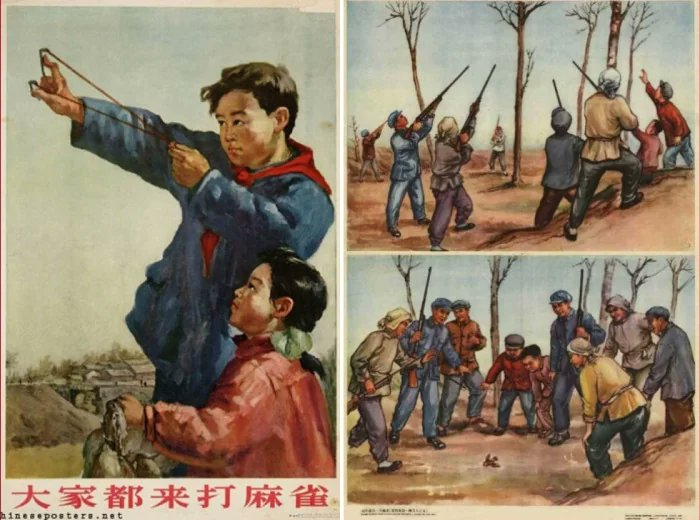
In 1958 the Chinese state worked out that sparrows were eating the grain, and organised six hundred million people to kill every one of them.
It did not take bullets. Villages, schools and factory units turned out with pots, pans, drums and gongs and made continuous noise so that no bird could land anywhere. Nests were pulled down, eggs smashed, chicks killed. The sparrows flew until their hearts gave out and dropped into the streets, where children collected them and the totals were reported upward as achievements. The toll ran into the hundreds of millions.
The arithmetic was sound as far as it went. A sparrow eats grain. Fewer sparrows, more grain, more people fed. Nobody in the room was wrong about what the bird took.
They were wrong about what it did.
Sparrows eat insects, in enormous quantity, and most of all in the breeding season when the chicks need protein. Take them out of a farmed landscape and the locusts and grain borers they had been holding down are handed the whole country. Which is what happened. Crop losses to insects rose sharply, and by 1960 the ornithologist Tso-hsin Cheng had made the case well enough that Mao ordered sparrows struck from the list and replaced with bed bugs.
Far too late, and never the whole cause. The famine of 1959 to 1961 was principally a policy famine, driven by collectivisation, grain requisition and the diversion of farm labour to backyard steel furnaces, and the dead are counted in tens of millions.
But the sparrow campaign is the purest thing in the episode, because it is the reasoning stripped to bone. A committee looked at a living system, isolated the one animal it could measure as a cost, and calculated the gain from removing it without ever asking what that animal was holding up.
Now look at what is being proposed for grassland.
The ruminant is measured the same way, on one ledger line, the methane it emits and the land it stands on. What is left off the ledger is everything it does. The grazing that keeps grassland grassland instead of scrub. The dung that feeds the beetles that feed the birds. The hoof that breaks the surface so seed can take. The mouth that removes the standing dead matter which otherwise cures into wildfire fuel. The manure that returns phosphorus and nitrogen to the soil so nobody has to mine it and ship it in.
Grasslands and grazing animals co-evolved over tens of millions of years. Remove the animal and you do not get the same field minus some methane. You get a different system, and it will not be the one on the spreadsheet.
The men who ordered the sparrows killed were not stupid, and they were not cruel. They had a number, and the number was correct, and they were praised for acting on it decisively. It took two years for the second half of the equation to arrive, and by then nobody could put the birds back.
We are eighteen months into the herd reduction schemes.
The grass has not sent its invoice yet.
Update, 6 August: Welcome, Instapundit readers! Have a look around at some of my other posts you may find of interest. I send out a daily summary of posts here through my Substack – https://substack.com/@nicholasrusson that you can subscribe to if you’d like to be informed of new posts in the future.
August 3, 2026
Invasion of Iraq, 2003
Real Time History
Published 6 Mar 2026In March 2003, a US-led coalition invades Iraq. US President George W. Bush claims he must disarm Iraqi dictator Saddam Hussein of weapons of mass destruction and depose a brutal regime supporting global terror. But after a lightning capture of Baghdad and other Iraqi cities in the south, the war is far from over.
(more…)


