Quotulatiousness

July 1, 2024

Welcome to the “Omnicause” (aka “the Fatberg of Activism”)

Helen Dale first encountered the Omnicause as a university student council member:

For my sins — in 1991 — I spent a year on the University of Queensland Student Union Council. Yes, I was elected, which means I was a volunteer. It ranks up there among the more pointless activities I’ve undertaken. I was 19, that’s my excuse.

Because I’m conscientious, I took it seriously. I turned up to the monthly meetings. I researched the motions to be debated and voted on in advance. I tried to say not-stupid-things when I thought it was worth making a comment. One side benefit: I learnt meeting procedure.

I also had my first encounter with the Omnicause.

Every single student union council meeting had a Palestine motion, sometimes more than one. These were long, detailed, and competently drafted. They routinely dominated more typical student union fare: budgetary allocations to fix the Rec Club roof, say, or complaints about tuition fees. I wondered what the union’s employed secretarial staff thought of typing up and then photocopying pages upon pages of tedious detail about Middle Eastern geopolitics. I remember picking up copies of both minutes and agendas and boggling at the amount of work involved.

There, in miniature — in sleepy meetings in hot rooms where dust particles danced in stray sunbeams as those of us reading law or STEM subjects tried to make sense of it all — was the Omnicause we now see in campuses all over the developed world. My earliest memories of it involve Aboriginal activists describing Australia as a “settler-colonial state” which had been “invaded” — just like Israel. Australia also had no right to exist.

During one meeting, a Palestine-obsessive buttonholed an engineering student known for his commitment to conservation, bending his ear about the Nakba. I misunderstood the exchange, and congratulated my Greens fellow councillor on recruiting a new party member.

“I’m not sure we want her,” he said. “She doesn’t know or care about the environment, just this Israel thing.”

Already, in 1991, the infant Omnicause had learnt to crawl. It was possible to see — albeit dimly — what would happen to genuine conservationists as single-issue lunatics took over their movement and rotted its political party from within. Darren Johnson — whom I’d call a “Green Green” — and his cri de coeur captures the process well:

    Terrible haircut I know, but here’s me in the Hull Daily Mail running for the Green Party in 1990. I stood on a platform of male rapists in female prisons, hormone drugs for 10yos and rebranding women as uterus-owners. No, don’t be silly, it was housing, environment & poll tax.

Darren Johnson, recall, was the UK Green Party’s former principal speaker, its first-ever London councillor, twice its London mayoral candidate, and is a former chair of the London Assembly.

The Omnicause: what writer Hadley Freeman calls “the fatberg of activism”. This is a genuine flyer, by the way. I admit to suspecting the work of Mole at the Counter, General Boles, Famous Artist Birdy Rose, or Burnside Not Tosh — so I checked.

The Greens in both Australia and the UK have become a vector for much of the worst nonsense: trans and Gaza and chucking orange paint around an art gallery near you have displaced saving the Fluffy Antechinus1 or improving biodiversity, quite apart from anything else. Trans, in my view, is also part of the Omnicause, albeit a junior partner. Like Palestine, it’s capable of colonising major political movements focussed on something else entirely, as this (justifiably angry) supporter of Scottish independence points out.


    1. This animal does not exist, although the Antechinus does.

June 18, 2024

“If you convince a group of Homo sapiens that that group over there are economic parasites … then you have primed them for mass murder”

Lorenzo Warby on the malign influence of Karl Marx:

Despite — in some ways because of — all his Theorising about “capitalism”, Marx made no serious attempt to understand the actual dynamics of commerce, creating a (false) theory of economic parasitism (“surplus value”) that — both predictably, and in practice — motivated mass murder. If you convince a group of Homo sapiens that that group over there are economic parasites — and you and your society is better off without them — then you have primed them for mass murder. Hence, Marx’s theory was used to justify actual Marxist mass-murders, starting with Lenin’s infamous hanging order.

Marx’s economistic systematising created a pretence of being social scientist — to himself and even more to Engels — that many people have maintained ever since. Hence a pre-Darwinian metaphysician is even now regularly treated as if he was a social scientist. This despite being wrong about more or less everythingclass, commerce, surplus, immiseration, the state, patterns of history, commodification, division of labour, foraging societies …

As I have noted elsewhere:

    To have a state, farming niches have to be sustainable after taxes are extracted. That means resources are extracted before they turn into extra babies. This means that states create surplus (income above subsistence): indeed, they dominate the creation and extraction of surplus.

The perennial dominance of the state in extraction of surplus — and hence the creation of class structures — is nowhere more obvious than in Marxist states.

Philosopher Charles Taylor pointed out the tension between the claim to being science — and the causal determinism that goes with that — and the messianic vision that motivates Marx’s and Marxist activism. In any tension between the two, the latter wins because it is so powerfully motivating. This includes with Marx himself, which is why his “science” is so profoundly wrong in fact. It exists to justify the messianic vision.

No political (or religious) movement has killed and tyrannised more people than revolutionary Marxism. A Marxist is someone for whom no amount tyranny and mass murder will stop them worshipping the splendour in their head. This testifies to the power of the messianic vision.

Marx was the original launderer of ideas. Over decades of wrestling with the economics of Smith and Ricardo, he laundered — via economic reasoning — the metaphysical conclusions he reached in the 1840s to create a system that would “scientifically” generate and justify those conclusions. That those conclusions went mostly unpublished in his lifetime — with the most dramatic exception being The Communist Manifesto (1848) — does not belie this. Marx himself insisted on the centrality of this period of “self-clarification”.

Nothing he published later significantly contradicted those conclusions. Marx is the archetypal activist scholar, whose activism drives, and so degrades, his scholarship and analysis. He is the key formulator of the Dialectical Faith, that has generated various disastrous spin-offs, from his own economism to Lenin’s Jacobinising of Marxism to the Cultural Marxism of Lukacs and Gramsci, Critical Theory, and all forms of Critical Social Justice.

No form or derivative of the Dialectical Faith have ever generated a net positive contribution to human flourishing, or understanding, compared to available alternatives.

Ibn Khaldun was a far more acute analyst of the role of the state in the economy, and patterns within history, than Marx. Ibn Khaldun sought systematically to understand what he observed, participated in and read about. He was not laundering ideas, not justifying pre-set conclusions, nor judging evidence by his Theory.

Ibn Khaldun was a social scientist (arguably the first). Marx was not, he was pretending to be one (including to himself).

The Dialectical Faith holds that history is driven by dialectical process that transforms society from an oppressive past to a future liberated from constraints, if the oppressive elements of society are suppressed or abolished. As Marx tells us, our productive capacity will be so great, that we will so humanise the world, that division of labour will end for:

    In communist society, where nobody has one exclusive sphere of activity but each can become accomplished in any branch he wishes, society regulates the general production and thus makes it possible for me to do one thing today and another tomorrow, to hunt in the morning, fish in the afternoon, rear cattle in the evening, criticise after dinner, just as I have a mind, without ever becoming hunter, fisherman, herdsman or critic.

Marx was not engaged in scientific enquiry but pseudo-scientific, or scientistic — the form of science without the substance — justification of already reached conclusions. He regularly judges and chooses evidence based on Theory, a pattern that has become endemic within all forms of Marxism and its spinoffs (such as Critical Theory). Marx exemplifies the activist principle that “what I can imagine — however self-contradictory — is so much better than what others have struggled to achieve”.

Marx’s picture of the evils of division of labour is metaphysical twaddle flatly contradicted by any serious study of the role of division of labour — and, for that matter, commodification — in production at scale. How can division of labour be such an alienating evil when it is built into sexual reproduction, into every eusocial species, even into the cells of every single complex organism?

The answer is via a ludicrous quasi-theological metaphysical inflation of human consciousness and creativity. Marx collectivises — through his notion of species-being — the Romantic notion of human fulfilment through self-expression.

June 17, 2024

Farm Camp for city slickers

Filed under: Business, Education, Food, USA — Tags: , , , — Nicholas @ 04:00

In The Free Press, Larissa Phillips explains the kind of things city children (and their parents) learn when they stay at her family’s small farm for a week or a weekend:

Here are some things I have taught the kids who visit my farm: animals don’t care about your feelings, and sometimes we kill them to eat them. It doesn’t matter how desperately you want to find more eggs, the hens don’t lay on demand. Tomatoes aren’t ripe in June. The stalls aren’t going to clean themselves. Cuts, scrapes, and stings aren’t really a big deal. And there will always be poop.

I’m often struck by what city kids don’t know when they turn up at the education program I run for families on our 15-acre hobby farm — Honey Hollow Farm — in the Upper Hudson Valley. As a longtime urbanite, I get it. I lived in Brooklyn for 15 years before my husband and I moved upstate in 2010 with our two young children and one goal: start a farm. We kept horses and ponies for fun and raised poultry and sheep — and sometimes pigs — for food.

It was hard. Slaughtering animals we’d raised since they were babies was wrenching. Breeding and birthing those babies was dicey, too. But these experiences toughened us up. Working with animals and the land and the seasons was grounding — and the best antidote to anxiety I’d ever found. And most of it was fun.

I wanted to share this outlook with other families, even if it was just for a weekend. So at the start of the pandemic, I opened our guest cottage — and set up an informal curriculum to teach escaping urbanites what I’d learned.

I called it farm camp.

We host one family at a time, all through the year, in a renovated barn apartment overlooking the pony pasture. Most come for a week, some for a weekend. Every morning I’ll take a handful of kids, sometimes as young as three, through a two-hour, hands-on class on animal care, life, death, poop. All of them have to do some real farmwork.

There is a lot to learn. I don’t expect a child to know how long it takes for a chick to hatch, or why the roosters are always jumping on top of the hens. But I am often surprised by some of the straightforward things they don’t know how to do. Like how to pull a wagon around a corner, hold a shovel, climb over a gate, make a braid, or tie a knot.

Don’t get me wrong — I love offering explicit instructions on the most mundane tasks, then standing back and cheering when a kid does it independently. But two generations ago, these skills would have been common knowledge. For most of human history, the proportion of the world’s population living in cities was below 5 percent. It’s at 56 percent now. By the time today’s toddlers reach adulthood, it is expected that 80 percent of humans will live in urban areas.

Overprotected as they are, a lot of city kids are missing out on so many important encounters with material reality: with death or danger or manual labor. These encounters can be unpleasant, even painful. It’s understandable that we want to save our children from them. But they lose something essential when we do.

Most urbanites have a very sanitized — in fact, Disneyfied — view of rural life and especially life on a farm. It can be traumatic to discover that all the animals aren’t like you saw in the cutesy cartoons as a preschooler …

June 14, 2024

When propaganda wins over historical facts, Ontario public schools edition

To someone of my generation (late boomer/early GenX), the history of the Residential School system was taught, at least superficially, in middle school. Along with the early settlement of what is now Canada by the French and later the English (with a very brief nod to the Vikings, of course), we got a cursory introduction to the relationships among the European settlers and explorers and the various First Nations groups they encountered. It wasn’t in great depth — what is taught in great depth in middle school? — but we got a rough outline. In my case, details about the Residential School system came more from a “young adult” novel about a young First Nations student running away from his school and trying to find his way back to his home and family. My best friend in school had First Nations ancestry, so I felt a strong desire to understand the book and the system and culture portrayed in it.

Kamloops Indian Residential School, 1930.
Photo from Archives Deschâtelets-NDC, Richelieu via Wikimedia Commons.

If, in the early 1970s, the Ontario school system taught at least a bit about the history of the First Nations peoples, how is it possible that they stopped doing so and my son’s generation were utterly blindsided by the sensationalist treatment of the students at a particular Residential School in British Columbia? And as a result, were far more credulous and willing to believe the worst that the “anticolonialist” propagandists could come up with.

Igor Stravinsky” is a teacher in the Ontario school system who writes under a pseudonym for fairly obvious reasons, as he’s not a believer in the modern narrative about the history of First Nations children in the Residential School system:

This will be my last instalment of this series. I have attempted to shed light on the poor quality of information students are receiving in Ontario schools with regard to Indigenous history and current issues. It is important to note that this is being done intentionally. It is to the advantage of the leaders of the Indigenous Grievance Industry to characterise Canada and the pre-Canadian colonies of this land as genocidal oppressors, and our politicians have exploited this situation for crass political gain. This was perhaps epitomised by Prime Minister Justin Trudeau’s photo op of himself holding a teddy bear in the proximity of a soil disturbance in a field at the site of a former residential school in Cowessess First Nation, Saskatchewan on Tuesday, July 6, 2021:

Prime Minister Justin Trudeau holding a teddy bear in Cowessess First Nation, Saskatchewan.
July 6, 2021.

Are there actually human remains there? If so, of whom? Is this evidence of any kind of foul play? These are questions he was not about to bother to ask. Why would he, when such a golden opportunity to score political points presented itself?

We now know all this murdered Indigenous children stuff was a big hoax but don’t hold your breath waiting for Trudeau to issue an apology for staining the international reputation of Canada and triggering a knee-jerk vote by our Parliament declaring Canada a genocidal state and adopting the The United Nations Declaration on the Rights of Indigenous People (more on that below). Undoing all this damage will be a herculean task.

Just as students are fed simplistic, misleading, and false information about the past with regard to Indigenous people (the focus being the Indian Residential Schools) they are being presented with the point of view that human rights violations against the Indigenous people are ongoing, and are the reason for the poor quality of life in which such a disproportionate number of Indigenous people find themselves.

The claim of generational trauma

On Apr. 27, 2010, speaking as chair of the Truth and Reconciliation Commission and for the people of Canada, Sinclair told the Ninth Session of the United Nations Permanent Forum on Indigenous Issues: “For roughly seven generations nearly every Indigenous child in Canada was sent to a residential school. They were taken from their families, tribes and communities, and forced to live in those institutions of assimilation.”

This lie is promoted in the schools. It is the foundation of the generational trauma claim but in fact, during the IRS era, perhaps 30% of Status Indians (you can cut that figure in half if you include all people who identify as Indigenous) ever attended, and for an average of 4.5 years.

Even if it were true that most Indigenous people who attended the IRS suffered trauma, there is no evidence or logical reason to believe that trauma could be transferred down the generations. If generational trauma is a thing, why have the descendants of the victims of the holocaust been doing so well?

If there is generational trauma, the culprit is alcohol. Alcohol abuse has been a major problem in Indigenous communities since first contact but rarely comes up these days, certainly not in schools. Fetal Alcohol Syndrome (FAS), which occurs when a mother consumes alcohol during pregnancy, is also a major problem and the children born with it suffer from mental and emotional challenges throughout their lives. It impacts their social life, education and work. Girls who suffer from the condition all too often end up drinking during pregnancy themselves and the cycle continues.

June 8, 2024

QotD: Teaching military history

Filed under: Education, History, Military, Quotations — Tags: , — Nicholas @ 01:00

In addition to the low regard that military history is sometimes held in from outside of the field, there is also an odd tension in being a life-long civilian who studies and teaches on military history. It often means teaching military topics to students (or readers) who have personal military experience. I have, of course, heard it suggested that military history ought not be studied by non-veterans, or that a civilian academic simply cannot provide any useful perspective on military activity without military experience (though I should note, I have never heard that opinion expressed by someone I knew to be a combat veteran themselves). And while obviously I do not find this argument persuasive, or I wouldn’t do the job I do, I also have to admit that on a fundamental level I will always be on the civilian side of the “civilians do not understand” gap that is discussed so frequently, particularly in the experience of veterans coming home.

At the same time, in the context of the discipline of history, this complaint is patently absurd. No Roman historian has ever bought garum at the market with sestertii, nor voted in the Roman comitia centuriata, or any experienced any of a nearly infinite number of the daily activities of life in ancient Rome. The same is obviously fundamentally true of literally any history that takes place before living memory. The closest we can ever come is something like experimental archaeology, trying out historical methods and objects and while that method is an important tool, especially for the pre-modern period, it is far from the only way to do history and not necessarily the best. So of course historians study things they have no personal experience of. That’s what history is.

Teaching military history to students either bound for the military or who have military experience is actually one of the most rewarding things I have gotten to do as an academic. In this sense I have been remarkably fortunate in a lot of my teaching, which has been at large state universities in North Carolina and Florida. Both states are well above the United States population-adjusted average for the percentage of veterans in the state and I get the sense that – though I have no hard data on this (so I may be wrong) – veterans tend to matriculate through public universities at higher rates than at smaller private liberal arts college. Moreover, every university I have taught at this far has a significant ROTC program.

Consequently, I am pretty accustomed to having both veterans back from abroad in my class, as well as students who expect to commission at the end of their college experience, along with some students who are active-duty military personnel while they are taking my classes. This is especially true (no surprise) in military history classes, as one might guess. It was not uncommon, in a 45 or 55 student section of a Global Military History survey to have the complete military-career-cycle present (though of course the ROTC students would be commissioning as officers, while the active-duty and veteran students were enlisted personnel and that is a meaningful difference). Of course those students were then side-by-side with students who have no plans to ever be in the military.

It is true that there is sometimes a higher bar of “proving” yourself to the students in those situations before they begin to trust you (as anyone who so much as looks at me knows I have never served in a military), though I would note that the hardest students to reach in this regard have always been the ROTC students (rather than active duty or veteran students), who ironically have no more experience of combat than I do. At the same time, those students are choosing to be in your class because they think you have something to say on the topic and clearing the bar of “this guy knows what he’s talking about” has never been a real problem for me. If you know your business and show that you take the subject seriously, the matter resolves itself.

Bret Devereaux, “Collections: Why Military History?”, A Collection of Unmitigated Pedantry, 2020-11-13.

June 5, 2024

QotD: Mental health at “Flyover State”

As y’all undoubtedly know, mental illness is something of a badge of honor in the ivory tower. Screw HIPAA; most people in academia are willing, indeed eager, to tell you all about their mental problems. The students mostly do it to get out of classwork, of course — the minute you get the letter from Student Services, you can go ahead and start filing the “incomplete” paperwork with the registrar — but grad students and professors collect DSM diagnoses and SSRI prescriptions like the Japanese collect Pokemon and used panties.

Given that, and given how lunatic professors’ actual beliefs are, there’s pretty much nothing you can’t get away with saying in the ivory tower if you play your cards right. In much the same way Jon Stewart rode his “clown nose on / clown nose off” act to adulation from the smart set, you can say whatever you want if you keep it ambiguously crazy. (You know how it goes — if you agree with Stewart, he’s doing straight political commentary; but if you disagree with him to the point where he might lose sponsors, c’mon man, he’s just a tv comedian).

I’ll give you an example. Back in 2008, during the Democratic primaries, it was all the rage on campus to be anti-Obama. You’ll just have to trust me on that, I guess, but if you believed my previous “inside the ivory gulag” posts, I’m sure you’ll understand why that fad existed — everyone’s playing the “more radical than thou” game, and what’s more radical than being against the black guy, because his positions are such weak sauce Liberal boilerplate? The real People’s Candidate back then was Dennis Kucinich, and if normal people remember anything about him, it’s that he was more than a little Fox Mulder-y on the question of extraterrestrial life.

Anyway, whenever anyone asked me who I was voting for, I’d give Obama both barrels, always from the most extreme conservative position … but when I noticed the SJW I was talking to had finally cottoned to that, I ended with something like “And what’s worst is that unlike some candidates, Obama refuses to take the saucer people menace seriously!!”

Severian, “Friday Mailbag”, Rotten Chestnuts, 2021-06-04.

May 31, 2024

“You only support that because it’s in your self-interest to do so”

Filed under: Economics, Education, Liberty, Media, Politics — Tags: , , , , — Nicholas @ 04:00

Helen Dale considers the painful notion that political ideas that work for the “elite” (defined in various ways) may not work at all for people unlike members of any given “elite”:

When I reviewed Rob Henderson’s Troubled for Law & Liberty at Liberty Fund, I made this observation:

    The reality that classical liberalism — the closest to my own political views, I admit — has at least a whiff of the luxury belief around it stings. It’s discomforting to acknowledge that what goes by the name of paternalism has its own intellectual pedigree, while liberalism can be a system developed by the clever, for the clever. “Highly educated and affluent people are more economically conservative and socially liberal,” Henderson says. “This doesn’t make sense. The position is roughly that people shouldn’t have to adhere to norms and if/when they inevitably hurt themselves or others, then there should be no safety net available. It’s a luxury belief.”

[…]

Joseph Heath […] uses the phrase “self-control aristocracy” to describe those who really do benefit from maximal freedom. These are people who can make better choices for themselves than any authority could make on their behalf. When the state or large corporates boss them (us) around, they (we) get really bloody annoyed. They (we) know better!

Heath’s phrase is simply a layman’s term for the personality trait various formal tests measure, and which overlaps with executive function to a considerable but as yet unknown degree.

    Because I am self-conscious about my membership in the self-control aristocracy, I am acutely aware of the fact that, when I think about questions of “individual liberty” in society, I come to it with a particular set of class interests. That is because I stand to benefit much more from an expansion of the space of individual liberty than the average person does – because I have greater self-control. So I recognize that, while a 24-hour beer store would be great for me, it would be a mixed blessing for others […]

    What does this have to do with libertarianism? It is important because every academic proponent of libertarianism – understood loosely, as any doctrine that assigns individual liberty priority over other political values – is a member of the self-control aristocracy. As a result, they are advancing a political ideal that benefits themselves to a much greater extent than it benefits other people. In most cases, however, they do so naively, because they do not recognize themselves as members of an elite, socially-dominant group, that stands to benefit disproportionately. They think of liberty as something that creates an equal benefit for all.

My response to reading Professor Heath’s piece was simplicity itself: I feel seen. I’ve even done the night school thing while working full-time. I’ve written books and chosen to play sports that require a long time and lots of skill to master. I retired at 45.

Politically, I’m not a libertarian. Libertarianism is a distinctive and largely American ideology (as the recent and bonkers fracas at its US Convention indicates) with philosophically unusual deontological roots. I am, however, within the British and French tradition of classical liberalism (which does assign individual liberty priority over other political values). And like many classical liberals I’ve been blind to problems of laws and governance for people unlike me.

I disclose this because I’ve worked in policy development in both devolved and national parliaments. I’ve probably given politicians and civil servants alike dud advice. There is almost certainly a shit policy out there (in either Scotland or Australia) with my name on it. However, this mind-blindness doesn’t only apply to people who advocate libertarian politics. I think it applies to a significant number of political ideologies just as strongly as it does to libertarianism.

That is, the ideology serves the inherited personality traits of those who promote it. “You only support that because it’s in your self-interest to do so” always struck me as a genuinely mean criticism of people who were involved in politics and policy (I may have been one of those people, natch). The problem — as I’ve been forced to accept — is that it’s true.

May 25, 2024

“Education” versus “learning”

Filed under: Books, Education, History, USA — Tags: , , , , — Nicholas @ 05:00

At Astral Codex Ten, Scott Alexander discusses some of the ideas from Bryan Caplan’s book The Case Against Education:

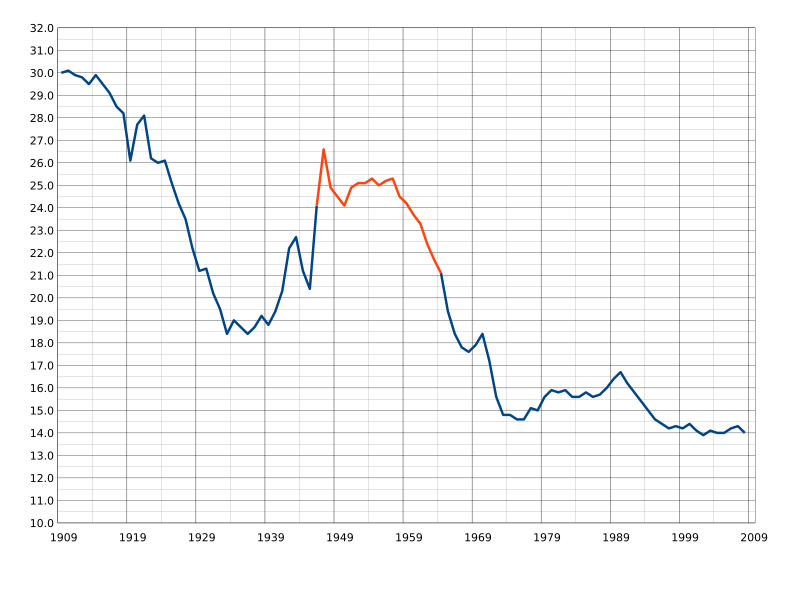
Source here. Note deranged horizontal axis.

Education isn’t just about facts. But it’s partly about facts. Facts are easy to measure, and they’re a useful signpost for deeper understanding. If someone has never heard of Chaucer, Dickens, Melville, Twain, or Joyce, they probably haven’t learned to appreciate great literature. If someone can’t identify Washington, Lincoln, or either Roosevelt, they probably don’t understand the ebb and flow of American history. So what facts does the average American know?

In a 1999 poll, only 66% of Americans age 18-29 knew that the US won independence from Britain (as opposed to some other country). About 47% of Americans can name all three branches of government (executive, legislative, and judicial). 37% know the closest planet to the sun (Mercury). 58% know which gas causes most global warming (carbon dioxide). 44% know Auschwitz was the site of a concentration camp. Fewer than 50% (ie worse than chance) can correctly answer a true-false question about whether electrons are bigger than atoms.

These results are scattered across many polls, which makes them vulnerable to publication bias; I can’t find a good unified general knowledge survey of the whole population. But there’s a great survey of university students. Keeping in mind that this is a highly selected, extra-smart population, here are some data points:

  • 85% know who wrote Romeo and Juliet (Shakespeare)
  • 56% know the biggest planet (Jupiter)
  • 44% know who rode on horseback in 1775 to warn that the British were coming (Paul Revere)
  • 33% know what organ produces insulin (pancreas)
  • 31% know the capital of Russia (Moscow)
  • 30% know who discovered the Theory of Relativity (Einstein)
  • 19% know what mountain range contains Mt. Everest (Himalayas)
  • 19% know who wrote 1984 (George Orwell)
  • 16% know what word the raven says in Poe’s “The Raven” (“Nevermore!”)
  • 10% know the captain’s name in Moby Dick (Ahab)
  • 7% know who discovered, in 1543, that the Earth orbits the sun (Copernicus)
  • 4% know what Chinese religion was founded by Lao Tse (Taoism)
  • <1% know what city the general Hannibal was from (Carthage)

Remember, these are university students, so the average person’s performance is worse.

Most of these are the kinds of facts that I would expect school to teach people. Some of them (eg the branches of government) are the foundations of whole subjects, facts that I would expect to get reviewed and built upon many times during a student’s career. If most people don’t remember them, there seems to be little hope that they remember basically anything from school. So what’s school even doing?

Maybe school is why at least a majority of people know the very basics – like that the US won independence from Britain, or that Shakespeare wrote Romeo and Juliet? I’m not sure this is true. Here are some other questions that got approximately the same level of correct answers as “Shakespeare wrote Romeo and Juliet“:

  • What is the name of the rubber object hit by hockey players? (Puck, 89%)
  • What is the name of the comic strip character who eats spinach to increase his strength? (Popeye, 82% correct)
  • What is the name of Dorothy’s dog in The Wizard of Oz? (Toto, 80% correct)

I don’t think any of these are taught in school. They’re absorbed by cultural osmosis. It seems equally likely that Romeo and Juliet could be absorbed the same way. Wasn’t there an Academy-Award-winning movie about Shakespeare writing Romeo and Juliet just a decade or so before this study came out? Sure, 19% of people know that Orwell wrote 1984 – but how many people know the 1984 Calendar Meme, or the “1984 was not an instruction manual!” joke, or have heard of the reality show Big Brother? Nobody learned those in school, so maybe they learned Orwell’s name the same place they learned about the other 1984-related stuff.

Okay, so school probably doesn’t do a great job teaching facts. But maybe it could still teach skills, right?

According to tests, fewer than 10% of Americans are “proficient” at PIIAC-defined numeracy skills, even though in theory you need to know algebra to graduate from most public schools.

I took a year of Spanish in middle school, and I cannot speak Spanish today to save my life; that year was completely wasted. Sure, I know things like “Hola!” and “Adios!”, but I also know things like “gringo” and “Yo quiero Taco Bell” – this is just cultural osmosis again.

So it seems most people forget almost all of what they learn in school, whether we’re talking about facts or skills. The remaining pro-school argument would be that even if they forget every specific thing, they retain some kind of scaffolding that makes it easier for them to learn and understand new things in the future; ie they keep some sort of overall concept of learning. This is a pretty god-of-the-gaps-ish hypothesis, and counterbalanced by all the kids who said school made them hate learning, or made them unable to learn in a non-fake/rote way, or that they can’t read books now because they’re too traumatized from years of being forced to read books that they hate.

It’s common-but-trite to encounter people who say things like “I love learning, but I hated school” — I’ve undoubtedly said that myself many times. A weird experience was having to study a book in school that I’d already read on my own: it was like an early form of aversion therapy … here’s something you loved once, let’s make you hate it now.

May 18, 2024

QotD: Academic research and the “phantom cite”

Filed under: Asia, Education, History, Military, Quotations, USA — Tags: , , , — Nicholas @ 01:00

If you’ve done any academic work at all, in any field — scratch that, if you’ve done any competent, diligent work in any field — you’ve experienced the frustration of the “phantom cite”. This is where you see a startling assertion in Jones. You check his footnote — see Smith. You go pull Smith off the shelves, and his footnote says “see Williams”. Williams cites Parker, Parker cites Adams, Adams cites Rogers, until finally, you pull Rogers and … nothing. Not the “oh gosh, I’d have to travel to the British Museum to check this, and it’s in Medieval High Bulgarian anyway” kind of nothing, but the bald-ass assertion kind of nothing.

Happens all the time. There are a couple of reasons for this. Being as charitable as I possibly can, I’m going to call one “survivorship bias”. I’m sure you’ve seen this … Since, again, we’re being extremely charitable here, this isn’t actually a case of “just tell ’em what they want to hear”. I’ll illustrate from my own research experience. My dissertation asserts that General Ripper, commander of the 43rd Imaginary Infantry in Au Phuc Dup province, Republic of Vietnam, was convinced that the local provincial governor, Long Duc Dong, was a Communist infiltrator. Now, this is a 100% true fact, that Gen. Ripper believes Long Duc Dong is a Communist. Armies are awash in paperwork, and moreover Gen. Ripper was an obsessive letter-writer and diarist, so you can find hundreds if not thousands of citations stating it directly: “I, Gen. Ripper, believe that Long Duc Dong is a Communist”.

Which explains quite a bit about why Gen. Ripper made the decisions he did, which in turn is why this 100% indisputably true fact — that Gen. Ripper thought Long Duc Dong was a Communist — features so prominently in that study of the dynamics of command in the 43rd Imaginary Infantry.

The problem, though, is that some other historian comes along, looking at something very different — say, the effectiveness of anti-Communist propaganda in the IV Corps operational area — and comes across my dissertation. From this, he writes “So ineffective was the anti-Communist propaganda campaign that even the governor, Long Duc Dong, was strongly suspected of being a Communist infiltrator”. And from that, another historian, looking for the prevalence of pro-Communist sentiment, concludes that “despite the Americans’ best efforts, the extreme south of the RVN was so thoroughly indoctrinated that even the Governor, Long Duc Dong, was a Communist”.

Now, all of that is true except for the last bit. It is not, in fact, proven that Long Duc Dong was a Communist. Gen. Ripper sure thought he was. And Gen. Ripper continued to think so, even after the anti-Communist propaganda campaign, which means that the campaign indisputably failed in Long Duc Dong’s case — he carried on acting like enough of a commie to keep Gen. Ripper’s suspicions up. But thanks to the thicket of citations, it’s the last bit — the assertion that Long Duc Dong was, indisputably, a Communist — that has by far the most footnotes attached to it. Hell, the footnotes probably cite all the same things I did — the truckloads of letters and documents from Gen. Ripper saying “Damn that Long Duc Dong, he’s a Communist!!”

That’s because he lifted them straight from my dissertation, all impeccably footnoted — by which is meant, giving ME full credit — and do you see what I mean? None of the historians involved had any obvious axe to grind, no viewpoint to push. It’s just that everyone’s bibliography is a hundred pages long, and nobody has the time to read every page of every book in those hundred pages. Jones just skimmed Smith’s index, looking for names of commies. Smith did the same thing with my index, of course, in which he found “Dong, Long Duc, Communist sympathies of,” with dozens of page numbers referenced.

Severian, “‘Studies'”, Rotten Chestnuts, 2021-05-22.

May 17, 2024

“Once a mind is infected with Climate Change, bioweapons are just another kind of carbon credit”

Jo Nova presents evidence of a university professor — a vulcanologist — who perhaps has more sympathy for the volcanoes he studies than the human race:

Let’s just say, hypothetically, that someone wanted an excuse to reduce global population, or limit competing tribes and religions, there’s a scientific hat for that. Climate Change is the ultimate excuse for mass death — done in the nicest possible way and for the most honorable of reasons. But isn’t that what they all say: Jim Jones, the Branch Davidians, Heavens Gate — death makes the world a better place?

The cult that pretends it isn’t a cult sells itself as “science”. I mean, what the worst thing you can think of? Would that be one degree of warming, or the Black Death?

In Bill McQuire’s mind the catastrophe is not when billions of innocent people die.

One hundred years from now, what would our great grandchildren prefer: that the world was slightly cooler or they were never born at all? If you hate humans it’s a terrible dilemma …

Bill McGuire, vulcanologist, accidentally put his primal instincts in a tweet last weekend:

Thirty years of telling us that humans are bad has consequences. As Elon Musk said” They want a holocaust for humanity.” It turns out a televised diet of one-sided climate projection by mendicant B-Grade witchdoctors might be a dangerous thing for mental health. If only Bill McQuire had seen a skeptic on TV?

Predictably the McGuire tweet spread far, and got crushing replies so the Emeritus Professor deleted it, as all cowards do, yelling at us:

To which the winning reply was:

Lies my teacher taught me

Filed under: Cancon, Education, History — Tags: , , , , , — Nicholas @ 04:00

A Peel District School Board teacher using the pseudonym “Igor Stravinsky” explains the sort of indoctrination high school students are receiving about First Nations and the development of Canada:

Previously in this series, I have discussed some of the things students are learning, and not learning, about Indigenous people in the Peel District School Board:

  • Indigenous people are the true owners of the land; the rest of us are just settlers
  • Indigenous people should be able to continue to practice their traditional ways while being provided all the amenities commensurate with living in a modern, first world country
  • Indigenous people are victims, other Canadians are oppressors
  • The disproportionately poor quality of life which characterizes the lives of many Indigenous people today is the result of past and current injustices by non-Indigenous people, chiefly the Indian Residential Schools
  • Life was good for Indigenous people, who were wise and peaceful, before Europeans showed up
  • The goal of the Europeans who arrived in Canada was the genocide of Indigenous people
  • The settlers failed in their quest for genocide due to the courage and resilience of the Indigenous people

As I have demonstrated, all of the above is simplistic, misleading, or false.

Why teach students a false narrative?

The ahistorical Indigenous genocide narrative started out in academia where Grievance Studies (Indigenous Studies, Black Studies, Queer Studies, Fat Studies, etc.) have a massive presence. These post-modernist inspired programs, collectively referred to as “Critical Theory” have influenced all areas of academia and spread to Canadian institutions generally. Grievance studies programs can only exist so long as there are grievances, which necessitates re-writing history and putting people into oppositional groups of victims and oppressors. Academics had to either get on the bandwagon or keep their mouth shut if they disagreed with this new paradigm. Those who did not, such as Frances Widdowson, were attacked and paid a massive price for speaking freely about the lies on which grievance studies programs are based.

Left-leaning politicians have been keen to get on board with Critical Theory. It wins them support from the academics and well-meaning (but poorly informed) members of the public who want to be “on the right side of history”. Even conservative politicians tend to look the other way, seeing taking on the well-organized, well-funded, academia-based activists as an overall vote loser. After all, they can count on the conservative vote. To whom else can such voters turn? Consequently, school boards and the authors of school curricula are captured by Critical Theory and teachers are expected to tow the line. Anyone who doesn’t is said to be “causing harm” and faces harsh discipline.

Entrenchment of the Indigenous genocide narrative ensures ever increasing payments from Canadian taxpayers in the form of rent and compensation. The lion’s share of these payments go to the Grievance Industry Tzars- Corrupt Indigenous leaders and their non-Indigenous allies, with little trickling down to the average Indigenous person. That is why, in spite of the fact that an ever-increasing part of our federal budget is dedicated to payments to Indigenous groups (to reach 7.7% – $74.6 billion annually by 2026-27), many Indigenous people live in squalor on reserves without basic amenities like clean water, while many others live on the street in urban areas. How can this be happening when taxpayers are handing over more than $40 thousand per year per each Indigenous person?

Is it reasonable for people who want to live in remote areas engaged in low value hunting, gathering, and horticulture activities, declining to integrate into the modern Canadian socio-economic system, to expect 21st century amenities and services paid for by other Canadians? If non-Indigenous people balk at funding this economically unviable mode of existence, does that make us guilty of racism or genocide? That is the impression kids in school are left with after the “education” they receive on the matter.

May 16, 2024

The replication crisis and the steady decline in social trust

Theodore Dalrymple on the depressing unreliability — and sometimes outright fraudulence — of far too high a proportion of what gets published in scientific journals:

Until quite recently — I cannot put an exact date on it — I assumed that everything published in scientific journals was, if not true, at least not deliberately untrue. Scientists might make mistakes, but they did not cheat, plagiarise, falsify, or make up their results. For many years as I opened a medical journal, the possibility simply that it contained fraud did not occur to me. Cases such as those of the Piltdown Man, a hoax in which bone fragments found in the Piltdown gravel pit were claimed to be those of the missing link between ape and man, were famous because they were dramatic but above all because they were rare, or assumed to be such.

Such naivety is no longer possible: instances of dishonesty have become much more frequent, or at least much more publicised. Whether the real incidence of scientific fraud has increased is difficult to say. There is probably no way to estimate the incidence of such fraud in the past by which a proper comparison can be made.

There are, of course, good reasons why scientific fraud should have increased. The number of practising scientists has exploded; they are in fierce competition with one another; their careers depend to a large extent on their productivity as measured by publication. The difference between what is ethical and unethical has blurred. They cite themselves, they recycle their work, they pay for publication, they attach their names to pieces of work they have played no part in performing and whose reports they have not even read, and so forth. As new algorithms are developed to measure their performance, they find new ways to play the game or to deceive. And all this is not even counting commercial pressures.

Furthermore, the general level of trust in society has declined. Are our politicians worse than they used to be, as it seems to everyone above a certain age, or is it that we simply know more about them because the channels of communication are so much wider? At any rate, trust in authority of most kinds has declined. Where once we were inclined to say, “It must be true because I read it in a newspaper”, we are now inclined to say, “It must be untrue because I read it in a newspaper”.

Quite often now I look at a blog called Retraction Watch which, since 2010, has been devoted to tracing and encouraging retraction of flawed scientific papers, often flawed for discreditable reasons. Such reasons are various and include research performed on subjects who have not given proper consent. This is not the same as saying that the results of such research are false, however, and raises the question of whether it is ethical to cite results that have been obtained unethically. Whether it is or not, we have all benefited enormously from past research that would now be considered unethical.

One common problem with research is its reproducibility, or lack of it. This is particularly severe in the case of psychology, but it is common in medicine too.

May 14, 2024

Spirit Duplicators: Copies Never Smelled So Good

Filed under: Business, Education, History, Media, Technology — Tags: , , , — Nicholas @ 02:00

Our Own Devices
Published Feb 7, 2024

Widely used throughout the 20th Century by schools, churches, fan clubs, and other small organizations, Spirit Duplicators or “Ditto” machines allowed small runs of documents to be copied cheaply and quickly. Often conflated with mimeographs, they were in fact a distinct technology, used a master sheet printed with dye-bearing wax instead of liquid ink. Paper passing through the machine was wetted with a solvent and pressed against the master sheet, causing some of the dyed wax to dissolve and transfer onto the paper.

0:00 Introduction
1:26 “Ditto” and “Banda” as Genericized Trademarks
2:15 Rex Rotary R11 – History
2:56 Rex Rotary R11 – External Controls
3:17 Creating Master Sheets
4:44 Correcting Master Sheets
5:21 Loading the Master Sheet
6:00 Solvent (“Duplicator Fluid”) System
7:35 Loading Paper/Final Setup
8:31 Making Copies
9:05 Other Design Features / Internal Mechanism
9:52 Design Variations
10:12 Master Sheet Variations
11:00 Impact of Spirit Duplicators
11:23 Outro
(more…)

May 8, 2024

ESR on the shambolic response of the “elite” universities to the protests

Filed under: Education, Media, Politics, USA — Tags: , , , , , , — Nicholas @ 04:00

ESR finds a silver lining to the storm clouds of all the ongoing pro-terrorist campus protests we’re seeing these days:

What I’m thinking as I watch the shitshow elite universities are making of their response to violent pro-Hamas demonstrations and the systematic terrorization of Jewish students:

All my life I’ve been watching Marxist infiltrators capture more and more of our institutions, and been terrified of the moment when they achieved primacy, because our f*cking useless conservatives ran away from that fight after the Army-McCarthy hearings, a few years before I was born.

The moment of victory for the Long March is here, or as close to it as makes no difference, but I’m feeling curiously relieved. Because it turns out that what they discarded in order to sock-puppet every institution in sight was *competence* (which is white supremacy, doncha know, they keep telling us that themselves), and then public trust in those institutions.

Their triumph is collapsing around them because they are literally too dysfunctional and insane to run what they have captured. I was expecting competent totalitarianism, not this. I like this better.

Of course there is the problem that the wider civilization might not survive the collapse of everything they’ve corrupted. But as long as we can avoid that, I actually feel more hopeful about the future than I did 20 years ago.

And the thing elite academia has become is certainly something we can watch collapse into rubble without worrying that it’s going to take civilization down with it.

May 3, 2024

“Columbia Delenda Est

Filed under: Education, Politics, USA — Tags: , , , , , , , — Nicholas @ 05:00

From late last month, Robert Graboyes, who is an alumni of Columbia University, thought it appropriate to follow Cato the Elder’s prescription for Carthage in this case:

Low Memorial Library, Columbia University, 1921.
From Wikimedia. Textured and rendered as ruins by Robert Graboyes.

As an alumnus of Columbia University (MPhil and PhD), I recommend that every peaceful, legal means available be employed to destroy the reputation of my alma mater — an institution that has chosen to make itself Ground Zero for Jew-hatred in America. Paraphrasing Cato the Elder:

    “Columbia Delenda Est” — “Columbia Must Be Destroyed.”

Cato’s entreaty — “Carthago Delenda Est” — was intended not only to punish the Carthaginians, but also to warn other states from behaving as Carthage had. Laying waste to Columbia’s prestige would send a chilling message to other institutions choosing to tolerate, appease, and celebrate threats and acts against Jews.

WHY COLUMBIA SPECIFICALLY?

America’s elite universities are awash in antisemitism. When Rep. Elise Stefanik repeatedly asked the presidents of Harvard, Pennsylvania, and MIT whether they would discipline students calling for the genocide of Jews, the feckless trio humiliated themselves before an international audience — though they seem unaware of that fact.

Recently, a Jewish student at Yale was stabbed in the eye by a protestor wielding a Palestinian flag. At Berkeley, students invited to the (Jewish) law school dean’s home decided that was an appropriate setting for a pro-Hamas demonstration and refused to desist or leave when asked. Encampments similar to Columbia’s are ongoing at Emerson College, MIT, NYU, Rutgers, the New School, Tufts, UMaryland, UMichigan, UNC-Chapel Hill, Vanderbilt, Washington U, and Yale. Thousands of antisemitic incidents have been recorded at hundreds of schools. The University of Southern California has surrendered to the mob by canceling this year’s commencement ceremony.

Use the wrong pronoun or wear a sombrero on Cinco de Mayo, and your university will consider bringing out the firehoses and German shepherds; but assault Jewish students and call for their extermination (along with the eradication of a sovereign nation), and the same university will defend your actions as representing the sacred right to free and open speech. Antisemitism has spread like ebola across American Academia. But there are at least three good reasons to single out Columbia.

FIRST: With antisemitism blooming at so many American universities, it is impractical to try attacking the phenomenon everywhere all at once. It is better to choose one prestigious university, inflict as much pain as possible on that lone institution, and let the stinking carcass of its reputation stand as a warning to other universities — leaving all of them to wonder which university is second on the list. This strategy reminds me of a passage from Hagakure: Way of the Samurai:

    According to what one of the elders said, taking an enemy on the battlefield is like a hawk taking a bird. Even though it enters into the midst of a thousand of them, it gives no attention to any bird other than the one that it has first marked.

Or, more prosaically, as activist Saul Alinsky wrote in his Rules for Radicals:

    Pick the target, freeze it, personalize it, and polarize it.

SECOND: Columbia is located in New York City — the world’s leading media market. No doubt, that geographic locale has contributed to the school’s outsized prominence in the current wave of on-campus pogroms. Any blowback falling on Columbia as a result of its moral collapse will also will attract blaring coverage by the press and/or by the denizens of social media. The school’s locale will guarantee maximum publicity as the school’s reputation crumbles, brick by brick.

THIRD: The offenses at Columbia have been especially egregious. Even by today’s standards, the number of offenses at Columbia (some violent and threatening, some merely hateful) are breathtaking. The examples reported on a single day (April 20) illustrate the lie that “anti-Zionism” is anything other than rebranded Jew-hatred:

  • A protestor holding a sign saying “Al-Qasam’s [sic] next target” who stood in front of a group of Jewish students holding Israeli flags and singing
  • A Jewish student wearing a yarmulke being shoved and screamed at by protestors, “you’ve got blood on your hands!” when he attempted to recover an Israeli flag stolen by a protestor, who then ran to a cheering crowd of anti-Israel protestors that attempted to burn the flag. (The student additionally claims a rock was thrown at his face and protestors screamed, “Kill the Zionist”)
  • Protestors screaming “go back to Poland!” and “yehudim, yehudim [which translates to Jews, Jews]” at Jewish Columbia students trying to leave campus
  • Protestors circling around the main gates and entrance to campus, with one stating, “I am Hamas”, which was documented in video
  • Crowds screaming “tear down the gates” and various hateful chants in English and Arabic as individuals unaffiliated with the university climbed the University’s gates
  • A Jewish Columbia student being splashed with water by a protestor
  • Protestors chanting, “Al-Qassam you make us proud! Take another soldier out!”, “We say justice, you say how? Burn Tel Aviv to the ground!”, and “Hamas we love you. We support your rockets too!”
  • A protestor delivering a speech on campus that exclaimed, “We are here today because on October 7 the Palestinian resistance in Gaza broke through the walls of their open air prison, shattering the illusion of the invincibility of their occupiers. [Cheers from the crowd.] By setting up this encampment in the heart of the Zionist stronghold of Columbia University, we intend to do the same”
  • A protestor standing immediately outside Columbia’s gates leading a crowd in Arabic chants glorifying terrorism and encouraging students to become terrorist “martyrs” after which he explained in English that the chant translated to “mother of the shahid, mother of the martyr, I wish my mother was in your place”.

Columbia has allowed the mobs and tents to linger, rather than speedily removing them and restoring order and safety to campus. Professors have endorsed and participated in the encampment, as have legions of students. The university chose to shut down in-person classes rather than taking steps to assure the safety of Jewish students. Recognizing this, a rabbi associated with the university urged Jewish students to leave for the sake of their safety.

« Newer PostsOlder Posts »

Powered by WordPress