
But my dear, it’s only philandering when men do it. When women do it, it’s philanthropy.
Lucy Ellmann, “What Made Helen Run? The saucy life and times of the Cosmo queen, more or less in her own voice”, Bookforum, 2016-06.
January 15, 2018
QotD: Adultery
Comments Off on QotD: Adultery
January 8, 2018
Sex is a Basic Instinct – Sigmund Freud l HISTORY OF SEX
IT’S HISTORY
Published on 30 Sep 2015The psychologist Sigmund Freud spent much of his life trying to understand how the human psyche functions. Famously sorting the human consciousness into the it, the ego and the superego. He was particularly interested in the instinct for sex and satisfaction of lust, a phenomenon he called the libido. Many of his theories were highly disputable, such as his theory on infantile sexuality and the societal influence on sexuality. Learn all about the father of psychoanalysis on ITS HISTORY!
Comments Off on Sex is a Basic Instinct – Sigmund Freud l HISTORY OF SEX
January 7, 2018
Now we know how to get more women in the STEM fields
Toni Airaksinen reviews the findings of Professors Parson and Ozaki, who believe they’ve identified the key factors holding back young women from studying STEM subjects:
Two professors believe that “masculine STEM ideals”—like “asking good questions” and “putting school first” — are to blame for the lack of women in math and science courses.
Laura Parson, a professor at Auburn University, and Casey Ozaki, who teaches education at the University of North Dakota, advanced the notion in an article published in the latest issue of the NASPA Journal About Women in Higher Education, noting that women are not only “less likely to major in STEM fields” than are men, but those who do study science, technology, engineering, and math are less likely to graduate than their male classmates.
Together, Parson and Ozaki interviewed eight female students majoring in math or physics to learn more about why women struggle in STEM. From their interviews, the professors learned that many women feel pressure to conform to so-called “masculine” norms.
According to the professors, these masculine norms include “asking good questions,” “capacity for abstract thought and rational thought processes,” “motivation,” the expectation that students would be “independent” thinkers, and a relatively low fear of failure.
“This requirement that the average student asks questions and speaks in class is based on the typical undergraduate man,” they contend.
Unfortunately for the female students, many of them indicated difficulty embodying these traits, reporting that they tend to ask fewer questions in class than do their male peers, and have noticed that other women in their classes share the same inclination.
So what’s to be done? How can we ensure that female students significantly outnumber men in the STEM departments as they now do in most other university departments?
Parson and Ozaki spell out a few recommendations for STEM programs, saying for instance that academic departments should “redefine success by changing expectations,” such as letting women write down questions instead of asking them out-loud. They also recommended that more women are hired, but notably did not mention any concerns over merit.
They also declare that “an important aspect of changing the masculine nature of STEM is diversifying STEM fields,” and suggest that hiring more female faculty members could lead to increased enrollment of female students because “women faculty have been found to increase participation, feelings of inclusion and belonging, and women’s perceptions of identity compatibility.”
Achieving “a critical mass of women” in STEM, the professors predict, would serve to weaken “the masculine STEM discourses of individualism and competition” while promoting “connectivity and relatedness,” which they believe will help to create the sense of “community” desired by the students they interviewed.
“Improving the chilly climate in STEM fields requires revising the STEM institution from one that is masculine to one that is inclusive for non-men, non-White students,” they conclude.
I mean, it’s obvious now that they’ve spelled it out for us, isn’t it?
Comments Off on Now we know how to get more women in the STEM fields
December 31, 2017
A contrarian view of hijabs, niqabs, and burqas
Western views of full-coverage clothing, including hijabs, niqabs, and burqas, may be concealing a hidden benefit to those who choose to wear such clothes voluntarily:
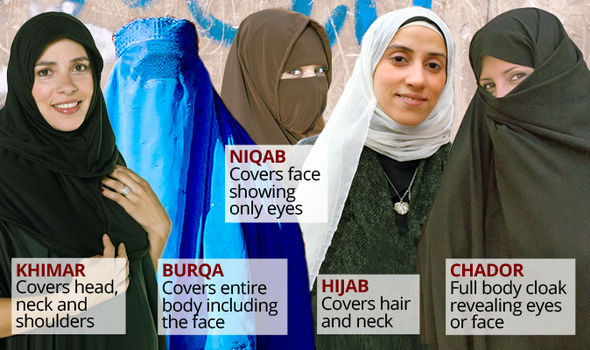
Hijabs, niqabs, and burqas — different sorts of coverings worn by Islamic women — are divisive apparel in the West, associated with patriarchal oppression, cultural outsiders, and even suicide bombers. Yet few accounts actually discuss the experiences of the women wearing the veils, and the freedom and anonymity coverings can afford if worn voluntarily.
Born in Pakistan and educated in America, Rafia Zakaria is the author of Veil, a new book which explores the history and shifting meanings of female coverings in Islamic countries and Western secular society. In a wide-ranging conversation, she talks with Reason‘s Nick Gillespie about the theological underpinnings of veils, their use as a means of controlling female sexuality, and how they have become markers of socio-economic status and virtue signaling.
Veils present a particular conflict for Western feminists. On the one hand, veils — especially burqas — are emblematic of regimes that are particularly oppressive to women. Feminists and others have moved to ban the wearing of veils in public in the name of female empowerment. But if a Muslim women wants to wear one, is she endorsing patriarchy and setting back the women’s rights movement or simply owning her own choices, especially in a culture that might itself be anti-Islamic?
December 30, 2017
The Dark Ages of Sex – All Pleasure is Sin! l THE HISTORY OF SEX
IT’S HISTORY
Published on 21 Sep 2015Sex became a sin in the Middle Ages. Following the promiscuous Ancient Rome and Greece, the Western World was indoctrinated with Medieval concepts of guilt and immorality. Adultery and sex for pleasure became unthinkable. Churches implemented strict rules, breaking them could result in public shaming. The severity of punishments would only increase after the Reformation.
Comments Off on The Dark Ages of Sex – All Pleasure is Sin! l THE HISTORY OF SEX
December 19, 2017
The imminent threat of Neo-Victorianism
Megan McArdle on the moral panic currently gripping modern American public life:
The same logic applies to the burdens of proof. If unsubstantiated claims are accepted at face value, then eventually enough will turn out to be false that many future claims will be disregarded — whether they are plausible or not, whether they are substantiated or not. That was the harm done by cases like the Duke Lacrosse scandal, the UVA rape case, the Tawana Brawley accusations, and many others. But there’s another potential harm we also have to think about.
Let’s say that we do manage to establish a social norm that a single accusation of “inappropriate sexual behavior” toward a woman is enough to get you fired and drummed out of your industry. It’s the crux of the issue so eloquently explored recently by Claire Berlinski: What would a reasonable and innocent heterosexual man do to protect himself from the economic death penalty?
One thing he might do is avoid being alone with anyone of the opposite sex — not in the office and not even in social situations. You might, in other words, adopt something like the Pence Rule, so recently mocked for its Victorian overtones. (Or worse still, work hard not to hire any women who could become a liability.)
This would obviously be bad for women, who would lose countless opportunities for learning, advancement, friendship, even romance — the human connections that make us human workers superior to robots, for now.
On the radio recently, I pointed out that this might be a logical result of a “one strike and you’re out” policy. The host, aghast, remarked that this was obviously not what we wanted. And of course, that isn’t what anyone wants. It might nonetheless be the logical result of the rules we’re setting up.
It’s easy for me to think of all the things I would have lost out on under a strict Pence Rule. The creative writing professor who conducted my independent study in his house, for example. It was perhaps a more innocent time, but even then I was not unaware of the sexual overtones our culture would see in a young female student going to a much older male professor’s home while his wife was at work. He was a perfect gentleman who made me cabbage soup, taught me to insert little slivers of garlic into a beef roast, and savagely critiqued my prose. David Slavitt, wherever you are, thank you for making me a better writer. And my condolences to all the female students today who will never have similar opportunities — if I may judge by the bemusement/horror of male professors to whom I have told this story.
Comments Off on The imminent threat of Neo-Victorianism
December 16, 2017
When righteous fury slides into moral panic
Megan McArdle on the dangers of believing all accusations of sexual impropriety and eliding mere crass behaviour with violent sexual assault:
Unfortunately, when we accept no limits on what constitutes a crime, and when we lower the standards of evidence for believing a crime has occurred, we aren’t necessarily furthering the cause of crime-reduction.
Of course, some people might say that that’s just too bad, but we’re going to have to expect some casualties in the war on the patriarchy. Women have left jobs for years because they couldn’t stand the harassment; have found their careers stalled because they wouldn’t play along; have spent far too many hours desperately trying to dodge creeping hands. Why should we weep because a few innocent men are now victims?
One answer is that “truth and justice matters.” That’s a good answer. But if it doesn’t satisfy you, here’s another: Moral panics aren’t good for anyone, including the victims they’re trying to protect.
In the early days of the University of Virginia rape scandal, when questions were first raised about Rolling Stone’s story, battle lines developed between those who wondered about the rather cinematic details, and those who asserted “#IBelieveWomen.” In truth, even many of the people asking the questions confessed how uncomfortable it made them to do so (and you can add my confession to the list). How can we risk adding insult to the already-grievous injuries of a woman who has been raped, by also demanding that she prove she’s not a liar? And yet, if we don’t, we risk convicting people who are innocent, and damaging our own cause.
Ultimately the norm of reflexively believing every accusation, and meting out harsh treatment to every man who is accused, does grave harm to the cause of fighting rape and harassment. #BelieveAllWomen elides the messy reality that women, like the rest of humanity, aren’t always telling the truth — and that even when they are, their interpretations of events is not always the most reasonable one. If we reify too many weak or false claims, the norm will quickly slide toward “believe no women.”
Comments Off on When righteous fury slides into moral panic
QotD: Ending the risk of sexual assault in the workplace
As an economist I always try to find the simplest, cheapest, and most effective solutions to society’s problems. However, whereas mere mediocre economists talk about multi-factor productivity, education, etc., the reason I’m one of the best economists is because I do something most others don’t.
I think outside the box.
And so, just like I was (in theory) able to prevent the Dotcom Bubble, the Asian Currency Crisis, the Housing Bubble, Education Bubble, and Retirement Bubble, I have found a way to bring the epidemic of sexual harassment and sexual assault to a screeching halt, and at practically no expense to America.
Force men to work from home.
It seems to me that “boys are just going to be boys” and while I know feminists, academians, HR departments, CSR departments, and non-profits are doing their best to eliminate toxic masculinity and bring out the more feminine side of men, until that noble goal is achieved, it may be best to avail ourselves of already available technology and require that men only work from home.
This will bring about a lot of benefits to society that go well beyond ending work place sexual harassment and assault. Women won’t be bothered by men at the office or in the downtown eateries come lunch time. They will not be harassed, allowing for much safer work place environments. An all-women workplace environment will FINALLY come to fruition allowing them the chance to excel that was traditionally the preserve of men. Plus, the highways won’t be as crowded come the morning and evening commutes. One might even say this would force men to be the house husbands, forcing them to see what it was like to be oppressed as a stay at home mom.
Captain Capitalism, “End Sexual Assault by Forcing Men to Work from Home”, Captain Capitalism, 2017-11-13.
Comments Off on QotD: Ending the risk of sexual assault in the workplace
December 13, 2017
Why do we have Pubic Hair? – BRITLAB
BBC Earth Lab
Published on 18 Dec 2014Contains adult themes. Greg Foot looks at why humans have pubic hair – investigating the hormones that cause growth, and the benefits of shaving vs letting it grow.
Comments Off on Why do we have Pubic Hair? – BRITLAB
December 9, 2017
QotD: Staying beautiful
To understand what it takes to be beautiful, we need to be very clear about what being beautiful means — being sexually appealing to men. And then, instead of snarling that male sexuality is evil, we need to accept that it’s just different — far more visually-driven than female sexuality. To focus our efforts, we can turn to an increasing number of studies by evolutionary psychologists on what most men seem to want. For example, the University of Texas’ Devendra Singh discovered that men, across cultures, are drawn to a woman with an hourglass figure. Men like to see a woman’s waist — even on the larger ladies — so burn those muumuus, which only reveal your girlish figure in a Category 5 hurricane, and if you don’t have much of a waist, do your best to give yourself one with the cut of your clothes or a belt.
Too many women try to get away with a bait-and-switch approach to appearance upkeep. If you spend three hours a day in the gym while you’re dating a guy, don’t think that you can walk down the aisle and say “I do…and, guess what…now I don’t anymore!” A woman needs to come up with a workable routine for maintaining her looks throughout her lifetime and avoid rationalizing slacking off — while she’s seeking a man and after she has one. Yeah, you might have to put five or ten extra minutes into prettying up just to hang around the house. And, sure, you might be more “comfortable” in big sloppy sweats, but how “comfortable” will you be if he leaves you for a woman who cares enough to look hot for him?
Like French women, we, too, need to understand that a healthy approach to beauty is neither pretending it’s unnecessary or unimportant nor making it important beyond all else. By being honest about it, we help women make informed decisions about how much effort to put into their appearance — or accept the opportunity costs of going ungroomed. The truth is, like knowledge, beauty is power. So, ladies, read lots of books, develop your mind and your character, exercise the rights the heroes of the women’s movement fought for us to have, and strive to become somebody who makes a difference in the world. And, pssst…while you’re doing all of that, don’t forget to wear lipgloss.
Amy Alkon, “The Truth About Beauty”, Psychology Today, 2010-11-01.
Comments Off on QotD: Staying beautiful
December 2, 2017
Reaching the limits of the “Burleigh effect”
ESR on the recent wave of news about sexual misdeeds of powerful politicians and prominent members of the media:
So, John Conyers now hints that members of Congress have been covering up widespread sexual assaults and workplace harassment from within their ranks for years, and that if he goes down lots of others will go down with him.
This is credible. We already know Congress has been paying out hush money to the tune of $17M to keep a lid on such allegations. That figure suggests that if there’s full disclosure, the carnage is going to be terrible.
But…Democrats will get hurt a lot worse than Republicans.
Why do I say this? Because Republicans have already been through a media hostility filter. The same J. Random Reporter (and Reporterette) that will manufacture chin-tugging excuses for the likes of Bill Clinton or Al Franken positively slavers at the thought of catching some old white conservative dude with his pants down. It is therefore likely that the really egregious Republican cases are already over.
Democrats, on the other hand, have been protected by what I’ll call the Burleigh effect. You remember Nina Burleigh, who said in public she’d give Bill Clinton a blowjob if it would protect abortion rights? Yeah, that.
The sewage the press has been not covering (Cokie Roberts said every female reporter in DC knew not to get on an elevator with Conyers) is likely to bust loose now. Especially because the hard-left faction of the Democrats obviously sees this as a way to purge the Clintonites.
I predict it’s going to be a grim time to be a Democrat in the next three months. Republicans will doubtless try to prolong the agony into the 2018 election season, and might succeed. In any case their campaign to stop the odious Ray Moore is looking pretty doomed,
Comments Off on Reaching the limits of the “Burleigh effect”
December 1, 2017
QotD: The power of beauty
We consider it admirable when people strive to better themselves intellectually; we don’t say, “Hey, you weren’t born a genius, so why ever bother reading a book?” Why should we treat physical appearance any differently? For example, research shows that men prefer women with full lips, smaller chins, and large eyes — indicators of higher levels of estrogen. Some lucky women have big eyes; others just seem to, thanks to the clever application of eyeshadow. As the classic commercial says, “Maybe she’s born with it. Maybe it’s Maybelline.” (If it increases her options, who cares which it is?)
Unfortunately, because Americans are so conflicted and dishonest about the power of beauty, we approach it like novices. At one end of the spectrum are the “Love me as I am!” types, like the woman who asked me why she was having such a terrible time meeting men…while dressed in a way that advertised not “I want a boyfriend” but “I’m just the girl to clean out your sewer line!” At the other extreme are women who go around resembling porn-ready painted dolls. Note to the menopausal painted doll: Troweled on makeup doesn’t make you look younger; it makes you look like an aging drag queen.
Likewise, being 50 and trying to look 25 through plastic surgery usually succeeds in making a woman look 45 and fembot-scary — an object of pity instead of an object of desire. Plastic surgery you can easily spot is usually a sign — either of really bad work or of somebody who’s gone way over the top with it, probably because she’s trying to fill some void in her life with silicone, Juvederm, and implanted butt cutlets. There are women who just want to fix that one nagging imperfection. For others, plastic surgery is like potato chips, as in, “Betcha can’t eat just one.” A woman comes in for a lunchtime lip job — an injection of Restylane or another plumping filler — and ends up getting both sets of lips done. Yes, I’m talking about labioplasty. (Are your vagina lips pouty?)
Once women start seeing wrinkles and crow’s feet, the desperation to look like they were born yesterday often makes them act like it, too. Women want to believe there’s such a thing as “hope in a jar” — and there is: hope from the CEO selling the jars that you and millions of others will buy him a new yacht and a chateau in the south of France. There actually is hope to be found in a plastic bottle — of sunblock, the kind that protects against both UVA and UVB rays (the skin-aging ones). But the Beauty Brains, a group of blogging cosmetic scientists, write, “The sad truth is that creams that claim to be anti-aging are not much more effective than standard moisturizing lotions.”
Amy Alkon, “The Truth About Beauty”, Psychology Today, 2010-11-01.
Comments Off on QotD: The power of beauty
November 28, 2017
QotD: Women and “providers”
…Women evolved to feel compelled to seek men who are “providers.”
This hasn’t changed, not even for powerful women making a lot of money. Research by evolutionary psychologist David Buss and others has shown that even when women are high-flying big earners, they seem to want men who are higher-flying bigger earners.
This is even true of women who consider themselves feminists. Another evolutionary psychologist, Bruce J. Ellis, wrote in The Adapted Mind of fifteen feminist leaders’ descriptions of their ideal man — descriptions that included the repeated use of terms connoting high status, like “very rich,” “brilliant,” and “genius.”
Amy Alkon, Good Manners for Nice People Who Sometimes Say F*ck , 2014.
Comments Off on QotD: Women and “providers”
November 20, 2017
QotD: The surprise of motherhood to high-achieving women
Motherhood surprises women these days. Not the fact of motherhood. Many women meticulously plan their pregnancies. Certainly, women of advanced education plan childbearing, occasionally to a fault.
The fact of motherhood does not shock, but the day-to-day of motherhood and the intensity of motherhood do. As a culture we condition women to believe that having a baby is just a biological function and they will go back to their previous lives, albeit with babes in tow, after a few weeks of recovery.
[Insert gentle, hysterical, or bitter laughter from experienced moms here.]
Trained to be doctors and lawyers and such, today’s young educated women did not typically care for babies when they were growing up. College bound, they had better things to do than babysit babies and their mothers had visions of them doing “more” and wouldn’t dream of expecting their child to care for other children. Even now, many of the mothers I know — I’m in the highly educated and metropolitan set — think that expecting older siblings to care for younger ones is some combination of dangerous and unfair. And watching a young girl play with babies is almost pitiable.
In this domestic discouragement, we lay the foundation for the common motherhood shock. Unaware of even what should be the known knowns of motherhood, newly expecting moms tend to read books about pregnancy and childbirth. It is presently happening to their bodies and book learning comes easily to the modern woman. It’s how we made all those good grades and have out-enrolled men in higher education, after all.
Leslie Loftis, “High-Achieving Women Find They’re Not Prepared for Motherhood”, PJ Media, 2016-03-31.
Comments Off on QotD: The surprise of motherhood to high-achieving women
November 13, 2017
QotD: Evolved sexual preferences of men and women
There is a vast body of evidence indicating that men and women are biologically and psychologically different, and that what heterosexual men and women want in partners directly corresponds to these differences. The features men evolved to go for in women — youth, clear skin, a symmetrical face and body, feminine facial features, an hourglass figure — are those indicating that a woman would be a healthy, fertile candidate to pass on a man’s genes.
These preferences span borders, cultures, and generations, meaning yes, there really are universal standards of beauty. And while Western women do struggle to be slim, the truth is, women in all cultures eat (or don’t) to appeal to “the male gaze.” The body size that’s idealized in a particular culture appears to correspond to the availability of food. In cultures like ours, where you can’t go five miles without passing a 7-Eleven and food is sold by the pallet-load at warehouse grocery stores, thin women are in. In cultures where food is scarce (like in Sahara-adjacent hoods), blubber is beautiful, and women appeal to men by stuffing themselves until they’re slim like Jabba the Hut.
Men’s looks matter to heterosexual women only somewhat. Most women prefer men who are taller than they are, with symmetrical features (a sign that a potential partner is healthy and parasite-free). But, women across cultures are intent on finding male partners with high status, power, and access to resources — which means a really short guy can add maybe a foot to his height with a private jet. And, just like women who aren’t very attractive, men who make very little money or are chronically out of work tend to have a really hard time finding partners. There is some male grumbling about this. Yet, while feminist journalists deforest North America publishing articles urging women to bow out of the beauty arms race and “Learn to love that woman in the mirror!”, nobody gets into the ridiculous position of advising men to “Learn to love that unemployed guy sprawled on the couch!”
Amy Alkon, “The Truth About Beauty”, Psychology Today, 2010-11-01.
Comments Off on QotD: Evolved sexual preferences of men and women


