Quotulatiousness

August 16, 2024

Dining on the luxury liner RMS Lusitania

Filed under: Britain, Food, History, WW1 — Tags: , , , , , — Nicholas @ 02:00

Rich, creamy banana ice cream with banana compote

City/Region: England
Time Period: 1894

Today, the Lusitania is most remembered for being the target of a German torpedo on May 7, 1915, but when she sailed, she was known for being the height of speed and luxury. This ice cream dessert was served to second class passengers on October 9, 1913 on board the Lusitania, and the same dessert is on a menu from April 11, 1912 aboard the Titanic.

It’s not hard to see why Victoria Pudding was served to fancy passengers. The flavors are layered and delicious, the texture is luxurious and creamy, and the compote is undeniably fancy. At first you get the flavor of the banana, then the floral notes from the orange flower water come in, and nothing is overpowering. The banana compote is quite a bit of work, and as it doesn’t add any new flavors to the dish, I think it’d be okay to skip it. If you’re going for maximum opulence, though, then definitely make it.

    Victoria Pudding
    Pouding à la Victoria
    Take one pint of vanilla custard (Book of Ices, p. 23), add to it the purée of six large or eight small raw ripe bananas that have been pounded with one ounce of castor sugar, the pulp of two oranges and one lemon, and a quarter-pound of raw ripe or cooked pineapple; mix these together, and colour with a little of Marshall’s Apricot Yellow, and rub through a fine hair sieve; flavour with a wineglassful of orange-flower water, a teaspoonful of vanilla essence, and a wineglassful of brandy; pour the mixture into the charged freezer and freeze it to the consistency of a thick batter; then add half a pint of whipped cream that is sweetened with half an ounce of castor sugar; refreeze it and put it into a fancy pudding mould, place this in the charged ice cave for three and a half to four hours, during which time turn it occasionally from side to side, so as to get the ice evenly frozen. When ready to serve turn out the pudding in the usual way on to a dish, and serve round it a compote of bananas (see recipe).
    This is a nice dish for a dinner or luncheon sweet, and if the mould has a pipe the space made by it can be filled with the compote of fruit.

    Compote of Bananas
    Put two tablespoonfuls of thick apricot jam into a basin with the pulp of two bananas, a wineglassful of Marshall’s Maraschino Syrup, a few drops of Marshall’s Carmine, a saltspoonful of Marshall’s Apricot Yellow, the juice of one lemon and of one orange; mix these together with this purée three or four raw ripe bananas that have been freed from skin and sliced about a quarter of an inch thick; set it on ice till quite cold, then use.
    Fancy Ices by Agnes B. Marshall, 1894

(more…)

August 3, 2024

The Battle of Lepanto, 7 October 1571

Big Serge looks at the decisive battle between the “Holy League” (Spain, Venice, Genoa, Savoy, Tuscany, the Papal States and the Order of St. John) against the Ottoman navy in the Ionian Sea in 1571:

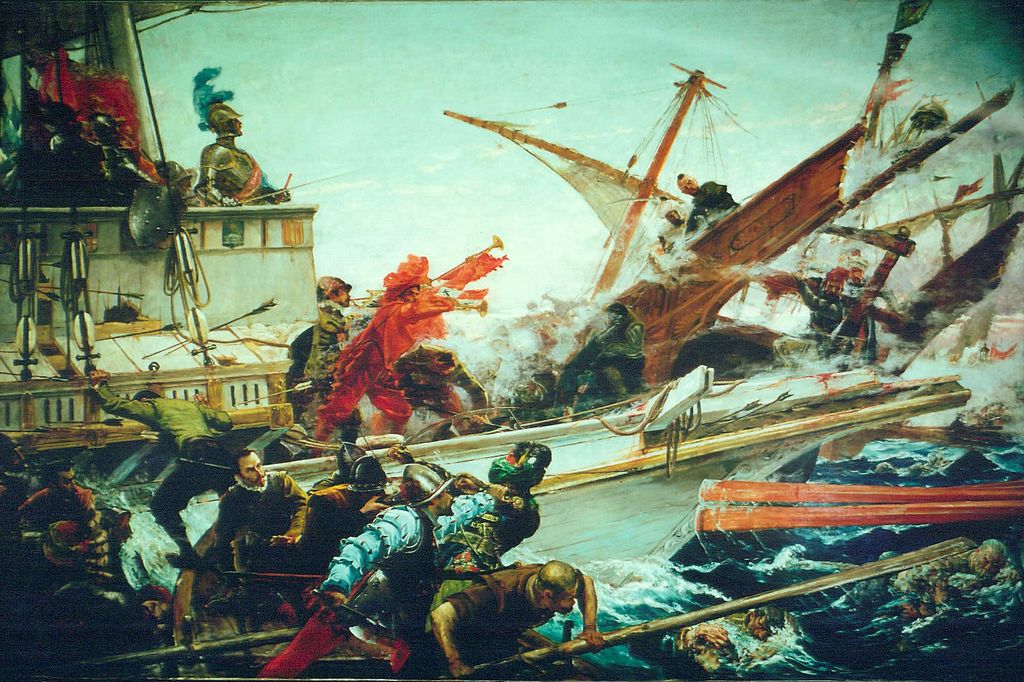
“The Battle of Lepanto”
Oil painting by Juan Luna, 1887. From the Senate of Spain collection via Wikimedia Commons.

Lepanto is a very famous battle, and one which means different things to different people. To a devout Roman Catholic like Chesterton, Lepanto takes on the romanticized and chivalrous form of a crusade — a war by the Holy League against the marauding Turk. At the time it was fought, to be sure, this was the way many in the Christian faction thought of their fight. Chesterton, for his part, writes that “the Pope has cast his arms abroad for agony and loss, and called the kings of Christendom for swords about the Cross”.

For historians, Lepanto is something like a requiem for the Mediterranean. Placed firmly in the early-modern period, fought between the Catholic powers of the inland sea and the Ottomans, then on the crest of their imperial rise, Lepanto marked a climactic ending to the long period of human history where the Mediterranean was the pivot of the western world. The coasts of Italy, Greece, the Levant, and Egypt — which for millennia had been the aquatic stomping grounds of empire — were treated to one more great battle before the Mediterranean world was permanently eclipsed by the rise of the Atlantic powers like the French and English. For those particular devotees of military history, Lepanto is very famous indeed as the last major European battle in which galleys — warships powered primarily by rowers — played the pivotal role.

There is some truth in all of this. The warring navies at Lepanto fought a sort of battle that the Mediterranean had seen many times before — battle lines of rowed warships clashing at close quarters in close proximity to the coast. A Roman, Greek, or Persian admiral may not have understood the swivel guns, arquebusiers, or religious symbols of the fleets, but from a distance they would have found the long lines of vessels frothing the waters with their oars to be intimately familiar. This was the last time that such a grand scene would unfold on the blue waters of the inner sea; afterwards the waters would more and more belong to sailing ships with broadside cannon.

Lepanto was all of these things: a symbolic religious clash, a final reprise of archaic galley combat, and the denouement of the ancient Mediterranean world. Rarely, however, is it fully understood or appreciated in its most innate terms, which is to say as a military engagement which was well planned and well fought by both sides. When Lepanto is discussed for its military qualities, stripped of its religious and historiographic significance, it is often dismissed as a bloody, unimaginative, and primitive affair — a mindless slugfest (the stereotypical “land battle at sea”) using an archaic sort of ship which had been relegated to obsolescence by the rise of sail and cannon.

Here we wish to give Lepanto, and the men who fought it, their proper due. The continued use of galleys well into the 16th century did not reflect some sort of primitiveness among the Mediterranean powers, but was instead an intelligent and sensible response to the particular conditions of war on that sea. While galleys would, of course, be abandoned eventually in favor of sailing ships, at Lepanto they remained potent weapons systems which fit the needs of the combatants. Far from being a mindless orgy of violence, Lepanto was a battle characterized by intelligent battle plans in which both the Turkish and Christian command sought to maximize their own advantages, and it was a close run and well fought affair. Lepanto was indeed a swan song for a very old form of Mediterranean naval combat, but it was a well conceived and well fought one, and Turkish and Christian fleets alike did justice to this venerable and ancient form of battle.

July 14, 2024

Britain’s First Naval Defeat in 100 years – Coronel 1914

Filed under: Americas, Britain, Germany, History, Military, Pacific, WW1 — Tags: , — Nicholas @ 02:00

Historigraph
Published Sep 26, 2020

July 12, 2024

New Canadian submarines and icebreakers promised at NATO Summit

Filed under: Cancon, Military — Tags: , , , , , , , — Nicholas @ 05:00

Under reportedly intense pressure from NATO allies, Canadian Prime Minister Justin Trudeau grudgingly promises to begin the (usually decades-long) process of purchasing new submarines for the Royal Canadian Navy:

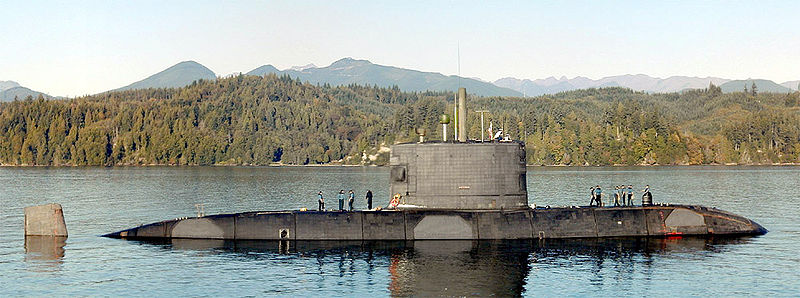
HMCS Victoria
Image via Wikimedia Commons.

The Canadian government announced today it is “taking the first steps” towards buying 12 conventionally-powered, under-ice capable submarines — a massive acquisition with numerous shipbuilders from the around world already eyeing the program reported to be worth at least $60 billion Canadian dollars.

“As the country with the longest coastline in the world, Canada needs a new fleet of submarines — and today, we’ve announced that we will move forward with this acquisition,” Bill Blair, minister of national defence, said in a statement published during the NATO Summit being held this week in Washington, DC. “This new fleet will enable Canada to protect its sovereignty in a changing world, and make valuable, high-end contributions to the security of our partners and NATO allies.”

Canada has been eyeing the acquisition of a new class of submarines to replace its four aging Victoria-class boats since at least April 2023, and Blair himself was the target of criticism earlier this year after he included language about the acquisition in a major defense policy document that critics labeled as “wishy washy”.

In an op-ed for Breaking Defense published ahead of the NATO summit, Blair said that Canada was still pursing the submarine plan, and emphasized that the investment would help his nation cross the 2 percent GDP target.

The government’s press release does not include a price estimate for the program, but the Ottawa Citizen has previously reported that the Royal Canadian Navy tagged the acquisition at $60 billion Canadian dollars ($44 billion USD).

Another item from Breaking Defence details a new trilateral agreement with Finland and the United States to develop a joint design for a “fleet” of icebreakers:

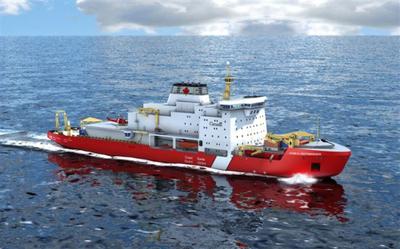
Originally ordered in 2008 for delivery in 2017, the CCGS John G. Diefenbaker is now expected to enter service in 2030.
Canadian Coast Guard conceptual rendering, 2012.

The US, Canada and Finland announced today a new trilateral effort, dubbed the Icebreaker Collaboration Effort or “ICE Pact”, to work together on the production of a “fleet” of new polar icebreakers, in what a US official said was a “strategic imperative” in the race of dominance of the high north.

The initiative, to be formalized in a memorandum of understanding by the end of the year, calls for better information sharing on ship production, collaboration on work force development — including better allowing workers and experts to train at each other’s yards — and an “invitation” to other allies and partners to buy icebreakers from ICE Pact members.

“Due to the capital intensity of shipbuilding, long-term, multi-ship orderbooks are essential to the success of a shipyard,” the White House said in its announcement. “The governments of the United States, Canada, and Finland intend to leverage shipyards in the United States, Canada, and Finland to build polar icebreakers for their own use, as well as to work closely with likeminded allies and partners to build and export polar icebreakers for their needs at speed and affordable cost.”

Ahead of the announcement, White House Deputy National Security Advisor for International Economics Daleep Singh framed the partnership as a commercial and industrial boon, but also one with national security implications: It is, in part, a message to Russia and China that the US and its partners “intend … to project power into the polar regions to enforce international norms and treaties that promote peace and prosperity in the arctic and Antarctic.”

Loading An Ore Ship – The Massive Mesabi Miner

Filed under: Railways, USA — Tags: , , , , — Nicholas @ 02:00

SD457500
Published Jan 15, 2024

The Twin Ports is home to a bustling array of shipping, and industry by both rail and water. The massive iron ore docks see huge ships coming and going, while being loaded with taconite. This video has unique, and rare views seldom seen!

In this video, we’ll see how the MASSIVE Mesabi Miner gets loaded, how the taconite gets unloaded, and an aerial view of the large Canadian National Dock 6 in Duluth. This is a neat operation, complete with the unloading of taconite cars — something rarely seen!
(more…)

June 5, 2024

HMCS Charlottetown: A formidable submarine-hunting force in Nato’s fleet

Filed under: Britain, Cancon, Military — Tags: , , , , — Nicholas @ 02:00

Forces News
Published Mar 1, 2024

Conceived in the middle of the Cold War era, the Canadian Royal Navy frigate HMCS Charlottetown has evolved over three decades of service, becoming one of the most capable and adaptable ships in Canada’s navy.

After setting sail for Nato’s Exercise Steadfast Defender in the North Sea, she made a stop in Edinburgh en route to participating in the alliance’s largest training mission since the Cold War.
(more…)

May 12, 2024

The fascinating story of HMS Challenger (K07)

Filed under: Britain, History, Military — Tags: , , , , , , — Nicholas @ 05:00

Sir Humphrey pens a long blog post about a late Cold War Royal Navy ship — officially just a “diving support vessel”, but apparently much more capable — most naval fans may never have heard about:

HMS Challenger (K07) at Kiel, West Germany in 1985.
Photo by John Cook via Wikimedia Commons.

The story of HMS Challenger remains one of the most unusual of all post war Royal Navy vessels. Born in the late Cold War, she was in the eyes of the public a “white elephant” commissioned and never operationally used and sold after just a few years’ service at the end of the Cold War. She was to the few public that had heard of her, “the Warship that never was”. But revealing files in the National Archives tell a story of a ship that was designed to fill a range of highly secretive intelligence support functions and clandestine espionage activity that, had she been successful, would have made her perhaps one of the most vital intelligence collection assets in the UK. This article is about the untold story of HMS Challenger and why she deserves far more recognition than enjoyed to date.

The background of the Challenger story can be traced to the mid 1970s when the Royal Navy used the, by then positively venerable, warship HMS Reclaim to conduct diving support work. The Reclaim, commissioned in 1949 was the last warship in the RN to be designed and fitted with sails, that were occasionally used. Employed in diving support and salvage ops for 30 years, she was a vital asset for the recovery of crashed aircraft, support to diving and other assorted duties. But by 1975 she was also very old and out of date and requiring replacement (she paid off as the oldest operational vessel in the Royal Navy in 1979).

To replace her the Royal Navy developed Naval Staff Requirement 7003 and 7741, which were approved in 1976. These requirements set out the need for a replacement and the capabilities that were required. By this stage of the Cold War the world was a very different place both operationally and technologically from when HMS Reclaim entered service. There were significantly more undersea cables laid across the Atlantic, while the SOSUS network (a deep-water network of sonar systems intended to detect Russian submarines) had been delivered and expanded into UK waters in the early 1970s under project BACK SCRATCH. Additionally the Royal Navy had introduced a few years previously the Resolution class SSBN, which by 1976 had four submarines providing a Continuous At Sea Deterrent (CASD) with their Polaris missiles, as well as wider nuclear submarine operations. At the same time new technology was emerging including better diving capability, the rise of miniature submarines capable of both operating at immense depths and also the rise of rescue submarines for stranded nuclear submarines. Additionally technology had improved increasing the ability to recover items from the seabed.

When brought together this provided the RN with the opportunity to think afresh about how to replace Reclaim. The result was a set of requirements that were defined as follows:

    The objective of NSR 7003 was to provide the Royal Navy with a Vessel and equipment capable of carrying out seabed operations. The requirement … is to find, inspect, work on and recover items on the seabed at all depths down to 300m with some capability to greater depths.

The specific missions for which the requirement was looking to cater for broke down into three main areas:

  1. Inspection, neutralisation or recovery of military equipment, including weapons;
  2. Operations in support of national offshore interests including research;
  3. Assistance with submarine escape and rescue and with underwater salvage

This represented a significant leap forward compared to Reclaim, which was limited to diving at up to 90m in very limited conditions, and would have provided the Royal Navy with an entirely new level of capabilities.

The decision was taken to proceed with the requirement and Challenger was ordered in 1979 and commissioned in 1983. What then follows is a sorry story of a ship being brought into service and having practically everything that could go wrong, going wrong. This article will not go into any depth on the story of what failed, as to do so would be a lengthy story. Suffice to say that a combination of faulty equipment, manufacturing challenges, fires and other damages and the reality that technical aspirations were not matched by practical delivery in reality meant that Challenger never really became operational.

Used for a series of trials until the late 1980s to prove her systems and see if they would work, she struggled to achieve what was expected of her. She had some success recovering toxic chemicals from the seabed from a sunken merchant ship in the 1980s and then conducting other demonstrations, such as deep diving and supporting submarine rescue trials. But she never lived up to the expectations placed on her, and at a time when the costs required to get her to the level of capability were far too high, and the defence budget was under pressure at a point when the Warsaw Pact threat was rapidly collapsing, the decision was taken to pay her off as a failed experiment even before the wider Options for Change plan was announced. This much is widely known to the public, but what is nowhere near as well known is the missions that Challenger was intended to carry out. Had she been successful, it would have made a very real difference to RN capabilities.

Why did the Royal Navy seem so determined to make a success of Challenger for so many years, to the extent of throwing ever more money at her, given these problems? In short because the missions she was designed to do made it worthwhile. Files in the archives clearly show that beyond the public line of “research” she was designed to carry out exceptionally sensitive missions. Although the original Naval Staff Requirement focused on three areas, by the time she entered service, this had expanded to at least 9 (possibly more). These were:

  1. Strategic Deterrent Force Security
  2. Seabed surveillance device support
  3. Nuclear weapon recovery
  4. Recovery of security and military sensitive material
  5. Crashed military aircraft recovery
  6. Submarine escape and rescue operations
  7. Salvage operations
  8. MOD research and data collection for other than intelligence agencies
  9. Miscellaneous operations in support of other government agencies

It can be seen that far from being just a diving support platform, Challenger was in fact an absolutely central part in providing assurance to the protection of CASD and ensuring the security of the nuclear deterrent and SOSUS. How would she have done this?

The files show that in the 1980s the UK had a different attitude to the US about protection of these routes due to geographic differences.

April 28, 2024

Look at Life – The Car Has Wings (1963)

Filed under: Britain, History, Railways, Technology — Tags: , , , , , — Nicholas @ 02:00

Classic Vehicle Channel
Published Apr 19, 2020

Transporting cars by sea, air and rail. This film features wonderful traffic archives.

April 23, 2024

KICKING IT TO THE MOON? Canada’s Military Procurement: A history of broken promises

Filed under: Cancon, Military, Politics — Tags: , , , , , — Nicholas @ 04:00

Esprit de Corps Canadian Military Magazine
Published Apr 22, 2024

The Liberal government have finally released their long awaited Defence Policy Update which promises billions of dollars in increased spending for the CAF. Critics wonder if such promises are worth the paper they are printed on. History says that when it comes to military budgets, promises are made to be broken. Good Grief.
(more…)

April 22, 2024

QotD: Before England could rely on the “wooden walls” of the Royal Navy

Filed under: Britain, History, Military, Quotations — Tags: , , , , , , — Nicholas @ 01:00

… given this general lack of geographical knowledge, try to imagine embarking on a voyage of discovery. To an extent, you might rely on the skill and experience of your mariners. For England in the mid-sixteenth century, however, these would not have been all that useful. It’s strange to think of England as not having been a nation of seafarers, but this was very much the case. Its merchants in 1550 might hop across the channel to Calais or Antwerp, or else hug the coastline down to Bordeaux or Spain. A handful had ventured further, to the eastern Mediterranean, but that was about it. Few, if any, had experience of sailing the open ocean. Even trade across the North Sea or to the Baltic was largely unknown – it was dominated by the German merchants of the Hanseatic League. Nor would England have had much to draw upon in the way of more military, naval experience. The seas for England were a traditional highway for invaders, not a defensive moat. After all, it had a land border with Scotland to the north, as well as a land border with France to the south, around the major trading port of Calais. Rather than relying on the “wooden walls” of its ships, as it would in the decades to come, the two bulwarks in 1550 were the major land forts at Calais and Berwick-upon-Tweed.

Anton Howes, “The House of Trade”, Age of Invention, 2019-11-13.

April 10, 2024

CDR Salamander says it’s “time to drag LCS out of the gimp box again”

Filed under: Military, USA — Tags: , , , — Nicholas @ 03:00

CDR Salamander has never held back on his dislike of the Little Crappy Ship (Littoral Combat Ship) design(s) the US Navy settled on nearly 20 years ago:

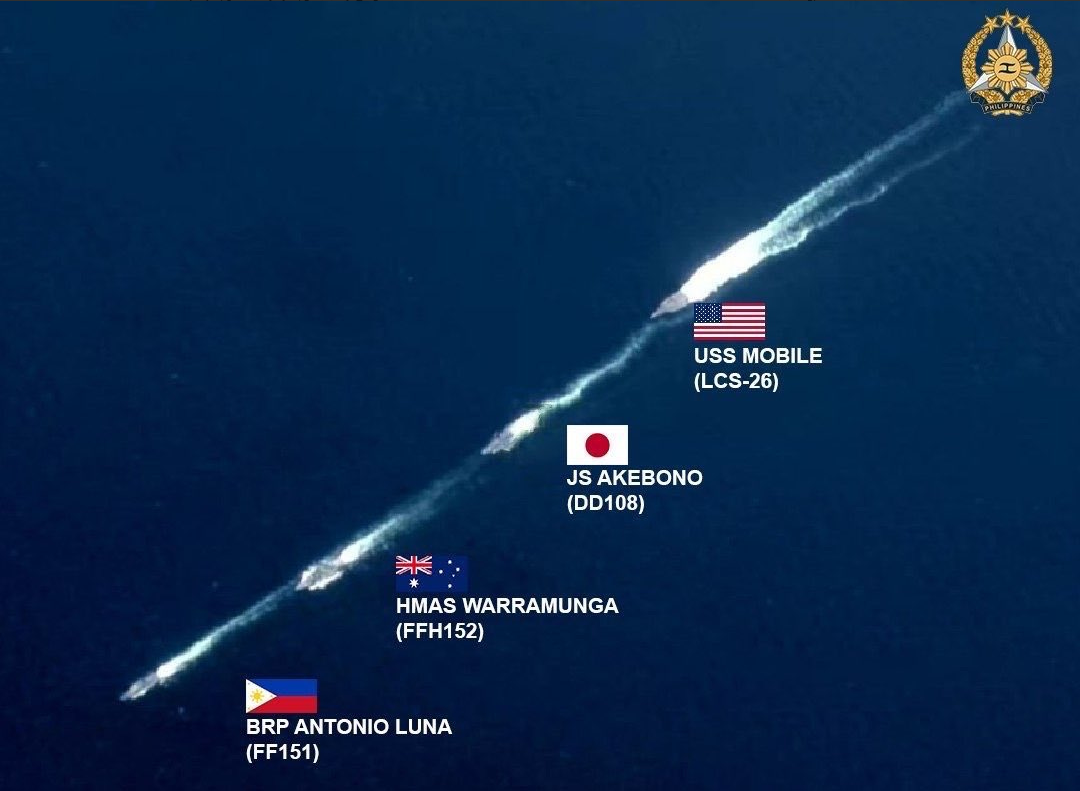
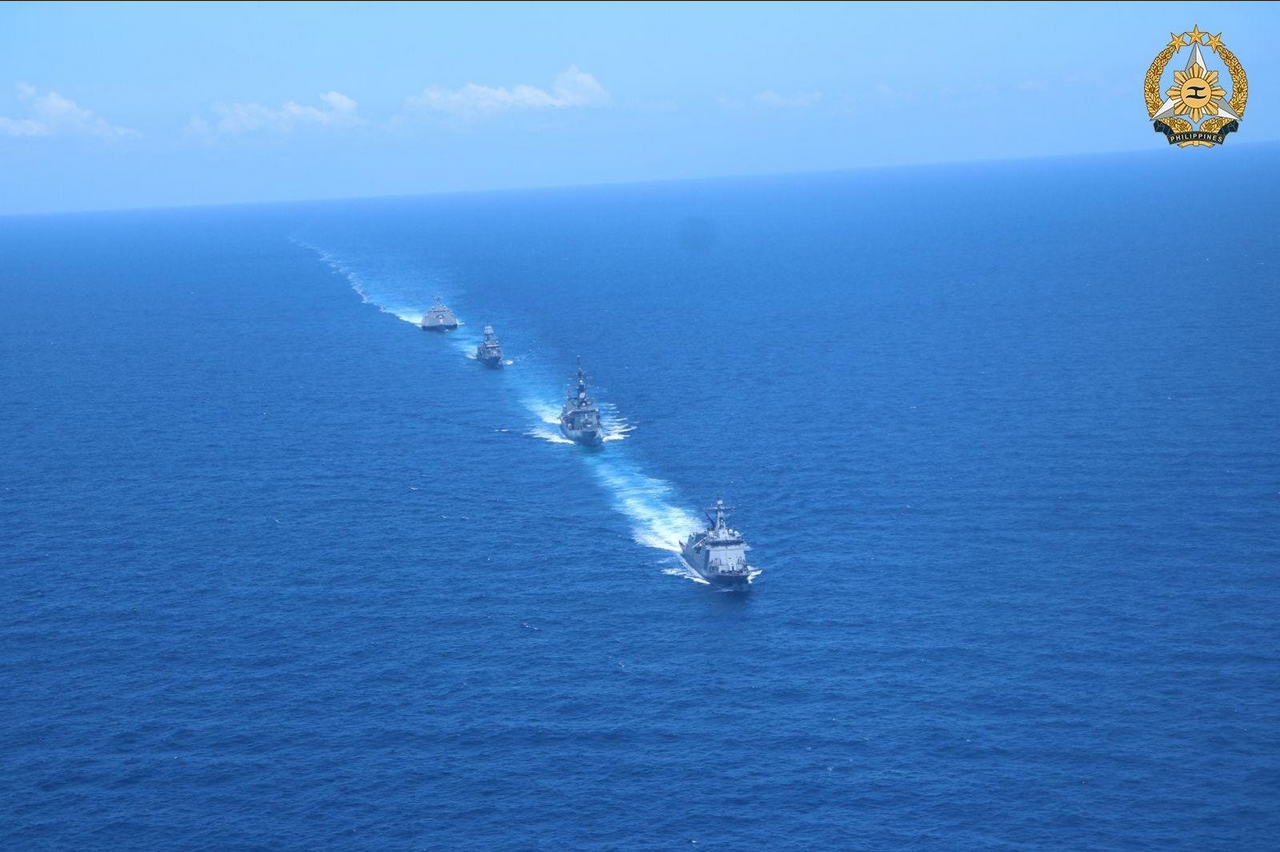
As promised yesterday, time to drag LCS out of the gimp box again, because it fits in well with last week’s 3×8 Grid of Shame, flavored in no small part with the Navy’s decision to pull its head inside its shell and cancel its ship briefings.

To solve the many problems we have created for ourselves, we must have a foundational change in our culture. Expecting a different result without changing that, I’m not sure how we get any headway.

From our FITREPs to our shipbuilding plans to the testimony by our leadership to Congress. We spin, mindlessly drone talking points and carefully scripted PAOisms, and from our FITREP to awards system, we willfully share untruths, obscure, hope things just blow up on someone else’s PCS cycle.

[…]

Now, let’s take a look at this second pic. On its face it demonstrates that LCS is a direct byproduct of an institutional habit of not being honest with the American people, their elected representatives, and hell … even ourselves.

Besides both this pic and the first one showing the USN ship being the most out of formation, what catches you eye?

The ship furthest away in formation should look the smallest … but there is nothing “small” about an LCS in the visual spectrum.

In an age where satellites with multi-spectral surveillance capability matched with artificial intelligence, look at that first pic. Is there any way to hide that wake?

Of course not.

Then look at the LCS’s weapons capability compared to the other ships. Is she ready for combat in the littorals against an enemy that will bring modern air, surface, and subsurface threats to her?

Should people only realizing this in the third decade of the 21st Century be taken seriously?

No. I don’t buy any of what they are selling. Either they are lying to my/our face, or they lack the critical thinking skills to see what this kludge was/is/will be.

April 9, 2024

US PT Boats of WW2 – Guide 369

Filed under: Britain, Germany, History, Military, Pacific, USA, WW2 — Tags: , , , — Nicholas @ 02:00

Drachinifel
Published Jan 6, 2024

The PT Boats, fast attack craft of the United States Navy, is today’s subject.
(more…)

April 6, 2024

QotD: No navy ever has all its ships at sea at the same time

Filed under: Britain, Military, Quotations — Tags: , — Nicholas @ 01:00

Warships are complicated engineering marvels, requiring extensive work and support to keep operational and effective. A modern escort ship is a floating town, able to generate power to provide life support and hotel services, propulsion, aviation operations and the ability to operate a variety of very complicated electronic systems and weapon systems, and it is built to do this while surviving damage from enemy attack.

This complex world requires attention on a regular basis, both to make sure that the constituent parts still work as planned, and also to update and replace parts with more modern or better alternatives, or to provide planned upgrades. For instance, it is common for new ships entering service to undergo a short refit to add in any extra capability upgrades that may have been rolled out since construction began, and to rectify any defects.

For the purposes of planning how the fleet works, the Royal Navy looks to provide enough ships to meet agreed defence tasks. In simple terms the MOD works out what tasks are required of it, and what military assets are needed to meet them. This can range from providing a constantly available SSBN to deliver the deterrence mission through to deploying the ice patrol ship to Antarctica.

Once these commitments are understood, planners can work out how many ships / planes / tanks are needed to meet this goal. For example, it may be agreed that the RN needs to sustain multiple overseas deployments, and also be able to generate a carrier strike group too.

If, purely hypothetically the requirement for this is 6 ships, then the next task is to work out how many ships are needed to ensure 6 ships are constantly available. Usually, this has historically been at a 3:1 ratio – one ship is on task or ready to fulfill it, one is in some form of work up or other training ahead of being assigned to the role, and one is just back or in refit.

In practical terms this means that the RN never looks to get 100% of its force to sea, but rather to ensure it doesn’t fail to ensure enough ships are available to meet all the tasks that it is required to do. Consequently there is always going to be a mismatch between the number of ships owned, and the number of ships deployed.

Sir Humphrey, “Inoperable or just maintenance”, Thin Pinstriped Line, 2019-10-24.

March 26, 2024

Why the USN isn’t using their “Littoral Combat Ships” in the Red Sea littoral zone

Filed under: Middle East, Military, USA — Tags: , , , , — Nicholas @ 04:00

CDR Salamander explains why the US Navy has chosen not to deploy the ships specifically designed and built to operate in environments like the Red Sea:

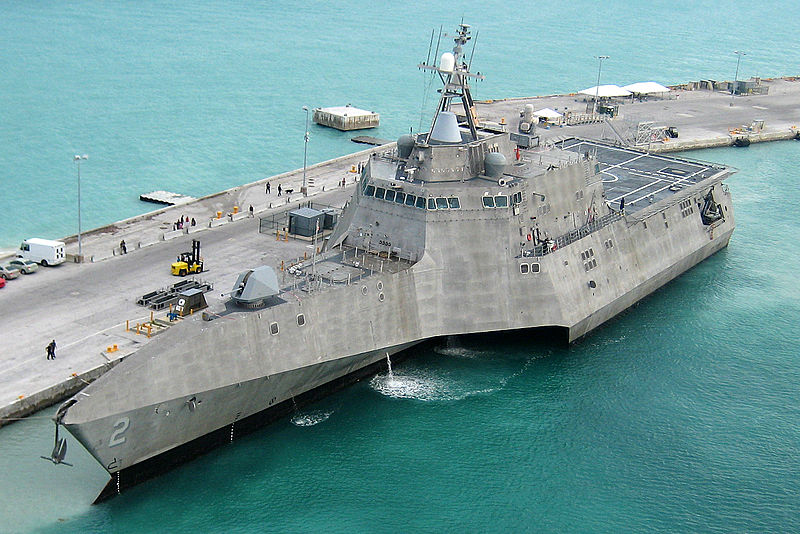
LCS USS Independence (LCS-2)

On yesterday’s Midrats, my co-host mentioned that recently in the Red Sea our Navy has seen the most littoral combat it has in a very long time, but our Littoral Combat Ships are not to be seen. Why? Simple. They cannot conduct combat on the littorals.

This AM, fellow “First LCS Critic” Chapomatic sent me a link to an article from September of last year that I think at the time I made a passing comment on over at X, but did not bring here. Well, let’s fix that.

Why do we need to periodically drag LCS out of the gimp box and hoist her up for all to behold? Simple; as an example to others. We simply cannot afford another CG(X) or DDG-1000 situation with DDG(X) or any other ship we have in the design phase. We have already lost one generation of ship design due to the Age of Transformationalism.

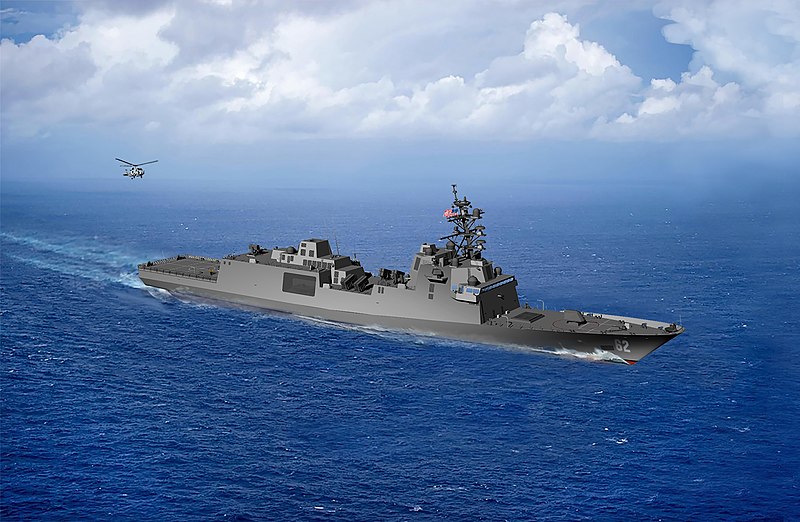
With the Constellation Class FFG we now have building, we are at last taking the course I first suggested in 2006 to correct the error of LCS. That is our version of FREMM that was first commissioned by the French in 2012, a dozen years ago.

LCS was not a problem with our shipbuilding industry or even our design people – though there are areas to critique there. No, this was a people problem, a mindset problem, a culture problem.

It needs to be dragged up regularly. I last did a dedicated post on it back in August 2023. It is time.

As we dive into the details remember this; since the disaster of LCS no senior personnel have yet been held to public account. We have the same acquisition system. We have the same incentives and disincentives as before. Critics of LCS were pushed over to the off-ramp; its most NORK-like advocates promoted.

There is no guarantee this won’t happen again.

Joaquin Sapien at ProPublica and his extensive almost novella – not just an article – on LCS that even opens with a quote of the phrase that first came into the general conversation here on CDR Salamander; The Inside Story of How the Navy Spent Billions on the “Little Crappy Ship”.

Sadly, we did not even get a mention or link – though most of the arguments are the same ones we’ve been making here and on the OB Blog since 2004 – if you spot me six months or so, two decades ago.

Some people have critiques of ProPublica, especially from the right side of the spectrum, but I’m sorry – their critique here is spot on.

It starts right in center mass;

    The USS Freedom had its own special place within the armada. It was one of a new class of vessels known as littoral combat ships. The U.S. Navy had billed them as technical marvels — small, fast and light, able to combat enemies at sea, hunt mines and sink submarines.

    In reality, the LCS was well on the way to becoming one of the worst boondoggles in the military’s long history of buying overpriced and underperforming weapons systems. Two of the $500 million ships had suffered embarrassing breakdowns in previous months. The Freedom’s performance during the exercise, showing off its ability to destroy underwater mines, was meant to rejuvenate the ships’ record on the world stage. The ship was historically important too; it was the first LCS built, the first in the water, commissioned just eight years prior.

The summary of their findings in spot on, especially the last sentence;

    Our examination revealed new details on why the LCS never delivered on its promises. Top Navy leaders repeatedly dismissed or ignored warnings about the ships’ flaws. One Navy secretary and his allies in Congress fought to build more of the ships even as they broke down at sea and their weapons systems failed. Staunch advocates in the Navy circumvented checks meant to ensure that ships that cost billions can do what they are supposed to do.

Both inside and outside the Navy, LCS critics warned two decades ago that 2024 would find the Little Crappy Ship roughly where it wound up

March 13, 2024

“They won’t be in Gaza, but they’ll be just offshore — a few hundred yards from Gaza”

Filed under: Middle East, Military, USA — Tags: , , , , , — Nicholas @ 04:00

Apparently a bunch of former military types are getting their collective panties in a bunch just because Biden is sending part of a highly specialized US Army support brigade to install a temporary offshore unloading facility to get “humanitarian aid” in to Hamas fighters the civilian population of Gaza. All the political advisors to the President want to assure everyone that there will be no “boots on the ground”, so there’s no real risk

The Pentagon has said something that should make us all sit up and pay attention.

Quick background first:

Elements of the US Army’s 7th Transportation Brigade are on the way to Gaza. […] They won’t be in Gaza, but they’ll be just offshore — a few hundred yards from Gaza. Now read this, and take the time to read it closely. I’ll split it into two screencaps to get it all in, which will be awkward to look at, but you can just click on the link to see it all whole (and subscribe to keep up with “Cynical Publius” as all of this develops):

The extremely important part of all of that is that transportation troops aren’t combat arms troops; they’re armed for some degree of self-protection, but “they lack the organic ability to defend themselves against high-intensity attacks by enemies.” In a hostile environment, they need to be screened: they need to be protected by combat-focused forces, both on-shore and off. They need infantry in front of them, warships behind them, and aircraft overhead.

Now, via this account, look at this transcript of an … interesting Pentagon press briefing on March 8, in which a major general talks at length about the security plan for the 7th Transportation Brigade when it gets to Gaza. Sample exchange:

    Q: (Inaudible) partner nations on the ground, but you’re talking about operational security, you can’t discuss what will be (inaudible).

    GEN. RYDER: Right. I mean, we will — these forces will have the capability to provide some organic security. I’m just not going to get into the specifics of that.

But they don’t — or they do, but the capability of transportation troops, from a combat service support branch, is extremely limited. Again, these are not combat arms troops, and aren’t armed or trained as combat arms troops. Talking about their organic security capability is an interesting choice.

« Newer PostsOlder Posts »

Powered by WordPress