Marcus Tullius Cicero was one of the most gifted and successful politicians of his day. Unlike nearly all of his peers in the Roman Senate, his family had not been in Roman politics for generations on generations, but rather was new to it. Cicero’s family was a wealthy one, but hailed from the town of Arpinum, about 60 miles from Rome, making Cicero an outsider to elite Roman politics. He made his name as a legal advocate, rather than (in more typical Roman fashion) as a military man. He was the first of his family to enter the Roman Senate (making him a novus homo or “new man”) and was the first such new man to rise all the way to the consulship (the highest Roman office) in thirty years, which should give some sense of the magnitude of that achievement. Moreover, Cicero had managed to get elected in the first year he was eligible, which would have been a banner achievement even for a member of Rome’s traditional upper-class. During that consulship (63 B.C.), he further distinguished himself by foiling a planned coup centered around the influential figure of Catiline (L. Sergius Catilina).
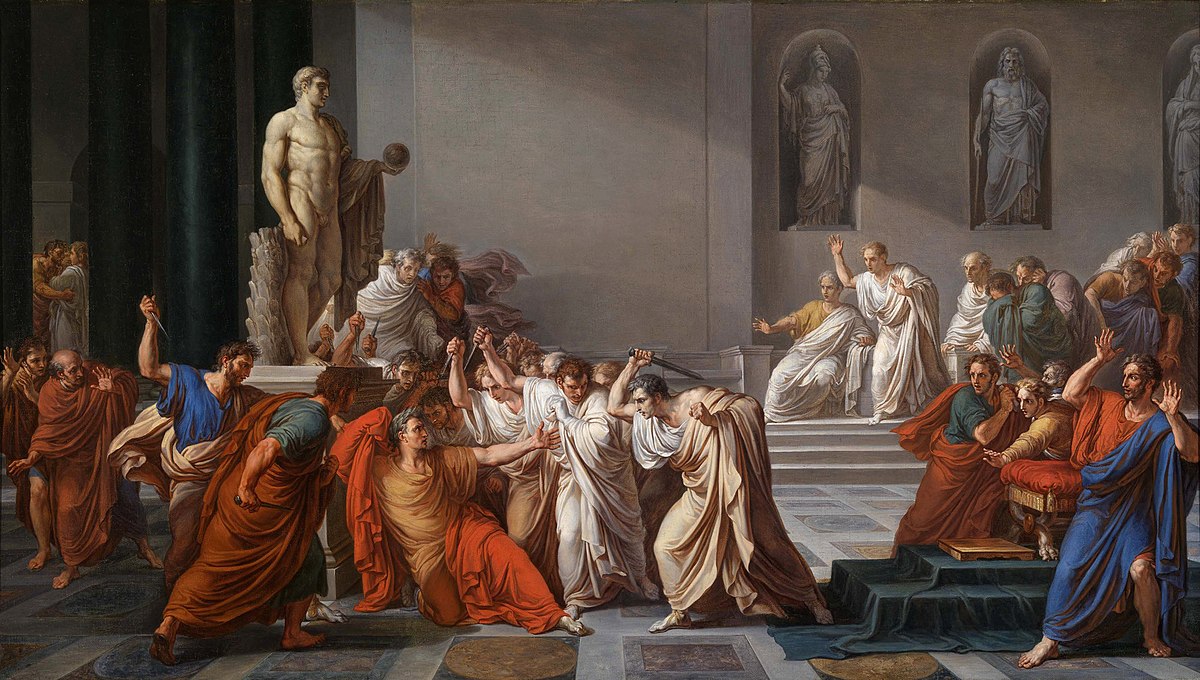
Cicero was a key politician in the Late Republic, but it was his misfortune that his life was spent in an era where words meant less than weapons. He sided with Pompey against Caesar, but was granted clemency after Pompey’s defeat. He was not involved in Caesar’s assassination – he was still too much an outsider for some of the stuck-up Roman elitists who made up the conspiracy (though he correctly pointed out at the time that leaving Antony alive would be a fatal mistake). In the aftermath of the assassination, he identified (correctly) Antony as the key threat to the Republic and worked to discredit him politically in a devastating series of speeches named the Philippics (in honor of a similar set of speeches made by the Athenian Demosthenes against Philip II of Macedon, father of Alexander). Cicero’s political assault on Antony succeeded – his reputation was ruined and his popularity in Rome never recovered – but it cost Cicero his life when Antony, in league with Octavian, moved into the capital and had Cicero murdered. Cicero’s literary legacy survived him, however, in part because it was useful for Augustus’ own political ends (e.g. Plut. Cic. 49.5-6).
Cicero’s position as the most eloquent orator of the Latin language – and probably its best prose stylist – is largely uncontested. It was his speaking skills – honed in the courts – that made him so politically successful. He was also a prolific writer and a tremendous amount of his writings survive, including both legal and political speeches, private letters, handbooks on oratory, and a set of philosophical works. As anyone who has read Cicero can tell you, he also has a deserved reputation for pride and self-aggrandizement. While many of Cicero’s contemporaries and readers down to the modern era have been impressed by Cicero’s thinking and eloquence, I feel confident in asserting no one – alive or dead – will ever be more impressed by Cicero than Cicero was impressed by himself.
Bret Devereaux, “Collections: A Trip Through Cicero (Natural Law)”, A Collection of Unmitigated Pedantry, 2019-12-12.
February 6, 2022
QotD: Marcus Tullius Cicero
January 27, 2022
Carthage: The Empire of Melqart
Thersites the Historian
Published 11 Nov 2021In this lecture, we look at why it is so hard to find Punic material remains and where one can search for what little there is left to find.
Patreon link: https://www.patreon.com/thersites
PayPal link: paypal.me/thersites
Discord: https://discord.gg/QCaXXFr
Brave Browser: https://brave.com/noa557
Twitter link: https://twitter.com/ThersitesAthens
Minds.com link: https://www.minds.com/ThersitestheHis…
Steemit/dtube link: https://steemit.com/@thersites/feed
BitChute: https://www.bitchute.com/channel/jbyg…
December 30, 2021
December 27, 2021
Celebrating Saturnalia with Cato’s Globi
Tasting History with Max Miller
Published 15 Dec 2020Help Support the Channel with Patreon: https://www.patreon.com/tastinghistory
Tasting History Merchandise: crowdmade.com/collections/tastinghistoryFollow Tasting History here:
Instagram: https://www.instagram.com/tastinghist…
Twitter: https://twitter.com/TastingHistory1
Reddit: r/TastingHistory
Discord: https://discord.gg/d7nbEpyLINKS TO INGREDIENTS & EQUIPMENT**
Canon EOS M50 Camera: https://amzn.to/3amjvwu
Canon EF 50mm Lens: https://amzn.to/3iCrkB8
Safflower Oil: https://amzn.to/39Lcsiz
Spelt Flour: https://amzn.to/3ggzPBO
Poppy Seeds: https://amzn.to/37DyG3q
Pokemon plushie: www.pokemoncenter.comLINKS TO SOURCES**
De Agricultura by Cato the Elder: https://amzn.to/3qxL5P5
Saturnalia by Macrobius: https://amzn.to/39N6Pkb
The Twelve Ceasars by Seutonius: https://amzn.to/39MQBat
**Amazon offers a small commission on products sold through their affiliate links, so each purchase made from this link, whether this product or another, will help to support this channel with no additional cost to you.Subtitles: Jose Mendoza
GLOBI
ORIGINAL 2ND CENTURY BC RECIPE (From De Agricultura by Cato the Elder)
Globi to be made thus: Mix the cheese and spelt in the same way. Make as many as desired. Pour fat into a hot copper vessel, and fry one or two at a time, turning them frequently with two sticks, and remove when done. Coat with honey, sprinkle with poppy-seeds, and serve.MODERN RECIPE
INGREDIENTS
– 1 Cup (240g) Ricotta Cheese
– 1 Cup and 1 tablespoon (120g) Spelt, Durum or other whole grain flour
– 1 Quart (1 L) of fat or oil
– 1/3 Cup (80ml) Honey
– Poppy SeedsMETHOD
1. Mix the cheese and flour in a large bowl, then form it into balls about 1 inch across. This recipe should make 12-15 balls.
2. Heat the oil over a high heat until it reaches 350°F (175°C). Turn heat to medium and fry two to three balls at a time, turning every 10 to 15 seconds with tongs. At 60 seconds, begin to check the color; once they are a golden brown (60-90 seconds) take them out and set them on a wire rack over paper towels to drain. Repeat until all of the globi are fried.
3. Dip the dried globi in honey (heating the honey can help if it is too thick). Then sprinkle with poppy seeds and serve.PHOTO CREDITS
Saturn: By inconnu – User:Jean-Pol GRANDMONT (2011), CC BY 3.0, https://bit.ly/39OKgLF
A Statue of Chronos: By Rufus46 – Own work, CC BY-SA 3.0, https://bit.ly/3giv9eH
Pileus: By Marie-Lan Nguyen (2009), CC BY 2.5, https://bit.ly/3osYo1l
Roman Collared Slaves: Ashmolean Museum, CC BY-SA 2.0 https://bit.ly/36OoIgz
Candles Oberflacht: Landesmuseum Württemberg, CC BY-SA 3.0 https://bit.ly/2Lf9yZp
Roman Figurines: Carole Raddato from FRANKFURT, Germany, CC BY-SA 2.0 https://creativecommons.org/licenses/…#tastinghistory #saturnalia #globi #romancooking
December 18, 2021
Saturnalia
Historia Civilis
Published 17 Dec 2016Io, Saturnalia!
Patreon | http://historiacivilis.com/patreon
Donate | http://historiacivilis.com/donate
Merch | http://historiacivilis.com/merch
Mailing List | http://historiacivilis.com/mailinglist
Twitter | http://historiacivilis.com/twitter
Website | http://historiacivilis.comMusic is:
“I //\\ I,” by Discount Fireworks
December 13, 2021
The Battle of Cannae (216 B.C.E.)
Historia Civilis
Published 29 Jun 2015Patreon | http://historiacivilis.com/patreon
Donate | http://historiacivilis.com/donate
Merch | http://historiacivilis.com/merch
Twitter | http://historiacivilis.com/twitter
Website | http://historiacivilis.comMusic is Beethoven’s “Sonata No. 32 in C Minor, Op. 111” – I. Maestoso – Allegro con brio ed appassionato, performed by Daniel Veesey
December 12, 2021
How They Did It – Pet Dogs in Ancient Rome
Invicta
Published 12 Sep 2018Our history with man’s best friend stretches far into the past. Today we take a look at the lives of dogs in ancient Rome; how they named, trained, and raised them.
Bibliography:
Xenophon and Arrian: On Hunting (1999) translated by A. A. Phillips and M. M. Willcock
Metamorphoses Book III by Ovid
Names of Dogs in Ancient Greece by Adrienne Mayor
Greek and Roman Household Pets by Francis D. LazenbyArtwork:
Beverly Johnson (https://www.behance.net/bevsi)Music:
“Strings and Drums Comedy” by 8th Mode Music
“Emotional” by 8th Mode Music#RomanHistory
#HowTheyDidIt
December 6, 2021
The Battle of Lake Trasimene (217 B.C.E.)
Historia Civilis
Published 22 Jun 2015Patreon | http://historiacivilis.com/patreon
Donate | http://historiacivilis.com/donate
Merch | http://historiacivilis.com/merch
Twitter | http://historiacivilis.com/twitter
Website | http://historiacivilis.comMusic is Beethoven’s “Sonata No. 07 in D Major, Op. 10 No. 3” – I. Presto, performed by Daniel Veesey.
December 3, 2021
The Battle of the Trebia River (218 B.C.E.)
Historia Civilis
Published 12 Jun 2015Patreon | http://historiacivilis.com/patreon
Donate | http://historiacivilis.com/donate
Merch | http://historiacivilis.com/merch
Twitter | http://historiacivilis.com/twitter
Website | http://historiacivilis.comMusic is Beethoven’s “Sonata No. 11 in B Flat Major Op. 22” – I. Allegro con brio. Performed by Daniel Veesey
November 22, 2021
History of Wine: Ancient Rome
History of Wine
Published 20 Apr 2014How was wine was made in Ancient Rome?
What did wine taste like in Ancient Rome?
Convivium and customs of drinking.
Wine Tasting.
October 22, 2021
QotD: Post-traumatic stress disorder (PTSD) in the ancient (or medieval) world
PTSD is more than feeling bad about being in a war, or grief at the loss of a buddy. Here are the diagnostic guidelines. Note how a diagnosis requires one intrusion symptom (involuntary and instrusive memories, dreams, flashbacks, marked physiological reactions) and persistent avoidance of stimuli associated with the trauma and two negative alterations in cognition and mood associated with the trauma and two marked alterations in arousal and reactivity associated with the trauma. A lot of the examples being cited in the comments do not come anywhere near meeting that criteria. As I read and understand that, an individual who is voluntarily recounting the trauma – much less re-exposing themselves to it by going out to fight again – without significant reactions (read the guidelines – these are really very significant reactions) doesn’t fit the criteria. They may well have another form of mental wound, mind you; grief, fear, loss, guilt and so on are all very real things. But they do not, by our current medical definition, have this wound. Specificity here is necessary because we aren’t asking a question about grief or loss or guilt – feelings which all humans feel at one point or another – but about a very specific mental wound that combat (or other trauma) may inflict.)
That is often not the impression that you would get from a quick google search (though it does seem to be the general consensus of the range of ancient military historians I know) and that goes back to arguments ex silentio. A quick google search will turn up any number of articles written by folks who are generally not professional historians declaring that PTSD was an observed phenomenon in the deep past, citing the same small handful of debatable examples. But one thing you learn very rapidly as a historian is that if you go into a large evidence-base looking for something, you will find it.
That’s not a species of research positivity – it’s a warning about confirmation bias, especially if you do not establish a standard of proof before your investigation. It is all too easy to define down your definition of “proof” until the general noise of the source-base looks like proof. In this case, we have to ask – before we go looking – what would evidence of PTSD in ancient societies (I’m going to start there because it is where I am best informed) look like?
Well, ancient societies engaged in a lot of warfare. Among the citizenry – the sort of fellows who write to us and are written about in our sources – combat experience was almost ubiquitous. That only really changes as we get into the Roman Empire, as violence levels both decline generally and are pushed to the frontier via a professional army. The percentage of veterans in the citizen population (again, citizen here is an important caveat, but then those fellows basically are our primary source base) probably equaled that of the WWI generation in Britain or France, except all the time (there’s a point in the Second Punic War where the Roman censors went through the entire rolls, checking to see how many had managed to avoid military service and found only a few thousand in a citizen body of c. 150,000 adult males). So what ought we expect from our sources? We should expect to see signs of PTSD everywhere. It should be absolutely pervasive in a source-base produced almost entirely by, for and about combat veterans, in societies where military mortality exceeded modern rates by a robust margin.
And it simply isn’t there. There is one very frequently cited account in Herodotus (Hdt. 6.117) of a man named Epizelos experiencing what is generally understood as “conversion disorder” (which used to be badly labeled “hysterical blindness”) in combat. Without being wounded he went blind at a sudden terror in battle and never recovered his sight. Herodotus terms it a θῶμα – a “wonder” or “marvel”, a word that explicitly implies the strange uncommonness of the tale. Herodotus is concerned enough about how exceptional this sounds that he is quick not to vouch for its veracity – he brackets the story (beginning and end) noting that it was what he was told (by someone else) that Epizelos used to say happened to him. In short, this was uncommon enough that Herodotus distances himself from it, so as not to be thought as a teller of tall-tales (though Herodotus is, in fact, a teller of tall tales).
This one example – cited endlessly and breathlessly in internet articles – is remarkable not because it is typical, but because it is apparently very unusual (also, it is my understanding – with the necessary caveat that I am not an expert – that while conversion disorder is a consequence of emotional trauma, it is not clear that it is associated with PTSD more generally). Meanwhile, in the war literature of the Romans, in their poetry (including that by folks like Horace, who fought in quite terrible battles), in the military literature of the Greeks, in the reflections of Xenophon (both on his campaigns and his commands), in the body of Greek lyric poetry … all of it – nothing. It is simply not there – not as a concern that such a condition might befall someone, nor a report that it had done so. Nothing. The lacuna baffled me for years.
My impression is that the medieval literature looks much the same: a few scattered passages that, if you squint hard enough, might be PTSD set against a vast backdrop of nothing in a society where literature was dominated by the war-fighting class. More examples than in the classical corpus (but then the medieval corpus is much larger; oddly, the examples I’ve seen all seem to concern crusading particularly), but nothing close to what we would expect given a literary tradition absolutely dominated by military aristocrats and their (often clerical) families. I call this my impression, because the medieval corpus is both much larger and I have read much less of it; but if there is a hidden reservoir of accounts showing clear symptoms of PTSD, I have not found it yet. I was always struck that – despite the fact that monastic life was often a destination for medieval military aristocrats troubled by their life of violence – none of the monastic rules I have read (admittedly, not all of them), which often have guidelines for abbots to deal with difficult monks, have had anything about how to deal with the symptoms of PTSD.
Now that’s not to say there isn’t grief at loss, mind you! The lamentations of defeat, the sorrow of losing a loved one (even in victory), the misery of war – that you find in the ancient texts in abundance. It occupies literary topoi, it is depicted in artwork, it gets entire tragedies to stretch out in, it is addressed by great big political speeches, it sits at the cornerstone of the Iliad‘s narrative (one reason, no doubt, that the Iliad remains a useful text for soldiers working through their experiences). But the persistent symptoms of PTSD, no. I haven’t been able to find one “flashback” or combat-memory related dissociative episode in ancient literature. You might argue that they simply weren’t recorded, but that strikes me as unlikely in societies where other forms of war-damage were so fiercely valorized and which would have often seen – as with Epizalos – such symptoms as divine omens. There should be dozens and dozens of them. These are societies with active medical literature, after all!
I think the evidence strongly suggests that ancient combatants did not experience PTSD as we do now. The problem is that the evidence of silence leads us with few tools with which to answer why. One answer might be that it existed and they do not tell us – because it was considered shameful or cowardly, perhaps. Except that they do tell us about other cowardly or shameful things. And the loss and damage of war – death, captivity, refugees, wounds, the lot of it – are prominent motifs in Greek, Roman and European Medieval literature. War is not uniformly white-washed in these texts – not every medieval writer is Bertran. We can’t rule out some lacuna in the tradition, but given just how many wails and moans of grief and loss there are in the corpus it seems profoundly unlikely. I think we have to assume that it isn’t in the sources because they did not experience it or at least did not recognize the experience of it.
Bret Devereaux, “Fireside Friday”, A Collection of Unmitigated Pedantry, 2020-04-24.
October 12, 2021
QotD: Titus Livius, better known as Livy
Livy’s life (roughly 59 BC to about 17 AD) spanned the most consequential period in the thousand-year history of ancient Rome. He witnessed the last decades of the crumbling old Republic and the rise in its place of the imperial autocracy we know as the Roman Empire. He was in his early twenties when the last great defender of the republican heritage, Cicero, was assassinated by a henchman of the tyrant Marc Antony. Livy observed the entirety of the reign of the first Emperor, Augustus. He is best known for his history of Rome, Ab Urbe Condita, described both in his day and in ours with such terms as “monumental” and “magisterial”.
What little we know of the man himself suggests he was somehow financially well-off, independent, and reclusive. He was schooled in rhetoric, philosophy, and history. He never served in any public position, though apparently, he personally knew Augustus. Writing his massive history of Rome absorbed his adult life.
Though Romans at the time of his writing held his work in high regard, we know that some parts of Livy’s historical accounts were surely based on minimal records, old and dubious oral stories, and even legend. After all, he wrote 2,000 years ago about people and events of as much as eight centuries before his time. “I hope my passion for Rome’s past has not impaired my judgment,” he opined in his introduction to Ab Urbe Condita, “for I do honestly believe that no country has ever been greater or purer than ours or richer in good citizens and noble deeds.”
“The old Romans,” wrote Livy of his countrymen before the beginning of the Republic, “all wished to have a king over them because they had not yet tasted the sweetness of freedom.” But then in 508 BC, Romans mounted a truly historic revolution of both ideas and governance. They overthrew the monarchy and established a new order that ultimately included a Senate of nobles, popularly elected Assemblies, the dispersion of centralized power, term limits, a constitution, due process, habeas corpus, and the widest practice of individual liberty the world had yet seen. Before they lost it all less than five centuries later, they experienced a remarkable rise and fall. […]
From Livy, we learn about Rome’s pivotal wars against the Carthaginians, the Samnites, and other peoples of the Italian Peninsula. He also informs us of the rivalry between Sulla and Marius, the tumultuous last days of the Republic as strong men fought each other for power, the murder of Julius Caesar, and the self-serving machinations of Augustus. Livy celebrated the courage of his ancestors; in fact, he originated the phrase, “Fortune favors the brave,” which is still used commonly today as a maxim and a motto.
Lawrence W. Reed, “Lessons from Livy on How Great Civilizations Rise and Fall”, Foundation for Economic Education, 2021-06-28.
September 26, 2021
I finally made GARUM | Ancient Rome’s favorite condiment
Tasting History with Max Miller
Published 9 Jun 2020In nearly every recipe we have from Ancient Rome, a key ingredient is Garum or Liquamen; fermented fish sauce. While it usually takes two months to make, I use an ancient recipe for same day garum which gave me plenty of time to look at the history of Ancient Rome’s favorite condiment.
Help Support the Channel with Patreon: https://www.patreon.com/tastinghistory
Follow Tasting History with Max Miller here:
Instagram: https://www.instagram.com/tastinghist…
Twitter: https://twitter.com/TastingHistory1LINK TO COLATURA DI ALICI: https://amzn.to/30o2Dmg
LINKS TO SOURCES**
The Roman Cookery Book by Elizabeth Rosenbaum: https://amzn.to/2zg73QVTasting Rome by Katie Parla and Kristina Gill: https://amzn.to/2Affi01
Ferment by Holly Davis: https://amzn.to/37bDtIK
https://coquinaria.nl/en/roman-fish-s…
The rise and reorganization of the Pompeian salted fish industry – Steven Ellis: https://www.academia.edu/678386/The_r…
**Amazon offers a small commission on products sold through their affiliate links, so each purchase made from this link, whether this product or another, will help to support this channel with no additional cost to you.
LINK TO Making A Cure for the Black Plague | Galen and the Four Humors: https://www.youtube.com/watch?v=jtCKA…
GARUM
ORIGINAL RECIPE From The Geoponica
If you wish to use the garum at once — i.e. not expose it to the sun, but boil it — make it in the following manner: Take brine and test its strength by throwing an egg into it to see if it floats; if it sinks it does not contain enough salt. Put the fish into the brine in a new earthenware pot, add oregano, put it on a good fire until it boils — i.e., until it begins to reduce. Some people also add defrutum. Let it cool and strain it two or three times, until the liquid is clear. Seal and store it away.MODERN RECIPE
INGREDIENTS (Amounts are approximate)
– 2 Quarts (1900ml) Water
– 1lb (450g) Sea Salt
– 2 Teaspoons Dried Oregano
– Defrutum or Honey
– 2lbs (900g) Whole Fish (oily)METHOD
1. Add salt to the water and stir to dissolve. You may not need the full amount, so start with about 3/4s. Place an egg in the water and if the egg floats, stop adding salt.
2. Add the whole fish and the oregano (and defrutum if you are using any) to the water and place over medium-high heat and boil for 30 – 40 minutes. Every ten minutes, mash with a spoon to break up the fish.
3. Once the water has reduced to about half the amount, remove the pot from the heat and allow to cool.
4. First, pass through a colander and then strain through a kitchen cloth or paper towel until the garum is free of particles. Then bottle in a sterile bottle and refrigerate.Music Credit
“Gigue” From 3rd Cello Suite
Exzel Music Publishing (freemusicpublicdomain.com)
Licensed under Creative Commons: By Attribution 3.0
http://creativecommons.org/licenses/b…Photo Credits
chef PNG Designed By CHENXIN from https://pngtree.com/
Garum Mosaic – Claus Ableiter / CC BY-SA (https://creativecommons.org/licenses/…)
Adana Mosaic – Dosseman / CC BY-SA (https://creativecommons.org/licenses/…)
Galen – Wellcome Collection / CC BY (https://creativecommons.org/licenses/…)
Snails Mosaic – Carole Raddato from FRANKFURT, Germany / CC BY-SA (https://creativecommons.org/licenses/…)
Seneca & Nero – By Eduardo Barrón – Own work, CC BY-SA 3.0, https://commons.wikimedia.org/w/index…#tastinghistory #garum #ancientrome #foodhistory
September 21, 2021
Early Rome, Part V: Introduction to Modern Scholarship
Thersites the Historian
Published 6 Sep 2021In this video, we look at what modern scholars tend to think about early Rome and some of the ways in which they approach this fraught topic.
Patreon link: https://www.patreon.com/thersites
PayPal link: paypal.me/thersites
Discord: https://discord.gg/QCaXXFr
Brave Browser: https://brave.com/noa557
Twitter link: https://twitter.com/ThersitesAthens
Minds.com link: https://www.minds.com/ThersitestheHis…
Steemit/dtube link: https://steemit.com/@thersites/feed
BitChute: https://www.bitchute.com/channel/jbyg…
September 12, 2021
Early Rome, Part III: Livy and the Roman Tradition of Early Rome
Thersites the Historian
Published 5 Sep 2021Here, I examine Livy’s Book I with an emphasis on the tradition that he worked in and his agenda for undertaking such a massive and ambitious project.
Patreon link: https://www.patreon.com/thersites
PayPal link: paypal.me/thersites
Discord: https://discord.gg/QCaXXFr
Brave Browser: https://brave.com/noa557
Twitter link: https://twitter.com/ThersitesAthens
Minds.com link: https://www.minds.com/ThersitestheHis…
Steemit/dtube link: https://steemit.com/@thersites/feed
BitChute: https://www.bitchute.com/channel/jbyg…