Quotulatiousness

November 17, 2021

Environmental pessimism despite the facts

Filed under: Economics, Environment, Media — Tags: , , , , — Nicholas @ 05:00

Alexander Hammond refutes one of the many, many articles preaching global environmental doom and disaster:

Last week, The Scotsman published an article by the journalist Anastasiia Zagoruichyk. In the piece, Zagoruichyk claims that thanks to climate change, fires, and deforestation in her native Ukraine, her children won’t get to experience childhood joys like “walking in the autumn forest, picking mushrooms and breathing fresh air.”

Forest coverage in Ukraine is, admittedly, a niche topic, but alarmism about the future of our forests and our children is unfortunately widespread. Indeed, it was not long ago that Extinction Rebellion founder Roger Hallam confidently declared that due to deforestation and other environmental damage, “our children are going to die in the next 10-20 years.” Thankfully for humanity, these far-fetched claims are not based in reality.

Contrary to what Zagoruichyk would have you believe, forest coverage in Ukraine has increased drastically in recent years. Between 1992 (the oldest data available) and 2020, the share of land in Ukraine covered by forest increased from 16.1 percent to 16.7 percent. While a 0.6 percentage point increase might seem like a small amount, this equates to an additional 3,622 square kilometers of forest – a land area roughly 1.5 times larger than the country of Georgia.

Globally, the world does continue to lose forest area. However, according to the United Nation’s Food and Agriculture Organisation (FAO), the rate of deforestation between 2010-2020 was 40 percent lower than in 1990-2000. At this rate, even without additional promises from world leaders at COP, the global deforestation rate will likely hit zero. Indeed, over the last 30 years, net afforestation has occurred in Europe (including Russia), North America, Oceania, and Asia.

The world’s two poorest regions, South America and Africa, are also the only ones that continue to experience net deforestation. This is no coincidence; many environmental scientists and commentators suggest that economic and ecological well-being are intimately related. According to one hypothesis, called the Environmental Kuznets Curve, a region’s environment worsens in tandem with economic growth but only until a certain income per capita is reached. At that point, people can afford to protect the environment, and ecosystems flourish. This environmental recovery has occurred across Europe and North America and is currently happening in China, Russia, India, and Vietnam.

Therefore, as South America and Africa continue to become richer, we can expect their rate of forest loss to slow and eventually reverse. Given this good news, why is there so much pessimism about the future of our forests? Zagoruichyk’s article offers some answers.

Earlier this month, Michael Shellenberger also had good-but-ignored environmental news to report in UnHerd:

No global problem has ever been more exaggerated than climate change. As it has gone from being an obscure scientific question to a theme in popular culture, we’ve lost all sense of perspective.

Here are the facts: in Europe, emissions in 2020 were 26% below 1990 levels. In the United States, emissions in 2020 were 22% below 2005 levels. Emissions are likely to start declining, too, in developing nations, including China and India, within the next decade. Most nations’ emissions will be bigger this year than last, due to post-Covid economic growth. But global emissions are still likely to peak within the next decade.

And the result will be a much smaller increase in global average temperatures than almost anyone predicted just five years ago. The best science now predicts that temperatures are likely to rise just 2.5-3°C above pre-industrial levels. It’s not ideal, but it’s a far cry from the hysterical and apocalyptic predictions of 6°C, made just a decade ago. A 3°C increase is hardly an existential threat to humanity.

Not that you’d know it, if you had half an eye on the headlines this summer. The floods, fires and heatwaves that plagued the world were, for many observers, proof that the impacts of climate change have already become catastrophic. In Europe, more than 150 people died in flooding. In the United States, wildfire season started earlier and lasted longer, razing hundreds of thousands of acres. Around the world, hundreds died from heatwaves.

But again, it’s worth reminding ourselves of the facts: there has been a 92% decline in the per decade death toll from natural disasters since its peak in the 1920s. In that decade, 5.4 million people died from natural disasters. In the 2010s, just 0.4 million did. Globally, the five-year period ending in 2020 had the fewest natural disaster deaths of any five-year period since 1900. And this decline occurred during a period when the global population nearly quadrupled — and temperatures rose more than 1°C degree centigrade above pre-industrial levels.

November 8, 2021

QotD: The Nanny State

Filed under: Government, Quotations — Tags: , , , — Nicholas @ 01:00

By treating the poor as if they are not choosing their diets in any meaningful sense, people license themselves to start making choices for the poor. John doesn’t realise that his hamburger is killing him, so I’ll just take it away and give him a nice sliced turkey sandwich and an apple and if Johnny is very, very good Mommy will take him to the zoo later. I’ve never understood how the belief that a large swathe of our society is in need of a nanny is reconciled, ideologically speaking, with the belief that we should do everything we can to encourage those people to vote.

Jane Galt, “Suddenly, and for no apparent reason …”, Asymmetrical Information, 2005-05-16.

November 4, 2021

QotD: The “Righteousness Fallacy”, California style

… the righteousness fallacy, which Barry Brownstein noted is rampant in modern politics and a key driver of democratic socialism.

The Righteousness Fallacy (also known as the fallacy of good intentions) is described by author Dr. Bo Bennett as the idea that one is correct because their intentions are pure.

It recently occurred to me that California is a perfect example of this fallacy. Consider these three facts about the Golden State:

  1. California spends about $98.5 billion annually on welfare — the most in the US — but has the highest poverty rate in America.
  2. California has the highest income tax rate in the US, at 13.3 percent, but the fourth greatest income inequality of the 50 states.
  3. California has one of the most regulated housing markets in America, yet it has the highest homeless population in American and ranks 49th (per capita) in housing supply.

That politicians would persist with harmful policies should come as little surprise. The Nobel Prize-winning economist Milton Friedman once observed the uncanny proclivity of politicians “to judge policies and programs by their intentions rather than their results”.

In his book Capitalism and Freedom, Friedman described the danger of such thinking.

    [The threat comes] from men of good intentions and good will who wish to reform us. Impatient with the slowness of persuasion and example to achieve the great social changes they envision, they’re anxious to use the power of the state to achieve their ends and confident in their ability to do so. Yet … Concentrated power is not rendered harmless by the good intentions of those who create it.

Jon Miltimore, “Data Show California Is a Living Example of the Good Intentions Fallacy”, Foundation for Economic Education, 2019-01-09.

October 13, 2021

Elitist scorn for “dollar” stores

Filed under: Business, Government, USA — Tags: , , , — Nicholas @ 03:00

Laura Williams uses the often-debunked tale of Marie Antoinette telling the poor of Paris to eat cake to illustrate a very real present-day issue of local governments trying to limit or even eliminate low-cost retail options in poor areas of their municipalities:

“Family Dollar Store” by JeepersMedia is licensed under CC BY 2.0

Sixty-two percent of adults surveyed by brand intelligence firm Morning Consult say Dollar Tree “has a positive effect on my community” (compared to 51 percent for Starbucks and 59 percent for Target).

People who can afford more choices — driving out to a big-box store, buying in bulk, ordering online, patronizing a farmer’s market — simply can’t see the perspective of someone for whom the dollar store is the most practical option.

[…]

Opponents of dollar stores often contradict each other or even themselves.

Critics objected when suburban growth sent stores running for whiter, more affluent suburbs. But dollar stores’ explicit attempts to reverse this trend — to set up affordable retail options in poorer, underserved neighborhoods — are somehow also the target of scorn.

You’ll also hear critics claim dollar stores engage in “predatory” behavior by offering prices that are simultaneously too low (undercutting potential competitors) and also too high (as compared to a per-unit cost at the Costco 15 miles away).

Haters complain retail jobs offered by dollar stores are “low quality and low-wage” but also that dollar stores don’t create enough of these low-quality, undesirable jobs. One is reminded of the Woody Allen line complaining about a restaurant’s “terrible food … and such small portions!”

A Tulsa councilwoman begrudgingly confirmed that dollar retailers offer essentials like toothpaste and school supplies, bread and eggs, in areas where supermarkets “have consistently failed”. Why this is condemnable, rather than laudable, she does not explain.

With backward economic thinking, CNN claimed dollar stores “limit poor communities’ access to healthy food,” blaming low-cost retailers for the gaps they try to fill.

Bans on walkable, ultra-affordable stores do nothing to increase the availability of fresh food; they merely stamp out the only existing option.

June 20, 2021

QotD: Cargo cult thinking in education

Filed under: Education, Politics, Quotations, USA — Tags: , , , , , , — Nicholas @ 01:00

There are a lot of things that set the groundwork for this, and I am not an expert on post-modernism and critical race theory. But one factor that is not often credited is a cargo cult mentality. Folks look at successful white people and observe they all went to college, and then infer that if we just get all the black kids into college, they will be successful too. Their resulting plan is to reduce or eliminate standards that are perceived to be keeping black kids out of college.

The problem of course is that college is not the cause of prosperity, but a marker (with prosperity) of other traits — focus on long-term goals, discipline, hard work, and yes knowing 2+2=4. This sort of woke BS just makes it worse, because it attacks the real roots of prosperity. There are real barriers to poor blacks achieving prosperity — eg how do you focus on long-term goals when you don’t know where you are sleeping tonight or when you have no role models who do so — but the purity and objectivity of math is not among these.

This sort of cargo cult thinking can be seen all the time in Progressive economic proscriptions. The government push for home ownership is another — middle class people own homes so if low income people owned homes they would become middle class. Now, this has a bit of accuracy in that, like the stock market, the elite have goosed the housing market to always go up. But leaving that aside for a moment, owning a home vs renting is a terrible decision for many people — it piles on a lot of financial risk but perhaps more importantly it limits geographic mobility which used to be critical to lower-income people improving their lot.

Warren Meyer, “Are the Woke a False Flag Operation of White Supremacists?”, Coyote Blog, 2021-02-16.

June 7, 2021

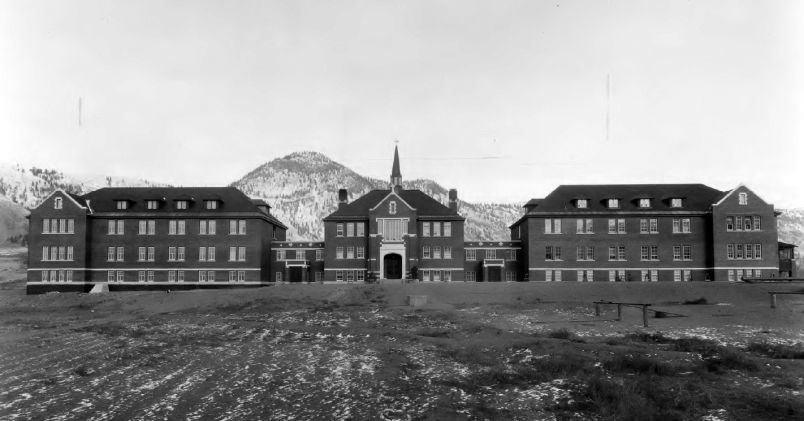
Why is the belated discovery of (potentially hundreds of) unmarked graves at a former residential school surprising?

Filed under: Cancon, Education, Government, History, India — Tags: , , , , — Nicholas @ 03:00

The weekly wrap-up post at The Line considers the recent revelation of possibly hundreds of unmarked graves of First Nations children at the site of a former Catholic-run residential school in BC. Despite being Canadian, my interest in Canadian history centres mostly on economic, naval, and military aspects, but I was certainly aware that the residential school system was a black mark on Canada’s historical dealings with First Nations and that the general outline of events — if not the gruesome details — had been known for many years. The first time I found out about it was in middle school, through what we’d now call a “Young Adult” novel about a young First Nations boy escaping from the residential school he’d been sent to and his attempts to travel hundreds of miles to get home. I read it in the early 70s and it may have been published up to a decade before then (I no longer remember the author’s name or the title of the book, unfortunately).

If I, as a schoolchild, knew something of this fifty years ago, why have people younger than me been shocked and appalled to be hearing about this widespread tragedy for the first time now?

Kamloops Indian Residential School, 1930.
Photo from Archives Deschâtelets-NDC, Richelieu via Wikimedia Commons.

We like to start our dispatches with something pithy or casual, but it’s been a heavy week. The discovery of what appears to be a burial site containing the bodies of more than 200 children at the site of a former residential school in B.C. has shaken Canadians. Of course it has. There are two outrages here — the outrageous reality of the generations of combined abuses inflicted on Indigenous Canadians, of which the residential school system was but a part. Also, the outrage that most Canadians are only learning about this now.

Your Line editors are not experts on Indigenous affairs or history, but we dare say we’re better read than most on Canadian history in a general sense. We do not say this in any way with snark or derision, but to our fellow Canadians — this should not be surprising to you. The Catholics who ran most of these schools under the sanction of the state had a long history of trying to save souls at the expense of the bodies in which they inhabited. Religious institutions were slow to recognize and stop the spread of disease in their own institutions. Most disturbingly, their ideology glorified, even sanctified, physical suffering. It still does.

Mass graves have been uncovered in Ireland, at the site of Catholic-run homes once devoted to the care of unwed mothers and children. “Saint” Mother Teresa’s hospitals in India were altars to the needless suffering of impoverished people who could not afford to die in peace and dignity. Her hospitals were dirty, poorly run facilities where children were reportedly tied to beds, and terminal patients were given little more than aspirin.

One of the great lessons of history that we consistently fail to accept is that many of our most evil actions are rooted not in self-evidently evil impulses, but rather in our desire to “save” others. Hubris and paternalism, these are the sins we cannot seem to shake. Residential schools, Catholic or otherwise, were the disastrous result of marrying a poisonous and righteous ideology with the authority and resources of a centralized state.

The Truth and Reconciliation report laid out much of this in detail in its final report in 2015, which also spelled out that graves like the ones we’re now mourning in Kamloops are likely to be far more prevalent and common than we now understand. Everyone here deserves the truth.

Update: I’m delighted to see that David Warren continues to improve from his recent health issues and he has rather a different view on Canada’s residential school system and its place in the lives of the First Nations children who attended the schools:

Ryerson was also a figure in the development of Canada’s “residential schools”, which took Indians from (mostly) dysfunctional homes and gave them an education with priests, nuns, and respectable Protestants. Not all denizens of an orphanage are happy, and by attaching the word “colonialism”, and giving simplified accounts, full of libels, “progressive” Canadian politicians have made this period of Canadian history into a scandal. Those who know better have been silenced.

Some years ago I tried to defend the “residential schools”, more or less alone in the Canadian “meejah”. I received many, many letters from former students of them, who said their memories were happy. They had been inspired by teachers of real Christian faith and conviction, and had been equipped with the rudiments of sound learning. “They saved my life,” was a frequent comment.

I could understand the residential schools because I am familiar with Canadian education before it was taken over by barbaric hordes; and also because I am myself partly a product of “British colonial” private schools in Asia, decades ago. They were brutal towards their boys, sometimes. I was myself beaten, and their teachers were sometimes tyrannical.

As a young man I thought this was the way of the world. Now that I am old, I look back on the teaching I received with great pride. It was vastly better than what I would receive in a Canadian high school; and that was much better than what we get today.

June 3, 2021

John McWhorter on Affirmative Action

Filed under: Education, History, USA — Tags: , , , , , , — Nicholas @ 03:00

In the latest post at It Bears Mentioning, John McWhorter outlines the history of Affirmative Action in American schooling and explains why it’s no longer doing anything useful and should be re-oriented to actually help disadvantaged students of all races:

John McWhorter’s Twitter thumbnail image

I do not oppose Affirmative Action. I simply think it should be based on disadvantage, not melanin. It made sense – logical as well as moral – to adjust standards in the wake of the implacable oppression of black people until the mid-1960s.

When Affirmative Action began in the 1960s, largely with black people in mind, the overlap between blackness and disadvantage was so large that the racialized intent of the policy made sense. Most black people lived at or below the poverty line. Being black and middle class was, as one used to term it, “fortunate”. Plus, black people suffered open discrimination regardless of socioeconomic status, in ways for more concrete than microaggressions and things only identifiable via Implicit Association Testing and the like. In a sense, black people were all in the same boat.

Luckily, Affirmative Action worked. By the 1980s, it was no longer unusual or “fortunate” to be black and middle class. I would argue that by that time, it was time to reevaluate the idea that anyone black should be admitted to schools with lowered standards. I think Affirmative Action today should be robustly practiced — but on the basis of socioeconomics.

A common objection is that this would help too many poor whites (as if that’s a bad thing?). But actually, brilliant and non-partisan persons have argued that basing preferences on socioeconomics would actually bring numbers of black people into the net that almost anyone would be satisfied with.

I’m no odd duck on my sense that Affirmative Action being about race had passed its sell-by date after about a generation. At this very time, it had become clear, to anyone really looking, that the black people benefitting from Affirmative Action were no longer mostly poor – as well as that simply plopping truly poor black people into college who had gone to awful schools had tended not to work out anyway. It was no accident that in 1978 came the Bakke decision, where Justice Lewis Powell inaugurated the new idea that Affirmative Action would serve to foster “diversity”, the idea being that diversity in the classroom made for better learning.

I highly suspect that most people have always had to make a slight mental adjustment to get comfortable with this idea, as standard as it now is in enlightened discussion. Do students in classes with a certain mixture of races learn better? Really? Not that there might not be benefits to students of different races being together for other reasons. But does diversity make for better learning? Has that been proven?

As you might expect, it has not – and in fact the idea has been disproven, again and again. No one will tell you this when the next round of opining on racial preferences comes about. But this doesn’t mean it isn’t true.

November 17, 2020

“We are so well off here in the United States that our poverty line begins 31 times above the global average. Thirty. One. Times.”

Filed under: Cancon, Economics, Liberty, USA — Tags: , , — Nicholas @ 03:00

Alyssa Ahlgren ponders the fact that we North Americans take our unprecedented-in-human-history prosperity very much for granted:

I’m sitting in a small coffee shop near Nokomis trying to think of what to write about. I scroll through my newsfeed on my phone looking at the latest headlines of Democratic candidates calling for policies to “fix” the so-called injustices of capitalism. I put my phone down and continue to look around.

I see people talking freely, working on their MacBooks, ordering food they get in an instant, seeing cars go by outside, and it dawned on me. We live in the most privileged time in the most prosperous nation and we’ve become completely blind to it. Vehicles, food, technology, freedom to associate with whom we choose.

These things are so ingrained in our American way of life we don’t give them a second thought. We are so well off here in the United States that our poverty line begins 31 times above the global average. Thirty. One. Times. Virtually no one in the United States is considered poor by global standards. Yet, in a time where we can order a product off Amazon with one click and have it at our doorstep the next day, we are unappreciative, unsatisfied, and ungrateful.

Our unappreciation is evident as the popularity of socialist policies among my generation continues to grow. Democratic Congresswoman Alexandria Ocasio-Cortez recently said to Newsweek talking about the millennial generation, “An entire generation, which is now becoming one of the largest electorates in America, came of age and never saw American prosperity.”

Never saw American prosperity. Let that sink in. When I first read that statement, I thought to myself, that was quite literally the most entitled and factually illiterate thing I’ve ever heard in my 26 years on this earth. Now, I’m not attributing Miss Ocasio-Cortez’s words to outright dishonesty. I do think she whole-heartedly believes the words she said to be true. Many young people agree with her, which is entirely misguided. My generation is being indoctrinated by a mainstream narrative to actually believe we have never seen prosperity. I know this first hand, I went to college, let’s just say I didn’t have the popular opinion, but I digress.

Let me lay down some universal truths really quick. The United States of America has lifted more people out of abject poverty, spread more freedom and democracy, and has created more innovation in technology and medicine than any other nation in human history. Not only that but our citizenry continually breaks world records with charitable donations, the rags to riches story is not only possible in America but not uncommon, we have the strongest purchasing power on earth, and we encompass 25 percent of the world’s GDP. The list goes on.

August 16, 2020

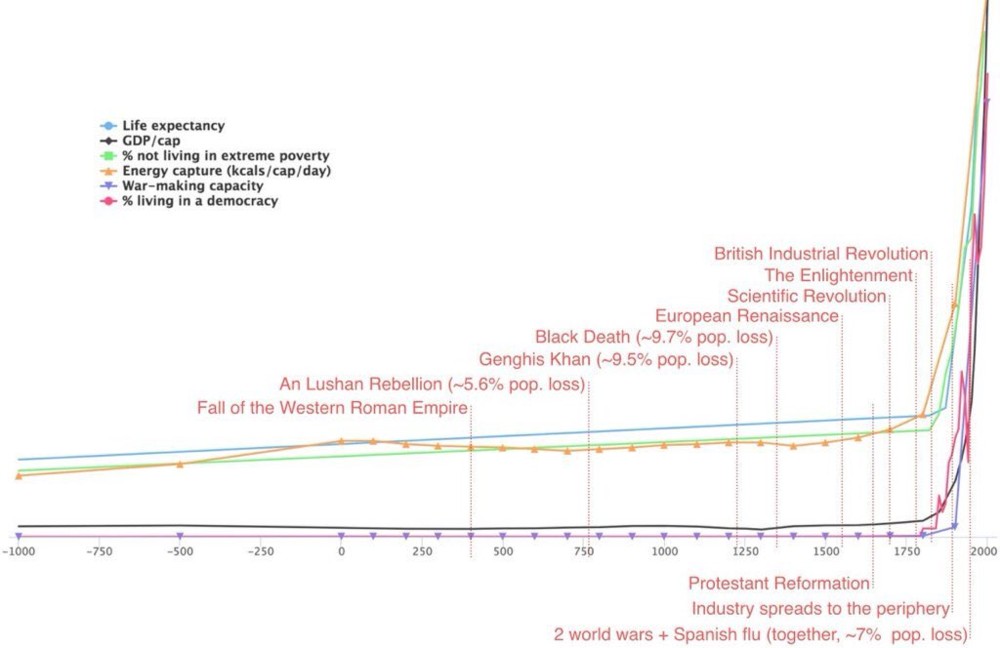
This is a “hockey stick” graph you can believe

Filed under: Economics, Health, History — Tags: , , , , , — Nicholas @ 03:00

Brian Micklethwait says this graph, unlike the more famous (debunked) “hockey stick”, shows one of the most important moments in human history:

If that graph, or another like it, is not entirely familiar to you, then it damn well should be. It pinpoints the moment when our own species started seriously looking after its own creature comforts. This was, you might say, the moment when most of us stopped being treated no better than farm animals, and we began turning ourselves into each others’ pets.

Patrick Crozier and I will be speaking about this amazing moment in the history of the human animal in our next recorded conversation. That will, if the conversation happens as we hope and the recording works as we hope, find its way to here.

I’m not usually one for podcasts, in the same way that I’m not an audiobook user: I find I’m unable to do other things while listening to the spoken word, and it’s always far faster to read a text than to have it read to you. In this particular case, I might try to make an exception, and give up hope of doing anything else productive while I listen.

August 3, 2020

Romanticizing the past

Sarah Hoyt points out that the past really is a foreign country and they do things very differently there … and for good reasons:

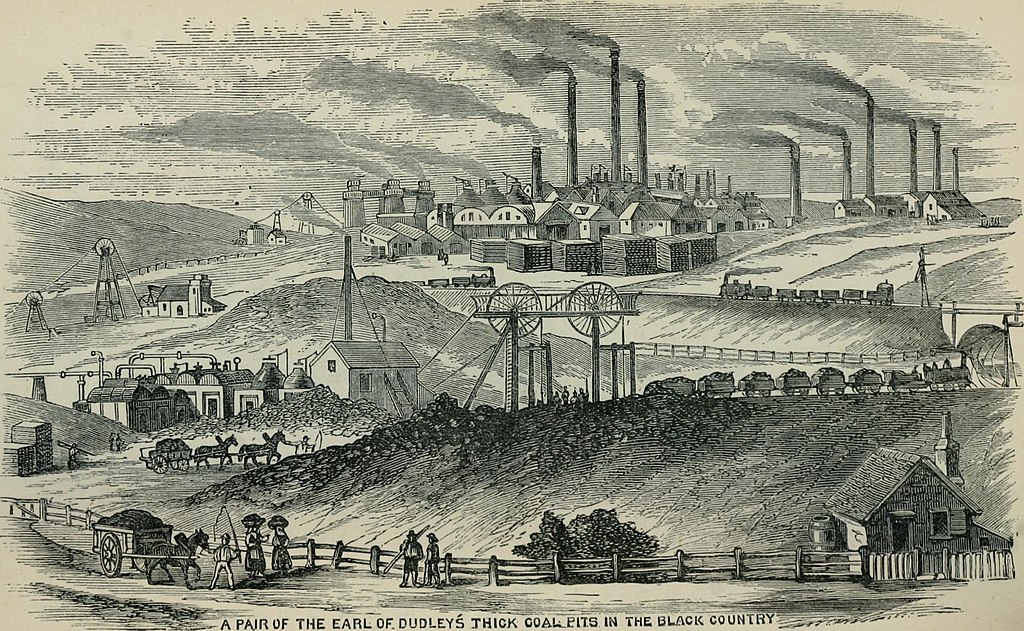
An image of coal pits in the Black Country from Griffiths’ Guide to the iron trade of Great Britain, 1873.
Image digitized by the Robarts Library of the University of Toronto via Wikimedia Commons.

So, quickly: The industrial revolution was not a disaster to your average peasant. It was a disaster for landowners.

Yes, yes, the conditions in the factories were terrible. By our standards. The lifespan was very short. By our standards. The anomie of the big cities, yadda yadda. When compared to what? Small villages? Ask those of us raised in them. Yes, there was child labor. As compared to what at that time? Other than the life of the upper classes?

Look, we don’t have to guess about this stuff. In India, in China, in other places that came to the industrial revolution very late, we’ve seen peasants leave the land where their ancestors had labored, to flock to the big cities, to take work we find horrible and exploitative at wages we find ridiculous.

And even if China has added “labor camp” and prisoner wrinkles to it, note that’s because China is a shitty communist country, not because the migration wasn’t there before. Also the labor camp aspects, as much as one can tell (and it’s hard to tell, due to the raging insanity of the regime) seem to have grown as the people grew more prosperous, as a result of the industrial revolution and thereby demanded higher wages, which positioned China more poorly as the “factory of the world.”

In fact, idealizing “living off the land” has been in place since at least the Roman empire, and probably before. It’s also been MISERABLE at least since then and probably before.

Because pre-industrial revolution farming sucked. It sucked horribly. And it kept you on the edge of subsistence. It double sucked when you were subjected to a Lord. Look, systems of serfdom, etc. didn’t come about because living in a Lord’s domain was so great, and everyone wove wreaths and danced around maypoles all the time, okay?

The bucolic paradise of a farmer’s life was mostly a creation of city dwellers, often noblemen, who saw it from the outside.

There are estimations that most people had trouble rearing even one child, and most of one generation’s peasants were people fallen from higher status. I don’t know. That might be exaggerated. Or it might not.

Even during the industrial revolution, it was normal for ladies bountiful to take baskets of food to tenant farmers because … they couldn’t make it on their own.

And btw, the more the industrial revolution pulled people to the cities, the more the Lords and “elites” talked about how great the countryside was and how terrible the factories/cities/new way of living were.

A lot of artists and pseudo bohemians jumped in on this bandwagon and so did Marx, who was both a pseudo bohemian, by birth “elite” (Well, his family had a virtual slave attached to him. He impregnated her too, as was his privilege), and by self-flattery intellectual.

Therefore the factories were the worst thing ever, the men who owned them, aka capitalists were terrible, terrible people — mostly because Marx wasn’t one, and probably because they laughed at him — and the proletariat they exploited horribly would rise up and —

All bullshit of course. Later on his fiction needed retconning by Anthony Gramsci who, having the sense to realize the “workers” weren’t rising up, just getting wealthier and escaping the clutches of the “elites” more made the “proletariat” a sort of “world proletariat” centered on poorer/more dysfunctional countries. This had the advantage of making the exploited masses always be elsewhere (or the supposed exploiters) and therefore made it easier to pitch group against group to the eternal profit of rather corrupt “elites.” Mostly political classes which are descended from “the best people.”

July 22, 2020

QotD: Urban decline

Filed under: Business, Economics, Government, Quotations — Tags: , , , — Nicholas @ 01:00

At the heart of big-city exoduses is a process that I call accumulative decay. When schools are rotten and unsafe, neighborhoods become run-down and unsafe, and city services decline, the first people to leave are those who care the most about good schools and neighborhood amenities and have the resources to move. As a result, cities lose their best and ablest people first. Those who leave the city for greener pastures tend to be replaced by people who don’t care so much about schools and neighborhood amenities or people who do care but don’t have the means to move anywhere else. Because the “best” people — those who put more into the city’s coffer than they take out in services — leave, politicians must raise taxes and/or permit city services to deteriorate. This sets up the conditions for the next round of people who can do better to leave. Businesses — which depend on these people, either as employees or as customers — also begin to leave. The typical political response to a declining tax base is to raise taxes even more and hence create incentives for more businesses and residents to leave. Of course, there’s also mayoral begging for federal and state bailouts. Once started, there is little to stop the city’s downward spiral.

Intelligent mayors could prevent, halt and perhaps reverse their city decline by paying more attention to efficiency than equity. That might be politically difficult. Regardless of any other goal, mayors must recognize that their first order of business is to retain what economists call net positive fiscal residue. That’s a fancy term for keeping those people in the city who put more into the city’s coffers, in the form of taxes, than they take out in services. To do that might require discrimination in the provision of city services — e.g., providing better street lighting, greater safety, nicer libraries, better schools and other amenities in more affluent neighborhoods.

As one example, many middle-class families leave cities because of poor school quality. Mayors and others who care about the viability of a city should support school vouchers. That way, parents who stay — and put a high premium on the education of their children — wouldn’t be faced with paying twice in order for their kids to get a good education, through property taxes and private school tuition. Some might protest that city service discrimination is unfair. I might agree, but it’s even more unfair for cities, once the magnets of opportunities for low-income people, to become economic wastelands.

Walter E. Williams, “A Mayor’s Most Important Job”, Townhall, 2018-04-18.

June 12, 2020

QotD: Homelessness in America

First let’s start with the fact that homelessness as it exists in America isn’t poverty. In fact part of the problem with it is that it ISN’T poverty. Look, regardless of what you’ve seen on the movies or TV, most homeless are not families fallen on hard times. Yes, there are some of those now, but most of those while technically “homeless” aren’t living in your local park. They’ve just taken over mom and dad’s basement, moved onto a friend’s living room or whatever. Terrible – I’ve been JUST short of that at least three times in my married life – and humiliating, but NOT “stand in the park and wheedle on yourself.”

90% of the homeless in America and the hard core ones are people with mental health issues, people with drug abuse issues and people who have found they can live without having to do anything for it, and can be “free” and outside society. I’ve overheard conversations in the park, and I suppose that most of the people who “dropped out” in the sixties are dead, but a lot of them are alive and going from soup kitchen to free clinic, with a bit of begging in between.

Yes, there are entire families in this system, including homeless children – but for them to stay in it, the parents need to have some sort of serious issue. Otherwise, even if they can’t find work, there is assistance available to get them at least into public housing, which, nightmarish though it is, is not living in the park.

I’m not going to pretend this doesn’t happen to normal families too – see where I came very close to that level and more than once too – but normal families usually tend to bounce back. They go through a few months of mess and horror, and then they claw back to some semblance of normalcy. (This might change as our economy dives and programs of necessity get cut. The ones for the DESERVING poor will be cut first, of course, since they rarely riot.)

The problem with this is that when people get appalled at the conditions the homeless live in and start offering “homeless services” there is an entire network, not just of homeless but of social workers who direct the homeless to the cities with better services.

I swear to you and I’m not even joking that right now there are plenty more homeless on Colorado Springs streets than in Denver, despite the Springs being much smaller.

The Springs also has its soup kitchens and other services downtown and within easy walking distance of each other.

This means downtown businesses are closing, except for bars and restaurants which can control access. And that the library is of course a place to camp in the cool/warm during the day.

It means more than that. We moved within easy driving distance of downtown, because when we lived downtown when we first came to Colorado Springs, I used to take walks every day. When we moved to our little mountain village, without these, I gained ten pounds a year. I used to love walking downtown, dropping by the deli and the three bookstores (only one left, and it’s MOSTLY a restaurant now) checking out the other little shops which ranged from yarn to weird import crafts.

Now those are gone. Worse – the last two times I walked downtown alone (i.e. without commanding the muscle, aka older son to go with me) someone FOLLOWED me and I had to employ stuff from my childhood to lose them. Once it was a large and addled looking male, and yes, he was following me. And once it was TWO large and addled looking males. For the icing on the cake – not related to this, but from a blog entry – I clicked on the sex offenders registry. Yes, I know, a lot of people there are there because someone accused them and was never proven. Our local one at least has notes on whether it’s accusation, trial or conviction and also whether the crime was against children or adults.

The downtown zipcode is FULL of registered sex offenders who’ve done hard time and who have committed their crimes against adults. The faces are very familiar from my walks, and yep, one was the guy who tried to follow me.

Sarah Hoyt, “Of Books, Compassion And Cruelty A Blast From The Past From June 2013”, According to Hoyt, 2020-03-10.

June 2, 2020

QotD: Economic inequality

Filed under: Economics, Quotations — Tags: , — Nicholas @ 01:00

Economic inequality […] is both highly moralized (right-thinking people agree it’s the root of all evil) and intellectually devilishly complex, far more than people acknowledge. For example, if “the bottom fifth” earns the same proportion of income in 1980 and 2010, it doesn’t mean anyone’s income stagnated: these “fifths” are different people, and they earn a fifth of different totals. Also, it’s not clear that inequality (as opposed to poverty) is a moral abomination, or that reducing it is progress. As Walter Scheidel argues in The Great Leveler (another superb book of 2017), the most effective ways of reducing inequality are epidemics, massive wars, violent revolutions and state collapse.

Steven Pinker, “Twenty Questions with Steven Pinker”, Times Literary Supplement, 2018-02-18.

May 22, 2020

When raising tax rates reduces total tax revenue

Filed under: Economics, Government, USA — Tags: , , , — Nicholas @ 03:00

In the Continental Telegraph, Tim Worstall explains that the US tax system is already drawing too much in tax and any hope of increasing the total revenue will hinge on reducing the tax rate:

It is often stated that the rate [the Laffer Curve peak rate] discovered here is 75 to 80%. This is not so – that could be the rate if only we entirely and wholly changed the taxation system in a mass of highly undesirable ways. If we remain with roughly what we’ve got in structure and intent then the peak of the Laffer Curve is 54%. That is not income tax, that is taxes upon income. That means we add together all Federal and State taxes upon income, including “employer paid” portions of Social Security, Medicaid, special amounts for this and that and so on and on. Anyone even vaguely familiar with the US taxation system will note that top earners are, already in many states, paying this or more.

There is something else though. The Laffer Curve is not about taxes upon high earners. It is about taxes upon income. It’s true that there will be slight differences in what the peak rate on lower incomes should be, or what the peak of the curve is there. The income effect will be higher than the substitution at lower incomes than it is at higher. We don’t know how much so let’s just stick with what we’ve got – 54%.

At which point:

    The U.S. has a plethora of federal and state tax and benefit programs, each with its own work incentives and disincentives. This paper uses the Fiscal Analyzer (TFA) to assess how these policies, in unison, impact work incentives. TFA is a life-cycle, consumption-smoothing program that incorporates household borrowing constraints and all major federal and state fiscal policies. We use TFA in conjunction with the 2016 Federal Reserve Survey of Consumer Finances to calculate Americans’ remaining lifetime marginal net tax rates. Our findings are striking. One in four low-wage workers face marginal net tax rates above 70 percent, effectively locking them into poverty.

This includes the withdrawal of welfare benefits as income rises – as it should – and so is compatible with the Universal Credit idea that the peak tax and withdrawal rate should be 60%. Or is it 66%?

As we can see that rate is hugely above the Laffer Curve peak. It should, therefore, be lower.

It’s possible to extend the taper. Withdraw benefits at slower rates as income rises. This is, however, hugely, vastlylily, expensive. So it’s not going to happen to any significant degree and if it does then it will be financed by reducing the overall amount of benefit being paid. Which would mean taking money off the truly low income in order to soften the blow to the marginally low income – not the way we want to be doing things.

The only other way to do this is to reduce the taxation of the income of those low income folks. This has been done, a bit, by the Trump tax reforms and the much larger personal deduction. A further bite could be taken by FICA taxation only applying to the income above the personal deduction, not from dollar $1 of income as now. In fact that would be the simplest manner of at least beginning to get to grips with this problem. FICA only starts at $12,000 a year or so. Or even, if all are to be sensible, starting income tax and FICA only at the poverty line, currently $14,000 or so a year for a single adult.

May 4, 2020

Government “problem solving” is an oxymoron

Antony Davies and James R. Harrigan explain why you should back away quickly when you hear a variant of “We’re from the government and we’re here to help”:

A central theme of our recent book, Cooperation & Coercion, is that all governments are hamstrung when they attempt to fix problems. Policymakers suffer from the knowledge problem: they don’t know enough to foresee every eventuality that will follow from what they do. Politicians see a problem, speak in sweeping statements, then declare what will happen, assuming their edicts will settle matters. But that is always just the beginning. More often than not, all manner of unintended consequences emerge, often making things worse than they were before their policies went into effect.

Consider the United States’ three high-profile wars against common nouns over the past half-century. Lyndon Johnson declared a War on Poverty in the 1960s, Richard Nixon a War on Drugs in the 1970s, and George W. Bush declared a War on Terror in the early 2000s.

How are those wars working out? Because a back-of-the-envelope calculation indicates that we have spent somewhere in the neighborhood of $23 trillion in our attempt to eradicate poverty, drugs, and terror. Not only have we not won any of these wars, it is unclear that any of them can be won. These three so-called wars have managed to saddle future generations of taxpayers with unprecedented debt. And, as is the case with all coercive endeavors, policymakers ask us to imagine how bad things would have been had we not spent the trillions we did spend. And then they ask for even more money. So now we have unwinnable wars along with institutionalized boondoggles to support them.

We see the same sort of thing happening now in the face of the COVID-19 threat that has induced the largest panic attack in world history. In the name of safety, policymakers have shut down myriad productive endeavors. And there will be a raft of unintended consequences to follow. We are already seeing them manifest, and they portend potential disaster as supply chains fail.

The first cracks in US supply chains appeared in the meat industry. Smithfield Foods, reacting to a number of workers contracting the virus, shut down its Sioux Fall plant. Kenneth M. Sullivan, President and CEO, explained in a press release that, “the closure of this facility, combined with a growing list of other protein plants that have shuttered across our industry, is pushing our country perilously close to the edge in terms of our meat supply.” But it’s not just the meat plant that’s implicated. It’s everyone from the cattle farmer to the person who cooks dinner, and there are a number of people who have a place in that process who might first escape attention. The people who make packing materials needed to ship food, the maintenance workers who service machines up and down the supply chain, the truck drivers who move product from one place to another, the grocers who sell the product, the daycare workers who care for the grocers’ children so the grocers can work, and many, many more are all at risk.

[…]

In declaring some jobs “necessary” and others not, in focusing on one supply chain versus another, policymakers show how little they know about the nation’s economy. In their view, they can simply declare things they want to happen, and then those things will happen. But that is not how economies work. An economy is the sum total of everyone’s activities, and when the government declares that something must happen, all kinds of other things happen too.

Consider how all the “non-essential workers” have been sent home for the past two months. Who gets to declare which workers are non-essential to the economy, and by what standard? Most assumed that politicians had the correct answers to these questions. But, as we are discovering, there is no such thing as “non-essential” workers. All workers are essential. How do we know? Because their jobs existed. Profit-driven businesses do not create non-essential jobs. Those people’s jobs were essential to their employers. Further, those people’s jobs were incredibly essential to the people themselves. They need their wages to pay the rent, buy their food, make their car payments, and for everything else that makes their lives livable.

But policymakers simply declared them non-essential, as if there would be no fallout from that decision.

« Newer PostsOlder Posts »

Powered by WordPress