Quotulatiousness

September 20, 2019

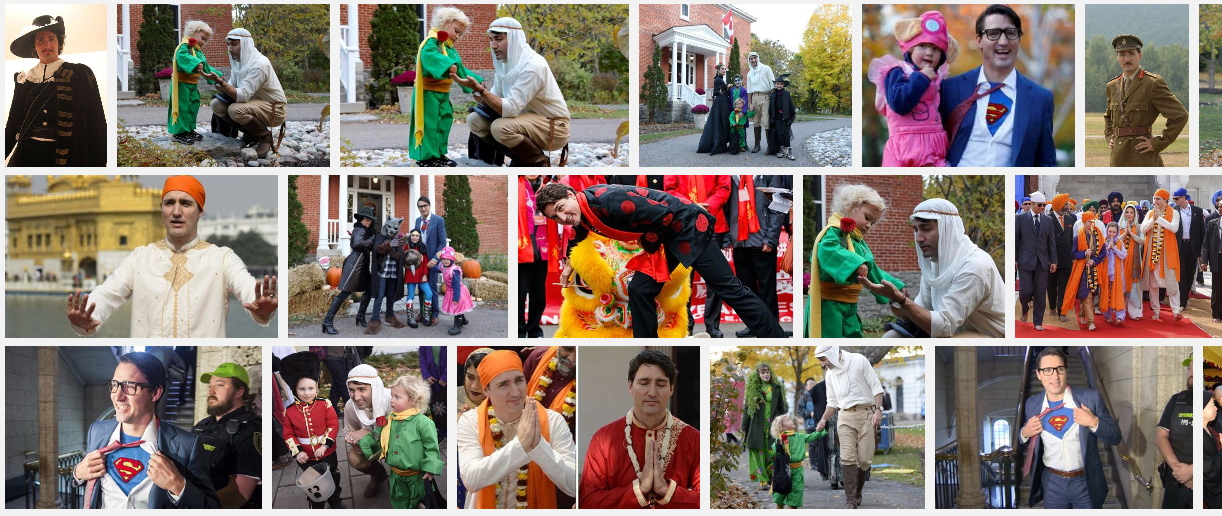
Prime Minister Dressup and the make-up case

Filed under: Cancon, Politics — Tags: , , , , — Nicholas @ 05:00

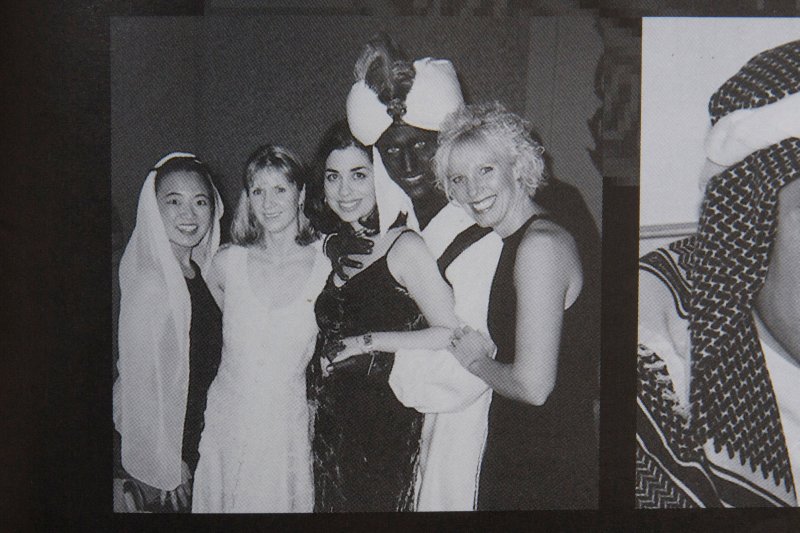
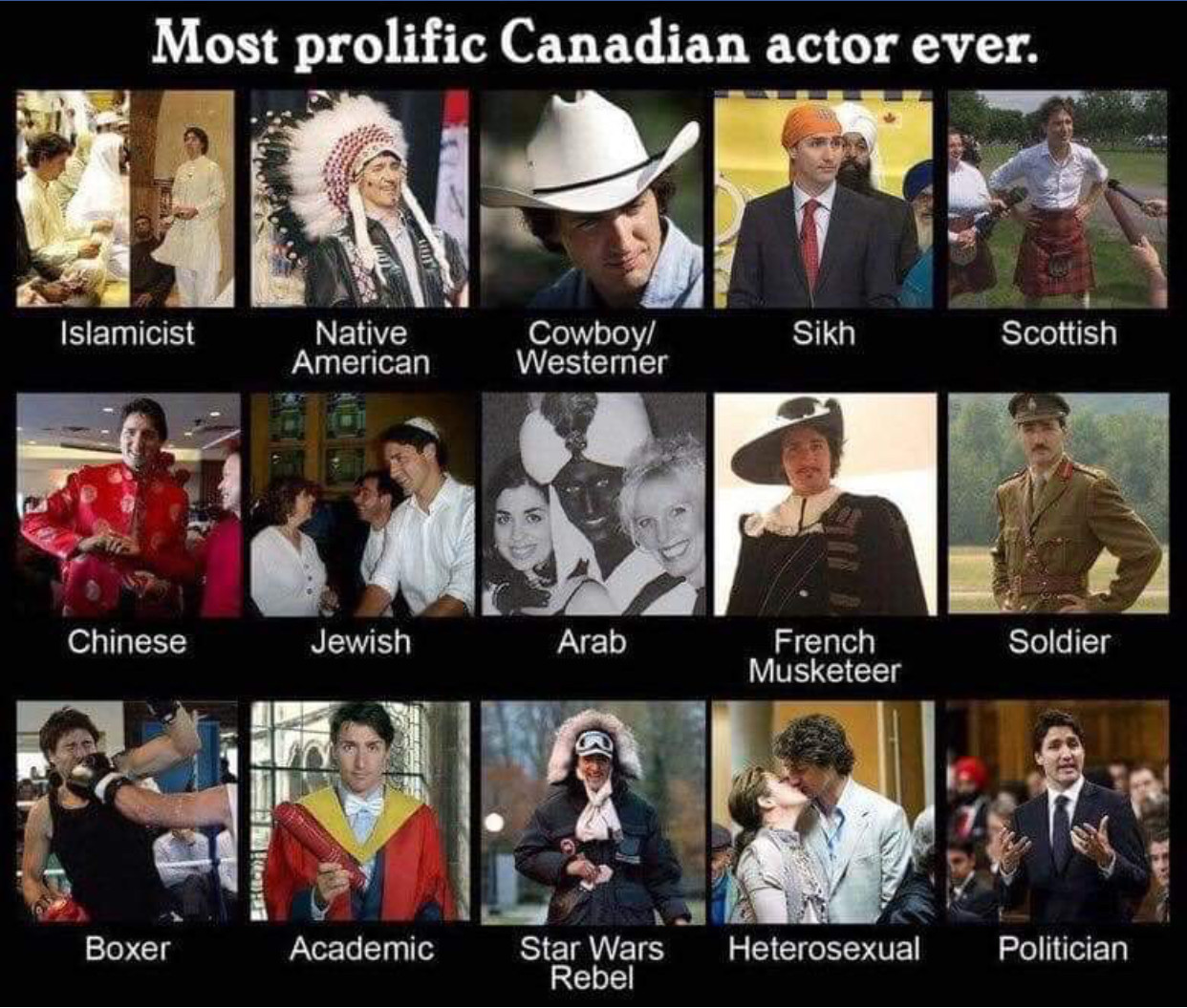
Prime Minister Justin Trudeau’s love of dramatic costume has been noted here before, but over the last couple of days it’s become evident that he’s also felt the attraction of stage make-up, even when most people would realize it’s no longer appropriate to wear blackface:

As Oscar Wilde almost said: “To be caught once wearing blackface may be regarded as a misfortune; to be caught doing so on three separate occasions in the run up to an election proves that there is a God, that he loathes liberal hypocrisy, and that he despises Justin Trudeau, especially.”

Here’s the first offending item:

Justin Trudeau with dark makeup on his face, neck and hands at a 2001 “Arabian Nights”-themed party at the West Point Grey Academy, the private school where he taught.
Photo from the West Point Grey Academy yearbook The View, via Time

[…]

Will Justin Trudeau — President Bieber, as I prefer to call him — finally get his comeuppance as a result?

I doubt it. Alinsky’s Rules for Radicals tells us: “Make the enemy live up to its own book of rules.”

This is what we on the non-woke political side of the argument are doing right now. But it’s not going to make much difference, is it?

The other two “make up” incidents are covered in Time:

Speaking to reporters Wednesday night, following Time‘s publication of the photo, Trudeau apologized: “I shouldn’t have done that. I should have known better and I didn’t. I’m really sorry.” When asked if he thought the photograph was racist, he said, “Yes it was. I didn’t consider it racist at the time, but now we know better.”

Trudeau said he wore blackface “makeup” in high school to sing “Day-O,” a Jamaican folk song famously performed by African-American singer and civil rights activist Harry Belafonte. Time has confirmed that a photo shows Trudeau at a school talent show wearing blackface and an afro wig.

[…]

A third instance emerged Thursday — this one a grainy video showing Trudeau in blackface, raising his hands in the air. On Thursday, Astravas confirmed that the video showed Trudeau from the early 1990s. It comes despite Trudeau being asked at his press conference whether there were any other incidents he wanted to own up to.

This is a critical moment for Trudeau, who began his re-election campaign on Sept. 11 under the cloud of a scandal over whether he pressured his then-attorney general to drop corruption charges against a large Canadian engineering firm [that’d be the SNC-Lavalin scandal, if you’re keeping track]. The Liberal Party leader has championed minority groups during his nearly four years as prime minister and made his embrace of Canada’s many cultures a major part of his leadership. At least seven of the 35 members of Trudeau’s cabinet are from ethnic minorities.

I doubt any of the remaining minority cabinet ministers will dare say much, as the Liberal Party has a long, long history of enforcing Omertà … or else. If they want to be back in cabinet on the lengthening odds that PM Dressup wins the October election, they’ll say little or nothing to the media.

The good news is that after careful consideration, the PM has found the guilty party … it’s the rest of Canada and its entrenched “systemic racism”:

Don’t you feel awful, fellow Canadians? That shame … that’s all yours, thanks to your shitty racist attitudes. Poor Justin is merely the victim.

September 16, 2019

Election 2019 – “Going negative this early strongly suggests that the Lib’s internal polling is suggesting a fair bit of weakness”

Filed under: Cancon, Media, Politics — Tags: , , , , — Nicholas @ 05:00

Jay Currie’s take on the first week of the Canadian federal election campaign:

Dock Currie (not related) apparently posted something to the internet several years ago which was offensive. So he felt he had to resign as an NDP candidate. [Anyone who sees Dock on Twitter has to wonder if he has ever posted something which is not offensive, but there is is.] Several conservatives have, at various times been in the same crowd of several hundred or thousand people as Canada’s answer to Tokyo Rose, Faith Goldy. The shock, the horror.

I realize that a race between Trudeau, Scheer, Singh and May is not very inspiring. (It would have been so much more interesting had the Conservatives actually run a conservative like Max Bernier rather than whatever the hell Scheer is, but them’s the breaks.) But piling on to candidates for ancient statements or mau-mauing them for distant association with a cartoon fascist simply sets the bar even lower.

Having accomplished nothing of substance in their years in government – they even screwed up the pot file which took real ingenuity – the Libs are reduced to going negative from the outset. Their war room knows that Canadians are unimpressed with “climate change needs higher taxes” as a campaign theme. They also know that Trudeau’s legal and ethics problems offset what charisma he has as a campaigner.

So now it is time for “Project Fear”. Scheer = Harper = Trump. Scheer is going to take away abortion rights, Scheer is not an ally of the gay community because he does not jet all over the country to march in pride parades. The Conservatives hate immigrants, and so on.

Going negative this early strongly suggests that the Lib’s internal polling is suggesting a fair bit of weakness. Conventionally, a party will save the negative stuff for the last couple of weeks of the campaign when it is the most damaging and the hardest to refute. I suspect the Libs have realized that with their own leader either under RCMP investigation or credibly accused of impeding that investigation, they need to distract and terrify the under 30’s, newer immigrants and the ladies if they are going to win.

September 8, 2019

Cynicism is the correct way to view the two largest federal parties in Canada

Filed under: Cancon, Media, Politics — Tags: , , , , — Nicholas @ 03:00

Andrew Coyne on the contrast between the Liberal Party, led by Prime Minister Dressup, and the Conservative* Party, “led” by the empty suit I like to call “The Milk Dud”:

As we await the start of the election campaign that began several months ago, some cynics would have you believe the whole thing is little more than a hollow ritual, an empty contest in mass manipulation between rival gangs of careerists and power-seekers who, for all their partisan breast-beating, do not differ in any meaningful way.

Don’t be fooled. Seldom have the choices between so stark, or the stakes so high.

The two main parties, after all, could not be more different. The one, it is well known, is little more than a personality cult centred on the leader, while the other is a personality cult, minus the personality. The first is notably bereft of any governing philosophy or principles but will say and do whatever it takes to win, while the second will say and do whatever it takes to lose.

Of course, both parties have from time to time had their share of scandals, a Wright-Duffy here, an SNC-Lavalin there, but with a critical difference. For whereas the Liberals abuse power because they can — because being so often in government and so accustomed to its pleasures, no one expects them to do any differently — the Conservatives do so because they must: because being so rarely in government, they are at every disadvantage, between an uncooperative bureaucracy and a hostile media, and need recourse to every expedient just to even the scales. Or because the Liberals did it first. Or just because.

* Note that no actual conservatives are members of this party, the name is just a convenient label, not an accurate descriptor.

September 5, 2019

Phony Trudeaumania has bitten the dust

Filed under: Cancon, History, Media, Politics — Tags: , , , , , — Nicholas @ 03:00

Nico Johnson discusses the dangers of family dynasties in democratic countries:

When future political historians look back at the 21st century, Justin Trudeau’s election as a Liberal leader may be regarded as a bland footnote. Despite all the hope Trudeau brought Canadians in his once seemingly eternal, post-election honeymoon, his leadership inevitably toppled into a swamp of sticky scandals and hurried apologies.

Justin Trudeau may still be re-elected. However, the Conservatives can rest easy in the knowledge that Trudeaumania, at least for this current Trudeau, is well and truly dead.

What is noteworthy, however, is the atmosphere of surprise and confusion that has clouded commentators’ judgements surrounding the downfall of Trudeau. In the corridors of Ottawa’s broadcasters, it may have appeared absurd that natural political decline should apply to their darling Prime Minister; the leader of the “woke world.”

Trudeau’s appearance of invincibility, which still makes these commentators swoon (note the SNC-Lavalin coverage) was first created in those blue-skied months following his leadership election in 2013.

Perhaps Justin, with his charisma and handsomeness, seemed like a breath of fresh air to Canadian progressives. Gone were those days of Ignatieff, the drooling philosopher, who rather spectacularly (considering his semi-illiterate predecessor) lost 43 seats forcing the Liberals into third-party status.

With Trudeau’s leadership, the Liberal party would have a candidate who seemed so perfect for Canadian political life that even a eugenicist would struggle to replicate it. With his status as an Anglophone-Quebecois, which managed to pacify the sensibilities of English Canada, whilst having his Quebecois heritage to maintain seat-rich Quebec—Trudeau must have seemed like a divine gift.

Yet even in those early days, Trudeau lacked noticeably in the fundamental requirements that statesmanship should necessitate. He had no political experience after being almost casually elected to the House of Commons. Nor did he possess any working experience, and had been entirely unknown to the Canadian public until the eulogy at his father’s funeral. To put it quite simply, Justin Trudeau would have never become Prime Minister of Canada if his father, Pierre, had not been one too.

August 24, 2019

Prime Minister Dressup versus the Milk Dud

Filed under: Cancon, Media, Politics — Tags: , , , , , — Nicholas @ 03:00

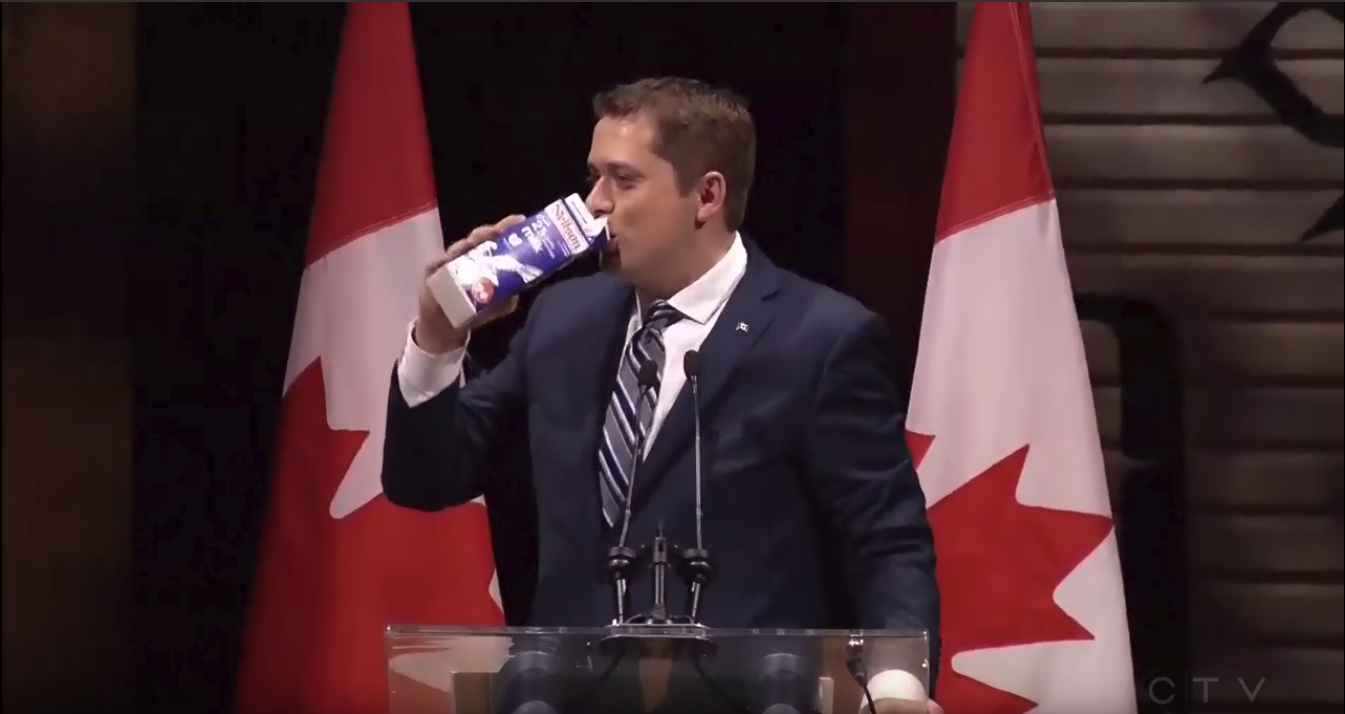
Barbara Kay on the most recent pre-campaign attack by the federal Liberals on Andrew “The Milk Dud” Scheer:

Andrew Scheer, paid tool of Big Dairy, chugs some milk during a Press Gallery speech in 2017. I’ve called him the “Milk Dud” ever since.
Screencapture from a CTV video uploaded to YouTube.

The Liberals know they are going into the coming federal election with their leader, Justin Trudeau, weighed down by the heavy baggage of the SNC-Lavalin debacle and the India Tickle Trunk Tour, amongst many other embarrassments. So the Conservatives had to expect some desperation moves to cast their leader, Andrew Scheer, in what the Libs consider an equally bad light.

And right on cue, the Libs unearthed a 2005 video of Andrew Scheer explaining to the House of Commons why he was personally opposed to the legalization of gay marriage.

We would do well to remember that the words Scheer spoke then constituted the belief system of 99% of the planet earth, including Barack Obama, who flipped on the issue when it became politically safe to do so. Gay marriage wasn’t even on the horizon of most countries in the West, nor is it legal yet in many western countries. (And as former NDP leader Thomas Mulcair pointed out in a CTV interview, Canadians would also do well to remember that in 1995 Ralph Goodale didn’t believe gays should even have the right to civil unions, let alone marriage.)

Scheer has no intention of revisiting gay marriage politically. It’s settled law, and he has given no indication that he considers it less than settled. Bringing up what he had to say in 2005 may be politically advantageous as a distraction, but it is unfair, while Conservative attacks on Trudeau for gaffes he has made and is still making as prime minister are perfectly fair comment.

August 20, 2019

Jonathan Kay listened to the whole SNC-Lavalin report so you don’t have to…

Update: Apparently the Thread Reader App only picked up the first couple of entries (it worked fine when I queued it up for publication yesterday). Here’s the text version:

I just listened to the entire ethics commissioner’s report on the SNC-Lavalin scandal while driving back from Maine. I loaded up the text in my VoiceAloud app, hit play, and the audio kept me going for 3 hours, all the way into central New York State, along the I-90….

As with any narrative, you begin to identify with certain characters. In my case, it was @Puglaas. I found it especially maddening the way everyone around her kept babbling about finding a “solution,” which was their settled euphemism for bullying her into helping SNC…

The level of condescension exhibited by everyone in and around the PMO toward @Puglaas was breathtaking. These Liberal dudes always kept pretending that they just wanted to make sure she had enough “information,” as if she were a law student, not the AG of a G7 nation …

At the same time, it was breathtaking the way SNC Lavalin was essentially able to turn the entire PMO, and major ministries, into its personal lobbying operation. Texts, emails, calls, in-person visits… it was like SNC-Lavalin had Trudeau’s PMO on retainer, like a law firm ….

I hadn’t realized SNC was able to mobilize, or attempted to mobilize, not one, not two, but THREE former SC of Canada justices on its behalf. This is the sort of blurring between corporate & govt operations that u expect in banana republics (or in the Irvings’ New Brunswick)…

The fact trudeau & those around him still pretend this is about “jobs” is…I don’t even know the word for it. The ethics comm essentially called it a lie. This was about partisan politics. How can JT say he “accepts” the report without coming to terms with this core finding?

When this scandal & election is done, we need an inquiry that gets to the bottom of the larger issue here: how a single quebec corp, one heavily impugned by its own action, was able to essential create legislation to help itself, got trudeau to ram it thru on a budget omnibus…

And then spent weeks pulling every lever in ottawa to try to override our constitutional system of govt so they could get off the hook for alleged crimes, culminating in the actual reconstitution of cabinet. SNC turned our govt into a joke. And trudeau still sez it’s about “jobs”

If yr attitude is that u dont want to educate yourself about this scandal, bcuz the only thing that matters is hating @AndrewScheer (an attitude some ppl have candidly expressed) pls reconsider. Even if u vote Liberal, the scandal exposed problems in our system that need fixing

Conservative governments have no doubt been equally solicitous to big well-connected firms. Leftists *especially*, the same ones dismissing this scandal bcuz it interferes with their elxn narrative, should be horrified that corporations are treating @Bill_Morneau & PMO as puppets

The fact that all of these Libs can bleat “jobz jobz jobz” with a straight face isnt just a symptom of the amoral cynicism of politics (tho it is that). It reflect the fact that we canadians expect that big corps will get coddled like this. We need to end it

If youre @AndrewScheer or @theJagmeetSingh, it’s fine to rake the Libs over the coals for lying to us. But all politicians lie. Tell us how you’d fix the system structurally to ensure that the PMO isn’t acting as a pro bono hanger-on to a major corporation

And if you’re a progressive activist of a certain age, go back & look at all the things @NaomiAKlein @Sheila_Copps Judie Rebick etc warned us about during the free trade battles…corporations dictating terms to elected govts. Well, guess what ? That’s what’s on display here…

In fact, one of the most tragicomic subplots here is the Libs running around in full panic bcuz SNC was about to have a board meeting the next day… Yes, that’s right: Trudeau’s PMO prioritized important legal decisions on the basis of some company’s board meeting.
Because Jobz.

What’s more, the full-court press on @Puglaas in the shadow of these meetings was itself based on another lie: Libs knew SNC HQ couldnt abandon quebec (till 2024) bcuz of representations made to Caisse in regard to purchase of a UK sub. Bullshit layered on bullshit
#BecauseJobz

I keep coming back to @Puglaas, & how she must have felt. How many cdns have been in a job where yr boss & his minions tried to pressure u to find an unethical “solution,” to help the boss keep his own job? then when u did what was right, u get turfed 4 not being a “team player”

This isnt just about Trudeau. One galling episode described is a meeting in which @Bill_Morneau pontificates to @Puglaas about how she doesnt have enuf “information” about econ effects of possible SNC crim conviction. @Puglaas asks Morneau if he’s done a study on it. Answer: no.

We talk a lot about toxic workplaces for women. hard not to see how the dudes who Trudeau assigned to push @Puglaas around on this file aren’t guilty of this. Their strategy was to make her feel ignorant bcuz she did the right thing. The PMO gaslit their own justice minister

There are several female Liberal MPs whom I have come to know and respect, such as @juliedabrusin @cafreeland @JulieDzerowicz. It is mortifying to watch them being forced to line up in defence of this.

As for SNC itself, I don’t really blame it for doing what it did. If u were running a company and knew you could dictate terms to a govt, why not? The lesson to other CEOs would be that if youre accused of a crime, just threaten to lay ppl off and move your HQ. Problem solved.

final note…u can see y the Libs are going hard with demagoguery about @AndrewScheer being white supremacist-adjacent. A traditional leftist claim was that Tories would sell out to corporate interests. That’s a hard claim for Libs to make now. bcuz the Libs have already done it

It’s been a day since I wrote this thread, & some commenters are saying the SNC scandal shows Trudeau & the Libs are unscrupulous people. But I dont think that’s it. I have met some of these protagonists, and have found them to be *more* public-minded than the average citizen…

As noted in a response to @staceylnewman, the problem is that politics changes ppl. There’s a chilling quote in the report, from a meeting, where a Lib says to @Puglaas (paraphrasing here) “It doesn’t matter how great our policies are. We need to get re-elected to implement them”

To me, that sums everything up: The means justifies the ends, bcuz the ends (the “good” side wins power, & the “bad” side loses) are taken to have existential importance. That’s the myth that leads all politicians astray. If JT just admitted this, I bet many would forgive him

August 18, 2019

The SNC-Lavalin affair was “unethical and contrary to law”, but “relatively above board”

Filed under: Cancon, Government, Law — Tags: , , , — Nicholas @ 03:00

The initial affair itself, that is. Andrew Coyne:

It is the element of deception that raises the conduct described in the ethics commissioner’s report from the merely unlawful to the potentially criminal.

Until now what we had thought we were dealing with was only a sustained and mounting campaign, by the prime minister and by those acting at his direction, to pressure the former attorney general of Canada to set aside the prosecution of SNC-Lavalin, a company with a long history of corruption and even longer history of contributing to the Liberal party, for reasons that explicitly included considerations of partisan advantage.

All of this was vastly improper on its own. Prosecutorial independence is one of the bedrock principles of our system of law, as fundamental as judicial independence. It is settled law that the attorney general, in consideration of a particular prosecution, may not be pressured by anyone, least of all the prime minister, for any reason, least of all partisan gain. Yet Jody Wilson-Raybould was, repeatedly, to the point of being threatened with dismissal if she did not capitulate.

Still, if unethical and contrary to law, this was relatively above board, in so far as the pressure on the attorney general was direct and undisguised: a scandal, to be sure, and grounds for more resignations than those submitted to date, but not, as the cliché has it, a crime. That, of course, is not the standard we should expect of public office holders — that they should merely avoid committing crimes — but it is at least a standard.

Whereas the conduct unearthed by the ethics commissioner may have fallen below even that line. What we have learned is that senior government officials were not just pressuring the former attorney general to interfere in a criminal proceeding, by the unprecedented means of overturning a decision of the independent director of public prosecutions: they were deceiving her.

They did so not only by keeping important information from her, but by providing her with misleading information. They acted, not only in concert with each other, but with officials at SNC-Lavalin, and they carried on this conspiracy to, in the commissioner’s words, “circumvent, undermine and ultimately attempt to discredit” the authority of the attorney general even as the company’s appeal of the DPP’s ruling was before Federal Court — a proceeding to which the attorney general, via the DPP, was a party.

August 5, 2019

More on the still-damaged diplomatic relationship between India and Canada

Filed under: Cancon, India, Politics — Tags: , , , , , , — Nicholas @ 03:00

Ted Campbell quotes from a recent article in the Hindustan Times about the not-yet-healed damage in the diplomatic world between Justin Trudeau’s government and the Indian government of Narendra Modi:

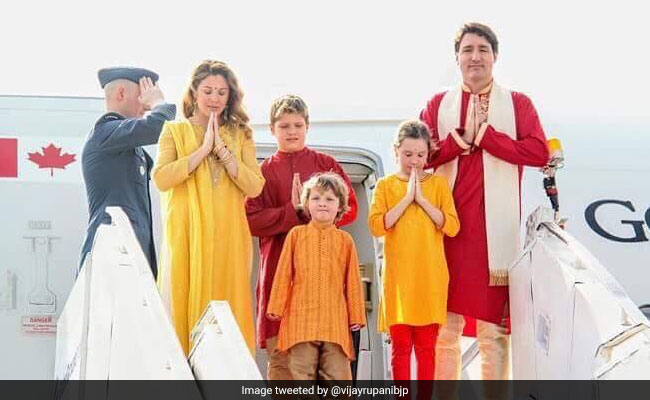
Justin Trudeau and family during India visit
Image via NDTV, originally tweeted by @vijayrupanibjp

In the influential Hindustan Times, Toronto based journalist Anirudh Bhattacharya writes … “in an astonishing attack that will not help heal fraught ties between India and Canada, the former top advisor to the North American nation’s Prime Minister has accused the Indian Government of sabotaging Justin Trudeau’s visit to India in February 2018 to favour his political opponents [and] This scathing statement is in the forthcoming book, Trudeau: The Education of a Prime Minister, written by senior Canadian journalist John Ivison. The author [Ivison] confirmed to the Hindustan Times that Butts’ comment came during an interview.” The article adds that “Indian diplomats didn’t comment on the matter because it is so politically charged and the Canadian Government has yet to respond to questions from HT on its stand on the incendiary remark from Butts.”

So, while some pundits forecast that the return of Gerald Butts would reignite the whole SNC-Lavalin/Jane Philpott and Jody Wilson-Raybould scandal, it appears that the damage will be deeper and we will get a chance to revisit the disaster that Justin Trudeau and Chrystia Freeland visited upon Canadian foreign policy in 2018. India is a rising great power; it helps to contain China in new “Western Approaches:” the Arabian Sea, Indian Ocean and the Bay of Bengal. India is a growing trading power; it is a HUGE potential market for Canadian goods and services. India is one of the top three providers of new Canadians ~ and that’s where our problems with India originated. Someone in the Trudeau PMO thought (since thinking was the problem that probably lets Justin Trudeau off the hook) that it would be a good idea for Prime Minister Trudeau to attend a Khalsa Day parade in Toronto back in April 2017. I explained, back at the time of the India trip fiasco, why that was a mistake and how Jason Kenney had already set the example of doing it right. Now Khalsa Day, also known as Vaisakhi, is an important festival for Sikhs, it marks their New Year. But the festivities, especially in Toronto where 300,000 Sikhs live, are, sometimes, taken over or interrupted by Sikh separatists who advocate violent revolution in India. Jason Kenney saw that in 2012 and he stormed off a stage and berated his hosts, in public for trying to use him to undermine Canadian foreign policy, which valued, as it should, good relations with India. But, in 2017 all the Trudeau PMO (headed by Gerald Butts and Katie Telford) could see were all those Sikh voters. Neither the PMO team nor new Canadian foreign minister Chrystia Freeland was able to prevent Trudeau from being used as a photo-op prop by avowed Sikh separatists … there is no indication that anyone tried although, even though, given the bureaucracy’s corporate memory of events in 2012, I would be amazed in alarms were not sounded.

August 3, 2019

We finally get an explanation for Justin Trudeau’s diplomatically catastrophic India tour

Filed under: Cancon, Government, India, Media, Politics — Tags: , , , , — Nicholas @ 03:00

A few days ago, I noted on social media:

This is exactly the sort of suave, diplomatic polish that will smooth over all the damage in the Canada-India relationship. This is a quote from PM Trudeau’s right-hand man in John Ivison’s new book:

“We walked into a buzzsaw — (Narendra) Modi and his government were out to screw us and were throwing tacks under our tires to help Canadian conservatives, who did a good job of embarrassing us,”

http://thepostmillennial.com/out-to-screw-us-butts-blames-indian-pm-for-trudeaus-disastrous-trip/ #JustinTrudeau #India #fiasco #books #GeraldButts #NarendraModi #diplomacy

I figured this had to be some kind of new variant of the old “modifed limited hangout“, but it’s so potentially damaging to an already badly frayed relationship that there had to be more to it … possibly a lot more to it. No rational senior official would say something like that unless there was a much worse revelation that it was intended to camouflage. But whatever it was would have to be “recall the High Commissioner” bad to justify that kind of self-inflicted diplomatic wound.

Justin Trudeau and family during India visit
Image via NDTV, originally tweeted by @vijayrupanibjp

Brian Lilley is similarly puzzled, but he has a simpler explanation: it’s that familiar combination of the Trudeau unwillingness to take responsibility, an over-developed blame-casting habit, and Trudeau’s own frequently demonstrated love of wearing costumes:

It’s one thing for Butts to think those things, another to voice them in a way that he knows will be made public. It’s also the most tone-deaf assessment of the trip I’ve seen since Sophie Trudeau went on TV and blamed the staff for those outfits.

I mean think about that trip, the two things that got Trudeau in trouble were the invite of the terrorist to dinner and the outrageous outfits. Both of those amount to self-inflicted wounds.

At least Butts admits the photos of Trudeau and his family were a problem.

“Nobody would remember any of that had it not been for the photographs. We should have known this better than anybody — in many ways we’d used this to get elected. The picture will overwhelm words. We did the count — we did forty-eight meetings and he was dressed in a suit for forty-five of them. But give people that picture and it’s the only one they’ll remember,” Butts told Ivison.

[…]

The simple fact of the matter is that the trip to India was a disaster, the kind Trudeau and his team weren’t used to dealing with. So now a year and half later they are still looking to lay the blame anywhere but where it belongs.

With themselves.

August 1, 2019

“People in Ottawa don’t invoke PMO frequently or lightly. It is done to intimidate and obtain compliance”

Filed under: Bureaucracy, Cancon, China, Government, Politics — Tags: , , , , — Nicholas @ 03:00

What we’re not allowed to know can’t hurt us … the federal government apparently figures that no charges can be contemplated if there’s no investigation allowed:

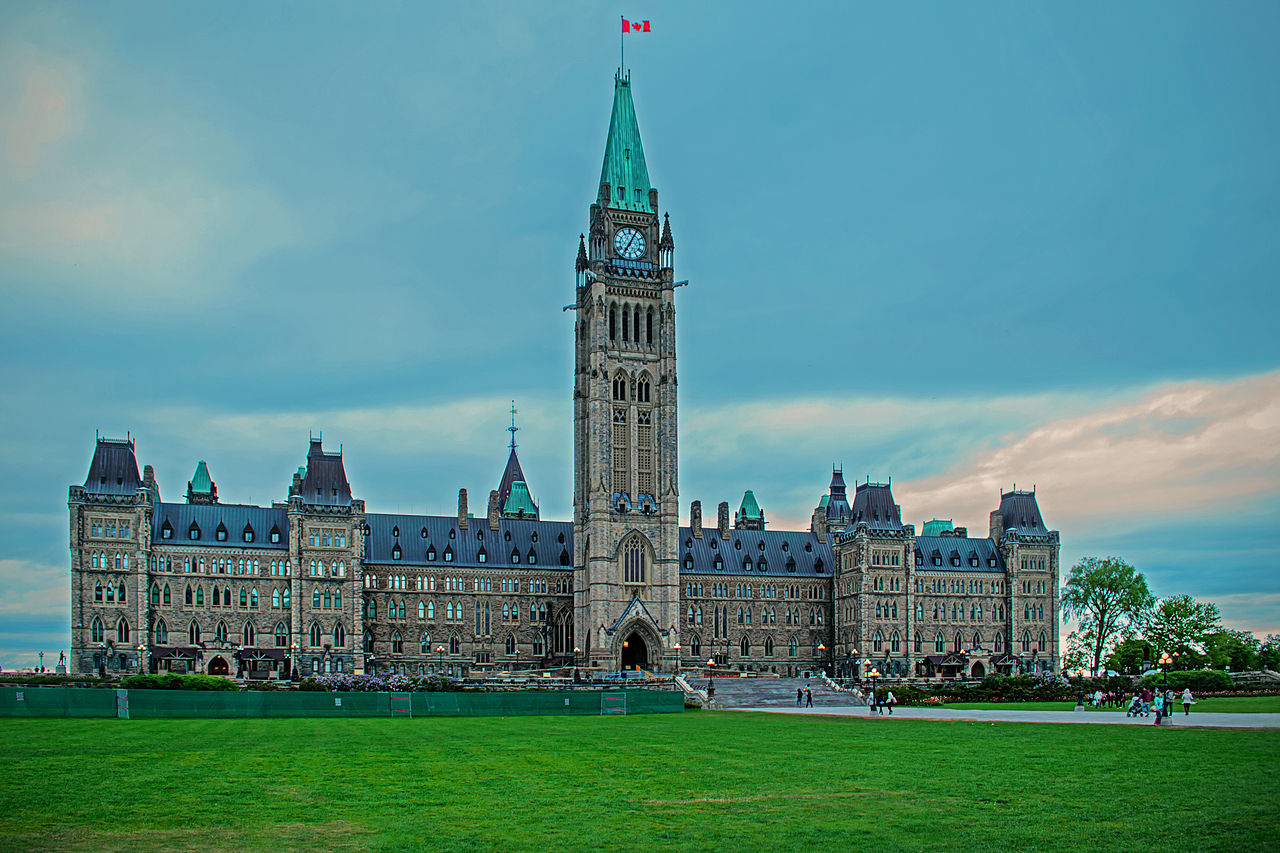
Parliament Hill in Ottawa.
Photo by S Nameirakpam via Wikimedia Commons.

Before colleagues voted to quash a review of whether the Liberal government acted improperly after a bureaucrat asked former ambassadors to temper public comments about China, Liberal MP Rob Oliphant told Parliament’s Foreign Affairs committee that he’s “distressed”.

Apparently, he was not distressed about a Foreign Affairs assistant deputy minister being asked to “check-in” on two former Canadian diplomats to China before making future pronouncements on Canada’s shambolic relations with the communist regime.

Oliphant’s also not distressed about the troubling optics that either diplomat – David Mulroney and Guy Saint-Jacques – felt The Globe and Mail should be aware of their reservations about said interactions, which the paper reported last week.

“I am very distressed, at the tone, at the idea and at the allegations that are being cast about by members of the opposition,” Oliphant, Parliamentary Secretary to the Minister of Foreign Affairs and non-voting member, claimed at the committee’s emergency meeting Tuesday.

Oliphant’s claim comes after either diplomat says the department’s ADM Paul Thoppil told them his call was at the behest of the PMO. Both Prime Minister Justin Trudeau and Foreign Affairs Minister Chrystia Freeland have denied they directed such outreach.

Mulroney, who had earlier warned about travel to China following the detention two Canadians there in December of last year, told the Globe that Thoppil cited the “election environment” and asked him to contact the department before making future statements.

“It wasn’t, in my view, so much an offer to consult and share ideas as to ‘get with the program’. People in Ottawa don’t invoke PMO frequently or lightly. It is done to intimidate and obtain compliance,” Mulroney is quoted as saying.

Saint-Jacques told the Globe that his conversation with Thoppil differed somewhat, “But I can understand that one could come to that conclusion when they say we should speak with one voice.”

July 28, 2019

With the SNC-Lavalin affair fading from memory, Justin Trudeau looks set for the fall election

Filed under: Cancon, China, Media, Politics — Tags: , , , , , , — Nicholas @ 03:00

They say that memories are short in politics, but this short? Thanks largely to the dog days of summer and a complicit media desperate for more government subsidies, Justin Trudeau and the Liberals are being allowed to shed the scandal-tainted skin of four whole months ago to emerge glistening and new with election promises galore. Democracy dies in government subsidies, apparently.

On the other hand, perhaps Canadian voters’ memories will last long enough to get past the casting of ballots in October:

Supposedly, the Liberals have put the SNC-Lavalin scandal behind them: the polls have rebounded, the media have moved on, while the company has worse problems to deal with than a mere hair-raising multi-million-dollar corruption charge.

Even the return of Gerry Butts, the prime minister’s former principal secretary, albeit in a part-time, temporary, what-are-friends-for capacity as adviser to the party’s election campaign, seems to have caused little stir, although he was one of two senior government officials to resign over their part in the affair.

Perhaps the Liberals have concluded the passage of time is enough to earn them a pass from the public. I mean this all took place, what, four months ago? Who even remembers that far back?

But as recent events have shown, the same ingredients that combined to produce the SNC-Lavalin scandal — hubris, a maniacal desire to run everything from the centre, and an unwillingness, in all this overweeningness and control-freakery, to be bound by basic legal and procedural norms — remain very much in place in the prime minister’s office.

For starters, there is the affair of the two ex-ambassadors. First, David Mulroney, Canada’s ambassador to China from 2009 to 2012, then his successor, Guy Saint-Jacques, reported a senior official in the Global Affairs department had called them to demand they clear any public comments on the government’s policy towards China with the government.

Both men are now private citizens. Both have been critical of the government’s handling of the China file. Unlike the most recent former ambassador, former Liberal cabinet minister John McCallum, neither has framed his comments on Sino-Canadian relations in terms of what would assist in the re-election of the Liberals. Apparently, that was the problem.

The official, assistant deputy minister Paul Thoppil, claimed to be speaking on behalf of the PMO and explicitly cited “the election environment” as a reason to shut up. Oh, also the current state of “high tension” between the two countries, presumably over China’s seizure of two Canadians as hostages, which supposedly made it essential for everyone in Canada, whether in the government’s employ or not, to “speak with one voice,” i.e., refrain from criticizing the government.

As a China policy, this has the advantage of closely resembling the Chinese way of doing things. It’s hard to say which is the more extraordinary: the notion that private citizens should be compelled to clear their criticisms of the government with the government, or the notion that they could be.

July 18, 2019

Andrew Coyne interviews NATO Secretary General Jens Stoltenberg

Filed under: Cancon, Europe, Military, Russia, USA — Tags: , , , , , — Nicholas @ 05:00

In the National Post, Andrew Coyne discusses NATO, Donald Trump, and Russia with the current Secretary General of NATO, Jens Stoltenberg:

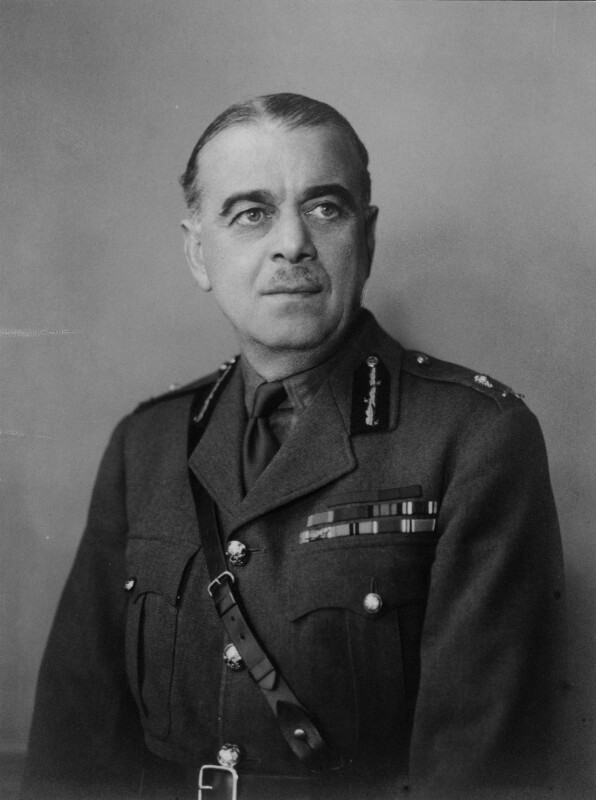
General Hastings “Pug” Ismay, later the first Secretary General of NATO during his military service as Winston Churchill’s chief military assistant in 1941.
Official British government photograph via Wikimedia Commons.

Throughout their term in government — and especially since Donald Trump’s victory in America’s 2016 election — Prime Minister Justin Trudeau’s Liberals have taken every opportunity to pay tribute to the “rules-based international order,” the consensus among countries that everyone’s interests are best served by following a set of rules and guiding principles that have evolved through the decades, expressed through things such as trade agreements and international alliances like the United Nations. If this consensus has a face it may be that of Jens Stoltenberg. The urbane former prime minister of Norway has been Secretary General of the North Atlantic Treaty Organization (NATO) since 2014, and through tough times for the international consensus he’s been one of the loudest voices defending it. This week he was in Canada to meet with Trudeau, to tour the Canadian Forces’ Garrison Petawawa and to discuss Canada’s NATO deployments in Latvia and Iraq. He sat down for an interview with the National Post‘s Andrew Coyne.

Q. Lord Ismay, NATO’s first secretary-general, famously defined the alliance’s mission as “keeping the Soviet Union out, the Americans in, and the Germans down.” When you hear some of the things Donald Trump says about NATO, about Article 5 (the collective defence provision) — are the Americans still in?

A. Yes. And they are more in now than they have been for a long time — meaning that they are actually increasing their NATO presence in Europe. After the end of the Cold War, Canada and the United States, for natural reasons, reduced their military presence in Europe. Because tensions went down, there was less need… Now tensions are increasing again, and both Canada and the United States are now increasing their military presence in Europe: Canada with a Canadian-led battle group in Latvia, and the United States with a battle group in Poland and also with a new armoured brigade. So what we see is that the United States is actually investing more in NATO, more military presence in Europe, more U.S. investments in infrastructure, in pre-positioned equipment, more exercises. So the message from the United States is that they are committed to NATO and we see that not only in words but also in deeds.

Q. But when you see Trump questioning the value of multilateral institutions, asserting “America First,” his chumminess with Putin, does it risk sending a signal that, if push came to shove — if Russia got up to no good in the Baltics or what have you — that America’s resolution to resist that would be less than certain?

A. For me the strongest possible signal to send is the presence of U.S. forces in Europe. The fact that we now, for the first time in the history of NATO, have U.S. troops in the eastern part of the alliance, in Poland and the Baltic countries. There is no way to send a clearer signal than that. And the Canadian troops because they are part of the picture. To have American troops in the Baltic countries sends a very clear signal that if a Baltic country is attacked it will trigger a response from the whole alliance… It’s not possible to imagine a stronger and clearer signal than that.

July 17, 2019

Andrew Scheer falls into carefully prepared media trap on “conversion therapy”

Filed under: Cancon, Media, Politics — Tags: , , , — Nicholas @ 05:00

Chris Selley explains why federal Conservative leader Andrew Scheer is now being pilloried over his stance on banning so-called “conversion therapy”:

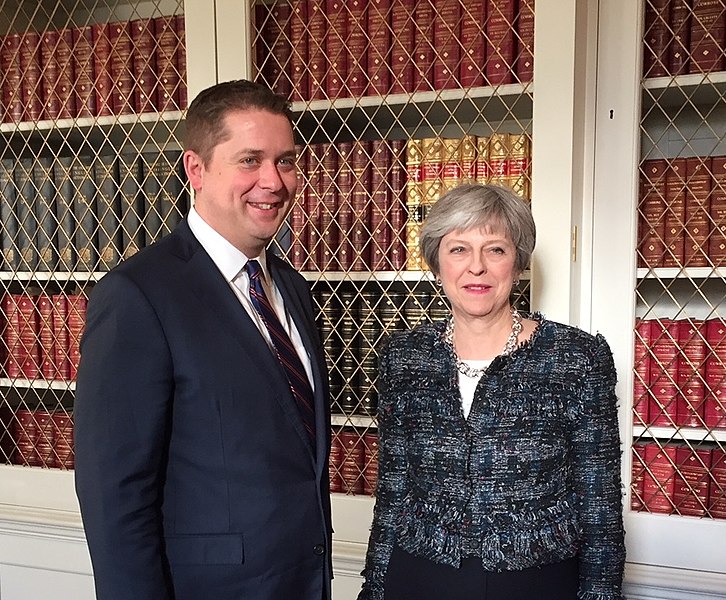
Andrew Scheer meets British Prime Minister Theresa May
Photo via Wikimedia Commons

The day before Global ran its story, CBC reported it had “obtained” a letter the feds sent to the provinces in June asking them to ramp up efforts to outlaw preposterous and potentially dangerous so-called treatments designed to turn homosexual people into heterosexual people. “The provincial, territorial, municipal and federal governments all have roles to play to protect Canadians from the harms associated with this practice,” read the letter, signed by federal Justice Minister David Lametti among others. “The federal government is committed to doing everything within its jurisdiction to combat conversion therapy” — including, supposedly, amendments to the Criminal Code.

Global took that to Scheer, who had nothing nice to say about conversion therapy: “We will always … stand up for the rights of LGBTQ individuals and protect their rights and … we’re opposed to any type of practice that would forcibly attempt to change someone’s sexual orientation.”

Asked whether he would support a “ban,” Scheer responded precisely as opposition leaders always do in the absence of legislation: “We will wait and see exactly what is being contemplated.” After all, Scheer trenchantly noted, “this is something that this Liberal government is only now recently proposing.”

This entirely reasonable position begat the above-noted headline, and the above-noted headline begat mass outrage — including among commentators who know very well how the game is played. “Why would you allow any ambiguity about where you stand?” Global radio host Charles Adler fumed on Twitter, addressing Scheer. “Why can’t you just say this so-called therapy is peddled by charlatans. It exploits vulnerable people including children. Voluntary or coercive, it’s bogus.”

Now, if you think it’s self-evident that conversion therapy ought to be illegal in Canada, and you hold anyone who doesn’t share and proselytize that opinion in contempt, then Scheer has given you your answer. But if that’s what you think, you should be just as furious with the Liberals — probably more.

Not only is the “plan for (a) conversion therapy ban” referred to in the Global headline nothing of the sort, but rather a hitherto private and suddenly, conveniently, public letter that explicitly leaves open the question of federal jurisdiction. But the letter was sent just a few weeks after the Liberals ruled out exactly what the headline would have us believe they are now proposing!

July 15, 2019

War by other means – the “grey zone”

Filed under: Cancon, Government — Tags: , — Nicholas @ 05:00

Ted Campbell discusses that field of conflict that isn’t recognizably war, but is still an arena of struggle between state actors:

I said, about 18 months ago, that “Western leaders like Presidents Marcon and Trump, Chancellor Merkel and Prime Ministers Abe, May, Rutte, Trudeau, Turnbull all see ‘war’ as a binary choice ~ you’re either fighting or you’re not, while Putin and Xi see it as spectrum wherein actual armed conflict is only one of many, many choices. We, in the US-led West, are not ‘playing’ the same strategic ‘game’ as our competitors … that’s a mistake on our part.” War in the “grey zone” or a strategy of “constructive ambiguity,” as The Economist explains it, is the most likely form of great power competition for the foreseeable future.

[…]

There are, the report suggests, two overarching strategic concepts for responding to the grey zone threats:

  • The report’s proposed strategic concept rests on four (interrelated) notions ~
  • – Shaping an allied strategy supportive of U.S. and partner objectives over the long term,

    – Actively, now, deterring a handful some of the more dangerous forms of grey zone aggression,

    – Preventing the day-to-day use of some of the more-elaborate grey zone techniques, and

    – Maintaining resilience in the lower-level, persistent competition areas; and

  • To implement the strategic concept, the report proposes a preliminary list of about three dozen response options for American and allied officials to consider, such as stationing permanent new military capabilities in key locations, anticipating political meddling and blunting the effects with information operations planned in advance, and denying the aggressor participation in key economic institutions.

That’s all well and good, but: how to implement such a strategy? What to do? How to do it? And who is to do it? The report recommends that:

  • America and its allies, partners, and friends ~ and this must include Canada ~ need to decide what actions are intolerable in the grey zone environment. But, the report says, it is hard to stop, much less prevent, gradual, sometimes unattributable actions involving secondary interests, so identifying the actions that the US-led West will seek to deter is the one reliable way to draw a boundary or a “red-line” around the possible effects of grey zone encroachment; and
  • The US and its allies should adopt a “multicomponent strategy” like the one outlined in the report, but we must all recognize that it will be of limited utility “if the U.S. government continues to lack a clear coordinating function with the responsibility for overseeing a renewed effort to gain strategic advantage in the gray zone.” The report concludes that an important part of any grey zone response strategy, therefore, is undertaking institutional reform, such as assembling purpose-built office in the U.S. government, and in allied nations and alliances, like NATO, with significant dedicated staff, to conduct real-time counter–grey zone campaigns.

So, what does this mean for Canada?

A couple of months ago I said that the world is changing and Canada must change, too. I made a few recommendations: I said that we have to have an interest-based strategy … one focused on our vital interests in the world. I suggested that we must be less reliant on one or two cornerstones, the USA and NATO, and, instead, build a better foundation with more friends and groups. This is, of course, the exact opposite of what Justin Trudeau has accomplished in the past 3¾ years ~ instead, he has alienated traditional allies, even Australia, and major trading partners like China and rising great powers like India. His ineptitude is stunning … our foreign policy is a national disgrace. We need to rebuild our once-sterling reputation for fair dealing and for doing a fair share. Finally, I said, we need to rebuild our hard (military) power so that we can use our soft power to good effect.

[…]

The point is that some grey zone operations are not “conventional,” and while some grey zone warriors are soldiers, many others are quite decidedly unmilitary … but, we’ve been there before, unconventional warfare is not new, nor are unconventional warriors, whichever side they might be serving. But, the grey zone is never the only area of operation. Just as soft power is only useful if one has enough hard, military power to make one’s voice heard, so grey zone operations are always part of a larger grand strategic plan that aims to secure quite conventional objectives. That’s why war in the grey zone must be fought by both conventional forces, as we fought the first Cold War, for example, and by unconventional forces which might be strange and even a little frightening to those used to seeing “‘war’ as a binary choice ~ you’re either fighting or you’re not.”

We, America, Australia, Britain, Canada, Denmark and, and, and, are being attacked in the grey zone now, whether we like it or not and whether we understand it or not. We need to defend ourselves in both conventional and unconventional ways … and then counter-attack. In fact, the war in the grey zone is being fought, sometimes, even now, on Canadian soil, by Canadians and some political parties and leaders are sometimes complicit in activities that do real, serious harm to Canada’s relations with other great nations. But the war in the grey zone, is, as I said, just above, part of a bigger, grand strategic plan that needs to be countered by both conventional and unconventional means. As much as we need to do (and avoid doing) things that impact the grey zone we must, simultaneously, be prepared to do things that strengthen our position in the “binary,” black and white world of conventional power.

July 4, 2019

Is there a country with which Justin Trudeau hasn’t messed up Canada’s relationship?

Ted Campbell responds at some length to a Globe and Mail article by Doug Saunders, outlining the degradation of diplomatic relations with almost all our allies and trading partners since Justin Trudeau became PM.

The Globe and Mail‘s award-winning international affairs correspondent Doug Saunders, someone with whom I (almost equally) often disagree and agree, has penned an insightful piece in the Good Grey Globe in which he says that “Suddenly, Canada finds itself almost alone in the world, with a Liberal government realizing that its optimistic foreign policy no longer entirely makes sense … [but, he concludes] … Even if the current crisis in liberal democracy proves temporary and short-lived, we know that it can recur – and likely will. If the institutions of 1945 no longer work and the doctrines of 2015 have failed to have an effect, we should develop new ones that will keep Canada connected to the better parts of the world for the rest of the century.

[…]

After the Second World War,” Mr Saunders writes, “Canada gained a few more foreign-policy outlets. Canada played a large role in creating the institutions that governed the postwar peace: the United Nations and its various organizations; NATO; the global trade body that became the World Trade Organization; the Bretton Woods institutions, including the International Monetary Fund and the World Bank. Canada was decisive in the international agreement that authorized the future creation of the twin states of Israel and Palestine, giving it a role in the Middle East that expanded with its creation of the institution of peacekeeping after the Suez Crisis in 1956 … [but this really is a silly statement, albeit one that too many Canadians believe to be true. Canada didn’t create the “institution of peacekeeping” in 1956. It was already there, in the United Nation’s case since Ralph Bunch (USA) and Sir Brian Urquhart (UK) created it in 1948 and it had been around since, at least, Woodrow Wilson’s 14 Points speech in 1918, but it is now part of the Laurentian Elite‘s quite dishonest revisions of Mike Pearson’s sterling legacy as a diplomat and politician] … And, starting in the 1950s, Canada became a player and a spender in the new field of foreign aid and development. Under both Liberal and Progressive Conservative governments, Canada used those tools to play a small but well-regarded place in the liberal-democratic order – and to slowly but profitably build its trade and economic relations.

[…]

I agree with Doug Saunders about the sources of Canada’s current weakness. He neglected to mention the root cause: Pierre Trudeau explicitly rejected, in the late 1960s, the “St Laurent Doctrine” and replaced it with a social “culture of entitlement” which meant that our place in the world had to be sacrificed on the altar of a reinforced social safety net. I agree that Donald J Trump is the key to our and the West’s current angst and confusion, not Vladimir Putin, Xi Jinping or Arab terrorists, all of whom are easier to understand, but I would argue that we would be much better placed to cope with president trump and the 21st century had we not abandoned our role as a leading middle power circa 1970. I have reservations about all three of Mr Saunder’s prescriptions:

  • I’m not sure another G-N, not even a “committee to save the world” is a really good idea;
  • I am nervous about interfering in the internal affairs of other countries ~ think about “do unto others” and all that; and
  • I really doubt that Canadians are ready to spend what’s needed on our defence and, I suspect, they will not be until it is (almost) too late.

Like Mr Saunders, Mr Lang and Professor Paris, I, too, want to save the liberal world order and Canada’s place in it; I’m just not sure that any of the proposed solutions offered by Doug Saunders, by Eugene Lang or even by Professor Roland Paris are going to be enough. I think we need less formality and fewer organizations in international actions and a lot more ad hocery. I hope that we will have new, adult leadership here in Canada in the fall of 2019 and I hope that a new, grownup prime minister will begin, quickly, to mend relations with Australia, India, Japan and the Philippines and other Asian nations, to shore up our relations with Europe and, especially, with Iceland, the Netherlands, Norway, Switzerland and UK. I also hope Canada will open new, more productive dialogues with Africa, the Caribbean and Latin America and with Iran, Russia and China, also. I am convinced that Professor Stein is correct and we must have an “interests-based,” even a selfish suite of foreign, defence, immigration and trade policies. We should not go about looking for enemies, but we must understand that we have precious few friends and, for now, we cannot count on America to be one of them. America, Australia and Britain, China, Denmark and India, Japan, Mexico and the Philippines, and Singapore and Senegal, too, will all act in pursuit of their own interests; Canada needs to be willing and able to do the same and to work with them, even with Donald Trump’s America and Xi Jinping’s China and Vladimir Putin’s Russia when our interests converge and, politely, stand aside when they diverge. The G7 and G20 and a proposed new G9 are all harmless, but also, largely useless, talking shops. Both diplomacy and foreign affairs must be conducted on a case-by-case, country-by-country, issue-by-issue and interest-by-interest basis and diplomacy and foreign affairs can only be conducted with positive effect when Canada is respected for both its examples and values (soft power) and for its hard, economic and military power, too.

Thus, the first step in doing our part to “save the world” is probably the one that most Canadians will have near the bottom of their priority list: rebuilding Canada’s military ~ which must start, after a lot of the fat has been trimmed from a morbidly obese military command and control (C²) superstructure, with steadily growing the defence budget … and that cannot happen until the economy is firing on all cylinders, including energy exports to the world.

« Newer PostsOlder Posts »

Powered by WordPress