
Rex Krueger
Premiered 62 minutes agoMore video and exclusive content: http://www.patreon.com/rexkrueger
(more…)
July 4, 2019
Can a cheap smoothing plane be good?
Comments Off on Can a cheap smoothing plane be good?
July 2, 2019
Hand tools for $100 #3: Fast plane restoration with BENCH GRINDER
Rex Krueger
Published on 14 Apr 2017More videos and exclusive content: http://www.patreon.com/rexkrueger
So, you bought a vintage hand-plane and now you need to get it working. You can spend several hours working away with sand-paper and rust-removers, or you can get all the hard work done fast with a standard, 6-inch bench grinder. In this video, I’ll show you how to use a coarse grinding wheel and a fine wire-wheel to de-rust, clean, and sharpen an old plane in under an hour. When we’re done, your plane will look and feel good and be ready to use.
On the other hand, if you don’t have a grinder, I recommend Mitch Peacock’s excellent hand-tool method. This is the first plane restoration video I ever saw and I used it to restore my first plane:
https://www.youtube.com/watch?v=ZtfS-…
I also highly recommend Paul Sellers method. He’s a no-nonsense craftsman and he gets the job done fast with common tools:
https://www.youtube.com/watch?v=RYyV6…
I do poke a little bit of fun at Wood By Wright, but he’s got a great channel and I highly recommend it:
Comments Off on Hand tools for $100 #3: Fast plane restoration with BENCH GRINDER
June 27, 2019
You don’t need a block-plane (believe it or not!)
Rex Krueger
Premiered 2 hours agoMore video and exclusive content: http://www.patreon.com/rexkrueger
(more…)
Comments Off on You don’t need a block-plane (believe it or not!)
Router Plane Q&A | Paul Sellers
Paul Sellers
Published on 26 Jun 2019The router plane remains one of the most essential tools for hand tool woodworkers. It is used to refine cuts which are either made by chisels, saws or machines, Paul often even uses a router plane as an improvised marking gauge. In this Q&A Paul answers some of your questions regarding this remarkable tool.
Questions:
0:59 What wood do you recommend for making an extension plate for the base of the router plane? How thick should it be?
2:55 Recently the floor of some elements I have chopped have been deeper than my Stanley router reaches. Is there a way to extend the depth reach?
4:14 Having just bought my first router plane I was wondering what basic maintenance should I do to restore it to a good working tool?
5:17 What is the best way to set the height to make sure you don’t plane too deeply?
7:11 Do you recommend attaching a wooden support screwed to the base of the plane?
7:54 My Veritas router plane changes depth during the cut (the shank of the iron slips in the collar). Is there a trick that will prevent this slippage and help ensure an equal depth across the entire surface?
10:11 How does one prevent tear out when routing?
12:11 One thing I’ve noticed by watching your videos is that you only use the router plane to put the finishing touches on tenon cheeks, dados and the like. Was the router plane designed for more than this or is this where the router shines?
15:04 Grain issues? Cutting out a channel/tenon, I often ‘dig in’ (no, not taking big cuts), likely due to grain? You’ve mentioned ‘feeling’ for grain with No4 plane, how do you address this with the router plane?
18:05 The main issue I have when using a router is that the shavings end up between the sole of the plane and my workpiece. These shavings scar the wood of my workpiece. How to prevent this? Or is this to do with the router plane itself?
21:40 Is the router plane effective for making a groove with the width of the iron or a rebate, as you do with the plough plane?
23:55 Is it important to get a router plane with the micro adjustment height wheel for that extra precision, or will a model without the adjustment wheel do the job just fine?
26:02 Are there specific times when you would reach for a router plane over a plough plane (and vice versa) when either could seemingly be used?
27:49 Diamond point vs square blade
28:46 How to prepare the wood for the sole?The featured Paul Sellers book is available to order from anywhere in the world. Click the link to find out more: https://paulsellers.com/paul-sellers-…
Want to learn more about woodworking? See https://woodworkingmasterclasses.com or https://commonwoodworking.com for step-by-step videos, guides and tutorials. You can also follow Paul’s latest ventures on his woodworking blog at https://paulsellers.com/

Comments Off on Router Plane Q&A | Paul Sellers
June 23, 2019
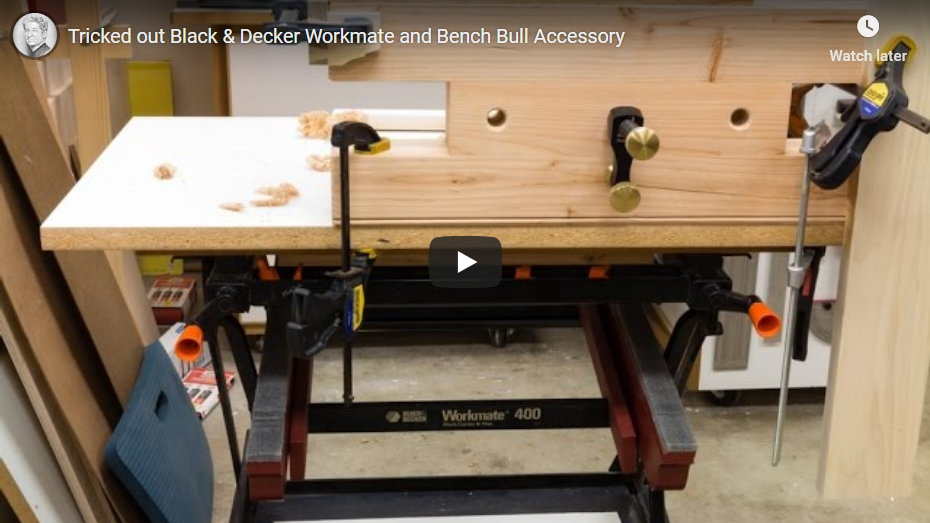
Tricked out Black & Decker Workmate and Bench Bull Accessory
Marty Backe
Published on 9 Jul 2016See how I’ve customized my Black & Decker Workmate to work better for me in my workshop. Included is an extensive demonstration of the ever versatile Bench Bull.
Here are the original articles from Yoav Samuel Liberman, which introduce the Bench Bull:
http://www.popularwoodworking.com/woo…http://www.popularwoodworking.com/woo…
http://www.popularwoodworking.com/woo…
And if you watch my video on Harbor Freight Spring Clamps you can see me using my Bench Bull: https://youtu.be/qKF16DQl8iU
Comments Off on Tricked out Black & Decker Workmate and Bench Bull Accessory
June 15, 2019
Hand tools for $100 #2: Buying the planes you really need.
Rex Krueger
Published on 7 Apr 2017More videos and exclusive content: http://www.patreon.com/rexkrueger
You can buy 50 vintage hand-planes and spend the next year restoring them, or you can get three common and useful planes and get to work right now. In this video, I’ll show you the three planes that you will use for 80% of your woodworking even once you become a more experienced craftsman. These planes are common, easy to find, and generally cheap. They each have a specific and important function in the shop. Once you own these models, your ability to process stock in a clean and quiet environment will amaze you. You can always buy expensive machines later, but with good planes, you can get working immediately.
Comments Off on Hand tools for $100 #2: Buying the planes you really need.
June 13, 2019
Make your own marking gauge for FREE!
Rex Krueger
Premiered 29 minutes agoMore video and exclusive content: http://www.patreon.com/rexkrueger
(more…)
Comments Off on Make your own marking gauge for FREE!
June 12, 2019
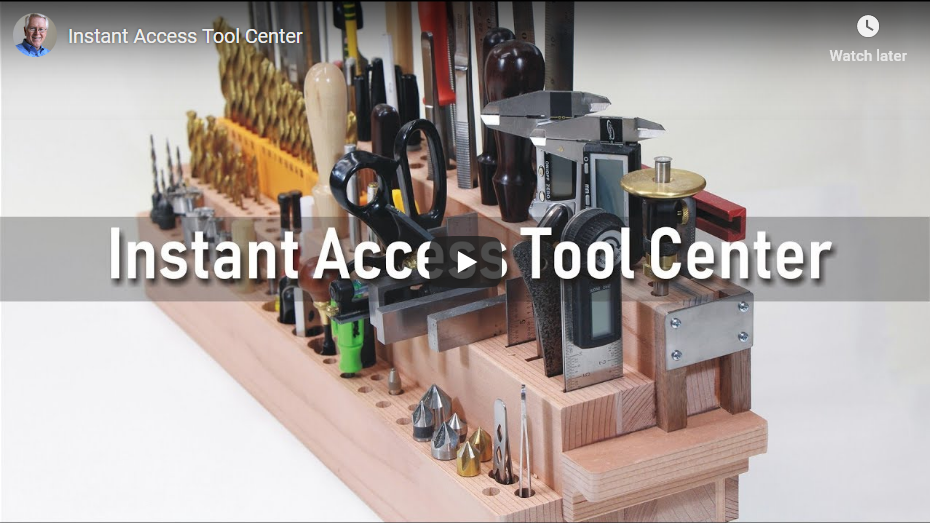
Instant Access Tool Center
Patrick Sullivan
Published on 9 Mar 2019Designing and building a case that provides instant access for most of the small tools that you use regularly. This portable fixture is set up so that you can easily access the tools you need, and also replace them the second you are finished with them, keeping your workplace organized. It protects small tools from damage or loss, and increases efficiency by ensuring that they will not get lost in workbench clutter.
Plans: this fixture needs to be customized to each woodworker’s personal needs and tools, so it makes little sense to exactly duplicate my layout. However, I will post photos of the case on my website, with dimensions, to help you get started with your own layout. Here is the link to my website:
https://psullivancarmel.wixsite.com/t…
Comments Off on Instant Access Tool Center
June 11, 2019
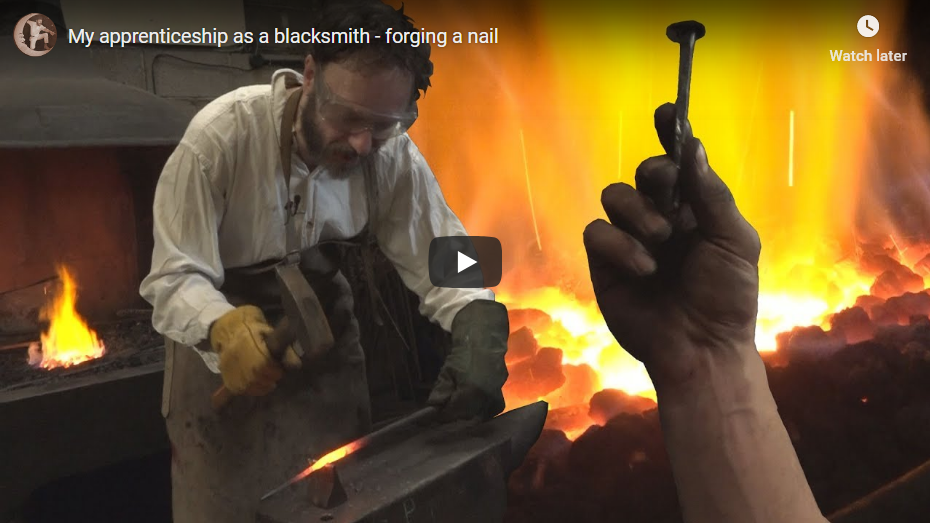
My apprenticeship as a blacksmith – forging a nail
Lindybeige
Published on 16 Jan 2018Before forging my sword, I had to do an apprenticeship as a blacksmith, and make a nail. Here witness my training.
Support me on Patreon: https://www.patreon.com/Lindybeige
I was a guest of The Cut and Thrust Collective – four blacksmiths who have banded together in a forge that was once known as The Forge of Avalon, in Glastonbury. There I spent most of a week, and there I forged my sword – Arnander – the making of which will be the subject of further videos.
I’m quite pleased with the amount of information I got into this video about how forging is done. It shows you several details of how to use a forge to heat metal, and how to hammer shapes into metal.
Many thanks to Joseph McDonald for inviting me in the first place, acting as cameraman, and cooking lots of bacon. Thanks too to my teacher here Thom Leworthy.
The company takes commissions for blacksmithing, and runs courses so that you can go in and make your own pieces. glastonburysmith@gmail.com
Lindybeige: a channel of archaeology, ancient and medieval warfare, rants, swing dance, travelogues, evolution, and whatever else occurs to me to make.
▼ Follow me…
Twitter: https://twitter.com/Lindybeige I may have some drivel to contribute to the Twittersphere, plus you get notice of uploads.
website: http://www.LloydianAspects.co.uk
Comments Off on My apprenticeship as a blacksmith – forging a nail
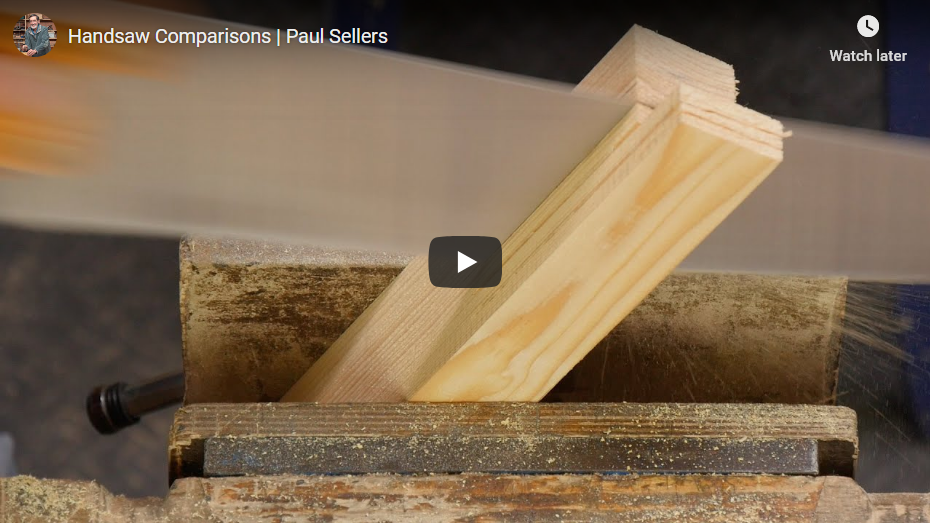
Handsaw Comparisons | Paul Sellers
Paul Sellers
Published on 16 Apr 2016Paul compares a few saws and suggests an affordable option that is widely available.
For more information on these topics, see https://paulsellers.com or https://woodworkingmasterclasses.com
Comments Off on Handsaw Comparisons | Paul Sellers
May 29, 2019
How to Sharpen a Router Plane | Paul Sellers
Paul Sellers
Published on 28 May 2019One of our most highly demanded videos is how to sharpen a router plane. Whether you have a new or second hand router plane, Paul Sellers’ sharpening method ensures you get the best performance from your router plane.
Want to learn more about woodworking? See https://woodworkingmasterclasses.com or https://commonwoodworking.com for step-by-step videos, guides and tutorials. You can also follow Paul’s latest ventures on his woodworking blog at https://paulsellers.com/
Comments Off on How to Sharpen a Router Plane | Paul Sellers
How to Use a Marking Gauge CORRECTLY
Matt Estlea
Published on 26 Apr 2019In this video, I show you how to use a marking gauge correctly as well as share some extra tips and pointers to help you with your woodworking. Accurate measuring and marking is an essential skill when it comes to fine woodworking. It doesn’t matter how good you are with a saw or a chisel, if your layout is inaccurate every operation after will be inaccurate too.
_________________________________________________________________Support what I do by becoming a Patron! This will help fund new tools, equipment and cover my overheads. Meaning I can continue to bring you regular, high quality, free content. Thank you so much for your support! https://www.patreon.com/mattestlea
_________________________________________________________________See what tools I use here: https://kit.com/MattEstlea
My Website: http://www.mattestlea.com
_________________________________________________________________My name is Matt Estlea, I’m a 23 year old Woodworker from Basingstoke in England and my aim is to make your woodworking less s***.
I come from 5 years tuition at Rycotewood Furniture Centre and 4 years experience working at Axminster Tools and Machinery where I still currently work on weekends. During the week, I film woodworking projects, tutorials, reviews and a viewer favourite ‘Tool Duel’ where I compare two competitive manufacturers tools against one another to find out which is best.
I like to have a laugh and my videos are quite fast paced BUT you will learn a lot, I assure you.
Lets go make a mess.
Comments Off on How to Use a Marking Gauge CORRECTLY
May 27, 2019
How to Cut a MITRED DOVETAIL Joint
Matt Estlea
Published on 25 May 2019In this video, I show you how to cut a Mitred Dovetail entirely by hand. This is an essential woodworking joint to have in your skill set as it is invaluable when it comes to hiding a groove within a carcass. Watch the video and you’ll see how!
_________________________________________________________________SUPPORTING MATERIAL:
(Watching these videos will make this job SO MUCH EASIER!)How to Saw Correctly:
https://www.youtube.com/watch?v=C5OzZNVGnXQHow to Chisel Correctly:
https://www.youtube.com/watch?v=Efxgvo36FiYHow to Use a Marking Gauge Correctly:
https://www.youtube.com/watch?v=-7G1Kmfb51QHow to cut a Dovetail Joint:
https://www.youtube.com/watch?v=2hP-QAAhpxQ5 Tips to Instantly Improve your Dovetails:
https://www.youtube.com/watch?v=a-Bs1o0TmowWhat Dovetail Ratio should you use:
https://www.youtube.com/watch?v=Yue6GKRa3AkKatz Moses vs. David Barron Dovetail Guide:
https://www.youtube.com/watch?v=Qd6VD1mXvRAMy Five Favourite Tools for Hand Cut Joinery:
https://www.youtube.com/watch?v=Zgfx3splHL8Making a Router Bit Cabinet:
https://www.youtube.com/watch?v=1FqWQtIvZKkHow to Make a Shooting Board:
https://www.youtube.com/watch?v=0iKHaoUj_jM
_________________________________________________________________Support what I do by becoming a Patron! This will help fund new tools, equipment and cover my overheads. Meaning I can continue to bring you regular, high quality, free content. Thank you so much for your support! https://www.patreon.com/mattestlea
See what tools I use here: https://kit.com/MattEstlea
My Website: http://www.mattestlea.com
_________________________________________________________________My name is Matt Estlea, I’m a 23 year old Woodworker from Basingstoke in England and my aim is to make your woodworking less s***. I come from 5 years tuition at Rycotewood Furniture Centre with a further 1 year working as an Artist in Residence at the Sylva Foundation. I now teach City and Guilds Furniture Making at Rycotewood as of September 2018.
I also had 5 years of experience working at Axminster Tools and Machinery where I helped customers with purchasing tools, demonstrated in stores and events, and gained extensive knowledge about a variety of tools and brands.
During the week, I film woodworking projects, tutorials, reviews and a viewer favourite ‘Tool Duel’ where I compare two competitive manufacturers tools against one another to find out which is best.
I like to have a laugh and my videos are quite fast paced BUT you will learn a lot, I assure you.
Lets go make a mess.
Comments Off on How to Cut a MITRED DOVETAIL Joint
May 19, 2019
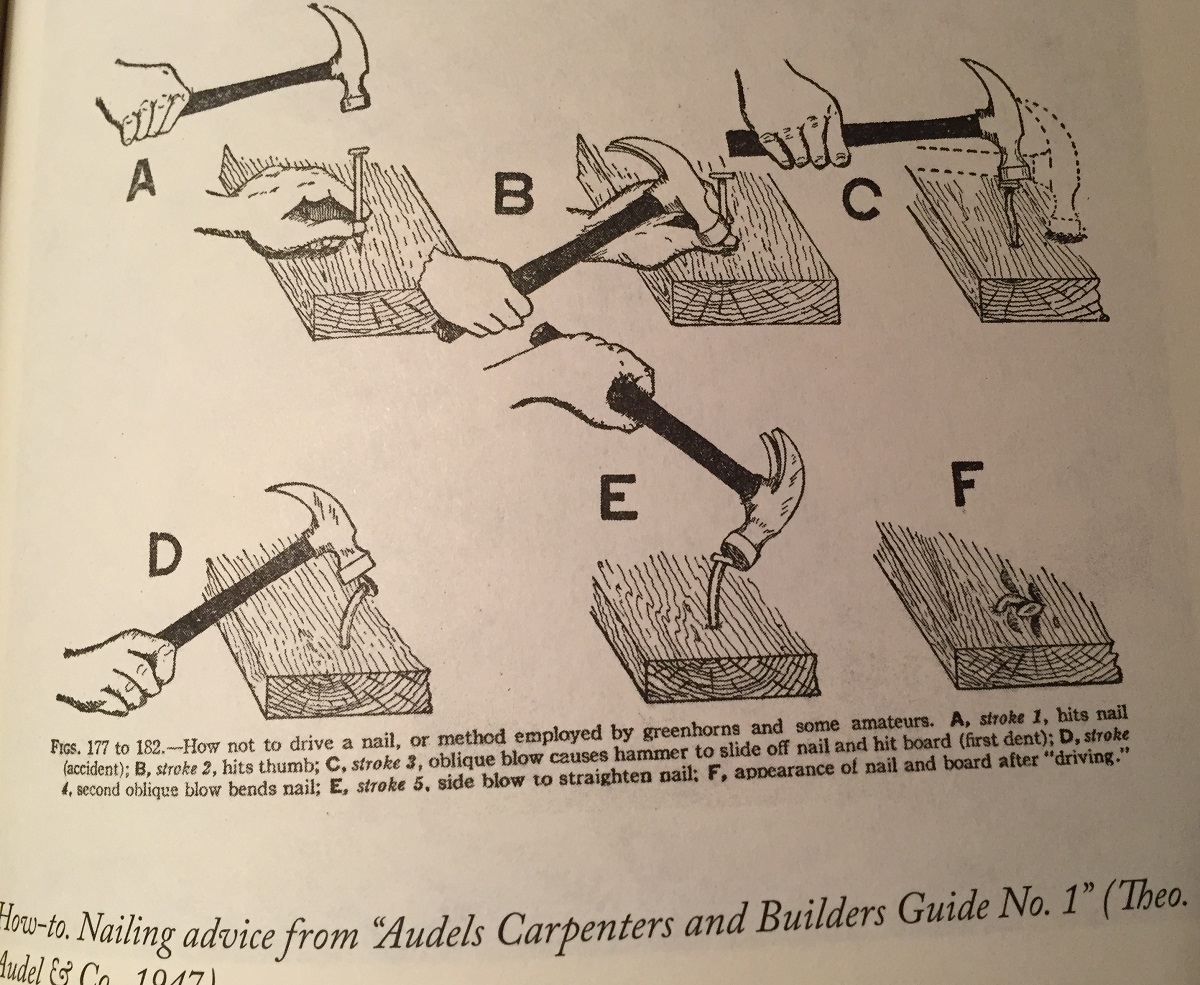
How not to drive a nail
In Christopher Schwarz’s recent The Anarchist’s Design Book, he includes a set of illustrations from a 1947 publication, which appear to still be 100% accurate:
Comments Off on How not to drive a nail
May 13, 2019
Clamp Retrofit | Paul Sellers
Paul Sellers
Published on 15 Jul 2016Clamps are an essential piece of equipment around the workshop. Paul shows how he retrofits a standard aluminium sash clamp to be much more effective.
For more information on these topics, see https://paulsellers.com or https://woodworkingmasterclasses.com


