Quotulatiousness

December 2, 2022

The whole music culture, it seems, is now under the sway of a chipmunk aesthetic

Filed under: Media, USA — Tags: , , , — Nicholas @ 03:00

Ted Gioia explores the oddity of musical tastes on TikTok:

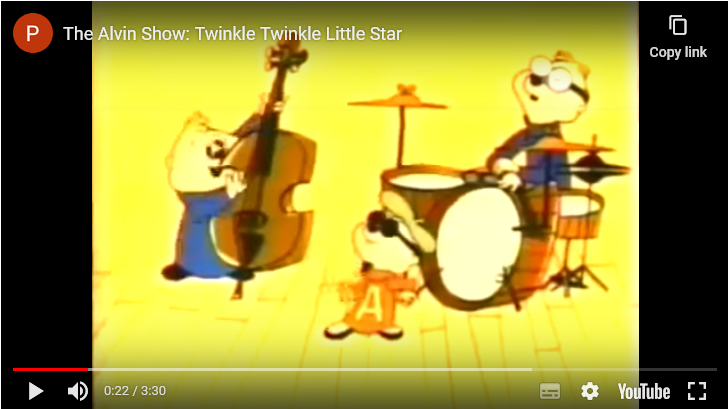
When I was a child, a band called Alvin and the Chipmunks enjoyed a brief taste of fame. Hot bands come and go, but this one had a bizarre back story.

First of all, it didn’t really exist. The band consisted of cartoon chipmunks. In this regard, Alvin and his rodent colleagues get credit for anticipating the anime pop stars of the current day.

Second, these singing chipmunks were more a brand than a band. Because these animals were make-believe, they couldn’t go on tour — but they could sell boatloads of merchandise, from lunch boxes to comic books. This, too, anticipated much of our current music industry — where the side deals often make more money than concerts and records.

But even stranger, this group aimed to imitate the sound of singing chipmunks by speeding up recordings of human vocalists. The end result was arguably the most annoying sound in 20th century music (a rare distinction, that). I can’t stand listening to these tracks, but they somehow won five Grammy Awards. Alvin and the Chipmunks actually enjoyed two number-one singles.

That’s two more than Bob Dylan can claim.

In all fairness, these same tracks sound even worse when slowed down. So maybe there’s something to be said for getting to the end of the song as fast as possible.

But here’s the most surprising part of the story. This sped-up sound also anticipated the contemporary music of our own time — it’s actually one of the hottest trends on TikTok.

The whole music culture, it seems, is now under the sway of a chipmunk aesthetic. This, to my way of thinking, is even more foreboding than all those people who want us to eat bugs and compost our deceased loved ones.

I’m starting to think that Alvin and the Chipmunks belong in the Rock and Roll Hall of Fame. Maybe I can’t stand listening to the stuff, but these cartoon critters clearly pointed the way to the future. A dark dystopian future, perhaps, but I guess that’s what happens when you treat rodents as role models.

November 29, 2022

QotD: People have always lied about sex, but GenZ’ers lie even more than you’d expect

Filed under: Education, Media, Quotations, USA — Tags: , , , , , — Nicholas @ 01:00

I’ve been out of academia for a few years, but this bespoke sexuality nonsense was already exploding by the time I got out. I saw two big shifts in the studentry during my academic career. The first was the catastrophic drop in academic readiness, thanks mostly to No Child Left Behind (et al. Lots of trends contributed, especially Participation Trophy culture, but NCLB is a good synecdoche). The second was the end of all-out college kid hedonism.

By the end of my last tour of duty, most college kids were dour puritans. I know, I know, but hear me out. This is the thing people keep forgetting about the Internet: People lie. I know we all know that consciously, but we seem hardwired to believe confessions. In the same way that we might not consciously watch TV — might go some distance out of our way to avoid it — but find ourselves staring mindlessly at the blinking screen when we’re in a bar or a waiting room or something. It seems to be hardwired. So when these folks start writing about all the bizarre sexual shit they’re into, we just … believe them. Sight unseen.

But y’all, in the kingdom of the blind, the one-eyed man is king. I want to state, unequivocally and for the record, that my entire knowledge of undergrads’ sex lives is secondhand. I have zero personal experience in this area. But it’s a close secondhand. For one thing, there’s not much to do in College Town that doesn’t involve undergrads, so I ended up drinking at a lot of the same bars, and in vino veritas. Second, kids these days have no filter. None whatsoever. Finally, social media — my last tour was at a SPLAC, where they strongly encouraged the faculty to be “friends” with the student body on their campus social media apps.

And yeah, they SAY a lot of things … but I highly, highly doubt they actually DO much of anything at all.

For one thing, those “student” bars were lucky I and a few other semi-normal profs were still in our “drink away the pain” phase, because otherwise they would’ve gone out of business. Friday and Saturday nights during football season were still pretty lively, but the rest of the week the “downtown” bars had all the crackling energy of singles’ night down at the mortuary.

Kids just don’t socialize much IRL, and when they do, they don’t hook up. In my not-inconsiderable experience, college drinking these days is like college anything — a grim, pinch-faced, assembly-line business. They intend to get blackout hammered, and they get after it like Heroes of Socialist Labor. Pausing for a quickie in the bathroom would mean skipping a turn in the drinking game — and they all play drinking games; it’s bizarre — so no thanks.

And y’all, those are the outgoing ones. The ones who still have some slight urge to see and be seen out in physical space. The rest of ’em never leave their rooms except at gunpoint, and when you force them to, their eyes never leave their phones.

That’s why I’d bet many crisp stacks of Crispus Attucks that all the “kink” in their social media profiles — even their personal ads — are just for show. They’re not listing all that stuff in order to find someone to have sex with. They’re using it as an excuse not to have sex with anybody, because “having sex with” entails personal interaction and they’re terrified of that. If they ever perfect those VR sex helmets like they had in Demolition Man, watch out, but as of now the whole idea is to seem weird and daring and liberated and kinky, but with no possibility of a follow-up. Oh, you’re into aardvarks and dental tools too? Um … yay? Oh, wait, you dress up as O. a. erikssoni, and I’m only into O. a. leptodon. Sorry!

Severian, “Saturday Miscellania”, Founding Questions, 2022-08-13.

November 17, 2022

TikTok (aka “Digital Fentanyl”)

Filed under: China, Media, Politics, USA — Tags: , , , , , — Nicholas @ 05:00

Geoffrey Cain at Common Sense on the malign influence of the massively popular Chinese social media platform on US politics and culture:

The midterm elections of 2022 were many things — a shocker for Republicans, the possible end of Donald Trump, a win for centrist Democrats. Overlooked is the fact that they were also a big turning point for TikTok, the Chinese social-media platform.

TikTok is not only the most trafficked news app for Americans under 30. It was also a major political force this year. Exhibit A: the Senate race in Pennsylvania, in which both Democrat John Fetterman and his Republican rival, Mehmet Oz, deployed TikTok, with Oz railing against the cost of vegetables in one video, and Fetterman slamming Oz for saying “crudité” in a highly effective response. Other candidates who took to TikTok this cycle include Tim Ryan, who ran for Senate in Ohio, and Val Demmings, who ran for Senate in Florida. (Both are Democrats.) The Democratic National Committee, early this year, launched its own TikTok channel.

Now, there are calls to shut it down. Just yesterday, FBI Director Christopher Wray said the bureau has “national-security concerns” about TikTok. Last Friday, the top Republican on the Federal Communications Commission, Brendan Carr, called TikTok “China’s digital fentanyl”. The day before, Senator Marco Rubio and Rep. Mike Gallagher, both Republicans, introduced legislation banning the social-media platform, noting that the data of millions of Americans is “effectively controlled” by the Chinese Communist Party. Earlier in the month, Carr also said the U.S. government should ban TikTok.

It’s about time.

Ever since TikTok began expanding into the United States, more than four years ago, we’ve known that it was a disaster waiting to happen. What’s shocking is that it’s taken this long to get serious political attention.

I know all about this. I used to be an investigative reporter in China. In December 2017, I first heard from friends on social media that a Chinese tech unicorn called ByteDance was planning on entering the American market with a new app. It was called TikTok.

Alongside its sibling app, Douyin, which operates only in China, TikTok was poised to sweep up the Gen Z audience in America, with its preference for video snippets of dancing celebrities, DIY projects, cooking demonstrations, skincare routines and other Gen Z’ers singing and dancing in their parents’ kitchens. As the fastest growing social media app ever, it rankled American competitors Facebook and YouTube, which were banned in China.

By October 2018, ByteDance was the world’s most valuable startup, with a valuation of $75 billion.

Four years later, ByteDance is worth $300 billion. TikTok is expected to reach 1.8 billion users globally by the end of the year. And a quarter of American adults under 30 get their news from the social-media app.

There’s a good reason for this success. TikTok has developed one of the most powerful machine-learning algorithms ever — one that is able to reveal people’s unknown desires to themselves.

Every day, every hour, every waking minute, TikTok is hoovering up seemingly infinite bits of information about its users — their tastes, hobbies, political views, sexual preferences, their facial structure, the sound of their voice. Ostensibly, all this is meant to provide a better product. It should also be noted that this information can be used for spying, influencing millions of users — even waging war. Every time we swipe for the next video, every time we post videos of our own, we are helping the world’s most sophisticated police state learn more about us.

October 22, 2022

QotD: OCS in the era of the snowflake

Filed under: Education, Military, Quotations, USA — Tags: , , , , , — Nicholas @ 01:00

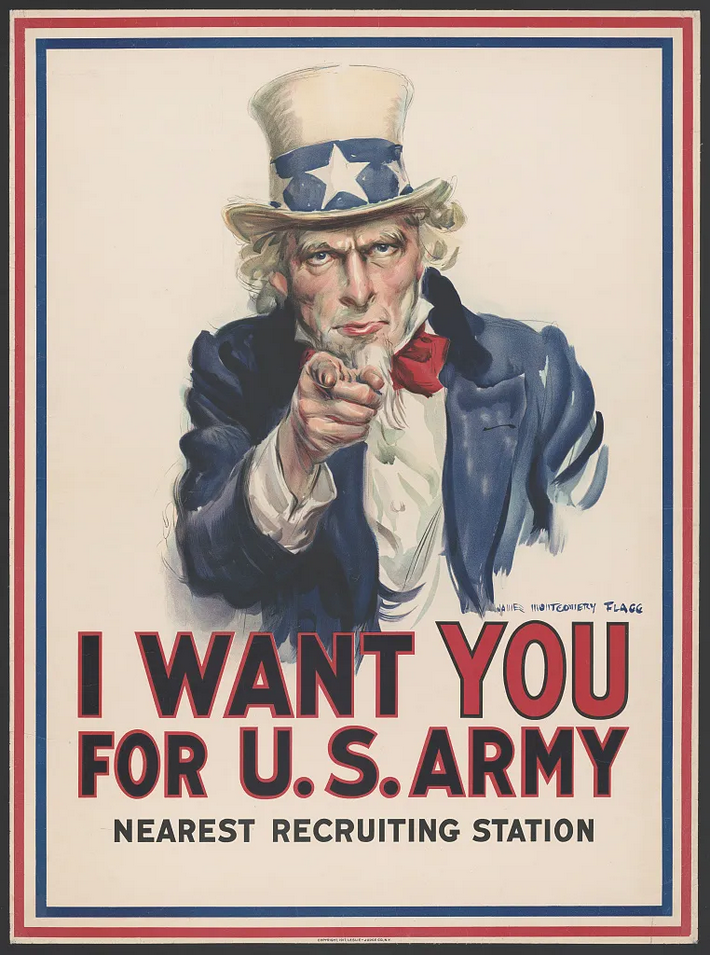
Recruiting posters used to pitch “join the army; earn money for college”. I haven’t seen nearly as much of that lately, with one huge exception: Officers. Since you have to have a college degree to be an officer, they make that a huge part of their pitch. I’m pretty sure they’re offering to wipe some big amount of student loan debt if you sign up for OCS, and if they haven’t, I’d bet long money it’s coming soon enough. They already do it for medics — I know a couple guys who paid off their med school loans that way. You get some kind of abbreviated Basic, then an even more abbreviated OCS — learning where to stick the insignia, basically — and you’re out as a captain (I think) in the medical service.

But — and this is the point — college these days is the END of what you might call the “special snowflake” pipeline.

They can put medicos through that “just learn where to stick the insignia” course because medicos aren’t line officers, are never expected to be line officers, and will probably never come within 500 miles of the sound of gunfire. Kids recruited out of college, on the other hand, are going into line units. What kind of Special Snowflake is going to put up with even a tiny fraction of the chickenshit even the loosest army in the world is going to put them through?

And it doesn’t help sticking them with the service troops, because in any army I’ve ever heard of, the chickenshit is actually much worse in the rear with the gear. All of which is the deepest possible affront to a Snowflake’s amour propre, which is why xzhey will never sign up …

… or, worse, consider the kind of Snowflake that would sign up. I think “a Dunning-Krugerrand who is also a diagnosable sadist” would probably cover it.

Think of what that must do to morale … and from that, to effectiveness in general.

Severian, “Alt Thread: Officer Psychology”, Founding Questions, 2022-07-12.

September 19, 2022

There’s a difference between “caring what kids think” and “pandering for kids’ attention and affection”

Filed under: Education, Health, Media, USA — Tags: , , , , , — Nicholas @ 05:00

Rob Henderson wonders why so many adults these days are clearly desperate for the approval of young people:

During my recent re-watch of the entirety of Mad Men, which takes place in the 1960s, a recurring thought entered my mind: This was the last generation where young adults behaved like they were older than their real age. Don Draper is around thirty-five at the start of the series, and carries himself in a more adult manner than many 45 year olds today.

Recently, Abigail Shrier quoted a physician and psychologist who stated that “Fifty years ago, boys wanted to be men. But today, many American men want to be boys”.

Until the early 1960s, young people acted older than their actual age. Now, older adults pretend to be younger than their actual age.

Which is perhaps one reason why boomers are so easy to mock. They don’t act their age.

[…]

About two years later, I was at a breakfast gathering with some other students on campus. Our guest was a former governor and presidential candidate. He was gracious, and spent most of the time answering questions from students.

And in his answers, he continually returned to variations of the same response: “We screwed up, and it’s up to you guys to fix it. I’m so happy to see how bright you all are and how sharp your questions have been, because you will fix the mistakes my generation made.”

This mystified me. This guy was well into his sixties, with a lifetime of unique experiences in leadership roles, was telling a bunch of 20-year-olds (though I was a little older) that older adults are relying on them.

In the military, we thought of those senior to us as the leaders. It was okay to give feedback, of course. Commanding officers would regularly consult lower ranking and enlisted members to see what was working and what could be improved. But that happens only after getting through the filter of the initial training endeavors.

I remember in the first week of basic training, our instructor declared, “I don’t want any of you [expletive] thinking you are doing anyone a favor being here. I could get rid of all of you clowns and have your replacements here within the hour.” (This was 2007, well before the recruitment crisis).

My 17-year-old brain heard that thought, yeah, he’s probably right. I thought of the bus loads of other ungainly young guys I saw stepping off and being confronted with “Pick ’em up, and put ’em down” and other mind games from the instructors while waiting in the endless in-processing lines.

So then I got to college and learned that even though any seat, at least at selective schools, can be filled immediately with a bright applicant (top colleges reject thousands of them each year), students are never ejected for disrespecting professors or anyone else. In the military the first message was, you are a peon and less than nothing and we can easily have you replaced (this changes as you advance in rank, of course — at least to some degree). In college, the first message was, you are amazing and privileged and a future leader (and marginalized and erased) and you will never lose your position here among the future ruling class. That feeling of whiplash will forever linger in my mind.

[…]

Older adults crave validation from the youth, which is one reason they are mocked. Young people sense their desire to be seen as cool and deprive them of this by taunting them.

This desire for esteem may be why older adults won’t exert any authority in response to energetic young conflict entrepreneurs who yell at them or threaten them.

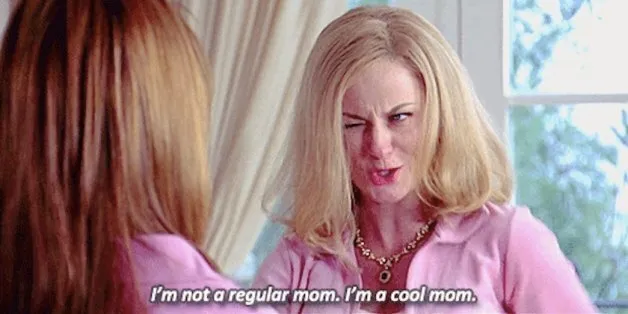
Older adults want to be on the side of youth. So desperate to pencil themselves out of the “old” category. Every parent wants to be the “cool parent”, every professor wants to be the “cool” professor. You can be cool and still be an authority figure. Maybe decades of imbibing the worst of U.S. pop culture made everyone forget this.

August 2, 2022

“Is this ok? And this?” – The pitfalls of the “affirmative consent” model

Filed under: Health, USA — Tags: , , , , , — Nicholas @ 03:00

Blake Smith recounts how the affirmative consent model — so beloved of the always-online contingent of GenZ — attempts to codify and regulate the sexual dance:

“Is it okay if I touch you?” Half an hour after I’d started chatting with this guy on Grindr he was in my bedroom, beginning a series of questions meant to lead from touching to any number of other acts. I suppose he expected, or hoped for, an enthusiastic “yes!”, signalling what the orientation-day workshops on college campuses call “affirmative consent”. But it didn’t occur to me to answer with the eagerness of a child agreeing to dessert. Instead I tried, with a soft laugh and what I hoped was a seductive “ok”, to seem as if I needed my reticence knocked out of me.

What I got were more questions. “Is this ok? And this?” Soon I began to wonder: “Is it ok?” I’d thought it was when I’d told him to come over. But it’s one thing to want someone in an unspecified way, quite another to start itemising what it is you actually want from them. With my own desire in doubt, I started to feel the very thing this line of interrogation had been meant to avoid. Instead of making consent as simple as saying “yes”, these questions had plunged me into a deeply unsexy uncertainty.

In reading me his sexual questionnaire, my partner was showing me that he’d internalised the ethic of “consent”, which over the past decade has emerged as the dominant liberal framework for distinguishing between moral and immoral sex. At the core of this ethic is explicitness. The purpose is to make sex — and all of its constituent acts — something one can and should directly say “yes” or “no” to, a contract negotiated between individuals.

This model of consent has been roundly criticised for deflating erotic tension, leading to sometimes-cringeworthy campaigns to insist that “consent is sexy” (“If asking for consent ruins sex you’re what? A rapist who sucks at talking dirty?’, reads one viral Tumblr post). But the deeper problem with this model is that it produces, or rather reveals, exactly what it is meant to avoid, which is the ineradicable ambivalence at the heart of sex. In other words, while we can and should maintain a distinction between consensual and non-consensual acts, there is an important sense in which we are never able to say “yes” to sex. Indeed, enjoying sex seems to involve a certain suspension of our usual relationship to ourselves, one in which we are overtaken not so much by the other person as by sex itself.

The original sexual relation — prior to the one we have with any particular person — is our relation to sex itself. This relation is not consensual but something we experience as a given. We are born, we mature, and at some point in this process we discover that we our prisoners of our sexuality. Sex, after all, makes us uncomfortable. It can conjure feelings of disgust and embarrassment. It can be a distraction, an excruciating deprivation, even a source of catastrophic humiliation. We notice how attractive the “wrong” person is — a boyfriend’s brother, an ex, a colleague, a student — and feel violated by our own urges. Sex with a partner works, when and to the extent that it does, in part by letting us suspend our inhibitions and want things without having to admit to ourselves that we want them.

July 27, 2022

QotD: Sex and the young Zoomer

Filed under: Health, Quotations, USA — Tags: , , , , , — Nicholas @ 01:00

I bring this up because we seem to have entered one of those moments, not infrequent in American history, when the keepers of our culture have decided sex should be taboo. The word itself is now indecent and unmentionable: We’re supposed to say “gender”. But gender pertains to linguistics, not biology. In Spanish, for example, the moon is feminine in gender: la luna. The sun is masculine: el sol. This sets up all kinds of interesting possibilities during sunrise and sunset, but that’s not the point here. The point is that some moralistic souls think you can somehow detach the sex act from sexuality. But why?

Apparently, many in the zoomer generation find sex scary. I get that. When I was 13 and contemplated the mechanics of the thing, I pretty much became reconciled to a life of despondent celibacy. But at what point was our culture handed over to clueless 13-year-old kids? The zoomers mate later, less and with fewer reproductive consequences than their parents and grandparents. They get triggered by 50 Shades of Grey and suffer a permanent headache from climate change. I mean, can anyone conjure up a romantic vision of Greta Thunberg?

There’s also the idea that sex is fluid — that one can be born into a biological “gender” then pick among dozens of other flavors, like scoops at the gelato store. But weren’t we told, not so long ago, that being gay was a matter of genetic destiny? Evidently, everyone else is free to choose. You can be transgender, of course, and cisgender, which I think is what I am. But there are 70 more buckets to pick from, such as abimegender, aerogender, cassgender — even cloudgender, which means one’s gender “cannot be comprehended or understood due to depersonalization and derealization disorder”.

If you believe there are 72 sexes, you’re overthinking. You’re also likely to be online 22 hours a day and paddling toward a digitally reinforced narcissism. “You may say you’re cassgender. Fine. Big deal. But I am cloudgender and can’t be fully comprehended or understood!” That’s the stuff of social media. It feels like millions are listening to your magnificently baroque sexual identity, even if you’re only talking to yourself.

Martin Gurri, “Get the Kids Out of the Room — We’re Going To Talk About Sex”, Discourse, 2022-04-25.

July 19, 2022

How dating apps have changed the dating world

Filed under: Health, Media, Technology, USA — Tags: , , , , , , , — Nicholas @ 03:00

Rob Henderson on the changes dating sites have accelerated in the dating community:

    In the United States, 35 percent of Tinder users are college students ages 18 to 24 … ‘I’ve heard a joke on campus that goes something like this: ‘First base is hooking up, second base is talking, third base is going on a date and fourth base is dating’. (source).

I am just old enough to remember what the dating scene was like before the rise of Tinder and other dating/hook-up apps. It has changed a lot.

2012 was another world in many ways.

The situation has changed for everyone on the dating market. Even those who don’t use these apps. This is because even for the people who don’t use the apps, they still live in an environment where others use them. Over time, those who don’t use apps must adapt to the preferences and behavior of those who use them. Not the other way around.

One example of how the scene has changed. I have a friend from college. A good-looking guy. He showed me how many women he has matched with: More than 21,000. Twenty-one thousand. Tinder actually identified him as a valuable user early on, and gave him free perks and upgrades. They lifted his radius restrictions. This allowed him to match with even more women. I have another friend. Doesn’t have the best pictures on his profile. But not a bad looking guy. Over roughly the same period of time as my other friend, he has matched with seven women.

Some findings on dating apps:

  • 18 to 25 percent of Tinder users are in a committed relationship.
  • Women aged 23 to 27 are twice as likely to swipe right (“liked”) on a man with a master’s degree compared with a bachelor’s degree.
  • Men swipe right (“liked”) on 62 percent of the women’s profiles they see; women swipe right (“liked”) on only 4.5 percent of the men’s profiles they see.
  • Half of men who use dating apps while in a committed relationship reported having sex with another person they met on a dating app. All women who used dating apps while in a committed relationship reported having sex with another person they met on a dating app.
  • 30 percent of men who use Tinder are married.
  • In terms of attractiveness, the bottom 80% of men are competing for the bottom 22% of women and the top 78% of women are competing for the top 20% of men.

One way dating apps might be changing the dating scene. People used to have to go out to meet people. And it was costly to lose a relationship partner, in part because of the process involved in meeting someone new. Today, people know that a new partner is a few swipes away. Partners might be more replaceable. If things start deteriorating with their current partner, some can pull out a goldmine in their pocket.

There may be some sexual stratification going on as well. My two friends are examples of the above finding that being slightly more attractive as a man leads to far more matches.

June 18, 2022

Do you remember Julia from 2012?

Filed under: Education, Government, Media, Politics, USA — Tags: , , , , , — Nicholas @ 03:00

If you don’t remember the amazing life story of Julia Faceless, here’s Chris Bray to refresh your memory:

In 2012, the Obama campaign released a cartoon depiction of the choice America was facing, boiled down to a single figure: The Life of Julia.

Julia was actually, literally faceless, and entirely alone, traveling through life without family, friends, or colleagues. But ahh, like the story about the guy who asks God about the two sets of footprints, Julia wasn’t alone alone: She was supported, at all times, by the endless beneficence of the centralized state, our one true parent and deity, the very lifesource. She was able to begin learning as a child because Barack Obama gave her a HeadStart program; she was able to start a business as an adult because Barack Obama gave her an SBA loan. The God-Patriarch Barack walked with her always, enabling her to live, giving her the substance of her life.

That’s how it works, of course: You need programs so you can do stuff. How can a human being possibly reproduce without government programs to support and subsidize reproduction? It’s a biological impossibility — as is well known, the uterus isn’t even activated until the first government check arrives. You can’t do things on your own, and you certainly can’t do things with the informal support of family, friends, or community. Life requires the empowerment that comes with formalized systems of dependency.

Chris then follows up an earlier post on the administration’s muscular deconstruction of student-led activities and organizations at Stanford with some further evidence that even at the college campus level, deliberate infantilization of adults continues at an ever-increasing pace. Adulting is hard, man!

That’s way beyond you, poor debilitated child. Why don’t you try something that’s within your range of ability, like going for a walk around campus? You know, we have a formal organization that can support you in the attempt. To take a walk. Here. On campus.

The message of stories like this, and the message of the administrative actions they describe, is a message of weakness, fearfulness, debilitation, and dependency: You can’t. Imagine telling a healthy twenty year-old that he shouldn’t try to go camping in the mountains, ’cause it’s probably just way too hard for him. See, Stanford’s student life administrators are helping.

What you’re doing in your late teens and early twenties, whether you go to college or not, is learning adulthood — acquiring habits of independence and resourcefulness that you’ll carry for the rest of your life. (Ideally your parents will already deliver you to legal adulthood with a big part of this training already in place.) The message, don’t try to take a trip to the mountains, it’s too hard for you, is a knife in the heart of that journey. It’s a disgusting and shameful thing to communicate to young adults.

June 16, 2022

Among GenZ adults, LGBT identification tracks far higher than LGBT behaviour

Filed under: Health, USA — Tags: , , , , , , — Nicholas @ 05:00

In conversation on social media the other day, I speculated that in years gone by, some possibly significant proportion of self-identified lesbians would probably identify as asexuals today. Coming of age long before more relaxed modern attitudes toward non-heterosexual relationships, women who were not attracted to men would probably assume that this lack of attraction meant they must be lesbians. Similarly, Eric Kaufmann discusses a recent survey that shows some interesting divergence among GenZ adults between their declared sexual orientation and their actual behaviour:

A granular look at survey data on same-sex behaviour and LGBT identity shows that identification is increasingly diverging from behaviour. More importantly, those who adopt an LGBT identity but display conventionally heterosexual behaviour are a growing and distinct group, who lean strongly to the left politically and experience considerably greater mental health problems than the rest of the population.

By contrast, those who engage in same-sex behaviour are more politically moderate and psychologically stable. These facts sit awkwardly with the progressive view that the rise in LGBT identity, like left-handedness, is explained by people increasingly feeling that they can come out of the closet because society is more liberal. My analysis of these data raise another interesting question: Has some of the increase in anxiety and depression among young people, like the LGBT identity surge, arisen from a culture that values divergence and boundary-transgression over conformity to traditional norms and roles?

[…]

But has the LGBT share of young people really tripled in a decade? It has not. First, a growing share of LGBT identifiers engage in purely heterosexual behaviour. Figure 1, drawn from the General Social Survey (GSS), shows that, in 2008, about five percent of Americans under the age of 30 identified as LGBT and a similar number had a same-sex partnership in that year. By 2021, the proportion identifying as LGBT had increased 11 points to 16.3 percent but the share reporting same-sex relations had only risen four points, to 8.6 percent. LGBT identity had become twice as prevalent as LGBT behaviour. We must also bear in mind that 20 percent of young people now report no sex in the previous year, which means the four-point rise in same-sex partnering since 2008 is actually closer to a three-point rise: not nothing, but hardly a sexual revolution.

The trend towards greater LGBT identification has been particularly pronounced for young women, among whom there are three bisexuals for every lesbian in the 2018–21 period. Among young men, on the other hand, gays outnumber bisexuals and the LGBT total is only half as large as it is for women. Other large major surveys conducted by the Foundation for Individual Rights in Education (FIRE) and by Cooperative Congressional Election Study (CCES) find a similar pattern.

Furthermore, the GSS data show that bisexual women are the fastest-growing category, accounting for a disproportionate share of the post-2010 rise. A closer look at trends among female bisexuals in figure 2 shows that an increasing share of them display conventional sexual behaviour. In 2008–10, just 13 percent of female bisexuals said they only had male partners during the past five years. By 2018 this was up to 53 percent, rising to 57 percent in 2021. Most young female bisexuals today are arguably LGBT in name only.

April 18, 2022

Jen Gerson raises the banner of revolution against the Boomergeoisie

In the free-to-read portion of last week’s weekend post from The Line, Jen Gerson channels the anger and frustration of the Millennial sans-culottes (or should that be the sans-maisons?) who are being systematically locked out of the housing market in Canada to protect the paper investments of the Boomer generation:

“Green suburbs” by Pierre Metivier is licensed under CC BY-NC 2.0

It’s come to the attention of several of the editors at The Line that some of you Boomers are mad at us. Or, more specifically, you’re mad at co-founder Jen Gerson who popped up a particularly scathing screed about the housing market earlier this week.

To wit:

    Our Boomer got his and that’s what matters. We have an entire government apparatus set up to protect that guy. The guy with the money and the guy who votes. The rich-on-paper people are happy, and as long as everybody gets a seat somewhere on this pyramid, then everybody else should be happy too.

We will admit that Gerson didn’t intend this column to come across as an anti-Boomer harangue. She intended it as an anti-government-housing-policy-that-favours-boomers-over-young-people rant, but we can understand why some of our more mature readers took umbrage. We would say we were sorry but … we’re mostly not. A few points:

Firstly, when we talk about macroeconomics and intergenerational equity issues, we are emphatically not talking about individuals. Nobody born between the years 1946 and 1964 is personally, individually morally culpable for the state of the housing market, or the economy, or climate change or any other tragedy of the commons.

[Otherwise, we’d be adopting the tactics of the CRT movement and talking about “Boomer Fragility” and other similar kafkatraps where denial is proof of guilt.]

If you bought a $40,000 house in the ’80s, you couldn’t possibly have known that that purchase would eventually lead to a six-figure real estate portfolio by 2020: you took a risk on the economy as it existed at the time, even struggling through a rough patch of high interest rates, and that risk paid off. No Millennial would have done any differently had we been in your position.

But, let’s be honest, if you are a Canadian Boomer, you were probably born in a country that hadn’t been bombed to the ground just before an historic economic boom so grand that it allowed unprecedented investment in your health, education, development and well being.

That doesn’t mean you didn’t also work hard, and suffer setbacks, as all humans must do over the course of a lifetime. Some of you made bad decisions, and some of you were unlucky, certainly. The bell curve tolls for us all. But you did get to play the game of life during a particularly fortuitous period of history. That period is now ending and the currents of history aren’t going to be as kind to your kids as they were to you (although let’s not kid ourselves. Canadian Millennials and Zers don’t have it so bad in the greater scheme of things, either.) Recognizing this — let’s call it Boomer privilege — doesn’t cost you anything. It doesn’t hurt you. It’s not a personal attack.

What we do find fascinating is the Boomers among our readership who take discussions about intergenerational equity and demographic advantage very, very personally. Forgive us for playing pop psychologist, but it almost feels like some of you park so much of your worth as human beings into your ability to earn wealth that to have someone point out that this wealth accumulation was helped by macroeconomic factors over which you had no control — luck, essentially — seems to be read as an attack on your sense of self, purpose, and identity. (Is this why so many of you struggle to retire? Is there a frisson of guilty conscience at play?)

That is … your issue. Being lucky isn’t an indictment of your character. We assume all of our Line subscribers are genuinely good people who knit little paw mittens for orphaned cats, okay? Otherwise, why else would you be here?

January 20, 2022

“The new music market is actually shrinking. All the growth in the market is coming from old songs”

Filed under: Media — Tags: , , , , — Nicholas @ 05:00

As a certified (certifiable?) old pharte, I have to admit I pretty much stopped listening to “new” music on the radio the year my son was born, so I certainly listen to a lot of music from my younger years, but apparently even young people today are also more inclined to listen to music from before they were born:

“Framed Vinyl Album Art: America ‘Homecoming’; Nick Gilder (Studio Copy of Singles From ‘City Lights’ Chosen for AOR); Climax Blues Band ‘FM Live’)” by JoeInSouthernCA is licensed under CC BY-ND 2.0

I had a hunch that old songs were taking over music streaming platforms — but even I was shocked when I saw the most recent numbers. According to MRC Data, old songs now represent 70% of the US music market.

Those who make a living from new music — especially that endangered species known as the working musician — have to look on these figures with fear and trembling.

But the news gets worse.

The new music market is actually shrinking. All the growth in the market is coming from old songs.

Just consider these facts: the 200 most popular tracks now account for less than 5% of total streams. It was twice that rate just three years ago. And the mix of songs actually purchased by consumers is even more tilted to older music — the current list of most downloaded tracks on iTunes is filled with the names of bands from the last century, such as Creedence Clearwater and The Police.

I saw it myself last week at a retail store, where the youngster at the cash register was singing along with Sting on “Message in a Bottle” (a hit from 1979) as it blasted on the radio. A few days earlier, I had a similar experience at a local diner, where the entire staff was under thirty but every song more than forty years old. I asked my server: “Why are you playing this old music?” She looked at me in surprise before answering: “Oh, I like these songs.”

The reasons are complex — more than just the appeal of old tunes — but the end result is unmistakable: Never before in history have new tracks attained hit status while generating so little cultural impact. In fact, the audience seems to be embracing en masse the hits of decades past. Success was always short-lived in the music business, but now it hardly makes a ripple on the attention spans of the mass market.

H/T to Althouse for the link.

April 18, 2021

Take a moment to reflect on the plight of those poor, alienated students at Haverford College in Pennsylvania

Filed under: Education, Health, USA — Tags: , , , , , , — Nicholas @ 03:00

In Quillette, Jonathan Kay outlines some of the issues faced by the students of an expensive elite academic institution and how it impacts their mental health:

In December, I wrote a detailed report for Quillette about the race-based social panic that had recently erupted at Haverford College in Pennsylvania. One of the reasons why the meltdown seemed so surreal, I noted, is that this elite school appears to the outside world as picturesque and serene. The average annual cost of attendance is about US$76,000. And most of these students live extremely privileged lives, insulated (physically and otherwise) from what any normal person would regard as suffering. Nor is there much in the way of substantive political discord on campus. According to survey results released in late 2019, 79 percent of Haverford students self-identify as politically liberal, while only 3.5 percent self-identify as conservative. It’s as close to an ideological monoculture as you can find outside of a monastery or cult. On paper, it resembles one of those utopian micro-societies conceived by science-fiction writers or 19th-century social theorists.

The survey results I’m alluding to originate with Haverford’s “Clearness Committee,” an excellent resource for anyone seeking to understand the attitudes of students at hyper-progressive schools. The most recent Clearness survey, completed by more than two-thirds of Haverford students in 2019, contained 133 survey questions pertaining to everything from how much students sleep, to how many friends they have, to how they feel about campus jocks. There is also a substantial section dedicated to the theme of “marginalization.” Amazingly, 43 percent of respondents said they felt personally marginalized on campus because of some aspect of their identity. This included 61 percent of gay students, and more than 90 percent of trans students.

This is an odd-seeming result given the sheer number of LGBT individuals on Haverford’s campus. No fewer than 31 percent of student respondents identified themselves as something other than straight. In regard to gender, almost six percent self-identified as trans or some variant of non-binary. Both of these percentages exceed the overall American average by an order of decimal magnitude. Despite having only about 1,300 students (smaller than many public high schools), Haverford has a resource center for LGBT students, a pro-LGBT hiring policy, an LGBT studies program, dedicated LGBT living arrangements, a health insurance policy that covers hormone replacement therapy, and numerous other resources. Outside of other similarly liberal campuses, it is hard to imagine a more welcoming environment for LGBT youth anywhere on the planet.

It’s also telling that self-reported marginalization rates for Haverford’s gay students are almost identical to those for self-described bisexuals (62 percent) and asexuals (59 percent); and that the rate for students who self-identify under the loose category of “non-binary” (89 percent) is almost identical to the rate for students who, being trans, experience actual gender dysphoria (91 percent). The report authors conclude that there is “a series of immediate crises facing Haverford’s transgender population.” Yet despite the abundant write-in information supplied by surveyed students, no real evidence of these crises appears. What we get instead are vague testimonials about perceived attitudes and atmosphere. (“As a nonbinary person, athletics is inherently exclusive because it is gendered. We need to put that phrase to rest and start talking about the real divisions on campus—such as who feels comfortable going to parties hosted by athletes and who doesn’t.”) Even amidst the melodramatic throes of last year’s student strike, at a time when every imaginable identity-based grievance was described in lengthy student manifestos, no one could point to a single recent incident of real homophobia or transphobia targeting Haverford students.

March 3, 2021

Gen Z is suffering … but not enough?

Filed under: Britain, Health, USA — Tags: , , , , — Nicholas @ 03:00

In Quillette, Freya India considers the plight many of her cohort find themselves in during the ongoing efforts to combat the spread of the Wuhan Coronavirus (aka Covid-19):

“Gen Z” by EpicTop10.com is licensed under CC BY 2.0

My generation is miserable. Gen Z, those of us born after 1997, are the saddest, loneliest, and most mentally fragile age group to date, cursed with rising rates of anxiety, depression, and suicide. How can that be? How can a generation with everything feel so desperately unhappy? By almost every metric, human life is dramatically better today than it ever has been. The number of people living in extreme poverty has fallen from around 90 percent in 1820 to just 10 percent in 2015, while rates of illiteracy, mortality, and battle deaths are also in rapid decline. For the most part, Gen Z are heirs to an immense fortune: a utopian world of instant gratification and technological dynamism. In theory, this should be the age of happiness.

And yet, misery abounds. In the United States, 54 percent of Gen Z report anxiety and nervousness, according to researchers at the American Psychological Association. This is compared with only 40 percent of millennials and a national average of 34 percent. It isn’t just a case of self-report bias either, since the suicide rate for Americans aged between 15 and 24 has risen by over 51 percent in the last decade. For Gen Z women in particular, suicide rates have risen a staggering 87 percent since 2007. In my home country of the UK, one in four girls is clinically depressed by the time they are 14.

There’s no shortage of articles trying to make sense of the mental health epidemic at a time of such global prosperity. Teens and pre-teens today, we’re told, are simply interred beneath the weight of political issues like climate change, immigration, and sexual assault, as well as fatigued by job stress, exam burnout, and the attainment of unrealistic social media standards. The antidote, many suggest, lies in practicing better “self-care,” from daily gratitude journaling to adopting a 38-step skincare routine. And it’s a popular remedy. Since the pandemic began, online searches for “self-care” have risen 250 percent, with schools, universities, and employers turning to compulsory wellness programmes like mindfulness training and meditation sessions to improve mental health.

But, I suspect the problem is more nuanced than this. I don’t doubt that Gen Z is under a lot of strain, but I also think our plight is unique. For the first time in history, much of our misery stems not from too much suffering, but from not suffering enough. Gen Z does face real problems. I have certainly felt beleaguered by the pressures of social media, an oversaturated job market and the impact of coronavirus restrictions on my education. On top of that, there’s the difficulty of simply trying to exist as a fallible human in a political climate which demands infallibility, where nothing feels light-hearted anymore, and everything we say or do in our youth is stained onto the Internet for all time.

So, pressure is no doubt part of it. But previous generations faced egregiously difficult times: world wars, pandemics, economic crises, political rebellions, totalitarian regimes, and conditions of extreme poverty. Not only that, but today there are a wider range of mental health services available than ever before, and Gen Z are more likely than any other generation to seek treatment. So, for our rates of mental illness and suicide to be so high in a time of relative peace, there must exist a more convincing explanation than simply the asperities of life.

What lurks over my generation is not just a sense of misery, but meaninglessness. We exist in a state of lethargy and unfulfillment, tormented not by the tragedy of it all, but the futility. This is a point most articles and public figures today are less willing to discuss. But, to examine this possibility isn’t to say that Gen Z never struggle — but to suggest that at least some of us are caught in a rut of boredom, not burnout.

October 14, 2020

“For Generation Z — roughly speaking, those born between 1995 and 2010 — ‘flattering’ is becoming a new F-word”

Filed under: Britain — Tags: , , , , — Nicholas @ 03:00

Hannah Betts explains why it’s now somewhere between awkward and mortally offensive to use the word “flattering” to or about a member of Gen Z:

Why do we wear clothes? The mundane answer runs “for protection against the elements”, pointing to the succession of Ice Ages to which homo sapiens was subjected, forced to borrow fur from more hirsute species.

Well, up to a point, Lord Copper. The ancient civilisations that grew up in the fertile valleys of the Euphrates, the Nile and the Indus, were more tropical than a Wham! video, and clearly using their outfits to signify status, occupational, sex and gender differentiation.

Some may even have wanted to be regarded as individuals — despite we modern types imagining we invented all that — cutting a dash with a tufted Mesopotamian fringe here, or supple Egyptian weave there.

I raise the question because the issue of why we dress is feeling modish again, and not merely because the great grounding brought about by Covid has made comfort king.

The costumes of both genders had been heading in this direction already — what with normcore, athleezure, and the lemming-like “casualisation”. But, I’m talking about something else here, a resistance to the at-one-time uncontroversial notion of what is “flattering”, a term now considered oppressive by the young.

To quote the Guardian‘s Jess Cartner-Morley, never backward about coming forward in identifying a zeitgeist moment: “For Generation Z — roughly speaking, those born between 1995 and 2010 — ‘flattering’ is becoming a new F-word.

“To compliment a woman on her ‘flattering’ dress is passive-aggressive body-policing, sneaked into our consciousness in a Trojan horse of sisterly helpfulness. It is a euphemism for fat-shaming, a sniper attack slyly targeting our hidden vulnerabilities. ‘Flattering’, in other words, is cancelled.”

« Newer PostsOlder Posts »

Powered by WordPress