Quotulatiousness

February 20, 2021

Confessed genocidal nation refuses to accuse China of genocide

Filed under: Cancon, China, Politics — Tags: , , , — Nicholas @ 03:00

Jen Gerson considers the moral smallness of Canadian government wiggling out of labelling China’s treatment of their Uyghur minority as the genocide it certainly is:

This week, the Prime Minister of an admittedly genocidal G7 state refused to condemn China for its treatment of its minority Uyghur population. A treatment that has included family separation, forced sterilization, and warehousing thousands of people in what can only be described as modern concentration camps.

Justin Trudeau failed to condemn China, noting, quite rightly, that genocide is an “extremely loaded” term. One not to be bandied about lightly. It demonstrates some moral cowardice on his part, certainly, but also a degree of pragmatism. Canada’s squeaky and lonely objection would do little good. We’re already in a vulnerable position, what with the ongoing captivity of two Canadians who remain in Chinese detention as an act of retaliation for our arrest of Huawei executive Meng Wanzhou. A declaration of genocide in this case is probably better handled by a collection of nations. As long as we can live with the shame of the smallness that such an argument implies.

(Although perhaps it was unwise to pin so many of our early hopes of an early vaccine rollout on a doomed collaboration with a Chinese manufacturer with a vaccine backed by China’s Institute of Biotechnology and its Academy of Military Medical Sciences. Who could have predicted we would run into problems with such a notoriously reliable and honourable global partner that occasionally engages in hostage diplomacy? But I digress.)

The real issue with Trudeau’s grovelling little deflection on the question of Chinese genocide is that it made his own position on the subject not two years ago impossible to ignore in comparison. The final report of the Missing and Murdered Indigenous Women and Girls inquiry stated that the truths it uncovered in the process of its years-long investigations:

    … tell the story — or, more accurately, thousands of stories — of acts of genocide against First Nations, Inuit and Métis women, girls, and 2SLGBTQQIA people. This violence amounts to a race-based genocide of Indigenous Peoples … This genocide has been empowered by colonial structures, evidenced notably by the Indian Act, the Sixties Scoop, residential schools, and breaches of human and Inuit, Métis and First Nations rights, leading directly to the current increased rates of violence, death, and suicide in Indigenous populations.

Several pundits at the time noted at the time that this stretched the definition of “genocide” beyond ordinary recognition. “Genocide” is not the result of a set of compounding government failures over time: it’s a word that we reserve to describe a discreet set of acts motivated by the deliberate intent to decimate or totally exterminate an ethnic population. But after a day or so of hemming and hawing on the issue after the report was released, our prime minister noted: “The issue that we have is that people are getting wrapped up in debates over a very important and powerful term … We accept the finding that this was genocide, and we will move forward to end this ongoing national tragedy.”

There was some careful phrasing in this response. Note, Trudeau agreed that this was genocide, not that it is genocide. The prime minister dodged the implication that Canada is engaged in deliberate ethnic cleansing. But it’s worth peeling back the skin of the onion, past the obvious and easy allegation of hypocrisy, and instead ask ourselves why?

Why can we get away with calling ourselves a genocidal state, but not China?

February 4, 2021

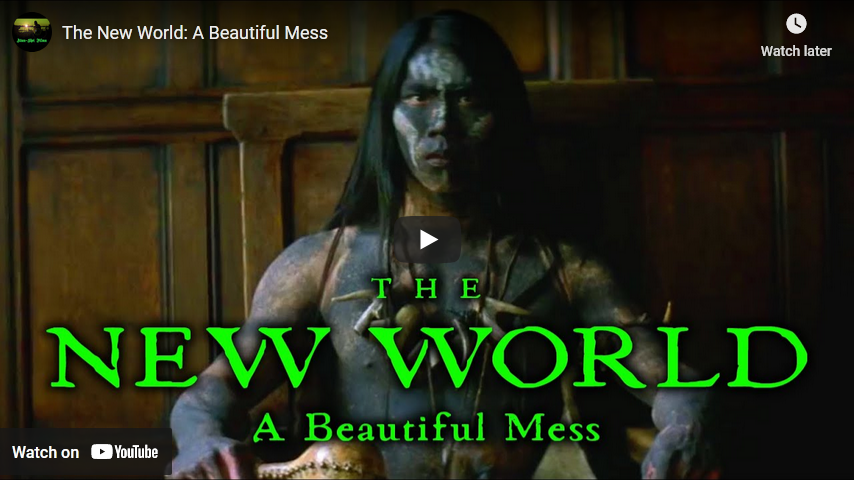
The New World: A Beautiful Mess

Filed under: Americas, Britain, History, Media — Tags: , , , , , — Nicholas @ 04:00

Atun-Shei Films
Published 3 Feb 2021

A review of the Terrence Malick film The New World, a lavish and beautifully shot historical epic that nonetheless falls short in a few important ways.

Support Atun-Shei Films on Patreon ► https://www.patreon.com/atunsheifilms​

Leave a Tip via Paypal ► https://www.paypal.me/atunsheifilms

Buy Merch ► teespring.com/stores/atun-shei-films​

#TerrenceMalick​ #Jamestown​ #Pocahontas​

Original Music by Dillon DeRosa ► http://dillonderosa.com/​
Reddit ► https://www.reddit.com/r/atunsheifilms​
Twitter ► https://twitter.com/atun_shei

January 27, 2021

Australia’s aboriginal people

Filed under: Australia, Books, Britain, History — Tags: , , — Nicholas @ 03:00

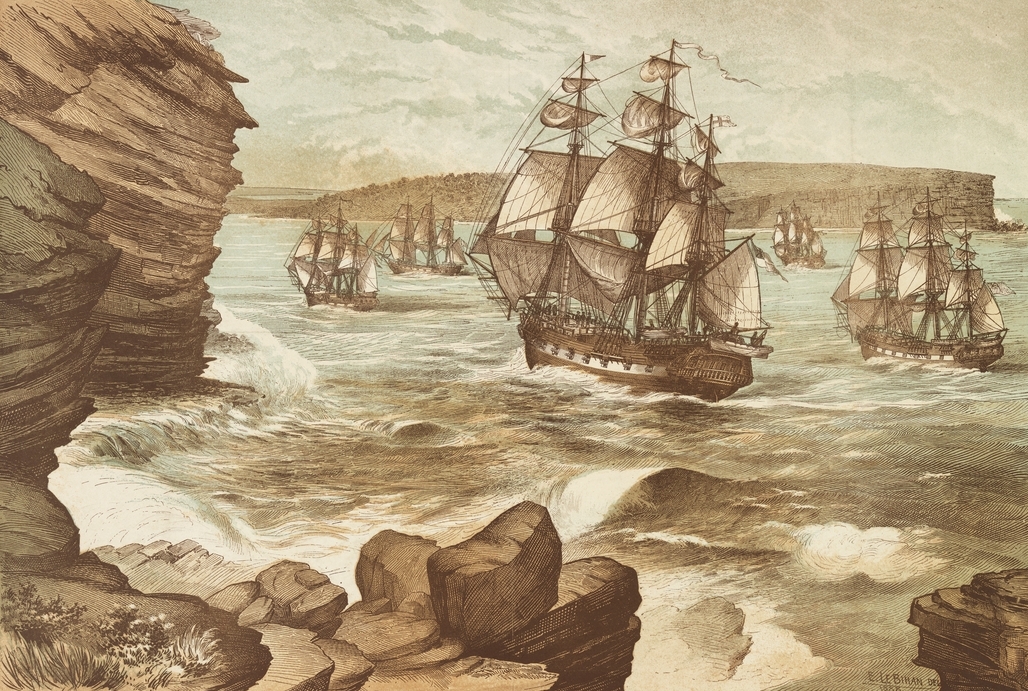
On Australia Day, which progressives want to rename as “Invasion Day”, a look at the aboriginal culture(s) who had inhabited the continent for thousands of years before contact with Europeans:

Colour lithograph of the First Fleet entering Port Jackson on January 26 1788, drawn in 1888.
Original by E. Le Bihan via Wikimedia Commons.

Liam Hemsworth and others are spruiking nonsense which is also being taught to school children as they protest against “invasion day”:

    We are spiritually and culturally connected to this country.
    This country was criss-crossed by generations of brilliant Nations.
    Aboriginal and Torres Strait Islander people were Australia’s first explorers, first navigators, first engineers, first farmers, first botanists, first scientists, first diplomats, first astronomers and first artists.
    Australia has the world’s oldest oral stories. The First Peoples engraved the world’s first maps, made the earliest paintings of ceremony and invented unique technologies. We built and engineered structures – structures on Earth – predating well-known sites such as the Egyptian Pyramids and Stonehenge.
    Our adaptation and intimate knowledge of Country enabled us to endure climate change, catastrophic droughts and rising sea levels.
    Always Was, Always Will Be. acknowledges that hundreds of Nations and our cultures covered this continent. All were managing the land – the biggest estate on earth – to sustainably provide for their future.

This statement is a work of poorly written fiction. All humans are descended from ancestors that roamed Africa. At some stage – perhaps 50,000 to 60,000 years ago according to archaeological records – some Homo Sapiens (so far as we know, Homo Erectus do not appear to have migrated to the land mass now know as Australia) moved to this continent during the Pleistocene (ice age) when sea levels were much lower allowing transit without seafaring. Later the ice age abated, ice melted and the Australian continent became separate and its inhabitants isolated.

In Jared Diamond’s book Guns, Germs and Steel – the Fates of Human Societies, he argues that circumstances (pressure on resources etc) lead to innovations and changes to society. On Australia he wrote:

    Australia is the sole continent where, in modern times, all native peoples still lived without any of the hallmarks of so-called civilization – without farming, herding, metal, bows and arrows, substantial buildings, settled villages, writing, chiefdoms or states. Instead Australian Aborigines were nomadic or semi-nomadic hunter-gatherers, organised into bands, living in temporary shelters or huts and still dependent on stone-tools. – (p. 297).

    Compared with Native Australians, New Guineans rate as culturally “advanced” … most New Guineans … were farmers and swineherds. They lived in settled villages and were organised politically into tribes rather than as bands. All New Guineans had bows and arrows, and many used pottery. – (p. 297-8).

    While New Guinea … developed both animal husbandry and agriculture, … Australia … developed neither. – (p. 308).

Isolated from other populations, and lacking little in the way of resources, Australia’s first inhabitants were not pressured into changing their ways of life and remained essentially hunter gatherers and nomadic societies. I make no judgement on whether this is good or bad, merely that despite the lack of competition over resources, life wasn’t always rosy and violence and skirmishes, murder and rape occurred as much among those humans as it did elsewhere.

It was inevitable that this isolation would not persist – it is perhaps surprising that it persisted as long as it did. But contact with other humans was inevitable and the outcome of that contact would be widely varying depending on whether the contact was made by the Portuguese, Spanish, Dutch, Chinese, British or others. The fact that Australia became a British colony is probably the best of the many alternatives that could have sprung from colonialisation. And we are all affected, mostly positively, by that contact – there would be few Aboriginal Australians (perhaps none) who today could say that they have no ancestry at all from settlers who arrived after 1787. We are all of mixed blood and we all descend from those original Homo Sapiens who evolved in Africa. It is time to talk about unity rather than division.

December 31, 2020

QotD: The “noble savage” belief system

… the whole weeks-long saga, which featured urban protestors appearing alongside their Indigenous counterparts at road and rail barricades throughout Canada, tapped into a strongly held noble-savage belief system within progressive circles. Various formulations of this mythology have become encoded in public land acknowledgments, college courses, and even journalism. The overall theme is that Indigenous peoples traditionally lived their lives in harmony with the land and its creatures, and so their land-use demands transcend the realm of politics, and represent quasi-oracular revealed truths. As has been pointed out by others, this mythology now has a severe, and likely negative, distorting effect on public policy, one that hurts Indigenous peoples themselves. In recent years, Indigenous groups have finally gotten a fair cut of the proceeds of industrial-development and commodity-extraction revenues originating on their lands. And increasingly, they are telling white policy makers to stop listening to those activists who seek to portray them as perpetual children of the forest. It is for their benefit, as much as anyone else’s, to explore the truth about the myth of harmonious Indigenous conservationism.

***

When the ancestors of North America’s Indigenous peoples entered the New World some 16,000 years ago via Siberia, they hunted many of the mammals, reptiles, and birds, from the Arctic down to Tierra del Fuego. Mammoths, mastodons, and enormous ground-dwelling sloths, as well as giant bears, giant tortoises, and enormous teratorn birds with 16-foot wingspans — animals that had never had a chance to evolve in the presence of humans — were among the many species that disappeared from the Americas. Some medium-sized animals — such as horse, peccary, and antelope species — were also wiped out. But others survived: Bison and deer species, tree sloths, tapirs, jaguars, bear species, alligators, and big birds such as rheas and condors are, at least for the time being, still with us. The existence of these survivors, along with the relatively unspoiled forests, grasslands, and rivers seen by the first Europeans to enter the Americas, served to support the illusion that America’s first peoples had been maintaining what popular environmentalist David Suzuki calls a “sacred balance” with the natural world. Throughout history, however, humans killed animals that were tasty, numerous, and huntable. For kin-groups, staying alive meant making life-and-death cost-benefit calculations about where to send your berry-pickers and hunters. “Sacredness” had nothing to do with it.

This is not to say that the Indigenous peoples who migrated from Asia to the Americas were especially bloodthirsty (though Europeans typically reported that their hunting and fishing skills were excellent). In every known case where humans entered continents formerly uninhabited by our species, the bigger animals tended to disappear, since they provided the most sustenance per kill. The first humans to enter Australia some 70,000 years ago wiped out giant kangaroo species, rhino-sized marsupial herbivores, jaguar-sized marsupial carnivores, big flightless birds, and many other megafauna. The same thing would happen in Europe: After sapiens completed its occupation of that sub-continent some 30,000 years ago, the mammoths, woolly rhinos, giant deer, and lions they recorded in their cave paintings and carvings also disappeared.

Baz Edmeades, “The Myth of Harmonious Indigenous Conservationism”, Quillette, 2020-09-06.

December 2, 2020

Bill C-10, An Act to amend the Broadcasting Act hijack the internet

Filed under: Bureaucracy, Cancon, Media, Technology — Tags: , , , , — Nicholas @ 03:00

At The Line, Josh Dehass outlines the benign-sounding claimed intent of Bill C-10 and the malign reality if it is implemented as written:

Bill C-10 would expand the term “broadcasters” to include online content creators. This means that after decades of a mostly regulation-free Internet, the CRTC will soon have a say in what content you can and can’t see on services like Netflix, Amazon Video and Spotify. The bill says these “broadcasters” will be required to “serve the needs and interests of all Canadians — including Canadians from racialized communities and Canadians of diverse ethnocultural backgrounds, socio-economic statuses, abilities and disabilities, sexual orientations, gender identities and expressions, and ages — and reflect their circumstances and aspirations, including equal rights, the linguistic duality and multicultural and multiracial nature of Canadian society and the special place of Indigenous peoples within that society.”

In the Globe and Mail Guilbeault helpfully translated from Newspeak: broadcasters now must create “Indigenous programming,” and possibly other forms of mandatory content by and for minority groups. Guilbeault said that the mandatory Indigenous programs are necessary to correct the “historical mistake” that Canada made when it denied Indigenous people their cultural expression. That historical mistake apparently cannot corrected solely by forcing Canadians to fund APTN and non-stop Indigenous content at CBC. Only when every private company is co-opted in the mission will the mistake be corrected.

It’s bad enough that this new law will require Canadians to pay for shows and podcasts that they’re unlikely watch. What’s really disturbing is that this new law means any large company that wants to produce artistic and cultural content online in Canada will no longer be permitted to devote their time and money exclusively to expressing the ideas that they wish [to] express. Instead, they will be forced to also express the ideas the government wishes them to express. This is compelled speech, which is the term lawyers use when the government forces you to mouth its message. This is contrary the spirit of free expression rights that the Charter of Rights and Freedoms guarantees.

The new policy might strike you as old-fashioned broadcast regulation. It isn’t. The theory behind the original Broadcast Act was that the airwaves were a finite resource, requiring the government to act as referee. Otherwise, we could end up consuming nothing but low-brow American cultural products rather than high-brow CanCon like Family Feud Canada and Hedley. This was an elitist argument, since it assumed that individual consumers weren’t capable of determining what content is in their own interests, but at least it made a little sense, because it was theoretically possible for important programming like news to get completely crowded out. The Internet, on the other hand, is effectively infinite. There’s room for everyone’s content in the online marketplace of ideas. So far, it’s worked wonderfully. Virtual nobodies can find huge audiences without big money to get started. There’s really no reason for the government to interfere.

November 27, 2020

Is clean water too much to ask for in a first world nation?

Ted Campbell explains how he would resolve the TWENTY-FIVE YEAR OLD PROBLEM in the Neskantaga First Nation in northern Ontario, which is one of the many First Nation public health issues the federal government has been promising to address for years:

A few weeks ago I was horrified to read about the 25 year long water problems that continue to plague the Neskantaga First Nation in North-Western Ontario ~ yes you read that right: it’s been 25 years since these Canadians have had clean, potable water! I begged the government to Do Something! and I offered one concrete idea based upon by near certain knowledge of what the Canadian Armed Forces can and have done for people overseas. One of my readers, a retired colonel in our Military Engineering branch confirmed that what I suggested was doable.

Now I read, in a report by Campbell Clark in the Globe and Mail, that the main problems are a combination of political over-promising and bureaucratic ineptitude. I am going to blame Justin Trudeau for pretty much all of the political over-promising: he made it a centrepiece of his 2015 election campaign and then totally failed to follow through. He has to wear at least a large part of the bureaucratic ineptitude, too, because he’s been prime minister of Canada for over five years. He’s failed, again.
OK, I can hear you saying: if you’re so smart how would you fix things?

For a start I would stick with the outlines of my earlier proposal: I would ask the Army to help, right now, using existing technology. We would declare this a disaster ~ and if Canadians going without clean water for 25 years doesn’t qualify as a disaster then I don’t know what does ~ and send the Canadian Armed Forces’ Disaster Assistance Response Team (the DART) to the Neskantaga First Nation and tell them to fix whatever needs fixing ~ using the Indigenous Services department’s budget. When they finished there we would buy them a new water purification system and send them the next First Nation that has a water disaster on its hands. People overseas will have to wait or we’ll have to build a second DART.

Next I would ask the Army and the Canadian manufacturers of water purification systems to work together with First Nations corporations, like Matawa First Nations Management, to develop (at the Indigenous Services department’s expense) concrete, workable plans to install, operate and maintain, over their complete life-cycle, water purification and waste disposal systems and the electrical power and the power and water distribution systems necessary to support them.

After this long, it may not be that the government can’t deliver these services, it might be that the government has deliberately chosen not to deliver.

November 12, 2020

The history of Canada explained in 10 minutes

Epimetheus
Published 19 Jan 2019

The history of Canada explained in 10 minutes

Support new videos on this channel on Patreon! 🙂
https://www.patreon.com/Epimetheus1776

Canadian history from the discovery of the Vikings to the French and English colonization until modern times.

Tags:
Canadian history documentary, Canadian history crash course, Canada history, history of Canada documentary, history Canada summarized, Canada, history, Canadian history, Canadian American history, animated history of Canada, canadian history in a nutshell, canadian history for kids, educational, Canada Indians, Canada great Britain, English Canada, Quebec, French Canada, French English Canada,

October 21, 2020

“[A]ll white people are racists … because they participate in a system that secures their own structural advantages”

Filed under: Cancon, Politics, USA — Tags: , , , , — Nicholas @ 05:00

In The Line, Meaghie Champion commits some sort of thought crime by quoting Martin Luther King’s famous words (which I have been assured more than once are now “forbidden” to non-POC speakers because reasons):

President Lyndon B. Johnson meets with Martin Luther King, Jr. in the White House Cabinet Room, 18 March 1966.
Photo by Yoichi Okamoto via Wikimedia Commons.

Most of us have been committed to the ideals of anti-racism since Martin Luther King famously delivered his “I Have a Dream Speech.” This was a masterclass of persuasion and rhetoric; one that convinced generations to re-frame their positions on racial inequity.

King said that he hoped that one day his children would grow up to be judged, not by the colour of their skin, but by the content of their character. That’s the ethos [BC NDP leader John] Horgan channelled when he said: “I don’t pay attention to skin colour or ethnicity.”

But this is not good enough for those who promote Critical Race Theory, an emerging ideology that tips these values on their head. CRT presupposes that the world is dominated by white supremacists. Further, that all white people are racists — regardless of their individual actions — simply because they participate in a system that secures their own structural advantages. CRT redefines what “racism” has traditionally meant: bigotry or discrimination based on skin colour.

Under this new ethos, only white people are capable of racism, because racism is systemic and works towards keeping all power vested in the hands of the white supremacists. I’m simplifying this, of course, because CRT is a rabbit hole best tackled by people with a lot more patience than me. One of the laziest rebuttals that CRT’s adherents use to deflect criticism is that its critics simply don’t understand it well enough, and therefore need to spend endless hours of their lives “doing the work,” integrating key academic texts, and absorbing their meaning until they fully accept the unerring truth of the ideology. If this tactic sounds indistinguishable from a deeply manipulative religious movement, well …

I’m a “person of colour” and I have spent my whole life trying to be anti-racist. I agree with the idea that there are systemic problems involving racism in many institutions within society. Some of those systemic problems are destroying Indigenous nations, including my own. Where I disagree with the Critical Race Theory crowd is in their depiction of everyone who is not a person of colour as being inherently racist. I don’t agree with their solutions for solving the racism problems we have to confront as a society. I don’t believe that they are the only ones working against racism, or coming up with viable strategies for how to do so. We can have differing views about racism and how to combat it; failing to adhere to one single philosophy, or parrot a specific set of terminology, does not mean a person is racist.

Horgan has worked for decades to do what he thought best for all the people. He’s been on our side in the struggle against racism all his life. The fact that he wasn’t up-to-date on the latest acceptable phrases to speak on the matter doesn’t negate that.

October 15, 2020

DicKtionary – L is for Lawman – Tom Horn

Filed under: History, Law, USA — Tags: , , , , — Nicholas @ 04:00

TimeGhost History
Published 14 Oct 2020

Morally ambiguous guns for hire are a fantasy of old Western films, right? Well not in the case of Tom Horn! A lawman, a cowboy, a soldier, and ultimately: a dick.

Join us on Patreon: https://www.patreon.com/TimeGhostHistory

Written and Hosted by Indy Neidell
Director: Astrid Deinhard
Producers: Astrid Deinhard and Spartacus Olsson
Executive Producers: Astrid Deinhard, Indy Neidell, Spartacus Olsson, Bodo Rittenauer
Creative Producer: Joram Appel
Post-Production Director: Wieke Kapteijns
Research by: Indy Neidell
Image Research by: Karolina Dołęga
Edited by: Karolina Dołęga
Sound design: Marek Kamiński

Sources:
– Pictures of Tom Horn courtesy of Wyoming State Archives Photo Collection
– Library of Congress
– National Archives NARA
– Picture of Valley RoadArizona courtesy ofThe Old Pueblo from Wikimedia
– Icons from The Noun Project: Child by Gan Khoon Lay, Cow by Alena Artemova, Cowboys by Simon Child, cowboy avatar by Silviu Ojog, Cowboy by Gan Khoon Lay, cowboy man Adrien Coquet, cowboy by Luis Prado, Cowboy Shoot by Gan Khoon Lay, Cowboy Shooting by Gan Khoon Lay, duel by Gan Khoon Lay, Dead Soldier by Gan Khoon Lay & Joab Penalva, Shootout by Gan Khoon Lay, Sheep by Pariphat Sinma.

Music:
– “Ghosts of the Rail” – Gabriel Lewis
– “Miss Dynamite” – Walt Adams
– “Gone Surfing (Sting)” – Stefan Netsman
– “Run Dry River” – River Run Dry

Archive by Screenocean/Reuters https://www.screenocean.com.

A TimeGhost chronological documentary produced by OnLion Entertainment GmbH.

October 10, 2020

When Vikings Met Native Americans: The Voyage of Thorvald Erikson

Filed under: Americas, Cancon, History — Tags: , , , , , , — Nicholas @ 04:00

Atun-Shei Films
Published 9 Oct 2020

Happy Leif Erikson Day! After Leif’s discovery of unknown lands to the west of Greenland, his brother Thorvald set off on an expedition of his own. Thorvald’s voyage, as related in the medieval Icelandic text The Saga of the Greenlanders, marks the first time in recorded history that Europeans came face-to-face with Native Americans. In this video, I regale you with this tale of adventure, exploration, and cultural collision. And for some reason, I spend about a third of the video talking about a bowl, a coin, and some yarn made of goat hair.

Support Atun-Shei Films on Patreon ► https://www.patreon.com/atunsheifilms

Leave a Tip via Paypal ► https://www.paypal.me/atunsheifilms (All donations made here will go toward the production of The Sudbury Devil, our historical feature film)

Buy Merch ► teespring.com/stores/atun-shei-films

#LeifErikson #Vinland #History

Original Music by Dillon DeRosa ► http://dillonderosa.com/
Reddit ► https://www.reddit.com/r/atunsheifilms
Twitter ► https://twitter.com/atun_shei

~REFERENCES~

[1] Magnus Magnusson & Hermann Pálsson. The Vinland Sagas: The Norse Discovery of America (1965). Penguin Books, Page 59-61

[2] Sîan Grønlie. The Book of the Icelanders / The Story of the Conversion (2006). Viking Society for Northern Research, Page 4

[3] Ingeborg Marshall. “Beothuk Transportation” (1998). Heritage Newfoundland and Labrador https://www.heritage.nf.ca/articles/a…

[4] Patricia Sutherland. Dorset-Norse Interactions in the Canadian Arctic (2000). Canadian Museum of Civilization, Page 2-9

October 7, 2020

The Great Swamp Fight: The Bloodiest Day of King Philip’s War

Filed under: Britain, History, Military, USA — Tags: , , , , — Nicholas @ 04:00

Atun-Shei Films
Published 6 Oct 2020

In December 1675, in the midst of King Philip’s War, an army of Puritan colonists made a preemptive strike against the neutral Narragansett tribe. Their desperate battle in the snowy wilderness of Rhode Island became a touchstone in the cultural lore of Anglo New England, while the subsequent massacre would go down as the darkest, most tragic event in Narragansett history.

Support Atun-Shei Films on Patreon ► https://www.patreon.com/atunsheifilms

Leave a Tip via Paypal ► https://www.paypal.me/atunsheifilms (All donations made here will go toward the production of The Sudbury Devil, our historical feature film)

Buy Merch ► teespring.com/stores/atun-shei-films

#KingPhilipsWar #NewEngland #AmericanHistory

Original Music by Dillon DeRosa ► http://dillonderosa.com/
Reddit ► https://www.reddit.com/r/atunsheifilms
Twitter ► https://twitter.com/atun_shei

~REFERENCES~

[1] Eric Schultz and Michael Tougias. King Philip’s War: The History and Legacy of America’s Forgotten Conflict (1999). The Countryman Press, Page 269

[2] Douglas Leach. Flintlock and Tomahawk: New England in King Philip’s War (1958). Parnassus Imprints, Page 58-62

[3] Leach, Page 112-117

[4] Schultz & Tougias, Page 246-247

[5] Schultz & Tougias, Page 247-255

[6] Leach, Page 127-129

[7] Schultz & Tougias, Page 259

[8] Leach, Page 129

[9] Leach, Page 148-149

[10] Joseph Dudley. Second Letter of Joseph Dudley (2001). Bigelow Society http://bigelowsociety.com/rod/battles…

[11] Schultz & Tougias, Page 260-261

[12] Leach, Page 130-131

[13] Benjamin Church. Entertaining Passages Relating to King Philip’s War, Tercentenary Edition (1975). Pequot Press, Page 95-102

[14] Schultz & Tougias, Page 264-265

[15] Leach, Page 131

[16] Church, Page 101

[17] “History – Perseverance.” Narragansett Indian Nation http://narragansettindiannation.org/h…

October 3, 2020

History Summarized: Hawai’i

Overly Sarcastic Productions
Published 2 Oct 2020

To learn more about the Native Hawaiian community and their culture, visit: https://www.hawaiiancouncil.org/about

This year, to celebrate Indigenous People’s Day, we’re taking a look at the history of Hawai’i, from its early history in the Polynesian maritime culture to its forming a Kingdom to its annexation by the United States. Beyond simply a special case in the story of American expansion, Hawai’i has a deep history that deserves to be better known.

SOURCES & Further Reading: Great Courses Lecture “Lifeways of Australia and the Pacific” by Craig Benjamin, Britannica Hawai’i, “The Navigators: Pathfinders of the Pacific” By Low & Estus, Lonely Planet Hawai’i History, and lots of discussion with a native Islander (see discord section below).

This video was edited by Sophia Ricciardi AKA “Indigo”. https://www.sophiakricci.com/

Our content is intended for teenage audiences and up.

DISCORD: https://discord.gg/kguuvvq — Come to the #New-Video-Discussion channel to chat about this video, and ask questions about Hawai’i to my friend Lady Eris#9175, a native Islander!

PATREON: https://www.Patreon.com/OSP

MERCH LINKS: http://rdbl.co/osp

OUR WEBSITE: https://www.OverlySarcasticProductions.com
Find us on Twitter https://www.Twitter.com/OSPYouTube
Find us on Reddit https://www.Reddit.com/r/OSP/

October 2, 2020

The “Catch-22” in RBG’s majority opinion in City of Sherrill V. Oneida Indian Nation of N.Y.

Filed under: Government, History, Law, USA — Tags: , , , — Nicholas @ 03:00

In The Line, Meaghie Champion outlines the awkward position the Oneida First Nation found itself in after their case made it to the US Supreme Court:

Panorama of the west facade of United States Supreme Court Building at dusk in Washington, D.C., 10 October, 2011.
Photo by Joe Ravi via Wikimedia Commons.

In 2005, in the case of the City of Sherrill V. Oneida Indian Nation of N.Y., the U.S. Supreme Court ruled against the Oneidas, after the nation had attempted to assert sovereignty in traditional land they had to re-purchase after it had been illegally acquired.

Writing the majority position was the late liberal figurehead now being lionized in U.S. media — Ruth Bader Ginsburg.

Granted, she fought for women’s rights and accomplished a lot. She was a law school professor and a judge. She was one of the leaders of the American Civil Liberties Union. She was the second woman to ever serve on the United States Supreme Court. She was influential in a lot of cases on the Supreme Court, including a labour law case that inspired a law to be passed, and an environmental case that set new standards for who could be heard in court on environmental issues. Since her recent death, the news coverage has been singing her praises like hagiography.

But study history and you will find lots of villains, and no saints. Many First Nations people in North America look on Ginsburg’s reification with a much more skeptical eye.

Meanwhile, the sovereignty of many Indigenous nations in B.C. has never been extinguished. Many First Nations here are being corralled into signing treaties that give up lands, rights and sovereignty. They may look to the Oneida as a cautionary tale. When it comes to sovereignty, you must use it or lose it. Don’t look to courts to give it back later. Not even when you have a social justice saint for a judge.

Ginsburg ruled that Indian land in central New York acquired in violation of U.S. federal law, a treaty, and the U.S. Constitution, could not be reintegrated into the ancestral lands of the Oneida Indian Nation — that the Oneidas would be required to pay property taxes to the local government of the City of Sherill. That is, unless the Oneidas sacrificed that land and allowed the federal government to administer it as a trust.

Justice Ginsburg wrote that 200 years had passed since the initial illegal acquisition, the land had passed hands between jurisdictions multiple times over the period, and that the Oneida had just waited too long. (Even though the U.S. Supreme Court acknowledged in 2005 that there was no specific time limit on this kind of case.) She claimed in her opinion that it would just be “unfair” to the non-natives in this case. If the Oneida had sued in court sooner, then it would have been different.

In the long and fraught web of relationships between First Nations and the United States government, it’s hard to pick a time before the late 20th century or early 21st where a First Nations case might be given full and fair hearing by any federal court, which shows Ginsburg’s opinion to be … lacking in historical sensitivity.

September 13, 2020

“Systemic racism” in Canada

Filed under: Cancon, Government, Politics — Tags: , , , — Nicholas @ 03:00

At The Line, a useful examination of what is meant in the Canadian context by the term “systemic racism”:

Can we go back one step? “Systemic racism.” Let’s start there: which system? The legal system? Our social welfare system? The policing system? The media? Our corporations? All of human society? Are we talking about Canadian society, or North American society as whole? Are there geographic limits to the systems we’re talking about? Is China systemically racist?

Let’s break this down further: what definition of “racism” are we using? Are we using the old definition whereby any bigotry based on skin colour is “racist”? Or are we engaging the new definition, where “racism” is an expression of structural power — and, therefore, only white people can be racist because only they hold structural power?

It’s impossible to fix a problem if we can’t come to a common understanding about plain meanings of the terms we are using. Vague in, vague out.

There are many statements of “systemic racism” that we, at The Line, would have no qualms agreeing with, i.e.; “The Indian Act is a clear example of systemic racism in Canadian law.” That isn’t a controversial position — but it also isn’t an unclear one. Asserting a belief in “systemic racism” sounds like a broadly agreeable thing to do, but the term is loaded with meaning and ideological baggage that is not immediately apparent.

Take, for example, a claim that Canadian society is systemically racist because it is structured at all levels to favour white dominance — and that any disparity of outcome between racial groups is proof of that fact. Well, that’s a much more all-encompassing ideological position, isn’t it? There’s a perfectly legitimate framework for critique in here, but there’s also a lot to unpack.

It’s easy to find legitimate examples of systemic racism while leaving the actual meaning and implications of the term both vague and tautological. But if we’re going to use statement of belief in “systemic racism” as some kind of litmus test for political acceptability, the clear meaning of the term matters.

In the absence of that clarity, using it as a gotcha question and backing people in public life into reciting this stuff as if it were some kind of statement of faith comes off as not a little creepy.

September 7, 2020

Who Was Leif Erikson?

Atun-Shei Films
Published 9 Oct 2019

Happy Leif Erikson Day! Allow me to regale you with the saga of the daring Viking who sailed to North America five hundred years before Columbus (that hack) and called it Vinland. We all know his name and his famous deeds – but what sort of man was Leif Erikson?

Support Atun-Shei Films on Patreon ► https://www.patreon.com/atunsheifilms

#LeifErikson #Viking #History

Watch our film ALIEN, BABY! free with Prime ► http://a.co/d/3QjqOWv
Reddit ► https://www.reddit.com/r/atunsheifilms
Twitter ► https://twitter.com/alienbabymovie
Instagram ► https://www.instagram.com/atunsheifilms
Merch ► https://atun-sheifilms.bandcamp.com

« Newer PostsOlder Posts »

Powered by WordPress