Quotulatiousness

September 1, 2020

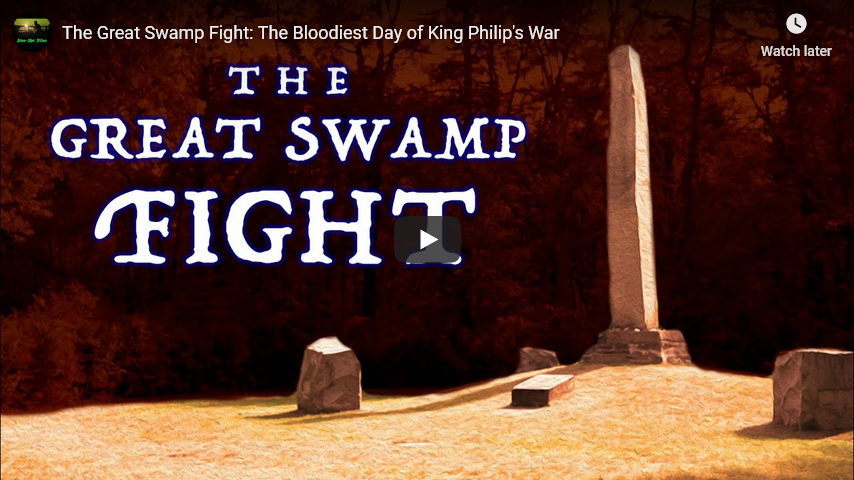
King Philip’s War: The Most Important American War You’ve Never Heard Of

[Update, 29 Dec 2022 – Andy has uploaded a new video to correct some of the errors he made in this presentation.]

Atun-Shei Films
Published 9 Jan 2019

A generation after the first Thanksgiving, the sachem of the Wampanoag led a coalition of Native American tribes to battle against the ever-encroaching European colonists of New England.
(more…)

August 18, 2020

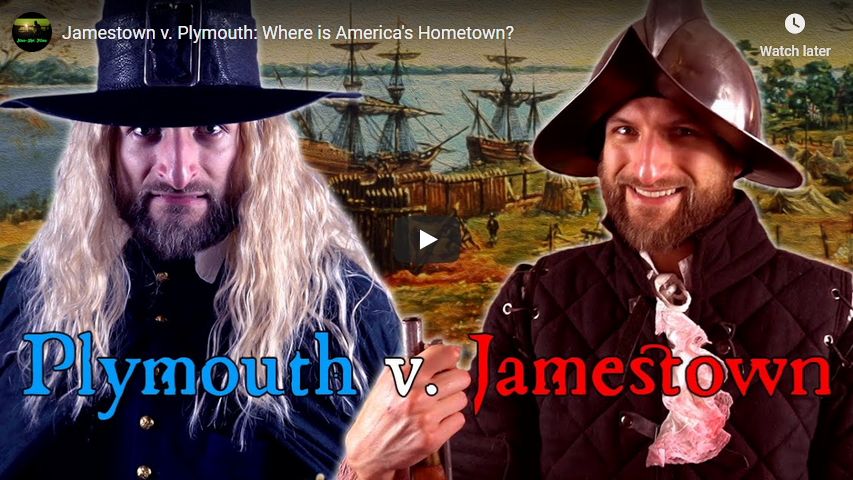
Jamestown v. Plymouth: Where is America’s Hometown?

Atun-Shei Films
Published 11 Feb 2020

With the help of the Witchfinder General, I examine the historical mythology surrounding Jamestown and Plymouth, the first two permanent English colonies in the continental United States. Can we confidently point to the founding of these two settlements as the origin of American identity and culture? No, thou knave!

Support Atun-Shei Films on Patreon ► https://www.patreon.com/atunsheifilms

#Jamestown #Plymouth #AmericanHistory

Watch our film ALIEN, BABY! free with Prime ► http://a.co/d/3QjqOWv
Reddit ► https://www.reddit.com/r/atunsheifilms
Twitter ► https://twitter.com/alienbabymovie
Instagram ► https://www.instagram.com/atunsheifilms
Merch ► https://atun-sheifilms.bandcamp.com

August 12, 2020

Defending Sir John A.

In his latest post for The Dominion, Ben Woodfinden attempt to defend that horrible racist, sexist, homophobe, transphobe, non-intersectional, dead, white, cis-gendered male monster, Sir John A. Macdonald:

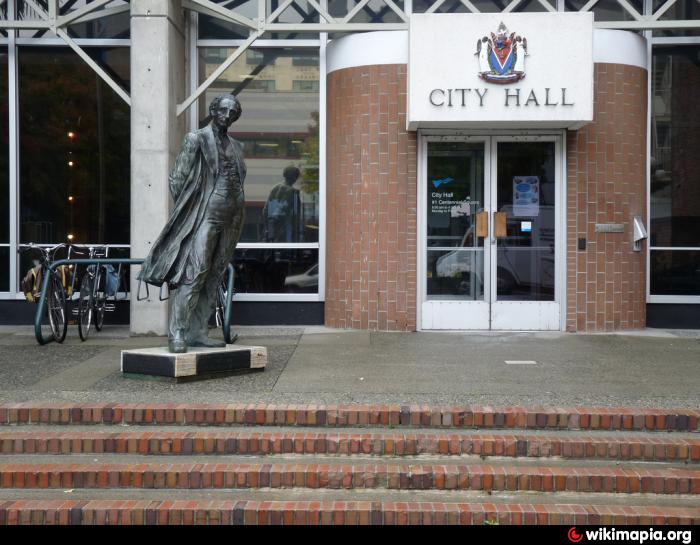
Statue of Sir John A. Macdonald that formerly stood in front of City Hall in Victoria, British Columbia.
Wikimedia Commons.

The way you’re supposed to begin a piece like this is with a sort of penitential act. I should begin a discussion of Sir John A. Macdonald with a confession of his various sins and crimes, before offering an apology, and a reluctant defence of our first prime minister that essentially boils down to “history matters,” without actually explaining what that history is or why it matters.

If you do this you’ve already lost the historical fight, because you’ve willingly ceded the narrative to Macdonald’s detractors, and fallen back to a defence of history in some abstract sense, instead of a defence of Macdonald himself. This kind of Girondin impulse is far too common amongst many liberals and conservatives now, especially in elites institutions and fields like journalism and academia.

[…]

No one, including me, claims that Macdonald was a saint, and Canada’s treatment of Indigenous people and migrants in the early days of Confederation was racist, and wrong. I doubt any serious person would deny this. But even on these questions, Macdonald’s record is complex. Tristin Hopper, wrote an excellent and accessible piece in the National Post simultaneously laying out both the bad things Macdonald was responsible for, and also Macdonald’s paradoxically ahead of his times views on Indigenous voting rights, and recognition of the terrible plight of Indigenous peoples.

But this is only part of the story of Macdonald, and the crucial role he played in our history. Too often this is all that gets discussed, ceding the narrative to Macdonald’s detractors and dooming him to inevitable damnatio memoriae. This is why, in the name of defending our history, we cannot simply defend capital H History, we have to defend the substance of our actual history.

Macdonald’s central role as the key architect of Confederation, and our country, is not well known because Canadian history, especially the history that led to confederation, is not well known by Canadians. It’s a national embarrassment, and in this vacuum it is easy to build incomplete and partial narratives about what Canada is and what Canada means.

Macdonald is best described as “the indispensable politician.” Confederation was not inevitable, it took adept figures like Macdonald to make it happen. Macdonald was not an ideologue, and his political career was defined by his masterful ability to forge coalitions and working compromises between seemingly intractable groups. He was an important political figure in the United Province of Canada (the union of Upper and Lower Canada), and proved adept at balancing and forging coalitions with the warring and disparate factions from Upper and Lower Canada forced into an uncomfortable union. He resisted, but worked and ultimately partnered with uncompromising reformers in the province like George Brown, while ultimately laying the groundworks for constitutional reform that Brown, though principled, could almost certainly never have achieved.

July 23, 2020

Edmonton’s CFL team will abandon the “Eskimos” nickname that’s been in use for over 100 years

Filed under: Cancon, Football, History, Politics — Tags: , , , — Nicholas @ 03:00

Anything that happens in the United States tends to also happen later in Canada. The Washington NFL franchise has abandoned their “Redskins” nickname (although to many the “Washington” part is at least as offensive) but have not yet announced their new moniker. Edmonton is in the same situation, with no new name yet decided upon:

“Edmonton eskimos wordmark” by Pabstheiniker is licensed under CC BY-SA 4.0

I said an anticipatory farewell to the name of the Edmonton Eskimos football club in this space in 2017; on Tuesday the team’s front office executed the sentence, announcing that the team’s nickname, in use for Edmonton sports clubs for over 110 years, will be retired. (Note that the Canadian Football League is only 62 years old.)

But there is always some kind of minor surprise on the scaffold, and in this case it was that the team has not yet decided on a new name. This, I see, is where I made a mistake back in 2017.

I saw that getting rid of “Eskimos” was a relatively simple problem with an affordable cost that would have to be paid eventually. In the event, the final push was supplied, unsurprisingly, by corporate sponsors — themselves all in a state of vulnerability and panic in conditions of pandemic disease. The CFL team had played public-relations defence whenever the issue was raised aggressively before; they were, self-evidently, playing for time.

I noted in 2017 that the same P.R. apparatus was obviously trying to propagate “Empire” as an alternative by-word for the team, and it filed a trademark application for “Edmonton Empire” in 2018. The team can start selling new green-and-gold gear to fans as soon as it settles on something, and a new nickname beginning with “E” would preserve the team’s stylish double-E logo. “Empire” might even work well with the team colours if “gold” were interpreted more literally in the uniform, rather than serving as sales talk for “yellow.”

[…]

Speaking as an Edmonton-born fan of Edmonton Ellipsoidal Ball Sport Sodality, I see now that I may have prepared adequately for the end of the Eskimos, but my heart didn’t anticipate the dual nature of this decision any more than my brain did. I know — hell, my friends and my readers know — that I will dislike whatever they pick. Contests and polls of the public produce embarrassments like “The Toronto Raptors,” so the mere thought of any such exercise plunges me into despond.

July 13, 2020

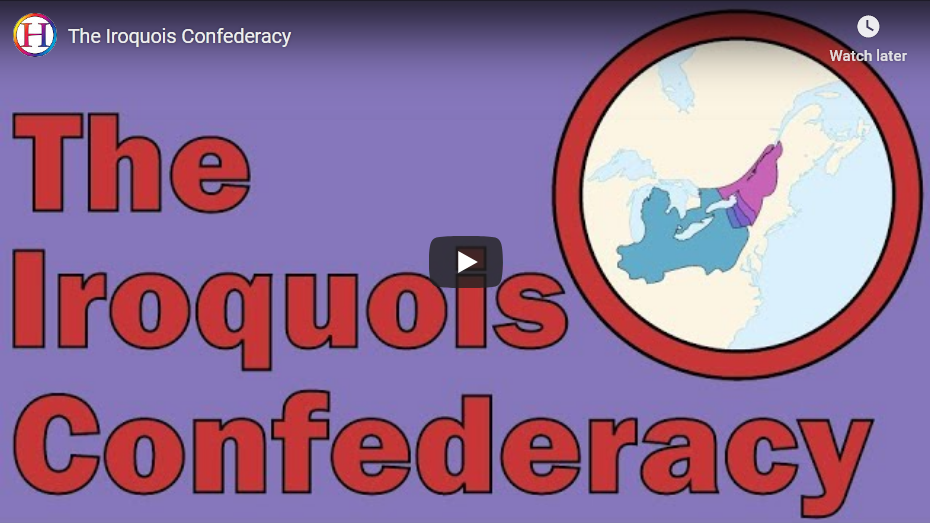
The Iroquois Confederacy

Filed under: Cancon, Government, History, USA — Tags: , , , , — Nicholas @ 02:00

Historia Civilis
Published 20 Jun 2018

Patreon | http://patreon.com/HistoriaCivilis
Donate | http://www.paypal.com/cgi-bin/webscr?…
Merch | http://teespring.com/stores/historiac…
Twitter | http://twitter.com/HistoriaCivilis
Website | http://historiacivilis.com

Sources:
“Discourse Delivered Before the New-York Historical Society: At Their Anniversary meeting, 6th December, 1811,” by DeWitt Clinton: https://amzn.to/2JJZ7eB
The Great Law and the Longhouse: A Political History of the Iroquois Confederacy, by William N. Fenton: https://amzn.to/2JKVTYo
League of the Hodenosaunee or Iroquois, by Lewis H. Morgan: https://amzn.to/2MzRfue
Forgotten Founders, by Bruce E. Johansen: https://amzn.to/2Mz8VGf
French-Iroquois Diplomatic and Military Relations 1609-1701, by Robert A. Goldstein: https://amzn.to/2JLjfxd

Music:
“Deluge,” by Cellophane Sam
“Hallon,” by Christian Bjoerklund

We are a participant in the Amazon Services LLC Associates Program, an affiliate advertising program designed to provide a means for us to earn fees by linking to Amazon.com and affiliated sites.

July 11, 2020

Truncating the state of Oklahoma

Filed under: Government, History, Law, USA — Tags: , , , , — Nicholas @ 03:00

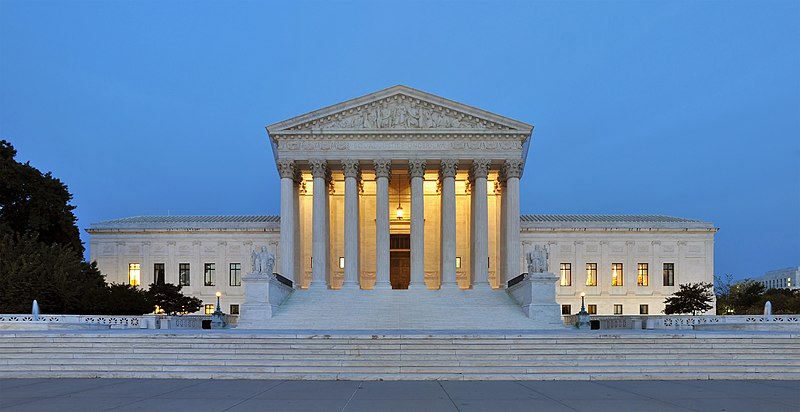
Colby Cosh on what might turn out to be the most important US Supreme Court decision in recent history:

A map of Oklahoma from the mid-1880s showing county boundaries and the tribal areas of Indian Territory.
Encyclopedia Britannica, 9th edition, 1888 via Wikimedia Commons.

On Thursday the court published its judgment in the case of McGirt v. Oklahoma [PDF]. McGirt is Jimcy McGirt, a man convicted in state court in 1997 of heinous sex crimes against a four year old. A creative public defender had tried to argue for years in lower courts that, as McGirt was a member of the Seminole Nation and his crimes had occurred on territory set aside in the 19th century for Creek Indians, he was never subject to state prosecution.

He should have been tried, the argument ran, under the federal Major Crimes Act of 1885, which specifies that accusations of serious felonies against Indians in “Indian country” go immediately to federal court. Under an 1856 treaty between the U.S. and the Creeks, the Creek lands were to be a “permanent home” for the displaced nation for as long as it existed (at a time when Aboriginal-Americans were still widely expected to diminish and disappear as a race).

The formalized concept of an Indian reservation did not yet exist, but the theory, then and now, is that some Aboriginal nations have direct relationships, albeit ones of “dependence,” with the federal government. Sometimes it is said that the U.S. is the “suzerain,” the overlord, of otherwise sovereign Indian nations. The Creeks, and the other four “Civilized Tribes” who had been forced into the “Indian Territory” that once covered the eastern part of future Oklahoma, were given strong written promises that they would be held apart from the U.S. states proper and would have jurisdiction over crimes and civil matters on their lands. Only the United States Congress, as a power contracting with sovereign nations, could act to encroach upon this jurisdiction.

In a fashion familiar to anyone who has read even a shred of the history of the American Indian, these promises just kind of got … misplaced. In the early 20th century the Oklahoma tribes were encouraged by Congress to abandon communal property holding and take up individual “allotments” of Indian-held land. This ought not to have changed the underlying nation-to-nation relationship, any more than assigning homesteading parcels to settlers busted up or negated the ultimate sovereignty of the U.S. elsewhere in the American West. But that constitutional framework was more easily ignored once a contiguous bundle of territory began to be bought and sold. (Some of it became part of the city of Tulsa.) This history has helped to make similar allotment action in Canada impossible, whatever advantages it might have.

June 21, 2020

A Tale of Two Swords

Atun-Shei Films
Published 19 Jun 2020

Myles Standish and Benjamin Church were military commanders in 17th century colonial Massachusetts who lived a generation apart. Standish came over on the Mayflower, and commanded the militia of the Plymouth Pilgrims in the 1620s; Church lived his whole life in the New World, and led the crack troops that tracked down Metacomet, sachem of the Pokanoket Wampanoag, during King Philip’s War in the 1670s. Standish carried an elegant German rapier, while Church used a simple naval cutlass. What changed? And what story can these two swords tell about the men who wielded them?

Support Atun-Shei Films on Patreon ► https://www.patreon.com/atunsheifilms

Leave a Tip via Paypal ► https://www.paypal.me/atunsheifilms (Between now and October, all donations made here will go toward the production of The Sudbury Devil, our historical feature film)

#PlymouthPilgrims #KingPhilipsWar #AmericanHistory

Watch our film ALIEN, BABY! free with Prime ► http://a.co/d/3QjqOWv
Reddit ► https://www.reddit.com/r/atunsheifilms
Twitter ► https://twitter.com/atun_shei
Instagram ► https://www.instagram.com/atunsheifilms
Merch ► https://atun-sheifilms.bandcamp.com

~REFERENCES~

[1] Jeremy Dupertuis Bangs: “Myles Standish, Born Where? (2010).” Sail 1620 https://web.archive.org/web/201011301…

[2] Nathaniel Philbrick: Mayflower (2006). Penguin Books, Page 59-60

[3] “Short Men ‘Not More Aggressive'” (2007). BBC News http://news.bbc.co.uk/2/hi/uk_news/65…

[4] Charles Francis Adams: The New English Canaan of Thomas Morton (1883). The Prince Society, Page 284 https://archive.org/details/newenglis…

[5] Philbrick, Page 164

[6] Philbrick, Page 151-152

[7] Benjamin Church: Entertaining Passages Relating to King Philip’s War, Tercentenary Edition (1975). Pequot Press, Page 67-73

[8] Church, Page 75

[9] Church, Page 105-106

[10] Church, Page 108

[11] Church, Page 140

[12] Lisa Brooks: Our Beloved Kin (2018). Yale University Press, Page 322

[13] Church, Page 142

[14] Douglas Edward Leach: Flintlock and Tomahawk (1958). Parnassus Imprints, Page 231

[15] Philbrick, Page 338

[16] Church, Page 170

[17] Leach, Page 237

[18] Brooks, Page 337

June 3, 2020

QotD: From “the media’s” point of view

Filed under: Business, Cancon, Media, Quotations — Tags: , , — Nicholas @ 01:00

But what if they’re right? The media are most often accused of three things: bias, sensationalism and negativity.

Bias. Everyone leans a certain way politically. Ideally, that wouldn’t affect the way a reporter covered a city council meeting or a police news conference. But to tell the truth, I’ve probably worked with 10 times more liberal-leaning journalists than conservative-leaning journalists over the past three decades. The profession attracts people with an affinity for underdogs. That has to have some impact on the stories we choose to do and the ones we don’t.

Sensationalism. It depends how you define it. If we talk to the relatives of a murder victim, are we doing it to make money? I hope we’re there because we’re trying help the community grieve together. But let’s face it, that story is going to be well-read so maybe it will make more money in some click-based, page-view algorithm that I’ll never understand.

Negativity. We don’t make cars crash. We don’t bomb civilians. The world can be an ugly place and these things won’t stop if we ignore them. On the other hand, I haven’t met many reporters who would rather cover a parade than a murder trial. Darker stories seem, by their nature, more important. So maybe we are negative.

But I’ve already fallen into the trap of thinking in terms of “us” and “them.” There should be no distinction. It’s here where the media are their own worst enemies. We tend to think we’re infallible because we’re doing God’s work. But if we want more people on our side, we could do a much better job of showing the public what we do, why we do it and how we do it. We like to crow about open courts, but what about open newsrooms?

Maybe we should trust people enough to let them in on the process. To boil it down to one example, if the police shoot an Indigenous man and we decide to mention his race in coverage, we should tell people why we thought it was relevant and maybe admit that we agonize over such decisions. It might not stop the haters but it would at least give “them” a chance to understand “us.”

Cam Fuller, “Do people really hate us and if so, why?”, Saskatoon StarPhoenix, 2018-03-03.

May 23, 2020

“If you want to advance your cause, make friends with the Ontario Mohawks. They pretty much run the country.”

Filed under: Cancon, Government, Railways — Tags: , , , , — Nicholas @ 03:00

Chris Selley on the utter, abject defeat of the Canadian and British Columbian governments in their “negotiations” with the hereditary leadership of the Wet’suwet’en:

“Vancouver Solidarity with Wet’suwet’en” by jencastrotakespictures is licensed under CC BY-NC-SA 2.0

“We’re not understanding what is the rush here,” elected chief Maureen Luggi told CBC — a sentiment Naziel echoed. “We sat here for 30 years already, waiting and talking about it,” Naziel said. “We can wait another year or two. It’s not going to hurt anything.”

Indeed, from the average Wet’suwet’en member’s point of view, there is no hurry at all. The logical thing would be to fix the governance structure, heal the wounds that need healing, and then undertake these monumental negotiations.

But for the governments involved, this wasn’t about offering the Wet’suwet’en a better future. It was about putting out a fire: A group of Mohawks thousands of kilometres away in eastern Ontario had blockaded CN’s main line in solidarity with the hereditary chiefs; and the Ontario Provincial Police, armed with an injunction demanding the blockade end, refused to lift a finger.

Something had to give. Somebody had to get screwed, and it was the rank-and-file Wet’suwet’en. For no good reason whatsoever, the hereditary chiefs now hold all the keys to their future. It’s an appalling and appallingly predictable result.

“I don’t see why the government gave them this, because this has got nothing to do with what the protests across Canada started from,” chief Dan George of Ts’il Kaz Koh First Nation told CBC. “Those issues are not resolved. They can set up roadblocks again and do it again, and that’s what I’m worried about.”

If negotiations don’t go well, that might well prove to be a prescient remark. But for now, the hereditary chiefs’ victory is total: They have every reason to stay the course. The message to other groups, however, is clear: If you want to advance your cause, make friends with the Ontario Mohawks. They pretty much run the country.

Screencap from a TV report on Mohawk Warriors attempting to set a freight car on fire along the Canadian National mainline through Tyendinaga near Belleville, Ontario in February, 2020.

March 14, 2020

The still-secret “settlement” between the federal government and five hereditary chiefs of the Wet’suwet’en

Filed under: Cancon, Government, History, Law, Politics — Tags: , , , , — Nicholas @ 03:00

Chris Selley points out some of the disturbing features of the as-yet-unrevealed agreement between Her Majesty’s Canadian government and five unelected First Nation chiefs that eventually got the railways running again:

“DSC02285” by Bengt 1955 is licensed under CC BY-NC 2.0

For starters, we still don’t know the details of the arrangement, struck earlier this month between Wet’suwet’en hereditary chiefs and federal and provincial government officials, that allowed for pipeline work to resume. Those details could well represent positive progress on establishing just what the Wet’suwet’en’s legal claim on their lands — affirmed by the Supreme Court in 1997 — really means. But did the government have any business negotiating with the chiefs in question in the first place?

Tait-Day doesn’t think so. The Office of the Hereditary Chiefs of the Wet’suwet’en, she told the committee, is “not accountable to the (Wet’suwet’en) nation.”

“By refusing to hear from elected councils, these governments have without merit prevented the most credible current governing voices from being heard,” she told the committee. “The Indian Act system must be reformed, but that does not invalidate the role of the elected councils. While imperfect, they continue to speak for the people until a better model is implemented.”

Even setting aside the exclusion of elected councils, the negotiations were of dubious legitimacy. They weren’t with the hereditary chiefs per se; rather, they were with the hereditary chiefs who oppose the pipeline. Not all do, and some support it — including Tait-Day, Gloria George and Darlene Glaim, founders of the Wet’suwet’en Matrilineal Coalition. For their apostasy, male chiefs simply stripped them of their titles. This is not in dispute: “We’ve stripped the names from three female hereditary chiefs for supporting the pipeline,” John Ridsdale, whose hereditary title is Chief Na’Moks, told APTN News in 2018. “A name is more important than money.”

Using the title of Chief Woos, Frank Alec has become the leading public face of the anti-pipeline hereditary chiefs. On his behalf, Canadians both Indigenous and non-Indigenous have shut down rail lines and blocked access to the B.C. legislature and marched in the streets. Until 2018, the title of Chief Woos belonged to Glaim. He took it from her precisely because she dared support the pipeline and the benefits that will flow from it to her people.

“By negotiating directly with (the Office of the Hereditary Chiefs of the Wet’suwet’en), Canada and British Columbia give legitimacy to a group of bullies and abusers of women,” Tait-Day told the committee. “We cannot be dictated to by a group of five guys.”

March 11, 2020

Canadian National’s perfect storm

In Trains, Bill Stephens highlights the terrible time Canada’s largest railway has been having since the beginning of the year:

“DSC02285” by Bengt 1955 is licensed under CC BY-NC 2.0

It would be hard to imagine a worse start to the year for Canadian National, whose volume is down 16% due to a string of events that’s mostly odd, unrelated, and unrelenting. CN is taking it on the chin, as no other North American railroad has seen its volume fall by more than 10% this year and rival Canadian Pacific’s traffic is up 10%.

First, there was Mother Nature. Winter arrived in January with eight days of deep cold in Western Canada, forcing CN to restrict train length. Then powerful rainstorms lashed southern British Columbia starting Jan. 30, washing out CN’s main to Vancouver for six days.

The major washouts occurred in the rugged Fraser River canyon directional running zone where CN and CP share trackage, with CN hosting westbounds and CP carrying eastbounds. The railways had to resort to running directional fleets of 15 to 20 trains at a time over CP’s line. The single-track bottleneck caused eastbound traffic to stack up at the Port of Vancouver and westbounds to be staged as far away as the Prairies. The directional running zone ranks among the top three freight mains by tonnage in North America, alongside BNSF Railway’s Southern Transcon in the Southwest and Union Pacific’s triple track across Nebraska. So this blockage was, by itself, a big deal.

Then came nearly a month of civil protests. On Feb. 6, as CN began digging out from the washout backlog, the first of several First Nations blockades set up camp on CN’s tracks. The blockades, protesting a proposed natural gas pipeline in British Columbia, halted traffic on CN’s Montreal-Toronto mainline in the East. Also ultimately affected: CN’s line to Prince Rupert, British Columbia, which was blocked by protests for six days. Other protests came and went in Edmonton, Alberta; Winnipeg, Manitoba; Quebec; and British Columbia. CP was affected, too, but to a much lesser extent. CP even hosted detour traffic for CN between Montreal and Toronto.

As if that wasn’t enough, then came regulatory woes. The same day the protests began, a CP crude oil train derailed and caught fire in Guernsey, Sask., the second such wreck in the area since December. Hours later Transport Canada issued a ministerial order that restricted key trains – those with 20 or more cars of hazardous materials – to 20 mph in metropolitan areas and 25 mph elsewhere. With the stroke of a pen, Transport Minister Marc Garneau’s knee-jerk reaction effectively reduced CN’s overall capacity by a third. You could call this slowdown “Whoa Canada!”

March 6, 2020

“[A] decision of such absolutely mind-boggling stupidity and irresponsibility that it could only have come from Justin Trudeau, himself”

Filed under: Cancon, Government, Law, Politics, Railways — Tags: , , , — Nicholas @ 05:00

Ted Campbell on the Trudeau government’s apparent abject surrender to the Wet’suwet’en hereditary chiefs (“apparent” because we still don’t have any details of the “deal”):

The Wet’suwet’en hereditary chiefs’ agenda seems simple enough to me. They don’t like the notion that the Wet’suwet’en people can elect band councils that might act for the good of the people and < quelle horreur > the people might even disagree with the hereditary chiefs. Some (male) hereditary chiefs seem to have managed to strip some other (female) chiefs of their titles because they, the female chiefs, sided with the elected councils. This is, in 21st century British Columbia, something of a replay of 17th century Europe and the end of the divine right of kings, except that the Wet’suwet’en hereditary chiefs might succeed where Charles I and Louis XVI failed because they have the dimwits in the Trudeau cabinet on their side.

To make matters worse, as John Morris of the Canadian Press points out in an article published in the Globe and Mail, the government negotiated with the hereditary chiefs, only ~ with the people who broke the law; and they ignored the elected leaders ~ the people who played by the rules.

How typically Trudeau: he surrenders, cravenly, to the reactionary, anti-democratic lawbreakers and, simultaneously, shuts out the elected representatives of the Wet’suwet’en peoples. Is that the Canada in which we all want to live? Is that the sort of “leadership” for which millions of Canadians voted in 2019? I think not. Justin Trudeau is both a fool and a coward and his party, the Liberal Party of Canada, has a duty to Canada: throw the bum out!

But, not to worry, the Trudeau regime’s propagandists press agents will tell us that it’s all good, we “won,” something or other … didn’t we? And who cares if we lost something nebulous like honour and responsibility? It’s all about reconciliation, isn’t it? What do trivialities like democracy and the national interest matter when really important things, like preserving the power of hereditary chiefs over elected councils, are at stake? But that reactionary system seems to have been strengthened, and so “It was a famous victory.”

February 29, 2020

“And then, somewhat astonishingly, the Ontario Provincial Police actually upheld the law”

Filed under: Cancon, Government, Law, Politics, Railways — Tags: , , , — Nicholas @ 05:00

Chris Selley calls for some answers in the still-not-fully resolved railway disruptions by First Nations and climate activists and the calling-it-spineless-is-a-compliment reactions of various levels of government to widespread contempt for the law:

Screencap from a TV report on Mohawk Warriors attempting to set a freight car on fire along the Canadian National mainline through Tyendinaga near Belleville, Ontario.

When Canada’s ongoing spate of rail blockades finally peters out, this country has some work to do. A parliamentary committee might be up to the job, but even a full-on independent inquiry might not be excessive. A small group of Mohawks in Tyendinaga, Ont., in solidarity with an even smaller group of hereditary Wet’suwet’en chiefs, managed to blockade the Canadian National Railway for two weeks, not just holding hostage a chunk of the country’s economy, productivity and mobility, but demanding as ransom the cancellation of a liquefied natural gas pipelines that all First Nations affected by it, and it seems a comfortable majority of their residents, support.

It’s not a national disaster or anything. But as Prime Minister Justin Trudeau belatedly realized, it’s simply not an acceptable outcome in a democracy operating under the rule of law. And there is every reason to believe it could happen again — especially because we don’t really know how or why it ended when it did.

Operating at peak obnoxiousness, Trudeau had scolded those who demanded enforcement of a court order against the Tyendinaga blockade as boors, violence-mongers and idiots: “We are not the kind of country where politicians get to tell the police what to do,” he huffed. And then, frustrated by a lack of Sunny Ways among the federal government’s negotiating partners, he suddenly told the police what to do — or at the very least what he thought should happen.

[…]

The relatively undramatic end to the Tyendinaga blockade, after two weeks of dire warnings about Oka and Ipperwash reruns, raises another key question: Is there any reason we should believe it was safer to enforce the injunction on Day 14, as opposed to Day One or Two or Six?

Attempting negotiations was a perfectly sensible approach, even though it was very difficult to discern any room for compromise when one of the blockaders’ demands was so simple, blunt and inconceivable: shutting down the Coastal GasLink pipeline project. But the government is likely to face similarly unbending demands from future blockaders: Shutting down the Trans Mountain pipeline project, for example. Surely we can’t establish “two weeks of futility and then enforcement” as a policy moving forward. (Some might argue it was already established by a 13-day blockade of CN tracks near Sarnia, Ont., in 2013 — but that wasn’t nearly as crippling a blow to the railway’s operations.)

Police in Quebec were perfectly happy to enforce an injunction against a blockade on Montreal’s South Shore, which ended swiftly and without incident. Another on Mohawk territory in Kahnawake remains in place, and Premier François Legault has been excoriated for suggesting police face a heavily armed populace there — but at least it’s an attempt at an explanation. When it comes to the OPP’s inaction, we have none. For that matter, we probably deserve some insight into how protesters were able to set a roaring bonfire next to a moving train in Tyendinaga, wholly unmolested, just a couple of days after the blockade came down.

February 25, 2020

“Canada is no longer a viable political construct. It is a dead country walking”

Filed under: Cancon, Economics, Government, Politics, Railways — Tags: , , , , — Nicholas @ 03:00

David Solway outlines some of the serious issues Canada needs to tackle … but many of which are issues that the current federal government is striving to avoid tackling:

Canada is presently in the throes of social and political disintegration. A left-leaning electorate has once again empowered a socialist government promoting all the lunatic ideological shibboleths of the day: global warming or “climate change,” radical feminism, indigenous sovereignty, expansionary government, environmental strangulation of energy production, and the presumed efficiency of totalitarian legislation. Industry and manufacturing are abandoning the country in droves and heading south.

Canada is now reaping the whirlwind. The Red-Green Axis consisting of social justice warriors, hereditary band chiefs, renewable energy cronies, cultural Marxists, and their political and media enablers have effectively shut down the country. The economy is at a standstill, legislatures and City Halls have been barricaded, blockades dot the landscape, roads and bridges have been sabotaged, trains have been derailed (three crude-by-rail spillages in the last two months), goods are rotting in warehouses, heating supplies remain undelivered, violent protests and demonstrations continue to wreak havoc — and the hapless Prime Minister, who spent a weak swanning around Africa as the crisis unfolded, is clearly out of his depth and has no idea how to control the mayhem. No surprise here. A wock pupper politico in thrall to the Marxist project and corporate financial interests, Justin Trudeau is generally baffed out when it comes to any serious or demanding concerns involving the welfare of the people and the economic vitality of the nation. Little is to be expected of him in the current emergency apart from boilerplate clichés and vague exhalations of roseate sentiment.

Still, Trudeau may have been right about one thing when he told The New York Times that Canada had no core identity — although this is not what a Prime Minister should say in public. Canada was always two “nations,” based on two founding peoples, the French and the English, which novelist Hugh MacLennan famously described as “two solitudes” in his book of that title. But it may be closer to the truth to portray Canada as an imaginary nation which comprises three territories and ten provinces, two of which, Quebec and Newfoundland, cherish a near-majoritarian conception of themselves as independent countries in their own right. Newfoundland narrowly joined Confederation only in 1949 and Quebec held two successive sovereignty referenda that came a hair’s breadth from breaking up the country.

Quebec separatists don’t need to do much more than sit back, put their feet up, crack a few beers, and watch Justin Trudeau drive the country toward dissolution. Their job is so much easier now…

It is often noted that America is a nation evenly divided between progressivist and conservative populations, a civil dilemma not easily resolved. But Canada is divided approximately 65-35 by these constituencies, and if one considers that the federal Conservative Party in its present manifestation can fairly be described as Liberal Lite, the breakdown is more like 95-5. This means there is no chance of reconciliation between our political disparities, such as they are, and Canada is doomed to plummet down the esker of every failed socialist experiment that preceded it and, indeed, that is presently on display in various foundering nations around the globe — North Korea, Cuba, Venezuela, and counting.

Trudeau père invoked the War Measures Act in 1970 to quell the Quebec separatist movement, the Front de Libération du Québec (FLQ), after a series of bombings and murders. It is obvious that the son has neither the political smarts nor the strength of character to act decisively against those who are busy reducing an already patchwork country into a heap of shards and rubble. And there we find the proof that, whatever Canada may once have been and whatever the talking heads may incessantly proclaim, Canada is no longer a viable political construct. It is a dead country walking.

H/T to Blazing Cat Fur for the link.

February 23, 2020

Justin’s hidden victory – “… in the fight against global warming, this has to have been Canada’s best two weeks EVER”

As Rex Murphy points out, the nattering nabobs of negativity (okay, he didn’t call ’em that) miss the key benefits of Justin Trudeau’s tour de force of ingenious diplomacy and inaction:

It was at the very heart of Justin Trudeau’s triumph in his first election, that having vanquished the Mordor orcs of Harperland, that the country was going to be served by new thinking and fresh approaches, that anger and conflict would be no more. In an era marked by respectful thinking, exquisitely careful language, above all by the ability to listen, protests would be no more. Concord would reign, all would be sweetness and light.

What few and feeble disputes that might emerge would be defused with a waving of the diversity wand, and a choir drawn from the Liberal backbenches intoning solemnly “this is not who we are as Canadians” before the Centennial Flame on Parliament Hill.

As an ultimate fillip every month a kitten and a ball of wool would be sent to every Canadian household (and Lo, a zen-like tranquillity would settle over the land). To be clear, these would be very progressive kittens, and the wood fair-trade down to the last twisted fibre.

[…]

Looked at in the cool light of reason, in the fight against global warming, this has to have been Canada’s best two weeks EVER. Keep it up and Canada, the whole wide, cold country, can soon declare itself one half-a-continent carbon-emission-free zone. Apocalypse deferred.

How do you spell Hallelujah? Greta Thunberg — Canada has heard you. Find a bamboo raft and come visit us again.

« Newer PostsOlder Posts »

Powered by WordPress