On a recent visit to the Red Fort in Delhi [Wiki], one of the most historically significant structures surviving from Mughal times, Dr. Robert Lyman toured the museum and found that the decolonialist fanatics have taken over historical interpretation:
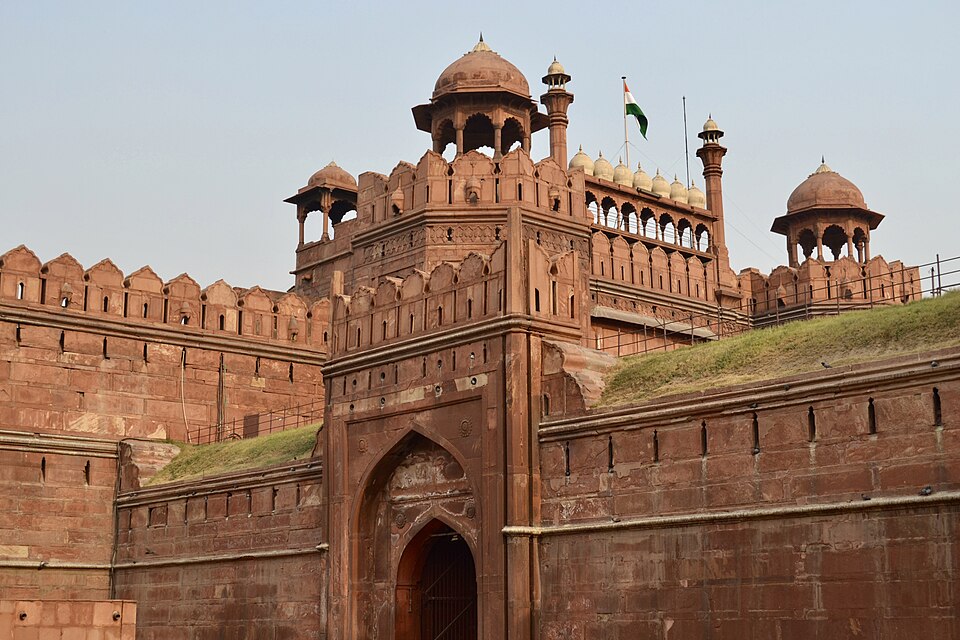
The entrance to the Red Fort Museum.
Photo by Amit Ranjan via Wikimedia Commons.
I popped into the museum at the Red Fort in Delhi today. I hadn’t been here since 2019, and I’d been told that the museum had been revamped. I was pleased, because the last time I’d been here it was tired. But what I encountered was both shocking and worrying. I am all for having a divergence of opinion on historical matters, and I am as conscious as anybody of the sensitivities that exist on the subject of 1857. Likewise, we all increasingly aware of the heavily-biased historical narratives forced on people in various parts of the world, and worry about them. I have been acutely aware of the “decolonisation” process in India in recent years. But I wasn’t expecting to find such flagrant nonsense being perpetrated in the holy-of-holies of Indian independence, the Red Fort, today.
But nonsense it was, displayed in bold, assertive strokes, designed to present a definitive account of the birth of modern India from the trauma of British colonialism.
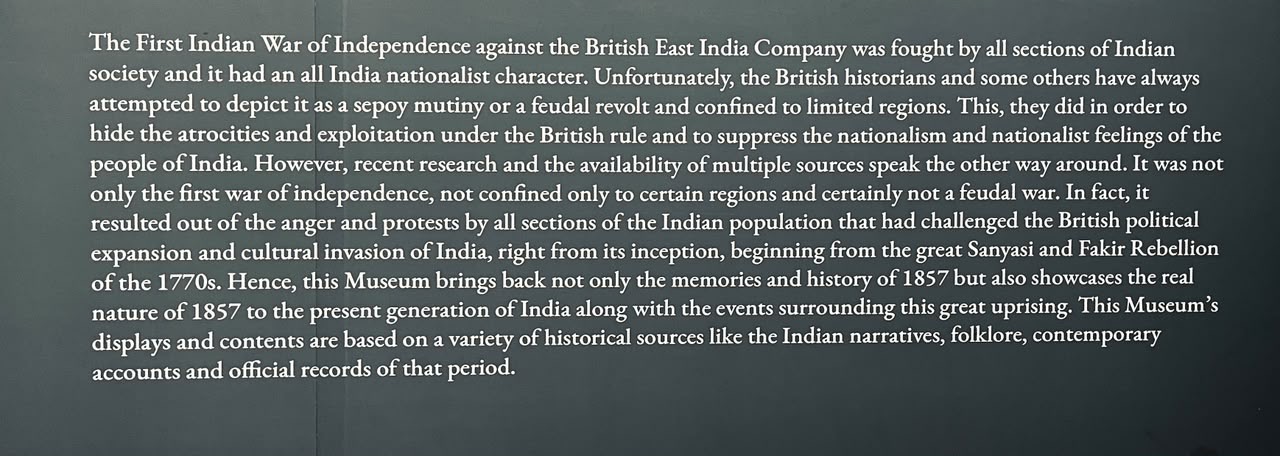
The first was a warning that naughty British historians still pushed a line contrary to the truth known to all true Indians that the “war of independence” was a popular rebellion against rampant imperial oppression:
That this is chock full of contestable assertions should be obvious to all but a few unhinged Oxford academics (you know the ones I mean) and the Guardian.
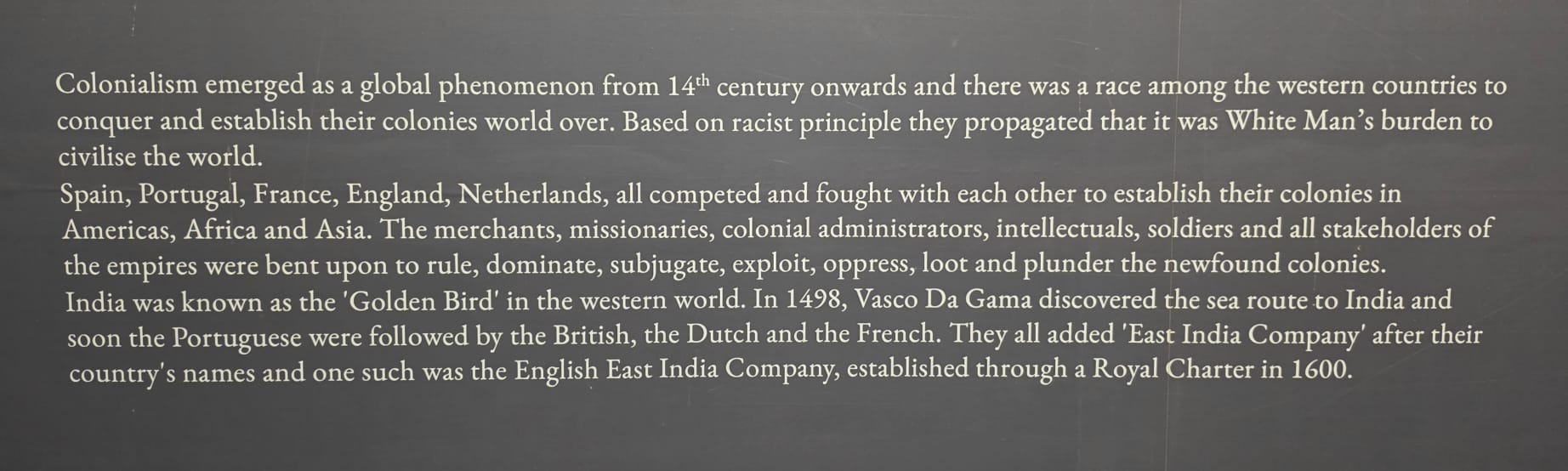
There are three floors of this stuff. As one enters a fascinating definition of colonialism is presented:
I wonder what the Romans would have made of this silliness.
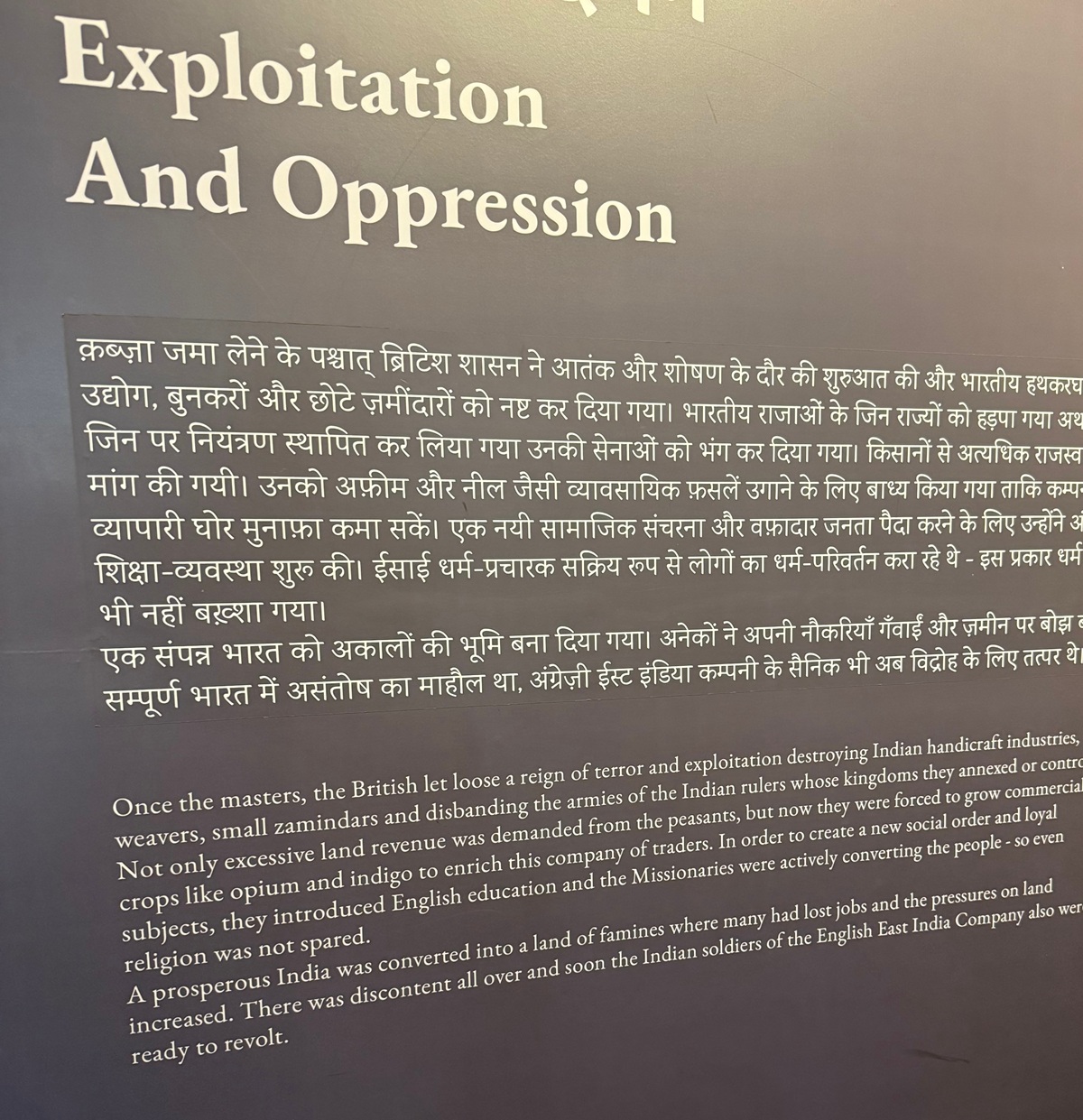
Likewise, I hesitate to describe the following as history, let alone an intelligent analysis of the economic impact of colonialism. When I first came across the subject at university in the 1980s it was presented as the Marxist view of history. It was vacuous and unintelligent at the time, and remains so today:
On the Christianity point, I’ve done my own count and have calculated that from a population of 200 million across the sub-continent at the time there were 120,000 Britons (including 40,000 troops) and of this number about 450 were ordained. It was going to take a long time to Christianise India on this basis …