Overly Sarcastic Productions
Published 23 Apr 2016
Damn, YouTube, back at it again with the Podcast.
From the man who brings you outdated memes and crude photoshops comes the second episode of the Overly Sarcastic Podcast. Today, Blue talks through Machiavelli’s two most famous works, and how they work together more than you might initially think.
This episode has slightly different visuals because the blue orb from last time charges by the minute. Comment below if you have a preference for visuals in future OSPodcasts and let us know if you have any topics you’d like Blue to discuss.
Comments Off on Overly Sarcastic Podcast: Blue Talks Machiavelli!
Arthur Chrenkoff on the differences between the theoretical role of civil servants and what they actually do:
The western front of the United States Capitol. The Neoclassical style building is located in Washington, D.C., on top of Capitol Hill at the east end of the National Mall. The Capitol was designated a National Historic Landmark in 1960. Photo via Wikimedia Commons.
Public servants consider themselves more intelligent and expert in their areas of competence than politicians. In many cases they are right. This only adds to the frustration. Because it’s not the job of public servants to make policy but to give advice to elected officials and to implement their decisions. And it certainly is not their job, if elected officials choose not to accept and act on that advice, to sabotage their efforts or even try to engineer the downfall of their political masters.
If you are a public servants who disagrees with the direction the politicians are taking, you have a simple, binary choice: you can clench your teeth, stay in your job and implement the politicians’ will or you can resign – at which stage you have every right as a concerned citizen to publicly campaign against people and policies you disagree with. There are more legitimate avenues of dissent and opposition outside than inside the system.
The ideal of the public service is a completely apolitical and impartial workforce, which faithfully assists government of the day in implementing its agenda, whatever that agenda might be. The reality is that while many bureaucrats are able to separate their personal beliefs from their professional duty, some can’t and won’t. For the reasons that are both obvious and unnecessary to go into detail here, public sector attracts those on the left, the way private sector attracts those on the right. Thus, left wing governments rarely encounter the problem of bureaucratic dissent, unless they really act out of the traditional left-wing box. The right wing governments, by contrast, face at best dutiful but unenthusiastic and sullen cooperation. There are no vast and organised conspiracies; this is a systemic phenomenon where organisations are required to do things that go against the conventional institutional wisdom and against the individual beliefs of the majority of members who shape the informal internal culture. This is the Shallow State. Bureaucracy will always cheer on the expansion of its numbers and powers and shriek at the prospect of shrinking the state. It will embrace and run with the policies it approves and stumble with the policies it doesn’t.
Forgetting the rank and file of the public service, which is unmovable and unchangeable, the reason why new governments enjoy the power of key appointments, including diplomatic ones, is not simply the patronage of rewarding supporters and the faithful but more importantly ensuring that the key administrative positions in bureaucracy are occupied by people who share their vision and can therefore be counted on to enthusiastically pursue the government’s agenda within the particular organisation. This, of course, only kicks the basic problem down the line, in that the top government appointees then have to struggle with the “permanent” employees on the levels below. The lower ranks might still succeed in frustrating their superiors, or worse, in “capturing” the political appointees by converting them to the institutional consensus. But for the government, having its own people in top positions is better than having no support at all. In an ideal world, of course, none of this would be necessary and happening because the impartial public service would be working well with whoever is in power. This is not an ideal world; certainly not for right wing governments. The Shallow State is always the reality. The Deep State is nothing more and nothing less than the Shallow State going well beyond the usual sullen uncooperativeness and taking a particularly strong stance against the government they disagree with. It’s a difference between passive resistance and active resistance.
It is not the job of bureaucracy to resist the government. Hence the current vogue for insubordination and sabotage is necessitating a rather radical redefinition of public service. Recently, we seem to have finally crossed the threshold from years of obfuscation (“The Deep State is a right wing conspiracy theory”) to acknowledging the reality (“The Deep State are patriots trying to protect America and the American people from the president”). But for all the talk about the supposed collusion, treason, crimes and corruption of the Trump administration, which could thus justify the resistance, the only thing that the endless agitation and investigation has succeeded in showing over the past three years is policy differences. Quite simply, the public service is vehemently opposed to the president’s views on a whole range of matters, and they are outraged that he has not followed their conventional wisdom.
Comments Off on No matter who you vote for the (permanent) government always gets in
Hercules (or Herakles in the Greek) needed to atone for killing his entire family so the gods did what the gods do best and gave him a quest: serve his cousin for 12 years. Shouldn’t be too difficult. But his cousin was a terrible DM and created 10 impossible tasks for Hercules to complete. This first part covers the first five of the Herculian tasks (and some of the sick treasures Hercules uncovers along the way)
Centre Georges-Pompidou (no, this isn’t an under construction image … it’s from 2017) Gerd Eichmann photo via Wikimedia Commons.
The Nobels, the Oscars, Pipe Smoker of the Year: glittering prizes all, but I prefer the Carbuncle Cup, which is awarded annually to the “the ugliest building in the United Kingdom completed in the last 12 months”.
Organised by the magazine Building Design, it has (in my aesthetic judgement) produced a worthy shortlist and a worthy winner every year since its inception in 2006.
But there’s a big problem with the prize — not its subjectivity, but the fact that the winning buildings still exist. Indeed, buildings like them are still being built. Name-and-shame is not working.
There’s an argument to be made that things are getting worse. We’ve swapped the horrendous, but interesting, brutalism of the post-war period for the offensively bland spreadsheet architecture of the 21st century. In an age in which Jane Jacobs has won the intellectual battle against Robert Moses, we really ought to know better. Yet we continue to fill up our towns and cities with inhumane, alienating architecture.
Philharmonie at the Parc de la Villette, Paris. Photo by Zairon via Wikimedia Commons.
It might seem paradoxical, but to end the cycle of destruction, we need to accelerate it. Every year, there should be a public vote to choose the worst new building in the land. The winner wouldn’t get a cup, but a wrecking ball. Yes, that’s right, it would be physically demolished — immediately and without compensation. Indeed, the owner would be required to foot the bill for the building’s de-construction (though they would have the option of suing the architect and the planning authority).
This would concentrate minds wonderfully. Instead of competing among themselves to épater les bourgeois, starchitects would need to design with due regard to the common good. Meanwhile, developers whose sole objective is to squeeze as much profitable square footage into any site they can get their hands on, would have to contend with the possibility of financial (as well as literal) ruin. The planners would come under immense pressure to do a better job too. At the cost of sacrificing one new building, development across the land would be greatly improved.
Cumbernauld Shopping Centre, voted as Britain’s most hated building. Photo by Ed Webster via Wikimedia Commons.
The JS III or IS III was debuted by the Soviet Union at the Second World War Victory Parade, in September 1945.
This particular JS III was at The Tank Museum temporarily, for its appearance at TANKFEST 2018, and has now returned home to The Belgian Royal Military Museum.
If Trump – or Obama or Scott Morrison or Hillary Clinton – saying that 2 + 2 = 4 makes you automatically deny the math because your bête noire simply cannot be correct, you might want to take a deep breath or two and reflect on your approach to life. You’re broken. Don’t be that person.
The Opium War started as a dispute over trading rights between China and Great Britain. Regular trade between Europe and the Chinese had been ongoing for centuries. But China’s trading restrictions frustrated the British who were eager to supply the Chinese people with the increasingly popular narcotic opium. Circumventing the government’s attempts to ban opium trade by smuggling and bribery, China declared the death sentence on Opium smuggling and refused to compensate British tradesmen for any losses. Furiously, the Brits sent out a fleet to demand compensation and end the Cohong trading monopoly. Fierce battles and attacks on the Chinese coast were followed. Find out all about the First Opium War from Indy in our new episode of Battlefields!
» SOURCES
Videos: British Pathé (https://www.youtube.com/user/britishp…)
Pictures: mainly Picture Alliance
Content:
Lovell, Julia: The Opium War: Drugs, Dreams and the Making of China
Wei, Yuan: Chinese Account of the Opium War
McPherson, Duncan: The First Opium War – The Chinese Expedition 1840-1842
Merwin, Samuel: Drugging a Nation – The Story of China and the Opium Curse
Bernard, William Dallas; Hall, Sir William Hutcheon: Narrative of the Voyages and Services of the Nemesis, from 1840 to 1843.
Isabel Hilton (The Guardian): “The Opium War by Julia Lovell – review”
Perdue, Peter C. (MIT): The First Opium Warhttp://ocw.mit.edu/ans7870/21f/21f.02…
» ABOUT US
IT’S HISTORY is a ride through history – Join us discovering the world’s most important eras in IN TIME, BIOGRAPHIES of the GREATEST MINDS and the most important INVENTIONS.
» HOW CAN I SUPPORT YOUR CHANNEL?
You can support us by sharing our videos with your friends and spreading the word about our work.
» CAN I EMBED YOUR VIDEOS ON MY WEBSITE?
Of course, you can embed our videos on your website. We are happy if you show our channel to your friends, fellow students, classmates, professors, teachers or neighbors. Or just share our videos on Facebook, Twitter, Reddit etc. Subscribe to our channel and like our videos with a thumbs up.
» CAN I SHOW YOUR VIDEOS IN CLASS?
Of course! Tell your teachers or professors about our channel and our videos. We’re happy if we can contribute with our videos.
» CREDITS
Presented by: Guy Kiddey
Script by: Dan Hungerford
Directed by: Daniel Czepelczauer
Director of Photography: Markus Kretzschmar
Music: Markus Kretzschmar
Sound Design: Bojan Novic
Editing: Markus Kretzschmar
A Mediakraft Networks original channel
Based on a concept by Florian Wittig and Daniel Czepelczauer
Executive Producers: Astrid Deinhard-Olsson, Spartacus Olsson
Head of Production: Michael Wendt
Producer: Daniel Czepelczauer
Social Media Manager: Laura Pagan and Florian Wittig
In the (US) Spectator, Bridget Phetasy reports on her visit to the factory where Realdolls are made:
One of the sex dolls on offer at Aura Dolls in Mississauga, the first “sex doll brothel” in the Toronto area. Photo originally published by BlogTO – https://www.blogto.com/city/2019/11/sex-doll-brothel-mississauga/.
The floor is slippery. I guess I shouldn’t be surprised, I’m taking a tour of Abyss Creations, the factory where the “Ferraris of love dolls”, RealDoll and Realbotix, are made. A thin layer of silicone coats almost every surface. A (real) woman in her late twenties, the PR coordinator, Catherine, shows me round. She has the attitude of a hostess at a theme-park restaurant: bored or stoned or maybe both. I’m sure she’s given hundreds of these tours, heard the same dumb jokes a million times and watched us all slap the ass of a doll reluctantly yet instinctively.
[…]
The employees look at the “love dolls” as more than just sexbots. They know their customers want a couch buddy. They want someone to cuddle at night. Perhaps they’ve lost a spouse and don’t feel like dating.
Whitney Cummings logged on to a forum for men who own the sex robots and monitored their conversations for months. “I thought they were going to be creeps, psychopaths,” she says. “I don’t know what to tell you. They’re very lovely men. They’re lovely. They adore their dolls. They marry their dolls. That is happening.”
What strikes me amid the body parts, the rows of eyes, the wall of nipples and the robot “brains”: these aren’t your weird uncle’s sex dolls. With the introduction of AI, these dolls are offering something their predecessors couldn’t: intimacy and affection.
“I always looked at them as art and I always found it funny that because it’s a sexually usable thing, it’s disqualified as art in the higher sense in a lot of people’s minds. They go, ‘Oh that’s not art, that’s just nasty'”, says McMullen. “And what’s funny about that is now we’re doing this serious engineering, artificial intelligence and robotics and now people aren’t so quick to dismiss it.”
Realbotix is the natural evolution of Abyss Creations, the company McMullen started in 1997 (in fact, Abyss Creations made the doll for Lars and the Real Girl). What began as just “real dolls” now has a robotic component, an AI team and an app.
McMullen talks about how he’s always wanted to break free of the sex toy stigma. “Yes people use them sexually, but they also get this huge sense of companionship from having a doll and a robot.”
On Sunday afternoon, the 7-3 Vikings hosted the 3-6 Denver Broncos at US Bank Stadium in a 1:00pm start. Minnesota was without some key starters, including wide receiver Adam Thielen who is still recovering from a hamstring injury suffered early in the Detroit game, right guard Josh Kline (concussion), nose tackle Linval Joseph who had minor knee surgery and may be out for a few more games, along with safety Anthony Harris.
Vikings fans were quite worried that the team would come out flat, having made the classic mistake of looking past the current opponent … making it a “trap” game:
Aside from that, one of the storylines of interest coming in was that it was going to be the first Vikings game for wide receiver Josh Doctson, who was just activated from injured reserve. He joined the Vikings early in the season, but was injured in one of his first practices with the team. The absence of Adam Thielen was thought to give him a good opportunity to show if his chemistry with Kirk Cousins had carried over from their time together in Washington. I watched the entire game, and while an Arif Hasan tweet told me that Doctson got on the field in the third quarter, he certainly didn’t make any catches.
For the first 30 minutes, this game totally lived up to the “trap” billing … the Vikings were putrid on defence, and cover-your-eyes awful on offence. As Matthew Coller put it, “There are 1,000 ways to lose a football game and the Minnesota Vikings attempted to try out every one of them on Sunday.” I’m not exaggerating by much to say the Vikings MVP in the first half was punter Britton Colquitt. At least he did his job with no obvious errors or miscues. It would be difficult to say the same for anyone else wearing purple in the first half. They went into the locker room — which must have appeared as welcoming as the gates of hell with Coach Zimmer ready to bite heads off — on the wrong side of a 20-0 score.
For every Vikings game, I print off a copy of the team roster and as the game progresses, I make notes beside players’ names for excellent play (“+”), terrible play (“-“), penalties (“P”), sacks (“S”), and so on. After 30 minutes, I had no “+” entries at all. The Vikings had gained all of 47 yards while holding the ball for only 11 minutes. The CBS crew covering the game helpfully noted that the last 99 teams to be down 20 points at the half had all lost the game. As you’d expect, the loyal fans took it well:
#Vikings have a better chance if they don't even come out of the tunnel in the 2nd half
The second half started well … in fact, the second half looked like a completely different team was wearing the purple uniforms than the collection of random bums who’d stumbled through the first half. The team gained nearly twice as many yards on their first drive as they’d done through the entire first half, taking the ball from their own 25 yard line to score their first points of the day on a Kirk Cousins to Irv Smith, Jr. ten yard pass (Smith’s first NFL TD). Vikings Twitter seemed to approve of the new plot twist:
But would the new-look Vikings continue the good work or lapse back into that zombie state of the first half? They did allow the Broncos to score, but only a field goal, then got back to work. It was the fourth quarter when the Vikings finally established a points lead they would not relinquish (although it went down to the final play of the game):
On their final drive, the Broncos pushed the ball all the way down to the Vikings’ 2-yard line. Denver had three chances on first-and-goal, but the Minnesota defense … and, specifically, Jayron Kearse … came up huge on the final three plays to hold on to the victory.
Kirk Cousins was absolutely on fire in the second half of this football game, and he ended up completing 29-of-35 passes for 319 yards and three touchdowns. After a first half where he had no catches, Stefon Diggs wound up with five receptions for 121 yards and a touchdown on the afternoon. Kyle Rudolph had five catches for 67 yards and a touchdown, while Olabisi Johnson had six catches, but managed just 35 yards. Dalvin Cook had 31 yards on five receptions, Tyler Conklin had two catches for 28 yards, Irv Smith Jr. had three catches for 20 yards and his first NFL touchdown, and Ameer Abdullah (two catches, 11 yards) and C.J. Ham (one catch, six yards) caught passes as well.
Cook didn’t get a whole lot going on the ground, though he did cross over the 1,000-yard threshold for the season. He had just 26 yards on 11 carries, as the Broncos did a very good job of taking him away.
As Christopher Gates also pointed out, this was only the fifth time in team history the Vikings have come back from a 20-point deficit to win the game. Andy Carlson provides his post-game take:
Comments Off on Denver Broncos give up 20-point halftime lead over the Minnesota Vikings, lose 27-23
The things that people valued and fought over in the past were not as they are now. You might not guess the tremendous significance of one tiny island off the coast of Gozo.
NEWS FLASH (March 8th 2017): the Azure Window, featured in this video, has collapsed into the sea.
More videos from Malta to follow.
Lindybeige: a channel of archaeology, ancient and medieval warfare, rants, swing dance, travelogues, evolution, and whatever else occurs to me to make.
▼ Follow me…
Twitter: https://twitter.com/Lindybeige I may have some drivel to contribute to the Twittersphere, plus you get notice of uploads.
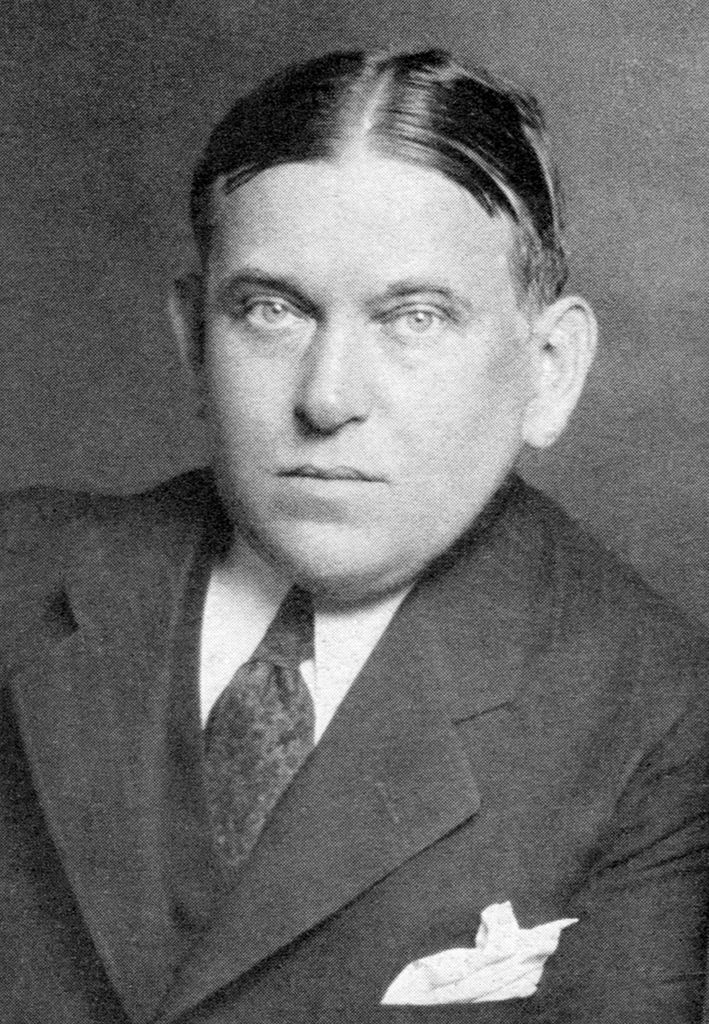
H.L. Mencken in 1928. Photo by Ben Pinchot for Theatre Magazine, August 1928.
The loud, preposterous moral crusades that so endlessly rock the republic – against the rum demon, against Sunday baseball, against Sunday moving-pictures, against dancing, against fornication, against the cigarette, against all things sinful and charming – these astounding Methodist jehads offer fat clinical material to the student of mobocracy. In the long run, nearly all of them must succeed, for the mob is eternally virtuous, and the only thing necessary to get it in favor of some new and super-oppressive law is to convince it that that law will be distasteful to the minority that it envies and hates.
A revolutionary dreamer or a tyrannical despot? That is a question at the heart of Akhenaten’s rule, a pharaoh so unusual, that his successors tried and almost successfully erased him from the historical records. You may know his more famous wife, Queen Nefertiti but Akhenaten was a fascinating ruler. He went against the grain of almost all of Egyptian traditions including trying to establish a monotheistic religion and unite the Upper and Lower Kingdoms of Egypt.
Comments Off on Akhenaten – A Pharaoh Obsessed – Extra History
John Cleese at the Byline Festival, 2017. Photo by Raphael Moran via Wikimedia Commons.
“John was a boy that kept to himself,” recalled Mrs Hicks, Reg and Muriel Cleese’s next-door neighbor in Totnes in Devon, deploying the formulation traditionally reserved for the landladies of suburban serial killers. “I suppose he was all right with his Cambridge people, but us being country folk he wouldn’t say very much. At one time I looked after John for a couple of days and did his bedroom when his parents were away. He was writing something on his desk at the time. Course I didn’t look at it, but it was sarcastic sort of stuff about Churchill. I do often wonder what happened to him.”
Listening to Mrs Hicks, you appreciate the particular challenge of comedy writing – for who could ever improve on that? Nonetheless, she’s not the only one to wonder what’s happened to John Cleese. He turned eighty a couple of weeks back, and the jubilations were more muted than one might once have expected. My local PBS station still shows Fawlty Towers as part of its Britcom lineup, but Sadiq Khan, Mayor of London, bemoans that Cleese has now turned into Basil Fawlty lui-même. Younger “comics” regret that the a great comedic talent is now the pub bore he played in his youth.
And why would that be? Well, after supporting Brexit, he moved to Nevis in the British West Indies and announced that the imperial metropolis was “not really an English city anymore”. Mayor Khan replied that “Londoners know that our diversity is our greatest strength” – although, strong as it is, it doesn’t seem much use during a knife attack. During the ensuing Twitterstorm, an opposing Tweeter declared that “I can’t stand Englishness”, and Cleese wistfully responded:
I suspect I should apologise for my affection for the Englishness of my upbringing. But in some ways I found it calmer, more polite, more humorous, less tabloid, and less money-oriented than the one that is replacing it.
The Two-Minutes Tweet-Hate rampaged on, and Cleese retreated to the charms of his post-colonial backwater:
Nevis has excellent race relations, a very well educated population, no sign of political correctness… conscientious lawyers, a relaxed and humorous life style, a deep love of cricket, and a complete lack of knife crime …and the icing on the cake is that Nevis is not the world centre for Russian dirty money laundering…
I think it’s legitimate to prefer one culture to another. For example, I prefer cultures that do not tolerate female genital mutilation. Will this be considered racist by all those who hover, eagerly hoping that someone will offend them?
Is this the room for an argument? Not anymore. There are just things you’re not meant to bring up, lest the hoverers pounce.
As it happens, I agree with almost all of the above. But then I always have. It’s odder to hear it from Cleese. In essence, he misses the England of Mrs Hicks, of couples called Reg and Muriel, of saloon-bar majors, bowler-hatted civil servants, Church of England vicars, socially insecure lower-middle-class hoteliers and all the other stock types of a now vanished Albion he mocked at the height of his celebrity. The counterculture triumphed so totally that there is no longer a culture to counter, and the void of “diversity” makes London feel, even overlooking the stabbings and clitoridectomies, just like a large version of every other cookie-cutter multiculti western city.
“I know they were very disappointed with John,” Mrs Hicks told Cleese’s biographer Jonathan Margolis. “Muriel was so excited when she came in here and said John had passed his exams at Cambridge. They thought he was going to be a solicitor, and then he fell in with David Frost and that was it.”
Comments Off on Mark Steyn on the post-Basil-Fawlty John Cleese
Japan has two wins this week, and one might turn out to be very consequential for the rest of the war. In the meantime, the British RAF fights the Luftwaffe and Italy struggles in their offensive against Greece.
Written and Hosted by: Indy Neidell
Produced and Directed by: Spartacus Olsson and Astrid Deinhard
Executive Producers: Bodo Rittenauer, Astrid Deinhard, Indy Neidell, Spartacus Olsson
Creative Producer: Joram Appel
Post-Production Director: Wieke Kapteijns
Research by: Indy Neidell
Edited by: Iryna Dulka
Map animations: Eastory
Sources:
– Narodowe Archiwum Cyfrowe
– IWM: CM 164, C 1244
– Destroyed house icon by Gan Khoon Lay, people icon by Gregor Cresnar from the Noun Project
A TimeGhost chronological documentary produced by OnLion Entertainment GmbH.
From the comments:
World War Two
2 days ago
Do you want more World War Two in realtime? We have a great Instagram page, where we make a daily post about what happened in the war on that day. This might be something completely different from what’s covered in these videos, or might add some more details. You can follow it by searching @world_war_two_realtime or by clicking here: https://www.instagram.com/world_war_two_realtime/. See you there!
Cheers, Joram
Comments Off on Britain shows Japan how to Attack Pearl Harbor – WW2 – 064 – November 16, 1940












 On Sunday afternoon, the 7-3 Vikings hosted the 3-6 Denver Broncos at US Bank Stadium in a 1:00pm start. Minnesota was without some key starters, including wide receiver Adam Thielen who is still recovering from a hamstring injury suffered early in the Detroit game, right guard Josh Kline (concussion), nose tackle Linval Joseph who had minor knee surgery and may be out for a few more games, along with safety Anthony Harris.