Quotulatiousness

January 27, 2021

Behind the Scenes of WW2 – TimeGhost Cribs

Filed under: Europe, History, Media, WW2 — Tags: — Nicholas @ 04:00

World War Two
Published 26 Jan 2021

This week we will start a series of videos where you get to know the team that makes this magnificent content.

Join us on Patreon: https://www.patreon.com/TimeGhostHistory
Or join The TimeGhost Army directly at: https://timeghost.tv

Follow WW2 day by day on Instagram @ww2_day_by_day – https://www.instagram.com/ww2_day_by_day
Between 2 Wars: https://www.youtube.com/playlist?list…
Source list: http://bit.ly/WW2sources

Hosted by: Indy Neidell & Spartacus Olsson
Director: Astrid Deinhard
Producers: Astrid Deinhard and Spartacus Olsson
Executive Producers: Astrid Deinhard, Indy Neidell, Spartacus Olsson, Bodo Rittenauer
Creative Producer: Maria Kyhle
Post-Production Director: Wieke Kapteijns
Edited by: Karolina Dołęga
Sound design: Marek Kamiński

A TimeGhost chronological documentary produced by OnLion Entertainment GmbH.

Australia’s aboriginal people

Filed under: Australia, Books, Britain, History — Tags: , , — Nicholas @ 03:00

On Australia Day, which progressives want to rename as “Invasion Day”, a look at the aboriginal culture(s) who had inhabited the continent for thousands of years before contact with Europeans:

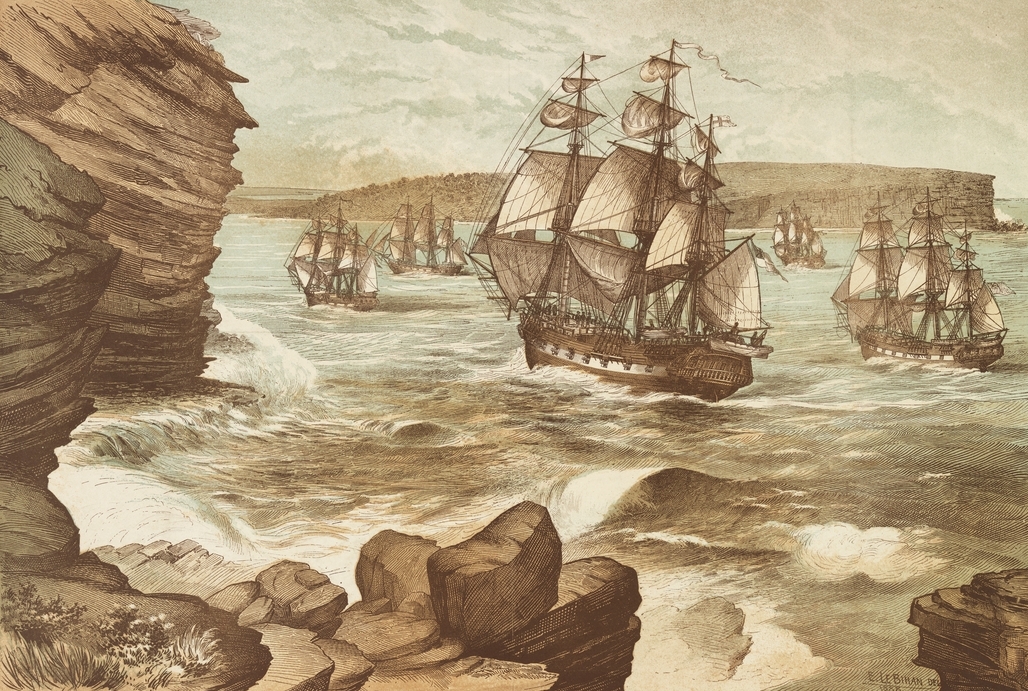
Colour lithograph of the First Fleet entering Port Jackson on January 26 1788, drawn in 1888.
Original by E. Le Bihan via Wikimedia Commons.

Liam Hemsworth and others are spruiking nonsense which is also being taught to school children as they protest against “invasion day”:

    We are spiritually and culturally connected to this country.
    This country was criss-crossed by generations of brilliant Nations.
    Aboriginal and Torres Strait Islander people were Australia’s first explorers, first navigators, first engineers, first farmers, first botanists, first scientists, first diplomats, first astronomers and first artists.
    Australia has the world’s oldest oral stories. The First Peoples engraved the world’s first maps, made the earliest paintings of ceremony and invented unique technologies. We built and engineered structures – structures on Earth – predating well-known sites such as the Egyptian Pyramids and Stonehenge.
    Our adaptation and intimate knowledge of Country enabled us to endure climate change, catastrophic droughts and rising sea levels.
    Always Was, Always Will Be. acknowledges that hundreds of Nations and our cultures covered this continent. All were managing the land – the biggest estate on earth – to sustainably provide for their future.

This statement is a work of poorly written fiction. All humans are descended from ancestors that roamed Africa. At some stage – perhaps 50,000 to 60,000 years ago according to archaeological records – some Homo Sapiens (so far as we know, Homo Erectus do not appear to have migrated to the land mass now know as Australia) moved to this continent during the Pleistocene (ice age) when sea levels were much lower allowing transit without seafaring. Later the ice age abated, ice melted and the Australian continent became separate and its inhabitants isolated.

In Jared Diamond’s book Guns, Germs and Steel – the Fates of Human Societies, he argues that circumstances (pressure on resources etc) lead to innovations and changes to society. On Australia he wrote:

    Australia is the sole continent where, in modern times, all native peoples still lived without any of the hallmarks of so-called civilization – without farming, herding, metal, bows and arrows, substantial buildings, settled villages, writing, chiefdoms or states. Instead Australian Aborigines were nomadic or semi-nomadic hunter-gatherers, organised into bands, living in temporary shelters or huts and still dependent on stone-tools. – (p. 297).

    Compared with Native Australians, New Guineans rate as culturally “advanced” … most New Guineans … were farmers and swineherds. They lived in settled villages and were organised politically into tribes rather than as bands. All New Guineans had bows and arrows, and many used pottery. – (p. 297-8).

    While New Guinea … developed both animal husbandry and agriculture, … Australia … developed neither. – (p. 308).

Isolated from other populations, and lacking little in the way of resources, Australia’s first inhabitants were not pressured into changing their ways of life and remained essentially hunter gatherers and nomadic societies. I make no judgement on whether this is good or bad, merely that despite the lack of competition over resources, life wasn’t always rosy and violence and skirmishes, murder and rape occurred as much among those humans as it did elsewhere.

It was inevitable that this isolation would not persist – it is perhaps surprising that it persisted as long as it did. But contact with other humans was inevitable and the outcome of that contact would be widely varying depending on whether the contact was made by the Portuguese, Spanish, Dutch, Chinese, British or others. The fact that Australia became a British colony is probably the best of the many alternatives that could have sprung from colonialisation. And we are all affected, mostly positively, by that contact – there would be few Aboriginal Australians (perhaps none) who today could say that they have no ancestry at all from settlers who arrived after 1787. We are all of mixed blood and we all descend from those original Homo Sapiens who evolved in Africa. It is time to talk about unity rather than division.

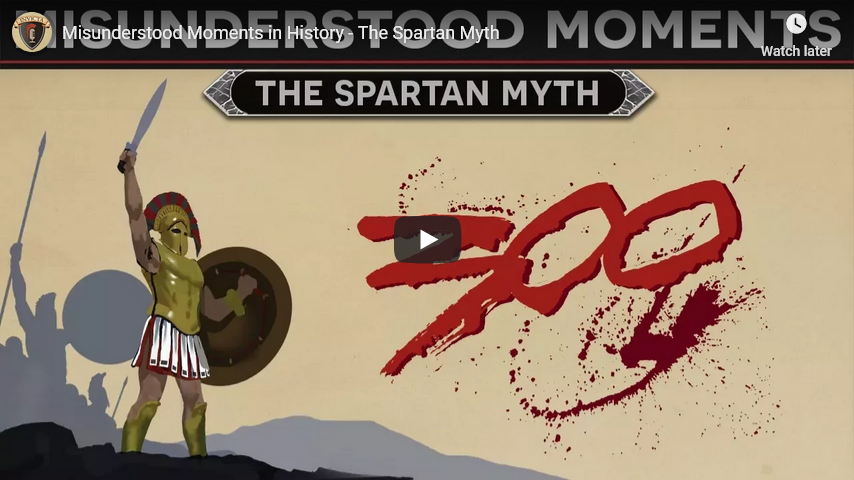
Misunderstood Moments in History – The Spartan Myth

Filed under: Europe, Greece, History, Military — Tags: , , , , , , — Nicholas @ 02:00

Invicta
Published 27 Oct 2017

Start your 30 day free trial here: http://ow.ly/eCd230fiZ7Q

The Spartans are immortalized in history as super soldiers bred for war. However most of what we think we know about them is a lie. Today we will unmask the truth behind the Spartan Myth.

The Great Courses Plus is currently available to watch through a web browser to almost anyone in the world and optimized for the US market. The Great Courses Plus is currently working to both optimize the product globally and accept credit card payments globally.

Documentary Credits:
Research: Dr Roel Konijnendijk
Script: Invicta
Artwork: Milek J
Editing: Invicta
Music: Total War OST, Soundnote

Documentary Bibliography:
Paul Anthony Cartledge, The Spartans: The World of the Warrior-heroes of Ancient Greece
Nigel Kennell, Spartans: A New History (2010)
S. Hodkinson, Property and Wealth in Classical Sparta (2000)
J. Ducat, Spartan Education: Youth and Society in the Classical Period (2006)
S.M. Rusch, Sparta at War: Strategy, Tactics and Campaigns, 550-362 BC (2011)
E. Rawson, The Spartan Tradition in European Thought (1969)
S. Hodkinson & I.M. Morris (eds.), Sparta in Modern Thought (2012)

QotD: Open-source the data

Filed under: Quotations, Science, Technology — Tags: , , , , — Nicholas @ 01:00

We know, from experience with software, that secrecy is the enemy of quality — that software bugs, like cockroaches, shun light and flourish in darkness. So, too, with mistakes in the interpretation of scientific data; neither deliberate fraud nor inadvertent error can long survive the skeptical scrutiny of millions. The same remedy we have found in the open-source community applies – unsurprisingly, since we learned it from science in the first place. Abolish the secrecy, let in the sunlight.

Eric S. Raymond, “Open-Sourcing the Global Warming Debate”, Armed and Dangerous, 2009-11-23.

January 26, 2021

The brief and inglorious life of Penn Central

Filed under: Books, Economics, History, Railways, USA — Tags: , , , , , — Nicholas @ 04:00

In City Journal, Nicole Gelinas recounts the tale of the fateful merger of two great American railroad systems that lasted just long enough to support massive financial chicanery before descending into inevitable bankruptcy:

More than 50 years on now, the spectacular collapse of the Penn Central railroad in 1970 is little remembered today, but its legacy is still with us — not so much as a warning, but as a prelude: to New York City’s own near-bankruptcy in the 1970s; to four decades of financial engineering, beginning in the 1980s; to the 2001 Enron downfall; to the 2008 financial crisis and its “too big to fail” bailouts — and yes, even to the public discontent that elected President Donald Trump.

As America emerged from World War II, most people would have laughed at the idea of the nation’s two premier freight and passenger railroads, the Pennsylvania and the New York Central, going broke in a quarter-century’s time. By design, the Pennsy and the Central were not fierce competitors but complementary “frenemies” that had long agreed not to undercut one another’s monopoly profits. From Massachusetts to Missouri, the two railroads dominated freight and passenger travel in the northeast quarter of the United States, with nearly 21,000 miles of track between them.

Yet even as America built its powerhouse postwar economy, the railroads struggled. As Joseph R. Daughen and Peter Binzen write in The Wreck of the Penn Central, their cult-classic chronicle of the Penn Central’s demise, during the war the then-separate railroads had been running their equipment 24 hours a day to transport troops and supplies, leaving them with “worn-out” equipment.

In the fifties and sixties, moreover, new competitive pressures prevented them from catching their breath. Trucks competed with the railroads for freight hauling via the new, free highways the nation was building. Commuter-rail passengers moved to the highways as well, while long-haul rail passengers took to the skies. The railroads’ decline accelerated in the sixties, partly because of the collapse of northeast manufacturing.

In 1962, the two companies decided to merge. But railroading was one of the most heavily regulated industries in the United States, so the merger took six years, as it wound its way through multiple levels of public approval for the creation of the 100,000-worker, 100,000-shareholder, 100,000-creditor behemoth. Meantime, government-set rates already fell short of the railroads’ long-term costs.

The combined entity that would become the Penn Central made significant concessions to win political support for the merger, including no-layoff pledges that would hamper its ability to cut spending and a promise to take on the independent (and chronically insolvent) New York, New Haven, and Hartford passenger railroad.

After the merger, the railroads discovered that they had incompatible computer systems, which threw railyards into chaos and angered customers. The Penn Central’s three top officials, too, were incompatible. They “scarcely spoke to one another,” write Daughen and Binzen. Stuart Saunders, the board chairman, was a political guy. Alfred Perlman, the president, was a trains guy. These different outlooks could have complemented each other, but personalities got in the way. Rounding out this dysfunctional triumvirate was Penn vet David Bevan, the top financial official, perpetually “angry and humiliated” at not being picked for the top job.

Penn Central route map from us.leforum.eu
http://us.leforum.eu/t1355-Photos-du-Penn-Central-PC.htm

H/T to Ed Driscoll at Instapundit, who also posted this video the combined entity put together to celebrate the merger:

£760m to connect Bicester and Bletchley? That’s … very spendy

Filed under: Britain, Economics, Railways — Tags: , , — Nicholas @ 03:00

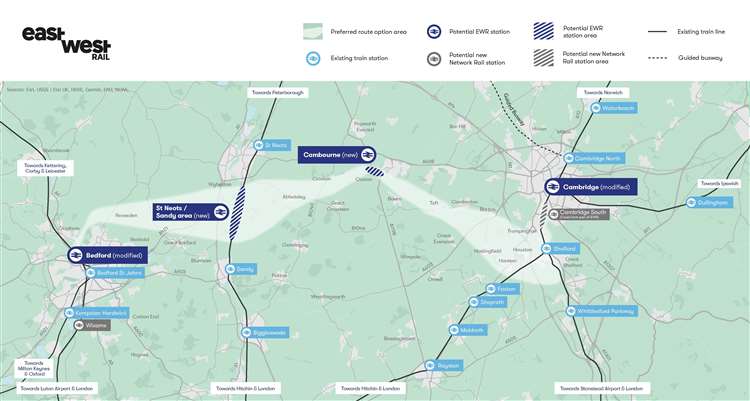
At the Continental Telegraph, Tim Worstall looks at the economic case for building the East-West railway line — in “reverse Beeching” style — to connect Oxford and Cambridge:

The cash from the Department of Transport will be used to lay track along a disused railway line between Bicester and Bletchley, in Buckinghamshire, with services beginning in 2025.

Excuse me? £760m to link Bicester and Bletchley? Other than the fact that that is £50m/mile, which should be the cost of rail lines made from crushed Faberge eggs and unicorn hair, how many people want to travel between Bicester and Bletchley by train? That’s roughly £10K/person in those small towns. OK,that then extends to Oxford, but that allows around 30,000 more people to go by train to Oxford. Which is not a particularly busy commuter metropolis anyway.

The aim is to complete the whole project by the end of the decade, according to the government minister overseeing it.

2 miles per year? Are they going to use canals and horses like Brunel?

[…]

Elsewhere, the new railway will shorten journey times between routes outside of London. Travellers from Oxford for example, will no longer have take a train into the capital and back out again to reach Milton Keynes, but could travel there via Bicester.

Again, what’s the demand for this? How many people want to do this, and would it be cheaper to just hire some chauffeurs to drive each passenger in a Ferrari from Bicester to where they want in Milton Keynes? I doubt it will be any quicker than a car because this only gets you to Bletchley, and then you have to get off a train to get to Milton Keynes, and then get where you want in Milton Keynes.

This used to be an active railway corridor before the Beeching cuts in the 1960s, which slashed a lot of uneconomic branch lines from British Rail’s network. If the land wasn’t sold off, then it’s just a matter of re-laying the track and ensuring that any existing bridges, embankments and drainage culverts are still capable of handling the renewed rail traffic. It seems unlikely that the mere engineering aspects of the project would require several hundred million pounds to complete, so perhaps there are some land issues that need to be re-acquired to allow the railway to become active again.

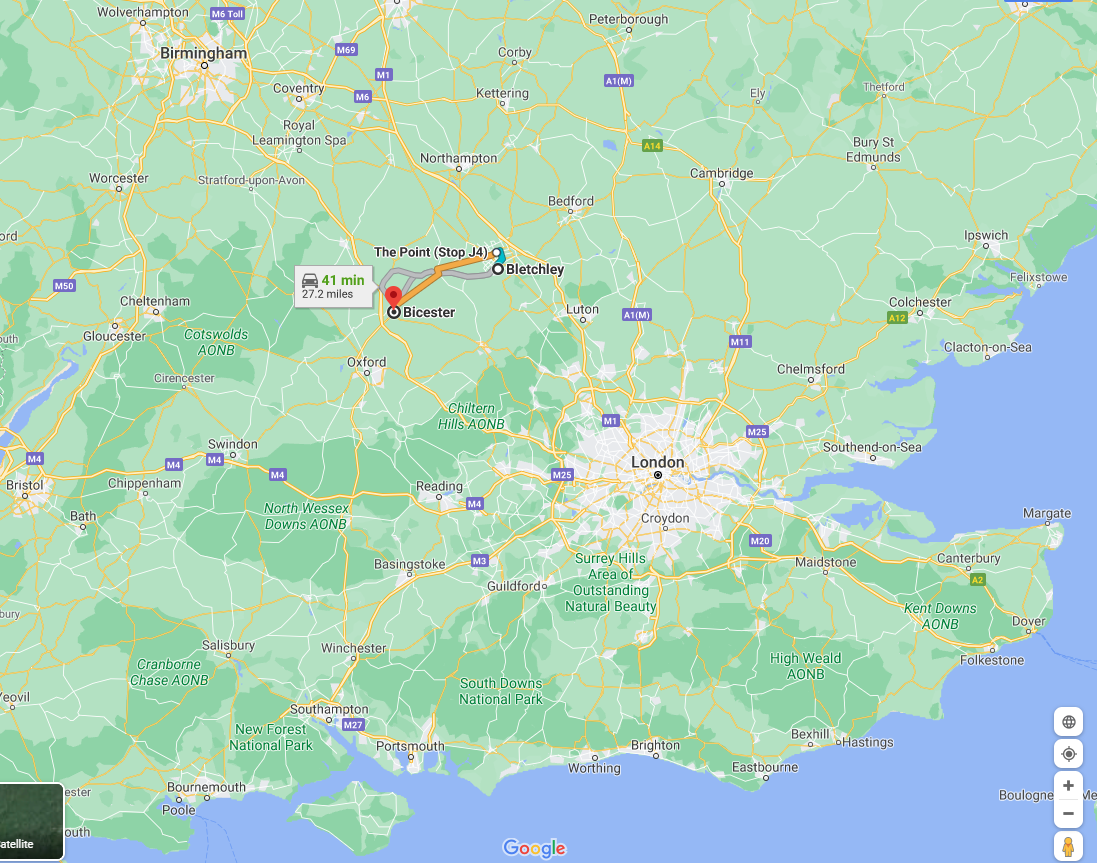
Here’s the route in question on Google Maps.

Tank Chats #92 | Challenger 2: Part 2 | The Tank Museum

Filed under: Britain, History, Military, Weapons — Tags: , , , , , — Nicholas @ 02:00

The Tank Museum
Published 17 Jan 2020

Part 2 of a two-part episode on Challenger 2 [part 1 was posted here]. As David Willey had so much to say about this British in-service vehicle, it has been split into two parts. The second part examines the Challenger 2 in service. David talks to soldiers currently serving on the Challenger 2, looks at where it has seen service and some of the tank’s features. With thanks to the British Army for their assistance.

Support the work of The Tank Museum on Patreon: ► https://www.patreon.com/tankmuseum

Visit The Tank Museum SHOP: ►tankmuseumshop.org

Twitter: ► https://twitter.com/TankMuseum
Instagram: ► https://www.instagram.com/tankmuseum/
Tiger Tank Blog: ► http://blog.tiger-tank.com/
Tank 100 First World War Centenary Blog: ► http://tank100.com/
#tankmuseum #tanks #challenger2 #britisharmy #davidwilleytankchat #davidwilleychallenger2

QotD: “A world organized around institutional mass slavery”

Filed under: China, Economics, Europe, Greece, History, Quotations — Tags: , , , , , — Nicholas @ 01:00

An example: We’ve discussed all the cool steampunk shit the Greeks could’ve had, if only Archimedes had … well, that’s just the thing, isn’t it? We look at the aeolipile and see a prototype steam engine; they looked at it and saw, as best we can tell, a party trick. Back when, I suggested, Marxist-style, that labor costs were a sufficient explanation for why nobody took the obvious-to-us next step of hooking the thing up to something productive and kicking off the Industrial Revolution. Machines are labor-saving devices; the ancient world had a gross excess of labor. Calling the aeolipile a steam engine, then, is a category error.

New hypothesis: It’s a category error, all right, but not because they didn’t think in terms of labor costs. It’s because they couldn’t think in terms of labor costs.

A world organized around institutional mass slavery is, in a very real sense, a timeless world. Herodotus (I think) actually says somewhere that nothing worth mentioning happened before him, and you can see echoes of this attitude even as late as the Antebellum South. You see their attitude described as “conservative,” but since that’s egghead shorthand for “evil” you can ignore it. They weren’t consciously backward-looking; rather, they were deeply rooted to their place and station. To the outsider, it looked like they were trying to hold time back, but to the insider, time — clock time, industrial time, the time of the Protestant work ethic — barely existed at all.

So with the Classical World. The Romans, for instance, are endlessly frustrating to their admirers (of which I am an ardent one). Their only economic fix, for instance, was debasing the currency, i.e. a primitive form of inflation. You guys could figure out how to hew an artificial harbor out of some desert rocks — a trick we’d have a hard time pulling off today — but you couldn’t figure out fiat currency? Or a better political system than the tetrarchy? Or that the forts-and-legions paradigm just isn’t cutting it? Or … etc.

Stuff like that is why Spengler said classical, Apollonian culture was fundamentally different from, and incompatible with, our Faustian culture. According to Spengler, the master metaphor for the Apollonian is the human body, which is beautiful but changeless (emphasis mine, not Spengler’s). You can improve your body somewhat, but only within certain tight limits, and the body’s fundamental form is always the same (we could time warp Julius Caesar into the Current Year and still recognize him as a fellow homo sap., no matter how different his mind might be).

The Faustian, though — that would be us — organizes his worldview around space, infinite space. Practically speaking, this results in our attitude of innovation-for-innovation’s sake. We send a man to the moon because we can, but such an idea would never occur to the Romans, for the same reason they didn’t apply all their awesome engineering knowledge to the problems of governance. Hacking a harbor out of the desert is a tremendous feat, but it’s a local feat — a one-shot deal, a very specific response to a very specific local problem, with no broader applications.

This, I suggest, is because the timeless world of institutional mass slavery naturally selects for the kind of man who is at home in the world of institutional mass slavery. It’s a world of very low future time orientation, because “time” hardly exists at all. Forget machinery for a sec; the Roman world was full of enormous problems that had teeny-tiny, head-slappingly obvious fixes. Julius Caesar, for instance, was considered some kind of prodigy because he could sight-read books. Which really was a noteworthy feat, because Romans didn’t even put spaces between their words, much less use any sort of punctuation marks. And they were radical innovators compared to the Ancient Egyptians, since at least Roman writing all ran left-to-right; hieroglyphics can be read in any direction, including vertically, and I’m pretty sure there are examples of them changing text orientations in the middle of the same inscription. It’s not hard to imagine some legion commander actually losing a battle because he had to stop and sound out an important communique from a subordinate …

… and yet the Romans, for all their technical skill, never even figured that tiny change out. See also: The Chinese doing fuck-all with movable type, vs. (Faustian) Europeans using it to conquer the world. China, too, was a timeless society. As Derb says somewhere, Classical Chinese isn’t even really writing; it’s more of an aide-memoire — designed to remind readers of stuff they already know, not to communicate new information.

Your post-Roman European, by contrast, lived in a world where high future time orientation was an absolute must. You don’t need hypotheses like the famous “lead in the drinking water pipes” to explain the seemingly bizarre things the Romans did, or didn’t do; all you need is time orientation, a fundamental attitude of “this is a variation on an old problem” vs. “this is an entirely new situation that requires a new response.” Life in the post-Roman world was solitary, poor, nasty, brutish, and short — every man for himself; think through the consequences of your actions very carefully before you do them, or die horribly. Those who failed to do so died. Bake that into the genetic cake for a few generations, and you get Renaissance Man, who’d see a million possible applications for the aeolipile.

Severian, “Bio-Marxism”, Rotten Chestnuts, 2020-09-24.

January 25, 2021

Evolution of the Submachine Gun: Three Distinct Generations

Filed under: History, Military, Weapons, WW1, WW2 — Tags: , , — Nicholas @ 02:00

Forgotten Weapons
Published 20 Oct 2020

http://www.patreon.com/ForgottenWeapons

https://www.floatplane.com/channel/Fo…

Cool Forgotten Weapons merch! http://shop.bbtv.com/collections/forg…

Submachine guns have gone through a distinct evolution over the past one hundred years. Today we will look at these changes, specifically identifying:

– 1st Generation guns from World War One and through the 1930s
– 2nd Generation guns of World War Two
– 2nd Generation guns after World War Two
– 2nd Generation guns adapted to modern polymer manufacturing
– 3rd Generation guns in the form of rifle actions scaled down to pistol calibers

QotD: Indira Gandhi’s exploitation of the goddess Kali

Filed under: History, India, Media, Politics, Quotations, Religion — Tags: , , — Nicholas @ 01:00

In colonial India, Kali’s notoriety boomed. For in her both coloniser and colonised found a figurehead. Corrupted by the British, Kali was spun as a sexually depraved, blood-swigging black sorceress. As William Ward phrased it in his encyclopaedia, “She exhibits altogether the appearance of a drunken frantic fury … on whose altar victims annually bleed”. Such descriptions, deemed by Indians to be reductively fixated on her destructive powers to the omission of her maternal reserve, activated a movement for her reclamation and turned her into an icon in the struggle for Indian independence in the late-nineteenth century. Put on calendars, cigarette packets, matchboxes, and subject of hugely popular prints, Kali was embraced as a vision of freedom. The reverence for her was inseparable from politics. And it took just two decades after India gained its freedom for a politician to exploit it.

Indira Gandhi — the daughter of one of the freedom movement’s protagonists Pandit Nehru and India’s first and only female prime minister — chose consciously to co-opt this divinity in service of burnishing her own self-image. Indeed, during her first spell in office, from 1966-1977, Indira’s image was as prolific as the colourful printed pictures of the tantric goddess splashed across India’s towns and bazaars. Her appearance was, understandably, more benign. But in India’s jostling visual marketplace her image — big smile and bobbed black hair shot with a streak of white framed by a demure uttariya (veil) — was as inescapable as any deity’s.

Indira played the demagogue superbly. But just as her popularity among Indians soared, and her political confidence grew, those around her began equating her strong, intolerant, and cold politics with female divinities and their overwhelming powers. According to a hugely contentious apocryphal story, Indira’s young rival Atal Bihari Vajpayee, who would go on to succeed her as prime minister, was so overcome by devotion at the sight of her gallantry during India’s war with Pakistan in 1971 that he called her Ma Durga — Kali’s mother.

Cleo Roberts, “Indira Gandhi: a gift from the gods?”, The Critic, 2020-10-15.

January 24, 2021

The Formalization of Extermination – The Wannsee Conference – WW2 – 126 – January 23, 1942

World War Two
Published 23 Jan 2021

Nazi Germany’s “Holocaust by Bullets” has already claimed over a million lives over the past 8 months; this week German authorities hold a conference to streamline and systematize the process of extermination. Gas will now be the preferred method of murder. The Japanese are murdering Allied soldiers that fall into their hands as they advance ever closer to Singapore. The Soviet offensive continues along the entire Eastern Front, but the orders and objectives grow ever more confusing and chaotic. In North Africa, Erwin Rommel launches a surprise offensive against the Allies and make a lightning advance the final two days of the week.

Join us on Patreon: https://www.patreon.com/TimeGhostHistory
Or join The TimeGhost Army directly at: https://timeghost.tv

Follow WW2 day by day on Instagram @ww2_day_by_day – https://www.instagram.com/ww2_day_by_day
Between 2 Wars: https://www.youtube.com/playlist?list…
Source list: http://bit.ly/WW2sources

Written and Hosted by: Indy Neidell
Director: Astrid Deinhard
Producers: Astrid Deinhard and Spartacus Olsson
Executive Producers: Astrid Deinhard, Indy Neidell, Spartacus Olsson, Bodo Rittenauer
Creative Producer: Maria Kyhle
Post-Production Director: Wieke Kapteijns
Research by: Indy Neidell
Edited by: Iryna Dulka
Sound design: Marek Kamiński
Map animations: Eastory (https://www.youtube.com/c/eastory)

Colorizations by:
– Norman Stewart – https://oldtimesincolor.blogspot.com/
– Mikołaj Uchman
– Jaris Almazani (Artistic Man) – https://instagram.com/artistic.man
– Adrien Fillon – https://www.instagram.com/adrien.colo…

Sources:
– IWM SE 4819
– Mil.ru
– Bundesarchiv
– ammo by Nociconist, Fruits by Icongeek26, Oil Tank by Mangsaabguru, from the Noun Project
– JoJan from Wikimedia Commons
– Yad Vashem 1427_85, 2CO1, 4613_360

Soundtracks from the Epidemic Sound:
– Rannar Sillard – “Easy Target”
– Flouw – “A Far Cry”
– Fabien Tell – “Weapon of Choice”
– Reynard Seidel – “Rush of Blood”
– Edward Karl Hanson – “Spellbound”
– Johan Hynynen – “Dark Beginning”
– Johannes Bornlöf – “The Inspector 4”
– Gunnar Johnsen – “Not Safe Yet”
– Rannar Sillard – “Split Decision”
– Howard Harper-Barnes – “London”
– Christian Andersen – “Barrel”
– Cobby Costa – “From the Past”

Archive by Screenocean/Reuters https://www.screenocean.com.

A TimeGhost chronological documentary produced by OnLion Entertainment GmbH.

The dangers of depending on “experts”

Filed under: Media, Politics — Tags: , , , , , — Nicholas @ 03:00

David Warren considers the vastly expanded role of “experts” in our public discourse:

Having no degree in either field, I try not to write what will be contradicted by an expert. On the other hand, “expert” has become a murky concept. Once we had to distinguish only between demonstrated credible experts, and villains. Common sense could usually tell them apart. But with the growth of our “sophistication,” the category of villainy has been much expanded. We have a category of institutionally credentialled experts who aren’t exactly liars, but more like what Harry G. Frankfurt defined as “bullshitters.” They struggle to remain plausible, but are using their expertise to advance interested views. And, having such motives — in opposition to the plain pursuit of truth — they seek publicity, and angle to obtain it.

As Dr Frankfurt hinted, in his short philosophical treatise on this topic (On Bullshit, 2005), these can be, and usually are, more trouble than old-fashioned liars. For a real liar knows he is lying, and can be caught out. By comparison, the modern media expert avoids what is strictly checkable, not only to protect himself, but from indifference for truth. He is, according to me, the intellectual descendant of the mediæval Nominalists, adumbrating words, not realities. While less intelligent than his predecessors, he carries on the tradition of saying that something is true because he says so.

“Consensus science” is of this nature. In it, truth can be negotiated, or imposed. While the weather next Saturday will be known to the living, a prediction for much later in the century has no meaning. From the number of variables in play, I can tell you with certainty, that woke “climatologists” are talking bosh; and every signature on their consensus I may add to my list of persons to ignore. This is elementary stuff: and I do try to stick to what is elementary, and foreseeable.

The success rate, for elaborate predictions, remains, at this point in our history, zero-point-zero. But it is becoming so also for the present, and past. The Batflu, here, is current primary example. Owing to obvious manipulation, we cannot know much about its effects. In rough terms, we can know that they are exaggerated, because almost every expert has a vested interest in getting the numbers up, and those who disagree will be punished. The same is true for all the popular remedies, including such nonsense as mangle-wearing, and obsessive social distancing. No legitimate research lies behind either, so we must assume the purposes for various lockdown orders are not actually the Batflu.

The Great Wine Blight

Filed under: France, Greece, History, Italy, Middle East, Science, USA, Wine — Tags: , — Nicholas @ 02:00

The History Guy: History Deserves to Be Remembered
Published 9 Sep 2020

In the 19th century, the Great Wine Blight threatened the very existence of grapes. But the pestilence brought into Europe by American vines was eradicated by the use of those very same vines. The History Guy recalls how American indigenous vines saved the wine industry, and how you can help to preserve its future.

This is original content based on research by The History Guy. Images in the Public Domain are carefully selected and provide illustration. As very few images of the actual event are available in the Public Domain, images of similar objects and events are used for illustration.

Special thanks to Stone Hill Winery, Hermann, Missouri:
https://stonehillwinery.com

You can purchase the bow tie worn in this episode at The Tie Bar:

https://www.thetiebar.com/

All events are portrayed in historical context and for educational purposes. No images or content are primarily intended to shock and disgust. Those who do not learn from history are doomed to repeat it. Non censuram.

Find The History Guy at:
Patreon: https://www.patreon.com/TheHistoryGuy

The History Guy: History Deserves to Be Remembered is the place to find short snippets of forgotten history from five to fifteen minutes long. If you like history too, this is the channel for you.

Awesome The History Guy merchandise is available at:

teespring.com/stores/the-history-guy

Script by CDH

#history #thehistoryguy #wine

QotD: The “returned ballot”

Filed under: Cancon, Politics, Quotations — Tags: , — Nicholas @ 01:00

In Canada we used to have — still have, according to a friend who should know — the excellent institution of the “returned ballot.” It is my usual way of voting. I can write with some confidence that it has never won.

Here’s what you do. You go into the polling station, show your ID (in Canada voters must identify themselves). The officer crosses you off the voting list, and gives you a ballot. Then you say, “I wish to return this ballot.” He says, “Thank you, sir,” and takes out his returned ballot book. (It need be nothing special: a school exercise book will do.) He copies your name into that, along with your address. (It is the only way to get your preference recorded.) You thank him, then wander off through the boobs who came to vote for somebody.

One has oneself, in effect, just voted for “none of the above.” This is the theory.

In practice the officer, who may or may not speak English or French, but probably needed the money, looks puzzled and a little frightened. He has no idea what you are talking about. You dig in, to provide a patient lesson in elementary civics. He won’t have a book, but you have brought along a cahier with “Returned Ballots” written on the cover in large capitals with a felt pen, and some heraldry doodled above it. To be helpful, you have already written your name and address on the first line. He consults all the other polling staff then says, “Thank you, sir.”

When, later, you check the results, you will not find a single returned ballot mentioned. Perhaps you were counted among the spoilt ones.

Now if you had been counted, and had persuaded a plurality of your fellow citizens to do likewise in, say, the riding of Parkdale (about one-in-four would triumph in most Canadian ridings; one-in-six if the turnout were low enough), the election is annulled. A by-election must then be called, in which none of the previous candidates may stand.

David Warren, “Let’s be practical”, Essays in Idleness, 2018-09-15.

January 23, 2021

Innovation is infectious … you catch it from other innovators

Filed under: Britain, History, Technology — Tags: , — Nicholas @ 05:00

An interesting notion on how people innovate or invent is discussed in Anton Howes’ latest Age of Invention newsletter:

… my research on the Industrial Revolution has yielded a general model of how to think about it.

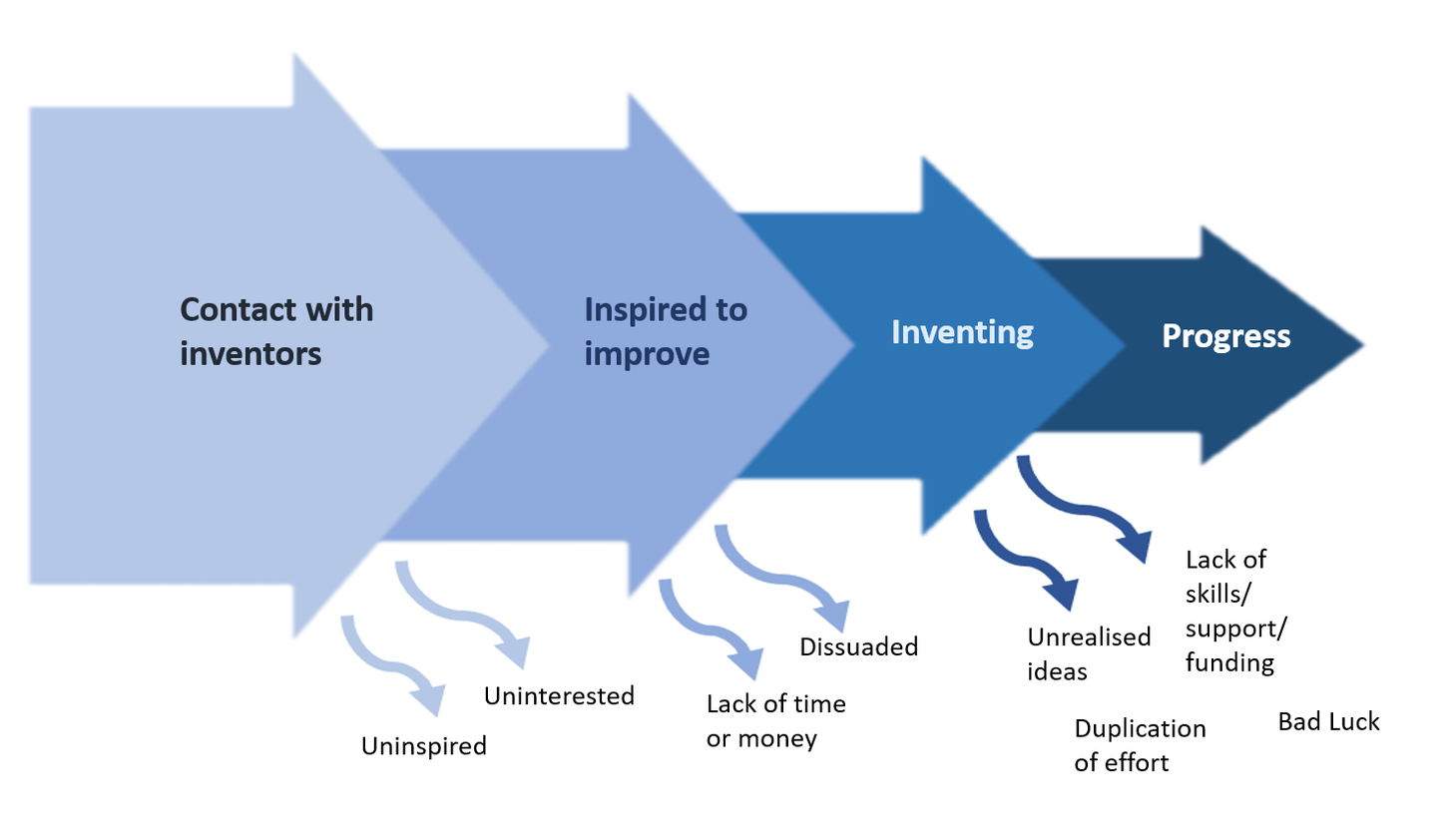
Core to the model is the observation that innovation spreads from person to person. It is a mentality, that we pick up from others. Of my sample of inventors, active c.1550-1850, the vast majority of them had had some kind of contact with an inventor before inventing anything themselves. So far, I’ve found evidence of that contact for about 83% of them, and for the remainder we frankly know next to nothing about them anyway. On the balance of probability, I suspect that all inventors had and continue to have such prior contact, even if the evidence has been lost to the mists of time.

Supposing I’m right about this — and there’s also more recent evidence from the largest and most detailed ever study of modern American inventors to support it — then such exposure to an inventor is the ultimate cause of innovation. Everything else we worry about when promoting innovation, from funding to intellectual property rights, or from education to social acceptance, is in a sense downstream of it.

Absent any exposure to inventors, people simply don’t become inventors. Knowing about invention as an activity is a necessary precondition to becoming an inventor yourself. The vast majority of people never innovate, for the very simple reason that it never occurs to them to do so. People are faced with problems all the time, but they generally have all sorts of pre-existing responses to them. Famine? The millennia-old response was to tighten belts or starve. Not to try to innovate with agricultural techniques. Trade route collapse? The millennia-old response was to take the hit, or try to shift to other familiar markets. Not to try to send ships into the icy unknown. As I’ve noticed time and time and time again, necessity is not the mother of invention. It only appears that way in retrospect — it’s when faced with a crisis that pre-existing inventors step forth to solve problems in ways they had already been investigating. Without them, there would be no such innovative response. Crises have an effect on the direction of invention — that is, on what problems people identify and then try to solve — but not on its underlying supply.

But this is not to say that exposure to an inventor is sufficient. Supposing you do meet an inventor. Your contact might be too fleeting to have an impact, or you might not be predisposed to be inspired by them. You might lack curiosity, or be distracted by some other preoccupation. Or perhaps the inventor you met might not be an especially inspiring person. Some people are simply more interesting than others. So from an initial spring of people who come into contact with inventors, we can immediately narrow the flow of new inventors down to those for whom such exposure actually had an impact.

But we then have to narrow it down further. Of the people who have met an inventor and been inspired by them, some might be distracted by other activities, or be dissuaded by social barriers, or lack the resources to tinker around with things, whether it be money or time.

« Newer PostsOlder Posts »

Powered by WordPress