
There is no such thing as learning loss. Our kids didn’t lose anything [during the pandemic]. It’s okay that our babies may not have learned all their times tables. They learned resilience. They learned survival. They learned critical-thinking skills. They know the difference between a riot and a protest. They know the words insurrection and coup.
So says Cecily Myart-Cruz, president of the United Teachers Los Angeles union. A union representing 33,000 teachers and associated educational staff.
“Education is political”, says Ms Myart-Cruz, who boasts of her ability to act with near-impunity, and whose list of Intolerable Things includes cognitive testing, “structural racism”, border controls, policing, and the supposed “privilege” of parents who would like their children to actually learn things, including times tables. Our Mistress Of Higher Purpose struggles to comprehend why parents might object to their children’s education, even in basic skills, being supplanted by the nakedly self-serving and increasingly weird activism of the people paid to teach them those basic skills. Instead, she endorses claims that such objections must be driven by “white-supremacist thinking”.
David Thompson, “Activism Farms”, DavidThompson, 2021-08-31.
December 1, 2021
QotD: When mere teaching isn’t enough, indoctrination takes over
November 30, 2021
Dynamite Luke Dillon and the Welland Canal
The History Guy: History Deserves to Be Remembered
Published 29 Nov 2021Around 7 in the evening on April 21, 1900 two large explosions rocked the hamlet of Thorold, Ontario. It was an act of terrorism, an attempt to breach the locks of the Welland canal — a ship canal connecting Lake Ontario to Lake Erie, allowing ships to bypass Niagara Falls. Three men were arrested, but who were these “dynamitards”? It would be two years before the identity of their notorious leader would be revealed.
This is original content based on research by The History Guy. Images in the Public Domain are carefully selected and provide illustration. As very few images of the actual event are available in the Public Domain, images of similar objects and events are used for illustration.
You can purchase the bow tie worn in this episode at The Tie Bar:
https://www.thetiebar.com/?utm_campai…All events are portrayed in historical context and for educational purposes. No images or content are primarily intended to shock and disgust. Those who do not learn from history are doomed to repeat it. Non censuram.
Find The History Guy at:
Patreon: https://www.patreon.com/TheHistoryGuy
Please send suggestions for future episodes: Suggestions@TheHistoryGuy.netThe History Guy: History Deserves to Be Remembered is the place to find short snippets of forgotten history from five to fifteen minutes long. If you like history too, this is the channel for you.
Awesome The History Guy merchandise is available at:
https://teespring.com/stores/the-hist…Script by THG
#history #thehistoryguy #Canada

The Elgin Marbles
In The Critic, Zachary Hardman outlines the history of the Elgin Marbles and why the Greek government is re-opening the campaign to retrieve them from the British Museum:
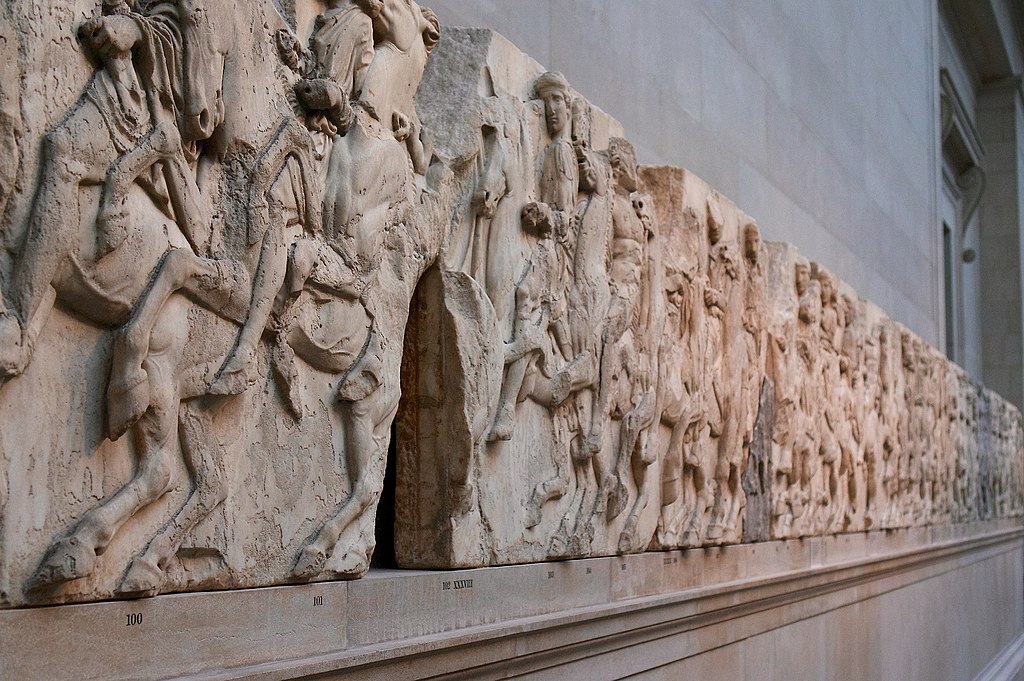
Some of the sculptures in the Elgin Marbles collection on display in the Duveen Gallery of the British Museum.
Photo by Paul Hudson via Wikimedia Commons.
Last week, the Greek Prime Minister, Kyriakos Mitsotakis was in London, with only one thing on his mind: the return of the so-called “Elgin Marbles” to Athens. 2021 is the two-hundredth anniversary of Greek independence, when the country liberated itself from the yoke of the Ottoman Empire and, for Athens, there would be no better birthday present than the restitution of the lost marbles.
The dispute about their rightful ownership is as old as the modern Greek state. In the early 19th century, the British Ambassador Lord Elgin was granted permission by Athens’ Ottoman rulers to remove half the remaining marble sculptures from a frieze on the Parthenon, the ruined ancient temple, which still adorns the Acropolis, the rocky outcrop overlooking the city.
Elgin had the marbles shipped to Britain. The journey, though, proved difficult. They were transported via Malta where, following a shipwreck, they spent a brief sojourn at the bottom of the Mediterranean Sea. The rescue mission was ruinously expensive. Elgin intended to furnish his ancestral Scottish home with the marbles. On second thoughts, though, he cut his losses and sold them to the British Museum.
Public opinion was divided. Lord Byron wrote two poems denouncing Elgin. His supporters, meanwhile, claimed the marbles were saved from further damage at the hands of warring Greeks and Turks, who didn’t appreciate them anyway. The Greeks, understandably, took a dim view of this. Since the 1980s they have waged a sustained PR offensive for the return of the marbles. An impasse, though, remains.
To break it, Mitsotakis would do well to consider the insights of the ancient rhetoricians. Athens, of course, was the birthplace of not only democracy, but rhetoric: the art of persuasion. The philosopher Aristotle, who wrote the original guidebook on the subject, said it was about identifying “the means of persuasion in any given case”. It is the task of modern Athens to work out who it must persuade and what of.
The fresh campaign began with the Government. In Downing Street, after all, lives a man Mitsotakis regards a “true philhellene”. The return of the marbles, the Greek Prime Minister said, after a meeting with Johnson, would be a “coup” for “global Britannia”. Flattery, however, has its limits. The British Government is unwavering in its support for the Museum. Mitsotakis, however, was undeterred.
The Surprising and Forgotten History of Helium
The History Guy: History Deserves to Be Remembered
Published 28 Jun 2019Humanity didn’t recognize the second most abundant element in the known universe until the nineteenth century. A significant source on earth wasn’t discovered until 1903. The discovery and understanding of the element helium played a central role in some of the most important scientific discoveries of the modern era, and helium continues to change the world today.
This is original content based on research by The History Guy. Images in the Public Domain are carefully selected and provide illustration. As images of actual events are sometimes not available, images of similar objects and events are used for illustration.
All events are portrayed in historical context and for educational purposes. No images or content are primarily intended to shock and disgust. Those who do not learn from history are doomed to repeat it. Non censuram.
Find The History Guy at:
Patreon: https://www.patreon.com/TheHistoryGuy
The History Guy: History Deserves to Be Remembered is the place to find short snippets of forgotten history from five to fifteen minutes long. If you like history too, this is the channel for you.
Awesome The History Guy merchandise is available at:
teespring.com/stores/the-history-guyScript by THG
#thehistoryguy #helium #science

QotD: Getting to dystopia
I’d like to pick up on that first thought of mine: When I was a kid and watched sci-fi movies set in a futuristic dystopia where dehumanized individuals are mere chattels of an unseen all-powerful machine policed by commissars in identikit variety-show tinfoil suits in a land where technology has advanced but liberty has retreated, I always found the caper less interesting than the unseen backstory: How did they get there from here? And […] we’re now in the getting-there-from-here phase.
Things are changing very fast. And, if we don’t fully understand why they’re changing and where they’re heading, we’re going to end up in one of those dehumanized dystopias — and very soon.
Mark Steyn, “Live Around the Planet: Tuesday January 22nd”, Steyn Online, 2019-01-22.
November 29, 2021
A Historical Tour of Hagia Sophia
toldinstone
Published 28 Nov 2020You’ve heard about Hagia Sophia‘s famous dome. But what about the miraculous column, the Viking graffiti, and the portrait of Byzantium’s worst emperor?
For more on Roman art and architecture, check out my book Naked Statues, Fat Gladiators, and War Elephants: Frequently Asked Questions about the Ancient Greeks and Romans.
https://www.amazon.com/Naked-Statues-…
If you’re so inclined, you can follow me elsewhere on the web:
https://www.patreon.com/toldinstone
https://www.reddit.com/r/AskHistorian…
https://www.instagram.com/toldinstone/
https://www.goodreads.com/author/show…Chapters:
0:00 Introduction
0:49 Justinian and his church
2:55 Construction of Hagia Sophia
4:11 Exterior
4:49 Exonarthex
5:14 Narthex
5:51 Vestibule of the Warriors
6:36 Imperial Gate
7:53 The Nave and Dome
10:37 Omphalos
11:12 Apse Mosaics
12:00 Column capitals
12:25 Weeping Column
13:07 Galleries
13:42 Gates of Heaven and Hell
14:01 Deësis mosaic
14:29 Tomb of Dandolo
15:14 Imperial mosaics of the South Gallery
17:28 Nordic runes
17:50 Alexander mosaic
18:26 ConclusionThanks for watching!

Giovanni Gentile, “the ideological father of Fascism”
Emmanuel Rincón on the Italian philosopher who created the ideological underpinnings of Benito Mussolini’s Fascist movement:
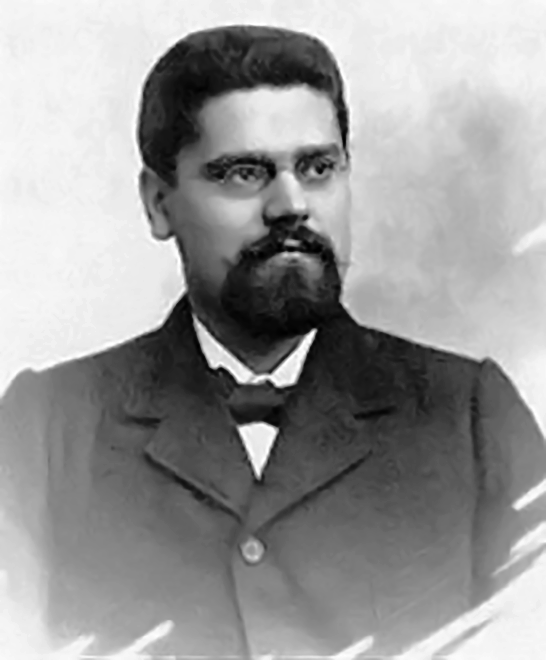
Giovanni Gentile
Undated photograph probably before 1930 via Wikimedia Commons.
Giovanni Gentile, a neo-Hegelian philosopher, was the intellectual author of the “doctrine of fascism”, which he wrote in conjunction with Benito Mussolini. Gentile’s sources of inspiration were thinkers such as Hegel, Nietzsche, and also Karl Marx.
Gentile went so far as to declare “Fascism is a form of socialism, in fact, it is its most viable form.” One of the most common reflections on this is that fascism is itself socialism based on national identity.
Gentile believed that all private action should be oriented to serve society. He was against individualism, for him there was no distinction between private and public interest. In his economic postulates, he defended compulsory state corporatism, wanting to impose an autarkic state (basically the same recipe that Hitler would use years later).
A basic aspect of Gentile’s logic is that liberal democracy was harmful because it was focused on the individual which led to selfishness. He defended “true democracy” in which the individual should be subordinated to the State. In that sense, he promoted planned economies in which it was the government that determined what, how much, and how to produce.
Gentile and another group of philosophers created the myth of socialist nationalism, in which a country well directed by a superior group could subsist without international trade, as long as all individuals submitted to the designs of the government. The aim was to create a corporate state. It must be remembered that Mussolini came from the traditional Italian Socialist Party, but due to the rupture with this traditional Marxist movement, and due to the strong nationalist sentiment that prevailed at the time, the bases for creating the new “nationalist socialism”, which they called fascism, were overturned.
Fascism nationalized the arms industry, however, unlike traditional socialism, it did not consider that the state should own all the means of production, but more that it should dominate them. The owners of industries could “keep” their businesses, as long as they served the directives of the state. These business owners were supervised by public officials and paid high taxes. Essentially, “private property” was no longer a thing. It also established the tax on capital, the confiscation of goods of religious congregations and the abolition of episcopal rents. Statism was the key to everything, thanks to the nationalist and collectivist discourse, all the efforts of the citizens had to be in favor of the State.
Why was the Roman Legionary’s equipment so good?
Epimetheus
Published 3 Nov 2019Arms & Armor of the Imperial Roman Legionary
The Ancient Roman legionary’s clothing, arms, armor, and equipment (Top 10 items) mini-documentary
#Legionary #documentary #RomeThis video is sponsored by my patrons on Patreon
https://www.patreon.com/Epimetheus1776
From the comments:
Epimetheus
1 year ago (edited)Check Out my video on Republican Roman Infantry:
https://youtu.be/APuh6rokd_wAdditional info/and sources
Rounded metric Conversion for units mentioned:
Typical March: 20-30 miles(32-48 km) in a day
Training march distance and load: 22 miles = 35 km, 45 pounds = 20 kg
Full campaign max carried load per Legionary: 65-100 lbs = 27-45 kgsOne thing I wrote in the script, recorded and edited out by accident was that … when a Roman Legionary was dishonorably discharged (thrown out of the legion for bad behavior) his belt was confiscated by the legion which did not want him to be associated with the Roman State.
Sources:
Roman Military Clothing by Graham Sumner
Greece and Rome at War by Peter Connolly
Roman Legionary by Ross Cowan
The Legionary by Peter Connolly
The Gladius (The Roman short sword) by MC Bishop
Warfare in the Classical World by John Warry
Caesar’s Legions by Sekunda, Northwood and SimkinsMisspelled Inches as inces and Cohort as Chohort

QotD: The law
It is not that anyone imagines the law to be just. Everyone knows that there is one law for the rich and another for the poor. But no one accepts the implications of this, everyone takes it for granted that the law, such as it is, will be respected, and feels a sense of outrage when it is not. Remarks like “They can’t run me in; I haven’t done anything wrong”, or “They can’t do that; it’s against the law”, are part of the atmosphere of England. The professed enemies of society have this feeling as strongly as anyone else. One sees it in prison-books like Wilfred Macartney’s Walls Have Mouths or Jim Phelan’s Jail Journey, in the solemn idiocies that take place at the trials of Conscientious Objectors, in letters to the papers from eminent Marxist professors, pointing out that this or that is a “miscarriage of British justice”. Everyone believes in his heart that the law can be, ought to be, and, on the whole, will be impartially administered. The totalitarian idea that there is no such thing as law, there is only power, has never taken root. Even the intelligentsia have only accepted it in theory.
George Orwell, “The Lion And The Unicorn: Socialism and the English Genius”, 1941-02-19.
November 28, 2021
A bit of perspective on the loss of the British F-35 from HMS Queen Elizabeth
At the Thin Pinstriped Line, Sir Humphrey offers a bit of historical perspective on peacetime aircraft losses:

Royal Navy aircraft carrier HMS Queen Elizabeth (R08) underway in the Atlantic on 17 October 2019, participating in exercise “WESTLANT 19”.
Photo by Mass Communication Specialist 3rd Class Nathan T. Beard, US Navy, via Wikimedia Commons.
If you look at historical data, then it shows that for decades, flying fast jets was an exceptionally dangerous occupation. In 1956 the RAF lost six Hawker Hunter aircraft in the space of just 45 minutes. These were just six of no less than 380 British military aircraft and helicopters lost in 1956, which averages out at more than one aircraft lost every day of the year – and this was not an unusual year.
Fast jet flying is and always has been an extremely dangerous business, which requires the highest levels of safety, standards and training to carry out. Over the intervening decades there has been a general decline in losses due to changes in equipment, reliability of machinery and different ways of operating, particularly with new technology, but there is still an element of risk. In particular the Martin Baker ejection seat is worth mentioning – this incident reminds us of the many lives this British company is responsible for saving over many decades.
Carrier aviation in particular remains an extremely dangerous occupation, even if crash rates have dropped. It is important to understand that the combination of fast jets, large warships and complex operating conditions can, and do, sometimes go wrong. We must not assume that aircraft will not crash anymore.
The Wikipedia page covering military aviation accidents for the period 2010-2019 is a good read to understand how risky military aviation is, and how many aircraft have been lost globally during this period.
That said, the current crop of modern British fast jets like the F35 and Typhoon have a phenomenal safety record, being operated in hugely demanding conditions around the globe for many years, and with only a handful lost. It is very telling that the loss of an aircraft is something that has gone from the utterly routine and barely newsworthy, to something that can dominate the media cycle for several days and generate huge national media coverage.
The theme on social media has been peculiar — there have been many posters talking about how embarrassing it is for the UK, or that its somehow a national disgrace that the aircraft crashed, particularly with the US embarked as well. This is utter nonsense – there is no embarrassment in a pilot taking a decision to eject in order to save his life. That is absolutely the right thing to do, and anyone who thinks otherwise has clearly never been faced with the decision on whether to eject or not.
There has been some coverage suggesting that the F35 programme is troubled in some way and that this is a setback for it. Again, this is nonsense – the aircraft first flew 15 years ago, and well over 700 have now been produced flying over 400,000 flying hours. In this time, a total of 5 aircraft (3 American, 1 Japanese and 1 British) have been lost – this is an under 1% loss rate, or one aircraft lost for every 80,000 hours in the sky.
By way of contrast, the Sea Vixen, a British jet used for carrier operations was in service from 1959-1971. Of the 145 aircraft built and operated, no less than 55 were lost in accidents in this period – a loss rate of around 38% of the whole force in just 12 years.
Bigger Than Uranus? – Mars – WW2 – 170 – November 27 1942
World War Two
Published 27 Nov 2021Last week’s counterattack was just the beginning, for the Soviets launch another giant offensive this week. And things look bad for the Axis powers in the south of the USSR. Meanwhile in France, the French scuttle their navy rather than allow it to fall into German hands.
(more…)
Cambridge University “uncancels” Jordan Peterson
Arif Ahmed explains why Cambridge originally “cancelled” Jordan Peterson and recently how that cancellation was overcome:

Jordan Peterson speaking at an event in Dallas, Texas on 15 June, 2018.
Detail of a photo by Gage Skidmore via Wikimedia Commons.
The Peterson cancellation was one of several troubling events at that time which spurred some of us at Cambridge to fight back. Not only because we wanted Peterson to be able to visit Cambridge, but also because we wanted anyone whom any academic saw fit to invite to be able to visit. It should never have been up to the university authorities to dictate what academics can discuss or whom we can discuss it with.
And so we began a long and at first lonely campaign to realign this ancient and great institution with freedom of speech, freedom of conscience and freedom of thought.
Our battle has borne fruit. In late 2020 Cambridge adopted a new, liberal free-speech policy that protected our right to invite speakers of our choosing, and prevented the university from cancelling an invitation that had been accepted. In May this year, the vice-chancellor took prompt and decisive action to remove a policy aimed at policing “microaggressions”. And then in the autumn, Jordan Peterson announced that he was planning to visit the university, at the invitation of Dr James Orr at the Faculty of Divinity.
That visit has now occurred. And thanks principally to the courage and energy of Dr Orr it has been a tremendous success.
I saw Peterson speak twice on his Cambridge visit. He spoke passionately, at length and without notes, to rapt audiences. He engaged the crowd with care and warmth. His seminars were a model of academic engagement. There was a lively, disputatious and often rigorous battle of ideas that ranged from the neuroscience of perception via William Empson and 17th-century counterpoint to Mesopotamian creation myths.It seemed that everywhere Peterson went in Cambridge there were students who wanted to learn from him, to argue with him and sometimes to be photographed next to him (I advised him to check their t-shirts before posing). There were no protests, unless you count one silly but brave student popping up in a lecture wearing a lobster outfit.
One striking thing about Peterson’s lectures is the contrast between the forcefulness of his speech and the moderateness of the content. He espouses a moderate conservatism focused on self-discipline, on seeing the value in yourself and in others, and on finding meaning in life. And he connects religion with all of these things. He is no right-wing firebrand.
At his lecture on Tuesday night it became clear how much the tide has turned. In Cambridge’s largest lecture hall, before a sold-out audience, the first people to speak were the university proctors. The proctors hold an 800-year-old office whose principal duty is to uphold free speech in the university – as they reminded us in their speech. Their presence was the clearest possible signal that, this time around, the university fully supported Peterson’s invitation and his right to speak. The contrast with his cancellation just two years ago could hardly have been greater.
Free speech has won another victory at Cambridge.
SA80 History: XL70 Series Final Prototypes (Individual Weapon and LSW)
Forgotten Weapons
Published 13 May 2017Armament Research Services (ARES) is a specialist technical intelligence consultancy, offering expertise and analysis to a range of government and non-government entities in the arms and munitions field. For detailed photos of the guns in this video, don’t miss the ARES companion blog post:
http://armamentresearch.com/british-e…
By 1980, the scheduled deadline for adopting the L85 and L86 was rapidly approaching, and the weapons should have been in the last stages of fine-tuning before production began. This was not the case, however — testing was still uncovering critical problems in the guns.
The goal for these weapons was 8000 MRBF (Mean Rounds Between Failure) for the LSW and 2500 MRBF for the IW. As real testing began, the numbers were actually 100-300 MRBF. In many cases, the guns could not run three magazines in a row without a malfunction, and this was literally an order of magnitude below the requirements. But what truly led to the massive problems with the L85/86 was that RSAF Enfield did not fix these problems. Instead, they moved the goalposts. With so many problems, it was decided to only count malfunctions that occurred in the endurance testing (ie, when the guns were not put under any environmental stress at all) and to only count “critical” malfunctions in the tally. A “critical” failure was one which could not be resolved by the shooter, such as a split barrel. Simple feed or ejection failures were not counted, nor were malfunctions that required gun disassembly to correct. Even under this new paradigm, MRBF over 3000 could not be achieved.
In addition, the LSW was showing a problem that would become endemic; split groups. The weapon shot very good groups in semiautomatic, but in full auto fire it would produce two discreet groups. The first shot in each burst would land about 6 minutes of angle low and right compared to the remaining rounds in the group. This would be the subject of significant work, and was never fully rectified.
http://www.patreon.com/ForgottenWeapons
Cool Forgotten Weapons merch! http://shop.bbtv.com/collections/forg…
If you enjoy Forgotten Weapons, check out its sister channel, InRangeTV! http://www.youtube.com/InRangeTVShow

QotD: Hidden political pay-offs as “book advances”
True advances are, well, advances against expected future royalties. That’s why they’re called “advances”.
People expect that a J.K. Rowling book will produce at least $5 million in royalties, so you give her a $5 million advance on those royalties. You’re giving her a payment on her royalties in advance of actually seeing those sales.
But you do expect them.
You don’t pay her fresh royalties until the royalties she generates exceeds the initial advance on royalties you paid her.
When she makes $5 million and one hundred dollars, you send her a fresh check for one hundred dollars.
When these major media conglomerates, all left-leaning and most with business before the government, give millions to Hillary Clinton and Hunter Biden and Andrew Cuomo, there is no one at that company that expects the books will ever make that much in royalties.
They’re just payoffs. Or disguised political donations.
It’s not an “advance” if you cannot show a plausible stream of sales which will meet or exceed that “advance”.
Personally, I’d love to see some kind of law on this subject to force these large media corporations to prove that they have a genuine, rational belief that a Hunter Biden book will make $10 million in sales (which would justify a million dollar advance, assuming a royalty of 10%).
And I’d like to see their corporate officers sign certifications for the government that they’re not fudging the numbers. And that they understand that there might be prosecutions for perjury if they do lie about expected future royalties.
Much like people in the financial sector are constantly required to sign.
Why should media corporations be immune from such requirements?
And I’d love to see these disguised campaign donations treated and limited just like actual campaign donations.
Or, better yet: No “advances” for serving politicians, declared politicians who are running, or any politician ten years after his term of service ends. They can just take their royalty checks as royalties actually accrue.
If Hunter Biden really sells $10 million in books — LOL — then he’ll get that million dollars eventually in royalty payments. They’ll just come over the course of a year or two rather than all at once in an “advance” on future earnings.
If not — then not.
This isn’t stopping them from getting paid for books they sell — it’s to stop mega-media-corporations with business before the government, and a strong desire to pay off politicians they like, from giving “advances” to favored politicians that bear no relationship whatsoever to the actual expected royalties the books will generate.
Ace, “Ethics Agency Might Claw Back Cuomo’s $5 Million ‘Advance’ For His ‘Book'”, Ace of Spades H.Q., 2021-08-27.
November 27, 2021
Americans fear the power of “Big Oil” and other cartels. Canadians rejoice under the buttery thumb of “Big Dairy”
Jen Gerson hates Canada’s supply management “system” with the heat of a thousand suns. And she’s perfectly right to do so:

Former federal Conservative Party leader Andrew Scheer, paid tool of Big Dairy, chugs some milk during a Press Gallery speech in 2017. I’ve called him the “Milk Dud” ever since.
Screencapture from a CTV video uploaded to YouTube.
Many of you readers have listened to the likes of me complain about supply management over the years, but for those of you whose eyes glazed over until you started to notice your rent money disappearing into your grocery bill, here’s a very quick primer.
The supply management system insulates eggs, dairy, and poultry from the vicissitudes of the free market, assuring established farmers in these few sectors a guaranteed return to produce a pre-ordained supply of these products. The federal and provincial governments oversee the system via various dairy commissions.
Some government involvement in dairy has been a feature of our agricultural system since the late 19th century, however the system as it exists today came into effect in the ’70s. It consists, broadly, of three policy mechanisms. Prices are set internally to assure farmers receive a healthy profit for their labour, farmers are protected from competition though ruinous import tariffs, and then supply is managed via a quota system.
As one might expect, this has created extraordinary economic distortions, assuring that a container of milk in Canada is radically more expensive than an identical product south of the border. (Yes, American milk is subsidized too, although less than it once was. And from a consumer’s perspective, so what? If the Americans want to subsidize cheap milk to send north, all the better for shoppers.)
In order to keep production at a steady level, the system has to keep newer, cheaper players from entering the market, and this is accomplished via a quota system that has led to absurd economic incentives and outcomes. According to this report from the Canadian West Foundation from 2016, the quota was valued at about $28,000 per cow. That means that the value of the right to own one milk-producing cow far outweighed the actual value of the animal — and someone seeking to start a dairy farm would need to pay for millions of dollars worth of quota in addition to cows, land, food, and farm equipment.
The quotas themselves are a multi-billion dollar racket; this is roughly akin to the way a license to run a taxi costs hundreds of thousands of dollars in some cities, many multiples of the value of the car itself. When a government creates a regulatory system that imposes artificial scarcity, the value of the thing regulated radically increases.
Since the supply management system was introduced, much of the agriculture has consolidated; this, combined with the value of the quotas they possess mean that most dairy farms — far from being quaint, picturesque family homesteads — are multi-million dollar operations, with farmers themselves making six-figure profits after paying their own wages.
The system has also proved a obstacle in multiple free-trade deals, arguably making it difficult for other agriculture sectors to compete globally.
And who pays for all of this?
Well, of course, you do.


