Quotulatiousness

December 28, 2021

“After the Second World War, the architecture-industrial complex … began a massive rebuilding of major cities”

Filed under: Architecture, Britain, Europe, History — Tags: , , , , — Nicholas @ 03:00

In The Critic, Nikos A. Salingaros decries “architectural urbanicide”:

Cumbernauld Shopping Centre, voted as Britain’s most hated building.
Photo by Ed Webster via Wikimedia Commons.

Biological life transforms energy from the sun into complexes of organic materials that either metabolize while remaining relatively fixed, or move about and eat each other. Human energy creates the analogous case of artifacts and buildings, which give us a healing effect akin to the feedback experienced from our interaction with biological organisms. This positive emotion corresponds to the mechanism of “biophilia”.

Women grow and nurture the human baby. They are predisposed to appreciate the created life form through an intense bond of love through beauty. Most people — though not all, a notable exception being the architect Le Corbusier — love babies and have a built-in reflex of smiling at the sight of one, even if it’s not their own. Beauty is inseparable from creation and life.

Established architecture in our times, and for a century before now, has been an almost exclusively male domain, dominated by sheer power. The profession has aligned itself with ideology and extractive money interests. A design movement that ignores living structure took dominance after World War II. It thrives through global consumption. Mathematical analysis can measure very precise living qualities embedded in design and materials, such as fractal scaling, multiple nested symmetries, color harmonization, organized details, vertical axis, etc. Recent experimental tools of eye-tracking and artificial intelligence using Visual Attention Software determine which designs attract the eye unconsciously, and which remain uninteresting to our sophisticated brain evolved for survival.

[…]

After the Second World War, the architecture-industrial complex of building and real estate industries began a massive rebuilding of major cities. This freed up real estate for new construction, an activity that enriched a certain section of society. Working with politicians at all levels, architectural review boards did not value traditional buildings, nor those in any of several new but non-modernist form languages. Any qualms about the irreversible destruction of the life of cities were offset by the media convincing the population that this was an inexorable and much desired move towards progress. Anybody opposing this program of architectural substitution — replacing living by dead structure — was labeled an obscurantist reactionary. The promised utopia seduced academia to join this campaign. People failed to realize that an ideology ostensibly linked to Marxist beliefs was driven by ruthless industry manipulation.

Nevertheless, architects don’t tear down buildings: it is real estate speculators who do. Those corporate entities are amoral, willing to do anything for profit. It’s not their responsibility to save valuable older buildings; that task falls upon society, which has failed miserably in this duty. The various mechanisms that are supposed to protect a perfectly sound and health-inducing building become a cruel joke when such a building is demolished. A decision is taken outside the light of public scrutiny, while implementing the strategy of the fait accompli — after the bulldozers and wreckers, it’s too late to do anything.

The story of the systematic destruction of the UK’s architectural heritage is long and ugly. To mention just one example, the corrupt Newcastle City Council Member Thomas Daniel Smith managed to erase large swaths of central city districts and replace them with cheaply-built glass-and-steel monstrosities before he was jailed in 1974. Smith worked closely with dishonest — and extremely successful — architect John Poulson, who was also jailed in 1974. He appealed directly to democratic and liberal sentiments to further his ambitions, and the political class at the time fell for his manipulations. This sordid story repeats, with only minor variations, except that the other urbanicides were never prosecuted.

Tank Chat #137 | Achilles | The Tank Museum

Filed under: Britain, History, Military, USA, Weapons, WW2 — Tags: , — Nicholas @ 02:00

The Tank Museum
Published 10 Sep 2021

Catch up with David Fletcher for this week’s Tank Chat on the M10 Achilles, a joint enterprise between the Americans and the British to create a Tank Destroyer, and discover how the British Achilles varied from the American M10.

00:00 – Intro
00:32 – What is the M10
05:52 – Features of Achilles
(more…)

QotD: Football, Minnesota Viking style

Filed under: Football, Humour, Quotations — Tags: , — Nicholas @ 01:00

Little is surprising about a Vikings game filled with mistakes and missed opportunities. But when the Vikings aren’t the team blowing tackles, committing ill-timed penalties and failing to take advantage of an opponent’s errors, things certainly seem amiss.

Tom Pelissero, “Vikings rediscover winning ways”, KFAN Sports, 2005-01-10.

December 27, 2021

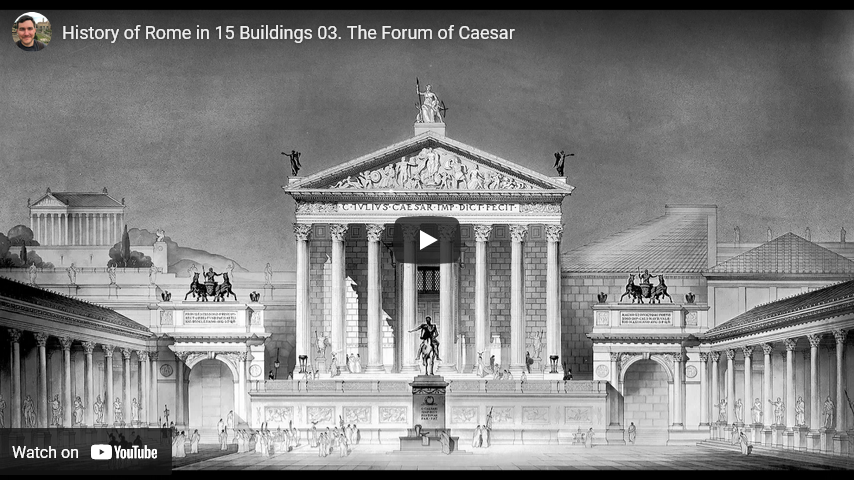
Celebrating Saturnalia with Cato’s Globi

Filed under: Europe, Food, History — Tags: , , , , , — Nicholas @ 04:00

Tasting History with Max Miller
Published 15 Dec 2020

Help Support the Channel with Patreon: https://www.patreon.com/tastinghistory
Tasting History Merchandise: crowdmade.com/collections/tastinghistory

Follow Tasting History here:
Instagram: https://www.instagram.com/tastinghist…
Twitter: https://twitter.com/TastingHistory1
Reddit: r/TastingHistory
Discord: https://discord.gg/d7nbEpy

LINKS TO INGREDIENTS & EQUIPMENT**
Canon EOS M50 Camera: https://amzn.to/3amjvwu
Canon EF 50mm Lens: https://amzn.to/3iCrkB8
Safflower Oil: https://amzn.to/39Lcsiz
Spelt Flour: https://amzn.to/3ggzPBO
Poppy Seeds: https://amzn.to/37DyG3q
Pokemon plushie: www.pokemoncenter.com

LINKS TO SOURCES**
De Agricultura by Cato the Elder: https://amzn.to/3qxL5P5
Saturnalia by Macrobius: https://amzn.to/39N6Pkb
The Twelve Ceasars by Seutonius: https://amzn.to/39MQBat
**Amazon offers a small commission on products sold through their affiliate links, so each purchase made from this link, whether this product or another, will help to support this channel with no additional cost to you.

Subtitles: Jose Mendoza

GLOBI
ORIGINAL 2ND CENTURY BC RECIPE (From De Agricultura by Cato the Elder)
Globi to be made thus: Mix the cheese and spelt in the same way. Make as many as desired. Pour fat into a hot copper vessel, and fry one or two at a time, turning them frequently with two sticks, and remove when done. Coat with honey, sprinkle with poppy-seeds, and serve.

MODERN RECIPE
INGREDIENTS
– 1 Cup (240g) Ricotta Cheese
– 1 Cup and 1 tablespoon (120g) Spelt, Durum or other whole grain flour
– 1 Quart (1 L) of fat or oil
– 1/3 Cup (80ml) Honey
– Poppy Seeds

METHOD
1. Mix the cheese and flour in a large bowl, then form it into balls about 1 inch across. This recipe should make 12-15 balls.
2. Heat the oil over a high heat until it reaches 350°F (175°C). Turn heat to medium and fry two to three balls at a time, turning every 10 to 15 seconds with tongs. At 60 seconds, begin to check the color; once they are a golden brown (60-90 seconds) take them out and set them on a wire rack over paper towels to drain. Repeat until all of the globi are fried.
3. Dip the dried globi in honey (heating the honey can help if it is too thick). Then sprinkle with poppy seeds and serve.

PHOTO CREDITS
Saturn: By inconnu – User:Jean-Pol GRANDMONT (2011), CC BY 3.0, https://bit.ly/39OKgLF
A Statue of Chronos: By Rufus46 – Own work, CC BY-SA 3.0, https://bit.ly/3giv9eH
Pileus: By Marie-Lan Nguyen (2009), CC BY 2.5, https://bit.ly/3osYo1l
Roman Collared Slaves: Ashmolean Museum, CC BY-SA 2.0 https://bit.ly/36OoIgz
Candles Oberflacht: Landesmuseum Württemberg, CC BY-SA 3.0 https://bit.ly/2Lf9yZp
Roman Figurines: Carole Raddato from FRANKFURT, Germany, CC BY-SA 2.0 https://creativecommons.org/licenses/…

#tastinghistory #saturnalia #globi #romancooking

Prince Philip was born in Greece, but was never “of Greece”

Filed under: Britain, Europe, Greece, History, Middle East, Military — Tags: , — Nicholas @ 03:00

Aris Roussinos outlines the surprisingly complex history of Prince Philip’s family in Greece and explains why His Royal Highness could never really be considered Greek, despite the tabloid nickname “Phil the Greek”:

HRH Prince Philip, the Duke of Edinburgh, Colonel-in-Chief of the Royal Canadian Regiment, presenting the 3rd Battalion with their Regimental Colours, 17 April 2013. (via Wikipedia)

Though most people know that Prince Philip was born in Greece and almost immediately exiled, the precise circumstances of this leaving of his native country are surprisingly obscure. How many are aware, for example, that if Ataturk had lost the 1921 Battle of the Sakarya River, outside Ankara, not only would modern Turkey not exist, but neither would Princes Charles, William and Harry?

The existence of our future kings is the chance product of the tumult accompanying the collapse of the Ottoman Empire. It is a dramatic illustration of the Butterfly Effect, whereby random events on one corner of the European continent totally reshaped timelines on the other: indeed, we could declare the prime mover in the events that placed the Duke of Edinburgh as our Queen’s consort to be an aggrieved Greek monkey.

On 2 October, 1920, Prince Philip’s uncle, King Alexander of Greece, was taking the air in the grounds of the royal palace of Tatoi, outside Athens. His German Shepherd dog, Fritz, attacked a Barbary Macaque belonging to a member of his staff. As the King rushed to extract the screaming monkey from Fritz’s jaws, the macaque’s furious mate sunk its teeth into the king’s leg. Alexander contracted sepsis, and died just over three weeks later, throwing Greece into a succession crisis, and totally reordering the subsequent history of the Near East. As Churchill later wrote, “it is perhaps no exaggeration to remark that a quarter of a million persons died of this monkey’s bite”.

King Alexander’s septic leg, like the rest of the Greek royal family, possessed not a drop of Hellenic blood — something Prince Philip reportedly made clear to a Greek visitor to Buckingham Palace who dared to claim ethnic kinship with his host. Back when the small Balkan nation finally won its independence from the Ottoman Empire, in 1831, the European Great Powers had decided on the Bavarian Wittelsbach dynasty to rule the poor and volatile Greeks. When the Wittelsbach King Otto was forced from his throne by the revolution of 1862, the Great Powers reconvened, and chose the 17-year old Prince William of Denmark, Prince Philip’s grandfather, as Greece’s new king. As he would later instruct his children, “You must never forget that you are foreigners in this country, but you must make them [the Greeks] forget it.”

After the disastrous war against the Turks, six military leaders were tried and executed by firing squad, and Prince Philip’s father Prince Andrew, was accused of disobeying an order while in command of a Greek corps:

As the historian Michael Llewellyn-Smith noted in his excellent book on Greece’s Asia Minor campaign Ionian Vision, “whether or not Andrew had been guilty of insubordination, it was an absurd charge to bring fifteen months after the event, given that he had not been relieved of his command at the time.” On 3 December, Andrew took the stand. A staff officer, Colonel Kalogeras, stated that Andrew had refused to attack despite direct orders. Colonel Sariyannis and General Papoulas both attested that if Andrew had carried out Papoulas’ orders, the Greeks would have won the day at Sakarya. Andrew was unanimously found guilty of disobedience and abandoning his post and sentenced to be stripped of his rank and banished permanently from Greece.

Andrew expected to be executed in his cell at any moment. However, in the background, the Greek revolutionary General Nikaloaos Plastiras, a future three-time Prime Minister of Greece, had been negotiating with the British government, which had broken off formal diplomatic relations with Greece since the execution of the Six. They agreed that Andrew would be permitted to leave Greece on a British warship.

And so, a few months after his birth, Prince Philippos of Greece left Mon Repos, Corfu and Greece on the British destroyer HMS Calypso, along with his mother and father and into a life of exile. Philippos was, famously, carried onto the warship in an orange crate instead of a cot. His father Prince Andrew settled into a life of exile in France, writing a book Towards Disaster, translated by Philip’s mother Princess Alice, which aimed to justify his actions at Sakarya as necessary to avoid a pointless loss of life in a losing battle. When the monarchy was restored in Greece, Andrew refused a commission for Philip in the Hellenic Navy, saying “Never the Greek Navy! In the Greek Navy after a bit they would throw him out – that’s what they did to me, not once, as you know, or twice, but three times!”

Instead, Philip served gallantly in the Royal Navy during the Second World War, and was awarded the Greek War Cross for his actions at Cape Matapan. While his son Prince Charles became a benefactor of the Greek monastic republic of Mount Athos and frequent visitor to Corfu, and who is widely considered to be a Phillhellene with a strong mystical attachment to the Greek Orthodox faith of his grandparents, Prince Philip described himself as “a discredited Balkan prince of no particular merit or distinction”. For despite his nickname as “Phil the Greek”, he felt no great affection for the country and the uneasy crown it offered its foreign rulers. As he once said of the land of his birth and the mercurial people it contains, “I certainly never felt nostalgic about Greece. A grandfather assassinated and a father condemned to death does not endear me to the perpetrators.”

Great Celebrity Breakups: Winchester and John Browning

Filed under: Business, Europe, History, USA, Weapons — Tags: , , , , — Nicholas @ 02:00

Forgotten Weapons
Published 26 Aug 2021

http://www.patreon.com/ForgottenWeapons

https://www.floatplane.com/channel/Fo…

Cool Forgotten Weapons merch! http://shop.forgottenweapons.com

In August 1903, Thomas Bennett (head of the Winchester company) wrote a letter to his many distributors and agents explaining how Winchester had decided to part ways with the Browning Brothers, and how the company would certainly be better off as a result. The gun at the heart of the breakup was Browning’s new self-loading shotgun, the Auto-5. Browning would end up taking the design to FN, where it became a massive commercial success — but the whole story is really much more nuanced than most people recognize.

This isn’t simply a matter of Browning demanding a royalty arrangement, but rather much more …

Nathan Gorenstein’s biography of John Browning is available on Amazon: https://amzn.to/37Sx9XS

Contact:
Forgotten Weapons
6281 N. Oracle 36270
Tucson, AZ 85740

QotD: The purpose of an Eton education

Filed under: Britain, Education, Humour, Quotations — Tags: , , — Nicholas @ 01:00

My son at Eton writes to tell me that bodyguards are now being provided for Eton boys at the weekends. The headmaster, Mr. Michael McCrum, has employed a security firm to protect his pupils after complaints from worried parents about a series of attacks by local guttersnipes. The bodyguards are, of course, drawn from the poorer classes themselves, so now Etonians will be treated to the diverting spectacle of the lower orders bashing each other up at every street corner while they saunter past into a carefree, protected future. The whole purpose of an Eton education is to prepare boys for such a world.

Auberon Waugh, Diary, 1973-09-26.

December 26, 2021

A Red Christmas – WW2 – 174 – December 25, 1942

World War Two
Published 25 Dec 2021

The Soviet offensive Operation Mars is over; it has failed, but Operation Little Saturn has been such a success that the Axis are forced to cancel their own Operation, Winter Storm, which was to relieve the troops trapped in Stalingrad. They remain trapped because Adolf Hitler has now forbidden them from trying to break out. The Allies run into tough Axis defense in both Tunisia and on Guadalcanal, and a French bigwig is assassinated.
(more…)

Repost – The market failure of Christmas

Filed under: Economics — Tags: , , — Nicholas @ 03:00

Not to encourage miserliness and general miserability at Christmastime, but here’s a realistic take on the deadweight loss of Christmas gift-giving:

Christmas gifts under the tree.
Photo by Kelvin Kay via Wikimedia Commons.

In strict economic terms, the most efficient gift is cold, hard cash, but exchanging equivalent sums of money lacks festive spirit and so people take their chance on the high street. This is where the market fails. Buyers have sub-optimal information about your wants and less incentive than you to maximise utility. They cannot always be sure that you do not already have the gift they have in mind, nor do they know if someone else is planning to give you the same thing. And since the joy is in the giving, they might be more interested in eliciting a fleeting sense of amusement when the present is opened than in providing lasting satisfaction. This is where Billy Bass comes in.

But note the reason for this inefficient spending. Resources are misallocated because one person has to decide what someone else wants without having the knowledge or incentive to spend as carefully as they would if buying for themselves. The market failure of Christmas is therefore an example of what happens when other people spend money on our behalf. The best person to buy things for you is you. Your friends and family might make a decent stab at it. Distant bureaucrats who have never met us — and who are spending other people’s money — perhaps can’t.

So when you open your presents next week and find yourself with another garish tie or an awful bottle of perfume, consider this: If your loved ones don’t know you well enough to make spending choices for you, what chance does the government have?

You Suck at Christmas – You Suck at Cooking (episode 28)

Filed under: Food, Humour — Tags: , — Nicholas @ 02:00

You Suck At Cooking
Published 23 Dec 2015

A 100 percent full throttle high adrenaline speed chase through the history of christmas.

Wishing you all a great close to your year!

QotD: Boxing Week Sales

Filed under: Business, Humour, Quotations — Tags: , — Nicholas @ 01:00

I’ve done a few tours of duty behind a cash register. The job takes your soul, twists it like a wet chamois and runs it through the shredders they use to turn car hoods into tinfoil strips. […] When I lived out east, the relationship between cashier and customer was the same as that between a German gunner and the troops disembarking at Normandy.

James Lileks, “Backfence: Beyond new store’s hype, genuine smiles”, Minneapolis Star Tribune, 2004-08-03.

December 25, 2021

“Christmas Truce” – December 1914 – Sabaton History 107 [Official]

Filed under: Britain, France, Germany, History, Media, Military, WW1 — Tags: , , — Nicholas @ 04:00

Sabaton History
Published 24 Dec 2021

You’ve all heard about it, but here are the nuts and bolts for why and how it happened — the Christmas Truce on the Western Front in December 1914, the first Christmas of the Great War.

Support Sabaton History on Patreon: https://www.patreon.com/sabatonhistory

Listen to “Christmas Truce”: https://music.sabaton.net/ChristmasTruce

Watch the Official Music Video of “Christmas Truce” here: https://www.youtube.com/watch?v=HPdHk…

Listen to Sabaton on Spotify: http://smarturl.it/SabatonSpotify
Official Sabaton Merchandise Shop: http://bit.ly/SabatonOfficialShop

Hosted by: Indy Neidell
Written by: Markus Linke and Indy Neidell
Directed by: Astrid Deinhard and Wieke Kapteijns
Produced by: Pär Sundström, Astrid Deinhard and Spartacus Olsson
Creative Producer: Maria Kyhle
Executive Producers: Pär Sundström, Joakim Brodén, Tomas Sunmo, Indy Neidell, Astrid Deinhard, and Spartacus Olsson
Community Manager: Maria Kyhle
Post-Production Director: Wieke Kapteijns
Editor: Iryna Dulka
Sound Editor: Marek Kaminski
Archive: Reuters/Screenocean – https://www.screenocean.com

Sources:
– IWM NTB 178-2, IWM 205, Q 86849, Q 57165, Q 53616, Q 56198, Q 50720, Q 65834, Q 50719, Q 50721, Q 31575, Q 32613, Q 57361, Q 11718, Q 31576, Q 49581, Q 64568, IWM 130-01
– Santa vector created by vectorpocket – www.freepik.com

All music by: Sabaton

An OnLion Entertainment GmbH and Raging Beaver Publishing AB co-Production.

© Raging Beaver Publishing AB, 2019 – all rights reserved.

Repost – “Fairytale of New York”

Filed under: Europe, Media, USA — Tags: , , , — Nicholas @ 02:00

Time:

“Fairytale of New York,” The Pogues featuring Kirsty MacColl

This song came into being after Elvis Costello bet The Pogues’ lead singer Shane MacGowan that he couldn’t write a decent Christmas duet. The outcome: a call-and-response between a bickering couple that’s just as sweet as it is salty.

QotD: Blackadder and Melchet exchange Christmas greetings

Filed under: Britain, Humour, Quotations — Tags: , — Nicholas @ 01:00

Lord Edmund Blackadder: I trust Christmas brings to you its traditional mix of good food and violent stomach cramp.
Lord Melchet: Greetings of the season to you, Blackadder! May the Yule log slip from your fire and burn your house down!

Blackadder’s Christmas Carol, 1988.

December 24, 2021

How Hitler, Churchill, Roosevelt, and Stalin Spent Christmas – WW2 Special

Filed under: Britain, Germany, History, Military, Russia, USA, WW2 — Tags: , , , , , — Nicholas @ 06:00

World War Two
Published 23 Dec 2021

They might be four of the most powerful politicians and/or military leaders on earth, but they are also citizens of their respective countries and today we take a look at what they do over the traditional Christmas holidays in 1942.
(more…)

« Newer PostsOlder Posts »

Powered by WordPress