Quotulatiousness

May 8, 2023

Father Ted as Ireland’s answer to Fawlty Towers

Filed under: Europe, History, Humour, Media, Religion — Tags: , , , — Nicholas @ 03:00

Conor Fitzgerald on the tragically short run of the classic Irish comedy Father Ted:
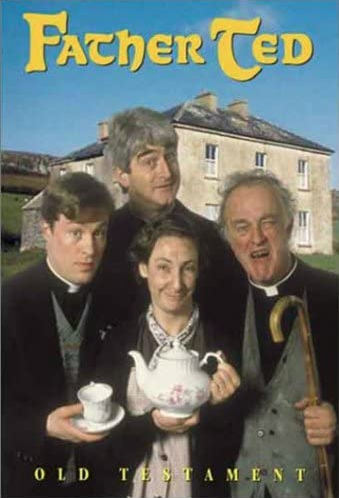
Fondly remembered and occasionally quoted, Father Ted has its place in the broad canon of the British sitcom. But in Ireland, even 25 years since its finale, it has always been so much more. Its status is closer to Fawlty Towers in England or Cheers in the United States: the national sitcom, a piece of light entertainment that nevertheless Says Something Meaningful About Us.

Not only was Father Ted one of the few successful TV representations of Ireland, it was made during Ireland’s version of the Swinging Sixties, our flux decade of the Nineties. The accelerating collapse of the Church and the exposure of longstanding political corruption coincided with the dawn of the Celtic Tiger years, lending peripheral Ireland a sense of self-conscious modernity. It was a unique national turning point, where our 19th-century past seemed to co-exist with our 21st-century future. In reflecting this upheaval, Father Ted has become not just a social historical document, but a portent of where Ireland stands today.

It’s not the sort of thing that national epics are normally made of. The programme is about three Catholic Priests — Fathers Ted Crilly, Dougal McGuire, and Jack Hackett — on Craggy Island, a remote settlement off the west coast of Ireland. All three priests have been exiled to this purgatory by the terrifying Bishop Len Brennan (their misdemeanours are never referred to directly, but Ted often makes oblique reference to the fact that “the funds were only resting in my account”). Most episodes revolve around an absurdist version of Church life, Ted’s schemes to escape the island and their interactions with the island’s townsfolk.

Rarely for domestic Irish TV, it was a sitcom written by Irish people and it was set within a central Irish institution, the Catholic Church. And the dearth of representations of Irish people in entertainment meant it crystallised many Irish archetypes for the first time. Ireland itself hadn’t always been a welcoming place for satirists. Ted star Dermot Morgan knew this well — his major project before Ted had been a political comedy radio show named Scrap Saturday, which upset all the wrong people, and was eventually cancelled amid allegations of political interference.

Unlike Scrap Saturday, Ted never sought to be political or self-consciously “relevant”. But Craggy Island is a capsule of Irish life at this time of major social change — not least for gender relations and the Church. Take one married couple, John and Mary, who own the corner shop on Craggy Island. They contrive to show a winsome, loving front to the priest whenever they encounter him, but turn to violent bickering once his back is turned. At one point, Mary tries to drown John in a bucket of water; at another, Father Ted comes into the shop and finds John has locked Mary in a cupboard. When he leaves, they’re arguing over a shotgun.

This peck-and-scratch marriage is still funny, but in 2023 the laughter it provokes is nervous. It’s a product of an Irish society still processing the reality of divorce, only legalised by a referendum in Ireland in 1995, the same year Ted first aired. Though it was not uncommon at that time for people to separate, the divorce campaign had been ugly and emotional. One billboard for No bore the slogan “Hello divorce, goodbye daddy”. The referendum was passed by the tiny margin of 9,000 votes.

Divorce was only one step in the very gradual withering of religious power in Ireland — far more gradual than the rest of Europe. Remember that abortion was only legalised in Ireland five years ago. When Ted was broadcast, the Church was formally still one of the central pillars of Irish life, but its authority rang hollow. Priests often felt like administrators of a vanished country. And on remote Craggy, Ted, Dougal and Jack mirror this directly. All good sitcoms feature characters who are trapped, but Ted is doubly so: first on his island; and second in an institution people are coming to see as irrelevant. He is still an essential member of the community, more than just a ceremonial functionary for weddings and funerals. But it’s just not clear what the essential thing he does is anymore, beyond being a common reference point that deserves token respect.


Inkunzi Strike 20mm Grenade MG

Filed under: Africa, Military, Weapons — Tags: , , , , — Nicholas @ 02:00

Forgotten Weapons
Published 20 Jan 2023

Tony Neophytou developed this for Denel Land Systems, which has completely fallen apart as a company and left it now as his own independent design, with no manufacturer. I filmed this video in 2018, to show the prototype version of the Strike, which has since been improved and further developed. Perhaps some day it can find a manufacturer?
(more…)

QotD: The “science” of history

Filed under: Books, History, Quotations, Science — Tags: , — Nicholas @ 01:00

That’s how they saw it in the 18th century, of course, and even more so in the 19th, when Science — capital S — really did seem triumphant. It’s hard to overstate just how optimistic the 19th century was. In some ways, the earliest statement of this optimism — and, significantly, its most overwrought warning — was the best: Mary Shelley’s 1818 novel Frankenstein. The creation of life itself in the lab! If Science could do that — and there’s a reason Shelley’s rather crappy novel was a massive bestseller, y’all — then it should be child’s play for Science to predict the course of human history …

A moment’s glance at the “science” of history guys like Marx actually produced, though, show the flaw in that line of thought. Here again, Shelley’s novel is instructive. Victor Frankenstein could give his creature life, but it wouldn’t obey him — being alive, it had free will and a mind of its own. So “scientific” history always, in the end, means something like “anthropomorphic History, capital-H”. “Life” obeys certain laws, the way falling objects obey the law of gravity, but just as there’s no such physical object as “gravity”, there’s no such thing as “life”, an abstract notion over and above the behavior of individual living things. I know Aquinas is dead, and we have killed him (to steal a phrase from Nietzsche), but these things only make sense in Thomist terms: Just as “gravity” is mathematical shorthand for the actualization of an object’s potential to fall towards a center of mass, so “life” is just the blanket term for actualization of a living thing’s various potentials. When we say things like “gravity caused the avalanche”, we don’t mean that a living, purposive force decided to pull the rocks down …

… and yet, when you get down to it, “scientific” history always ends up meaning “History — a living, purposive force” — decided to do this or that. We assign a telos to history, in other words, in a way we simply don’t to any other “force” governed by “scientific” “laws”. Sorry for all the quotation marks, but I want to make this as clear as I can. Nobody but a poet would say that Gravity, a living force, longs for all things to return to its bosom, but the authors of “scientific” history all write as if History, a living force, longs for this or that outcome. C.f. Karl Marx and his merry band of murderers getting all lathered up about The Revolution. The words on the page are all about scientific necessity, but the tone is pure hosanna.

Severian, “The Science of History”, Rotten Chestnuts, 2010-09-22.

May 7, 2023

The Line reports on “a Liberal policy convention in Fantasia”

It used to be said that the marketing department in any given organization was where the rubber met the sky (three drink minimum), but the Liberal convention in Barad-dûr-by-the-Rideau now owns that territory:

Once upon a time, Canada was led by a serious man named Pierre Elliot Trudeau. No matter what you think of his tenure as prime minister, there is no question that he took the job, and the country, seriously. Today his offspring, both biological and ideological, prance around the Canadian political landscape, smug and entitled and all the rest of it. But none of them has the foggiest idea of what they are doing with with the power they inherited, or why, or for what purpose.

[…]

For the evening entertainment on Friday, they brought out Jean Chrétien — another fantastically unserious person — to do his usual petit gars de Shawinigan routine. And did the old coot ever deliver, bragging yet again about keeping Canada out of Iraq, jabbing at Pierre Poilievre, and joking that he expects The Globe and Mail to call for a royal commission into Hillary Clinton showing up at the Liberal convention and interfering in Canadian elections.

Oh, our sides. They split. No matter that two days ago was World Press Freedom day. No matter that Friday also happened to be NNA night, where the Globe and Mail won nine awards. This is the Liberal convention after all, where one of the main policy proposals up for debate is a suggestion from the B.C. Liberals to essentially nationalise the news. Why not aim a few kicks at the media. The Liberals are paying for it anyway, aren’t they?

In his speech, Chrétien played to the latest Liberal idée fixe, which is that all of the party’s troubles since 2018 — from SNC Lavalin to WEgate to the egregious handling of Chinese interference — are all due to the clickbait chasing yellow journalists at the failing Globe and Mail.

For those of you who weren’t lucky enough to live through the nineties, Chrétien is the Liberal prime minister who brought you such hits as “what me worry?” about a Quebec referendum on secession; a joke about his PMO ordering the RCMP to pepper spray UBC students protesting his decision to invite a brutal dictator to dinner on their campus; and the Shawinigate and Adscam scandals, both of which are still routinely taught and referenced as case studies in ruling party greaseballery at its most unctuous.

But Liberals be Liberals. As National Post columnist Chris Selley noted: “This is deadly serious shit and this buffoon is playing it for laughs, just like [he] always played deadly serious shit.”

The “deadly serious shit” Selley had in mind is surely the river of scandal coursing through the Liberal Party in Ottawa over Chinese interference in Canadian politics, with tributaries flowing in from riding associations across the country, the Trudeau Foundation in Montreal, and numerous other parts of the Canadian political landscape. On Monday, the Globe and Mail reported on a CSIS analysis from 2021 which alleged that the family of Conservative MP Michael Chong was targeted by China’s security apparatus for unknown sanctions, in response to Chong’s sponsorship of a House of Commons motion calling China’s persecution of the Uighurs a genocide.

On Tuesday an understandably alarmed Chong was given an emergency briefing about the threat by CSIS director David Vigneault, in a meeting arranged by the prime minister.

This isn’t just about Michael Chong. Every member of parliament, every member of the government, should be up in arms over this. The Chinese diplomat in Canada involved, Zhao Wei, should have been sent home immediately, but Melanie Joly is still weighing the pros and cons.

As appalling as the targeting of Chong is in its own right, more scandalous still is the government’s response — equal parts utterly incompetent, unbelievably shady, and shamelessly partisan.

The scandal begins with the fact that Chong himself was never told about the CSIS report. Why is that? On Wednesday, the prime minister claimed it was because the threat identified in the CSIS report wasn’t deemed serious enough by the intelligence agency, so it never circulated outside of the agency. The first Trudeau had heard of this, apparently, was when he read about it in the newspaper.

But on Thursday, Michael Chong told the House of Commons that he’d been told, in a call from Trudeau’s current national security advisor Jody Thomas, that the report had actually made its way to the desk of one of her predecessors. When Trudeau was asked to explain this apparent contradiction on Friday, he said: “In terms of what I shared, I shared the best information I had at the time on Wednesday, both to Mr. Chong and to Canadians.” When asked who had given him this information, Trudeau declined to answer.

Look, we’ve seen this game before, countless times, with this government and this prime minister. Trudeau’s habit of responding to allegations of wrongdoing or incompetence or mismanagement by first denying any knowledge of the issue, then discrediting the source, and finally throwing unidentified third parties under the bus, is a well trod path for this deeply unserious man.

Given the pattern, we’re pretty skeptical of Trudeau’s claim that he’d been given incomplete information. Honestly, it wouldn’t surprise us in the slightest if it turns out that he just made the whole thing up.

Total Chaos on the Chinese Front! – WW2 – Week 245 – May 6, 1944

World War Two
Published 6 May 2023

A command crisis in the Chinese Nationalist Army benefits the Japanese invaders, in Italy, Mark Clark spends his birthday planning new offensives, the Japanese are pushing for Imphal, and the Soviets for Sevastopol — another busy week of the war!
(more…)

Africa after colonialism

Filed under: Africa, Books, Government, History — Tags: , , , , , — Nicholas @ 03:00

Hannes Wessels on the plight of so many African nations once the various colonial powers were off the scene and they were at least formally independent:

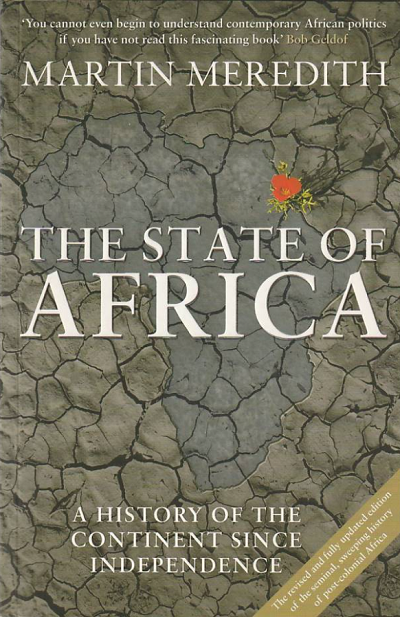
If you have a heart in Africa it’s probably not a good idea to read Martin Meredith’s State of Africa because if you do, it will, in all likelihood, break it. In it, he covers, in gory detail, what has happened on the continent in the postcolonial era, and while it’s riveting, it is also deeply disturbing.

[…] “by the end of the 1980s not a single African head of state in three decades had allowed himself to be voted out of office. Of some 150 heads of state who had trodden the African stage, only six had voluntarily relinquished power”?

Or the fact that, in the Congo alone, in 1964, over a million people, virtually all civilians, died in sectarian strife. Nobody knows precisely how many more millions have died in the benighted country since. Or that Mobutu Sese Seko, prior to coming to power, had $6 in his bank account. By 1987 a team of editors and reporters from Fortune magazine disclosed that he was one of the richest men in the world at an estimated $5 billion.

Or the fact that Jean Bedel Bokassa “combined not only extreme greed and personal violence … unsurpassed by any other African leader. His excesses included seventeen wives, a score of mistresses and an official brood of 55 children … [He] also gained a reputation for cannibalism. Political prisoners … were routinely tortured on Bokassa’s orders, their cries clearly audible to nearby residents”. In an effort to compare himself to Napoleon, he declared himself an emperor and spent a large chunk of the national budget on his coronation while his people suffered and starved.

Or the fact that Uganda’s Idi Amin, in a bid to crush political opposition, ordered the gruesome deaths of thousands of alleged opponents at the hands of his “death squads”. “The Chief Justice was dragged away from the High Court never to be seen again. The university’s Vice Chancellor disappeared. The bullet-riddled body of an Anglican Archbishop, still in ecclesiastical robes, was dumped at the mortuary of a Kampala hospital. One of Amin’s former wives was found with her limbs dismembered in the boot of a car. Amin was widely believed to perform blood rituals over the bodies of his victims.” He was heard on several occasions boasting about his penchant for eating human flesh.

Or the fact that foreign researcher Robert Klintberg reported on oil-rich Equatorial Guinea as being “a land of fear and devastation no better than a concentration camp — the ‘cottage industry Dachau of Africa’.” Under Macias Nguema, more than half of the population was either killed or fled into exile. Finally deposed by his nephew, Obiang was indicted for the murder of 80,000 people. The plunder continued.

Or that in Nigeria, between 1988 and 1993, an official report estimated $12.2 billion was “diverted” from the fiscus. In 1990, the United Nations concluded that Nigeria had one of the worst records for human deprivation of any country in the developing world.

These are only a smattering of an almost endless litany of entirely avoidable man-made catastrophes that have blighted Africa since the imperial exit. One is left wondering if there is any precedent in history for such calamitous misrule that has led to the early, often violent deaths of millions, and delivered unspeakable misery to hundreds of millions more, which is where we are today.

Having read the book, I’m left pondering the fact that Cecil Rhodes, a colonial colossus, looms large in contemporary history as one of the great villains of the last century, better known for his alleged malfeasance than any of the abovementioned leaders. But as far as I know, Rhodes never stole from anyone and never killed anyone, and he certainly didn’t eat anyone. I know he did use his money and military muscle to stop slavery and intertribal slaughter. And I know he plowed most of his fortune into building roads, railways, educational facilities, and other infrastructure needed to transform a wilderness into a developed country. It looks to me like his generosity of spirit is reflected in the Rhodes scholarships he provided for, aimed at nurturing the talents of a select few from across the racial divides in a bid to make the world he was leaving a better place.

Tank Chats Reloaded | S-Tank | The Tank Museum

Filed under: Europe, History, Military, Weapons — Tags: , , , , , — Nicholas @ 02:00

The Tank Museum
Published 27 Jan 2023

In this episode of Tank Chats Reloaded, we are delighted to be joined by Stefan Karlsson, the director and curator of The Swedish Tank Museum. He shares his remarkable journey with the S-Tank, from his first experience driving it at the age of nine, to his later service in the Swedish Army. Stefan’s passion for the S-Tank is evident, and his story is sure to captivate and inspire.
(more…)

QotD: The long-term instability of bison hunting on the Great Plains

Unlike in Mongolia, where there were large numbers of wild horses available for capture, it seems that most Native Americans on the Plains were reliant on trade or horse-raiding (that is, stealing horses from their neighbors) to maintain good horse stocks initially. In the southern plains (particularly areas under the Comanches and Kiowas), the warm year-round temperature and relatively infrequent snowfall allowed those tribes to eventually raise large herds of their own horses for hunting and as a trade good. While Mongolian horses know to dig in the snow to get the grass underneath, western horses generally do not do this, meaning that they have to be stall-fed in the winter. Consequently in the northern plains, horses remained a valuable trade good and a frequently object of warfare. In both cases, horses were too valuable to be casually eating all of the time and instead Isenberg notes that guarding horses carefully against theft and raiding was one of the key and most time-demanding tasks of life for those tribes which had them.

So to be clear, the Great Plains Native Americans are not living off of their horses, they are using their horses to live off of the bison. The subsistence system isn’t horse based, but bison-based.

At the same time, as Isenberg (op. cit. 70ff) makes clear that this pure-hunting nomadism still existed in a narrow edge of subsistence. From his description, it is hard not to conclude that the margin or survival was quite a bit narrower than the Eurasian Steppe subsistence system and it is also clear that group-size and population density were quite a bit lower. It’s also not clear that this system was fully sustainable in the long run; Pekka Hämäläinen argues in The Comanche Empire (2008) that Comanche bison hunting was potentially already unsustainable in the very long term by the 1830s. It worked well enough in wet years, but an extended drought (which the Plains are subjected to every so often) could cause catastrophic decline in bison numbers, as seems to have happened the 1840s and 1850s. A sequence of such events might have created a receding wave phenomenon among bison numbers – recovering after each dry spell, but a little less each time. Isenberg (op. cit., 83ff) also hints at this, pointing out that once one factors for things like natural predators, illness and so on, estimates of Native American bison hunting look to come dangerously close to tipping over sustainability, although Isenberg does not offer an opinion as to if they did tip over that line. Remember: complete reliance on bison hunting was new, not a centuries tested form of subsistence – if there was an equilibrium to be reached, it had not yet been reached.

In any event, the arrival of commercial bison hunting along with increasing markets for bison goods drove the entire system into a tailspin much faster than the Plains population would have alone. Bison numbers begin to collapse in the 1860s, wrecking the entire system about a century and a half after it had started. I find myself wondering if, given a longer time frame to experiment and adapt the new horses to the Great Plains if Native American society on the plains would have increasingly resembled the pastoral societies of the Eurasian Steppe, perhaps even domesticating and herding bison (as is now sometimes done!) or other animals. In any event, the westward expansion of the United States did not leave time for that system to emerge.

Consequently, the Native Americans of the plains make a bad match for the Dothraki in a lot of ways. They don’t maintain population density of the necessary scale. Isenberg (op. cit., 59) presents a chart of this, to assess the impact of the 1780s smallpox epidemics, noting that even before the epidemic, most of the Plains Native American groups numbered in the single-digit thousands, with just a couple over 10,000 individuals. The largest, the Sioux at 20,000, far less than what we see on the Eurasian Steppe and also less than the 40,000 warriors – and presumably c. 120-150,000 individuals that implies – that Khal Drogo alone supposedly has [in Game of Thrones]. They haven’t had access to the horse for nearly as long or have access to the vast supply of them or live in a part of the world where there are simply large herds of wild horses available. They haven’t had long-term direct trade access to major settled cities and their market goods (which expresses itself particularly in relatively low access to metal products). It is also clear that the Dothraki Sea lacks large herds of animals for the Dothraki to hunt as the Native Americans could hunt bison; there are the rare large predators like the hrakkar, but that is it. Mostly importantly, the Plains Native American subsistence system was still sharply in flux and may not have been sustainable in the long term, whereas the Dothraki have been living as they do, apparently for many centuries.

Bret Devereaux, “That Dothraki Horde, Part II: Subsistence on the Hoof”, A Collection of Unmitigated Pedantry, 2020-12-11.

May 6, 2023

Face-palm-worthy Coronations of the past

Filed under: Britain, History — Tags: , , , , , , , — Nicholas @ 05:00

I’m sure almost everyone — except the tiny number of Republicans in England — hopes for a smooth and spectacular Coronation for His Majesty King Charles III, there are plenty of examples of past Coronations that were anything but:

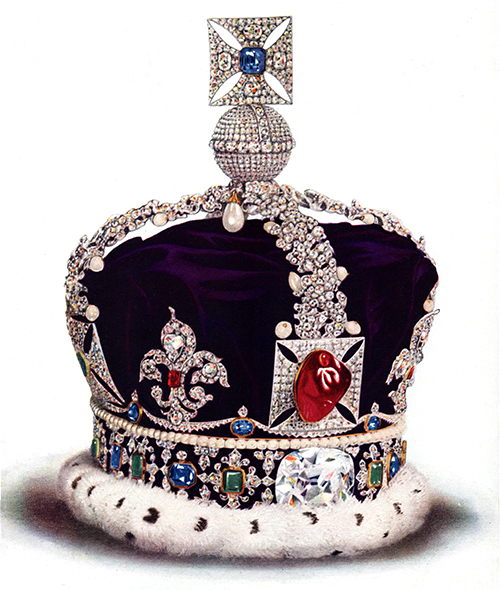
The Imperial State Crown, worn by the British monarch in the royal procession following the Coronation and at the opening of Parliament.
Wikimedia Commons.

Whereas so many traditions are 19th-century inventions, as any student of history knows, the coronation of Britain’s monarch is a rare example of a truly ancient custom, dating to the 10th century in its structure and with origins stretching back further, to the Romans and even Hebrews. As Tom Holland said on yesterday’s The Rest is History, it is like going to a zoo and seeing a woolly mammoth.

It is a sacred moment when the sovereign becomes God’s anointed, an almost unique state ceremony in a secular world. The custom originates with the late Roman emperors, associated with Constantine the Great and certainly established by the mid-fifth century in Constantinople. In the West, and following the fall of that half of the empire, barbarian leaders were eager to imitate imperial styles (a bit like today). Germanic and Celtic tribes had ceremonies for new leaders in which particular swords were displayed, a feature of later rites, but as they developed the practice of kingship, so their rituals began to imitate the Roman form.

[…]

Athelstan, the first king of England, had been crowned in 925 at Kingston, a spot where seven kings of England had been enthroned. Perhaps the most notorious was Edwig, a 16-year-old whose proto-rock star qualities were not appreciated at the time of his coronation in 955. Indeed he failed to turn up, and when Bishop Dunstan marched to the king’s nearby quarters to drag him along, he found the teenager in bed with a “strumpet” and the strumpet’s mother.

However, Edwig died four years later, and Dunstan was elevated to Canterbury, became a saint and, through chronicles recorded by churchmen, got his version of history.

This reign might seem impossibly distant and obscure, yet it was under Edwig’s brother Edgar that the current coronation format was established. Edgar was a powerful king, and the last of the Anglo-Saxon rulers to live a happily Viking-free existence. His coronation on 11 May 973 was an illustration of his strength, and also his aspirations. Held at Bath, most likely because of its association with Rome, it involved a bishop placing the crown on the king’s head, in the Carolingian style, and would become the template for the ceremony for his direct descendent Charles III.

But not all coronations would run so smoothly. After Edgar’s death his elder son Edward was killed in possibly nefarious circumstances, and his stepmother placed her son Ethelred on the throne. Ethelred’s reign was plagued by disaster, and it was later said in the chronicles — the medieval equivalent of “and then the whole bus clapped” Twitter tales — that Bishop Dunstan lambasted the boy-king for “the sin of your shameful mother and the sin of the men who shared in her wicked plot” and that it “shall not be blotted out except by the shedding of much blood of your miserable subjects”.

This would have been merely awkward, whereas many coronations ended in riot or bloodshed. The most notorious incident in English history occurred on Christmas Day 1066: Duke William got off to a bad start PR-wise when his nervous Norman guards mistook cheers for booing and began attacking the crowd, before setting fire to buildings.

[…]

Perhaps the most scandalous coronation took place at the newly completed St Paul’s Cathedral in February 1308. The young queen, Isabella, was the 12-year-old daughter of France’s King Philippe Le Bel, and had inherited her father’s good looks, with thick blonde hair and large blue, unblinking eyes. Her husband, Edward II, was a somewhat boneheaded man of 24 years whose idea of entertainment was watching court fools fall off tables.

It was a fairy tale coronation for the young girl, apart from a plaster wall collapsing, bringing down the high altar and killing a member of the audience, and the fact that her husband was gay and spent the afternoon fondling his lover Piers Gaveston, while ignoring her. Isabella’s two uncles, who had made the trip from France, were furious at the behaviour of their new English in-law, though perhaps not surprised.

[…]

One of the most disastrous coronations occurred during the Hundred Years’ War. Inspired by Joan of Arc, in 1429 the French had beaten the English at the Battle at Patay, after which their leader Charles VII entered Reims and was crowned at the spot where the kings of France had been enthroned for almost a thousand years. In response, on 26 December 1431 the English had their candidate, the 10-year-old Henry VI, crowned King of France at Notre-Dame in Paris, where one road was turned into a river of wine filled with mermaids, and Christmas plays were performed on an outdoor stage.

Unfortunately, the coronation was a complete mess. The entire service was in English, the weather was freezing, the event rushed, too packed, filled with pickpockets, and worst of all the English made such bad food that even the sick and destitute at the Hotel-Dieu complained they had never tasted anything so vile.

Coronation Weekend

Filed under: Britain, History, Railways — Tags: , , , — Nicholas @ 04:00

Jago Hazzard
Published 5 May 2023

For us train nerds, “Coronation” means something very different.

(more…)

The federal Liberals want even more control over the internet

Filed under: Cancon, Government, Liberty, Media, Politics, Technology — Tags: , , , — Nicholas @ 03:00

Paul Wells notes that a policy proposal at the Liberal conference this week indicates just how much the Liberal Party of Canada wants to control free expression on the internet:

Here on the 2023 Liberal convention’s “Open Policy Process” page are links to “Top 20 Resolutions” and “Fast-Tracked Resolutions”. The latter go straight to the plenary floor, the former go through a smaller preliminary debate and, if they pass, then on to the plenary. These things move fast because, in most cases, Liberals are paying only listless attention to the discussions. Policy is for New Democrats. Well, I mean, it used to be.

But sometimes words have meaning, so this morning I’m passing on one of the Top 20 Resolutions, from pages 12 and 13 of that book. This one comes to us from the British Columbia wing of the party.

It’s in two screenshots simply because it spreads across two pages. This is the entire resolution.

BC Liberals want “on-line information services” held “accountable for the veracity of material published on their platforms” by “the Government”. The Government would, in turn, “limit publication only to material whose sources can be traced”.

This resolution has no meaning unless it means I would be required to clear my posts through the federal government, before publication, so the “traceability” of my sources could be verified. I don’t suppose this clearance process would take too much more time than getting a passport or a response to an access-to-information request. Probably only a few months, at first. Per article.

After publication, “the Government” would hold me accountable for the veracity of my material, presumably through some new mechanism beyond existing libel law.

I’m not sure what “the Government” — I’m tickled by the way it’s capitalized, like Big Brother — would have made of this post, in which I quote an unnamed senior government official who was parked in front of reporters by “the Government” on the condition that he or she or they not be named. But by the plain meaning of this resolution, I would not have to wonder for long because that post would have been passed or cleared by the Government’s censors before publication, and I’m out of recourse if that process simply took longer than I might like.

History Summarized: Chicago’s Tribune Tower

Overly Sarcastic Productions
Published 20 Jan 2023

It’s not a Dome, but it’s still pretty darn good.
(more…)

QotD: The luxury beliefs of the leisure class

Thorstein Veblen’s famous “leisure class” has evolved into the “luxury belief class”. Veblen, an economist and sociologist, made his observations about social class in the late nineteenth century. He compiled his observations in his classic work, The Theory of the Leisure Class. A key idea is that because we can’t be certain of the financial standing of other people, a good way to size up their means is to see whether they can afford to waste money on goods and leisure. This explains why status symbols are so often difficult to obtain and costly to purchase. These include goods such as delicate and restrictive clothing, like tuxedos and evening gowns, or expensive and time-consuming hobbies like golf or beagling. Such goods and leisurely activities could only be purchased or performed by those who did not live the life of a manual laborer and could spend time learning something with no practical utility. Veblen even goes so far as to say, “The chief use of servants is the evidence they afford of the master’s ability to pay.” For Veblen, butlers are status symbols, too.

[…]

Veblen proposed that the wealthy flaunt status symbols not because they are useful, but because they are so pricey or wasteful that only the wealthy can afford them. A couple of winters ago it was common to see students at Yale and Harvard wearing Canada Goose jackets. Is it necessary to spend $900 to stay warm in New England? No. But kids weren’t spending their parents’ money just for the warmth. They were spending the equivalent of the typical American’s weekly income ($865) for the logo. Likewise, are students spending $250,000 at prestigious universities for the education? Maybe. But they are also spending it for the logo.

This is not to say that elite colleges don’t educate their students, or that Canada Goose jackets don’t keep their wearers warm. But top universities are also crucial for inculcation into the luxury belief class. Take vocabulary. Your typical working-class American could not tell you what “heteronormative” or “cisgender” means. But if you visit Harvard, you’ll find plenty of rich 19-year-olds who will eagerly explain them to you. When someone uses the phrase “cultural appropriation”, what they are really saying is “I was educated at a top college”. Consider the Veblen quote, “Refined tastes, manners, habits of life are a useful evidence of gentility, because good breeding requires time, application and expense, and can therefore not be compassed by those whose time and energy are taken up with work.” Only the affluent can afford to learn strange vocabulary because ordinary people have real problems to worry about.

The chief purpose of luxury beliefs is to indicate evidence of the believer’s social class and education. Only academics educated at elite institutions could have conjured up a coherent and reasonable-sounding argument for why parents should not be allowed to raise their kids, and that we should hold baby lotteries instead. Then there are, of course, certain beliefs. When an affluent person advocates for drug legalization, or defunding the police, or open borders, or loose sexual norms, or white privilege, they are engaging in a status display. They are trying to tell you, “I am a member of the upper class”.

Affluent people promote open borders or the decriminalization of drugs because it advances their social standing, and because they know that the adoption of those policies will cost them less than others. The logic is akin to conspicuous consumption. If you have $50 and I have $5, you can burn $10 and I can’t. In this example, you, as a member of the upper class, have wealth, social connections, and other advantageous attributes, and I don’t. So you are in a better position to afford open borders or drug experimentation than me.

Or take polyamory. I recently had a revealing conversation with a student at an elite university. He said that when he sets his Tinder radius to 5 miles, about half of the women, mostly other students, said they were “polyamorous” in their bios. Then, when he extended the radius to 15 miles to include the rest of the city and its outskirts, about half of the women were single mothers. The costs created by the luxury beliefs of the former are bore by the latter. Polyamory is the latest expression of sexual freedom championed by the affluent. They are in a better position to manage the complications of novel relationship arrangements. And even if it fails, they have more financial capability, social capital, and time to recover if they fail. The less fortunate suffer the damage of the beliefs of the upper class.

Rob Henderson, “Thorstein Veblen’s Theory of the Leisure Class – An Update”, Rob Henderson’s Newsletter, 2023-01-29.

May 5, 2023

JunkScientific American

Filed under: Health, Media, Politics, Science — Tags: , , , , , — Nicholas @ 05:00

Stephen Knight calls out the woke editors of once-proud publication Scientific American for their anti-scientific support of the gender warriors:

A dangerous strain of utopian thinking has taken hold of the “progressive” left. Many now share the delusion that if we pretend certain falsehoods are true, then various forms of oppression and bigotry will magically disappear. Worse still, the proponents of these falsehoods demand their unequivocal affirmation from the rest of us.

Today’s leftists rightly insist on the importance of scientific truth when it comes to questions like climate change, vaccine safety and evolution. But they will discard scientific facts the moment they become inconvenient to their own worldview. Nowhere is this hypocrisy more pronounced than on the issue of gender, where transgender ideology has almost entirely supplanted scientific truth among the left. More alarming still is the fact that many scientists and scientific institutions, which really should know better, are colluding in this deception.

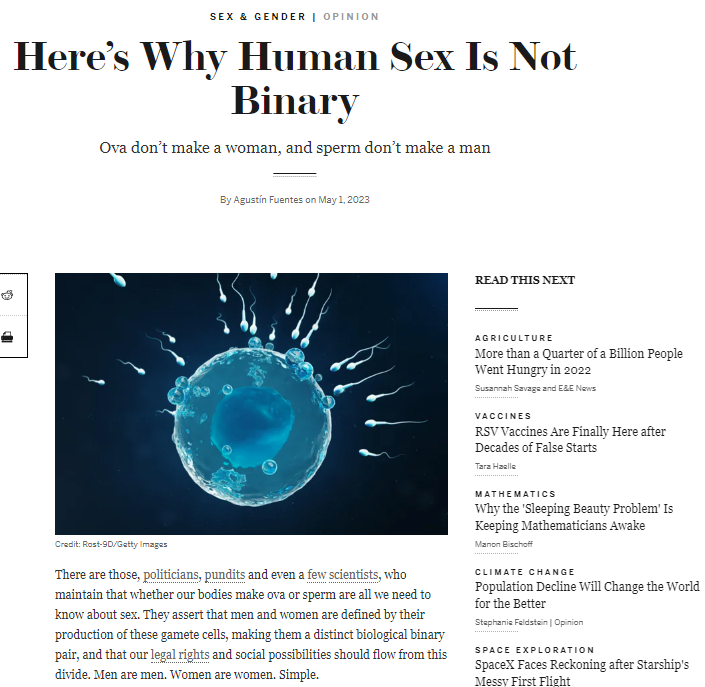
The latest scientific institution to promote gender pseudoscience is the once-venerable Scientific American magazine, which this week published an article headlined “Here’s why human sex is not binary”.

Make no mistake, sex in human beings really is binary and immutable. There are few things more emphatically true in our scientific understanding of the world than the human sex binary. Human beings cannot change their sex – we are either male or female, as determined by which type of gametes our biology is organised to produce (sperm or eggs). These are observable, testable scientific facts. And this objective truth matters in very real and consequential ways – to our society, to law, to healthcare and to the safety of women and children.

Trans ideologues claim that the categories of male and female are on a “spectrum”, or that they represent nothing more than a subjective feeling. These ideas have already had disastrous consequences for society. It is thanks to these ideas that male rapists have been placed in women’s prisons in the UK. It is why, just this weekend, a biological man won an elite women’s cycling race in America – finishing 89 seconds ahead of the closest female competitor and netting $35,350 in prize money. We would simply recognise this as “cheating” were it not for the hold that gender ideology has over our institutions – and for the opprobrium that is visited on anyone who dissents.

After some silly and irrelevant trivia about the biology of lizards and fish (humans are neither fish nor lizards), the Scientific American article concludes by claiming that anyone who upholds the human sex binary is “trying to restrict who counts as a full human in society”. This single claim inadvertently reveals a great deal about what is wrong with the trans movement. Unable to refute the truth of the human sex binary, gender ideologues resort to demonising those who notice it as having ulterior, sinister motives.

This isn’t the first time Scientific American has lent its (now waning) credibility to gender nonsense. Back in 2018, it published an article titled “Sex redefined: the idea of two sexes is overly simplistic”. To this day, this piece is gleefully shared around by gender activists, emboldened by this apparent vindication of their ideology from a credible, scientific publication. However, the author of the piece has since clarified that reality actually is as simplistic as humans having only “two sexes”.

Canada’s new internet rules have become law. What now?

J.J. McCullough
Published 4 May 2023

Bill C-11 has passed. But there’s still time.
(more…)

« Newer PostsOlder Posts »

Powered by WordPress