Quotulatiousness

July 8, 2020

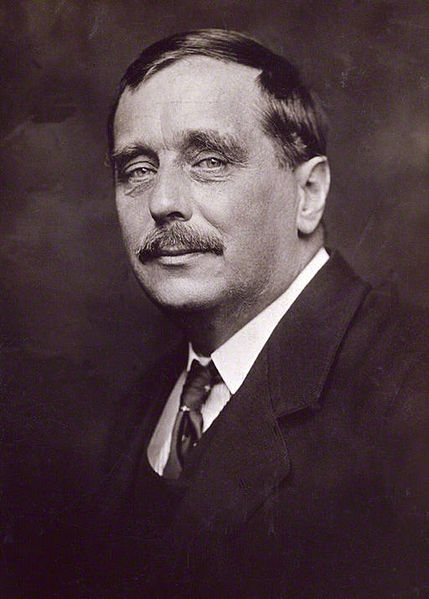
H.G. Wells, fortunately for his reputation, is mostly remembered for his science fiction writings

Filed under: Books, Britain, History, Politics, WW2 — Tags: , , , , , , — Nicholas @ 03:00

I was well into my twenties before I found out that H.G. Wells the science fiction writer was only a small slice of his career. I picked up a one-volume edition of his Outline of History, but it didn’t seem to have the same interest for me that The War of the Worlds or The Time Machine had done (and honestly, it was Jeff Wayne’s musical interpretation of War of the Worlds that pushed me to read any of his writing). His analysis of the events of his day fell well short of his reputation, as George Orwell pointed out:
In March or April, say the wiseacres, there is to be a stupendous knockout blow at Britain … What Hitler has to do it with, I cannot imagine. His ebbing and dispersed military resources are now probably not so very much greater than the Italians’ before they were put to the test in Greece and Africa.

    The German air power has been largely spent. It is behind the times and its first-rate men are mostly dead or disheartened or worn out.

    In 1914 the Hohenzollern army was the best in the world. Behind that screaming little defective in Berlin there is nothing of the sort … Yet our military “experts” discuss the waiting phantom. In their imaginations it is perfect in its equipment and invincible in its discipline. Sometimes it is to strike a decisive “blow” through Spain and North Africa and on, or march through the Balkans, march from the Danube to Ankara, to Persia, to India, or “crush Russia”, or “pour” over the Brenner into Italy. The weeks pass and the phantom does none of these things — for one excellent reason. It does not exist to that extent. Most of such inadequate guns and munitions as it possessed must have been taken away form it and fooled away in Hitler’s silly feints to invade Britain. And its raw jerry-built discipline is wilting under the creeping realisation that the Blitzkrieg is spent, and the war is coming home to roost.

These quotations are not taken from The Cavalry Quarterly but from a series of newspaper articles by Mr. H. G. Wells, written at the beginning of this year and now reprinted in a book entitled Guide to the New World. Since they were written, the German Army has overrun the Balkans and reconquered Cyrenaica, it can march through Turkey or Spain at such time as may suit it, and it has undertaken the invasion of Russia. How that campaign will turn out I do not know, but it is worth noticing that the German general staff, whose opinion is probably worth something, would not have begun it if they had not felt fairly certain of finishing it within three months. So much for the idea that the German Army is a bogey, its equipment inadequate, its morale breaking down, etc. etc.

What has Wells to set against the “screaming little defective in Berlin”? The usual rigmarole about a World State, plus the Sankey Declaration, which is an attempted definition of fundamental human rights, of anti-totalitarian tendency. Except that he is now especially concerned with federal world control of air power, it is the same gospel as he has been preaching almost without interruption for the past forty years, always with an air of angry surprise at the human beings who can fail to grasp anything so obvious.

[…]

Mr. Wells, like Dickens, belongs to the non-military middle class. The thunder of guns, the jingle of spurs, the catch in the throat when the old flag goes by, leave him manifestly cold. He has an invincible hatred of the fighting, hunting, swashbuckling side of life, symbolised in all his early books by a violent propaganda against horses. The principal villain of his Outline of History is the military adventurer, Napoleon. If one looks through nearly any book that he has written in the last forty years one finds the same idea constantly recurring: the supposed antithesis between the man of science who is working towards a planned World State and the reactionary who is trying to restore a disorderly past. In novels, Utopias, essays, films, pamphlets, the antithesis crops up, always more or less the same. On the one side science, order, progress, internationalism, aeroplanes, steel, concrete, hygiene: on the other side war, nationalism, religion, monarchy, peasants, Greek professors, poets, horses. History as he sees it is a series of victories won by the scientific man over the romantic man.

In addition to being a surprisingly consistent one-note proponent of the same solution to every problem, he was, as Michael Coren relates, a nasty piece of work in his personal life:

There’s an anecdote concerning H.G. Wells that rather exemplifies his character. A London theatre in the 1920s. Wells was approached by a nervous, eager young fan. “Mr. Wells, you probably don’t remember me”, he said, holding out his hand. “Yes, I bloody do!” replied Wells, and rudely turned his back. Personality aside, Wells also embraced anti-Semitism, racism, and social engineering, and in this atmosphere of outrage and iconoclasm it’s surprising that he hasn’t been more targeted for symbolic removal. Then again, perhaps not. Because while the undoubtedly gifted author said and believed some dreadful things he was also a man of the left. And when it comes to cancel culture, socialism is the ultimate prophylactic.

George Bernard Shaw said of his nastiness and his ugly views, “Multiply the total by ten; square the result. Raise it again to the millionth power and square it again; and you will still fall short of the truth about Wells — yet the worse he behaved the more he was indulged; and the more he was indulged the worse he behaved.”

In fact, for much of the 20th-century eugenics was a creature of the left as much if not more than the right. Shaw himself, Sydney and Beatrice Webb and many other left-wing intellectuals were convinced that for the lives of the majority to improve there had to be a harsh control of the minority.

Wells argued that the existing social and economic structure would collapse and a new order would emerge, led by “people throughout the world whose minds were adapted to the demands of the big-scale conditions of the new time … a naturally and informally organized educated class, an unprecedented sort of people.” The “base,” the class at the bottom of the scale, “people who had given evidence of a strong anti-social disposition,” would be in trouble. “This thing, this euthanasia of the weak and the sensual, is possible. I have little or no doubt that in the future it will be planned and achieved.” He wrote of, “boys and girls and youth and maidens, full of zest and new life, full of an abundant joyful receptivity … helpers behind us in the struggle.” Then chillingly, “And for the rest, these swarms of black and brown and dingy white and yellow people who do not come into the needs of efficiency … I take it they will have to go.”
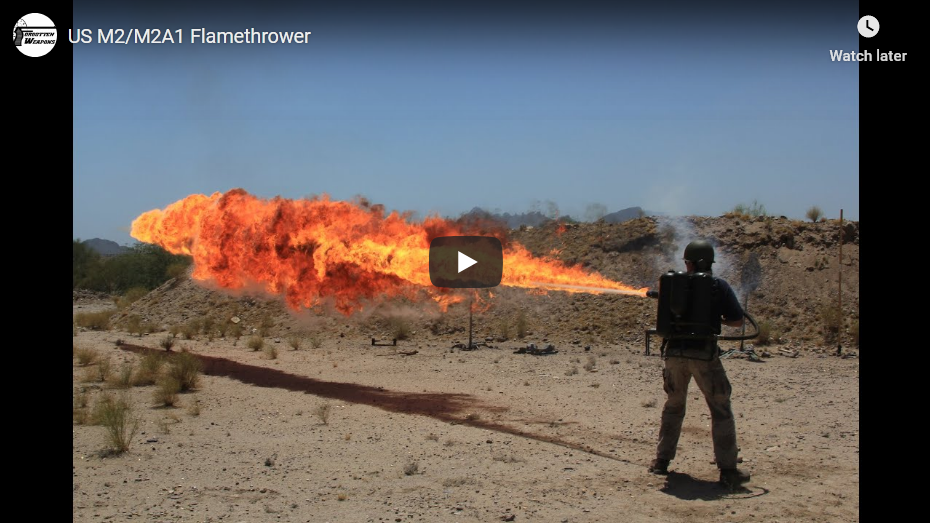
US M2/M2A1 Flamethrower

Filed under: History, Military, USA, Weapons, WW2 — Tags: , , , — Nicholas @ 02:00

Forgotten Weapons
Published 12 May 2016

http://www.patreon.com/ForgottenWeapons

After a dismal first attempt at designing a flamethrower (the M1) in 1941, the US Chemical Corps along with several universities and industrial partners put in a lot of research to develop a more usable and effective flamethrower. The result was the M2, which went into production in early 1944. It would prove to be an exceptionally effective weapon in the island-hopping campaign towards the end of the war.

The M2 was arguably the best flamethrower fielded by any military during the war, with a number of excellent design features. These included:

* A constant-pressure regulator to ensure that the range stayed the same from the first to the last shot of a tank of fuel
* An on/off main valve easily accessible to the operator
* A supremely waterproof and reliable pyrotechnic cartridge ignition system
* An auto-shutoff valve which sealed at the nozzle, preventing dribble (and cutting off fuel flow should the operator lose control of the weapon)

The M2 would see service into the Vietnam War even as its successor the M9 was being issued. It was a truly outstanding design, and remains viable to this day.

Thanks to Charlie Hobson for showing us the unit and teaching me to fire it, and also thanks to Adaptive Firearms for letting us use their range facilities!

You can find Charlie Hobson’s book, US Portable Flamethrowers here:
http://amzn.to/1SP9yc5

July 6, 2020

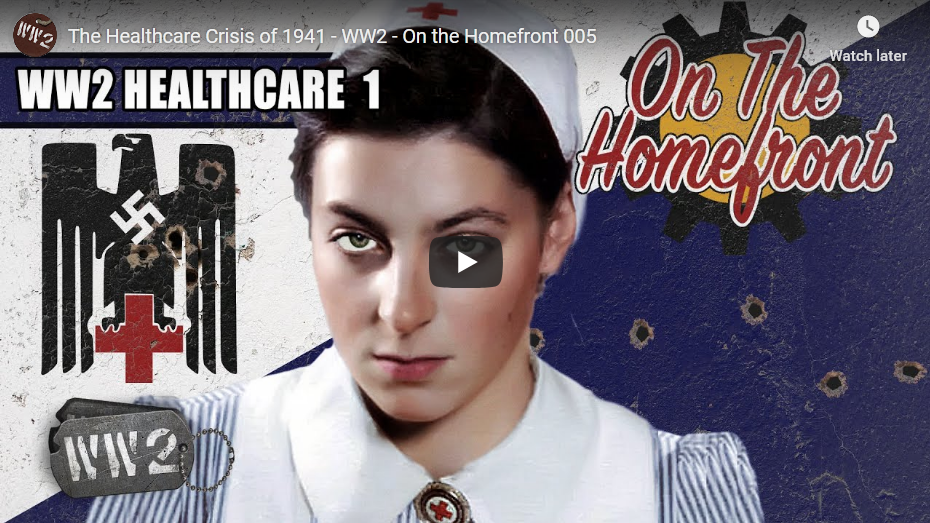
The Healthcare Crisis of 1941 – WW2 – On the Homefront 005

Filed under: Britain, Germany, Health, History, WW2 — Tags: , , , , — Nicholas @ 04:00

World War Two
Published 2 Jul 2020

When WWII breaks out many parts of the world are still missing population-wide healthcare. The pressure of the war deteriorates healthcare services even further. By 1941, both the British Commonwealth and Germany are facing an outright healthcare crisis on the home front.

Join us on Patreon: https://www.patreon.com/TimeGhostHistory
Or join The TimeGhost Army directly at: https://timeghost.tv

Follow WW2 day by day on Instagram @World_war_two_realtime https://www.instagram.com/world_war_two_realtime
Between 2 Wars: https://www.youtube.com/playlist?list…
Source list: http://bit.ly/WW2sources

Hosted by: Anna Deinhard
Written by: Fiona Rachel Fischer and Spartacus Olsson
Director: Astrid Deinhard
Producers: Astrid Deinhard and Spartacus Olsson
Executive Producers: Astrid Deinhard, Indy Neidell, Spartacus Olsson, Bodo Rittenauer
Creative Producer: Joram Appel
Post-Production Director: Wieke Kapteijns
Research by: Fiona Rachel Fischer
Edited by: Mikołaj Cackowski
Sound design: Marek Kamiński
Map animations: Eastory (https://www.youtube.com/c/eastory)

Sources:
IWM D 2373, D 2318, B 14299, D 2315, D 2078, D 14318, D 2334
Narodowe Archiwum Cyfrowe
Bundesarchiv
Wellcome Images no. L0028759
From the Noun Project: london by Pablo Fernández Vallejo, Patient by Miho Suzuki-Robinson, Patient by Binpodo, Doctor by Wilson Joseph, Hospital by Hare Krishna, School by David, Apartment by Victoruler, Bus by Eucalyp
University of Liverpool Faculty of Health & Life Sciences

Soundtracks from the Epidemic Sound:
Farrell Wooten – “Blunt Object”
Johannes Bornlof – “Deviation In Time”
Skrya – “First Responders”
Gunnar Johnsen – “Not Safe Yet”
Johannes Bornlof – “The Inspector 4”
Jon Bjork – “For the Many”
Reynard Seidel – “Deflection”
Rannar Sillard – “March Of The Brave 4”
Cobby Costa – “From the Past”
Fabien Tell – “Last Point of Safe Return”
Cobby Costa – “Flight Path”
Andreas Jamsheree – “Guilty Shadows 4”
Jo Wandrini – “Puzzle of Complexity”

Archive by Screenocean/Reuters https://www.screenocean.com.

A TimeGhost chronological documentary produced by OnLion Entertainment GmbH.

From the comments:

World War Two
2 days ago (edited)
It might be surprising that the global healthcare crisis of 2020 has an immediate relationship to WW2, but it does. Although, when you look at it, it’s logical — with every crisis humanity learns a little — it was still a little bit of a surprise to us how direct this relationship was when researching and writing this episode. Was it surprising to you too?

On the topic of writing, this is the first episode by our new co-writer, Fiona Rachel Fischer, who will now be a regular contributor to the On the Homefront series — please give her a warm welcome.

July 5, 2020

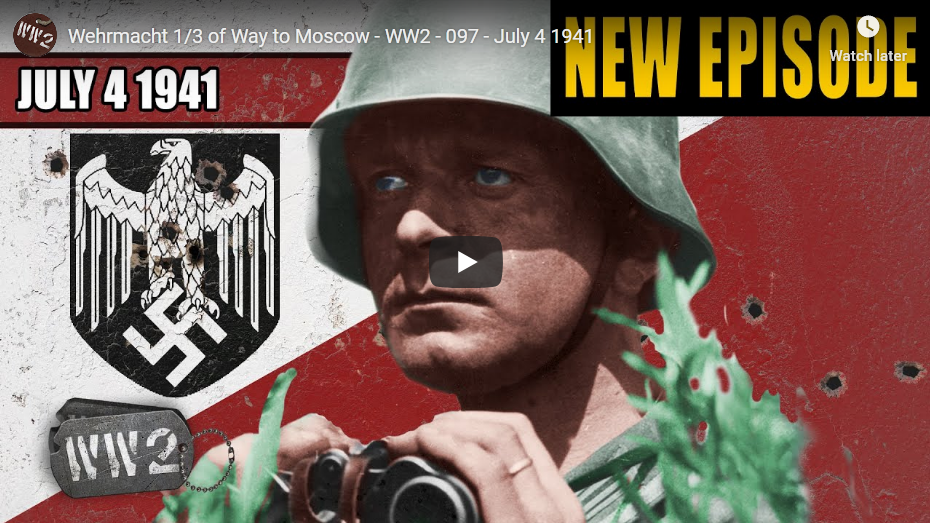
Wehrmacht 1/3 of Way to Moscow – WW2 – 097 – July 4 1941

World War Two
Published 4 Jul 2020

Operation Barbarossa continues this week but is already running into problems that are gonna be hard to fix. The Japanese are thinking future war strategy, while the British set up a focused research program on nuclear power and atom bombs…

Join us on Patreon: https://www.patreon.com/TimeGhostHistory
Or join The TimeGhost Army directly at: https://timeghost.tv

Follow WW2 day by day on Instagram @World_war_two_realtime https://www.instagram.com/world_war_two_realtime
Between 2 Wars: https://www.youtube.com/playlist?list…
Source list: http://bit.ly/WW2sources

Written and Hosted by: Indy Neidell
Director: Astrid Deinhard
Producers: Astrid Deinhard and Spartacus Olsson
Executive Producers: Astrid Deinhard, Indy Neidell, Spartacus Olsson, Bodo Rittenauer
Creative Producer: Joram Appel
Post-Production Director: Wieke Kapteijns
Research by: Indy Neidell
Edited by: Iryna Dulka
Sound design: Marek Kamiński
Map animations: Eastory (https://www.youtube.com/c/eastory)
Map consultants: Rabih Rached and Patrick Adaimy

Colorizations by:
– Daniel Weiss
– Julius Jääskeläinen – https://www.facebook.com/JJcolorization/
– Cassowary Colorizations
– Jaris Almazani (Artistic Man) – https://instagram.com/artistic.man?ig…

Sources:
– SA-Kuva
– museum.ru
– National Portrait Gallery
– Weight by Vadim Solomakhin from the Noun Project
– Imperial War Museum: FL1204
– Narodowe Archiwum Cyfrowe
– Bundesarchiv, CC-BY-SA 3.0: Bild_101I-186-0199-12A, Bild_101I-208-0027-04A, Bild_183-B10901
– Yad Vashem Photo Archives, 46405, https://photos.yadvashem.org/photo-de…

Archive by Screenocean/Reuters https://www.screenocean.com.

A TimeGhost chronological documentary produced by OnLion Entertainment GmbH.

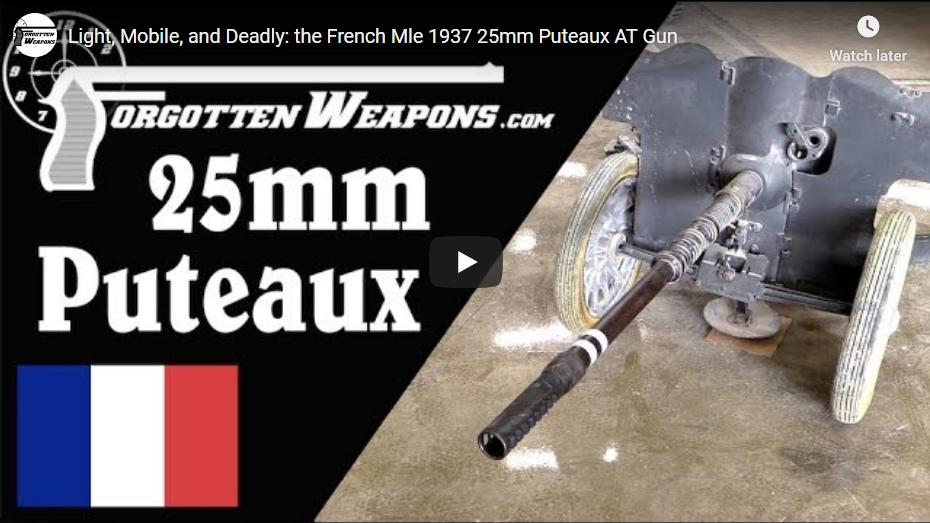
Light, Mobile, and Deadly: the French Mle 1937 25mm Puteaux AT Gun

Filed under: France, History, Military, Weapons, WW2 — Tags: , , , , — Nicholas @ 02:00

Forgotten Weapons
Published 20 Mar 2020

http://www.patreon.com/ForgottenWeapons

https://www.floatplane.com/channel/Fo…

Cool Forgotten Weapons merch! http://shop.bbtv.com/collections/forg…

After World War One, the French military set up a program to modernize all of its weaponry, and that included a replacement for the Mle 1916 light infantry cannon. An anti-tank gun had not been necessary during the Great War, as Germany never fielded tanks in substantial numbers — but as a pioneer of the modern tank, the French recognized the need for a good AT gun. Taking a lesson from World War One, they wanted a light gun that was flexible and mobile, easily moved around the battlefield and easily concealed from enemy fire. A 25mm cartridge was specified, and both the Hotchkiss company and the Puteaux arsenal created guns to use it. Both were adopted into service, with the Hotchkiss Mle 1934 being a bit heavier and the Puteaux Mle 1937 being a bit lighter, at only about 600 pounds. The Puteaux gun was quite small, easily moved by a horse or virtually any motorized vehicle. It had a long barrel and the 25mm AP projectile had a muzzle velocity of about 3150 fps, making it quite effective on the light and medium tanks of the 1930s. It was also remarkably accurate, and the long barrel and flash hider gave it a very small firing signature. Aiming was done with either a 4x magnified optic or a set of backup iron sights.

A total of 1285 of these guns were made before the armistice of June 1940, and they served ably in the Battle of France. A few were also used by the British before Dunkirk, and after the armistice they were used by German forces in limited numbers, and also supplied to Spain and Finland as military aid (this particular one has a Finnish property tag on it).

Thanks to DriveTanks.com in Uvalde Texas for giving me access to film this Puteaux cannon for you!

Contact:
Forgotten Weapons
6281 N. Oracle #36270
Tucson, AZ 85740

July 3, 2020

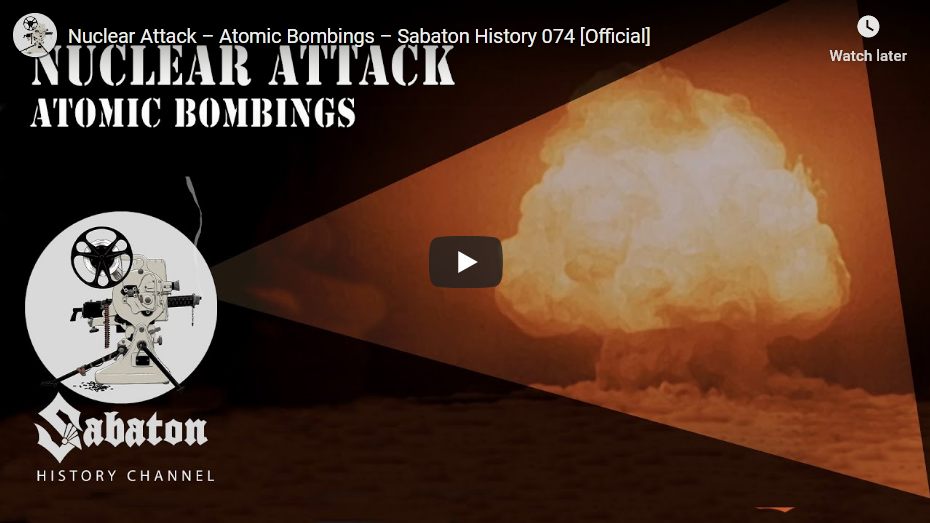
“Nuclear Attack” – Atomic Bombings – Sabaton History 074 [Official]

Sabaton History
Published 2 Jul 2020

At 0815 on 6 August 1945, the first atomic bomb, nicknamed “Little Boy”, was dropped out of the B-29 Enola Gay and descended towards the Japanese city of Hiroshima. 43 seconds later, the city was engulfed in a flashing bright light and a shockwave of unimaginable heat and deadly pressure. From the hypocenter of the resulting mushroom-cloud, a blue-green fireball burned and blinded the city and its inhabitants with unprecedented power. 140,000 people were killed in the first few moments. Tens of thousands would die from wounds and radiation. The age of atomic warfare had begun.

Support Sabaton History on Patreon: https://www.patreon.com/sabatonhistory

Listen to “Nuclear Attack” on the album Attero Dominatus
CD: http://bit.ly/AtteroDominatusStore
Spotify: http://bit.ly/AtteroDominatusSpotify
Apple Music: http://bit.ly/AtteroDominatusAppleMusic
iTunes: http://bit.ly/AtteroDominatusiTunes
Amazon: http://bit.ly/AtteroDominatusAmzn
Google Play: http://bit.ly/AtteroDominatusGooglePlay

Listen to Sabaton on Spotify: http://smarturl.it/SabatonSpotify
Official Sabaton Merchandise Shop: http://bit.ly/SabatonOfficialShop

Hosted by: Indy Neidell
Written by: Markus Linke and Indy Neidell
Directed by: Astrid Deinhard and Wieke Kapteijns
Produced by: Pär Sundström, Astrid Deinhard and Spartacus Olsson
Creative Producer: Joram Appel
Community Manager: Maria Kyhle
Executive Producers: Pär Sundström, Joakim Broden, Tomas Sunmo, Indy Neidell, Astrid Deinhard, and Spartacus Olsson
Post-Production Director: Wieke Kapteijns
Edited by: Iryna Dulka
Sound Editing by: Marek Kaminski
Maps by: Eastory – https://www.youtube.com/c/eastory

Archive by: Reuters/Screenocean https://www.screenocean.com
Music by Sabaton.

Colorizations:
– Dememorabilia – https://www.instagram.com/dememorabilia/

Sources:
– U.S. Department of Energy
– Bomb icon by P Thanga Vignesh from the Noun Project
– bockelsound from freesound.org
– Vilna Gaon State Jewish Museum

An OnLion Entertainment GmbH and Raging Beaver Publishing AB co-Production.

© Raging Beaver Publishing AB, 2019 – all rights reserved.

From the comments:

Sabaton History
2 days ago

August 6, 1945. On this fateful Monday morning our world changed forever.

Nuclear weapons were now a reality, destruction on a whole new level a possibility. International power dynamics, foreign politics and conflict handling would never be the same once this new kind of weapon of mass destruction had entered the scene. The threat of potentially world-ending nuclear war, the fear that the men in power would push “the red button”, would hang over people like a dark cloud from this day on. The Nuclear Age had begun.

If you’re interested in how politics developed during The Nuclear Age, you can explore that in the day-by-day coverage of The Cuban Missile Crisis over on TimeGhost History. The first introduction, “USA Starts the Atomic Arms Race”, is already up and you can watch it right here: https://youtu.be/zEXjoBe5ZdI

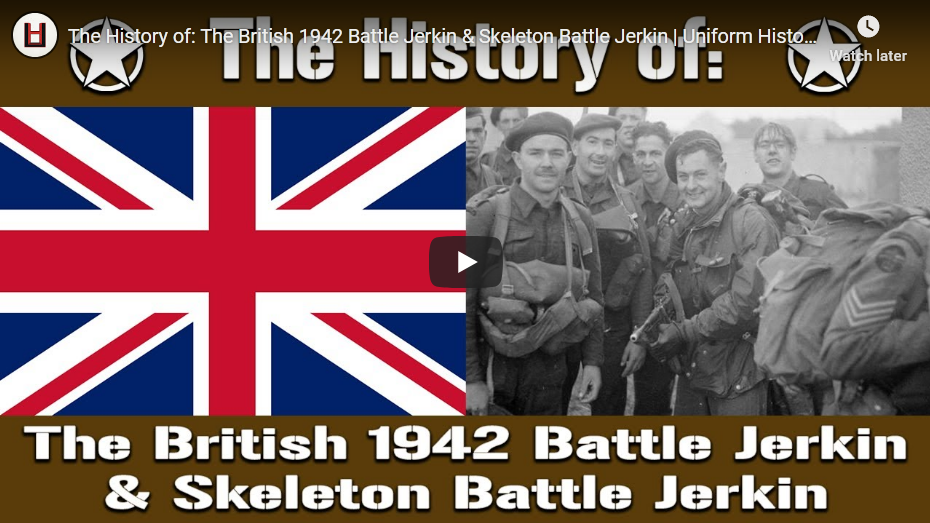
The History of: The British 1942 Battle Jerkin & Skeleton Battle Jerkin | Uniform History

Filed under: Britain, Cancon, History, Military, WW2 — Tags: , , , , , — Nicholas @ 02:00

Uniform History
Published 24 Mar 2020

The start of another two parter, in this one we cover the British Battle Jerkin family as it helped inspire the US Normandy Assault Vest’s creation.

Music by: https://www.juliancrowhurst.com/

July 1, 2020

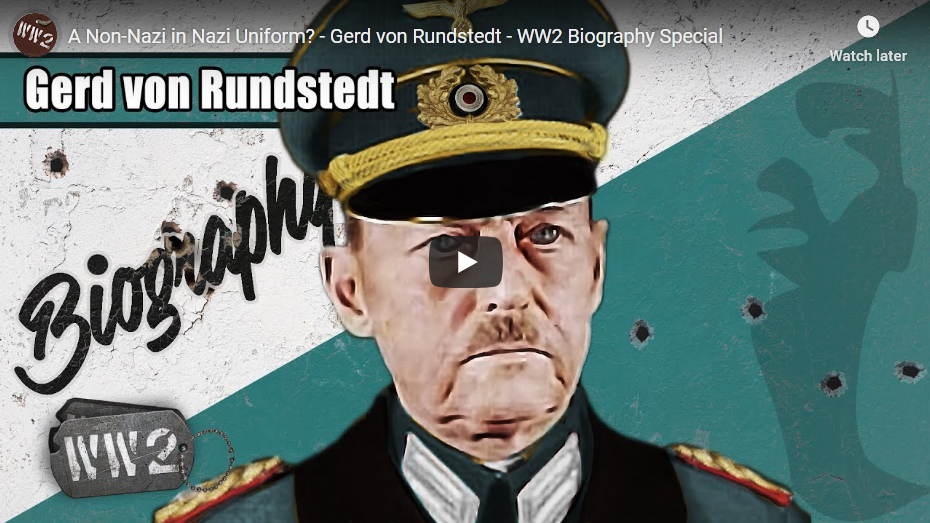
A Non-Nazi in Nazi Uniform? – Gerd von Rundstedt – WW2 Biography Special

Filed under: Germany, History, Military, WW2 — Tags: , , , , , , , — Nicholas @ 04:00

World War Two
Published 30 Jun 2020

Most of the German high-command are not committed National Socialists. So what were like and why did they still serve the Nazi regime?

Join us on Patreon: https://www.patreon.com/TimeGhostHistory
Or join The TimeGhost Army directly at: https://timeghost.tv

Follow WW2 day by day on Instagram @World_war_two_realtime https://www.instagram.com/world_war_two_realtime
Between 2 Wars: https://www.youtube.com/playlist?list…
Source list: http://bit.ly/WW2sources
Hosted by: Indy Neidell
Written by: Francis van Berkel
Director: Astrid Deinhard
Producers: Astrid Deinhard and Spartacus Olsson
Executive Producers: Astrid Deinhard, Indy Neidell, Spartacus Olsson, Bodo Rittenauer
Creative Producer: Joram Appel
Post-Production Director: Wieke Kapteijns
Research by: Wolfgang Seitz
Edited by: Mikołaj Cackowski
Sound design: Marek Kamiński
Map animations: Eastory (https://www.youtube.com/c/eastory)

Colorizations by:
Adrien Fillon – https://www.instagram.com/adrien.colo…
Dememorabilia – https://www.instagram.com/dememorabilia/
Carlos Ortega Pereira, BlauColorizations – https://www.instagram.com/blaucoloriz…
Julius Jääskeläinen – https://www.facebook.com/JJcolorization/
Cassowary Colorizations https://www.flickr.com/photos/cassowa…
Norman Stewart – https://oldtimesincolor.blogspot.com/

Sources:
Map of Europe 1871, courtesy Alexander Altenhof https://commons.wikimedia.org/wiki/Fi…
Bundesarchiv
Narodowe Archiwum Cyfrowe

Soundtracks from the Epidemic Sound:
Phoenix Tail – “At the Front”
Philip Ayers – “Trapped in a Maze”
Skrya – “First Responders”
Johan Hynynen – “Dark Beginning”
Gunnar Johnsen – “Not Safe Yet”
Farrell Wooten – “Blunt Object”

Archive by Screenocean/Reuters https://www.screenocean.com.

A TimeGhost chronological documentary produced by OnLion Entertainment GmbH.

June 30, 2020

David Irving – Can you trust ANYTHING he wrote?

Filed under: Books, Europe, Germany, History, Military, WW2 — Tags: , , , — Nicholas @ 04:00

TIK
Published 29 Jun 2020

Can you trust ANYTHING that David Irving wrote? In 1996, David Irving sued Deborah Lipstadt for libel (in the “Irving vs Penguin Books Ltd” trial) because Deborah Lipstadt had said Irving was a Holocaust Denier. Historian Richard Evans was called upon as an expert witness, and he examined Irving’s works for two years, discovering many major factual errors in David Irving’s works. Richard Evans came to the conclusion that Irving cannot even be classed as a “historian”, and says “not one sentence” in any of his speeches or written works can be trusted. Richard Evan’s Telling Lies About Hitler presents a solid case against David Irving that casts serious doubt about every “historical” text that Irving wrote, and this video presents 3 examples from Evan’s brilliant book (this video is not a sponsored video, I genuinely think Evan’s book is brilliant and you should get yourself a copy) that really should make you question the opinions of those who still promote Irving’s works.

Holocaust deniers may continue to deny that the “Final Solution to the Jewish Question” took place, but in actively distorting the evidence, they undermine their own cause. The term “distorian” describes their “writers” better than the term “historian”.

And, in case it isn’t blatantly obvious, I’m NOT a Fascist, NOT a Nazi, NOT a Marxist, and am NOT promoting said evil ideologies. This video is for educational and historical purposes, so that we may learn from the past and prevent it from repeating.

– – – – –

📚 BIBLIOGRAPHY / SOURCES 📚

Evans, R. In Defence of History. Granta Books, Kindle.
Evans, R. Telling Lies About Hitler: The Holocaust, History and the David Irving Trial. Verso, 2002.
Irving, D. Hitler’s War:1939-1942. PAPERMAC 1983.
Irving, D. Hitler’s War:1942-1945 PAPERMAC 1983.
Lipstadt, D. Denying the Holocaust: The Growing Assault on Truth and Memory Penguin Books, 2016.
Rees, L. The Holocaust: A New History. Penguin Books, 2017.
Seidel, G. The Holocaust Denial: Antisemitism, Racism, & the New Right. Beyond the Pale Collective, 1986.
Shermer, M. & Grobman, A. Denying History: Who Says the Holocaust Never Happened and Why Do They Say It? University of California Press, 2009.
Steinbacher, S. Auschwitz: A History. Penguin Books, 2005.

The FULL list of all my sources: https://docs.google.com/spreadsheets/…

– – – – –

⭐ SUPPORT TIK ⭐

A big thank you to my Patreon, Craig Heinrich, for asking today’s question!

Do you want to ask a question? Please consider supporting me on either Patreon or SubscribeStar and help make more videos like this possible. For $5 or more you can ask questions which I will answer in future Q&A videos. Thank you to my current Patrons! You’re AWESOME! https://www.patreon.com/TIKhistory or https://www.subscribestar.com/tikhistory
– – – – –

ABOUT TIK 📝

History isn’t as boring as some people think, and my goal is to get people talking about it. I also want to dispel the myths and distortions that ruin our perception of the past by asking a simple question – “But is this really the case?” I have a 2:1 Degree in History and a passion for early 20th Century conflicts (mainly WW2). I’m therefore approaching this like I would an academic essay. Lots of sources, quotes, references and so on. Only the truth will do.

This video is discussing events or concepts that are academic, educational and historical in nature. This video is for informational purposes and was created so we may better understand the past and learn from the mistakes others have made.

June 29, 2020

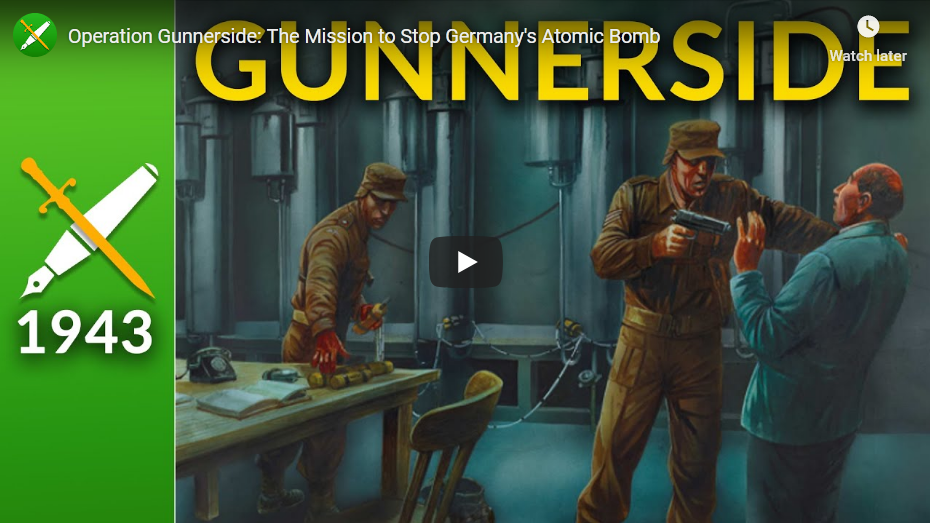
Operation Gunnerside: The Mission to Stop Germany’s Atomic Bomb

Filed under: Europe, Germany, History, Military, WW2 — Tags: , , — Nicholas @ 02:00

Historigraph
Published 21 Mar 2020

Buy Historigraph Posters here! https://teespring.com/stores/historig…
Support the channel on Patreon: https://www.patreon.com/historigraph

#OperationGunnerside #Historigraph #Historigraph #CuriosityStream

►Twitter: https://twitter.com/historigraph
►Instagram: https://www.instagram.com/historigraph
►Patreon: https://www.patreon.com/historigraph
►Follow me on Twitch: https://www.twitch.tv/historigraph

Sources:

Richard Petrow, The Bitter Years

David Greentree, Heroes of Telemark: Sabotaging Hitler’s Atomic Bomb

Clips:

1948 film Kampen om tungtvannet

Clips from contemporary documentary; https://www.youtube.com/watch?v=c3jSW…

Music:

“Crypto” by Kevin MacLeod
Link: https://incompetech.filmmusic.io/song…
License: http://creativecommons.org/licenses/b…

“Rynos Theme”, Incompetech https://incompetech.com

“Hitman” by Kevin MacLeod
Link: https://incompetech.filmmusic.io/song…
License: http://creativecommons.org/licenses/b…

June 28, 2020

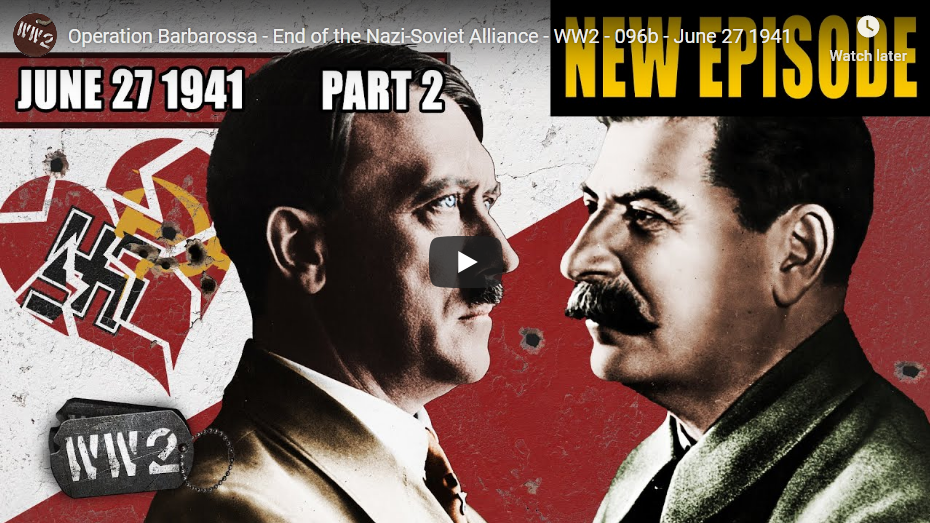
Operation Barbarossa – End of the Nazi-Soviet Alliance – WW2 – 096b – June 27 1941

World War Two
Published 27 Jun 2020

Operation Barbarossa kicks off this week with action all along the front as German panzers pierce deep into the Soviet Union. Meanwhile, Claude Auchinleck becomes Commander of the Allied forces in the Middle East that capture Damascus.

Join us on Patreon: https://www.patreon.com/TimeGhostHistory
Or join The TimeGhost Army directly at: https://timeghost.tv

Follow WW2 day by day on Instagram @World_war_two_realtime https://www.instagram.com/world_war_two_realtime
Between 2 Wars: https://www.youtube.com/playlist?list…
Source list: http://bit.ly/WW2sources

Written and Hosted by: Indy Neidell
Director: Astrid Deinhard
Producers: Astrid Deinhard and Spartacus Olsson
Executive Producers: Astrid Deinhard, Indy Neidell, Spartacus Olsson, Bodo Rittenauer
Creative Producer: Joram Appel
Post-Production Director: Wieke Kapteijns
Research by: Indy Neidell
Edited by: Iryna Dulka
Sound design: Marek Kamiński
Map animations: Eastory (https://www.youtube.com/c/eastory)
Map consultants: Rabih Rached and Patrick Adaimy

Colorizations by:
– Adrien Fillon – https://www.instagram.com/adrien.colo…
– Olga Shirnina, a.k.a. Klimbim – https://klimbim2014.wordpress.com/
– Cassowary Colorizations
– Dememorabilia – https://www.instagram.com/dememorabilia/
– Daniel Weiss
– Norman Stewart – https://oldtimesincolor.blogspot.com/

Sources:
– Imperial War Museum: E 3833, TR 841, E 1549, E 5448
– Bundesarchiv, CC-BY-SA 3.0: Bild 146-1990-044-13, Bild_183-B24575, Bild_101I-265-0048A-03, Bild_101I-208-0031-03, Bild_169-0443, Bild_101I-020-1262-35, Bild_101I-020-1272-21, Bundesarchiv_Bild_101I-209-0056-06
– Narodowe Archiwum Cyfrowe
– FDR Presidential Library & Museum

Archive by Screenocean/Reuters https://www.screenocean.com.

A TimeGhost chronological documentary produced by OnLion Entertainment GmbH.

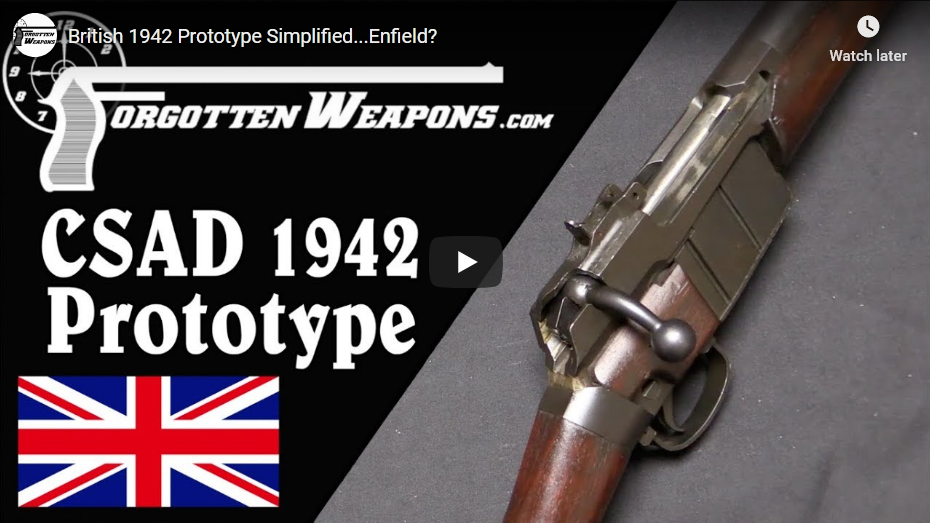
British 1942 Prototype Simplified…Enfield?

Filed under: Britain, History, Military, Weapons, WW2 — Tags: , , , — Nicholas @ 02:00

Forgotten Weapons
Published 18 Nov 2018

https://www.forgottenweapons.com/brit…

http://www.patreon.com/ForgottenWeapons

Cool Forgotten Weapons merch! http://shop.bbtv.com/collections/forg…

In 1942, the British government instituted a development program to design a new simplified rifle to replace the No4 MkI Lee Enfield. The CSAD (Central Small Arms Department) came up with a design using a quite simple receiver machined form a small steel billet. It was a rifle wholly distinct form the Enfield, although both were chambered for the .303 British cartridge. The simplified rifle used a front-locking bolt, a simplified cocking piece, and had a magazine holding just 6 rounds. The sights were a simple 300/600 yard rear aperture, and a crude spike bayonet could be fitted either forward for use or rearward for storage.

The project never got as far as serial production, or even field trials as far as I can tell, and only a handful of prototypes were made.

Contact:
Forgotten Weapons
PO Box 87647
Tucson, AZ 85754

June 27, 2020

Tank Chats #74 Panzer I | The Tank Museum

Filed under: Germany, History, Military, Weapons, WW2 — Tags: , , , — Nicholas @ 02:00

The Tank Museum
Published 10 May 2019

Panzer I was the first tank mass produced by Germany, as part of their drive to re-arm in the 1930’s before the Second World War.

The Tank Museum’s Panzer IB tank is the only known commander’s model of the Panzer I.
Cradit @10:25 Panzer I from The Arsenalen Museum, Sweden.

Support the work of The Tank Museum on Patreon: ► https://www.patreon.com/tankmuseum

Visit The Tank Museum SHOP: ► https://tankmuseumshop.org/
Twitter: ► https://twitter.com/TankMuseum
Tiger Tank Blog: ► http://blog.tiger-tank.com/
Tank 100 First World War Centenary Blog: ► http://tank100.com/ #tankmuseum #tanks #tankchats

June 26, 2020

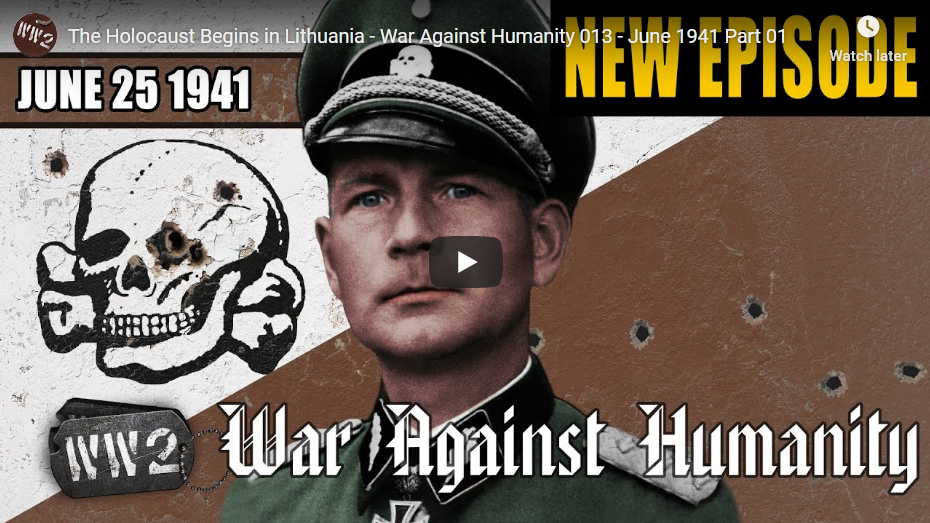
The Holocaust Begins in Lithuania – War Against Humanity 013 – June 1941 Part 01

Filed under: Europe, Germany, History, Military, Russia, WW2 — Tags: , , , , , , — Nicholas @ 06:00

World War Two
Published 25 Jun 2020

The German Fallschirmjäger target the Cretan civilian population as they take the island with big losses. But the War Against Humanity intensifies dramatically as Operation Barbarossa is launched on 22nd June, 1941.

Join us on Patreon: https://www.patreon.com/TimeGhostHistory
Or join The TimeGhost Army directly at: https://timeghost.tv

Follow WW2 day by day on Instagram @World_war_two_realtime https://www.instagram.com/world_war_two_realtime
Between 2 Wars: https://www.youtube.com/playlist?list…
Source list: http://bit.ly/WW2sources

Hosted by: Spartacus Olsson
Written by: Spartacus Olsson and Joram Appel
Director: Astrid Deinhard
Producers: Astrid Deinhard and Spartacus Olsson
Executive Producers: Astrid Deinhard, Indy Neidell, Spartacus Olsson, Bodo Rittenauer
Creative Producer: Joram Appel
Post-Production Director: Wieke Kapteijns
Research by: Joram Appel and Valantis Athanasiou
Edited by: Mikołaj Cackowski
Sound design: Marek Kamiński
Map animations: Eastory (https://www.youtube.com/c/eastory)

Colorizations by:
Dememorabilia – https://www.instagram.com/dememorabilia/
Carlos Ortega Pereira, BlauColorizations – https://www.instagram.com/blaucoloriz…
Julius Jääskeläinen – https://www.facebook.com/JJcolorization/
https://www.flickr.com/photos/2215569…
Norman Stewart – https://oldtimesincolor.blogspot.com/

Sources:
Detail of Mural Depicting 1919 Amritsar Massacre – Jallianwala Bagh – Amritsar – Punjab – India, courtesy Adam Jones https://flic.kr/p/kj6riR
RIA Novosti archive, image #965
Bundesarchiv
Narodowe Archiwum Cyfrowe
IWM E 3064E
Vilna Gaon State Jewish Museum
from the Noun Project: Policeman by karina, suit by Gabriel Ciccariello, manufacturer by priyanka, land investment by Gan Khoon Lay, soldier by Andi Nur Abdillah, classroom by Gan Khoon Lay, prisoner by carlotta zampini, interrogation by Gan Khoon Lay, Tortured Man by Gan Khoon Lay, sitting at desk by IYIKON

Bibliography:
“NKVD and Central Committee of the Soviet communication” as documented in: The great west Ukrainian prison massacre of 1941, a sourcebook – Ksenya Kiebuzinski, Alexander Motyl
Alexander Statiev, The Soviet Counterinsurgency in the Western Borderlands 167-168
“Lithuania in March 1941: An American Diplomat’s Report”, In: Journal of Baltic Studies 26:2 (1995) 161-158.
Herman Kruk, The Last Days of the Jerusalem of Lithuania: Chronicles from the Vilna Ghetto and the Camps, 1939-1944 (2002)
Stephan D. Yada-Mc Neal, Places of Shame – German and Bulgarian war crimes in Greece 1941-1945, Books on Demand, 2018
Antony Beevor, Crete 1941: The Battle and the Resistance, Greek edition, Athens, 2004.
Fleischer, Hagen, “Battle of Crete”, in Crete, History and Civilization, vol. 2 (Greek), Cretan TEDK, Heraklion, 1988.
Sanoudaki-Sanoudou Antonis, May 2011, German reprisals in the Battle of Crete (Greek), 70 Years from the Battle of Crete, pp. 89-112

Soundtracks from the Epidemic Sound:
Skrya – “First Responders”
Flouw – “Endlessness”
Jon Bjork – “For the Many”
Johannes Bornlof – “Deviation In Time”
Andreas Jamsheree – “Guilty Shadows 4”
Cobby Costa – “From the Past”
Farell Wooten – “Blunt Object”
Philip Ayers – “Trapped In A Maze”
Johannes Bornlof – “The Inspector 4”
Gunnar Johnsen – “Not Safe Yet”

Archive by Screenocean/Reuters https://www.screenocean.com.

A TimeGhost chronological documentary produced by OnLion Entertainment GmbH.

From the comments:

World War Two
2 hours ago (edited)
We apologize deeply for the mess up with the listing of countries at the opening – somehow the errors in the list of invaders slipped through the fact check. To be clear: neither Bulgaria, nor Slovenia (obviously) invaded the USSR in June 1941. We’re working on fixing it in some way with YouTube’s help.

At the end of June 1941 the civilian population in what is today Poland, Romania, Ukraine, Belarus, Latvia, Lithuania, and Estonia are facing two lethal enemies. The political police of the USSR – the NKVD, and the invading German Army accompanied by the Nazi killing squads of the SS. That’s simply how it is. That it will get even worse than it is during the last week of June, especially through horrors committed by one of these sides does not change that fact. Because of the importance of these events to humanity, and the difficulty we all face to not equivocate who did what, we would like to remind you that we use a chronological format, that we do not make analytical commentary that looks to what will happen, but let you discover the events as they evolve.

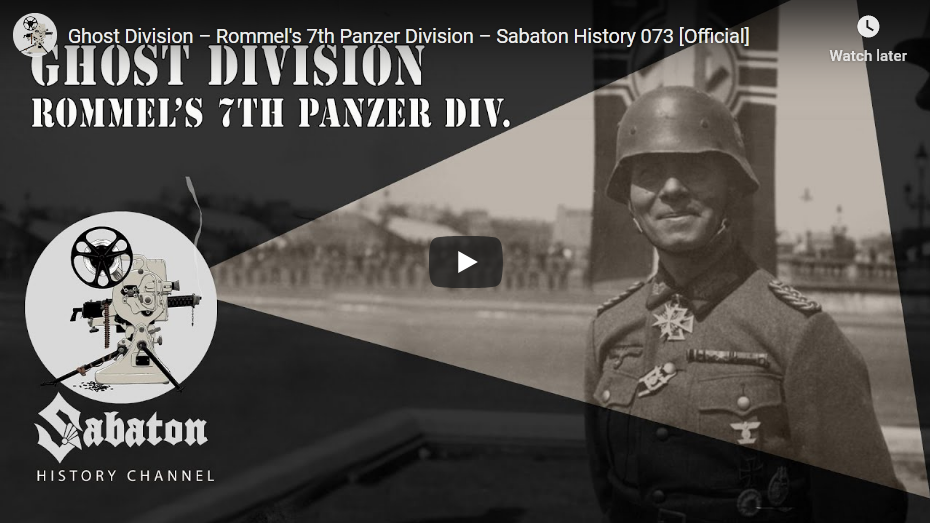
“Ghost Division” – Rommel’s 7th Panzer Division – Sabaton History 073 [Official]

Filed under: France, Germany, History, Media, Military, WW2 — Tags: , , , , , — Nicholas @ 04:00

Sabaton History
Published 25 Jun 2020

In the night of 17 May 1940, confusing reports were reaching French High Command. They spoke of what was thought impossible: The German Army had broken through the Maginot Line in the north. Scattered and panicked soldiers spoke of a “Division Fantôme” – a Ghost Division! It was Generalmajor Erwin Rommel’s 7th Panzer Division that was wreaking havoc in the French rear. In an unauthorized push, Rommel had seized the opportunity to rush the French fortress garrisons by a surprise armor attack straight from the move. Now in open space and with the night sky illuminated by burning French tanks and trucks, it was crucial for the Ghost Division to exploit its tactical victory. Alone and cut off like an island in a sea of enemies, this was easier said than done.

Support Sabaton History on Patreon: https://www.patreon.com/sabatonhistory

Listen to “Ghost Division” on the album The Art of War:
CD: http://bit.ly/TheArtOfWarStore
Spotify: http://bit.ly/TheArtOfWarSpotify
Apple Music: http://bit.ly/TheArtOfWarAppleMusic
iTunes: http://bit.ly/TheArtOfWariTunes
Amazon: http://bit.ly/TheArtOfWarAmz
Google Play: http://bit.ly/TheArtOfWarGooglePlay

Watch the Official Lyric Video of “Ghost Division” here:
https://www.youtube.com/watch?v=9FkYx…

Listen to Sabaton on Spotify: http://smarturl.it/SabatonSpotify
Official Sabaton Merchandise Shop: http://bit.ly/SabatonOfficialShop

Hosted by: Indy Neidell
Written by: Markus Linke and Indy Neidell
Directed by: Astrid Deinhard and Wieke Kapteijns
Produced by: Pär Sundström, Astrid Deinhard and Spartacus Olsson
Creative Producer: Joram Appel
Community Manager: Maria Kyhle
Executive Producers: Pär Sundström, Joakim Broden, Tomas Sunmo, Indy Neidell, Astrid Deinhard, and Spartacus Olsson
Post-Production Director: Wieke Kapteijns
Edited by: Iryna Dulka
Sound Editing by: Marek Kaminski
Maps by: Eastory – https://www.youtube.com/c/eastory

Archive by: Reuters/Screenocean https://www.screenocean.com
Music by Sabaton.

Colorizations:
– Dememorabilia – https://www.instagram.com/dememorabilia/

Sources:
– Bundesarchiv, CC-BY-SA 3.0: Bild 146-1977-018-13A/Otto, Bild 101I-124-0219-20/Hinz, Bild 146-1972-045-02
– Narodowe Archiwum Cyfrowe
– chieftanruncrush from Freesound.org
– Food vector created by freepik – www.freepik.com

An OnLion Entertainment GmbH and Raging Beaver Publishing AB co-Production.

© Raging Beaver Publishing AB, 2019 – all rights reserved.

« Newer Posts — Older Posts »

Powered by WordPress