
World War Two
Published 5 Jun 2022Despair in Germany, more death in the Jewish ghettos, and Dr. Mengele tales command in Auschwitz-Birkenau.
(more…)
June 6, 2022
Dr. Mengele Takes Command – WAH 063 – June 5, 1943
Comments Off on Dr. Mengele Takes Command – WAH 063 – June 5, 1943
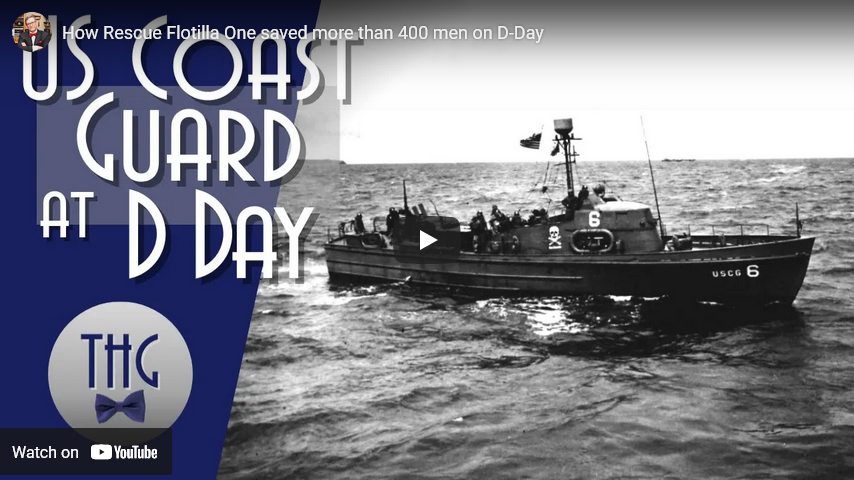
How Rescue Flotilla One saved more than 400 men on D-Day
The History Guy: History Deserves to Be Remembered
Published 2 Jun 2018The History Guy remembers the heroic service of Rescue Flotilla 1 of the United States Coast Guard during D-Day. It is history that deserves to be remembered.
The History Guy uses images that are in the Public Domain. As photos of actual events are sometimes not available, I will often use photographs of similar events and objects for illustration.
Patreon: https://www.patreon.com/TheHistoryGuy
The History Guy: Five Minutes of History is the place to find short snippets of forgotten history from five to fifteen minutes long. If you like history too, this is the channel for you.
Awesome The History Guy merchandise is available at:
teespring.com/stores/the-history-guyThe episode is intended for educational purposes. All events are presented in historical context.
#ushistory #militaryhistory #thehistoryguy
Comments Off on How Rescue Flotilla One saved more than 400 men on D-Day
QotD: Eisenhower’s D-Day speech to the troops
[The near-perfect formulaic general’s speech before battle] has a few basic parts: I) an opening that focuses on the valor of the men rather than the impact of the speech (the common trope here is to note how “brave men require few words”) II) a description of the dangers arrayed against them, III) the profits to be gained by victory and the dire consequences of defeat IV) the basis on which the general pins his hope of success and finally V) a moving peroration; the big emotional conclusion of the speech. You can read through Catiline’s speech yourself; it’s not long and it follows the formula precisely. That order of elements is not rigid; they can be moved around and emphasis shifted. But I don’t just want to show that this trope existed in the ancient past, I want to show that it is projected through military tradition to the present. So let’s look at another very standard and somewhat more recent example, appropriate for June:
Soldiers, Sailors and Airmen of the Allied Expeditionary Force!
You are about to embark upon the Great Crusade, toward which we have striven these many months. The eyes of the world are upon you. The hopes and prayers of liberty-loving people everywhere march with you. In company with our brave Allies and brothers-in-arms on other Fronts, you will bring about the destruction of the German war machine, the elimination of Nazi tyranny over the oppressed peoples of Europe, and security for ourselves in a free world.
Your task will not be an easy one. Your enemy is well trained, well equipped and battle-hardened. He will fight savagely.
But this is the year 1944! Much has happened since the Nazi triumphs of 1940-1. The United Nations have inflicted upon the Germans great defeats, in open battle, man to man. Our air offensive has seriously reduced their strength in the air and their capacity to wage war on the ground. Our Home Fronts have given us an overwhelming superiority in weapons and munitions of war, and placed at our disposal great reserves of trained fighting men. The tide has turned! The free men of the world are marching together to Victory!
I have full confidence in your courage, devotion to duty and skill in battle. We will accept nothing less than full Victory!
Good Luck! And let us all beseech the blessing of Almighty God upon this great and noble undertaking.
Dwight D. Eisenhower, June 6th, 1944
I’ve highlighted an image of the signed document itself to show the various components of the ancient battle speech (following my numbering above): [https://acoupdotblog.files.wordpress.com/2020/06/breaking-down-the-speech.png?w=689]
Apart from a slight alteration of the order, it is not hard to assign this speech to the same genre as Sallust’s Catiline speech or even Thucydides’ speeches at Delium (Thuc. 4.92-95). As we’ll see, it is certainly not the case that there is no other way to structure a pre-battle exhortation (although, I should note that the standard text of the other famous pre-D-Day General’s speech, Patton’s speech to the Third Army, hits the same notes, but with more words – mostly profanity). But this is the standard structure of a battle speech in the Western literary canon, and speeches with this standard structure, or variations of it, appear frequently.
I think a reader might particularly be caught by the emphasis on a section stressing how formidable the enemy is and how great the danger is (“He will fight savagely”). That seems an odd thing to stress! But it is an important part of the structure of these speeches; it is almost never left out. When paired with the general’s own cause for hope, acknowledging the fearsome nature of the enemy and the general terror of battle is a way to inoculate the soldiers against the seizing fear of battle. The Greeks saw the fear of battle as two distinct elements, deimos (δεῖμος) – the creeping dread before a battle, and phobos (φόβος) – the sudden paralyzing panic in combat, the sharp fear that causes men to flee. If the encouragement of the speech (and the general’s presence) is meant to defuse deimos, openly discussing the fearfulness of the enemy (but couching it in terms of how it may be overcome) is meant to rob phobos of his sting. You do your soldiers no favors by concealing from them the terror they will experience regardless.
Now the bulk of Eisenhower’s D-Day order is dedicated to the fourth part, stating the ground for encouragement, generally framed by the reasons the general is confident despite how fearsome the enemy is. One form of encouragement is a recounting of the noble deeds of the soldiers themselves. One of the marks of good generalship for the Romans was if a general could go up and down the line, calling out individual soldiers and reminding them of great deeds they had performed (Caesar does this, for instance; note Catiline’s opponent, Marcus Petreius encourages his soldiers this way, calling out each one – his is an army of veterans – by name, 59.4). Alternately – especially for a fairly green army where no one has done any great deeds yet – the general might stress the great valor of their forefathers, or the honor of their city or state. The emotion being touched here is pretty clearly pride, tapping into a desire not to let one’s self, one’s community or one’s comrades down. That’s an effective rhetorical tactic; as we’ve discussed, the fear of shame is an effective combat motivator (where so many other motivations fail). Appealing to pride is a good way to arouse that fear of shame, as the two emotions are deeply connected. Alternately, a general may not a superiority in numbers, materiel, tactical position; he may discuss his battle-plan and how it is likely to bring victory. For forces defending on their own ground, the home-field advantage may be stressed.
You want to understand the “fearsome enemy” motif and the “grounds for encouragement” motif working best as a pair.
Consider it this way: you are about to take a very important test. If I, having already taken the test, tell you “oh, don’t worry, the test is easy,” that will help dispel your dread (deimos) before it, but when you sit down with the test paper and read the (quite difficult) questions, the seizing fear (phobos) hits you, and your overall performance is reduced. That seizing panic clouds your thoughts and costs you vital time; in a battle, it might cause you to flee or get you killed. But if I tell you “the test is hard, but (you’ve studied effectively/you can pick up points on XYZ section/etc.)” it not only diminishes the dread before the test, but serves to mentally prepare you for the shock of seeing the real thing. Indeed, I turn your fearful mind into my friend – when the real thing fails to live up to your worst nightmares, you’ll draw confidence from that. When the test turns out to be exactly like I said, the encouragement carries more weight because of the reliability of the warning. I am not dispelling your fear – because this is battle and everyone is afraid and no words can take that away – I am mentally preparing you for your fear. There’s an element of CBT in this: validate the emotion, suggest more helpful ways to think about it, and direct the mind towards behavioral solutions.
Finally, I think it is worth noting what is not generally here. While the speaker is likely to reflect on glorious deeds of the soldiers, or other soldiers like them, or their ancestors, there is generally not a focus on how fearsome or scary or strong they are because no one feels scary or strong when they are terrified. “You’ve done this before” is a good line (so is “our people have always beaten their people”) but “Remember, we are lions” is not. No one feels like a lion when they are receiving indirect fire and cannot fire back; no one feels like a lion when their buddy just went down next to them and there’s nothing they can do about it. Remember: the purpose of the speech isn’t to pump someone up before the charge, it is to emotionally prepare them for the moment when the emotional momentum of the charge is spent and the fear of death comes crashing in to replace it.
Likewise, while “the cause” often figures into such speeches, it does so as a subordinate element; some kind of group membership – the nation, the polis, the legion, comrades-in-arms – is often more prominent (note how Eisenhower’s speech crafts concentric circles of groups that the listener belongs to, watching and depending on the listener; “liberty-loving people everywhere” -> “the United Nations” and “our Allies” -> “our homefront” -> finally “us” and “we”). While it took until the late 1940s for group-cohesion-theory to really emerge on its own, these sorts of speeches show an awareness of what seems to be a timeless truth: the cause may get you to the battle, but only comrades will hold you in it when the dying starts (on this, note especially J. McPherson, For Cause and Comrades (1997)).
Bret Devereaux, “Collections: The Battle of Helm’s Deep, Part VII: Hanging by a Thread”, A Collection of Unmitigated Pedantry, 2020-06-12.
Comments Off on QotD: Eisenhower’s D-Day speech to the troops
June 5, 2022
Banzai Charges in Alaska – WW2 – 197 – June 4, 1943
World War Two
Published 4 Jun 2022The Chinese defeat the Japanese at Shipai Fortress and the Americans maul the Japanese in the Aleutians. The Japanese are also worried about the possibility of the USSR joining the war against them. Meanwhile the Allies still plan to invade Sicily, but have no idea what they’ll do after that.
(more…)
Comments Off on Banzai Charges in Alaska – WW2 – 197 – June 4, 1943
June 4, 2022
Cheese propaganda, 1940 | Archive Film Favourites
Imperial War Museums
Published 14 May 2022With rationing introduced early in 1940 in Britain, this public information film was created to advocate the advantages of eating cheese over meat. The film explains not only the health benefits of cheese with some (unverified) experiments, but also its versatility in cooking, from grilled cheese to califlower cheese, “a meal in itself.” Film curator Matt Lee introduces us to this brilliant cheese propaganda.
You can watch the full Choose Cheese film on IWM’s Film Archive: https://film.iwmcollections.org.uk/re…
Subscribe to our channel for more films from the archives every Thursday!Browse the full IWM film collection and find out more about licencing this film or many others: https://bit.ly/iwmfilms
While our doors are temporarily closed, we still have millions of unforgettable stories to share with you. Your support is invaluable to help ensure we can share them with generations to come – please consider supporting Imperial War Museums today. Support us: https://www.iwm.org.uk/support-us/don…
Follow IWM on social media:
Twitter: https://twitter.com/I_W_M
Instagram: https://www.instagram.com/imperialwar…

Comments Off on Cheese propaganda, 1940 | Archive Film Favourites
June 1, 2022
How To Kill A U-Boat – WW2 Special
World War Two
Published 31 May 2022How to kill a U-Boat? The threat of the illusive and nearly undetectable submarines had been on the mind of every Allied naval planner since the Great War. As the Kriegsmarine once more unleashed its wolfpacks to the high seas, it became a race against time to find a way to stop the deadly stalkers from beneath the surface.
(more…)
Comments Off on How To Kill A U-Boat – WW2 Special
May 30, 2022
The Deadliest Job in World War Two – WAH 062 – May 29, 1943
World War Two
Published 29 May 2022Arthur Harris and the RAF set another record in bombing Germany, and the outnumbered Yugoslav Partisans show the Axis that numbers mean little when you’re clever.
(more…)
Comments Off on The Deadliest Job in World War Two – WAH 062 – May 29, 1943
May 29, 2022
Black May, Nazi Subs Defeated – WW2 – 196 – May 28, 1943
World War Two
Published 28 May 2021German Grand Admiral Karl Dönitz orders the U-Boats to leave the Atlantic this week; the losses lately have just been too great for their patrols to continue there. There is active fighting in China, the Aleutians, and the Kuban, and there are special weapons tests in the skies over Germany.
(more…)
Comments Off on Black May, Nazi Subs Defeated – WW2 – 196 – May 28, 1943
May 28, 2022
QotD: Breaking the trench stalemate with tactical air power
But how much airpower does it take to really move a division out of position? In 1944, at the start of Operation Cobra as part of the Normandy breakout, it was necessary for US forces to move the powerful armored division Panzer Lehr out of its prepared positions outside of St. Lo. Over the course of an hour and a half, the U.S. Eighth Air Force hit Panzer Lehr with approximately three thousand aircraft, including 1,800 heavy bombers (each of which might have had bomb-loads of c. 2-3,500kg; the attack would have been the equivalent of about 13,000 Farman F.50s (of which only a hundred or so were built!)). By this point, even medium bombers carried bomb loads in the thousands of pounds, like the B-25 Mitchell medium bomber, with a bomb load of 3000lbs (1360kg). This was followed by a hurricane artillery barrage! Despite this almost absurdly awesome amount of firepower (which, to be clear, inflicted tremendous damage; by the end of Operation Cobra, Panzer Lehr – the heaviest and most powerful Panzer division in the west – had effectively ceased to exist), Panzer Lehr, badly weakened was still very capable of resisting and had to be pushed out of position by ground attack over the next three days.
Needless to say, nothing on offer in 1918 or for a decade or more after, was prepared to offer that kind of offensive potential from the air. That kind of assault would have required many thousands of aircraft with capabilities far exceeding what even the best late-war WWI bombers could do. Once again, while close air support doctrine was developed with one eye on the trench stalemate and the role airpower could play in facilitating a breakthrough and restoring maneuver (either by blasting the breakthrough or – as in Soviet Deep Battle doctrine – engaging enemy rear echelon units to bog down reinforcements). But the technology wasn’t anywhere near the decisive point by 1918. Instead, the most important thing aircraft could do was spot for the artillery, which is mostly what aircraft continued to do, even in late 1918.
Bret Devereaux, “Collections: No Man’s Land, Part II: Breaking the Stalemate”, A Collection of Unmitigated Pedantry, 2021-09-24.
Comments Off on QotD: Breaking the trench stalemate with tactical air power
May 26, 2022
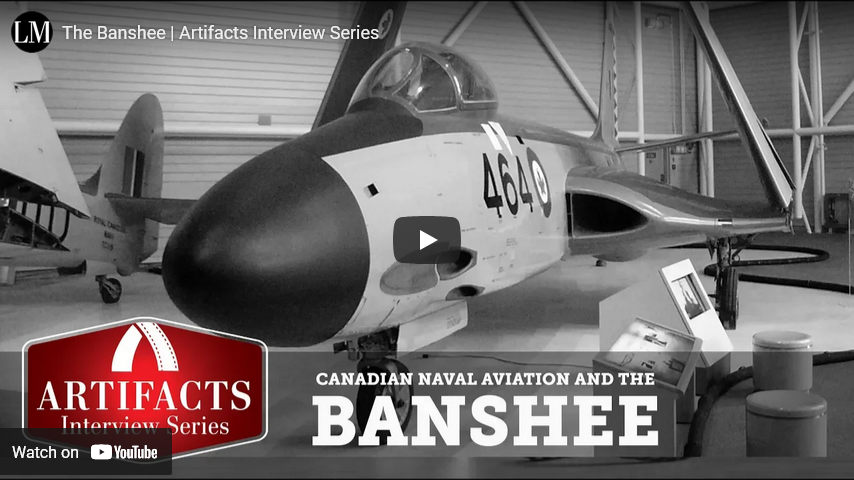
The Banshee | Artifacts Interview Series
Legion Magazine
Published 15 Mar 2019Legion Magazine‘s Stephen J. Thorne sat down with Andrew Burtch, the Post-1945 historian at the Canadian War Museum, to discuss what was the crown jewel of the Royal Canadian Navy’s air fleet – the Banshee. Video edited by Adam Tindal.
For more information, visit: www.legionmagazine.com/artifacts
Comments Off on The Banshee | Artifacts Interview Series
May 25, 2022
The Spy Game That Killed Yamamoto – WW2 – Spies & Ties 17
World War Two
Published 24 May 2022We’ve already seen the power of signals intelligence. Churchill loves being fed information from MI6’s Ultra. Now it brings a vengeance for his American allies. They manage to bag the scourge of Pearl Harbor, C-in-C of the Imperial Japanese Navy, Admiral Isoroku Yamamoto.
(more…)
Comments Off on The Spy Game That Killed Yamamoto – WW2 – Spies & Ties 17
May 23, 2022
Drowning Germans, Burning Jews – WAH 061 – May 22, 1943
World War Two
Published 22 May 2022When Air Marshal Arthur Harris and Reichspropagandaminister Joseph Goebbels agree that a lot of death and destruction is not enough death and destruction, the world is in trouble.
(more…)
Comments Off on Drowning Germans, Burning Jews – WAH 061 – May 22, 1943
May 22, 2022
Axis Prisoners Face French Wrath – WW2 – 195 – May 21 1943
World War Two
Published 21 May 2022The Allies have won the battle for Africa, but now they have nearly 250,000 POWs to care for, and do not have the facilities to do so. The Trident Conference continues in Washington to try and decide the direction of the Allied war effort, but they launch the Dambuster Raids this week in Germany to try and cripple German water power — and thus, industry — with a new type of bomb.
(more…)
Comments Off on Axis Prisoners Face French Wrath – WW2 – 195 – May 21 1943
May 18, 2022
Trident: The Allied Plan to Win the War – Time Ghost News Flash
World War Two
Published 17 May 2022Washington, May 1943. It was the largest Anglo-American conference of the war so far. With the Axis being defeated in North Africa, the Mediterranean, and New Guinea, the need to agree on new strategic goals arose inside the Combined Chiefs of Staff. A new course of action was to be set against Italy, Japan, and Germany to capitalize on the recent successes. But debates and old dilemmas heated up when it came to resources, manpower, and the question “where to attack next”.
(more…)
Comments Off on Trident: The Allied Plan to Win the War – Time Ghost News Flash
May 16, 2022
Heaviest Air Raid in Human History – WAH 060 – May 15, 1943
World War Two
Published 15 May 2022As the Warsaw Ghetto Uprising is being quashed, there are renewed Japanese atrocities in China, and the RAF sets a world record by bombing German civilians.
(more…)
Comments Off on Heaviest Air Raid in Human History – WAH 060 – May 15, 1943


