
World War Two
Published 14 May 2022With the end of the Tunisian Campaign, the Allies have won the war for the African Continent. What next? They meet at the Trident Conference in Washington DC to try and figure that out. Meanwhile, the fight in the field continues — in Burma, the Aleutians, China, and the Kuban.
(more…)
May 15, 2022
The End of the War in Africa – WW2 – 194 – May 14, 1943
Comments Off on The End of the War in Africa – WW2 – 194 – May 14, 1943
Tank Chat #147 M14/41 | The Tank Museum
The Tank Museum
Published 4 Feb 2022► JOIN OUR PATREON: Our Patreons have already enjoyed Early Access and AD free viewing of our weekly YouTube video! Consider becoming a Patreon Supporter today: https://www.patreon.com/tankmuseum
► TIMESTAMP:
00:00 – INTRO
00:22 – FEATURES
(more…)
Comments Off on Tank Chat #147 M14/41 | The Tank Museum
May 14, 2022
Operation Chariot, the “Greatest Raid of All”
The raid on the French port of St. Nazaire in March 1942, codenamed “Operation Chariot” by the British, was one of the most daring and successful special forces operation of the Second World War. In The Critic, Richard Hopton reviews a new history of this operation by Giles Whittell:
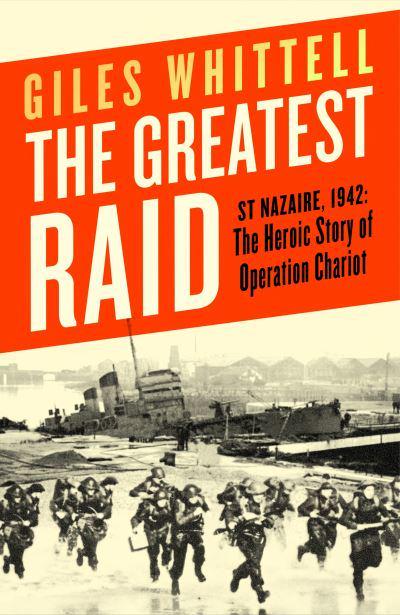
Operation Chariot, the Raid on St Nazaire, has long been known as “The Greatest Raid of All”. The audacity of the plan, the lethal danger of the operation, the inadequacy of the equipment provided, the astonishing courage of the participants and the spectacular success of its primary object have ensured its place in the annals of British martial heroism.
In the early hours of 28 March 1942, a force of 623 commandos and naval personnel stole up the Loire estuary to attack the port of St Nazaire. Leading the force was HMS Campbeltown, a superannuated destroyer acquired from the Americans, which had been converted into a floating bomb by the addition of four tons of high explosive secreted in her bows.
The plan was that she would ram the steel gate of the port’s immense dry dock where the charge would explode, demolishing the dock gate. The commandos would then swarm ashore to attack the dockyard installations, particularly the pumps and winding mechanisms which operated the dry dock. With the dock out of action, Hitler would not risk his battleship Tirpitz in the Atlantic where she could wreak havoc among the convoys supporting the war effort in Britain. This was the immediate, supposed object of the raid.
Giles Whittell’s new book is not the first full-length history of the event. C.E. Lucas-Phillips’s account, The Greatest Raid of All, was published in 1958 followed 40 years later by James Dorrian’s Storming St Nazaire, which remains the most detailed, authoritative account of the operation. In 2013 Robert Lyman published Into The Jaws of Death which told the story of the raid anew, with a greater concentration on the genesis and planning of the operation.
In 2007 Jeremy Clarkson took time away from messing around with cars to make a documentary for the BBC about the raid. The result was an “affectionate and enthralling” piece of television which brought the exploits of the Charioteers — as the men who took part in the raid have always been known — to a wider audience.
Although the ostensible object of the raid was to discourage the Germans from risking the Tirpitz in the Atlantic, it is now known that, by the spring of 1942, the German high command had already decided to keep the battleship moored safely in a distant Norwegian fjord. Accordingly, destroying the dry dock at St Nazaire was, strategically, a futile gesture.
Comments Off on Operation Chariot, the “Greatest Raid of All”
May 11, 2022
Operation Mincemeat – The True Story – WW2 – Spies & Ties 16
World War Two
Published 10 May 2022We’ve encountered plenty of different secret agents. Men, women, Allied, Axis, Partisans. They all fight for different reasons: patriotism, vengeance, or cold hard cash. But they’ve all had one thing in common. They’ve been alive. We’ve never had a dead secret agent. Yet …
(more…)
Comments Off on Operation Mincemeat – The True Story – WW2 – Spies & Ties 16
M1944E1/M1945 Johnson Light Machine Gun
Forgotten Weapons
Published 27 Aug 2016http://www.patreon.com/ForgottenWeapons
After getting his Model 1941 machine gun purchased in small numbers by the US military, Melvin Johnson continued to press for more sales and a general adoption. Following testing results and recommendations from soldiers in the field, he made a number of modifications to the gun and developed the M1944, which was quickly tweaked to become the M1944E1, also called the M1945. This new version included several improvements including:
* Replacing the bipod with a monopod less prone to interfering with barrel removal
* Improved stronger bolt anti-bounce latch
* Metal dual-tube buttstock in place of wood
* and most significantly, a gas-boosted hybrid recoil operating systemThis new model of the Johnson was in testing at the end of WWII, and weapons development budget cuts at the conclusion of the war prevented it from replacing the BAR as Johnson and many in the Marine Corps had hoped.
This particular M1945 Johnson is fully transferrable, as came out of the Winchester Museum Collection (now the Cody Firearms Museum) back many years ago when curators would occasionally sell items from the collection to raise money.

Comments Off on M1944E1/M1945 Johnson Light Machine Gun
May 9, 2022
Barbie and the Trail of Blood – WAH 059 – May 8, 1943
World War Two
Published 8 May 2022Europe is burning and it seems there is little that will end the suffering except victory over Naziism.
(more…)
Comments Off on Barbie and the Trail of Blood – WAH 059 – May 8, 1943
May 8, 2022
Kilroy was Here! The fall of Tunis – WW2 – 193 – May 7, 1943
World War Two
Published 7 May 2022Tunis falls to the Allies, but the Axis are still fighting back from their little corner of Tunisia. There is more of the seemingly endless fighting in the Kuban in the Caucasus, and the Chinese Theater comes to life with a new Japanese offensive.
(more…)
Comments Off on Kilroy was Here! The fall of Tunis – WW2 – 193 – May 7, 1943
Tank Chat #146 Carro Veloce | The Tank Museum
The Tank Museum
Published 28 Jan 2022► JOIN OUR PATREON: Our Patreons have already enjoyed Early Access and AD free viewing of our weekly YouTube video! Consider becoming a Patreon Supporter today: https://www.patreon.com/tankmuseum
► TIMESTAMP:
00:00 – INTRO
00:33 – FEATURES
(more…)
Comments Off on Tank Chat #146 Carro Veloce | The Tank Museum
May 5, 2022
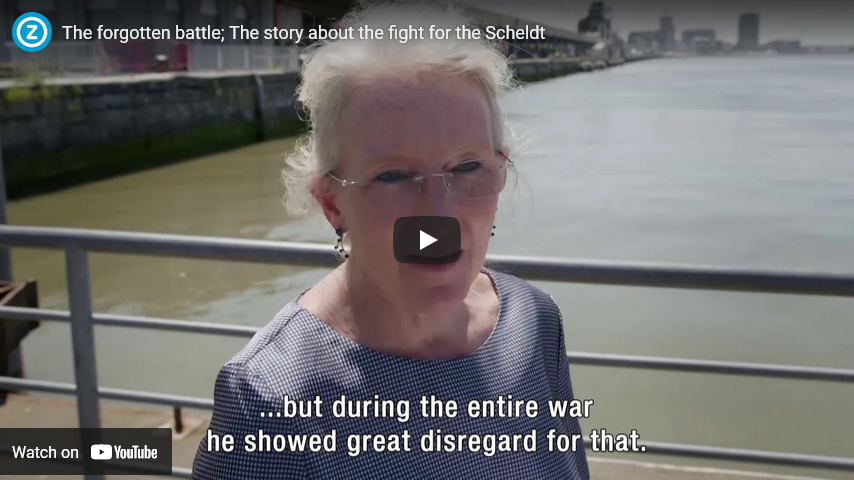
The Forgotten Battle: The story of the Battle for the Scheldt
Omroep Zeeland
Published 18 Mar 2020Documentary directed by Margot Schotel Omroep Zeeland (2019) about the battle of the Scheldt. An large and important battle in the autumn of 1944, which was crucial for the liberation of the Netherlands and Europe
After D-Day (6 June, 1944), the Allied Forces quickly conquered the north of France and Belgium. Already on 4 September they took Antwerp, a strategically vital harbor. However, the river Scheldt, the harbor’s supply route, was still in German hands. Montgomery was ordered by Eisenhower to secure both sides of the Scheldt, the larger part of which is located in the Netherlands, but Montogomery decided otherwise and started Operation Market Garden. He left the conquest of the Scheldt to the Canadians and the Polish Armies who then had to fight a much stronger enemy that was ordered by Hitler himself to keep its position at all costs. Even though Market Garden eventually failed, it received an almost mythological status in the narrative about the World War II, while the successful battle for the Scheldt was never really acknowledged by history.
With the cooperation of Tobias van Gent, Ingrid Baraitre, Carla Rus, Johan van Doorn ea.
Blijf op de hoogte van het laatste Zeeuwse nieuws:
Volg ons via:
Instagram: https://www.instagram.com/omroepzeeland/
Twitter: https://twitter.com/omroepzeeland
Youtube: https://www.youtube.com/c/omroepzeeland
Comments Off on The Forgotten Battle: The story of the Battle for the Scheldt
May 4, 2022
Allies on Amphetamines – WW2 Special
World War Two
Published 3 May 2022We’ve heard how German forces are fuelled by stimulants like Pervitin. But are the Allies doing the same thing? Of course! Their drug of choice is Benzedrine. It’s in use as the RAF bomb German cities, as Monty’s tanks push Rommel back, and as US Marines take the fight to the Japanese.
(more…)
Comments Off on Allies on Amphetamines – WW2 Special
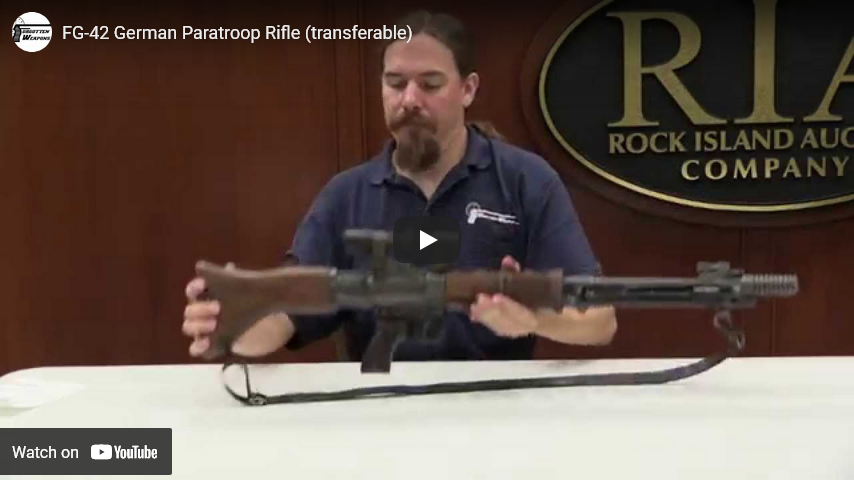
FG-42 German Paratroop Rifle
Forgotten Weapons
Published 24 Aug 2014Cool Forgotten Weapons Merch! http://shop.bbtv.com/collections/forg…
Only a few dozen of these are in private hands in the US, and they are an extremely advanced design for WWII.
Theme music by Dylan Benson – http://dbproductioncompany.webs.com
Comments Off on FG-42 German Paratroop Rifle
May 2, 2022
Dead Refugees Are Better Than New Immigrants – WAH 058 – May 1, 1943
World War Two
Published 1 May 2022As the SS continues to crack down on the uprising in the Warsaw Ghetto, Great Britain and the US decide not to help Jewish refugees.
(more…)
Comments Off on Dead Refugees Are Better Than New Immigrants – WAH 058 – May 1, 1943
May 1, 2022
The race for Tunisia turns into a crawl – WW2 – 192 – April 30, 1943
World War Two
Published 30 Apr 2022The Allies launch a deception operation to hide their intent of soon attacking Sicily, but first, they’ll actually have to secure Tunisia, and it is slow going. A German offensive in the Caucasus grinds to a halt, and German U-boats are suddenly finding themselves unable to destroy Allied shipping in the Atlantic.
(more…)
Comments Off on The race for Tunisia turns into a crawl – WW2 – 192 – April 30, 1943
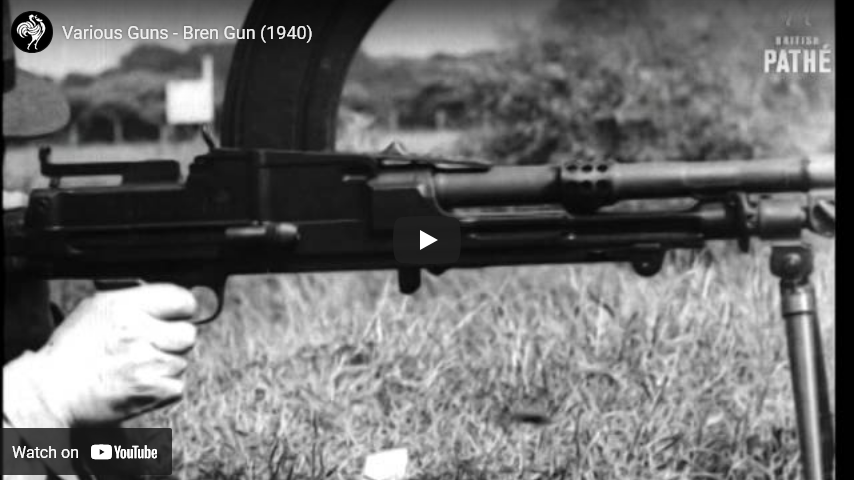
Various Guns – Bren Gun (1940)
British Pathé
Published 13 Apr 2014Various guns – Bren gun.
Item on the Bren Gun. L/S parachutists falling to earth. After seeing various machine guns of the recent past, including the Browning BAR and French Chauchat machine gun, we see the manufacture and firing of the Bren gun. There is also a diagrammatic sequence showing the workings of the gas operated machine gun.
FILM ID:1292.13A VIDEO FROM BRITISH PATHÉ. EXPLORE OUR ONLINE CHANNEL, BRITISH PATHÉ TV. IT’S FULL OF GREAT DOCUMENTARIES, FASCINATING INTERVIEWS, AND CLASSIC MOVIES. http://www.britishpathe.tv/
FOR LICENSING ENQUIRIES VISIT http://www.britishpathe.com/
British Pathé also represents the Reuters historical collection, which includes more than 136,000 items from the news agencies Gaumont Graphic (1910-1932), Empire News Bulletin (1926-1930), British Paramount (1931-1957), and Gaumont British (1934-1959), as well as Visnews content from 1957 to the end of 1984. All footage can be viewed on the British Pathé website. https://www.britishpathe.com/
Comments Off on Various Guns – Bren Gun (1940)
April 30, 2022
God Help These British Agents – WW2 – Spies & Ties 16
World War Two
Published 28 Apr 2022We’ve seen it time and time again in this war. Supposed Allies arguing with each other instead of fighting the enemy. But when SOE and MI6 begin vying for leadership of Britain’s secret war, it’s more than cross words. Now there are lives at stake.
(more…)
Comments Off on God Help These British Agents – WW2 – Spies & Ties 16


