
Even by the usual standards of historical irony, it remains astonishing that Hitler’s June 1941 invasion of the Soviet Union not only failed to destroy Bolshevism, but instead conferred a new legitimacy on Stalin’s dictatorship, and probably protracted by a generation the existence of his empire. Successful resistance to Hitler was only possible because of the Soviet leader’s industrialisation programme, which had been carried out at appalling human cost.
The Russian people’s 21st-century notion of what they call “the Great Patriotic War” bears little relationship to our own. It ignores Stalin’s 1939-41 pact with Hitler, and the fact that the Luftwaffe planes that bombed London in the Blitz were powered by Russian fuel. President Putin has made unlawful all published mention of the unspeakable cruelties the Soviet regime inflicted on its own citizens — shooting an estimated 300,000 soldiers for alleged desertion or cowardice — in order to prevail. Antony Beevor’s books, and for that matter my own, are nowadays banned because they describe the Red Army’s 1945 campaign of rape and pillage in Germany.
I have argued elsewhere that the ruthlessness of Stalin’s tyranny was essential to contrive the defeat of Hitler’s tyranny; that if the liberation of Europe had proceeded at a pace determined by the US and British armies, we might still stand short of the Elbe.
Max Hastings, “The centenary of the Russian revolution should be mourned, not celebrated”, The Spectator, 2016-12-10.
October 1, 2019
QotD: The Great Patriotic War
September 29, 2019
An Axis of Evil is Complete – WW2 – 057 – September 28 1940
World War Two
Published 28 Sep 2019This week, the factions of World War Two begin to crystallise as the Japanese join the Axis powers.
Join us on Patreon: https://www.patreon.com/TimeGhostHistory
Or join The TimeGhost Army directly at: https://timeghost.tvFollow WW2 day by day on Instagram @World_war_two_realtime https://www.instagram.com/world_war_t…
Join our Discord Server: https://discord.gg/D6D2aYN.
Between 2 Wars: https://www.youtube.com/playlist?list…
Source list: http://bit.ly/WW2sourcesWritten and Hosted by: Indy Neidell
Produced and Directed by: Spartacus Olsson and Astrid Deinhard
Executive Producers: Bodo Rittenauer, Astrid Deinhard, Indy Neidell, Spartacus Olsson
Creative Producer: Joram Appel
Post-Production Director: Wieke Kapteijns
Research by: Indy Neidell
Edited by: Iryna Dulka
Map animations: EastoryColorisations by Norman Stewart and Julius Jääskeläinen https://www.facebook.com/JJcolorization/
Eastory’s channel: https://www.youtube.com/channel/UCEly…
Archive by Screenocean/Reuters https://www.screenocean.com.Sources:
– USHMM
1. Accession Number: 1992.252.1 | RG Number: RG-60.0621 | Film ID: 302
2. Photograph Number: 74565
– IMW:
IWM (A 1378)
IWM (A 1376)
IWM (CH 1429)
IWM (C 1819)TimeGhost chronological documentary produced by OnLion Entertainment GmbH.
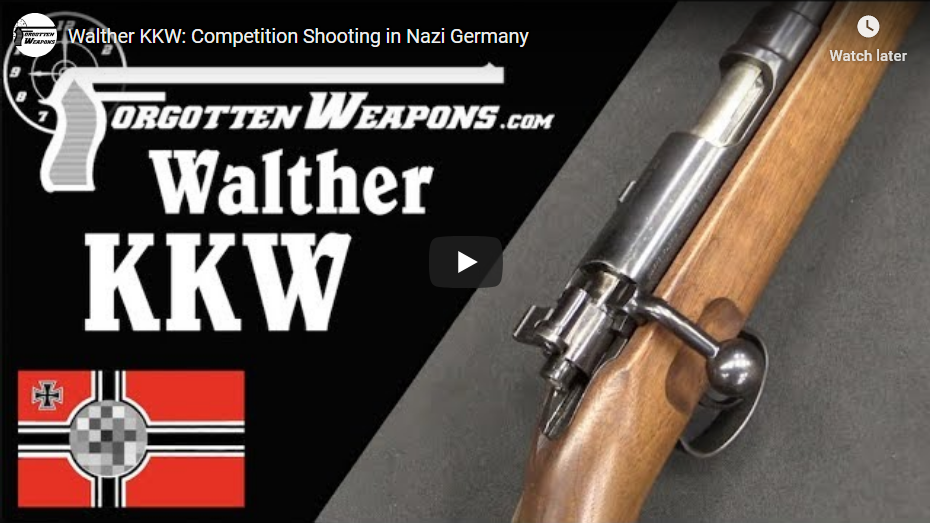
Walther KKW: Competition Shooting in Nazi Germany
Forgotten Weapons
Published on 14 Aug 2019RIA on YouTube: https://www.youtube.com/user/RockIsla…
RIA on Instagram: https://www.instagram.com/rockislanda…The KKW (“Klein Kaliber Wehrsportgewehr“, or small caliber military sporting rifle) was developed by BDW in 1937 as an amalgamation of various .22 rifle elements from other manufacturers as well as BSW itself. It was intended to fill the role of the German national standard target rifle. When the Nazi party took over Germany in the early 30s, the SA consolidated and reorganized the civilian shooting sports in to a format aimed at military training. To this end, they wanted a standardized rifle which would duplicate the handling of the Mauser K98k in .22 long rifle caliber. This was initially the DSM, but in 1935 the SA decided that it wanted a rifle that more closely mirrored the military pattern Mauser. The result was the KKW. For more information on these and other German 1930s/40s training rifles, I recommend the recent book on the subject by Bob Simpson.
http://www.patreon.com/ForgottenWeapons
Cool Forgotten Weapons merch! http://shop.bbtv.com/collections/forg…
Contact:
Forgotten Weapons
PO Box 87647
Tucson, AZ 85754
September 28, 2019
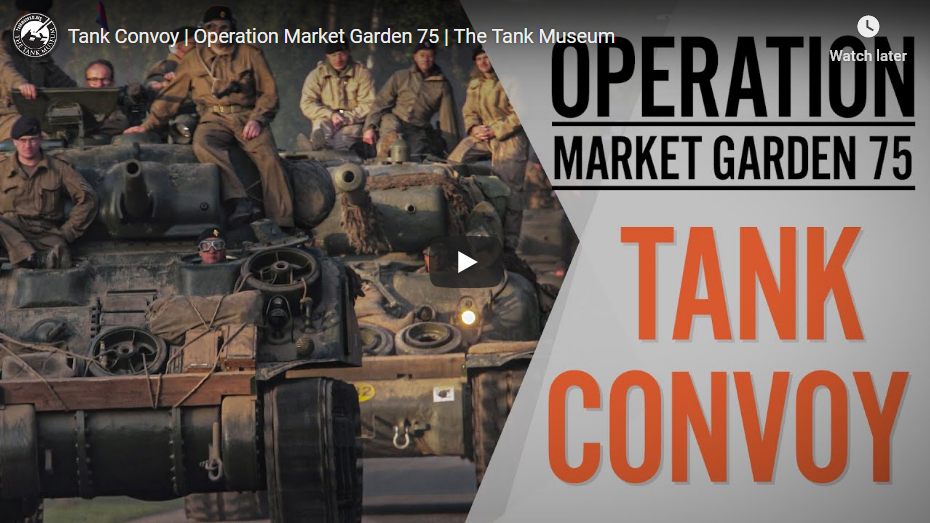
Tank Convoy | Operation Market Garden 75 | The Tank Museum
The Tank Museum
Published 27 Sep 2019September 2019 marked the 75th Anniversary of Operation Market Garden. Here we see highlights of the XXX Corps armoured convoy reenactment which took place to commemorate this event. Find out how the Museum’s vehicles fared during the convoy.
Support the work of The Tank Museum on Patreon: ► https://www.patreon.com/tankmuseum
Visit The Tank Museum SHOP: ► https://tankmuseumshop.org/
Twitter: ► https://twitter.com/TankMuseum
Instagram: ► https://www.instagram.com/tankmuseum/
Tiger Tank Blog: ► http://blog.tiger-tank.com/
Tank 100 First World War Centenary Blog: ► http://tank100.com/
September 25, 2019
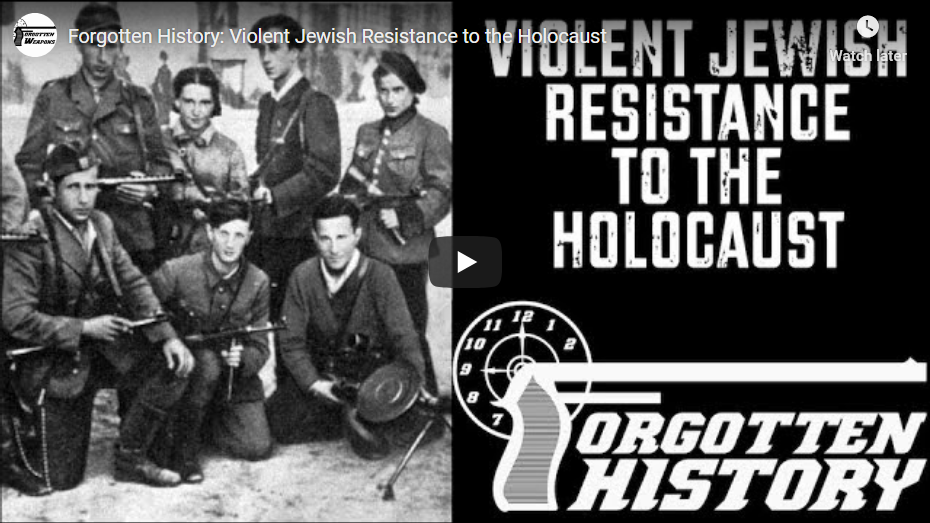
Forgotten History: Violent Jewish Resistance to the Holocaust
Forgotten Weapons
Published 24 Sep 2019http://www.patreon.com/ForgottenWeapons
Cool Forgotten Weapons merch! http://shop.bbtv.com/collections/forg…
I wrote this paper back in 2003 or 2004 for a college class I was taking (HIST 595 – The Holocaust And Genocide). Today, it sounds a bit amateurish — but I suppose that is to be expected of something written by someone barely out of their teens. I think it could be much better written today, and its subject matter deserves much greater depth, but I believe its conclusions are sound. In particular, I would not be so casual in identifying the perpetrators simply as “the Germans”, as this is an unfair simplification of the guilt for the crimes of the Holocaust.
Some people will interpret this paper though narrow political viewpoints today, which is unfortunate. I shouldn’t have to say it, but obviously such interpretations are certainly not reflective of my own beliefs.
Bibliography:
Ainsztein, Reuben. Jewish Resistance in Nazi-Occupied Europe. Paul Elek Ldt, London: 1974.
Arad, Yitzhak. Ghetto in Flames. Holocaust Library, New York: 1982.
Berenbaum, Michael. The World Must Know. New York: Little, Brown, and Co, 1993.
Donat, Alexander. The Death Camp Treblinka. New York: Holocaust Library, 1979.
Gutman, Yisrael. The Jews of Warsaw, 1939-1943. Indiana University Press, Bloomington:1982.
Mark, Ber. Uprising in the Warsaw Ghetto. Schocken Books, New York: 1975.
Novitch, Miriam. Sobibor: Martydom and Revolt. Holocaust Library, New York: 1980.
Rotem, Simha. Memoirs of a Warsaw Ghetto Fighter. New Haven: Yale University Press, 1994.
Zuckerman, Yitzhak. A Surplus of Memory. University of California Press, Berkeley: 1993.
Contact:
Forgotten Weapons
6281 N. Oracle #36270
Tucson, AZ 85704
September 23, 2019
M4 Sherman – The Workhorse of D-Day
Real Engineering
Published on 21 Sep 2019Watch over 2,400 documentaries for free for 30 days by signing up at http://www.CuriosityStream.com/realen… and using the code, “
realengineering”New streaming platform: https://watchnebula.com/
Patreon:
https://www.patreon.com/user?u=282505…
Twitter:
https://twitter.com/thebrianmcmanus
Discord:
https://discord.gg/s8BhkmNThank you to AP Archive for access to their archival footage
September 22, 2019
The Brits teach the Germans to bugger off! – WW2 – 056 – September 21 1940
World War Two
Published on 21 Sep 2019The Battle of Britain continues as planes fight over the South-English shorelines and large parts of London are targeted during the Blitz. However, this week the ultimate goal of this air battle is postponed. The invasion of Britain, Operation Sea Lion, is called off. For now at least.
Join us on Patreon: https://www.patreon.com/TimeGhostHistory
Or join The TimeGhost Army directly at: https://timeghost.tvFollow WW2 day by day on Instagram @World_war_two_realtime https://www.instagram.com/world_war_t…
Join our Discord Server: https://discord.gg/D6D2aYN.
Between 2 Wars: https://www.youtube.com/playlist?list…
Source list: http://bit.ly/WW2sourcesWritten and Hosted by: Indy Neidell
Produced and Directed by: Spartacus Olsson and Astrid Deinhard
Executive Producers: Bodo Rittenauer, Astrid Deinhard, Indy Neidell, Spartacus Olsson
Creative Producer: Joram Appel
Post-Production Director: Wieke Kapteijns
Research by: Indy Neidell
Edited by: Iryna Dulka
Map animations: EastoryColorisations by Norman Stewart and Julius Jääskeläinen https://www.facebook.com/JJcolorization/
Eastory’s channel: https://www.youtube.com/channel/UCEly…
Archive by Screenocean/Reuters https://www.screenocean.com.Sources:
– Mussolini colorized by Olga Shirnina, aka Klimbim
– German barge by WerWil on Wikimedia Commons
– IWM: CM3513, MH 6657, ZZZ 2070B, MISC 51237A TimeGhost chronological documentary produced by OnLion Entertainment GmbH.

September 21, 2019
Sexton Tank Chat | Operation Market Garden 75 | The Tank Museum
The Tank Museum
Published on 20 Sep 2019Here we have a Tank Chat special from the commemorative XXX Corps convoy for Operation Market Garden 75. See David Willey discuss the a Sexton from the Historic Collection of the Royal Netherlands Army, on location in the Netherlands.
Support the work of The Tank Museum on Patreon: ► https://www.patreon.com/tankmuseum
Visit The Tank Museum SHOP: ► https://tankmuseumshop.org/
Twitter: ► https://twitter.com/TankMuseum
Instagram: ► https://www.instagram.com/tankmuseum/
Tiger Tank Blog: ► http://blog.tiger-tank.com/
Tank 100 First World War Centenary Blog: ► http://tank100.com/

September 17, 2019
The Curator’s Dingo | The Tank Museum
The Tank Museum
Published on 16 Sep 2019Most Curators don’t own armoured cars… David Willey, Tank Museum Curator, has owned his Daimler Dingo Scout Car for over 20 years. Find out how he came to own it and what he uses it for.
As part of the 75th Anniversary of Operation Market Garden, David will be driving his Dingo in a 200 vehicle convoy retracing the route.
Support the work of The Tank Museum on Patreon: ► https://www.patreon.com/tankmuseum
Visit The Tank Museum SHOP: ► https://tankmuseumshop.org/
Twitter: ► https://twitter.com/TankMuseum
Instagram: ► https://www.instagram.com/tankmuseum/
Tiger Tank Blog: ► http://blog.tiger-tank.com/
Tank 100 First World War Centenary Blog: ► http://tank100.com/
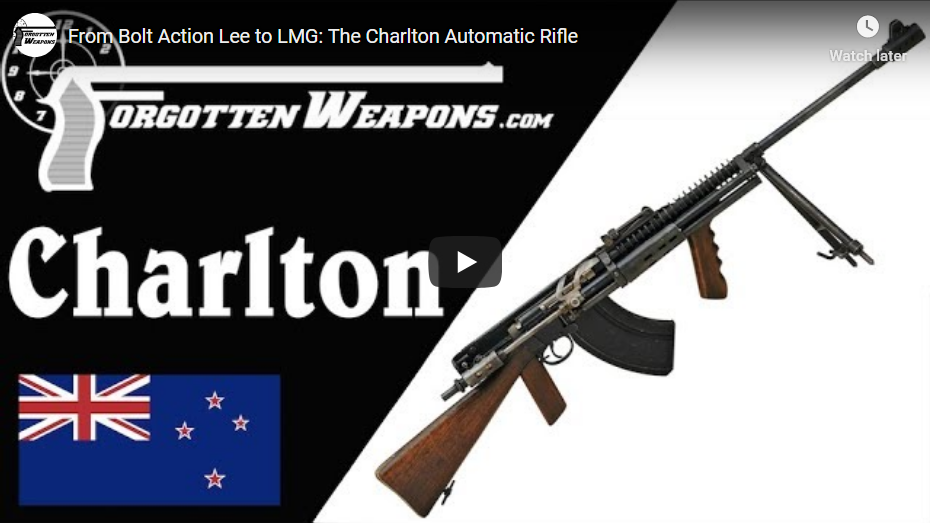
From Bolt Action Lee to LMG: The Charlton Automatic Rifle
Forgotten Weapons
Published on 26 Jul 2019http://www.patreon.com/ForgottenWeapons
Cool Forgotten Weapons merch! http://shop.bbtv.com/collections/forg…
The Charlton automatic rifle is one of very, very few examples of a conversion from bolt action to self-loading rifle actually working reasonably well. Typically this sort of project founders in expense and unreliability. Charlton, however, was able to take his vision for providing the New Zealand Home Guard with a new weapon made form obsolete surplus and bring it fully to fruition, with 1500 guns made. They were never fired in anger, but allowed New Zealand to put all of its Bren guns into the field while retaining the Charltons as emergency weapons in case of Japanese invasion. Sadly, virtually all were destroyed in a warehouse fire after the war, leaving them extremely rare today.
Many thanks to the Royal Armouries for allowing me to film and disassemble this very scarce automatic rifle! The NFC collection there – perhaps the best military small arms collection in Western Europe – is available by appointment to researchers:
https://royalarmouries.org/research/n…
You can browse the various Armouries collections online here:
https://royalarmouries.org/collection/
For the whole detailed story on Charlton manufacture, and to download a copy of the manual, check my web site article here:
https://www.forgottenweapons.com/light-machine-guns/charlton-automatic-rifle/
Contact:
Forgotten Weapons
PO Box 87647
Tucson, AZ 85754
September 15, 2019
The Nazi Invasion of Britain?! – WW2 – 055 – September 14 1940
World War Two
Published on 14 Sep 2019The Blitz continues as the German army seems close to the execution of Operation Sea Lion: the invasion of Britain.
Join us on Patreon: https://www.patreon.com/TimeGhostHistory
Or join The TimeGhost Army directly at: https://timeghost.tvFollow WW2 day by day on Instagram @World_war_two_realtime https://www.instagram.com/world_war_t…
Join our Discord Server: https://discord.gg/D6D2aYN.
Between 2 Wars: https://www.youtube.com/playlist?list…
Source list: http://bit.ly/WW2sourcesWritten and Hosted by: Indy Neidell
Produced and Directed by: Spartacus Olsson and Astrid Deinhard
Executive Producers: Bodo Rittenauer, Astrid Deinhard, Indy Neidell, Spartacus Olsson
Creative Producer: Joram Appel
Research by: Indy Neidell
Post-Production Director: Wieke Kapteijns
Edited by: Iryna Dulka
Map animations: EastoryColorisations by Norman Stewart and Julius Jääskeläinen https://www.facebook.com/JJcolorization/
Eastory’s channel: https://www.youtube.com/channel/UCEly…
Archive by Screenocean/Reuters https://www.screenocean.com.Sources:
– IWM: E 7304, E 1400, CH 4972, E 12789
– Italian poster – James Vaughan on Flickr
– Narodowe Archiwum CyfroweA TimeGhost chronological documentary produced by OnLion Entertainment GmbH.
From the comments:
World War Two
3 days ago
What if the Germans had invaded Britain this week? We will probably never know, but we get asked to give our views on counterfactual history questions like this all the time. Many did that during our first Q&A session on Instagram last week. We had a great time answering many questions about the war, about TimeGhost and about the production process, and we’ll certainly do similar Instagram Q&A sessions again. If you don’t already, you can follow us by looking up @world_war_two_realtime or https://www.instagram.com/world_war_two_realtime/Cheers,
Joram
September 8, 2019
Burn London, Burn it’s the Blitz – WW2 – 054 – September 07 1940
World War Two
Published on 7 Sep 2019This week, the battle in the skies of Britain enters a new, even deadlier phase, as the crowded streets of London turn into a war zone. It is the start of the Blitz.
Join us on Patreon: https://www.patreon.com/TimeGhostHistory
Or join The TimeGhost Army directly at: https://timeghost.tvFollow WW2 day by day on Instagram @World_war_two_realtime https://www.instagram.com/world_war_t…
Join our Discord Server: https://discord.gg/D6D2aYN.
Between 2 Wars: https://www.youtube.com/playlist?list…
Source list: http://bit.ly/WW2sourcesWritten and Hosted by: Indy Neidell
Produced and Directed by: Spartacus Olsson and Astrid Deinhard
Executive Producers: Bodo Rittenauer, Astrid Deinhard, Indy Neidell, Spartacus Olsson
Creative Producer: Joram Appel
Research by: Indy Neidell
Edited by: Iryna Dulka
Map animations: EastoryColorisations by Norman Stewart and Julius Jääskeläinen https://www.facebook.com/JJcolorization/
Eastory’s channel: https://www.youtube.com/channel/UCEly…
Archive by Screenocean/Reuters https://www.screenocean.com.Sources:
– IWM: SP 2553, FL 5186, H 23836, HU 93069, CH 19
– Colorization of Hugo Sperrle by Ruffneck88
– Narodowe Archiwum CyfroweA TimeGhost chronological documentary produced by OnLion Entertainment GmbH.
September 6, 2019
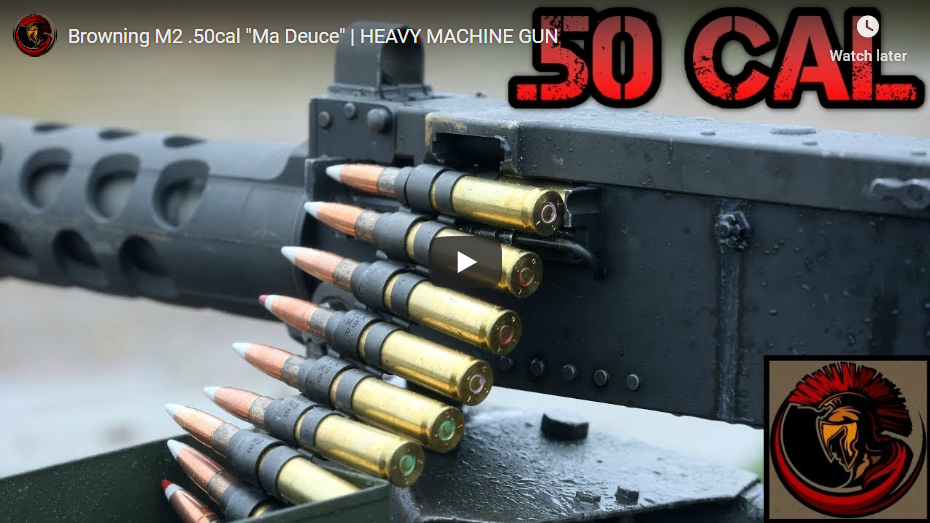
Browning M2 .50cal “Ma Deuce” | HEAVY MACHINE GUN
Matsimus
Published on 22 Jul 2019The Browning heavy machine gun was designed towards the end of World War I. Development of a large-caliber machine gun in the USA was initiated at the direct request of General Pershing, the commander of US expeditionary corps in Europe. He requested a large-caliber machine gun, capable of destroying military aircraft and ground targets such as armored cars and tanks. The task of developing such a gun was passed to John Browning. The task of developing ammunition for this new weapon was passed to Winchester Arms company.
This machine gun is similar to John Browning’s earlier M1919 machine gun, that was chambered for a standard rifle cartridge. In around 1917 Browning started to redesign his weapon for a larger caliber. His new machine gun was chambered for much larger and much more powerful 12.7×99 mm (.50 caliber) cartridge, that was developed alongside this weapon by Winchester. That’s why sometimes this weapon is simply referred as Browning .50 caliber machine gun. After the John Browning’s death in 1926, the design of this weapon was finalized by other designers.
This machine gun entered service with the US armed forces in 1933 and was manufactured by Colt. Design of this weapon proved to be extremely successful. Since the 1930s it has been used extensively to the present day. This remarkable weapon has seen service during countless wars all over the world. Only during WWII nearly 2 million of these HMGs were produced. It has been in production longer than any other machine gun and its production still continues. Furthermore the M2 machine gun has been in use longer than any other small arm in the US armed forces inventory, except the M1911 pistol, that was also designed by John Browning. The M2 machine gun is currently manufactured by General Dynamics and US Ordnance companies. Since the 1930s this weapon is license-produced by FN Herstal of Belgium. Currently the M2 is used by about 100 countries all over the world. It is the primary heavy machine gun of NATO countries.
The M2 is typically used as a vehicle weapon or helicopter armament. It can be also used from a tripod. This heavy machine gun is highly effective against infantry, unarmored or lightly armored vehicles, boats, light fortifications and helicopters. It is closer in power to a small cannon.
This weapon is typically used with standard ball, tracer, armor-piercing, armor-piercing incendiary, or armor-piercing incendiary tracer rounds. There is also an M962 SLAP-T (Saboted Light Armor Penetrator) round, fitted with a tungsten penetrator.
The M2 is fed from disintegrating belt. Spent cartridge cases are extracted down. It can be adapted to feed from the left or right side of the weapon by reinstalling some parts. This conversion takes two minutes. The charging handle can be also changed from right to left hand side.
The M2 has slow and rapid firing modes. It can fire full-auto, as well as single shots. This weapon fires from a closed bolt.
When used as a crew served weapon, the M2 is mounted on an M3 tripod. This tripod weights 20 kg. So the complete weight of the machine gun on tripod is 58 kg. When fired from the tripod this HMG has an effective range of 1 830 m. Maximum effective range is 2 000 m.
The M2 comes with standard iron sights. However various types of telescopic and night sights can be installed using appropriate mountings.
Hope you enjoy!!
💰 Want to support my channel? Check out my Patreon Donation page! https://www.patreon.com/user?u=3081754
👕 Check out my Merch: https://teespring.com/stores/matsimus…
📬Wanna send me something? My PO Box: Matthew James 210A – 12A Street N Suite
#135 Lethbridge Alberta Canada T1H2J🎮 Twitch: https://www.twitch.tv/matsimus_9033
👋DISCORD: https://discord.gg/B7cbXgy
🐦Twitter: https://twitter.com/MatsimusGaming
⛔️ (DISCLAIMER: This video is for informative and entertainment purposes only. The views and opinion come from personal experience and not that of others or other organizations. This content and information is there to provide information from public accessible sources.)
QotD: The horrors of war
An aside: I’ve long thought that prettifying World War II for domestic consumption contributed to both the media shock of Vietnam and the generation gap. WWII and Korea vets, who knew war first-hand, didn’t understand just how shocked their doted-on boomer kids were. “The Good War” wasn’t any more pleasant when you were experiencing it.
Virginia Postrel, “Horrors of War”, Dynamist.com, 2004-04-27.
September 4, 2019
Viewing WW2 as “the Air-Sea Super Battlefield”
According to Phillips Payson O’Brien, it’s old-fashioned to view large land battles as being “decisive” in modern warfare:
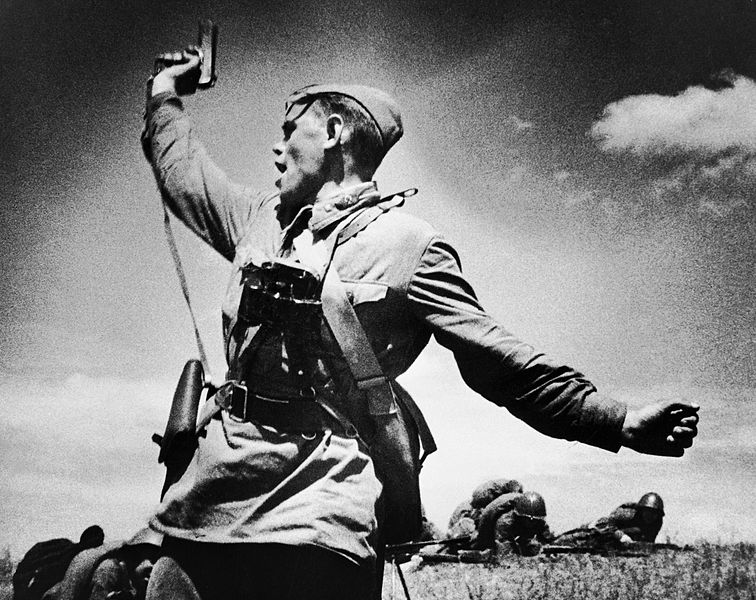
Kombat (Russian: Комбат, lit. “battalion commander”) is a black-and-white photograph by the Soviet photographer Max Alpert. It depicts a Soviet military officer armed with a TT pistol who is raising his unit for an attack during World War II. This work is regarded as one of the most iconic Soviet World War II photographs, yet neither the date nor the subject is known with certainty. According to the most widely accepted version, the photograph depicts junior politruk (political officer) Aleksei Gordeyevich Yeryomenko, minutes before his death on 12 July 1942, in Voroshilovgrad Oblast, Ukraine.
Wikimedia Commons.
Allied victory in WWII is usually viewed through the lens of large land battles, from Stalingrad to Kursk to D-Day. However, battlefield losses of equipment in these “great” land battles were relatively small and easily replaceable. This column demonstrates that the real effort of the major powers was put into the construction of air and sea weapons. The Allies used their air and sea power to destroy the Axis’s in a multi-layered campaign. This was the true battlefield of WWII: a massive air-sea super battlefield that stretched for thousands of miles. Victory in this super-battlefield led to victory in the war.
Every aspect of WWII is discussed in a vast literature. Considering its diversity, explanations of why Germany lost the war are surprisingly predictable. It remains widely argued that the Nazis were beaten mostly by the Soviet Union’s powerful Red Army (Hastings 2005: 508, Kennedy 2013: 183).
From June 1941 to May 1945, German “power” was supposedly engaged and destroyed by the Russians. At some points, more than two-thirds of German infantry were engaged against the Red Army. The famous battles of the Eastern Front, such as Stalingrad and Kursk, supposedly caused the Germans’ crippling losses. The upshot of this lopsided deployment was that most German soldiers died in the East. Fighting against the Americans and British, conversely, is often portrayed as a secondary concern (Roberts 2010: 573).
What’s wrong with a focus on battles?
This battle-centric view, like much history of WWII, is old-fashioned. Historians of strategy have moved away from seeing battles as determinative. Nolan (2017) has argued that attrition losses are more important than battle losses in explaining outcomes.
The battle-centric analysis implies that infantry deployment is the best way to analyse effort. Yet, human-power was rarely the key factor in deciding combat in WWII. Equipment and specialised training mattered more. Possessing and operating the largest stores of modern weapons, not only tanks and artillery but also aircraft and naval vessels, determined the course of battles and the war.
If we reframe the discussion of the war to look not only at what equipment was made but also at how it was destroyed, it emerges that the war was decided far from the land battlefield (O’Brien 2015). The most striking sign of this is how little war production went to the land war and how much went to the combined air-sea war. This was the case for all the powers except the USSR.


