Stalin emerged from the second world war as its most successful warlord, head of a nation whose contribution to the destruction of Nazism had won worldwide admiration. Although the leaders of the western states quickly understood the threat posed by the new Soviet Empire to freedom and democracy, many of their citizens did not.
Between 1941 and 1945 so much praise had been heaped upon Uncle Joe, the defenders of Stalingrad, heroic factory workers of the Volga and suchlike, that thereafter it proved a hard task to disabuse many people of their illusions about Mother Russia. They were not wrong in believing that hundreds of thousands of young British and American men were alive in 1945 because Red soldiers had done more than their rightful share of dying.
Any examination of the Bolshevik revolution and its legacy must linger on the Great Patriotic War, because that victory remains the only indisputable and durable achievement the rulers of Russia can boast since 1917, save the invention of some remarkable weapons systems and spacecraft.
Max Hastings, “The centenary of the Russian revolution should be mourned, not celebrated”, The Spectator, 2016-12-10.
October 22, 2019
QotD: The Soviet contribution to defeating Hitler
October 21, 2019
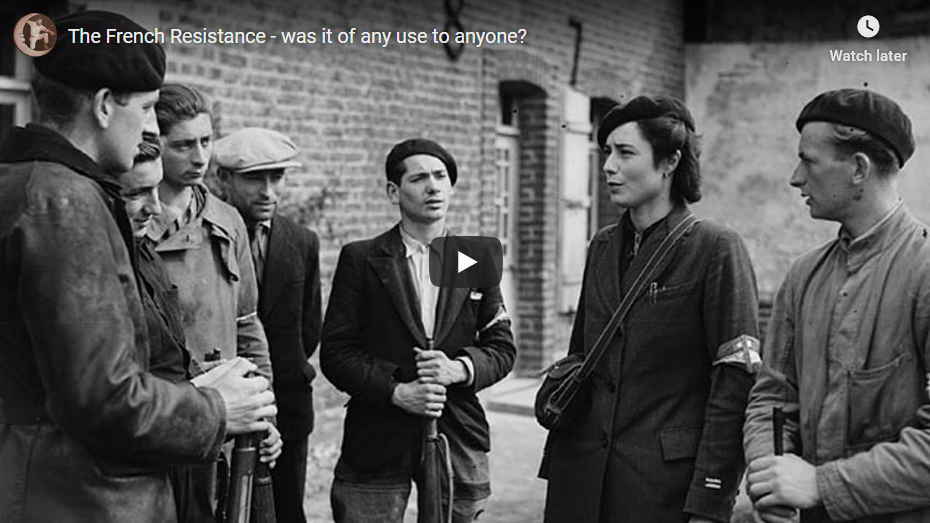
The French Resistance – was it of any use to anyone?
Lindybeige
Published on 19 October 2016Who organised the French Resistance? Did it ever do much?
Support me on Patreon: https://www.patreon.com/LindybeigeI had planned to say a lot more, but this should be long enough. In take one, which I had to ditch because my sound recorder packed in half-way through it (but I didn’t notice, so carried on), I talked quite a bit about Wing Commander F.F.E. Yeo-Thomas AKA “The White Rabbit” who did a lot of organising the French Resistance, and I was also planning to talk about “R.A.F. blackmail sabotage” but perhaps that will come out in another video another day. Probably not, though. Never mind – sixteen minutes should be long enough for anyone.
Many of the figures I quote were fresh in my mind because I had just read them in Dadland by Keggie Carew. Another influential book on this video was The White Rabbit about Wing Commander FFE Yeo-Thomas.
Lindybeige: a channel of archaeology, ancient and medieval warfare, rants, swing dance, travelogues, evolution, and whatever else occurs to me to make.
▼ Follow me…
Twitter: https://twitter.com/Lindybeige I may have some drivel to contribute to the Twittersphere, plus you get notice of uploads.
website: http://www.LloydianAspects.co.uk
October 20, 2019
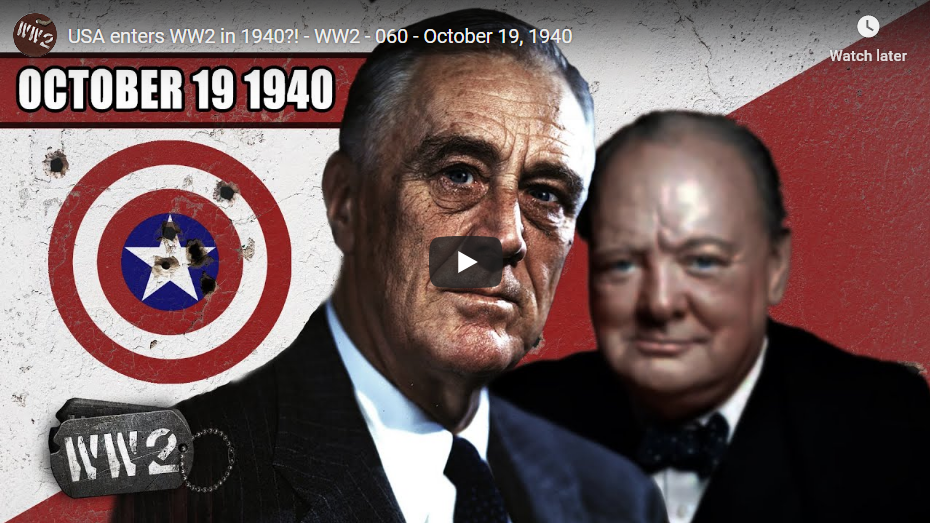
USA enters WW2 in 1940?! – WW2 – 060 – October 19, 1940
World War Two
Published 19 Oct 2019The World War seems to get bigger and bigger as Italy plans to invade Greece and the USA takes a stance.
Join us on Patreon: https://www.patreon.com/TimeGhostHistory
Or join The TimeGhost Army directly at: https://timeghost.tvFollow WW2 day by day on Instagram @World_war_two_realtime https://www.instagram.com/world_war_t…
Join our Discord Server: https://discord.gg/D6D2aYN.
Between 2 Wars: https://www.youtube.com/playlist?list…
Source list: http://bit.ly/WW2sourcesWritten and Hosted by: Indy Neidell
Produced and Directed by: Spartacus Olsson and Astrid Deinhard
Executive Producers: Bodo Rittenauer, Astrid Deinhard, Indy Neidell, Spartacus Olsson
Creative Producer: Joram Appel
Post-Production Director: Wieke Kapteijns
Research by: Indy Neidell
Edited by: Iryna Dulka
Map animations: EastoryColorisations by Norman Stewart and Julius Jääskeläinen https://www.facebook.com/JJcolorization/
Eastory’s channel: https://www.youtube.com/channel/UCEly…
Archive by Screenocean/Reuters https://www.screenocean.com.A TimeGhost chronological documentary produced by OnLion Entertainment GmbH.
October 19, 2019
Churchill Was a Drunk… or Was He? – Doped WW2 Leaders Part 2
World War Two
Published 17 Oct 2019Winston Churchill was one of the most influential figures of World War Two. But as a heavy drinker he must have been under influence of constant drunkenness, right?
Watch Part 1 about Hermann Göring here: https://youtu.be/8H7arcUi7zQ
Join us on Patreon: https://www.patreon.com/TimeGhostHistory
Or join The TimeGhost Army directly at: https://timeghost.tvFollow WW2 day by day on Instagram @World_war_two_realtime https://www.instagram.com/world_war_t…
Join our Discord Server: https://discord.gg/D6D2aYN.
Between 2 Wars: https://www.youtube.com/playlist?list…
Source list: http://bit.ly/WW2sourcesHosted by: Indy Neidell
Written by: Francis van Berkel
Produced and Directed by: Spartacus Olsson and Astrid Deinhard
Executive Producers: Bodo Rittenauer, Astrid Deinhard, Indy Neidell, Spartacus Olsson
Creative Producer: Joram Appel
Post Production Director: Wieke Kapteijns
Research by: Francis van Berkel
Edited by: Michal Drzewiecki
Map animations: Eastory
Sound design: Marek KaminskiColorisations by Norman Stewart and Julius Jääskeläinen https://www.facebook.com/JJcolorization/
Eastory’s channel: https://www.youtube.com/channel/UCEly…
Archive by Screenocean/Reuters https://www.screenocean.com.Sources:
– IWM: A 11590
– Wine and whiskey icons by Made by Made, papers icon by Pauline, Breakfast icon by shashank singh, Champagne icons by Made by Made and Jenie Tomboc, Heart icon by Sophia Bai, alcohol icon by Flatart, beef icon by Igé Maulana, Beer by Valeriy, Cheese by Erin Agnoli, red wine by sasha willins, Brandy by NAS, all – the Noun Project
– Royalty free music of BensoundA TimeGhost chronological documentary produced by OnLion Entertainment GmbH.
From the comments:
World War Two
22 hours ago (edited)
We make an effort to approach history as unbiased as possible. The result is what we think is a balanced videos on Churchill’s alcohol (ab)use. For those of you who are new here, we are following World War Two Week by Week, in which we do pay a lot of attention to all those smaller but still significant events. If you would like to watch the series, make sure to subscribe and to click here to start watching from episode one: https://www.youtube.com/watch?v=3-A1gVm9T0A&list=PLsIk0qF0R1j4Y2QxGw33vYu3t70CAPV7XCheers,
The TimeGhost team.

October 18, 2019
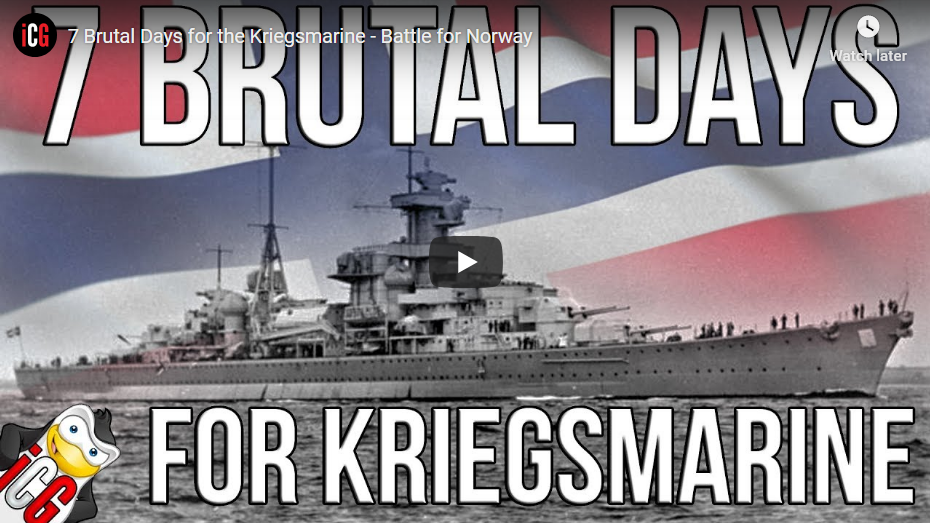
7 Brutal Days for the Kriegsmarine – Battle for Norway
iChaseGaming
Published on 9 Sep 2019The first few days of Operation Weserübung, the invasion of Norway, cost the Kriegsmarine‘s surface fleet dearly. While the invasion and occupation was successful the German Navy would be hampered for the remainder of the war.
♥ Connect with me ♥
Discord: https://discord.gg/ichasegaming
Twitch: http://www.twitch.tv/ichasegaming
Twitter: https://twitter.com/iChaseGaming♦ Become my Patron at https://www.patreon.com/iChaseGaming ♦
To contact me via e-mail send it to chasegamingtv@gmail.com
October 16, 2019
M3 Halftrack: Strength & Weaknesses (featuring Chieftain)
Military History not Visualized
Published on 4 Sep 2019Sponsored by World of Tanks! Register here ► https://tanks.ly/2zrfzsF to receive a T-127 Premium Tank, 500 Gold and 7 days Premium access with the code
TANKTASTIC. Applicable to new users only.In this video Nicholas “The Chieftain” Moran and I talk about strength & weaknesses of the M3 Halftrack, we also compare it to the German Sdkfz 251 Halftrack.
Special thanks to WW2 Armor for helping with the interview and providing an excellent backdrop, be sure to check out their sites here:
WW2 Armor Channel: https://www.youtube.com/channel/UChM-…
WW2 Armor Homepage: http://ww2armor.org/Chieftain’s Channel: https://www.youtube.com/channel/UCp4j…
D-Day Ohio: https://www.ddayohio.us/
https://www.oorlogsmuseum.nl/en/home/
Thank you to vonKickass for helping with the thumbnail.
»» SUPPORT MHV ««
» paypal donation – https://paypal.me/mhvis
» patreon – https://www.patreon.com/mhv
» subscribe star – https://www.subscribestar.com/mhv» SOURCES «
von Senger und Etterlin, F. M.: Die Panzergrenadiere. Geschichte und Gestalt der mechanisierten Infanterie 1930-1960. J. F. Lehmans Verlag: 1961, München.
amazon.de (affiliate): https://amzn.to/2KNTB9JChamberlain, Peter; Doyle, Hilary: Encyclopedia of German Tanks of World War Two. Revised Edition. Arms & Armour: London, UK, 1999.
amazon.com (affiliate link): https://amzn.to/2Zz2ZlD
amazon.de (affiliate link): https://amzn.to/343naf5Spielberger, Walter; Doyle, Hilary Lous, Jentz, Thomas L.: Halbkettenfahrzeuge des deutschen Heeres
amazon.de (affiliate): https://amzn.to/2KDFrpP
Spielberger: Halftracked Vehicles of the German Army 1909-1945 (Spielberger German Armor and Military Vehicle)
amazon.com (affiliate): https://amzn.to/2IeHwdrDoyle, David: The Complete Guide to German Armored Vehicles. Skyhorse Publishing: New York, USA, 2019.
amazon.com (affiliate link): https://amzn.to/34dIEWS
amazon.de (affiliate link): https://amzn.to/2HvrytC» DISCLAIMER «
As an Amazon Associate I earn from qualifying purchases.Als Amazon-Partner verdiene ich an qualifizierten Käufen.
Come for the interesting profile of the M3, stay for the amusing asides on modelling trains and AFVs.

October 13, 2019
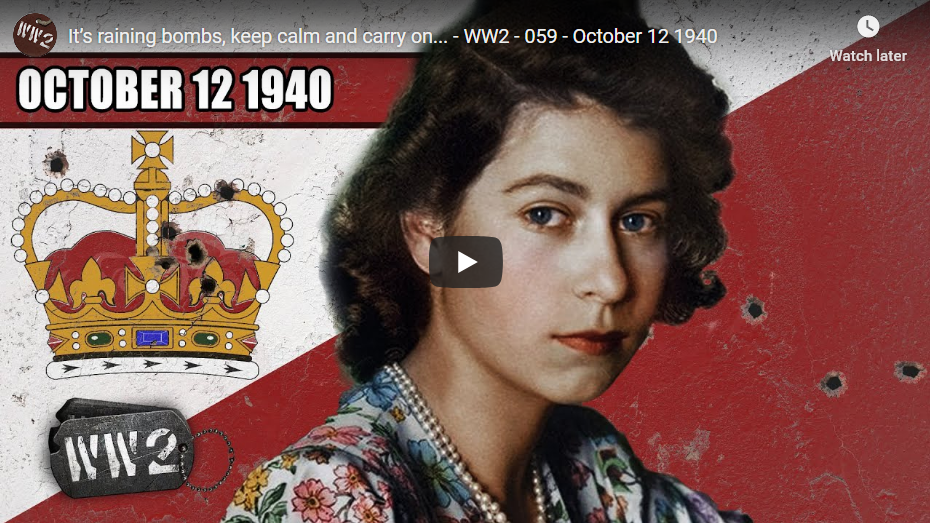
It’s raining bombs, keep calm and carry on… – WW2 – 059 – October 12 1940
World War Two
Published 12 Oct 2019The Blitz continues while Chinese Communists are fighting Chinese Nationalist in China. But the mass bombing of civilian targets does not really do what it is supposed to.
Join us on Patreon: https://www.patreon.com/TimeGhostHistory
Or join The TimeGhost Army directly at: https://timeghost.tvFollow WW2 day by day on Instagram @World_war_two_realtime https://www.instagram.com/world_war_two_realtime/
Join our Discord Server: https://discord.gg/D6D2aYN.
Between 2 Wars: https://www.youtube.com/playlist?list…
Source list: http://bit.ly/WW2sourcesWritten and Hosted by: Indy Neidell
Produced and Directed by: Spartacus Olsson and Astrid Deinhard
Executive Producers: Bodo Rittenauer, Astrid Deinhard, Indy Neidell, Spartacus Olsson
Creative Producer: Joram Appel
Post-Production Director: Wieke Kapteijns
Research by: Indy Neidell
Edited by: Iryna Dulka
Map animations: Eastory
Sound design: Marek KaminskiColorisations by Norman Stewart and Julius Jääskeläinen https://www.facebook.com/JJcolorization/
Eastory’s channel: https://www.youtube.com/channel/UCEly…
Archive by Screenocean/Reuters https://www.screenocean.com.A TimeGhost chronological documentary produced by OnLion Entertainment GmbH.
From the comments:
World War Two
2 days ago
Indy mentioned our Instagram page, where we make a daily post about what happened in the war on that day. This might be something completely different from what’s covered in these videos, or might add some more details. You can follow it by searching @world_war_two_realtime or by clicking here: https://www.instagram.com/world_war_two_realtime/. See you there!
Cheers,
Joram
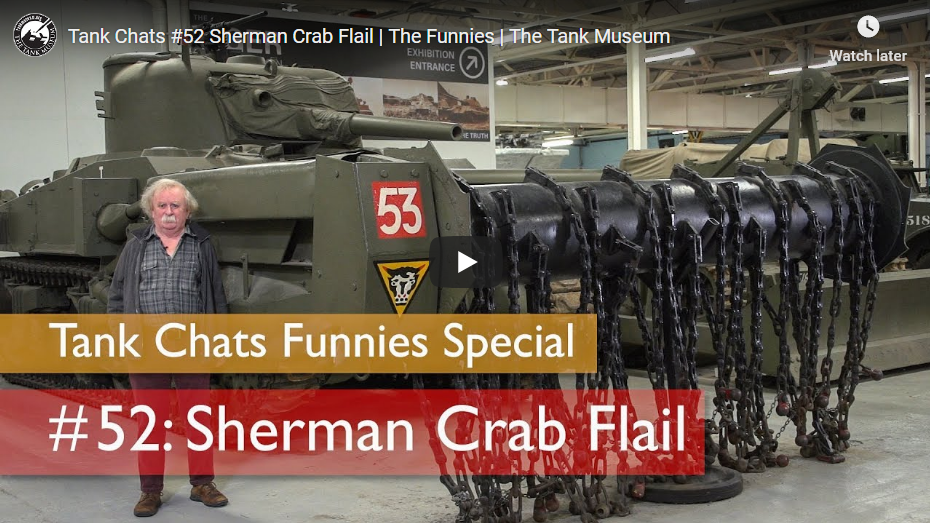
Tank Chats #52 Sherman Crab Flail | The Funnies | The Tank Museum
The Tank Museum
Published on 15 Jun 2018Tank Chats playlist https://www.youtube.com/playlist?list…
Another episode in the Tank Chats Funnies Specials, looking at the weird and wonderful vehicles of 79th Armoured Division led by Major General Percy Hobart.
The Flail tank was designed to clear mines and flails were operated in the 79th Armoured Division after D-Day.
Support the work of The Tank Museum on Patreon: ► https://www.patreon.com/tankmuseum
Or donate http://tankmuseum.org/support-us/donateVisit The Tank Museum SHOP: ►https://tankmuseumshop.org/
Press the little bell above to enable NOTIFICATIONS so you don’t miss the latest Tank Museum videos.
Twitter: ► https://twitter.com/TankMuseum
Tiger Tank Blog: ► http://blog.tiger-tank.com/
Tank 100 First World War Centenary Blog: ► http://tank100.com/ #tankmuseum #tanks #tankchats
October 12, 2019
“Midway” – The Battle of Midway – Sabaton History 036 [Official]
Sabaton History
Published 11 Oct 2019The Battle of Midway in June 1942 was one of the decisive battles on the Pacific front during World War Two. The Sabaton song “Midway” is about that battle and the men who sailed, flew, fought and died there.
Support Sabaton History on Patreon: https://www.patreon.com/sabatonhistory
Listen to Coat of Arms (where “Midway” is featured):
CD: http://bit.ly/CoatOfArmsStore
Spotify: http://bit.ly/CoatOfArmsSpotify
Apple Music: http://bit.ly/CoatOfArmsAppleMusic
iTunes: http://bit.ly/CoatOfArmsiTunes
Amazon: http://bit.ly/CoatOfArmsAmzn
Google Play: http://bit.ly/CoatOfArmsGooglePlayWatch the Official Lyric Video of Midway here: https://www.youtube.com/watch?v=0WAfB…
Listen to Sabaton on Spotify: http://smarturl.it/SabatonSpotify
Official Sabaton Merchandise Shop: http://bit.ly/SabatonOfficialShopHosted by: Indy Neidell
Written by: Markus Linke and Indy Neidell
Directed by: Astrid Deinhard and Wieke Kapteijns
Produced by: Pär Sundström, Astrid Deinhard and Spartacus Olsson
Creative Producer: Joram Appel
Executive Producers: Pär Sundström, Joakim Broden, Tomas Sunmo, Indy Neidell, Astrid Deinhard, and Spartacus Olsson
Maps by: Eastory
Edited by: Iryna Dulka
Sound Editing by: Marek KaminskiEastory YouTube Channel: https://www.youtube.com/channel/UCEly…
Archive by: Reuters/Screenocean https://www.screenocean.com
Music by Sabaton.Sources:
National Security Agency
Letter icon by Mochammad Kafi from the Noun Project
Ship icon by Edward Boatman from the Noun ProjectAn OnLion Entertainment GmbH and Raging Beaver Publishing AB co-Production.
© Raging Beaver Publishing AB, 2019 – all rights reserved.
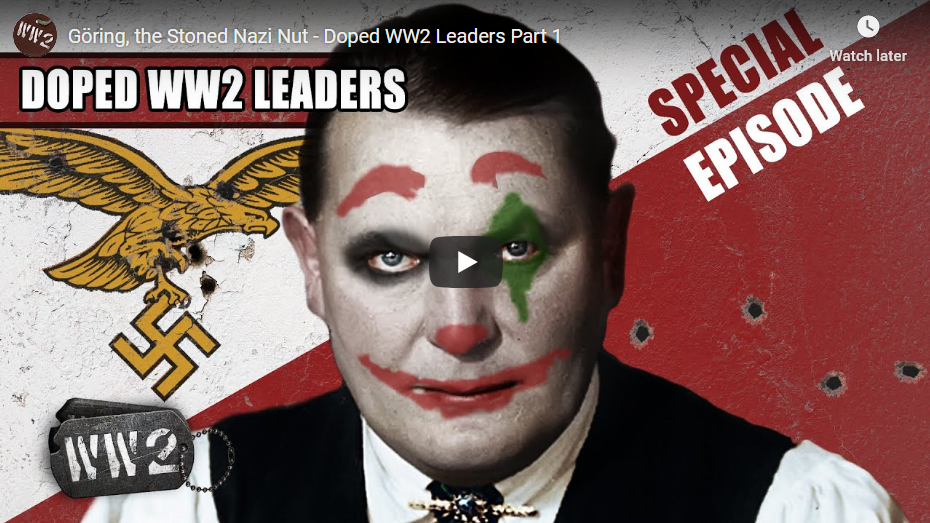
Göring, the Stoned Nazi Nut – Doped WW2 Leaders Part 1
World War Two
Published 10 Oct 2019Hermann Göring was one of the most powerful leaders of the Third Reich. He was also a drug addict with some serious problems and a remarkable lifestyle.
Join us on Patreon: https://www.patreon.com/TimeGhostHistory
Or join The TimeGhost Army directly at: https://timeghost.tvFollow WW2 day by day on Instagram @World_war_two_realtime https://www.instagram.com/world_war_t…
Join our Discord Server: https://discord.gg/D6D2aYN.
Between 2 Wars: https://www.youtube.com/playlist?list…
Source list: http://bit.ly/WW2sourcesHosted by: Indy Neidell
Written by: Joram Appel
Produced and Directed by: Spartacus Olsson and Astrid Deinhard
Executive Producers: Bodo Rittenauer, Astrid Deinhard, Indy Neidell, Spartacus Olsson
Creative Producer: Joram Appel
Research by: Joram Appel
Edited by: Iryna Dulka
Map animations: EastoryColorisations by Norman Stewart and Julius Jääskeläinen https://www.facebook.com/JJcolorization/
Eastory’s channel: https://www.youtube.com/channel/UCEly…
Archive by Screenocean/Reuters https://www.screenocean.com.Sources:
Klimbim Colorizations – https://klimbim2014.wordpress.com/A TimeGhost chronological documentary produced by OnLion Entertainment GmbH.
From the comments:
World War Two
31 minutes ago (edited)
Though this episode is mostly about the lifestyle of Hermann Göring, we will certainly get back to his more serious impact on the Nazi party, Germany and World War Two. For those of you who are new here, we are following World War Two Week by Week, in which we do pay a lot of attention to all those smaller but still significant events. If you would like to watch the series, make sure to subscribe and to click here to start watching from episode one: https://www.youtube.com/watch?v=3-A1gVm9T0A&list=PLsIk0qF0R1j4Y2QxGw33vYu3t70CAPV7XCheers,
The TimeGhost team.
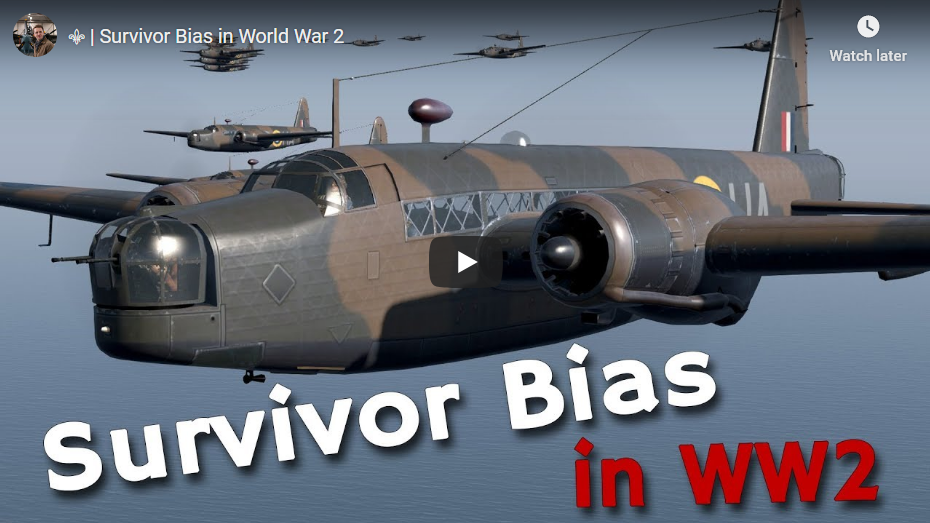
⚜ | Survivor Bias in World War 2
Military Aviation History
Published on 31 Aug 2017Survivor Bias was a thing in World War 2. Let’s learn what happened.
– You can support my Channel with Patreon: https://www.patreon.com/Bismarck
⚜ Support My Work ⚜
– You can support my Channel with a donation [Paypal]: https://www.paypal.me/BismarckYT⚜ Find Me On Social Media ⚜
– Twitch: http://www.twitch.tv/bis18marck70
– Twitter: https://twitter.com/Bis18marck70⚜ Sources ⚜
M. Mangel, F. J. Samaniego, Abraham Wald’s Work on Aircraft SurvivabilityAbraham Wald, A Reprint of “A Method of Estimating Plane Vulnerability Based on Damage of Survivors”
From the comments:
Military Aviation History
2 years ago (edited)
Hey all, I hope that you like this video. Small correction from my side at 05:00 – It was reprinted in 1980 not 1918. I misspoke. Obviously.This video was actually planned for the end of September but since I had the script already, I decided to publish it now. As mentioned to my Patreons some days ago, I have a few unexpected home visists to make. The first set was last week and after returning two days ago, I flew off to yesterday for another week abroad. As such it made sense to get such a familiar topic out now since otherwise, there would be nothing.
It should be mentioned that I did not find the “original” study Wald responded to. Either it got lost, or it was never published. Perhaps Wald saw them work on it, saw the errors and published his paper leading the other group to abandon their project. However, there is also a slight chance that over the years parts of the story were exaggerated. Wald certainly published his papers (you’ll easily find it on the internet) and was given the credit for helping US designers — but what of that inital research group? What were their conclusions, their recommendations beyond what is usually linked to Wald? Without their study, no one seems to know.
October 8, 2019
QotD: Russian life under Soviet rule
Yet until the last years of the 20th century the supply of useful idiots — western apologists for the Soviet Union — seemed limitless, and included such figures as Tony Benn. Anthony Powell’s novel Books Do Furnish a Room captures the enthusiasm for Soviet communism that pervaded post-1945 London socialist sitting rooms and literary gatherings.
No modern reader can set down the works of Solzhenitsyn, Robert Conquest, Robert Service or Anne Applebaum without a sense of awe at the cruelties committed in the name of “the people”, the cause of Russian communism; cruelties indulged almost to this day by their western defenders.
Max Hastings, “The centenary of the Russian revolution should be mourned, not celebrated”, The Spectator, 2016-12-10.
October 6, 2019
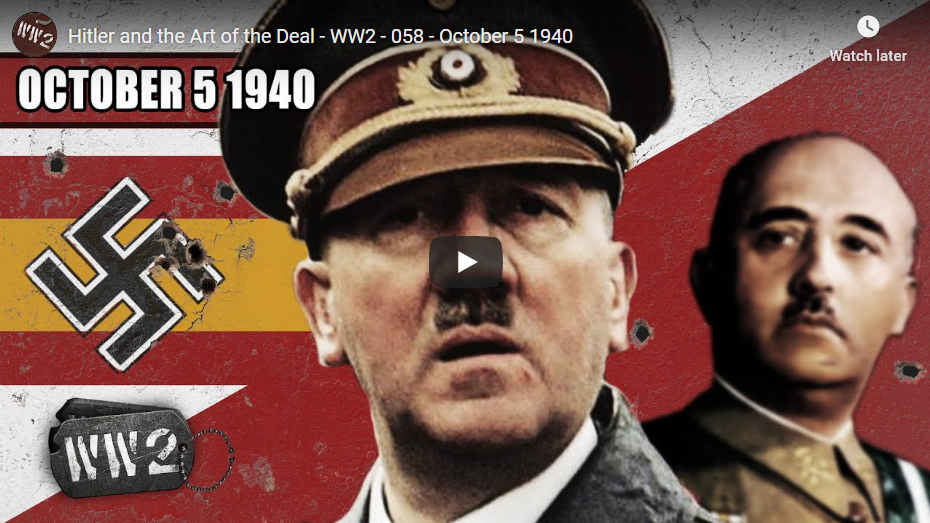
Hitler and the Art of the Deal – WW2 – 058 – October 5 1940
World War Two
Published 5 Oct 2019Hitler is trying to get new Axis Powers on board in his fight against Britain, promising them all huge territorial gains.
Join us on Patreon: https://www.patreon.com/TimeGhostHistory
Or join The TimeGhost Army directly at: https://timeghost.tvFollow WW2 day by day on Instagram @World_war_two_realtime https://www.instagram.com/world_war_t…
Join our Discord Server: https://discord.gg/D6D2aYN.
Between 2 Wars: https://www.youtube.com/playlist?list…
Source list: http://bit.ly/WW2sourcesWritten and Hosted by: Indy Neidell
Produced and Directed by: Spartacus Olsson and Astrid Deinhard
Executive Producers: Bodo Rittenauer, Astrid Deinhard, Indy Neidell, Spartacus Olsson
Creative Producer: Joram Appel
Post-Production Director: Wieke Kapteijns
Research by: Indy Neidell
Edited by: Iryna Dulka
Map animations: EastoryColorisations by Norman Stewart and Julius Jääskeläinen https://www.facebook.com/JJcolorization/
Eastory’s channel: https://www.youtube.com/channel/UCEly…
Archive by Screenocean/Reuters https://www.screenocean.com.Sources:
– IWM: A 220
– Photos of Herbert Morrison and John Anderson by Yousuf Karsh, Dutch National Archives
– National Library of Australia
– Narodowe Archiwum Cyfrowe
– Colorized portrait of Mao Zedong by Olga Shirnina, aka Klimbim
– Flag of Spain by SanchoPanzaXXI on Wikimedia CommonsA TimeGhost chronological documentary produced by OnLion Entertainment GmbH.
October 2, 2019
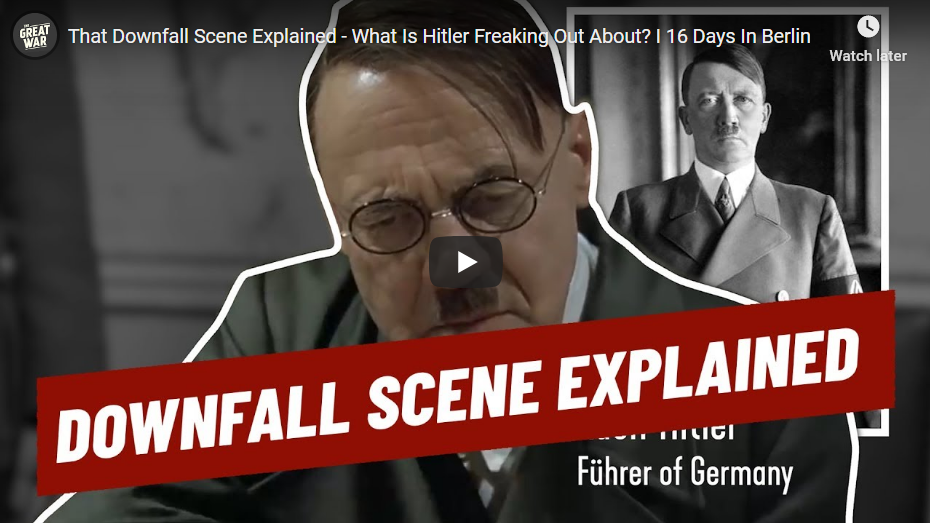
That Downfall Scene Explained – What Is Hitler Freaking Out About? I 16 Days In Berlin
The Great War
Published on 1 Oct 2019Thank you for your support for 16 Days in Berlin: https://realtimehistory.net/indiegogo
» SUPPORT THE CHANNEL
Patreon: https://www.patreon.com/thegreatwar
Merchandise: https://shop.spreadshirt.de/thegreatwar/»CREDITS
Presented by: Jesse Alexander
Written by: Jesse Alexander
Director: Toni Steller & Florian Wittig
Director of Photography: Toni Steller
Sound: Toni Steller
Editing: Toni Steller
Mixing, Mastering & Sound Design: http://above-zero.com
Maps: Daniel Kogosov (https://www.patreon.com/Zalezsky)
Research by: Jesse Alexander
Fact checking: Florian WittigChannel Design: Alexander Clark
Original Logo: David van StepholdA Mediakraft Networks Original Channel
Contains licensed material by getty images
All rights reserved – Real Time History GmbH 2019
October 1, 2019
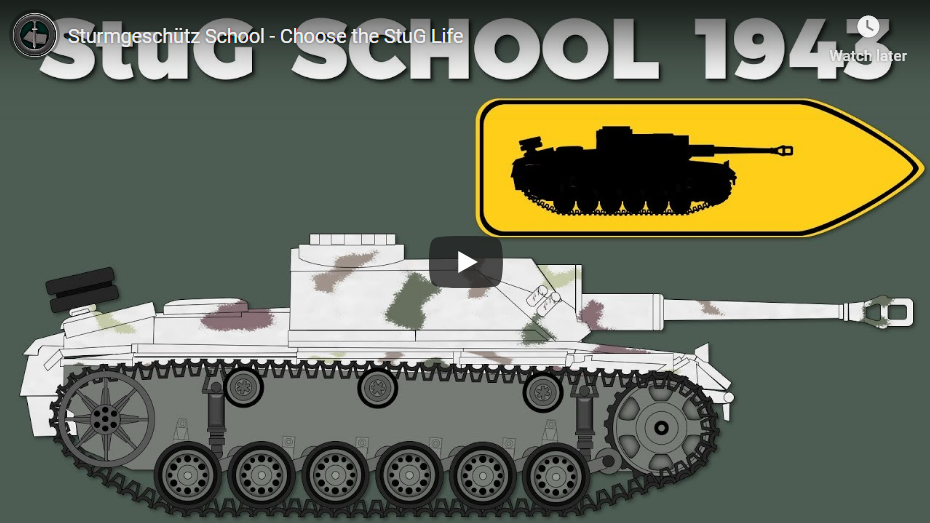
Sturmgeschütz School – Choose the StuG Life
Military History Visualized
Published on 20 Aug 2019I got my hands-on information for you. Namely from the “Sturmgeschütz School Teaching Staff” (Sturmgeschütz Schule Lehrstab), which in October 1943 published a leaflet (“Merkblatt“) for the crews of the Sturmgeschütze. I looked at it and selected some crucial and interesting aspects for you.
StuG footage recorded at Militracks 2019 at the Overloon War Museum: https://www.militracks.nl – https://www.oorlogsmuseum.nl/en/home/
» SOURCES «
Wettstein, Adrian: Sturmartillerie Geschichte einer Waffengattung
http://portal-militaergeschichte.de/s…Condell, Bruce (ed.); Zabecki, David T. (ed.): On the German Art of War. TRuppenführung. Stackpole Books: Mechanicsburg, PA, USA, 2009 (2001)
amazon.com (affiliate link): https://amzn.to/2yTSjmI
amazon.de (affiliate link): https://amzn.to/2MOicwJCAMO: F. 500, Op. 12480, D. 137: Sturmgeschütz-Schule Lehrstab: Merkblatt – Die Geschützbedienung, Burg b. M., Oktober 1943.
Spielberger, Walter; Doyle, Hilary Lous: Sturmgeschütze: Entwicklung und Fertigung der sPak. Motorbuch Verlag: 2014.
amazon.de (affiliate): https://amzn.to/2HUvXJ1
Spielberger, Walter: Sturmgeschütz & Its Variants: (Spielberger German Armor & Military Vehicles Series, Vol 2)
amazon.com (affiliate): https://amzn.to/2HY2utAFleischer, Wolfgang: Die deutschen Sturmgeschütze 1935-1945. Podzun-Pallas, 1996.
amazon.com (affiliate link): https://amzn.to/2UgyeDv
amazon.de (affiliate link): https://amzn.to/2HLc8DqBuchner, Alex: Das Handbuch der deutschen Infanterie 1939-1945; Gliederung – Uniformen, Bewaffnung – Ausrüstung, Einsätze. Podzun-Pallas: Friedberg in Hessen, Germany, 1987
amazon.de (affiliate link): https://amzn.to/2O0TENR
ENGLISH VERSION: Buchner, Alex: The German Infantry Handbook 1939-1945.
amazon.com (affiliate): http://amzn.to/1l4ABU0Pöhlmann, Markus: Der Panzer und die Mechanisierung des Krieges: Eine deutsche Geschichte 1890 bis 1945. Ferdinand Schöningh: Paderborn, 2016.
amazon.de (affiliate): http://amzn.to/2ELyDX1» DISCLAIMER «
As an Amazon Associate I earn from qualifying purchases.Als Amazon-Partner verdiene ich an qualifizierten Käufen.