
The M1 Garand is correctly considered the best battle rifle of World War II. It was the only semi-automatic rifle — meaning that it fired each time the operator pulled the trigger — to be the standard issue infantry rifle of any army during the war. Other forces were equipped with bolt-action rifles — the British Lee Enfield, Soviet Mosin Nagant, Japanese Type 99, German K98k, etc. — that required the operator to manually pull back a bolt to eject the [expended cartridge], and then push it forward again to insert a fresh cartridge into the chamber. The most obvious advantage was an increased rate of fire: a semiautomatic rifleman with an M1 had an official aimed rate of fire of 24 shots per minute.1 Compare this to the 15 aimed shots that British soldiers were expected to pop off with a bolt-action Lee Enfield in a “mad minute” drill. And the Lee Enfield was one of the fastest bolt-action rifles ever produced! In a pinch, a GI could blast out a clip in a few seconds, approximating a burst from an automatic weapon.2 Furthermore, with semi-automatic fire, the shooter could stay focused on his target, whereas working the bolt generally forced the shooter off target, requiring time to reacquire a proper sight picture.
Lt. General George Patton famously called the M1 Garand “the greatest battle implement ever devised“, a quote often repeated reverently in the context of World War II nostalgia. The US Government after the war gave away millions of M1 Garands, making it a popular civilian rifle for hunting and competitive shooting.
But nostalgia aside, it is also possible to view, from the high perch of hindsight, the M1 Garand as a missed opportunity. The most advanced battle rifle of World War II ultimately looked back too much to the past rather than pointing the way to the future. During its development, senior military officials applied the perceived lessons of the Spanish American War to a rifle designed to solve the problems of the Great War. This intervention prevented the M1 Garand from becoming something closer to a modern assault rifle, with an intermediate power cartridge and higher magazine capacity. The army was in no hurry to ditch the rifle that had won World War II, meaning that the United States did not field its first true assault rifle until two decades after the concept had been invented by the Germans in 1943 and soon successfully adapted by the Soviets in 1947. The first American assault rifle, the M16, would not debut until 1965.
First a necessary caveat: rifles were not the decisive weapon in World War II. For the most part the small arms deployed by the United States had been designed to fight World War I: the Browning Automatic Rifle (1918), the M1919 Browning Medium Machine Gun (as the date implies, first fielded in 1919) and the M2 Browning heavy machine gun, designed in 1918 and so good it is still used over a century later. In contrast, German machine guns were somewhat more recent in design: the MG 34 (as the name implies, first fielded 1934) and the MG 42. During the war, the Germans invented the first true assault rifle, the StG 44.
The secret sauce of the US Army by 1944-45 had little to do with firearms at all: it was a combination of ready mobility through motorization combined with deadly artillery and close air support, enabled by an unmatched communication system that allowed forward observers to direct and adjust fires to lethal effect. The American way of war was rooted in fleets of trucks and jeeps, networks of radios and heaps of shells. Having a nice semi-automatic rifle was ancillary to a conflict like World War II. But the M1 Garand is a useful window into the vagaries of military procurement and technological innovation, which require developers to at once predict the operational environment of the future and analyze the lessons of the past.
Throughout the 1920s, officers at the Infantry School in Fort Benning experimented with new tactics that they hoped would again allow for mobile infantry combat and avoid the trench stalemate of World War I. The basic solution was some form of “fire and maneuver”, in which one section of a unit (say a squad or platoon) would lay down a sufficient base of small arms fire to suppress the enemy so as to facilitate the other section’s advance. By alternating suppression and assault the element might leapfrog its way forward, even against entrenched enemy machine guns.
For such a tactic to work, infantry platoons needed a lot of firepower. Some might come from light machine guns, like the Browning Automatic Rifle, which was issued to individual infantry squads. But it was generally realized that individual infantrymen needed to be capable of a far higher rate of fire than could be provided by the standard issue rifle, the bolt-action M1903 Springfield, fed from a five round magazine. To this end, the US government set about developing a semi-automatic rifle.
The charge was taken up by John C. Garand, a Canadian-born, self taught firearms designer who worked for the Springfield Armory in Massachusetts. Garand’s solution to make the rifle self-loading was to insert a piston beneath the barrel. When the gunpowder exploded in the cartridge, the gas produced in the explosion propelled the bullet out the barrel. But some gas was bled off into a cylinder below the barrel (which gives the M1 its peculiar appearance of seeming to have two barrels); the pressure of the gas in the cylinder drove a piston.3 This piston attached to an operating rod which pushed the bolt of the rifle back, ejecting the spent casing, and allowing a spring in the internal magazine to insert another cartridge into the chamber before a separate spring pushed the operating rod forward and closed the bolt for the next shot, all in a fraction of a second.
Garand had initially worked on a rifle chambering the standard .30-06 cartridge used by the M1903 Springfield rifle (the .30 indicates that the bullet had a diameter of .30 inches, while the 06 indicates that the cartridge had been adopted in 1906; the round is often pronounced “thirty-ought-six”. But when a rival designer named John Pedersen, also affiliated with Springfield Armory, developed a semi-automatic design that chambered a lighter .276 (7mm) round, Garand retooled his project for the lighter round as well, producing a prototype known as the T3, with subsequent refinements labeled the T3E1 and T3E2. The smaller round meant that the internal magazine of the T3E1/2 could accept clips of 10 bullets, doubling the magazine capacity of the M1903 Springfield.
Army officials were very interested in the new round, but wanted proof that a lighter bullet would be sufficiently lethal in combat. A series of grisly ballistic tests were therefore ordered, pitting the .276 round against the traditional .30-06. In 1928, anesthetized pigs were shot through with both rounds. To the surprise and consternation of traditionalists, the .276 did far more damage in the so-called “Pig Board”. This is not paradoxical: the lighter round was more likely to “tumble”, precisely because it was lighter and so more likely to have its trajectory disrupted by bone and tissue; the tumble meant that more of the kinetic energy was expended inside the target, causing far more damage. The .30-06, meanwhile, as a more powerful round, was more likely to punch clean through, retaining its kinetic energy to keep moving forward after passing through the target. Eventually, tests of this sort would be used to sell the army on the lethality of the 5.56mm round used by the M16/M4, which has an even greater tumble, and causes even more grievous injuries. Out of concern that the fat bodies of pigs did not accurately replicate the human teenagers that the new round was designed to kill, a new test was inflicted upon goats, seen as more appropriately lean and therefore better analogs. The result was the same in favor of the .276 (a lighter .256 performed even better). With two rounds of tests vindicating the .276, the Army demanded that its new rifle chamber the .30-06. The final decision was made by Douglas MacArthur himself.
The .30-06 round itself had been the product of a painful lesson learned during the Spanish American War. Here, American troops, armed with Krag M1892 rifles, had found themselves badly out-ranged by Spanish troops armed with Mausers; the famous charge up San Juan Hill occurred after US troops had advanced for some distance under a hail of unanswered rifle fire. Given the importance of sharp shooting to the American military mythos, getting handily outranged and outshot by Spanish forces was a painful embarrassment. The first order of business had been to adopt the Mauser design: the M1903 Springfield was essentially a modified Mauser, as the US government had licensed a number of Mauser’s patents. By upgrading the M1903 to take the heavy .30-06 round, the Army ensured that soldiers could engage targets over a kilometer away. Beyond the deeply ingrained “lessons learned” from the Spanish American War, the mythos of the deadly American sharpshooter was strongly entrenched. Even as disruptors at Benning developed new infantry tactics that stressed volume of fire over accuracy, the phantoms of buck skinned frontiersmen sniping at British redcoats from a thousand paces still occupied the headspace of military leaders; they wanted a rifle with long distance accuracy. The sights on the M1 Garand adjust out to 1200 yards.
But MacArthur’s reasoning seems to have been primarily motivated by administrative and logistical concerns, as he cited the generic difficulties of fielding a lighter round. Some of these challenges may have been related to production and distribution of a sufficient stockpile of new caliber ammunition. There may have also been a concern with the new round complicating the logistics of line companies. The army also used .30-06 for the BAR and Browning medium machine gun, and having all of these shoot the same round in theory simplified the supply of line companies, and allowed for cross-leveling between weapons systems. Similar concerns have the US Army maintaining a policy of only having 5.56mm weapons at the squad level (thus the M4 and M249 Squad Automatic Weapon both shoot 5.56, and the SAW can shoot from M4 magazines).4 Still, MacArthur’s concerns seem unfounded in hindsight. The United States was about to produce billions of bullets during World War II. American troops were about to be so lavishly supplied that distributing two types of bullets would have been readily feasible given the soon to be proven quality of American logistics.5
With MacArthur’s edict, Garand retooled his rifle back to the .30-06 caliber, and his design was finally accepted in 1936. But the larger and more powerful round required a design change: the internal magazine now took clips of eight bullets instead of ten. Two rounds may not sound like much, but every bullet can be precious in a firefight, and this represented a 20% reduction in magazine capacity. Spread over a company sized element, the reduced clip capacity represented over two-thousand fewer rounds that a company commander could expect to fire and maneuver with. Indeed, the M1’s volume of fire proved generally insufficient to suppress the enemy on its own during the war, evidenced by the habit of equipping rifle squads with two Browning Automatic Rifles, instead of one. Marine divisions by the end of the war often deployed three BARs per squad.6
Michael Taylor, “Michael Taylor on The Development of the M1 Garand and its Implications”, A Collection of Unmitigated Pedantry, 2023-09-08.
1. TM 9-1005-222-12.
2. Thus George Wilson, a platoon leader and later company commander in the Fourth Infantry Division, describing a platoon scout stumbling upon the enemy: “The second scout emptied the eight round clip in his M-1 so fast it seemed like a machine gun … the rest of us moved very cautiously and found three dead enemy soldiers in the road.” (G. Wilson. If You Survive. Ivy, 1987).
3. John Garand’s initial design, and early production M1s, had a gas trap inserted over the muzzle to catch the gas after the bullet had exited; when this proved prone to fouling, a design modification drilled a small hole in the barrel just before the muzzle to allow the gas to bleed into the cylinder, most M1 Garands had this “gas port” system.
4. In 2023, US Army infantry will begin transition to the M7 carbine and M250 Squad Automatic weapon, which will both use a 6.8mm bullet, out of concerns that the 5.56 NATO is insufficient to penetrate body armor.
5. Editor’s Note: I agree with Michael here in principle: US logistics could have managed this. But I would also note that part of the reason American logistics were so good is that they applied MacArthur’s reasoning to everything, reusing vehicle chassis, limiting the number of different ammunition calibers and demanding interchangeable parts across the whole range of military equipment. Take one of those decisions away and the whole still functions. Take all of them away and one ends up with the mess that was German production and logistics.
6. Editor’s Note: BAR goes BARRRRRRRRRRR.
February 25, 2024
QotD: From the M1903 Springfield to the M1 Garand
February 24, 2024
Never mind the unfunded liability … money printer go brrrr!
Kulak at Anarchonomicon points out that the US government’s debt situation — which was alarming 20 years ago — has continued to get worse every year:

Libertarian Economists have been predicting this collapse of the federal system would happen “By About 2030” since before 2008. I remember in high school in the early 2010s listening to Ron Paul lectures and visiting USDebtClock.com, this was a hot button issue after 2008 … (then of course there was no political will to do anything and everyone just stopped talking about it)
I honestly forget that everyone around me doesn’t already know this, this is so common and accepted in libertarian and economic circles, and everyone who knows it got bored of eyes glossing over when they tried to explain it (in an autistic panic) decades ago.
US Unfunded liabilities:
Social Security, Medicare, Medicaid, US Debt, and Federal employee benefits and pensions, are all basically intergenerational ponzi schemes that require constant 1950s level population growth amongst the productive tax paying middle-class to maintain. By 2000 it was obvious this population growth was not happening, that population was beginning to age and collapse, and NO, the illegals at the border weren’t adequate replacements … (they weren’t adequate to prop up federal expenses in 2000 when they were still Mexican, now that they’re Guatemalan, Haitian, and Senegalese they’re almost certainly a net drain).
The Specter of Mass Boomer retirements with few to no children and grandchildren to replace them and pay for all the costs of their retirements and healthcare was maybe the slowest but most assured crisis ever to be seen in human history … Demographics is destiny.
This was a foreseen problem in 2000 when US Debt to GDP (just the portion that’s already been spent and interest has to be paid on) was 59% of GDP. Today the US Debt to GDP ratio is 122% of GDP whilst just in the past 24 years. Absolute US Federal Debt (not including state or local) has grown from 5.6 trillion dollars to 34 trillion dollars (102k per citizen: man, woman, and child). just the interest that has to be paid out of your tax dollars on that debt is set to eclipse ALL US Military spending sometime this year … And by 2028 Debt to GDP will be 150% (46.4 Trillion, 132k per citizen, 12 trillion more in 4 years, with no additional spending bills) and the Interest (at current estimates) will be over 2.5 trillion dollars, over a third of all Tax Dollars brought in will be spent on just interest, because dollar confidence has collapsed and the only way to keep inflation from destroying the dollar has been to radically raise the interest rates the Federal Reserve offers.
Now all that, That catastrophic state of things, is just the debt, the money that’s been spent … The real crisis is the Unfunded liabilities, all the promises the US has made to Boomers (who dominate the vote) and others about money they’re GOING to spend.
As of now total Unfunded liabilities stand at 213 trillion dollars, $633,000 per US Citizen (Man woman, and newborn babe)… These are all dollars the US has promised to pay to someone somewhere at some point: Social Security, Medicare, Medicaid, Federal pensions, VA Benefits, etc. And cannot in any politically feasible way restructure or get out of.
If no one ever contributed another dime to social security, and in so doing was promised in turn significantly more than that dime (it’s a Ponzi scheme, it loses money in proportion to and at a greater rate than the money being contributed to it (every dollar you contribute you’re promised multiple dollars in return, and your dollar is not invested, it just pays off previous contributors)) … If everything froze and every young person was locked out of ever receiving Social Security, Medicare, or Medicaid, the Unfunded Liability would be $633k per every man, woman, and child … that’d be the debt a newborn American would be born with.
However because it is NOT frozen and it will not be, by 2028 that number will Rise to $837k and an ordinary household of 4 will have seen their, politically unavoidable, family obligation in future tax payments to the federal government increase by $804,000 in just 4 years.
If your response is that your family doesn’t even make 804k in 4 years and there’s no way you could ever pay that much in 4 years given its just going to increase at a faster rate the next 4 years … CONGRATULATIONS! 90% of families don’t make that much, and less than 1% of families could ever afford to pay that much in taxes in a 4 year time.
This has been slowly growing for decades, and in the late 2000s and 2010s Ron Paul types were screaming that those Benefits needed to be reformed NOW (in 2008) or they’d drown America. But of course, cutting benefits is political Anathema to boomers, so nothing was done …
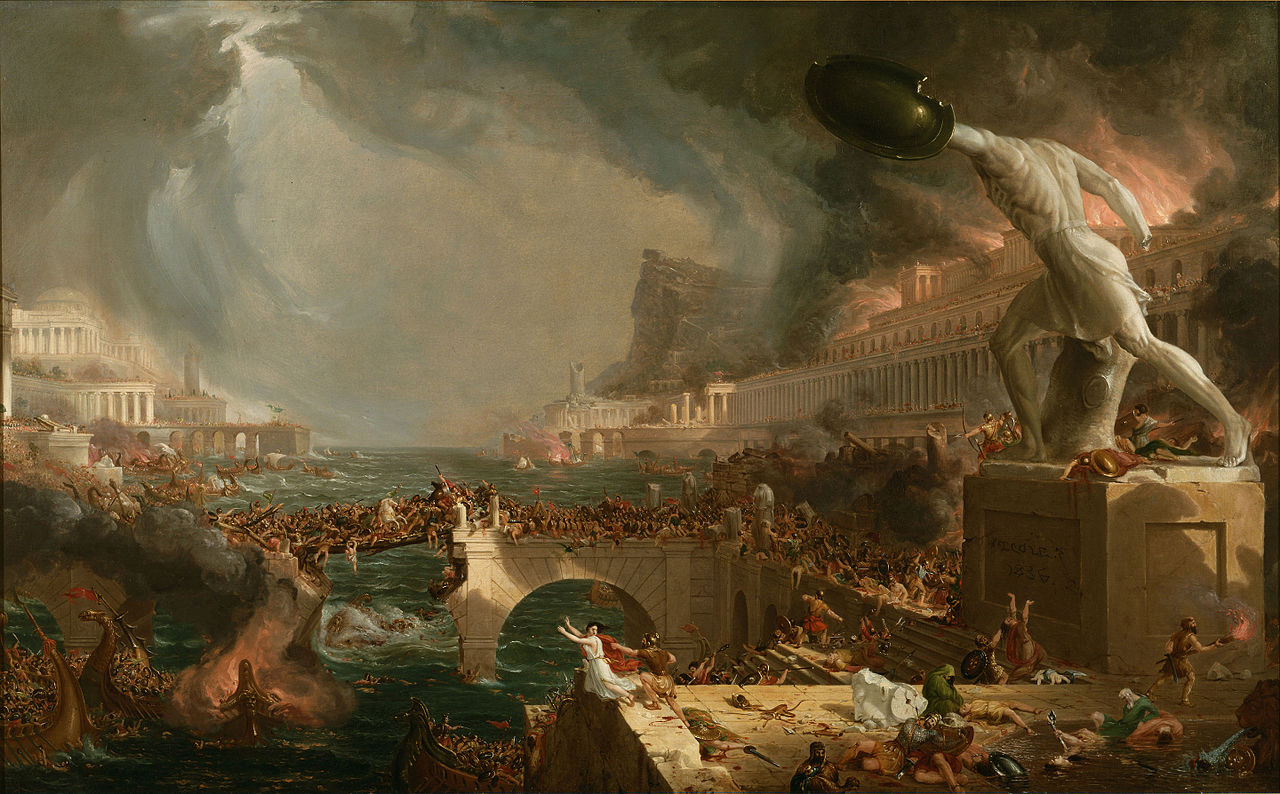
The Course of Empire – Destruction by Thomas Cole, 1836.
From the New York Historical Society collection via Wikimedia Commons.
Times might be tough right now, America, but at least you’re not Canada
You may be feeling the pinch from Bidenflation, election year stresses, and political lawfare, but at least you’re not up in America’s hat:

It’s late February, a time of year when many Americans contemplate stacks of documents and receipts, dreading the moment when they’ll have to square accounts with government extortionists. That this comes as the state grows increasingly intrusive and coercive adds insult to injury, since we pay the bill for this mistreatment. But it could be worse; we could be Canadian!
Same Inquisition, Different Dollar
“As tax season ramps into high gear in Canada, the average citizen is facing an unholy ream of paperwork so daunting that even the Canada Revenue Agency isn’t entirely sure how it all works,” Tristin Hopper wrote this week for the National Post. “An infamous 2017 Auditor General report found that CRA call centres ‘gave wrong information to callers almost 30 per cent of the time’.”
Oh, OK. That doesn’t sound much different from the experience here in the U.S., where the IRS hands out the wrong information maybe a quarter of the time. (Or more. Who knows?) But Canadians pay a high price tag for the privilege of spelling “call centre” with the “r” in front of the “e”.
But a Higher Tax Bill North of the Border
“In December 2015, Canada’s new Liberal government introduced changes to Canada’s personal income tax system,” Canada’s Fraser Institute, a free-market think tank, noted in 2020. “Even before the changes, the country’s combined federal and provincial top marginal tax rates compared unfavourably to those in the United States and other industrialized countries. … Nine Canadian provinces occupy the list of 10 jurisdictions with the highest top combined marginal income tax rates and all provinces are in the top 13 [across the U.S. and Canada].”
Umm. Ouch.
In truth, comparing tax burdens requires a deep dive because of differences in how taxes are applied, income brackets, deductions, and the like. Fans of big government always want to balance costs against “benefits” of government services, as if being mugged to support a state monopoly should be welcomed by those who’d rather shop among competitors or entirely forgo some services. Suffice it to say that comparisons of provincial and state tax burdens generally reveal a lighter touch south of the border.
Worse, though, the think tank finds overall economic freedom slipping across Canada.
Higher Taxes Reflect Less Freedom
“For the first time, every Canadian province ranks in the bottom half of jurisdictions in our annual rankings of economic freedom in North America,” Fraser announced of its Economic Freedom of North America 2023 report. “Alberta in the all-government index is once again the highest-ranking Canadian province but it has declined substantially. In the all-government index, Alberta is now tied for 31st place out of 50 U.S. states, 32 Mexican states, 10 Canadian provinces, and the US territory of Puerto Rico.”
Economic freedom is defined as you’d expect, with economic activity involving “minimal government interference”. As the report adds, “an index of economic freedom should measure the extent to which rightly acquired property is protected and individuals are engaged in voluntary transactions”.
Fraser compares the states and provinces to each other within their countries, and also across Canada, Mexico, and the United States. For the purpose of comparing jurisdictions across three nations, the report looks at six areas of economic activity: government spending; taxes; labor market freedom; legal systems and property rights; sound money; and freedom to trade internationally.
The highest ranked jurisdiction is New Hampshire, followed in the first quartile by Florida and 20 other U.S. states. Alberta ranks at 31, between Missouri and Connecticut. British Columbia comes in at 45, with Ontario at 50 and Manitoba at 54. The last-ranked U.S. state is Delaware, at 53, though the territory of Puerto Rico ranks at 61. Quebec brings up the rear for Canada, at 56.
QotD: Big government
[…]
What should have died on September 11th is the liberal myth that you can regulate the world to your will. The reduction of a free-born citizenry to neutered sheep upon arrival at the airport was the most advanced expression of this delusion. So how’s the FAA reacting to September 11th? With more of the same kind of obtrusive, bullying, useless regulations that give you the comforting illusion that if they’re regulating you they must be regulating all the bad guys as well. We don’t need big government, we need lean government — government that’s stripped of its distractions and forced to concentrate on the essentials. If Hillary and Co want to argue for big government, conservatives could at least make the case for what’s really needed — grown-up government.
Mark Steyn, “Big Shift”, National Review, 2001-11-19.
February 22, 2024
Trump’s crude, threatening rhetoric on NATO’s cheapskates is … right
In The Line, Philippe Lagassé joins all right-thinking people in condemning Donald Trump’s campaign trail threats to not defend NATO’s freeloaders if they’re attacked by, say, Vladimir Putin:

Donald Trump recently called into question the core principle of the North Atlantic Treaty Organization (NATO). As a collective defence alliance, NATO operates on the principle that an attack against one member is an attack against all. This principle is enshrined in Article 5 of the NATO agreement. Although Article 5 allows each ally to respond as they see fit, there’s an understanding that allies have an obligation to defend each other.
On the campaign trail, Trump declared that, if elected, he wouldn’t defend NATO allies if they’ve failed to spend two per cent of their Gross Domestic Product (GDP) on defence. Not only that, he said he’d encourage Russia to attack these allies. As Trump reiterated last week: “Look, if they’re not going to pay, we’re not going to protect, okay?” These comments raised serious concerns within NATO. Jens Stoltenberg, NATO Secretary General, warned that Trump is striking at the underlying logic of the alliance. The Secretary General stressed that “We should not undermine the credibility of NATO’s deterrent”.
What should we make of Trump’s threat? On the one hand, it’s clearly dangerous and evidence that a second Trump presidency could shake the foundations of the alliance. We should rightly be worried and condemn such reckless rhetoric. On the other hand, this is classic Trump. His approach to international politics can best be understood as “mobster diplomacy”. He demands personal loyalty as the head of the “family” of Western liberal democracies. When it comes to trade deals, he echoes Don Corleone in making offers that partners can’t refuse. As for alliances, he sees them as a protection racket. When it comes to NATO allies, his message is simple and direct: “Nice country you have there … pity if something happened to it”.
Allied leaders and academics can protest that the two per cent target isn’t a payment to the United States; it’s a measure of the relative amount allies spend on their own militaries, not a fee they owe Washington. While true, it’s a waste of breath to point this out. Trump and his supporters don’t care. They see most allies as freeloaders who’ve been coasting on American military power for too long. And you know what? They’re not wrong. That’s the rub for those who are understandably horrified by Trump’s comments. Far too many NATO allies, including Canada, have been content let the United States carry a heavy defence spending burden, while we focus on other priorities. That’s what Trump is ultimately getting at here, however menacingly.
Canada has been particularly unwilling to pay its agreed share, actually cutting the military budget late last year while many of our European allies were increasing theirs. We’re habitually the ones who slip out of the room when it’s our turn to buy a round, militarily speaking.
Allied War Crimes, Latin American Troops, and Top-Secret Proximity Fuzes – WW2 – OOTF 033
World War Two
Published 21 Feb 2024Did the Western Allies commit war crimes? What did Latin American troops do during the war? And, how did the top-secret proximity fuze change the face of warfare? Find out in this episode of Out of the Foxholes.
(more…)
The feminization of movies – the Luke Skywalker Effect
Like Lorenzo Warby, I was a fan of the first three Star Wars movies, but rapidly lost interest as the series progressed (I think I watched about half of Attack of the Clones before giving it up as a hack job). Here he gives his opinion on one of the biggest reasons why the later movies sucked:
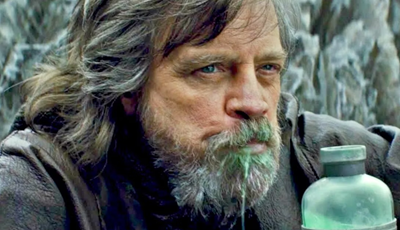
I am, in many ways, a Stars Wars kid. I can remember sitting in a cinema in 1977, listening to the music play as the opening words flowed across the screen and the sound of the Star Destroyer rumbled out of the speakers and thinking “Yes, a film by One of Us”. That is, a film made by a genuine fan of SF.
A film, moreover, that gave us epic characters. Luke Skywalker: young, eager, physically skilled, charmingly gormless. Han Solo: charismatic rogue (who definitely shot first, that’s what charismatic rogues who read the room do). Princess Leia: the epitome of the competent-beyond-her-age young woman making sure the boys don’t get above themselves. Darth Vader: the looming — and yes charismatic — menace. Chewbacca: scary loyal sidekick. Obi-wan Kenobi: wise, world-weary, teacher with intriguing powers. Grand Moff Tarkin: the ruthlessly competent minion that autocrats both want and fear.
A film that was fun, that was embedded in an intriguing universe. A film that understood the need for training, the hero’s journey, building teams. The briefing of the fighters before the attack on the Death Star is a classic example of informing the audience by letting them see the process of getting everyone on the same page.
I loved the first three films: yes The Empire Strikes Back (1980) is the best of them. I was not entirely sold on the Ewoks, but they were fun. Those films were a huge success for very good reasons.
I was less impressed with the prequels. I described The Phantom Menace (1999) as “Star Wars for six year olds”. Lucas should have stuck with the pattern that worked so well for The Empire Strikes Back — get a good director and have good scriptwriters tighten up his story.
When Lucasfilm was sold to Disney, I was actually pleased. Disney, I thought, knew how to tell stories. Rogue One (2016) seemed to be a vindication of that.
When The Force Awakens (2015) came out, I was so happy to have a big screen Star Wars epic film, I just went with it. There were huge problems with the character of Rey, but I wanted to be taken for a ride, and so was: in so many senses.
Looking back, the writing down of the character of Han Solo was a big red flag. In the original trilogy, he grew as a character, as a person. In the first of the sequel trilogy, we were presented with a broken down, ageing failure as husband and father who had decayed to less than what he was when we first met him.
Meanwhile, we had the Mary Sue of a Rey who was just better than the boys as everything, including running the Millennium Falcon. She didn’t need training or experience, she was just naturally awesome because … girl.
Hollywood pretending that women have the same upper body strength as men is pretty pathetic, but never as pathetic as in the light-sabre fight between Rey and the Emo-Teenager Discount Darth Vader aka Kylo Ren. Yes, Ren was wounded, but years of experience and training counted for naught against Rey because … girl.
The Last Jedi (2017) was so much worse. Again, I wanted to like it, but things just niggled at me all the way through, despite my wish to enjoy the ride.
Once I got out of the cinema and began to consider what I had watched I became very angry. The chubby Chinese girl and belittled Black guy side plot was tired agitprop. Snope had been built up as epic villain but was disposed off with ridiculous expedition without any backstory explanation. Admiral Gender Studies was a study in pathetically bad leadership who clearly had no idea of how to build a team yet presented as a righteous authority. Poe Dameron was diminished into Male Initiative Is Bad Because Toxic Masculinity morality-play persona.
Epic military scenes do not work as parables. Parables subordinate story and character to didactic purpose. Epic military scenes really do not work as parables when the didactic purpose itself is so pathetic.
This is all bad enough, but the unforgivable crime against the entire legacy of Star Wars was what was done with Luke Skywalker’s character.
The original Luke Skywalker was a study in epic heroism. Yes, he was genetically advantaged, but he also trained to hone those advantages. He was not only physically brave, he was morally brave. Alone, captive, in the hands of his enemies — having deliberately surrendered to save his friends — he refuses to strike his father down. Alone, he defies the Emperor to his face and suffers terribly for his decision. He earned his capacities and his heroic standing.
What are we presented with in The Last Jedi? A broken and pathetic shadow of his former self. The offhand disposal of Snope has the effect of belittling the characters of Han Solo and Luke Skywalker even further. Their son, nephew and disciple had defected to the Dark Side because of … an explanation that made no character sense at all.
Seriously, the man who had shown that level of moral courage decided to kill his disciple and nephew because he had disturbing visions? It was an insult to the character, to the legacy and to the audience.
The sequel trilogy, particularly The Last Jedi, was a profound insult to legacy. To the legacy of Star Wars and to legacy within Star Wars. Thus was another parable pushed: legacy is pathetic and needs to be abandoned and subverted. The contemporary progressive contempt for all past human striving — it’s so full of male faces don’t you know, and (in the West) white ones — in fictional form.
We were presented with a universe where men fail as mentors and examples and women don’t need such. The later added-in training of Rey in The Rise of Skywalker was a pathetic patch on a deeper story-telling failure.
Any white male was pathetic, a failure, evil, stupid, toxic or some combination of the same. Meanwhile, the protagonist was great because … girl.
This was a vision that is sexist-racist, in a quite deliberate fashion.
The completion of the trilogy in The Rise of Skywalker (2019) had interest only to see how they were going to resolve (or not) all the story-telling holes The Last Jedi had lumbered the trilogy with. Bringing back Ian McDiarmid’s Palpatine — easily the best thing in the prequel trilogy — was a sign of desperation, of creative exhaustion.
Each of the films in the sequel trilogy did worse than at the box office than the one before. A very clear statement of a legacy being run down.
QotD: Why companies continue to irritate their customers with online social justice marketing
Ad company execs are walking into a meeting with a Starbucks-sized company right now. They’re pitching a bold new social media strategy to their clients. And they know it works, these ad men say, because look at all this data from Starbucks. Their posts average so much “engagement” every time, but look, when they post on “social justice” topics, their “engagement” jumps 350%!!
In case you were wondering how all this “social justice” shit keeps appearing in ads, despite the well-known effect of pissing off companies’ established client base, well, there you go — the company execs, being #woke Cloud People, want to do it anyway, and they’ve got whole binders full of data from the marketing department that prove “social justice” ups social media “engagement” with “the brand” umpteen zillion percent.
Severian, “Internet Tough Guys”, Rotten Chestnuts, 2021-05-10.
February 21, 2024
“College attendance is our society’s only meaningful initiation ritual, and it thus assumes an existential importance that renders it near-impossible to replace until an alternative is found”
Johann Kurtz believes the modern university’s survival despite its increasingly irrational and counterproductive actions can be explained as the last modern example of an initiation ritual:

Harvard University Memorial Church.
Photo by Crimson400 via Wikimedia Commons.
Our understanding of the college system is incomplete. Until we correct this, we won’t be able to fix or replace the system.
First, consider a paradox: college attendance remains near all-time highs [Link], yet the majority of Americans no longer believe it is worth the cost [Link].
The college system seems irrationally resistant to declining value. We must therefore ask: is there an important non-rational reason for college attendance which we have failed to acknowledge?
I believe the answer is “Yes”. College attendance is our society’s only meaningful initiation ritual, and it thus assumes an existential importance that renders it near-impossible to replace until an alternative is found.
Our culture is historically anomalous in lacking explicit initiation rituals.
Mircea Eliade, the great religious historian of the 20th-century, defined initiation rituals as “a body of rites and oral teachings whose purpose is to produce a decisive alteration in the religious and social status of the person to be initiated“.
In philosophical terms, initiation is equivalent to a basic change in existential condition; the novice emerges from his ordeal endowed with a totally different being from that which he possessed before his initiation; he has become another.
— Mircea Eliade, Rites and Symbols of Initiation: The Mysteries of Birth and Rebirth
In Europe, fully expressed initiation rituals were common until the end of the Middle Ages, and in the wider world, until the end of the First World War. Now, they only persist in the West in the sacramental practices of devout Christians (baptism, confirmation, and so forth).
Once, however, these practices were of tremendous importance to us, as Eliade makes clear:
To gain the right to be admitted among adults, the adolescent has to pass through a series of initiatory ordeals: it is by virtue of these rites, and of the revelations that they entail, that he will be recognized as a responsible member of the society. Initiation introduces the candidate into the human community and into the world of spiritual and cultural values. He learns not only the behavior patterns, the techniques, and the institutions of adults but also the sacred myths and traditions of the tribe, the names of the gods and the history of their works …
In the absence of local community rituals, the universities are a natural site for their replacement. These have always been religious sites, although the nature and expression of this religion has transmuted over time.
H/T to Bruce Gudmundsson at Extra Muros for the link and his additional comments:
This hypothesis accords with the argument, made often in this blog, that education and schooling are two very different things. At the same time, it suggests that one of the definitive purposes of Extra Muros, the encouragement of young people to eschew the conventional college experience in favor of a combination of practical pursuits and systematic self-tuition, may be a fool’s errand. After all, if four (or five or six) years of drinking second-rate beer from red plastic cups does for the office-bound folk of North America what fear-filled rites of passage do for members of the bone-in-the-nose set, then I might well be sailing against the wind.
Upon second thought, I find hope in the possibility that the parasite (or, to be more precise, the cancer) promoted by d’Angelo, Kendi, and company will soon deal the coup de grâce to its mortally-wounded host.
The coming-of-age ordeals of warrior tribes demand that boys who would be men prove possession of such martial virtues as courage and self-command. The rites-of-passage of the modern middle classes, however, require that postulants demonstrate a mixture of conformity, conscientiousness, and, to a diminishing degree, intelligence. (Readers familiar with the oeuvre of economist Bryan Caplan will recognize the source of this troika. However, it is worth noting that, while Professor Caplan will occasionally tip his hat in the direction of the campus-based building of basic brain-power, he devotes far more attention to the collegiate cultivation of the two components of Sitzfleisch.)1
The cult of Marx, Mao, and Marcuse demands complete compliance, not only with its basic tenets, but also with any changes in the party line that, from time to time, may occur. (I am old enough to remember the days when campus commies of the caucasian persuasion could don dashikis without facing charges of “cultural appropriation”.) Thus, those who sit at the feet of the acolytes of critical theory learn an art of great value to people who wish to thrive in a large organization, that of discarding the old hat, and putting on the new one, at just the right time. (Think, if you will, of the mid-level employees of the McDonalds Corporation, who, over the course of the last four decades, were obliged to alter their opinion of the McRib sandwich more often than they changed the oil in their cars.)
1. Bryan Caplan, The Case Against Education: Why the Education System is a Waste of Time and Money (Princeton: Princeton University Press, 2018), pages 9-21.
February 20, 2024
Welcome to Dopamine culture
Ted Gioia thinks the annual “State of the Union” address is boring, but a much more relevant thing would be a “State of the Culture” address … and he’s got lots of concerns about modern day culture:
Many creative people think these are the only options — both for them and their audience. Either they give the audience what it wants (the entertainer’s job) or else they put demands on the public (that’s where art begins).
But they’re dead wrong.
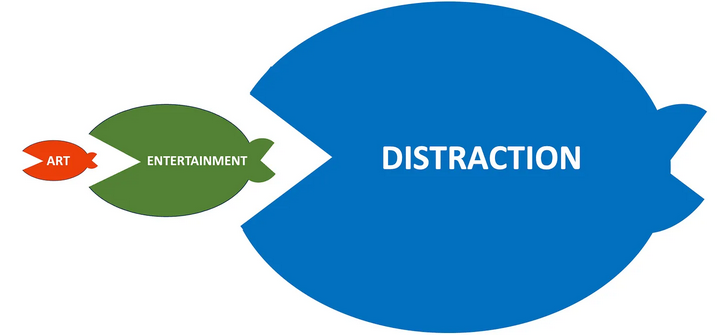
Maybe it’s smarter to view the creative economy like a food chain. If you’re an artist — or are striving to become one — your reality often feels like this.
Until recently, the entertainment industry has been on a growth tear — so much so, that anything artsy or indie or alternative got squeezed as collateral damage.
But even this disturbing picture isn’t disturbing enough. That’s because it misses the single biggest change happening right now.
We’re witnessing the birth of a post-entertainment culture. And it won’t help the arts. In fact, it won’t help society at all.
[…]
Here’s a better model of the cultural food chain in the year 2024.
The fastest growing sector of the culture economy is distraction. Or call it scrolling or swiping or wasting time or whatever you want. But it’s not art or entertainment, just ceaseless activity.
The key is that each stimulus only lasts a few seconds, and must be repeated.
It’s a huge business, and will soon be larger than arts and entertainment combined. Everything is getting turned into TikTok — an aptly named platform for a business based on stimuli that must be repeated after only a few ticks of the clock.
TikTok made a fortune with fast-paced scrolling video. And now Facebook — once a place to connect with family and friends — is imitating it. So long, Granny, hello Reels. Twitter has done the same. And, of course, Instagram, YouTube, and everybody else trying to get rich on social media.
This is more than just the hot trend of 2024. It can last forever — because it’s based on body chemistry, not fashion or aesthetics.
Our brain rewards these brief bursts of distraction. The neurochemical dopamine is released, and this makes us feel good — so we want to repeat the stimulus.
[…]
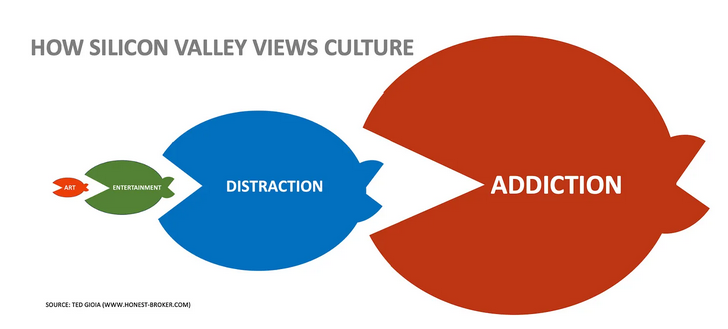
So you need to ditch that simple model of art versus entertainment. And even “distraction” is just a stepping stone toward the real goal nowadays — which is addiction.
Here’s the future cultural food chain — pursued aggressively by tech platforms that now dominate every aspect of our lives
The tech platforms aren’t like the Medici in Florence, or those other rich patrons of the arts. They don’t want to find the next Michelangelo or Mozart. They want to create a world of junkies — because they will be the dealers.
Addiction is the goal.
They don’t say it openly, but they don’t need to. Just look at what they do.

February 19, 2024
The End of Race Politics by Coleman Hughes
Given how far race relations in the United States (and in Canada) have disintegrated since 2009, it’s almost surprising to find someone taking up arms against the race preferences and active discrimination being implemented by governments, organizations, and companies across North America, but Coleman Hughes’ first book does exactly that:
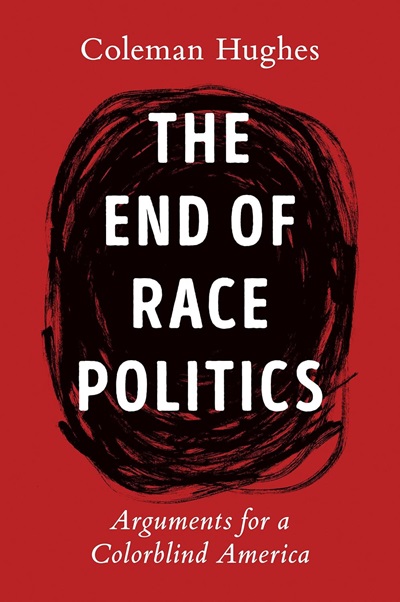
… almost as soon as the 1964 breakthrough in overcoming racial classifications took hold, it was abandoned. In a perverse echo of the past, sanctioned preferential treatment for blacks slowly began to replace sanctioned preferential treatment for whites. Set-asides, quotas, affirmative action all proliferated, all rooted in the old, crude racial classifications. The notion that affirmative action was a temporary adjustment, to be retired in a couple of decades at most, gradually disappeared. In fact, it was extended to every other racial or sexual minority and to women. Even as women and many blacks and other minorities triumphed in the economy and mainstream culture, they were nonetheless deemed eternal victims of pervasive misogyny and racism.
The more tangible the success for women and minorities, the more abstract the notion of “systemic oppression” became. Critical race theorists argued that color-blindness itself was a form of racism; and that all white people, consciously or unconsciously, could not help but be perpetuators of racial hate, whether they intended to or not. That’s how we arrived at a moment when Jon Stewart decided he’d tackle the subject of racial inequality in America by hosting a show called “The Problem With White People”, and when “The 1619 Project” actually argued that the American Revolution was not driven by a desire to be free from Britain but to retain slavery, which Britain threatened.
The poignancy of Coleman Hughes’ new book, The End of Race Politics, lies therefore in the tenacity of his faith in the spirit of 1964. “Color-blindness” is not the best description of this, because of course we continue to see others’ race, just as we will always see someone’s sex. No, as Hughes explains: “To advocate colorblindness is to endorse an ethical principle: we should treat people without regard to race, both in our public policy and private lives”.
That’s a principle the vast majority of Americans, black and white and everything else, support. It was the core principle for Frederick Douglass, Zora Neale Hurston, Martin Luther King Jr, and Bayard Rustin. “If I have advocated the cause of the colored people, it is not because I am a negro, but because I am a man,” insisted Douglass. Henry Highland Garnet — the first African-American to speak in Congress after the passage of the Thirteenth Amendment — even apologized for speaking of various different races, “when in fact there is but one race, as there was but one Adam”.
Fast forward to 2015, when the University of California called the phrase “There is only one race, the human race” a “micro-aggression”; or 2020, when the phrase “All Lives Matter” was deemed evidence of “anti-blackness”. The 21st Century, the brief era of color-blindness behind us, reached back to the 19th to insist that race defines us at our core, can never be overcome, and marks us all either an oppressor or a victim. The left, including the Democratic Party, has now adopted this worldview, along with a legal regime to actively discriminate against some races and not others: “equity”. That’s why Hughes cuts to the chase and calls these reactionaries in progressive clothing “neoracists”. They are. What else would one call them?
They are race-obsessed. They view any human interaction as a racial power-struggle, and compound it with any number of further “intersectional” power-struggles. They do not see two unique individuals with unique life experiences interacting in a free society. They see group identity as determinative everywhere; and therefore want to intervene everywhere, to discriminate against whites and successful non-whites in favor of unsuccessful non-whites. Individual rights? They come second to group identity.
[…]
One in five “black” Americans are immigrants or descended from them, Hughes observes. Only 30 percent of Asian-Americans think of themselves as “Asian” at all, rather as a member of a specific group — like Korean or Indian. Within the Asian box, you also have huge diversity: “In 2015, 72 percent of Indians over 25 had at least a bachelors degree. yet only 9 percent of Bhutanese did.” Ditto “Hispanic”. Any formula that conflates Cubans with Mexicans and Colombians is absurd. And don’t get me started on the LGBTQIA+ bullshit.
The woke also have a staggeringly crude understanding of power. Economic power? No doubt many whites have a huge edge in accumulated wealth in America; but the cultural power of African-Americans is global in reach and far outweighs the cultural clout of, say, white evangelicals or conservatives at home. Political power? Blacks, who are about 14 percent of population, are represented proportionally in the House — covering 29 states — and can claim the last two-term president, the current vice president, the House minority leader, the secretary of defense, the chairman of the Joint Chiefs, the mayors of the four most populous cities last year, and more than a fifth of SCOTUS.
For the neoracists, all racial disparities are entirely explained by “systemic racism”. But this obviously obscures the complexity of American society. “Culture” is a loaded and complex term, but it sure matters. A child with two engaged parents in the home has far more chances to succeed than a kid who barely sees his dad. Now look at the difference between family structure among many Asian-American groups and that of black Americans. And how can one blame “white supremacy” for the constant murderous mayhem of urban black spaces? Only by removing from young black men any concept of their own agency and humanity.
The CIA’s covert operations … as inspired by Vladimir Lenin
Along with most people who’ve been paying attention to history since the start of the Cold War, I hold the CIA in dubious regard. They seem to have been involved in so many underhanded escapades in countries around the world — certainly by reputation, if not in reality — that they stand almost in direct opposition to how most Americans liked to think of their country. Jon Miltimore thinks that among their inspirations was the founder of the Soviet Union himself:

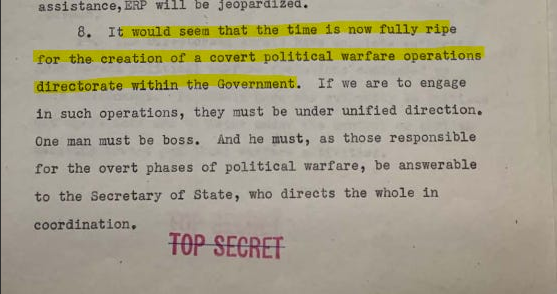
I bring all of this up because I recently came across an old document of some significance that I’d never heard of before titled, “The Inauguration of Organized Political Warfare“.
It was authored by George Kennan, the State Department Policy Planning Director who’d go on to be a successful US diplomat, for the National Security Council (which governed the CIA), and the document explained how the US government had to mobilize national resources “for covert political warfare” to combat the Soviet Union.
Kennan was not, in my opinion, a bad man. He had good instincts and sound motives, at least compared to others in the US intelligence apparatus. He was an early opponent of the Vietnam War and later was one of the first diplomatic leaders to warn against the US policy of expanding NATO up to Russia’s doorstep, something he predicted would be “the most fateful error of American policy in the entire post-cold-war era”.
That said, it’s clear that Kennan was not appalled by the Soviet Union’s use of covert political warfare. He was impressed by it.
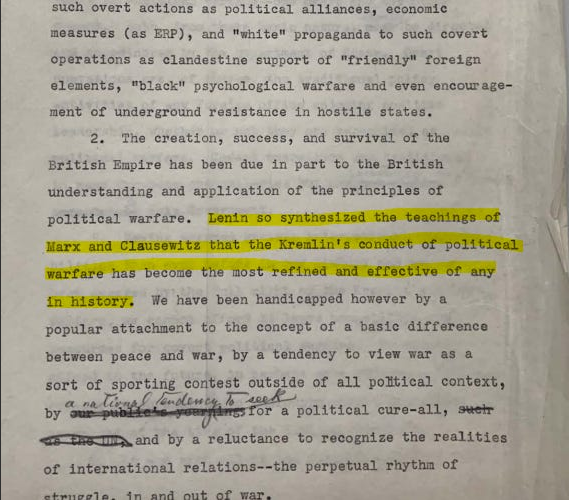
“Lenin so synthesized the teachings of Marx and Clausewitz that the Kremlin’s conduct of political warfare has become the most refined and effective of any in history,” Kennan wrote in the document.
We have been handicapped however by a popular attachment to the concept of a basic difference between peace and war, by a tendency to view war as a sort of sporting context outside of all political context, by a national tendency to seek for a political cure-all, and by a reluctance to recognize the realities of international relations — the perpetual rhythm of [struggle, in and out of war].
The document is fascinating because it appears to mark the genesis of the US government’s first formal steps into the world of political warfare — a well-documented history that includes toppling governments, assassinating world leaders, tipping elections, and torturing enemies.
All of these efforts, of course, initially targeted external parties and countries to serve “the national interest”.
This is no longer the case. The CIA, NSA, and other intelligence agencies no longer restrict their covert political warfare to foreign states, and I’m not talking about just Operation Mockingbird and other domestic propaganda efforts.
The CIA is clearly putting its thumb on the scales of US elections in ways that should terrify all Americans.
February 18, 2024
German Counterattack in Pomerania – WW2 – Week 286 – February 17, 1945
World War Two
Published 17 Feb 2024The Germans finally launch a counterattack into the Soviet flanks, but it does not go as well as was as hoped. The Siege of Budapest comes to an end, also not well for the Germans. The Soviets have now also surrounded Breslau. In Burma, the Allies cross the Irrawaddy River, in the Philippines the fight for Manila continues, and in the Pacific preparations are underway for an American invasion of Iwo Jima Island.
01:50 The fight for East Prussia
04:08 German counterattack in Poland
07:00 Breslau Surrounded
07:57 The Siege of Budapest
09:14 Operation 4th Term in Italy
10:07 Operation Veritable Continues
11:36 Allies cross the Irrawaddy
14:43 The Fight in the Philippines
17:52 Preparations for Iwo Jima
(more…)
Does the Chieftain Fit Into … a Ford Model T
The Chieftain
Published Nov 19, 2023Filmed during a down-moment on a maintenance day at the Ontario Regiment Museum. The Model T is small and so old that I have to ask someone else at the end of the video how to drive it.
(more…)
February 17, 2024
The pronoun police claim another scalp
Brendan O’Neill recounts the very sad tale of a 90-year-old woman who has been cancelled by the charity she’d volunteered for over 60 years for questioning mandatory “preferred pronouns”:

Two people at EuroPride 2019 in Vienna holding an LGBTQ+ pride rainbow flag featuring a design by Daniel Quasar; this variation of the rainbow flag was initially promoted as “Progress” a PRIDE Flag Reboot.
Photo by Bojan Cvetanović via Wikimedia Commons.
This strange case tells us so much about our times. It confirms that pronounology is tantamount to a religion among the godless new elites. Showy declarations of one’s pronouns play an entirely doctrinal role. They’re the means through which the new establishment – and those who aspire to enter its rarefied ranks – signal their fealty to the god of political correctness, and to that especially angry god of transgenderism. This is why anyone, like Mrs Itkoff, who questions the faddish mumbo jumbo of putting “he / him”, “she / her” or “they / them” after one’s name must be dealt with severely – because they’re not only querying a way of speaking; they’re blaspheming against the entire cult of correct-thought that the new elites have built in order that they might distinguish between good people and bad people, between in-group folk and out-group folk.
Ostentatious pronoun declaration serves no practical purpose. Consider that even Joe Biden has declared his pronouns. No one is going to mistake this 81-year-old fella for a she / her or they / them. We know dozy old Joe’s a bloke. No, he says “he / him” not to be helpful but to signal his unswerving allegiance to elite opinion, to demonstrate his devotion to the new ruling ideologies. This is why the political class, the corporate world and sharp-elbowed youths who want to get their hands on those levers of cultural power make such a big deal of declaring their pronouns – because they know this religious incantation is a door-opener par excellence.
The reason I never use “preferred pronouns” is simple: I don’t subscribe to the neo-religion of gender ideology, which would have us believe that there are two you’s – your mysterious inner gendered soul and your outward biological appearance. Every time we declare our pronouns, or genuflect to someone else’s “preferred pronouns”, we are implicitly buying into this very modern delusion, this woke hocus pocus. I’m with Mrs Itkoff – the idea that people can choose their pronouns, rather than being allocated pronouns that accord with the truth and reason of their biological sex, doesn’t “make sense to me”.
The Itkoff case also confirms how cavalierly despotic woke has become, especially its post-sex, post-truth trans wing. The trans ideology has enacted numerous cruelties on women. Rapists in women’s prisons, men in women’s domestic-violence shelters, women’s sports almost entirely upended by an invasion of mediocre blokes who’ve changed their name to Crystal or whatever – there is no female right, no basic tenet of decency, that cannot be sacrificed at the altar of gender validation. Now, even the charitable urges of an elderly lady can be thrown on to the bonfire of the cruelties – goodness erased in the name of never offending men who think they’re women. That so-called progressives back this sacrifice of women’s right to organise and speak as they see fit in the name of appeasing delusional men is concerning in the extreme.
Then there’s the ageism. We need to talk about the searing hostility of the woke towards older people, especially older women. You don’t even have to be 90. Witness the ceaseless haranguing of “Karens”, a derogatory term for middle-aged, mostly white women who dare to stand up for themselves in public. They’ve become the hate figures of our time. The author Victoria Smith refers to it as “hag hate”, an “ageist misogyny” aimed at women who are perceived not only to be past their supposed sell-by date, but also, even worse, to be possessed of “incorrect” beliefs. The old ducking of hags in open water has been replaced by the shaming of hags on open web forums.
Partly, it’s just old-world ageist sexism rehabilitated in PC lingo. It should not be surprising that the cult of transgenderism – an ideology that indulges men’s jealous coveting of the hyper-sexualised female body – should be so staggeringly hostile to older women. To women who have “sagged”, whether physically or morally, and thus put themselves beyond the cravings of trans activists who seem to value only the young, the pert, the sexualised. That women are human beings, who go through every stage of human existence, seems to be beyond the moral grasp of trans ideologues for whom womanhood is costume and little more.
But there’s something else going on, too. Today’s fashionable ageism is not only misogynistic – it’s Maoist. When I read about the case of Fran Itkoff, it was Maoism that came to mind. For wasn’t that also a crusade against “the old”? Those hotheaded cancellers of 1960s China openly declared war on the “Four Olds” – old ideas, old culture, old customs and old habits. They demonised and tortured those who gave voice to “old” ideals. Are we not witnessing something similar today? Statues of “problematic” historical figures are torn down, “offensive” old literature is rewritten, old people – like Fran – are sent into social oblivion. Wokeness is Maoism with better PR. We need to do something about it before we arrive in a world where people like Mrs Itkoff are not only cancelled but are also made to stand in public squares with placards around their necks identifying them as rancid old wrongthinkers. It is time to defend “the old” from the crazed young of the woke crusade.


