
World War Two
Published 7 Dec 2022Outnumbered and outproduced, the once mighty Luftwaffe is battling to hold its own across three fronts. Every month brings new pain for the force. But the Luftwaffe still has a few tricks up its sleeves and can make the Allies bleed heavily. If only Hitler and the Nazi leadership weren’t sabotaging its chances …
(more…)
December 8, 2022
Is the Luftwaffe Defeated in 1943? – WW2 Documentary Special
Comments Off on Is the Luftwaffe Defeated in 1943? – WW2 Documentary Special
Meta (the artist formerly known as Facebook) moves to clamp down on political discussions in the workplace
Tom Knighton on an uncharacteristic corporate move by the artist formerly known as Facebook:

My favourite reaction to Facebook rebranding as “Meta”.
It seems there are certain words employees aren’t really supposed to bring up in the workplace.
Meta (formerly Facebook) has reportedly told its employees not to discuss sensitive issues like abortion, gun control, pending legislation and vaccine efficacy at workplace.
According to a report in Fortune, citing a leaked internal memo, Meta has banned employees from discussing “very disruptive” topics, including abortion, gun rights, and vaccines as part of new “community engagement expectations”.
“As Mark mentioned recently, we need to make a number of cultural shifts to help us deliver against our priorities,” read the company memo.
“We’re doing this to ensure that internal discussions remain respectful, productive, and allow us to focus. This comes with the trade-off that we’ll no longer allow for every type of expression at work, but we think this is the right thing to do for the long-term health of our internal community,” it added.
Unfortunately for Meta, employees hammered them on the fact that they could talk about Black Lives Matter, immigration, and trans rights.
Now, they’re not really wrong to call out the hypocrisy, but this sounds like just a first move, and it’s a step in the right direction.
What would have been a better move is simply prohibiting discussing politics with your coworkers unless it directly pertains to your job. For example, if you are responsible for content moderation and a new bill will impact how you conduct that moderation, that’s one thing.
But topics ranging from Black Lives Matter to gun control are all contentious issues, and while Meta might have allowed that discussion in the past, they probably won’t indefinitely.
This is interesting to me, in part because we’ve seen the woke in the technology sector essentially bully employers into following along with the left’s agenda. Yet when they tried that with Netflix, the streaming giant basically told them to suck it up.
That was in May, but it may have triggered companies to realize that they didn’t have to play the woke game.
Last week, in the weekly wrap-up, I included this story about how Disney’s returning CEO Bob Iger is trying to have the company step back from the political ledge. Iger is far from a conservative, mind you, but he’s come to realize that his personal political agenda isn’t going to sell.
Granted, he started them along that path, but he’s recognized it’s not a great road to go down.
Now, we have Meta that may be venturing on a similar path to Netflix, setting the stage for what’s appropriate and what isn’t.
Comments Off on Meta (the artist formerly known as Facebook) moves to clamp down on political discussions in the workplace
December 7, 2022
Pearl Harbor: Before and After December 7th
Geographics
Published 20 Sep 2022
(more…)
Comments Off on Pearl Harbor: Before and After December 7th
QotD: Career path from recent B.A. to being “an expert” on national TV
The Z Man has had lots of fun bagging on “The Institute for the Study of War”. These are the guys peddling the truly bizarre Ukraine fantasies. Take a look at their masthead (with the awesome domain name “understandingwar.org”) and you’ll see a whole bunch of people who have never fired a shot in anger, but are either big league Media goons (Bill Kristol), disgraced politicians (Joe Liberman!), woke capital grifters, and of course at least one fucking Kagan, warming up in the bullpen until the next “change” of “administration”, when she’ll rotate into her patrimony at the State Department.
Just for giggles, I clicked on the bio of the cutest contributor — called, hilariously, “analysts and associates” — a
womangirlpersyn named Karolina Hird. Here’s her official bio, in full:
Karolina is a Russia Researcher on the Russia/Ukraine portfolio at ISW. She graduated from George Washington University in December of 2021 with a B.A. in International Affairs and a concentration in Security Studies. Karolina’s undergraduate research examined aspects of international law and Eastern European security with a special focus on the rise of Polish populism. She has also conducted research pertaining to Russian objectives and geopolitical strategies on NATO’s Southern periphery.
Did everyone catch that? A Bachelor’s Degree. In December 2021. This gal is all of nine months out of college.
I’ve read my share of undergraduate research. Some of it is decent. There are some undergrads I’d trust to hit the archives for limited purposes. But there are no 21 year old kids on this earth whose judgments I’d trust, because I’ve taught a LOT of college kids, and y’all …But of course she’s not doing anything policy-related. You know how this kid’s career trajectory will go: A few years at ISW, in which she’ll start appearing as a guest on the “news” as a “Ukrainian affairs expert” — and you can tell she’s an expert, because she’s an “analyst” at the “Institute for the Study of War”. Once her looks start going, she’ll move over to a staff job for some politician, then off to a think tank, then maybe a run for office in her own right, then back to the Media as a “senior analyst”. I’d wager many crisp stacks of Crispus Attucks that this lady couldn’t tell the difference between a MiG-31 and a Mazda Miata, but we’re a year or two away from putting her on national TV as an “expert” on war and peace.
How do you stop that kind of thing? How would you even start?
Severian, “Slipping the Leash”, Founding Questions, 2022-08-27.
Comments Off on QotD: Career path from recent B.A. to being “an expert” on national TV
December 6, 2022
The coming of the Korean War
In Quillette, Niranjan Shankar outlines the world situation that led to the outbreak of the Korean War in 1950:

Initial phase of the Korean War, 25 June through 5 August, 1950.
Map from the West Point Military Atlas — https://www.westpoint.edu/academics/academic-departments/history/korean-war
The Korean War was among the deadliest of the Cold War’s battlegrounds. Yet despite yielding millions of civilian deaths, over 40,000 US casualties, and destruction that left scars which persist on the peninsula today, the conflict has never received the attention (aside from being featured in the sitcom M*A*S*H) devoted to World War II, Vietnam, and other 20th-century clashes.
But like other neglected Cold War front-lines, the “Forgotten War” has fallen victim to several politicized and one-sided “anti-imperialist” narratives that focus almost exclusively on the atrocities of the United States and its allies. The most recent example of this tendency was a Jacobin column by James Greig, who omits the brutal conduct of North Korean and Chinese forces, misrepresents the underlying cause of the war, justifies North Korea’s belligerence as an “anti-colonial” enterprise, and even praises the regime’s “revolutionary” initiatives. Greig’s article was preceded by several others, which also framed the war as an instance of US imperialism and North Korea’s anti-Americanism as a rational response to Washington’s prosecution of the war. Left-wing foreign-policy thinker Daniel Bessner also alluded to the Korean War as one of many “American-led fiascos” in his essay for Harper’s magazine earlier this summer. Even (somewhat) more balanced assessments of the war, such as those by Owen Miller, tend to overemphasize American and South Korean transgressions, and don’t do justice to the long-term consequences of Washington’s decision to send troops to the peninsula in the summer of 1950. By giving short shrift to — or simply failing to mention — the communist powers’ leading role in instigating the conflict, and the violence and suffering they unleashed throughout it, these depictions of the Korean tragedy distort its legacy and do a disservice to the millions who suffered, and continue to suffer, under the North Korean regime.
Determining “who started” a military confrontation, especially an “internal” conflict that became entangled in great-power politics, can be a herculean task. Nevertheless, post-revisionist scholarship (such as John Lewis Gaddis’s The Cold War: A New History) that draws upon Soviet archives declassified in 1991 has made it clear that the communist leaders, principally Joseph Stalin and North Korean leader Kim Il-Sung, were primarily to blame for the outbreak of the war.
After Korea, a Japanese imperial holding, was jointly occupied by the United States and the Soviet Union in 1945, Washington and Moscow agreed to divide the peninsula at the 38th parallel. In the North, the Soviets worked with the Korean communist and former Red Army officer Kim Il-Sung to form a provisional “People’s Committee”, while the Americans turned to the well-known Korean nationalist and independence activist Syngman Rhee to establish a military government in the South. Neither the US nor the USSR intended the division to be permanent, and until 1947, both experimented with proposals for a united Korean government under an international trusteeship. But Kim and Rhee’s mutual rejection of any plan that didn’t leave the entire peninsula under their control hindered these efforts. When Rhee declared the Republic of Korea (ROK) in 1948, and Kim declared the Democratic People’s Republic of Korea (DPRK) later that year, the division was cemented. Each nation threatened to invade the other and began preparing to do so.
What initially prevented a full-scale attack by either side was Washington’s and Moscow’s refusal to provide their respective partners with support for the military reunification of the peninsula. Both superpowers had withdrawn their troops by 1949 to avoid being dragged into an unnecessary war, and the Americans deliberately withheld weapons from the ROK that could be used to launch an invasion.
However, Stalin began to have other ideas. Emboldened by Mao Zedong’s victory in the Chinese Civil War and frustrated by strategic setbacks in Europe, the Soviet premier saw an opportunity to open a “second-front” for communist expansion in East Asia with Beijing’s help. Convinced that Washington was unlikely to respond, Stalin gave Kim Il-Sung his long-sought “green-light” to reunify the Korean peninsula under communist rule in April 1950, provided that Mao agreed to support the operation. After Mao convinced his advisers (despite some initial difficulty) of the need to back their Korean counterparts, Red Army military advisers began working extensively with the Korean People’s Army (KPA) to prepare for an attack on the South. When Kim’s forces invaded on June 25th, 1950, the US and the international community were caught completely off-guard.
Commentators like Greig, who contest the communists’ culpability in starting the war, often rely on the work of revisionist historian Bruce Cumings, who highlights the perpetual state of conflict between the two Korean states before 1950. It is certainly true that there were several border skirmishes over the 38th parallel after the Soviet and American occupation governments were established in 1945. But this in no way absolves Kim and his foreign patrons for their role in unleashing an all-out assault on the South. Firstly, despite Rhee’s threats and aggressive posturing, the North clearly had the upper hand militarily, and was much better positioned than the South to launch an invasion. Whereas Washington stripped Rhee’s forces of much of their offensive capabilities, Moscow was more than happy to arm its Korean partners with heavy tanks, artillery, and aircraft. Many KPA soldiers also had prior military experience from fighting alongside the Chinese communists during the Chinese Civil War.
Moreover, as scholar William Stueck eloquently maintains, the “civil” aspect of the Korean War fails to obviate the conflict’s underlying international dimensions. Of course, Rhee’s and Kim’s stubborn desire to see the country fully “liberated” thwarted numerous efforts to establish a unified Korean government, and played a role in prolonging the war after it started. It is unlikely that Stalin would have agreed to support Pyongyang’s campaign to reunify Korea had it not been for Kim’s persistent requests and repeated assurances that the war would be won quickly. Nevertheless, the extensive economic and military assistance provided to the North Koreans by the Soviets and Chinese (the latter of which later entered the war directly), the subsequent expansion of Sino-Soviet cooperation, the Stalinist nature of the regime in Pyongyang, Kim’s role in both the CCP and the Red Army, and the close relationship between the Chinese and Korean communists all strongly suggest that without the blessing of his ideological inspirators and military supporters, Kim could not have embarked on his crusade to “liberate” the South.
Likewise, Rhee’s education in the US and desire to emulate the American capitalist model in Korea were important international components of the conflict. More to the point, all the participants saw the war as a confrontation between communism and its opponents worldwide, which led to the intensification of the Cold War in other theaters as well. The broader, global context of the buildup to the war, along with the UN’s authorization for military action, legitimized America’s intervention as a struggle against international communist expansionism, rather than an unwelcome intrusion into a civil dispute among Koreans.
Comments Off on The coming of the Korean War
Tank Chat #160 | M18 Hellcat | The Tank Museum
The Tank Museum
Published 5 Aug 2022Hello Tank Nuts! M18 Hellcat perfectly fit the American Army’s Tank Destroyer doctrine during WW2. This particular M18 saw service during WW2 and conflict in former Yugoslavia. It is part of the Phelps private collection and recently took part in the celebrations for the 75th Anniversary of the liberation of the city of Mons, Belgium. Discover more on Hellcat and watch the latest Tank Chat with David Willey.
(more…)
Comments Off on Tank Chat #160 | M18 Hellcat | The Tank Museum
December 5, 2022
Edmund Burke
At Samizdata, Niall Kilmartin republishes part of a much older post out as background on Edmund Burke (who I haven’t yet read):
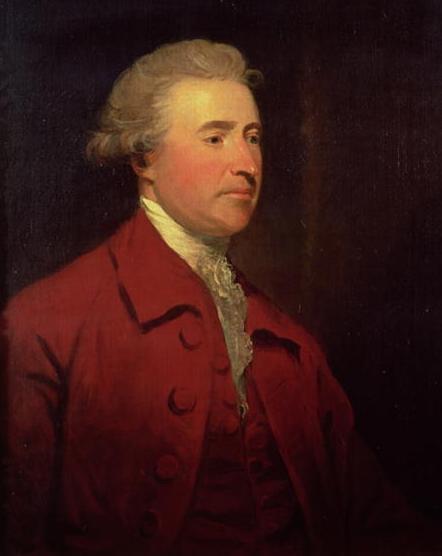
Portrait of Edmund Burke (1729-1797), circa 1770-1780 after a painting of 1774 by James Northcote.
Original in the Royal Albert Museum & Art Gallery via Wikimedia Commons.
When I first started reading Edmund Burke, it was for the political wisdom his writings contained. Only many years later did I start to benefit from noticing that the Burke we know – the man proved a prophet by events and with an impressive legacy – differed from the Burke that the man himself knew: the man who was a lifelong target of slander; the one who, on each major issue of his life, gained only rare and partial victories after years or decades of seeing events tragically unfold as he had vainly foretold. Looking back, we see the man revered by both parties as the model of a statesman and thinker in the following century, the hero of Sir Winston Churchill in the century after. But Burke lived his life looking forwards:
- On America, an initial victory (repeal of the Stamp Act) was followed by over 15 years in the political wilderness and then by the second-best of US independence. (Burke was the very first member of parliament to say that Britain must recognise US independence, but his preferred solution when the crisis first arose in the mid-1760s was to preserve – by rarely using – a prerogative power of the British parliament that could one day be useful for such things as opposing slavery.)
- He vastly improved the lot of the inhabitants of India, but in Britain the first result of trying was massive electoral defeat, and his chosen means after that – the impeachment of Warren Hastings – took him 14 years of exhausting effort and ended in acquittal. Indians were much better off, but back in England the acquittal felt like failure.
- Three decades of seeking to improve the lot of Irish Catholics, latterly with successes, ended in the sudden disaster of Earl Fitzwilliam’s recall and the approach of the 1798 rebellion which he foresaw would fail (and had to hope would fail).
- The French revolutionaries’ conquest of England never looked so likely as at the time of his death in 1797. It was the equivalent of dying in September 1940 or November 1941.
It’s not surprising that late in his life he commented that the ill success of his efforts might seem to justify changing his opinions. But he added that, “Until I gain other lights than those I have“, he would have to go on being true to his understanding.
Burke was several times defeated politically – sometimes as a direct result of being honest – and later (usually much later) resurged simply because his opponents, through refusing to believe his warnings, walked into water over their heads and drowned, doing a lot of irreversible damage in the process. Even when this happened, he was not quickly respected. By the time it became really hard to avoid noticing that the French revolution was as unpleasant as Burke had predicted, all the enlightened people knew he was a longstanding prejudiced enemy of it, so “he loses credit for his foresight because he acted on it”, as Harvey Mansfield put it. (Similarly, whenever ugly effects of modern politics become impossible to ignore, people like us get no credit from those to whom their occurrence is unexpected because we were against them “anyway”.)
Lastly, I offer this Burke quote to guide you when people treat their success in stealing something from you (an election, for example) as evidence of their right to do so:
“The conduct of a losing party never appears right: at least, it never can possess the only infallible criterion of wisdom to vulgar judgments – success.”
Comments Off on Edmund Burke
December 4, 2022
Operation Overlord Confirmed at Teheran – WW2 – 223 – December 3, 1943
World War Two
Published 3 Dec 2022The Teheran Conference is in full swing and the Allied leadership and plan for a cross channel invasion of Europe is agreed upon by Stalin, Churchill, and Roosevelt. There are new Allied attacks across Italy, but at Bari a German air raid releases deadly poison gas.
(more…)
Comments Off on Operation Overlord Confirmed at Teheran – WW2 – 223 – December 3, 1943
December 3, 2022
The end of the old “WASP” upper class
Scott Alexander is reading Bobos in Paradise by David Brooks and summarized the first sixth of the book:
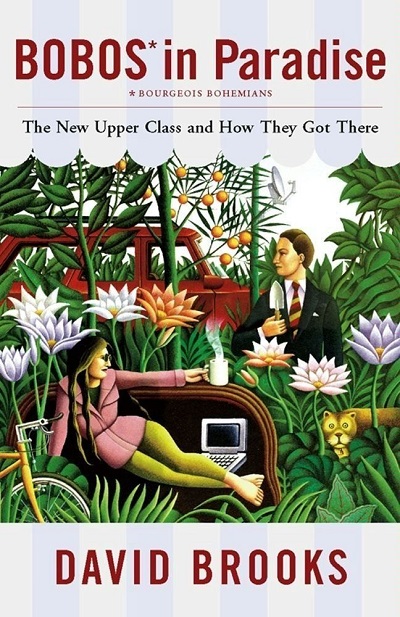
The daring thesis: a 1950s change in Harvard admissions policy destroyed one American aristocracy and created another. Everything else is downstream of the aristocracy, so this changed the whole character of the US.
The pre-1950s aristocracy went by various names; the Episcopacy, the Old Establishment, Boston Brahmins. David Brooks calls them WASPs, which is evocative but ambiguous. He doesn’t just mean Americans who happen to be white, Anglo-Saxon, and Protestant — there are tens of millions of those! He means old-money blue-blooded Great-Gatsby-villain WASPs who live in Connecticut, go sailing, play lacrosse, belong to country clubs, and have names like Thomas R. Newbury-Broxham III. Everyone in their family has gone to Yale for eight generations; if someone in the ninth generation got rejected, the family patriarch would invite the Chancellor of Yale to a nice game of golf and mention it in a very subtle way, and the Chancellor would very subtly apologize and say that of course a Newbury-Broxham must go to Yale, and whoever is responsible shall be very subtly fired forthwith.
The old-money WASPs were mostly descendants of people who made their fortunes in colonial times (or at worst the 1800s); they were a merchant aristocracy. As the descendants of merchants, they acted as standard-bearers for the bourgeois virtues: punctuality, hard work, self-sufficiency, rationality, pragmatism, conformity, ruthlessness, whatever made your factory out-earn its competitors.
By the 1950s they were several generations removed from any actual hustling entrepreneur. Still, at their best the seed ran strong and they continued to embody some of these principles. Brooks tentatively admires the WASP aristocracy for their ethos of noblesse oblige — many become competent administrators, politicians, and generals. George H. W. Bush, scion of a rich WASP family, served with distinction in World War II — the modern equivalent would be Bill Gates’ or Charles Koch’s kids volunteering as front-line troops in Afghanistan.
At their worst, they mostly held ultra-expensive parties, drifted into alcoholism, and participated in endless “my money is older than your money” dick-measuring contests. And they were jocks — certainly good at lacrosse and crew, but their kids would be much less likely than modern elites’ to become a scientist, professor, doctor, or lawyer. Not only that, they were boring jocks — they stuck to a few standard rich people hobbies (yachting, horseback riding) and distrusted creativity or (God forbid) quirkiness. Their career choices were limited to the family business (probably a boring factory with a name like Newbury-Broxham Goods), becoming a competent civil service administrator, or other things along those lines.
The heart of the WASP aristocracy was the Ivy League. I don’t think there are good statistics, but until the early 1900s many (most?) Ivy League students were WASP aristocrats from a few well-known families. Around 1920 the Jews started doing really well on standardized tests, and the Ivies suspended standardized tests in favor of “holistic admissions” to keep them out and preserve the WASPishness of the elite. All the sons (and later, daughters) of the WASPs met each other in college, played lacrosse together, and forged the sort of bonds that make a well-connected and self-aware aristocracy.
Around 1955 (Brooks writes, building on an earlier book by Nicholas Lemann) Harvard changed their admission policy. Why? Partly a personal decision by Harvard presidents James Conant, and Nathan Pusey, who sincerely believed in meritocracy. And partly because Harvard’s Jewish quota was becoming unpopular, as increased awareness of the Holocaust made anti-Semitism déclassé. Conant and Pusey decided to admit based on academic merit (measured mostly by SAT scores). The thing where Harvard would always admit WASP aristocrats because that was the whole point of Harvard was relegated to occasional “legacy admissions”, a new term for something which was now the exception and not the rule. Other Ivies quickly followed.
Brooks on the consequences:
In 1952, most freshmen at Harvard were products of … the prep schools of New England (Andover and Exeter alone contributed 10% of the class), the East side of Manhattan, the Main Line of Philadelphia, Shaker Heights in Ohio, the Gold Coast of Chicago, Grosse Pointe of Detroit, Nob Hill in San Francisco, and so on. Two-thirds of all applicants were admitted. Applicants whose fathers had gone to Harvard had a 90% admission rate. The average verbal SAT score for the incoming men was 583, good but not stratospheric. The average score across the Ivy League was closer to 500 at the time.
Then came the change. By 1960 the average verbal SAT score for incoming freshman at Harvard was 678, and the math score was 695 — these are stratospheric scores. The average Harvard freshman in 1952 would have placed in the bottom 10% of the Harvard freshman class of 1960. Moreover, the 1960 class was drawn from a much wider socioeconomic pool. Smart kids from Queens or Iowa or California, who wouldn’t have thought of applying to Harvard a decade earlier, were applying and getting accepted … and this transformation was replicated in almost all elite schools. At Princeton in 1962, for example, only 10 members of the 62-man football team had attended private prep schools. Three decades earlier every member of the Princeton team was a prep school boy.
There was a one-or-two generation interregnum where the new meritocrats silently battled the old WASP aristocracy. This wasn’t a political or economic battle; as a war to occupy the highest position in the class hierarchy, it could only be won through cultural prestige. What was cool? What was out of bounds? What would get printed in the New York Times — previously the WASP aristocracy’s mouthpiece, but now increasingly infiltrated by the more educated newcomers?
Comments Off on The end of the old “WASP” upper class
December 2, 2022
Matt Taibbi – “This is not journalism. It’s political entertainment, and therefore unreliable.”
Matt Taibbi posted his opening remarks for the Munk Debate on the topic “Be it resolved: Do not trust the mainstream media”:
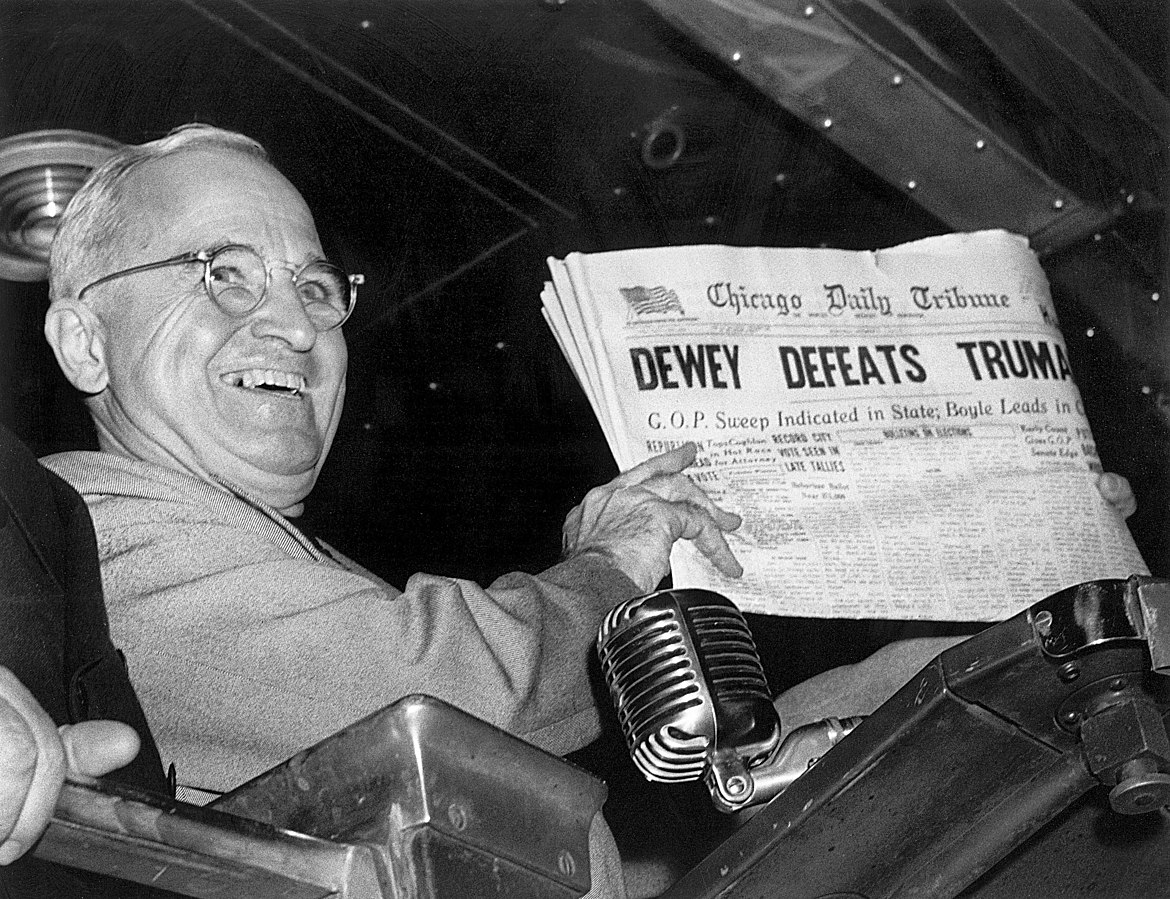
President Harry S. Truman holds up an election day edition of the Chicago Daily Tribune, which – based on early results – mistakenly announced “Dewey Defeats Truman.”
AP Photo/Byron Rollins from November 4, 1948, via Wikimedia Commons
I love the news business. It’s in my bones. But I mourn for it. It’s destroyed itself.
My father had a saying: “The story’s the boss.” In the American context, if the facts tell you the Republicans were the primary villains in this or that disaster, you write that story. If the facts point more at Democrats, you go that way. If it turns out they’re both culpable, as was often the case for me across nearly ten years of investigating Wall Street and the causes of the 2008 crash for Rolling Stone, you write that. We’re not supposed to nudge facts one way or another. Our job is to call things as we see them and leave the rest up to you.
We don’t do that now. The story is no longer the boss. Instead, we sell narrative, as part of a new business model that’s increasingly indifferent to fact.
When there were only a few channels, the commercial strategy of news companies was to aim for the whole audience. A TV news broadcast aired at dinnertime and was designed to be consumed by the whole family, from your crazy right-wing uncle to the sulking lefty teenager. This system had its flaws. However, making an effort to talk to everybody had benefits, too. For one, it inspired more trust. Gallup polls twice showed Walter Cronkite of CBS to be the most trusted person in America. That would never happen today.
[…]
Our colleagues on the other side tonight represent two once-great media organizations. Michelle, the Pew survey says the audience for your New York Times is now 91% comprised of Democrats. Malcolm, the last numbers I could find for the New Yorker were back in 2012, and even then, only 9% of the magazine’s readers were Republicans. I imagine that number is smaller now.
This bifurcated system is fundamentally untrustworthy. When you decide in advance to forego half of your potential audience, to fulfill the aim of catering to the other half, you’re choosing in advance which facts to emphasize and which to downplay. You’re also choosing which stories to cover, and which ones to avoid, based on considerations other than truth or newsworthiness.
This is not journalism. It’s political entertainment, and therefore unreliable.
With editors now more concerned with retaining audience than getting things right, the defining characteristic across the business — from right to left — is inaccuracy. We just get a lot of stuff wrong now. It’s now less important for reporters to be accurate than “directionally” correct, which in center-left “mainstream” media mostly comes down to having the right views, like opposing Donald Trump, or anti-vaxxers, or election-deniers, or protesting Canadian truckers, or any other people deemed wrongthinkers.
In the zeal to “hold Trump accountable”, or oppose figures like Vladimir Putin, ethical guardrails have been tossed out. Silent edits have become common. Serious accusations are made without calling people for comment. Reporters get too cozy with politicians, and as a result report information either without attribution at all or sourced to unnamed officials or “people familiar with the matter”. Like scientists, journalists should be able to reproduce each other’s work in the lab. With too many anonymous sources, this becomes impossible.
Comments Off on Matt Taibbi – “This is not journalism. It’s political entertainment, and therefore unreliable.”
Bombing Berlin with Ed Murrow of CBS – War Against Humanity 089
World War Two
Published 1 Dec 2022Ed Murrow accompanies the RAF on a bombing raid on Berlin, and files one of his most iconic broadcasts with CBS. In Teheran, Winston Churchill walks out on a dinner with Joseph Stalin, after the USSR Premiere suggests mass murdering German officers.
(more…)
Comments Off on Bombing Berlin with Ed Murrow of CBS – War Against Humanity 089
The whole music culture, it seems, is now under the sway of a chipmunk aesthetic
Ted Gioia explores the oddity of musical tastes on TikTok:
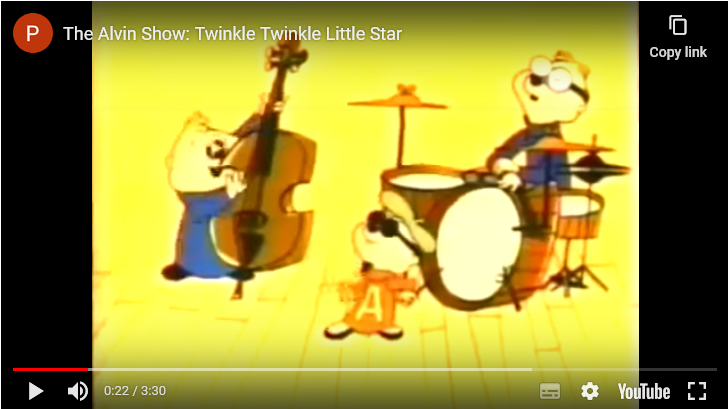
When I was a child, a band called Alvin and the Chipmunks enjoyed a brief taste of fame. Hot bands come and go, but this one had a bizarre back story.
First of all, it didn’t really exist. The band consisted of cartoon chipmunks. In this regard, Alvin and his rodent colleagues get credit for anticipating the anime pop stars of the current day.
Second, these singing chipmunks were more a brand than a band. Because these animals were make-believe, they couldn’t go on tour — but they could sell boatloads of merchandise, from lunch boxes to comic books. This, too, anticipated much of our current music industry — where the side deals often make more money than concerts and records.
But even stranger, this group aimed to imitate the sound of singing chipmunks by speeding up recordings of human vocalists. The end result was arguably the most annoying sound in 20th century music (a rare distinction, that). I can’t stand listening to these tracks, but they somehow won five Grammy Awards. Alvin and the Chipmunks actually enjoyed two number-one singles.
That’s two more than Bob Dylan can claim.
In all fairness, these same tracks sound even worse when slowed down. So maybe there’s something to be said for getting to the end of the song as fast as possible.
But here’s the most surprising part of the story. This sped-up sound also anticipated the contemporary music of our own time — it’s actually one of the hottest trends on TikTok.
The whole music culture, it seems, is now under the sway of a chipmunk aesthetic. This, to my way of thinking, is even more foreboding than all those people who want us to eat bugs and compost our deceased loved ones.
I’m starting to think that Alvin and the Chipmunks belong in the Rock and Roll Hall of Fame. Maybe I can’t stand listening to the stuff, but these cartoon critters clearly pointed the way to the future. A dark dystopian future, perhaps, but I guess that’s what happens when you treat rodents as role models.
November 30, 2022
Victorious Italians, Swedish Turnips, and Battlefield Songs – OOTF 29
World War Two
Published 29 Nov 2022Rommel disliked Italian officers, but how bad were the troops during the North Africa Campaign? DID German pilots use skip-bombing in the Atlantic? AND what kind of wartime songs did soldiers sing? Find out in this episode of Out of the Foxholes!
(more…)
Comments Off on Victorious Italians, Swedish Turnips, and Battlefield Songs – OOTF 29
November 29, 2022
In a dangerous and insecure world, the EU appears to feel that the greatest enemy is on the other side of the Atlantic
CDR Salamander on how the EU’s movers and shakers (i.e., mostly not democratically elected leaders) seem to have decided that their one true enemy is the United States:
If you are an American who lived on the European Continent, specifically Western Europe, you’re very familiar with an exceptionally sharp strain of anti-Americanism that resides in a significant percentage of their ruling elite – an adult version of the middle school mean girls. Though present in all nations to one degree to another, it is especially acute in Germany and France for slightly different reasons but are all working towards the same goal; degrade American influence in Europe.
The best way for this political and corporate anti-Americanism to find a lever of power is through the the trans-national and anti-democratic modern iteration of the European Union – made even more problematic with the departure of Great Britain who once played a balancing role between the Continental powers as she has for centuries.
Why primarily France and Germany? To start with, this is part of the sibling rivalry between the children of Charlemagne for primacy in Europe that has churned Europe over the last thousand years. The Anglo-Saxons on both sides of the Atlantic kept getting in the way of their return to the struggle.
Their armies under various blood-soaked leaders moved across Iberia to Moscow and back for centuries in order to be THE driver of power in influence on the continent. The European Union, once the “trade association” nose was in the tent, is now seen – fairly – as a mechanism to centralize power so The Smartest People in the Room™ no longer have pesky minor powers and – Buddha forgive – voters getting in their way. Without checks, power only seeks more power for itself. The morphing of the EU is just the latest example.
Not unlike their American counterparts who would like the USA to extract itself from foreign entanglements (NB: as I have written through the years, I am sympathetic/supportive of these efforts), many of the strongest proponents of the EU just want the USA to go home.
The Europeans, while benefiting from the WWII/Cold War leftover presence of the USA, want it to end and the influence that comes with it. If any opportunity to push back against the USA appears, they have their talking points ready to dirty up the reputation and standing of the USA. If that can be done while blaming Eurocrat failures on the USA as well, even better.
You know the Americans, citizens of that mongrel nation whose gene pool is full of religious zealots, failed revolutionaries, slaves, economic refugees, grasping second sons, criminals, and their descendants – spoiled with a continent overflowing with food, water, minerals, forests and open land they don’t even appreciate.
Loud. Fat. Pushy. Americans.
The usual snarled insults cobbled together by smug people who get much of their opinions of the USA by reading The Washington Post or The New York Times. “I know America, I read your newspapers.” That is right after, “I’ve been to America. I spent a week in DC/NYC/Boston/Chicago. I studied a semester at Brown.”
[…]
The smaller European nations don’t trust France and Germany all that much, for good historical reasons. Most of the Europeans in the “new territories” in the east like the USA. They see the Americans as a more reliable guarantee of safety from hostile powers in the East, having a few centuries of experience of the Western European Frankish tribes carving them up for fun and profit – irrespective of local desires. Collectively these nations are not that large in GDP or population – not much more than Italy (for now), but that’s OK. They have the correct geography.
If we shape this relationship correctly, we don’t have to permanently garrison this part of Europe. Poland is already establishing a new paradigm of proper levels of security investment. Once NATO’s eastern front calms down a bit, we can rotate through forces for exercises and training. Perhaps even create some combined training and logistics bases ready to scale up in case of trouble in Mordor. A template we should have put in place in Western Europe decades ago.
Reward positive behavior and let the French and Germans continue their millennium-length struggle – peaceful this time – in the west; keep them frothing in Brussels and Strasbourg while the forward-looking nations try to set up the next thousand years of Western progress in a positive direction.
Perhaps.
Comments Off on In a dangerous and insecure world, the EU appears to feel that the greatest enemy is on the other side of the Atlantic
Near Peer: Russia
Army University Press
Published 25 Nov 2022AUP’s Near Peer film series continues with a timely discussion of Russia and its military. Subject matter experts discuss Russian history, current affairs, and military doctrine. Putin’s declarations, advances in military technology, and Russia’s remembrance of the Great Patriotic War are also addressed. “Near Peer: Russia” is the second film in a four-part series exploring America’s global competitors.
Comments Off on Near Peer: Russia


