
… Is there, in fact, more lunacy in the Current Year, or is it just louder? He argued that there’s more. I argue that there’s not. Victorians, for instance, were world-class eccentrics. Just to stick with the breakfast cereal theme, consider that Kellogg’s corn flakes were based on some weird theory of digestion that was designed to combat the scourge of masturbation. No, really — the Sylvester Graham referenced in that article is the guy behind graham crackers, which were designed for similar reasons. See also “Fletcherism”, which counted Thomas Edison among its adherents. And that’s just food! Water, electricity, magnetism, you name it, there’s some weird Victorian health fad attached to it. Throw in the peccadilloes, sexual and otherwise, of just the widespread missionary movements, and you’ve got all the crazy you can handle, and then some.
Contrast this to the Current Year, where, much like breakfast food, what seems to be a bewildering variety of lunacy can be boiled down to just a few basic types. “Wokeness” is a madlib with just two variables: ____ is either racist or sexist, pick one. (I suppose you can combine them, but you’ll notice that doesn’t happen nearly as often as you’d predict, because the blacks hate the gays and the feminists hate everyone, so going full retard ends up getting you in a lot of trouble with your coreligionists).
Severian, “Mail Bag / Grab Bag”, Rotten Chestnuts, 2021-06-11.
June 15, 2024
QotD: Is there more craziness these days or is it just the volume turned up to 11?
June 10, 2024
The FDA has a jaundiced view of psychotherapy involving the use of MDMA (aka “Ecstasy”)
Colby Cosh indulges in a minor “I told you so” after the FDA’s expert panel recommended against the agency permitting any medical use of MDMA, despite some experiments indicating it does have therapeutic value:

Ball-and-stick model of the 3,4-methylenedioxy-methamphetamine molecule, also known as MDMA, or ecstasy, a well-known psychoactive drug. Based on the crystal structure of MDMA hydrochloride, as determined by X-ray diffraction.
Color code: Carbon, C: black, Hydrogen, H: white, Oxygen, O: red, Nitrogen, N: blue.
Image by Jynto via Wikimedia Commons.
Hopes for research into therapeutic uses of psychedelic drugs received a setback last week, one that your correspondent saw tripping (geddit?) up the road in advance. An expert panel published its official advice to the United States Food and Drug Administration (FDA) on permitting medical use of MDMA, the synthetic nightclub enhancer that we’re afraid the kids probably still aren’t calling “ecstasy” or “molly”.
There is long-recognized potential for MDMA to be combined with classical psychotherapy in treating emotional disorders, notably post-traumatic stress (PTSD), and now there are some small, limited studies showing evidence of positive effects.
But the FDA’s scientists weren’t very impressed with this evidence, and they voted almost unanimously against creating a therapeutic exception to the illegality of ecstasy, which the U.S. Controlled Substances Act classifies as a “Schedule 1” drug, right next to heroin. The panel’s advice isn’t binding on the agency, which is crawling in somewhat good faith toward recognizing the understudied medical potential of psychedelics. But the vote emphasizes the inherent problems that drugs face, once they are defined in law as “recreational”, in winning over skeptical scientists.
Reason magazine’s great drug-war correspondent Jacob Sullum has a thorough discussion of the issues. The existing research, despite some impressive headline results, has garden-variety issues with dropout rates, follow-ups and occasional researcher shenanigans. But the big problem, which defies easy technical solution, is with scientific blinding of the research subjects.
Scientific trials of the modern kind are predicated upon separating illusory placebo effects from genuine treatment effects. Researchers expect that a high-quality study will have a control group that receives sham treatment or none at all, and good practice requires that experimenters and their guinea pigs are both blind to who is in what group.
News flash: most people can tell whether they’ve been really given a psychedelic drug. Indeed, most doctors can tell whether they’ve given a patient a genuine psychedelic drug, and how much of it. Many placebo-controlled trials on psychoactive drugs, perhaps most of them, thus suffer from an alleged problem of broken blinding. (Have a glance, for example, at Table 2 in this review of blinding procedures in psychedelic studies.)
May 30, 2024
QotD: Is a “Pickup Artist” just an amateur method actor performing “fake it until you make it” drills?
Which forces us to consider a second question: How much of Game’s “success” is just practice? I’d wager very long money that no one, in the history of seduction, has ever said “I hit on fifteen girls a day, but I never seem to get anywhere”. And that of course is the very first thing the Game gurus have you do — just approach girls, dozens of them every day. Practice any skill for an hour a day and you’re bound to get a lot better pretty quickly. If you stink at golf, for instance, go hit a bucket of balls every day after work; in a month you’ll be dramatically better than you were, even if — make that especially if — you were terrible to start with.
Then throw in the marketing-style success rate. A 5% sales increase might not seem that big, but it’s millions of dollars. So, too, “scoring with 5% of your approaches” is a stunning success rate compared to 0%, especially since, you know, it’s sex, which our culture has taught us is the only meaningful standard.
Finally, though I will cheerfully admit to never having been a PUA, or anything close to it, I’ve read a fair amount of their stuff, and it seems to me that what they’re teaching is “how to fake self-confidence”, which is to say, they’re teaching Method acting. The theory is that you “fake it ’til you make it” — that is, by acting self-confident at all times, eventually you’ll really be self-confident. That virtue is as virtue does, and vice versa, goes back at least to Aristotle, so I’m certainly not going to argue with it. I’m simply going to point out that self-confidence, though of course very real, is more than just a set of behaviors, though our culture makes it very difficult to distinguish the two … and, worse, makes both of them very difficult to distinguish from “just being an asshole”.
Severian, “Mental Middlemen II: Sex and the City and Self-Confidence”, Rotten Chestnuts, 2021-05-06.
May 24, 2024
Bernie Sanders finally finds a group of rich people who he thinks shouldn’t have to pay
As Tim Worstall points out, Bernie Sanders’ latest campaign is starkly at odds with his usual “make the rich pay” schtick:

“Bernie Sanders” by Gage Skidmore is licensed under CC BY-SA 2.0 

 .
.
It’s possible to think that Bernie Sanders, Senator that he is, is more than a little confused. Well, he’d not be the first elderly politician to suffer that fate. Nor the first socialist. It is necessary for me to be fair here though — one of his honeymoons he took in the Soviet Union. Which makes perfect sense to me — after all, there was bugger all else to do there other than your own wife.
However, here we’ve got him complaining about the cost of the new miracle drugs:
Bernie Sanders has urged Denmark to rein in its most valuable company, Novo Nordisk, and force it to slash prices on popular weight loss and diabetes treatments Ozempic and Wegovy, taking his fight to lower “outrageously high” drug prices in the United States to the company’s doorstep as its profits soar amid ongoing struggles to meet booming appetite for the revolutionary drugs.
Hmm, dunno how well that’s going to work with the Danes really. Yes, to some extent they’re milder than when they tried to rape and pillage the entirety of Europe but not wholly. My brother worked out in Afghanistan (feeding the troops) and he had a Danish unit rotate through. So he tells me their senior sergeant type carried a double bladed axe on his backpack — it didn’t come back clean from every patrol either. They’re not all equality and gender rights these days, you know?
So, we can imagine a certain portion at least of the Danish population celebrating this rapine of Medicare’s pockets by the simple expedient of selling a weight loss drug that actually works — which is, when we come to think of it, something of an innovation. Fen-Fen didn’t work after all. Hey, you know, Vinland failed but we’ll get ’em this time? We’re charging high prices because we can?
A second pass at the argument would be that the drugs are in fact incredibly cheap. When it was shown that the same drug — semaglutide — works in stopping (that’s “stopping” as in ceased, stopped, dead, like Bernie’s career would if it were ever proven he had taken part in an act of voluntary capitalism) chronic kidney disease. So much so that the very day they announced the trials on the drug were being stopped a year early, so obvious was the success, the share prices of all the dialysis provision companies dropped 20 and 30%. That is, at near whatever price, this drug is a money saver. Which is, you know, good. J Foreigner turns up with this thing that saves America, Americans, lives and money and yet Bernie whines — so like a socialist, eh? Capitalism with markets makes us the humans who are living highest on the hog, ever, but they really never do stop whining about it, do they?
But Bernie’s real complaint is that Americans are paying more to burn off the cheeseburgers than everyone else has to. But from everything else Bernie says about anything at all this is at it should be — the rich should pay.
Back to our basics. The basic drug development problem is that the development of a drug is a public goods problem. It costs $2 billion to get a drug through the FDA and gain approval to actually sell it. Yes, of course we should slaughter much of the regulation that makes it cost that much (personally, against character type, I only recommend capture and humane release for the actual bureaucrats) but that’s another matter. It does. But if everyone can just copy the drug at that point then no one will spend $2 billion. So, OK, patents, so the developers have a decade (the patent is two decades, it takes a decade to gain approval) to make their $2 billion back then anyone can copy it. The price falls to manufacturing cost plus normal profit level and we’re about as good as we can get. This is not a perfect system but for mass market drugs it’s about as good as we’re going to get.
May 22, 2024
Scott Alexander reviews The Others Within Us
At Astral Codex Ten, Scott Alexander discusses teh new hawtness in psychotherapy as expounded in Robert Falconer’s new book The Others Within Us:
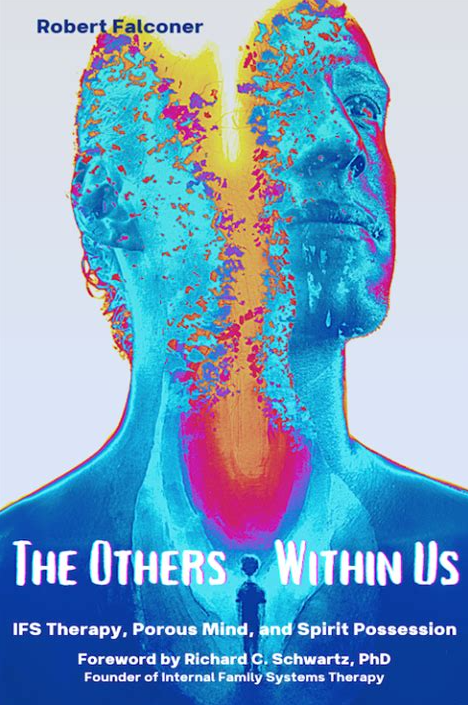
Internal Family Systems, the hot new1 psychotherapy, has a secret.
“Hot new psychotherapy” might sound dismissive. It’s not. There’s always got to be one. The therapy that’s getting all the buzz, curing all the incurable patients, rocking those first few small studies. The therapy that was invented by a grizzled veteran therapist working with Patients Like You, not the out-of-touch elites behind all the other therapies. The therapy that Really Gets To The Root Of The Problem. There’s always got to be one, and now it’s IFS.
Sufficiently new and popular therapies are hard to get. Therapist training starts slow – the founder has to train the second generation of therapists, the second generation has to train the third generation, and so on. IFS says they have a 10,000 person wait list for their training program. So lots of people have heard great things about IFS, maybe read a manual or two, but never tried it or met anyone who has.
What I gather from the manuals: IFS is about working with “parts”. You treat your mind as containing a Self — a sort of perfect angelic intellect without any flaws or mental illnesses — and various Parts — little sub-minds with their own agendas who can sometimes occlude or overwhelm the Self. During therapy, you talk to the Parts, learn their motives, and bargain with them.
For example, you might identify a Part of you that wants to sabotage your relationships. You will visualize and name it — maybe you call her Sabby, and she looks like a snake. You talk to Sabby, and learn that after your first break-up, when you decided you never wanted to feel that level of pain again, you unconsciously created her and ordered her to make sure you never got close enough to anyone else to get hurt. Then you and the therapist come up with some plan to satisfy Sabby — maybe you convince her that you’re older now, and better able to deal with pain, and you won’t blame her if you get close to someone and have to break up again. Then you see a vision of Sabby stepping aside, maybe turning off the Windmill Of Relationship Sabotage or something like that, and then you never sabotage your relationships again. It’s more complicated than that, but that’s the core.
All of this is the classic version everyone learns from the manual. Before we get to the secret, let’s examine two big assumptions in more detail.
First, this isn’t supposed to be just the therapist walking you through guided imagery, or you making up a story you tell yourself. The therapist asks you “Look inside until you find the part that’s sabotaging your relationship”, and you are supposed to discover — not invent, discover — that your unconscious gives it the form of a snake called Sabby. And you are supposed to hear as in a trance — again, not invent — Sabby telling you that she’s been protecting you from heartbreak since your last breakup. When you bargain with Sabby, it’s a two-way negotiation. You learn — not decide — whether or not Sabby agrees to any given bargain. According to Internal Family Systems (which descends from normal family systems, ie family therapy where the whole family is there at once and has to compromise with each other), all this stuff really is in your mind, waiting for an IFS therapist to discover it. When Carl Jung talked about interacting with the archetypes or whatever, he wasn’t being metaphorical. He literally meant “go into a trance that gives you a sort of waking lucid dream where you meet all this internal stuff”.
(After reading the IFS manuals, I tried most of their tricks for initiating this sort of trance and meeting Sabby or whoever. I got nothing. I notice most of the patients with great results are severely traumatized borderlines, ie the same people who often get multiple personality disorder after the slightest hint from a therapist that this might happen. We’ll get back to this analogy later.)
The second assumption is that everything inside your mind is part of you, and everything inside your mind is good. You might think of Sabby as some kind of hostile interloper, ruining your relationships with people you love. But actually she’s a part of your unconscious, which you have in some sense willed into existence, looking out for your best interests. You neither can nor should fight her. If you try to excise her, you will psychically wound yourself. Instead, you should bargain with her the same way you would with any other friend or loved one, until either she convinces you that relationships are bad, or you and the therapist together convince her that they aren’t. This is one of the pillars of classical IFS.
The secret is: no, actually some of these things are literal demons.
1. Some people object to me calling it “new” – it was developed in the 1980s, and has been popular since the early 2010s. Still, the therapy landscape shifts slowly, and even an exponentially-growing therapy takes a long time to get anywhere.
May 17, 2024
“Once a mind is infected with Climate Change, bioweapons are just another kind of carbon credit”
Jo Nova presents evidence of a university professor — a vulcanologist — who perhaps has more sympathy for the volcanoes he studies than the human race:
Let’s just say, hypothetically, that someone wanted an excuse to reduce global population, or limit competing tribes and religions, there’s a scientific hat for that. Climate Change is the ultimate excuse for mass death — done in the nicest possible way and for the most honorable of reasons. But isn’t that what they all say: Jim Jones, the Branch Davidians, Heavens Gate — death makes the world a better place?
The cult that pretends it isn’t a cult sells itself as “science”. I mean, what the worst thing you can think of? Would that be one degree of warming, or the Black Death?
In Bill McQuire’s mind the catastrophe is not when billions of innocent people die.
One hundred years from now, what would our great grandchildren prefer: that the world was slightly cooler or they were never born at all? If you hate humans it’s a terrible dilemma …
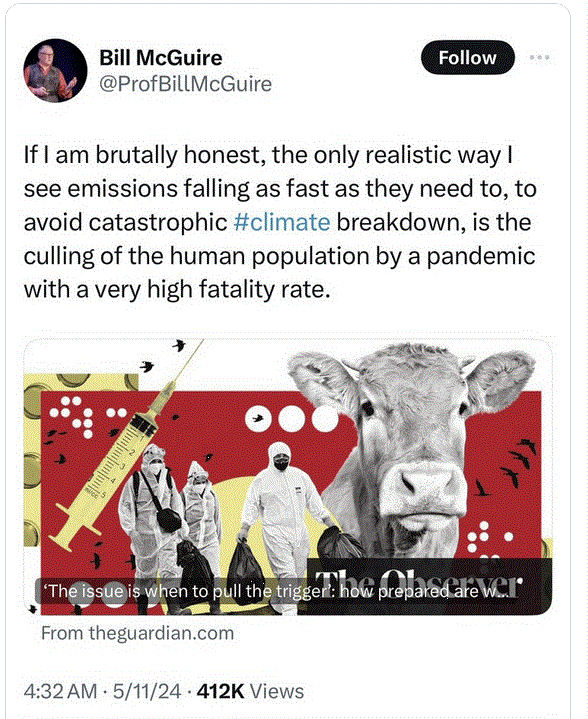
Bill McGuire, vulcanologist, accidentally put his primal instincts in a tweet last weekend:
Thirty years of telling us that humans are bad has consequences. As Elon Musk said” They want a holocaust for humanity.” It turns out a televised diet of one-sided climate projection by mendicant B-Grade witchdoctors might be a dangerous thing for mental health. If only Bill McQuire had seen a skeptic on TV?
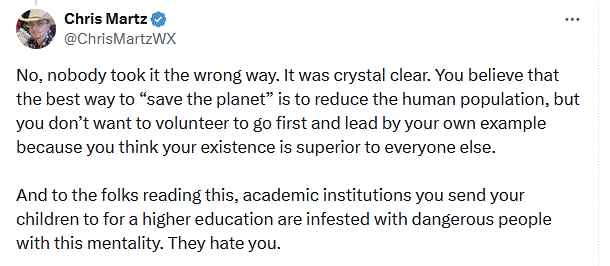
Predictably the McGuire tweet spread far, and got crushing replies so the Emeritus Professor deleted it, as all cowards do, yelling at us:
To which the winning reply was:

May 16, 2024
QotD: Modern parenting in open-concept houses
But the real crime of most new construction isn’t the exterior details. It’s inside, and it’s walls. They’re missing.
Open floorplans are bad. They’re bad for entertaining and they’re bad for families. Sure, that photo looks great (if you’re allergic to color and texture) and the HGTV hosts love ’em, but imagine actually living in that room with children. Seriously, just try: how fast are the cushions coming off those couches? How fast are your neutrals drowned beneath colorful toys and backpacks? (Unless you’re inflicting the same sad beige color scheme on your children.) How much visual clutter can a room of that size accumulate, and how much help will a small child need just figuring out where to start tidying up?
How many times do you have to ask the monster truck vs. dinosaur battle by the fireplace to pipe down so you can talk to Daddy over here by the stove, for Pete’s sake?
There’s a school of American parenting that says every moment with your child should be spent intensively nurturing his or her precious individual development. At lunch, for instance, you should make eye contact with your ten-month-old and describe the texture and flavor of each food (perhaps in French!) while Baby carefully grinds it into her hair. Your child’s quiet drawing time will surely be enhanced by his mother hovering at his elbow: “Tell me about your picture, honey! Uh-huh, and how do we think the villagers feel about Gigantor devouring them? Gosh, you sure gave him some big teeth!” An open floorplan is a tremendous boon to this sort of parenting: your child is always visible, so you can always be engaged.
It is completely impossible to raise more than maybe two children this way.
I don’t know which way the causation goes — do parents who were already inclined to be a little more laid-back and hands-off find their lives have room for more kids, or does sheer number of children force you to alter your tactics? — but either way, small families and intensive parenting go together, and they live in an open-concept house with 1.64 children.
Walls and doors, on the other hand, are God’s greatest gift to large families. Of course it is wonderful to be together. It’s important to have spaces that will fit everyone. (We were very sad when it was no longer possible to pile everyone into a king-size bed, even with elbows.) But it’s just as important to be able to be apart: because your little brother is practicing piano while you’re trying to do algebra, or a blanket fort combines poorly with an elaborate board game, or just because LEGO spaceships are a noisy business and your mother is reading to your sisters. (Or, God forbid, reading a book herself.)
Because at the end of the day, houses are just the stage where life happens. This isn’t to say that the stage-dressing is irrelevant — there is real worth and value to surrounding ourselves with order and beauty, and understanding how your house or neighborhood got to be that way can illuminate new things about the world. But ultimately, what matters most is how you make it a home.
Jane Psmith, “REVIEW: A Field Guide to American Houses, by Virginia Savage McAlester”, Mr. and Mrs. Psmith’s Bookshelf, 2023-12-05.
May 13, 2024
Unravelling the actual origins of Covid (aka Wuhan Coronavirus)
In Spiked!, Matt Ridley outlines some of the more recent admissions-against-interest of the people who used to accuse you of tinfoil-hattism and peddling conspiracy theories when the topic of the origins of Covid came up:

Wuhan Institute of Virology.
Wikimedia Commons.
Two of the key figures in the story of Covid’s origins gave away vital new information last week before the US Congress.
One of these figures is Ralph Baric, the University of North Carolina professor who invented ingenious techniques for genetically altering coronaviruses. He effectively taught scientists at the Wuhan Institute of Virology in China how to do “gain of function” experiments with bat-derived sarbecoviruses to make them more infectious or lethal in humanised mice. The other figure is Peter Daszak, the highly paid president of the non-profit, EcoHealth Alliance. Over many years, EcoHealth Alliance has channelled large sums of US taxpayer money to the Wuhan Institute of Virology for “gain of function” experimentation, and for finding new sarbecoviruses in bats.
Up until now, Baric and Daszak have taken slightly different approaches to (hardly) helping the world understand what went on in Wuhan before the Covid-19 outbreak in November 2019. Baric has remained largely silent, refusing to do interviews or sign up to articles in the scientific press. He remained silent last week, too, but the Congressional Select Subcommittee on the Coronavirus Pandemic released the transcript of a lengthy closed-door session it held with him in January.
Daszak, by contrast, has adopted a high profile, organising round-robin letters defending his friends and colleagues in Wuhan, giving interviews, writing articles and getting himself appointed to not one but two commissions investigating Covid’s origins, despite a glaring conflict of interest. He appeared before the subcommittee on 1 May.
Both men reluctantly admitted under oath to points that markedly strengthen the already strong hypothesis that the pandemic began with an accident in a laboratory in Wuhan. But before considering what they said, it might be worth briefly looking at the relationship between the two.
In comments on a draft of a grant proposal written in 2018, which were made public last year, Daszak boasted of how cheap it is to do experiments in Wuhan because they use a lower biosafety level (BSL-2), without negative-pressure work cabinets. Baric responded that US scientists would “freak out” at that. So a newly released email Baric sent to Daszak on 27 May 2021 smacks one’s gob somewhat. Responding to Daszak’s insistence that the Wuhan Institute actually used safer versions of these low safety standards for its experiments, Baric wrote:
Your [sic] being told a bunch of BS. Bsl2 [with] negative pressure, give me a break. There [sic] last paper mentioned bsl2 [with] appropriate PPE. This last part was the first and only time this was ever mentioned, never in earlier papers, and in the latest paper never defined either. I have no doubt that they followed state-determined rules and did the work under bsl2. Yes China has the right to set their own policy. You believe this was appropriate containment if you want but don’t expect me to believe it. Moreover, don’t insult my intelligence by trying to feed me this load of BS.
Baric clearly does not have a high regard for the Wuhan Institute of Virology’s safety standards, or indeed for his virus-hunting grantrepreneur colleague, Daszak. Nor do some other scientists who have nonetheless defended Daszak in public. Thanks to freedom-of-information revelations, we now know that “Dastwat” and “EgoHealth” are just two of the epithets used about him by his friends. With friends like that …
Both men still insist, however, that the pandemic began naturally – but, to borrow from Mandy Rice-Davies, they would say that wouldn’t they? Before the subcommittee, where even the Democrats gave him a pasting, Daszak was forced to concede some key points on which he had previously stonewalled or said the opposite.
Firstly, he had to concede that a lab leak was possible. Yet back in 2020, Daszak told Democracy Now that “the idea that this virus escaped from a lab is just pure baloney. It’s simply not true … So it’s just not possible.”
April 30, 2024
TikTok for Tots (and Instagram, and Facebook, and Twitter, and …)
Ted Gioia has some rather alarming information on just how many kids are spending a lot of time online from a very early age:
The leader in this movement is TikTok. But the other major platforms (Instagram, Twitter, Facebook, YouTube, etc.) are imitating its fast-paced video reels.
My articles have stirred up discussion and debate—especially about the impact of slot machine-ish social media platforms on youngsters.
So I decided to dig into the available data on children and social media. And it was even worse than I feared.
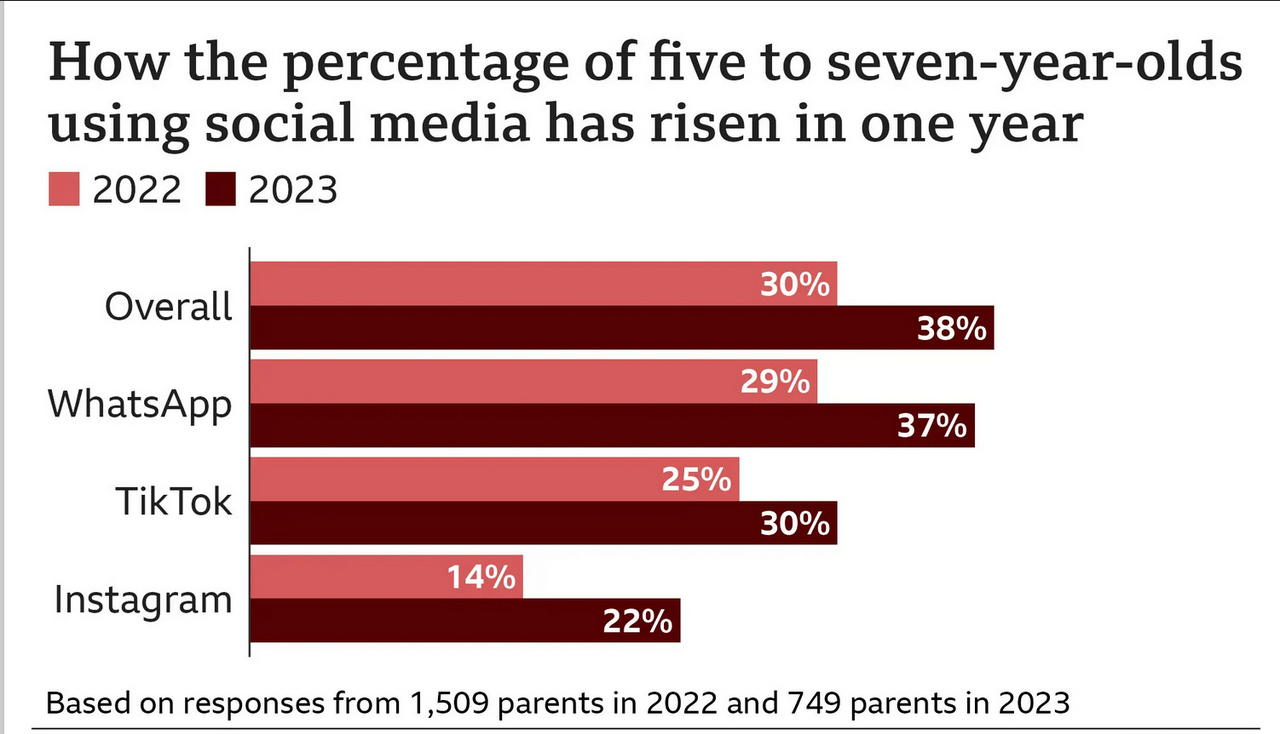
30% of children ages 5 through 7 are using TikTok — despite the platform’s policy that you can’t sign up until age 13.
The story gets worse. The numbers are rising rapidly — usage among this vulnerable group jumped 5% in just one year.
By the way, almost a quarter of children in this demographic have a smartphone. More than three-quarters use a tablet computer.
These figures come from Ofcom, a UK-based regulatory group. I’ll let you decide how applicable they are to other countries. My hunch is that the situation in the US is even worse, but that’s just an educated guess based on having lived in both countries.
What happened in 2010?
One thing is certain — the mental health of youths in both the US and UK is deteriorating rapidly. There are dozens of ways of measuring the crisis, but they all tell the same tragic story.
Something happened around 2010, and it’s destroying millions of lives. […]
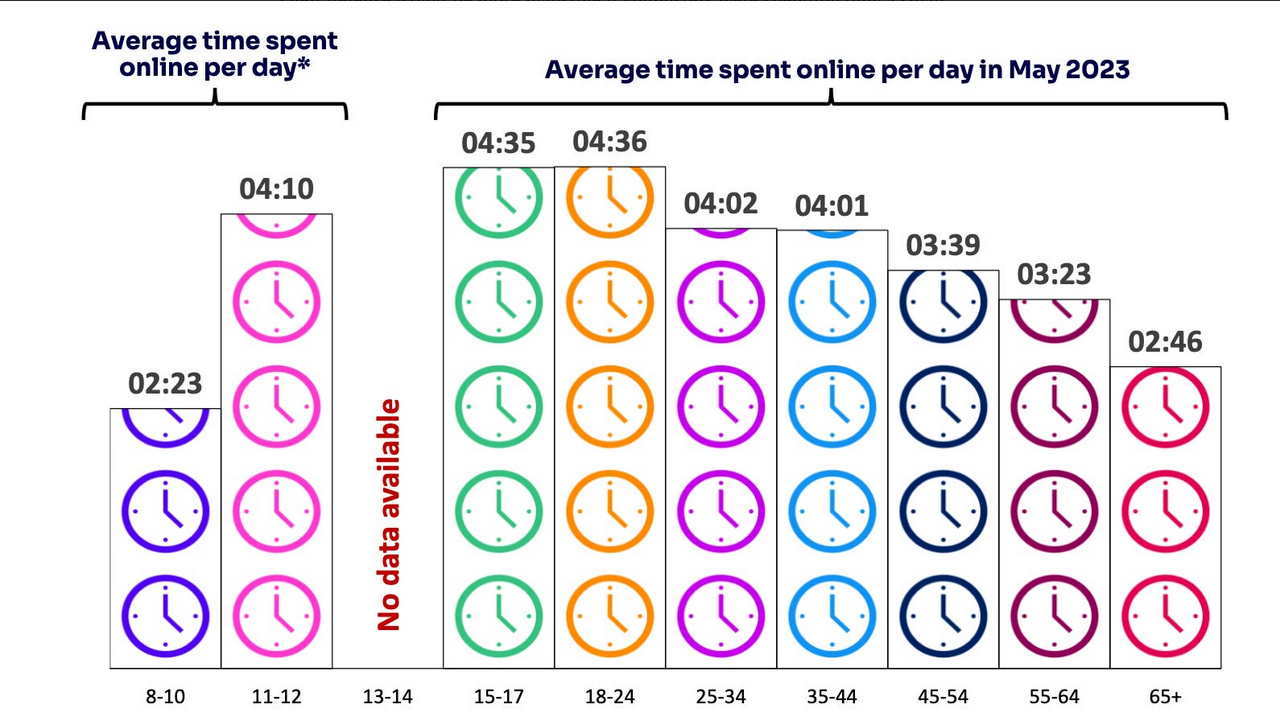
As early as age 11, children are spending more than four hours per day online.
Here’s a comparison of time spent online by age. Even before they reach their teens, youngsters are spending more than four hours per day staring into a screen.
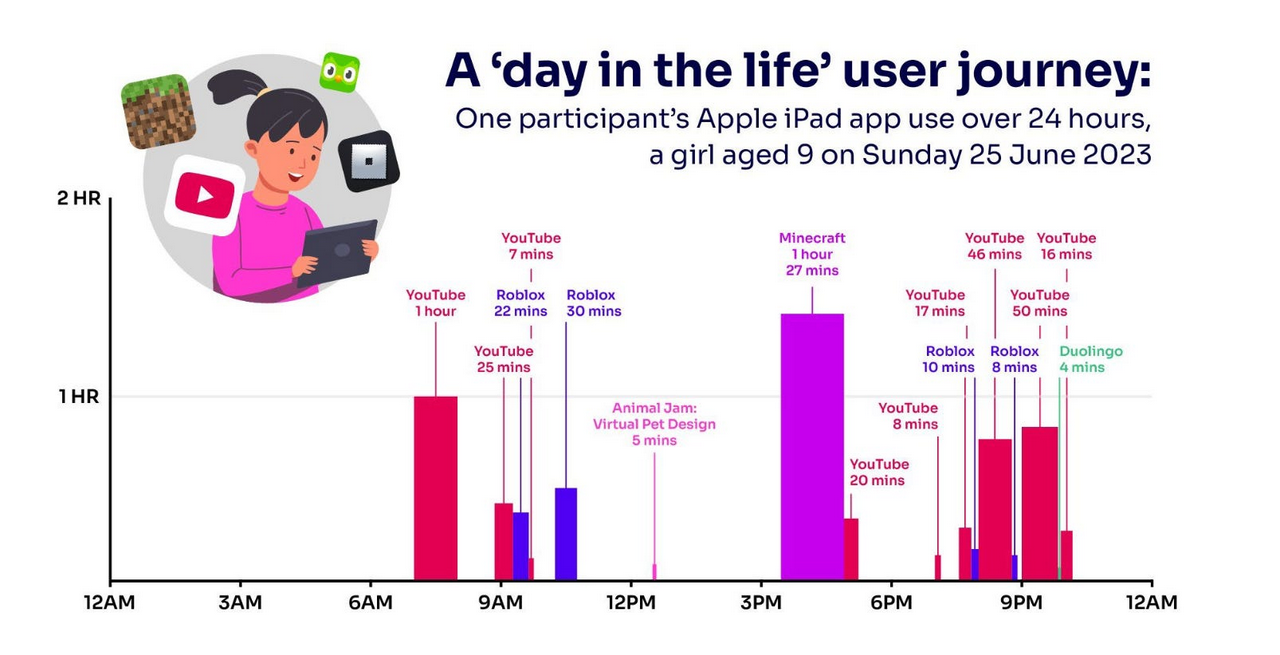
Here’s what a day in the digital life of a typical 9-year-old girl looks like.
I don’t find any of this amusing. But if you’re looking for dark humor, I’ll point to the four minutes spent on the Duolingo language training app at the end of the day. This provides an indicator of the relative role of learning in the digital regimen on the rising generation.
April 24, 2024
What Were Victorian Attitudes Towards Sex?
History Hit
Published Dec 15, 2023They’re famously thought of as a buttoned up prudish bunch, but we all know they loved to bump uglies as much as anyone today.
Were the spanking punishments of boarding schools really the origins of brothels? Who were the pin-ups of Victorian women? And what did the saucy portrait Queen Victoria gave to Prince Albert look like?
Today we go Betwixt the Victorian Sheets with Dan Snow, from History Hit sister podcast Dan Snow’s History Hit, to find out all about Victorian relationships.
(more…)
QotD: The psychological trap for teens in our social media-saturated era
These days, though, your “phases” are all over social media. If you pick one, you’d best be prepared to stick with it permanently. And it can be permanent indeed — ask the kids who decided to “transition” when they were fifteen and are now killing themselves in record numbers, because they weren’t really “transgender”, since that doesn’t actually exist. Given all that, there are only a few “safe” identities for kids to pick, and they’re pretty much all just flavors of SJW. Which is why the #wokeness seems to be coming on so strong. There’s really only one or two “safe” ways to express your “individuality” — you can be an SJW berating other SJWs for insufficient #wokeness in the matter of race, or gender, or perhaps health (vegans and covidians), but that’s about it.
Severian, “Mail Bag / Grab Bag”, Rotten Chestnuts, 2021-06-11.
April 23, 2024
Justin Trudeau’s legacy may not be something he ever wanted (or imagined)
Tristin Hopper outlines some of the attitudinal changes among Canadian voters during Trudeau’s term in office, with opinions shifting away from things we used to consider settled once and for all. Canada’s Overton Window is moving (relatively) quickly:

Front view of Toronto General Hospital in 2005. The new wing, as shown in the photograph, was completed in 2002.
Photo via Wikimedia Commons.
It’s been among the most volatile and untouchable third rails in Canadian politics: The adoption, at any level, of a private health-care system.
In the last federal election, a Conservative statement about “public-private synergies” was all it took for Deputy Prime Minister Chrystia Freeland to brand it as a right-wing assault on the “public, universal health-care system”.
But a new Ipsos report shows that “two tier health care” is not the threat it once was.
Among respondents, 52 per cent wanted “increased access to health care provided by independent health entrepreneurs”, against just 29 per cent who didn’t.
Perhaps most shocking of all, almost everyone agreed that private health care would be more efficient. Seven in 10 respondents agreed that “private entrepreneurs can deliver health care services faster than hospitals managed by the government” – against a mere 15 per cent who disagreed.
“People understand that the endless waiting lists that characterize our government-run health systems will not be solved by yet another bureaucratic reform”, was the conclusion of the Montreal Economic Institute, which commissioned the poll.
As Canada reels from simultaneous crises of crime, affordability, productivity, health-care access and others, it’s prompting a political realignment unlike anything seen in a generation. But it’s not just a trend that can be seen in the millions of disaffected voters stampeding to a new party. As Canadians shift rightwards, they are freely discarding sacred cows that have held for decades.
If Canadians are suddenly open to health-care reform, it helps that they’ve never been more dissatisfied with the status quo. The past calendar year even brought the once-unthinkable sight of the U.S. being officially called in to bail out failures in the Canadian system.
April 20, 2024
“Identity quakes”
Andrew Doyle explains why some people cling to aspects of their worldview so tightly because to admit that they were mistaken would actually threaten their individual identity:

Both Gosse’s memoir and Potter’s dramatisation grapple with what Peter Boghossian and James Lindsay (in their book How to Have Impossible Conversations) call an “identity quake”, the “emotional reaction that follows from having one’s core values disrupted”. Their point is that when arguing with those who see the world in an entirely different way, we must be sensitive to the ways in which certain ideas constitute an aspect of our sense of self. In such circumstances, to dispense with a cherished viewpoint can be as traumatic as losing a limb.
The concept of identity quakes helps us to understand the extreme political tribalism of our times. It isn’t simply that the left disagrees with the right, but that to be “left-wing” has become integral to self-conceptualisation. How often have we seen “#FBPE” or “anti-Tory” in social media bios? These aren’t simply political affiliations; they are defining aspects of these people’s lives. This is also why so many online disputes seem to be untethered from reason; many are following a set of rules established by their “side”, not thinking for themselves. When it comes to fealty to the cause, truth becomes irrelevant. We are no longer dealing with disputants in an argument, but individuals who occupy entirely different epistemological frameworks.
Since the publication of the Cass Review, we have seen countless examples of this kind of phenomena. Even faced with the evidence that “gender-affirming” care is unsafe for children, those whose identity has been cultivated in the gender wars will find it almost impossible to accept the truth. Trans rights activists have insisted that “gender identity” is a reality, and their “allies” have been the most strident of all on this point. As an essentially supernatural belief, it should come as no surprise that it has been insisted on with such vigour, and that those who have attempted to challenge this view have been bullied and demonised as heretics.
Consider the reaction from Novara Media, a left-wing independent media company, which once published some tips on how to deceive a doctor into prescribing cross-sex hormones. Novara has claimed that “within hours of publication” the Cass Review had been “torn to shreds”. Like all ideologues, they are invested in a creed, and it just so happens that the conviction that “gender identity” is innate and fixed (and simultaneously infinitely fluid) has become a firm dogma of the identity-obsessed intersectional cult.
Identity quakes will be all the more seismic within a movement whose members have elevated “identity” itself to hallowed status. When tax expert Maya Forstater sued her former employers for discrimination due to her gender-critical beliefs in 2019, one of the company’s representatives, Luke Easley, made a revealing declaration during the hearing. “Identity is reality,” he said, “without identity there’s just a corpse”.
This sentiment encapsulates the kind of magical thinking that lies at the core of the creed. So while it becomes increasingly obvious that gender identity ideology is a reactionary force that represents a direct threat to the rights of women and gay people, there will be many who simply will not be able to admit it. In Easley’s terms, if their entire identity is based on a lie, only “a corpse” remains. From this perspective, to abandon one’s worldview is tantamount to suicide.
QotD: Cyber-addiction
This, of course, cannot really be a surprise. It is a great hallmark of modern life that over-indulgence in practically anything can be turned into pathology given enough time and clinical studies.
Jeff A. Taylor, Reason Express, 2005-04-26.
April 17, 2024
QotD: The mid-life crisis, male and female versions
Which is why I’ve found the COVID overreaction so bizarre. Realizing your own mortality changes things. You can always tell, for instance, when it has happened to a younger person — when they come home, combat vets often act like middle-aged men going through a midlife crisis. Readjustment to civilian life is hard. Read the great war narratives, and it’s clear that none of them ever really “got over it”. Robert Graves and Ernst Junger, for instance, both lived to ripe old ages (90 and 103, respectively), and were titans in fields far removed from battle … and yet, the war WAS their lives, in some way we who haven’t been through it will never understand, and it comes through in every line they wrote.
If the Covidians were really freaking out about COVID, then, I’d expect one of two broad types of reaction: Either party-hearty midlife crisis mode, or a new determination to get on with whatever’s left of life. Obviously neither of those are true, and I just can’t grasp it — these might be your last few weeks on Earth, and that’s how you’re going to spend them? Sitting in your apartment like a sheep, wearing a mask and eating takeout, glued to a computer screen?
If you want a measure of just how feminized our society has become, there you go. Call this misogyny if you must, but it’s an easily observed fact of human nature — indeed, it has been observed, in every time, place, and culture of which we have knowledge — that post-menopausal women go a bit batty. Though a man might know for certain that he dies tomorrow, he can still keep plugging away today, because he’s programmed to find real meaning in his “work” — we are, after all, running our snazzy new mental software over kludgy old caveman hardware.
Women aren’t like that. They have one “job”, just one, and when they can’t do it anymore, they get weird. In much the same way high-end sports cars would cease to exist if middle aged men ceased to exist, so there are entire aspects of culture that don’t make sense in any other way except: These are channels for the energies of post-menopausal, and therefore surplus-to-requirements, women. You could go so far as to say that pretty much everything we call culture — traditions, history, customs — exist for that reason. Women go from being the bearers, to being the custodians, of the tribe’s future.
Severian, “Life’s Back Nine”, Rotten Chestnuts, 2021-05-11.


