
Many thanks for your letter. You ask whether totalitarianism, leader-worship etc. are really on the up-grade and instance the fact that they are not apparently growing in this country and the USA.I must say I believe, or fear, that taking the world as a whole these things are on the increase. Hitler, no doubt, will soon disappear, but only at the expense of strengthening (a) Stalin, (b) the Anglo-American millionaires and (c) all sorts of petty führers of the type of de Gaulle. All the national movements everywhere, even those that originate in resistance to German domination, seem to take non-democratic forms, to group themselves round some superhuman führer (Hitler, Stalin, Salazar, Franco, Gandhi, De Valera are all varying examples) and to adopt the theory that the end justifies the means. Everywhere the world movement seems to be in the direction of centralised economies which can be made to “work” in an economic sense but which are not democratically organised and which tend to establish a caste system. With this go the horrors of emotional nationalism and a tendency to disbelieve in the existence of objective truth because all the facts have to fit in with the words and prophecies of some infallible führer. Already history has in a sense ceased to exist, ie. there is no such thing as a history of our own times which could be universally accepted, and the exact sciences are endangered as soon as military necessity ceases to keep people up to the mark. Hitler can say that the Jews started the war, and if he survives that will become official history. He can’t say that two and two are five, because for the purposes of, say, ballistics they have to make four. But if the sort of world that I am afraid of arrives, a world of two or three great superstates which are unable to conquer one another, two and two could become five if the führer wished it. That, so far as I can see, is the direction in which we are actually moving, though, of course, the process is reversible.
As to the comparative immunity of Britain and the USA. Whatever the pacifists etc. may say, we have not gone totalitarian yet and this is a very hopeful symptom. I believe very deeply, as I explained in my book The Lion and the Unicorn, in the English people and in their capacity to centralise their economy without destroying freedom in doing so. But one must remember that Britain and the USA haven’t been really tried, they haven’t known defeat or severe suffering, and there are some bad symptoms to balance the good ones. To begin with there is the general indifference to the decay of democracy. Do you realise, for instance, that no one in England under 26 now has a vote and that so far as one can see the great mass of people of that age don’t give a damn for this? Secondly there is the fact that the intellectuals are more totalitarian in outlook than the common people. On the whole the English intelligentsia have opposed Hitler, but only at the price of accepting Stalin. Most of them are perfectly ready for dictatorial methods, secret police, systematic falsification of history etc. so long as they feel that it is on “our” side. Indeed the statement that we haven’t a Fascist movement in England largely means that the young, at this moment, look for their führer elsewhere. One can’t be sure that that won’t change, nor can one be sure that the common people won’t think ten years hence as the intellectuals do now. I hope they won’t, I even trust they won’t, but if so it will be at the cost of a struggle. If one simply proclaims that all is for the best and doesn’t point to the sinister symptoms, one is merely helping to bring totalitarianism nearer.
You also ask, if I think the world tendency is towards Fascism, why do I support the war. It is a choice of evils — I fancy nearly every war is that. I know enough of British imperialism not to like it, but I would support it against Nazism or Japanese imperialism, as the lesser evil. Similarly I would support the USSR against Germany because I think the USSR cannot altogether escape its past and retains enough of the original ideas of the Revolution to make it a more hopeful phenomenon than Nazi Germany. I think, and have thought ever since the war began, in 1936 or thereabouts, that our cause is the better, but we have to keep on making it the better, which involves constant criticism.
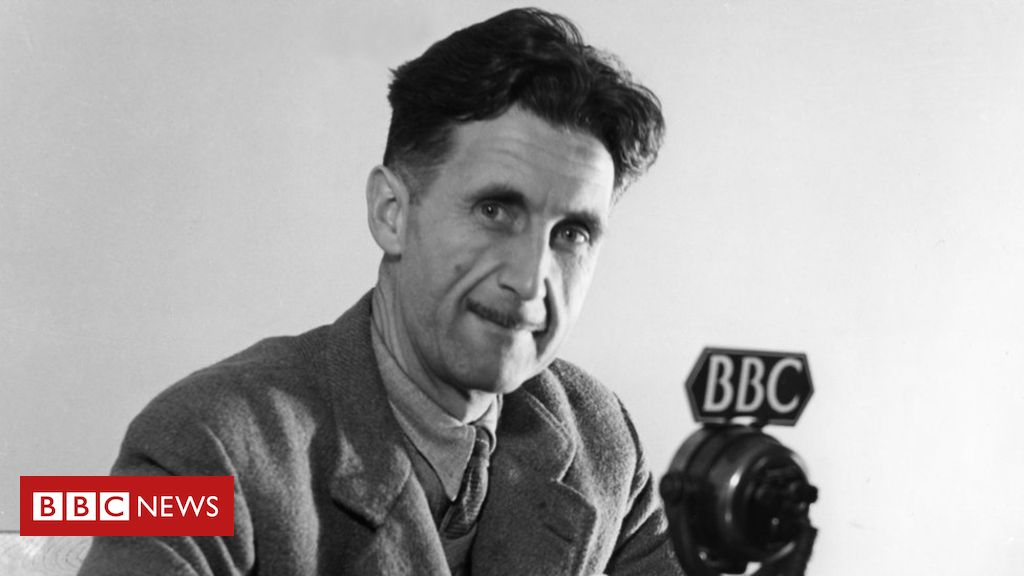
George Orwell, responding to a letter from Noel Willmett, 1944-05-18.
October 20, 2019
QotD: Why Orwell wrote Nineteen Eighty-Four
October 19, 2019
Churchill Was a Drunk… or Was He? – Doped WW2 Leaders Part 2
World War Two
Published 17 Oct 2019Winston Churchill was one of the most influential figures of World War Two. But as a heavy drinker he must have been under influence of constant drunkenness, right?
Watch Part 1 about Hermann Göring here: https://youtu.be/8H7arcUi7zQ
Join us on Patreon: https://www.patreon.com/TimeGhostHistory
Or join The TimeGhost Army directly at: https://timeghost.tvFollow WW2 day by day on Instagram @World_war_two_realtime https://www.instagram.com/world_war_t…
Join our Discord Server: https://discord.gg/D6D2aYN.
Between 2 Wars: https://www.youtube.com/playlist?list…
Source list: http://bit.ly/WW2sourcesHosted by: Indy Neidell
Written by: Francis van Berkel
Produced and Directed by: Spartacus Olsson and Astrid Deinhard
Executive Producers: Bodo Rittenauer, Astrid Deinhard, Indy Neidell, Spartacus Olsson
Creative Producer: Joram Appel
Post Production Director: Wieke Kapteijns
Research by: Francis van Berkel
Edited by: Michal Drzewiecki
Map animations: Eastory
Sound design: Marek KaminskiColorisations by Norman Stewart and Julius Jääskeläinen https://www.facebook.com/JJcolorization/
Eastory’s channel: https://www.youtube.com/channel/UCEly…
Archive by Screenocean/Reuters https://www.screenocean.com.Sources:
– IWM: A 11590
– Wine and whiskey icons by Made by Made, papers icon by Pauline, Breakfast icon by shashank singh, Champagne icons by Made by Made and Jenie Tomboc, Heart icon by Sophia Bai, alcohol icon by Flatart, beef icon by Igé Maulana, Beer by Valeriy, Cheese by Erin Agnoli, red wine by sasha willins, Brandy by NAS, all – the Noun Project
– Royalty free music of BensoundA TimeGhost chronological documentary produced by OnLion Entertainment GmbH.
From the comments:
World War Two
22 hours ago (edited)
We make an effort to approach history as unbiased as possible. The result is what we think is a balanced videos on Churchill’s alcohol (ab)use. For those of you who are new here, we are following World War Two Week by Week, in which we do pay a lot of attention to all those smaller but still significant events. If you would like to watch the series, make sure to subscribe and to click here to start watching from episode one: https://www.youtube.com/watch?v=3-A1gVm9T0A&list=PLsIk0qF0R1j4Y2QxGw33vYu3t70CAPV7XCheers,
The TimeGhost team.

October 18, 2019
QotD: England has become the Mother Hive
In 1908, Rudyard Kipling published a short story called “The Mother Hive”. In this, the bees in a hive decide to drop all outmoded ideas of hierarchy and to make everyone equal. This includes the right of workers to eat royal jelly and to mate with the drones. In the spreading chaos that results, traditionalist dissidents are first shunned and then murdered. Eventually, the bee keeper looks into the hive, and sees the empty honeycombs and the horribly deformed offspring of the workers. His response is to poison all the bees.
Now, something like this has happened in England. In the past few generations, the whole of national life has been taken over by the cultural Marxists. They run government and the administration, and the law, and education and the media, and business too. They have imposed on us a nasty hegemonic discourse. Cultural Marxism is ultimately to be traced to European thinkers like Antonio Gramsci and Louis Althusser and the Frankfurt School. But this has come to England in American clothing. It has prestige because it was taken up by the American universities.
In America, however, the progress of cultural Marxism has been resisted, or slowed, by a strong religious right and by a written constitution that it is taking a long time to subvert. Here, we have no religious right, nor an entrenched constitutional law. In the past, freedom and common sense were safeguarded by an hereditary land-owing aristocracy and gentry. These ran the country, and did much to determine its moral tone. During the twentieth century, they were marginalised and then eliminated from government. They remain as a class — still very rich — but the tacit deal since at least the 1940s has been that they will be left alone, so long as they keep out of politics. Government has been left to middle class lefties. The effect followed the cause only after several generations. But here it is.
It may be interesting for you, as foreigners, to learn an answer to the implied question in the title of this speech. But it is essential for the English to think about the question and its answers. You see, like both the Germans and the Russians, we have had a revolution. Unlike them, we have had no obviously revolutionary event. The Russians had the storming of the Winter Palace and the murder of their Royal Family. The Germans were utterly defeated in 1945. Their cities were bombed flat. Their country was occupied and divided. Every German knows either that German history came to an end in 1945, or at least that a new chapter in German history had begun.
We do not have that awareness, and it would be useful for us to understand, even so, that we are living in a state of revolution. England has become the Mother Hive.
Sean Gabb, “A Nation of Sheep: Understanding England and the English”, Libertarian Enterprise, 2017-09-23.
October 17, 2019
QotD: IKEA humans
Samuel Biagetti, “The IKEA Humans: The Social Base of Contemporary Liberalism”, Jacobite, 2017-09-13.
October 15, 2019
Looking past October 21st
Jay Currie has already wasted his vote at the advanced polls (the same way I’m going to waste mine come election day), and now he’s considering what our parliament will look like on October 22nd (here’s a hint … we both know our guy isn’t going to be PM):

On October 22 we’re going to wake up to a politically very different Canada assuming that JT is unable to win a majority. The first thing which will change is Trudeau’s position. He could be Mr. Dressup with a majority but in a minority position – assuming he can form a government at all – his Teflon coating will have worn off. It is just possible that the bought and paid for Canadian media will rouse itself from its slumber and begin to ask slightly harder questions.
The second thing which will change is that third, fourth and even fifth parties will matter. For Trudeau to form a government he will need at least the NDP’s support and, perhaps, the Greens. To get that he is going to have to buy into a lot of nonsense which will be extremely bad for the country. The Liberals have plenty of idiotic policy but they don’t hold a candle to either the NDP or the Greens for economically useless virtue signalling.
Scheer would have an easier time of it in a minority position. His only possible ally would be the Bloc and while the Bloc wants to break up Canada they are financially sound and not nearly as eager as the NDP or the Greens for open borders and looney carbon taxes.
The key thing to remember is that regardless of who forms the government, that government is not going to last very long. In a sense, this election is about the next, more decisive, election. If Trudeau loses as big as he looks to be doing the Liberal Party will be looking for another leader. If Scheer ekes out a workable minority he will be looking to call an early election (in the face of the idiotic Fixed Terms act we have saddled ourselves with) to crush that new leader.
For Singh, especially if he picks up seats as well as popular vote, the election will cement his place as the NDP leader and silence the people who are talking about his unelectability. Lizzie May will be hailed as an emerging force in Canadian politics if she manages to pick up a couple more seats on Vancouver Island and, I suspect, that is exactly what she is going to do. (Old, white, retired, rich people just love a party committed to never changing anything.)
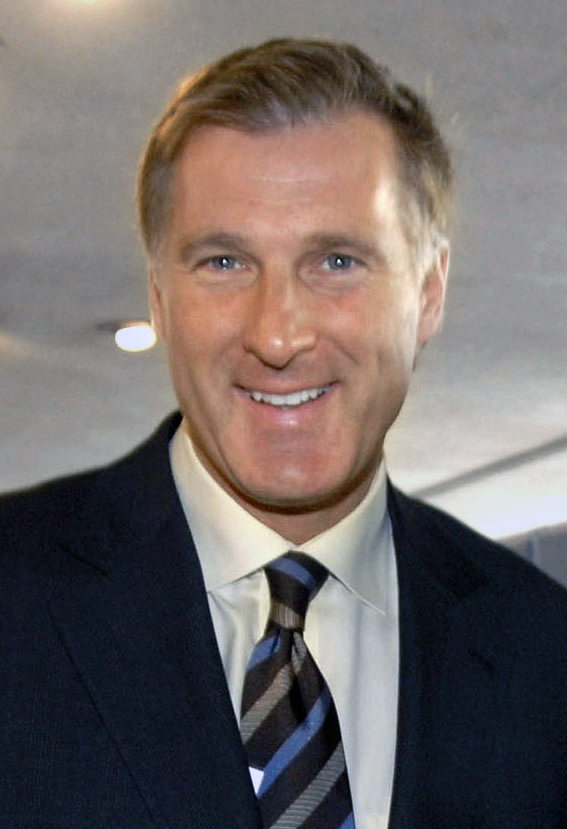
And what about Max? Obviously, he needs to hold his own seat. Which may be tough but I think he will pull through. I very much doubt he will win any other seats for a variety of reasons having nothing to do with Max or his policies. New parties take a while to gain traction. For Max, the biggest issue is how he does in the popular vote. Sitting at 1% is not going to cut it, but pop up over 4% and the table changes. Anything beyond that and Max will be the election night story.
QotD: Over-protected children become insecure adults
Jonathan Haidt, quoted by Naomi Firsht, “The Fragile Generation”, Spiked, 2017-08-31.
October 13, 2019
Modern journalism encompasses “activism,” “advocacy,” “partisanship,” “satire,” “hoaxing,” “unbearable self-promotional bluster,” “pranks,” “torquing of facts,” “invective,” “demagoguery” and “stunts”
I’ve always been pretty cynical about the media, so it was no surprise to me when the federal government decided to start explicitly subsidising the rest of the media (they already fund the CBC), and part of the fun was deciding who qualifies for those juicy subsidies. I mean, “journalism” today is a pretty broad category that covers a lot more than the traditional TV, radio, magazine, and newspaper formats. I’m sure everyone is shocked — Shocked! — to discover that the government is playing favourites among the many media outlets over not just who gets subsidies, but even who gets accredited to cover political events.

Jack Layton, leader of the federal New Democratic Party of Canada, on January 2, 2006 in a media scrum outside a campaign rally at the Kent Street legion in Ottawa, Canada.
Photo by Thorfinn Stainforth via Wikimedia Commons.
As we’re in the late stages of a federal election campaign, the question of who is considered to be a “journalist” merits closer attention, as Colby Cosh explains:
Two media outlets of a right-wing character, Rebel Media and the True North Centre for Public Policy, have been denied accreditation for post-debate press appearances at the last minute. The Parliamentary Press Gallery, acting on behalf of the federal Leaders’ Debates Commission, has somehow decided that their delegates are advocates rather than journalists. Oh-ho.
Here, an agent of the state seems to have pushed the “So who’s a journalist?” question really to the forefront, and introduced a distinction between journalism and activism that may not be tenable. The history and practice of journalism, even at the highest levels of public and professional esteem, includes entities and activities that fall into all of the following categories: “activism,” “advocacy,” “partisanship,” “satire,” “hoaxing,” “unbearable self-promotional bluster,” “pranks,” “torquing of facts,” “invective,” “demagoguery” and “stunts.”
If we must march toward state licensing of journalism in double-quick time, and this seems to be happening whether I like it or not, arguments about the definition of journalism will have to recognize these realities. But, of course, the word “journalism” as used from day to day is mostly just a status marker (really, a label concocted for academic use). “Journalism” will resist any historically aware attempt to bound it with a list of scientific-type taxonomic criteria.
This, of course, does not rule out an ignorant or fanciful attempt to set criteria. But most of the concepts in the list I made above, a list of things some people would like to exclude from journalism, are themselves ideas founded on fuzzy judgments of value, or of mere taste.
The media outlaws who found the debate gates shut in their faces got together and sought an injunction requiring the commission to allow them to appear in the magic chamber of questions after the debate. No one had really explained the decision to exclude them; no one could point to a solid pre-existing definition of journalism that they did not meet (surprise!), or to a relevant formal policy of the commission. It really gets the attention of a judge when the state behaves in an arbitrary way, and this proved to be the case, foreseeably, at the oral hearing for the injunction. Which was granted.
But an injunction is a temporary emergency remedy that does not require a full hearing of the facts — only the possibility of immediate incorrigible harm. The question haunting the Dominion — the question of who is a journalist — remains athwart our path.
QotD: The modern British army is custom-tailored to resist reform of any meaningful type
Talking to friends in the army, there is a real sense of anger and frustration among many mid-level officers. The veterans of [Operation] HERRICK feel that the army hasn’t learned lessons and remains bound by tradition and an inability to really learn. Candidly, many feel that the UK “lost” in Afghanistan and hasn’t yet accepted this fact. They feel the army is overly top heavy and rigid and unable to really adapt to 21st century warfare. Suggestions that much of the army exists as a structure to support rapid expansion in the future is met with a hollow snort of derision – we could never do a WW1-style rapid expansion again for the legacy reserve stocks of weapons and equipment have long since been disposed of as part of the move to RAB accounting in the early 2000s.
The operations that the army is likely to be involved in are either low level defence engagement, or as part of NATO reassurance in Eastern Europe. The chances of needing BAOR established again are slim – if we get to the stage where the UK is trading shots with the Russians, then things will be quickly escalating beyond the point where conventional weapons are of value. Home defence remains an issue, although the days of Exercise “Brave Defender” will never be repeated — the threat is completely different. There is simply no credible home threat that needs the army to deploy against invasion or insurrection. It is telling that there has been a move to get back into the Aid to the Civil Power role again, if only because having troops able to do flood relief helps generate positive headlines.
Whenever brave efforts are made to try and look again at how things can be done differently to free up funding (such as closing RHQs or making sense of the archaic HQ and regimental structure) leaks to the press ensure a media and Parliamentary furore that prevents real change being put into play. This stops the army from being able to genuinely restructure itself because the moment it tries to do so, some tired old headline such as “we don’t have an army anymore, only a militia” (an utter fallacy) appears and men of a certain generation with angry moustaches and blazers with badges and purchased medals write to their MPs. In a Parliament without a majority, it only takes a minor backbench rebellion to threaten chaos, meaning no minister will risk reform if it angers the backbenches.
The army today faces a structural and existential crisis. Too large to be properly funded, and politically barred from restructuring itself (although the recent 2017 manifesto pledge is merely to preserve the headline strength of the forces, not the individual services, so there is still hope). Denied a credible enemy that it can prepare to fight against, it has no clear rationale for why it needs to operate at a large scale when the political decision makers are increasingly set against boots on the ground for long term commitment.
Sir Humphrey, “How Do You Solve a Problem Like a Deployable Division?”, Thin Pinstriped Line, 2017-08-06.
October 12, 2019
QotD: Giving the vote to children
Apparently, this constitutes “planning for the future.”
David Thompson, commenting on “”, David Thompson, 2018-12-08.
October 11, 2019
The National Basketball Appeasement Association
Colby Cosh discusses the moral squalor, cowardice, avarice, and reflex appeasement gesturing of the NBA and finds a Canadian angle to the whole mess:
The National Basketball Association has spent the week trying to control the effects of a tweet by Daryl Morey, general manager of the Houston Rockets, who jeopardized his job on Friday when he told readers “Fight for freedom, stand with Hong Kong.” The tweet winked out of existence quickly, but it had prodded a sore spot. Morey faced immediate criticism from the Rockets’ owner and from the Chinese consul in Houston. Steps were taken within China to declare the Rockets personae non gratae and to cancel some NBA broadcasts.
[…]
Which leads to us to the true Canadian angle, copyright Colby J. Cosh 2019 (all rights reserved). Daryl Morey’s tweet was the 21st century’s “Vive le Quebec libre.”
All right, Morey isn’t a statesman, as de Gaulle was — but the NBA itself wants us to believe that it is a force for international harmony, and Morey is a prominent figure in the NBA. There is an amusing subplot here in that Morey has traditionally been regarded as an outsider in the league, a computer nerd who barged his way in by using technical analytics to improve team performance both on the court and at the gate. The natural assumption of a person who went to university in the 1990s is that he would be perfectly free as a matter of course to blurt out a political opinion — one that is in no way remotely controversial in the free world — on Twitter. Well, we are all learning to revise such assumptions.
When General de Gaulle uttered the 1967 version of an ill-advised, impulsive tweet, it created a small spasm of anger in English Canada, as Morey’s endorsement of an increasingly separatist protest movement in Hong Kong has. (Chinese sovereignty in Hong Kong is supposed to be as much an accepted fact as Canadian sovereignty in Quebec, and from the Party point of view, the Hong Kong protests are internal civil disorder. The same, of course, would go for China’s re-education camps full of Uyghurs, who represent the fate that pro-democracy Hong Kongers are trying to avert.)
But it was the Canadian political establishment that de Gaulle really provoked to rage with his sly, ambivalent remark. It was seen as an offence against hospitality. Canada’s mandarins — pardon the inadvertent pun — knew that de Gaulle’s resounding “liiibre” would give, above all, moral impetus to the enemies of Confederation. This proved to be the case, as far as history can tell. Et donc — vive Hong Kong! Vive Hong Kong libre!

A spectre is haunting the Liberal war room: the spectre of Jagmeet Singh
In the wake of the English language debate, NDP leader Jagmeet Singh is suddenly getting more of the kind of attention I thought he’d get from the media after he became party leader. Back in January, while he was campaigning for a seat in Parliament in a BC byelection, I wrote:
When Jagmeet Singh was elected NDP leader, I really did think he’d be a significant challenge to Justin Trudeau due to the media’s apparent fascination with Singh (a love affair that appeared to be as deep and lasting as that of Justin’s teeny-bopper [media] fan club for their darling), but it faded very quickly indeed. I guess as far as the Canadian media is concerned, there can only be one …
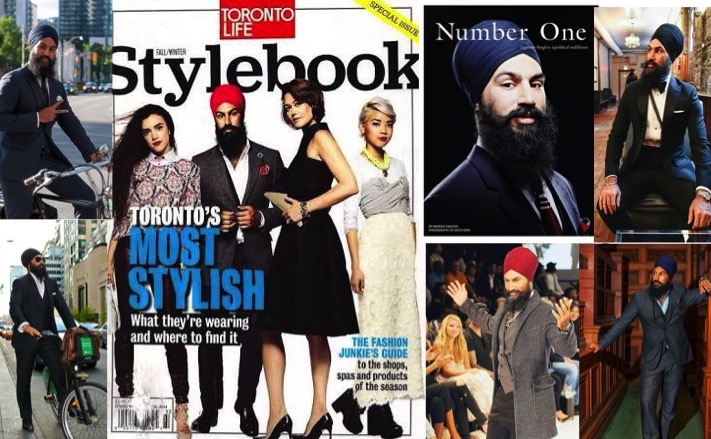
Now it appears that the Liberal Party backroom braintrust has suddenly woken up to the threat that Singh and the NDP are going to retain and even increase their support among left-leaning voters the Liberals had been taking for granted:
An even bigger risk for Trudeau is if lots of so-called low-information voters — who make their decisions late in a campaign — decide to cast a ballot for the charming Singh’s New Democrats.
But the biggest risk of all to the Liberals and Conservatives is if lots and lots of citizens give the finger to both parties and decide to vote NDP or Green to express their dissatisfaction with the status quo.
It looks like a long shot now with the economy humming along and a low unemployment rate.
But the same circumstances existed in B.C. in 2017. And plenty of voters decided that these were the right conditions for bringing the NDP back to power.
Nobody is expecting that Jagmeet Singh will be prime minister after the October 21 election.
But if he captures far more seats than the CBC poll tracker is projecting, it will be because of his genial nature and his ability to speak like a human being.
Surely, the Liberals realize that. The class differences between Trudeau and Singh are profound — and there are far fewer voters in Trudeau’s realm than Singh’s.
QotD: Religious hysteria
It is with us now; there has been a sharp rise in strongly evangelical sects in this country in recent years, some of which hold beliefs theocratic in the extreme, anti-intellectual, anti-scientific, and anti-libertarian.
It is a truism that almost any sect, cult, or religion will legislate its creed into law if it acquires the political power to do so, and will follow it by suppressing opposition, subverting all education to seize early the minds of the young, and by killing, locking up, or driving underground all heretics. This is equally true whether the faith is Communism or Holy-Rollerism; indeed it is the bounden duty of the faithful to do so. The custodians of the True Faith cannot logically admit tolerance of heresy to be a virtue.
Nevertheless this business of legislating religious beliefs into law has never been more than sporadically successful in this country — Sunday closing laws here and there, birth control legislation in spots, the Prohibition experiment, temporary enclaves of theocracy such as Voliva’s Zion, Smith’s Nauvoo, and a few others. The country is split up into such a variety of faiths and sects that a degree of uneasy tolerance now exists from expedient compromise; the minorities constitute a majority of opposition against each other.
Could it be otherwise here? Could any one sect obtain a working majority at the polls and take over the country? Perhaps not — but a combination of a dynamic evangelist, television, enough money, and modern techniques of advertising and propaganda might make Billy Sunday’s efforts look like a corner store compared to Sears Roebuck.
Throw in a Depression for good measure, promise a material heaven here on earth, add a dash of anti-Semitism, anti-Catholicism, anti-Negrosim, and a good large dose of anti-“furriners” in general and anti-intellectuals here at home, and the result might be something quite frightening — particularly when one recalls that our voting system is such that a minority distributed as pluralities in enough states can constitute a working majority in Washington.
Robert A. Heinlein, “Concerning Stories Never Written”, Revolt in 2100, 1953.
October 10, 2019
Justin Trudeau scrambles to escape from the consequences of his mistakes
It must be awful to be a Justin Trudeau fan these days, where he seems to spend more time looking awkward as his personal mis-steps keep coming back to haunt him. I’d never vote for the guy — but I wouldn’t vote for his main opponent, the Milk Dud either — but I thought he was a better politician than he’s turning out to be in this election campaign without the dependable strawman of Stephen Harper to struggle against. While I think he’s unfit to be Prime Minister, Barrett Wilson argues he wasn’t even fit to be a teacher:
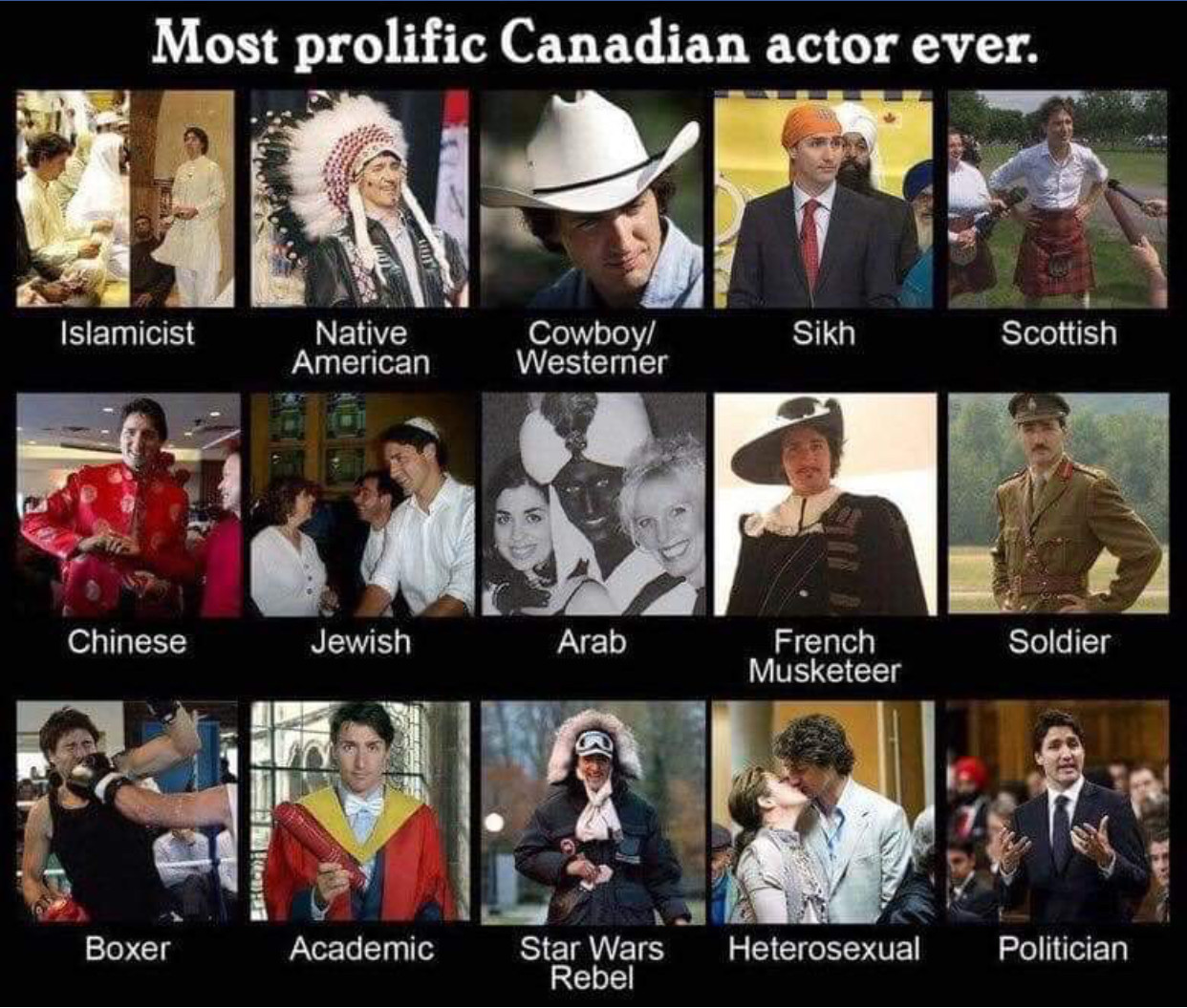
It should be well established by now that this man is unfit to serve as our Prime Minister.
But if corporate corruption, obstruction of justice, internet censorship, persecution of journalists, buying off the media, and frickin’ blackface weren’t enough to convince you that Trudeau is unfit. Perhaps this latest insanity will.
Trudeau and his campaign team somehow felt it was a good idea for the disgraced Liberal leader to appear on a pre-taped and rehearsed children’s television show today called “New Mom, Who Dis?” The appearance was cringeworthy at best, as host Jesse Cruickshank shamelessly flirted with the PM, but it was also cynical, manipulative, and exploitative, as Trudeau fielded two questions from two young black twin girls.
The first twin asked Trudeau, “Why did you paint your face brown?”
Trudeau answered: “Ooh. Um, it was something I shouldn’t have done because it hurt people. It’s not something that you should do and that is something that I learned. I didn’t know it back then and I know it now, and I’m sorry that I hurt people.”
The second twin followed up: “But did you paint your nose and your hands brown?”
Trudeau: “Mmmhmm. Yeah. And it was the wrong thing to do.”
The clip deserves to be watched more than once just to understand and appreciate how clearly scripted, deeply cynical, and frankly sick, the whole thing is.
The only thing missing from this little skit are #Trudeau's fake tears💧 #TrudeauBlackface pic.twitter.com/q3PTC8vbWv
— Mattea Merta 🇨🇦 (@MatteaMerta) October 9, 2019
Okay. So, this will take a second to unpack. Somehow, Justin Trudeau felt it would be a good idea to use a children’s television show and two young children of colour as a stage for a preplanned apology for his blackface exploits from when he was 29-years-old. Don’t worry everyone. He’s learned from his days of trying to manipulate strong, principled women of colour such as Jody Wilson-Raybould. It’s much easier to exploit young children!
And, by the way — who doesn’t know that blackface is wrong when they are 29-years-old? The culture in 2001 rejected such racist tropes. If Trudeau were actually that stupid at 29, when his brain was fully developed, then how in the hell should he ever lead a G7 country at 47? He can’t even be trusted to properly instruct young school children.
What other stupid things has this guy done that Canada’s enemies could use as blackmail (no pun intended).
October 9, 2019
Theodore Dalrymple on Justin Trudeau and David Cameron
He doesn’t hate either of them, he just thinks they are either fools or knaves. As the Instapundit often says, it might be time to “embrace the healing power of ‘and'”:
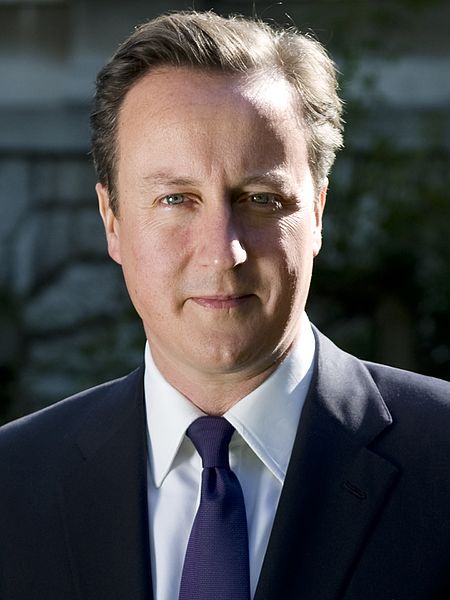
No doubt it is the mark of bad character to rejoice, as I do, in the spectacle of a man being hoist with his own petard, and as the Canadian Prime Minster, Justin Trudeau, has recently been hoist. And while I am at it, I confess also that, though I know that there is no art to find a mind’s construction in the face, I cannot help also but judge people, at least to an extent, by their physiognomy. And the fact is that Mr Trudeau has a face as characterless as that of the former British Prime Minister, David Cameron. They are of the same ilk. You look at them and think “What nullities!” The main character discernible in their faces is lack of character.
David Cameron’s official portrait from the 10 Downing Street website, 3 August 2010.
Open Government Licensed image via Wikimedia Commons.It is not their fault, perhaps; besides which I, or you, might be mistaken in our assessment of them and actually they have backbones (or what my teachers use to call moral fibre) of enormous strength. In any case, there are worse things to be, especially in the field of politics, than a nullity: an evil monster, for example, would be far worse, and no one could seriously claim that either of Messrs Trudeau and Cameron are, or were, evil monsters, however little they inspire admiration.
No one, then, could accuse me of partiality for Mr Trudeau, and the abjectness of his apology for his behaviour when he was a very young man did nothing to increase my liking for him. But it seems to me that sins as a young man were venial at worst, a callow disregard of the sensibilities of others which I common in youth. I very much doubt that he was a deep-dyed racist in any dangerous way, more a silly boy having a bit of fun.
There is a serious side to this imbroglio, of course. If the political leader of an important country can be overthrown or not re-elected on so relatively trivial a ground, while at the same town no one cares in the least about his shallow but dangerous moral posturing and obviously weak-minded pandering to the ayatollahs of an absurd and ill-founded political morality, then a new nadir of decadence and cowardice has been reached. It is a difficult question of moral philosophy as to whether it would be worse if Mr Trudeau actually believed his own political correctness or merely made use of it as a means to power. If the former, he is a fool; if the latter a knave. I leave it to others to decide which is better in a politician, or indeed in any other human being, foolishness or a knavery.
Political correctness is dangerous because when fools or knaves get into power, they may try to implement its dictates. And since many people are much more concerned to appear good than to do good, and since they are unlikely to suffer the consequences of their own actions (except when hoist on their own petard), the implementation may continue for a long time after the negative effects of its dictates have become clear. When implemented, those dictates create a clientele dependent upon their continuation, which turns any attempt to undo the harm into a nasty social conflict.
Election 2019 is “the most miserable, dishonest, venomous, pandering and altogether trivial exercise in multi-partisan misdirection since the last one”
Andrew Coyne curses both houses in his comparison between the Milk Dud’s Conservatives and Blackface Justin’s Liberals:
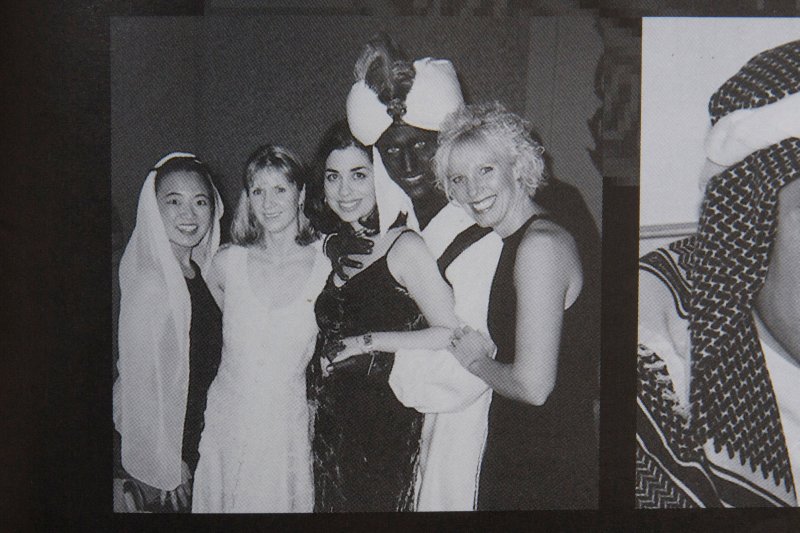
Justin Trudeau with dark makeup on his face, neck and hands at a 2001 “Arabian Nights”-themed party at the West Point Grey Academy, the private school where he taught.
Photo from the West Point Grey Academy yearbook, via Time
The platforms the parties have seen fit to put on public display — those of them that have deigned to present a platform — range from the absurdly unambitious (free museum passes, anyone?) micro-baubles of the Liberals and Conservatives to the utopian free-for-alls of the NDP and the Greens.
If the latter may be discounted as the fantasies of the unelectable, the former are scarcely to be taken more seriously, such is the record of broken promises of both parties once in office — of which the most damning evidence is surely the Liberals’ trumpeting of a book by two dozen academics, published shortly before the election, that found they kept roughly half of their promises from 2015. As defences of integrity go, “what about all the promises that weren’t broken” is not among the more convincing.
That credibility gap — the Liberal platform has the gall to include forecasts for the deficit — may explain why the parties have been less concerned with telling Canadians what they would do in power than with making up stories about what their opponents would do. The Liberals have spent much of the first part of the campaign suggesting a Conservative government would legislate on abortion; the Tories seem bent on spending the rest pretending the Liberals would tax the capital gains on people’s homes.
Or never mind the future. The parties seem unable to tell the truth even about the recent past. Conservative Leader Andrew Scheer has falsely claimed that British Columbia’s carbon tax “isn’t working” (studies estimate the province’s emissions are five to 15 per cent lower than they would be without the tax), that Canada gives $2.2 billion annually in foreign aid to “middle- and upper-income countries” (the correct figure is closer to $22 million) or that 95 per cent of Canadians already have prescription drug insurance (10 per cent have none, according to a report by the Commons health committee, while another 10 per cent are under-insured).
As for Justin Trudeau, he and his spokespersons have confined themselves to misleading the public about the Conservatives’ tax cuts (a cut in the 15 per cent base rate is hardly “for the wealthy,” even if the wealthy woulds get some benefit from it), or their record on health care transfers (transfers under the Harper government were not “cut” or “frozen,” but increased by nearly six per cent per annum). Oh, and about his part in the SNC-Lavalin affair, up to and including his muzzling of witnesses who might wish to tell their stories to the RCMP.
The Liberals, then, have failed to make a case for their re-election, while the Tories have failed to make the case for why they should replace them. To say this — or to note that their platforms have more in common than they have serious differences — is to risk the ire of partisans of both, who are heavily invested in the idea that this is an election of great import, as they are generally in the idea that politics is a noble calling filled with honourable men and women who keep at least half their promises.
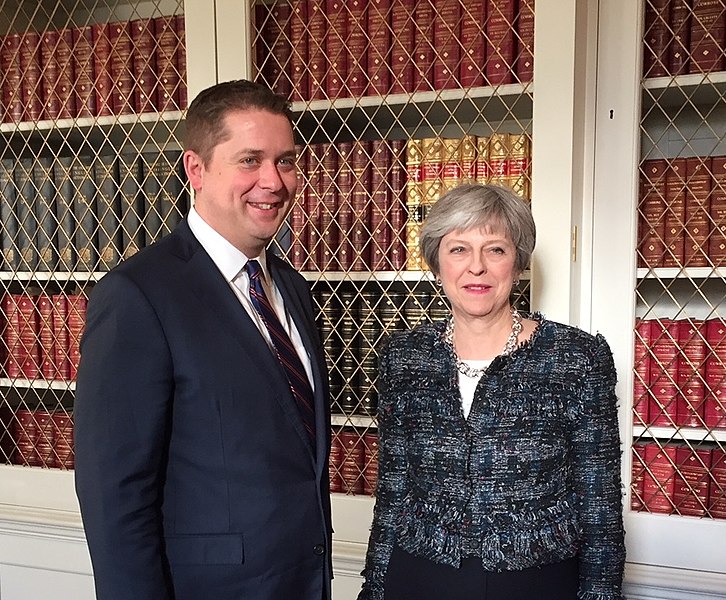
Andrew Scheer meets British Prime Minister Theresa May
Photo via Wikimedia Commons


