
German theatre director, dramatist, poet and theorist Bertolt Brecht in 1954.
Via Wikimedia Commons.
Nach dem Aufstand des 17. Juni
Ließ der Sekretär des Schriftstellerverbands
In der Stalinallee Flugblätter verteilen
Auf denen zu lesen war, daß das Volk
Das Vertrauen der Regierung verscherzt habe
Und es nur durch verdoppelte Arbeit
zurückerobern könne. Wäre es da
Nicht doch einfacher, die Regierung
Löste das Volk auf und
Wählte ein anderes?After the uprising of June 17th
The Secretary of the Authors’ Union
Had leaflets distributed in the Stalinallee
Which said that the people
Had forfeited the government’s confidence
And could only win it back
By redoubled labour. Wouldn’t it
Be simpler in that case if the government
Dissolved the people and
Elected another?Bertolt Brecht, 1953.
November 5, 2019
QotD: Die Lösung (The Solution)

Comments Off on QotD: Die Lösung (The Solution)
November 3, 2019
Alberta and the Liberals
Andrew Coyne summarizes the deep-seated anger in Alberta toward the federal Liberals … and the rest of Canada:

The point sometimes arrives in politics when a complex of different issues coalesce into one; when people stop listening to the arguments in favour of or against each, and instead allow their emotions to dictate a single response to the lot. We are at such a point in Alberta.
Pipelines, carbon taxes, equalization, the Canada Pension Plan — to which familiar litany we can now add the departure of Encana’s headquarters from Calgary — have become, not so much issues in themselves, but arguments in another, grander meta-controversy. All of the questions raised by each (is there a problem? if so, how is it to be solved? who pays? etc) have been pureed into a single narrative: of a Liberal government that is at best indifferent and at worst hostile to Alberta, whose re-election confirms the rest of Canada is as well.
There is, it should be said, some truth in this. Whether the Liberals have failed to win more than a handful of seats in Alberta in over a half a century because of their historic disdain for the province, or whether the causation runs the other way, the chicken is as malignant as the egg. There’s no doubt some people in some parts of the country would cheerfully shut down the oilsands tomorrow, nor is it impossible to detect a strain of anti-Albertanism in some of the rhetoric on the subject.
Albertans, for their part, are not just in a fight to defend their major industry today, but have been for decades. It is inconceivable, to take the most obvious example, that the National Energy Program, that vast attempt to expropriate Alberta’s oil wealth for the benefit of central-Canadian oil consumers, would have been visited upon either Ontario or Quebec, were the situations reversed.
Comments Off on Alberta and the Liberals
November 2, 2019
When entertainment morphs into propaganda
One of the key elements aiding Hitler and the NSDAP to take power and stay in power in Germany in the 1930s was the constant, ongoing propaganda campaign orchestrated by Joseph Goebbels. Hitler and the Nazi party were lauded as the perfect Germanic solution to every problem and Jews, socialists, homosexuals, and other undesireable elements were belittled and used as targets of hate. A big part of Goebbels’ propaganda revolved around one idea, the “Big Lie”:
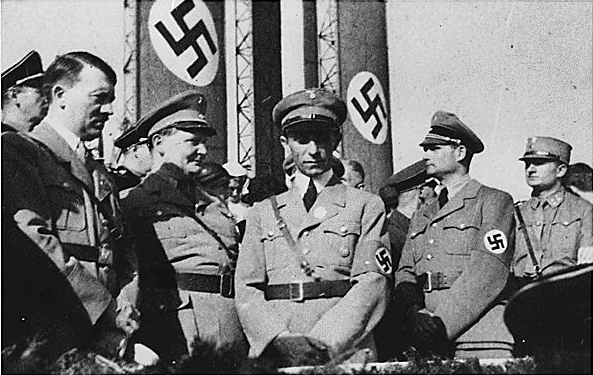
Hitler, Göring, Goebbels and Hess.
Photo via Wikimedia Commons.
If you tell a lie big enough and keep repeating it, people will eventually come to believe it. The lie can be maintained only for such time as the State can shield the people from the political, economic and/or military consequences of the lie. It thus becomes vitally important for the State to use all of its powers to repress dissent, for the truth is the mortal enemy of the lie, and thus by extension, the truth is the greatest enemy of the State.
By suppressing competing voices and having all the methods of reaching the people repeating the same story, the Nazis solidified their control on power in Germany that lasted until 1945, and was only demolished by massive military effort by the United States, the Soviet Union, and the British Commonwealth. Propaganda is a very powerful tool that works distressingly well to implant and nurture evil ideas in a subject population.
Modern propagandists in the west generally don’t have the power of the state aiding them, but if they get enough of the channels of communication — especially the entertainment channels — to co-ordinate the message, the effects can be very strong:
… I perfectly understand the legitimacy of feminist concerns regarding the portrayal of women in the media as consistently demure, retiring, and subservient to men. I grant that, in most of the action/adventure movies that I saw growing up, women would typically twist an ankle or get captured and then require rescuing by the swashbuckling male hero — and I realize how galling this must have been to generations of women. And therefore, a certain correction was undoubtedly in order. But what is problematic now is the Nietzschean quality of the reaction, by which I mean, the insistence that female power has to be asserted over and against males, that there is an either/or, zero-sum conflict between men and women. It is not enough, in a word, to show women as intelligent, savvy, and good; you have to portray men as stupid, witless, and irresponsible. That this savage contrast is having an effect especially on younger men is becoming increasingly apparent.
In the midst of a “you-go-girl” feminist culture, many boys and young men feel adrift, afraid that any expression of their own good qualities will be construed as aggressive or insensitive. If you want concrete proof of this, take a look at the statistics contrasting female and male success at the university level. And you can see the phenomenon in films such as Fight Club and The Intern. In the former, the Brad Pitt character turns to his friend and laments, “we’re thirty year old boys;” and in the latter, Robert De Niro’s classic male type tries to whip into shape a number of twenty-something male colleagues who are rumpled, unsure of themselves, without ambition — and of course under the dominance of an all conquering female.
It might be the case that, in regard to money, power, and honor, a zero-sum dynamic obtains, but it decidedly does not obtain in regard to real virtue. The truly courageous person is not threatened by another person’s courage; the truly temperate man is not intimidated by the temperance of someone else; the truly just person is not put off by the justice of a countryman; and authentic love positively rejoices in the love shown by another. And therefore, it should be altogether possible to hold up the virtue of a woman without denying virtue to a man. In point of fact, if we consult the “all conquering female” characters in films and TV, we see that they often exemplify the very worst of the traditional male qualities: aggression, suspicion, hyper-sensitivity, cruelty, etc. This is what happens when a Nietzschean framework has replaced a classical one.
My point is that it is altogether possible — and eminently desirable — to say “you go boy” with as much vigor as “you go girl.” And both the boys and the girls will be better for it.
Comments Off on When entertainment morphs into propaganda
November 1, 2019
The “Wokescreen” protecting the Prime Racist
Justin “Blackface” Trudeau has been completely exonerated for any racist acts he committed, thanks to what Julie Burchill calls “the Wokescreen”:
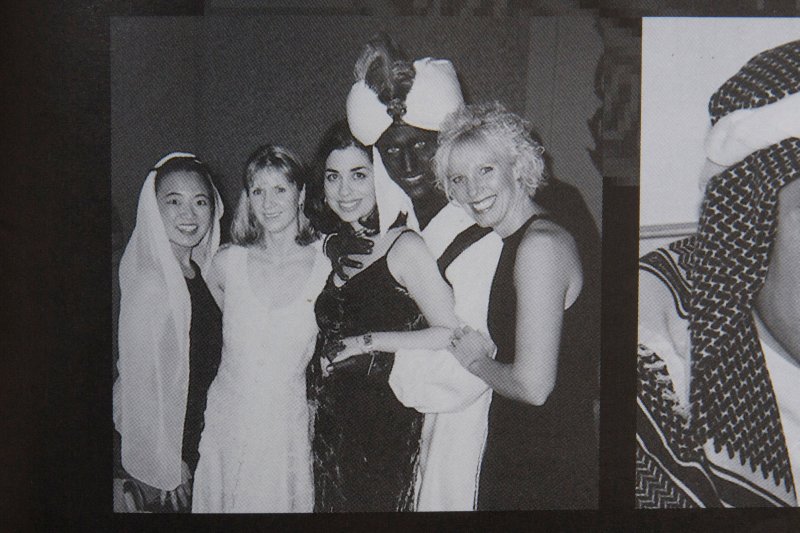
Justin Trudeau with dark makeup on his face, neck and hands at a 2001 “Arabian Nights”-themed party at the West Point Grey Academy, the private school where he taught.
Photo from the West Point Grey Academy yearbook, via Time
Justin Trudeau seems as compulsively drawn to blacking up as his mother was to hanging around pop groups; after the third example of him doing so was revealed this year, he admitted that he had actually lost count of the number of times he’d done it. Nevertheless, he was defended by minority spokesmen and liberal commentators. This contrasts strikingly with the fate of Atlantic Records UK president Ben Cook, who was forced to resign earlier this month after old photographs of him in blackface emerged. As Cook is responsible for launching the career of Ed Sheeran, some might say he had it coming. But it’s weird how Trudeau, an ostentatiously woke politician, has survived and thrived, while Cook has limped away in disgrace. You’d think the former had betrayed both his beliefs and his followers far more.
[…]
So how come Trudeau got away with it? It’s part of a broader dodge – what the commentator Daniel Norris calls the Wokescreen. From behind this magical canopy, cliques can rob women of their hard-won private spaces (transgender activists) and enjoy the brutish thrill of racism (Corbynite anti-Semites) and because they’ve ticked the box which says Brotherhood Of Man it doesn’t make them bad people! Those people over there are the bad ones – like Jacob Rees-Mogg’s 12-year-old son.
It’s a mystery. But an even bigger one is why blackface is quite rightly unacceptable while drag gets bigger by the day. You’d have to be living in an Amish community not to have heard of RuPaul’s Drag Race, while Channel 5’s Drag Kids follows a process which we squares call “grooming”. Yet no one turns a hair. I’ve said it before and I’ll say it again: if the Black and White Minstrels are insulting and reactionary, why aren’t drag queens? If someone can explain to me why race-based parody is bad and sex-based parody “a bit of fun”, I’d love to know. Woke me up and tell me why!
Comments Off on The “Wokescreen” protecting the Prime Racist
October 30, 2019
In case it wasn’t already obvious – “Extinction Rebellion isn’t about the climate”
One of the self-described founders of Extinction Rebellion takes to Medium to explain what the organization’s real goals are:
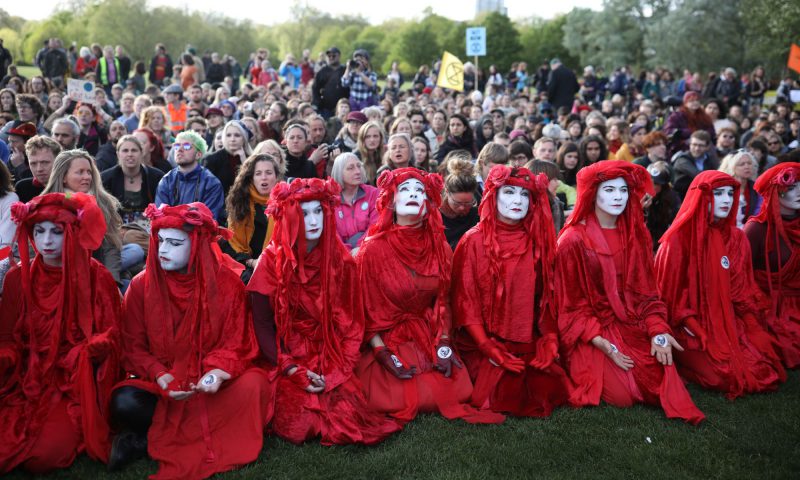
I’ve been with Extinction Rebellion (XR) from the start. I was one of the 15 people in April 2018 who came together and made the collective decision to try to create the conditions that would initiate a rebellion. I was a coordinator of one of the original five working groups, and I’ve been organising with XR day-and-night since then (frugally living off my savings so I don’t have to work, having quit an industry that paid me £1000/week). And I’ve been in RisingUp (the organisation from which XR has emerged) since the first RisingUp action in November 2016. I’m a RisingUp Holding Group member, and a member of the XR Guardianship Team.
And for the sake of transparency: that previous paragraph is all about me “pulling rank” — I’m trying to convince you to listen to what I have to say …
And I’m here to say that XR isn’t about the climate. You see, the climate’s breakdown is a symptom of a toxic system of that has infected the ways we relate to each other as humans and to all life. This was exacerbated when European “civilisation” was spread around the globe through cruelty and violence (especially) over the last 600 years of colonialism, although the roots of the infections go much further back.
[…]
So Extinction Rebellion isn’t about the climate. It’s not even about “climate justice”, although that is also important. If we only talk about the climate, we’re missing the deeper problems plaguing our culture. And if we don’t excise the cause of the infection, we can never hope to heal from it.
This article is calling to all of those who are involved in XR who sometimes slip into saying it’s a climate movement. It’s a call to the American rebels who made a banner saying “CLIMATE extinction rebellion”. It’s a call to the XR Media & Messaging teams to never get sloppy with the messaging and “reduce” it to climate issues. It’s a call to the XR community to never say we’re a climate movement. Because we’re not. We’re a Rebellion. And we’re rebelling to highlight and heal from the insanity that is leading to our extinction. Now tell the truth and act like it.
Comments Off on In case it wasn’t already obvious – “Extinction Rebellion isn’t about the climate”
QotD: Trotskyism
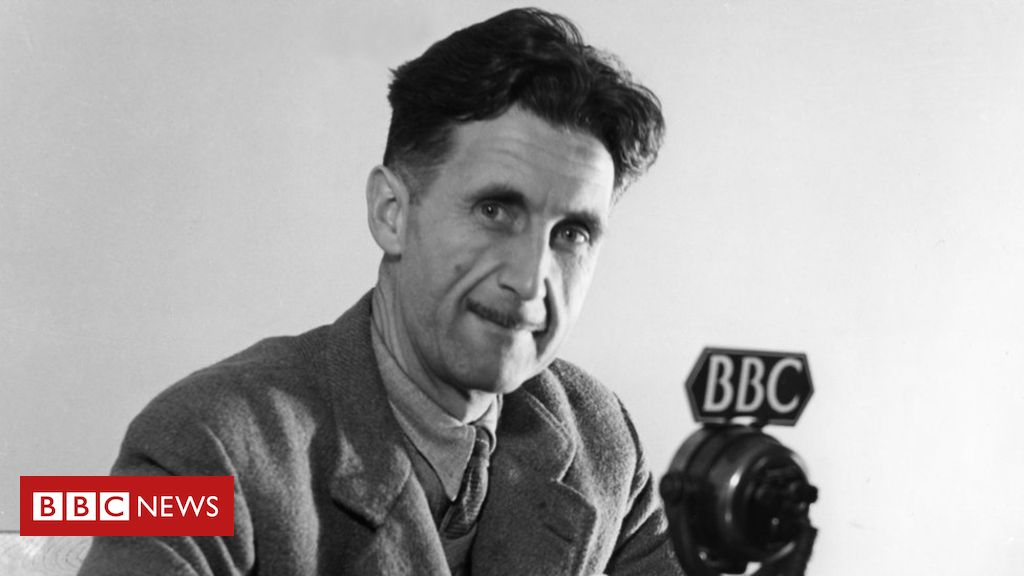
[The word “Trotskyist”] is used so loosely as to include Anarchists, democratic Socialists and even Liberals. I use it here to mean a doctrinaire Marxist whose main motive is hostility to the Stalin regime. Trotskyism can be better studied in obscure pamphlets or in papers like the Socialist Appeal than in the works of Trotsky himself, who was by no means a man of one idea. Although in some places, for instance in the United States, Trotskyism is able to attract a fairly large number of adherents and develop into an organised movement with a petty fuehrer of its own, its inspiration is essentially negative. The Trotskyist is against Stalin just as the Communist is for him, and, like the majority of Communists, he wants not so much to alter the external world as to feel that the battle for prestige is going in his own favour. In each case there is the same obsessive fixation on a single subject, the same inability to form a genuinely rational opinion based on probabilities. The fact that Trotskyists are everywhere a persecuted minority, and that the accusation usually made against them, i.e. of collaborating with the Fascists, is obviously false, creates an impression that Trotskyism is intellectually and morally superior to Communism; but it is doubtful whether there is much difference. The most typical Trotskyists, in any case, are ex-Communists, and no one arrives at Trotskyism except via one of the left-wing movements. No Communist, unless tethered to his party by years of habit, is secure against a sudden lapse into Trotskyism. The opposite process does not seem to happen equally often, though there is no clear reason why it should not.George Orwell, “Notes on Nationalism”, Polemic, 1945-05.
Comments Off on QotD: Trotskyism
October 29, 2019
Parallels between the current Brexit mess and the 1906 general election
Sean Gabb writes in the Libertarian Enterprise on the clusterfail in Parliament and an interesting historical parallel from the beginning of the 20th century:
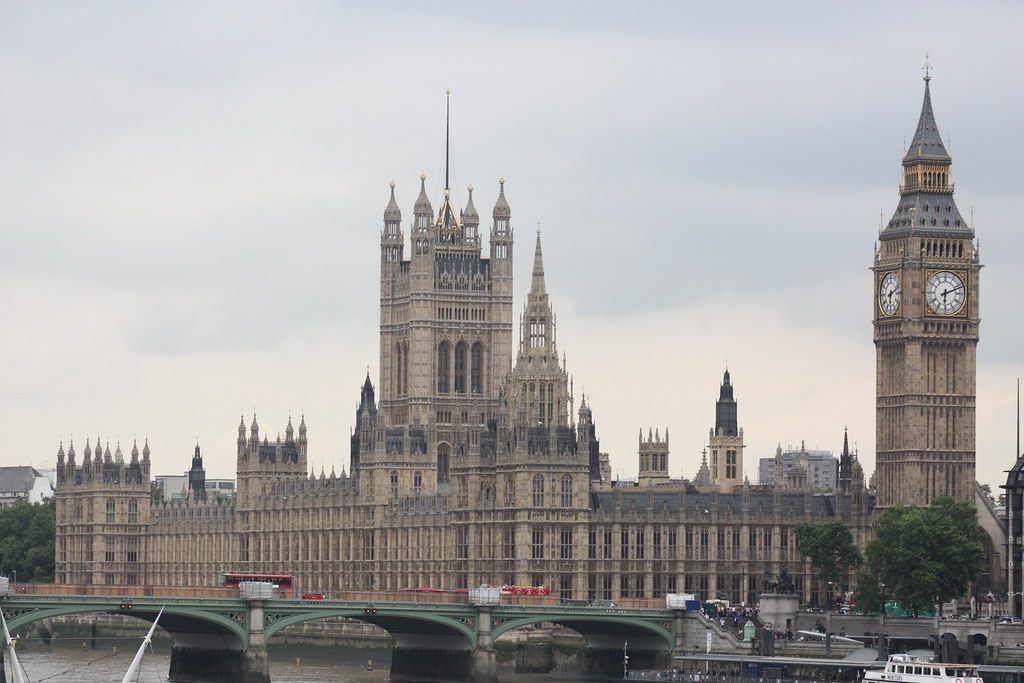
“Palace of Westminster”by michaelhenley is licensed under CC BY-NC-SA 2.0


… the Brexit debate that only began with the counting of the Referendum votes has been a valuable education. So far as it blurs the lines of accountability, membership of the European Union has been a useful entrenchment of our ruling class. It has also helped provide a mildly liberal and cosmopolitan gloss to a domestic project that has been anything but liberal. Its refusal to honour the Referendum has torn aside what remained of the democratic veil behind which power is exercised. These people are not our servants. They are a hostile elite. Their interests are not ours. They despise us. They fear us. They are determined not to give us even the shadow of what we were – perhaps unwisely – promised.
I have given a quotation from Chesterton. I am increasingly minded of parallels between his day and ours. In 1906, the Liberals won a large and unexpected majority in the House of Commons. They set about transforming the country on the lines they had been discussing since the end of their last majority government in 1885. In doing this, they faced a wall of resistance from the old ruling class. The Conservatives controlled the Law and education and most of the administration. They possessed the greatest mass of the national wealth. Above all, they dominated the House of Lords. They used their majority here to block the Liberal Government until such time as the people could be persuaded at the next election to bring back a Conservative Government.
Now, in that contest, I would have sided with the ruling class. I think England had a better future under the Conservatives than under the Liberals. I think most of the Liberal changes were bad. Moreover, the Conservative strategy showed some evidence of working. The Liberals lost a steady stream of by-elections — most notably Peckham in 1908. Then the Conservatives went too far. In 1909, the Liberals brought in a deliberately populist budget. The Conservatives broke more than two centuries of convention by voting this down in the Lords. This gave the Liberals their excuse. With the cry of “The People against the Peers,” they attacked the Conservatives in their most powerful stronghold. After two general elections in 1910, the Lords were stripped of their blocking veto. Of course, the Great War then changed everything. But it is reasonable to suppose that, had the Liberals won another election in 1915, most of the domestic changes that we blame on the War would have come about, if more slowly.
The lesson is that ruling classes often make strategic mistakes. Had the Conservatives before the Great War taken a more selective approach in their opposition, they might have won an election in 1911, and carried on with their own vision of the national future. As it is, they only lost the 1910 elections because the Liberals were able to rely on Labour and Irish support in the Commons. Because they overreached themselves, they eventually lost everything.
It may be the same now. Had our own ruling class pulled sad faces in 2016 and delivered a minimal Brexit — something like continued EEA membership and a Norwegian relationship — they might have put the issue to bed and continued riding us all to certain ruin. Instead, they went into a three-year filibuster, every so often drawing breath to suggest another referendum. The strategy appears to have failed. We may now have a more substantial Brexit than was intended. More to the point, the democratic veil has been torn aside. The continuing argument over Mr Johnson’s new Withdrawal Agreement is largely now unfinished business. The Agreement needs to be passed — but so we can go into a general election where the main issues will not be a new relationship with the European Union. These issues will be the nature and personnel of the country’s domestic government. I do not imagine that we shall become more “democratic.” But I can imagine that we shall find ourselves with a new ruling class that holds the mass of ordinary people in less vicious contempt.
Comments Off on Parallels between the current Brexit mess and the 1906 general election
October 28, 2019
The demonstrated need for “Clean Teen” fiction in the YA section
You don’t need to be a Bible-thumping traditionalist to be alarmed at what publishers are pushing into the Young Adult fiction market for teenagers and older pre-teens. There are themes and content choices that many parents would be unwilling to allow younger readers to encounter, but the criticisms are falling on deaf ears, as Megan Fox shows:

“New Spin on YA” by Salem (MA) Public Library is licensed under CC BY-NC-ND 2.0
It’s tough to find a book for pre-teens and teens without graphic sex and violence. The “Young Adult” section, which is marketed to kids from nine to seventeen, is full of stuff most parents would not want their children reading about. Because of it, sites like Common Sense Media, where you can see what kind of content is in the books before you let your kid read them, are very popular with parents. Parents and kids rate the books according to how much violence, sex, drug use, mature themes, and the like are in them. Librarians and the American Library Association are staunchly opposed to anyone categorizing books by content and liken it to censorship. They’re out of their minds. On one hand, they tell parents, “It’s up to you to direct your child’s reading,” but they offer no help in actually doing that by their refusal to mark books that contain adult content. And now that some websites are answering parents’ calls for innocent plotlines by offering “Clean Teen” selections, SJW authors, who think every child should have the sexual knowledge of Caligula, have their panties in a twist about it.
“If they’re named ‘Clean Teen’ novels what are the rest called? ‘Unwashed Teen’ ‘Trash Teen’ ‘Didn’t shower after soccer practice Teen’ ‘Say three Hail Mary’s in confessional Teen?'” said Zorri Cordova, a supposed author.
The far-left weirdos are never satisfied to corrupt their own children, they want your kids too. The American Library Association loves to take potshots at Common Sense Media. “These days, Common Sense Media’s initiatives contain a less than subtle paternalism based on the conviction that its values should control children’s learning experiences,” wrote Joyce Johnston on the ALA’s Intellectual Freedom Blog. They have no problem, however, controlling children’s learning experiences with their far-left values. For a laughable example, check out ALA’s LGBT initiatives.
Publisher’s Weekly wrote about this topic.
Kendra Levin at Simon & Schuster Books for Young Readers observes that “the meaning of ‘clean teen’ can depend on the context, but within publishing houses, I think it’s most often used to describe a buffer zone between middle grade and mature YA — books specifically geared toward the younger end of the teen spectrum. You could also call this young teen and 12-and-up YA, as opposed to 14 and up.
This suggests that 14-year-olds are ready for the Roman orgies and coke parties that are depicted in the majority of YA fiction these days (and yes, I’ve read them). I don’t know what planet these people are living on, but it’s starting to get to me. What is wrong with Little House on the Prairie? Oh yeah, Laura Ingalls Wilder has been branded a racist.
Comments Off on The demonstrated need for “Clean Teen” fiction in the YA section
October 26, 2019
The Frankfurt School and you
At Rotten Chestnuts, Severian suggests we consider the origins of a large part of modern progressive thoughts:
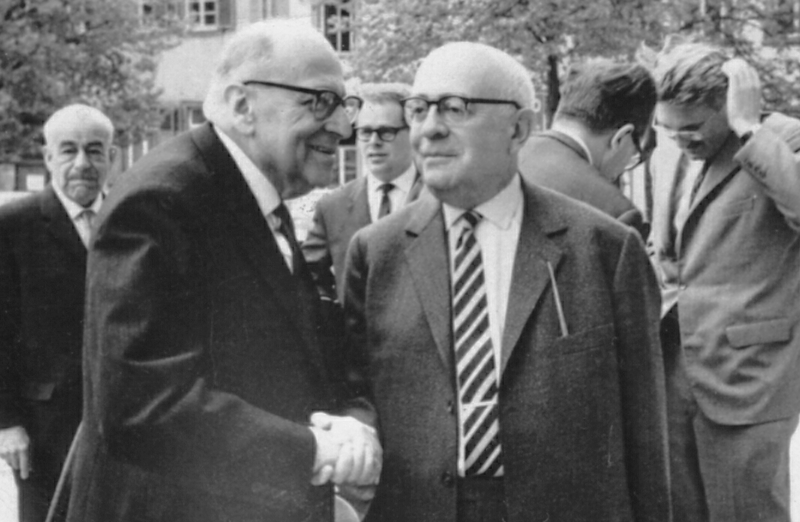
Notable members of the Frankfurt School in Heidelberg, April 1964 at the Max Weber-Soziologentag. Max Horkheimer is front left, Theodor W. Adorno front right, and Jürgen Habermas is in the background, right, running his hand through his hair. Siegfried Landshut is in the background left.
Photograph by Jeremy J. Shapiro via Wikimedia Commons.
It occurs to me that Our Thing ought to take a long, hard look at the Frankfurt School.
Those were the guys, of course, who pioneered the notion that their political opponents must be mentally ill. Given that
- all sane people are good; and
- good people only want good things; and
- Socialism is a good thing;
then
- anyone who doesn’t want Socialism wants a bad thing;
- therefore is a bad person;
- therefore is insane.
Anyone with the common sense God gave little catfish recognizes this as begging the question. And not particularly subtle question-begging, either, which is why it took over 1,000 pages (!) of ponderous Teutonic prose to disguise it. It’s science, comrades. Only Socialism, or a .38 to the back of the neck, will cure us …
… assuming, of course, that we want to be cured.
The Frankfurt Schoolers assumed this, of course, as did all those freelance critical theorists running the NKVD’s torture chambers. But that was then. The Frankfurt Schoolers were shockingly bourgeois on so many things. They thought homosexuality was a mental illness, if you can believe it, and I doubt even Herbert Marcuse would’ve signed off on “drag queen story hour,” let alone the state-mandated chemical castration of 6 year old boys. Only the peerless enlightenment of the Current Year recognizes this, comrades.
Comments Off on The Frankfurt School and you
A look into yet another dystopian future
This time, it’s Tom Slater looking at the parliamentary situation well into the future:

The year is 2051. An 87-year-old Boris Johnson is still prime minister, commanding a majority of minus 200 in the House of Commons.
The taxidermied remains of Jeremy Corbyn looks lairily at him each day from across the chamber.
The Liberal Independent Group for Anti-Democratic Change, formed by breakaway elements of the other parties in the great merger of 2020, is by far the largest bloc.
For some reason it has never found the “right time” to assert control of the Commons. But by some convoluted means it has successfully delayed some 187 attempts to hold a General Election.
The UK is still a member of the European Union. But no one else is. Long since collapsed, it is now just a portacabin outside the Mini-Europe miniature park in Brussels.
It employs one man, whose job it is to sweep up, sort the post, and respond to the United Kingdom’s periodic requests for an extension to Article 50.
Somehow, his expenses are exorbitant.
They say making predictions these days is a mug’s game. But I’m pretty sure that’s where we’re headed. Or rather, given the Kafkaesque turn British politics has taken, nothing could surprise me now.
PM Boris Johnson has offered the opposition the election they claim to have been craving, again, and they appear set to reject it, again.
Labour leader Jeremy Corbyn has indicated he will back a General Election once the European Union grants an extension to Article 50. But the EU is holding off on making that decision until MPs vote on the election.
You can see the problem here. But at least it will keep half of Corbyn’s parliamentary party happy, who are apparently dead-set against an election and would rather we go for a second Brexit referendum first.
Comments Off on A look into yet another dystopian future
October 25, 2019
Civil servants tend to be of the left … this should be no surprise to anyone
Arthur Chrenkoff on the political tendencies of people who work for the government:

The western front of the United States Capitol.
Photo via Wikimedia Commons.
You could believe the whole “protect[ing] the interests… of the American people” shtick if after all this time and the incalculable amount of energy and effort expended on bringing down the President, all those patriotic public servants have been able to show something – anything – for it. So instead of disinterested paragons of civic virtue, it increasingly looks like the federal bureaucracy is full of hard core progressives and liberals who can’t stomach a non-Democrat usurper who doesn’t share their values, ideas and objectives.
It’s not a shocking revelation that public service is overwhelmingly staffed by left-of-centre people. Government work attracts the left the same way that private sector and military attract the right. The left believes in the power of government to affect change and implement its vision. Even the spooks are no different. A couple of years ago I wrote briefly about the myth that the intelligence community is a hive of shady right-wing types. In reality, the CIA – just like the Department of Education – has always been a liberal institution. That so many people believe that the intelligence community is some sort of a vast-right wing conspiracy instead of another part of the liberal establishment, is a testament to the narrative power of the far-left, for whom indeed anyone to the right of selves is right wing, including everyone from John F Kennedy to Hillary Clinton.
Most public servants can be professional enough to work under any government, even if they would clearly prefer that government to be of the left – forever. But others can’t stomach working for people whom they believe not merely wrong but positively evil. The honourable thing to do in such circumstances, of course, is to resign; if you can’t in good conscience work to implement policies you strenuously object to, you should make room for someone who can. But why quit your often lucrative job and watch from the sidelines as the country is in your opinion going to hell in a hand basket, when you can stay on and try to sabotage the government and save the world? Thus you can convince yourself you are protecting the people, even if in reality it’s the people who voted in your new, unsavoury masters. It’s easy if you try; like so many others in the recent past you can argue that the people did not in fact elect the government, which is therefore illegitimate, or you can default to the standard left-wing position that the people don’t know what’s good for them, so their democratic choice as expressed at the ballot box has no decisive meaning. We know what’s best for everyone, hence taking a different position is equated to “the war on… expertise”.
It’s an interesting, if of course also self-serving theory, that public servants don’t work for the government of the day, but for “the people”. As Cottle’s logic demonstrates, it gives you a licence to essentially do whatever you want instead of what your political bosses tell you. The problem, as I mentioned above, is that “the people” don’t vote for bureaucrats, they vote for their elected representatives, based on which policy program they like best – or hate least. Seeing that we – still – live in a democracy, the people are given the opportunity to judge their politicians every few years. If they consider that their interests have been negatively affected by the executive’s excesses, they will vote somebody else in. The problem is that the progressives only like the people if the people agree with them. By and large, however, the people can’t be trusted; like children or mentally handicapped they need someone – like the government, or if the government is in hostile hands, the public service – to look after them. It’s the unspoken technocratic mantra and it justifies the existence of an in loco parentis state, deep or otherwise.
Comments Off on Civil servants tend to be of the left … this should be no surprise to anyone
October 24, 2019
QotD: “Binders full of women”
Which brings me to another Mitt Romney debate comment that received similar mockery and self-flattering giggling. During the second presidential debate in 2012, Romney was asked about pay equity. In the course of his answer, he said:
I had the chance to pull together a cabinet, and all the applicants seemed to be men … I went to a number of women’s groups and said, “Can you help us find folks?” and they brought us whole binders full of women.
Now, I’ll happily grant that the phrase “binders full of women” is an awkward one. It sounds like the menus they bring out on Jeffrey Epstein’s plane when Bill Clinton and Harvey Weinstein settle in for a weekend getaway.
But here’s the thing: What Romney did was exactly what feminist groups insist elected politicians should do. He saw that there were “too many” men in the applicant pool, so he reached out to some feminist groups and asked for help. Some feminist groups reached out to him — and he listened to them, too. And then he hired more women.
The monster!
Here’s Jon Stewart mocking him for it. Here’s Ronan Farrow. And here’s Bill Maher, a man who must be sweating like a hooker in church over Hollywood’s post-Weinstein zero-tolerance for piggishness toward women.
Jonah Goldberg, “Binders Full of Asininity”, National Review, 2017-10-13.
Comments Off on QotD: “Binders full of women”
October 21, 2019
“On Monday Canadians will have a choice between five left-of-centre social-democratic parties”
Except for Maxime Bernier’s invisible-to-the-mainstream-media PPC, the other parties contesting today’s election are all remarkably similar except for the colour of their signs and the mediocrity of their leaders:
As Mrs Thatcher used to say, first you win the argument, then you win the vote. So not engaging in any serious argument has certain consequences. John Robson puts it this way:
As Canada’s worst election ever staggers toward the finish line, a theme has finally emerged. Despite the best efforts of the party leaders to say nothing coherent or true at any point, we know what it’s about. Everyone is running against the Tories. Including the Tories. Makes you wonder what they’re so afraid of.
On Monday Canadians will have a choice between five left-of-centre social-democratic parties: the crony left (Liberals), the hard left (NDP), the eco-left (Greens), the secessionist left (Bloc) and the squish left (Conservatives). The only alternative to the crony-hard-eco-secessionist-squish social-justice statism on offer is a disaffected Tory, Maxime Bernier. John Robson again:
Bernier may be an imperfect human being and a flawed politician. It happens. But whatever his blemishes, his party exists because the Tories abandoned their beliefs and their base long before 2017 on every important conservative issue from free markets to traditional social values to strong national defence.
A billboard in Toronto, showing Maxime Bernier and an official-looking PPC message.
Photo from The Province – https://theprovince.com/opinion/columnists/gunter-berniers-legitimate-position-on-immigration-taken-down-by-spineless-billboard-company/wcm/ecab071c-b57d-4d93-b78c-274de524434cM Bernier would like to rethink immigration policy, but that makes him a racist so he shouldn’t be allowed in the debates because, per John Tory, while he’s free to rent the Scotiabank Arena, public buildings such as the CBC studios have a “higher responsibility”.
It’s a good thing for the other guys that Bernier was snuck in to a couple of debates because otherwise they’d be running against an entirely mythical beast — a red-meat conservative behemoth stomping the land for which there’s less corroborating evidence than of Justin in blackface but which is nevertheless mysteriously threatening to steamroller your social-justice utopia into the asphalt. Ah, if only that were true: I hope voters in the Beauce will return Max, and I hope our small band of readers in Longueuil-Saint Hubert will persuade their neighbours to turn out for our pal Ellen Comeau; but this is not shaping up as a breakthrough night for the People’s Party.
Nevertheless, sans Max, what’s left? Virtue-Dancing With The Stars: Elizabeth May says Trudeau wants to eliminate CO2 completely, but not until 2030! Justin Trudeau says that Scheer didn’t believe in gay marriage before 2005! Jagmeet Singh says that May’s selling out to the billionaires by promising to balance the budget by 2047, whereas he won’t balance the budget ever! Yves-François Blanchet says Singh’s ten-point plan to eliminate bovine flatulence by last Tuesday is too little too late compared to the Bloc’s plan to reduce Canada’s carbon footprint by declaring Quebec independent … oh, wait, sorry, that was almost an intrusion of something real: I meant “by declaring Quebec fully sovereign when it comes to jurisdiction over selecting its own pronouns for the door of the transgender bathroom: je, moi, mon …”
And at that point in the debate Lisa LaFlamme moves on to the next urgent concern of Canadian voters: Are politicians’ aboriginal land acknowledgments too perfunctory? Should they take up more time at the beginning of each debate? Say, the first hour or two?
John Robson argues that all five candidates are running against proposals that no one’s proposing because deep down inside they know that lurking somewhere out there is not a mythical right-wing Bigfoot but mere prosaic Reality, which sooner or later will assert itself. I’m not so sure. I think it’s more an enforcing of the ground rules, a true land acknowledgment that public debate can only take place within the bounds of this ever shriveling bit of barren sod. Those who want to fight on broader turf – such as M Bernier – cannot be permitted to do so.

Comments Off on “On Monday Canadians will have a choice between five left-of-centre social-democratic parties”
October 20, 2019
The conspiracy theorists appear to have been right about this one – “Project Cactus”
Maxime Bernier and the PPC would have had a tough time getting much attention in this election campaign anyway, but the Laurentian Elite were apparently scared enough to sponsor underhanded actions to keep him and his party out of the debates and on the defensive on social media:

Warren Kinsella’s Daisy Group consulting firm was behind a social media campaign to put the People’s Party of Canada on the defensive and keep leader Maxime Bernier out of the federal leaders’ debates, according to documents provided to CBC News.
The documents outline the work done by several employees of Daisy on behalf of an unnamed client. A source with knowledge of the project told CBC News that client was the Conservative Party of Canada.
The plan was first reported Friday night by the Globe and Mail.
According to a source with knowledge of the project, who spoke to CBC News on condition they not be named, the objective of the plan, dubbed “Project Cactus,” was to make the Conservative Party look more attractive to voters by highlighting PPC candidates’ and supporters’ xenophobic statements on social media.
The source added that Daisy employed four full-time staffers on Project Cactus at one time.
Kinsella is a lawyer, anti-racism activist and former Liberal strategist who has been a vocal critic of Liberal Leader Justin Trudeau.
[…]
In a statement to CBC News on Friday, the executive director of the PPC said “It hardly comes as a surprise that the Conservative Party of Canada would be behind such disgraceful and cowardly tactics.”
“As our Leader Maxime Bernier stated when he left the CPC and repeated on numerous occasions since then, they are ‘morally and intellectually corrupt.’ And today, this story proves it without a doubt,” Johanne Mennie said in an email.
Comments Off on The conspiracy theorists appear to have been right about this one – “Project Cactus”
Disruptive, theatrical “protests” are coming to the end of their usefulness
As I’ve said in comments on a few posts at other sites, the people who stage “protests” that block access to roads, railway stations, public buildings, and hospitals depend on the reactions of the people being mild, civilized, calm, and peaceful. But the more often these sorts of antics are performed, the thinner that veneer of civilization gets worn. At some point, and sooner than the organizers may realize, the veneer is gone and instead of peaceful commuters you’re disrupting, it’s a mob … and mobs don’t obey civilized rules like “thou shalt not kill”:

Those two were lucky that there was still some restraint being felt by the commuters. But it’s a clear warning sign that may not be attended to:
Extinction Rebellion, though it professes to be anti-Establishment, embodies the left-liberal values of the current Establishment hegemony.
That]s why rarely, if ever, will you hear anyone in government criticising Extinction Rebellion’s ideology, only its methods.
Then again, as one Conservative Brexiteer once told me, you can only fight a war on so many fronts. “Of course I know the whole climate change thing is bollocks,” he said – or words to that effect. “But I can only marshal my forces for one major battle at a time and that battle right now is Brexit.”
That’s how politicians have to think, it’s the nature of politics. Even the great Donald Trump has to play by these rules: look, for example, at how he has chickened out of having a red-team/blue-team scientific debate on global warming.
Happily, though, ordinary people are not constrained by such rules. There comes a point where they simply say to themselves:
“Sod this for a game of soldiers. I really don’t care whether what I’m about to do is wise or expedient or even legal, come to that. I’m just sick to the back teeth of what’s happening to my country. It’s wrong. It feels wrong. And if the system that is supposed to look after the interests of decent, law-abiding, productive citizens will no long protect the interests of decent, law-abiding, productive citizens then I guess I’ll have to take the law into my own hands.”
Which is exactly what happened at Canning Town Station in the East of London this week.
For months, on and off, Extinction Rebellion activists have been playing havoc with the lives of ordinary people who thought the law was supposed to protect them and their livelihoods from the kind of direct action that Extinction Rebellion and its apologists keep reassuring us is peaceful and in our best interests.
Grudging tolerance has gradually given way to a simmering sense of injustice: “How can it be”, ordinary folk have started to wonder, “that these privileged wanktards with their pointless degrees in Environmental Sciences and Advanced Poi are free to build pyramids at Oxford Circus and block Westminster Bridge when if I tried it I’d get myself chucked in jail?”
That simmering sense of injustice is now erupting into acts of rebellion — real rebellion, not Extinction Rebellion’s state-protected faux-rebellion — like the one in Canning Town Station.
Something very similar is happening with people’s feelings about Brexit: “How can it be right that we live in democracy which refuses to honour a popular vote? Surely honouring a popular vote is the most basic requirement. And if it doesn’t do that, then democracy has failed and we need to start looking at other ways of making our feelings known.”
Comments Off on Disruptive, theatrical “protests” are coming to the end of their usefulness


