Quotulatiousness

August 1, 2019

“People in Ottawa don’t invoke PMO frequently or lightly. It is done to intimidate and obtain compliance”

Filed under: Bureaucracy, Cancon, China, Government, Politics — Tags: , , , , — Nicholas @ 03:00

What we’re not allowed to know can’t hurt us … the federal government apparently figures that no charges can be contemplated if there’s no investigation allowed:

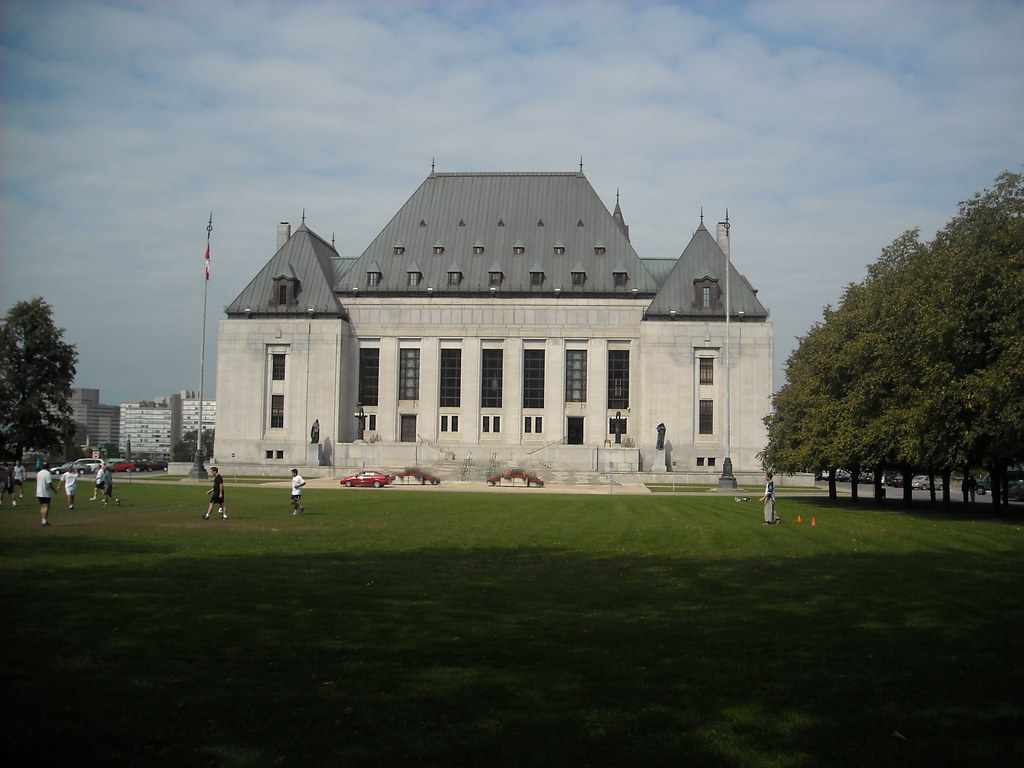
Parliament Hill in Ottawa.
Photo by S Nameirakpam via Wikimedia Commons.

Before colleagues voted to quash a review of whether the Liberal government acted improperly after a bureaucrat asked former ambassadors to temper public comments about China, Liberal MP Rob Oliphant told Parliament’s Foreign Affairs committee that he’s “distressed”.

Apparently, he was not distressed about a Foreign Affairs assistant deputy minister being asked to “check-in” on two former Canadian diplomats to China before making future pronouncements on Canada’s shambolic relations with the communist regime.

Oliphant’s also not distressed about the troubling optics that either diplomat – David Mulroney and Guy Saint-Jacques – felt The Globe and Mail should be aware of their reservations about said interactions, which the paper reported last week.

“I am very distressed, at the tone, at the idea and at the allegations that are being cast about by members of the opposition,” Oliphant, Parliamentary Secretary to the Minister of Foreign Affairs and non-voting member, claimed at the committee’s emergency meeting Tuesday.

Oliphant’s claim comes after either diplomat says the department’s ADM Paul Thoppil told them his call was at the behest of the PMO. Both Prime Minister Justin Trudeau and Foreign Affairs Minister Chrystia Freeland have denied they directed such outreach.

Mulroney, who had earlier warned about travel to China following the detention two Canadians there in December of last year, told the Globe that Thoppil cited the “election environment” and asked him to contact the department before making future statements.

“It wasn’t, in my view, so much an offer to consult and share ideas as to ‘get with the program’. People in Ottawa don’t invoke PMO frequently or lightly. It is done to intimidate and obtain compliance,” Mulroney is quoted as saying.

Saint-Jacques told the Globe that his conversation with Thoppil differed somewhat, “But I can understand that one could come to that conclusion when they say we should speak with one voice.”

July 31, 2019

All Art Is Propaganda: Christopher Hitchens on George Orwell – George Packer Interview (2009)

Filed under: Books, Britain, History, Liberty, Politics — Tags: , , , , — Nicholas @ 04:00

The Film Archives
Published on 27 Jan 2014

George Packer (born August 13, 1960) is an American journalist, novelist, and playwright.

He is perhaps best known for his writings for The New Yorker about U.S. foreign policy and for his related book The Assassins’ Gate: America in Iraq.

Packer was born in Santa Clara, California. Packer’s parents, Nancy (née Huddleston) and Herbert Packer, were both academics at Stanford University; his maternal grandfather was George Huddleston, a congressman from Alabama. His sister, Ann Packer, is also a writer. His father was Jewish and his mother was from a Christian background. Packer graduated from Yale College, where he lived in Calhoun College, in 1982, and served in the Peace Corps in Togo. His essays and articles have appeared in Boston Review, The Nation, World Affairs, Harper’s, The New York Times, and The New Yorker, among other publications. Packer was a columnist for Mother Jones and has been a staff writer for The New Yorker since May 2003.

Packer was a Holtzbrinck Fellow Class of Fall 2009 at the American Academy in Berlin.

His book The Assassins’ Gate: America in Iraq analyzes the events that led to the 2003 invasion of Iraq and reports on subsequent developments in that country, largely based on interviews with ordinary Iraqis. He was a supporter of the Iraq war. He was a finalist for the 2004 Michael Kelly Award.

He is married to Laura Secor and was previously married to Michele Millon.

Books

The Village of Waiting (1988). New York: Farrar, Straus and Giroux (1st Farrar edition, 2001). Pb. ISBN 0-374-52780-6
The Half Man (1991). Random House ISBN 0-394-58192-X
Central Square (1998). Graywolf Press ISBN 1-55597-277-2
Blood of the Liberals (2000). Farrar, Straus and Giroux ISBN 0-374-25142-8
The Fight is for Democracy: Winning the War of Ideas in America and the World (2003, as editor). Harper Perennial. Pb. ISBN 0-06-053249-1
The Assassins’ Gate: America in Iraq (2005) Farrar, Straus and Giroux 2005 ISBN 0-374-29963-3
Betrayed: A Play (2008) Faber & Faber
Interesting Times: Writings from a Turbulent Decade (2009). ISBN 978-0-374-17572-6
The Unwinding: An Inner History of the New America (2013). ISBN 978-0-374-10241-8

Articles

Packer, George (28 September 2009). “A Reporter at Large: The Last Mission”. The New Yorker 85 (30): 38-55. [Richard Holbrooke’s plan to avoid the mistakes of Vietnam in Afghanistan].
Packer, George (15 March 2010). “A Reporter at Large: Obama’s Lost Year”. The New Yorker 86 (4): 40-51.
Packer, George (12 September 2011). “A Reporter at Large: Coming Apart”. The New Yorker. [An assessment of the post 9/11 decade]
Packer, George (27 May 2013). “A Reporter at Large: Change the World”. The New Yorker.

http://en.wikipedia.org/wiki/George_P…

Federal NDP and Greens duel on climate platforms

Filed under: Cancon, Economics, Environment, Politics — Tags: , , , , — Nicholas @ 03:00

Colby Cosh looks at the two most environmentally conscious federal parties’ climate change stances as we head into the next general election:

Federal NDP leader Jagmeet Singh taking part in a Pride Parade in June 2017 (during the leadership campaign).
Photo via Wikimedia.

So why are our most radical, eco-aware parties so easily distracted on this front? Jagmeet Singh’s New Democrats talk tough on climate change in their “Power to Change” plan. It is maximum urgency right out of the gate in the preamble. “People across Canada are worried about the future.” True enough! They usually are! “Flooding and forest fires are threatening our homes.” Well, speak for yourself, but OK. “Polluted air and water are hitting communities hard.” Wait, polluted water…? Wasn’t this supposed to be a climate change thing? “And rising temperatures are threatening our farming and forestry industries.” Oh, good, back on track! “It’s clear there’s no time to waste.”

There is a whole load of radical measures in the NDP program, but they cannot resist this tendency to drag in grace notes of economic nationalism and other subjects at best vaguely related. They promise to “make it easier to own a zero-emission vehicle” in Canada, which might help with the Big Problem, but in mid-sentence they remember that they’re in hock to organized labour and add “and make sure those cars are made in Canada.” This means that if the price of a Tesla comes down to $500 tomorrow, you’ll still have to buy the carbon-neutral modern equivalent of a Bricklin, assuming someone can be found to try building one. Shouldn’t we be willing to buy zero-emission vehicles from Zanzibar or Antarctica if that’s the most efficient way, or the only way, to upgrade the fleet?

The document also smuggles in a promise to eliminate single-use plastic products, which take carbon from the bowels of Mother Earth and… restore it thither in landfills, with the evil molecules usefully imprisoned in polymer chains. We’ll be replacing all that plastic, presumably, with metal cutlery (from mines) and cloth bags (from forests) that have to be washed in hot water if you happen to be particular. There is no hint that this is an incongruous or irrelevant part of a climate-change plan.

So, perhaps a bit of mixed messaging there, as the NDP have to trim their sails in odd ways to keep some of their constituencies in line. How about the Green Party then?

Green Party of Canada leader Elizabeth May with Green candidate Christ Tindal in 2008.
Photo by Shaun Merritt via Wikimedia Commons.

The Green list of climate-change policies is much more radical and earnest in appearance; Elizabeth May’s political liquidators intend to abolish internal-combustion vehicles by 2040 (such dates are no longer sci-fi, oldies) and retrofit every single building in the country for carbon neutrality by 2030.

But what, as the University of Alberta energy economist Andrew Leach asked in a CBC editorial on Monday, is this about “ending all imports of foreign oil”? This autarkic flake out flies in the face of the Greens’ entire approach; some of the oil we produce here is (please imagine me whispering this part) somewhat carbon-intensive relative to the stuff Eastern Canada takes from elsewhere in the world. Moreover, increasing use of domestic oil even in the short term implies a pretty major program of, uh, pipeline-building.

Not to mention the new refineries. The Green Climate Change War Cabinet (a real thing they want) would permit “investment in upgraders to turn Canadian solid bitumen into gas, diesel, propane and other products for the Canadian market, providing jobs in Alberta.” By 2050, they envision shifting “all Canadian bitumen from fuel to feedstock for the petrochemical industry.” This adds up to an awful lot of subsidized high-tech construction — executed at the same time as a total retrofit of the national housing stock! — that has nothing much to do with reducing emissions per se. Although it sounds as though the Greens are, if nothing else, definitely much bigger fans of plastic than the New Democrats.

July 30, 2019

Mark Steyn: Boris Johnson is “Bertie Wooster with Jeeves’ brain”

Filed under: Britain, Politics — Tags: , , , , — Nicholas @ 03:00

The new British PM is quite different from anyone else inhabiting Number 10 in my lifetime, certainly:

Prime Minister Boris Johnson at his first Cabinet meeting in Downing Street, 25 July 2019.
Official photograph via Wikimedia Commons.

… unlike most media or entertainment figures who progress into politics, Boris has not abandoned his old self — for the very good reason that it’s a hit persona: The great-grandchild of Jews, Muslims and a distant cousin of the Queen, he invented himself in his teens as what his Oxford chum (and another old editor of mine) Toby Young calls a Wodehousian buffer — one might say a Drones Club character, were it not for the fact that he is not, as it happens, terribly clubbable.

It was a canny choice of shtick: It duped the left and half of the right into dismissing him as a buffoon. And, even more cleverly, chuntering his way around the country as a toff with a massive thesaurus gave him, somewhat counter-intuitively, the common touch. The famous image of him stuck on the zipline in a beanie-like helmet waving plastic Union Jacks is so ingeniously endearing one assumes he paid them to stall the thing — because a failed photo-op is way less tedious than one that goes off like clockwork.

This is the genius of the act: He’s Bertie Wooster with Jeeves’ brain. Out on the street, he’s everybody’s friend; among his actual alleged friends, he’s utterly ruthless: Within twenty-four hours of entering 10 Downing Street, he’d pulled off the bloodiest cabinet reshuffle of “modern times”, as the papers say — although actually I can’t think of a bloodier one even from non-modern times. (Only four members of the May regime were retained: Michael Gove, Amber Rudd, Baroness Evans and Matt Hancock.)

Is he a nice person? Well, he’s left an awful lot of human wreckage in his wake. Some of the women he’s used and discarded seem to me, without naming names, to be sad and profoundly damaged from their brief intersection with his wandering zipper. His latest squeeze seems likely to be moving into Number Ten without benefit of clergy – a first for the Tories and a sign of how desperate they are after years of letting all the sober, serious, earnest types turn their party into a laughingstock.

What does he believe in? Other than himself, not terribly much. About a decade ago, I was in London for a couple of days and had lunch with him and Stuart Reid at a favorite Italian restaurant. Stuart was the deputy editor who did all the hard grind at the Speccie, while Boris was the great fizzing impresario fronting the operation — a business model he transferred successfully into his mayoral regime, and will no doubt be trying again in Downing Street. He was going on the BBC’s “Question Time” that night and was worried that he didn’t have anything sufficiently arresting to say, so asked if I had any tips. I gave him a few thoughts on the passing scene, and he considered them not in terms of his own public-policy positions (if any) but in terms of attitudinal cachet. Finally, I said, “Why don’t you really stir them up and put in a word for social conservatism?”

“You mean abortion and all that? Oh, God..,” he sighed, and ordered dessert.

If that seems to be (for self-interested reasons) his most firmly drawn red line, don’t nevertheless overstate his ideological flexibility. Like Boris, Theresa May schemed and maneuvered for decades to reach the top spot … and, by the time she pulled it off, she’d spent so much time and effort on the scheming and maneuvering that she had no idea of what to do once she got there. Boris is likewise invested in himself, but, having reached the finial of Disraeli’s greasy pole, he doesn’t intend to be just the latest seat-filler. Mrs May wanted to be prime minister; Johnson wants to be a great and consequential prime minister.

On another brief pop-in from the thirteenth century, David Warren also takes note of the new British PM:

It has come to my attention that Britain has a new prime minister, BoJo the Clown (known to his friends as “Alexander Boris de Pfeffel Johnson”). I gather Mrs Maybe, previously raised to that office under some gender equality programme I suspect, didn’t work out. Mr BoJo has already been criticized for having unkempt blond hair (and small eyes, I have noticed). Too, he was educated at Oxford University, which is still somewhat élite. He was able to use the word anaphora in a sentence (here), and shares with Churchill (and Trump) an ebullience, a buoyant exuberance, that his enemies invariably discount to their cost. He is a reminder that one man (and I have named three) can change the course of history, and the fate of nations.

Not necessarily for the better, of course.

Jacob Rees-Mogg, Member of Parliament for North East Somerset, is suddenly elevated from the backbenches to the front bench; from persistent articulate rearguard rebel, to House Leader in the Mother of Parliaments; and, Lord President of the Council.

Born to rule (the son of an editor of The Times), the now right honourable gentleman stands as a throwback to 1529, when the last indigenous Catholic was appointed to that office. (Though I am not entirely clear what were the Privy Council arrangements under Good Queen Mary, before the return to Erastian apostasy under Bad Queen Bess.)

Not merely a Conservative but a member of the party’s (“Faith, Flag, and Family”) Cornerstone Group, and a diligently practising Roman Catholic with forty children or so, Rees-Mogg has already made a mark in his new rôle, by imposing rules of civility upon the Tory caucus. He was able to do so while characteristically exhibiting them, in a talk that kept everyone in stitches.

Mr BoJo, too, was christened a Catholic, though it has not so far had much effect. He has rabbinical Jewish and infidel Turk antecedents, too, and learnt Anglican hymns at Eton. He is thus a kind of one-stop shop for nominal Abrahamic associations, but to the point, the Orangemen of Ulster are already calling him “England’s first Catholic prime minister” — and what’s good enough for Belfast is good enough for me.

July 29, 2019

Erasing the past, statue by statue, plaque by plaque

Alexander Adams on the deliberate sabotage of historical monuments in pursuit of a more perfect (i.e., imaginary) past:

End of the Trail by James Earle Fraser, located in Waupun, Wisconsin.
Photo by Shawn Conrad via Wikimedia Commons.

In the wake of recent attempts – some successful – to have Confederate statues removed from the US south, what is the future of colonialist statues in the US west? In Pioneer Mother Monuments: Constructing Cultural Memory, Cynthia Culver Prescott, a professor of history at the University of North Dakota, senses a reluctance to apply to pioneer monuments the ideological zeal that was turned on Confederate memorials. “We resist applying the insights of settler colonial studies to American pioneer narratives because to do so would call into question foundational myths of Jeffersonian agrarianism and American exceptionalism, and lay bare white conquest of native lands and peoples.” She outlines the cases against statues of colonialists, and particularly against female settlers, who took part in the drive to colonise the American west in the 19th century.

Statues depicting women have been criticised by academics and campaigners for being idealising, inaccurate, generalising and stereotypical. There is a sense that campaigners direct such ire at statues of women settlers not just because they embody sexism and colonialism but because they show women as complicit in the act of dispossessing native peoples. There is a residual resentment that – in intersectional terms – a political minority took part in a project to oppress another minority.

The creation of monuments honouring white settlers of the west began in earnest in the 1890s. As the American western frontier was closed and territories became part of the United States, a chapter of national history had been definitively closed, too. Just under 190 monuments have been erected in the US since the 1880s marking pioneer achievements. It was a way of fixing in collective memory the achievements of forebears just at the moment their stories were becoming history. The western territories had been spared the scourge of the Civil War, and its new states had a history that involved war with Mexico, the persecution and flight of the Mormons and the Indian Wars.

In the statuary, common types emerged. Women were the prairie Madonna, the protective mother, the Indian guide leading the way, the nuclear family. Men were resolute fathers, the epitome of bravery and stoic defiance. Competitions, touring exhibitions, newspaper features and book publications circulated them, encouraging other communities to commission similar statues. Alexander Phimister Proctor’s statue of a male pioneer was an acceptable manifestation of the conquering of the west. Bearded and dressed in buckskin clothing, the pioneer wears European boots and carries a rifle. He straddles the wisdom of the natives and the technological superiority of settlers, explaining how the west was won through a combination of old knowledge and new materials.

Culver Prescott notes the example of James Earle Fraser’s sculpture The End of the Trail (1890s), which depicted an exhausted American Indian on a tired pony. Fraser had apparently developed a deep sympathy for native peoples after witnessing an army eviction. It seems the sculptor intended to elicit sympathy for evicted Indians, yet it was interpreted by contemporary observers as a scene of the sad but necessary extinction of a primitive indigenous people, conforming to the social Darwinist reading of history, in which advanced people defeat and displace inferior peoples. This is an object lesson in the variety of interpretations an artwork can elicit, regardless of artistic intent. It should alert today’s social-justice warriors to the dangers of misinterpreting public art and the risk of suppressing art on the basis of misapprehension.

July 28, 2019

With the SNC-Lavalin affair fading from memory, Justin Trudeau looks set for the fall election

Filed under: Cancon, China, Media, Politics — Tags: , , , , , , — Nicholas @ 03:00

They say that memories are short in politics, but this short? Thanks largely to the dog days of summer and a complicit media desperate for more government subsidies, Justin Trudeau and the Liberals are being allowed to shed the scandal-tainted skin of four whole months ago to emerge glistening and new with election promises galore. Democracy dies in government subsidies, apparently.

On the other hand, perhaps Canadian voters’ memories will last long enough to get past the casting of ballots in October:

Supposedly, the Liberals have put the SNC-Lavalin scandal behind them: the polls have rebounded, the media have moved on, while the company has worse problems to deal with than a mere hair-raising multi-million-dollar corruption charge.

Even the return of Gerry Butts, the prime minister’s former principal secretary, albeit in a part-time, temporary, what-are-friends-for capacity as adviser to the party’s election campaign, seems to have caused little stir, although he was one of two senior government officials to resign over their part in the affair.

Perhaps the Liberals have concluded the passage of time is enough to earn them a pass from the public. I mean this all took place, what, four months ago? Who even remembers that far back?

But as recent events have shown, the same ingredients that combined to produce the SNC-Lavalin scandal — hubris, a maniacal desire to run everything from the centre, and an unwillingness, in all this overweeningness and control-freakery, to be bound by basic legal and procedural norms — remain very much in place in the prime minister’s office.

For starters, there is the affair of the two ex-ambassadors. First, David Mulroney, Canada’s ambassador to China from 2009 to 2012, then his successor, Guy Saint-Jacques, reported a senior official in the Global Affairs department had called them to demand they clear any public comments on the government’s policy towards China with the government.

Both men are now private citizens. Both have been critical of the government’s handling of the China file. Unlike the most recent former ambassador, former Liberal cabinet minister John McCallum, neither has framed his comments on Sino-Canadian relations in terms of what would assist in the re-election of the Liberals. Apparently, that was the problem.

The official, assistant deputy minister Paul Thoppil, claimed to be speaking on behalf of the PMO and explicitly cited “the election environment” as a reason to shut up. Oh, also the current state of “high tension” between the two countries, presumably over China’s seizure of two Canadians as hostages, which supposedly made it essential for everyone in Canada, whether in the government’s employ or not, to “speak with one voice,” i.e., refrain from criticizing the government.

As a China policy, this has the advantage of closely resembling the Chinese way of doing things. It’s hard to say which is the more extraordinary: the notion that private citizens should be compelled to clear their criticisms of the government with the government, or the notion that they could be.

July 27, 2019

“[T]he more educated a Democrat is … the less he or she understands the Republican worldview”

Filed under: Education, Politics, USA — Tags: , , , , , — Nicholas @ 03:00

Last week in the Guardian, Arlie Hochschild explained some of the mutual incomprehension of US Democrats and Republicans based on a recent study:

In a surprising new national survey, members of each major American political party were asked what they imagined to be the beliefs held by members of the other. The survey asked Democrats: “How many Republicans believe that racism is still a problem in America today?” Democrats guessed 50%. It’s actually 79%. The survey asked Republicans how many Democrats believe “most police are bad people”. Republicans estimated half; it’s really 15%.

The survey, published by the thinktank More in Common as part of its Hidden Tribes of America project, was based on a sample of more than 2,000 people. One of the study’s findings: the wilder a person’s guess as to what the other party is thinking, the more likely they are to also personally disparage members of the opposite party as mean, selfish or bad. Not only do the two parties diverge on a great many issues, they also disagree on what they disagree on.

This much we might guess. But what’s startling is the further finding that higher education does not improve a person’s perceptions – and sometimes even hurts it. In their survey answers, highly educated Republicans were no more accurate in their ideas about Democratic opinion than poorly educated Republicans. For Democrats, the education effect was even worse: the more educated a Democrat is, according to the study, the less he or she understands the Republican worldview.

“This effect,” the report says, “is so strong that Democrats without a high school diploma are three times more accurate than those with a postgraduate degree.” And the more politically engaged a person is, the greater the distortion.

What could be going on? Bubble-ism, the report suggests. Even more than their Republican counterparts, highly educated Democrats tend to live in exclusively Democratic enclaves. The more they report “almost all my friends hold the same political views”, the worse their guesses on what Republicans think.

So do they believe in sticking with their own? No. When asked in a Pew survey whether it’s important to live in a place “where most people share my political views”, half of conservatives and only a third of liberals agreed. Although in principle more tolerant of political diversity, highly educated – and mostly urban – Democrats live, ironically, with less of it.

Take the quiz or see more of the results here.

July 26, 2019

The young Boris Johnson at Oxford

Filed under: Britain, Education, Politics — Tags: , , — Nicholas @ 05:00

Toby Young recounts his first encounter with the new Prime Minister of the United Kingdom at Oxford in 1983:

Boris Johnson, Secretary of State for Foreign and Commonwealth Affairs at an informal meeting of the Foreign Affairs Council on 15 February 2018.
Photo by Velislav Nikolov via Wikimedia Commons.

I first set eyes on Boris Johnson in the autumn of 1983 when we went up to Oxford at the same time. I knew who he was since my uncle Christopher was an ex-boyfriend of his mother’s and he had told me to keep an eye out for him, but I still wasn’t prepared for the sight (and sound) of him at the dispatch box of the Oxford Union. This was the world famous debating society where ambitious undergraduates honed their public-speaking skills before embarking on careers in politics or journalism, and Boris was proposing the motion.

With his huge mop of blond hair, his tie askew and his shirt escaping from his trousers, he looked like an overgrown schoolboy. Yet with his imposing physical build, his thick neck and his broad, Germanic forehead, there was also something of Nietzsche’s Übermensch about him. You could imagine him in lederhosen, wandering through the Black Forest with an axe over his shoulder, looking for ogres to kill. This same combination — a state of advanced dishevelment and a sense of coiled strength, of an almost tangible will to power — was even more pronounced in his way of speaking.

He began to advance an argument in what sounded like a parody of the high style in British politics — theatrical, dramatic, self-serious — when — a few seconds in — he appeared to completely forget what he was about to say. He looked up, startled — Where am I? — and asked the packed chamber which side he was supposed to be on. “What’s the motion, anyway?” Before anyone could answer, a light bulb appeared above his head and he was off, this time in an even more orotund, florid manner. Yet within a few seconds he’d wrong-footed himself again, this time because it had suddenly occurred to him that there was an equally compelling argument for the opposite point of view. This endless flipping and flopping, in which he seemed to constantly surprise himself, went on for the next 15 minutes. The impression he gave was of someone who’d been plucked from his bed in the middle of the night and then plonked down at the dispatch box of the Oxford Union without the faintest idea of what he was supposed to be talking about.

I’d been to enough Union debates at this point to know just how mercilessly the crowd could punish those who came before them unprepared. That was particularly true of freshmen, who were expected to have mastered all the arcane procedural rules, some of them dating back to the Union’s founding in 1823. But Boris’s chaotic, scatter-brained approach had the opposite effect. The motion was deadly serious — “This House Would Reintroduce Capital Punishment” — yet almost everything that came out of his mouth provoked gales of laughter. This was no ordinary undergraduate proposing a motion, but a Music Hall veteran performing a well-rehearsed comic routine. His lack of preparedness seemed less like evidence of his own shortcomings as a debater and more a way of sending up all the other speakers, as well as the pomposity of the proceedings. You got the sense that he could easily have delivered a highly effective speech if he’d wanted to, but was too clever and sophisticated — and honest — to enter into such a silly charade. To do what the other debaters were doing, and pretend he believed what was coming out of his mouth, would have been patronising. Everyone else was taking the audience for fools, but not him. He was openly insincere and, in being so, somehow seemed more authentic than everyone else.

To say I was impressed would be an understatement. A few years before arriving at Oxford I had watched the television adaptation of Brideshead Revisited, Evelyn Waugh’s Oxford novel, and had been expecting to meet the modern-day equivalents of Sebastian Flyte and Anthony Blanche: larger-than-life, devil-may-care aristocrats delivering bon mots in between sips of champagne and spoonfuls of caviar. But the reality was very different: warm beer, stale sandwiches and second-hand opinions. Lots of spotty students, all as gauche as me. Less like an Oscar Wilde play than a Mike Leigh film.

In Boris, though, it was as if I’d finally encountered the “real” Oxford, the Platonic ideal. While the rest of us were works-in-progress, vainly trying on different personae, Boris was the finished article. He was an instantly recognizable character from the comic tradition in English letters: a pantomime toff. He was Sir Toby Belch in Twelfth Night demanding more cakes and ale, Bertie Wooster trying to pass himself off as Eustace H. Plimsoll when appearing in court after overdoing it on Boat Race night. Yet at the same time fizzing with vim and vinegar — “bursting with spunk,” as he once put it, explaining why he needs so many different female partners. He was a cross between Hugh Grant and a silverback gorilla.

My uncle had described him as a “genius” and as a boy he’d been regarded as something of a wunderkind. There was the occasion when he was holidaying with his family in Greece, aged 10, and asked a group of Classics professors if he could join their game of Scrabble. They indulged the precocious, blond-haired moppet, only to be beaten by him. Thinking it was a one-off, they asked him to play another round and, again, he won. On and on it went, game after game. At the prep school he attended before going to Eton, Britain’s grandest private school, he was seen as a prodigy. A schoolmaster who taught him back then told his biographer, Andrew Gimson, that he was the quickest-learner he’d ever encountered. In the staff room, the teachers would compare notes about the “fantastically able boy.”

He was without doubt the biggest man on campus — the person most likely to succeed. He made no secret of his desire to be Prime Minister one day, and not just a run-of-the-mill, common-or-garden PM, but up there with Gladstone and Disraeli. And this was a scaling back of his ambitions — as a boy he’d told his younger sister Rachel that he wanted to be “world king.” (There was an intermediate stage during his teenage years when he harboured fantasies of becoming President of the United States — something that’s technically possible, given that he was born in New York.) He was by no means the only member of the Oxford Union to express such hopes during that period, but in his case you felt it might actually happen. Unlike so many other privileged undergraduates, with their vaulting sense of entitlement, Boris’s gargantuan self-belief seemed of a piece with his outsized personality. He had an electrifying, charismatic presence of a kind I’d only read about in books before. Our mutual friend Lloyd Evans, who knew Boris better than me at Oxford, put it well. “He’s a war leader,” he told Andrew Gimson. “He is one of the two or three most extraordinary people I’ve ever met. You just feel he’s going somewhere. People just love him. They enjoy going with him and they enjoy being led.”

To get a sense of Boris Johnson’s unique charm, here’s a brilliant pastiche of some of his TV appearances, stitched together as if it was his Olympic Games Welcome during his time as Lord Mayor of London (do watch, it’s hilarious).

July 24, 2019

“[T]he debt ‘ceiling’ is about as sturdy and solid as those featured on those DIY home reno disaster shows”

Filed under: Economics, Government, Politics, USA — Tags: , , — Nicholas @ 03:00

Mark Steyn notes that yesterday’s the “big victory” over the debt ceiling (in President Trump’s words) could be almost the same as the “big victory” he wrote about eight years earlier:

The western front of the United States Capitol. The Neoclassical style building is located in Washington, D.C., on top of Capitol Hill at the east end of the National Mall. The Capitol was designated a National Historic Landmark in 1960.
Photo via Wikimedia Commons.

That thoughtful observer of the passing parade, Nancy Pelosi, weighed in on the “debt ceiling” negotiations the other day: “What we’re trying to do is save the world from the Republican budget. We’re trying to save life on this planet as we know it today.”

It’s always good to have things explained in terms we simpletons can understand. After a while, all the stuff about debt-to-GDP ratio and CBO alternative baseline scenarios starts to give you a bit of a headache, so we should be grateful to the House Minority Leader for putting it in layman’s terms: What’s at stake is “life on this planet as we know it today.” So, if right now you’re living anywhere in the general vicinity of this planet, it’s good to know Nancy’s in there pitching for you.

What about life on this planet tomorrow? How’s that look if Nancy gets her way? The Democrat model of governance is to spend four trillion dollars while only collecting two trillion, borrowing the rest from tomorrow. Instead of “printing money,” we’re printing credit cards and preapproving our unborn grandchildren. To facilitate this proposition, Washington created its own form of fantasy accounting: “baseline budgeting,” under which growth-in-government is factored in to federal bookkeeping as a permanent feature of life. As Arthur Herman of the American Enterprise Institute pointed out this week, under present rules, if the government were to announce a spending freeze – that’s to say, no increases, no cuts, everything just stays exactly the same – the Congressional Budget Office would score it as a $9 trillion savings. In real-world terms, there are no “savings,” and there’s certainly no $9 trillion. In fact, there isn’t one thin dime. But nevertheless that’s how it would be measured at the CBO.

Around the world, most folks have to work harder than that to save $9 trillion. That’s roughly the combined GDPs of Japan and Germany. But in America it’s an accounting device. This is something to bear in mind when you’re listening to the amount of “savings” touted by whatever triumphant bipartisan deal is announced at the eleventh hour in Washington.

So I find myself less interested in “life on this planet as we know it today” than in life on this planet as we’re likely to know it tomorrow if Nancy Pelosi and her chums decline to reacquaint themselves with reality. If you kinda dig life on this planet as you know it, ask yourself this: What’s holding the joint up? As the old gag goes, if you owe the bank a thousand dollars, you have a problem; if you owe the bank a million dollars, the bank has a problem. If you owe the banks 15,000,000,000,000 dollars, the planet has a problem. Whatever comparisons one might make with Europe’s soi-disant “PIIGS” re debt per capita or deficit-to-GDP ratio, the sheer hard numbers involved represent a threat to the planet that Portugal or Ireland does not. It also represents a threat to Americans. Three years ago, the first developed nation to hit the skids was Iceland. But, unless you’re Icelandic, who cares? And, if you are Icelandic, you hunker down, readjust to straitened circumstances, and a few years down the line Iceland will still be Iceland and, if that’s your bag, relatively pleasant.

That’s not an option for the U.S. We are chugging a highly toxic cocktail: 21st-century spendaholic government with mid-20th-century assumptions about American power. After the Battle of Saratoga, Adam Smith replied to a pal despondent that the revolting colonials were going to be the ruin of Britain: “There is a great deal of ruin in a nation,” said a sanguine Smith.

July 22, 2019

No Flag Northern Ireland

Filed under: Britain, Europe, History, Politics — Tags: , , , , — Nicholas @ 02:00

CGP Grey
Published on 18 Jun 2019

Northern Ireland’s officially unofficial flag.

July 21, 2019

QotD: History in a totalitarian age

Orwell’s press card portrait, 1943

I know it is the fashion to say that most of recorded history is lies anyway. I am willing to believe that history is for the most part inaccurate and biased, but what is peculiar to our own age is the abandonment of the idea that history could be truthfully written. In the past people deliberately lied, or they unconsciously coloured what they wrote, or they struggled after the truth, well knowing that they must make many mistakes; but in each case they believed that “facts” existed and were more or less discoverable. And in practice there was always a considerable body of fact which would have been agreed to by almost everyone. If you look up the history of the last war in, for instance, the Encyclopaedia Britannica, you will find that a respectable amount of the material is drawn from German sources. A British and a German historian would disagree deeply on many things, even on fundamentals, but there would still be that body of, as it were, neutral fact on which neither would seriously challenge the other. It is just this common basis of agreement, with its implication that human beings are all one species of animal, that totalitarianism destroys. Nazi theory indeed specifically denies that such a thing as “the truth” exists. There is, for instance, no such thing as “Science”. There is only “German Science”, “Jewish Science”, etc. The implied objective of this line of thought is a nightmare world in which the Leader, or some ruling clique, controls not only the future but the past. If the Leader says of such and such an event, “It never happened” — well, it never happened. If he says that two and two are five — well, two and two are five. This prospect frightens me much more than bombs — and after our experiences of the last few years that is not a frivolous statement.

But is it perhaps childish or morbid to terrify oneself with visions of a totalitarian future? Before writing off the totalitarian world as a nightmare that can’t come true, just remember that in 1925 the world of today would have seemed a nightmare that couldn’t come true. Against that shifting phantasmagoric world in which black may be white tomorrow and yesterday’s weather can be changed by decree, there are in reality only two safeguards. One is that however much you deny the truth, the truth goes on existing, as it were, behind your back, and you consequently can’t violate it in ways that impair military efficiency. The other is that so long as some parts of the earth remain unconquered, the liberal tradition can be kept alive. Let Fascism, or possibly even a combination of several Fascisms, conquer the whole world, and those two conditions no longer exist. We in England underrate the danger of this kind of thing, because our traditions and our past security have given us a sentimental belief that it all comes right in the end and the thing you most fear never really happens. Nourished for hundreds of years on a literature in which Right invariably triumphs in the last chapter, we believe half-instinctively that evil always defeats itself in the long run. Pacifism, for instance, is founded largely on this belief. Don’t resist evil, and it will somehow destroy itself. But why should it? What evidence is there that it does? And what instance is there of a modern industrialized state collapsing unless conquered from the outside by military force?

Consider for instance the re-institution of slavery. Who could have imagined twenty years ago that slavery would return to Europe? Well, slavery has been restored under our noses. The forced-labour camps all over Europe and North Africa where Poles, Russians, Jews and political prisoners of every race toil at road-making or swamp-draining for their bare rations, are simple chattle slavery. The most one can say is that the buying and selling of slaves by individuals is not yet permitted. In other ways — the breaking-up of families, for instance — the conditions are probably worse than they were on the American cotton plantations. There is no reason for thinking that this state of affairs will change while any totalitarian domination endures. We don’t grasp its full implications, because in our mystical way we feel that a regime founded on slavery must collapse. But it is worth comparing the duration of the slave empires of antiquity with that of any modern state. Civilizations founded on slavery have lasted for such periods as four thousand years.

When I think of antiquity, the detail that frightens me is that those hundreds of millions of slaves on whose backs civilization rested generation after generation have left behind them no record whatever. We do not even know their names. In the whole of Greek and Roman history, how many slaves’ names are known to you? I can think of two, or possibly three. One is Spartacus and the other is Epictetus. Also, in the Roman room at the British Museum there is a glass jar with the maker’s name inscribed on the bottom, “Felix fecit“. I have a mental picture of poor Felix (a Gaul with red hair and a metal collar round his neck), but in fact he may not have been a slave; so there are only two slaves whose names I definitely know, and probably few people can remember more. The rest have gone down into utter silence.

George Orwell, “Looking back on the Spanish War”, New Road, 1943 (republished in England, Your England and Other Essays, 1953).

July 20, 2019

“Boris Johnson is the only man alive who could convincingly turn The Emperor’s New Clothes into a one-man play”

Filed under: Britain, History, Media, Politics, Religion — Tags: , , , — Nicholas @ 05:00

In Spiked, Alaa al-Ameri says that Boris Johnson actually does have a valid point in his criticism of Islam:

Boris Johnson, Secretary of State for Foreign and Commonwealth Affairs at an informal meeting of the Foreign Affairs Council on 15 February 2018.
Photo by Velislav Nikolov via Wikimedia Commons.

Boris Johnson is the only man alive who could convincingly turn The Emperor’s New Clothes into a one-man play. He’s perfect for every role – the pompous, bumbling, vain emperor; the barefaced conmen trafficking in audacious whoppers; and, most importantly, the little boy, unable to keep from blurting out the obvious, especially when everyone around him is busy parroting the convenient lie of the day.

Not for the first time, Johnson has offended polite society by suggesting that there might be something less than perfectly laudable about some aspects of Islam. Perish the thought. In particular, offence-miners at the Guardian have discovered that Johnson once wrote that Islam has held Muslim countries back by “centuries”.

A cursory look around the world is enough to conclude that there may be something to Johnson’s argument. A deeper look at Arab and Muslim history – both ancient and recent – might at least confirm the possibility that such a statement is something other than flat-out bigotry. Or so you might have thought, if you had recently awoken from a 30-year coma. In 2019, however, such thoughts are unthinkable.

We can moralise all day long about the evils of European colonialism. But it was a historical blink of an eye in comparison to the centuries of Arab and Muslim colonialism that produced the cultures to which Johnson was referring. We can wring our hands over the influence of literalist Christianity on American politics. But this is a drop in the ocean compared to the cultural and political leverage of Islam across the globe. We can lament the potential harm to Indian democracy posed by militant Hindu nationalism. But there is nothing questionable about entertaining the notion that centuries of Muslim global imperialism – which ended less than 100 years ago – might have left behind a less than a gleaming legacy.

“Scheer is demonstrating what it actually looks like for a Canadian political leader to be utterly beholden to a special interest group”

Filed under: Bureaucracy, Cancon, Economics, Food, Politics — Tags: , , , — Nicholas @ 03:00

I wasn’t a fan of Andrew Scheer even before he bought the leadership of the Conservative party with Quebec dairy money. I think he was one of the worst possible choices for Tory leader, but we’re stuck with his ineffectual bought-and-paid-for self to attempt to beat an incumbent PM who has the undying loyalty of 95% of the mainstream media. And we know beyond a shadow of a doubt that his loyalty isn’t to Canada or to the Tories, but to his paymasters in Big Dairy. Despite this, Chris Selley says that The Milk Dud’s vassalage to a well-moneyed and legally privileged class may end up destroying the government cartel that is Supply Management:

Andrew Scheer, paid tool of Big Dairy, chugs some milk during a Press Gallery speech in 2017. I’ve called him the “Milk Dud” ever since.
Screencapture from a CTV video uploaded to YouTube.

There’s no shame in a conservative politician opposing the federal government of a gigantic country containing multitudes of lifestyles trying to create an ideal diet for all its citizens. “I’ll eat what I want, get out of my kitchen,” is a perfectly respectable position — especially since the food guide is such a joyless, under-salted slog. But that’s not Scheer’s position. Instead he’s vowing to “get it right.” This suggests consulting people other than medical and scientific experts, most of whom were relatively pleased with this edition of the food guide. It suggests bringing industry voices back into the mix. And that’s not something anyone other than Big Dairy and Big Meat should want.

The so-con comparison is somewhat facetious, of course: Abortion is a third-rail issue, or at least the media treats it as such, whereas unwavering protectionist support for our dairy farmers is an all-party consensus-cum-contest to see who can most abase themselves. The winner, by far, is Andrew Scheer. On Wednesday he excoriated the Liberal government for allegedly missing deadlines to explain how it would compensate dairy farmers for ever-so-slightly opening the Canadian market to European and Asian countries.

“(This) mistreatment is unacceptable,” he told the Saskatonian audience. His future government would “never back down from defending the (dairy) sector,” he vowed.

In a strange way, it gives me hope. Surely it’s objectively weird that a man the Liberals are trying to portray as the human embodiment of Canada’s future ruination is so cartoonishly in favour of subsidizing and coddling a given industry, thereby continuing to inflate prices for Canadian consumers, and yet his opponents’ only instinct is to find a way to agree with him. By rights it ought to be the Conservatives who bust up lactosa nostra (copyright CBC’s David Cochrane). But having rebuffed Big Dairy’s dubious dietary advice, the option is entirely open to the Liberals as well. The average Canadian grocery shopper will thank whichever party finally gets it done.

July 18, 2019

QotD: “They might speak English, but they don’t speak Western”

Filed under: Books, Education, History, Media, Politics, Quotations, USA — Tags: , , , , , — Nicholas @ 01:00

[Responding to a photo of a protest sign labelled “Dumbledore wouldn’t let this happen“] I swear, it’s all you ever see from them.

But something happened to me last night, I had a kind of realization. It suddenly hit me WHY that is.

It’s because Harry Potter is literally all they collectively know.

Schools don’t teach history anymore.
They no longer teach the canon of Western literature.
They certainly don’t teach the Bible.

So Millennials literally have no points of common reference. It’s not that they all just want to look like complete morons by infantilizing their political metaphor to the level of a children’s book, it’s that they have no other choice.

They’re literally bereft of the allegorical language of the West. I’m sure there’s some Harry Potter monster analogy I could use to explain it to them, how it’s like monsters have come along and literally stolen their ability to speak, their common language, and their birthright.

They can no longer express or understand the set of references we have from our past, our most prized stories, and our culture’s religious quotations. They can’t do Shakespeare, Milton, or even Mark Twain because they’ve never learned any of these while they were being taught Indonesian multicultural dancing and given participation awards. They don’t know what happened at Hastings in 1066, at Runnymede in 1215, or even at Sarajevo in 28th June 1914, because they were being given feminist diversity training instead of learning the history of their civilization. They certainly don’t know what “the least of these” refers to or where it comes from, as a recent event with a White House staffer proved.

They’ve lost the entire allegorical language of the West. They might speak English, but they don’t speak Western. To them, it’s like a foreign, dead, alien language. A set of stories they do not know.

RPGPundit, “Harry Potter and the way Millennial Leftists Don’t Even Speak Western Anymore”, The RPGPundit, 2017-02-02.

July 17, 2019

Andrew Scheer falls into carefully prepared media trap on “conversion therapy”

Filed under: Cancon, Media, Politics — Tags: , , , — Nicholas @ 05:00

Chris Selley explains why federal Conservative leader Andrew Scheer is now being pilloried over his stance on banning so-called “conversion therapy”:

Andrew Scheer meets British Prime Minister Theresa May
Photo via Wikimedia Commons

The day before Global ran its story, CBC reported it had “obtained” a letter the feds sent to the provinces in June asking them to ramp up efforts to outlaw preposterous and potentially dangerous so-called treatments designed to turn homosexual people into heterosexual people. “The provincial, territorial, municipal and federal governments all have roles to play to protect Canadians from the harms associated with this practice,” read the letter, signed by federal Justice Minister David Lametti among others. “The federal government is committed to doing everything within its jurisdiction to combat conversion therapy” — including, supposedly, amendments to the Criminal Code.

Global took that to Scheer, who had nothing nice to say about conversion therapy: “We will always … stand up for the rights of LGBTQ individuals and protect their rights and … we’re opposed to any type of practice that would forcibly attempt to change someone’s sexual orientation.”

Asked whether he would support a “ban,” Scheer responded precisely as opposition leaders always do in the absence of legislation: “We will wait and see exactly what is being contemplated.” After all, Scheer trenchantly noted, “this is something that this Liberal government is only now recently proposing.”

This entirely reasonable position begat the above-noted headline, and the above-noted headline begat mass outrage — including among commentators who know very well how the game is played. “Why would you allow any ambiguity about where you stand?” Global radio host Charles Adler fumed on Twitter, addressing Scheer. “Why can’t you just say this so-called therapy is peddled by charlatans. It exploits vulnerable people including children. Voluntary or coercive, it’s bogus.”

Now, if you think it’s self-evident that conversion therapy ought to be illegal in Canada, and you hold anyone who doesn’t share and proselytize that opinion in contempt, then Scheer has given you your answer. But if that’s what you think, you should be just as furious with the Liberals — probably more.

Not only is the “plan for (a) conversion therapy ban” referred to in the Global headline nothing of the sort, but rather a hitherto private and suddenly, conveniently, public letter that explicitly leaves open the question of federal jurisdiction. But the letter was sent just a few weeks after the Liberals ruled out exactly what the headline would have us believe they are now proposing!

« Newer PostsOlder Posts »

Powered by WordPress