
Do they really hate ordinary people that much?
Yes, they do. For liberals, the distinction between the “dumb masses” and their enlightened selves renders life meaningful. Disdain for ordinary folks is not just an ancillary trait of liberalism. It is fundamental to the its nature.
At its heart, liberalism is a gnostic religion, and the essence of that religion is the believer’s faith that he possesses the means of changing the world for the better. The belief that the world must be changed requires there to be a mass of individuals whose lives are in need of change. Following this logic, it is the liberal, not those deplorables in need of change, who knows what must be changed. For liberals, there must be a mass of people in need of this knowledge for life to make sense.
Above all, liberalism is a hubristic faith. Its followers share the fatal flaw of pride in their own intellectual capacity. This is why liberalism appeals so strongly to those in the knowledge trades: teachers, journalists, writers, psychologists, and social workers. The sense of “knowing more than others” is its strongest attraction – particularly to the young, who otherwise know so little. Liberalism confers, or seems to confer, almost immediate power and authority to those who embrace it.
The left’s obsession with superior knowledge runs through its entire history. As Woodrow Wilson remarked, the “instrument” of political science “is insight. A nice understanding of subtle, unformulated conditions.” Lyndon B. Johnson thought “a president’s hardest task” is “to know what is right.” And the most hubristic of all is Obama’s “We are the ones we’ve been waiting for.” Yes, we are wonderfully bright, and we’ve been waiting eons for ourselves to appear.
Jeffrey Folks, “Leftists versus the People”, American Thinker, 2018-02-24.
January 12, 2020
January 11, 2020
QotD: “Don’t ask, don’t tell”
That’s not remotely what happened. Rather, the Uniform Code of Military Justice, as enacted by Congress, has long deemed Sodomy, which covered more than just homosexual conduct, as a criminal offense potentially carrying severe penalties. Moreover, the procedure for entering into service demanded that prospective recruits deny or admit to homosexual leanings, in writing, which admissions would usually bar the man or woman from service. Of course, back when the shame of being publicly homosexual was very great, people who wanted to join the armed forces simply lied about it and then, as a general rule, hid it while in service.
Liberal Democratic President Bill Clinton, acting in his capacity as Commander in Chief of the armed forces, simply ordered that prospective recruits were not to be asked if they were gay or had homosexual leanings, and were not to volunteer the information. That, young Millennial, is where DADT came from; it came from a liberal, liberally motivated, and pandering to his liberal base.
Did you know that? No? Well, then; ask yourself, WHY didn’t you know?
What the loss of history does to you, dear Millennial, is that it robs you of the ability to reason your way to cause and effect. Never mind the crappy to the point of idiotic decisions and programs this might lead you to support, consider what it does to you as a person. What, after all, is the effect of shielding people from contrary opinions by designating and maintaining, under color of law or regulation, “safe spaces” for this or that minority? Does it make them stronger? Better able to deal with a harsh world? Does it change that objective world to something less harsh? No and no and no; it does none of that. Do you gain grit in a safe space? Ha. Do you learn endurance in a safe space? Oh, please.
Tom Kratman, “It’s Up to You, Millennials. Deflect or Be Doomed”, Milo, 2017-12-06.
January 10, 2020
Pierre Poilievre’s bid for federal Conservative leader
Chris Selley on the varying reactions to the notion of Pierre Poilievre as Andrew Scheer’s replacement:
Glee is spreading among Liberal partisans at the thought of Pierre Poilievre succeeding Andrew Scheer as Conservative leader. The theory is he is so pugnacious, so obnoxious, so poisonously, sneeringly partisan as to be literally unelectable.
Conservative MP Pierre Poilievre at a Manning Centre event, 1 March 2014.
Manning Centre photo via Wikimedia Commons.It is true that the man longtime Conservative cabinet minister John Baird nicknamed “Skippy,” in tribute to his enthusiastic Question Period performances, does not suffer from an excess of gravitas — though Poilievre’s reported support for his leadership bid from Baird and Jenni Byrne, a former senior adviser to Stephen Harper, lend him some within party ranks. His candidacy hasn’t made any measurable dent thus far in public opinion polls. And the opposition war rooms would certainly have fun unpacking his baggage.
Never mind Poilievre questioning the value-for-money proposition of compensating residential school victims (for which he apologized), or his use of the term “tar baby” in the House of Commons (for which he did not, and nor should he have, because it was a perfectly apt and inoffensive analogy in the context he used it), or the dreaded Green Light from the Campaign Life Coalition. Having been Harper’s parliamentary secretary, Liberals will blame him for every supposed atrocity of the Harper era.
All that said, the notion that people widely viewed as pugnacious, obnoxious and partisan-to-a-fault can’t win in Canadian politics is belied by reality. A quick glance around the federation brings Jason Kenney, Doug Ford and Justin Trudeau immediately to mind.
That’s not to say they won because of those character traits: Kenney’s and Ford’s leadership opponents would likely have fared just as well. Trudeau hoodwinked many with his Sunny Ways fraud, but he might well have won as the classic born-to-rule Liberal he turned out to be. If his government continues venting credibility at the rate it established late in its first mandate, the next Conservative leader could well become prime minister no matter who he is.

After recounting the dismal tale of Sheer’s “leadership”, Selley recounts a favourite story about Boris Johnson which contrasts strongly with the Milk Dud’s occupancy of the job.
Again, that degree of swagger and eloquence is far too much to ask of Canadian politicians. But it shouldn’t be too much to ask a party leader to have enough confidence in his party, his members, his movement and his ideas to arouse him to at least some degree of annoyance when they’re unfairly deprecated. If Conservative members aren’t excited by the prospect of a Poilievre leadership, they shouldn’t be half as mortified as Liberals think they should be.
January 9, 2020
Addressing overblown fears of “regulatory divergence” after Brexit
Tim Worstall explains why worries about “regulatory divergence” are not very sensible:

So now we get to – having agreed that Brexit is going to happen – having to decide what the new trade deal is going to be. At which point there are all sorts of people insisting that we shouldn’t have regulatory divergence. Yet gaining that regulatory divergence is the very point of our having Brexit. We want to be able to do things differently than the European Union.
Thus this sort of worry is thinking about it the wrong way around:
Brexit is nearly done, but don’t expect an easy ride on trade. The EU is terrified of regulatory divergence
We are still very much in the early honeymoon period of the new Government, when flush with a stunning election victory all things seem possible. Even the traditionally hostile Financial Times seems to have been partially won over by the infectious optimism that for now flows through the nation’s veins, warming to some of the opportunities for positive change that Brexit may allow.
Yet at some stage, with the feelgood mood colliding with harsh realities, there is going to be a comedown. The first of these awakenings is likely to centre on trade.
In reaching a trade deal with the EU by the end of the year as promised, the Government will either have to compromise on scope for regulatory divergence, …
The point being that since the divergence is the very thing we want it’s not the thing to compromise upon.
Start from the very basics. There is no version of voluntary trade that is worse than autarky. There are versions of trade that are better than simple unilateral free trade. Like, for example, the other people adopting unilateral free trade too.
So, our baseline starting point for any negotiation on trade is that any trade is better than none, but we must measure any specific proposal against the effects of unilateral free trade. If it would be better to have this extra thing then all well and good, let’s have it. But if the conditions attached to that make the overall deal worse than the unilateral position then we should not have it.
For example, UK farm goods gaining tariff and quota free access to the EU would be a nice thing to have. But a likely cost of that is that British consumers would not be allowed tariff and quota free access to the farm goods of the rest of the world. The cost of that second is greater than the benefits of the first – we don’t do it therefore.
On regulation much the same becomes true. The negotiating stance at least. What would be the paradisical effect of a system of perfect regulation? Not that one exists nor ever will but that’s what we need to imagine. Then, anything we’re asked to accept which is worse than this has to be tested for whether what we lose from the restriction is worth what we then gain elsewhere.
Given EU regulation this is always going to lead to the answer “No”.
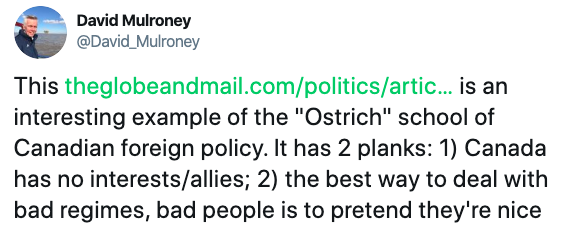
The “Ostrich” school of Canadian foreign policy
Ted Campbell on what former Canadian diplomat David Mulroney calls the “Ostrich” school:
John Ibitson, writing in the Globe and Mail, suggests that Justin Trudeau might want to try what former diplomat, national strategic planner in the Privy Council Office, and commentator David Mulroney refers to (on social media) as …
… “the ‘Ostrich’ school of Canadian foreign policy.” It has, he says, two pillars:
First, “Canada has no interests/allies“; and
Second, “The best way to deal with bad regimes, bad people is to pretend they’re nice.”
Mr Ibbitson himself says that it may be impossible to work “with European and Asian allies, including Japan, to forge a coherent response that provokes neither the Americans nor the Iranians.”
The situation in the Middle East is, as I have explained several times, hideously complex. President Trump may have made it worse … although it’s hard for me to see how any added complications really matter all that much. The socio-cultural and religious hatreds that bedevil the region are likely beyond making “worse.”
In fact, there may be an argument that a nice, all-out, albeit contained, Middle East war might be useful. Perhaps the Iranians and Saudis and Iraqis and Syrians and Yemenis and so on need to sort one another out in the way that tends to produce lasting results: on a bloody battlefield … it worked for Europe, more than once, in 1648, in 1815 and again in 1945.
John Ibbitson says that “Iran’s rage over the U.S. assassination of Qassem Soleimani risks dragging Canada and the rest of the Western alliance into a new confrontation in the Middle East, courtesy of Donald Trump … [that true, as far as it goes, and he adds] … Most Canadians would want no part of such a conflict, especially since the U.S. President might simply be seeking to distract attention from his impending impeachment trial in the Senate … [and that, the first part about Canadians wanting no part of any conflict, is also true, but President Trump’s motives are irrelvant]. The fact is that he has ignored many Iranian provocations while he attempts, vainly, in my opinion, to disengage America from the wider world. The attack on a US embassy seems to have crossed a “red line.”
[…]
But, John Ibbitson says, “Mr. Trump’s high stakes gamble – that killing one of the most senior figures in the Iranian regime will deter rather than provoke further acts of aggression from Iran – could lead to some kind of asymmetrical war, with the U.S. military attacking Iranian targets, and Iran responding through militias and proxies in Iraq and possibly in North America and Europe … [true enough, and he asks] … What would Mr. Trump expect from Canada in such a conflict?” That’s the key question.
My guesstimate is that President Trump will ask little or nothing, militarily, because his military chiefs of staff will not even have mentioned Canada when they proffer lists of nations that might help or hinder US efforts. Canada is not on any of their lists of countries that matter. Diplomatically, however, I think we do matter to the USA and I would not be surprised if the phone lines have been busy all weekend as US officials tell (rather than ask) Canadian officials to get our government “onside” with the USA. The Americans hold ALL the high cards in the game of power.
I’m sure that Prime Minister Trudeau will follow John Ibbitson’s advice and adopt the “Ostrich” strategy … head buried in the sand, pretending that Canada has neither interests nor allies and pretending that evil people are good.
Perhaps co-incidentally with the “revenge” Iranian missile attacks on Iraqi airbases known to have US troops in the area, a Ukraine International Airlines Boeing 737-800 passenger jet crashed shortly after take-off from Tehran airport. Officially, the Iranian authorities are saying it was due to catastrophic mechanical breakdown, but they have refused to hand over the aircraft’s “black box” flight recorders for analysis. All of the 176 passengers and crew died in the crash, including 63 Canadians. It has been suggested by many that the timing was not a co-incidence and that the plane was likely hit by an Iranian surface-to-air missile due to the heightened state of tension in Iranian airspace during and after the missile launches against Iraq. Colby Cosh has more:

Some of the wreckage of Ukraine International flight 752 near Tehran, Iran.
Photo from MOJ Newsagency via Wikimedia Commons.
I am writing these words at a strange moment Wednesday morning. The president of the United States has just been on television, reassuring the American public that the crisis inspired by the assassination of Iranian general Qassem Soleimani has reached a satisfactory equilibrium. Iran made a demonstrative show of force against U.S. installations in the Middle East that killed nobody. Honour has been satisfied. Relief, among American observers, is general.
Meanwhile, Canada is mourning the deaths of dozens of its citizens in a passenger jet crash on Iranian soil. Perhaps it is a terrible coincidence. Stranger things have happened. But if you are old enough to remember the shooting down of Iran Air Flight 655 by the U.S. Navy missile cruiser USS Vincennes in 1988, you are old enough to doubt it.
The Vincennes incident is part of the historical litany that has made news consumers innately distrustful of the first draft of history. The ship was in the Persian Gulf, which at the time was swarming with Iranian gunboats trying to squeeze off the supply of arms to its enemy Iraq. The U.S. Navy had rushed to the area to keep one of the world’s economic arteries open to neutrals. But this had foreseeable consequences — plenty of confusing penny-ante firefights, and some notable accidents, including a puzzling Iraqi attack with air-launched Exocet missiles on an American frigate, USS Stark.
January 6, 2020
Gerontophobia – “the most acceptable, widespread prejudice in society today”
In Spiked, Ella Whelan discusses one form of prejudice that is not only common, it’s practically proselytizing for new members:
Have you found yourself grimacing at Zimmer frames on the bus? Do you revel in checking the latest census data to see the average age of the nation? Do you retweet sarky comments about “youthquakes” shaking out the old fuddy-duddies? If so, you might be suffering from gerontophobia – the fear and loathing of old people – which is the most acceptable, widespread prejudice in society today.
Ageism is the one “ism” that is given a free pass. Hating on granny is all the rage. Recently, former US president Barack Obama made headlines by talking about “old people … not getting out of the way”.
The 58-year-old is not the only older politician to turn against his age group. Since the Brexit vote, 76-year-old Vince Cable has been railing against older Leave voters. On a panel with me at the How the Light Gets In festival last year, he drew laughs from a Hampstead crowd for mocking Brexit as a “Zimmer-frame revolution”. The author Ian McEwan also denounced his fellow septuagenarians when he delightedly predicted that by 2019, “1.5 million oldsters, mostly Brexiters, freshly in their graves” could swing public opinion towards remaining in the EU.
The phrase “OK Boomer” went viral last year after a young person posted a clip of herself reacting to a “baby boomer” complaining about “snowflakes” and overgrown teenagers. This derisory response of “OK Boomer”, used to shut down the so-called Baby Boomer generation, was also used by Netflix in one of its social-media posts. It was even used earnestly in the New Zealand parliament by Green politician Chlöe Swarbrick in response to an older colleague.
The instant popularity of the phrase signalled how normalised generational divides have become. There have always been tensions between younger and older generations, but never before has there been so much celebration of youngsters deriding their parents. Rather than rebelling against the old and changing the world, the OK Boomer phenomenon shows how little young people want to interact with older generations, instead preferring petulant put-downs.
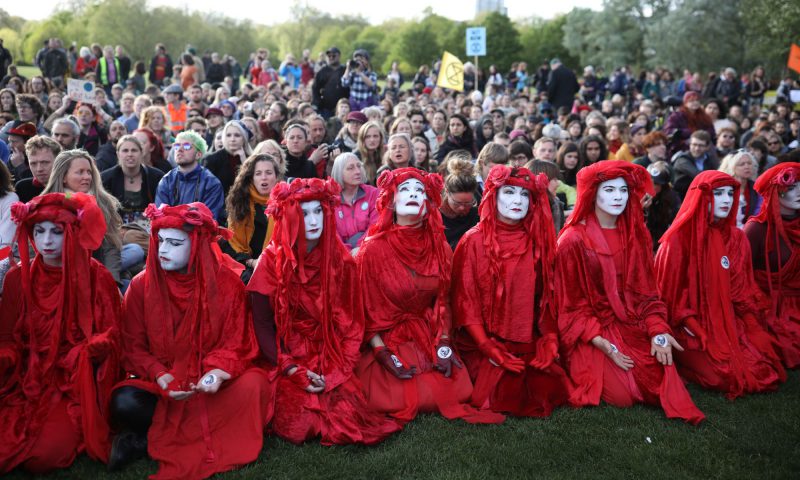
Perhaps the most pronounced and sinister ageism came from the wave of interest in Extinction Rebellion (XR), Greta Thunberg and the climate-emergency panic. From Thunberg being named Time person of the year after blaming older generations for stealing “my dreams and my childhood” to XR Youth proclaiming that “adults need to be accountable to the young people”, climate activism isn’t very oldie friendly. Instead of asking questions about what political changes might be made to help the planet, and, more importantly, the people living on it, environmentalism has veered towards a cultish celebration of youth. Fawning adults have handed over all moral authority to schoolchildren.

Greta Thunberg at the EU Parliament, 16 April, 2019.
European Parliament photo via Wikimedia Commons.
January 5, 2020
QotD: Voting for President
The Editors, “Who’s Getting Your Vote?”, Reason, 2004-11.
January 3, 2020
Magical thinking in names
Theodore Dalrymple relates the rather odd story of a young girl’s media-publicized objection to a math problem in school and then considers the girl’s given name in the larger context:
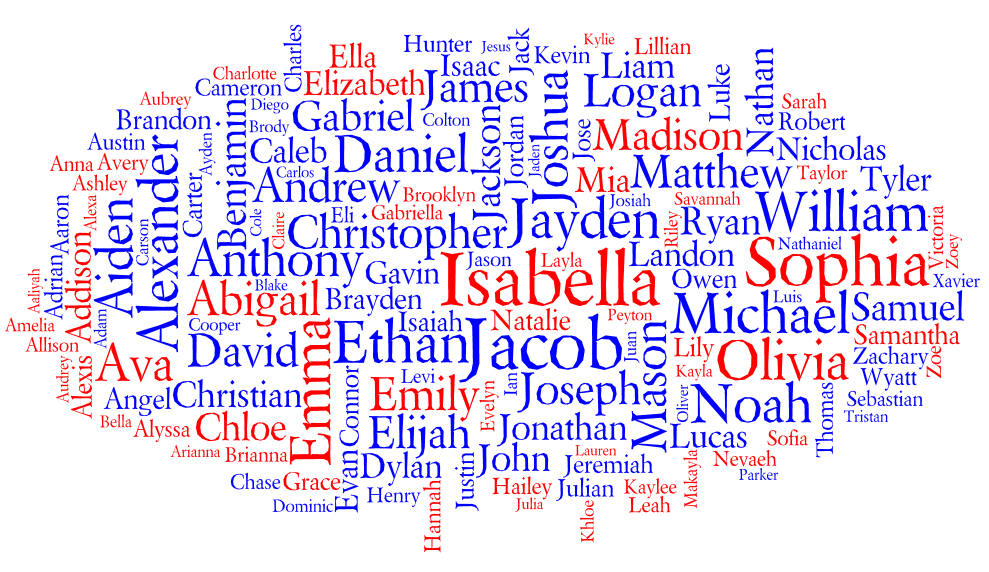
Popular first names in the United States, 2010.
Image from Behind the Name.
My attention was also caught by the first name of the politically-correct child: Rhythm. This is not a traditional name, though not actually ugly; but her parents have evidently accepted the increasing convention of giving a child an unconventional, and sometimes previously unheard of, name. This is a worldwide, or at least occident-wide, phenomenon. In Brazil, for example, parents in any year give their children one of 150,000 names, most of them completely new, made up like fake news, and in France, 55,000 children are born every year who are given names that are shared by three or fewer children born the same year. This latter is all the more startling because, until 1993, there was an old Napoleonic law (admittedly not rigidly enforced) that constrained parents to choose among 2000 names, mainly those of either saints or classical heroes.
What does the phenomenon of giving children previously unheard-of names signify — assuming that it signifies something? I think it is symptomatic of an egoistic individualism without true individuality, of self-expression without anything to express, which is perhaps one of the consequences of celebrity culture.
I performed an internet search on the words Rhythm as a given name. I soon found the website of a group called the Kabalarians, who believe that the name given to a child determines, or at least contributes greatly, to its path through life, especially in conjunction with the date of birth:
When language is used to attach a name to someone this creates the basis of mind, from which all thoughts and experiences flow. By representing the conscious forces combined in your name as a mathematical formula, one’s specific mental characteristics, strengths and weaknesses can be measured.
It invited readers to inquire about the psychological characteristics and problems of people with various given names. I invented a child called Rhythm of the same age, more or less, as Rhythm Pacheco. This was the result:
The name of Rhythm causes this child to be extremely idealistic and sensitive. She will find it difficult to overcome self-consciousness and to express her deeper thoughts and feelings in a free, natural way. She is too easily hurt and offended, and will often depreciate her own abilities. Because of her lack of confidence and her sensitivity, she will go to great lengths to avoid an issue. True affection, understanding, and love mean a great deal to her, as she is a romantic and emotional youngster. Often she will resort to a dream world when her feelings are hurt. She could be very easily influenced by others, for she will find it difficult to maintain her individuality. This problem could become more predominant during the teenage years. Although there is much that is refined and beautiful about her, the lack of emotional control could bring much unhappiness, repression, misunderstanding and loneliness later in life. Tension could also create fluid and respiratory problems. Because of the sensitivity created by this name, she will find it difficult to cope with the challenges of life.
There is, in fact, a semi-serious theory of nominative determinism, according to which a name may influence a person’s choice of career: two of the most prominent British neurologists of the first half of the twentieth century, for example, were Henry Head and Russell Brain. A recent Lord Chief Justice of England was called Igor Judge. And surely it must work in a negative direction too: no poet could be called Albert Postlethwaite. However rational one believes oneself, one might also experience a frisson of fear on consulting a doctor called Slaughter — as was called the doctor and popular novelist Frank G. Slaughter.
When I first went to Africa, I encountered patients whose first names were Clever, Sixpence or Mussolini. The first of these names was presumably an instance of magical thinking, while the second two were chosen merely because the naming parents liked the sound of them. Years later, during the civil war in Liberia, I met a constitutional lawyer called Hitler Coleman, who presumably desired to live his name down by concerning himself with the rule of law.
January 2, 2020
“Modern ‘virtue signalling’ has deep Victorian roots”
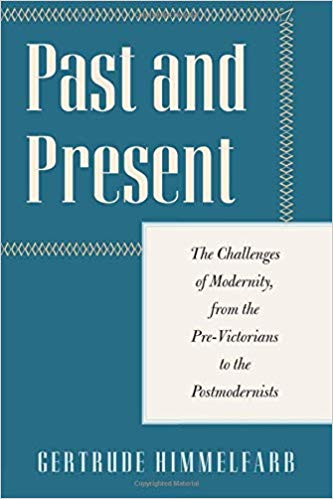
David Warren on the work of the late Gertrude Himmelfarb and the era she documented:
The historian, Himmelfarb, is particularly good at revealing the often generational decline in “liberal values,” for instance from helping the poor through such institutions as the Salvation Army, to using them for moral posturing at no personal cost. This corresponds to a loss of religious faith, and its replacement by moralizing. Modern “virtue signalling” has deep Victorian roots.
Unfortunately we now live in a time that is narrow, and for the most part thinkers are ignored, or reduced to single sound bites. For our time, and in our universities, so great a student of philosophy as Leo Strauss, of literature as Lionel Trilling, of social research as Irving Kristol (the brilliant man Himmelfarb married) are dismissed unread as “neo-conservatives” and worse, when in fact they were engaged with the whole Western tradition. Today, the contemptible Washington Post associates them with a rightwing “backlash,” as if they were shouting slogans. Impressive Jewish thinkers are casually compared to “white nationalists” or “supremacists,” in the frothing malice of the SJWs.
Yet the characters rejected were once themselves Leftists (though anti-Stalinists), and their perceived voyage to the Right was a steadiness as the waters passed them by.
I was thinking this just now while reading the first essay in Himmelfarb’s latest and possibly last book of essays: Past and Present. It is about Strauss (another formative influence). What a paradise it would have been to be among the “Ivy Leaguers” of the post-War and ‘fifties; during a long-lost American adventure into the world of ideas. Himmelfarb was the last of that team of adventurers, I was thinking; the landscape now is, intellectually, barren. Even to participate in “high culture” — what Matthew Arnold innocently called, “the best that has been thought and said” — is to put a professor at physical risk.
Leo Strauss explained somewhere, or in several places, that the student of the past must be prepared to learn something — “not merely about the thinkers of the past, but from them.”
Today’s student (if any are left in the humanities), replies with incomprehension. What an affront it is, to a later academy, in which the only purpose for the past is to judge it, by the asinine prejudices of the present day.
January 1, 2020
Communist jokes through the ages
At Catallaxy Files, Steve Kates recently read Hammer and Tickle: A History of Communism Told Through Communist Jokes by Ben Lewis:
It looks at the jokes themselves; the evolution of these jokes as communism aged and new leaders took over; it looks at the different kinds of jokes told in different communist countries; it examines the fate of those who told such jokes and the difference in the fate of those who made such jokes depending on who was the leader of the Party; it asks whether such jokes helped the communists consolidate power or whether they helped bring communism down; it looks into the difference between telling anti-Nazi jokes in Nazi Germany versus telling anti-communist jokes in communist countries; it asks about the psychology of those who told such jokes and whether they helped relieve tensions; and much else. But I will say this, some of I found really funny. This is my favourite.
Khrushchev is walking through the Kremlin, getting worked up about the Soviet Union’s problems, and spits on the carpet in a gesture of disgust.
“Behave yourself, Nikita Sergeyevich,” admonishes the aide. “Remember that the great Lenin walked through these halls!”
“Shut up,” responds Khrushchev. “I can spit all I like here; the Queen of England gave me permission!”
“The Queen of England?”
“Yes! I spat on her carpet in Buckingham Palace too, and she said, ‘Mr Khrushchev, you can do that all you like in the Kremlin if you wish, but you can’t behave like this here …'”
Easy to see this one added to the Donald Trump canon and now that I have pointed it out, I expect it to be.
I therefore thought I might have a look at what passes for Donald Trump jokes. And google all you like, there really is not much although there was this: Donald Trump Jokes. None were funny but I did like this:
Where’s Donald Trump’s favorite place to shop?
Wall-mart!
Mere pun though it is, it seems appropriate. At least it’s policy-related and almost entirely a joke that could only be told about Trump. The rest are re-treads, never specifically about anything related to Trump himself and his policies, but are almost entirely forms of insult than anything with any associated wit or insight. The most interesting part to me about the communist jokes was that the ones that became acceptable were those directed at the failures of communism relative to the promises that had originally been made. Lots like that. The way to end up in the gulag was to tell jokes about actual party leaders, especially Lenin and Stalin. Very few like that.
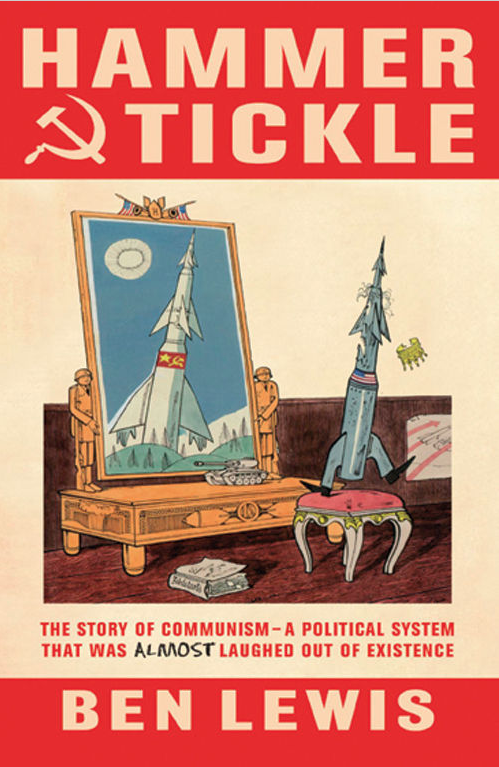
I rather liked the one from the Amazon page for the Kindle edition: “Q: Why, despite all the shortages, was the toilet paper in East Germany always 2-ply? A: Because they had to send a copy of everything they did to Moscow.”
December 31, 2019
QotD: Canadian journalism
… a Canadian Journalist’s main job is to smooth over any rough spots and shush away worries as the Liberal government plunders the public purse to pay for technocratic solutions to problems we didn’t know we had while adopting a laissez-faire attitude to the problems we do have. If the Opposition has a point, it falls to a Canadian Journalist to correct the record and say that, well, actually, no they don’t.
Josh Lieblein, “Hack or Flack: Aaron Wherry Edition”, Raving Canuck, 2017-11-29.
December 30, 2019
The federal Conservative Party’s dilemma
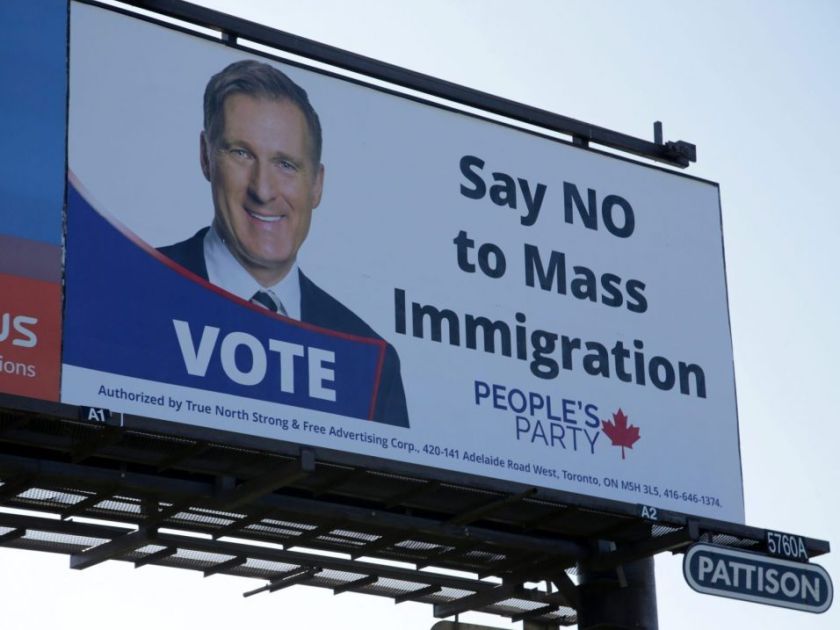
Canadians currently have two left-of-centre federal parties (three if we count the Greens), but only one party on the right (Maxime Bernier’s PPC), leaving the right-of-left-of-centre to the hapless, leaderless, useless, spineless, craven Conservative Party. “Conservative” in name only, of course, for those of you who don’t follow Canadian politics (and neither blame nor shame to you if you fall into that happy group). Bernier’s been labouring under an almost complete media blackout except where engineered drama can be used to demonize him or members of his party, so the roughly one-third of Canadian voters who would prefer an actual conservative alternative don’t really have anyone to vote for.
Jay Currie offers his analysis of the Conservative dilemma (but he’s also a known PPC sympathizer, so good Canadians must pay no attention to what he says):
Frank Graves and Michael Valpy ask the question, “What if the Conservatives had a ‘centrist’ leader?” like Rona Ambrose or Peter MacKay. To their credit Graves and Valpy recognize that while a centrist Conservative party would appeal to the media and various elites in Canada it would effectively maroon the 30% of Canadians who might loosely be described as “populist”.
A billboard in Toronto, showing Maxime Bernier and an official-looking PPC message.
Photo from The Province – https://theprovince.com/opinion/columnists/gunter-berniers-legitimate-position-on-immigration-taken-down-by-spineless-billboard-company/wcm/ecab071c-b57d-4d93-b78c-274de524434cI think Graves and Valpy are right and I can’t wait for that exact outcome.
Scheer managed to hoodwink a lot of natural populists with a combination of Liberal-lite policies and some goofy socon gestures (I am not sure Pride Parade non-attendance really counts for much with the serious socons.)
Graves and Valpy maintain that this was enough to avoid “orphaning the party’s biggest lump, and he more or less cut off oxygen to Maxime Bernier’s People’s Party of Canada (PPC).” It might have been last election but if the CPC goes centrist with its next leader, the lump will be looking elsewhere.
I am fairly certain that the CPC will go for a centrist leader if only because there are really no populist candidates available to it. Pierre Poilievre might fill the bill but it is not obvious that the CPC will be willing to support an MP who is as “direct” as Poilievre.
Which will leave “the lump” looking for a home. Graves and Valpy give a rundown of the lump’s core issues,
Like the United States, the United Kingdom and sizeable chunks of Western Europe, Canada has a significant portion of citizens — about 30 per cent — who are attracted to the current psychographic and demographic binge of ordered populism. They are profoundly economically pessimistic and mistrustful of science and the elites. They have no interest in climate change, they don’t really see an active role for public institutions and believe there are too many immigrants. Of those immigrants coming to Canada, they think that too many are not white.
Other than the dig about thinking “too many are not white”, that is a pretty good summary. (On the “not white” thing, I suspect it is more nuanced than that: more along the lines of the current Quebec government’s desire to preserve its culture in the face of immigration.)
December 29, 2019
Changing western views about China
John Gray charts the image of China that has held steady for years among western countries but which has been severely shaken with the unrest in Hong Kong and the Chinese government’s reactions:
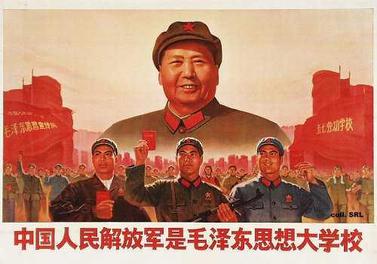
“The Chinese People’s Liberation Army is the great school of Mao Zedong Thought”, 1969.
A poster from the Cultural Revolution, featuring an image of Chairman Mao, published by the government of the People’s Republic of China.
Image via Wikimedia Commons.
The most important year of the decade is the one that is just ending. The struggle that will most deeply shape the global scene in years to come is not occurring in Britain, the US, Europe or any Western country. It is underway in Hong Kong, where a popular demand for democracy is confronting the immovable power of the world’s most highly developed authoritarian state.
It is a struggle no government wants to see escalate. More realistic than its Western counterparts, the Chinese leadership shows few signs of believing the conflict can be definitively resolved any time soon. Incremental concessions and large-scale repression both carry high levels of risk for Xi Jinping’s regime. The ideal end-state for Beijing is probably long-term containment. But the situation in the former colony is not stable, and it is difficult to exaggerate the impact that suppressing the protestors by force would have on China’s position in the world.
It is often pointed out that Hong Kong’s economic importance has dwindled with the rise of mainland cities such as Shanghai. But this leaves out how much two-system governance shapes global perceptions of China and its future. Xi’s progress towards a neo-totalitarian surveillance state has deflated the Western elites’ confidence that China is on a path of slow evolution towards liberal democracy. Yet the fantasy still lingers. The likelihood that China will be an authoritarian great power in any realistically imaginable future is too disturbing to contemplate.
“Hong Kong night Panorama” by Andos_pics is licensed under CC BY-NC-SA 2.0
It is worth recalling the comforting tale on which Western governments have modelled China’s development. The country was getting rapidly richer, and while average incomes remained low by international standards, the middle class was steadily growing. This process of embourgeoisement would lead to stronger demands for democratic freedoms, and China would become ever more like the West. Embedded in practically every Western government and regularly invoked by the Western businesses that operate in China, this is a story with almost no basis in reality.
It is true that the rise of the middle classes in early 19th-century Europe coincided with an expansion of liberal freedoms in some countries. This was the main thrust of Marx’s analysis of bourgeois democracy. (A little-noted aspect of recent liberal thinking is that it relies heavily on a crude version of Marxian class analysis.) But there is nothing in the historical record that says the middle classes are inherently a force promoting liberalism. In the late 19th century, they backed the restoration of monarchy and empire in France and militarism In Prussia. In the early 20th century, large sections of the European middle classes embraced ethnic nationalism and then fascism. There was not much sign of the freedom-loving bourgeoisie in interwar Europe.
Protests continue in Hong Kong, 25 November 2019.
Photo by Studio Incendo via Wikimedia CommonsWhile it is so far less developed, a similar pattern of bourgeois support for illiberal politics has emerged in many European countries since the collapse of the Soviet Union. Across the continent, far-Right parties enjoy the support of significant sections of the middle classes. In America, Trump’s constituency includes many from precarious middle income groups.
So, the linkage between the middle classes and liberal values is tenuous throughout Western countries. In the UK and other English-speaking countries, it is middle class students, professors and administrators that have shut down freedom of inquiry and expression in higher education. Woke capitalism and much of the mainstream media are continuing this trend. Threatened by what they call populism, bourgeois liberals have ditched the values that once defined them. Far from being a universal law, middle class support for liberalism looks like a brief historical accident.




2010-2019 was “The People’s Decade” in Britain
In Spiked, Brendan O’Neill says the departing decade was really “The People’s Decade”:
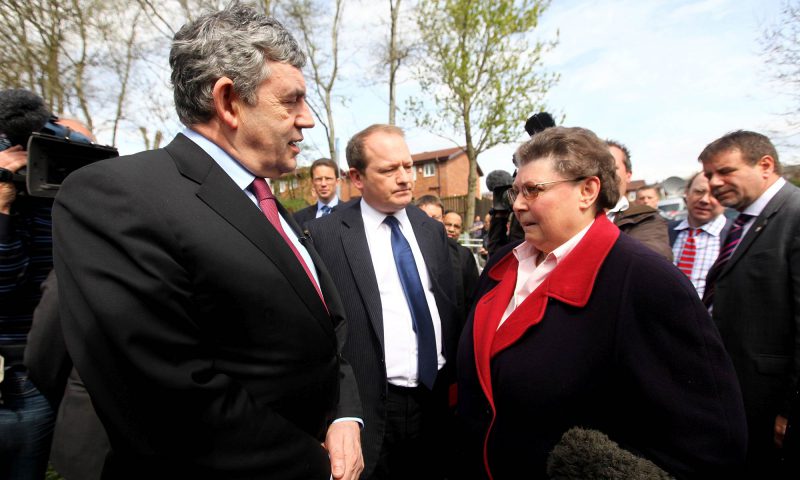
Prime minister Gordon Brown talks with resident Gillian Duffy on 28 April 2010, in Rochdale, England.
Photo from Spiked.
So the 2010s have come to an end. And what a curious and enlivening decade it has been. Decades are rarely neat political categories. The Sixties, as a phenomenon, didn’t really start until 1963. The Eighties are misremembered as an era of free-market triumphalism, overlooking that PC, cultural relativism, post-colonial guilt and the end of the Cold War that had provided the West with a sliver of moral purpose all took place in that tumultuous decade, giving rise to years of Western self-doubt, even self-hatred, rather than the Thatcherite cockiness that historical illiterates see as the Eighties’ ongoing political ripple.
But the 2010s — this decade does feel neat. It feels like it has a story, an arc, in the British context at least. For this is the decade that begins with Gordon Brown insulting a northern working-class Labour voter as a “bigot” and ends with the northern working classes revolting against Labour in their hundreds of thousands. It begins with the Gillian Duffy crisis, when Brown unwittingly exposed his increasingly middle-class party’s contempt for the lower orders by being overheard referring to this 65-year-old lady from Rochdale as a “bigoted woman”, and it ends with the mass switching of traditional “red wall” Labour voters to Boris Johnson’s Conservative Party — and, by extension, to Labour’s worst drubbing at the polls since 1935.
From Gillian Duffy to the Brexit / Boris votes: if the 2010s tell a story, it is one of a peaceful, understated working-class revolt. Of ordinary people pushing back against elites that had come to view them as bigots. Of the long sneered-at and interfered-with and re-educated sections of the public rising up against their so-called betters and restating the case for national sovereignty and community values. Of the people reprimanding the powers-that-be and forcing them, via the ballot box, to respect the people’s will and the people themselves.
This has been a thoroughly democratic decade. The People’s Decade, in fact, in which democracy has done what democracy is meant to do: marshalled the wisdom of the crowd to correct the jaundiced, elitist, anti-democratic drift of the governing classes.
The People’s Decade really begins in April 2010. It was 28 April and Gordon Brown, gearing up for the General Election, was on a walkabout in Rochdale. This was Brown’s first General Election as prime minister, his having received the crown of PM from Tony Blair in 2007, in a stitched-up, court-like manner befitting of the New Labour machine. Gillian Duffy, a lifelong Labour voter and former council worker, was also out in Rochdale that day. She was buying a loaf of bread. Her path crossed with Brown’s, in front of TV-news cameras, and in that very moment Brown’s fate, his destiny as a shortlived and unpopular PM, was sealed.
Duffy asked Brown about various things. She asked him about the public debt and how he proposed to fix it. She asked about the decline of university grants and how her grandkids were expected to be able to go to Uni. She asked him about health and welfare. And she asked him about immigration. “You can’t say anything about the immigrants”, she said, wisely sensing that even raising this issue could see you branded a bigot. “These Eastern Europeans”, she said, “where are they flocking from?”. Brown smiled and said something jovial and even patted Mrs Duffy on the back, but really he was horrified by what she had said. As the nation would discover just moments later.
Unbeknownst to Brown, a Sky News mic attached to his lapel was still on. When he got back to his car he berated one of his aides. He demanded to know why they had put him on air with “that woman”, as he referred to Mrs Duffy. Asked by the aide what the woman had said, Brown replied: “Oh everything. She was just a sort of bigoted woman. She said she used to be Labour. I mean it’s just ridiculous.” That woman. That bigoted woman. Words heard by everyone. Words replayed endlessly in the run-up to the election. The fallout was enormous.
QotD: Senate confirmation hearings
Senator: “I have here a report from www.gruesomeliesaboutpublicfigures.com that says you like to puree puppies in a blender and drink them as a breakfast smoothie. Why do you do that, Mr. Smith?”
Mr. Smith: “I don’t drink pureed puppies for breakfast.”
Senator: “So you’ve stopped pureeing puppies for breakfast. Was that because you were afraid that it would become public and derail your nefarious secret plan to devastate the U.S. economy from your perch at the Department of Agriculture? Or did you just get tired of puppy blood?”
It’s entertaining viewing, but not really all that informative. And it has little impact when the nomination comes to a vote, which tends to break down on party lines. Mostly, it’s just a way for senators to get themselves on the teevee.
Megan McArdle, “Prescription Drug Imports Are Banned for a Reason”, Bloomberg View, 2017-12-01.


