Quotulatiousness

June 30, 2019

Chipping away at Martin Luther King’s reputation with new FBI surveillance revelations

Filed under: History, Liberty, Politics, USA — Tags: , , , , , — Nicholas @ 03:00

Stephen Smith discusses the struggle of scholars specializing in the life and works of Martin Luther King, Jr. to cope with new revelations about the civil rights leader:

President Lyndon B. Johnson meets with Martin Luther King, Jr. in the White House Cabinet Room, 18 March 1966.
Photo by Yoichi Okamoto via Wikimedia Commons.

These are difficult days for students of Martin Luther King, Jr. The man many of us have dedicated long months and years to researching, often out of a profound sense of respect, is facing an allegation of laughing and even offering advice while a fellow Baptist minister raped a woman in a Washington, D.C. hotel room in January 1964.

The source of this explosive claim is a trove of newly released FBI surveillance documents unearthed by the dean of MLK historians himself, David J. Garrow, author of The FBI and Martin Luther King: From “Solo” to Memphis and the Pulitzer Prize-winning biography on King, Bearing the Cross.

Since the article detailing Garrow’s new findings came out at the end of May in the British magazine Standpoint, Garrow has taken more of a pounding in the press than King. No surprises there, perhaps. Like those now criticizing Garrow, I desperately want to believe that the 55-year-old allegation is a trumped-up product of the FBI’s “viciously negative attitude” toward King, as Garrow described it in “Solo” to Memphis — a book that earned him the Bureau’s enmity prior to its publication in 1981.

The record, however, is also pretty clear that King relieved the crushing stress of daily death threats and the insatiable demands of the civil rights movement with women and liquor. To his credit, King was the first to admit he was far from perfect as America’s “moral leader” — but this far?

Much of the criticism that Garrow is now facing over the article is focused on the validity of FBI evidence concerning King’s sexual activities, namely the bombshell assertion made by FBI agents spying on King in 1964 that he “looked on, laughed and offered advice” during the reported sexual assault (which, as Garrow has since underscored, the agents listening in did nothing to stop). This allegedly took place in two Washington, D.C. hotel rooms rented to King and four other Baptist ministers, although the controversial claim is made in a handwritten note appended to a summary of the FBI’s microphone surveillance.

Garrow argues that “without question” the handwritten annotation would have been added with both the original surveillance recording and a full transcript of the recording at hand. He adds that Justice Department investigators who reviewed both the tapes and transcripts in 1977 confirmed the accuracy of the FBI’s claims. The tapes and transcripts, along with the rest of the fruits of the FBI’s intensive electronic surveillance of King, were subsequently sealed by a court order until Jan. 31, 2027.

I know Garrow and I know his respect for the man he calls “Doc” runs deep, and this is not an allegation he would carelessly report. Some of his detractors have called him “irresponsible” for running with it without access to the original tapes and transcripts, but Garrow has at least 40 years of experience working with primary sources produced by the FBI’s intensive surveillance of King. If anyone can tell what smells off and what doesn’t, it’s him.

June 28, 2019

The “V-word” in political discussions

Filed under: Americas, Economics, Politics — Tags: , , , — Nicholas @ 05:00

Kristian Niemietz explains why “Venezuela” isn’t a sensible or satisfactory answer to claims in favour of socialism:

Shaded relief map of Venezuela, 1993 (via Wikimedia)

The main point to note is that Venezuela is an actual country, not a shorthand for “everything I don’t like about the Left”. It is a country that is in trouble for specific, identifiable reasons, not for being, somehow, generically, “too left-wing”. This sounds obvious when you put it like that, but deviations from this point are the main cause of V-word inflation.

So when somebody on the Left proposes to, for example, raise income tax, wealth taxes, or corporation tax, people on the pro-market side should not respond by shouting “Venezuela!”. Because that’s not what happened in Venezuela. Venezuela is not a high-tax economy, or at least, their tax burden is not what ruined them.

In the same way, if somebody on the Left proposes to hike the minimum wage, to abolish university tuition fees, or to ban zero-hour contracts, shouting “Venezuela!” is not the answer either. Those are bad ideas, sure. But those are not the ideas that destroyed Venezuela.

In short, we shouldn’t bring up Venezuela in a discussion of run-of-the-mill left-wing policies, which bear little relationship to anything that Chávez and/or Maduro did.

Furthermore, when somebody points out a genuine social problem in Britain, “Yeah but Venezuela!” is not much of a reply. Socialists are sometimes good at identifying problems, even if they are terrible at developing solutions. It is true that we have some of the highest housing costs in the world. It is true that our productivity performance, and as a result, wage growth, are poor, and have been poor for far too long. It is true that our welfare system is riddled with flaws, and often fails to support people who have fallen on hard times.

“It’s much worse in Venezuela, which is the system you lot want!” is not good enough. “It’s much better in capitalist countries X and Y – which is the system we should learn from” is more like it. So in such cases, it’s best to leave Venezuela out of it. Let “Venezuela” be a country, not a rhetorical all-purpose put-down.

That said – don’t declare that moratorium just yet. When prominent British socialists call for mass nationalisations, when they call for price controls and capital controls, when they deride the rule of law as a mere “bourgeois” construct that only serves “the elites” – then yes, it is absolutely fair to point out that this is exactly what happened in Venezuela. Here, we’re not talking about some allegorical “Venezuela”, but about the actual country, and about specific things that happened there. These are the very policies, and this is the very mindset, which turned what was once South America’s richest country into a basket case. This argument may not “resonate with people” – but it’s true.

Further to that: when socialists claim that “their” version of socialism will be completely different from any of its previous incarnations, that it will be genuinely democratic, empowering, grassroots-based and non-hierarchical – then it is fair to point that this is exactly what the Chavistas also used to say.

Some Western socialists are currently trying to convince themselves that Chávez and Maduro just never really aspired to a different kind of socialism, that authoritarian populism is all they ever wanted. This is fundamentally untrue, and Western socialists used to know this very well. The project of Venezuelan socialism started with the aspiration that this time would be different, that this time, “socialism” would not mean an all-powerful state controlling everything. It started with the aspiration that there could be completely different forms of collective ownership, which had nothing to do with the top-down nationalised industries of the past.

The appeal of Millennial Socialism rests on the delusion that the democratic, bottom-up socialism Millennial Socialists aspire to is a fundamentally novel aspiration, and that nobody in history has ever tried to build anything like this before.

But it is not a new aspiration. This was precisely what Chávez’s and Maduro’s “21st Century Socialism” was also about, which is why it used to be so popular in the West. A moratorium on the V-word would just play into the hands of those who now want to pretend that none of this ever happened, and that “Millennial Socialism” is novel, untried and untested.

What does £1 trillion buy you?

Not much, apparently:

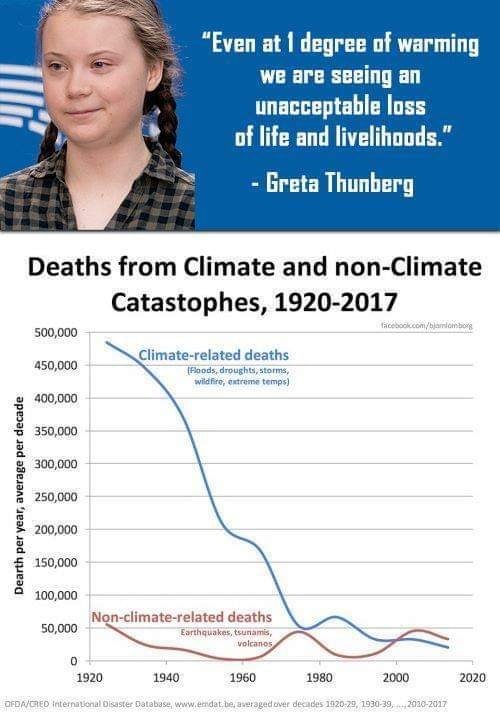
Tory MPs have been told by CCHQ to share this graphic boasting about their new commitment to make the UK carbon-neutral by 2050. No other major country has committed to the pledge although Theresa May is planning a desperate attempt at the G20 to talk other leaders into it. The fact that developed countries going ‘net zero’ simply means they’ll outsource all their emissions to the developing world instead seems to be completely lost on her…

The pledge will cost the UK at least £1 trillion, much of which will be borne by individuals and businesses rather than the exchequer, we don’t know the true cost as May hasn’t even done a proper Treasury analysis. Eco-fanatics love to talk about the burden this generation is placing on children and grandchildren. For a fleeting PR stunt Tory MPs are being told to boast about piling on mountains of economic harm for future generations by a leader who won’t be in office to deal with the consequences…

This is exactly the sort of virtue signalling that Justin Trudeau indulges in … I imagine he’s quite miffed that Theresa May got there first.

June 27, 2019

“Raise our taxes!” cried the hypocritical virtue signallers

Filed under: Economics, Government, Media, Politics, USA — Tags: , , — Nicholas @ 05:00

We’ve been over this ground before. Some very rich people are getting fawning media coverage for their “selfless”, “virtuous” demand that the government raise their taxes. Except they’re far from selfless: they’re demanding that other people be forced to pay more tax, but they’re very much not putting their own money where their bleating mouths are. Most governments are happy to accept more money from you than your formal tax liabilities:

… are all very eager to accept your contributions. But most people don’t take advantage of this mechanism, especially the ones garnering headlines for their “altruism”. Because they’re virtue signalling, and almost certainly don’t actually want to be taxed more. Don’t believe what people merely say they want, watch what they actually do (economists call this “revealed preference“). Hypocrites, the lot of them.

QotD: “Misandropologies”

Filed under: Politics, Quotations, USA — Tags: , , , , — Nicholas @ 01:00

… in the same manner that many white people who initially signed on to the whole “don’t be a racist” program because it seemed fair were eventually alienated by the escalating rhetoric of “justice won’t be achieved until the last evil melanoma-prone ice devil baby is smashed dead against a rock,” many men — and even women — who had no problem with ideas such as equal pay and female suffrage started to get grossly turned off by rhetoric and policies that viewed being born male as an original sin that demanded eternal punishment.

Even though black women live longer than white men in the USA … and even though women control more disposable wealth than men do … and even though women are snagging most of the college degrees these days … and even though the law and public sympathy heavily lean toward women in any dispute between the sexes … and even though the media portray men as either bumbling incompetents or bloodthirsty rape-monsters … and even though men are far more likely to commit suicide, die on the job, or be homeless than women … we’re still lectured by these bitter fat blobs and their testosterone-free male enablers that misandry isn’t real because men still benefit from certain mysterious “systemic” and “institutional” advantages that none of these assholes seem able to enumerate even when calmly asked to do so.

It’s a funny sort of “patriarchy” we inhabit.


To allege that women are capable of malice and violence and deception is only to allege that they’re human. To expect anything less of them would be dehumanizing and patronizing — which, ironically, shares a root word with “patriarchy.” When feminism ditched the “equity” rhetoric in favor of a menses-splattered pagan goddess religion that depicts men as irredeemable worker drones and women as innocent angels, men who weren’t entirely asleep or pussy-whipped realized that the rules had changed and that they were under attack. But even to notice that a lot of women openly exult in hating men gets you labeled a “woman-hater.”

Misandry is real, and those who seek to deny or justify it deserve a stern paddling. And even if you acknowledge that it’s real, don’t try to make excuses for it using some postmodern gobbledygook, because then you become a misandry apologist — a misandropologist. Just admit that women can be every bit as mean, nasty, horrid, foul, vile, shitty, and hateful as men. It’s part of the human condition.

Naïve as it may be, I envision an enlightened future where there is no longer any misogyny or misandry — only a beautiful, sweet, shared sense of misanthropy.

Jim Goad, “Confronting the Misandropologists”, Taki’s Magazine, 2017-05-08.

June 26, 2019

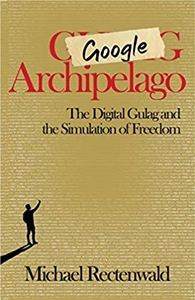
Social media giants can be publisher or platform, but not both

Filed under: Business, Law, Liberty, Media, Politics, USA — Tags: , , , , — Nicholas @ 06:00

At Ace of Spades H.Q., Ace explains why Facebook, Google, and the other social media companies have been playing fast and loose with the rules, sometimes using the rules that apply to publishers and sometimes the ones that apply to platforms, depending on their whim:

Only a speaker or publisher of claimed defamatory content can be sued.

Not being a speaker or publisher of a defamatory statement gives you total immunity from suit. You’re just a guy, you had nothing to do with the tort alleged.

Section 230 [of the Community Decency Act] specifically says that “neutral content platforms” shall not be deemed to be the “speaker or publisher” of a claimed defamatory statement made by a third party using their service — hence, the complete immunity from suit. You can’t be sued for something someone else said, obviously.

Now newspapers can be sued for the defamatory remarks of, say, an interview subject. They are publishers of that defamatory statement — they chose to publish it. The interview subject made the statement, but then they chose to publish it themselves, becoming another “speaker” of the defamation.

Now, “neutral content platforms” are never considered “speakers” of third-party defamations (or any third-party crime involving speech, such as offering to sell contraband or conspiring to commit a crime). But a newspaper or media company — or this blog — could be.

The corporate cucks claim that you cannot put restrictions on Google, Facebook, or Twitter as regards their right to censor opinions they disagree with because that constitutes “compelled speech.” You’re compelling them to speak things they do not believe, the cucks’ argument goes.

But… section 230 states that, as a legal matter, they are not considered the “speakers” of any statement made on their “neutral content platforms.”

So which is it? Are they the speakers of these words — in which case, like a newspaper or tv station, they’d have every right to exercise editorial judgment and decide what they wish their company to say — or are they not the speakers of these words, which is their claim whenever someone tries to sue them?

As it stands, they are speakers when it comes to their power to block people from speaking on their platforms — and thus can indulge in the vice of censorship — but not speakers when it comes to people suing them for what other people said on their platforms.

Choose one or the other: Either you are a speaker of other people’s words or you’re not. You can’t forever choose one and then the other when it’s in your interest to have the Clown Nose On or the Clown Nose Off.

What is the problem that a wealth tax is designed to solve?

Filed under: Economics, Government, Politics, USA — Tags: , , — Nicholas @ 03:00

Andrew Coyne asks the obvious question about the sudden keen interest in imposing wealth taxes:

It is noteworthy how the debate on inequality has shifted in recent years: from the problem of poverty, whose evils are obvious, to the “problem” of great wealth; from the gap between the poor and the rest of us, to the gap between the rest of us and the rich, or indeed between the rich and the very rich.

But it is not obvious why it is wrong, in itself, that a small number of people should get stinking rich. It is clearly objectionable if they did so by illicit or unethical means — but then it is the means itself, not the wealth, to which we object. And it would be in poor taste, at the least, if they spent it all on themselves. But that is not how the great fortunes are typically disposed of — it’s physically impossible to spend more than a small fraction of it.

Perhaps the argument is less that the rich are too rich than it is that the government is too poor. You can make a case that government should spend more on certain things, especially in America. It doesn’t follow that you need to raise taxes to do so. A lot of good new spending could be funded by cutting bad old spending.

Suppose there were a case for raising taxes. Are wealth taxes the way to go? Wealth is, after all, merely the accumulation of past income — and we already tax income. If rich people are exploiting loopholes to avoid paying tax on their incomes, by all means close the loopholes. But the case for taxing income twice seems obscure.

Yes, we already have a kind of wealth tax, in the form of municipal property taxes — and they’re a notorious mess. They conform to none of the usual principles of good taxation, being neither simple, nor efficient, nor fair.

Why unfair? The bedrock criteria of tax fairness is supposed to be ability to pay. That’s only uncertainly related to wealth. Suppose the value of your house shoots up. Congrats: suddenly you’re wealthy. But your income is unchanged. And it’s income you need, or more accurately cash, to pay your taxes. It’s not clear why you should pay more in tax than someone with the same income, but a cheaper house.

June 25, 2019

Barbara Kay on the rise of Maxime Bernier’s People’s Party of Canada

Filed under: Cancon, Liberty, Politics — Tags: , , , — Nicholas @ 05:00

In The Post Millennial, Barbara Kay explains why there may be a good opportunity for Maxime Bernier to attract votes from disaffected Canadians who don’t feel the other parties represent their interests and concerns:

The nationalist Brexit Party, led by outspoken euroskeptic Nigel Farage, came into existence last January. Four months later, it boasts 29 MEPs (Members of the European Parliament). By contrast, this past May, Canada’s Green Party elected its second member of parliament after 36 years of existence.

There’s a message here. The Green Party is not a “disruptor” of the status quo, and it doesn’t represent a groundswell of voices who feel left out of the conversation. It’s just a more fibrously left wing form of the same political granola served up by the NDP and the Liberal Party. It’s not really needed. But the Brexit Party’s success is a genuinely organic statement of anger directed at traditional parties by great swaths of citizens who not only felt disrespected and ignored, they actually were, by any objective standards, disrespected and ignored. It was needed.

Forty percent of Canadians routinely choose not to vote. A certain number are politically indifferent, but another number don’t vote because they don’t feel any of the parties represent their views. Normally, they don’t feel worried enough to bestir themselves. Will the pattern hold in October?

Or is this Maxime Bernier’s “disruptor” moment? His People’s Party of Canada was officially launched in January, and it presently has more members than the Green Party. The PPC is fielding candidates in all 338 ridings, an impressive accomplishment given the time constraints. Their basic platform, which includes tax simplification, the abolition of supply management, as well as long-overdue abolition of inter-provincial tariffs, indicates commitment to fundamental conservative principles.

But those issues speak to the mind, not the heart, and a slew of anxious Canadian hearts are what is presently up for grabs. One of Bernier’s great strengths is that in spite of years of political experience, he has not become jaded or cynical. He wears his own heart on his sleeve. Not a thespian, mantra-driven, lachrymose, pre-programmed “heart” of the kind Trudeau is so famous for, but an unsentimental heart full of deeply-considered convictions that beat, like ruggedly-manned boats, against the progressive current upon which Justin Trudeau is a dreamily bobbing twiglet.

One of those convictions is that chronic breast-beating about the sins of the past and suppression of pride in Canadians’ national identity is creating an unhealthy social and cultural environment, dominated by grievance-mongering special-interest activism that corrodes national confidence and unity of purpose.

Another related, perhaps pivotal strength is Bernier’s passion for freedom of speech.

Mark Steyn on Boris Johnson’s very non-traditional lifestyle

Filed under: Britain, Politics — Tags: , , , , — Nicholas @ 03:00

With Boris Johnson’s domestic affairs back in the news after a noisy tiff with his current partner, Mark Steyn briefly discusses the less-than-traditional lifestyle of Mr. Johnson:

Boris Johnson, Secretary of State for Foreign and Commonwealth Affairs at an informal meeting of the Foreign Affairs Council on 15 February 2018.
Photo by Velislav Nikolov via Wikimedia Commons.

The rather tired bon mot on Britain’s soi-disant next prime minister is that the only thing that can stop Boris Johnson is Boris Johnson. He was super-disciplined during the last month and managed to stick to his Trappist vows all the way through to the final round of the first stage of voting on Thursday. Then he celebrated his triumph by spilling red wine on his “partner”‘s sofa which led to her allegedly yelling “Get off me!” and then “Get out of my flat!” and him refusing to. “Partner” is New Britspeak for what old-school Tories would have called a “mistress”. Boris was recently kicked out by his second wife, and so moved in with the new bird, who happens to live in Camberwell, which is full of fashionable Labour Party types surrounding him on all sides with glasses held to the walls. And the cellphone has made the citizenry not only able but eager to play volunteer Stasi.

The standard gag on raffish Tories — you wouldn’t trust him with your wife or your wallet — doesn’t begin to do justice to Boris. He genuinely cannot answer the question how many children he has — or how many he’s sired whose mothers were persuaded to ensure junior never made it out of the maternity ward. Like Trump with the pussy-grabbing tape, his supporters are said to have priced all this in — that, if a flawed vessel is the only way to reach the policy destination, so be it. But Boris in a certain sense is taking Trump to the next level — that, as the bounds of acceptable politics have become ever narrower and more constrained, only a certain size of personality can bust through them, and thus in such a world a low moral character is not faute de mieux but vital and necessary — at least if you’re serious about screwing over the EU commissars. If, per America’s founders, a republic presupposes virtue; whatever it is we are now presupposes a lack of it.

Boris was not an early jumper on the Trump train. On political trends, he is something of a latecomer and an opportunist: Nigel Farage truly wants out of the EU; Boris — who knows? In British terms, Trumpesque policy populism lies with Nigel and the Brexit Party. Boris is offering personality populism, and banking that enough voters will figure the policy comes with it.

June 24, 2019

QotD: Political dishonesty

Filed under: Politics, Quotations — Tags: , — Nicholas @ 01:00

The thing that strikes me more and more — and it strikes a lot of other people, too — is the extraordinary viciousness and dishonesty of political controversy in our time. I don’t mean merely that controversies are acrimonious. They ought to be that when they are on serious subjects. I mean that almost nobody seems to feel that an opponent deserves a fair hearing or that the objective truth matters as long as you can score a neat debating point.

George Orwell, “As I Please”, Tribune, 1944-12-08.

June 23, 2019

They managed to get 7% approval? That’s surprising

Filed under: Business, Law, Liberty, Politics, Technology, USA — Tags: , , , , , — Nicholas @ 05:00

Michael van der Galien reports on a recent poll of registered voters in the United States that will not be happy reading for many social media companies:

Only seven percent are happy with social media companies being able to harvest and sell data without permission or compensation.
Chart from Hill.TV – https://thehill.com/hilltv/what-americas-thinking/449576-poll-voters-overwhelmingly-want-more-regulations-on-personal

Thirty-six percent of those polled say there is no scenario imaginable to them in which it’s OK for companies to collect and sell such information. Read that again: one-third of those asked always oppose companies like Facebook, Twitter, Amazon, and Google collecting and selling such data. Another 36% said they can support the collection and selling of personal data if the individuals involved are compensated for it.

Only 21% say they believe companies should be able to collect and sell personal information of users if they’ve expressly asked for permission. As for selling and collecting it without permission:

    Eight percent of Republicans and also Democratic respondents said that firms should be allowed to sell information without permission. Seven percent of independents agreed.

In other words, this is a bipartisan issue, which makes perfect sense. After all, this issue affects all of us, whether we are conservative or liberal.

Matthew Sheffield has more for Hill.TV:

On Monday, the Washington Post reported that the Federal Trade Commission has been investigating Google’s YouTube division for tracking child users, a practice allegedly in violation of a 1998 law which forbids tracking and targeting children under 13 years of age.

The poll found broad bipartisan agreement on what companies should be allowed to do with consumer data. Eight percent of Republicans and also Democratic respondents said that firms should be allowed to sell information without permission. Seven percent of independents agreed.

About the same number of Democrats and Republicans said that companies should not be able to sell data under any circumstance. Thirty-three percent of GOP respondents took this position, as did 35 percent of Democrats. Forty percent of independents agreed.

Younger voters were more willing to allow companies to sell consumer data than older ones although it was still a minority position. Fourteen percent of respondents who were between 18 and 34 said they supported letting companies compile and sell personal data without permission while only 2 percent of those 65 and above agreed.

June 22, 2019

Cuban socialism still gets good press from western progressives

Filed under: Americas, History, Politics, USA — Tags: , , , — Nicholas @ 03:00

Unlike most other socialist states that have fallen out of the good graces of western progressives, Cuba is still frequently treated as a kind of “true socialist state” by those who want western culture to move further in a socialist direction. Why has Cuba maintained its lustre? Kristian Niemietz discusses Cuba’s progressive halo for the IEA:

A billboard in Havana, showing Camilo Cienfuegos, Ernesto “Che” Guevara, and Fidel Castro, 4 November 2014.
Photo by Tumpatumcla~commonswiki via Wikimedia Commons.

Last week, Shadow Chancellor John McDonnell gave a speech at the Rail and Maritime Transport (RMT) Union’s “Garden Party for Cuba” event, attended, among other luminaries, by the Cuban ambassador. McDonnell made the following pledge:

    “We’re here in solidarity with the Cuban revolution […] I want to say this to our Cuban comrades. When […] a Labour government is elected, not if, we will be your staunchest allies to support the Cuban revolution. And that means the support, the political support of course, but it means also the support, financial and on trade […] We stand with you comrades.”

This was greeted with chants of “Viva Cuba” and “Viva socialismo“. Just two weeks earlier, when asked about the poor track record of socialism in Cuba, Venezuela and the former Soviet Union, McDonnell had declared that “it was never socialism”.

So which one is it? Is Cuba socialist now, or not? Did it suddenly become socialist in the last two weeks, after 60 years of faux-socialism? Is it an on-and-off kind of socialism, which alternates between the real thing, and the fake version? Is it a Schrödinger’s socialism?

June 21, 2019

The PPC’s 2019 election platform on freedom of expression

Filed under: Cancon, Liberty, Politics — Tags: , , , , , — Nicholas @ 05:00

Maxime Bernier’s People’s Party of Canada is posting the individual issues from their 2019 election platform online, and today’s addition was their position on freedom of expression:

The rights of Canadians to freely hold and express beliefs are being eroded at an alarming speed under the Trudeau government. Some of its recent decisions even require that Canadians renounce their most deeply held moral convictions and express opinions they disagree with.

[…]

Our Plan

What some people find politically incorrect, offensive or even hateful cannot serve as the legal basis for discrimination and censorship. Canadians should be able to enjoy maximum freedom of conscience and expression as guaranteed in Section 2 of the Charter.

A People’s Party Government will:

  • Restrict the definition of hate speech in the Criminal Code to expression which explicitly advocates the use of force against identifiable groups or persons based on protected criteria such as religion, race, ethnicity, sex, or sexual orientation.
  • Repeal any existing legislation or regulation curtailing free speech on the internet and prevent the reinstatement of section 13 of the Canadian Human Rights Act.
  • Repeal C-16 and M-103.
  • Ensure that Canadians can exercise their freedom of conscience to its fullest extent as it is intended under the Charter and are not discriminated against because of their moral convictions.
  • Withhold federal funding from any post-secondary institution shown to be violating the freedom of expression of its students or faculty.

You can read the full policy statement here, or the whole platform here.

June 20, 2019

The Centre for International Governance Innovation and the Transatlantic Commission on Elections Integrity for the Alliance of Democracies Federation

Filed under: Cancon, Government, Media, Politics — Tags: , , , , — Nicholas @ 05:00

Did you read that headline? I certainly didn’t. And I wrote copy’n’pasted it. Have you ever heard of either of those organizational entities? I hadn’t until I read Colby Cosh’s article.

A wire story by The Canadian Press’s Joan Bryden arrives over the transom. Let me quote briefly from Bryden’s copy, as an exercise in describing how news sausage is sometimes ground. “An international report says Canada has taken ‘commendable’ steps to safeguard this fall’s federal election from foreign interference. But the report says this country needs to do more to regulate social media giants and should impose ‘major sanctions’ on those that fail to control fake news and other forms of disinformation on their platforms.”

An international report says Canada is vulnerable to fake news! Food for thought. But as I was mulling over this dread warning about sensationalistic information from questionable sources, a skeptical question came to mind: what is “an international report” exactly?

Bryden goes on to tell us, sort of: “The report,” she writes, “is part of a series of assessments conducted by the Centre for International Governance Innovation and the Transatlantic Commission on Elections Integrity for the Alliance of Democracies Federation.” Show of hands: how many of you found it possible to read that sentence without falling asleep? Don’t worry, you weren’t meant to read it — just to absorb its general miasma of seriousness.

Ottawans will know the Centre for International Governance Innovation: it is, essentially, a big pile of Jim Balsillie’s money, and ours. There is a CIGI Campus in Waterloo, Ont., built by Balsillie with matching funds from the provincial and federal governments, that contains the CIGI think-tank and collects rent from the U of W and Wilfrid Laurier U. The Transatlantic Commission on Election Integrity is another think-tank, an international one established amidst post-Trump panic by a range of institutions that includes Microsoft, BMW and other global companies and nonprofits.

Bill Gates didn’t write the “international report.” The report says it was “submitted to TCEI by Allan Rock, TCEI member.” Mr. Rock was, you may recall, a key figure in Jean Chrétien’s cabinet and then president of the University of Ottawa. He “submitted” the report … but did he write it? What the text says is that research and writing done by two University of Ottawa law students “were essential to the preparation of this report … Allan Rock expresses his sincere appreciation for their excellent work.”

So, yeah: it’s a jeremiad against fake news that is pretty much just a long op-ed written on contract by two underpaid young Canadians. After a few impressive-sounding (and foreign-funded) brand names are tacked on, this ends up in your newspaper as a distinguished “international report” justifying draconian regulation of social media.

Otto von Bismarck talks with the captive Napoleon III after the Battle of Sedan in 1870.

The “news sausage” comment is a reference to a quote frequently (but apparently mistakenly) attributed to German Chancellor Otto von Bismarck, that laws and sausages are things you should never watch being made.

QotD: Elizabeth Warren

Filed under: Politics, Quotations, USA — Tags: , , , — Nicholas @ 01:00

Elizabeth Warren, a smug Harvard professor, is no populist. She doesn’t have an iota of Bernie Sanders’ authentic empathic populism — but Sanders will be too old to run next time around. I tried to take Warren seriously during the run-up to the primaries, but her outrageous silence about Sanders’ candidacy when he was battling the corrupt Hillary machine made me see Warren as the facile opportunist that she is. She craftily hid from sight throughout the primaries — until Hillary won the nomination. Then all of a sudden, there was bouncy, grinning Warren, popping in and out of Hillary’s Washington mansion as vice-presidential possibilities were being vetted. What an arrant hypocrite! Warren stands for nothing but Warren. My eye is on the new senator from California, Kamala Harris, who seems to have far more character and substance than Warren. I hope to vote for Harris in the next presidential primary.

Camille Paglia, “Prominent Democratic Feminist Camille Paglia Says Hillary Clinton ‘Exploits Feminism'”, Washington Free Beacon, 2017-05-15.

« Newer PostsOlder Posts »

Powered by WordPress