Quotulatiousness

April 5, 2020

China’s geostrategic box

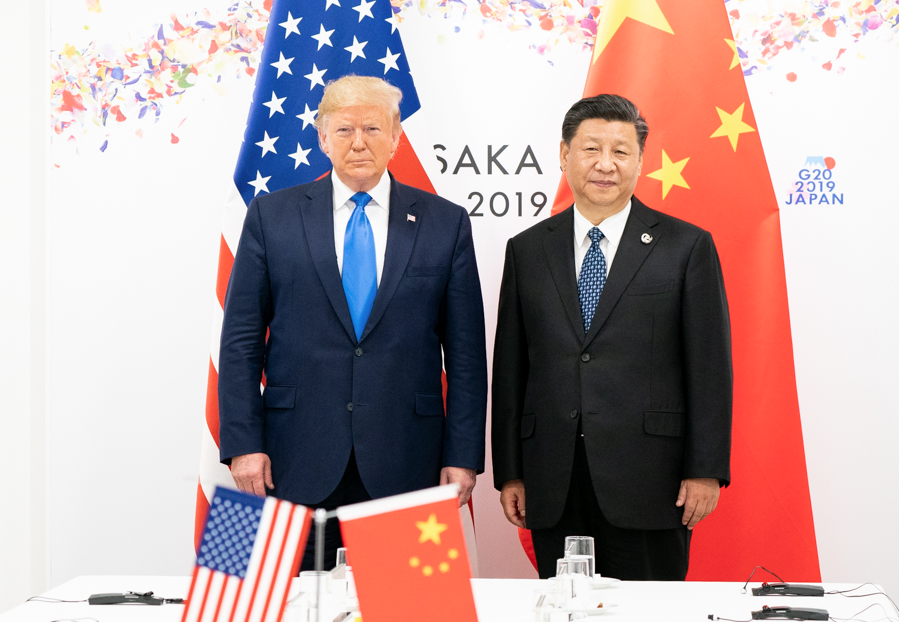
ESR looks at the concerns that China may be considering starting a war with the United States in the wake of the Wuhan Coronavirus:
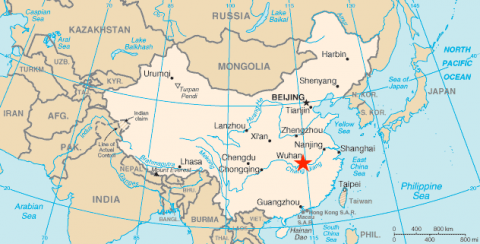
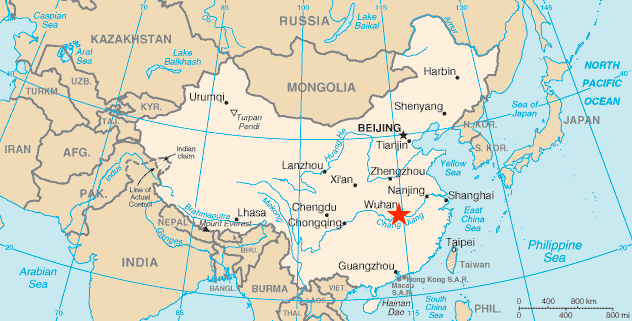
To understand how limited the PRC’s war options are, we can start with a grasp on how difficult and unsatisfying any war of conquest would be due to the geographic box China is in. The obstacles around it are formidable.

To the south, the Himalayan massif makes all of South Asia other than a narrow coastal plain on the Southeast Asian peninsula inaccessible to serious troop movements. There are no roads or rail links. The last time the Chinese tried pushing in that direction, in 1979, they were unable to sustain an offensive at any distance from their railheads and withdrew after less than a month. Their war aim – forcing the North Vietnamese to withdraw its troops from Cambodia – failed.

To the west, the vastness and comparatively undeveloped state of China’s western hinterland is a serious logistical problem before one even gets to the border. At the borders, the Tien Shan and Pamir ranges present a barrier almost as formidable as the Himalayas. External road and rail links are poor and would be easily interdicted.

To the north, movement would be easier. It might be just within logistical possibility for the PLA to march into Siberia. The problem with this idea is that once you’ve conquered Siberia, what you have is … Siberia. Most of it, except for a small area in the south coastal region of Primorsky Kraye, is so cold that cities aren’t viable without food imports from outside the region. Set this against the risks of invading a nuclear-armed Russia and you don’t have a winning proposition.
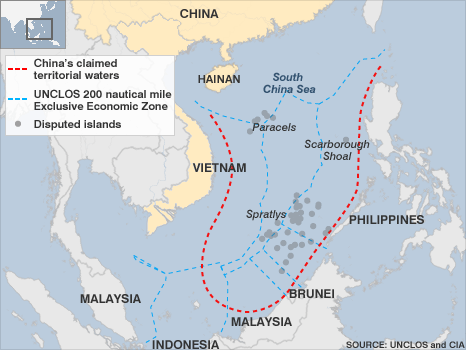
To the east is the South China Sea. The brute fact constraining the PRC’s ambitions in that direction is that mass movement of troops by sea is risky and difficult. I recently did the math on Chinese sealift craft and despite an expensive buildup since the 1980s they don’t have the capacity to move even a single division-sized formation over ocean. Ain’t nobody going to take Taiwan with one division, they’ve has too much time to prepare and fortify over the last 60 years.

The PRC leadership is evil and ruthless, but it’s also cautious and historically literate and can read maps. Accordingly, the People’s Liberation Army is designed not to take territory but to hold the territory the PRC already has. Its mission is not conquest but the suppression of regional warlordism inside China itself. The capability for the PLA to wage serious expeditionary warfare doesn’t exist, and can’t be built in the near-term future.

It’s often said that the danger of aggressive war by China is a function of the huge excess of young men produced by covert sexual selection and the one-child policy. But to expend those young men usefully you need to get them to where they can fight and are motivated by some prospect of seizing the wives unavailable for them at home. The PRC can’t do that.

The military threat from China is, therefore, a function of what it can do with its navy, its airpower, and its missiles. And what it can do with those against the U.S. is upper-bounded by the fact that the U.S. has nuclear weapons and would be certain to respond to a PRC nuclear or EMP attack on the U.S. mainland by smashing Chinese cities into radioactive rubble.

Within the constraints of conventional warfare waged by navy and air force it is difficult to imagine an achievable set of PRC war aims that gains more than it costs.

It’s possible — even likely — that the Chinese military has something like the oft-rumoured “ship-killer missiles” that might be able to cripple or sink an American carrier … if it was in range. That makes the South China Sea, the East China Sea, and the west coast of Japan a possible no-go area for US Navy carrier strike groups. A good defensive weapon system to have on hand in case relations with the outside world go “hot”, but not a strategic game-changer. Nobody would be likely to consider anything as dangerous as a seaborne invasion of mainland China, even without the threat of wonder weapons like the ship-killer. And good defensive weapons won’t secure the trade routes that China depends on outside coastal waters.

In a lot of ways your strategic situation is like a scaled-up version of Japan’s in 1941 – you could seize the initiative with a Pearl-Harbor-like initial shock, but you can’t wage a long war because without sealane control you’ll run out of key feedstocks and even food rather rapidly. And unlike the Japanese in 1941, you don’t have the kind of serious blue-water navy that you’d need for sealane control outside the First Island Chain – not with just two carriers you don’t.

There is one way an aggressive naval war could work out in your favor anyway. You can count on the U.S.’s media establishment to be pulling for the U.S. to lose any war it’s in, especially against a Communist or Socialist country. If your war goals are limited to ending U.S. naval power projection in the Western Pacific, playing for a rapid morale collapse orchestrated by agents of influence in the U.S. is not completely unrealistic.

It’s playing with fire, though. One problem is that before you launch your attack you don’t know that your sucker punch will actually work. Another is that, as the Japanese found out after Pearl Harbor, the American public may react to tragic losses with Jacksonian fury. If that happens, you’re seriously screwed. The war will end with your unconditional surrender, and not sooner.

Update: Bone-headed typo in the headline fixed. It’s funny how you can’t see ’em until just after you click the Save button…

March 29, 2020

QotD: Cargo cults, ancient and modern

Filed under: Economics, Pacific, Quotations, WW2 — Tags: , , , , — Nicholas @ 01:00

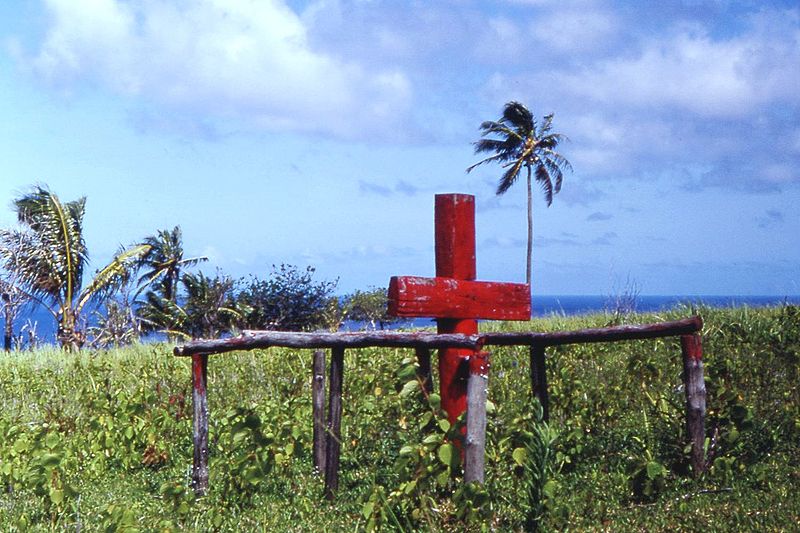
A cargo cult is a belief system among members of a relatively undeveloped society in which adherents practice superstitious rituals hoping to bring modern goods supplied by a more technologically advanced society. These cults … were first described in Melanesia in the wake of contact with more technologically advanced Western cultures. The name derives from the belief which began among Melanesians in the late 19th and early 20th centuries that various ritualistic acts such as the building of an airplane runway will result in the appearance of material wealth, particularly highly desirable Western goods (i.e., “cargo”), via Western airplanes.

To say that Pacific island societies were “relatively undeveloped” is a euphemism; they were primitive backward people who, when first encountered by European explorers, lived in a Neolithic stage of development far behind that of Mesopotamia in 1,500 B.C. That natives of Melanesia were at least 3,000 years behind Western civilization is simply a fact, but facts are now racism. Nevertheless, the point about cargo cult thinking is that these primitive islanders were unable to comprehend the advanced social and economic systems that produced, e.g., steam-powered ships, airplanes and the manufactured goods that the white man’s mechanical contrivances delivered. Utterly ignorant of how and why “cargo” had been produced and transported to their remote islands, the natives were understandably mystified when the arrival of “cargo” was interrupted. So they resorted to imitative rituals by which they believed the return of “cargo” might magically be reinstated.

The 21st-century American might laugh at these primitive superstitions, except that similarly ignorant “monkey see, monkey do” behaviors can be observed in our own society every day. My favorite example is the teenage boy who observes that girls are interested in athletes. The star basketball player in high school is popular with the girls, and so lower-status teenage boys — including the ones with zero athletic aptitude — will often emulate the athletic boys in terms of their attitudes, manners and clothing. This is why you see so many dorky suburban white boys wearing Nikes, NFL jerseys, etc., slouching around and speaking in a rap-influenced slang: “Wazzup, bruh?” These behavioral styles are an attempted imitation of popular black athletes. The clumsy adolescent white boy lacks the essential substance of the black athlete’s appeal, yet superstitiously believes (in cargo-cult manner) that he can obtain popularity by performing a superficial imitation.

Robert Stacy McCain, “The Cargo Cult Mentality”, The Other McCain, 2019-12-20.

March 12, 2020

WW2 On The Homefront Starts next week!

Filed under: Asia, Europe, History, Pacific, USA, WW2 — Tags: — Nicholas @ 06:00

World War Two
Published 11 Mar 2020

Next week our monthly new sub series On The Homefront premieres hosted by Anna Deinhard. This is why…

Join us on Patreon: https://www.patreon.com/TimeGhostHistory
Or join The TimeGhost Army directly at: https://timeghost.tv

Follow WW2 day by day on Instagram @World_war_two_realtime https://www.instagram.com/world_war_t…
Between 2 Wars: https://www.youtube.com/playlist?list…
Source list: http://bit.ly/WW2sources

Hosted by: Anna Deinhard
Produced and Directed by: Spartacus Olsson and Astrid Deinhard
Executive Producers: Bodo Rittenauer, Astrid Deinhard, Indy Neidell, Spartacus Olsson
Edited by: Anna Deinhard and Spartacus Olsson

Archive by Screenocean/Reuters https://www.screenocean.com.

A TimeGhost chronological documentary produced by OnLion Entertainment GmbH.

February 26, 2020

The Pacific War | Animated History

Filed under: History, Japan, Military, Pacific, USA, WW2 — Tags: , , , , , — Nicholas @ 04:00

The Armchair Historian
Published 15 Jun 2018

Huge thanks to Kan Shimada for the Japanese translation!

Our Website: https://www.thearmchairhistorian.com/

Our Twitter: https://twitter.com/ArmchairHist

This video has been sponsored and approved by Oasis Games

Sources:
The Pacific War Companion: From Pearl Harbor to Hiroshima, Daniel Marston (editor)
Iwo Jima: World War II Veterans Remember the Greatest Battle of the Pacific, Larry Smith
Hell is Upon Us: D-Day in the Pacific, Victor Brooks
Eyewitness Pacific Theater, Firsthand Accounts of the War in the Pacific from Pearl Harbor to the Atomic Bombs, John T. Kuehn and D.M. Giangreco
Lost in the Pacific: Epic Firsthand Accounts of WWII Survival Against Impossible Odds, L. Douglas Keeney (Editor)

This rather short-changes the Australian contribution to MacArthur’s campaigns in the southwest Pacific theatre, but it is a survey and can only cover so much of such a massive conflict.

January 10, 2020

Tank Chats #58 Buffalo & Weasel | The Funnies | The Tank Museum

Filed under: Britain, History, Military, Pacific, WW2 — Tags: , , , — Nicholas @ 02:00

The Tank Museum
Published 28 Oct 2018

Another episode in the Tank Chats Funnies Specials, with David Fletcher looking at the weird and wonderful vehicles of 79th Armoured Division led by Major General Percy Hobart, known as “Hobart’s Funnies”.

The Buffalo, or Landing Vehicle Tracked IV (LVT), is a lightly armoured tracked amphibious carrier. British “Buffaloes” were used in Northern Italy during WW2 and were issued to the 79th Armoured Division in Northwest Europe where they played an important role in the crossing of the Rhine, in 1945. This particular Weasel is amphibious and was used in muddy and wet conditions, rather than directly in water.

Support the work of The Tank Museum on Patreon: ► https://www.patreon.com/tankmuseum

Visit The Tank Museum SHOP: ► https://tankmuseumshop.org/
Twitter: ► https://twitter.com/TankMuseum
Tiger Tank Blog: ► http://blog.tiger-tank.com/
Tank 100 First World War Centenary Blog: ► http://tank100.com/ #tankmuseum #tanks #tankchats

January 4, 2020

The Rise and Fall of the Japanese Zero

Filed under: History, Japan, Military, Pacific, Technology, USA, WW2 — Tags: , , , — Nicholas @ 06:00

Real Engineering
Published 31 Aug 2018

Patreon:
https://www.patreon.com/user?u=282505…
Instagram:
https://www.instagram.com/brianjamesm…
Twitter:
https://twitter.com/thebrianmcmanus
Discord:
https://discord.gg/s8BhkmN

Thank you to AP Archive for providing footage: https://www.youtube.com/channel/UCHTK…

Get your Real Engineering shirts at: https://standard.tv/collections/real-…

References:
[1] https://www.thoughtco.com/world-war-i…
[2] http://rwebs.net/avhistory/history/ze…
[3] http://aboutjapan.japansociety.org/im…
[4] https://www.history.com/news/the-akut…
[5] https://www.japanpowered.com/history/…
[6] https://www.warbirdforum.com/sakai.htm

Credits:
Narrator/Director: Brian McManus
Co-Director: Mike Ridolfi (https://www.moboxgraphics.com/)
3D Animations: Eli Prenten (http://eliprenten.com/)
Research: Stephanie Sammann (https://www.stephanie-sammann.com/)
Sound: Graham Haerther (https://haerther.net/)

December 31, 2019

USMC Stinger Machine Gun: Medal of Honor on Iwo Jima

Filed under: History, Military, Pacific, USA, Weapons, WW2 — Tags: , , , , — Nicholas @ 04:00

Forgotten Weapons
Published 30 Dec 2019

Corporal Tony Stein
United States Marine Corps Reserve

For conspicuous gallantry and intrepidity at the risk of his life above and beyond the call of duty while serving with Company A, First Battalion, Twenty-Eighth Marines, Fifth Marine Division, in action against enemy Japanese forces on Iwo Jima, in the Volcano Island, 19 February 1945. The first man of his unit to be on station after hitting the beach in the initial assault, Corporal Stein, armed with a personally improvised aircraft-type weapon, provided rapid covering fire as the remainder of his platoon attempted to move into position and, when his comrades were stalled by a concentrated machine-gun and mortar barrage, gallantly stood upright and exposed himself to the enemy’s view, thereby drawing the hostile fire to his own person and enabling him to observe the location of the furiously blazing hostile guns. Determined to neutralize the strategically placed weapons, he boldly charged the enemy pillboxes one by one and succeeded in killing twenty of the enemy during the furious single-handed assault. Cool and courageous under the merciless hail of exploding shells and bullets which fell on all sides, he continued to deliver the fire of his skillfully improvised weapon at a tremendous rate of speed which rapidly exhausted his ammunition. Undaunted, he removed his helmet and shoes to expedite his movements an ran back to the beach for additional ammunition, making a total of eight trips under intense fire and carrying or assisting a wounded man back each time. Despite the unrelenting savagery and confusion of battle, he rendered prompt assistance to his platoon whenever the unit was in position, directing the fire of a half-track against a stubborn pillbox until he had effected the ultimate destruction of the Japanese fortification. Later in the day, although his weapon was twice shot from his hands, he personally covered the withdrawal of his platoon to the company position. Stouthearted and indomitable, Corporal Stein, by his aggressive initiative, sound judgment and unwavering devotion to duty in the face of terrific odds, contributed materially to the fulfillment of his mission, and his outstanding valor throughout the bitter hours of conflict sustained and enhanced the highest traditions of the United States Naval Service.

Harry S. Truman
President of the United States

The Stinger was a Browning aircraft machine gun adapted to use an M1 Garand buttstock and BAR bipod, used as a light machine gun by the US Marine Corps during the invasion of Iwo Jima in 1945. The gun was the creation of Sergeant Mel J Grevich oof the 5th Marine Division. Six were built and used on the attack on Iwo, including one by Corporal Tony Stein, whose outstanding bravery is documented in the Medal of Honor citation above. None of the original guns survive today, but I have the privilege of showing you this reproduction created by the Canadian Historical Arms Museum with the assistance of O’Dell Engineering.

http://www.patreon.com/ForgottenWeapons

Cool Forgotten Weapons merch! http://shop.bbtv.com/collections/forg…

Contact:
Forgotten Weapons
6281 N. Oracle #36270
Tucson, AZ 85704

December 7, 2019

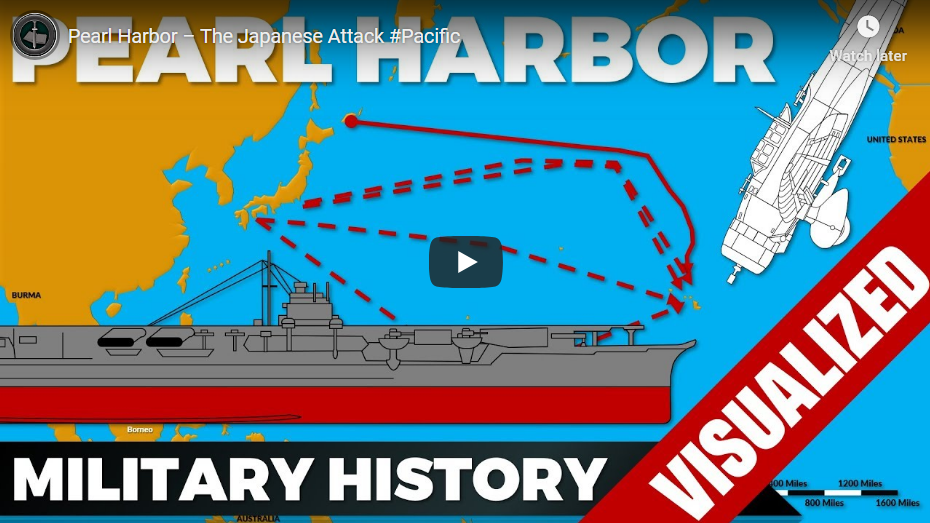
Pearl Harbor – The Japanese Attack

Filed under: History, Japan, Military, Pacific, USA, WW2 — Tags: , , , — Nicholas @ 04:00

Military History Visualized
Published 29 Nov 2016

» HOW YOU CAN SUPPORT MILITARY HISTORY VISUALIZED «
(A) You can support my channel on Patreon: https://www.patreon.com/mhv

(B) Alternatively, you can also buy “Spoils of War” (merchandise) in my online shop: https://www.redbubble.com/people/mhvi…

(C) If you want to buy books that I use or recommend, here is the link to the Amazon Store: http://astore.amazon.com/ytmh-20 which has the same price for you and gives a small commission to me, thus it is a win/win.

» SOURCES & LINKS «

Kuehn, John T.: “The war in the Pacific, 1941-1945”; in: Cambridge History of the Second World War, Volume 1
Amazon.com (affiliate): http://amzn.to/2g82o9a

Dull, Paul S.: The Battle History of the Imperial Japanese Navy.
Amazon.com (affiliate): http://amzn.to/2gPBxhJ

Germany & The Second World War – Volume VI
Amazon.com (affiliate): http://amzn.to/2g85hqt

Das Deutsche Reich und der Zweite Weltkrieg, Band 6.
Amazon.de (affiliate) http://amzn.to/2gc49Ra

Zimm, Alan D. The Pearl Harbor Myth
http://www.historynet.com/pearl-harbor

Zimm, Alan D. Attack on Pearl Harbor: Strategy, Combat, Myths, Deceptions.
Amazon.com (affiliate): http://amzn.to/2gc0LWk

» ADDITIONAL LINKS «
Maps
http://pacificwarbirds.com/pearl-harb…

https://spotlights.fold3.com/2011/12/…

Verifying the Submarine loss
https://www.history.navy.mil/research…

http://www.combinedfleet.com/I-70.htm

Bonus Link (not used): Original Damage Reports
https://archive.org/download/WorldWar…

» CREDITS & SPECIAL THX «
Song: Ethan Meixsell – “Demilitarized Zone”

» DISCLAIMER «
Amazon Associates Program: “Bernhard Kast is a participant in the Amazon Services LLC Associates Program, an affiliate advertising program designed to provide a means for sites to earn advertising fees by advertising and linking to amazon.com.”

Bernhard Kast ist Teilnehmer des Partnerprogramms von Amazon Europe S.à.r.l. und Partner des Werbeprogramms, das zur Bereitstellung eines Mediums für Websites konzipiert wurde, mittels dessen durch die Platzierung von Werbeanzeigen und Links zu amazon.de Werbekostenerstattung verdient werden können.

November 22, 2019

Battle of Savo Island 1942: America’s Worst Naval Defeat

Filed under: Australia, History, Japan, Military, Pacific, USA, WW2 — Tags: , , — Nicholas @ 02:00

Montemayor
Published 26 Aug 2017

(Animated Map) – WARNING: lower the volume if you are using headphones. sorry for the audio.

I do not own the rights to the songs or images. This video is purely for educational purposes.

No copyright intended, all image rights go to:

-Wikipedia Commons
https://commons.wikimedia.org/wiki/Ba…

-Naval History Heritage and Command
https://www.history.navy.mil/

-Portrait of Richmond K. Turner
https://www.ibiblio.org/hyperwar/Onli…

USS Jarvis
http://www.navsource.org/

Images contained on this site that are donated from private sources are © copyrighted by the respective owner. Images credited to the National Archives (NA, NARA); Naval History & Heritage Command (NHHC), formerly Naval Historical Center (NHC); and U.S. Navy (USN) are believed to be in the public domain. Some images credited to the United States Naval Institute (USNI) are from © copyrighted collections, the rest are believed to be in the public domain.

All songs by Ross Budgen https://www.youtube.com/channel/UCQKG…
-“Welcome to Chaos”
-“House Lannister Theme” – Game of Thrones Season 4 (Original composition)
-“Run”
-“Parallel”

Sources-

Hammel, E. (2017, March 6). “First Battle of Savo Island: The U.S. Navy’s Worst Defeat”. Retrieved August 25, 2017, from http://warfarehistorynetwork.com/dail…

Hornfischer, J. D. (2011). Neptunes Inferno: the U.S. Navy at Guadalcanal. New York: Bantam Books.

Newcomb, R. F., & Newcomb, R. F. (2002). The Battle of Savo Island. New York: H. Holt.

Stille, M. (2013). The Naval Battles for Guadalcanal 1942 (Vol. 225). Oxford, UK: Osprey Publishing.

Toll, I. W. (2016). The Conquering Tide: war in the Pacific Islands, 1942-1944. New York: W.W. Norton & Company.

USMC Casualty list taken from:
https://www.ibiblio.org/hyperwar/USMC…

October 25, 2019

The World Takes Advantage of American Isolationism | BETWEEN TWO WARS | 1933 part 3 of 3

Filed under: History, Japan, Military, Pacific, USA — Tags: , , , , , , — Nicholas @ 04:00

TimeGhost History
Published 24 Oct 2019

America is very unprepared for rising tensions in the Pacific and in Europe. US President Franklin Roosevelt tries his best to re-arm the American Army and Navy, but the isolationist opposition is a fierce obstacle.

Join us on Patreon: https://www.patreon.com/TimeGhostHistory

Subscribe to our World War Two series: https://www.youtube.com/c/worldwartwo…

Hosted by: Indy Neidell
Written by: Joram Appel
Directed by: Spartacus Olsson and Astrid Deinhard
Executive Producers: Bodo Rittenauer, Astrid Deinhard, Indy Neidell, Spartacus Olsson
Creative Producer: Joram Appel
Post-Production Director: Wieke Kapteijns
Research by: Rune Vaever Hartvig, Sietse Kenter and Joram Appel
Edited by: Daniel Weiss
Sound design: Marek Kaminski

Picture colorizations by: Norman Stewart, Julius Jääskeläinen, Daniel Weiss and Joram Appel

A TimeGhost chronological documentary produced by OnLion Entertainment GmbH.

From the comments:

TimeGhost History
1 day ago (edited)
This episode is very much about the global ramifications of the US’s foreign policy. American inaction and isolationism left room for other nations to develop imperialist ambitions. There are of course a lot of other factors that influenced the rise of expansionist and militarist governments in Europe and East-Asia, many of which are explained in our other Between Two Wars episodes. In no way does this video have any connection to current-day events or our opinion on them. This is what happened, our future episodes will be about what followed. We’re historians and that’s all we want to do here.
Cheers,
Joram

October 1, 2019

Charles Darwin – The Voyage of the Beagle – Extra History

Filed under: Americas, Britain, History, Pacific, Science — Tags: , — Nicholas @ 04:00

Extra Credits
Published 29 Sep 2019

The 1830s were an exciting time for science. All throughout Europe, there was a great movement to explore, map, and classify the world. And it was this expanding world that young Charles Darwin graduated into … albeit with the wrong degree. Because although he would one day be known as “the Father of Modern Biology,” Darwin’s father was set on his son following in his footsteps — as a doctor.

July 25, 2019

QotD: Ice ages as evolutionary drivers

Filed under: Environment, History, Pacific, Quotations, Science — Tags: , — Nicholas @ 01:00

The widths of the Pacific continued unaltered for millions of years. Temperatures scarcely dropped there in the Ice Ages. Generation after generation of Pacific birds were able to evolve in an almost completely stable world. Birds which somehow or other had arrived on remote islands branched into different species. In the Atlantic, there was hardly time to do that between the Ice Ages […] in the Atlantic endemics — species confined to particular places — only rarely evolved.

What you see when the puffins arrive in the spring is a product of this history. The Atlantic, for the past 2.74 million years has been a place of coming and going, unsettled at the deepest of levels, a system always ready to flip from relatively beneficent to deeply unaccommodating. Life does not have the time here to develop the mass of differentiated variety it has within the security of the Pacific.

[…]

The result is that now in the North Atlantic there is relatively little local variation. Species have evolved to cope with the variability and have wide ranges across the latitudes. The Pacific is a mosaic of local land-based varieties; the Atlantic the exclusive realm of the ocean travellers, birds which have distance embedded in their way of being.

Adam Nicholson, The Seabird’s Cry: The Lives and Loves of Puffins, Gannets and Other Ocean Voyagers, 2017.

June 29, 2019

Determining who the “original” inhabitants were

Filed under: Africa, Americas, Australia, Europe, History, Pacific, Science — Tags: , , , — Nicholas @ 03:00

It’s become quite common in some countries to pay formal lip service to the “original” peoples who inhabited the land before being dispossessed of that territory by various Europeans. Actually determining who were the first human inhabitants, however, is much more fraught … you can’t exactly expiate some residual guilt of your culture by acknowledging the previous culture if the previous culture in their turn dispossessed an even earlier group, can you? How far down the rabbit hole do you need to go? Tim Worstall explains:

Detail from a 1688 map of western New France by Vincenzo Coronelli that locates “Lac Taronto” at Lake Simcoe.
City of Toronto Culture Division/Library and Archives Canada via the National Post

… within all that the accurate answer to “Whose land are we on?” is the land of the latest bunch of murderous bastards who killed all the previous inhabitants. Perhaps moderated to say the peeps who killed all the previous men then dated the remaining womenfolk. Because once we’ve got past that nullius stage that’s the way it has been. The Moriori are in short supply these days on the Chatham Islands given that the Maori decided to eat them.

The original inhabitants of the British Isles, the Beaker Folk, were entirely replaced by the next lot, the Iron Age Celts and similar. The Angles displaced to the west the Romano Celts in their turn, detailed DNA studies showing rather more of the female side of the R-C’s bred into the new population than the male. The Franks weren’t indigenous to France, the Allemani to Germany, the Turks to Turkey.

In fact, we’ve between little and no proof that the varied Amerinds were the original inhabitants of the lands where the White Europeans found then from 1492 onwards. In the case of both the Incas and Aztecs as political powers, proof they weren’t. And horses and Plains Indians simply weren’t a thing until the Eurasian horse was introduced post 1492.

Basically, this is indeed true. Anywhere is the possession of simply the last group of people to have slaughtered, or outbred, the previous group.

An interesting observation – if we apply the oft stated Americas example elsewhere, that Whitey stole it all and should give it back, then the Bantu should be back in Nigeria and Central Africa returned to the Pygmies, Southern to the Khoi San. We don’t say that and for the life of me I can’t work out why.

April 29, 2019

Banning single-use plastics won’t make much (if any) difference

Filed under: China, Environment, India, Pacific — Tags: , , , — Nicholas @ 03:00

My local high school is suddenly all about the proposed ban on single-use plastics — where student-made posters used to proclaim their dedication to gender equality, they’re now all about the evils of plastics. It’s almost like it’s a co-ordinated campaign that originated somewhere else…

But despite the students’ new-found environmental awareness, the ban they favour would make little or no difference to plastic items ending up in the oceans, because the vast majority of the plastic there comes from only ten rivers, none of them in North America (this is from a World Economic Forum report). Jason Unrau reports on his trip up the Yangtze River in China twenty years ago that illustrates the breadth of the problem:

Beginning in Shanghai in the summer of 1999, I boarded a large flat-bottom boat with around 300 other passengers. It would be the first of about a dozen different vessels, that over two weeks ferried me 2500 kilometres to Chongqing.

After taking my first meal in the ferry’s mess hall, served in a Styrofoam box, I searched everywhere for a garbage can. There were none – passengers simply tossed their garbage overboard and without an alternative, I joined in the littering.

The banks of the Yangtze are home to more than 200 million Chinese who treat the waterway as commuter corridor and as I soon discovered, a dump. I took the trip to get a glimpse the fabled Three Gorges, before a hydro-electric project and dam would change the watershed forever. As my trip progressed, however, so did my treatment of this historic river as trash receptacle.

The closer I got to Chongqing, the narrower the river became and the smaller the ferries got. About 10 days into the trip, I exited the dining hall of a different vessel to engage in the daily ritual of reckless Styrofoam abandonment, but to my surprise there was a garbage bin.

Delighted at the prospect that my littering ways on the Yangtze were through, enthusiastically I added my box to a near overflowing bin. As if on cue a kitchenhand exited the dining hall, gathered up the bag and heaved the entire thing overboard.

Like I experienced and begrudgingly participated in creating, the World Economic Forum’s report describes “rivers of plastic” – its analyses of respective outputs and comparisons to garbage island and other samples, could be traced back to their source.

According to the economic forum eight of these rivers are in Asia: the Yangtze; Indus; Yellow; Hai He; Ganges; Pearl; Amur; Mekong; and two in Africa – the Nile and the Niger.

December 7, 2018

“A date that will live in infamy” – Speech

Filed under: History, Japan, Military, Pacific, USA, WW2 — Tags: , , — Nicholas @ 02:00

FootageArchive – Videos From The Past
Published on 19 Mar 2015

Welcome to FootageArchive! On this channel you’ll find historic and educational videos from the 1900s. Watch, learn, and take a trip back in time as we gain insight into a previous time. Subscribe for more.

Note: this video contains archived public domain / licensed footage. This footage serves documentary purposes on world history and is to be viewed as educational.

« Newer PostsOlder Posts »

Powered by WordPress