
Jill Bearup
Published Apr 29, 2024The Adventures of Robin Hood (1938) is a classic, and I am hopefully unlikely to get in copyright trouble if I use huge chunks of it. So prepare for an exhaustive (or possibly exhausting) fight breakdown, and a few minor comments about Errol Flynn and parrying.
(more…)
August 12, 2024
Robin Hood, But Make it ⚔️ICONIC⚔️
Comments Off on Robin Hood, But Make it ⚔️ICONIC⚔️
August 11, 2024
Tears are still a powerful weapon for female politicians
Janice Fiamengo on the tactic available to — and resorted to frequently — only females in politics, turning on the waterworks to generate sympathy and support:
Recently, a friend sent me a news article that illustrates, in small, the world of Anglophone politics, in which notions of what is owed to women, who are understood to be far more sensitive and fragile than men, operate alongside stern interdictions against stating that women are in any manner unsuited for strenuous, high stress roles.
Last week, an ABC News report detailed years-old allegations against a former aide to Josh Shapiro, the Governor of Pennsylvania who was, at the time of the article, one of Kamala Harris’s touted VP possibilities (she has since chosen Tim Walz, Governor of Minnesota). Shapiro’s former staffer, Mike Vereb, who resigned in 2023 over a sexual harassment allegation, is said to have brought a woman to tears in 2018 with threats made over the phone (“You will be less than nothing by the time Josh and I get done with you”, he is alleged to have said).
The woman, who runs an advocacy group, was left “weeping and in shock standing alone in a parking lot”. She did not report the alleged incident until she heard about the aide’s resignation five years later.
[…]
With the staffer long gone from Shapiro’s administration, the story had legs only because it was about a man who made a woman cry.
The problem is that women do cry rather frequently in politics. And complain. And perform their sensitivity to criticisms, monikers, crude jokes, the faux terror of J6, and bantering innuendo. Far too often such women make politics about them as women and about the trouble men allegedly cause them.
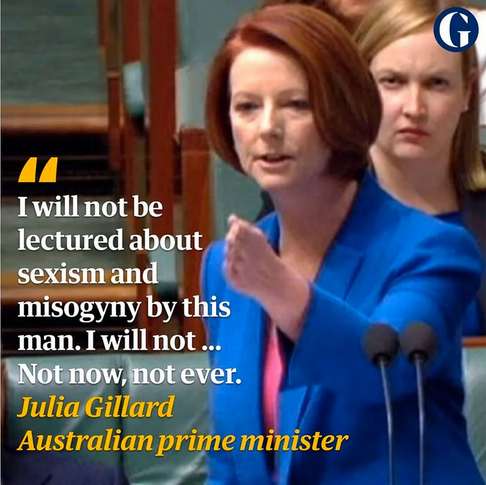
Such was the case with Australian Prime Minister Julia Gillard, who earned plaudits from feminists in 2012 for a fury-filled speech in the House of Representatives about sexism, in which she accused the opposition leader of misogyny for a number of statements he’d made that were not at all misogynistic, including that women were likely under-represented in Australian institutions of power because men were “more adapted to exercise authority”. Gillard also said she was “personally offended” (a more serious state of affairs, one assumes, than simply being “offended”) by the opposition leader’s contention that abortion was “the easy way out”. (The text of her speech is here.) “Julia Gillard’s Attack on Sexism Hailed as Turning Point for Australian Women” ran one enthusiastic headline. And perhaps it was, signaling the point at which women in politics stopped thinking they should accommodate themselves to the rigors of public life, and decided that politicians must instead accommodate themselves to the rigors of women’s demands.
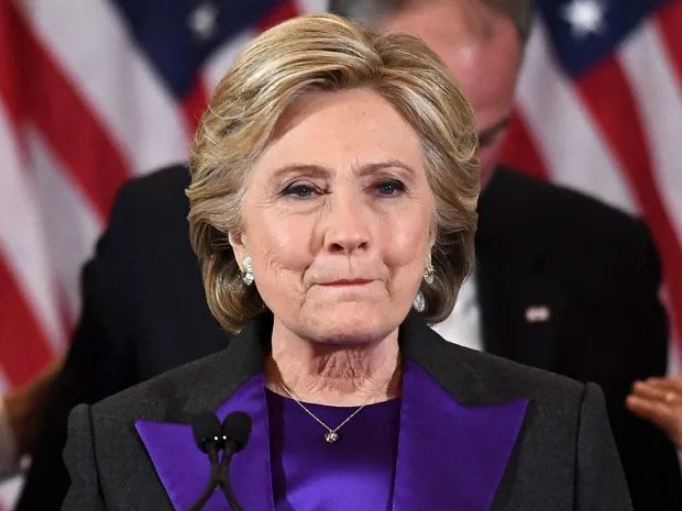
Even seemingly tough-as-nails Hillary Clinton has been allowed to go from interview to interview revisiting the now years-old indignity of her election loss in 2016, like a once-popular debutante who can’t believe she didn’t make the cheerleading squad. No man would ever be given such a prolonged pity party. Having contended for years that it was misogyny that prevented her from beating Donald Trump, she more recently pointed her finger at female voters’ failures of confidence: “They left me [in the final days of the campaign] because they just couldn’t take a risk on me, because as a woman, I’m supposed to be perfect“, she explained in May, 2024. No one seems to have informed Clinton that nothing reveals her crippling unsuitability for leadership than her embarrassing refusal to stop feeling sorry for herself.
And she is, alas, far from unique. Nicola Sturgeon, former First Minister of Scotland, sat and sobbed at last winter’s Covid-19 Inquiry in Edinburgh, deflecting critical questions about her government’s actions during the pandemic by proclaiming that she would carry the impact of them for as long as she lived. Forget the thousands of Scots who suffered or even died because of those decisions: the woman in charge was the one in need of compassion. Sturgeon had previously made a career of complaining about the sexism that allegedly put obstacles in the way of female politicians. Her focus on her own emotional discomfort at the Covid inquiry did more than any naysayers to indict the feminine style. How refreshing if either of these women could simply accept responsibility for their failures.
Comments Off on Tears are still a powerful weapon for female politicians
August 10, 2024
British NPCs have all downloaded the latest patch – “Spaceship Man Bad!”
Elon Musk is the new Emmanuel Goldstein for British NPCs:
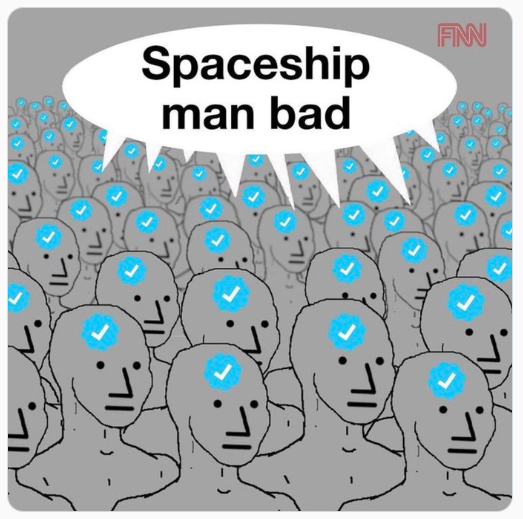
I always knew Britain’s liberals were secretly illiberal. That our chattering classes who genuflect at the altar of “human rights” would happily snatch away the rights of anyone who says something offensive online. That these dwellers of the leafy suburbs who weep over the jailing of dissidents in China will chortle over the sacking or blacklisting of dissidents at home, whether it’s women who think you can’t have a knob and be a lesbian or ex-Muslims whose criticisms of Islam are a tad too salty. And yet even I’ve been shocked by their frothing rage against Elon Musk in recent days. By their priestly demands that X be censured and possibly even wiped from the web. It’s one of the most batshit things I’ve seen in ages.
It’s not enough to call this a “mask-off moment”. It’s more like the phoney liberals have ripped their masks to shreds and stomped them into the dirt for good measure. Their rage is linked to the riots currently rocking the UK. Musk’s own tweets, they say, not least his chatter about Britain being on the road to “civil war”, have helped to whip up the mayhem. Worse, his “free-speech absolutism”, as one “liberal” magazine snottily refers to it, has meant that every tosser with a smartphone has been able to tweet their inflammatory views on the riots and even to spread misinformation. In essence, says a writer for the Guardian, Musk has been “leading from behind on UK thuggery and race riots”.
Got that? The reason Britain is going to shit is not because of any internal rot but because a billionaire in Texas said “civil war” on the internet. Glad we cleared that up. Even worse than the great and the good’s shameless deflection tactics – where they try to pin the blame for their own failures on a foreigner with money – is their tinpot solutions to this supposed problem. It might be time, says that sexagenarian Marxian in a leather jacket, Paul Mason, to “pull the plug” on X entirely. Yesteryear’s tyrants smashed up printing presses and chased booksellers out of town – today’s want to switch off a website on which no fewer than half a billion souls regularly share their thoughts and feelings.
They really have taken leave of their senses. Musk’s “horrific version of Twitter” is “a bit like Paris under Nazi occupation”, says Peter Jukes of Byline Times, the preferred publication of rich liberals who’ve been in a state of red mist since the plebs voted for Brexit eight years ago. Just like Paris in the 1940s, says Jukes, some are fleeing Musk’s X, while others are sticking around to “work for liberation”. The narcissism of it. Imagine thinking that keeping your X account open so you can continue spouting bollocks in your echo chamber is as brave as when Parisians stayed in Paris to resist Nazi rule.
Any mention of the Nazis is usually a reliable sign of madness. And so it is with the outburst of Muskphobia among Britain’s influencers. Musk’s antics on X led “straight to” rioting in the UK, says Will Hutton of the Observer (my italics). Do they really believe this? Do they really believe the reason that young shirtless fella looted the Greggs in Hull is because Elon Musk said “#TwoTierKeir” on X? Apparently they do. And there’s only one solution. “Pass a bill closing down Twitter in the UK”, says barrister and arch Remoaner Jessica Simor. That she said this on Twitter at least provided us with fleeting comic relief amid the elite’s lunacy. Does she know she can deactivate her account? Can someone tell her?
It’s the haughtiness of Britain’s influential haters of Musk that is most irksome. Alastair Campbell accused Musk of talking “utter shite” about Britain and its riots. That’s big talk from the undisputed king of shite, the man whose BS about Iraq helped to start a war in which tens of thousands of Arabs perished. Look, I know Musk’s words hurt liberals’ feelings, but at least they don’t hurt people’s lives and limbs.
“Elon Musk’s menace to democracy is intolerable”, pronounced Edward Luce of the Financial Times. That’s the paper that regularly made the case for overthrowing the largest democratic vote in British history. “Democracies can no longer ignore” the threat posed by Musk’s X, says Luce. I don’t like the term dogwhistle, but this is a tyranny dogwhistle, isn’t it? It’s a nod and a wink at “democracies” to clamp down on the “menace” of unfettered online speech. Lewis Goodall of The News Agents – a podcast hosted by ex-BBC staff for whom the BBC wasn’t quite wanky enough – wonders if “unmediated platforms” like Musk’s X are “beyond redemption”. “Should we stop using it?”, he wonders. Please, yes.
Comments Off on British NPCs have all downloaded the latest patch – “Spaceship Man Bad!”
“Heavy casualties” in a modern western army might count as “a skirmish” in earlier conflicts
I sent a link to Severian a few weeks ago, thinking it might be an interesting topic for his audience and he posted a response as part of Friday’s mailbag post. First, my explanation to him about why I thought the link was interesting:
I know that Edward Luttwak is what the Brits call “a Marmite figure” … people love or hate him and not much in between. I’ve read several of his books and found he had interesting things to say about the Roman and Byzantine armies in their respective eras but I haven’t found his modern analysis to be anywhere near as interesting. This time, however, he might well have found that acorn … is the dramatic casualty-aversion of western nations going to be a key element of future, shall we say “adventurism”?
Clearly, [Vladimir Putin and Benjamin Netanyahu] can still get their legions moving when they feel they need to, but could [insert current US President here] get the 101st Airborne into a high-casualty environment (let’s not pretend that Rishi Sunak or Keir Starmer could or would, and Macron’s posturing is nearly as bad as Baby Trudeau’s total lack of seriousness)?
Anyway, here’s the Marmite Man’s latest – https://unherd.com/2024/06/who-will-win-a-post-heroic-war
Sev responded:
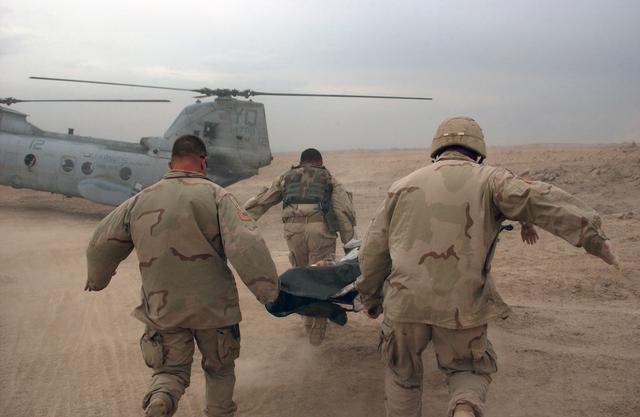
US Army soldiers assigned to 2-7 Cavalry, 2nd Brigade Combat Team (BCT),3rd battalion 1st Division, rush a wounded Soldier from Apache Troop to a waiting USMC CH-46E Sea Knight helicopter during operation in Fallujah, Iraq, during Operation IRAQI FREEDOM.
Photo by SFC Johan Charles Van Boers via Wikimedia Commons.
I’ve often said that, from what I can tell — and bearing in mind my entire military experience consists of a .500 record at Risk! — AINO‘s entire force philosophy amounts to “zero casualties, ever”.
Note that this was true even in the 20th century, when America was still America. “Stupendous casualties” by American standards would hardly rate “a spot of bother” by Soviet. Wiki lists the bloodiest American battle as Eisenborn Ridge (part of the Bulge), with approximately five thousand fatalities.
A Soviet commander who didn’t come home with at least five thousand KIA could probably expect to be court-martialed for cowardice.
That same Wiki article separates “battles” from “campaigns” for some reason. There’s an entire “methodology” section I’m not going to wade into, but even looking at “campaigns”, the bloodiest (by their definitions) is Normandy — 29,204 KIA. That’s an entire campaign, which might rate “a hard week’s fighting” by Soviet, German, or Japanese standards.
Please understand, Americans’ unwillingness to take casualties was greatly to their credit. You want to know about “meat assaults”, ask the Germans, Russians, or Japanese (or the British or French in WWI). George Patton might not have been the best American commander, but he was the most American commander — the whole point of battle is to make the other stupid bastard die for his country. I am 100% in favor of minimal losses, for everyone, everywhere.
But “minimal” does not mean “none”. People die in wars. People die training for wars. People die in the vicinity of the training for war, because it’s inherently risky. It doesn’t make one some kind of monster to call these “acceptable” losses; it makes one a realist. One could just as easily say — and with the same justification — that a certain number of car crash fatalities, or iatrogenic deaths, etc. are acceptable losses, because there’s no way to have “interstate commerce” and “modern medicine”, respectively, without them.
The Fistagon seemingly denies this. Forget human losses for a moment, and consider mere equipment. You read up on, say, Air Force fighter planes, and you’re forced to conclude that their operations assume that all planes will be fully operational at all times. Again, saying nothing of the pilots, just the airframes. The Navy seems to assume that all ships everywhere will not only be serviceable, but actually in service, at all times. Just recently, they shot off all their ammo at Houthi and the Blowfish … and seemingly had no idea what to do, because as Milestone D walked us through it, it’s impossible to rearm while underway.
Think about that for a second. How the fuck is that supposed to work in a real war? Can we just put the war on pause for a few months, so all our ships can head back to port to reload?
In fact, I’d go so far as to speculate that that’s the origin of the phrase “meat assault”. What The Media are calling a “meat assault” is simply what was known to a sane age as “an assault”. No qualifiers. You know, your basic attack — go take that hill, and if you take the hill, and if enough of the attacking force survives to hold it, that’s a win. People who absolutely should know better, though, don’t see it that way.
Since we’re here … I remember having conversations with some folks in College Town re: the Battle of Fallujah, while it was happening (technically the Second Battle of Fallujah). Now, obviously quite a few of my interlocutors were ideologically committed to the position that this was senseless butchery. And in the fullness of time, I too have come around to the position that the entire Operation Endless Occupation was senseless butchery. But leaving all that aside, the point I was trying to make was a simple one: Total US casualties were 95 killed, 560 wounded.
Every one of them a senseless crime, I now believe, but considering Fallujah strictly as a military operation, that’s amazing. House-to-house fighting in a heavily urban area, against a fanatically committed opponent who was willing, indeed eager, to use every dirty trick in the book … and US forces took 655 total casualties. That’s about as well as it can possibly be done. The Red Army probably lost 655 men on the train ride getting to Stalingrad. I wouldn’t be surprised at all to learn that 655 is the daily casualty figure across the entire front in Ukraine … hell, I wouldn’t be surprised to learn that there are lots of individual sectors in Ukraine taking those kinds of daily losses. 655 is pretty damn good …
… but I was called every dirty name they could think of for suggesting it. I was called dirty names by people who called themselves conservatives, who were such ostentatious “patriots” that they’d embarrass Toby Keith.
Fallujah was fought in 2004, a time that seems like the Blessed Land of Sanity compared to now. AINO simply won’t take casualties. The Pentagram won’t — lose a tank, and you lose your job. (In battle, obviously. If you abandon it to the Taliban, no problem. And of course if you lose an entire war, it’s medals and promotions for everyone). And because the high command won’t, the field commanders won’t either. And because they won’t … well, “desertion” is an ugly word, but let’s just say Tim Walz won’t be the only guy who suddenly needs to be elsewhere right before it’s time to ship out. And as for the guys actually shanghaied into whatever foreign fuckup … well, “mutiny” is an even uglier word, but does anyone want to bet against it?
Comments Off on “Heavy casualties” in a modern western army might count as “a skirmish” in earlier conflicts
August 9, 2024
Domicidal maniacs in charge
Lorenzo Warby provides an oh-so-useful word to accurately capture what the diversity-at-all-costs elites running most western countries these days are actually up to:
Domicide is the destruction of home. It comes in the “hard” version — the physical destruction of houses and infrastructure.
Domicide also comes in a “soft” version — flooding localities with new people, separating people from, and otherwise degrading, their heritage. When folk say Britain is becoming “unrecognisable”, it is the domicidal effect of mass migration they are referring to.
The UK is suffering from a domicidal elite, one that uses mass migration to break up working-class communities; asymmetric multiculturalism to elevate incoming cultures over those of native English (the Celtic fringe get minority brownie points); favours non-“white” faces in advertising; asymmetric race-swapping in entertainment against the native English; denigration of British history as racist, white supremacist, imperialist, colonialist, etc.
Much of this is insulting virtue-signalling allied to, or presenting, cartoonish (simplified) and caricature (distorted) history. It all undermines social cohesion. But it is the use of migration policy as a systematic weapon against the resident working class which does the most damage. Though two-tier policing — obviously treating Muslims in particular with a deference not shown to the natives, especially when it comes to policing speech — is also highly corrosive of social cohesion.
Many working-class communities in Britain were already fairly dysfunctional — though the British state is not innocent in those dysfunctions1 — and sections of the British working class are very far from admirable. None of this justifies the use of mass migration to make things worse for such folk, however much it may help to explain the moralised class contempt that underlies so much of modern progressivism and modern managerialism.
To improve such things, to “level up”, requires a strong sense of how to create and maintain social order. Modern progressivism is strongly antipathetic to such understanding. To “level up” also requires a strong sense of custodianship, which managerialism typically lacks: particularly progressivist managerialism.
Indeed, modern feminist, progressivist, managerialism—in its lack of custodianship; lack of social solidarity;2 in its antipathy to taking the problems of social order seriously — is running the British state into the ground. The post-medieval British aristocratic and mercantile elite did a much better job of state management. But those elites had mechanisms — such as duelling, that forced men to defend their reputation at the risk of their life, and grand country houses, that turned into expensive investments in social isolation if you behaved badly — that selected for character.
Nowadays, the British elite only selects for capacity and even that is being degraded by DEI undermining the signals of competence. It turns out, over the longer term, character matters more than capacity. For capacity without character selects for manipulative, anti-social personalities that degrade institutions over time.
1. For a particularly brutal depiction in fiction of the dysfunctional British welfare state — especially its school system — see Christopher Nuttall’s Mystic Albion series, especially the first book.
2. Feminisation of institutions and discourse has tended to degrade social solidarity, see Benenson et al, 2009. The most conspicuous example of this in the UK is how uncouth it is in elite circles to mention the systematic rape and sexual exploitation of underage working class girls by overwhelmingly Muslim gangs.
Comments Off on Domicidal maniacs in charge
Why Oil Paint Is So Expensive | So Expensive
Business Insider
Published Jul 13, 2019Oil paint is simple. At its most basic, it’s just a mixture of oil and pigment. But depending on the color and quality, a liter of this paint could cost you $285 to $1,100.
While the rise of oil paint is associated with the Renaissance, paintings using poppy-seed oil have been dated as far back as seventh-century Afghanistan. So what is it that makes this paint so special? And why is it so expensive?
(more…)
Comments Off on Why Oil Paint Is So Expensive | So Expensive
QotD: Celebrity fund-raising for foreign aid
Unlike private capital, foreign “aid” enters a country not because conditions there favor economic growth but because that country is poor — because that country lacks institutions and policies necessary for growth. And the more miserable its citizens’ lives, the more foreign “aid” its government receives.
Can you imagine a more perverse incentive? The poorer and more wretched are a nation’s people, the more likely celebrities such as Bono will convince Westerners and their governments to take pity on that country and to send large sums of money to its government. And because that country’s citizens are poor largely because their government is corrupt and tyrannical, the money paid in “aid” to that government will do nothing to help that country develop economically.
The cycle truly is vicious. Aid money naively paid by Westerners to alleviate Third-World poverty is stolen or misspent by the thugs who control the governments there. Nothing is done to foster the rule of law and private property rights that alone are the foundation for widespread prosperity. The people remain mired in ghastly poverty, their awful plight further attracting the attention and sympathy of Western celebrities, who use their star attraction and media savvy to shame politicians in the developed world into doling out yet more money to the thugs wielding power in the (pathetically misnamed) “developing world”.
If I could figure out a way to measure the long-term consequences of this new round of debt relief — a way that is so clear and objective that even the most biased party could not quibble with it — I would offer to bet a substantial sum of money that years from now this debt relief will be found to have done absolutely no good for the average citizens of the developing world.
It’s a bet I would surely — and sadly — win.
Don Boudreaux, “Faulty Band-Aid”, Pittsburgh Tribune-Review, 2005-06-18.
Comments Off on QotD: Celebrity fund-raising for foreign aid
August 8, 2024
“The future was then” – the Avant-Garde is so passé
Ted Gioia shares some observations on the Avant-Garde in modern culture, where the bourgeoisie seem to have become immune — or at least inured — to all the épater-ie:

Some time back, I was invited to attend a concert by an up-and-coming avant-garde band. These musicians were hellbent on disruption and mayhem, proving their transgressive credentials at every turn.
My companion that evening was a well-known jazz musician and, at the end of the concert, he turned to me and said:
“The future was then.”
I laughed, because this was so true. The performance we had just experienced wanted to be cutting-edge and futuristic, but every note played reflected a notion of the avant-garde as it existed sixty years ago.
The future was then.
I thought of that concert recently when a magazine convened a group of artists and intellectuals and asked them a troubling question:
What happened to the avant-garde?
Few people paid attention to their hand-wringing. I didn’t even hear about this online colloquium until months had passed — and I try to stay on top of precisely these kinds of issues. Nobody I know mentioned it, and I stumbled upon it purely by chance.
But that only proves that there really is a crisis in the avant-garde. It’s a crisis of neglect. Of disinterest.
People once got worked up about cutting edge art and transgressive culture. They loved it or hated it, but they always had strong feelings. Nowadays they hardly notice.
Perhaps they are just deadened to it from over-exposure.
You can put up the strangest statue in the town square nowadays — let’s say Albert Einstein getting swallowed by a monster snail — and people just walk by it. They’ve seen it all before.
You have too.
Artists can make the most bizarre music, destroying instruments, shouting obscenities, and creating all sorts of noise. But — yawn! — somebody’s great-grandpa was doing all that three generations ago.
Comments Off on “The future was then” – the Avant-Garde is so passé
Tulsi Gabbard is reportedly on a US government terrorist watch list
Publicly demolish the candidate who goes on to become Vice President and then Presidential candidate, get on a terrorist watch list, apparently:
Former congresswoman Tulsi Gabbard hasn’t exactly been toeing the progressive line since she left the House. In fact, she’s been on a bit of a rampage, destroying the extreme left with every public appearance.
Yet as a former federal lawmaker and a military veteran — one who didn’t leave her unit high and dry as they prepared for deployment, unlike some others I could name — you’d think she’d be someone we wouldn’t suspect of anything illegal.
And I’m willing to bet that no one does suspect her of anything.
That didn’t stop the feds, though.
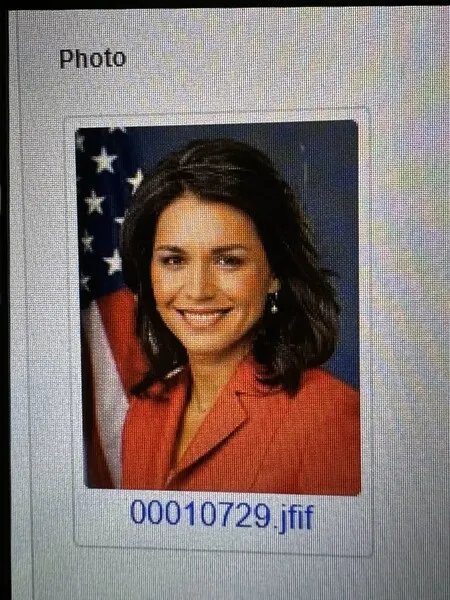
In an exclusive breaking story, several Federal Air Marshal whistleblowers have come forward with information showing that former U.S. Representative and Presidential candidate Tulsi Gabbard is currently enrolled in the Quiet Skies program. Quiet Skies is a TSA surveillance program with its own compartmentalized suspected terrorist watchlist. It is the same program being weaponized against J6 defendants and their families. Quiet Skies is allegedly used to protect traveling Americans from suspected domestic terrorists. The photo below is a screenshot from the actual Target Package used by the FAMS to surveil Gabbard.
The whistleblowers first shared the information with Sonya LaBosco, the Executive Director of the Air Marshal National Council (AMNC), a national advocacy group for the Federal Air Marshals (FAMs). According to LaBosco, at least one of the whistleblowers is ready to go on the record with pertinent documentation. LaBosco shared that Gabbard is unaware she has two Explosive Detection Canine Teams, one Transportation Security Specialist (explosives), one plainclothes TSA Supervisor, and three Federal Air Marshals on every flight she boards. LaBosco has attempted to contact Gabbard and her staff but has not received a response.
There’s literally nothing about Gabbard that should warrant this kind of attention. I can think of a few folks where I can at least comprehend an argument for such a thing, but Gabbard is far from one of them.
So what gives?
Matt Taibbi has more:
This story began two weeks ago, when the former Hawaii congresswoman returned home after a short trip abroad. In airport after airport, she and her husband Abraham Williams encountered obstacles. First on a flight from Rome to Dallas, then a connecting flight to Austin, and later on different flights for both to cities like Nashville, Orlando, and Atlanta, their boarding passes were marked with the “SSSS” designation, which stands for “Secondary Security Screening Selection”. The “Quad-S” marker is often a sign the traveler has been put on a threat list, and Gabbard and Williams were forced into extensive “random” searches lasting as long as 45 minutes.
“It happened every time I boarded,” says Gabbard. The Iraq war veteran and current Army reservist tends to pack light, but no matter.
“I’ve got a couple of blazers in there, and they’re squeezing every inch of the entire collar, every inch of the sleeves, every inch of the edging of the blazers,” she says. “They’re squeezing or padding down underwear, bras, workout clothes, every inch of every piece of clothing.” Agents unzipped the lining inside the roller board of her suitcase, patting down every inch inside the liner. Gabbard was asked to take every piece of electronics out and turn each on, including her military phone and computer.
That was the other strange thing. “I use my military ID to get through security sometimes,” says Gabbard, who among other things traveled to her reservist base in Oklahoma during this period. Once, she was unable to get through security with military ID. Transportation Security Administration (TSA) agent saw the “SSSS” marker. “The TSA agent said, ‘Why are you Quad-S? You’re in the military’,” explains Gabbard. “And I said, ‘That’s exactly what I’m wondering.’
Gabbard goes on: “Then I said, ‘The only thing I can think of is, I work in politics’. And he said, oh.”
The agent told her he’d encountered supporters of a certain former president who’d had no issues traveling before, but were now “marked quad-S every time they traveled”. Gabbard shrugged and slogged through, still encountering extra security. At one flight, she says, there were “at least six TSA agents doing additional screening”, along with canine support. “There were dogs in Dallas when we got there, dogs at a couple of the gates.”

It’s not just high profile people like Gabbard who’ve been added to this domestic harassment enhanced security list, it’s apparently anyone deemed to be too closely identified with a current presidential candidate who can be added to these lists:
Quite the contrary, according to LaBosco, who says the program has grown “off the charts”, especially since January 6th. “They’re watching 8-year-old children. They’re following 17-year-old cheerleaders that were traveling for cheer competitions, people who lost their legs in combat … TSA is out of control against the American people.”
Gabbard’s recent political career has already been marked by bizarre attacks and harassment. A feature describing her as a favorite of the Putin government was timed to the launch of her 2020 presidential campaign, and Hillary Clinton made waves by denouncing her as a Russian “asset”. After this episode, she intends to fight back. “I’m going to be encouraging former colleagues of mine in Congress who I know are concerned about this to exercise their oversight authorities,” she says.
“These actions are those of a tyrannical dictator. There’s no other way to describe what they’re doing.”
QotD: The real reason modern music sounds the same
Fast forward a few years, though, and now they’ve got a pretty good idea of what “rock” is. More importantly, they’ve got a pretty good handle on what the market for rock is. At that point, they do what execs in any industry do. Why bother trying to find the hot new thing, when you can just make it yourself?
And that’s why two guys you’ve never heard of, Max Martin and a dude calling himself “Dr. Luke”, have written every #1 pop hit for the last 15 years. I’m sure they don’t work cheap, but it’s a lot cheaper than scouting every bar band in America for a sound / look / stage act that might or might not pan out. Much easier to focus group a few traits, call up central casting, have them send over a made-to-order bimbo, and have him / her / xzhem front Dr. Luke’s latest computer-generated ditty.
And if everything on the radio all sounds exactly the same, that’s because it is exactly the same. Max Martin and Dr. Luke, and their zillion Mini-Mes at every level of the record biz, sometimes write songs for specific people — hey, guys, Katy Perry needs another ballad for her new album, hop to it! But mostly they write on spec, and shop it around. Different singers, different bands, different genres, doesn’t matter — this time it’s the two generic prettyboys in the “country” band Florida-Georgia Line singing it, but last time it was Katy Perry, the next time it’ll be the Backstreet Boys on their triumphant comeback tour, feat. Jay-Z and MC Funetik Spelyn. Same exact song, literally — it’s just that Kenny Chesney needed one more track on his album this time, and Taylor Swift didn’t, so now it’s #5 with a bullet on the “country” chart.
Severian, “Own Goals”, Rotten Chestnuts, 2021-07-21.
Comments Off on QotD: The real reason modern music sounds the same
August 7, 2024
“Two Tier Keir” fails the latest challenge
Violent protests continued in many British cities over the weekend, and despite promising to crack down on violent groups, Prime Minister Sir Keir Starmer fluffed it again:

Young Muslim men rampaging through Birmingham should have offered the government a convenient chance to quash the accusations that the Prime Minister is “Two Tier Keir”.
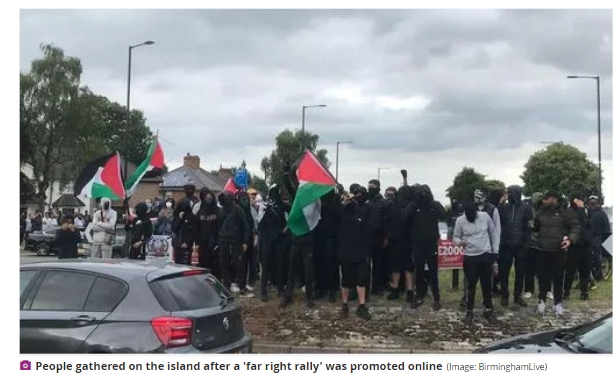
Fuelled by rumours that the far right were organising a protest in the area, the demonstration soon took on a dark life of its own. Young men in balaclavas harassed journalists, driving Sky News’ “communities correspondent” off the air, with an attempt even being made to slash the wheels of the Sky van. LBC’s Fraser Knight was chased out of the area. Mr Knight explained that “6 men ran after us down a road with what looked like a weapon”, and that “cars followed us”. “There wasn’t a safe place for us to go for miles,” he says.
Meanwhile, a white man was attacked outside a pub by a mob of masked men, and attempts were made to stop random drivers. This violence and intimidation, of course, mirrors that which has been perpetrated in riots elsewhere.
But there is a difference. Where were the police in Birmingham? We have seen riot police wielding dogs and batons against the far right, and Keir Starmer was promising that rioters would face the “full force of the law“. In Birmingham, though, the police appear to have acted with a light touch. One officer was recorded apparently dismissing the violence as a “small scuffle“.
Local MP Jess Phillips is famed for her outspoken and combative manner, so one might have expected swift condemnation. (Indeed, given that Phillips was recently bragging about how “unflappable” she is around criminals, it’s a shame she wasn’t there to resolve things.)
Actually, Phillips’ first public response to the disorder was to quote tweet a video of a group of masked men and write:
To be clear all day rumours have been spread that a far right group were coming and it was done entirely to get Muslim people out on the street to drive this content. It is misinformation being spread to create trouble.
Okay, I can believe it. But surely this was time to tell them to disperse and go home? Phillips then quote tweeted Richard Tice MP, who had published a video of the Sky News team being intimidated. “These people came to this location because it has been spread that racists were coming to attack them,” she wrote:
This misinformation was spread entirely to create this content. Don’t spread it MR Tice!
Sure, again, we get it. The gathering was fuelled by misinformation. But when a group of journalists — with a female correspondent, no less — is being intimidated by masked men flashing trigger fingers at the camera, it has clearly evolved into something more hooliganistic. These men were not confronting a skinhead in a “Blood and Honour” t-shirt. They were confronting a woman trying to do her job.
Esmerelda Weatherwax gathers reports from local media in Birmingham over the weekend:
A huge crowd gathered in Bordesley Green this evening following rumours that a “far right rally” was going to take place … hundreds of mostly young men in balaclavas and face masks gathered outside the McDonald’s at the junction of Bordesley Green and Belchers Lane.
300 or so people mostly Asian and male, many dressed in black and wearing masks or coverings, turned up after the rumour spread rapidly online.
Despite the rumours circulating today, there was no rally and the crowd was seen later dispersing, with some young men using the opportunity to show off on motorbikes.
A 45-year-old from Bordesley Green said he was there to stand up against fascism … “We don’t want this portrayed as Muslim men causing trouble …”
Yardley West and Stechford Cllr Baber Baz was among the crowd this evening and said there was a “strong response from the community”. Cllr Baz added: “As long as it remains peaceful which I am sure it will we are sending a strong message to the EDL that they are not welcome here and will not divide our community.”
A Sky News reporter was forced off air after she was sworn at, with one man on a bike riding towards the camera before saying: “Free Palestine, f*** EDL“. A man wearing a balaclava and wielding a knife “stabbed” the tyre of a Sky News van after its reporter was forced off air, it has been reported. Sky News had to cut short its broadcast in Bordesley Green after its reporter was sworn at on TV.
Comments Off on “Two Tier Keir” fails the latest challenge
August 6, 2024
Britain’s immigration debate turns violent
At The Last Ditch, Tom discusses how the immigration issue has become the issue in modern Britain:
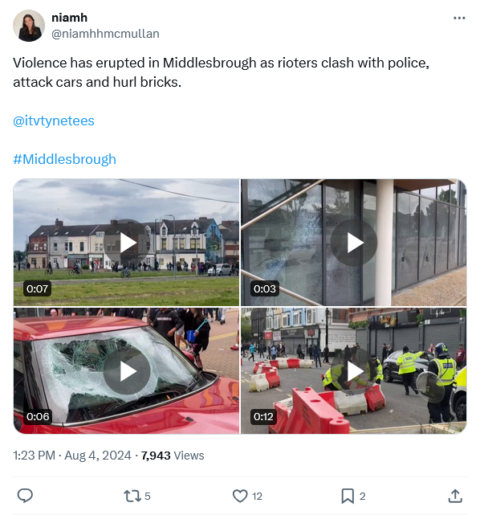
Protest and counter-protest in Middlesbrough over the weekend of August 3-4.
Margaret Thatcher famously quoted Kipling’s Norman and Saxon to President Mitterand of France in an EU meeting;
The Saxon is not like us Normans. His manners are not so polite.
But he never means anything serious till he talks about justice and right.
When he stands like an ox in the furrow – with his sullen set eyes on your own,
And grumbles, “This isn’t fair dealing”, my son, leave the Saxon alone.She was trying, perhaps not as delicately as her diplomats would have wished, to explain how the apparently calm British will react – eventually – to being wronged.
I spent twenty years in three other countries and worked closely in business with people from many more. I have often smiled to myself since returning when I hear British people speak of our unique sense of fair play. It’s not unique at all. Everyone has it. We do not own fairness. We do not own tolerance.
We do, however, traditionally pride ourselves on both and the way we see ourselves has shaped our reactions over the last twenty-five years as we welcomed more immigrants than in the previous two millennia. A few years ago I listened quietly to a Bangladeshi friend – a would-be human rights lawyer – talk about racism in our country. I asked her where in the world was a better place to live as a member of an ethnic minority. On reflection, she agreed with me that there is nowhere.
I am not saying we couldn’t treat each other better. Of course we could and should try. But let’s take a moment, as our streets burn and our elites condemn us as far-right racists, to be proud of how we’ve behaved in general towards so many new arrivals in such a short time.
[…]
One day history may reveal which politician in the capital of an old European empire realised there was a ready supply of workers in the former colonies. People who spoke our languages and were familiar with our systems of government – because both had been forced on their ancestors. It was a perilous idea that may yet prove to be the end of European civilisation but he must have looked like a genius to his peers.
The doors were opened and cheap labour flooded in. From the lofty heights where the elites survey us, it looked like a perfect solution. On the ground, not always so much. Mostly we’ve been welcoming, accepting and tolerant. We’ve sometimes even gone beyond tolerance and flattered our new arrivals that they’ve enhanced our magnificent old culture with their jerk chicken and curries.
Yet already when I was a youngster practising criminal law problems had begun to emerge. A custody sergeant with whom I used to chat when waiting to see clients in the cells told me suicide rates among Muslim girls in our Midlands city were disturbingly high. Asked why that was, he said they were not suicides, but honour killings – the first time I’d heard that phrase. No-one, he said, commits suicide by pouring paraffin over themselves and setting themselves alight. It’s just too painful. Muslim men were killing their daughters and sisters. Asked why there were no prosecutions, he said senior police officers made it clear to their subordinates that it was “racist” to suggest the dead girls’ families’ stories of suicide were untrue.
Fresh out of my university law faculty, I sneered that his bosses were right and he was a racist. I will never forget the last words he said to me;
Young man, then you’re part of the problem.
And I was. In that moment, I’d turned away from murdered women to preserve my smug world view. Just as, decades later, council staff and police officers in cities all over Britain turned away from young girls groomed and raped by Muslim men, for fear of being called bad names.
Gary Fouse in the New English Review asks whatever happened to Merry Olde England:
If you have been following the news out of England for the past week, you might think that the country has all but fallen into civil war. Riots and various forms of violent protests and counterprotests have broken out in cities all over the country in reaction to a shocking murder that occurred in the town of Southport last week. On July 29, a group of little schoolgirls were attending some sort of Taylor Swift-themed dancing class when a 17-year-old son of Rwandan immigrants (who was born in England) attacked them with a knife. Three of the schoolgirls (ages 6. 7, and 9) have died and eight others went to the hospital with serious knife wounds.
The entire nation has erupted in shock and anger. Obviously, the anger is being directed at immigrants in general — given the country’s out of control migration situation and long-simmering tensions with the largely-radicalized Muslim communities. It seems that now-finally — the people have had enough. At least one migrant shelter has been attacked, and several Muslim young men are showing up to counter-protest and do battle with young white men. Now the cops in several cities are trying to keep the two sides apart.
I should state at this point that I will not condone the violence and destruction that is taking place and the objects being thrown at police who are trying to keep order. While I do not condone the violence, I think I can understand why it is taking place. I recall back in the 1960s when there were many riots in inner city areas of the US during the Civil Rights era and in response to the murders of black civil rights leaders like Martin Luther King and Medgar Evers. Many responsible black leaders condemned the violence but also added that they could understand the reasons for it. It was a different era then in America, and in the South, segregation had the force of local laws behind it. Many blacks felt that the government was not responding to their grievances.
[…]
The fact is that far too many nations in the West, including ours, have suffered from bad political leadership. We see it in our cities, we see it in our state capitals, and we see it in Washington DC. Bad political leadership results in bad cities, bad states, and a bad country. The fish rots from the head, and what we need to do-in England-in France, in America, etc is elect responsible people who recognize that their government’s number one duty is to protect the citizens. When a government fails to do so, eventually what happens is what we see in England today.
Comments Off on Britain’s immigration debate turns violent
August 5, 2024
Short-term technological forecast – “If I were a commercial pilot, I’d tell you to return to your seats and buckle up”
Most of this Ted Gioia post is behind the paywall (and if you can afford it, I’m sure you’d get your money’s worth for a subscription):
I anticipate extreme turbulence on every front for the remaining five months in 2024. You will see it in politics, business, economics, culture, world affairs, the stock market, and maybe even your own neighborhood.
That’s one of the themes of my latest arts and culture update below.
What happened to the AI business model last week?
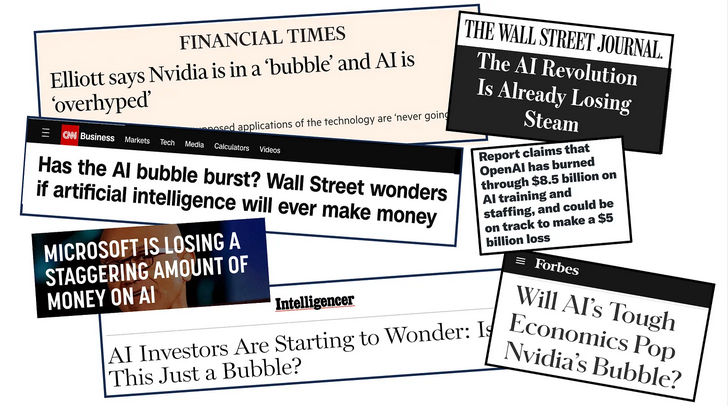
After almost two years of hype, the media changed its opinion on AI last week.
The hype disappeared almost overnight
All of a sudden, news articles about AI went sour like reheated 7-Eleven coffee. The next generation AI chips are delayed, and 70% of companies are behind in their AI plans. There are good reasons for this — most workers now say AI makes them less productive.
People are also noticing that AI businesses want to use the entire electricity grid to run their money-losing bots. Meanwhile AI companies are burning through cash at historic levels. Even under the best case scenario, this all feels unsustainable.
But the worst disclosure, in my opinion, came on July 24 — just eleven days ago.
A study published in Nature showed that when AI inputs are used to train AI, the results collapse into gibberish.
This is a huge issue. AI garbage is now everywhere in the culture, and most of it undisclosed. So there’s no way that AI companies can remove it from future training inputs.
They are caught in the doom loop I described last week.
That same day, the Chief Investment Officer at Morgan Stanley warned investors that AI “hasn’t really driven revenues and earnings anywhere”. One day later, Goldman Sachs quietly released a report admitting that the AI business model was in serious trouble.
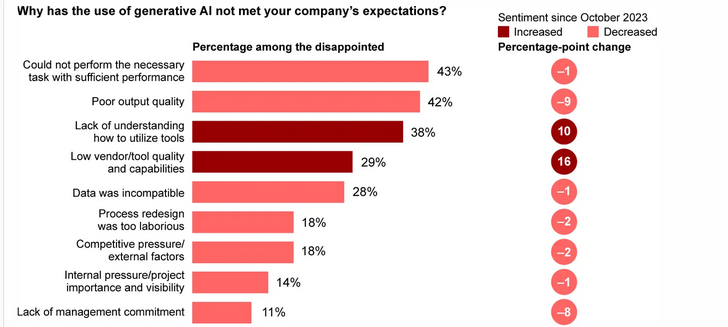
Even consulting firms, who make a bundle hyping this tech, are backtracking. Bain recently shared the following chart (hidden away at the end of a report) which explains why AI projects have failed.
These findings are revealing. They show that management is absolutely committed to AI, but the tools just don’t deliver.
And, finally, last week the media noticed all this.
They published dozens of panic-stricken articles. Investors got spooked too — shifting from greed to fear in a New York minute. Over the course of just two days, Nvidia’s stock lost around $400 billion in market capitalization.
In this environment, true believers quickly turn into skeptics. The whole AI business model gets scrutinized — and if it doesn’t hold up, investment cash flow dries up very quickly.
This is exactly what I predicted 6 months ago. Or even a year ago.
I expect that the next few weeks — or maybe even the next few days — will be extremely turbulent in the AI world.
Buckle up!
The dominant AI music company just admitted that it trained its bot on “essentially all music files on the Internet”.
Suno is a huge player in AI music — it tells investors it will generate $120 billion per year. Microsoft is already using its technology.
But there’s a tiny catch.
The company now admits in a court filing:
Suno’s training data includes essentially all music files of reasonable quality that are accessible on the open internet, abiding by paywalls, password protections, and the like, combined with similarly available text descriptions
Hey, this is totally illegal — it’s like Napster all over again.
Suno will need to prove that all these copyrighted songs are “fair use” in AI training. I doubt that any court will take that claim seriously.
If the music industry is smart, they will use this violation to shut down AI regurgitation of copyrighted songs.
If the music industry is stupid — run according to my “idiot nephew theory” — they will drop charges in exchange for some quick cash.
Comments Off on Short-term technological forecast – “If I were a commercial pilot, I’d tell you to return to your seats and buckle up”
QotD: George R.R. Martin’s Dothraki rank with the lazy racial sterotypes of Hollywood’s “Golden Age” westerns
The Dothraki were actually fashioned as an amalgam of a number of steppe and plains cultures … Mongols and Huns, certainly, but also Alans, Sioux, Cheyenne, and various other Amerindian tribes … seasoned with a dash of pure fantasy.
We may, I think, now safely dismiss this statement as false. What we have found is that the Dothraki do not meaningfully mirror either Steppe or Plains cultures. They do not mirror them in dress, nor in systems of subsistence, nor in diet, nor in housing, nor in music, nor in art, nor in social structures, nor in leadership structures, nor in family structures, nor in demographics, nor in economics, nor in trade practices, nor in laws, nor in marriage customs, nor in attitudes towards violence, nor in weapons, nor in armor, nor in strategic way of war, nor in battle tactics.
We might say he has added “dashes” of pure fantasy until the “dash” is the entire soup, but the truth is clearly the reverse: Martin has sprinkled a little bit of water on a barrel of salt and called it just a dash of salt. There is no historical root source here, but instead pure fantasy which – because racist stereotypes sometimes connect, in thin and useless ways, to actual history – occasionally, in broken-clock fashion, manages to resemble the real thing.
It seems as though the best we might say of what Martin has right is that these are people who are nomads that ride horses and occasionally shoot bows. The rest – which as you can see from the list above there, is the overwhelming majority – has functionally no connection to the actual historical people. And stunningly, somehow, the show – despite its absolutely massive budget, despite the legions of scrutiny and oversight such a massive venture brings – somehow is even worse, while being just as explicit in tying its bald collection of 1930s racist stereotypes to real people who really exist today.
Instead, the primary inspiration for George R.R. Martin’s Dothraki seems to come from deeply flawed Hollywood depictions of nomadic peoples, rather than any real knowledge about the peoples themselves. The Dothraki are not an amalgam of the Sioux or the Mongols, but rather an amalgam of Stagecoach (1939) and The Conqueror (1956). When it comes to the major attributes of the Dothraki – their singular focus on violent, especially sexual violence, their lack of art or expression, their position as a culture we primarily see “from the outside” as almost uniformly brutal (and in need of literally the whitest of all women to tame and reform it) – what we see is not reflected in the historical people at all but is absolutely of a piece with this Hollywood legacy.
But Martin has done more damage than simply watching The Mongols (1961) would today. He has taken those old, inaccurate, racially tinged stereotypes and repackaged them, with an extra dash of contemporary cynicism to lend them the feeling of “reality” and then used his reputation as a writer of more historically grounded fantasy (a reputation, I think we may say at this point, which ought to be discarded; Martin is an engaging writer but a poor historian) to give those old stereotypes the air of “real history” and how things “really were”. And so, just as Westeros became the vision of the Middle Ages that inhabits the mind of so many people (including quite a few of my students), the Dothraki become the mental model for the Generic Nomad: brutal, sexually violent, uncreative, unartistic, uncivilized.
And as I noted at the beginning of this series, Martin’s fans have understood that framing perfectly well. The argument given by both the creators themselves, often parroted by fans and even repeated by journalists is that A Song of Ice and Fire‘s historical basis is both a strike in favor of the book because they present a “more real” vision of the past but also a flawless defense against any qualms anyone might have over the way that the fiction presents violence (especially its voyeuristic take on sexual violence) or its cultures. No doubt part of you are tired of seeing that same “amalgam” quote over and over again at the beginning of every single one of these essays, but I did that for a reason, because it was essential to note that this assertion is not merely part of the subtext of how Martin presents his work (although it is that too), but part of the actual text of his promotion of his work.
And it is a lie. And I want to be clear here, it is not a misunderstanding. It is not a regrettable implication. It is not an unfortunate blind-spot of ignorance. It is a lie, made repeatedly, now by many people in both the promotion of the books and the show who ought to have known better. And it is a lie that has been believed by millions of fans.
One thing that I hope is clear from this treatment is just how trivial the amount of research I’ve done here was. Certainly, it helped that I was familiar with Steppe nomads already and that I knew who to ask to be pointed in the direction of information. Nevertheless, everything I’ve cited here is available in English and it is all relatively affordable (I actually own all of the books cited here; thanks to my Patrons for making that possible, especially since getting materials from the library is slower in the days of COVID-19; nevertheless, the point here is that they are not obscure tomes). Much of it – Ratchnevsky on Chinggis Khan, Secoy and McGinnis on Great Plains warfare – were already available well before the 1996 publication of A Game of Thrones. 1996 was not some wasteland of ignorance that might have made it impossible for Martin to get good information! For an easy sense of what a dedicated amateur with film connections might have learned in 1996, you could simply watch Ken Burns’ The West, which came out the same year. I am not asking Martin to become a historian (though I am asking him to stop representing himself as something like one), I am asking him to read a historian.
Instead of doing that basic amount of research, or simply saying that the peoples of Essos were made up cultures unconnected with the real thing, Martin and the vast promotional apparatus at HBO opted to lie about some real cultures and then to put hundreds of millions of dollars into promoting that lie.
And I want to be clear, these are real people! I know, depending on where you live, “Mongols” and “Sioux” and “Cheyenne” may feel as distant and fanciful as “Rohirrim” or “Hobbits” or else they may feel like “long-lost” peoples. But these were real people, whose real descendants are alive today. And almost all of them face discrimination and abuse, sometimes informally, sometimes through state action, often as a result of these very lingering racist stereotypes.
In that context, declaring that the Dothraki really do reflect the real world (I cannot stress that enough) cultures of the Plains Native Americans or Eurasian Steppe Nomads is not merely a lie, but it is an irresponsible lie that can do real harm to real people in the real world. And that irresponsible lie has been accepted by Martin’s fans; he has done a grave disservice to his own fans by lying to them in this way. And of course the worst of it is that the lie – backed by the vast apparatus that is HBO prestige television – will have more reach and more enduring influence than this or any number of historical “debunking” essays. It will befuddle the valiant efforts of teachers in their classrooms (and yes, I frequently encounter students hindered by bad pop-pseudo-history they believe to be true; it is often devilishly hard to get students to leave those preconceptions behind), it will plague efforts to educate the public about these cultures of their histories. And it will probably, in the long run, hurt the real descendants of nomads.
But this is exactly why I think it is important for historians to engage with the culture and to engage with depictions like this. Because these lies have consequences and someone ought to at least try to tell the truth. With luck, even with my only rudimentary knowledge, I have done some of that here, by presenting a bit more of the richness and variety of historical (and in some cases, present-day) horse-borne nomadic life, in both North America and Eurasia.
Because there is and was a lot more to nomads than just “that Dothraki horde”.
Bret Devereaux, “Collections: That Dothraki Horde, Part IV: Screamers and Howlers”, A Collection of Unmitigated Pedantry, 2021-01-08.
Comments Off on QotD: George R.R. Martin’s Dothraki rank with the lazy racial sterotypes of Hollywood’s “Golden Age” westerns
August 4, 2024
“Generation loss” in the game Telephone … and in real life
Ted Gioia explains how you can tell if you’re living in what he calls a “doom loop”:
You might have played an old party game called Telephone — in which people sit in a circle, and whisper a simple phrase from ear to ear.
By the time the information has moved around the entire circle, the words have changed. That’s because people mishear and misinterpret.
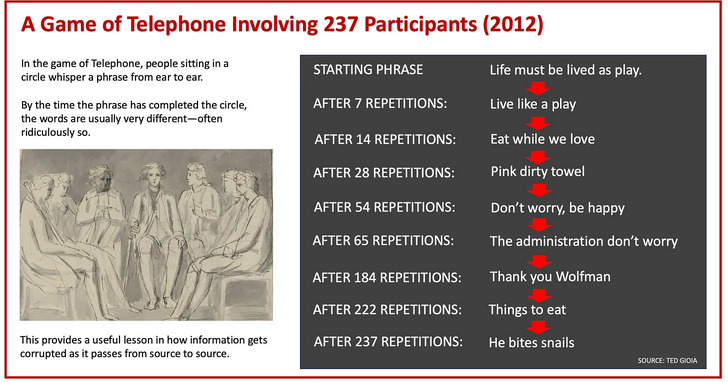
So when a game of Telephone was played in 2012 with 237 individuals, the starting phrase was: “Life must be lived by play” (a quote from Plato). But when it reached the end of the circle, the words had turned into: “He bites snails”.
Here’s how it progressed:
In other instances, people have started with the phrase “Only the good die young” and end up with “The three Vikings visit Christ”. Or “Today the library is hot” somehow morphs into “Sharon Stone is my girlfriend”.
Perhaps a degree of wish fulfillment enters into the game. Or as my mother used to say: “People hear what they want to hear”.
There’s a technical term for this process. It’s called generation loss.
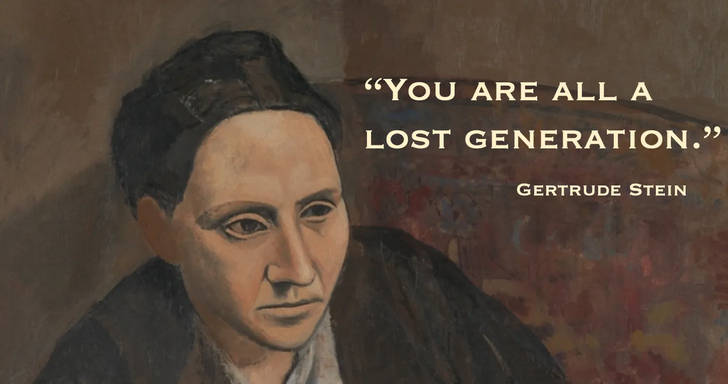
It has nothing to do with a lost generation — which is how Gertrude Stein described the Jazz Age. She famously told Ernest Hemingway: “You are all a lost generation”.
I’m not talking about those kinds of generations.
The generation loss we’re dealing with here refers to deteriorating data quality when a signal is repeated over and over again.
Each time it’s generated, the information gets a little more corrupted.
And it’s not just hearing that leads us astray. You can also measure generation loss if you make a photocopy of a photocopy. Each time you do it, the quality of the image gets worse. If you do it enough times, you can’t recognize what was in the original.
Even digital data — which is supposedly copied and pasted with perfection — deteriorates with each repetition.
Photos that are shared from account to account on Instagram get worse over time. In one experiment, a photo that was copied and reposted 90 times gradually turned into an unrecognizable blur.
Comments Off on “Generation loss” in the game Telephone … and in real life


