
The anniversary of that first May 27, 2021 unmarked-graves announcement came and went a few weeks ago, with barely a peep from prominent figures in the Canadian progressive firmament. And the same Trudeau who’d recently served up lurid sermons about our status as a blood-stained genocide state has now switched into proto-campaign mode, gushing manically about the Liberal horn of plenty set to deluge this nation with riches. According to the latest Liberal agitprop, in fact, patriotic Trudeauvian boosterism isn’t merely permissible — why, it’s obligatory. So light up those Canada Day backyard barbecues. Canuck Yom Kippur is finally over.
But before we dismiss this three-year interregnum as a dystopian fever dream, it’s worth asking how our collective Canadian identity could be hijacked — even temporarily — in such a radicalized manner. And the truth is that it isn’t just progressive ideologues who bear responsibility; but also their counterparts on all parts of the political spectrum, few of whom exhibited any inclination to offer pushback while these falsehoods took root in the media. Even many writers at this newspaper, generally held to be a right-leaning outlet, greeted the unmarked-graves claims by heaping shame on their country.
In every other comparably advanced society, there exists a natural tension between conservative nationalists who reverentially sentimentalize their history, and the progressive critics who reflexively denounce it. And it is from out of that tension that something approaching the historical truth emerges. Or, at least something close enough to the historical truth that it provides a stable and coherent basis upon which a society can confidently pin its collectively embraced national identity.
What we learned in 2021 is that this necessary tension doesn’t exist in Canada, because traditionalists can no longer describe their nation’s history in a way that gives voice to their emotionally felt patriotism without attracting claims of racism and neocolonialism. As a result, our marketplace of ideas lacks the checks and balances required to inure us against — oh, gee, I don’t know, let’s take a crazy example — apocalyptic medieval fables in which legions of Indigenous children are thrown into furnaces and shallow graves by cackling nuns and diabolical priests.
So yes, shame on Trudeau for lowering the Canadian flag on federal buildings for half a year to honour victims entombed in non-existent mass graves. But shame on the rest of us for staring at our shoes while this blood libel was being signal-boosted. And now that Trudeau seems on his way out — and, with him, the maudlin, tear-soaked, bent-knee political shtick that accompanied this descent into hysteria — we might turn our attention toward developing a national self-identity sufficiently robust that it doesn’t fall to pieces the next time someone claims to have found genocide’s residue under an old tetherball court.
Jonathan Kay, “Don’t let politicians misinform you. Learn about Canada’s true history for yourself”, National Post, 2024-07-01.
October 9, 2024
QotD: The hijacking of the Canadian identity
October 8, 2024
For progressives, “freedom” means getting to choose who rules over you
Chris Bray reacts to an Anne Applebaum podcast hosted at The Atlantic which certainly demonstrates that progressives have a very different definition of the word “freedom” than most people:

Opening the discussion, Applebaum and co-host Peter Pomerantsev “explain” that there are two competing models of freedom in the American past. One model is adherence to American political norms, centered on submission to the authority of the federal government. Read this carefully:
Pomerantsev: Anne, the common conception — the one that I have, anyway — is that freedom is meant to be a good thing. Freedom is meant to be the same thing as democracy. Those two words — I hear them used interchangeably. Freedom means the Bill of Rights, the freedom of the press, the freedom of assembly, the freedom to choose who rules you.
Freedom is choosing who rules you. “Freedom is meant to be a good thing.”
There’s a scene in The Forty Year-Old Virgin in which a bunch of young men sit around drinking beers and talking about sex with their slightly odd older co-worker, and he starts trying to agree with them about how hot it is to touch a woman. “Yeah, man,” he says, fidgeting in his chair. “It’s so hot! It’s like … touching a … bag of sand.” They instantly realize that he’s never done the thing he’s describing.
So. Just a few days ago, I argued that whole layers of high-status American political and cultural figures are “no longer culturally American”. They don’t see the country, they don’t like the country, and they don’t have the most basic American instincts. Peter Pomerantsev thinks that living in America is like touching a bag of sand.
If freedom is “the Bill of Rights” and “the freedom to choose who rules you”, then no human being on the planet was ever free before the Bill of Rights was ratified, and no one outside the United States currently has freedom. You become free only with the promulgation of formal governmental rules on the existence of your freedom. Freedom is a federal document. “Freedom is meant to be democracy”, and those words are interchangeable. Freedom is voting. A stateless society without authorities who rule over the people is unfree: they don’t vote. You have to be ruled to become free.
This man is a dangerous idiot.
But then, incredibly, Anne Applebaum outdoes him:
Applebaum: Not quite. There’s another equally old American version of freedom, which is freedom to defy the federal government — you know, the freedom to go out into the Wild West and make up your own rules.
Applebaum begins a discussion with a history professor, Jefferson Cowie, who “explains” that this sick and dangerous idea of American freedom centers on the freedom to dominate others. “He describes how white settlers in the 1830s refused to abide by treaties that the federal government had signed with Native Americans and, instead, would repeatedly steal their land.”
Cowie: And so you have this really explosive moment where white settlers were promised, in some broad sense, access to land. They were denied it. And they took their claims of freedom against the federal government that was denying them the ability to take the land of other people — their freedom to steal land, basically.
Applebaum and Cowie go on to make other comparisons in which, for example, George Wallace argued for the freedom to impose racial segregation against the federal insistence on equal rights. Cowie winds up for the big finish:
We allow the word freedom to work in the political discourse because it appears to be a kind of liberal value, but underneath it is actually a very powerful ideology of domination. And that’s what he’s really talking about there, because it’s at that moment that the federal government is coming in to take away their freedom to control the political power of Black people.
So in every conflict over this model of freedom, a relentlessly emancipatory federal government — benevolent, respectful of minority rights, committed to justice for all — slams into state and local knuckle-draggers who say they want freedom, but are only using that word to mean that they want to hurt and dominate other people. The federal government is social rules, fairness, decency; resistance to federal authority manifests a sick conception of freedom at the inherently unfair lower levels of American society. State officials are mean; communities are vicious; the federal government is nice. Unclear how the mean locals turn into angels when they move to hold office in the District of Columbia, but there’s somehow a magic process of transformation in which a cruel people have a wise and decent central government. Power always makes people much kinder and more restrained.
This is derangement, and an assault on the most basic American history. It’s madness, but deliberate madness.
Young Canadians turn right – “the average Canadian 21-year-old is more conservative than the average Canadian 65-year-old”
I don’t have a lot of contact with twenty-somethings, as my son’s friends are now in their 30s, so I’m just as surprised as anyone else to hear that younger Canadian voters seem to be switching their preferences to the right unlike most young voters around the world:
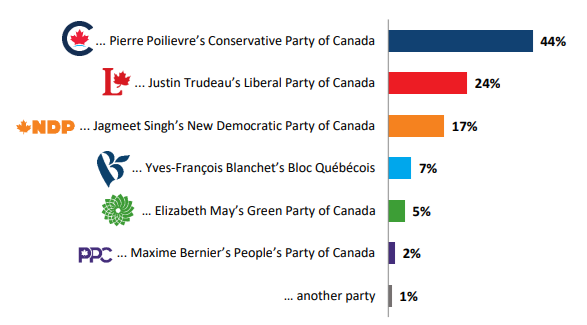
Voting intentions among Canadians, September 2024.
Detail from a recent Leger poll.
In one of the more surreal twists of sky-high Canadian public dissatisfaction, the country now ranks as one of the world’s only places in which young people are supporting conservative parties at rates well beyond those of their parents.
A Leger poll from last month found that Conservative support was stronger among voters aged 18-34 than any other age cohort. The under-34s backed the Tories by 47 per cent, as compared to 45 per cent for those aged 35-54, and 41 per cent for voters over 55.
The phenomenon has also started to show up at the provincial level. With about two weeks to go until the B.C. election, the B.C. Conservatives have been put in sight of a majority government due largely to an unexpected wave of youth support.
According to a Sept. 30 Leger poll, voters under 34 were backing the B.C. Conservatives by 47 per cent as compared to the 39 per cent who intended to vote NDP. Among voters over 55, the allegiances were reversed: 48 per cent supported the NDP against 43 per cent for the Conservatives.
Nothing like this has really happened before — at least as long as Canada has had age-stratified opinion polling.
It’s not the first time that a majority of young voters have flocked to a conservative option. The Progressive Conservative landslides of 1958 and 1984 were both secured in part by winning over voters under 30.
But what’s happening now appears to be the first time that the average Canadian 21-year-old is more conservative than the average Canadian 65-year-old.
For now, at least, the phenomenon is somewhat unique to Canada. In the rest of the Anglosphere, political sentiments are still hewing to their traditional pattern of young people leaning progressive, with old people leaning conservative.
The current U.S. presidential election has Democratic candidate Kamala Harris commanding up to 60 per cent of the under-30 vote, as compared to roughly one third of young voters who said they would vote for Republican nominee Donald Trump.
In the U.K., the July general election found that support for right-wing options was directly proportional to the age of the voter. A mere 17 per cent of British voters under 24 voted either for the Conservatives or the populist Reform UK. Among Brits over 70, those same parties commanded a smashing 61 per cent.
In Australia, a recent YouGov poll asking voters if they wanted “more socialism” found that 53 per cent of Australians under 24 did.
October 7, 2024
A grim anniversary
In the National Post, Barbara Kay notes the anniversary of the Hamas attacks along the Gaza-Israeli border that killed many Israeli civilians and led to the still-ongoing captivity for hundreds more:

One year on, Jews in the West have had time to process the primary shock of Hamas’s pogrom in southern Israel and the secondary shock of hateful blowback against Israel and Jews worldwide. We learned in a span of hours that where lethal antisemitism is concerned, “never again” was for us a mere objective, not a guarantee against those consumed by a mission of “again and again and again”.
But should we have been so surprised? Gaza was riddled with tunnels, their sole purpose to prepare for a war of extermination against Jews. The West’s intellectual “tunnels” have been operating in plain sight for many years. Under the aegis of “Israel Apartheid Week” and the Boycott, Divestment, Sanctions (BDS) movement, vicious anti-Zionism has been a campus fixture since 2001, when the World Conference against Racism in Durban, South Africa erupted into a “festival of hate” against Jews. After decades of aggressive Israel-bashing, Palestinians have been elevated throughout western educational systems to the summit of intersectional victimhood. Those indoctrinated in this hierarchy over the last 25 years consider it a duty and a virtue to demonize Zionism as an original historical sin. October 7 popped the cork on that long-seething volcano.
Throughout the past year, we’ve seen hostage posters vandalized, Jewish schoolchildren bullied, Jewish-owned businesses attacked, Jewish neighbourhoods tormented, Jewish institutions burned and shot at. Downtowns are routinely plagued by foul-mouthed protesters shrieking mantras that call for Israel’s elimination. University campuses have tolerated long-term encampments, Judenrein except for Jews who earn their laissez-passer with a denunciation of Israel.
It’s getting worse. On Saturday in Toronto, a demonstration featured Hezbollah flags, banners extolling violence against Israel and portraits of the (recently eliminated) Hezbollah leader and arch-terrorist Hassan Nasrallah. Last Sunday in Montreal, a band of black-garbed protesters attacked Concordia University and smashed several downtown store windows. During a foot chase, one even threw Molotov cocktails in the direction of police, an ominous escalation.
More ominous in my opinion: Post-October 7, we saw the emergence at rallies and on western social media of the image of a Jewish star being dumped into a trash can accompanied by the words “Keep the world clean” — for years a meme favoured by Hamas, inspired by the Nazis.
The Nazis used the image and words in their propaganda to normalize the idea that Jews, like vermin, were a hygiene threat requiring drastic action to preserve the nation’s health. That such messages are tolerated in the public forum points to a growing acceptance of outright eradicationist antisemitism as a “respectable” opinion to hold, even among supposedly enlightened people in fields such as mental health, as evidenced by anti-Zionist blacklists targeting Jewish members of the profession.
QotD: Social media mobs
More important, most mobs aren’t committed to the effort beyond flicking a thumb. Institutions that ignore the mob are often astonished at how little difference all the outrage makes to their business — and I’d bet Rowling won’t see much evidence of this controversy in her royalty statements.
The censorious power of Mrs. Grundys always depends on the cooperation of the governed, which is why their regime collapsed the moment the baby boomers shrugged off their finger-wagging. If Rowling provides an unmissable public demonstration that it is safe to ignore the current crop, we can hope others will follow her example, and the dictatorship of the proscriptariat will fall as quickly as it arose.
Megan McArdle writing in the Washington Post, quoted by Ed Driscoll at Instapundit, 2020-01-02.
October 6, 2024
QotD: Putting the past on trial
Historical context is all very well. When it comes to Woolf, perhaps a few details about her novels To the Lighthouse or Mrs Dalloway would be appreciated, or some information about her relationship with Vita Sackville-West. But no, instead we are to be hectored about her “challenging, offensive comments and descriptions of race, class and ability which would find unacceptable today”. One wonders what the person responsible for these judgmental remarks has ever accomplished, if anything at all. These petty moralists are like the crabs in the bucket, pulling down the most accomplished out of envy and spite.
The best approach to writers of genius is humility, but this quality seems to be on the decline. We see evidence of this in the self-importance of those who have rewritten books by P.G. Wodehouse, Ian Fleming, Agatha Christie and Roald Dahl. It should go without saying that Wodehouse’s prose cannot be improved, least of all by know-nothing activists who have inveigled their way into the publishing industry.
I recently bought the complete set of Fleming’s James Bond books, but I had to seek out second-hand copies to ensure that they had not been sanitised by talentless “sensitivity readers”. Yes of course, these books include sentiments that are unacceptable by today’s standards. But what’s so wrong with that? “All women love semi-rape” is a shocking sentence – in this case, it’s by the female narrator of The Spy Who Loved Me (1962) – but what purpose does censoring the passage actually serve?
The rewriting of books and the creation of cautionary QR codes are symptoms of our current strain of puritanism. These are the descendants of those religious zealots who shut the theatres in 1642 out of fear that the masses might be corrupted. And while I concede that Ian Fleming’s views on relationships between the sexes may not have been progressive, I don’t feel the need to be berated about it before enjoying the adventures of James Bond.
It’s not as though Bond is even meant to be a likeable character; the man has a licence to kill, for heaven’s sake. This isn’t someone you’d wish to invite to a dinner party. In that regard he’s reminiscent of the hero of George MacDonald Fraser’s Flashman series, a character based on the bully from Tom Brown’s School Days by Thomas Hughes. He’s a violent boorish rapist, but the novels are still entertaining because most of us aren’t reading them for moral instruction.
In exploring the gamut of human experience, writers will often feel compelled to recreate the grotesque, the uncomfortable, the outrageous, even the downright evil. Who ever supposed that works of fiction should restrict themselves to rose-tinted idealisations of human existence? Imagine Macbeth without the regicide, or King Lear without the eye-gouging, or Titus Andronicus without the cannibalism. Would Dante’s Divine Comedy retain its power if some “sensitivity reader” excised the Inferno?
Andrew Doyle, “Putting the past on trial”, Andrew Doyle, 2024-07-04.
October 4, 2024
Star Trek – “From Quoting Shakespeare to Diversity Woman’s Hour”
Every week, Substack helpfully compiles a list of posts that might be of interest to me, like this one by Isaac Young, discusses the fading phenomenon of Star Trek. (Disclaimer: I was a huge fan of the original TV series, but stopped watching the various Star Trek TV shows late in the Next Generation era and haven’t seen much after that … this essay covers parts of the canon that are largely terra incognita for me.)

In order to understand what a thing is, I believe you must first understand how it dies. Endings are the most important part of a story because they are the culmination of everything that came before. They dictate the legacy and the memory. It is through the ending that we can finally put the body of work in its proper context. What is Romeo and Juliet if we cut the final act out, and can you really understand the play if you stop just before their suicide? So therefore, in order to understand this franchise, I have to begin this essay with Star Trek‘s suicide.
Whatever we make of the heroism of James T. Kirk, the high-minded principles of Jean-Luc Picard, and the reactionary realism of Benjamin Sisko, we have to come to grips with the tragic reality that those things did not last. They were discarded for feminism, queerness, and diversity. And what do those things mean? Modern Star Trek has been quite clear about that. It’s about emasculated men and raging girlbosses. It’s about celebrating every sexual appetite except the one that produces functional families. It’s about fetishizing racial revenge and elevating mediocrity at the expense of excellence.
You’ll find Star Trek has never been more vulgar, more profane, more debauched. It’s small-minded in everything from the cast to production values to the storytelling. It’s about lecturing to the untouchables about their privilege and holding victimhood as the highest virtue. All those tiny elements which we ignored or snickered at in previous shows became the substance of their successors, while those parts we loved about Star Trek — the parts that made it great — were left behind or turned into nostalgia-bait.
The awkward reality of being a normal person from twenty years ago is that every franchise and IP has stabbed you in the back — viciously. And yet despite this, I still harbor a great love for the films and tv series of yesteryear. If I hadn’t, I wouldn’t be writing this essay. It is out of a great sense of love and admiration that I am dedicating this piece, and that is how I want readers to understand my review. I’m not here to tell you Star Trek was evil or anything like that. I’m here to tell you that Star Trek was great — brilliant even, but the rot was there from the beginning.
Looking back, what should I say was the core of Star Trek? Or rather, what was the nature of Star Trek? Was it in those ephemeral elements which turned out to only be in passing? Or was it those elements which had been there from the beginning, and are only now being noticed, like flesh peeling away to reveal the bones of a rotting corpse? And to continue this metaphor, what should I make of this bloated, festering body when its soul has clearly long departed?
But how can I judge old Trek for the new? How can I possibly analyze this franchise with this lens when it has clearly fallen to ideologically captured writers? Surely this once beloved series will course correct once Hollywood hears all the negative feedback from fans.
I don’t know who still believes that anymore, but I feel obligated to address this criticism for that one person who still doesn’t understand how we got here. The world didn’t suddenly turn crazy in 2016. Wokeness is not an aberration or an anomaly, but the logical endpoint of liberalism. It is egalitarianism, personal freedom, and materialism taken to their natural conclusions. It is Star Trek‘s values as they actually operate in the real world.
I can look at franchise, see it as a product of the Left, and reliably chart its degeneration through understanding those values and their decline. Star Trek isn’t bad because it fell to a bad writer’s room or predatory corporate interests. It’s bad because we’re currently in a culture-wide crisis that is affecting every form of media entertainment.
If there is one thing I want to get across in this essay, it’s that what we’re witnessing is the real Star Trek as it springs from its stated values. This is the most honest the series has ever been. Once you strip away the Shakespeare, the heroic characters, the sci-fi concepts, the witty banter, and all the moral framing, this rot is what you’ll find underneath. It’s always been there. The bad news is that Star Trek as the political propaganda it has always been is quite ugly. The good news is that those things which made Star Trek great, those things which reached for the good, the true, and the beautiful—those things are eternal. And they aren’t going to die with Star Trek.
October 3, 2024
Refuting one old myth about “shouting ‘fire’ in a crowded theatre”
In the visible portion of a pay-walled post, Andrew Doyle explains why we should stop using the hoary old anti-free speech cliché that was refuted nearly 50 years ago by the US Supreme Court:
There are few people who are courageous enough to openly admit that they oppose freedom of speech, and so we would be forgiven for thinking that the authoritarian mindset is rare. In truth, those who believe that censorship can be justified typically resort to a set of hackneyed and specious arguments. It doesn’t seem to matter how often these misconceptions are conclusively rebutted, they continue to be trotted out with depressing regularity.
Take yesterday’s Vice Presidential debate between JD Vance and Tim Walz, in which one of these very misconceptions was parroted once again. This is how it happened:
JD Vance: You guys attack us for not believing in democracy. The most sacred right under the United States democracy is the First Amendment. You yourself have said there’s no First Amendment right to misinformation. Kamala Harris wants to …
Tim Walz: Or threatening, or hate speech …
JD Vance: … use the power of government and big tech to silence people from speaking their minds. That is a threat to democracy that will long outlive this present political moment. I would like Democrats and Republicans to both reject censorship. Let’s persuade one another. Let’s argue about ideas, and then let’s come together afterwards.
Tim Walz: You can’t yell fire in a crowded theatre. That’s the test. That’s the Supreme Court test.
The cliché that “you can’t shout ‘fire’ in a crowded theatre” originates in the 1917 United States Supreme Court ruling against Charles Schenck, a socialist who had issued a broadside calling for young men to refuse military conscription and was convicted under the Espionage Act. These were the circumstances under which Justice Oliver Wendell Holmes wrote the statement: “The most stringent protection of free speech would not protect a man in falsely shouting ‘Fire!’ in a theatre and causing a panic”. Note that the word “falsely” is invariably dropped when quoted by advocates for censorship.
Leaving that telling little edit aside, it should be remembered that this was never a legally binding statement. Walz maintains that this is “the Supreme Court test”, but Holmes merely used the analogy to justify upholding Schenck’s prosecution. In fact, the decision of the court in Schenck v. United States was overruled in 1969.

Do I need to say that I didn’t watch the debate? I don’t even watch the debates when I actually have a vote to cast, so I’m going on highly selective sources to at least pretend to care about the VP debate. I do like a waspish line on almost any politician, so Bridget Phetasy’s description gave me a mental image of the event that seems highly truthy: “The vibe of this debate is adult confronting the coach who molested him”. J.D. Tuccille has more:
To illustrate the contrast between the recent presidential debate and this week’s vice-presidential match, I’ll say that I dread either Donald Trump or Kamala Harris taking office as president, but I fear the policies of veep hopefuls J.D. Vance and Tim Walz. At the top of both party’s tickets are individuals of uncertain competence and shaky basic decency, while their sidekicks come off as the designated adults, ready to step in if the winning presidential candidate falters, and more than excited to implement their chosen programs, God help us. That said, Vance had a much better night than Walz.
From the very beginning, J.D. Vance gave us a glimpse of what Trump might be like minus a personality disorder and with focus. He looked cool and collected, with his arguments organized in his head. He was also able to quickly pivot to address — or dodge (this is politics, after all) — the CBS moderators’ questions.
By contrast, Walz appeared like he was sweat-soaking his notes into illegibility as he tried to remember which part of the previous night’s memorized cram session he should spit out. He eventually regained some of his footing, though he generally seemed nervous and unprepared.
“The vibe of this debate is adult confronting the coach who molested him,” quipped podcaster and writer Bridget Phetasy, who isn’t known for being merciful.
The Democrat’s discomfort probably came to a head when he was asked to explain why he long claimed to have been in Hong Kong in 1989, with front-row seats to the Tiananmen Square massacre, when news reports and photographic evidence showed he was at home in Nebraska. Much hemming, hawing and references to a small-town upbringing ensued, which was painful to watch. The closest he came to admitting he lied was conceding, “I’m a knucklehead at times” and that he “misspoke.”
QotD: Historical echoes in the American left and right
The Trump movement does have some real [historical Nazi] characteristics. Many low-level people feel remarkably empowered to do things, to get creative to help the cause (and also make some coin; how many Trump medals, flags, and coffee cups does one buy?), and to get out there and just stir the pot for the Orange guy. Then we saw The Donald at the top not exercising real power, other than to exhort others to get shit done, whatever unnamed shit that needed doing.
My first run-through suggests that calling the Juggs and their minions “filthy commies” actually is not just a kneejerk response, but it lands mostly true, in the ways that matter. The Jugg argument that Trump and his people are a bunch of Nazis also has some real truthy elements to it as well (though the true elements are generally probably far afield from the Nazi stuff the Juggs have in mind).
Commies and Nazis gain traction when the basic job of governance is found lacking, and the caliber of people tasked with getting things back in line is not up to the task. Then the various totalitarian solutions become more popular. Even when the intentions are pure (I will give most of the Trump people that assumption), unfettered ambitions, allowed to flower, will go bad if the normal checks and balances of the system are all out of whack. It is just human nature.
Our systems are all out of whack. That is why AOC can call for impeachment of [six US Supreme Court justices] with a straight face, and there is no broadly based “hey, wait a minute, Bucko” response. Things might be too far gone, and there is no way to pull back into a system that actually well serves the average American (think of what constituencies the typical elected official actually serves — the deep state apparat, the ultra-rich guys, and the corporate lobbyists). It all means the Trump movement is a tool, not to restore something, but to accelerate the “get through it and start afresh”. With that in mind, the November results tend to be more of “six of one, half a dozen of the other” than people think they are.
“Dutch”, commenting on “How Juggs Think the World Works”, Founding Questions, 2024-07-02.
October 2, 2024
Poilievre should learn from “Two Tier” Keir’s political stumbles
Sir Keir Starmer swept into office just four months ago, but if you tracked the unforced errors, gaffes, stumbles and bumbles it might as well have been four years instead. Most politicians winning nearly 2/3rds of the seats in Parliament can expect a lengthy “honeymoon” period, but “Two Tier” Keir is far from a typical politician … he’s terrible at his new job. In The Line, Andrew MacDougall charts some of the worst self-inflicted wounds Starmer’s government has suffered and indicates how Pierre Poilievre can avoid them:

Prime Ministers Starmer and Trudeau at the NATO summit in Washington.
Image from Justin Trudeau’s X account.
If Conservative leader Pierre Poilievre thinks he’s halfway home to a happy life in power, he should look across the pond to see the misery now engulfing Sir Keir Starmer and his new Labour government.
Where to start? Sadly for Starmer, there is a smorgasbord of bad political choice.
[…]
And while Starmer did his level best to stay vague during the election campaign about his planned solutions, as all good opposition leaders do in order to minimize incoming attacks, he was meant to have a plan to sort it all out once he got into the building. But there’s no plan. And that’s according to sources inside 10 Downing Street. That’s right: we’re just three months into a majority parliament and a government with a virtually unopposable mandate and the calls are already coming from inside the building saying it’s all gone to shit.
As I was saying, it’s all very late-stage Trudeau.
Fortunately for Canadians who are desperate for a diversion from Trudeau’s path, Pierre Poilievre is a better politician than Keir Starmer. A vastly better politician. And while that might sound like a pejorative in an era where no politician is trusted, the pile of public policy muck heaps facing Western governments won’t be cleared without someone who understands — deeply and intuitively — the politics of the current time.
Starmer understands none of the current dynamic. He defeated the U.K. Conservatives because the U.K. Conservatives defeated themselves. The country would have taken anyone to stop the Tory psychodrama, even a boring North London lawyer who wouldn’t know politics if it smacked him on his newly-tailored arse. People are angry that nothing appears to be working as it should. Not the hospitals. Not the borders. Not the economy. And not their culture. Everything feels different and/or worse to what they’ve come to expect and they blame the (waves arms frantically) “establishment” for their ills. There’s a reason Nigel Farage’s Reform party won its first seats and came second in nearly a hundred more.
People who are already feeling stretched don’t want to hear, as they’ve heard from Starmer, that their taxes are going up. They want to hear they’re going to go down. “Axe the tax”, anyone? They don’t want to hear that things suck; they want to hear how things will get better. They don’t want to be sung hymns about the benefits of immigration. They want to see someone spot the problem that’s gotten out of control and assure them that it’s not racist to do something about it. They want someone who looks and sounds like them, not another politician in a suit saying things politicians in suits always say. They want radical change, not minor dial adjusting on the dashboards of power. Anything else is more of the discredited same.
Canada’s late-stage Trudeau inheritance is daunting. It cannot be avoided. But it must first be acknowledged, not by simply pointing at the last guy and saying “It’s all his fault” (i.e. the classic politician move), but by mirroring the real distress being felt by the many who’ve lost out where and as the traditional power brokers have won. This is where the room to manoeuvre comes from. Something has gone wrong and it’s going to take something different to produce a different result.
Duelling reports on how Javier Milei’s Argentinian “shock therapy” is working
At Astral Codex Ten, Scott Alexander tries to find something approaching the truth between the pantingly enthusiastic libertarian reports and the angrily negative progressive reports:
How is Javier Milei, the new-ish libertarian president of Argentina doing?
According to right-wing sources, he’s doing amazing, inflation is vanquished, and Argentina is on the road to First World status.
According to left-wing sources, he’s devastating the country, inflation has ballooned, and Argentina is mired in unprecedented dire poverty.
I was confused enough to investigate further. Going through various topics in more depth:
1: Government Surplus
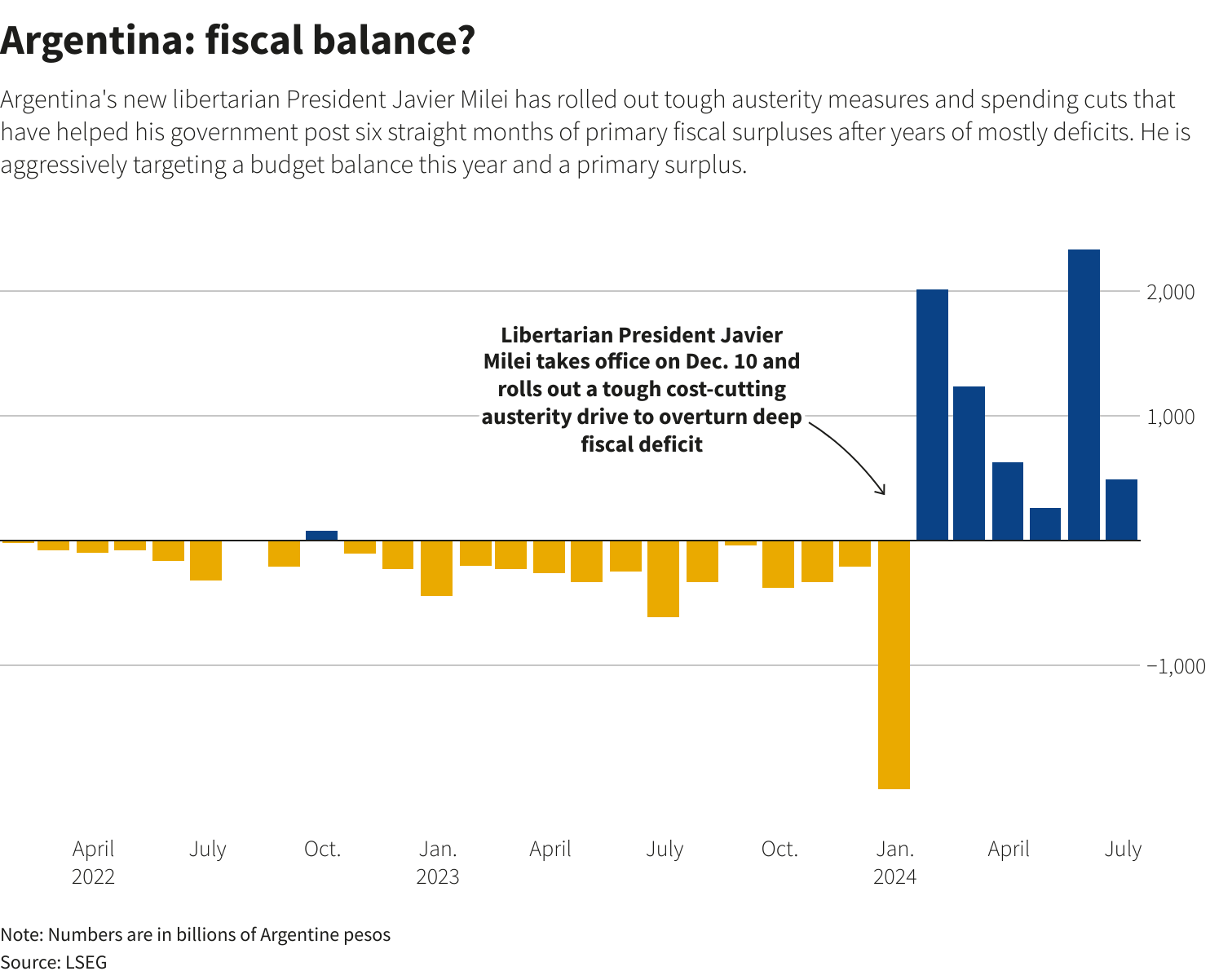
When Milei was elected, Argentina went from constant deficits to almost unprecedented government surplus, and has continued to run a surplus for the past six months.
This wasn’t fancy macroeconomic magic. Milei just cut government spending:
- He eliminated 9 of 18 government ministries, including the Ministry of Culture and the Ministry of Women, Gender, and Diversity.
- He laid off 24,000 government workers (and hopes to increase that to 70,000).
- He cut fuel subsidies (paywalled link)
- He may have cut (or at least not increased, which given inflation levels is an effective cut) funding for universities, which now complain they have no electricity and are giving classes in the dark.
- He has changed the way inflation affects pensions in what was realistically a large budget cut.
- Et cetera.
This source says he cut the size of government by about 30% overall. Unsurprisingly, this eliminated the Argentine deficit.
[…]
6: Overall
When Javier Milei took office, he promised to do shock therapy that would short-term plunge Argentina into a recession, but long-term end its economic woes.
He has fulfilled his campaign promise to plunge Argentina into a recession. Whether this will long-term end its economic woes remains to be seen.
I think he gets credit for some purely political victories (completing the budget cuts he said he would complete), for decreasing inflation, and for improving the housing market. But in the end, history will judge him for whether his shock therapy eventually bears fruit. I don’t think that judgment can be made yet, and I don’t see many economists eager to go out on a limb and say that there are strong signs that his particular brand of shock therapy will definitely work/fail.
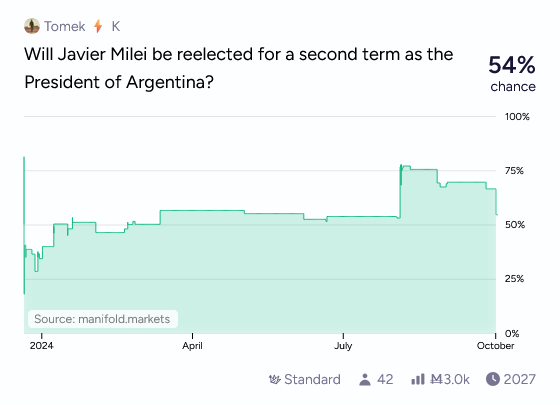
There are disappointingly few Milei prediction markets, probably because it’s hard to operationalize “he makes the economy good”. This multi-pronged mega-market has few traders, and weakly predicts a mix of good and bad things, maybe leaning a little good. But here is a more specific one:
… which compared to Argentina’s historical GDP growth rate seems — no, sorry, Argentina’s historical GDP growth rate is too weird to draw any conclusions.
And maybe the most important test:

October 1, 2024
TikTok’s Dissociative Identity Disorder (DID) community
The more we experience the joys of widespread social media, the more people seem to discover ways to bring attention to themselves for genuine or dishonest reasons. Freddie deBoer looks at the DID-sufferers on TikTok and assesses the chance that such a rare disorder can have had so many newly discovered sufferers:
Let me turn back to the TikTok “systems”, the strange, maybe-shrinking world of adolescent women on social media who pretend to have an incredibly rare and debilitating mental illness and treat it as a fun and quirky alternative lifestyle.
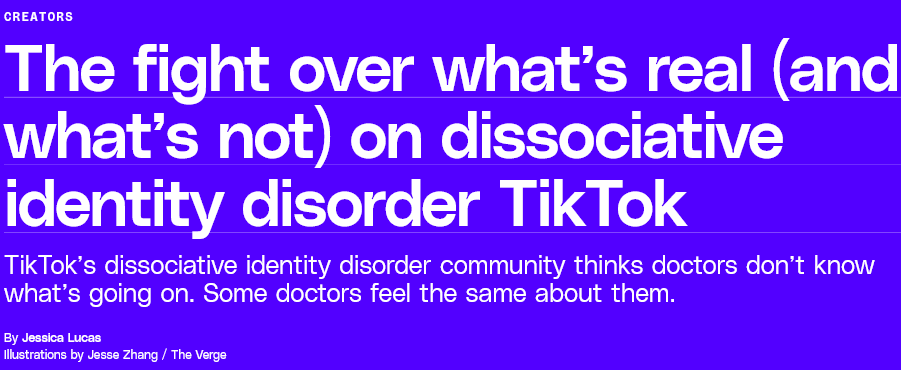
This piece from The Verge, though a little misguided, is a good jumping off point for this topic. The basic story is pretty simple. Dissociative identity disorder (DID), long referred to as multiple personality disorder, is a remarkably controversial diagnosis that has long captured the public imagination. It’s not hard to see why; the idea of someone who switches from one personality to the other is lurid and dramatic, making it easy fodder for television. (The number of episodes of legal dramas about DID is immense.) The condition also invites a particularly stark consideration of the question of individual agency and culpability for bad deeds. As you can imagine, pretending to have “alters” can be very convenient; a notorious case involved an embezzler whose only defense for his crimes was that he had multiple personalities and one of them stole the money. There have long been researchers and clinicians in psychiatry who doubt the very existence of DID, and even among those who are friendlier to the concept, the disorder is known to be incredibly rare. Many prominent cases of DID have proven in time to be fraudulent. The most famous American case, that of “Sybil“, was particularly tragic. The woman who supposedly suffered from the disorder, who faced a childhood of abuse and neglect, would go on to admit to her psychiatrist that she had made the alternate personalities up. (We know because we have the letters.) But the doctor, who had been made wealthy and famous thanks to her work with Sybil, threatened to withdrawn her financial support if Sybil did not recant that confession. Having no other choice, she did.
What DID TikTok asks us to believe is that, in the span of maybe half a decade, tens of thousands of adolescent women developed DID, an exceedingly rare disorder marked by symptoms entirely unlike those on your For You page. The Verge article, written by Jessica Lucas, is typical of the media’s take on this issue, to the degree that they’ve written about it at all: relentlessly sympathetic to the DID TikTok adolescents even when grudgingly admitting that there’s a lot of fakery. And admit that she does, as it would be essentially impossible to pretend otherwise. Even the wokest wokie couldn’t help but look at this shit and conclude that a lot of it is bullshit.
The cases of DID that are considered to be particularly valid or believable are very few, and the people who have suffered in them have been people living absolutely wasted lives, lives filled with abuse and instability and addiction and misery; the overwhelming majority of DID TikTokers appear to be living perfectly stable and successful adolescent lives. Those with DID have almost never professed to be able to switch from one alter to another on command; many DID TikTokers playact that exact behavior for their viewers. Alters are notoriously uncooperative towards each other; TikTok DID videos routinely feature alters happily participating in “roll calls” in which they switch from one identity to the next, conveniently timed for the creation of #content. (The DID people claim that really they’re just opportunistically capturing organic switches, but a) it’s very clear that many of these videos are filmed in one day and b) that would still require alters to willingly turn the camera on and get into the costume etc, which is not at all how alters have traditionally acted.) In the DID literature alters are almost never aware of what’s happening when another alter is “fronting”; on DID TikTok they almost universally are, justified with the convenient idea of “co-consciousness,” which is one of many evolutions of DID these people have implemented to allow their little pageant to continue. Most people with DID diagnosis, historically, have not been photogenic women with an interest in getting more followers. I could go on.
Lucas’s piece is particularly useful for the remarkable, remarkably depressing story of Dr. Matthew Robinson, a clinician and researcher from Harvard Medical School’s McLean Hospital. (The site of Girl, Interrupted, among other things.) Like a lot of people in psychiatry, Robinson noted with alarm that his hospital had “been inundated with referrals and requests from schools, parents, and our own adolescent treatment and testing services to assess for symptoms of what [patients] call DID.” He proceeded to discuss the difficulties this sort of situation provokes in an already-overtaxed mental health system, and spoke frankly about the fact that a considerable number of the people presenting with this disorder obviously do not in fact have it. He stated plainly that which many are too circumspect to say, which is that these TikTokers are faking. The consequence, of saying this in a lecture with his professional peers, was review-bombing of the hospital online, threats, a call to have Robinson’s medical license revoked, and sufficient harassment that McLean pulled online videos of the lecture. The online mob engaged in the typical social justice-vocabulary freakout campaign, McLean folded, and as stated in the piece, most researchers are now too scared to publicly comment on this absurd situation. If someone tells you that there is no such thing as a social justice-inflected cancellation campaign, you can point to this exact scenario and to the vicious and vengeful disability rights movement in general.
To be clear, I think that probably literally zero of the people who perform DID on TikTok have the disorder. Zero. I imagine that a significant portion of them have deluded themselves into thinking they do. But I’m quite confident that most of them are very well aware that they’re faking.
The pros and cons of living the digital life
Spaceman Spiff considers how much of modern western life is now being experienced online rather than in the real world and what are the trade-offs inherent in the switch to the life digital:
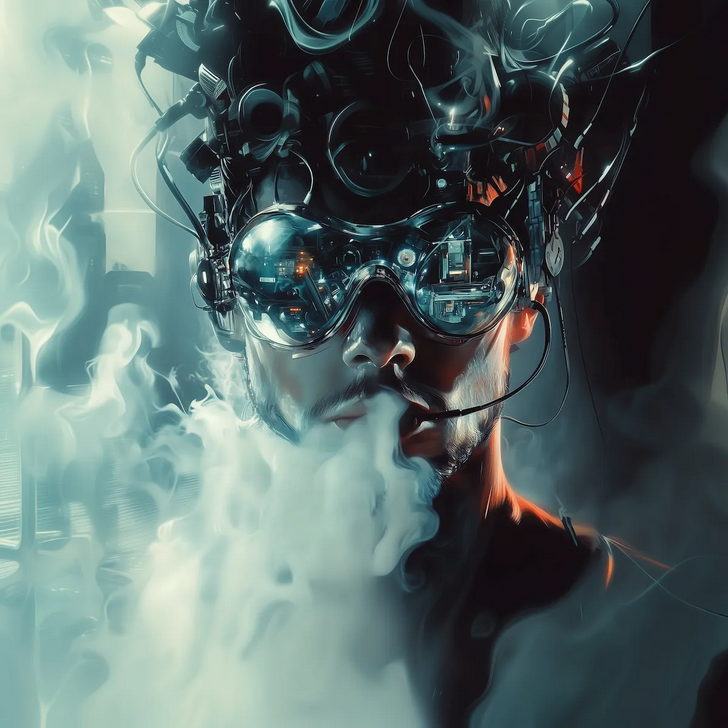
Life is what you pay attention to. Increasingly many of us are immersing into virtual worlds and spending less time out in the real world. We are attending to digital realms.
Everything it seems is going online, from shopping to entertainment to work. Almost no aspect of life remains untouched by the slow creep of technology.
Our entertainment is digital and our social networks are found online. For increasing numbers this may be their only connection to others.
Even work is becoming unavoidably remote with Zoom and comparable tools now standard fare.
The digitization of life continues apace. As a result, we are present in the real world less and less and this cannot be altogether healthy.
Many benefits
There are obvious benefits to our new digital world.
Thanks to the internet much has become convenient and easy. We can access a wide array of goods and have them delivered for a small fee.
The scale of the options is impossible to beat. The real world could not possibly provide the options on display. We can peruse virtual warehouses with everything. No bookstore is as big as Amazon.
The post-Covid world accelerated aspects of digital adoption, particularly video-based conferencing and other virtual tools. This is now ubiquitous, particularly in work settings.
One-click ordering and fast delivery makes everything else seem unreasonably tedious and complicated. It is a hassle going to a physical location to buy clothes or books or food when you can pay a slave to deliver it.
But people sense they lose something with digital tools even when it is convenient to not travel or leave home. It is not the same as face to face. Importantly it brings the world into our homes, so we cannot easily escape.
Other less visible changes are apparent too. We seem to socialize less. We go out less often.
We dine in and often by having unhealthy food delivered, all chosen and prepared by others. The appeal of going out and mixing with strangers is waning.
Behind this is a gradual bureaucratization of everything as we are continually reminded of external dangers; germs, extreme weather, domestic terrorism, none of which are likely to ever touch us but we are told are ever present. These require interventions we never get to vote on but affect us nonetheless.
The safety-obsessed post-Covid world wants you at home where you are safe and sound. Digital tools have proliferated to serve this need.
But of course, for all the benefits we can enjoy for living the internet lifestyle, there are also significant negatives …
September 30, 2024
“This quite obviously proves that free speech is a tyrannical concept”
At The Critic, Titania McGrath decries the manifest horrors of letting ordinary people say whatever they want … without punishment:
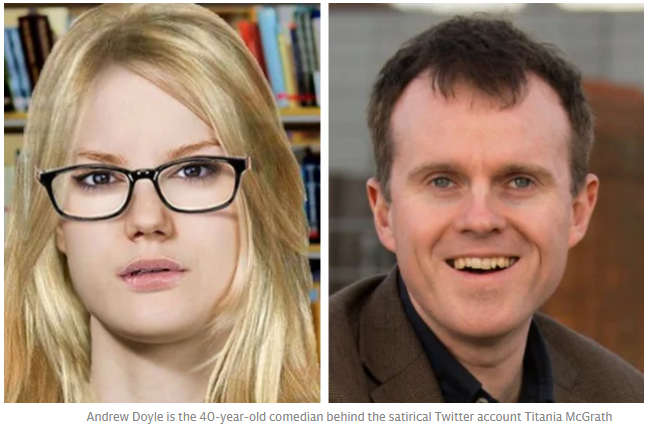
“Titania McGrath” and Andrew Doyle
The government has repeatedly pointed out that the riots in the UK were directly caused by bad words on the internet. One of those arrested was an elderly retired midwife from Devon, who had accidentally read an inflammatory Facebook post whilst browsing for cupcake recipes. Within ten minutes, she found herself punching Persian toddlers and throwing grenades at a mosque.
For all the endless whingeing of free speech extremists, Starmer appreciates that words must be controlled to ensure that his subjects behave themselves. Surely most reasonable people would rather have their liberties restricted than live in a fascist state?
The next step is to see Elon Musk extradited. It was bad enough that he renamed Twitter as “X”, which is just a swastika with a few bits chopped off. But he has also allowed users to say whatever they like. As a result, wrong opinions are being duplicated at an alarming rate.
“Regulators around the world should threaten Musk with arrest if he doesn’t stop disseminating lies and hate on X,” wrote Robert Reich in the Guardian. Although I don’t approve of his surname, he makes a valid case.
Back in 2013, Starmer was quoted as saying that too many Twitter prosecutions could “have a chilling effect for free speech”. These were dangerous words, and although Starmer has since changed his mind, he should probably be calling for his own prosecution.
If you don’t want to be arrested, don’t say the wrong things. It really is that simple.
Saving German democracy seems to require not following the law for some reason
[Update below] I’m sure that Germany is being well-served by their politicians who only seem to want to obey the law when it suits them. I mean, that’s how you save democracy, right? By ignoring democratic laws for a “higher good” every now and again?
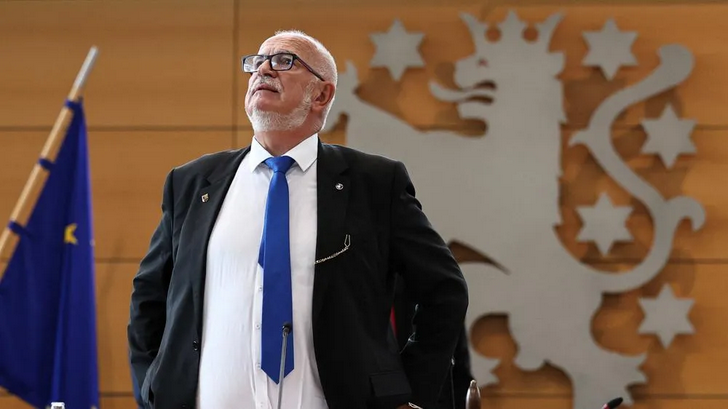
Jürgen Treutler, the supergenius fascist who discovered that all you need to do to establish fascism is follow all democratic laws and procedures rigorously and to the letter.
They never tire of telling us that we live in a democracy.
This means that that dreaded mass known as “the people” are permitted – with however much groaning and reluctance – to present themselves every four years to choose their representatives. These representatives then betake themselves to the parliament, where they form some manner of government, which proceeds to rule us in highly democratic ways. This is is literally the best thing ever, except for the fact that “the people”, in their profound stupidity, cannot always be relied upon to vote for the right parties. Sometimes they vote for the wrong ones, and in these cases democratic solutions must be found to rein in the rabble’s undemocratic exercise of democracy.
The people of Thüringen have proven themselves particularly inconvenient to democracy, in that they have exercised their democratic rights to vote overwhelmingly for the evil, fascist and antidemocratic party known as Alternative für Deutschland. What makes the AfD so evil and fascist is never quite explained, but we hear all the time that they are very bad so the point must be beyond question. The people of Thüringen transgressed against democracy so powerfully, that they gave the AfD 32 seats of their 88-seat state parliament – far more than they granted to any of the upstanding, democratic parties. These parties include such paragons of democratic virtue as Die Linke (the Left Party), which somehow manages to be both officially democratic and also the direct successor to the DDR-era Socialist Unity Party (they got a mere 12 seats); the Linke-offshoot party known as the Bündnis Sahra Wageknecht (they got 15 seats); the Christian Democrats (they got 23 seats); and the Social Democrats (they got 6 seats, lol).
Now, a naive person might think that the AfD, being the party most favoured by the people of Thüringen, should enjoy certain parliamentary prerogatives. Existing procedures, for example, grant the strongest party the right to propose candidates for the office of parliamentary president. The president is the person who presides over the meetings of the parliament; he is like a glorified committee chair and his powers are not all that great. The very idea that the AfD might have the right to suggest their own candidates for president, however, strikes enormous fear into the hearts of the “democratic” parties, who are determined to save Thuringian democracy by all the antidemocratic means at their disposal. If necessary, we must destroy democracy itself, to save the Thuringian parliament from the spectre of a democratically elected AfD president.
This brings us to the absolute unprecedented clownshow that unfolded yesterday at the Thuringian parliament in Erfurt. It was set to be a day of boring, routine procedure, when the newly elected parliament would constitute itself and elect a president. Thüringen is anomalous, in that this state – alone of all the federal states of Germany – has a specific law mandating adherence to parliamentary procedures. New parliaments cannot just change these procedures on the fly; they have to be officially constituted as a legislative body first. These legally mandated procedures require that an acting “senior president” preside over the first meeting of the new parliament. This senior president is simply the oldest member of the dominant party – in this case an affable rotund AfD politician named Jürgen Treutler.
Update: eugyppius updates the state of play in Thuringia after the relevant court rules that the law can be set aside in this case:
In not-so-good news (but as I predicted), the state constitutional court in Thüringen ruled in favour of the CDU last Friday. The other parties were able to change the procedural rules in the Thuringian parliament and exclude the AfD not only from the office of president, but also from the entire executive committee of the Landtag. The “democratic” parties have also altered procedural rules to reduce AfD representation on parliamentary committees, effectively preventing the strongest party in the Landtag from exercising their blocking minority there.
They really are determined to destroy the democracy to save it.


