
Sabaton History
Published 2 Feb 2023One of the most badass and decorated soldiers of the Great War was a woman. Serving first in the Balkan Wars, this Serbian war heroin became a celebrity when she won the Karađorđe’s Star — the highest Serbian decoration — in 1914 and 1916. Those weren’t her only decorations either — watch to find out more.
(more…)
February 3, 2023
“Lady of The Dark” – Milunka Savić – Sabaton History 117
Comments Off on “Lady of The Dark” – Milunka Savić – Sabaton History 117
Who will be the first ones to lose their jobs to ChatGPT? The confidence men
Ted Gioia somehow manages not to fall for the ChatGPT con:

The fast-talking hero of the TV show Sneaky Pete hates it when he’s called a con man.
“I’m not a con man”, he insists, “I’m a confidence man.” And that’s actually how the term originated — as “confidence man”. The scam only works because of that happy and confident relationship between criminal and victim.
“I give them confidence,” Pete explains. “They give me money.”
In the ultimate con, victims don’t even know they’ve been conned. They really think they’re sending cash to some gorgeous babe in Moscow, or bought a genuine Rolex, or whatever.
The confidence game is a real art — more than just cheating or lying. Those are boring and pathetic vices by comparison. A con job requires something grander, a fast-talking sureness that always seems to be right, even when it’s dead wrong.
If you’re caught in a lie, you just build a bigger lie to hide it.
Which brings us to the subject of ChatGPT, the AI bot that’s the hottest thing in tech right now.
Judging by my Twitter feed, ChatGPT is hotter than Wordle and Taylor Swift combined.
It’s even hotter than its predecessor Sam Bankman-Fried, who was doing something similar 12 months ago. ChatGPT is just better than SamFTX in every way. It can’t even be extradited — because it’s just a bot.
People love it. People have confidence in it.
They want to use it for everything — legal work, medical advice, term papers, or even writing Substack columns. If I believed half of what I heard about ChatGPT, I could let it take over The Honest Broker, while I sit on the beach drinking margaritas and searching for my lost shaker of salt.
But that’s exactly what the confidence artist always does. Which is:
- You give people what they ask for.
- You don’t worry whether it’s true or not — because ethical scruples aren’t part of your job description.
- If you get caught in a lie, you serve up another lie.
- You always act sure of yourself — because your confidence is what seals the deal.
Am I exaggerating? Is the hottest AI chatbot in the world really doing this?
Instead of offering up my opinions on this, I’ll just share some tweets from knowledgeable observers who are starting to suspect the con.
I’ll let you decide for yourself whether this measures up to a confidence game.
Comments Off on Who will be the first ones to lose their jobs to ChatGPT? The confidence men
February 2, 2023
Gerry Rafferty’s “Baker Street” lyrics
When I first subscribed to Ted Gioia’s Honest Broker substack, I figured I’d find one or two posts a month that I found interesting enough to share on the blog … I have to be careful not to link to several of his posts every week. He writes a lot about the music industry, so when this popped up in my inbox, I assumed it was Ted and got to the point of scheduling it before I realized it was Jon Miltimore instead:

I was recently in a bar having dinner with a friend when Gerry Rafferty’s hit 1978 song “Baker Street” came on. When my friend mentioned that he loved the song, I agreed and noted the song’s powerful lyrics.
“Really?” he responded. “I never paid much attention to the lyrics.”
Most people, of course, remember “Baker Street” for its wailing saxophone, and my friend was no different. Nor was I, for many years. But at some point—I don’t know when—I began to pay attention to the song’s lyrics. They go like this:
Winding your way down on Baker Street
Light in your head and dead on your feet
Well, another crazy day
You’ll drink the night away
And forget about everythingThis city desert makes you feel so cold
It’s got so many people, but it’s got no soul
And it’s taken you so long
To find out you were wrong
When you thought it held everythingYou used to think that it was so easy
You used to say that it was so easy
But you’re trying, you’re trying now
Another year and then you’d be happy
Just one more year and then you’d be happy
But you’re crying, you’re crying nowWay down the street there’s a light in his place
He opens the door, he’s got that look on his face
And he asks you where you’ve been
You tell him who you’ve seen
And you talk about anythingHe’s got this dream about buying some land
He’s gonna give up the booze and the one-night stands
And then he’ll settle down
In some quiet little town
And forget about everythingBut you know he’ll always keep moving
You know he’s never gonna stop moving
‘Cause he’s rolling, he’s the rolling stone
And when you wake up, it’s a new morning
The sun is shining, it’s a new morning
And you’re going, you’re going homeThe lyrics — in contrast to the seductive sax and upbeat strings and keyboard — are rather dark. It’s not your typical rock/pop song about finding or losing love.
I’ve never heard “Baker Street” explained, but my take on the song is this: It’s about two lonely people in a city. They find comfort in booze, chemicals, and (occasionally) each other. The relationship is probably dysfunctional, but they are struggling to change. Struggling to grow. Struggling to find meaning.
“Baker Street” peaked at #3 in the UK and held the #2 spot in the U.S. for six consecutive weeks. I think part of the reason the song was such a success is because the lyrics touched on something a little deeper than most rock tunes, something that resonated with audiences. And though the song is 40 years old now, I have a hunch it resonates even more now than it did then.
February 1, 2023
It’s the job of the music critic to be loudly and confidently wrong as often as possible
Ted Gioia points out that a lot of musical criticism does not pass the test of time … and sometimes it’s shown to be wrong before the ink is dry:
When I was in my twenties, I embarked on writing an in-depth history of West Coast jazz. At that juncture in my life, it was the biggest project I’d ever tackled. Just gathering the research materials took several years.
There was no Internet back then, and so I had to spend weeks and months in various libraries going through old newspapers and magazines — sometimes on microfilm (a cursed format I hope has disappeared from the face of the earth), and occasionally with physical copies.
At one juncture, I went page-by-page through hundreds of old issues of Downbeat magazine, the leading American jazz periodical founded back in 1934. And I couldn’t believe what I was reading. Again and again, the most important jazz recordings — cherished classics nowadays — were savagely attacked or smugly dismissed at the time of their initial release.
The opinions not only were wrong-headed, but they repeatedly served up exactly the opposite opinion of posterity.
Back in my twenties, I was dumbfounded by this.
I considered music critics as experts, and hoped to learn from them. But now I saw how often they got things wrong — and not just by a wee bit. They were completely off the mark.
Nowadays, this doesn’t surprise me at all. I’m painfully aware of all the compromised agendas at work in reviews — writers trying to please an editor, or impress other critics, or take a fashionable pose, or curry favor with the tenure committee, or whatever. But there is also something deeper at play in these huge historical mistakes in critical judgments, and I want to get to the bottom of it.
Let’s consider the case of the Beatles.
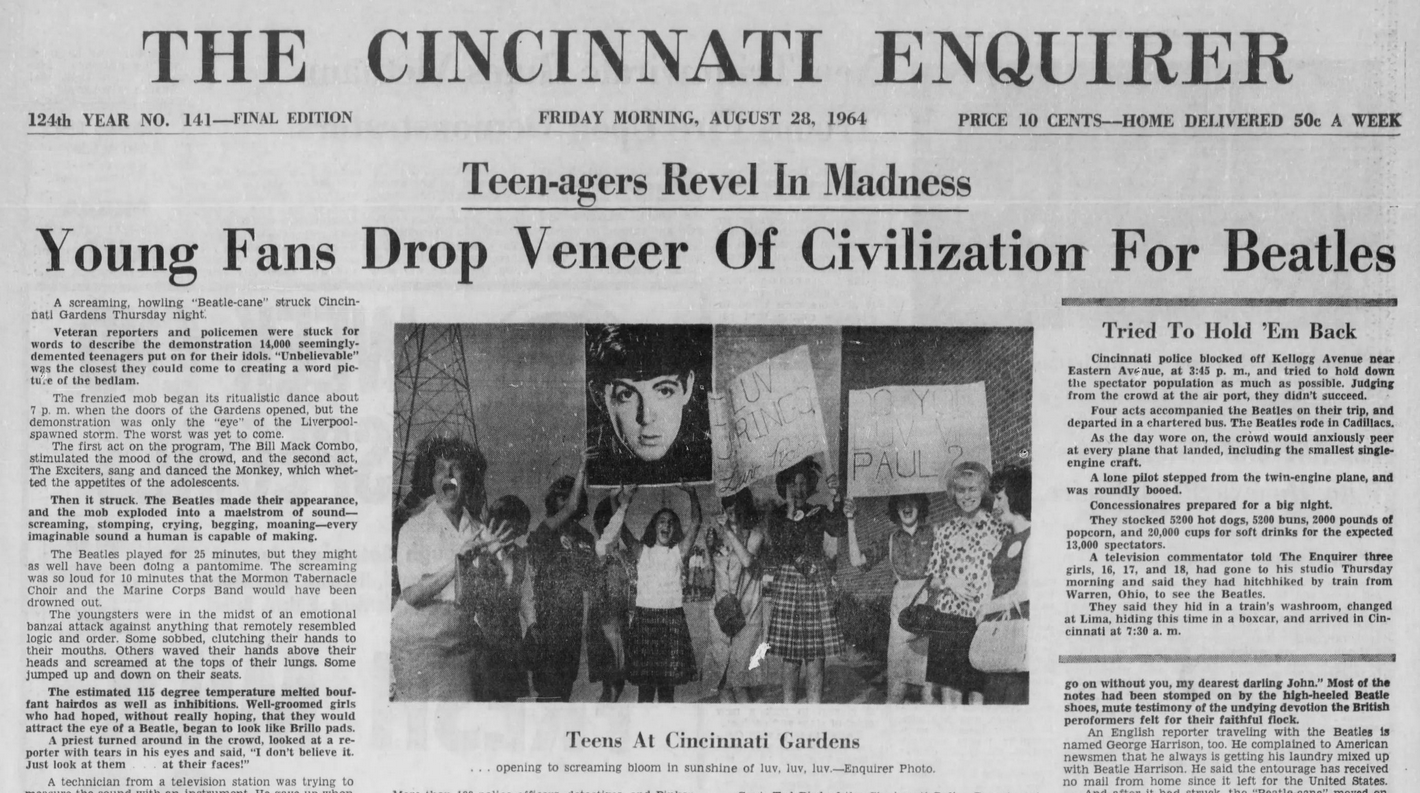
When the Beatles went on the road, stories like this followed them everywhere
On the 50th anniversary of Sgt. Pepper’s Lonely Hearts Club Band, the New York Times bravely reprinted the original review that ran in the newspaper on June 18, 1967. I commend the courage of the decision-makers who were willing to make Gray Lady look so silly. But it was a wise move — if only because readers deserve a reminder of how wrong critics can be.
“Like an over-attended child, ‘Sergeant Pepper’ is spoiled,” critic Richard Goldstein announced. And he had a long list of complaints. The album was just a pastiche, and “reeks of horns and harps, harmonica quartets, assorted animal noises and a 91-piece orchestra”. He mocks the lyrics as “dismal and dull”. Above all the album fails due to an “obsession with production, coupled with a surprising shoddiness in composition”. This flaw doesn’t just destroy the occasional song, but “permeates the entire album”.
Goldstein has many other criticisms — he gripes about dissonance, reverb, echo, electronic meandering, etc. He concludes by branding the entire record as an “undistinguished collection of work”, and even attacks the famous Sgt. Pepper’s cover — lauded today as one of the most creative album designs of all time — as “busy, hip, and cluttered”.
The bottom line, according to the newspaper of record: “There is nothing beautiful on ‘Sergeant Pepper’. Nothing is real and there is nothing to get hung about.”
How could he get it so wrong?
Comments Off on It’s the job of the music critic to be loudly and confidently wrong as often as possible
January 30, 2023
“… say what you want about the good old Bulletin of the Atomic Scientists, but at least its crappy clock is behaving like a clock these days”
Colby Cosh congratulates the Bulletin of the Atomic Scientists for at least getting their clock moving in the normal direction once again:

Atomic cloud over Hiroshima, taken from “Enola Gay” flying over Matsuyama, Shikoku, 6 August, 1945.
US Army Air Force photo via Wikimedia Commons.
On Tuesday, the Bulletin of the Atomic Scientists (really a foundation that publishes a famous magazine by that name) announced that it would be scooching the minute hand of its renowned “Doomsday Clock” forward. The clock will now read 11:58:30 p.m., midnight minus 90 seconds. The Bulletin does this once a year — at a time, by pure coincidence, when newspaper editors are notoriously starved for copy.
The Doomsday Clock was originally (in 1947) a one-off magazine cover design by Martyl Langsdorf (1917-2013), a landscape artist who was married to one of the Manhattan Project physicists. She happened to set the clock at about seven minutes to midnight, but the visual metaphor was irresistible. As the arms race and nuclear proliferation began, the editors of the Bulletin started rearranging Langsdorf’s clock face as an index of the danger from nuclear exchange.
Even by saying this much I am intruding somewhat on the turf of a colleague, Tristin Hopper, who is eternally preoccupied with the pure stupidity of the Doomsday Clock. As T-Hop never tires of pointing out, you have really lost track of the clock metaphor if you manually wiggle the minute hand backward or forward annually.
Moreover, the face of the clock can at best be considered a lagging indicator. The year 1947 was probably the moment at which the danger of a pre-emptive nuclear strike was greatest. Intellectuals and strategists needed a few years to think through the implications of nuclear weapons: the logic of a first strike was compelling, and might have won the argument in any country that developed nukes until the equilibrium of mutually assured destruction was both established and theorized.
The Bulletin of the Atomic Scientists moved the clock closer to midnight as the world was learning to live with nukes and nuclear proliferation. Eventually the hand was moved backward in 1960 — practically in time for the frightening Cuban Missile Crisis.
Comments Off on “… say what you want about the good old Bulletin of the Atomic Scientists, but at least its crappy clock is behaving like a clock these days”
January 29, 2023
“That is what Westerners like about Dubai: the indentured servitude. And the weather.”
Tanya Gold at The Free Press:

“Royal Atlantis Resort hotel under construction, Palm Jumeirah, Dubai” by Jpbowen is licensed under CC BY-SA 4.0 

 .
.
I went to Dubai once. It is where tyranny meets hyper-capitalism, and it is as awful as it sounds.
I was helping a journalist friend research an article. I spent my days admiring an undersea bedroom in a lagoon and a ski slope inside a mall. At night I would meet trafficked maids, or a woman imprisoned for adultery. I asked an ancient British tourist why he came here for his holidays. He said, “The staff will hold your dick if you ask them.” That is what Westerners like about Dubai: the indentured servitude. And the weather.
Last week, at the grand opening of Atlantis The Royal, Dubai’s newest luxury hotel, Beyoncé gave her first live performance in five years. This gig featured a 48-person all-female orchestra — how feminist — a Lebanese dance troupe, and her daughter. She was reportedly paid $24 million for the occasion.
Her latest album, Renaissance, is, among other things, an homage to black queer culture. She performed no songs from it; how could she in a country where homosexuality is punishable by death? So she sang her back catalog for the equivalent of ten Bugatti Chirons. Oil-rich tyrannies have generous marketing budgets; they’re selling tyranny itself.
What Beyoncé does or doesn’t do for money wouldn’t matter but for the trend of celebrity activism, which insinuates that morality travels with a star like her wardrobe. Beyoncé acolytes say that just by arriving in Dubai she made the city gayer, a kind of subtle protest. Perhaps so subtle that even Dubai’s ruler Sheikh Mohammed bin Rashid — accused of abducting two of his daughters for noncompliance with his wishes, one from England, and another from a ship as she tried to flee Dubai — wouldn’t notice. Did his enforcers reconsider their stance on gayness as they sang along to “Drunk in Love”? Or are they laughing themselves stupid at the PR coup of persuading an until-now gay ally to perform at the opening of a hotel in a country that hates gays?
Dubai, along with Saudi Arabia, wants to reinvent itself as a tourist destination for when the oil runs out. There is nothing understated there — the Burj Khalifa, which is the tallest building in the world; the Palm Jumeirah, a man-made archipelago in the shape of a palm tree. Everything is vast and highly colored, a distraction. It has to be: To enjoy yourself in Dubai, you must close your eyes to suffering. Almost 90 percent of Dubai’s residents are migrant workers, and many of them live in conditions amounting to indentured slavery.
Comments Off on “That is what Westerners like about Dubai: the indentured servitude. And the weather.”
January 27, 2023
January 26, 2023
Are memes the natural communications channel of non-progressives?
Sarah Hoyt on having to explain memes to her husband:

His time is more limited, and his time off — he does the taxes for all the family businesses and I’m not the only one with three — usually ends up being spent researching HIS obsessions, like music or some obscure movie thing that fascinated him for no reason I can figure out, or something about early 20th century history.
But he definitely never hung out on political blogs. Which means when I’m trying to explain why something is immediately obvious — like, DIL in training doesn’t like to eat sandwiches, so I immediately said “But you’ll still make them for my son, right? Otherwise, it’s just unnatural” three of us laughed and my husband looked confused. Because “women as sandwich makers” was not part of his mental archive. And then I had to explain how it started in the blog fights of the early oughts — I end up, more often than not having to get galoshes and a spade and go digging, until he gets how we got here.
And then I suddenly feel a weird sympathy for the left and their absolute belief we use “dog whistles” and are in the middle of some form of conspiracy.
It’s not just that they can’t meme, or are humorless (though dear Lord, that’s part of it) but the inherent structure of politics in this country — and parts of the world, though they’re behind us by a few decades — makes the two sides very different in how they communicate.
The left STILL commands all the traditional communication channels. And because they are and assume they are the “accepted” mode of being in the culture — because they have the cultural megaphones from media to education, from government mechanisms (even when nominally not) to entertainment — they communicate in the open. They just slap their “I support thing” as virtue signaling over everything, plus some. They — and this is partly personality attracted to the side — seem to change their programming over night and all talk about “new thing” in unison.
This means their mode of communication is detached from reality (often) and rests on shaky ideological/economic foundations but it’s out in the open and blared from a megaphone.
They make jokes that aren’t jokes, merely pointing out they support the thing. And they say things they think will shock the right, but they have no clue what the right is or what would shock us.
They are in a way the young girl just released from a convent school trying to shock the kids in public school. They get weird looks. We understand them, but they don’t get us at all.
Meanwhile the right comes from years of silence. Years of being silenced, and not even being able to explain it to anyone. If I had a dime for every time I told someone in the nineties or oughts “yeah, most bestsellers are left because the right ones who are known to be so are stopped early” and got back “Nah, the left is more creative, because they’re anti-establishment and blah blah blah.” (HOW the left, in control of everything, is supposed to be anti-establishment is a good question. I mean, sure, they do a lot of things they think are shocking, but wouldn’t shock anyone who wasn’t born in my grandparent’s generation. Look, people, naked Shakespeare was OLD HAT when I was a kid in the late sixties. Now extrapolate from that.)
At least now most people know — it took Twitter, I think — that the right was being hard-silenced.
Which means most people my age who are the oldsters of the “we talk back” generation came to our own conclusions and thought we were crazy to dissent from what “everyone knew” for the longest time. No, really. We were out there, thinking we were along, but we could see no other way to make sense of things, so we stood. Alone, we thought.
A lot of my generation discovered they weren’t UTTERLY alone due to Rush Limbaugh. (I was never a big listener. I just am not. I don’t listen to podcasts, except maybe once a week. Even the audio books I listen to are usually things I already read. I don’t hear very well, and need to be sure I can “catch” what’s said, even if I miss some words.)
And most of us hit the nascent right blogosphere with two feet in the early oughts. Which is where a lot of the early memes like the “girls make sandwiches” meme comes from.
But the blogs, and particularly the blog comments, being a wild west type of atmosphere, where people who developed their opinions in isolation came together and figured out how it all fit for the first time, is a completely different form of communication from the top down, revealed truth talk on the left.
On the right, the clash between right feminist and right not particularly enthralled with feminism gave rise to “Make me a sandwich and get me a beer” as response to screeds on how you’re disrespecting some feminist shibboleth. (Particularly when women on the right hadn’t fully realized how much of the feminist “current thing” was really Marxism in a cute scarf and high heels.) And from that it got meme-fied into short hand, so you could drop a picture of an early 20th century mesmerist levitating a girl and label it “And like that this sandwich maker becomes an ironing board” and it was immediately funny, both poking fun at feminist outrage and the troglodytes or pseudo troglodytes (I’ve been known to be one of those) on our side who think women are inherently house-keepers. (And a lot of this is self-conscious mocking of the person by him/herself.)
We had to develop a sense of humor about our internal battles, including our own opinions, and we had to be able to communicate we weren’t ossified in our opinions really quickly, to prevent minor disagreements becoming blog or alliance shattering wars.
A lot of memes come from that. Because they can communicate “Yeah, this is what I think, kind of, but I’m aware it’s also funny.” Or “This is how I see your opinion. Care to clarify” in — usually — a non-offensive, quick-hit manner. A manner that allows the other person to come back with “Yabut–” Or “Funny, but in fact–”
The left doesn’t do that, because no scrapping allowed in the ranks. They value unity and directives come from above.
Beyond giving them a tragic inability to meme (Seriously, we should start a fund to send them to meme school) it also leaves them with the conviction that the right is always speaking in “dog whistles” or “code” and that we’re plotting horrible and scarifying violence against them, in these bizarre coded words.
Comments Off on Are memes the natural communications channel of non-progressives?
January 25, 2023
Sometimes – rarely – the boss really does embody all those “creative genius” tropes
At The Honest Broker, Ted Gioia considers the impact Steve Jobs had on Apple:
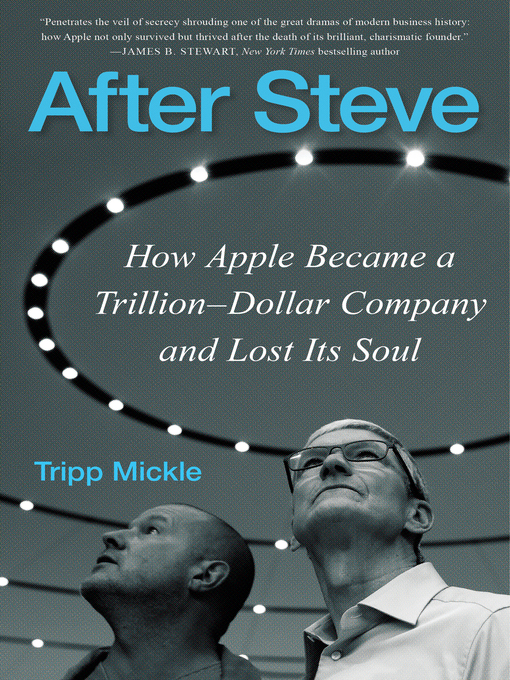
I share these reactions, because many other sectors of our culture (especially music) suffer from a similar malaise. And in most instances, the problems start at the top.
I’ve seen in so many different circumstances how the entire organization takes on the personality of the CEO — for better or worse. I’ve also seen how the replacement of a single individual can turn a bad situation into a great one, and vice versa.
The case of Steve Jobs is fascinating, and perhaps alarming too. He left Apple twice, and both times something similar happened.
In the first instance, Jobs was fired as CEO in 1985. The last thing he did before losing his job was launch the Macintosh computer. When he returned to Apple 12 years later, the single biggest source of revenue for the company was still the Macintosh. After more than a decade, the company was depending on the creativity of the guy they fired.
Steve Jobs died in 2011, and we have now reached the exact same time lag as before. Twelve years have elapsed since Jobs’s final departure, and the last big project he undertook before his death was the iPhone. And now after a dozen years, Apple’s largest source of revenues is still the iPhone. Once again, they are riding the momentum of his creativity, and have done shockingly little to expand his legacy.
By the way, in the interim between the two stints as Apple CEO, Jobs founded NeXT and ran Pixar. Fifteen Pixar films now rank among the 50 highest grossing animated films of all time, and they have won 23 Academy Awards. And because of his sale of Pixar to Disney, the entrepreneur’s widow Laurene Powell Jobs inherited 138 million shares of Disney stock.
That’s pretty good results for the lull in your tech career after you’ve been fired.
I know Jobs has many detractors. And maybe he was a hardass boss. In fact, he almost certainly was a hardass boss. But it’s tough to ignore those results — which not only changed a company but the entire culture of our times.
Comments Off on Sometimes – rarely – the boss really does embody all those “creative genius” tropes
The “everyone is literally Hitler” expert
Chris Bray helpfully points out that Benito Mussolini combed his hair, which is also what Emmanuel Goldstein does:
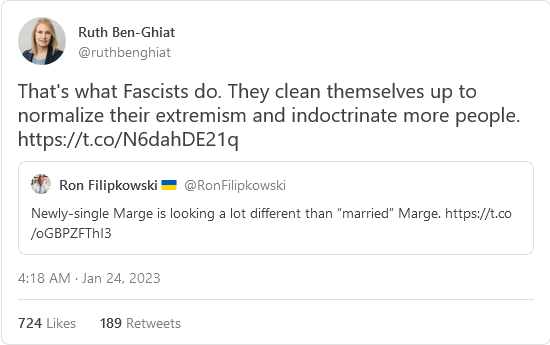
We’re overproducing hysterical expert-scolds. I keep finding more of them in social media, loud and weirdly nasty, like feral cats in a hay pile. Here comes a shrewd take from Ruth Ben-Ghiat, a history professor at NYU who has a highly marketable sideline as an expert on authoritarianism, responding to some genius-level political analysis from a guy with the requisite Ukrainian flag in his profile:
Observation: Marjorie Taylor Greene wore makeup on television.
Analysis: “That’s what Fascists do.”
See, members of Congress usually go on television in just an old pair of gym shorts and a dirty Schlitz Lite t-shirt, but this one particular person is trying to be Literally Adolf Hitler, so she wore a necklace and some lipstick. Textbook fascism!
Meanwhile, the governor of Florida just said that students in schools should put their phones away until recess, so they can focus on learning. This, too, is precisely identical to blackshirts marching on Rome:
Spend five minutes with this person’s social accounts, if you must, because this is what she does. It’s fascinatingly random, like a lady who lives on a bus bench wandering around the neighborhood describing random objects as Nazis. That’s a Nazi tangerine! That scrap lumber invaded Poland! Discarded juice boxes are Francisco Franco!
Eventually, if you make enough completely random angry noise, you get tenure and a book deal.


January 23, 2023
Jeremy Clarkson and “the swamp of arrogant prejudice and self-gratification which sits at the bottom of the brain”
Nicholas Harris recounts the story of Jeremy Clarkson’s steady rise and sudden recent fall after a crude reference to someone or other in a newspaper article:

Screencap from Jeremy Clarkson’s banned Hawkstone Lager ad
“Ask Clarkson. Clarkson knows — people like fast cars, they like females with big boobies, and they don’t want the Euro, and that’s all there is to it.” This surmise, from Peep Show, captures the essence of Jeremy Clarkson’s Noughties appeal — approvingly for those who liked him, and scandalously for those who didn’t. The spawn and spokesman of the English male id. Insular, impudent and straightforward in taste. And if that weren’t enough, he was also into cigs, engines and the Second World War.
For the minority of a more severe, moralistic, and joyless disposition, this made him a national-psychological defect to be suppressed, or ideally exposed and exorcised. Before Piers Morgan, Nigel Farage or Donald Trump provided such stern competition, it was a small badge of honour on the Left to publicly hate Clarkson. But for many of us (probably a majority at his peak) he was a vulgar treat to indulge. For the length of a Sunday column or an episode of Top Gear, we could wallow harmlessly in the swamp of arrogant prejudice and self-gratification which sits at the bottom of the brain. At a time of minimal collective loyalty, the nation could reliably divide into those two tribes. Clarkson the monster, or Clarkson the geezer. Wokery vs blokery. A version of the same split is fuelling the current Clarkson row, but with the weight of opinion reversed.
[…]
But his spiritual and popular appointment to the English is a far tougher thing to dismiss. He is, like it or not, quite a lot of us writ ludicrously, satirically large. Like a 21st-century John Bull: to paraphrase Auden, a self-confident, swaggering bully of meaty neck and clumsy jest. Whatever Clarkson’s professional fate, the question of whether our society can tolerate him has implications for the stomach and sensibility of the national character, of which he is a significant avatar and champion. And his rise and fall reads as a history of a changing English firmament, one in which public morality has come to supersede mere entertainment.
Plenty of time and work went into the germination of such a figure. Clarkson’s early life is a whistle-stop tour of the English class system. He was born rural, lower-middle class, Yorkshire. But, in a wonderful twist of fate, the Clarkson family came into money after his parents won the exclusive rights to sell Paddington Bear dolls, based on the ones they had made for him and his sister. With aspirational intent, Clarkson was sent to Repton, one of the North’s oldest private schools. There, he smoked, pranked and failed his way to expulsion, developing the likeable loutishness which is his career mainstay. And then he jumped social tracks again, entering the lowest rungs of the Fourth Estate at the Rotherham Advertiser.
A public schoolboy who can still boast that he crashed out of education with a C and two Us at A Level. The ingredients were in place for a broad, classless appeal. But Clarkson really came of professional age in the new meritocracy of Thatcher and Murdoch, a place where common touch came to supersede common background (something also exploited by Boris Johnson and Nigel Farage). It was an England of quick, coarse wit, and quicker, coarser money; of the triumphant red-top, and the unrepentant “lad”. It suited Clarkson perfectly. Flush with entrepreneurial spirit, in Eighties London he had the wheeze of syndicating car news and reviews from his own company to the regional press. It was a money-maker which introduced him to motoring journalism and eventually to the producers of Top Gear.
Comments Off on Jeremy Clarkson and “the swamp of arrogant prejudice and self-gratification which sits at the bottom of the brain”
Five Dumb Canadian Cartoons
J.J. McCullough
Published 11 Nov 20175 dumb cartoons from Canada I remember from my childhood.
Comments Off on Five Dumb Canadian Cartoons
January 22, 2023
It’s not plunder if you wrap it into a “communications contract” with a “consultant”
Paul Wells notices an oddity with current federal government ministers’ continued dependence on outside contractors to help them with “communications”:

Immigration minister Ahmed Hussen at the Toronto Caribbean Carnival in 2017.
Photo by Bruce Reeve via Wikimedia Commons.
We’ll circle back to some specifics in a minute, but I’m fascinated by the notion of “communications” embodied here. I have questions.
- Four, five and seven years after being elected, who still needs communications help? You tell your voters the world will end if they elect the other team. A reporter calls, you send them bullshit. This isn’t exactly tricky.
- In what sense is this “communications”? Look at what Munch More Media did when Global came calling. (1) They erased their website. (2) They scrubbed their IG. (3) They shut down their Twitter account, which Global says had a single follower. (4) They left their Instagram account, whose last post was from 2018, and their LinkedIn account, which lists four followers and names no employees, intact. This is not a company with a proud story to tell. There’s a term for a communications firm that uses no social media. It’s “A firm that had damned well better have a sister in the minister’s office.”
- Hussen’s office hopes you’ll believe that a cabinet minister’s constituency office and his ministerial office never talk, but they sure seem to have closely studied the example of Munch More Media when it comes to fielding reporters’ queries. “Hussen’s office — over multiple conversations this week — did not acknowledge any connection between the director of Munch More Media and one of his most senior advisers,” Global reports. Now that’s gold-star communicating.
- This approach to communications is having its desired effect. Quick: What on Earth is Ahmed Hussen the minister of? How about Mary Ng? Don’t worry, I’m stumped too. Can you quote anything either person has ever said about anything? Of course not. If Hussen — or, might as well shoot for the moon, Ng — resigned from cabinet today, a resolution I here heartily advocate, you’d have to spare some sympathy for the poor wire-service reporter who’d be expected to come up with some kind of ending for the sentence beginning, “The minister is best known for ____.”
- Hussen’s riding has been held by the Liberals (and one apostate Liberal, John Nunziata, after he left the caucus to sit as an Independent) since Hussen was three years old, except for four years after the 2011 election. It’s one of the most reliably Liberal ridings under the eye of God, except for four years after the 2011 election. The only communications material a Liberal in York South-Weston needs is a billboard saying, “Michael Ignatieff Is No Longer the Liberal Leader.”
Willie Sutton was once asked why he robbed banks. Because that’s where the money is, he said. Well, communications contracts are the new banks. There will always be money in communications contracts, and, gloriously, the simple answer — “Answer the question” — is never correct. The goal of communications is not to communicate. It’s to figure out how to communicate as little as possible.
Comments Off on It’s not plunder if you wrap it into a “communications contract” with a “consultant”
One year later
Last year, the Freedom Convoy 2022 from all parts of Canada began to assemble and move toward Mordor, er, I mean Ottawa. Patrick Carroll remembers:

Posted to Twitter by @KatherineZupan https://twitter.com/KatherineZupan/status/1486164240364814337/photo/1
It’s hard to believe, but the one-year anniversary of the Canadian Freedom Convoy is upon us. It was January 22, 2022 when the convoy began to form across the country. Over the following week, thousands of trucks made their way to Ottawa, and on January 29 they arrived in the nation’s capital, loud and determined as ever.
The following month was one of the most tumultuous times in modern Canadian history. Downtown Ottawa was completely gridlocked, bridges were blocked, and politicians along with the media took every opportunity to smear the protesters.
Four weeks later, it ended quite a bit faster than most people expected. Armed with special powers from the never-before-invoked Emergencies Act, the government successfully dismantled the protest in a matter of days.
In hindsight, the practical effect of the protest on legislation is difficult to detect. Some Covid policies were probably relaxed a few months earlier than they otherwise would have been, but for the Convoy organizers, this was far from a decisive victory.
A debate has been raging in Canada ever since: were the protestors within their rights to do what they did? Those who support the convoy argue that they were, since the Canadian Charter of Rights and Freedoms guarantees the right to freedom of expression and freedom of peaceful assembly. Those who oppose the convoy largely agree with these freedoms, but argue that such freedoms should be subject to certain reasonable restrictions. Major obstructions to traffic, and especially obstructions to critical infrastructure such as bridges, are simply going too far in their view. Is the government supposed to stand by and let a group of hooligans bring the country to its knees?
That’s certainly the line the governments (city, provincial, and federal) generally chose to take and the media were almost chanting the governments’ line in unison. Of course, the governments were not all that well synchronized, which led to some blatant examples of deliberate misinformation/disinformation/gaslighting from one or another level, as Donna Laframboise points out:
During the inquiry into the use of the Emergencies Act, witnesses talked about misinformation as if it were a problem confined to contrarians on social media. But the Closing Submission of former Ottawa police chief Peter Sloly shows that government officials are, themselves, a fertile source of misinformation.
If someone in our federal government had demonstrated genuine leadership by going out and talking to the truckers, the protesters would likely have dispersed after the first weekend. Instead, a government that meets with professional lobbyists on 24,000 occasions a year refused to have a single meeting with working people who’d driven thousands of miles to the nation’s capital. Rather than being a grownup, the Prime Minister called them names. Rather than negotiating with the protesters, he told police to get rid of them.
According to Chief Sloly, the Ottawa force was understaffed at the best of times. Even after cancelling vacations and days off, there still weren’t enough personnel to deal with a significant, extended protest on top of normal duties.
From the beginning, the media failed to behave responsibly. It whipped up hysteria. It smeared and sneered. It sowed suspicion and fear of small town Canada, of those who see the world differently, of people who’d reached their breaking point. Big surprise a portion of the public did, in fact, become hysterical. As the protest dragged on, the pressure became intense. In lieu of pursuing a political resolution to what were clearly political grievances, slimy politicians pointed fingers at the Ottawa police. While simultaneously hamstringing them behind the scenes.
Page 43 of Chief Sloly’s Closing Submission says federal Public Safety Minister Marco Mendicino falsely told the world — on February 3rd — that the Royal Canadian Mounted Police (RCMP) had provided all the resources the Ottawa police had asked for. Four days later — on February 7th — he insisted 250 RCMP officers had been dispatched to Ottawa.
But the reality was quite different. Until mid-February, say his lawyers, the maximum number of RCMP officers available to the Ottawa force on any given day was 60 — far less than the number required.
It was the same story with the Ontario Provincial Police (OPP). On February 6th, Ontario’s Solicitor General Sylvia Jones falsely stated in an official document that “more than 1,500” OPP personnel had already been sent to Ottawa. In the words of Chief Sloly’s lawyers, this was “grossly inaccurate” (pages 80, 107).
Government ministers at both the provincial and federal level, they insist, made misleading statements about the degree of assistance Ottawa police had received. Statements that were “clearly incorrect” (page 53).
Which means Cabinet ministers were spreading misinformation. Misinformation that just happened to deflect blame away from themselves. That just happened to make the Ottawa Police Service look incompetent while turning the chief into a scapegoat. Ottawa’s first black police chief, a Jamaican immigrant, got thrown under the bus.


Comments Off on One year later
January 21, 2023
A club for autodidacts?
Ed West regrets the lacunae in his knowledge of many things, which I suspect also describes a lot of my blog visitors (given how often my own autodidactic web explorations end up here or on my social media accounts). His proposed solution is a club to study the western canon:
I’m ashamed of how little I know about a lot of things. Classical music, for instance, is a huge ocean of unknowns to me. I appreciate it, and I would like to know more, but it still feels like a language in which I have only the barest of vocabulary.
I’m so clueless and lightweight on that front that my favourite classical music LP when I still had a record player was a double album which told you which advert each piece was from (“The Hovis advert with the boy walking up the hill” for Dvorak, “the Hamlet cigar ad with Gregor Fisher” by Bach).
My knowledge of poetry is quite poor, too, and I wish I could recite more of it, rather than, say, the lyrics of the first seven Iron Maiden albums I learned off by heart at 13 (nothing against Iron Maiden, I still love them, but I’ve found this a slightly less useful skill down the years when trying to impress people).
Poetry has never been my thing. I enjoy hearing others read poetry, but there’s always something that prevents me from reading poetry on the printed page and “getting” the rhythm of it for more than a stanza or so. However, with song lyrics the underlying music provides sufficient support that I undoubtedly know far more lyrics by heart than any other kind of poet-created text.
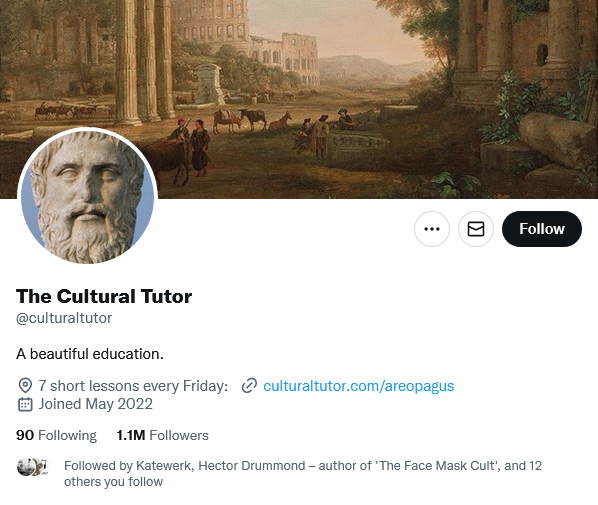
YouTube is full of videos following in George Birkbeck’s tradition of adult learning. There are podcasts like Peter Adamson’s History of Philosophy Without Any Gaps or The Partially Examined Life. One of the most popular Twitter accounts at the moment is The Cultural Tutor, with over a million followers, producing threads on the art, architecture, music and literature you should know about. People really want to learn this stuff, and regret that they were never made to do so earlier.
Some of this is due to the education system, although I don’t want to be one of those tedious people who go on Twitter and blame the curriculum for the gaps in their knowledge of history: “why weren’t we taught about the Second Schleswig war in school? Why am I only learning this now?” as if their teachers had thousands of hours spare rather than a very limited amount of time. But it’s also true that most people leave the British state education system knowing very little about the western canon, and are afterwards playing catch-up with a less absorbent mind.
In my case, with a couple of exceptions, the way that history — especially Canadian history — was taught in school seemed to be deliberately made as bland and uninteresting as possible … we of course skipped over most of the battles and campaigns so we could concentrate on the diplomats and treaties. Steve Sailer noted a similar phenomenon in US schools:
In Europe, anthropologists have promoted the “pots not people” theory to argue that trade and changes in fashion must explain why Corded Ware pots suddenly showed up all over Europe about 4,900 years ago. (So did battle axes; indeed, early scientists called this the Battle Axe Culture. But that sounded too awesome. Hence, more recent academics renamed it after its pottery style to make these brutal barbarians sound dweebier and thus less interesting to boys.)
Oddly, we were at least given some minimal insight into the plight of First Nations children in the residential school system which was not true when my son went to school a generation later. I’m still puzzled about that change in the curriculum. But back to Ed’s proposal:
Perhaps the main reason is that there already aren’t enough people who know about these things to teach in the first place, and who are also willing to endure the strain of having to keep order among an unwilling audience. So the knowledge does not get passed on, and public culture becomes ever more lowbrow.
But while it’s a hopeful sign that so many people go online to learn these things, my take-away from lockdown is that in-person is always better — going to something live, meeting people face to face, allowing your sensory perception to aid the learning process. I also believe that the more clubs and institutions we have, the healthier and happier our society.
That is why I’m proposing an idea, for a sort of club where people come and listen to talks about a particular feature of the western canon — Virgil, Goethe, Milton, Van Eyck, whatever — and fill in all these enormous holes in our knowledge. It would be a bit like an old-fashioned salon, or a Lyceum club. Although there are local salons still running, this would ideally be national. This canon club — I’m open to suggestions for a different name — would initially start in one city, presumably London, but if there was further interest we could help set up branches across Britain (and then even maybe abroad). Each local club would run semi-independently, but the wider organisation would help with arranging speakers and so on.
I see his point, but in my experience a lot of autodidacts are also rather introverted by nature so a physical salon or club with a lot of strangers might be less appealing than some of the existing online options.
Comments Off on A club for autodidacts?


