
About 15 years ago, John Heath and I coauthored Who Killed Homer? The Demise of Classical Education and the Recovery of Greek Wisdom, a pessimistic warning about where current trends would take classics in particular and the humanities in general. It was easy enough then to identify the causes of the implosion. At the very time the protocols of the universities were proving unsustainable — more expensive administrators and non-teaching personnel, soaring tuition hikes, vast non-instructional expenditures in student services and social recreation, more release time for full professors, greater exploitation of part-time teachers, and more emphasis on practical education — the humanities had turned against themselves in the fashion of an autoimmune disease.
For example, esoteric university press publications, not undergraduate teaching and advocacy, came to define the successful humanities professor. Literature, history, art, music, and philosophy classes — even if these courses retained their traditional course titles — became shells of their former selves, now focusing on race, class, and gender indictments of the ancient and modern Western worlds.
These trendy classes did the nearly impossible task of turning the plays of Euripides, the poetry of Dante, and the history of the Civil War into monotonous subjects. The result was predictable: cash-strapped students increasingly avoided these classes. Moreover, if humanists did not display enthusiasm for Western literature, ideas, and history, or, as advocates, seek to help students appreciate the exceptional wisdom and beauty of Sophocles or Virgil, why, then, would the Chairman of the Chicano Studies Department, the Assistant Dean of Social Science, the Associate Provost for Diversity, or the Professor of Accounting who Chaired the General Education Committee worry about the declining enrollments in humanities?
[…]
If the humanities could have adopted a worse strategy to combat these larger economic and cultural trends over the last decade, it would be hard to see how. In short, the humanities have been exhausted by a half-century of therapeutic “studies” courses: Peace and Conflict Resolution Studies, Post-Colonial Studies, Environmental Studies, Chicano Studies, Women’s Studies, Black Studies, Asian Studies, Cultural Studies, and Gay Studies. Any contemporary topic that could not otherwise justify itself as literary, historical, philosophical, or cultural simply tacked on the suffix “studies” and thereby found its way into the curriculum.
These “studies” courses shared an emphasis on race, class, and gender oppression that in turn had three negative consequences. First, they turned the study of literature and history from tragedy to melodrama, from beauty and paradox into banal predictability, and thus lost an entire generation of students. Second, they created a climate of advocacy that permeated the entire university, as the great works and events of the past were distorted and enlisted in advancing contemporary political agendas. Finally, the university lost not just the students, but the public as well, which turned to other sources — filmmakers, civic organizations, non-academic authors, and popular culture — for humanistic study.
Victor Davis Hanson, “The Death of the Humanities”, VDH’s Private Papers, 2014-01-28
August 26, 2014
QotD: Bonfire of the humanities
August 24, 2014
200th anniversary of the only foreign occupation of Washington DC
In History Today, Graeme Garrard tells the tale of the burning of Washington in 1814:
When James Madison, fourth President of the United States and ‘Father of the Constitution’, signed a declaration of war against Britain on June 18th, 1812 he could scarcely have imagined that two years later he would be fleeing from his burning capital before the invading enemy. At the start of the ‘War of 1812’, the first the US had declared on another nation, his friend and predecessor as president, Thomas Jefferson, had smugly declared that the war against Britain’s colonies in what is today Canada would be ‘a mere matter of marching’. As Madison abandoned the White House on horseback with his entourage and raced towards Virginia on August 24th, 1814 he stopped and looked back as he beheld the ruined city of Washington. The smoke from flames that engulfed it could be seen as far away as Baltimore, Maryland. Although he left no personal account of his feelings about these shattering events, the normally imperturbable president must have been deeply shaken by the turn they had taken, as were most Americans. What his many domestic critics had derisively branded ‘Mr Madison’s War’ had led to the only foreign occupation of the US capital in its history. Soldiers and marines under Major-General Robert Ross and Rear Admiral Sir George Cockburn put Washington’s public buildings, including the Senate, the House of Representatives, the Library of Congress, the Treasury building, the State and War Departments, the historic Navy Yard and the President’s House (as the White House was then known), to the torch. Exactly two centuries later, few people in the United States or Britain are aware of this national humiliation, the ‘greatest disgrace ever dealt to American arms’.
Why were the British so determined to burn the government buildings in Washington? Revenge for the Americans having done the same thing to York the previous year:
The Americans were as dejected and enraged as the British were elated by the effects of the occupation. The reserved and stoical Madison returned to Washington as soon as the British had departed. Unable to live in the President’s House, he took up residence at the home of his brother-in-law. His wife soon joined him, exclaiming when she saw the ruined capital: ‘Such destruction, such devastation!’ The secretary of state James Monroe, Madison’s successor as president, cursed the British troops as ‘all damn’d rascals from highest to lowest’ for torching the capital. He seems to have forgotten that American troops had done much the same in 1813 when they occupied the undefended city of York (now Toronto), the capital of Upper Canada (now the province of Ontario). Then they had burned the colony’s legislative and judicial buildings, plundered its public library and destroyed private property. Indeed, the Governor General and military Commander-in-Chief of British North America during the war, Lieutenant-General Sir George Prévost, wrote that, as a ‘just retribution, the proud capital at Washington has experienced a similar fate’. When the news reached London a month later of the British retaliation, guns outside Parliament and the Tower of London boomed a joyous salute, a reaction echoed throughout the colonies of British North America, particularly in York.
Who is to blame for the outbreak of World War One? (Part twelve of a series)
You can catch up on the earlier posts in this series here (now with hopefully helpful descriptions):
- Why it’s so difficult to answer the question “Who is to blame?”
- Looking back to 1814
- Bismarck, his life and works
- France isolated, Britain’s global responsibilities
- Austria, Austria-Hungary, and the Balkan quagmire
- The Anglo-German naval race, Jackie Fisher, and HMS Dreadnought
- War with Japan, revolution at home: Russia’s self-inflicted miseries
- The First Balkan War
- The Second Balkan War
- The Entente Cordiale, Moroccan crises, and the influence of public opinion
- The Bosnian crisis of 1908
Who’s at the wheel? The less-than-transparent-or-unified governments of 1914
A common reaction (among both modern historians and lay readers) to the apparent incoherence of the decision-making process in the various great powers’ capitals is to ask just who exactly was in command when such-and-such a decision was taken. This reflects on our modern day belief that power has an identifiable source, and that actors had clear direction from a central authority. As Christopher Clark takes pains to outline in The Sleepwalkers this was not true even of the more centralized great powers:
… even a very cursory look at the governments of early twentieth-century Europe reveals that the executive structures from which policies emerged were far from unified. Policy-making was not the prerogative of single sovereign individuals. Initiatives with a bearing on the course of a country’s policy could and did emanate from quite peripheral locations in the political structure. Factional alignments, functional frictions within government, economic or financial constraints and the volatile chemistry of public opinion all exerted a constantly varying pressure on decision-making processes. As the power to shape decisions shifted from one node in the executive structure to another, there were corresponding oscillations in the tone and orientation of policy. This chaos of competing voices is crucial to understanding the periodic agitation of the European system during the last pre-war years. It also helps to explain why the July Crisis of 1914 became the most complex and opaque political crisis of modern times.
In The War That Ended Peace, Margaret MacMillan writes:
Old institutions and values were under attack and new ways and new attitudes were emerging. Their world was changing, perhaps too fast, and they had to attempt to make sense of it. “What were they thinking?” is a question often asked about the Europeans who went to war in 1914. The ideas that influenced their view of the world, what they took for granted without discussion (what the historian James Joll called “unspoken assumptions”), what was changing and what was not, all are important parts of the context within which war, even a general European war, became a possible option in 1914.
The uneasy state of the Serbian state
Serbia had been practically an independent state since shrugging off the last Ottoman military occupation in 1867 and that independence was formally recognized by the great powers in 1878 at the Congress of Berlin which was the peace conference called to end the Russo-Turkish War (which we briefly looked at in part two). One of the provisions of the treaty that strongly displeased the Serbs was that they were forbidden to take over Bosnia, which instead was placed in the care of the Austro-Hungarian empire: the Serbs had gone to war with the Ottomans in 1876 by proclaiming a union with Bosnia. The Austrians and the other great powers preferred a weakened Ottoman empire to retain titular possession of Bosnia than to allow an upstart principality to claim it.

King Milan of Serbia (via Wikipedia)

King Alexander and Queen Draga of Serbia (via Wikipedia)
According to one account, the king, flabby, bespectacled and incongruously dressed in his red silk shirt, emerged with his arms around the queen. The couple were cut down in a hail of shots at point-blank range. Petrović [the king’s adjutant], who drew a concealed revolver in a final hopeless bid to protect his master (or so it was later claimed), was also killed. An orgy of gratuitous violence followed. The corpses were stabbed with swords, torn with a bayonet, partially dismembered and hacked with an axe until they were mutilated beyond recognition, according to the later testimony of the king’s traumatized Italian barber, who was ordered to collect the bodies and dress them for burial. The body of the queen was hoisted to the railing of the bedroom window and tossed, virtually naked and slimy with gore, into the gardens. It was reported that as the assassins attempted to do the same with Alexandar, one of his hands closed momentarily around the railing. An officer hacked through the fist with a sabre and the body fell, with a sprinkle of severed digits, to the earth. By the time the assassins had gathered in the gardens to have a smoke and inspect the results of their handiwork, it had begun to rain.

King Peter I of Serbia (via Wikipedia)
Whether through fear of suffering the same kind of violent death as his predecessor or through a genuine belief in liberalization, King Peter’s early reign was marked by a return to more democratic representation and parliamentary control of the government. The Austrian government had been on relatively good terms with the former king, and viewed the increasing democratization in Serbia as a dangerous trend (for fear it would give more impetus to demands for autonomy not only in Bosnia, but also in other Slavic areas of the empire). The Wikipedia entry for King Peter’s reign is just a tad over-enthusiastic:
The Western-educated King attempted to liberalize Serbia with the goal of creating a Western-style constitutional monarchy. King Petar I became gradually very popular for his commitment to parliamentary democracy that, in spite of certain influence of military cliques in political life, functioned properly. The 1903 Constitution was a revised version of 1888 Constitution, based on the Belgian Constitution of 1831, considered as one of the most liberal in Europe.The governments were chosen from the parliamentary majority, mostly from People’s Radical Party (Narodna radikalna stranka) led by Nikola P. Pašić and Independent Radical Party (Samostalna radikalna stranka), led by Ljubomir Stojanović. King Peter himself was in favor of a broader coalition government that would boost Serbian democracy and help pursue an independent course in foreign policy. In contrast to Austrophile Obrenović dynasty, King Peter I was relying on Russia and France, which provoked rising hostility from expansionist-minded Austria-Hungary. King Peter I of Serbia paid two solemn visits to Saint-Petersbourg and Paris in 1910 and 1911 respectively, greeted as a hero of both democracy and national independence in the troublesome Balkans.
The reign of King Peter I Karadjordjević from 1903 to 1914, is remembered as the “Golden Age of Serbia” or the “Era of Pericles in Serbia”, due to the unrestricted political freedoms, free press, and cultural ascendancy among South Slavs who finally saw in democratic Serbia a Piedmont of South Slavs. King Peter I was supportive to the movement of Yugoslav unification, hosting in Belgrade various cultural gatherings. Grand School of Belgrade was upgraded into Belgrade University in 1905, with scholars of international renown such as Jovan Cvijić, Mihailo Petrović, Slobodan Jovanović, Jovan M. Žujović, Bogdan Popović, Jovan Skerlić, Sima Lozanić, Branislav Petronijević and several others.
The Black Hand: Serbia’s “plausibly deniable” interference in Bosnian affairs
The leader of the 1903 coup d’etat, former Captain, now Colonel Dragutin “Apis” Dimitrijević was in a key position indeed — he was the head of the Serbian Military Intelligence service in 1914. From that important post, he was able to conduct covert operations against the neighbouring empires with an eye to destabilization and eventual military action. In 1911, Apis established Ujedinjenje ili smrt! (the Black Hand) to enable him to conduct operations separate from — but with goals aligned with — the formal state organization. Another semi-secret pan-Slavic organization set up a few years earlier became a very valuable tool in the hands of Apis: Mlada Bosna (Young Bosnia).
Margaret MacMillan in The War That Ended Peace describes the kind of operations “Apis” set up and operated against Austria-Hungary and the Ottomans:
Within Serbia itself there was considerable support for the Young Bosnians and their activities. For a decade or more, parts of the Serbian government had encouraged the activities of quasi-military and conspiratorial organizations on the soil of Serbia’s enemies, whether the Ottoman Empire or Austria-Hungary. The army provided money and weapons for armed Serbian bands in Macedonia and smuggled weapons into Bosnia much as Iran does today with Hezbollah in Lebanon.
Margaret MacMillan describes the typical members of the Young Bosnians, who were of a type that we probably recognize more readily now than at any time since 1914:
[They] were mostly young Serb and Croat peasant boys who had left the countryside to study and work in the towns and cities of the Dual Monarchy and Serbia. While they had put on suits in place of their traditional dress and condemned the conservatism of their elders, they nevertheless found much in the modern world bewildering and disturbing. It is hard not to compare them to the extreme groups among Islamic fundamentalists such as Al Qaeda a century later. Like those later fanatics, the Young Bosnians were usually fiercely puritanical, despising such things as alcohol and sexual intercourse. They hated Austria-Hungary in part because they blamed it for corrupting its South Slav subjects. Few of the Young Bosnians had regular jobs. Rather they depended on handouts from their families, with whom they had usually quarreled. They shared their few possessions, slept on each other’s floors, and spent hours over a single cup of coffee in cheap cafés arguing about life and politics. They were idealistic, and passionately committed to liberating Bosnia from foreign rule and to building a new and fairer world. Strongly influenced by the great Russian revolutionaries and anarchists, the Young Bosnians believed that they could only achieve their goals through violence and, if necessary, the sacrifice of their own lives.
Apis and his Bosnian operators were determined to take advantage of the announced visit by Archduke Franz Ferdinand to the Bosnian capital of Sarajevo in June, 1914. The Archduke was the heir-presumptive to the throne of the Dual Monarchy and (contrary to what a lot of people believed at the time) a moderate who hoped to use his visit to reduce tension between the monarchy and the Slavic people in the southern fringe of the empire. He had already spoken against the empire taking military action against Serbia on more than one occasion after provocation … if he were not on the scene, Apis calculated, the chances of war went up significantly.
The stage is set, the pieces are starting to fall into place, and the curtain is about to go up.
August 23, 2014
Defining the “best tank of World War 2”
Nigel Davies revisits one of the perpetual debates among amateur WW2 historians:
Let us start with the issue of tanks from the perspective of propaganda. More rubbish has been written about who had the best tanks during the Second World War than about any other topic to do with that war. Again and again you get supposedly serious historians talking about how the Germans started the Second World War with overwhelming tank superiority; that the Allies were only brought back into the race by the arrival of the Sherman tank; and how German technology leapt ahead again at the end of the Second World War to give them unrivalled vehicles. All these statements are of course completely incorrect.
One of the problems of course, is ‘best tank when, and for what?’
Comparing what was available in 1939/40 to what was being produced in 1945 (say a Panzer III or Matilda II with a Centurion or Stalin), is worse than useless. There is no comparison. Only the Panzer IV was actually produced throughout the war: and the heavily armoured final version of the tank — with a long barrelled 75mm gun capable of taking on almost every tank yet operational in mid 1945 — bore only a passing resemblance to the lightly armoured tank with a short barrelled infantry support gun — of with minimal ability to do more than scratch the paint of a CharB in 1939/40.

SOMUA 35 tank at Bovington Tank Museum (via Wikipedia)
The Matilda and its successor the Valentine would probably still the best Allied tanks in the world in early 1941, when they swept Italian forces before them, and several times fought the German African corps to a standstill. The German response to their shocking failures in 1940, had been to upgrade the Panzer III and IV with slightly improved armour, and the short barreled 50 mm gun. But they were still on a losing wicket engaging the British infantry tanks in any sort of close terrain, such as in the siege of Tobruk. Fortunately for Rommel, out in the open terrain of the desert he could deploy his tanks behind screens of high-powered anti-tank guns, which the British tanks lacked the long-range high explosive shells to engage effectively.Matilda II at Yad la-Shiryon Museum (via Wikipedia)

It also helped that too many British cavalry officers in the desert war still had a “tally ho!” attitude and were frequently drawn into unsupported tank charges against German or Italian tanks who were able to draw the fast but lightly armoured British cruisers into easy killing range of their anti-tank guns.
This is where the myth of the value of the Sherman tank comes from. The Sherman arrived at a time when it’s armour and weapon were on a par with the Panzer III and IV tanks that it was facing. Despite the fact that its 75 mm gun was greatly inferior as an anti-tank weapon to the new British six pounder guns that were starting to equip British tanks, the high explosive shell that the Sherman could fire was incredibly useful for engaging Rommel’s 88 mm guns at long-distance in the flat desert terrain.M4A1 Sherman tank at Canadian Forces Base Borden (via Wikipedia)
For several months, it seemed as though the mechanically reliable Sherman would be a war winner, despite its notable tendency to explode in flames whenever it was hit. (Allied troops refer to it as a Ronson — “lights first time every time”. German troops just referred to it as a “Tommy Cooker”.) But this concept was fantasy, which could be easily demonstrated within a few months, though it took the US government another two years to admit it.
[…]
In all of this so far, I have barely mentioned the Russians at all. Their T34 tank was possibly the single most effective of the war, and was the breakthrough that forced everyone else to rethink their designs. So we can say without a shadow of a doubt that the T34 was the best tank of the war for almost two years — from the time of Barbarossa (June 22, 1941) until the appearance of the Panther at Kursk (July 5, 1943). It certainly held this title unchallenged by the Sherman and Churchill tanks that appeared during its reign, and probably by the Tiger as well.T-34/85 at musée des blindés de Saumur (via Wikipedia)
The Tiger is a problem for this sort of discussion, because it re-introduces the concept of ‘what for’ into the debate. The Tiger was a far superior heavy infantry support or assault tank to the T34, but a far inferior battlefield manoeuvre or pursuit tank. In fact the Tiger was so slow and limited in cross country ability, that it was actually more effective as a defensive weapon once the Germans were thrown back on that approach, than it had been for re-igniting their Blitzkreig glory days.


He sums up the post with a league table of “best tanks” for given years and purposes:
Having noted the necessary division between medium cruisers and heavy assault/infantry support tanks however, we can still make a fair summary.
So, in contrast to what many history books and documentaries will tell you, the French had the best tanks in 1939, and the British had the best tanks of 1940 and 1945. Also in contrast to what many history books will tell you, the Shermans effective front-line role can best be defined as the few months between the battle of Alamein, and the arrival of Tiger tanks in Tunisia. All attempts to use it after that in Italy or northern France just demonstrated how pathetic it was in modern engagements. Even the British Firefly version with the 17 pounder, was extremely vulnerable to any German tank. In fact it is amusing to note, that they came into their own for the blitzkrieg across open country in pursuit of the defeated German armies across France; which has a direct parallel to the inferior German tanks pursuing the defeated French in 1940. (The equally inadequate British Cromwell tanks, being significantly faster, were actually still better at this pursuit than the Shermans.) The best tank of the Sherman’s period of functional use, of course being the T34.
So our list of ‘best tanks’ could go something like this.
1939 — Best cruiser – Somua 35, Best support – CharB.
1940 — Best support becomes Matilda II.
1941 — Best cruiser initially Panzer III/IV with short 50mm guns, becomes T34 when Russia enters the war.
1942 — Best support is Tiger.
1943 — Best cruiser is Panther.
1944 — Best support is Tiger II.
1945 — Best ‘all purpose’ is Centurion.
QotD: Seating patterns, historically
The second known fact is that people prefer the side of the room to the middle. This is obvious from the way a restaurant fills up. The tables along the left wall are occupied first, then those at the far end, then those along the right wall, and finally (and with reluctance) those in the middle. Such is the human revulsion to the central space that managements often despair of filling it and so create what is termed a dance floor. It will be realized that this behavior pattern could be upset by some extraneous factor, like a view of the waterfall from the end windows. If we exclude cathedrals and glaciers, the restaurant will fill up on the lines indicated, from left to right. Reluctance to occupy the central space derives from prehistoric instincts. The caveman who entered someone else’s cave was doubtful of his reception and wanted to be able to have his back to the wall and yet with some room to maneuver. In the center of the cave he felt too vulnerable. He therefore sidled round the walls of the cave, grunting and fingering his club. Modern man is seen to do much the same thing, muttering to himself and fingering his club tie. The basic trend of movement at a cocktail party is the same as in a restaurant. The tendency is toward the sides of the space, but not actually reaching the wall.
C. Northcote Parkinson, “Personality Screen, Or The Cocktail Formula”, Parkinson’s Law (and other studies in administration), 1957.
August 21, 2014
Jacques Parizeau planned a unilateral declaration of independence after 1995 Quebec referendum
In the Montreal Gazette, Don Macpherson discusses a new book by Chantal Hébert to be published soon:
They don’t make sovereignist leaders like they used to. It’s hard to imagine any candidate for the Parti Québécois leadership matching the combination of Jacques Parizeau and Lucien Bouchard in the 1995 sovereignty referendum.
That referendum wouldn’t have been held without Parizeau’s single-minded pursuit of sovereignty. And the sovereignists wouldn’t have come within fewer than 55,000 votes of winning if it hadn’t been for Bouchard’s ability to gain voters’ trust.
Yet, as a forthcoming book shows, Bouchard did not trust Parizeau — and with reason.
Not only did Parizeau, who was premier, unscrupulously use Bouchard to deceive voters about his intentions, he intended to shove Bouchard aside after a Yes vote so he could make a unilateral declaration of independence.
The book is The Morning After, written by widely respected Ottawa journalist Chantal Hébert. It’s to be published early next month.
It’s based on recent interviews by Hébert and commentator Jean Lapierre (my fellow CTV Montreal political panellist) with political leaders of the day about what they would have done after a Yes vote in 1995.
Update: Paul Wells says the book also discusses an improbable Saskatchewan separation move if Quebec had left Confederation.
A team of Saskatchewan officials worked quietly to develop contingency plans in the event of a Yes vote in the 1995 Quebec referendum — options that included Saskatchewan following Quebec out of Canada, a new book reveals.
Roy Romanow, the premier of Saskatchewan at the time, never told his full cabinet about the secret committee’s work, Romanow told Chantal Hébert, author of The Morning After: The Quebec Referendum and the Day that Almost Was, to be published by Knopf Canada on Sept. 2. Maclean’s has obtained a copy of the book.
“Filed under the boring title of Constitutional Contingencies — a choice intended to discourage curiosity — [the Saskatchewan committee’s] work was funded off the books, outside the provincial Treasury Board process, the better to ensure its secrecy,” Hébert writes.
The committee considered a lot of possibilities for the chaotic period Romanow anticipated after a Yes vote — including Saskatchewan seceding from Canada; a Western union of Saskatchewan, Alberta and British Columbia; abandoning the Canadian dollar to use the U.S. greenback; and even annexation of Saskatchewan, and perhaps other provinces, to the United States. “In the eventuality of a Yes vote, clearly you need to examine all your options,” Romanow says in the book.
Apparently 1995 was even more of an existential moment than we knew at the time.
August 20, 2014
The radical nineteenth century notion of “policing by consent”
Techdirt‘s Tim Cushing links to an interesting post by Jason Kottke discussing the radical-for-the-time (and apparently radical for right now) idea of policing by consent:
The UK Parliament passed the first Metropolitan Police Act in 1829. The act was introduced by Home Secretary Sir Robert Peel, who undertook a study of crime and policing, which resulted in his belief that the keys to building an effective police force were to 1) make it professional (most prior policing had been volunteer in nature); 2) organize as a civilian force, not as a paramilitary force; and 3) make the police accountable to the public. The Metropolitan Police, whose officers were referred to as “bobbies” after Peel, was extremely successful and became the model for the modern urban police force, both in the UK and around the world, including in the United States.
At the heart of the Metropolitan Police’s charter were a set of rules either written by Peel or drawn up at some later date by the two founding Commissioners: The Nine Principles of Policing.
On 3 December, 2012, the Home Office released the following statement in response to a Freedom of Information request:
When saying ‘policing by consent’, the Home Secretary was referring to a long standing philosophy of British policing, known as the Robert Peel’s 9 Principles of Policing. However, there is no evidence of any link to Robert Peel and it was likely devised by the first Commissioners of Police of the Metropolis (Charles Rowan and Richard Mayne). The principles which were set out in the ‘General Instructions’ that were issued to every new police officer from 1829 were:
- To prevent crime and disorder, as an alternative to their repression by military force and severity of legal punishment.
- To recognise always that the power of the police to fulfil their functions and duties is dependent on public approval of their existence, actions and behaviour and on their ability to secure and maintain public respect.
- To recognise always that to secure and maintain the respect and approval of the public means also the securing of the willing co-operation of the public in the task of securing observance of laws.
- To recognise always that the extent to which the co-operation of the public can be secured diminishes proportionately the necessity of the use of physical force and compulsion for achieving police objectives.
- To seek and preserve public favour, not by pandering to public opinion; but by constantly demonstrating absolutely impartial service to law, in complete independence of policy, and without regard to the justice or injustice of the substance of individual laws, by ready offering of individual service and friendship to all members of the public without regard to their wealth or social standing, by ready exercise of courtesy and friendly good humour; and by ready offering of individual sacrifice in protecting and preserving life.
- To use physical force only when the exercise of persuasion, advice and warning is found to be insufficient to obtain public co-operation to an extent necessary to secure observance of law or to restore order, and to use only the minimum degree of physical force which is necessary on any particular occasion for achieving a police objective.
- To maintain at all times a relationship with the public that gives reality to the historic tradition that the police are the public and that the public are the police, the police being only members of the public who are paid to give full time attention to duties which are incumbent on every citizen in the interests of community welfare and existence.
- To recognise always the need for strict adherence to police-executive functions, and to refrain from even seeming to usurp the powers of the judiciary of avenging individuals or the State, and of authoritatively judging guilt and punishing the guilty.
- To recognise always that the test of police efficiency is the absence of crime and disorder, and not the visible evidence of police action in dealing with them.
Essentially, as explained by the notable police historian Charles Reith in his ‘New Study of Police History ‘in 1956, it was a philosophy of policing ‘unique in history and throughout the world because it derived not from fear but almost exclusively from public co-operation with the police, induced by them designedly by behaviour which secures and maintains for them the approval, respect and affection of the public’.
It should be noted that it refers to the power of the police coming from the common consent of the public, as opposed to the power of the state. It does not mean the consent of an individual. No individual can chose to withdraw his or her consent from the police, or from a law.
Tim Cushing comments on the US interpretation in current use:
You can choose anything on this list and find its correlating inversion on display in the US. Not once is “officer safety” cited as a reason to use physical force. Not once does the list make a demand for unearned respect. And above all, it makes it clear that this power is granted by the consent of the public, not provided by the State. What the public gives, it can rescind. The government’s only involvement is administrative.
US police forces talk a good game in mission statements about “honor” and “integrity,” but not once do they acknowledge the fact that they are servants of the public or that they are, in fact, just the public in different clothing. They are part of the government, an institution which derives from the consent of the governed. But there is no way to revoke that consent. Police unions and government officials continue to shelter misbehaving officers and any punishments handed down are delayed and largely ineffective in deterring future misconduct. With rare exceptions, police officials circle the wagons when one of theirs is accused of excessive force or criminal activity. The public is treated as irritating, ungrateful outsiders who don’t realize how difficult it is to be a cop and who are better surveilled than heard.
August 19, 2014
The Prime Minister’s statement on the 72nd anniversary of Operation Jubilee
It was a bloody shambles, but we still remember the bravery and sacrifice of the troops who went ashore at Dieppe in 1942:
On August 19, 1942, nearly 5,000 Canadian troops, along with British and American Allies, undertook a raid on Dieppe to test new equipment, probe the strength of German defences and gain the experience necessary for a larger amphibious assault.
The majority of the forces that attacked that day at five different points along the 16 km front encountered stiff resistance, unexpected obstacles, and a well-entrenched, well-prepared enemy. The Canadians fought on, through machine gun fire, mortar barrages, and sniper and air attacks.
The lessons learned at Dieppe and subsequent landings proved invaluable for the D-Day invasion and were instrumental in saving countless lives on June 6, 1944. Sadly, the Raid on Dieppe came at a steep price for Canadian participants, with 916 making the ultimate sacrifice and 1,900 taken as prisoners of war.
On this solemn day, let us remember the courage and sacrifice of the thousands of Canadians who fought with bravery and determination at Dieppe to free Europe from Nazi tyranny and ensure the peace and freedom that we enjoy today.
Lest we forget.
August 18, 2014
Another look at the Ross Rifle, initial Canadian infantry weapon of WW1
Last year, I posted a video by Lickmuffin, showing his recently acquired Ross Mark III, a “sporterized” version of the model that equipped the First Canadian Division when it took the field in France in 1915. Yesterday, David Pugliese revisited the Ross controversy in the Ottawa Citizen:
When soldiers in the throes of battle discard their rifles and pluck a different weapon from the hands of dead allies, there’s clearly a serious problem, writes John Ward of the Canadian Press news service.
So it was with the Ross rifle, the weapon that Canadian soldiers took with them to the start of the First World War a century ago.
More from Ward’s article:
It was the brainchild of Sir Charles Ross, a wealthy Scottish-born engineer and inventor who offered it to the Canadian government as a military firearm well before the war began.
To Sir Sam Hughes, Canada’s minister of militia — defence minister in modern parlance — at the time, the Canadian-built Ross was highly accurate and the perfect tool for his soldiers, whom he saw as frontier marksmen.
But troops, some of whom sneered at the rifle as “the Canadian club,” soon discovered the Ross was not suited to dirty, rough-and-tumble trench warfare. They preferred the robust Lee-Enfield carried by their British comrades, picking them up from the battlefield when they could.
The .303-calibre, straight-pull Ross was longer than the Lee-Enfield, a problem in the cramped confines of the trenches. It was heavier, too, and in a day when infantrymen were over-burdened, any extra weight was unwelcome. When fired with its bayonet attached, it tended to shed the bayonet.
The Ross was also susceptible to jamming from dust and dirt and was very finicky about the quality of ammunition. The carefully machined cartridges made by the Dominion Arsenal worked fine, but not so the mass-produced British ammunition, which could vary in size beyond the Ross’s fine tolerances.
Further, it was easy to reassemble the Ross bolt incorrectly. Even when misassembled, the bolt would fit in the rifle and even chamber and fire a cartridge, only to slam back into the rifleman’s face — unheard of for most bolt-action rifles.
David Pugliese also linked to this Forgotten Weapons video, which investigates the best known failing of the Ross in combat:
Published on 16 Jun 2013
There is a long-standing urban legend about the Canadian Ross rifle, a straight-pull bolt action that was used in lieu of the SMLE by Canadian troops early in World War One. The story is that the Ross would sometimes malfunction and blow the bolt back into its shooter’s face, with pretty horrible results. Well, I wanted to learn “the rest of the story” – could this actually happen? What caused it? How could it be prevented? In short, what would a Ross shooter need to know to remain safe? And if I could get some cool footage of a bolt blowing out of a Ross in the process, all the better.
Well, reader Andy very generously provided a sporterized Ross for the experiments, and I started reading into what the issue really was. Turns out that the legend was quite true – you can put a Ross MkIII bolt together the wrong way, and it will allow you to fire without the locking lugs engaged, thus throwing the bolt back out of the gun at high velocity. However, the issue was recognized fairly quickly, and the vast majority of Ross rifles were modified with a safety rivet to prevent this from happening. It is also quite easy to determine if a Ross is assembled correctly, once you know what to look for.
“It’s strange that the oldest literature becomes the model for the digital age”
Harvard University Press is putting all 520 volumes of the Loeb Classical Library online beginning in September:
When James Loeb designed his soon-to-be-launched series of Greek and Roman texts at the turn of the twentieth century, he envisioned the production of volumes that could easily fit in readers’ coat pockets. A century later, that compact format is still one of the collection’s hallmarks. Beginning in September, however, the iconic books will be far handier than Loeb had hoped: users of the Loeb Classical Library (LCL) will have the entire collection at their fingertips. After five years of dedicated work on the part of the library’s trustees and Harvard University Press (HUP), which has overseen LCL since its creator’s death in 1933, the more than 520 volumes of literature that make up the series will be accessible online. Besides allowing users to browse the digitized volumes, which retain the unique side-by-side view of the original text and its English translation, the Digital Loeb Classical Library will enable readers to search for words and phrases across the entire corpus, to annotate content, to share notes and reading lists with others, and to create their own libraries using personal workspaces.
LCL managing editor Michael Sullivan, whose position was created earlier this year to supervise the virtual library, said that the digitization project is “a major leap forward in the history of the Loeb.” According to HUP executive editor-at-large Sharmila Sen, the launch of the digital LCL marks “a moment of rebirth” for the historic collection. She explained that in the years preceding the library’s 2011 centenary, the trustees and HUP administrators began to think about how to make the LCL “relevant to the twenty-first century.” Even though online databases of Greek and Latin literature have existed for years, said the library’s general editor, Jeffrey Henderson, a classics professor at Boston University, the digital Loeb will be unprecedented in its accessibility and scope: for the first time, readers without knowledge of Greek and Latin will be able to explore a vast range of the classical literary heritage online through high-quality, modern translations. He added that the project, which cost the LCL foundation more than $1 million, will serve as a model for the digitization of other HUP series, noting, “It’s strange that the oldest literature becomes the model for the digital age.”
Consolidating a vast literary corpus involving two different alphabets into an interconnected, elegant, and easy-to-use website required much behind-the-scenes work, Sen said. Designing the software for the digital library and transferring the data have concluded, she noted, but the project overseers view the current product — which will be available by subscription to institutions and individuals — as only a 1.0 version. The website will be a dynamic workspace, Henderson pointed out, adding that user feedback will help the editors increase its functionality.
H/T to Colby Cosh for the link.
Who is to blame for the outbreak of World War One? (Part eleven of a series)
You can catch up on the earlier posts in this series here (now with hopefully helpful descriptions):
- Why it’s so difficult to answer the question “Who is to blame?”
- Looking back to 1814
- Bismarck, his life and works
- France isolated, Britain’s global responsibilities
- Austria, Austria-Hungary, and the Balkan quagmire
- The Anglo-German naval race, Jackie Fisher, and HMS Dreadnought
- War with Japan, revolution at home: Russia’s self-inflicted miseries
- The First Balkan War
- The Second Balkan War
- The Entente Cordiale, Moroccan crises, and the influence of public opinion
We left the Austro-Hungarian Empire in a state of ferment back in part five, having undergone a near-death constitutional stroke in 1867, resulting in a bi-polar domestic and even world outlook to accommodate the newly redefined Dual Monarchy, and dangerously inconsistent treatment of their respective ethnic, linguistic, and religious minorities in the Cisleithanic (Austrian) and Transleithanic (Hungarian) “halves” of the empire. This might not have mattered much in the long run if the empire hadn’t been summarily extended in 1908 with the addition of new territory on the southern border of the empire.
Administration turns into annexation
Under the terms of the 1878 Treaty of Berlin, Austria-Hungary had been administering the Ottoman provinces of Bosnia and Herzegovina, with the provision that they would be returned at some future date when the stability of the occupied territories had been re-established. In 1908, however, something happened which drove the Austro-Hungarians into a panic: the somnolent Ottoman government was faced with a revolutionary movement called the Young Turks.
Since 1878, the Sultan had ruled without a parliament, having suspended the General Assembly and ending the short-lived First Constitutional Era. The Young Turks were an unlikely alliance of Turkish nationalists, reformers, pro-Western modernizers, and certain national minorities including Armenians and Greeks: in short, anyone with a grievance against the Sultan, the administration, or the general state of life in the empire. The Young Turks forced the Sultan to restore the 1876 constitution and recall the general assembly. They also announced plans to call elections throughout the empire, including the Austrian-occupied territories.

Map of South-Eastern Europe after the Congress of Berlin, 1878 (via Wikipedia)

Austro-Hungarian foreign minister Count Alois von Aehrenthal (via Wikipedia)
In order to forestall any such complications [a push by the Young Turks to reclaim the provinces], Aehrenthal moved quickly to prepare the ground for annexation. The Ottomans were bought out of their nominal sovereignty with a handsome indemnity. Much more important were the Russians, upon whose acquiescence the whole project depended. Aehrenthal was a firm believer in the importance of good relations with Russia — as Austrian ambassador in St. Petersburg during the years 1899-1906, he had helped to consolidate the Austro-Russian rapprochement. Securing the agreement of the Russian foreign minister, Alexandr Izvolsky, was easy. The Russians had no objection to the formalization of Austria-Hungary’s status in Bosnia-Herzegovina, provided St. Petersburg received something in return. Indeed it was Izvolsky, with the support of Tsar Nicholas II, who proposed that the annexation of Bosnia-Herzegovina be exchanged for Austrian support for improved Russian access to the Turkish Straits.

Russian foreign minister Count Alexandr Petrovich Izvolsky (via Wikipedia)
Despite these preparations, Aehrenthal’s announcement of the annexation on 5 October 1908 triggered a major European crisis. Izvolsky denied having reached any agreement with Aehrenthal. He subsequently even denied that he had been advised in advance of Aehrenthal’s intentions, and demanded that an international conference be convened to clarify the status of Bosnia-Herzegovina.
In his recent article in History Today, Vernon Bogdanor explains the reaction to this less-than-legal Austro-Hungarian swallowing act:
The annexation […] was a breach of the treaty and of international law. It would have significant consequences. The first was that it made non-Slav rule in Bosnia appear permanent, since the Austro-Hungarian Empire was far more durable than the Ottoman Empire. The annexation was a particular blow to the independent south Slav state of Serbia, which objected. Second, the annexation made the southern Slav issue an international problem, since it involved Serbia’s ally, Russia, which saw itself as the protector of the Slavs. In March 1909 Austria demanded, under threat of war, that Serbia accept the annexation, while Germany told Russia that, in case of war, it would take Austria’s side.
Britain helped persuade Serbia and Russia to back down. The great powers accepted the annexation. The Kaiser, unwisely perhaps, boasted in Vienna in 1910 that he had come to Austria’s side as a ‘knight in shining armour’.
The deciding factor in settling the issue of annexation turned out to be the active involvement of the German government in providing diplomatic pressure on Russia, as Christopher Clark explains:
The issue was resolved only by the “St. Petersburg note” of March 1909, in which the Germans demanded that the Russians at last recognize the annexation and urge Serbia to do likewise. If they did not, Chancellor Bülow warned, then things would “take their course”. This formulation hinted not just at the possibility of an Austrian war on Serbia, but, more importantly, at the possibility that the Germans would release the documents proving Izvolsky’s complicity in the original annexation deal. Izvolsky immediately backed down.
At the time, Aehrenthal took the blame for this fiasco, at least to some degree for his preference for secret deals and understandings. He may have been correct that there was no chance that the other signatories to the Treaty of Berlin would accept the Austrian proposal, but when it all became public, it tarnished his reputation directly and Austria-Hungary’s reputation generally.
Russia hardly came out improved in standing either. As Christopher Clark put it, “the evidence suggests that the crisis took the course that it did because Izvolsky lied in the most extravagant fashion in order to save his job and reputation.” This embarrassing incident at least partially explains why Russia became far more concerned about the fate of the south Slavic populations — having signally failed them once in 1908, Russia could not afford to look like they were going to fail them in future conflicts without forfeiting any influence or control over events in the Balkans. Clark explains the toxic combination of official misinformation, rising political awareness of the Russian middle classes, and the indirect power of the newspapers:
Intense public emotions were invested in Russia’s status as protector of the lesser Slavic peoples, and underlying these in the minds of the key decision-makers was a deepening preoccupation with the question of access to the Turkish Straits. Misled by Izvolksy and fired up by chauvinist popular emotion, the Russian government and public opinion interpreted the annexation as a brutal betrayal of the understanding between the two powers, an unforgivable humiliation and an unacceptable provocation in a sphere of vital interest. In the years that followed the Bosnian crisis, the Russians launched a programme of military investment so substantial that it triggered a European arms race.
Another important question in the wake of the annexation crisis was how Austria-Hungary would placate Serbia. Margaret MacMillan, in The War That Ended Peace outlines the rather small pickings Serbia was offered:
The most difficult issue to settle in the aftermath of the annexation was the question of compensation for Serbia, complicated by the fact that Russia was backing Serbia’s demands and Germany was supporting Austria-Hungary. The most Aehrenthal was prepared to offer Serbia was some economic concessions such as access to a port on the Adriatic, but only if Serbia recognized the annexation and agreed to live on peaceful terms with Austria-Hungary. The Serbian government remained intransigent and, as spring melted the snows in the Balkans, the talk of war mounted again around Europe’s capitals. […] In St. Petersburg, Stolypin, who remained opposed to war, told the British ambassador at the start of March that Russian public opinion was so firmly in support of Serbia that the government would not be able to resist coming to its defense: “Russia would have, in that case, to mobilise, and a general conflagration would then be imminent.”
War was averted in 1908, but the issues that arose (or were exacerbated) during the Bosnian crisis were almost all still significant in 1914. As a dress rehearsal, 1908 went down fairly well: only diplomatic force was exerted, but it showed some of the limits of mere diplomacy and foreshadowed the crisis of July 1914.
August 14, 2014
Who is to blame for the outbreak of World War One? (Part ten of a series)
We’re edging ever close to the start of the Great War (no, I don’t know exactly how many more parts this will take … but we’re more than halfway there, I think). You can catch up on the earlier posts in this series here (now with hopefully helpful descriptions):
- Why it’s so difficult to answer the question “Who is to blame?”
- Looking back to 1814
- Bismarck, his life and works
- France isolated, Britain’s global responsibilities
- Austria, Austria-Hungary, and the Balkan quagmire
- The Anglo-German naval race, Jackie Fisher, and HMS Dreadnought
- War with Japan, revolution at home: Russia’s self-inflicted miseries
- The First Balkan War
- The Second Balkan War
The Balkans were the setting for two major wars among the regional powers (Serbia, Greece, Montenegro, Bulgaria, Rumania, and the Ottoman Empire), but the wars had not spread to the rest of the continent. This run of good luck was not going to last much longer. We turn our attention to Britain, France, and Russia … as unlikely a set of allies as you’d find in the 1880s, now in the process of discovering a common threat in Europe.
Sir Edward Grey and Britain’s progress from “splendid isolation” to official ambivalence
The British government had spent most of the previous century staying out of continental disputes, only rarely becoming politically or militarily involved. Late in the nineteenth century, this began to change, and Britain started paying closer attention to what was happening on the continent and moving slowly toward re-engagement. While the British and the French had spent more time as enemies or as mutually distrustful neutrals, France was now looking across the Channel for much more than mere neutrality.
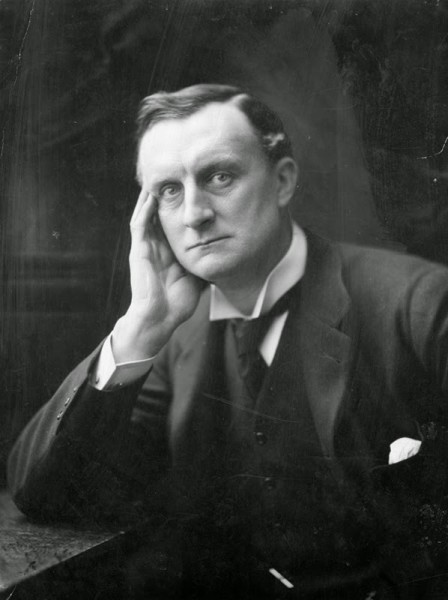
Sir Edward Grey, British Foreign Secretary 1905-1916
Sir Edward Grey had become foreign secretary on the formation of the Liberal government in December 1905, and remained in post until the end of 1916, so becoming the longest-serving holder of the post. Sir Edward brought diplomatic gravitas to his work in 1914. He had already convened the meeting of ambassadors that had contained and concluded the two Balkan wars of 1912-13. When the assassination of Archduke Franz Ferdinand at Sarajevo on June 28 prompted a third Balkan crisis, it seemed unlikely to have any direct effect on British interests, but Sir Edward might still prove central to its resolution. If the “concert of Europe”, the international order created in 1814-15 after the Napoleonic wars, still had life, the foreign secretary was the person best placed to animate it.
Sir Edward’s qualifications for such responsibility were of recent coinage. Notoriously idle as a young man, he had been sent down from Oxford, but returned to get a third in jurisprudence. He entered politics as much through Whig inheritance as ambition. He spoke no foreign language and, when foreign secretary, never travelled abroad – or at least not until he had to accompany King George V to Paris in April 1914. He seemed happier as a country gentleman, enjoying his enthusiasms of fishing and ornithology. His first wife increasingly refused to come to London, remaining at Fallodon, the family seat in Northumberland. Their life together was chaste and childless, but not unaffectionate.
Soon after becoming Foreign Secretary, Grey was careful to assure Russian ambassador Count Alexander Benckendorff that he wanted a closer and less fraught relationship with St. Petersburg. Britain’s long-running dispute with the expanding Russian Empire in Asia stood in the way of any co-operation between the two great powers: the “Great Game” across central Asia had been in progress for nearly a century and neither side trusted the other. British concerns that any advance of Russian interests across that vast swathe of land were part of long term plans to destabilize the Indian frontier and eventually to absorb India. Whether these fears were realistic is beside the point: they had driven Raj policy in India despite the low chance of them turning into actual dangers. The disagreements were partially settled with the Anglo-Russian Convention in 1907, where both Russian and British regional interests were codified:
Formally signed by Count Alexander Izvolsky, Foreign Minister of the Russian Empire, and Sir Arthur Nicolson, the British Ambassador to Russia, the British-Russian Convention of 1907 stipulated the following:
- That Persia would be split into three zones: A Russian zone in the north, a British zone in the southeast, and a neutral “buffer” zone in the remaining land.
- That Britain may not seek concessions “beyond a line starting from Qasr-e Shirin, passing through Isfahan, Yezd (Yazd), Kakhk, and ending at a point on the Persian frontier at the intersection of the Russian and Afghan frontiers.”
- That Russia must follow the reverse of guideline number two.
- That Afghanistan was a British protectorate and for Russia to cease any communication with the Emir.
A separate treaty was drawn up to resolve disputes regarding Tibet. However, these terms eventually proved problematic, as they “drew attention to a whole range of minor issues that remained unsolved”.

Anglo-Russian spheres of influence in Persia, 1907 (via Wikipedia)
While the convention did not resolve every outstanding issue between the two imperial powers, it smoothed the path to further negotiations on European issues. One of the things the two had to consider was the expansion of German activity in Ottoman territory, especially the Baghdad Railway project, which threatened to extend German influence deep into the oil producing regions of Mesopotamia just as Britain was contemplating switching the Royal Navy from coal to oil. German engineers and financiers had already proven their worth to the Ottomans by building the Anatolian Railway in the 1890s, connecting Constantinople with Ankara and Konya.
Vernon Bogdanor’s recent History Today article explains Grey’s role in bringing Britain into the war alongside the French and Russians:
The growth of German power posed a challenge to an international system based on the Concert of Europe, developed at the Congress of Vienna following the defeat of Napoleon, whereby members could call a conference to resolve diplomatic issues, a system Britain, and particularly the Liberals in government in 1914, were committed to defend. Sir Edward Grey had been foreign secretary since 1905, a position he retained until 1916, the longest continuous tenure in modern times. He was a right-leaning Liberal who found himself subject to more criticism from his own backbenchers than from Conservative opponents. In his handling of foreign policy his critics alleged that Grey had abandoned the idea of the Concert of Europe and was worshipping what John Bright had called ‘the foul idol’ of the balance of power. They suggested that he was making Britain part of an alliance system, the Triple Entente, with France and Russia and that he was concealing his policies from Parliament, the public and even from Cabinet colleagues. By helping to divide Europe into two armed camps he was increasing the likelihood of war.
On his appointment in December 1905 Grey had indeed maintained the loose Anglo-French entente of 1904, which the Conservatives of the previous government had negotiated. He extended that policy by negotiating an entente with France’s ally, Russia, in 1907. In 1905 France was embroiled in a conflict with Germany over rival claims in Morocco. The French had essentially said to Lord Lansdowne, Grey’s Conservative predecessor: ‘Suppose this conflict leads to war – if you are to support us, let us consult together on naval matters to consider how your support can be made effective.’ The Conservatives had responded that, while they would discuss contingency plans, they could not make any commitments.
Grey continued the naval conversations and extended them to include military dialogue. He informed the prime minister, Sir Henry Campbell Bannerman, and two senior ministers of these talks, but not the rest of the Cabinet. Nevertheless, Britain could not be committed to military action without the approval of both Cabinet and Parliament. In November 1912, at the insistence of the Cabinet, there was an exchange of letters between Grey and the French ambassador, Paul Cambon, making it explicit that Britain was under no commitment, except to consult, were France to be threatened. In 1914, furthermore, the French never suggested that Britain was under any sort of obligation to support them, only that it would be the honourable course of action.
Romancing the bear, romancing the lion: France breaks out of imposed isolation
As I discussed back in part four of this series, the French had been left diplomatically isolated in Europe by German Chancellor Otto von Bismarck, but that began to change as Kaiser Wilhelm II took the throne and started imposing his will on German foreign policy. French money opened opportunities for French diplomacy, to the long-term benefit of French security. The Franco-Russian alliance was signed in 1894, signifying the end of French encirclement (Bismarck’s policy) and the start of German encirclement (Kaiser Wilhelm’s nightmare).

Britannia and Marianne dancing together on a 1904 French postcard: a celebration of the signing of the Entente Cordiale. (via Wikipedia)
French public opinion was still ambivalent at best about Britain — the PR and humanitarian disaster that was the Boer War had only just faded from the headlines, and there was still much resentment over the Fashoda incident — but the French government recognized the importance of gaining British support (and the British government was conscious of how low their international reputation had gone). Huw Strachan:
The previous Conservative government had in 1895 moved from “splendid isolation” to embrace the need to form alliances. But it was Sir Edward who narrowed these options by excluding the possibility of a deal with Germany. As a Liberal Imperialist, concerned by the evidence of British decline in the South African war, Sir Edward increasingly fixed Britain to France and then to Russia. The latter relationship may have looked frayed by 1914, but that with France was buttressed by military and naval talks. The result was not so much a balance of power in Europe as the isolation of Germany.
Moroccan crises and using the Kaiser as a bargaining chip
The First Moroccan Crisis of 1905-6 was a potential flashpoint between the Entente Cordiale and the German Empire. Germany was hoping to split the Entente or at least to gain territorial concessions in exchange for a resolution. Kaiser Wilhelm was on a cruise to the Mediterranean and had been intending to bypass Tangier, but the situation was manipulated by the Foreign Office in Berlin so that he eventually felt he had to put in an appearance. In The War That Ended Peace, Margaret MacMillan describes the scene:
Although Bülow had repeatedly advised him to stick to polite formalities, Wilhelm got carried away in the excitement of the moment. To Kaid Maclean, the former British soldier who was the sultan’s trusted advisor, he said, “I do not acknowledge any agreement that has been come to. I come here as one Sovereign [sic] paying a visit to another perfectly independent sovereign. You can tell [the] Sultan this.” Bülow had also advised his master not to say anything at all to the French representative in Tangier, but Wilhelm was unable to resist reiterating to the Frenchman that Morocco was an independent country and that, furthermore, he expected France to recognize Germany’s legitimate interests there. “When the Minister tried to argue with me,” the Kaiser told Bülow, “I said ‘Good Morning’ and left him standing.” Wilhelm did not stay for the lavish banquet which the Moroccans had prepared for him but before he set off on his return ride to the shore, he found time to advise the sultan’s uncle that Morocco should make sure that its reforms were in accordance with the Koran. (The Kaiser, ever since his trip to the Middle East in 1898, had seen himself as the protector of all Muslims.) The Hamburg sailed on to Gibraltar, where one of its escort ships accidentally managed to ram a British cruiser.
Tension rose so high that both Germany and France were looking to their mobilization timetables (France cancelled all military leave and Germany started moving reserve units to the frontier) before the diplomats were able to agree to meet at the conference table rather than the battlefield. The Algeciras Conference lasted from January to April, 1906, and the French generally had the better of the negotiations (with support from Britain, Russia, Italy, Spain, and the United States) while the Germans found themselves supported only by the Austro-Hungarian delegation. France ended up making a few token concessions, but overall retained their position in Morocco.
The Agadir Crisis of 1911 was the second incident in Morocco, where Germany tried a little bit of literal gunboat diplomacy with the gunboat SMS Panther. The port of Agadir was closed to foreign trade, but the Panther (and later the light cruiser SMS Berlin) was sent to “protect German nationals” in southern Morocco from rebel forces. A minor problem turned out to be that there were no conveniently threatened Germans in the region. Margaret MacMillan:
The Foreign Ministry only got round to getting support for its claim that German interests and German subjects were in danger in the south of Morocco a couple of weeks before the Panther arrived off Agadir, when it asked a dozen German firms to sign a petition (which most of them did not bother to read) requesting German intervention. When the German Chancellor, Bethmann, produced this story in the Reichstag he was met with laughter. Nor were there any German nationals in Agadir itself. The local representative of the Warburg interests who was some seventy miles to the north started southwards on the evening of July 1. After a hard journey by horse along a rocky track, he arrived at Agadir on July 4 and waved his arms to no effect from the beach to attract the attention of the Panther and the Berlin. The sole representative of the Germans under threat in southern Morocco was finally spotted and picked up the next day.
France reacted to the German provocation, despite efforts by Sir Edward Grey to restrain them: eventually he recognized that “what the French contemplate doing is not wise, but we cannot under our agreement interfere”. German public opinion, on the other hand, was ecstatic:
After its setbacks earlier on in Morocco and in the race for colonies in general, with the fears of encirclement in Europe by the Entente powers, Germany was showing that it mattered. “The German dreamer awakes after sleeping for twenty years like the sleeping beauty,” said one newspaper.
[…]
In Germany, public opinion, which had been largely indifferent to colonies ten years earlier, now was seized with their importance. The German government, which was already under considerable pressure from those German businesses with interests in Morocco, felt that it had much to gain by taking a firm stand. […] The temptation for Germany’s new Chancellor, Theobald von Bethmann-Holweg, and his colleagues to have a good international crisis to bring all Germans together in support of their government was considerable.
Eventually, after negotiations, France and Germany signed the Treaty of Fez, which granted France Germany’s recognition of her rights in Morocco in exchange for ceded French territory in French Equatorial Africa (which was annexed to the existing German colony in Togoland), including direct access to the Congo River. In addition, Spain was granted rights to a portion of northern Morocco which became Spanish Morocco.
Not part of the treaty terms, but of rather greater significance in the near future, France and Britain agreed to share responsibility for the naval defence of France: the Royal Navy took on the responsibility for defending the north coast of France, while the French navy redeployed almost all ships to the western Mediterranean with the explicit agreement to defend British interests in the region.
I’m finding each successive part of this blog series to be taking longer to put together, and not from a lack of material! I’m hoping to have the next installment posted sometime this weekend or early next week.
August 12, 2014
The very different American and British baby booms
In sp!ked, Jennie Bristow reviews P.J. O’Rourke’s latest book, The Baby Boom: How It Got That Way (And It Wasn’t My Fault) (And I’ll Never Do It Again).
For the British ‘Baby Boom’ was very different to its American sibling, in both respects of the word. Demographically, Britain – like many other Western countries immediately after the Second World War – experienced a spike in the birthrate, but this dropped back quickly until the mid-1950s, when there was a less dramatic, but more sustained, bulge over the next 10 years.
[…]
Size isn’t everything, however, and the other aspect of the Baby Boom label is the period of prosperity and growth that followed the war in the US. O’Rourke’s introduction to the UK edition of The Baby Boom points out another fact that tends to be ignored in the slating of the British Baby Boomers – that ‘postwar experience in America was very different from postwar experience in a place where war, in fact, occurred. That is, we had the “post-” and you had the war.’
[…]
Throughout the book, O’Rourke’s fond accounts of growing up during the Fifties, which are generally amusing and often stylistically annoying, hammer home the space, freedom, affluence and indulgence enjoyed by the American Baby Boomers as children. In Britain, accounts of the so-called ‘Golden Age’ of the Fifties tend to extend to children playing by the river and neighbours leaving their front doors unlocked, glossing over the more drab reality that kids did not have anything to play with inside, and that most homes were not worth burgling.
Given the divergence in experience between the British and American Baby Boomers, one might wonder how the American debate, about the problems of the Boomers’ size, wealth and health (which, many grumble, means they will live ‘too long’, robbing younger generations of their fair share of pensions and healthcare resources), became plonked on to Little Britain with scant regard for the differences.
The answer lies partly in what the US Boomers did share with their counterparts in the UK, and in parts of Europe, too. This was the experience of growing up in the tumultuous Sixties, when youth appeared to be in the vanguard of a cultural revolution that swept aside established norms and values, rejecting the authority of tradition and, above all, of adults.
Swiftly demolishing another great myth about the Sixties, O’Rourke points out that, in reality, ‘the Baby Boom was the tailgate party, not the team on the field’: ‘There was a lot of “talkin’ ‘bout my generation” (Pete Townshend, born 1945), but it wasn’t my generation that was causing “What’s Going On” (Marvin Gaye, born 1939) during the “Youthquake” (a coinage from Punch, edited by people born when mastodons roamed the earth).’
August 11, 2014
Ordinary British life before August 1914
The Telegraph has an interesting series of short articles drawn from their 1914 archive, showing ordinary life in Britain before the start of World War One. This isn’t the upper-crust’s way of life we tend to see in TV and movie presentations of the immediate pre-war era:
A month before the outbreak of war Henley Regatta opened in “brilliant fashion”, The Daily Telegraph reported, with record crowds and “perfect” weather. It presents an image of Edwardian Britain as we fondly imagine it to have been, before the sudden cloudburst of August 1914.
Of course, the reality was far different for the 99 per cent of people who did not own land, collect rents or vacation at Biarritz and Marienbad. Most Edwardians worked in dark, noisy factories, cut hay in fields, toiled down dirty and dangerous mines; had bones bent by rickets and lungs racked by tuberculosis. Life expectancy then was 49 years for a man and 53 years for a woman, compared with 79 and 82 years today. They lived in back to back tenements or jerry-built terraces, wore cloth caps or bonnets (rather than boaters, bowlers and toppers) and they had never taken a holiday — beyond a day trip to Brighton or Blackpool — in their entire lives.
The country was a seething mass of social tension and violent confrontations. It was a land torn and dislocated by the struggle of increasingly militant suffragettes; strikes in mills, mines and on the railways; the constitutional battle between Lords and Commons; and the threat of civil war in Ireland.
Readers of the Telegraph — as a glance at the archives will reveal — were far better informed about the true state of their nation and the world than our sugary sentimental view allows us. In a dramatic scoop, the paper had published an exclusive interview with Kaiser Wilhelm II in October 1908 in which the Kaiser had expressed alarmingly frank — and hostile — views about his mother’s native land (the Kaiser’s mama, Empress Victoria, was Queen Victoria’s eldest daughter). In this interview the Kaiser accused “you English” of being “mad, mad, mad as March hares” for fearing that the construction of Germany’s High Seas Fleet was aimed at challenging the Royal Navy’s command of the world’s oceans. Implausibly, he claimed that Germany’s real target was the rising sun of Japan.
H/T to Marian L. Tupy for the link.


