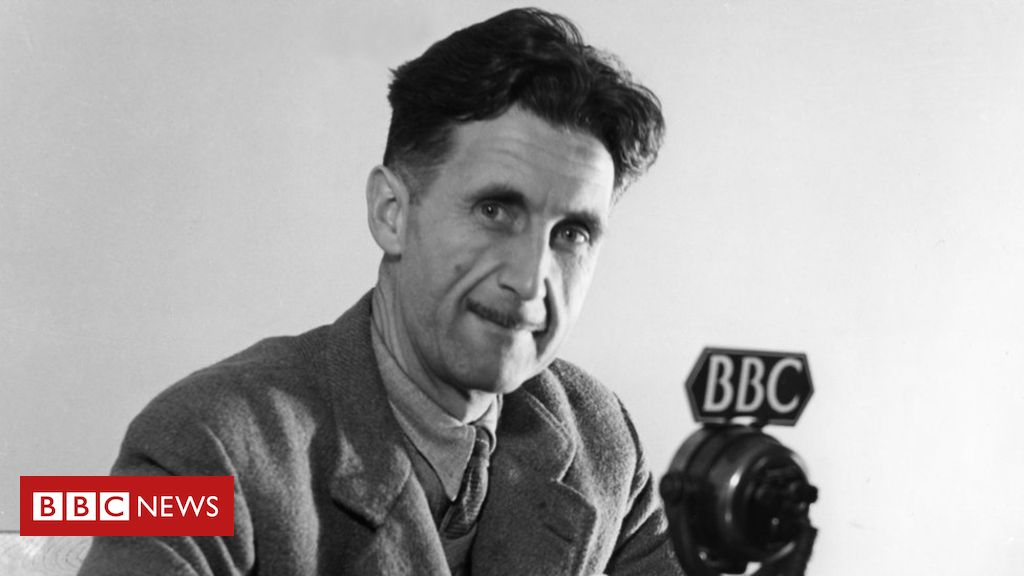
[The word “Trotskyist”] is used so loosely as to include Anarchists, democratic Socialists and even Liberals. I use it here to mean a doctrinaire Marxist whose main motive is hostility to the Stalin regime. Trotskyism can be better studied in obscure pamphlets or in papers like the Socialist Appeal than in the works of Trotsky himself, who was by no means a man of one idea. Although in some places, for instance in the United States, Trotskyism is able to attract a fairly large number of adherents and develop into an organised movement with a petty fuehrer of its own, its inspiration is essentially negative. The Trotskyist is against Stalin just as the Communist is for him, and, like the majority of Communists, he wants not so much to alter the external world as to feel that the battle for prestige is going in his own favour. In each case there is the same obsessive fixation on a single subject, the same inability to form a genuinely rational opinion based on probabilities. The fact that Trotskyists are everywhere a persecuted minority, and that the accusation usually made against them, i.e. of collaborating with the Fascists, is obviously false, creates an impression that Trotskyism is intellectually and morally superior to Communism; but it is doubtful whether there is much difference. The most typical Trotskyists, in any case, are ex-Communists, and no one arrives at Trotskyism except via one of the left-wing movements. No Communist, unless tethered to his party by years of habit, is secure against a sudden lapse into Trotskyism. The opposite process does not seem to happen equally often, though there is no clear reason why it should not.George Orwell, “Notes on Nationalism”, Polemic, 1945-05.
October 30, 2019
QotD: Trotskyism
October 29, 2019
Parallels between the current Brexit mess and the 1906 general election
Sean Gabb writes in the Libertarian Enterprise on the clusterfail in Parliament and an interesting historical parallel from the beginning of the 20th century:
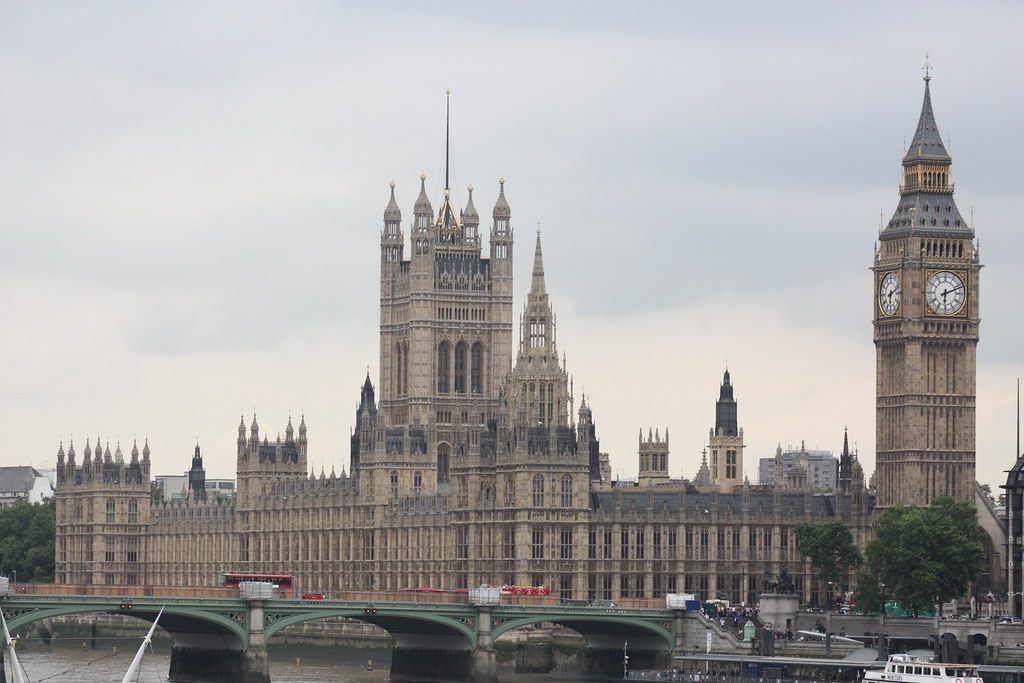
“Palace of Westminster”by michaelhenley is licensed under CC BY-NC-SA 2.0


… the Brexit debate that only began with the counting of the Referendum votes has been a valuable education. So far as it blurs the lines of accountability, membership of the European Union has been a useful entrenchment of our ruling class. It has also helped provide a mildly liberal and cosmopolitan gloss to a domestic project that has been anything but liberal. Its refusal to honour the Referendum has torn aside what remained of the democratic veil behind which power is exercised. These people are not our servants. They are a hostile elite. Their interests are not ours. They despise us. They fear us. They are determined not to give us even the shadow of what we were – perhaps unwisely – promised.
I have given a quotation from Chesterton. I am increasingly minded of parallels between his day and ours. In 1906, the Liberals won a large and unexpected majority in the House of Commons. They set about transforming the country on the lines they had been discussing since the end of their last majority government in 1885. In doing this, they faced a wall of resistance from the old ruling class. The Conservatives controlled the Law and education and most of the administration. They possessed the greatest mass of the national wealth. Above all, they dominated the House of Lords. They used their majority here to block the Liberal Government until such time as the people could be persuaded at the next election to bring back a Conservative Government.
Now, in that contest, I would have sided with the ruling class. I think England had a better future under the Conservatives than under the Liberals. I think most of the Liberal changes were bad. Moreover, the Conservative strategy showed some evidence of working. The Liberals lost a steady stream of by-elections — most notably Peckham in 1908. Then the Conservatives went too far. In 1909, the Liberals brought in a deliberately populist budget. The Conservatives broke more than two centuries of convention by voting this down in the Lords. This gave the Liberals their excuse. With the cry of “The People against the Peers,” they attacked the Conservatives in their most powerful stronghold. After two general elections in 1910, the Lords were stripped of their blocking veto. Of course, the Great War then changed everything. But it is reasonable to suppose that, had the Liberals won another election in 1915, most of the domestic changes that we blame on the War would have come about, if more slowly.
The lesson is that ruling classes often make strategic mistakes. Had the Conservatives before the Great War taken a more selective approach in their opposition, they might have won an election in 1911, and carried on with their own vision of the national future. As it is, they only lost the 1910 elections because the Liberals were able to rely on Labour and Irish support in the Commons. Because they overreached themselves, they eventually lost everything.
It may be the same now. Had our own ruling class pulled sad faces in 2016 and delivered a minimal Brexit — something like continued EEA membership and a Norwegian relationship — they might have put the issue to bed and continued riding us all to certain ruin. Instead, they went into a three-year filibuster, every so often drawing breath to suggest another referendum. The strategy appears to have failed. We may now have a more substantial Brexit than was intended. More to the point, the democratic veil has been torn aside. The continuing argument over Mr Johnson’s new Withdrawal Agreement is largely now unfinished business. The Agreement needs to be passed — but so we can go into a general election where the main issues will not be a new relationship with the European Union. These issues will be the nature and personnel of the country’s domestic government. I do not imagine that we shall become more “democratic.” But I can imagine that we shall find ourselves with a new ruling class that holds the mass of ordinary people in less vicious contempt.
Greenland to USA, Australia to war, and French Colonies to…? – WW2 – OOTF 004
World War Two
Published 27 Oct 2019In another edition of our Q&A format, Indy answers some questions about Greenland after the German occupation of Denmark, the state of Australia and the fate of the French Colonies.
Ask your own question for OOTF: https://community.timeghost.tv/c/Out-…
Join us on Patreon: https://www.patreon.com/TimeGhostHistory
Or join The TimeGhost Army directly at: https://timeghost.tvFollow WW2 day by day on Instagram @World_war_two_realtime https://www.instagram.com/world_war_t…
Join our Discord Server: https://discord.gg/D6D2aYN.
Between 2 Wars: https://www.youtube.com/playlist?list…
Source list: http://bit.ly/WW2sourcesHosted by: Indy Neidell
Produced and Directed by: Spartacus Olsson and Astrid Deinhard
Executive Producers: Bodo Rittenauer, Astrid Deinhard, Indy Neidell, Spartacus Olsson
Creative Producer: Joram Appel
Research by: Rune Vaever Hartvig
Edited by: Mikołaj Cackowski
Map animations: EastoryColorisations by Norman Stewart and Julius Jääskeläinen https://www.facebook.com/JJcolorization/
Eastory’s channel: https://www.youtube.com/channel/UCEly…
Archive by Screenocean/Reuters https://www.screenocean.com.Sources:
IWM: H 10569, A 1524, CM 64A TimeGhost chronological documentary produced by OnLion Entertainment GmbH.
From the comments:
World War Two
3 days ago
We get a ton of questions about the war on a daily basis. A lot of them are already answered in the YouTube comments to you all directly, but because some questions are very interesting indeed, we like to showcase some of them on the channel. Because the YouTube comments are hard to navigate, we have made a section on our forum where you can submit questions to be covered in Out of the Foxholes. You can do that here: https://community.timeghost.tv/c/Out-of-the-Foxholes-QsCheers,
The TimeGhost team

Building Angkor – A Clash of Gods – Extra History – #3
Extra Credits
Published 26 Oct 2019Join us on Patreon! http://bit.ly/EHPatreon
Jayavarman VII, a Buddhist pacifist, was forced to give up his pacifism and rise to the throne at the age of 60. But once seated on the throne, he built Angkor Thom. The architecture was a fusion of buddhist and hindu stylings and included a comprehensive medical system. But will Angkor be able to stand after Jayavarman VII has passed?
Jayavarman VII the Great may be known as the greatest ruler of the Khmer, but he also wins the award for history’s best son. Making your mom the face for the goddess of wisdom is quite the Mother’s Day gift.
(Since folks have been asking for the metric conversions on our videos, 9 miles = 14.5 km at 4:52)
1918 Mauser Tank Gewehr
Forgotten Weapons
Published on 23 Aug 2015http://www.patreon.com/ForgottenWeapons
Cool Forgotten Weapons Merch! http://shop.bbtv.com/collections/forg…
Hammer price: $4,750
Germany was the first country to produce a purpose-built antitank rifle, in response to the major Entente tank attack at Cambrai. The design was pretty simple, basically a scaled-up Mauser 98 with 4 locking lugs chambered for the massive 13.2mm TuF cartridge. It would perforate about 20mm of armor plate at 100m, which was nicely effective on WWI tanks. By the end of the war more than 15,000 had been made. Interestingly, a bunch of them ended up at Springfield Armory, where they were used in the development of the .50 BMG cartridge.

QotD: The financial crisis of 33AD
Let us next take a brief but important notice in Tacitus, for the year 33 AD:
Meanwhile a powerful host of accusers fell with sudden fury on the class which systematically increased its wealth by usury in defiance of a law passed by Caesar the Dictator defining the terms of lending money and of holding estates in Italy, a law long obsolete because the public good is sacrificed to private interest. The curse of usury was indeed of old standing in Rome and a most frequent cause of sedition and discord, and it was therefore repressed even in the early days of a less corrupt morality. First, the Twelve Tables prohibited any one from exacting more than 10 per cent., when, previously, the rate had depended on the caprice of the wealthy. Subsequently, by a bill brought in by the tribunes, interest was reduced to half that amount, and finally compound interest was wholly forbidden. A check too was put by several enactments of the people on evasions which, though continually put down, still, through strange artifices, reappeared. On this occasion, however, Gracchus, the praetor, to whose jurisdiction the inquiry had fallen, felt himself compelled by the number of persons endangered to refer the matter to the Senate. In their dismay the senators, not one of whom was free from similar guilt, threw themselves on the emperor’s indulgence. He yielded, and a year and six months were granted, within which every one was to settle his private accounts conformably to the requirements of the law.
Hence followed a scarcity of money, a great shock being given to all credit, the current coin too, in consequence of the conviction of so many persons and the sale of their property, being locked up in the imperial treasury or the public exchequer. To meet this, the Senate had directed that every creditor should have two-thirds of his capital secured on estates in Italy. Creditors however were suing for payment in full, and it was not respectable for persons when sued to break faith. So, at first, there were clamorous meetings and importunate entreaties; then noisy applications to the praetor’s court. And the very device intended as a remedy, the sale and purchase of estates, proved the contrary, as the usurers had hoarded up all their money for buying land. The facilities for selling were followed by a fall of prices, and the deeper a man was in debt, the more reluctantly did he part with his property, and many were utterly ruined. The destruction of private wealth precipitated the fall of rank and reputation, till at last the emperor interposed his aid by distributing throughout the banks a hundred million sesterces, and allowing freedom to borrow without interest for three years, provided the borrower gave security to the State in land to double the amount. Credit was thus restored, and gradually private lenders were found. The purchase too of estates was not carried out according to the letter of the Senate’s decree, rigour at the outset, as usual with such matters, becoming negligence in the end.
So far as we can understand what was happening, the passage largely explains itself. An old law restricting the rate of interest is suddenly revived. This invalidates a large class of loans above the official rate made on short term but renewable contracts. An indulgence is given of eighteen months, during which the now illegal loans are systematically called in. The result is a liquidity crisis in which land prices collapse. The crisis is dealt with by emergency lending by the Emperor.
There is nothing unusual about this sort of crisis. We are passing through something similar at the moment. What Tacitus is showing is a developed economy with much integration of capital and land markets. We can see how easily land can be sold, and how responsive prices are to the forces of demand and supply. Again, special pleading can be brought to bear on the story to try and minimise the extent of market behaviour. But, so far as this crisis can be analysed in terms of standard economic theory, the simplest explanation is to conclude that the economy of the early Roman Empire was, in its essentials, like that of the modern world.
Sean Gabb, “Market Behaviour in the Ancient World: An Overview of the Debate”, 2008-05.
October 28, 2019
The Surrender of the Imperial German High Seas Fleet
Historigraph
Published 26 Oct 2019Buy Historigraph Posters here! https://teespring.com/en-GB/surrender…
Support the channel on Patreon: https://www.patreon.com/historigraph#SurrenderOfTheHighSeasFleet #OperationZZ #Historigraph
►Twitter: https://twitter.com/historigraph
►Instagram: https://www.instagram.com/historigraph
►Patreon: https://www.patreon.com/historigraph
►Discord: https://discord.gg/vAFTK2DMusic:
Crypto, Incompetech https://incompetech.com
Rynos Theme, Incompetech https://incompetech.com
Britain’s Naval March, “Hearts of Oak”
Kaiserlicher Marinemarsch “Gruß an Kiel“

Hetzer – a German mobile armoured coffin
Lindybeige
Published 26 Sep 2019Get your first audiobook and two Audible originals free when you try Audible for 30 days. Visit https://www.audible.com/lindybeige or text “lindybeige” to 500 500.
The Hetzer (or Jagdpanzer 38t) – it is a “cool”-looking vehicle, and a favourite with WW2 tank enthusiasts, but was it all that great to fight in?
Support me on Patreon: https://www.patreon.com/Lindybeige
Lindybeige: a channel of archaeology, ancient and medieval warfare, rants, swing dance, travelogues, evolution, and whatever else occurs to me to make.
▼ Follow me…
Twitter: https://twitter.com/Lindybeige I may have some drivel to contribute to the Twittersphere, plus you get notice of uploads.
My website:
http://www.LloydianAspects.co.uk

QotD: Latin versus English
Winston Churchill, My Early Life, 1930.
October 27, 2019
Hitler is Disappointed by his Allies – WW2 – 061 – October 26, 1940
World War Two
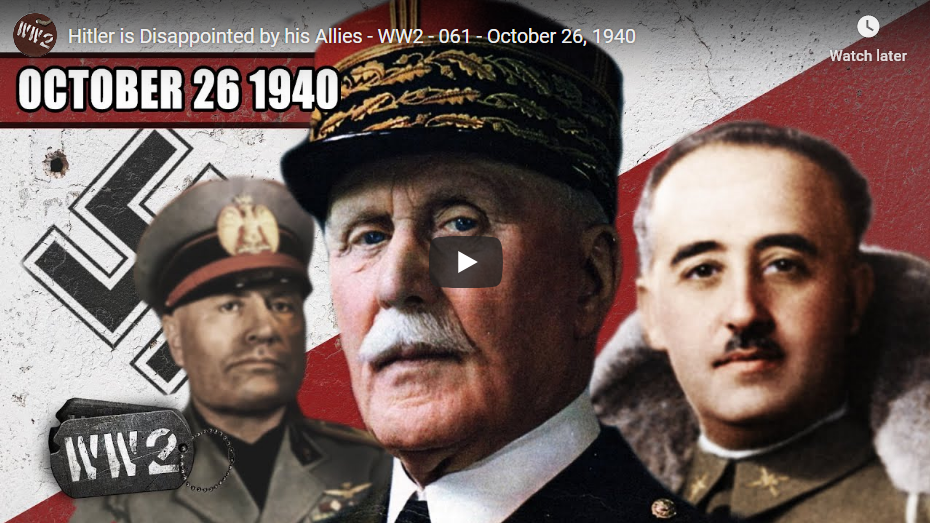
Published 26 Oct 2019Hitler finds out that not everyone is ready to do his bidding. Much to the frustration of Hitler, Franco, Petain and Mussolini all have their reasons to take the high road.
Join us on Patreon: https://www.patreon.com/TimeGhostHistory
Or join The TimeGhost Army directly at: https://timeghost.tvFollow WW2 day by day on Instagram @World_war_two_realtime https://www.instagram.com/world_war_t…
Join our Discord Server: https://discord.gg/D6D2aYN.
Between 2 Wars: https://www.youtube.com/playlist?list…
Source list: http://bit.ly/WW2sourcesWritten and Hosted by: Indy Neidell
Produced and Directed by: Spartacus Olsson and Astrid Deinhard
Executive Producers: Bodo Rittenauer, Astrid Deinhard, Indy Neidell, Spartacus Olsson
Creative Producer: Joram Appel
Research by: Indy Neidell
Edited by: Karolina Dołęga
Map animations: EastoryColorisations by Norman Stewart and Julius Jääskeläinen https://www.facebook.com/JJcolorization/
Sources: Biplane by Hea Poh Lin from the Noun Project
Eastory’s channel: https://www.youtube.com/channel/UCEly…
Archive by Screenocean/Reuters https://www.screenocean.com.A TimeGhost chronological documentary produced by OnLion Entertainment GmbH.
October 26, 2019
The Frankfurt School and you
At Rotten Chestnuts, Severian suggests we consider the origins of a large part of modern progressive thoughts:
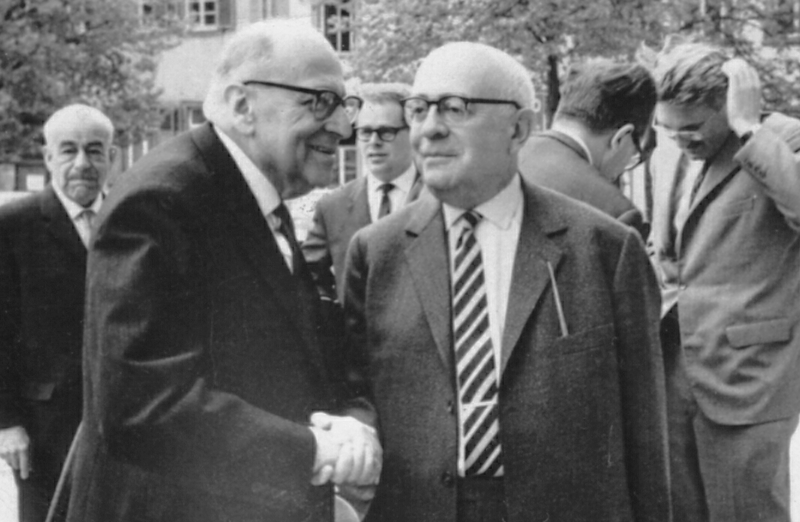
Notable members of the Frankfurt School in Heidelberg, April 1964 at the Max Weber-Soziologentag. Max Horkheimer is front left, Theodor W. Adorno front right, and Jürgen Habermas is in the background, right, running his hand through his hair. Siegfried Landshut is in the background left.
Photograph by Jeremy J. Shapiro via Wikimedia Commons.
It occurs to me that Our Thing ought to take a long, hard look at the Frankfurt School.
Those were the guys, of course, who pioneered the notion that their political opponents must be mentally ill. Given that
- all sane people are good; and
- good people only want good things; and
- Socialism is a good thing;
then
- anyone who doesn’t want Socialism wants a bad thing;
- therefore is a bad person;
- therefore is insane.
Anyone with the common sense God gave little catfish recognizes this as begging the question. And not particularly subtle question-begging, either, which is why it took over 1,000 pages (!) of ponderous Teutonic prose to disguise it. It’s science, comrades. Only Socialism, or a .38 to the back of the neck, will cure us …
… assuming, of course, that we want to be cured.
The Frankfurt Schoolers assumed this, of course, as did all those freelance critical theorists running the NKVD’s torture chambers. But that was then. The Frankfurt Schoolers were shockingly bourgeois on so many things. They thought homosexuality was a mental illness, if you can believe it, and I doubt even Herbert Marcuse would’ve signed off on “drag queen story hour,” let alone the state-mandated chemical castration of 6 year old boys. Only the peerless enlightenment of the Current Year recognizes this, comrades.
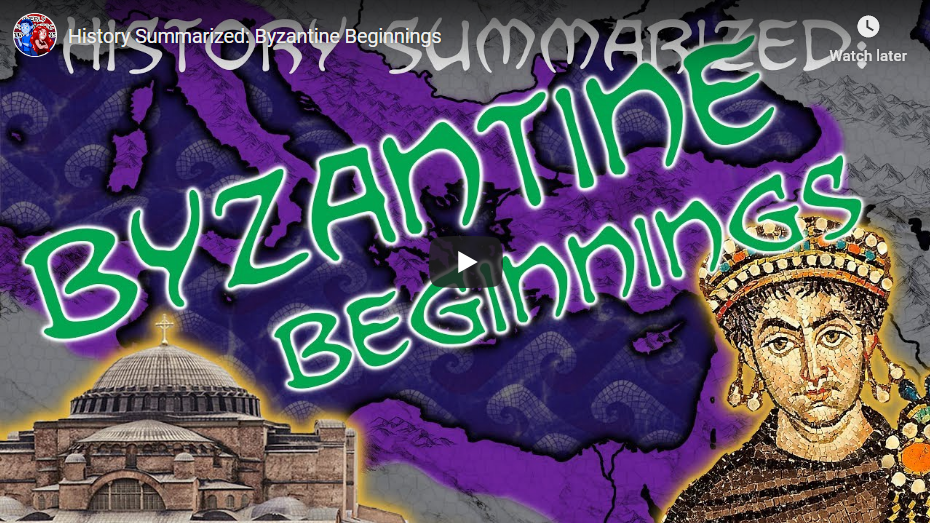
History Summarized: Byzantine Beginnings
Overly Sarcastic Productions
Published 25 Oct 2019It’s Rome! It’s Greece! It’s… The Byzantine Empire! Check out how late Imperial Rome transformed in the centuries from Constantine to Justinian, as it evolved into a new and unique iteration of Roman civilization. Watch as Byzantine craftsmen revolutionize artwork by throwing a megaton of gold onto every last mosaic in the Mediterranean, and radically reimagine architecture by asking “But what if *dome*?”
PATREON: https://www.Patreon.com/OSP
DISCORD: https://discord.gg/sS5K4R3
MERCH LINKS: https://www.redbubble.com/people/OSPY…
OUR WEBSITE: https://www.OverlySarcasticProductions.com
Find us on Twitter https://www.Twitter.com/OSPYouTube
Find us on Reddit https://www.Reddit.com/r/OSP/
Chassepot Needle Rifle
Forgotten Weapons
Published on 30 May 2015Sold for $1,150 (with three other rifles).
The Chassepot was the French answer to the Dreyse needle rifle, and also the only other needlefire rifle to see major military service. It was adopted in 1866 and served as a primary French infantry rifle until being replaced by the 1874 Gras rifle, which was basically a conversion of the Chassepot to use self-contained brass cartridges. The concept of a needle rifle is that of a breech loading rifle using paper cartridges. A primer was set in the base of the cartridge (inside the paper), and upon firing the needle-like firing pin would pierce the paper cartridge and detonate the primer and powder charge. The system always had trouble with sealing the breech, but was still a significant improvement over muzzleloading rifles.

October 25, 2019
“Rorke’s Drift” – The Anglo-Zulu War – Sabaton History 038 [Official]
Sabaton History
Published 24 Oct 2019The Battle of Rorke’s Drift was the last stand for the British defenders, facing thousands of Zulu fighters with only a few hundred of their own.
Support Sabaton History on Patreon: https://www.patreon.com/sabatonhistory
Listen to The Last Stand where “Rorke’s Drift” is featured):
CD: http://bit.ly/TheLastStandStore
Spotify: http://bit.ly/TheLastStandSpotify
Apple Music: http://bit.ly/TheLastStandItunes
iTunes: http://bit.ly/TheLastStandItunes
Amazon: http://bit.ly/TheLastStandAmz
Google Play: http://bit.ly/TheLastStandGooglePlayWatch the official lyric video of “Rorke’s Drift” here: https://www.youtube.com/watch?v=i9Bup…
Hosted by: Indy Neidell
Written by: Markus Linke and Indy Neidell
Directed by: Astrid Deinhard and Wieke Kapteijns
Produced by: Pär Sundström, Astrid Deinhard and Spartacus Olsson
Creative Producer: Joram Appel
Executive Producers: Pär Sundström, Joakim Broden, Tomas Sunmo, Indy Neidell, Astrid Deinhard, and Spartacus Olsson
Post-Production Director: Wieke Kapteijns
Maps by: Eastory
Edited by: Iryna Dulka
Sound Editing by: Marek KaminskiEastory YouTube Channel: https://www.youtube.com/channel/UCEly…
Archive by: Reuters/Screenocean https://www.screenocean.com
Music by Sabaton.Sources:
– The National Archives UK
– A group of Zulu men in war dress, a photograph by Robert Harris. Credit: Wellcome Collection.
– Episodes in the Zulu wars, Credit: Wellcome Collection
– Field ambience by dobroide from freesound.orgAn OnLion Entertainment GmbH and Raging Beaver Publishing AB co-Production.
© Raging Beaver Publishing AB, 2019 – all rights reserved.
From the comments:
Sabaton History
2 days ago (edited)
One nation’s heroic history is another’s national tragedy. In academia, the horrors of imperialism get more and more attention each year. In this episode, besides covering the events that unfolded during the Battle of Rorke’s Drift, we try to capture the ambiguous nature of colonial history. Yes, the last stand of the British soldiers against an overwhelming Zulu force is impressive, but whether or not it should be celebrated is open for debate. We would like to have this conversation in the comments down below, but keep it civil. Any racist, apologist or revisionist comments can lead to a ban.
Cheers, The Sabaton History Team.

The World Takes Advantage of American Isolationism | BETWEEN TWO WARS | 1933 part 3 of 3
TimeGhost History
Published 24 Oct 2019America is very unprepared for rising tensions in the Pacific and in Europe. US President Franklin Roosevelt tries his best to re-arm the American Army and Navy, but the isolationist opposition is a fierce obstacle.
Join us on Patreon: https://www.patreon.com/TimeGhostHistory
Subscribe to our World War Two series: https://www.youtube.com/c/worldwartwo…
Hosted by: Indy Neidell
Written by: Joram Appel
Directed by: Spartacus Olsson and Astrid Deinhard
Executive Producers: Bodo Rittenauer, Astrid Deinhard, Indy Neidell, Spartacus Olsson
Creative Producer: Joram Appel
Post-Production Director: Wieke Kapteijns
Research by: Rune Vaever Hartvig, Sietse Kenter and Joram Appel
Edited by: Daniel Weiss
Sound design: Marek KaminskiPicture colorizations by: Norman Stewart, Julius Jääskeläinen, Daniel Weiss and Joram Appel
A TimeGhost chronological documentary produced by OnLion Entertainment GmbH.
From the comments:
TimeGhost History
1 day ago (edited)
This episode is very much about the global ramifications of the US’s foreign policy. American inaction and isolationism left room for other nations to develop imperialist ambitions. There are of course a lot of other factors that influenced the rise of expansionist and militarist governments in Europe and East-Asia, many of which are explained in our other Between Two Wars episodes. In no way does this video have any connection to current-day events or our opinion on them. This is what happened, our future episodes will be about what followed. We’re historians and that’s all we want to do here.
Cheers,
Joram