
World War Two
Published 18 May 2021While the US was fighting for freedom and liberty across the globe, their home country and armies are still deeply segregated, causing minority groups in the USA to fight not one but two wars.
(more…)
May 19, 2021
Racism of the US Army – Fighting for Freedom? – WW2 Special
Comments Off on Racism of the US Army – Fighting for Freedom? – WW2 Special
Why Did We Stop Wearing Hats?
Karolina Żebrowska
Published 28 Apr 2020should we bring hats back? what do you think?
_____________
My Instagram: https://bit.ly/2Qo9rrI
My nudes: https://bit.ly/2UHHY6N
My merch: bit.ly/2CCq5jE

Comments Off on Why Did We Stop Wearing Hats?
May 18, 2021
What is Maskirovka? Russian Military Deception #Military101
Military History Visualized
Published 5 May 2017A short introduction into Russian Military Deception — called Maskirovka. “Maskirovka is most simply defined as a set of processes designed to mislead, confuse, and interfere with accurate data collection regarding all areas of Soviet plans, objectives, and strengths or weaknesses.” (Smith, Charles L.: “Soviet Maskirovka“, in: Airpower Journal – Spring 1988)
Military History Visualized provides a series of short narrative and visual presentations like documentaries based on academic literature or sometimes primary sources. Videos are intended as introduction to military history, but also contain a lot of details for history buffs. Since the aim is to keep the episodes short and comprehensive some details are often cut.
» HOW YOU CAN SUPPORT MILITARY HISTORY VISUALIZED «
(A) You can support my channel on Patreon: https://www.patreon.com/join/mhv(B) You can also buy “Spoils of War” (merchandise) in the online shop: https://www.redbubble.com/people/mhvi…
» SOCIAL MEDIA LINKS «
twitter: https://twitter.com/MilHiVisualized
tumblr: http://militaryhistoryvisualized.tumb…» SOURCES «
Maier, Morgan: A Little Masquerade: Russia’s Evolving Employment of Maskirovka
http://cgsc.contentdm.oclc.org/cdm/si…Smith, Charles L.: “Soviet Maskirovko“, in: Airpower Journal – Spring 1988
http://www.airpower.maxwell.af.mil/ai…Lindley-French, Julian: NATO: Countering Strategic Maskirovka. Canadian Defence & Foreign Affairs Institute. (2015)
Glantz: The Red Mask: The Nature and Legacy of Soviet Military Deception in the Second World War
https://en.wikipedia.org/wiki/Russian…
Keating, Kenneth: The Soviet System of Camouflage
http://www.dtic.mil/dtic/tr/fulltext/…Krueger, Daniel: Maskirovka – What’s in it for us?
http://www.dtic.mil/dtic/tr/fulltext/…» TOOL CHAIN «
PowerPoint 2016, Word, Excel, Tile Mill, QGIS, Processing 3, Adobe Illustrator, Adobe Premiere, Adobe Audition, Adobe Photoshop, Adobe After Effects, Adobe Animate.» CREDITS & SPECIAL THX «
Song: Ethan Meixsell – “Demilitarized Zone”

Comments Off on What is Maskirovka? Russian Military Deception #Military101
SMLE MkI***: The Updated Early Lee Enfields (and Irish Examples!)
Forgotten Weapons
Published 3 Feb 2021http://www.patreon.com/ForgottenWeapons
https://www.floatplane.com/channel/Fo…
Cool Forgotten Weapons merch! http://shop.bbtv.com/collections/forg…
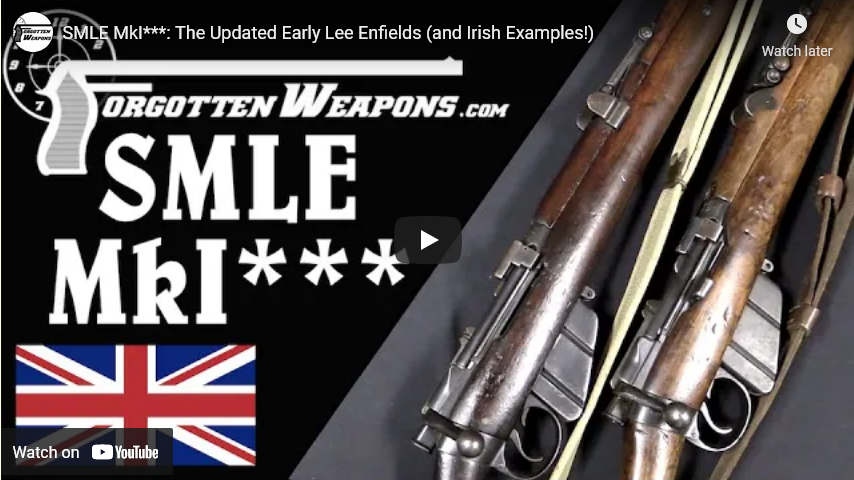
When the British adopted a new high-velocity spitzer bullet for the .303 cartridge, they had to update their rifles to use it. Specifically, the sights had to be recalibrated for the flatter trajectory of the new MkVII ammunition. In addition, the sight picture was changed from a barleycorn front and V-notch rear to the more precise square front post and rear U-notch.
These rifles are quite scarce, but several thousand were brought into the US in the early 1960s as surplus from Ireland. These Irish examples all had new serial numbers applied when the were sent to Ireland by the British in the 1920s, and they are in two different batches (one in MkI*** configuration, and one with the MkIII rear sight). We will take a look at both patterns today as well, so you can see the difference between the much more available Irish type and the pure British version.
Contact:
Forgotten Weapons
6281 N. Oracle #36270
Tucson, AZ 85740
Comments Off on SMLE MkI***: The Updated Early Lee Enfields (and Irish Examples!)
May 17, 2021
Christopher Hitchens – On EconTalk discussing George Orwell [2009]
CaNANDian
Published 25 Sep 2012Christopher Hitchens talked with EconTalk host Russ Roberts about George Orwell. Drawing on his book Why Orwell Matters, Hitchens talked about Orwell’s opposition to imperialism, fascism, and Stalinism, his moral courage, and his devotion to language. Along the way, Hitchens made the case for why Orwell matters.
Download audio: http://www.econtalk.org/archives/2009…

Comments Off on Christopher Hitchens – On EconTalk discussing George Orwell [2009]
An older BBC dramatization on the slave trade that seems to have gone down the memory hole
At Samizdata, Niall Kilmartin wondered why the BBC hadn’t gotten around to showing a 1970s historical series through the year-and-more of the pandemic lockdowns. He doesn’t mention the name of the series, and an unusually unhelpful BBC site search didn’t turn up a name but IMDB suggests it was 1975 and the series was called The Fight Against Slavery:
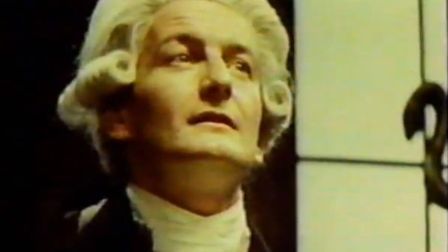
Fifty years ago, the BBC screened a dramatised documentary series about the fight to abolish the slave trade. Even a year of the virus limiting new series, at a time of great BBC eagerness to talk about racism, has not made them screen it again.
– I see one reason why they have not: the series displayed sleazy white slave traders and abusive white slave owners prominently, but it also showed white people eager to end the slave trade and (much worse) black people eager to continue it. It included the king of Dahomey’s threat: “if you do not allow me to sell you my slaves, their fate will be a great deal worse” (a very brief scene of the Dahomey murder spectacle lent meaning to his remark). After abolition was voted, it showed a white slave trader assuring the Dahomans, as a drug dealer might his suppliers, “It is one thing for parliament to pass a law …”, hinting at the Royal Navy’s long and hard campaign to enforce it.
– Only recently did I spot another reason why they would not want to show it again – the scene in which a corrupt old white slave trader warns his young colleague that “it’s more than your life’s worth” to doubt the ability of their slave-selling hosts to count very accurately the quantity of trade goods being handed over in exchange, and to assess their quality knowledgeably. The traders well knew that Africans counted two plus two as four, just as they did. Any trader who imagined that black ability to add diverged enough from white to enable an attempt to short-change them had learned otherwise long before the 1780s.
– The southern Confederacy thought the same. Until its death throes, it forbade enlisting a southern black as a Confederate soldier because, as one Confederate senator put it, “If blacks can make good soldiers then our whole theory of slavery is wrong.” (Perhaps also because even southern white Democrats realised that southern black desire to fight against blacks being freed was likely to be a very minority taste.) But there was one exception. Every regiment had its regimental band, which played to set the pace at the start and end of marches, used trumpets to signal commands in battle – and fought when other duties did not supervene. From its start to its end, Confederate law said any black could enlist as bandsman, with the same pay and perquisites as a white – a very rare example of formal legal equality. (Playing music requires the ability to count time. For the woke, “dismantling the legacy of the Confederacy” apparently includes dismantling its realisation – shared by the Victorian composer Dvorak – that blacks often excelled in music so much as to overcome prejudice against black ability. Today, it’s “racist” to value instrumental skill.)
“Politically correct” has meant “actually wrong” ever since the first commissar explained to the first party comrade that it was neither socialist nor prudent to notice a factual error in the party line. “Structurally racist” is PC’s modern companion. No longer are the woke content merely to imply (“mathematics is racist”, “punctuality is racist”, “politeness is racist”) that blacks can’t count, can’t tell the time and can only behave crudely. They’re starting to say it in words of fewer syllables.
If I’d scrolled down to the comments, I’d have discovered that Natalie Solent had also dug up the name of the series:
Natalie Solent (Essex)
May 10, 2021 at 4:30 pm
Outstanding post, Niall. Was the BBC series you mentioned “The Fight Against Slavery“, written and narrated by Evan Jones? I have not seen it – given that I was ten or eleven in 1975 my parents probably thought I was too young too see it.However someone called “InternetPilgrim” has put up three videos of the series on YouTube. There is a link to Part I here, Part II here and Part III here, so I will try to remedy that lack soon.
Comments Off on An older BBC dramatization on the slave trade that seems to have gone down the memory hole
History Summarized: Africa
Overly Sarcastic Productions
Published 7 Jul 2017THE DANGER OF A SINGLE STORY: https://youtu.be/D9Ihs241zeg
It’s been brought to my attention that I made two mistakes: 1) Yes, I disappear at 18:26. Not sure how that happened. 2) At 12:25 I use a map of Africa that with some weird borders. That’s my bad. But if you look at a legit map of Africa, you’ll see the same straight lines in the places that I marked them.
(Remember: making mistakes is ok, so long as we learn from them)The Epic of Mwindo sure was cool, huh? This video is here to show you all about the lovely continent that it came from: Africa! And BOY are there a lot of misconceptions about it.
This video was produced with assistance from the Boston University Undergraduate Research Opportunities Program.
PATREON: www.patreon.com/user?u=4664797
MERCH LINKS:
Shirts – https://overlysarcasticproducts.threa…
All the other stuff – http://www.cafepress.com/OverlySarcas…Find us on Twitter @OSPYouTube!

Comments Off on History Summarized: Africa
QotD: Orpheus and Eurydice
The Greek myths […] could not tell us of the conquest of Death by Love, because they could not know it yet; but they did know what it was not. They — the Greeks with their legends — were not just pessimistic. They were heroic pessimists.
Orpheus descends into Hades to retrieve his bride, Eurydice. In the account we read in Virgil’s Georgics, the point of the tale is already slightly smoothed, blunted. Orpheus has made the mistake of looking back on her countenance, when he is almost home. He has emerged in the sun, but she is still in the shadows. As he looks back, she recedes, disappears; she is now lost forever. In modern “education” we used to weep for the tragedy. He almost succeeded. It is a tragedy, strictly in the Roman pagan sense.
But it was a tragedy in the Greek sense, first. If we go instead to Plato, and listen to the aristocratic Phaedrus in the Symposium, we learn that Orpheus was thoroughly in the wrong, in his attempt to retrieve Eurydice. He was bound to be punished. His mistake was not a technicality. His living descent into Hades was a challenge not only to the gods, but to nature, and to the truth of things. His love for Eurydice, so affecting in his mournful dirges — moving everyone to tears — was not true love. A coward, he would not die for it.
Hades has presented him with a wraith, in Eurydice’s outward form. Inevitably, this illusion would dissolve in the sunlight. And the fate of Orpheus was now set — the fate of an eloquent softie, who loves an imaginary woman — a woman he had created from the start. He will die at the hands of the real ones he rejected. He will be torn apart by the Maenads, as by wild beasts. His lyre will be destroyed. This is the fate of our shallow romantic star; the pretty boy whose lyre and whose voice had once been an enchantment.
Boethius deals with that backward gaze, in the Consolations of Philosophy. We who seek to lead into the light of the upper day — we triumphalist philosophers — are bound to look back into the Tartarean cave. And when we do, the clarity of our “vision” will be obscured; then ruined, totally. To guide we must be guided; or all will be lost.
David Warren, “A backward glance”, Essays in Idleness, 2021-02-09.
Comments Off on QotD: Orpheus and Eurydice
May 16, 2021
Joseph Stalin Jumps the Gun – 142 – May 16, 1942
World War Two
Published 15 May 2021The Soviets pre-empt a German offensive with one of their own in the south of the Eastern Front, but that’s not the only fighting. The skies over Malta and the waters of the Gulf of St. Lawrence are full of action. Meanwhile, two races against time — and the Japanese — come to an end in India.
(more…)
Comments Off on Joseph Stalin Jumps the Gun – 142 – May 16, 1942
Bayonets
Lindybeige
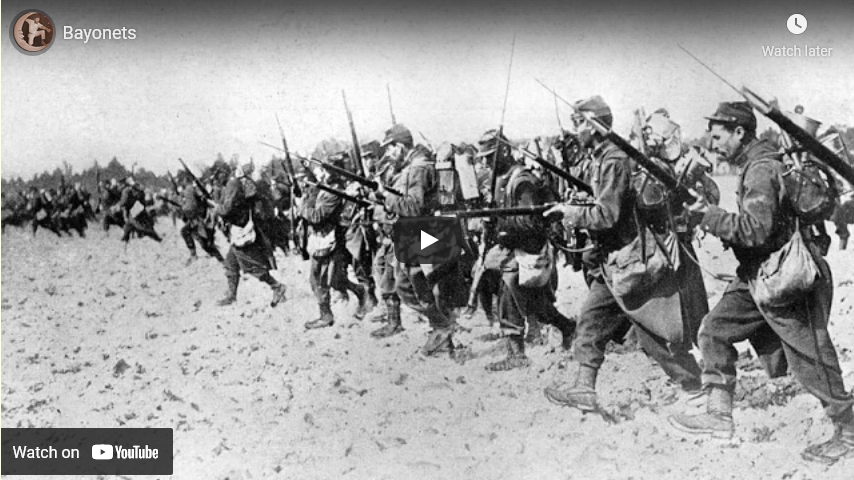
Published 26 Feb 2011A weapon can be very effective even if it never actually kills anyone.
Support me on Patreon: https://www.patreon.com/Lindybeige
Lindybeige: a channel of archaeology, ancient and medieval warfare, rants, swing dance, travelogues, evolution, and whatever else occurs to me to make.
▼ Follow me…
Twitter: https://twitter.com/Lindybeige I may have some drivel to contribute to the Twittersphere, plus you get notice of uploads.
website: www.LloydianAspects.co.uk
May 15, 2021
Machine Gun Terminology Part 2: SMG, PDW, & Machine Pistol
Forgotten Weapons
Published 12 Jan 2018http://www.patreon.com/ForgottenWeapons
Cool Forgotten Weapons merch! http://shop.bbtv.com/collections/forg…
Today we have Part 2 of machine gun terminology — the small caliber guns. Specifically, submachine guns, personal defense weapons, and machine pistols. [Part 1 is here]
Submachine Gun: Pistol caliber, fully automatic, and fitted with a shoulder stock. For example, Thompson, MP40, MAS-38.
Machine pistol: Handgun form factor and fully automatic. For example, Glock 18, Mauser Schnellfeuer, Stechkin.
Automatic Rifle: Shoulder or hip fired, limited magazine capacity, minimal sustained fire capacity. Examples: M1918 BAR, Chauchat.
Personal Defense Weapon: (1) Armor-piercing or (2) holsterable submachine gun, not intended for front line combat. For example, FN P90, H&K MP7, Czech vz.61 Skorpion, Polish PM63 Rak.
If you enjoy Forgotten Weapons, check out its sister channel, InRangeTV! http://www.youtube.com/InRangeTVShow

Comments Off on Machine Gun Terminology Part 2: SMG, PDW, & Machine Pistol
QotD: Military history
Victor Davis Hanson, Carnage and Culture: Landmark Battles in the Rise of Western Power, 2001.
Comments Off on QotD: Military history
May 14, 2021
100,000 Dead British Subjects in Burma – WAH 034 – May 1942, Pt. 1
World War Two
Published 13 May 2021A large number of European and asian inhabitants of South-East Asia are locked up in Japanese prison camps, while in Burma, a big refugee crisis claims the lives of thousands. In Auschwitz-Birkenau and Sobibor, gassing Jews on an immense scale begins.
(more…)
Comments Off on 100,000 Dead British Subjects in Burma – WAH 034 – May 1942, Pt. 1
Tank Chats Special | Pak 43/41 Anti-Tank Gun | The Tank Museum
The Tank Museum
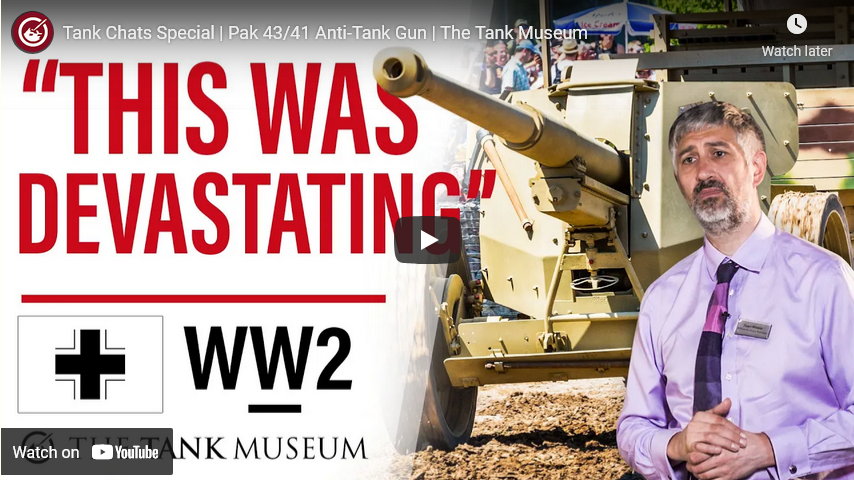
Published 18 Sep 2020The Tank Museum’s Archive and Library Manager Stuart Wheeler presents this Tank Chat Special on the Pak 43/41. Find out the history behind the infamous anti-tank gun and the story behind how it came to be in The Tank Museum’s collection — from its time as a gate-guard, to its restoration, and finally its display in the Museum.
Support the work of The Tank Museum on Patreon: ► https://www.patreon.com/tankmuseum
Visit The Tank Museum SHOP & become a Friend: ► tankmuseumshop.orgTwitter: ► https://twitter.com/TankMuseum
Instagram: ► https://www.instagram.com/tankmuseum/
#tankmuseum #tanks
Comments Off on Tank Chats Special | Pak 43/41 Anti-Tank Gun | The Tank Museum
May 13, 2021
Canada’s (subdued-but-real) class system
In The Line, Howard Anglin offers some observations on how Canada’s class system developed and how it can be very roughly delineated:
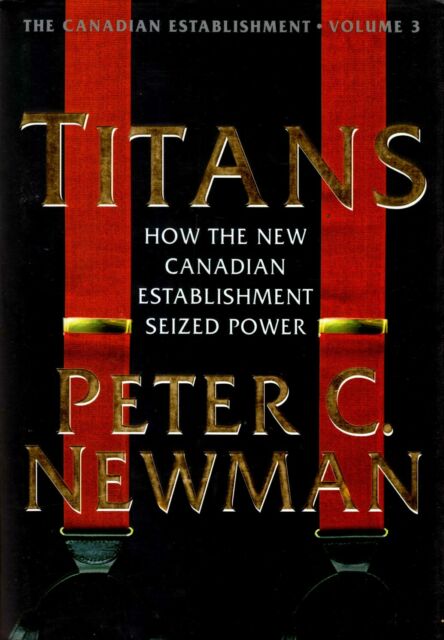
This comfortably flat image of our social hierarchy, however, belies a more complicated series of gradations that, while clearly marked, are rarely observed and almost never described accurately. Peter C. Newman mapped some of the terrain in his three volumes on The Canadian Establishment, but his account was already dated when he began it in 1975 and it was a work of history rather than social commentary by the time he finished in 1998. [Line editor Jen] Gerson’s own description of the Canadian class system explains why it can be hard for outsiders, and even insiders, to see it: “[W]e manage the cognitive dissonance presented by the haves and have-nots of housing,” she says, “by requiring our rich people to keep quiet. They should wear clothes that are well-cut and well-designed, but not flash. Buy the multi-millionaires car, but paint it in a sedate hue.”
Social sorting is intrinsic to human nature, perhaps even necessary — as the Bard has Ulysses remind us: “Take but degree away … and, hark, what discord follows!” — and it’s here in Canada too, if you look for it. Like the United States, Canadians early on replaced a class system based on titles with one based on the more easily-acquired currency of, well, currency. And, as in America, this immediately created a new opportunity for class to subtly reassert itself.
I used to joke that the only meaningful class division in Canada is whether you use “summer” as a noun or as a verb; lately I’ve developed the Starbucks test. In this analogy, Starbucks is Canada’s middle class, with Tim Hortons and fast food franchise coffee below, and specialty cafes and boutique chains (Matchstick, Phil & Sebastian, Bridgehead) above.
Unlike the crude measure of income, coffee choice better replicates a traditional class system because it carries an implicit sense of social solidarity, cultural assumptions and biases. During the days of the Harper government, Tim Hortons became a symbol to a certain sort of conservative as iconic as the Greek fisherman’s cap is to aging Marxists. The Maple Leaf red cup represented the honest values of rural and suburban working families, in contrast to the globalist elites with their overpriced green Starbucks. Starbucks was sipped at dog parks and served in board rooms; Tim Hortons got the job done on a cold winter morning: it was Don Cherry in a mug.
The Starbucks test is a silly heuristic, but it reveals something about the complex nature of class: an aristocrat may be penniless, and a billionaire may love his Tims. It also puts the middle class back in its traditional place as the uneasy middle-child of the social order.
In the old British system, there was pride in being working class. There was a bond of mutual support that grew out of the shared experience of hard labour and was reinforced by institutions like working men’s clubs, the British Legion, and the trade union movement. The middle-class striver with his airs and pretensions, his flash new car and his evolving accent, was a figure of general mockery, even more to the working men he left behind than to the upper classes he aspired to join. Class was about more than money; it was an identity. And there was nothing that gave you away as middle class more than worrying about being middle class — an anxiety exploited by Nancy Mitford in her tongue-in-cheek guide to “U” and “Non-U” language and behaviour. The Starbucks test reveals something similar, something more reflective of Canada’s reality than the Liberal vision of one big happy middle-class family.
Tim Worstall explained that the British middle class is still despised by the upper class and hated by the lower class. Not a model for encouraging aspirational working class folks to “move up”.
Comments Off on Canada’s (subdued-but-real) class system


